As per the report of the Global Commission on the Economics of Water, the world’s water systems are under “unprecedented stress” and the demand for fresh water will outstrip supply by 40% by 2030.
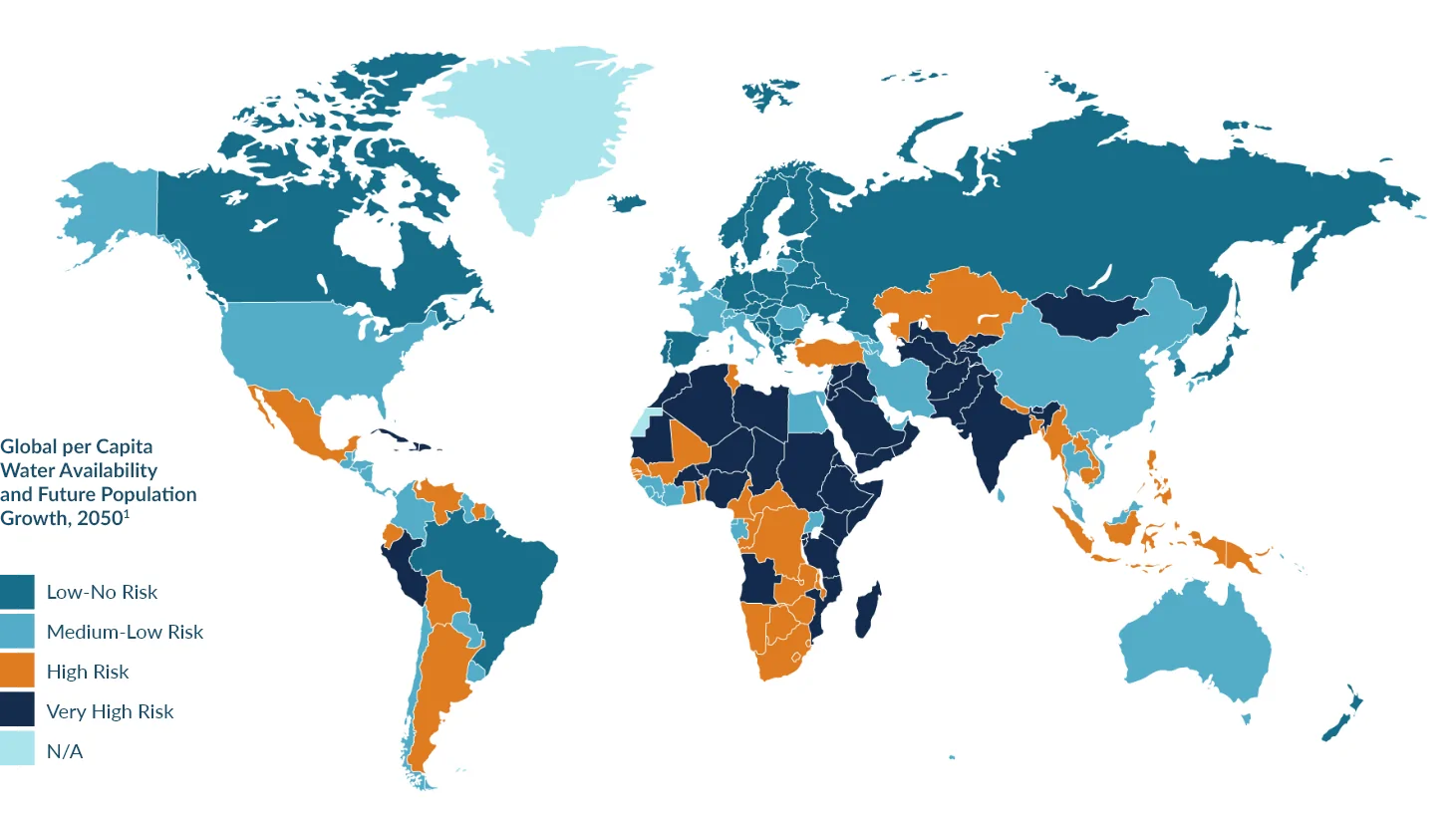
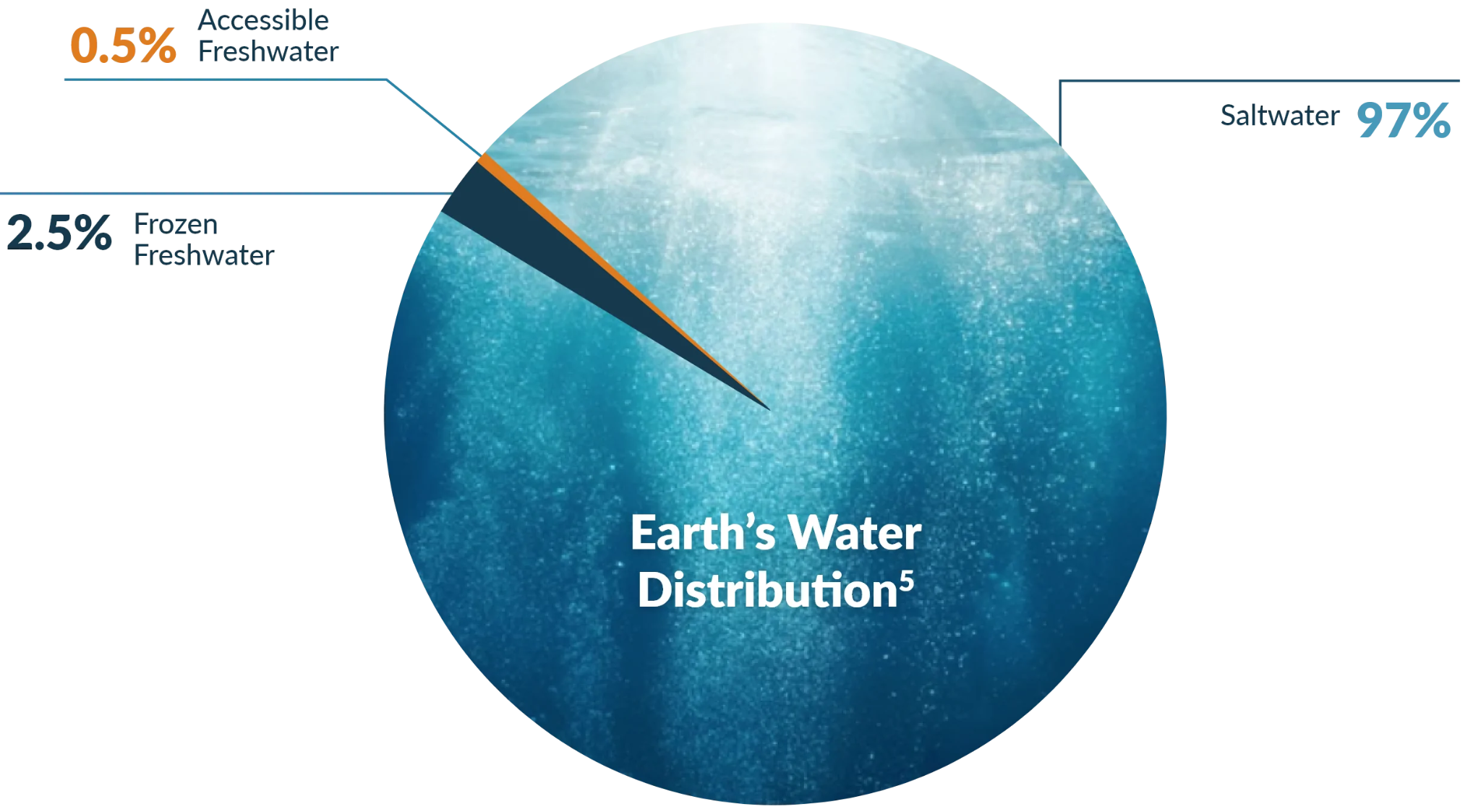
Global freshwater Crisis
4.4 billion people lack access to safe drinking water
703 million people have no access to clean drinking water.
Agriculture consumes 70% of the world’s freshwater
India
4% of the world’s freshwater resources
600 million Indians experience water scarcity. (NITI Aayog)
By 2030, 700 million people could be displaced due to water shortages (UNICEF, 2025)
Global water crisis could result in losses of up to $8 trillion over the next 25 years (Global Commission on the Economics of Water, 2024)
Alternative Technologies That Can Solve the Freshwater Crisis
Desalination Technologies to convert seawater/brackish water into potable water.
Wastewater Recycling & Reuse through Membrane Bioreactors (MBR), tertiary treatment and advanced oxidation.
Atmospheric Water Harvesting using condensation (cooling below dew point).
Solar Distillation for low-cost, off-grid evaporation-condensation.
Managed Aquifer Recharge (MAR) using recharge wells, percolation tanks and treated wastewater.
Fog & Dew Harvesting in coastal and high-elevation areas.
Smart Irrigation Technologies (drip, soil moisture sensors) to reduce agricultural water demand.
Precision Leak Detection Systems using IoT to minimise distribution losses.
Rainwater Harvesting Systems integrated with rooftops, storage tanks and recharge pits.
Floating Solar + Desal Units for dual energy-water generation.
Three Technologies With Key Merits and Demerits
Atmospheric Water Harvesting (AWH) – Eg – Source Hydropanels deployed in Ladakh schools.
Merits:
Decentralized, off-grid water access for remote areas.
No reliance on groundwater or rainfall.
Scalable from household to community systems.
Demerits:
Low yield in low-humidity climates.
High per-litre cost for advanced AWH systems.
Requires maintenance of filters/desiccants.
Wastewater Recycling & Reuse – Eg – Singapore’s NEWater, Nagpur’s Bhandewadi recycling plant.
Merits:
Reduces pressure on freshwater sources by closing the loop.
Low energy requirement compared to desalination.
Ensures year-round supply, even in dry regions.
Demerits:
Public resistance to potable reuse (“yuck factor”).
Risk of contamination if systems are poorly maintained.
High initial investment for advanced tertiary treatment.
Desalination using Reverse Osmosis & Thermal Distillation– Eg – Israel’s Sorek RO plant, India’s Minjur RO plant (Chennai).
Merits:
Large and climate-independent supply from oceans.
Useful for coastal megacities facing groundwater depletion. Eg- Mumbai
Continuous and reliable output even in droughts.
Demerits:
High energy consumption, increasing carbon footprint.
Brine discharge harms marine ecosystems.
High capital and operating cost for poorer regions.
A portfolio approach, not a single technology, will determine long-term water security.