Why in the News?
The National Book Trust has released a book on highlighting physicist Anna Mani’s pioneering ozone and pollution studies in Pune decades before “climate change” entered discourse.
Who was Anna Mani (1918–2001)?
- Overview: Indian physicist and meteorologist from Peermade, Kerala; pioneered India’s meteorological instrumentation and atmospheric science.
- Alma mater: Studied physics at Presidency College, Chennai (1939); trained at Imperial College, London; joined IISc Bengaluru under C.V. Raman, publishing five crystallography papers.
- Professional Career: Joined the India Meteorological Department (IMD) in 1948; later headed its Instruments Division; earned the title “Weather Woman of India.”
Key Contributions:
- Meteorological Instrumentation: Designed and standardized 100+ weather instruments, including India’s first pyranometers and sunshine recorders, ending dependence on imports. Established the Regional Instrumentation Centre, Pune, for nationwide calibration.
- Measurement Infrastructure: Created a national network of solar, wind, and radiation observatories; introduced WMO-grade calibration; data later used for India’s first Wind Energy Atlas.
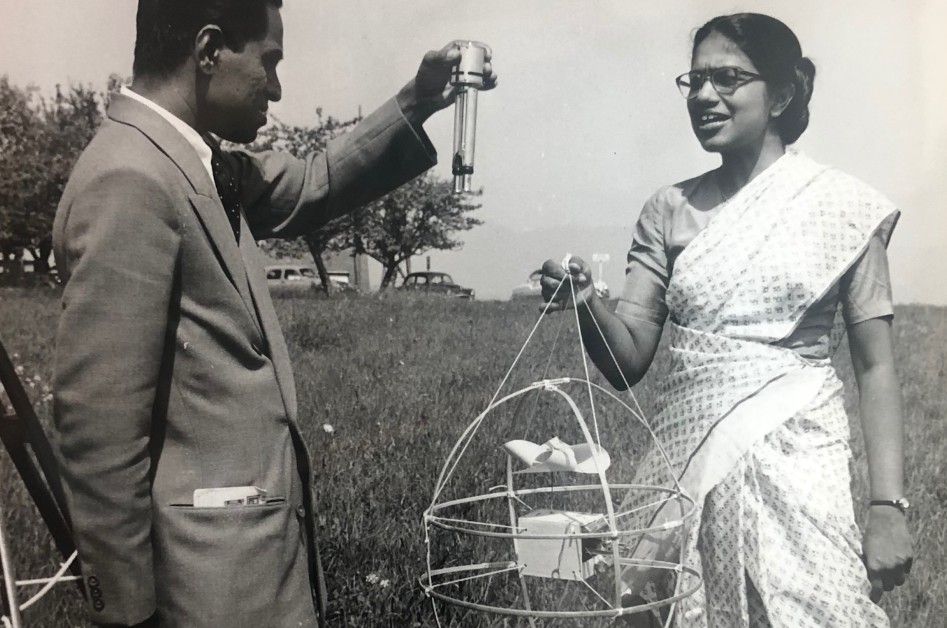
- Ozone & Atmospheric Research: In 1964, developed India’s first ozonesonde balloon measuring ozone up to 35 km; integrated into the WMO Global Ozone Mapping Programme. Her studies on ground-level ozone and urban aerosols anticipated modern air-pollution science.
- Instrument Design & Ethics: Innovated with glass and Teflon components to remove chemical errors in ozonesondes; upheld the credo “wrong measurements are worse than none.” Her Pune lab became a model of scientific precision.
- Publications: Authored “Handbook for Solar Radiation Data for India” (1980) and “Wind Energy Resource Survey in India” (1992), both still reference standards for renewable-energy studies.
- Environmental Vision: Warned early about CFC emissions and ozone depletion; connected industrialization to atmospheric alteration, foreshadowing the Anthropocene concept.
- Legacy: Her datasets form India’s earliest continuous record of ozone, radiation, and aerosol change, anchoring present-day climate-model validation and policy research.
