Why in the News?
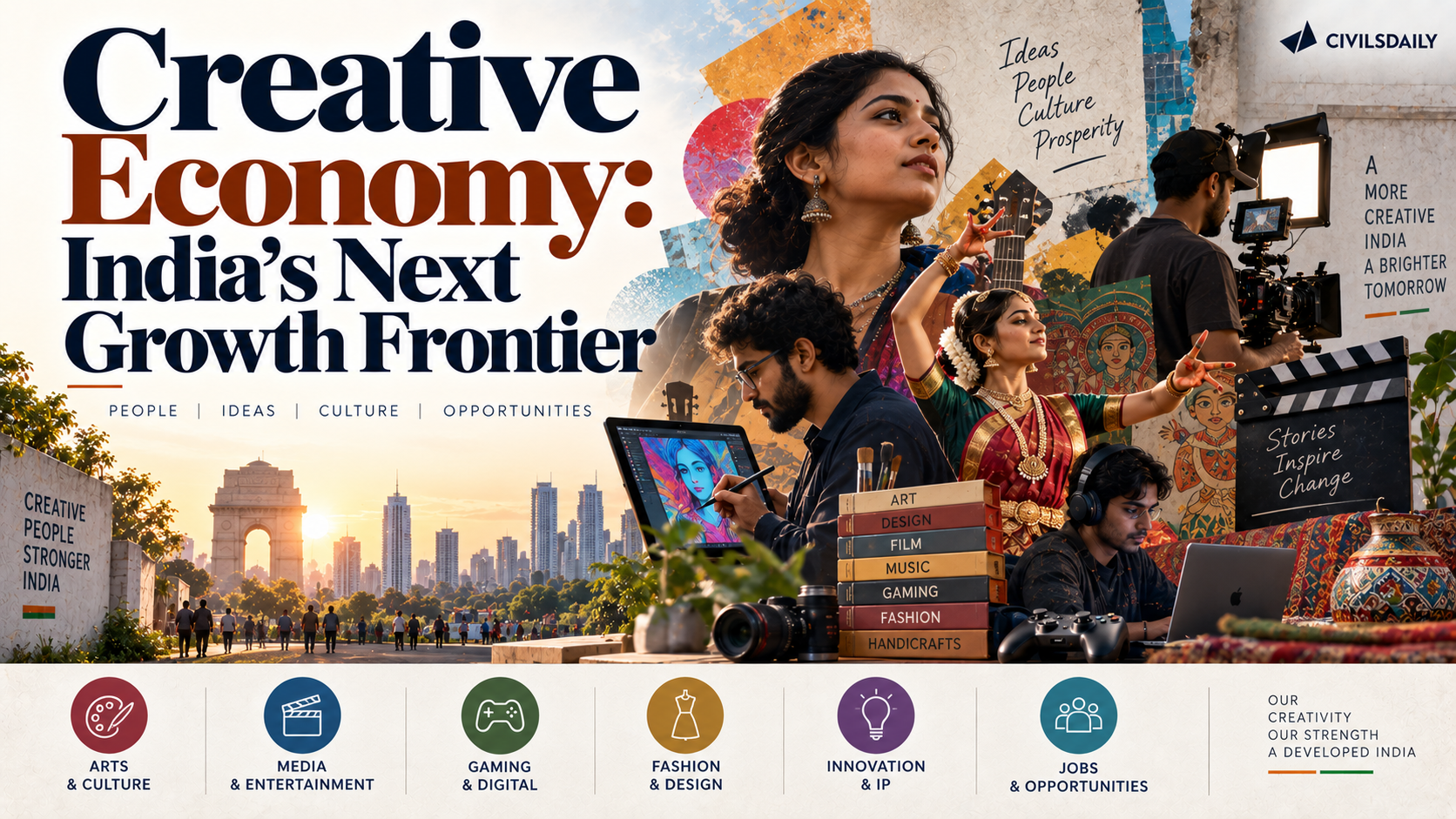
The creative economy is emerging as a major source of employment, entrepreneurship and innovation in India. The AVGC sector is expected to require nearly 2 million skilled professionals by 2030, creating new opportunities for India’s youth.
Key Highlights
- Creative economy is driven by: Ideas and imagination, Culture, Innovation, Intellectual Property (IP)
- Major sectors include: Film, Music, Gaming, Animation, Design, Publishing, Advertising, and Digital content
Economic Significance
- Creative economy contributes 3.1% of global GDP.
- Accounts for 6.2% of global employment.
- Around 57 million Indians are already working in cultural and creative occupations.
- India’s media and entertainment economy: ₹2.5 trillion.
AVGC Sector
AVGC = Animation, Visual Effects, Gaming and Comics
- Expected skilled-professional requirement by 2030: nearly 2 million.
- Creates opportunities in: Animation, Gaming, Visual effects, Digital content, and Creative technology
Government Initiatives
- Indian Institute of Creative Technologies: The government is supporting the Indian Institute of Creative Technologies to build specialised capabilities and future-ready skills in the creative sector.
AVGC Creator Labs
- Planned in 15,000 schools
- Planned in 500 colleges
- Aim to equip young people with skills relevant to the emerging creative economy.
Policy and Regulatory Issues
- Growth of the creative economy requires appropriate frameworks relating to:
- Copyright protection
- Fair compensation for creators
- Intellectual Property Rights
- Responsible use of Artificial Intelligence (AI)
Prelims Quick Revision
- Creative economy is based on creativity, culture, innovation and intellectual property.
- Global contribution: 3.1% of GDP.
- Global employment share: 6.2%.
- Around 57 million Indians work in cultural and creative occupations.
- Indian media and entertainment economy: ₹2.5 trillion.
- AVGC skilled workforce requirement by 2030: nearly 2 million.
- AVGC Creator Labs: 15,000 schools + 500 colleges.