Central idea
The Uttarkashi tunnel collapse has thrown light on the major flaws in the infrastructure development in the Indian Himalayan Region
Key Highlights:
- The Char Dham Project in the Indian Himalayan Region (IHR) has raised concerns about the sustainability of the current development model.
- The focus is on the carrying capacity of the IHR, questioning the extensive road widening, hydropower projects, and tourism promotion.
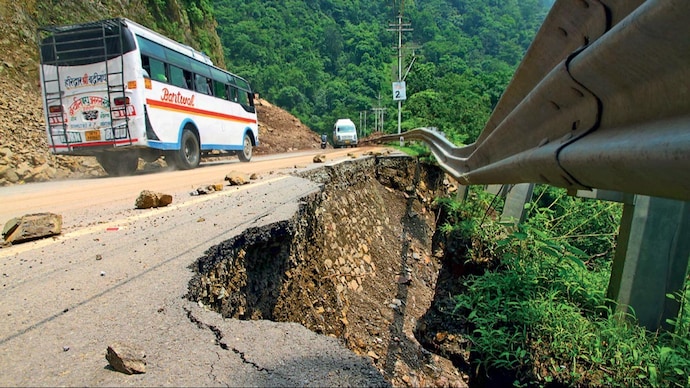
- The geological sensitivity of the Himalayas, marked by earthquakes and frictional shear rocks, makes such infrastructure projects dangerous.
Challenges:
- Lack of adherence to mountain construction codes and basic safety protocols in the rush for construction projects.
- The fragmentation of the Char Dham Project into smaller sections for Environment Impact Assessment (EIA) raises questions about its comprehensive evaluation.
- The need to address the broader issue of carrying capacity in the IHR, encompassing hydropower projects, tourism, and road development.
Key Phrases:
- “Construction in this zone is dangerous” due to the sensitive geological nature of the Himalayas.
- The Supreme Court should address the issue of carrying capacity in the Himalayas, considering the impact of infrastructure on the ecosystem.
- The transformative phase in the IHR requires a reevaluation of the integration approach with new geographies.
Critical Analysis:
- The article criticizes the lack of seriousness in implementing safety measures, citing the Silkyara tunnel incident in Uttarakhand.
- Emphasis on learning from failures, international protocols, and the inclusion of local communities in monitoring structures are suggested for safer infrastructure development.
Key Examples and References:
- The Atal tunnel in Himachal Pradesh is cited as an exception with a rigorous safety protocol, contrasting it with the safety lapses in the Char Dham Project.
- The flash floods of 2013 in Uttarakhand are mentioned as the basis for initiating the Char Dham Yatra and subsequent infrastructure projects.
Key Data:
- The Char Dham Project is approximately 900 km long, broken into 53 sections for separate EIAs.
- Geological and geotechnical studies highlight the dangerous nature of construction in the Himalayas.
Key Facts:
- The carrying capacity discussion extends beyond the number of people to include infrastructure aspects like hydropower projects and roads.
- The importance of a legislative architecture that involves local communities and adheres to international protocols for safer infrastructure development.
Key Terms for value addition in your answer:
- Carrying capacity
- Environmental Impact Assessment (EIA)
- Geological sensitivity
- Transformative phase
- Safety protocols
Way Forward:
- Urgent dialogue on carrying capacity in the Himalayas, considering the total impact of infrastructure development.
- Adoption of international protocols and legislative architecture for safer construction, involving local communities and civil society.
- Reevaluation of the integration approach in the transformative phase of the IHR, ensuring stability and safety standards in infrastructure projects.
