Why in the News?
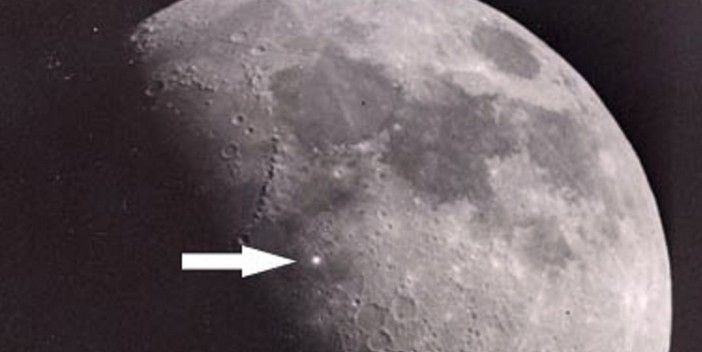
For centuries, astronomers and observers have recorded strange, short-lived visual events on the Moon’s surface, known as Transient Lunar Phenomena (TLPs).
About Transient Lunar Phenomena (TLPs):
- What is it: Short-lived flashes, glows, or hazy patches observed on the Moon’s surface, lasting seconds to several hours before fading.
- Observation History: Reported for over a thousand years, including Apollo 11 astronauts (1969) who noted a luminous lunar glow.
- Appearance Types: Include reddish glows, star-like flashes, and mist-like obscurations.
- Active Regions: Concentrated around Aristarchus and Plato craters, considered the most dynamic lunar zones.
- Scientific Implication: Suggests that the Moon remains geologically active, contradicting earlier assumptions of total dormancy.
- Theories on Origin: Scientists propose several explanations for TLPs:
-
- Lunar Outgassing: Trapped gases such as radon or argon may escape through fissures, triggered by gravitational stresses or surface heating, causing dust or gas to glow or reflect sunlight.
- Meteoroid Impacts: Frequent meteoroid collisions on the Moon’s airless surface produce brief, intense flashes, accounting for many observed TLPs.
- Electrostatic Dust Levitation: Charged lunar dust particles, activated by solar radiation, may levitate and scatter light, producing transient luminous effects.
- Atmospheric Distortion on Earth: Some TLPs may be optical artifacts, caused by turbulence or refraction in Earth’s atmosphere altering the Moon’s apparent brightness or colour.
Recent Research and Monitoring:
- Observation Technology: Use of automated telescopes and CCD (charge-coupled device) imaging systems for real-time detection.
- Space Missions: NASA’s Lunar Reconnaissance Orbiter (LRO) and ISRO’s Chandrayaan series monitor gas release and new impact craters.
- Spectroscopic Evidence: Studies of Aristarchus Plateau show episodic radon emissions, supporting the outgassing theory.
- Integrated Monitoring: Global programs combine optical, seismic, and spectrometric data to validate events.
- Scientific Aim: To understand lunar surface dynamics, internal processes, and signs of ongoing geological activity.