The A&N Islands offer significant opportunities for fisheries development with approximately 6.0 lakh square km of Exclusive Economic Zone (EEZ).
This region has rich sea resources, particularly Tuna and Tuna-like species, with an estimated potential of 60,000 metric tons.
The islands’ location near Southeast Asia enables efficient sea and air trade, and the pristine waters support sustainable fishing.
About Tuna Species and its Significance
Tuna are large, fast-swimming fish belonging to the Thunnini tribe within the Scombridae family.
Known for their streamlined bodies and remarkable agility, tuna are found in tropical and temperate oceans worldwide.
There are over 15 species of tuna, with some of the most well-known being Bluefin, Yellowfin, Albacore, Bigeye, and Skipjack.
Tuna can grow quickly and live for several decades, with species like Bluefin reachingover 450 kg in weight.
It is one of the most popular and valuable fish in the global seafood market, highly sought after for its flavor, texture, and nutritional value.
Species like Bluefin tuna are particularly valuable, often fetching high prices in markets, especially in Japan for dishes like sushi and sashimi.
It is rich in protein, low in saturated fat, and packed with omega-3 fatty acids, which support heart health, brain function, and inflammation reduction.
It also provides essential vitamins and minerals like Vitamin D, B12, iron, and selenium.
PYQ:
[2013] The most important fishing grounds of the world are found in the regions where
(a) Warm and cold atmospheric currents meet
(b) Rivers drain out large amounts of freshwater into the sea
PYQ Relevance: Q) The question of India’s Energy Security constitutes the most important part of India’s economic progress. Analyze India’s energy policy cooperation with West Asian Countries. (UPSC CSE 2017) Q) In what ways would the ongoing US-Iran Nuclear Pact Controversy affect the national interest of India? How should India respond to its situation? (UPSC CSE 2018) Q) “What introduces friction into the ties between India and the United States is that Washington is still unable to find for India a position in its global strategy, which would satisfy India’s National self-esteem (UPSC CSE 2019)
Mentor’s Comment:The United States is a dominant global power with the largest economy and military. Its foreign policy decisions significantly shape international relations, impacting everything from trade agreements to military alliances and conflict resolutions.
The U.S. has been instrumental in establishing and maintaining key international organizations like the United Nations, NATO, and the World Bank, which play crucial roles in global governance and stability.
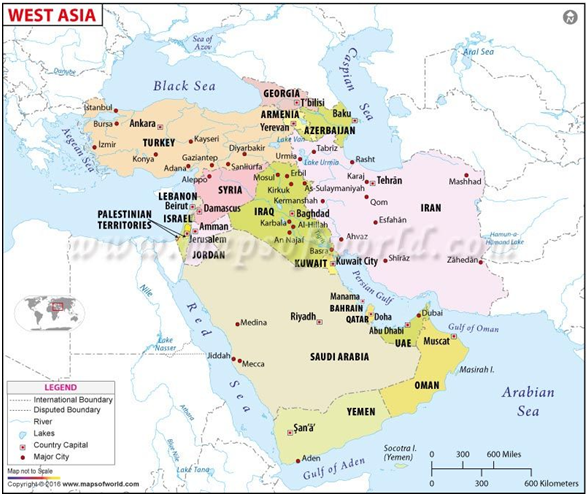
Donald Trump’s second term as President of the United States following his recent electoral victory refers to the anticipated policies and implications on global geopolitics especially in present West Asian crises.
Today’s editorial discusses the implications of Donald Trump’s return to the U.S. presidency for the Middle East, particularly in light of recent conflicts and his previous foreign policy actions.
_
Let’s learn!
Why in the News?
Donald Trump’s return to the presidency is making headlines for several reasons, reflecting both the implications of his policies and the broader impact on U.S. society and global geopolitics.
Trump’s Past Foreign Policy Record in West Asia:
Pro-Israel Stance: Trump’s first term was characterized by strong support for Israel, including: Moving the U.S. embassy to Jerusalem; Recognizing Israel’s annexation of the Golan Heights; Withdrawing from the Iran nuclear deal.
Abraham Accords: Initiated normalization between Israel and several Arab nations, aimed at countering Iran.
What changes can be expected in U.S. foreign policy towards Israel and Palestine under Trump?
Strong Support for Israel: Trump is likely to continue robust Military and Diplomatic support for Israel. For example, he may endorse Israeli military actions in Gaza, similar to his previous encouragement for Israel to “finish the job” against Hamas during conflicts.
Trump may recognize sovereignty by reaffirming policies like recognizing Jerusalem as Israel’s capital and supporting Israeli claims over territories such as the Golan Heights.
Limited Engagement with Palestinians: The USA is expected for a continuation of the previous administration’s approach, which involved cutting funding to the Palestinian Authority and sidelining Palestinian voices in peace negotiations.
For example, a New Peace initiative (one-sided) is likely to favor Israeli interests, similar to the “Peace to Prosperity” plan released in 2020, which was criticized for not adequately addressing Palestinian rights.
Regional Relations and Normalization: Trump may push for more Arab nations to normalize relations with Israel, building on agreements with countries like the UAE and Bahrain by expanding Abraham Records. This could further isolate the Palestinian cause.
Secondly, we can expect an aggressive policy towards Iran, including sanctions and military support for Israel against Iranian influence, like Trump’s previous withdrawal from the Iran nuclear deal.
Domestic Politics and UN Considerations: While maintaining strong ties with Israel, we must remember that Trump may prioritize domestic concerns over international engagement, reflecting a growing isolationist sentiment within the USA’s Republican Party (particularly among Arab and Muslim communities).
How will Trump’s policies affect U.S.-Iran relations and Regional stability?
Resuming Aggressive Policies: Trump is likely to reintroduce stringent economic sanctions on Iran, which previously led to a significant drop in Iranian oil exports.
Expect increased military readiness and potential strikes against Iranian nuclear facilities, similar to the targeted killing of General Qasem Soleimani in 2020.
Nuclear Program Implications: U.S. support for Israeli military actions against Iran could provoke retaliatory measures from Tehran.
For example, Iran may respond to renewed sanctions by further advancing its nuclear program, moving closer to weapons capability.
Shifts in Regional Alliances: Increased backing for Israel may lead to more aggressive actions and proxy conflicts against Iranian interests, heightening conflicts in Gaza and Lebanon.
Economic Consequences for Iran: Renewed sanctions could lead to further currency depreciation in Iran and increased public discontent due to economic instability. Iran may boost military spending, straining its economy further.
Did you Know? Trump’s plans under “Project 2025” include significant rollbacks on climate change initiatives, stricter immigration enforcement, and potential restrictions on abortion and LGBTQ+ rights.
What implications does Trump’s “America First” policy have for India-U.S. engagement?
Economic and Trade Policies: Trump’s protectionist “America First” agenda may lead to higher tariffs on Indian goods, particularly in textiles, pharmaceuticals, and automobiles. This could strain trade relations, as India relies heavily on exports to the U.S.
Stricter Immigration policy changes to H-1B visa regulations could significantly impact India’s IT sector, raising costs for Indian firms that depend on access to the American labor market.
Strengthened Defense Ties: Trump is expected to maintain strong defense cooperation with India through frameworks like the Quad (with Japan and Australia), and with India’s security needs against China. India may benefit from increased U.S. support in countering Chinese actions in the Indo-Pacific region.
Hence, Trump’s policies may create opportunities, but they also pose challenges due to potential economic friction from protectionist measures and immigration restrictions.
Relations with Russia: Trump’s pro-Russia stance suggests that India will face less pressure to distance itself from Moscow.
While previous U.S. administrations have criticized India’s defense ties with Russia, Trump may adopt a more pragmatic approach, focusing on other strategic aspects like defense cooperation without pressing India on Russian relations.
Way Forward: India might need to navigate a complex landscape as it balances its longstanding ties with Russia against growing relations with the U.S., especially if Trump adopts a less confrontational stance towards Russia compared to previous administrations.
Read about AIR-48, IAS Aaditya Pandey‘s UPSCPreparationJourney
Ethics, Essay, and optional subjects are key to succeeding in the UPSC exam. Excelling in the Ethics paper can significantly boost your chances of making the final list, as a strong grasp of ethics typically indicates good answer-writing skills. If you can complete the Ethics paper on time, it’s likely you’ll manage to finish other General Studies papers as well. Moreover, a solid understanding of ethics is beneficial for the Essay paper.
To write an effective Ethics answer, it’s important to focus on content enrichment, use a theme-specific framework (such as ready-made points for topics like Corporate Governance, Emotional Intelligence, Aptitude vs. Attitude), and pay attention to presentation aspects, including the use of diagrams, interlinking with specific examples, and structuring of case studies. Covering different dimensions and linking points to theories are also crucial for crafting a strong Ethics paper.
IASAaditya Pandey sir (AIR 48), in this masterclass, he’ll share his strategy and what contributed to his success. He will be sharing GS Paper -4 and Essay preparation plan and strategy.
Join us for the session on 08th Nov, at 8 PM. This session is a must-attend for you If you are attempting UPSC for the first time or have attempted earlier and now preparing for next year, then it is going to be a valuable session for you too.
It will be a 45 minute webinar, post which we will open up the floor for all kinds of queries which a beginner must have. No questions are taboo and Aaditya Sir is known to be patiently solving all your doubts.
Join us for a Zoom session on 08th Nov 2024 at 8:00 p.m. This session is a must-attend for you If you are attempting UPSC for the first time or have attempted earlier and now preparing for next year, then it is going to be a valuable session for you too.
We will deal with all the aspects for a comprehensive UPSC Preparation.We’ll talk about starting with the basics, and move to advanced level.
(Don’t wait—the next webinar won’t be until Dec 24)
These masterclasses are packed with value. They are conducted in private with a closed community. We rarely open these webinars for everyone for free. This time we are keeping it for 300 seats only.
With the fear of jobless growth, the talk about Universal Basic Income (UBI) has hit the public discourse hard. But let’s be real—it’s not that simple to handle this topic. Learning the challenges in implementing UBI and the opportunities it presents are the basics which everybody should know. But whats important is to analyse UBI across economic, political, social, and administrative angles. This article dives deep into each of these aspects and further breaks down whether UBI can truly work as a safety net, giving you the full picture to tackle any question thrown your way!
GS 1 Indian Society: Poverty and Social Change
Note4Students: Analyze the role of UBI in mitigating poverty, unemployment, and income inequality in the context of automation and globalization.
Microtheme: Poverty and Developmental issues.
GS 2 Governance, Polity, Social Justice: Welfare Schemes and Vulnerable Sections
Note4Students: Examine UBI as a complement or alternative to welfare schemes, and its role in addressing poverty, education, and social equity.
Microtheme: Welfare and Development Schemes
GS 3 Economic Development, Technology, Environment: Inclusive Growth and Employment
Note4Students: Critically assess UBI’s potential to reduce income inequality, address automation-driven unemployment, and its fiscal implications.
Microtheme: Inclusive Growth X Public Expenditure
GS 4 Ethics, Integrity & Aptitude: Social Justice and Governance
Note4Students: Reflect on the ethical aspects of UBI, emphasizing fairness, transparency, and its role in ensuring social justice for marginalized communities.
Microtheme: Quality of Service Delivery
Is UBI a safety net for the Future ?
The International Labour Organization (ILO) reports that 83% of the unemployed population in India are youth, largely due to the impact of automation and artificial intelligence (AI) on traditional jobs. This transformation of the economy has worsened income inequality, with a 1.6% global drop in labor income share between 2004 and 2024. For a developing nation like India, where a large portion of the workforce is unskilled or semi-skilled, such trends are deeply troubling.
Additionally, inflationary pressures and geopolitical tensions have prompted aggressive monetary policies, which have only strained the labor market further. Rising unemployment rates in 2024, as projected by the ILO, highlight these structural issues within global and national labor markets.Given this context, Universal Basic Income (UBI) emerges as a potential solution to address the growing inequality and economic instability. In a nation like India, where income disparity is high, and the formal employment sector remains limited, UBI can play a transformative role by promoting economic stability, ensuring social equity, and empowering the marginalized. But like every other measure it has two sides to it. This article analyses the Pros and Cons of it.
What is UBI ?
Universal Basic Income (UBI) is a social welfare proposal in which all beneficiaries regularly receive a guaranteed income in the form of an unconditional transfer payment.
A brief dissection of various aspects:
Category
Pros
Cons
Economic
1. Stimulus: UBI boosts local economies by increasing consumer spending and supporting small businesses. Ex: Economic Survey 2016-17 predicted UBI could shrink poverty from 22% to 0.5%. 2. Entrepreneurial Growth: With financial security, individuals are more likely to take entrepreneurial risks. Ex: SEWA’s UBI pilot (2011-12) showed increased health, productivity, and financial stability. 3. Increased Demand: UBI encourages spending, boosting demand for goods and services and spurring economic growth.
1. High Cost: UBI is expensive and may require significant tax hikes or spending cuts. Ex: UBI could cost 4.9% of GDP vs. 3.7% for current welfare programs (Economic Survey 2016-17). 2. Inflation Risk: Increased disposable income may lead to inflation if not managed properly. 3. Financial Feasibility: UBI could lead to cuts in essential welfare programs, impacting vulnerable groups. Ex: Replacing welfare programs like MGNREGS may destabilize rural safety nets.
Political
1. Popularity: UBI can gain political traction by appealing to voters as a tangible solution to poverty. Ex: Alaska’s Permanent Fund Dividend boosted political engagement. 2. Electoral Advantage: Political parties advocating UBI could attract a larger voter base, especially from marginalized communities. Ex: 2017 Economic Survey showed growing support for UBI as a policy. 3. Political Stability: UBI can promote social cohesion by reducing economic disparities, easing tensions in divided societies.
1. Inequity: UBI’s universal nature may disproportionately benefit the wealthy if not carefully designed. Ex: IMF report suggested UBI could worsen income inequality if welfare is replaced. 2. Universality vs. Targeting: There is ongoing debate about whether UBI should be truly universal or targeted to those most in need. 3. Rollback of Welfare: Politically challenging to phase out existing welfare schemes to fund UBI. Ex: Transitioning from PDS and MGNREGS to UBI raises concerns about food security.
Social
1. Poverty Reduction: UBI directly reduces poverty by providing a guaranteed income floor for all citizens. Ex: SEWA’s UBI pilot improved health and economic outcomes for low-income households. 2. Empowering Women: UBI can promote gender equality by providing women with financial independence. Ex: 2018 data showed 75% of adult Indian women weren’t in formal employment; UBI could alleviate dependency. 3. Health Benefits: UBI can reduce stress and improve mental health by reducing financial insecurity. Ex: Telangana’s “Rythu Bandhu” scheme linked to improved well-being of farmers.
1. Dependency Risk: UBI may reduce the incentive to work, creating a reliance on government support. Ex: Critics argue that UBI could disincentivize job-seeking or skill development. 2. Productivity Decline: Critics fear that UBI may foster laziness or entitlement. 3. Administrative Issues: Complexities in reaching every citizen, especially in remote or rural areas. Ex: Implementing UBI in a country with varied socio-economic conditions like India faces challenges with eligibility.
Administrative
1. Simplified Welfare: UBI streamlines welfare by replacing multiple schemes, reducing administrative costs. Ex: Economic Survey 2016-17 highlighted UBI’s potential to reduce bureaucratic overhead. 2. Income Security: Provides a reliable safety net without the need for eligibility assessments. Ex: PAHAL (LPG subsidy) is a successful income support model. 3. Efficient Resource Allocation: UBI can free up government resources for other critical sectors like healthcare and education.
1. Beneficiary Identification: Implementing UBI in India is challenging due to difficulties in accurately identifying beneficiaries. Ex: World Bank report noted India’s socio-economic diversity complicates UBI implementation. 2. Legal and Political Challenges: Overhauling existing welfare programs and integrating UBI may face resistance from vested interests. 3. Budget Constraints: UBI’s cost (estimated at 4.9% of GDP) could crowd out spending on crucial services like education and infrastructure. Ex: Economic Survey 2016-17 raised concerns about the affordability of UBI for India.
CONCEPT : SOCIAL PROTECTION SYSTEMS IN INDIA
Social protection systems refer to comprehensive programs and policies designed to protect individuals and households from economic and social risks, vulnerabilities, and shocks. These systems aim to promote economic stability, reduce poverty, and ensure access to essential services. Any social protection system, thus, essentially addresses one or more of the 6 Vulnerabilities.
ADDRESSING THE 6 Vs = 6 VULNERABILITIES
Economic Vulnerability: Addressing poverty and income inequality through programs like MGNREGA, PM-KISAN, and DBT.
Health Vulnerability: Managing health risks and catastrophic expenses with schemes like Ayushman Bharat.
Food Insecurity: Ensuring access to basic nutrition through programs like the Public Distribution System (PDS) and Mid-Day Meal Scheme.
Vulnerability of Marginalized Groups: Supporting the elderly, disabled, and marginalized communities through pensions and social assistance (NSAP).
Employment Vulnerability: Tackling job insecurity with schemes like MGNREGA and NRLM.
Financial Vulnerability: Promoting financial inclusion and security via banking access (PMJDY) and Direct Benefit Transfers (DBT).
Social protection systems in India are crucial for addressing the multifaceted challenges faced by vulnerable populations. By providing financial stability, healthcare access, food security, and employment support, these systems play a vital role in promoting social equity, reducing poverty, and building resilience against economic and health shocks.
Hello,
We have a confession: we’re here to compete with your notes! Burning Issues magazine is your go-to resource as your exam approaches, designed to help you through the anxiety and overwhelm of preparing for the Civil Services Examination.
Many aspirants struggle despite reading current affairs for a year. This often happens because they interpret current affairs as merely news. As a UPSC aspirant, it’s essential to analyze these topics from the perspectives of General Studies 1, 2, 3, and 4, and that’s exactly what Elevate does.
This magazine features two sections: Burning Issues and Prelims Tidbits. Burning Issues covers current affairs that may appear in your Mains papers and teaches you how to think about these topics from different GS perspectives in just two pages.
Prelims Tidbits simplifies your Prelims preparation by distilling key facts, data, and concepts into easy-to-recall points framed around basic questions: What? Who? How? When?
So, dive in! Every page is crafted to enhance your UPSC prep. With consistency and this magazine, you’re not just preparing; you’re mastering the exam. The journey is about understanding and applying your knowledge effectively.
Q) National Education Policy, 2020 conforms with the Sustainable Development Goal-4 (2030). It intends to restructure and reorient education system in India. Critically examine the statement. (UPSC CSE 2020)
Q) Besides the welfare schemes, India needs deft management of inflation and unemployment to serve the poor and the underprivileged sections of society. Discuss. (UPSC CSE 2022)
Q) The quality of higher education in India requires major improvement to make it internationally competitive. Do you think that the entry of foreign educational institutions would help improve the quality of technical and higher education in the country? Discuss. (UPSC CSE 2015)
Mentor’s Comment:The SDG India Index, developed by NITI Aayog, reports an overall score of 71 out of 100, up from 66 in the previous edition, indicating progress in areas such as quality education (SDG 4), where the score improved from 66 to 75. Despite progress, challenges remain, including disparities in educational quality across regions and inadequate infrastructure.
SDG 4.4 aims to substantially increase the number of youth and adults who have relevant skills, including technical and vocational skills, for employment, decent jobs, and entrepreneurship by 2030.
Additionally, SDG 8 also plays a significant role in this context, as it promotes sustained, inclusive, and sustainable economic growth, full and productive employment, and decent work for all.
In light of the increasing global demand for skilled professionals in Science, Technology, Engineering, and Mathematics (STEM), today’s editorial focuses on the urgent need for revitalizing educational frameworks to better prepare students for future challenges.
_
Let’s learn!
Why in the News?
The NITI Aayog reports highlight the need for increased investment in teacher training, digital resources, and facilities to enhance learning environments.
What is the significance of STEM Education?
•Economic Growth and Competitiveness: STEM education equips students with essential skills such as critical thinking, problem-solving, and creativity, which are crucial for success in technology-driven industries. A strong foundation in STEM fields enables India to compete globally and contribute to the global talent pool in science and technology.This is vital for India’s economic expansion, as a skilled workforce can drive innovation and attract investments. •Equity and Access: STEM education fosters a multidisciplinary approach, where students learn to apply scientific principles to develop innovative solutions for these challenges. Efforts to promote STEM education also focus on empowering women and marginalized groups, reducing gender disparities in these fields. •Curriculum Innovation: Integrating STEM into the curriculum encourages a shift from traditional rote learning to hands-on, project-based learning. Well-trained STEM educators are needed to implement these educational strategies effectively.
What are the key barriers to effective STEM education in current curricula?
School-Related Barriers: Many schools lack sufficient laboratory equipment and materials necessary for hands-on STEM learning, which limits practical experiences for students.
Secondly, high student-to-teacher ratios hinder personalized instruction and effective classroom management, making it difficult to engage all students in STEM subjects.
Teacher-Related Barriers: A shortage of qualified STEM teachers and inadequate professional development opportunities result in a lack of effective teaching methods in STEM education.
Student-Related Barriers: Students often show low levels of motivation towards STEM subjects, which can stem from a lack of relatable content or perceived difficulty. Some educators need to be made aware that focusing on STEM will detract from traditional academic subjects, leading to resistance.
Curriculum and Instructional Barriers: Current curricula are rigid and do not integrate interdisciplinary approaches, limiting students’ ability to make connections between different fields.
Technology-Related Barriers: In many areas, particularly rural regions, students do not have adequate access to technology that supports STEM learning, such as computers and internet connectivity
How can Educational Institutions adapt their teaching methodologies in STEM fields?
Project-Based Learning (PBL): PBL encourages students to work on projects that promote creativity, teamwork, and practical application of knowledge in real-world problems, as students take ownership of their learning from start to finish.
Problem-Based and Analytical Thinking (PBAT): In this approach, students are presented with complex problems that do not have straightforward solutions. They must analyze the situation, evaluate different perspectives, and devise solutions, thereby enhancing their critical thinking skills.
Encouraging Curiosity: This method allows students to ask questions and explore topics of interest through investigation and experimentation. It fosters a deeper understanding of STEM concepts and develops research skills, as students learn to seek out information independently.
Integration of Technology: Utilizing technology in the classroom—such as simulations, coding platforms, and digital collaboration tools—can enhance student engagement and provide access to a wider range of learning resources.
What role does industry collaboration play in enhancing STEM education?
Real-World Application of Knowledge: Industry partnerships help students see how STEM concepts apply to real-world challenges, making learning more relevant and engaging. This connection motivates students to pursue STEM subjects by illustrating their practical importance in various fields.
Access to Resources and Expertise: Partnerships with industry can supply schools with access to the latest technologies, enhanced research, and expert knowledge. This access ensures that students are learning with up-to-date tools and methodologies relevant to current market demands.
Authentic Assessment: Industry partners can provide valuable and experienced feedback on student projects and educational practices, helping educators refine their curricula to better meet industry standards and expectations.
They provide students with insights into various STEM careers through guest speakers, mentorship programs, skill development, and industrial visits.
Strengthening Industrial Community: They collaborate with local businesses foster community involvement in education, creating a supportive environment for students. These partnerships can also contribute to local economic development by preparing a skilled workforce
A collaborative Project by UNESCO and Huawei on “Revitalizing STEM education to equip next generations with STEM competency”
• Launched in March 2024, this initiative aims to enhance STEM education across Europe by focusing on several key areas: ○ To support innovative educational projects through a competitive selection process. For empowering girls and women in STEM fields, addressing gender disparities in these areas. ○ Initiates to integrate gender perspectives in Romania, support refugees in Germany, enhance earthquake engineering education in North Macedonia, and improve mathematics teaching in Malta. • It aims to improve teaching practices, promote STEM research, and create a Regional STEM Clearinghouse for knowledge sharing, all while aligning with the United Nations’ Sustainable Development Goals (SDGs).
Way Forward: By implementing these adaptive methodologies, educational institutions and Industries can create a dynamic learning environment that not only enhances students’ understanding of STEM subjects but also cultivates the critical thinking and innovative skills necessary for future success in these fields.
A 9-judge Constitution Bench of the Supreme Court, in a majority judgment (8:1), held that not every private resource can be considered a ‘material resource of the community’ to be used by the government to serve the ‘common good’ under Article 39(b).
This overturns the earlier interpretation formed in 1977that has been followed by the Supreme Court till 1997.
What are Constitutional Provisions?
Part IV of the Constitution contains the Directive Principles of State Policy (DPSP) where government should strive to achieve social and economic justice in our society.
Article 39(b) in Part IV provides that ‘ownership and control of material resources of the community are so distributed as best to subserve the common good.’
Articles 19(1)(f) and 31 originally guaranteed right to property and compensation for acquisition as a Fundamental Right respectively.
Article 31C that was added through the 25th amendment in 1971, provided an exception that laws made to fulfil the principles under Articles 39(b) and (c) shall not be void on the ground that it violated Fundamental Rights including right to property.
In the Kesavananda Bharati case (1973), a 13-judge Bench of the Supreme Court upheld the validity of Article 31C but made it subject to judicial review.
In 1978, the right to property was omitted from Fundamental Rights and made a constitutional right under Article 300A.
Any law to acquire private property by the government should only be for a public purpose with adequate compensation meted out.
What were earlier judgments?
In the State of Karnataka vs. Ranganatha Reddy (1977) case, the Supreme Court upheld a law nationalizing private bus services, with Justice V.R. Krishna Iyer interpreting “material resource of the community” in Article 39(b) to include all national wealth.
This minority opinion influenced the Sanjeev Coke Manufacturing Company vs. Bharat Coking Coal Limited (1982) case, which also supported nationalization, and was referenced in Mafatlal Industries Limited vs. Union of India (1996).
What is the current ruling?
The SC recently ruled in the Property Owners Association vs. State of Maharashtra case that not all privately owned properties qualify as “material resources of the community” under Article 39(b).
A 9 judge bench, stated that only certain properties, based on their nature and impact on public welfare, can be considered for state acquisition to serve the common good.
This decision marks a shift from earlier interpretations that emphasized that individual property rights are protected and not every private asset can be appropriated by the state.
The ruling also noted that the term “distribution” in Article 39(b) includes both state acquisition and redistribution to private entities when it benefits the community.
What criteria should determine if a privately owned resource qualifies as a ‘material resource of the community’?
Purpose and Public Utility: Privately owned resources may be classified as “material resources of the community” if they are essential for societal welfare, addressing collective needs, or fulfilling significant public purposes, such as energy, water, or land critical for infrastructure.
Proportionality and Fairness: The court emphasized that any state action must be proportional, balancing public benefit with the impact on private owners.
Economic Impact and Control: Resources that substantially impact the national economy or are crucial for maintaining societal equity (such as natural resources) may be considered community resources, but this does not apply to general private property.
How does this ruling impact the balance between individual property rights and the state’s ability to intervene for public welfare?
This ruling reinforces individual property rights, clarifying that private property cannot be arbitrarily acquired under the guise of benefiting society. The state must justify the acquisition based on substantial, verifiable public welfare needs.
Limitations on State Power: By rejecting an expansive interpretation of Article 39(b), the court limits state power, ensuring that only properties directly tied to public interest and welfare fall under this category.
What are the potential economic implications of this ruling in India?
Investment Climate: This ruling strengthens protections for private property, likely improving investor confidence by assuring that property rights are safeguarded from excessive state intervention.
Economic Development and Social Equity: By narrowing the scope of Article 39(b), the ruling limits redistributive policies to sectors where public welfare is a clear priority, allowing economic resources to be distributed in a manner that considers social equity while respecting individual rights.
Real Estate and Industrial Sectors: The ruling could positively affect sectors with high-value assets, such as real estate and industry, as businesses will have greater certainty regarding property ownership and security.
How might this decision influence future legal interpretations and legislative actions?
Refined Scope for Article 39(b) Applications: Future legislation under Article 39(b) must specifically justify how resources qualify as “material resources of the community,” likely limiting nationalization or acquisition to specific, strategically important sectors.
Increased Judicial Scrutiny on Property Rights: Courts are likely to more critically evaluate state actions that aim to redistribute private property, requiring robust evidence of public interest and alignment with constitutional principles.
Potential for Policy Revisions: Laws that invoke Article 39(b) and related provisions may need to be reviewed to ensure they comply with this interpretation, leading to a more nuanced application of public welfare policies.
Way forward:
Establish Clear Guidelines for Public Interest Acquisition: The government should define transparent criteria for categorizing “material resources of the community,” ensuring acquisitions serve substantial public welfare needs and align with societal priorities, especially in areas like infrastructure and essential services.
Strengthen Judicial and Legislative Safeguards: Introduce legal safeguards to protect individual property rights, allowing courts to rigorously assess state actions on property acquisition, ensuring proportionality, fairness, and adherence to constitutional principles.
Mains PYQ:
Q How did land reforms in some parts of the country help to improve the socio-economic conditions of marginal and small farmers? (UPSC IAS/2021)
On July 30, Uttar Pradesh toughened its 2021 anti-conversion law, increasing the maximum sentence to life imprisonment, tightening bail conditions, and expanding “illegal conversion” to include promises of marriage and trafficking.
How do current laws facilitate vigilante actions under the guise of protecting societal values?
Expansion of Complainant Scope: The amended law allows any individual, regardless of personal involvement or direct impact, to lodge complaints about alleged unlawful conversions.
Broad Interpretation of “Public Interest”: By permitting police officers and unrelated third parties to file FIRs, the law can be exploited to initiate cases that target religious minorities or interfaith couples, framing these as societal threats.
Legal Ambiguity and Arbitrary Application: The inconsistent interpretations of “aggrieved person” under Section 4 by different courts have led to uncertainty.
This ambiguity has allowed authorities and vigilantes to target groups and individuals selectively, often with little or no evidence of wrongdoing, undermining personal freedoms and due process.
Reduced Threshold for Evidence: By widening the scope of what constitutes “illegal conversion” to include vague terms like “promise of marriage,” the law can easily be manipulated.
This opens the door for complaints based on assumptions or suspicions, rather than clear, proven instances of forced conversion.
What measures can be implemented to ensure effective enforcement of laws against mob violence and vigilantism?
Strict Definitions and Limits on Complainants: Restricting who can file complaints to genuinely aggrieved parties—directly affected individuals or close relatives—could help prevent misuse by third-party vigilante actors.
Accountability Mechanisms for Law Enforcement: Police officers who file unfounded FIRs based on ideologically motivated complaints should face accountability measures.
Disciplinary action or judicial oversight in cases of misuse would help discourage officers from acting on non-substantial complaints.
Enhanced Legal Protections for Victims of Vigilantism: Establishing a separate body to investigate and prosecute cases of mob violence and vigilante actions can protect targeted groups.
Promotion of Public Awareness and Legal Literacy: Initiatives to raise awareness about individual rights and legal processes can empower citizens to resist unlawful actions by vigilantes.
What role do societal perception and political influence play in the rise of vigilantism?
Ideological Justifications for Vigilantism: Laws like the anti-conversion amendment are often framed as measures to protect cultural or religious values, creating a narrative that justifies vigilante actions as morally and socially acceptable.
Political Endorsement and Implicit Encouragement: When political entities endorse such laws or publicly support vigilante actions, they create a permissive environment for vigilantism.
Media Influence and Public Perception: Coverage of interfaith relationships or religious conversions as “threats” to societal harmony often fuels public support for vigilante actions.
Sensationalist media narratives contribute to a heightened perception of certain groups as “others,” justifying vigilantism as a form of social correction.
Inadequate Legal Deterrence: Weak penalties for mob violence or leniency in prosecuting vigilantes reinforce the perception that vigilantism will be tolerated, especially if aligned with popular or politically endorsed views.
Way forward:
Enact Clearer Legal Boundaries and Protections: Define strict limits on who can file complaints under anti-conversion laws, ensuring only directly affected individuals or close family members can do so.
Strengthen Public Awareness and Judicial Oversight: Promote legal literacy campaigns to educate citizens on their rights and the dangers of vigilante actions, and establish judicial oversight for cases involving mob violence and vigilantism to ensure accountability and protection for targeted groups.
Mains PYQ:
Q Mob violence is emerging as a serious law and order problem in India. By giving suitable examples, analyze the causes and consequences of such violence. (UPSC IAS/2017)
The Unique Identification Authority of India (UIDAI) enforces strict regulations on data disclosure to safeguard individuals’ privacy and prevent misuse of personal information. Under normal circumstances, the police cannot access the demographic or biometric details stored in the Aadhaar database.
What are the legal limitations of using Aadhaar biometric data for forensic purposes?
Stringent Privacy Protections: The Aadhaar Act mandates strict protection of personal data, especially biometrics.
Sections 29(1) and 33(1) prevent sharing of core biometric data (fingerprints and iris scans) with third parties, even law enforcement, barring limited situations.
Court Order Requirement: Section 33(1) allows disclosure of certain demographic data upon the order of a High Court or above, but core biometrics are strictly protected and cannot be shared, creating limitations for police investigations involving unidentified bodies.
Forensic Investigative Gaps: Police databases are often limited to individuals with criminal records, restricting the ability to identify deceased persons through fingerprints.
Without access to a comprehensive Aadhaar database, identification processes for unknown deceased individuals become more challenging and time-consuming.
How can the balance between privacy rights and forensic needs be achieved?
Right to Privacy vs. Right to Dignity: Balancing the fundamental right to privacy with the right to a dignified life and death is essential, especially in cases where access to biometric data can help identify unknown bodies.
Controlled Access Mechanisms: Limited, case-specific access, such as requiring a judicial magistrate’s order (rather than a High Court order), can allow law enforcement to use Aadhaar biometrics in cases involving unidentified bodies, reducing the burden on higher courts while preserving privacy safeguards.
Transparent Oversight: Any mechanism permitting Aadhaar data usage for forensics should include robust oversight, including logging access and stringent penalties for misuse, ensuring that access is restricted to genuinely necessary cases.
What technological and procedural changes are necessary to facilitate the use of Aadhaar data in forensics?
Advanced Identification Algorithms: Introducing algorithms similar to the U.S. Deceased Persons Identification (DPI) system would enable more accurate and efficient matching of deceased persons’ fingerprints with larger databases.
Digitization of Police Records: Digitizing state-level fingerprint databases would allow faster cross-referencing and aid forensic investigations, creating a more accessible identification system even without Aadhaar.
Secure Data Access Channels: Secure and encrypted channels specifically for forensic use, with limited access, could protect the data while allowing controlled use.
Specific Legislative Frameworks: There should be new amendments that could clarify circumstances under which biometric data can be accessed for deceased individuals, distinguishing these cases from broader data privacy concerns.
Way forward:
Amend Legal Framework for Controlled Access: Need to introduce specific legislative amendments allowing limited, case-specific access to Aadhaar biometrics for forensic purposes in cases involving unidentified deceased individuals, with strict judicial oversight to maintain privacy protections.
Establish Secure Access Protocols and Oversight: Need to implement secure, encrypted access channels and enforce strict oversight mechanisms, including access logging and penalties for misuse, ensuring biometric data is accessed only when absolutely necessary for forensic identification.
Mains PYQ:
Q Two parallel run schemes of the Government, viz the Adhar card and NPM, one of voluntary and the other as compulsory, have led to debates at national levels and also litigations. On merits , discuss whether or not both schemes need to run concurrently. Analyse the potential of the schemes to achieve development benefits and equitable growth (UPSC IAS/2014)
Odisha’s law minister recently clarified that there was no secret chamber inside the treasury of the Jagannath Temple in Puri.
About Jagannath Puri Temple
The Jagannath Temple is an important Vaishnavite temple dedicated to Jagannath, a form of Sri Krishna in Puri in Odisha.
The present temple was rebuilt from the 10th century onwards, on the site of an earlier temple, and begun by Anantavarman Chodaganga Deva, the first king of the Eastern Ganga dynasty.
The Puri temple is famous for its annual Ratha Yatra, or chariot festival, in which the three principal deities are pulled on huge and elaborately decorated temple cars.
It’s Architecture:
With its sculptural richness and fluidity of the Oriya style of temple architecture, it is one of the most magnificent monuments of India.
The huge temple complex covers an area of over 400,000 square feet and is surrounded by a high fortified wall.
This 20 feet high wall is known as Meghanada Pacheri.
Another wall known as kurma bedha surrounds the main temple.
The temple has four distinct sectional structures, namely:
Deula, Vimana or Garba griha (Sanctum sanctorum) where the triad deities are lodged on the ratnavedi (Throne of Pearls). In Rekha Deula style;
Mukhashala (Frontal porch);
Nata mandir/Natamandapa, which is also known as the Jagamohan (Audience Hall/Dancing Hall), and
Bhoga Mandapa (Offerings Hall)
PYQ:
[2012] The Nagara, the Dravida and the Vesara are the:
(a) Three main racial groups of the Indian subcontinent
(b) Three main linguistic divisions into which the languages of India can be classified
(c) Three main styles of Indian temple architecture
(d) Three main musical Gharanas prevalent in India
The Government of India, in collaboration with the International Buddhist Confederation (IBC), held the first Asian Buddhist Summit (ABS) in New Delhi.
About the Asian Buddhist Summit (ABS)
ABS is a high-level conference organized to bring together Buddhist leaders, scholars, and practitioners from across Asia.
The theme of the first summit was ‘Role of Buddha Dhamma in Strengthening Asia’.
It aligns with India’s Act East Policy, aiming to deepen cultural and spiritual ties across Asian nations.
Key topics discussed at the summit include:
The role of Buddhist art, architecture, and heritage.
The dissemination of Buddha Dhamma and its cultural influence across Asia.
The significance of holy Buddhist relics and their societal impact.
The relevance of Buddhist philosophy and literature in the 21st century.
Exploring the relationship between Buddhism and scientific research for health and well-being.
About Buddhism:
Details
Origin of Buddhism
• Originated in India over 2,600 years ago.
• Founded by Siddhartha Gautama (the Buddha) around 563 BCE.
• Born into the royal family of the Sakya clan in Lumbini, near the Indo-Nepal border.
• At age 29, Gautama renounced a life of luxury and embraced asceticism.
• Attained Bodhi (enlightenment) after 49 days of meditation under a pipal tree in Bodhgaya, Bihar.
• Delivered his first sermon in Sarnath, known as Dharma-Chakra-Pravartana.
• Died at 80 in Kushinagara (Mahaparinirvana) in 483 BCE.
Tenets of Buddhism
• Advocated the Madhyam Marg (Middle Path) between indulgence and asceticism.
• Emphasized individual responsibility for happiness.
• Four Noble Truths (ariya-sachchani):
1. Dukkha: Suffering is inherent.
2. Samudya: Every suffering has a cause.
3. Nirodha: Suffering could be extinguished.
4. Atthanga Magga: Achieved through the Eightfold Path.
• Eightfold Path (astangika marg): Right view, intention, speech, action, livelihood, mindfulness, effort, concentration.
• Ultimate goal: Attaining Nirvana (Nibbana).
• Five Precepts (Panchasil): Prohibitions against violence, stealing, sexual misconduct, lying, and intoxicants.
Major Buddhist Texts
• Initially oral teachings, memorized by the Sangha.
• Written down around 25 BCE in Pali.
• Three Pitakas:
1. Vinaya Pitaka: Monastic rules.
2. Sutta Pitaka: Main teachings, divided into five Nikayas (Digha, Majjhima, Samyutta, Anguttara, Khuddaka).
3. Abhidamma Pitaka: Philosophical analysis of teachings.
• Other important texts: Divyavadana, Dipavamsa, Mahavamsa, Milind Panha.
Role of the Buddhist Councils
• Important turning points in early Buddhism, leading to sectarian clashes and the Great Schism.
• Four Major Councils:
1. First Council (483 BCE): Presided by Mahakasyapa, aimed to preserve teachings.
2. Second Council (383 BCE): Addressed monastic discipline.
3. Third Council (250 BCE): Under Ashoka, focusing on spreading Buddhism.
4. Fourth Council (72 CE): Led to division into Mahayana and Hinayana.
Different Schools of Buddhism
• Mahayana: “Great Vehicle,” emphasizes Bodhisattva ideal and idol worship; spread to Central and East Asia.
• Hinayana: “Lesser Vehicle,” focuses on individual salvation and original teachings; Theravada is a major branch.
• Theravada: Closest to original teachings; dominant in Cambodia, Laos, Myanmar, Sri Lanka, and Thailand.
• Vajrayana: “Vehicle of the Thunderbolt,” complex rituals; developed around 900 CE.
• Zen: Focuses on meditation, developed in China and Japan.
Spread of Buddhism in Ancient India
• Monastic organization through Sangha for spreading teachings.
• Rapid growth during Buddha’s lifetime.
• Ashoka’s influence post-Kalinga conquest; adopted Dhamma conquest, sending missions to various regions, including Gandhara, Kashmir, Greece, Sri Lanka, Burma (Myanmar), Egypt, and Thailand.
PYQ:
[2020] With reference to the religious history of India, consider the following statements:
1. Sthaviravadins belong to Mahayana Buddhism.
2. Lokottaravadin sect was an offshoot of Mahasanghika sect of Buddhism.
3. The deification of Buddha by Mahasanghikas fostered the Mahayana Buddhism.
Which of the statements given above is/are correct?

![[UPSC Webinar] By AIR 48, Aaditya Pandey, IAS | How to Use Nov-Dec for Ethics and Essay Preparation | Learn to Solve Case Studies & Abstract Essays | Join on 8th November 2024 at 8:00 PM](https://d18x2uyjeekruj.cloudfront.net/wp-content/uploads/2024/11/Aaditya-Pandey-Thumb-1568x882.jpg)