💥UPSC 2026, 2027, 2028 UAP Mentorship (March Batch) + Access XFactor Notes & Microthemes PDF

Search results for: “”

  • India adds five more Ramsar Sites

    India has added five more Ramsar sites, or wetlands of international importance, bringing the number of such sites in the country to 54.

    Newly added Ramsar Sites

    1. Karikili Bird Sanctuary, Pallikaranai Marsh Reserve Forest and Pichavaram Mangrove in Tamil Nadu,
    2. Sakhya Sagar in Madhya Pradesh
    3. Pala Wetlands in Mizoram

    What are Wetlands?

    • A wetland is a distinct ecosystem that is flooded by water, either permanently or seasonally, where oxygen-free processes prevail.
    • The primary factor that distinguishes wetlands from other landforms or water bodies is the characteristic vegetation of aquatic plants, adapted to the unique hydric soil.

    Significance of Wetlands

    • Wetlands provide a wide range of important resources and ecosystem services such as food, water, fibre, groundwater recharge, water purification, flood moderation, erosion control, and climate regulation.
    • They are, in fact, are a major source of water and our main supply of freshwater comes from an array of wetlands that help soak rainfall and recharge groundwater.
    • They provide many societal benefits: food and habitat for fish and wildlife, including threatened and endangered species; water quality improvement; flood storage; shoreline erosion control; economically beneficial natural products for human use; and opportunities for recreation, education, and research, etc.

     India and Ramsar Wetlands

    • India’s Ramsar wetlands are spread over 11,000 sq.km — around 10% of the total wetland area in the country — across 18 States.
    • No other South Asian country has as many sites, though this has much to do with India’s geographical breadth and tropical diversity.
    • The UK (175) and Mexico (142) — smaller countries than India — have the most Ramsar sites, whereas Bolivia spans the largest area with 1,48,000 sq.km under the Convention protection.
    • The National Wetland Inventory and Assessment compiled by the ISRO estimates India’s wetlands to span around 1,52,600 square kilometres.

    What makes Ramsar designation significant?

    • Being designated a Ramsar site does not necessarily invite extra international funds.
    • Acquiring this label helps with a locale’s tourism potential and its international visibility.

    Criteria for Ramsar site designation

    To be Ramsar site a place must meet at least one of the criteria as defined by the Ramsar Convention of 1961, such:

    1. Supporting vulnerable, endangered, or critically endangered species or threatened ecological communities or,
    2. If it regularly supports 20,000 or more waterbirds or,
    3. Is an important source of food for fishes,
    4. Spawning ground,
    5. Nursery and/or migration path on which fish stocks are dependent upon.
    6. Static or flowing, fresh, brackish or salt, including areas of marine water the depth of which at low tide does not exceed six metres
    7. Does not include river channels, paddy fields, human-made water bodies/ tanks specifically constructed for drinking water purposes

    Back2Basics: Ramsar Convention

    • The Convention on Wetlands of International Importance (better known as the Ramsar Convention) is an international agreement promoting the conservation and wise use of wetlands.
    • It is the only global treaty to focus on a single ecosystem.
    • The convention was adopted in the Iranian city of Ramsar in 1971 and came into force in 1975.
    • Traditionally viewed as a wasteland or breeding ground of disease, wetlands actually provide fresh water and food and serve as nature’s shock absorber.
    • Wetlands, critical for biodiversity, are disappearing rapidly, with recent estimates showing that 64% or more of the world’s wetlands have vanished since 1900.
    • Major changes in land use for agriculture and grazing, water diversion for dams and canals, and infrastructure development are considered to be some of the main causes of loss and degradation of wetlands.


    UPSC 2023 countdown has begun! Get your personal guidance plan now! (Click here)

  • Generation of Unique Disability IDs ramped up

    The generation of unique disability IDs (UDIDs) had increased from an average of 5,000 a day to an average of 7,000 to 9,000 daily during the 90-day Azadi Se Antodaya Tak campaign.

    Why such a move?

    • According to the 2011 Census, there were 2.68 crore people with disabilities.

    What is Unique Disability IDs (UDIDs)?

    • “Unique ID for Persons with Disabilities” project is being implemented with a view of creating a National Database for PwDs, and to issue a Unique Disability Identity Card to each person with disabilities.
    • It functions under the Ministry of Social Justice and Empowerment.
    • The project aims only to encourage transparency, efficiency and ease of delivering the government benefits to the person with disabilities, and ensure uniformity.
    • The project will also help in stream-lining the tracking of physical and financial progress of beneficiary at all levels of hierarchy of implementation – from village level, block level, District level , State level and National level.

    Types of disabilities covered

    As per the Persons with Disabilities (Equal Opportunities, Protection of Rights & Full Participation) Act, 1995 – A person with a disability can be defined as one with one or more of disabilities falling under any of the below-mentioned categories :

    • Blindness
    • Leprosy-cured
    • Cerebral Palsy: It means a group of non-progressive conditions of a person characterized by abnormal motor control posture resulting from brain insult or injuries occurring in the pre-natal, peri-natal or infant period of development.
    • Low vision: It means a person with impairment of visual functioning even after treatment of standard refractive correction but who uses or is potentially capable of using vision for the planning or execution of a task with appropriate assistive device;
    • Locomotor disability: It means disability of the bones, joints or muscles leading to substantial restriction of the movement of the limbs or nay form of cerebral palsy;
    • Mental retardation: It means a conditions of arrested or incomplete development of mind of a person which is specially characterized by sub normality of intelligence;
    • Mental illness: It means any mental disorder other than Mental retardation
    • Hearing Impairment: It means loss of sixty decibels or more in the better ear in the conversational range of frequencies


    UPSC 2023 countdown has begun! Get your personal guidance plan now! (Click here)

  • Monkeypox outbreak: It’s time to act, not panic

    Context

    Monkeypox was previously limited to the local spread in central and west Africa, close to tropical rainforests, but has recently been seen in various urban areas and now in more than 50 countries.

    About monkeypox

    • A virus belonging to the poxviruses family causes a rare contagious rash illness known as monkeypox.
    • This zoonotic viral disease (a disease transmitted from animals to humans) has hosts that include rodents and primates.
    • It is a self-limiting disease with symptoms lasting two to four weeks and a case fatality rate of 3-6 per cent.
    • Symptoms: A skin rash on any part of the body could be the only presenting symptom.
    • Swollen lymph nodes are another distinguishing feature. Aside from these, other symptoms of a viral illness include fever, chills, headache, muscle or back aches, and weakness.
    • Mode of transmission: Touching skin lesions, bodily fluids, or clothing or linens that have been in contact with an infected person can result in transmission.
    • It’s also worth noting that monkeypox does not spread from person to person through everyday activities like walking next to or having a casual conversation with an infected person.
    • Treatment: Monkeypox is mostly treated by managing symptoms and preventing complications if it is diagnosed.
    •  In the minor proportion who are immunocompromised, complications can occur; pulmonary failure was the most common complication with a high mortality rate.

    Containment Measures

    • Because symptoms usually appear 5-21 days after exposure, people with rashes, sores in the mouth, rash, eye irritation or redness, or swollen lymph nodes should be monitored.
    • When symptoms appear, it is critical to isolate the infected from other people and pets, cover their lesions, and contact the nearest healthcare provider.
    • It is also critical to avoid close physical contact with others until instructed to do so by our healthcare provider.
    • It is preferable to use home isolation whenever possible.
    •  Priority should be given to educating grassroots workers about symptoms, specimen collection, disease detection, acquiring sample collection equipment, and maintaining cold storage of specimens.
    •  Increased surveillance and detection of monkeypox cases are critical for controlling the disease’s spread and understanding the changing epidemiology of this resurging disease.
    • Preventive health measures, such as avoiding infected animal or human contact and practising good hand hygiene, are the best option.

    Vaccines and drugs

    • In the US, pre exposure vaccination with JYNNEOS® is available to healthcare workers and lab workers exposed to this group of poxviruses.
    • The smallpox vaccine is 85 percent effective against the disease.
    • Another vaccine, ACAM2000, is a live vaccinia virus vaccine that is otherwise recommended for smallpox immunisation and can also be used for high-risk individuals during monkeypox outbreaks.
    • In addition, Tecovirimat, an antiviral drug used to treat smallpox, is recommended for monkeypox.
    • Challenges: Smallpox vaccination programmes have been discontinued for the past 50 years, resulting in a scarcity of effective vaccines.
    • There are approved drugs and vaccines, but they are not widely available to scale up controlling monkeypox.

    Why WHO declared it as international concern?

    •  The increase in monkeypox cases in a short span of time in many countries necessitated the declaration of public health emergency of international concern  (PHEIC) and additional research studies.
    • It is unclear whether the recent sudden outbreaks in multiple countries result from genotypic mutations that alter virus transmissibility. SARS-CoV-2 and monkeypox virus co-infection can alter infectivity patterns, severity, management, and response to vaccination against either or both diseases.
    • As a result, there is a need to improve diagnostic test efficiency.

    Way forward

    • Plan for pandemic preparedness: This is not the last such difficulty we will face, as the world is still witnessing more such public health crises.
    • Zoonotic diseases are caused by various factors, including unchecked deforestation, climate coupled with a failure to prioritise public health, poverty, and climate change.
    • Instead, a robust plan for pandemic preparedness should be accelerated, guided by a single health agenda.
    •  The world is yet to recognise emerging and re-emerging infectious diseases as a genuine threat.
    • The immediate priority is to strengthen the surveillance infrastructure, including hiring public health professionals and field workers who can participate in outbreak detection and response during many future PHEICs.

    Conclusion

    Without prioritising public health strengthening, the threat of new and re-emerging infectious diseases, as well as the enormous social and economic challenges that accompany them, is real and grave.

    UPSC 2022 countdown has begun! Get your personal guidance plan now! (Click here)

  • [Burning Issue] Chinese Evergrande Crisis

    UPSC 2023 countdown has begun! Get your personal guidance plan now! (Click here)

    Context

    • China is witnessing one of the most challenging economic crisis in its history.
    • The real estate market which accounts for nearly 30% of its GDP has come crashing down in the past 1 year.
    • Property sales plummeted by 72%, 1000s of people are protesting in 86 cities, and now there is a banking crisis where banks have started freezing the accounts of the Depositors.
    • In its heaviest crackdown on depositors, it has deployed tanks against the protesters. 

    And in spite of all this trouble, experts say that this is the just beginning of one of the worst economic crises that is followed in China!!  The question is-

    Chinese Evergrande Crisis: A backgrounder

    What is Evergrande?

    • Evergrande is a Real Estate company which currently owns more than 1,300 projects in more than 280 cities across China.
    • The broader Evergrande Group now encompasses far more than just real estate development.
    • Its businesses range from wealth management, making electric cars and food and drink manufacturing.
    • It even owns one of country’s biggest football teams – Guangzhou FC.

    What is the crisis?

    • Chinese property giant Evergrande, whose liabilities exceed $300bn (£228bn), failed to meet interest payments to international investors.
    • That prompted Fitch, an agency that rates companies’ financial risk, to declare Evergrande in default.
    • The crisis has spooked investors who fear contagion across China’s property and banking sectors.
    • Fitch, whose risk ratings are closely followed by major investors seeking to deploy billions of dollars, said it contacted Evergrande about the non-payment but received no response.

    How did it land itself in trouble?

    • Evergrande expanded aggressively to become one of China’s biggest companies by borrowing more than $300bn.
    • Last year, Beijing brought in new rules to control the amount owed by big real estate developers.
    • The new measures led Evergrande to offer its properties at major discounts to ensure money was coming in to keep the business afloat.
    • Now, it is struggling to meet the interest payments on its debts.
    • This uncertainty has seen Evergrande’s share price tumble by almost 90% over the last year.

    Why would it matter if Evergrande collapses?

    There are several reasons why Evergrande’s problems are serious.

    • Loss of public money: Many people bought property from Evergrande even before building work began. They have paid deposits and could potentially lose that money if it goes bust.
    • Loss to investors: There are also the companies that do business with Evergrande. Firms including construction and design firms and materials suppliers are at risk of incurring major losses, which could force them into bankruptcy.

    Economic impact on China

    • Huge dependence on a single company: Evergrande is an enormous company embedded across China’s financial system and economy, which relies heavily on the property for growth and jobs.
    • Credit crunch in the economy: If Evergrande defaults, banks and other lenders may be forced to lend less. This could lead to what is known as a credit crunch, when companies struggle to borrow money at affordable rates.
    • Withdrawal of foreign investments: Companies that can’t borrow find it difficult to grow, and in some cases are unable to continue operating. This may also unnerve foreign investors, who could see China as a less attractive place.
    • Snowball effect on debts: In theory, a collapse could chase investors away from other publicly traded developers, setting off a chain of defaults.
    • Rise in unemployment: A collapse could also undermine the economic activity and jobs created by Evergrande and its downstream suppliers.
    • Visible bankruptcy: Cash is so short the company this summer started paying some suppliers with unfinished apartments instead of money.  

    Why Chinese people are fuming over the streets?

    • Many investors have expressed concerns about the Chinese government’s lack of communication about its plans.  
    • Continued absence of a clear message from Beijing is posing notable downside risk to growth.
    • Given wide use of property as collateral for loans to companies and local governments, a deep and widespread drop in prices, however unlikely, could threaten the financial system.
    • To head off further damage, the government faces the challenge of ensuring customers get the homes they bought.

    What is China’s government doing to prevent a crisis?

    • The government of the province, where Evergrande is based, said that at the company’s request it would dispatch a working group to help Evergrande manage its risks and maintain normal operations.
    • China’s central bank said it supported the decision to step in and would cooperate, while banking and securities regulators said they would work together to maintain the health of the broader property market.
    • Chinese authorities had earlier asked local governments to prepare to step in—only at the last minute—if Evergrande fails to manage its affairs in an orderly fashion.
    • This approach signals Beijing’s reluctance to bail out the debt-saddled property developer while bracing to cushion any economic or social fallout.

    What exactly went wrong with the Real estate market in China?

    There were two immediate triggers that precipitated the crisis at Evergrande.

    • Chinese regulators, as part of a widespread crackdown on sectors such as the digital economy and education, kicked off probes into the high borrowings of property developers.
    • To counter that, Evergrande tried selling off some of its business.
    • But a progressive slowing down of China’s property market and tapering demand for new houses crimped cash flows.
    • These two factors combined to precipitate the cash crunch at Evergrande.
    Three red lines
    In August 2020, in an effort to better manage the heavily leveraged sector, Chinese regulators introduced rules dubbed the “three red lines” to limit borrowing of real estate firms.
    The three red lines mandate that developers maintain:
    1. A debt-to-asset ratio of 70% or lower,
    2. A 100% cap on net debt to equity,
    3. Enough cash on hand to satisfy short-term borrowing, debts, and liabilities.

    Why is the world worrying?

    A collapsing property market in China has triggered alarm bells across the world.

    (1) Future of manufacturing

    • It is still the manufacturing hub of the world and if its economy falters, countries around the globe would suffer from slower and more expensive exports.
    • Contract electronics and semiconductor manufacturing, where China is a global leader, had already stalled various sectors such as auto, consumer electronics and more due to Covid-induced supply bottlenecks.
    • This would only go up further in an economic crisis.

    (2) Future of BRI Projects

    • China is also the global creditor of the developing world. Developing countries dependent on China for infrastructure projects, would be hard-hit.
    • The Xi-government has sponsored numerous projects under the Belt and Road Initiative.
    • Currently, BRI projects are valued at over $1 trillion across 139 countries around the globe. These building sites, highways, power generation plants and so on could be left unfinished.

    (3) Disburse of finances

    • China’s extended property boom that started in the mid-1990s has now ensured that nearly three quarters of the country’s household wealth is locked up in housing.
    • An impending collapse at the biggest real estate company could have a serious knock-on effect on the entire economy.
    • It could drag down growth and potentially setting off a cascading impact that could singe the global commodities and financial markets.

    Impact on India

    • India’s buoyant iron ore exports, much of which is headed to China, could also see an impact if the twin crises in China triggers an extended slowdown in the Chinese real estate market.
    • In India’s stock markets, the metals segment, which has been surging since the start of the year and appeared to show signs of overheating.
    • Analysts view this more as a short-term correction, but there could be an extended impact if the crisis in China were to remain unresolved.
    • And there could potentially be a sustained impact on global growth prospects, dampening the nascent recovery that is underway in markets such as India.

    Why global sentiments now are against China?

    • Aggressive expansion: In recent years, China has expanded its diplomatic and economic relationships through aggressive means.
    • Covertness of BRI: It has been positioning itself as a donor of much-needed public goods through it’s the Belt and Road Initiative.
    • As China’s influence has grown, so have the number of countries concerned with its:
    • Lack of economic reciprocity
    • Dominant technological policies
    • Coercive foreign policy practices, and
    • Regional military ambitions
    • In Asia, where strong economic ties with China are critical to development, Beijing has still managed to drum up resentment for its unyielding position on territorial claims in the South China Sea.
    • Criticism of Chinese policies, both at home and abroad, has revealed the grittier side of Beijing’s diplomacy.
    • The coronavirus has only further highlighted this dynamic.

    Will China collapse?

    What do incidences say?

    • Freezing of bank accounts: Some Chinese banks have responded by seizing purchasers’ savings deposits, claiming they are really ‘mortgage investment products.’
    • Putting tanks over protestors: This has sparked open protests outside some banks, leading to the government surrounding the banks with tanks.

    However, there is not going to be a financial crash in China. Why?

    That’s because the government controls the financial levers of power:

    1. The central bank,
    2. The big four state-owned commercial banks which are the largest banks in the world (who lends Pakistan always)
    3. The so-called ‘bad banks,’ which absorb bad loans
    4. Big asset managers

    Hence we can say that China is too big to collapse.

    How can China achieve this?

    Ans. Socialistic Autocracy

    • The government can order the big four banks to exchange defaulted loans for equity stakes and forget them.
    • It can tell the central bank, the People’s Bank of China, to do whatever it takes.
    • It can tell state-owned asset managers and pension funds to buy shares and bonds to prop up prices and to fund companies.
    • It can tell the state bad banks to buy bad debt from commercial banks.
    • It can get local governments to take up the property projects to completion.
    • So a financial crisis is ruled out because the state controls the banking system.

    What are the lessons India needs to learn from the Chinese economic Crisis?

    • What we need to learn from this Chinese crisis is that investment instruments driven by mindless social norms will often cost both the people and the economy heavily.
    • In this case the Chinese definition of a well-seeded person got a ton of debt piled up for the Chinese people in spite of the sky high prices.
    • In our case in India the same thing happened with fixed deposits (FDs) because we outright considered FDs to be safe because of the social norm without understanding inflation.
    • Similarly the mindless purchase of gold is now hindering our economy so take a step back and assess whether your instruments are backed by calculated strategy or just mindless social norms.
    • The Indian real-estate sector has been stagnant.
    • If companies in the sector are to be believed, this has primarily been because of high interest rates. But what is basically holding back people are high home prices.
    • We need homes in a price range of ₹10-15 lakh for real estate to become a major contributor to economic growth, like it has been in the Chinese case.

    UPSC 2023 countdown has begun! Get your personal guidance plan now! (Click here)

  • Reforms needed in the next stage of GST

    Context

    India has completed five years under the GST regime.

    How GST has performed so far

    • Before the GST, there were multiplicity of the Centre and state levies that masked the actual incidence of tax on products, the debilitating effects of the entry tax and the uncertainty of tax rates.
    • Today, in contrast, we have a single tax across the country combined with a stability in rates and a common technology platform in the form of a GSTN.
    • Record number of registrants: The ease of payments has improved over time with the technical glitches having been slowly sorted out, leading to a record number of GST registrants – increasing from 1.08 crore in April 2018 to 1.36 crore in 2022.
    •  The revenue gains have been significant.
    • If we factor in the three-percentage point decline in the incidence of GST duty from 14.8 to 11.8 per cent as suggested by the RBI, the actual proportion in 2021-2022 would have been 7.4 per cent of the GDP (according to a recent article by Arvind Subramanian and Josh Felman).

    What were the changes made to ensure the stricter compliance

    • The above improvement can be traced to stricter compliance flowing from three factors.
    • 1] Input credit only after supplier uploads invoice: Denial of input credit to the buyer without the supplier uploading the invoice.
    • 2] The introduction of e-invoicing.
    • 3] Third the introduction of e-waybills for transporters for value exceeding Rs 50,000 per consignment.
    • Greater coordination between CBIC and CBDT: Another factor is greater coordination between the Central Board of Excise and Customs (CBIC) and Central Board of Direct Taxes (CBDT) in compliance verification.

    Changes needed

    • 1] Provisions for unregistered GST suppliers: The micro, small and medium enterprises (MSME) sector has been affected by the GST reforms because the large units have been reluctant to buy from them in the absence of input duty credit.
    • An important measure here would be to amend the law to provide that all units buying from unregistered GST suppliers would have to pay duty on a reverse charge basis.
    • 2] Rate rationalisation: While the revenue gains have come through better compliance, the next surge in GST revenues will have to come from an increase in the average incidence of GST duties.
    • This will require a combination of measures — phasing out of exemptions, raising of the merit rate from the present level of 5 per cent and merging the 12 per cent rate with the standard rate, whether to 16 per cent or 18 per cent.
    • 3] Inclusion of fuels and real estate: Including natural gas/ATF under GST should be considered.
    • Further reforms in the factor markets — land, real estate and energy — would require their inclusion in the GST.
    • This is essential because while the economic reforms of the 1990s restructured the product market, the factor market reforms were incomplete.
    • 4] Creation of federal institution: We need to create another institution in the form of a GST state secretariat that can bring together senior officers from the Centre and states in an institutional forum registered under the Society Act.
    • This forum could also provide a common point of contact for trade and industry to redress the grievances on non-policy matters.

    Conclusion

    As GST enters its sixth year journey, the changes suggested above will fine tune it to propel India towards $5 trillion economy.

    UPSC 2023 countdown has begun! Get your personal guidance plan now! (Click here)


    Back2Basics: GST Input Tax Credit

    • Input Tax Credit means claiming the credit of the GST paid on purchase of Goods and Services which are used for the furtherance of business.
    • The Mechanism of Input Tax Credit is the backbone of GST and is one of the most important reasons for the introduction of GST.
  • A global order caught up in a swirl of chaos

    Context

    Adrift at the end of the 20th century, the world of the 21st century is proving to be highly chaotic.

    Lack of strong European leadership

    • Europe has been undergoing several major changes in recent months
    • Germany, which has steered European politics for almost two wdecades under Angela Merkel, now has a Chancellor (Olaf Scholz) who has hardly any foreign policy experience.
    • Without Germany’s steadying hand, Europe would be virtually adrift in troubled waters.
    • Emmanuel Macron may have been re-elected the President of France, but his wings have been clipped with the Opposition now gaining a majority in the French National Assembly.
    •  The United Kingdom is in deep trouble, if not disarray.
    • Consequently, at a time when actual and moral issues require both deft and firm handling, Europe appears rudderless.
    • Economic impact: Compounding this situation is the negative economic impact of the war in Ukraine.
    • What is evident already is that apart from the spiralling cost of energy, food and fertilizers, quite a few countries confront the spectre of food scarcity given that Ukraine and Russia were generally viewed as the granaries of the world.
    • Apart from this, nations do face several other problems as well, including, in some cases, a foreign exchange crisis.
    • The instruments employed by the West against Russia, such as sanctions, have not had the desired impact as far as the latter is concerned.

    Growing Russia-China closeness and its implications for Indo-Pacific

    • The situation in Europe is still to be decided, but what is also becoming obvious is that outside Europe, the conflict is beginning to take on a different dimension, leading to the emergence of new patchworks of relationships.
    • China’s growing influence in the Pacific region, including in the Indo-Pacific, and further strengthened by the entente with Russia, may hardly be a by-product of the Ukraine-Russia conflict, but it has induced fresh energy into a possible conflict between two rival power blocs.
    • Asia unwilling to take sides: Understanding the changing nature of relationships in Asia, and considering that most Asian nations appear unwilling to take sides in the event of a conflict, is important.
    • No unity of purpose: Unlike the unity and the strength displayed by European nations — there is no evidence of any such unity of purpose in the event that China was to launch a conflict with Taiwan.

    Challenges for India

    • India cannot ignore the situation created by the stronger bonds between Russia and China.
    • Uncertainty about Russia: India will need to determine whether Russia can be expected to play a role as a ‘trusted friend’ of India’s.
    • Again, it would be too much to hope that in dealing with China, India can expect the same kind of support it may need from the Quad.
    • China sidelining India: China, however, seems intent on establishing its dominance and also sidelining India in Asia, which New Delhi would have discerned in the course of the virtual BRICS Summit hosted by China in June.
    • Afghanistan challenge: Apart from China, India also urgently needs to come to terms with a Taliban Afghanistan.
    • Sri Lanka Challenge: At this time, the democratic upsurge in Sri Lanka presents India with a fresh set of problems.
    • In a situation where ‘rage’ and ‘anger’ are the dominant sentiments, there is every reason for concern that even governments that have maintained a ‘hands-off’ relationship could become targets of the new forces emerging in Sri Lanka.

    Major developments in West Asia

    • The Abraham Accords in 2020, which brought about the entente between the United Arab Emirates and Israel, has been the harbinger of certain new trends in the tangled web of relationships among countries of West Asia.
    • But even as the U.S.’s relations with Arab nations in West Asia appear to weaken, Russia and China are beginning to play key roles, with Iran as the fulcrum for establishing new relationships.
    • China continues to steadily build on its connections with the region, and with Iran in particular.
    • How India is dealing with the situation: India has been making steady progress in enlarging its contacts and influence in West Asia.
    •  While the India-Israel relationship dates back to the 1990s, the India-UAE relationship has blossomed in the past couple of years.
    • India-Iran relations, however, seem to have reached a stalemate of late.
    • Issues with I2U2: India has joined a U.S.-based group, the I2U2, comprising India, Israel the UAE and the U.S.
    • Details of the new arrangements are unclear, but it is evident that the target is Iran, as China is for the Quad, injecting yet another element of uncertainty into an already troubled region.

    Implications for nuclear deterrence

    • The argument being adduced is that a wide gap exists today in regard to China and India’s nuclear deterrent capabilities, and implicitly blames India for its voluntary ban on testing and its ‘no-first-use’ doctrine from making progress in this arena.
    • What is also implied is that India could overcome the lacuna by seeking the assistance of western nations which have such capabilities and knowledge.
    • Way forward for India: It is important for India to guard against such pernicious attempts at this time to undo its carefully negotiated and structured nuclear policy and doctrine, and be inveigled into any anti-China western move on this front.

    Conclusion

    Geopolitical experts in the West confine their findings at present solely to the impact of the Russia-Ukraine conflict, believing that this alone would determine not only war and peace but also other critical aspects as well. Significant developments are also taking place in many other regions of the globe, which will have equal if not more relevance to the future of the international governance system.

    UPSC 2022 countdown has begun! Get your personal guidance plan now! (Click here)
  • Indian MNCs are absent from discussions on digital policy

    Context

    Hyperactivity in the digital regulatory space in India in the form of policies, rules and guidelines signals the accelerated growth of the digital ecosystem which needs regulatory nurturing.

    Recent policy measures related to digital ecosystem

    • The Ministry of Electronics and Information Technology (MeitY) has announced the draft amendment to the IT Rules 2021 (June 2022).
    • The draft India Data Accessibility and Use Policy (February 2022),
    • National Data Governance Framework Policy (May 2022) and the new cyber security directions (April 2022).
    • Besides these, the most awaited and critical e-commerce policy and the Data Protection Bill, both of which have been in the making for at least a few years now, are likely to be announced soon.
    • This hyperactivity signals the accelerated growth of the digital ecosystem which needs regulatory nurturing.
    • The government has recently invited stakeholders to an open house discussion on the proposed changes to the IT Rules.

    Participation of Big Tech platforms  and other stakeholders in policy discussions

    • Various aspects of digital economy: Governments have been pushed to respond to myriad aspects of the digital economy — from financial sector regulation to anti-trust to data privacy.
    • With so much at stake, Big Tech platforms have upped their advocacy by hiring qualified professionals and funding empirical research, not only in India but also across the world.
    • Google, Amazon, Facebook, Twitter and the likes are all actively engaged in policy discussions, either directly or through third parties to put forth a point of view.
    • Similarly, start-ups, think tanks, civil society organisations and academics invested in the issues of the digital economy either as users or as observers contribute to the policy discourse.

    Who is missing?

    • Indian origin multinational corporations — the Tatas, Reliance, Aditya Birla Group, Godrej, ITC, Bajaj, and Hero — have collectively contributed to the country’s development.
    • While these may not be quintessential digital companies, except for Reliance Jio, many are working towards adopting digital technologies for manufacturing, distribution, and client service.
    • Many companies now have online distribution channels that retail through intermediary platforms or their own websites.
    • The Tatas have taken the plunge into e-commerce, first with Tata Cliq and recently with Neu.
    •  Despite this, these Indian MNCs are distant from conversations on these landmark policies that will determine the future of Indian commerce.

    Government relations and outreach functions of MNCs

    • Government relations and outreach functions have always been important to big businesses.
    • At what point and in what manner MNCs interact with the government will of course vary.
    • Using a sector-specific example, all telecom companies in India committedly participate in TRAI’s open houses, industry deliberations and written submissions so that they can nudge policymakers toward industry-friendly decision-making that sits well with overall growth objectives.
    • On general concerns such as infrastructure and the ease of doing business, intervention from the industry is much more indirect and often an ex-post phenomenon, that is, after the policy has been announced.
    • The practice of multi-stakeholderism in policy formulation is present in letter, if not always in spirit.

    Policy formulation in digital economy

    • The case of the digital economy is different.
    • There are multiple opportunities and avenues for participating in dialogue.
    • Striking balance between business viability and government objectives: The policy teams of Big Tech make the most use of these channels to present their point of view and hope for reconciliation on issues, with the final policy document attempting to strike a balance between business viability and government objectives.
    • Over the last few years of active debate on critical digital policies including those on data governance, privacy, anti-trust, and intermediary liability, there has been an overwhelming presence of the Big Tech Indian start-ups competing in this space, as well as their affiliated associations.
    • Indian MNCs, for reasons unclear, has been mostly absent.

    Conclusion

    Absence of Indian MNCs resulted in is a disproportionate policy focus on keeping Big Tech in check as against creating an enabling, secure and trusted digital ecosystem in India. As many issues highlighted by Big Tech are likely to be pain points for Indian businesses as well, participation of Indian MNCs could break the “us versus them” problem plaguing policy making in India today.

    UPSC 2023 countdown has begun! Get your personal guidance plan now! (Click here)

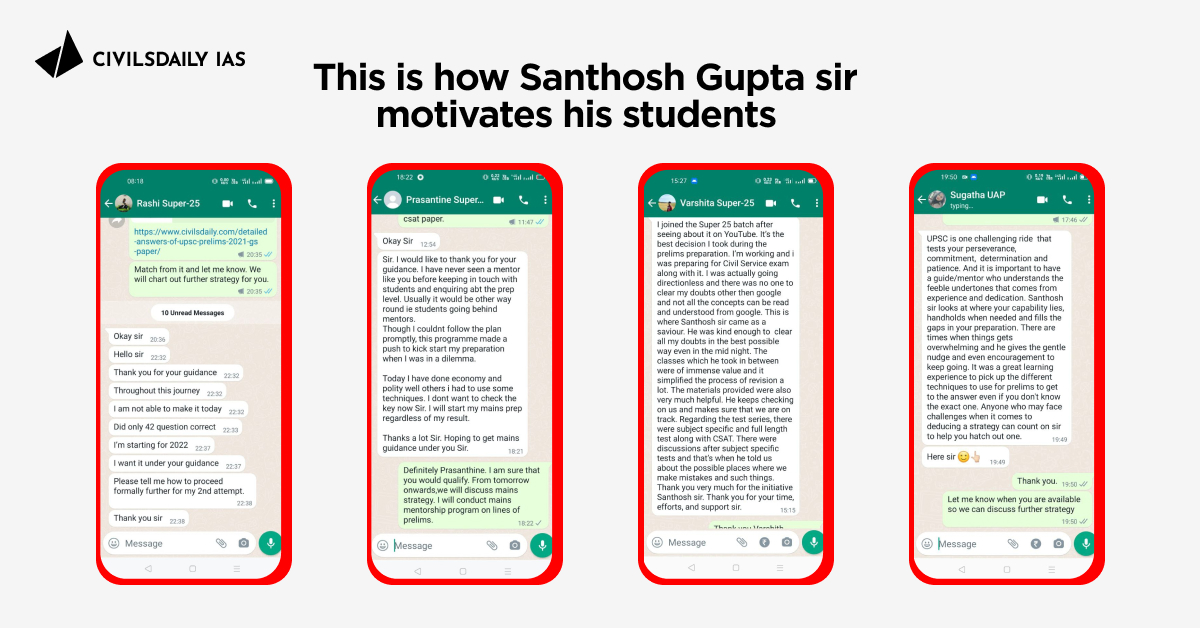
  • Why start IAS Prelims preparation RIGHT NOW? 7 steps to Smash Prelims 2023. Watch Video| Get Santosh sir’s notes (FREE)| Read success stories of three failures to 130+ in UPSC Prelims

    Only 30 seats left. Register now. | Smash Prelims 2023 under Santosh Gupta sir’s mentorship can increase your chances to clear Prelims by 85% | Read about Arsalanali and Tavishi’s success

    Click here for Smash Prelims 2023 details: Test series, 1-1 Mentorship, lectures and notes


    There is no doubt that UPSC Prelims could be the toughest stage. It is the great filter that weeds out the not-so-serious candidates but at times many serious ones too.

    Santosh sir here in this video gives explains why you should start preparing for UPSC 2023 right now. He touches upon five variables/factors that a student must consider at this moment: The Time factor, Priorities, Efforts, Guidance/Mentorship, and the most important of all- Right approach. Watch the video below.

    While there could be many reasons for failing in Prelims like insufficient syllabus coverage, mocks or test series not attempted, no proper planning, lack of conceptual understanding, etc but the major one is lack of guidance, preparation analysis, and course correction at regular intervals.

    To tackle all these Santosh sir, the mentor in chief for the CD Prelims program talks about 7 steps to smashing IAS Prelims incorporated under Smash Prelims 2023 program.

    1. Revising and covering syllabus through small measurable targets
    2. Make Short and smart notes of most important and relevant keywords/topics
    3. Attempting and analyzing past year UPSC Prelims papers (2000- 2022)
    4. Attempt Test:  Logical approach
    5. Analysis of the Mistakes: Fewer mistakes > Higher score through FCA/E approach 
    6. Revision of the topics where you made mistakes
    7. Analysis of the test, revision and discussion with Santosh sir
    Tavishi failed thrice in the Prelims before but after joining Santosh sir’s mentorship cleared Prelims 2022 in her 4th attempt. Schedule a call with Tavishi’s mentor
    You are 8 times more likely to clear Prelims 2023 with Santosh sir’s mentorship

    SMASH PRELIMS 2023: PERSONALIZED MENTORSHIP, TEST SERIES, LECTURES, NOTES

    Our Smash Prelims Program started as a pilot project last year with an aim to introduce step-wise improvement in our chosen 40 aspirants. Over a period of 2 months, Santhosh sir inculcated confidence in aspirants who were either newbies or gave too many attempts. This year, we achieved a remarkable 80% success ratio. This year, we have set our eyes on 100%. Yes, we are as ambitious and aspirational just like any other UPSC aspirant.


    About 6 pillared approach of Smash Prelims 2023

    Pillar-1: 44 Prelims test

    Prelims Tests: 44 (14 Basic + 8 Advanced + 6 CA tests + 10 Full tests + 6 CSAT tests)

    Pillar-2: Special Value Additions Notes and Classes by Santosh Gupta

    50 Special classes on topics including Polity, History, Economics, Geography, Sessions to cover Environment innovatively, Science & Technology and more.

    Pillar-3: Mentorship calls

    One-to-one mentorship by core faculty and toppers

    • One to one Mentor calls after tests
    • Habitat/WhatsApp support from mentors
    • Frequent sessions with toppers for support and guidance.
    You are 8 times more likely to clear Prelims 2023 with Santosh sir’s mentorship

    Pillar-4: Weekly zoom session by Santosh Gupta 

    Doubt clearance and continuous improvement

    Pillar-5: Learn Question-solving 

    • Strategic Live 1000 Questions solving with Santosh Gupta sir for Prelims-2023
    • Learn Art of Question-solving: Using Logical approach + Elimination techniques
    • Live Question solving of Previous year’s questions

    Pillar-6: Current Affairs

    Specifically made Current affairs notes + Live classes by core faculty for the entire two years for prelims.

    You are 8 times more likely to clear Prelims 2023 with Santosh sir’s mentorship under the Smash Prelims program
    Click and Enroll here

    About Santosh Gupta sir

    Santosh Gupta sir has scored above 140 twice in UPSC prelims and always 120 plus in all 6 attempts. He wrote all 6 mains and appeared for Interviews 3 times. He has qualified UPSC EPFO and BPSC 56-59th also. He has been teaching and mentoring UPSC aspirants for the last 5 years.

    What CivilsDaily’s Smash Prelims students have to say?

    Testimonial: Success Stories of Smash Prelims 2022

    From failing twice-thrice to clearing Prelims 2022
  • Latest guidelines on Arrests and Bail Orders

    On July 11, a division bench of the Supreme Court of India in Satender Kumar Antil vs CBI laid down fresh guidelines on arrests in order to have strict compliance with the provisions of Section 41 and 41A of the Code of Criminal Procedure, 1973.

    Why in news?

    • In recent times, there have been several controversies regarding the arrest and subsequent bail of accused persons.
    • On July 16, even the Chief Justice of India (CJI) cautioned against “hasty and indiscriminate arrests”.
    • He further commented on the delay in bails and the plight of undertrial prisoners.

    What are the guidelines?

    • In the case of Arnesh Kumar (2014), the apex Court had rightly observed that “arrest brings humiliation, curtails freedom and cast scars forever”.
    • With regard to the Satender Kumar Antil case, the Court has issued specific directions and has also called for a compliance report.
    • The Court said that the investigating agencies and their officers are duty-bound to comply with the mandate of Section 41 and 41A and the directions issued.

    How is a person arrested?

    • Arrest in its simplest form is defined as, “when one is taken and restrained from his liberty”.
    • The police has wide powers to arrest under the Code of Criminal Procedure, 1973.
    • In the Joginder Kumar (1994) verdict, the Court had stated that “arrest and detention in police lock-up of a person can cause incalculable harm to the reputation and self-esteem of a person”.

    What are Sections 41 and 41A of the Code of Criminal Procedure?

    • Section 41 provides for the circumstances in which arrest can be made by the police without a warrant and mandates for reasons to be recorded in writing for every arrest and non-arrest.
    • Section 41A provides for the requirement of a notice to be sent by the investigating agencies before making an arrest in certain conditions prescribed by the Code.

    What did the court comment regarding these articles?

    • The Court stated that any dereliction on the part of the agencies has to be brought to the notice of the higher authorities by the court followed by appropriate action.
    • The Bench further said that the courts will have to satisfy themselves on the compliance of Section 41 and 41A.
    • Any non-compliance would entitle the accused for a grant of bail.

    What are the guidelines with respect to bail?

    Regarding bail, the Court has made a specific observation in the form of an obiter that the:

    • GoI may consider the introduction of a separate enactment, i.e. a Bail Act, so as to streamline the grant of bails.
    • It is clearly stated that there need not be any insistence on a bail application while considering the application under Sections 88, 170, 204 and 209 of the Code.
    • The Court said that there needs to be a strict compliance of the mandate laid down in the judgment of this court in Siddharth” (Siddharth vs State of U.P., 2021).
    • It is a clear direction of the Court that bail applications ought to be disposed of within a period of two weeks except if the provisions mandate otherwise — the exception being an intervening application.
    • The Court also said that applications for anticipatory bail are expected to be disposed of within a period of six weeks with the exception of any intervening application.
    • The High Courts have been directed by the apex court to identify undertrial prisoners who cannot comply with bail conditions.

    Way forward

    • The State and Central governments will have to comply with the directions issued by the Court from time to time with respect to the constitution of special courts.
    • The High Court in consultation with the State governments will have to undertake an exercise on the need for special courts.
    • The vacancies should be filled up in the position of Presiding Officers of the special courts, expeditiously.
    • The CJI has also raised the issue of vacant positions and infrastructural requirements in the judiciary.


    UPSC 2023 countdown has begun! Get your personal guidance plan now! (Click here)

More posts
