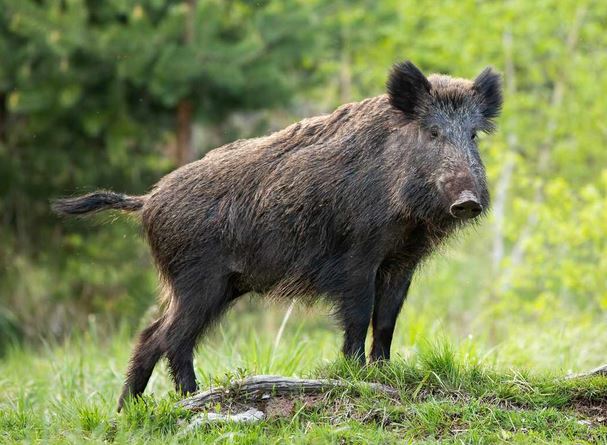
The Tamil Nadu government has approved the controlled hunting of wild boars causing distress to farmers near forest areas.
Presently, Wild boars are NOT listed as Vermin under the Schedule V of the Wildlife Protection Act, 1972.
About the Farmers’ Conflict Resolution Committee
The Committee includes representatives from the Departments of Forest, Revenue, Agriculture, and Horticulture, along with scientific experts and wildlife enthusiasts.
Objective: The committee was formed to study the impact of raids by elephants and wild pigs on agricultural crops.
Implementation Protocol:
Approval Process: The culling will require approval from a local three-member checking body.
Composition of the Checking Body: The body will include a forester or forest guard, the Village Administrative Officer, and the ward member.
Supervision: Culling operations must be conducted in the presence of these three members.
Zoning for Culling Operations
Areas adjacent to reserve forests will be divided into three zones:
Zone A: Within one kilometre from forest limits.
Zone B: One to five kilometres from forest limits.
Zone C: Beyond five kilometres from forest limits.
Restrictions: Shooting of wild pigs is prohibited within five kilometres of the reserve forest (Zones A and B).
Scientific Approach to Culling:
Scientific Methodology: The shooting of wild boars must adhere to a scientific approach, considering the intensity and frequency of conflict incidents.
Expert Concerns: Experts highlight the ecological role of wild boars and caution against indiscriminate killing.
About Indian Wild Boar
Details
Scientific Name
Sus scrofa cristatus
Habitat and Distribution
High grass, bushes, forests, high crops, dense forests, grasslands, scrublands, agricultural areas; Indian subcontinent, various altitudes from sea level to mountains
Gestation: around four months; Litter size: multiple piglets
Ecological Role
Seed dispersal aiding plant propagation;
Important prey species maintaining predator-prey balance in the ecosystem
Conservation Status
IUCN Red List: Least Concern
Wildlife (Protection) Act, 1972: Schedule III
Proposed reclassification to Schedule V (vermin) due to agricultural damage.
Present Culling
Section 11-B (1) of the Wildlife (Protection) Act, 1972 allows the Chief Wildlife Warden to issue special orders to kill dangerous wild animals.
Back2Basics: Schedule III of WPA, 1972
Protection Level: Lesser degree of protection compared to Schedule I and II.
Prohibition: Hunting of these species is prohibited except under special circumstances defined by the Act.
Penalties: Violations related to these species attract penalties, though they are less stringent than those for higher schedules.
Species Listed in Schedule III: As per the latest available data, the following are examples of species listed under Schedule III of the Wildlife (Protection) Act, 1972:
Chinkara (Gazella bennettii): Also known as the Indian Gazelle, found in various parts of India.
Blackbuck (Antilope cervicapra): A species of antelope native to India.
Blue Bull (Boselaphus tragocamelus): Also known as the Nilgai, the largest Asian antelope.
Indian Wild Boar (Sus scrofa cristatus): A subspecies of the wild boar native to the Indian subcontinent.
Sambar (Rusa unicolor): A large deer native to the Indian subcontinent.
Legal Provisions:
Hunting Prohibition: Hunting any animal listed under Schedule III is prohibited except for purposes like scientific research, education, and when permitted by the authorities under specific conditions.
Penalties: The penalties for offenses involving Schedule III animals include imprisonment up to three years, or a fine up to Rs. 25,000, or both.
PYQ:
[2017] In India, if a species of tortoise is declared protected under Schedule I of the Wildlife (Protection) Act, 1972, what does it imply?
(a) It enjoys the same level of protection as the tiger.
(b) It no longer exists in the wild, a few individuals are under captive protection; and now it is impossible to prevent its extinction.
(c) It is endemic to a particular region of India.
(d) Both B and C stated above are correct in this context.
It was first issued in 1917 by the Dogra Maharaja of J&K, the ordinance remains in effect.
The ordinance mandates death or rigorous imprisonment for life, or imprisonment up to 10 years with a fine for aiding the enemy or engaging in actions detrimental to Indian military operations.
Its Evolution:
Post-Partition Incorporation: The ordinance was retained as a law in J&K post-1947 and amended over time.
Changes Post-2019: Following the repeal of Article 370, the Jammu and Kashmir Reorganisation Act retained the Enemy Agents Ordinance and other security laws while replacing many state laws with Indian laws, such as the Indian Penal Code.
Trial Procedures under the Ordinance
Special Judge Appointment: Trials are conducted by a special judge appointed by the government in consultation with the High Court.
Legal Representation: Accused individuals can only engage a lawyer if permitted by the court.
No Appeal Provision: Verdicts can only be reviewed by a High Court judge chosen by the government, with the decision being final.
Publication Bar: Unauthorized disclosure or publication of trial information is punishable by imprisonment up to two years, fine, or both.
Notable Application of the Ordinance
Notable Cases: Many Kashmiris have been tried under the ordinance, including Maqbool Bhat, the founder of Jammu Kashmir Liberation Front, who was hanged in Tihar Jail in 1984.
Current Context: The Enemy Agents Ordinance continues to be a critical tool in addressing militant assistance in J&K, reflecting the stringent legal measures in place to maintain security.
PYQ:
[2019] The banning of ‘Jamaat-e-Islami’ in Jammu and Kashmir brought into focus the role of over-ground workers (OGWs) in assisting terrorist organizations. Examine the role played by OGWs in assisting terrorist organizations in insurgency affected areas. Discuss measures to neutralize the influence of OGWs.
[2019] Indian government has recently strengthen the anti-terrorism laws by amending the unlawful activities (Prevention) Act, (UAPA), 1967 and the NIA Act. Analyze the changes in the context of prevailing security environment while discussing scope and reasons for opposing the UAPA by human rights organisations.
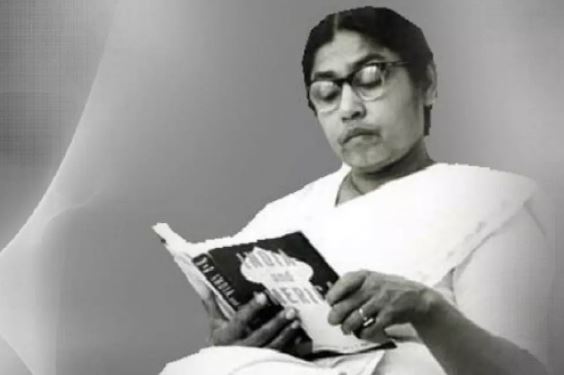
June 25 is the birth anniversary of “Sucheta Kripalani”,India’s first woman Chief Minister.
Who wasSucheta Kripalani?
Sucheta Kripalani was born on June 25, 1908, in Ambala, Punjab. Daughter of S. N. Majumdar, a government surgeon. She studied at Indraprastha College for Women and St. Stephen’s College, University of Delhi.
She married J. B. Kripalani, a former Congress president and Gandhian, in April 1936 against familial and Mahatma Gandhi’s wishes.
Political Journey and Chief Ministership
Early Career: Joined BHU to teach Constitutional History in 1929, participated in Satyagraha, and was imprisoned in 1940.
Congress Role: Organized the foreign affairs wing of AICC and later founded the All India Mahila Congress.
She won by a margin of 99 votes over Kamalapati Tripathi and was sworn in as CM on October 2, 1963.
Contributions and Achievements
Educational Reforms: Waived school fees for girls up to Class 10 from January 1965. Established Meerut University and Kanpur University.
Social Reforms: Increased reservation for SCs in government jobs to 24% in Group C and 45% in Group D until the 18% target was achieved.
Infrastructure Developments: Established a Sainik School in Ghorakhal, a new medical college in Meerut, and the UP Awas Vikas Parishad. She created the post of agriculture production commissioner.
Crime Control: Neutralized many dacoits in the Chambal Valley with the help of the Police Radio Unit.
Anti-Corruption Stance: Emphasized the need to tackle growing corruption in public services, supporting the Union government’s initiative to appoint a vigilance commission.
Multifaceted Contributions: Involved in relief activities for the 1934 Bihar earthquake, Noakhali riots, Tibetan refugee rehabilitation, and the Indo-Pak War of 1971.
Criticism and Response: Faced criticism for being influenced by English, despite being a staunch supporter of Hindi. Advocated for creating an atmosphere for Hindi in governance.
Later Life and Legacy
Post-CM Career: Served as Lok Sabha MP until 1971.
Impact: Her tenure as CM and various social contributions left a lasting impact on Indian politics and society, especially in terms of women’s leadership and social reforms.
PYQ:
[2011] With reference to the Indian freedom struggle, Usha Mehta is well-known for:
(a) Running the secret Congress Radio in the wake of the Quit India Movement
(b) Participating in the Second Round Table Conference
(c) Leading a contingent of the Indian National Army
(d) Assisting in the formation of Interim Government under Pandit Jawaharlal Nehru
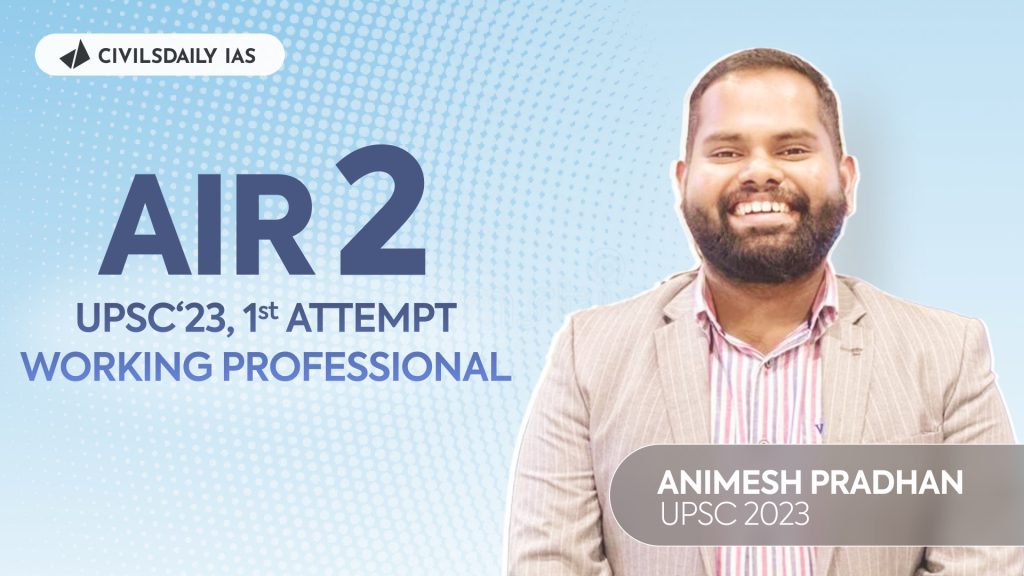
This year’s Smash Mains Program has AIR-2 Animesh Pradhan as Super Mentor. The same program that helped him get 473 marks in GS Mains.
As a Super Mentor, he will hold lectures and copy discussion sessions. Smash Mains Program is not just a Mains Test Series. It includes something very critical. and impactful i.e. Classes to cover various important and recurring themes in Mains exam.
First, let’s understand why we must rethink the Mains preparation and how Smash Mains differs from all other Mains Programs.
Traditional methods believe that mains prep is just about Answer Writing. In reality, that is just 20% of overall Mains prep.
They don’t focus on Notes, Revision, Answer Thinking, Enrichment, Structure etc.
Conventional wisdom doesn’t work, and it worries us that so many Mains aspirants still follow outdated methods and obsolete, ‘far from reality’ programs.
Conventional wisdom is lazy thinking. It’s looking at old and obsolete ways and believing that’s what will work in the future, too. Continuing to rely on outdated methods is similar to expecting a horse and carriage to compete with a modern car.
It’s looking at average notes, incomplete revision, and existing approaches to Mains Prep and then believing that’s the best you can do.
The opposite of conventional wisdom is first principles. Rethinking the whole Mains Prep from scratch and building from there to align with UPSC requirements. Rigorously testing each Mains question and answer in a mock test and giving sharp feedback to continuously improve the score.
If you still believe in those methodologies, then Smash isn’t for you. But if you have tried old ways and realized their futility, then apply for Smash Mains today.
Before joining any test series, get your copies evaluated by our Mentors
Animesh’s command on answer writing grew month after month with each test. We did a detailed session discussing his evolution.
He didn’t follow conventional wisdom. He knew precisely what to focus on and what was important, and this is what he brings to the students of Smash Mains this year.
Smash Mains is the entire Mains program re-engineered.
Not putting Penguins among the Fowls – You already know how to write an average answer (you’re missing it by a few marks actually). You want to know how to increase your score from 90 to 110-115. The approach followed by other institutes in their Test series is the same for a veteran and a complete newbie and here lies the problem. Without personalized one-to-one interaction, it will be difficult for you to rectify these minute yet very important shortcomings.
Evaluation is a strength of this program and we put it on a high priority. Arvind sir himself is involved in the process, unlike other institutes where evaluation is outsourced to those who themselves might not have appeared for mains (It’s bizarre). It shouldn’t be based on ‘model answers’ as there are 3-4 ways of approaching an answer. Only a seasoned player will be able to go beyond these model answers and be able to appreciate your approach (If it’s innovative) even if it differs from the model answers provided.
Test copies get checked in a time-bound manner. The questions, answers, and material provided are of the highest quality.
Always on time and insightful discussions end with a reality check and motivation to perform better in the next test.
Emphasis on execution and utilization of knowledge—Mains is not only about knowledge but also about optimally expressing the relevant knowledge.
Our mentor’s interventions are highly specific and not generalized. Sitting right in front of you, he walks you through each question. He is always there, and he will not let you lose your focus.
Q Climate change is a global problem. How India will be affected by climate change? How Himalayan and coastal states of India will be affected by climate change? (UPSC IAS/2017)
Q Should the pursuit of carbon credits and clean development mechanisms set up under UNFCCC be maintained even though there has been a massive slide in the value of a carbon credit? Discuss with respect to India’s energy needs for economic growth.(UPSC IAS/2014)
Mentor comment: The Indian Himalayan Region is crucial for its rich biodiversity, serving as a habitat for diverse flora and fauna, including endangered species. It plays a vital role in regulating regional and global climate patterns, hosting the source of major rivers essential for water supply and agriculture. Culturally and spiritually significant, it supports the livelihoods of indigenous communities, offering opportunities for tourism, research, and sustainable development.
Let’s learn!
Why in the News?
The dissonance between the special development needs and the development model being pursued in the Indian Himalayan Region.
Supreme Court’s Stance on Sustainable Development
Rights-Based Regime: Recent Supreme Court judgments indicate a move towards recognising sustainable development as a fundamental right.
Case Highlight: In the State of Telangana and Others vs. Mohd. Abdul Qasim (2024), the Court emphasised the need for an ecocentric view of the environment.
Trusteeship of Earth: The Court stated that humanity must act as trustees of the Earth, respecting the rights of natural entities like rivers, lakes, and mountains.
A model of destruction
Hydroelectric Power Stations: Rampant construction of hydroelectric power stations without consideration for the rights of rivers and streams.
Road Widening: Reckless widening of hill roads to four lanes, leading to frequent damage during river floods.
Construction Violations: Rampant construction violates norms and regulations, including building on river beds, flood plains, steep slopes, seismic zones, and landslide-prone areas.
Environmental Disasters: Instances like the Teesta dam breach in Sikkim and monsoon floods and landslides in Himachal Pradesh in 2023 highlight the destructive impact of the development model on the environment, ecology, and local communities.
Need for a Balanced Development Approach
Ecocentric and Anthropocentric Views: Both approaches require aligning growth aspirations with environmental science and the rights of people and nature.
Supreme Court’s Guidance: The Court’s judgments stress the intersectionality of environmental protection and human rights.
Carrying Capacity and Developmental Rights: Judicial Precedence
Carrying Capacity Studies: In Ashok Kumar Raghav vs Union of India (2023), the Supreme Court sought a way forward to manage the carrying capacity of Himalayan states.
Right to a Clean Environment: In the Great Indian Bustard case, the Court linked the right to life and equality with the right to be free from adverse climate impacts.
Significance of Infrastructure and Climate Resilience
Sustainable Infrastructure: Development must be resilient to climate change impacts to ensure equality and access to opportunities.
Impact on Social Inequality: Disasters amplify social inequality, disproportionately affecting the poor.
Judicial Mandate: The Supreme Court’s judgments call for integrating disaster management in development planning.
Fundamental Right to Sustainable Development
New Fundamental Right: The right to be free from adverse climate impacts is now recognized as a fundamental right.
Implications for IHR: People in the IHR have a fundamental right to a development model that is sustainable and respects the region’s carrying capacity.
Need for Legal Framework: The Supreme Court’s judgments should guide the creation of a legal framework to ensure sustainable development in the IHR.
Way Forward
Integrated Approach Needed: Development planning must incorporate disaster prevention and resilience measures.
Convergence of Authorities: The planning stage convergence of different authorities is essential to ensure that all disaster and climate resilience concerns are addressed before project implementation.
Role of Science and Policy: Science, policy, and action must align in an integrated approach involving policymakers, planners, scientists, and communities.
Call for Action: The Supreme Court’s judgments provide a basis for necessary course corrections in development practices, especially in the IHR.
Balancing Development and Resilience: Achieving a balance between development and disaster resilience is crucial for sustainable progress.
The opposition party has demanded the immediate suspension of all clearances granted to NITI Aayog’s Great Nicobar Island (GNI) Project.
It alleged violations of due process, legal and constitutional provisions protecting tribal communities.
Great Nicobar Island: An Overview
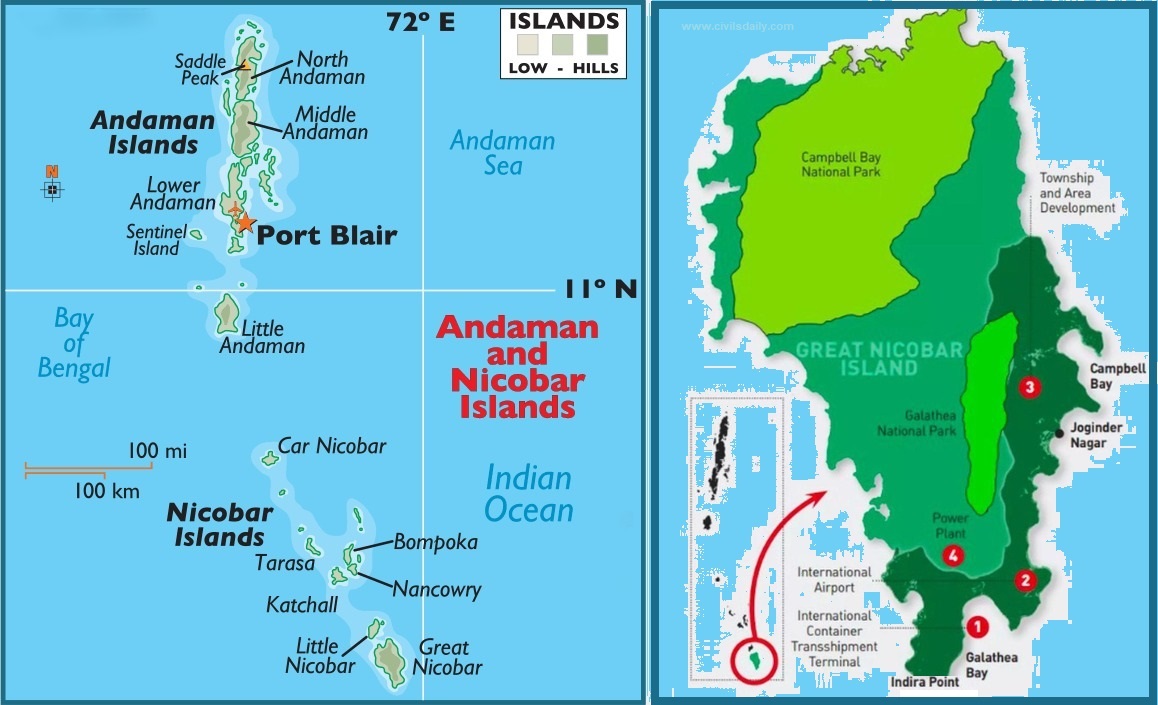
Geography and Ecology: Southernmost tip of India, part of the Andaman and Nicobar archipelago comprising 600-odd islands.
Environment: Hilly, covered with lush rainforests, annual rainfall of around 3,500 mm.
Biodiversity: Hosts numerous endangered and endemic species including the giant leatherback turtle, Nicobar megapode, Great Nicobar crake, Nicobar crab-eating macaque, and Nicobar tree shrew.
Area: 910 sq km with mangroves and Pandan forests along the coast.
Indigenous Communities:
Shompen Tribe: Approximately 250 people live in interior forests, predominantly hunter-gatherers, classified as a Particularly Vulnerable Tribal Group.
Nicobarese Community: Two groups – Great Nicobarese and Little Nicobarese, practice farming and fishing.
Resettlement: The Great Nicobarese were resettled in Campbell Bay after the 2004 tsunami.
Administrative Hub: Campbell Bay serves as the administrative hub, housing local offices of the Andaman and Nicobar administration and the panchayat.
Back2Basics:“Nicobar Triangle”
It is named after the Nicobar Islands, which are located at the northern apex of this triangular area.
The islands within the Nicobar Triangle include:
Nicobar Islands: This group of islands belongs to India and is situated to the south of the Andaman Islands. They are known for their diverse flora and fauna and are inhabited by indigenous tribes.
Andaman Islands: Located to the north of the Nicobar Islands, the Andaman Islands are also part of India. They are well-known for their lush forests, coral reefs, and indigenous tribes.
Indonesian Archipelago: To the south and southeast of the Nicobar Islands lies the Indonesian archipelago, which includes thousands of islands spanning a vast area between the Indian and Pacific Oceans.
What is GNI Project?
The GNI Project refers to the “Holistic Development of Great Nicobar Island,” a proposed mega project being piloted by NITI Aayog.
Implementing Agency: The project is to be implemented by the Andaman and Nicobar Islands Integrated Development Corporation (ANIIDCO).
Historical Context: Development plans for a port in Great Nicobar date back to the 1970s, aimed at leveraging its strategic location near the Malacca Strait.
The project aims to develop the southern end of the Andaman and Nicobar group of Islands in the Bay of Bengal by constructing –
Transshipment port
Dual-use military-civil international airport
Power plant (450 MVA gas and solar-based) and
A township over a span of 30 years on more than 160 sq. km of land, of which 130 sq. km is primary forest
Features of the Project
Transshipment hub of the East: The proposed port will allow Great Nicobar to participate in the regional and global maritime economy by becoming a major player in cargo transshipment.
Naval control: The port will be controlled by the Indian Navy, while the airport will have dual military-civilian functions and will cater to tourism as well.
Urban amenities: Roads, public transport, water supply and waste management facilities, and several hotels have been planned to cater to tourists.
Significance of the project
Economic significance: The proposed port would allow GNI to become a significant player in cargo transhipment, as it is positioned equidistant from Colombo, Port Klang (Malaysia), and Singapore.
Strategic significance: The proposal to develop GNI has been on the table since the 1970s, and it has been highlighted repeatedly as a crucial element for national security and consolidation of the Indian Ocean Region.
In recent years, the escalating Chinese presence in the Indian Ocean has added greater urgency to this imperative.
Issues with the Project
The project entails the deforestation of 130 sq km, and felling 10 lakh trees, threatens biodiversity at Galathea Bay, displaces indigenous tribes, lacks thorough impact assessments, and poses seismic risks to vulnerable communities.
Due-process Violations highlighted by the ‘Opposition’
(1) Did not recognise the grant ownership: The island administration did not recognise or grant ownership of any forest land to local tribespeople as per FRA, a requisite step under the Forest Conservation Rules, 2017, before Stage-I clearance is granted.
This is despite the fact that Rule 6(3)(e) of Forest Conservation Rules-2017 (FCR) requires that any diversion of forest land first requires the District Collector to recognise and vest rights to locals under the FRA.
The legislation allows forest communities the right to control and manage the use of the forest land over which they hold titles, and their consent is mandatory for diverting it.
(2) Inconsistencies with Stage-I Clearance: The Stage-I clearance for the project was granted in October 2022, two years after the application was received. Monthly progress reports show that the district administration did not process any claims over forest land under the FRA in the 26 months since project sanction.
(3) Withdrawal of Consent: Weeks after the Stage-I clearance was granted, the Tribal Council at Campbell Bay withdrew the consent granted by the Gram Sabha.
Srinagar has become the fourth Indian city to be recognised as a ‘World Craft City’ by the World Craft Council (WCC), three years after it was designated as part of the UNESCO Creative City Network (UCCN) for crafts and folk arts.
Craft Sector in Kashmir
The Indian National Trust for Art and Cultural Heritage-Kashmir (INTACH-K) is working with the J&K Handicrafts department to map Srinagar’s craft sector in preparation for the final nomination.
Srinagar boasts a rich artisanal heritage, with over 20,000 registered craftsmen engaged in various disciplines such as papier mâché, walnut wood carving, hand-knotted carpets, and more.
Handicrafts contribute significantly to the local economy, with approximately 2.64% of J&K’s overall economic output attributed to the sector by 2016-17.
Notable Craft: Papier-Mache, Walnut Wood Carving, Carpets, Sozni embroidery and Pashmina and Kani shawls.
About World Craft Council (WCC International)
Details
What is it?
Non-profit, Non-governmental organization
Working
Establishment in 1964;
Registered in Belgium as an international association without lucrative purpose (AISBL).
Affiliated to the UNESCO
Founders
Kamaladevi Chattopadhay and Aileen Osborn Webb
Purpose
To promote fellowship among craftspersons worldwide, foster economic development through craft-related activities, organize exchange programs, workshops, conferences, seminars, and exhibitions, and offer encouragement and advice to artisans.
Legal Status
Registered in Belgium as an international association without lucrative purpose (AISBL)
WCC is organized into five regions: Africa, Asia Pacific, Europe, Latin America, and North America.
Meetings
European branch meets annually;
The General Assembly occurs every four years (took place in Chennai in 2012).
What is World Craft City (WCC) Designation?
The WCC initiative was launched in 2014 by the World Crafts Council AISBL (WCC-International).
It recognizes the pivotal role local authorities, craftspeople, and communities play in cultural, economic, and social development worldwide.
India has only 3 cities designated as World Craft City:
Jaipur (Kundan Jadai (Gem setting), Meenakari Jewellery, Lac-based craft, Gotta Patti Work etc. )
Mysuru (Kinnal paintings, Sandalwood carvings, Rosewood Inlay etc. )
Mamallapuram (Stone Carving continuing since Pallava dynasty (275 CE to 897 CE))
PYQ:
[2018] Safeguarding the Indian art heritage is the need of the moment. Comment (10M)
[2018] Consider the following pairs:
Puthukkuli shawls — Tamil Nadu
Sujni embroidery — Maharashtra
Uppada Jamdani saris — Karnataka
Craft Heritage of which of the pairs given above is/are correct?
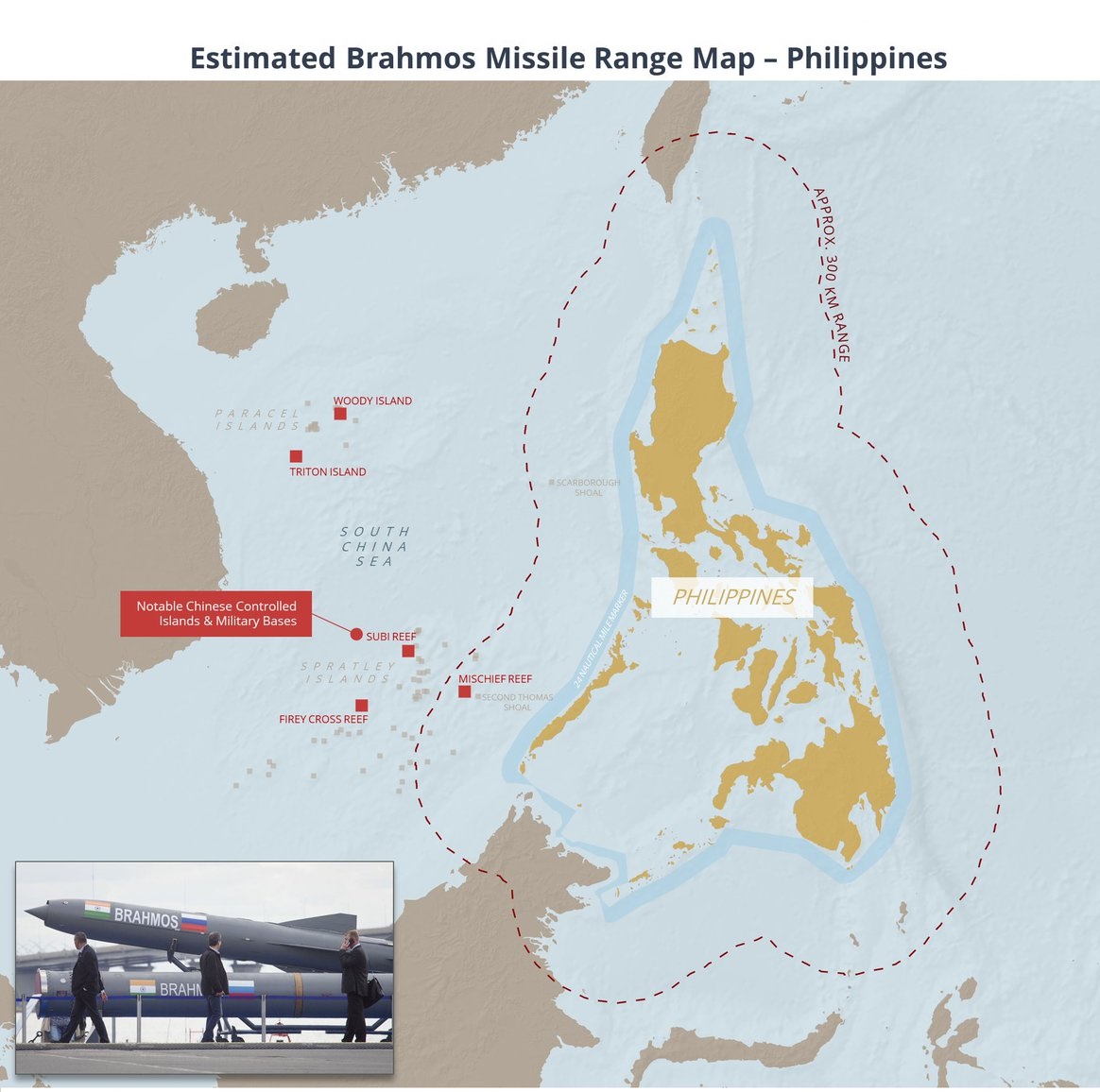
The BrahMos cruise missiles so inducted are termed a “game changer” by the Philippines envoy. The missiles provide credible defence and deterrent capabilities to the Philippines’ armed forces.
About BrahMos Missiles
BrahMos is a joint venture between the DRDO and Russia’s NPO Mashinostroyeniya.
The name BrahMos comes from the two rivers, the Brahmaputra of India and the Moskva of Russia.
The first successful test in 2001 was conducted from a specially designed land-based launcher.
Capabilities:
BrahMos is a medium-range ramjet supersonic cruise missile.
Launched from: submarines, ships, aircraft, or land.
It is the fastest supersonic cruise missile in the world.
It has two stages:
The first stage comprised a solid-fuelrocket booster and
The second stage comprises a liquid-fueled ramjet. ( because it provides the capability to manoeuvre and increase the range of missiles)
Warhead:
Ship-launched and land-based missiles can carry a 200 kg warhead,
Aircraft-launched variant (BrahMos A) can carry a 300 kg warhead.
Variants and Range
The missile travels at speeds of Mach 2.8 to 3.0, which is being upgraded to Mach 5.0.
A hypersonic version of the missile, BrahMos-II, is also presently under development with a speed of Mach 7-8 to boost aerial fast strike capability.
Initially restricted by the Missile Technology Control Regime to a range of 290km, the BrahMos missile’s range was extended to 450km following India’s entry into the regime in June 2016.
Ongoing efforts aim further to extend the missile’s range beyond 600km, enhancing its operational reach and effectiveness in various scenarios.
India-Philippines Relations: A quick recap
Context: 2023 marked the 75th anniversary of bilateral relations between India and the Philippines.
Equipment Transfers: These agreements facilitated government-to-government procurement of defence material and equipment.
Details of the BrahMos Deal
A MoU on defence cooperation was signed in 2006, reinforced by a 2017 MoU on defence industry and logistics cooperation.
Contract Details: In January 2022, the Philippines signed a $375 million deal with India for three batteries of shore-based anti-ship BrahMos missiles.
First Export Customer: The Philippines became the first export customer for the joint India-Russia venture.
Delivery Milestone: The first batch of missiles was delivered in April 2024.
Boost to India’s Defence Export: This deal marks India’s first overseas export of the BrahMos, showcasing India’s growing defence industry capabilities.
Bilateral Trade and Economic Cooperation
Trade Milestone: In 2023, bilateral trade crossed the $3 billion mark for the first time, with a trade balance in India’s favour.
Preferential Trade Agreement (PTA): Ongoing negotiations for a PTA aim to enhance trade balance and diversification.
Trade Partnerships: India is among the top 15 trade partners for the Philippines.
Modernisation of the Philippines Armed Forces
Phase-3 Modernisation: The Philippines armed forces are in phase-3, termed Horizon-3, of their modernisation programme.
Focus Areas: They are looking at acquiring ships, aircraft, and radars, and enhancing Maritime Domain Awareness (MDA).
Strategic Goals: Aiming to defend entitlements and secure their Exclusive Economic Zone (EEZ) against China over its claims for the South China Sea.
PYQ:
[2014] Which reference to the Agni-IV Missile,
which of the following statements is/are correct?
It is a surface-to-surface missile.
It is fuelled by liquid propellant only.
It can deliver one-tonne nuclear warheads about 7500 km away.
Select the correct answer using the code given below.
A seven-member high-level committee was constituted under the chairmanship of K. Radhakrishnan, former ISRO Chairman, by the Ministry of Education to reform the National Testing Agency (NTA).
About National Testing Agency (NTA)
NTA is a premier, specialist, autonomous and self-sustained testing organization to conducts entrance examinations for admission/fellowship in higher educational institutions.
It was established in 2017 with a grant amount of Rs.25 crore from the Union Government.
NTA is responsible for conducting exams such as:
Joint Entrance Examination – Main (JEE Main)
National Eligibility cum Entrance Test-Undergraduate (NEET-UG) as well as NEET PG
National Eligibility Test (NET)
Common Management Admission Test (CMAT)
Graduate Pharmacy Aptitude Test (GPAT).
The NTA is chaired by an eminent educationist who will be appointed by the Ministry of Education.
There will be a Board of Governors comprising members from user institutions.
National Testing Agency (NTA) Under Scrutiny
The NTA has been criticized after the NEET paper leak controversy and the subsequent scrapping of exams like UGC-NET due to “lack of integrity”.
The committee aims to establish a robust process for conducting various entrance examinations end to end.
NTA Reform Panel: Committee Composition
Committee Head: K. Radhakrishnan, former Chairman of ISRO and Chairman of the Board of Governors at IIT-Kanpur.
Two-Month Timeline: The committee aims to meet ten times over the next two months to develop comprehensive recommendations.
Key Issues and Focus Areas:
Data Security Protocol: Develop a manual to fix a data security protocol to prevent question paper leaks.
Printing and Process Integrity: Review processes for printing question papers, onboarding printers, and training staff to minimize external participation.
Organisational Restructuring: Consider adding a data security vertical in the NTA organogram and implementing transparent processes, requiring organizational restructuring.
Examination Investigation and Security:
Root Cause Analysis: The committee will investigate the initial cause of question paper leaks to identify and plug gaps.
Modes of Examination: Examine different modes of conducting examinations:
JEE (Mains) and JEE (Advanced) are computer-based tests.
NEET-UG is conducted in pen-paper Optical Mark Recognition (OMR) mode.
Challenges faced by NTA
Infrastructure Limitations: Currently, India lacks the infrastructure to conduct computer-based tests online for more than three lakh students simultaneously.
Large-Scale Exams: NEET-UG involves up to 24 lakh students appearing in pen and paper OMR mode at once.
Conclusion
The reforms are critical to restoring the integrity of entrance examinations in India, ensuring secure and fair testing processes.
The committee’s recommendations will play a pivotal role in shaping the future operations of the NTA and entrance examination protocols.
Back2Basic: University Grants Commission (UGC)
Details
Establishment
Came into existence on 28th December, 1953.
Became a statutory organization by an Act of Parliament in 1956.
Legislation
The UGC Act, 1956.
Nodal Ministry
Ministry of Human Resource Development (now Ministry of Education).
Responsibilities
Providing funds to universities and colleges.
Coordination, determination, and maintenance of standards of teaching, examination, and research in institutions of higher education.
Mandate
Promoting and coordinating university education.
Determining and maintaining standards of teaching, examination, and research in universities.
Framing regulations on minimum standards of education.
Monitoring developments in collegiate and university education.
Disbursing grants to universities and colleges.
Serving as a link between the Union and state governments and institutions of higher learning.
Advising Central and State governments on measures necessary for the improvement of university education.
Unique Distinction
Only grant-giving agency in India with the dual role of funding and maintaining standards in higher education institutions.
Functions
Promoting and coordinating university education.
Determining and maintaining standards of teaching, examination, and research in universities.
Framing regulations on minimum standards of education.
Monitoring developments in collegiate and university education.
Disbursing grants to universities and colleges.
Serving as a link between the Union and state governments and institutions of higher learning.
Advising Central and State governments on measures necessary for the improvement of university education.
Link Role
Acts as a vital link between Union and State governments and institutions of higher learning.
Advisory Role
Advises the Central and State governments on necessary measures for the improvement of university education.
The Centre has notified amended rules allowing women government employees to take 180 days of maternity leave for children born through surrogacy.
Changes are introduced in the Central Civil Services (Leave) Rules, 1972.
There were previously no rules granting maternity leave to women government employees for children born through surrogacy.
Back2Basics: Surrogacy (Regulation) Act, 2021
Purpose: The Act aims to regulate surrogacy in India by prohibiting commercial surrogacy and allowing only altruistic surrogacy.
Eligibility Criteria:
Only Indian couples who have been legally married for at least five years can opt for surrogacy.
The woman must be between 25 to 50 years old, and the man must be between 26 to 55 years old.
Both partners must not have any living biological, adopted, or surrogate children.
Surrogate Mother Criteria:
The surrogate mother must be a close relative of the intending couple.
She should be a married woman having her own child and must be 25 to 35 years old.
Prohibitions:
Commercial surrogacy is banned under this Act.
Any form of payment to the surrogate mother beyond medical expenses and insurance coverage is prohibited.
Penalties:
Engaging in commercial surrogacy can lead to imprisonment up to 10 years and a fine up to Rs 10 lakhs.
Regulatory Bodies:
The Act establishes a National Surrogacy Board at the national level and State Surrogacy Boards at the state level to oversee the implementation of the law.
About the Central Civil Services (Leave) (Amendment) Rules, 2024
The amendment is issued under this notification, exercising the powers conferred by the proviso to Article 309 of theConstitution.
Article 309 provides that acts of the appropriate Legislature may regulate the recruitment and conditions of service of personsappointed to public services and posts in connection with the affairs of the Union or any State.
Authority: The President of India has made these amendments to the Central Civil Services (Leave) Rules, 1972.
Features and Benefits:
Surrogacy Inclusion: These amendments specifically address the needs of surrogacy, providing equitable maternity, paternity, and childcare leave benefits to government employees involved in surrogacy.
Enhanced Leave Entitlements:
Maternity Leave: 180 days for both the surrogate and the commissioning mother.
Paternity Leave: 15 days for the commissioning father within six months of the child’s birth.
Child Care Leave: Available to the commissioning mother. Female government servants and single male government servants are already allowed childcare leave for a maximum of 730 days (2 years!) during their entire service for the care of their two eldest surviving children.
Flexibility and Inclusivity:
The amendments aim to provide more flexible and inclusive leave options for government employees, recognizing diverse family structures and reproductive choices.
Support for Families:
These changes enhance support for government employees, ensuring they can adequately care for their children and family needs, especially in cases of surrogacy.
Administrative Implementation:
The rules simplify the process for applying for and approving leave, ensuring that employees can easily access their entitlements.
Impact:
Employee Well-being: Improved leave policies contribute to better work-life balance and overall well-being for government employees.
Gender Equality: By providing paternity leave and child care leave in surrogacy cases, the rules promote gender equality and shared parenting responsibilities.
Organizational Efficiency: Streamlined leave procedures and clear guidelines help maintain productivity and efficiency within government departments.
PYQ:
[2020] In the context of recent advances in human reproductive technology, “Pronuclear Transfer” is used for:
(a) fertilization of egg in vitro by the donor sperm
(b) genetic modification of sperm-producing cells
(c) development of stem cells into functional embryos
(d) prevention of mitochondrial diseases in offspring
![[Biggest Announcement of the Year] Civilsdaily’s Smash Mains Program 2024](https://www.civilsdaily.com/wp-content/uploads/2024/06/SM-Launcg_Final-1568x882.jpg)
![[25th June 2024] The Hindu Op-ed: The Court spells the way in Himalaya’s development](https://www.civilsdaily.com/wp-content/uploads/2024/06/25-June-1568x882.jpg)