80% of UPSC 2021 Mains+Prelims Questions are from Samachar Manthan Current Affairs Test Series!!
100+ rankers vouch for the efficacy of Samachar Manthan, a result-oriented Current Affairs Course…
What is Samachar Manthan?
Samachar Manthan is our flagship program designed to help you develop a solid command of your newspaper reading and current affairs analyzing skills. We are also going to focus on imparting skills required to utilize current affairs. Since it builds your core, it is important for both Prelims and Mains & Interview also.
Guys! UPSC Prelims 2022 GS Paper 1 is just over now.
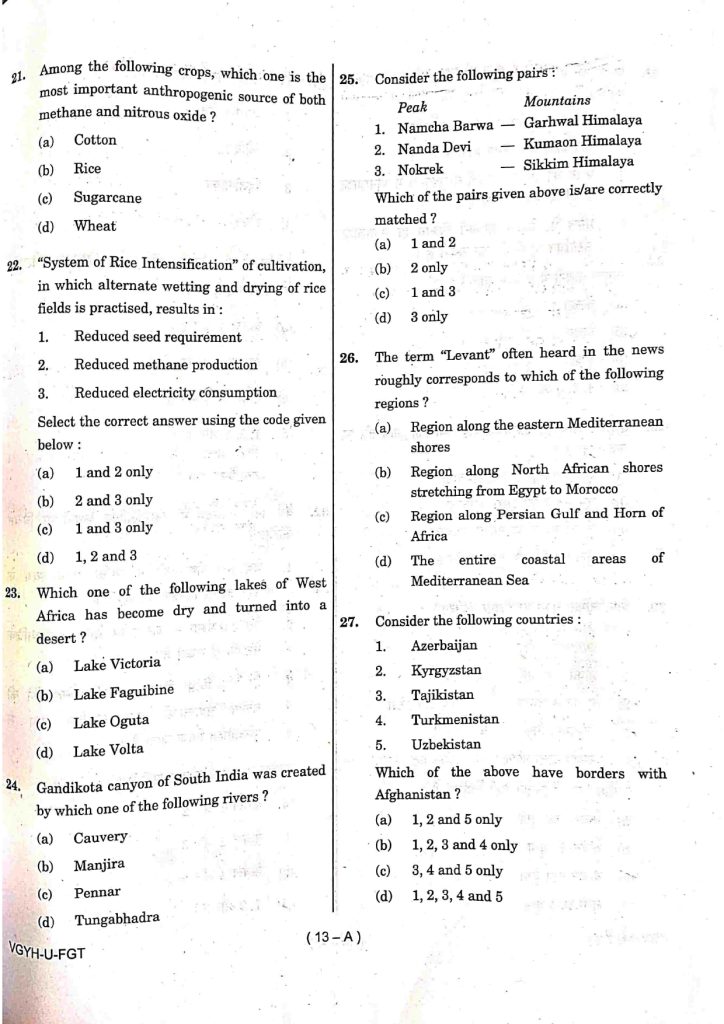
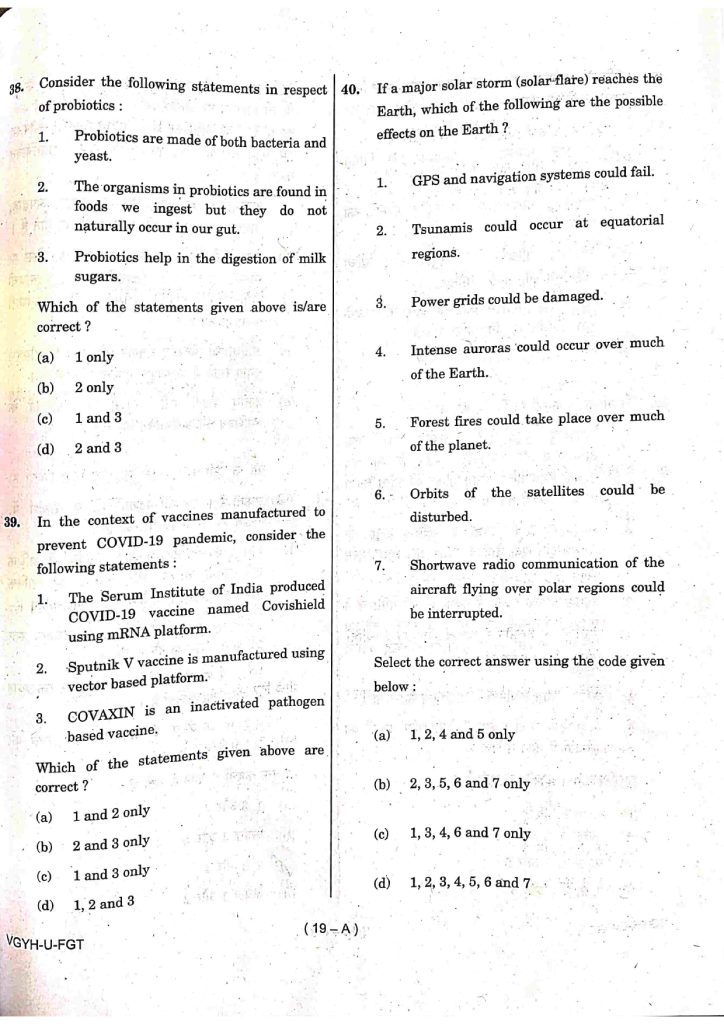
Sharing with you the question paper. 2023 Aspirants please go through these questions and tell us in the comments- how was the paper? which question did you find troubling? and let us solve the paper in the comment box.
‘Civilsdaily has its finger on the pulse of UPSC’. And our students’ success rate is increasing year to year…The Hindu has already acknowledged CD’s 80% success rate.
Guys, Are you a beginner who has no idea about UPSC, but want to check if you have the aptitude for the same? Do you want to assess your performance and interest in UPSC before targetting 2023 preparation?
we have got the perfect opportunity for you. Presenting, Civilsdaily’s UPSC-CSE 2023, Free-To-Register National Scholarship on 5th & 12th June 2022.Both in Online and Offline Mode.
Last year’s scholarship test by Civilsdaily has seen a phenomenal response and pan India interest for the test. Many toppers have emerged out of the test to be subsequently mentored in the Civilsdaily Foundation Program. So aspirants, ensure you don’t miss out on the benefits of the test.
UPSC-CSE 2021 Hall of Fame:
…Still Counting…
Toppers’ Talk Series of our foundation course:
Yaksh Chaudhary AIR-6 UPSC CSE 2021 CD’s Hall Of FameMantri Mourya Bharadwaj AIR 28 UPSC CSE 2021Mantri Mourya Bharadwaj AIR 28 UPSC CSE 2021Rohan Kadam AIR 295 UPSC CSE 2021 Hall of FameSoham Mandre AIR 267 UPSC CSE 2021 Hall of FameSparsh Verma AIR 644 UPSC CSE 2021 Hall of Fame
1. Test your preparation on UPSC-CSE grade questions, at the national level.
2. Chance to compete against the best. See where you stand.
3. Identify your subject-wise strengths, weak points, and problem areas before you start preparation.
4. Mentors will provide personalized counseling based on your performance in the scholarship test.
5. A detailed discussion will help you navigate through the challenges during the preparation.
6. Achieve up to 50% scholarship in our exclusive umbrella foundation course.
Ultimate Assessment Program and Foundation Program include –
Mentorship (1:1, throughout the preparation till the Interview stage)
Masterclasses (complete GS syllabus covered, Only provided in Foundation course)
Samachar Manthan (Current affairs Programme)
Decimate Prelims (Prelims Crash course)
Mains Answer Writing Initiative (Every week)
Smash Mains (upon Qualifying prelims 2023)
Essay Guidance Program (To score above 120+ in Essay Mains Paper)
Interview Guidance Program (more than 1 mock interview will be conducted with a panel)
Civilsdaily IAS Community for Peer to Peer Interaction
The main objective of the program is to identify and nurture serious aspirants to become future UPSC toppers. And that’s why we have designed a scholarship test.
Our foundation course will be intensive yet personalized. You will be getting individual coaching on how to conquer the basics, develop analytical skills, inculcate conceptual clarity, and acquire the necessary knowledge to face the unpredictable and dynamic UPSC.
Apart from conducting subject-wise classes that cover all the Prelims-Mains syllabus from scratch, aspirants will follow a customized timetable and will complete their revision daily to attempt our weekly prelims and mains tests. Once the test is over, they will get a strategy call from a mentor, who will clear their doubts and tell them how to improve their performance from the next test onwards.
Simply put, you will be getting a unique coaching experience that eludes other UPSC aspirants. Even aspects like Essay, Ethics, and CSAT which are ignored in other normal coaching programs, will be covered over here with tests, mentorship, classes, and notes.
If you take the upcoming free UPSC national scholarship test and come out with flying colors, you will get about 50% scholarship on the Civilsdaily Flagship Foundation Course.
One year’s hard work of burning mid-night oil, revising those lengthy books like Laxmikant, making short notes, and updating your current affairs on daily basis.
It is said that UPSC Prelims is just a screening test to weed out the not-so-serious aspirants. Yet it can be brutal when your whole year’s hard work and dedication, is judged in just 120 minutes!
Some of you might be stressed and, some panicky. AND IT’S OKAY!
This post is simply a REMINDER to you guys that YOU ARE A FIGHTER.
You have been fighting for your dream every single day up till now, slogging through days and nights. Tomorrow is just one small battle you have to win to get closer to your dream. So, don’t let the last-minute jitter get the worst of you.
We, at Civilsdaily, want to wish you all the best for tomorrow. We will stand by you in your journey no matter what. There are certain things that we would want to share:
One step at a time – One question at one time: Tackle one question at a time, don’t get hung up on what you know or don’t know.
Do not think of results or cut-offs while still in the exam hall: Let’s take care of that. In 2 days, we will let you know all this information.
Self-control is strength and Calmness is power: Keep your thought process clear and don’t get tempted to mark answers just for the sake of attempting 90 questions.
Believe in yourself and the process: You are braver than you think, more talented than you know, and capable of more than you imagine.
Stay focussed: Focus on your strengths, not your weaknesses. It is time you utilise the best of your hard work.
Don’t consider this as Last minute “Gyan ki Baat”. This is just us wishing the best for you.
A Public Interest Litigation (PIL) petitioner in the Supreme Court barely escaped having to pay ₹18 lakh for indulging in a “luxury litigation”.
What is the news?
A Supreme Court Bench of Justice B.R. Gavai and Hima Kohli initially asked the litigant to pay ₹18 lakh, that is, ₹1 lakh for every one of the 18 minutes the case took up.
However, the court later, in its order, slashed the amount to ₹2 lakh on the request of the litigant’s counsel.
Why did the apex court got disgusted?
The bench criticized the highly derogatory practice of filing frivolous petitions encroaching valuable judicial time.
This time can otherwise be utilised for addressing genuine concerns.
What is Public Interest Litigation (PIL)?
PIL refers to litigation undertaken to secure public interest and demonstrates the availability of justice to socially-disadvantaged parties.
It was introduced by Justice P. N. Bhagwati in 1979.
It is the chief instrument through which judicial activism has flourished in India.
It is suited to the principles enshrined in Article 39A[a] of the Constitution to protect and deliver prompt social justice with the help of law.
How was it introduced?
PIL is a relaxation on the traditional rule of locus standi.
Before 1980s the judiciary and the Supreme Court of India entertained litigation only from parties affected directly or indirectly by the defendant.
It heard and decided cases only under its original and appellate jurisdictions.
However, the Supreme Court began permitting cases on the grounds of PIL, which means that even people who are not directly involved in the case may bring matters of public interest to the court.
It is the court’s privilege to entertain the application for the PIL.
Filing a PIL
Any citizen can file a public case by filing a petition:
Under Art 32 of the Indian Constitution, in the Supreme Court
Under Art 226 of the Indian Constitution, in the High Court
Under 133 of the Criminal Procedure Code, in a Magistrate’s Court
Parties against whom PILs can be filed
A PIL may be filed against state government, central government, municipal authority, private party.
Also, private person may be included in PIL as ‘Respondent’, after concerned of state authority.
g. a private factory in Mumbai which is causing pollution then PIL can be filed against the government of Mumbai, state pollution central board including that private factory of Mumbai.
Importance of PIL
PIL gives a wider description to the fundamental rights to equality, life and personality, which is guaranteed under part III of the Constitution of India.
It also functions as an effective instrument for changes in the society or social welfare.
Through PIL, any public or person can seek remedy on behalf of the oppressed class by introducing a PIL.
Issues with PIL
Off late, PILs have become a tool for publicity.
People file frivolous petitions which result in the wastage of time of the courts.
People have used them with a political agenda as well.
They unnecessarily burden the judiciary.
Even if the petition is eventually dismissed, the courts spend time and effort on them before dismissing them.
How do frivolous petitions waste time?
At present, only judges have the power to dismiss a petition.
The Registry of the SC or HC only ensures that the technical requirements of filing a petition are fulfilled.
As a result of which petitions are admitted to the court irrespective of the merits of the case.
Way forward: Preventing frivolous PILs
The Supreme Court had issued eight directions in its Balwant Singh Chaufal Judgment to help constitutional courts separate genuine PIL petitions from the barmy ones:
It had asked every High Court to frame its own rules to encourage bona fide PIL petitions and curb the motivated ones
Verifying the credentials of the petitioner before entertaining the plea
Checking the correctness of the contents
Ensuring the petition involves issues of “larger public interest, gravity and urgency” which requires priority
Ensuring there is no personal gain, or oblique motive behind the PIL
Ensuring that it is aimed at redressal of genuine public harm or public injury
Conclusion
PIL petitions have had a beneficial effect on the Indian jurisprudence and has alleviated the conditions of the citizens in general.
Such petitions bring justice to people who are handicapped by ignorance, indigence, illiteracy.
Attero Recycling, one of India’s largest electronic waste management companies, is set to invest close to $1 billion in expanding their electronic waste recycling facilities in India.
E-waste Management: A tricky task
E-waste management is a complicated process given the multitude of actors that are involved in the process.
The major stakeholders in the value chain include importers, producers/manufacturers, retailers (businesses/government/others), consumers (individual households, businesses, government and others), traders, scrap dealers, dissemblers/dismantlers and recyclers.
To critically assess each in the different stages of processing, it is important to understand the e-waste value chain.
The process involves four stages: generation, collection, segregation and treatment/disposal.
India’s regulatory ecosystem
Indian electronics sector boomed in the last decade.
Increased production and penetration of imported electronics items led to an accelerated e-waste generation that necessitated regulatory control over the sector.
India has Electronic Waste (Management and Handling) Rules 2011 in place since . Its scope was expanded in 2016 and 2018 through amendments.
Provisions of the 2011 Rules
To streamline e-waste management, the Government introduced Extended Producer Responsibility (EPR) whereby producers were required to collect and recycle electronic items.
Since manufacturers were incurring the disposal cost, their designs would incorporate less toxic and easily recyclable materials, thereby reducing input material requirements.
Inherent flaws in Implementation
Recycling: Less than five percent of the waste is treated through formal recycling facilities.
Informal sector: The rest is handled by the informal sector with very little enforcement of environmental and occupational safety norms.
Weak Regulations: A deeper analysis revealed that the EPR regulations in India were not quantified through collection or recycling targets as in other countries with better implementation framework and mechanisms.
Lack of incentivization: In the absence of targets, producers had little incentive to ensure the collection of their used products.
Current scenario and issues in e-waste recycling
Crude and Scrappage: As of today, some 95% of e-waste is managed by the informal sector which operates under inferior working conditions and relies on crude techniques for dismantling and recycling.
Infrastructure lacunae: Another important issue is the lack of sufficient metal processing infrastructure which is why recyclers have to export materials to global smelters.
Price competencies: As aggregators are mostly informal, they demand up-front cash payments.
Bloomed informal network: The informal network is well-established and rests on social capital ties that PROs have yet to establish and are hence insulated from reaching the viable number of aggregators.
Policy failure: Policy changes have tried repeatedly to formalize the sector, but issues of implementation persist on the ground.
Way forward
Effective design: Since India is highly deficient in precious mineral resources, there is a need for a well-designed, robust and regulated e-waste recovery regime that would generate jobs and wealth.
Consumer responsibility: The consumers must responsibly consume the product for its useful life and then weigh between the chances of repair or disposal with utmost consciousness towards the environment.
Recyclable products: On the supply side, e-waste can be reduced when producers design electronic products that are safer, and more durable, repairable and recyclable.
Reuse: Manufacturers must reuse the recyclable materials and not mine rare elements unnecessarily to meet new production.
Commercial recycling: Rather than hoping that informal recyclers become formal it would be more feasible for companies and the state to design programs ensure e-waste easily makes its way to proper recyclers.
The Supreme Court has directed that every protected forest, national park and wildlife sanctuary across the country should have a mandatory eco-sensitive zone (ESZ) of a minimum one km starting from their demarcated boundaries.
Why such move?
The purpose of declaring ESZs around national parks, forests and sanctuaries is to create some kind of a “shock absorber” for the protected areas.
These zones would act as a transition zone from areas of high protection to those involving lesser protection.
What are the Eco-sensitive Zones (ESZs)?
Eco-Sensitive Zones (ESZs) or Ecologically Fragile Areas (EFAs) are areas notified by the MoEFCC around Protected Areas, National Parks and Wildlife Sanctuaries.
The purpose of declaring ESZs is to create some kind of “shock absorbers” to the protected areas by regulating and managing the activities around such areas.
They also act as a transition zone from areas of high protection to areas involving lesser protection.
How are they demarcated?
The Environment (Protection) Act, 1986 does not mention the word “Eco-Sensitive Zones”.
However, Section 3(2)(v) of the Act, says that Central Government can restrict areas in which any industries, operations or processes or class of industries, operations or processes shall be carried out or shall not, subject to certain safeguards.
Besides Rule 5(1) of the Environment (Protection) Rules, 1986 states that central government can prohibit or restrict the location of industries and carrying on certain operations or processes on the basis of certain considerations.
The same criteria have been used by the government to declare No Development Zones (NDZs).
Defining its boundaries
An ESZ could go up to 10 kilometres around a protected area as provided in the Wildlife Conservation Strategy, 2002.
Moreover, in the case where sensitive corridors, connectivity and ecologically important patches, crucial for landscape linkage, are beyond 10 km width, these should be included in the ESZs.
Further, even in the context of a particular Protected Area, the distribution of an area of ESZ and the extent of regulation may not be uniform all around and it could be of variable width and extent.
The Department of Telecommunications (DoT) and India’s public service broadcaster Prasar Bharati are exploring ‘direct-to-mobile’ (D2M) broadcasting.
What is D2M Technology?
The technology is based on the convergence of broadband and broadcast, using which mobile phones can receive terrestrial digital TV.
It would be similar to how people listen to FM radio on their phones, where a receiver within the phone can tap into radio frequencies.
Using D2M, multimedia content can also be beamed to phones directly.
Benefits of D2M
It allows broadcasting video and other forms of multimedia content directly to mobile phones, without needing an active internet connection.
It promises to improve consumption of broadband and utilisation of spectrum.
Why need D2M?
The idea behind the technology is that it can possibly be used to directly broadcast content related to citizen-centric information.
It can be further used to counter fake news, issue emergency alerts and offer assistance in disaster management, among other things.
Apart from that, it can be used to broadcast live news, sports etc. on mobile phones.
More so, the content should stream without any buffering whatsoever while not consuming any internet data.
What could be the consumer and business impact of this?
For consumers, a technology like this would mean that they would be able to access multimedia content from Video on Demand (VoD) or Over The Top (OTT) content platforms.
This will be without having to exhaust their mobile data, and more importantly, at a nominal rate.
The technology will also allow people from rural areas, with limited or no internet access, to watch video content.
For businesses, one of the key benefits of the technology is that it can enable telecom service providers to offload video traffic from their mobile network onto the broadcast network.
It thus helps them to decongest valuable mobile spectrum.
This will also improve usage of mobile spectrum and free up bandwidth which will help reduce call drops, increase data speeds etc.
What is the government doing to facilitate D2M technology?
The DoT has set up a committee to study the feasibility of a spectrum band for offering broadcast services directly to users’ smartphones.
Band 526-582 MHz is envisaged to work in coordination with both mobile and broadcast services.
DoT has set up a committee to study this band.
At the moment, this band is used by the Ministry of Information & Broadcasting across the country for TV transmitters.
What are the possible challenges to the technology’s rollout?
Bringing key stakeholders like mobile operators onboard will be the biggest challenge in launching D2M technology on a wide scale.
A mass roll out of the technology will entail changes in infrastructure and some regulatory changes.
Guys, Anand Malhotra, AIR 67 will be LIVE today for a 1-1 session. He will be taking queries and will personally resolve each one of them. So, put up your question for Anand Malhotra below and set up a reminder for 7 pm today.
And many other untold secrets that only a topper can explain
So, whether you’re a Working Junta or a full-time college fresher, preparing for IAS 2023/24 & made up your mind, topper’s session can help you strategize and decipher the IAS exam and design a timetable that fits right in your hectic schedule. Besides he can help you pick the right books and craft a practical & personalstrategy.
An engineer and an IIM grad, Anand Malhotra secured AIR 67 in his second attempt. Before this, Anand had a stint with a startup and a tech MNC. as well. His optional was Sociology.
Anand, loves watching talk shows like TED, and would love to motivate and guide you.
The recent ruling of the Supreme Court held that the states were free to use means of persuasion ranging from collaboration to contestation.
Simultaneous or concurrent powers under Article 246A
Article 246A confers simultaneous or concurrent powers on Parliament and the state legislatures to make laws relating to GST.
This article is in sharp contrast to the constitutional scheme that prevailed till 2017.
It clearly demarcated taxing powers between the Centre and states with no overlaps.
After 2017, several central and state levies were subsumed into GST.
Each state was to have its own GST Act, all of them being almost identical to the Central GST Act.
Inter-state supplies and imported goods are liable to IGST.
Composition of GST Council
The GST Council has the Union finance minister as the chairperson and the Union minister of state in charge of revenue or finance as a member.
Centre has one-third voting power, 31 states (including two Union Territories) share the remaining two-thirds of the vote.
The GST Council has a total of 33 members.
Out of a total of 33 votes, 11 belong to the Centre and 22 votes are shared by 31 states/UT, with each state/UT having a 0.709 vote.
Any decision of the GST Council requires a three-fourth majority or a minimum of 25 votes.
As the Centre has 11 votes, it requires an additional 14 votes.
Unlike so many statutes, Article 279A has made no provision to make the decision of the majority binding on the dissenting states.
Paragraph 2.73 of the Select Committee Report on the 122nd Constitution (Amendment) Bill, 2014, noted that this voting pattern was to maintain a fine balance as, in a federal constitution, the dominance of one over the other was to be disallowed.
Role of GST Council
Under Article 279A, the GST Council has to make “recommendations” on various topics including the tax rate and exemptions.
The Union of India argued that the “constitutional architecture” showed that Articles 246A and 279A, when read together, made the GST Council the ultimate policy-making and decision-making body for framing GST laws.
The GST Council was unique and incomparable to any other constitutional body and its recommendations would override the legislative power of Parliament and state legislatures.
Neither of them could legislate on GST issues independent of the recommendations of the GST Council.
The argument went further: On a combined reading of Article 279A, the provisions of the IGST and CGST Acts and the recommendations of the GST Council were transformed into legislation.
The Supreme Court rightly noted that several sections in the state GST laws, CGST and in IGST, cast a duty even on dissenting states to issue notifications to implement the recommendations of the GST Council.
Observations on federalism
Delving into legislative history, the court ruled that a draft Article 279B, which provided for a GST Disputes Settlement Authority, was omitted because it would have effectively overridden the sovereignty of Parliament and the state legislatures, and diminished the fiscal autonomy of the states.
It was desirable, the Court said, to have some level of friction, some amount of state contestation, some deliberation-generating froth in our democratic system.
Putting to rest any controversy, the court held that the recommendations of the GST Council had only a persuasive value.
To regard them as binding edicts would disrupt fiscal federalism because both the Union and states were conferred equal power to legislate on GST.
Rule-making power bound by recommendations of GST Council: The Court held that the state governments and Parliament, while exercising their rule-making powers under the provisions of the State GST Acts, CGST & IGST Acts, are bound by the recommendations of the GST Council.
States can amend GST laws: But even this did not mean that all recommendations of the GST Council are binding on state legislatures or Parliament to enact primary pieces of legislation on GST.
In effect, states can amend their GST laws if they so choose.
Way forward
If the GST Council meets periodically as mandated and there is active participation of the states in making recommendations, no state will oppose a recommendation that has been carefully deliberated and is in the national interest.
Conclusion
Indeed, there is little chance of cracks developing in the GST edifice as long as the spirit of cooperative and collaborative federalism prevails.






![[LIVE NOW]– National Scholarship Test is starting for UPSC CSE-2023 Foundation Course | Register Now & Attend the Test (Free)| Starts Today @10 A.M | LINK INSIDE](https://d18x2uyjeekruj.cloudfront.net/wp-content/uploads/2022/06/Group-1879-1.png)


