💥Mains Ready By December. Smash Mains & Smash PYQ Admissions Open

Search results for: “”

  • Population growth committee: Move beyond Emergency-era fears


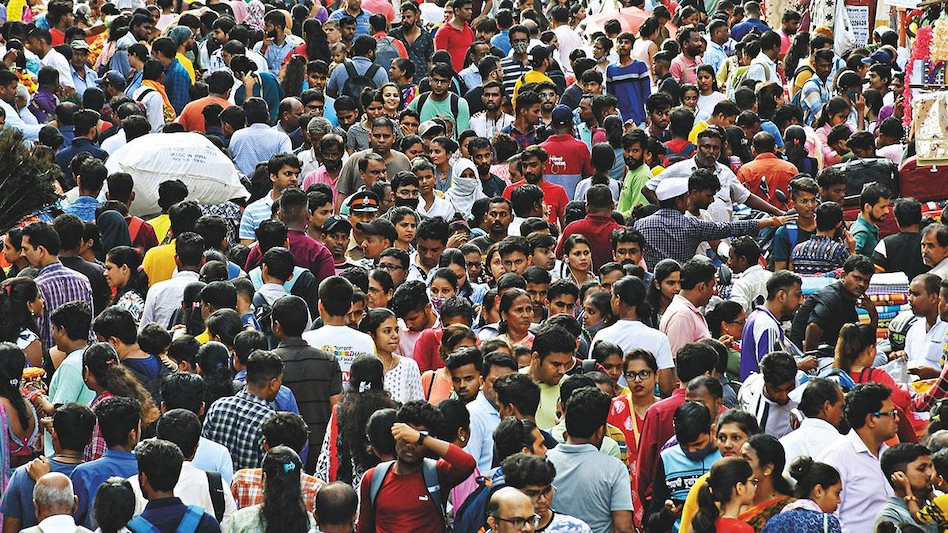
    India's population has overtaken China, but historic problems continue to  plague the nation - BusinessToday - Issue Date: May 28, 2023

    Central Idea:

    The article discusses India’s demographic transformation and the need for proactive policies to address opportunities and challenges arising from changing population dynamics.

    Key Highlights:

    • India’s population growth trends are being studied to align policies with the Viksit Bharat goal by 2047.
    • Fertility rates have decreased, and family planning is becoming more prevalent.
    • The workforce is changing, with an increase in middle-aged workers projected by 2047.
    • Dependency burdens vary between states, requiring tailored policy interventions.
    • There is an opportunity to enhance women’s workforce participation by providing better childcare support.
    • Lessons from China’s one-child policy caution against drastic measures.

    Key Challenges:

    • Varying demographic trends between states pose challenges for policy formulation.
    • Ensuring equitable workforce development and gender-inclusive policies.
    • Addressing the needs of the growing elderly population while maintaining economic sustainability.
    • Avoiding the negative consequences of drastic population control measures.

    Key Terms:

    • Demographic transformation
    • Fertility rates
    • Family planning
    • Workforce dynamics
    • Dependency burdens
    • Women’s workforce participation
    • One-child policy

    Key Phrases:

    • Changing population dynamics
    • Tailored policy interventions
    • Workforce inclusivity
    • Sustainable economic development
    • Lessons learned

    Key Quotes:

    • “Today, we are studying India’s population growth to align policies with the Viksit Bharat goal by 2047.”
    • “There’s an opportunity to enhance women’s workforce participation by providing better childcare support.”
    • “Lessons from China’s one-child policy caution against drastic measures.”

    Anecdotes/Case Studies:

    • The comparison with China’s one-child policy illustrates the importance of cautious policy measures in managing population dynamics.

    Key Statements:

    • “India’s population growth trends are being studied to align policies with the Viksit Bharat goal by 2047.”
    • “There’s an opportunity to enhance women’s workforce participation by providing better childcare support.”

    Key Examples and References:

    • Comparative data on workforce demographics and dependency burdens between states provide concrete examples of demographic variations.
    • The reference to China’s one-child policy serves as a cautionary example.

    Key Facts/Data:

    • India’s fertility rates have decreased significantly in recent years.
    • Dependency burdens vary significantly between states.
    • Women’s workforce participation rates could be improved with better childcare support.

    Critical Analysis:

    The article provides a balanced assessment of India’s demographic challenges and opportunities, cautioning against drastic measures while advocating for proactive policies.

    Way Forward:

    • Tailored policy interventions should address varying demographic trends between states.
    • Gender-inclusive policies and better childcare support can enhance women’s workforce participation.
    • Lessons from global best practices should inform India’s approach to demographic management.
    • Caution should be exercised to avoid the negative consequences of drastic population control measures.
  • Wages of inequality: The income-growth gap

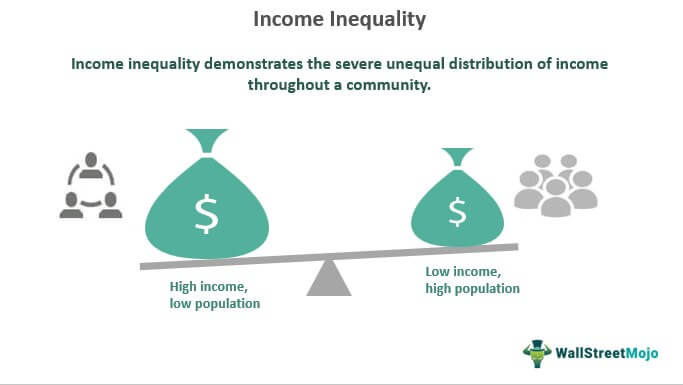
    Income Inequality - Definition, Explained, Causes, Examples

    Central Idea:

    The article analyzes the recent interim Union budget in India, focusing on its macroeconomic policy objectives and the challenges facing the Indian economy. It discusses the government’s efforts to reduce the debt-to-GDP ratio and stimulate GDP growth, particularly by prioritizing capital expenditure over revenue expenditure. However, it questions the effectiveness of these objectives in addressing India’s developmental challenges, especially regarding employment generation and structural transformation.

    Key Highlights:

    • The budget presents a fiscally conservative approach with minimal increases in total expenditure, emphasizing capital expenditure over revenue expenditure.
    • The government aims to reduce the debt-to-GDP ratio, primarily by limiting expenditure growth rates and increasing capital expenditure.
    • The article raises concerns about the adequacy of these objectives in addressing India’s developmental challenges, particularly the need for employment generation and structural transformation.
    • It highlights the stagnation in regular wages and the dominance of self-employment, indicating a worsening income distribution and weak improvements in welfare.

    Key Challenges:

    • Balancing fiscal consolidation with the need for increased government expenditure to address developmental challenges.
    • Promoting structural transformation to shift workers from self-employment to modern sectors.
    • Achieving inclusive growth that benefits all sections of society, especially marginalized groups.
    • Enhancing the effectiveness of government spending to stimulate economic growth and employment generation.

    Key Terms:

    • Debt-to-GDP ratio: The ratio of a country’s total debt to its gross domestic product, indicating its ability to repay debt.
    • Capital expenditure: Spending on acquiring or maintaining physical assets such as infrastructure, machinery, and buildings.
    • Revenue expenditure: Day-to-day spending on government operations and services, including salaries, pensions, and subsidies.
    • Primary deficit: The fiscal deficit excluding interest payments on government debt.
    • Structural transformation: The process of shifting resources, including labor, from traditional sectors like agriculture to modern sectors such as manufacturing and services.

    Key Phrases:

    • Fiscally conservative approach
    • Debt stability
    • Structural change
    • Employment generation
    • Inclusive growth

    Key Quotes:

    • “The budget reflects a fiscally conservative approach with minimal increases in total expenditure.”
    • “The government aims to reduce the debt-to-GDP ratio, primarily by limiting expenditure growth rates and increasing capital expenditure.”
    • “The dominance of self-employment indicates a worsening income distribution and weak improvements in welfare.”

    Key Examples and References:

    • Comparison of expenditure growth rates and GDP growth rates to illustrate the government’s strategy in reducing the debt-to-GDP ratio.
    • Analysis of employment data to highlight the challenges of structural transformation and income distribution.

    Key Facts and Data:

    • Total budgeted expenditure, with minimal increase over the previous year.
    • Debt-to-GDP ratio currently at a certain level, targeted to be reduced to another level.
    • Stagnation in regular wages and dominance of self-employment in the workforce.
    • GDP growth rates and expenditure growth rates used to analyze the effectiveness of fiscal policies.

    Critical Analysis:

    The article provides a critical assessment of the interim Union budget’s macroeconomic policy objectives, highlighting potential shortcomings in addressing India’s developmental challenges. It questions the effectiveness of targeting a specific debt-to-GDP ratio and emphasizes the need for broader strategies to promote inclusive growth and structural transformation.

    Way Forward:

    • Reevaluate fiscal policies to ensure a balance between debt reduction and addressing developmental challenges.
    • Prioritize investments in infrastructure and human capital to stimulate economic growth and employment generation.
    • Implement targeted interventions to support marginalized groups and promote equitable income distribution.
    • Enhance monitoring and evaluation mechanisms to assess the impact of government spending on welfare and economic development.
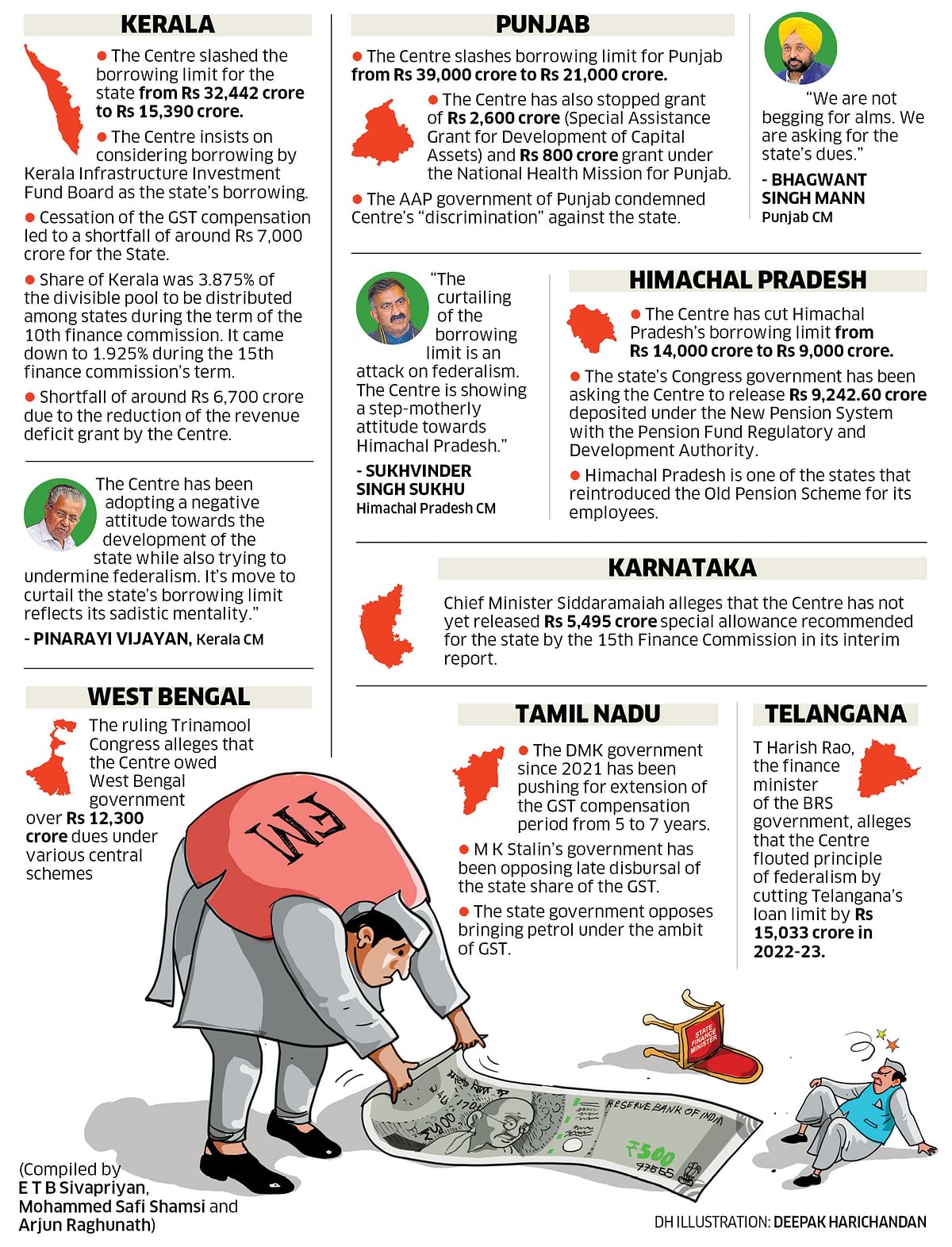
  • The severe erosion of fiscal federalism

    Fiscal federalism in dire straits?

    Central Idea:

    The article discusses Kerala’s protest against the imposition of a Net Borrowing Ceiling (NBC) by the Central Government, which restricts the state’s ability to borrow funds. It argues that this imposition undermines fiscal federalism and challenges the constitutional authority of the state legislature over financial matters.

    Key Highlights:

    • Kerala Chief Minister Pinarayi Vijayan leads a protest against the Central Government’s imposition of a financial embargo on Kerala.
    • The NBC limits states’ borrowings, including those from state-owned enterprises like the Kerala Infrastructure Investment Fund Board (KIIFB), leading to a severe financial crisis in Kerala.
    • The article questions the constitutionality of including state-owned enterprises’ debt in the state’s total debt, arguing that it encroaches on the state legislature’s authority over financial matters.
    • Kerala’s Fiscal Responsibility Act, 2003, aims to reduce fiscal deficit, demonstrating the state’s commitment to fiscal discipline.
    • The article criticizes the move towards “annihilative federalism,” where the central government’s actions detrimentally affect states’ ability to meet welfare obligations.

    Key Challenges:

    • Balancing fiscal discipline with the need for states to fund development projects and welfare schemes.
    • Addressing the erosion of fiscal federalism and the encroachment of central authority over state finances.
    • Resolving the conflict between the powers of the central government and state legislatures regarding financial matters.
    • Mitigating the impact of borrowing restrictions on states’ ability to fulfill their financial obligations.

    Key Terms:

    • Net Borrowing Ceiling (NBC): Limit imposed on states’ borrowings from all sources.
    • Kerala Infrastructure Investment Fund Board (KIIFB): State-owned body responsible for funding infrastructure projects.
    • Fiscal Responsibility Act: Legislation aimed at reducing fiscal deficit and promoting financial discipline.
    • Fiscal Federalism: Distribution of financial powers and responsibilities between the central government and states.
    • Annihilative Federalism: Central government actions that undermine states’ financial autonomy and welfare obligations.

    Key Quotes:

    • “The wide array of constitutional issues…point at the severe erosion of fiscal federalism in the country.”
    • “The borrowing restrictions are an example of ‘annihilative federalism’ at play.”

    Key Examples and References:

    • Kerala’s protest led by Chief Minister Pinarayi Vijayan against the financial embargo imposed by the Central Government.
    • The inclusion of KIIFB’s debt in Kerala’s total debt, leading to funding constraints for welfare schemes.
    • Comparison of Kerala’s fiscal deficit reduction efforts with the central government’s fiscal deficit estimates.

    Key Facts and Data:

    • Kerala’s fiscal deficit reported to have reduced to 2.44% of the GSDP.
    • Central government’s fiscal deficit estimated to be 5.8% for 2023-2024.

    Critical Analysis:

    The article underscores the tension between central authority and state autonomy in financial matters, highlighting the constitutional ambiguity surrounding the imposition of borrowing restrictions. It argues for a balanced approach that acknowledges states’ fiscal responsibilities while ensuring fiscal discipline.

    Way Forward:

    • Reevaluate the imposition of borrowing restrictions to ensure they do not unduly impede states’ ability to meet financial obligations.
    • Enhance dialogue and cooperation between the central government and states to address fiscal challenges while respecting constitutional principles.
    • Clarify the division of financial powers between the central government and state legislatures to mitigate conflicts and promote fiscal federalism.
  • History Flash Notes

    Recommended by AIR16, AIR22, AIR48 and others.


    In the last 3 years, a lot of things have changed about UPSC-CSE preparation. Core books like NCERTs, Laxmikanth are a great starting point but they need to be substituted with your own notes that are precise and help you recall everything.

    Every Topper has put in an extraordinary effort to streamline their notes. It was an obsession. It took them multiple iterations and failed attempts to finally get to a version that helped them cut down on the revision time and remove the dependency on the core books. 

    Take the example of Council Acts that you start with. You need to understand

    1. How the executive/legislature has been evolving with each act, and their powers. 
    2. The new bodies being created BOC, COD, and their mandates.   
    3. How were the Provinces being impacted?
    4. Finally, the key features and points to note for each Act.  

    Get UPSC History Flash Notes Here

    Likewise for various other topics in Modern History.

  • Fate of Indian Projects in Myanmar

    myanmar

    Introduction

    • The Arakan Army captured Paletwa in the Chin State, near Bangladesh and India. This has cast aspersions about the development of key Indian projects in Myanmar.

    Myanmar Coup: A quick recap

    • Myanmar’s military ousted Aung San Suu Kyi’s elected government in February 2021.
    • The military expected resistance to subside quickly. After three years, opposition to the military regime is growing.

    Conflict Dynamics near Indian Borders

    • Complex Dynamics: The capture of Paletwa has triggered a complex dynamic between the Chin and Arakan ethnic groups.
    • Ethnic Majority: Majority of Paletwa’s residents belong to the Chin ethnic community.
    • Historical Claims: Some in the Rakhine State argue that Paletwa historically belonged to the Arakan Hill Tracts during colonial rule.
    • InterEthnic Solidarity: Inter-ethnic solidarity among EAOs is essential for an effective fight against the military.
    • Challenge of Compromise: Finding an inter-ethnic compromise on settlements like Paletwa is challenging due to its strategic location.

    Impact on India’s Kaladan Project:

    • Significance for Kaladan: The developments in Paletwa have implications for India’s Kaladan Multimodal Transit Transport Project (KMTTP) in Myanmar.
    • Addressing Challenges: The Kaladan project aims to address northeast India’s geo-economic and geo-political challenges.
    • Project Delays: Delays in project implementation were caused by rugged terrain, inadequate coordination, political instability, and security challenges.
    • Local Attitudes: Attitudes of local ethnic organizations must be considered for swift Kaladan project execution.
    • Local Interest: People in Mizoram and Chin State are interested in the project’s completion as it boosts economic activity.

    China Factor in the Region

    • Three Brotherhood Alliance: The Arakan Army is part of the Three Brotherhood alliance, believed to have Chinese support. This alliance aims to safeguard Chinese investments in Myanmar.
    • Reports of Chinese Support: Reports suggest that the Arakan Army receives funding and military equipment from China.
    • Concerns for India: Concerns exist in India about Beijing using armed groups to hinder India’s connectivity projects in Myanmar.
    • China’s Economic Presence: China has increased its economic presence along Myanmar’s Bay of Bengal coast.
    • Infrastructure Initiatives: Operationalized pipelines and agreements for a deep-sea port and special economic zone are part of China’s initiatives in Myanmar.

    Conclusion

    • India, as a liberal democracy, faces scrutiny regarding the impact of its external engagement on sectarian/identity-based violence in the neighborhood.
    • Scaling up humanitarian and development assistance while collaborating with ethnic organizations is essential.
  • Alarm Bells for Hindu Kush Himalaya (HKH) Region

    Hindu Kush Himalaya

    Introduction

    • The International Centre for Integrated Mountain Development (ICIMOD) called for ‘bold action’ and ‘urgent finance’ to prevent collapse of Hindu Kush Himalaya (HKH).

    About Hindu Kush Himalaya (HKH)

    Description
    Geographic Location South Asia, spanning Afghanistan, Bangladesh, Bhutan, China, India, Myanmar, Nepal, and Pakistan.
    Area Approximately 3,500,000 square kilometers
    “Water Tower of Asia” At least 12 rivers fan out in every direction across the Asian continent from it, including:

    – Syr Darya and Amu Darya towards the now-dead Aral Sea

    – Tarim toward the Taklamakan

    – Indus, Ganga, and Brahmaputra towards the Arabian Sea and Bay of Bengal

    – Yellow river towards the Gulf of Bohai

    – Yangtze towards the East China Sea

    – Mekong towards the South China Sea

    – Chindwin, Salween, and Irrawaddy towards the Andaman Sea

    Glaciers Home to thousands of glaciers, including Mount Everest and K2.

    A Region on the Brink

    • Biodiversity Hotspot: The HKH region, characterized by its remarkable biodiversity, is described as a ‘biosphere on the brink’ by experts.
    • Scope of Crisis: The speed and scale of habitat and nature loss in the HKH region are deemed ‘catastrophic,’ and urgent action is required.

    Alarming Statistics

    • Biodiversity Richness: The HKH region boasts four of the world’s 36 global biodiversity hotspots, 575 Protected Areas, and 335 important bird areas.
    • Biodiversity Loss: Despite conservation efforts, the region has witnessed the loss of 70% of its original biodiversity over the last century.
    • Human Dependence: 85% of mountain communities in the HKH region rely on this biodiversity for food, water, flood control, and cultural identity.
    • Population Pressure: With 241 million people residing in the HKH region, 31% face food insecurity, and half experience various forms of malnutrition.

    Human Impact

    • Threat to Humanity: The declining nature in the HKH region now endangers not only animal and plant life but also human societies.
    • Water Tower of Asia: This region, known as the ‘Water Tower of Asia,’ supplies essential ecosystem services, including clean water for one-third of the global population.
  • Floor Test in Jharkhand Assembly

    Introduction

    • The new government has won the trust vote on the floor of the Jharkhand Assembly. A floor test serves as a pivotal check to determine if the executive enjoys the confidence of the legislature.

    What is Floor Test?

    • Definition: A floor test is a constitutional measure employed to ascertain whether the Chief Minister, appointed by the Governor, commands the majority support of the Legislative Assembly.
    • Governor’s Role: The Governor appoints the CM, typically from the party securing the majority of seats in the Assembly.
    • Voting of Confidence: If the majority is challenged or questioned, the Chief Minister must seek a vote of confidence to prove the majority among the members present and voting.
    • Consequences of Failure: Failure to secure the majority in the floor test necessitates the resignation of the Chief Minister.
    • Application: Floor tests are conducted both in the Parliament and state legislative assemblies. They are also utilized in cases of disputes within coalition governments.

    Postponement of Floor Tests

    • Legal Precedent: Recent Supreme Court rulings have clarified that floor tests need not be postponed even if the decision on the disqualification of rebel members is pending.
    • Shivraj Singh Chouhan v/s Speaker Case: The 2020 case involving Shivraj Singh Chouhan established this principle.
    • Discretion in Special Cases: In exceptional situations with no clear majority, the Governor can use discretion to expedite the selection of the Chief Ministerial candidate for a floor test.

    Composite Floor Test

    • Multiple Claimants: When multiple individuals stake a claim to form the government, a Composite Floor Test is conducted.
    • Majority Determination: In cases where the majority is unclear, a special session is convened to ascertain the majority.
    • Counting the Majority: Majority is determined based on those present and voting. Voting can occur through voice votes or division voting, involving electronic gadgets, ballots, or slips.
    • Speaker’s Vote: In case of a tie, the Speaker may cast the deciding vote.

    Challenges with the Floor Test

    • Luring of MLAs: In some instances, ruling party MLAs may be lured with rewards or incentives, undermining the constitutionality and fairness of the floor test.
    • Constitutional and Moral Implications: Such actions are seen as constitutionally immoral and unjust, as they circumvent the Tenth Schedule through engineered defections using the judicial process.

    Back2Basics: No Confidence Motion

    • Rule 198 of Lok Sabha: The process for a No Confidence Motion is explained under this rule in the Lok Sabha.
    • Constitutional provisions: While the Constitution does NOT mention the terms ‘No Confidence Motion’ or ‘floor test,’ Articles 75 and 164 establish the collective responsibility of the executive to their respective legislatures.
    • Procedure: Any Opposition member can move a no-confidence motion, which requires the backing of at least 50 members for acceptance.
    • Discussion Period: The Speaker announces a date for discussion, which must occur within 10 days from the date of acceptance.
  • Tackling Unfair Means in Public Examinations: The 2024 Bill

    cheating

    Introduction

    • The Public Examinations (Prevention of Unfair Means) Bill, 2024, introduced in Lok Sabha, seeks to combat “unfair means” in public examinations and enhance transparency and credibility in the examination system.
    • This comprehensive legislation addresses various aspects of unfair practices in public exams and outlines stringent penalties for violations.

    “Unfair Means” in Examinations

    • Enumerating Offenses: Section 3 of the Bill outlines at least 15 actions that constitute “unfair means” in public examinations, primarily for monetary or wrongful gain.
    • Examples: These actions include question paper leaks, unauthorized access to question papers or answer sheets, tampering with answer sheets, providing unauthorized solutions to questions, and conducting fake examinations.

    Scope of “Public Examinations”

    • Defining Public Examinations: Under Section 2(k), a “public examination” encompasses any examination conducted by designated “public examination authorities” listed in the Bill’s Schedule or notified by the Central Government.
    • Designated Authorities: The Schedule includes entities like UPSC, SSC, RRBs, IBPS, and NTA, responsible for various national-level examinations.
    • Central Government’s Authority: Ministries and Departments of the Central Government, along with their attached and subordinate offices for staff recruitment, fall under the Bill’s purview.

    Penalties for Violations

    • Stringent Measures: Section 9 stipulates that offenses are cognizable, non-bailable, and non-compoundable.
    • Cognizable Offenses: Authorities can arrest individuals without a warrant.
    • Non-Bailable: Bail is not a matter of right and is subject to a magistrate’s discretion.
    • Non-Compoundable: Complainants cannot withdraw the case, necessitating a trial.

    Punishments

    • Individual Offenders: Violators may face imprisonment ranging from three to five years and fines of up to Rs 10 lakh.
    • Additional Penalty: Failure to pay the fine can result in additional imprisonment, as per the provisions of the Bharatiya Nyaya Sanhita, 2023.
    • Service Providers: Those providing support for examination conduct can be fined up to Rs 1 crore, along with other penalties.
    • Organized Paper Leaks: In cases of organized paper leaks constituting “organized crime,” offenders may face imprisonment for a minimum of five years, extendable up to ten years, and a fine not less than one crore rupees.

    Rationale Behind the Bill

    • Addressing Rampant Paper Leaks: Numerous cases of question paper leaks in recruitment exams nationwide have disrupted the hiring process and affected millions of applicants.
    • Need for Specific Legislation: The absence of a substantive law to address unfair practices in public examinations necessitated a comprehensive central legislation.
    • Objectives: The Bill aims to ensure transparency, fairness, and credibility in public examinations while deterring individuals and entities exploiting vulnerabilities in the system for wrongful gains.
    • Model Draft for States: The Bill is intended to serve as a model for states to adopt at their discretion, assisting them in preventing disruptions in their state-level public examinations.

    Conclusion

    • This legislation represents a significant step toward safeguarding the integrity of public examinations in India.
    • By establishing stringent penalties for unfair practices and addressing the issue of paper leaks, the legislation seeks to reassure candidates that their sincere efforts will be duly rewarded and their future secured.
    • Moreover, the Bill’s potential to serve as a model for state-level legislation enhances its impact in curbing exam-related malpractices.
  • Unusual Cabbage Mutation that Could Boost Crop Yield

    cabbage mutation

    Introduction

    • A recent paper sheds light on the remarkable ability to induce sterility in a diverse range of plants, including cabbage, cauliflower, broccoli, tomato, and rice. This sterility is achieved through a minute genetic deletion.
    • This deletion holds the promise of significantly boosting crop yields through a phenomenon known as heterosis.

    Unveiling Genetics

    • DNA Structure: DNA consists of two long strands, each comprising four nucleotide bases: Adenine (A), Cytosine (C), Guanine (G), and Thymine (T). These bases form pairs (A-T and G-C) held together by hydrogen bonds.
    • Genome Organization: The cabbage plant (Brassica oleracea) genome contains approximately 1.06 billion base pairs distributed across 18 chromosomes. Each chromosome pair, derived from pollen and egg, shares a mostly identical sequence.
    • Role of Genes: Genes are well-defined DNA sequences, typically spanning a few thousand base pairs. When expressed, a gene’s segment is transcribed into RNA, which serves as the blueprint for protein synthesis.
    • Protein Production: RNA is processed by cellular machinery called ribosomes, directing the assembly of amino acids into proteins.

    Role of Sterility in Hybrid Vigor

    • Discovery of Ms-cd1: Around 44 years ago, a cabbage plant with a natural mutation known as Ms-cd1 was identified. This mutation rendered the plant male-sterile, with a crucial twist: the eggs of the mutant plant could still be fertilized by pollen from normal plants, yielding normal seeds.
    • Hybrid Seeds: All seeds from mutant plants resulted from out-crossing, where eggs were fertilized by pollen from different strains. Such hybrid seeds, also called out-cross seeds, give rise to more robust plants with enhanced vigor, known as heterosis.
    • Dominant Mutation: The Ms-cd1 mutation was found to be dominant, meaning its presence in just one chromosome of the pair caused male sterility, regardless of the other chromosome’s status.
    • Recessive Mutations: The researchers demonstrated that mutations in both copies of the Ms-cd1 gene were necessary for male fertility. In such cases, the mutations became recessive.

    Crucial Missing Base-Pair

    • Genetic Mapping: Through genetic mapping, researchers identified a crucial distinction between the mutated and non-mutated Ms-cd1 genes: the mutated gene lacked a single DNA base pair in its promoter region.
    • Promoter’s Role: The promoter sequence binds to regulatory proteins that control when and in which cells a gene is transcribed into RNA.
    • ERF Binding: In the mutated gene, this missing base-pair disrupted its binding to the regulatory protein ERF, allowing the Ms-cd1 gene to remain expressed, leading to male sterility.
    • Fine-Tuning of Protein Levels: Proper pollen development depends on a precise balance of Ms-cd1 protein levels, with ERF binding regulating its expression at different stages of development.

    Extending the Discovery

    • Cross-Species Applicability: The dominant mutant gene was introduced into other plant species, including rice, tomato, and arabidopsis. In all cases, the recipient plants exhibited pollen developmental disruptions.
    • A Promising Tool: The genetic deletion of a single base-pair emerges as a powerful tool to produce hybrid seeds, not only in cabbage but also in various other crops.
    • Implications for Agriculture: This breakthrough offers the potential to harness heterosis and enhance crop yields across plant species, addressing global food security challenges.

    Conclusion

    • The genetic deletion that induces male sterility in plants represents a remarkable stride in agricultural science, offering the prospect of abundant harvests through hybrid seeds.
    • This discovery opens new doors for sustainable agriculture and reinforces the critical role of genetic research in addressing the world’s growing food demands.