The Jharkhand Forest department has initiated a study to revive the dwindling population of Bison, popularly known as Gaur, at Palamu Tiger Reserve (PTR).
About Indian Bison (Gaur)
Details
Largest and tallest species in the wild cattle family.
Scientific Name: Bos gaurus.
Indigenous to South and Southeast Asia.
Species Habitat and Location
Found in evergreen, semi-evergreen, and moist deciduous forests with open grasslands.
Prefers hilly terrains below 1,500–1,800 m with abundant water.
Distributed across India, Nepal, Bhutan, Myanmar, and Thailand.
Behavioural Features
Social animals living in herds of 30–40 individuals.
Strong and sturdy limbs, short tails, and inward-curved pale green/yellowish-brown horns.
Males weigh 600–1,500 kg; females weigh 400–1,000 kg.
Convex-shaped forehead; height ranges from 170–230 cm.
Conservation Status
IUCN Red List: Vulnerable.
Wildlife Protection Act, 1972: Schedule I.
CITES: Appendix I.
PYQ:
[2011] A sandy and saline area is the natural habitat of an Indian animal species. The animal has no predators in that area but its existence is threatened due to the destruction of its habitat. Which one of the following could be that animal?
The Supreme Court clarified the “doctrine of merger,” stating that only one final decree or order can govern the same matter. When a higher court rules on a case, its decision overrides the lower court’s decree, becoming the binding and operative order.
What is ‘Doctrine of Merger’?
The Doctrine of Merger is a legal principle that governs the relationship between decisions or decrees passed by different judicial forums in the hierarchy.
It holds that once a superior court disposes of a case, the decision or decree of the lower court merges with that of the superior court.
This doctrine ensures that there is only one operative and binding decree governing a subject matter at a given point in time.
The doctrine applies when the order or decree of a lower court is subjected to an appeal, revision, or review before a higher court.
It ensures that there is no ambiguity regarding which order is binding and enforceable.
Key Features of the Doctrine of Merger
Single Operative Decree: The doctrine ensures that once a higher court has passed its judgment, there cannot be multiple operative decrees for the same subject matter.
Scope: Applicable when a lower court’s order is challenged before a superior court. The higher court’s decision, whether confirming, modifying, or overturning the lower court’s decree, becomes the final and binding authority.
Effect of Merger: The lower court’s decree is no longer independently enforceable; it is subsumed within the superior court’s order.
Legal Basis and Precedents:
Kunhayammed v. State of Kerala (2000): The superior court’s decree, whether it confirms, modifies, or sets aside the lower court’s decree, replaces the lower court’s decision.
Logic of the Doctrine: “There cannot be more than one decree or operative order governing the same subject matter at a given point of time.”
Jurisdictional Hierarchy: This principle is applied in cases of appeals and revisions where the decision of the higher forum takes precedence over that of the lower forum.
PYQ:
[2021] With reference to the Indian judiciary, consider the following statements:
1. Any retired judge of the Supreme Court of India can be called back to sit and act as a Supreme Court judge by the Chief Justice of India with the prior permission of the President of India.
2. A High Court in India has the power to review its own judgement as the Supreme Court does.
Which of the statements given above is/are correct?
The Union Minister of Commerce & Industry inaugurated the National Turmeric Board in New Delhi, with Palle Ganga Reddy appointed as its first Chairperson.
About the National Turmeric Board
Details
Operates under the Ministry of Commerce & Industry.
Headquarters: Nizamabad, Telangana.
Aim: To enhance turmeric production, support farmers, and boost global exports.
Structural Mandate
Chaired by a Central Government appointee.
Includes representatives from the Ministry of AYUSH, Department of Pharmaceuticals, Department of Agriculture & Farmers Welfare, and Department of Commerce.
Rotating senior representatives from three states are also part of the Board.
Powers and Functions
Promotes awareness of turmeric’s medicinal and essential properties.
Supports farmers across 20 states, including Maharashtra and Tamil Nadu.
Facilitates research, value addition, and development of new products for domestic and global markets.
Enhances logistics, supply chains, and trade opportunities.
Turmeric (Curcuma longa) Production in India
Turmeric is also known as ‘Golden Spice’.
It thrives in temperatures ranging between 20°C and 30°C with high annual rainfall.
India is the largest producer, consumer, and exporter of turmeric globally.
Q) The China Pakistan Economic Corridor (CPEC) is viewed as a cardinal subset of China’s larger ‘One Belt One Road’ initiative. Give a brief description of CPEC and enumerate the reasons why India has distanced itself from the same. (UPSC CSE 2018)
Mentor’s Comment: UPSC mains have always focused on China Pakistan Economic Corridor (CPEC) (2018), and Central Asia, European Region – as a zone of interest for India (2018 & 2022).
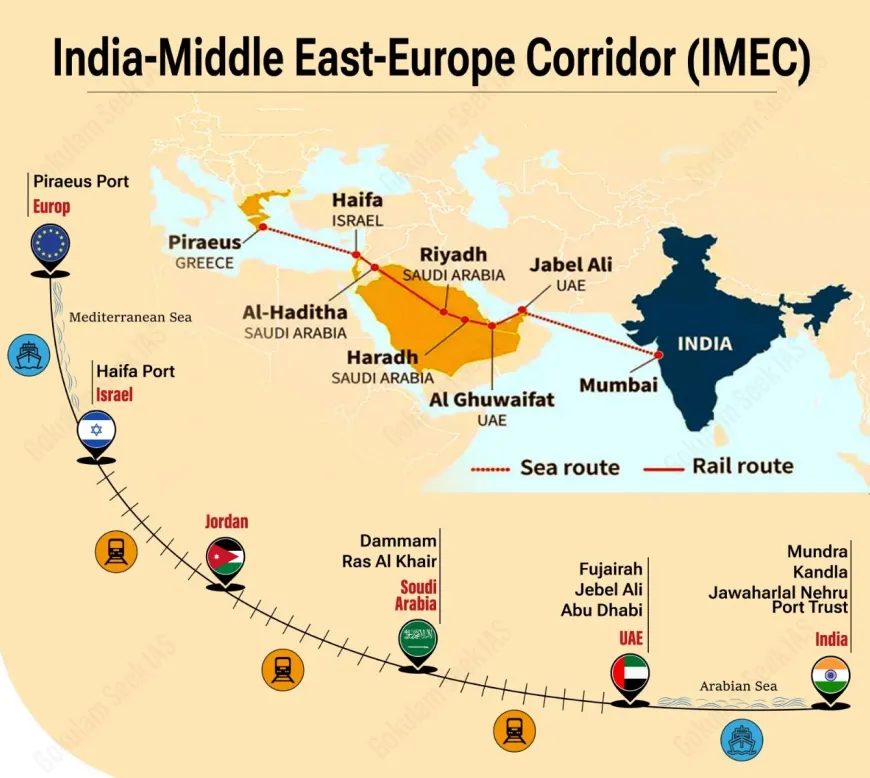
Did you know that a 5% improvement in multimodal transport performance can lead to an increase in exports by nearly $500 billion annually across participating economies. India-Middle East-Europe Economic Corridor (IMEC), a multi-modal trade network focuses on not only physical infrastructure but also digital connectivity and energy security.
Today’s editorial emphasizes the strategic importance of the IMEC for the United States. This content can be used to address multifaceted approaches to enhance economic growth in Asian and European regions while promoting democratic values.
_
Let’s learn!
Why in the News?
The recent signing of a MoU on cybercrime investigations underscores this commitment, as both India and USA aim to bolster their security cooperation in response to common threats like terrorism and organized crime.
The IMEC agreement is viewed as a strategic opportunity for Prez. Donald Trump to deepen U.S.-India ties while also promoting multilateral collaboration among participating countries.
As Trump 2.0 begins, the present administration is anticipated to continue building on the defense and economic frameworks established during his first term.
Key highlights of the Recent MoU:
• Cyber Threat Intelligence Sharing: The agreement facilitates enhanced exchange of information regarding emerging cyber threats, allowing both nations to stay ahead of potential cybercriminal activities.It focuses on improving tools and processes for investigating cybercrimes, thereby strengthening the capabilities of law enforcement agencies in both countries. • Capacity Building: The MoU includes provisions for training programs aimed at enhancing investigative skills related to cybercriminal activities, ensuring that personnel are well-equipped to tackle these challenges. The Indian Cyber Crime Coordination Centre (I4C) under the Ministry of Home Affairs will be responsible for executing the MoU from India’s side, while the U.S. Department of Homeland Security (DHS), along with its sub-agencies like Immigration and Customs Enforcement (ICE) and the Homeland Security Investigations Cyber Crimes Center (C3), will lead implementation efforts from the U.S. side. • Addressing Common Security Challenges: The MoU recognizes the intricate linkages between cybercrime and broader security issues such as terrorism, violent extremism, drug trafficking, organized crime, human trafficking, illegal migration, and money laundering. • Strengthening Security Cooperation: This agreement is part of a broader effort to enhance India-U.S. security cooperation as part of their comprehensive strategic partnership, emphasizing the importance of international collaboration in addressing cyber threats.
What is the strategic significance of IMEC with respect to India and USA’s common interests?
Economic Integration: The IMEC (network of ports, railways, and roads) aims to create a seamless flow of goods and services among the participating countries, which include India, the UAE, Saudi Arabia, Israel, and several European nations.
For instance, the corridor could significantly reduce transit times for shipping goods to Europe by up to 40% compared to traditional routes like the Suez Canal. Such improvements lead to increased trade volumes and economic growth.
The potential for establishing Free Trade zones along the corridor further enhances this economic integration by reducing tariffs and regulatory barriers.
Geopolitical Influence: Supporting IMEC allows the U.S. to counterbalance China’s growing influence in the Middle East through its Belt and Road Initiative (BRI).
By investing in IMEC, the U.S. can strengthen its alliances with key partners in Asia and Europe while promoting democratic values and stability. The alignment of interests among the U.S., India, and European nations within this corridor serves as a counterweight to China.
For example, the collaboration between India and Gulf monarchies under the IMEC framework is seen as a strategic move to build economic interdependence that can mitigate geopolitical tensions.
Holistic and Sustainable Connectivity: The initiative aims to establish secure High-speed data pipelines that would facilitate the export of India’s IT services to Europe and West Asia, which is crucial for modern economies that rely heavily on digital services.
Moreover, there are plans for Renewable Energy Grids that will enable countries along the corridor to share clean energy resources efficiently.
For example, hydrogen pipelines are proposed to transport green hydrogen produced in the Gulf states to Europe, aligning with global energy transition goals.
What are the limitations in enhancing strategic ties over IMEC?
Logistical and Connectivity Issues: Implementing IMEC requires extensive coordination among multiple countries, involving various modes of transportation.
For Example, If one country has outdated ports or railways, it can slow down the movement of goods, making trade less efficient. For instance, delays at a port in India could hold up shipments to Europe.
Regulatory Harmonization: The diverse regulatory frameworks and systems and regulations of the participating nations pose significant challenges.
For Example, if India has strict import regulations while a Middle Eastern country has more relaxed rules, it could lead to conflicts about how goods are traded.
Finding common ground on regulations is essential for smooth operations.
Security Concerns: The region traversed by IMEC is susceptible to security threats, including terrorism and political instability.
For Example, ongoing conflicts, such as those in Syria and Yemen, along with historical rivalries (e.g., Saudi-Iranian tensions), complicate efforts to ensure a secure environment necessary for attracting investments and fostering economic growth.
China Factor: If China offers better financing or faster infrastructure development for its routes, countries(esp European) might prefer to partner with China rather than engage with IMEC.
As of 2023, BRI engagement has surpassed USD 1 trillion, with approximately USD 419 billion allocated to non-financial investments and USD 634 billion to construction contracts (which is much higher than IMEC).
Financial Commitments: The ambitious nature of IMEC demands substantial financial investments from participating nations.
But, if a country like Iraq struggles with its economy, it may not be able to contribute financially to the project, which could slow down progress for everyone involved.
Way Forward: The IMEC represents a strategic opportunity for the USA to enhance its geopolitical influence while promoting economic growth and stability among participating nations.
As the U.S. navigates complex international dynamics, prioritizing IMEC will be crucial in establishing a resilient and interconnected economic framework that benefits all stakeholders involved, ultimately contributing to a more stable and prosperous global order.
The recent Supreme Court judgment in the Jet Airways case has highlighted several major problems in India’s insolvency system.
What is the Insolvency and Bankruptcy Code (IBC)?
The Insolvency and Bankruptcy Code (IBC), enacted in 2016, is a comprehensive legal framework in India aimed at consolidating the existing laws governing insolvency and bankruptcy.
It establishes a structured process for resolving insolvency for corporate entities, individuals, and partnership firms, promoting timely resolution and maximizing asset value.
What are the structural inefficiencies in the current Insolvency and Bankruptcy Code (IBC)?
Overburdened Tribunals: The National Company Law Tribunal (NCLT) and the National Company Law Appellate Tribunal (NCLAT) are tasked with handling both corporate insolvencies under the IBC and cases under the Companies Act. This dual burden leads to inefficiencies and delays in resolving insolvency cases.
Inadequate Institutional Capacity: The NCLT’s structure, established in 1999, is outdated and does not align with contemporary economic demands. With only 63 sanctioned members, many of whom split their time across multiple benches, the tribunal struggles to manage its caseload effectively, resulting in significant backlogs.
Lack of Domain Expertise: Members of the NCLT often lack the necessary domain knowledge to handle complex insolvency cases effectively. This deficiency hampers their ability to make informed decisions, as highlighted by the Supreme Court in the Jet Airways case.
Procedural Delays: The requirement for mandatory hearings for all applications contributes to lengthy delays. The average time for insolvency resolutions has increased, indicating that procedural inefficiencies are exacerbating the situation.
Ineffective Urgent Listings: There is no robust system for urgent listings before the NCLTs, leading to further delays in critical cases. The discretion given to registry staff regarding case listings can lead to inconsistencies and unpredictability in case management.
Judicial Discretion Issues: There is a growing tendency among NCLT and NCLAT members to ignore Supreme Court orders, undermining judicial authority and eroding trust in the system.
How can procedural innovations enhance the effectiveness of insolvency resolution?
Specialized Benches: Establishing specialized benches for different categories of insolvency cases could improve efficiency and ensure that cases are handled by members with relevant expertise.
Mandatory Mediation: Introducing mandatory mediation before filing insolvency applications could reduce the number of cases entering the formal insolvency process, alleviating pressure on tribunals.
Streamlined Hearing Processes: Revising the requirement for mandatory hearings on all applications could expedite processes, allowing for more efficient case management and resolution.
Improved Infrastructure: Investing in adequate courtrooms and permanent support staff is essential to enhance operational capacity and ensure that tribunals can function effectively within the broader economic framework.
What reforms are necessary to transform the IBC into a proactive economic tool?
Reassessment of Tribunal Structure: A comprehensive review of the NCLT and NCLAT structures is needed to align them with current economic realities and demands, potentially increasing their sanctioned strength and operational hours.
Focus on Domain Expertise in Appointments: Reforming the appointment process for tribunal members to prioritise candidates with relevant experience in insolvency matters will enhance decision-making quality.
Encouraging Alternative Dispute Resolution (ADR): Promoting alternative dispute resolution methods within the insolvency framework can help manage caseloads more effectively while providing quicker resolutions for stakeholders.
Legislative Amendments: Continuous legislative amendments should be made based on empirical data and stakeholder feedback to address emerging challenges within the IBC framework.
Cultural Shift Towards Credit Discipline: Encouraging a cultural shift that emphasizes credit discipline among borrowers will support a healthier economic environment conducive to investment and growth.
Way forward:
Strengthen Institutional Capacity and Expertise: Enhance the operational capacity of NCLT and NCLAT by increasing strength by appointing members with domain expertise, and providing adequate infrastructure and support staff to streamline case management and reduce delays.
Promote Alternative Dispute Resolution (ADR): Integrate mandatory mediation and other ADR mechanisms within the IBC framework to alleviate tribunal workload, ensure quicker resolutions, and foster a collaborative insolvency ecosystem.
The Telecom Regulatory Authority of India (TRAI) plans to use blockchain technology (DLT) to track and manage customer preferences for blocking spam, according to its chairman, Anil Kumar Lahoti.
What is the Telecom Regulatory Authority of India (TRAI)?
The Telecom Regulatory Authority of India (TRAI) plays a crucial role in regulating Unsolicited Commercial Communications (UCC), commonly referred to as spam. Established under the Telecom Regulatory Authority of India Act, 1997.
What is TRAI’s role in fighting spam?
Do-Not-Disturb (DND) Registry: Launched in 2007, the DND registry allows customers to opt out of receiving commercial calls and messages. Users who register are not supposed to receive any spam communications.
Telecom Commercial Communication Customer Preference Regulation (TCCCPR): Enacted in 2018, this regulation penalizes telemarketers who violate DND preferences. It includes warnings for offenders and potential blacklisting from sending messages if they accumulate enough violations.
DND App Development: TRAI collaborated with external agencies to create a DND application that enables users to register their preferences and report complaints. By 2024, it became mandatory for telecom providers to include DND reporting features in their apps.
What role does blockchain play?
TRAI has mandated the use of Distributed Ledger Technology (DLT) to enhance its spam control measures:
Immutable Record Keeping: Blockchain technology allows for a constantly updated and tamper-proof list of approved SMS senders and message formats. This ensures that only legitimate messages are sent, as each entry is unalterable by any party involved.
Message Traceability: Regulations require that messages be sent using sender IDs instead of phone numbers, enhancing traceability. This measure helps prevent unauthorized entities from sending spam by ensuring that all message origins are recorded.
Enhanced Regulations: In 2024, TRAI tightened regulations to ensure complete traceability of messages, addressing previous loopholes that allowed fraudulent registrations on blockchain systems
What are the other steps taken by the government to end spam?
Sanchar Saathi Portal: This portal includes a reporting platform called Chakshu for complaints about fraudulent calls and messages. It collaborates with law enforcement and banks to identify and cancel numbers associated with unauthorised telemarketers.
Real-Time Monitoring: The establishment of the Telecom Security Operation Centre enables real-time monitoring of suspicious internet traffic, enhancing the government’s ability to respond promptly to spam-related threats.
AI-Based Detection: Telecom companies like Airtel have begun using Artificial Intelligence to label suspicious calls as “Suspected Spam,” a practice that is being adopted by other providers as well.
Way forward:
Strengthen International Collaboration: Partner with global VoIP providers and international regulators to curb spam and fraudulent calls originating from abroad, ensuring seamless enforcement across borders.
Promote AI and ML Integration: Expand the use of AI/ML technologies for proactive detection and blocking of spam calls and messages, while continuously improving user-friendly reporting mechanisms.
Mains PYQ:
Q For achieving the desired objectives,it is necessary to ensure that the regulatory institutions remain independent and autonomous. Discuss in the light of experiences in recent past. (UPSC IAS/2015)
Non-BJP-led State governments oppose the UGC’s draft regulation on vice chancellors’ appointments, claiming it violates constitutional federal principles, and have called for its immediate withdrawal.
What are the aims and objectives behind the University Grants Commission Act, 1956?
The University Grants Commission (UGC) Act, 1956 was established to regulate and improve higher education in India. Its key aims and objectives are:
Coordination and Standardization: Ensuring the coordination and determination of standards in universities to maintain quality education.
Promotion of University Education: Taking steps to promote, develop, and coordinate university education across the country.
Allocation of Funds: Allocating financial resources for the maintenance and development of universities.
Advisory Role: Advising Union and State governments on grant allocation for general or specific purposes in higher education.
Information Collection: Gathering and disseminating information on university education within India and abroad for institutional improvement.
Regulation of Fees: Regulating fees to ensure accessibility and fairness in higher education.
What are the crucial point that needs to be considered?
Jurisdiction of UGC: The UGC’s authority to regulate the selection and appointment of vice-chancellors is questionable since the UGC Act does not explicitly include these provisions. The primary focus of the Act is on maintaining educational standards, not on administrative appointments.
Consistency with UGC Act: Any regulation made by the UGC must align with the provisions of the UGC Act. If a regulation extends beyond the scope of the Act, it could be deemed ultra vires (beyond legal authority) and thus invalid.
Federal Principles: The proposed regulations have raised concerns about violating federal principles enshrined in the Constitution of India, as they may interfere with state legislations that govern universities.
Legislative Authority: Qualifications and selection criteria for vice chancellors are typically established by state legislatures, highlighting a potential overreach by the UGC in its regulatory role.
Impact on Educational Standards: The selection and appointment of vice-chancellors should not be viewed as directly impacting educational standards, which is the primary mandate of the UGC.
Judicial Precedents: Previous court rulings, including those from the Bombay High Court and the Supreme Court, have established important legal precedents regarding the relationship between UGC regulations and state laws, emphasizing that subordinate legislation cannot override state legislation.
Constitutional Questions: There are ongoing constitutional debates regarding whether UGC regulations can override state laws and how such conflicts should be resolved under Article 254 of the Constitution, which addresses repugnancy between central and state laws.
What is the present ruling made by the judiciary?
The judiciary has provided significant rulings concerning the University Grants Commission (UGC) regulations, particularly regarding the selection and appointment of vice-chancellors.
Kalyani Mathivanan Case (2015): The Supreme Court ruled that UGC regulations have a binding effect on universities. This ruling emphasized that subordinate legislation, such as UGC regulations, must be adhered to by the universities under its jurisdiction.
Bombay High Court Ruling (2011): In the case of Suresh Patilkhede vs. The Chancellor Universities of Maharashtra, the court stated that UGC regulations cannot override state legislation. It highlighted that Regulation 7.3.0, being subordinate legislation, does not have the authority to supersede laws enacted by state legislatures.
Constitutional Context: The rulings also touched upon Article 254 of the Constitution, which deals with repugnancy between central and state laws. It clarified that only a law passed by both Houses of Parliament and assented to by the President can override state legislation, not subordinate regulations like those issued by the UGC.
Note:Regulation 7.3.0 pertains to the selection and appointment of Vice Chancellors in universities. Its provisions aim to establish minimum qualifications and a transparent process for such appointments, particularly to ensure the maintenance of academic and administrative standards in higher education institutions.
Way forward:
Collaborative Federal Framework: Establish a consensus-driven approach between the UGC and State governments to ensure that regulations respect federal principles while upholding academic standards. This can involve creating joint committees for resolving conflicts and aligning policies.
Judicial Clarity and Legislative Reforms: Seek a definitive constitutional interpretation of the UGC’s regulatory scope through the judiciary, and, if needed, amend the UGC Act to explicitly define its role in administrative matters, ensuring consistency with the federal structure.
The National Internet Exchange of India (NIXI) has introduced the Internet Governance Internship and Capacity Building Scheme, aiming to enhance awareness and develop expertise in Internet Governance (IG) among Indian citizens.
About Internet Governance Internship and Capacity Building (IGICB) Scheme:
Details
About the Scheme
Launched by National Internet Exchange of India (NIXI) under MeitY.
Aims to build expertise in Internet Governance (IG) and enable global participation.
Aims and Objectives:
Develop Expertise: Build Indian talent in Internet Governance.
Enhance Global Participation: Collaborate with organisations like ICANN, ISOC, and IETF.
Promote Digital Inclusivity: Ensure India’s representation in global forums.
Deep-sea researchers have initiated a groundbreaking project to explore dark oxygen, a form of oxygen produced in complete darkness on the ocean floor.
What is Dark Oxygen?
Dark oxygen refers to oxygen produced at extreme ocean depths without the involvement of photosynthesis.
This process occurs in total darkness on the ocean floor, challenging the traditional understanding that sunlight is necessary for oxygen generation.
It was first discovered in 2024 by researchers studying deep-sea environments.
The strange nodules found at a depth of 13,000 feet act like natural batteries, splitting water molecules into oxygen and hydrogen using electrical charges.
These nodules function in areas where light does not penetrate, under extreme pressure and low-temperature conditions.
Occurrence:
Found in specific deep-sea zones, particularly in regions characterized by unique electrochemical activity.
Occurs in places previously considered incapable of supporting oxygenproduction.
Features and Significance of Dark Oxygen:
Unlike traditional oxygen production, dark oxygen does not rely on photosynthesis or sunlight.
It is driven by electrochemical reactions occurring naturally in the ocean floor.
Strange nodules on the ocean floor possess an electric charge, enabling them to split water molecules into oxygen and hydrogen.
The process releases hydrogen, which could potentially serve as an energy source for microbial life in these regions.
PYQ:
[2012] Which one of the following sets of elements was primarily responsible for the origin of life on the Earth?
The 1st Battalion of the National Disaster Response Force (NDRF) celebrated its 20th Raising Day.
About theNational Disaster Response Force (NDRF)
Details
About
Constituted under Section 44 of the Disaster Management Act, 2005 for specialized disaster response.
Functions under the Ministry of Home Affairs (MHA) and is headed by a Director General (DG), typically an IPS officer.
Initially established in 2006 with 8 battalions, now expanded to 16 battalions.
Operates under the National Disaster Management Authority (NDMA), chaired by the Prime Minister.
Powers and Functions
Primary Role: Rescue and relief operations during natural and man-made disasters such as floods, cyclones, earthquakes, landslides, building collapses, and accidents.
Strategic Deployment: Resources are pre-positioned during imminent disaster situations to minimize damage.
Active in international relief efforts, including the 2011 Fukushima disaster and the 2015 Nepal Earthquake.
Provides multi-skilled, highly specialized responses, with capabilities for handling complex disaster scenarios.
Composition
Consists of 16 battalions, each with 1,149 personnel.
Personnel are drawn from Central Armed Police Forces (CAPFs): CRPF, BSF, CISF, ITBP, SSB, and Assam Rifles.
Members are trained in disaster response, relief, and recovery operations.
Focus on proactive availability and pre-positioning during disasters to ensure quick response.
IMPORTANT: National Disaster Response Fund (NDRF)
The NDRF is a statutory body constituted under the Disaster Management Act, 2005.
It supplements State Disaster Response Fund (SDRF) of a State, in case of a disaster of severe nature, provided adequate funds are not available in SDRF.
The July 2015 guidelines states that natural calamities of cyclone, drought, earthquake, fire, flood, tsunami, hailstorm, landslide, avalanche, cloud burst, pest attack and cold wave and frost will qualify for immediate relief assistance from NDRF.
NDRF is managed in the “Public Accounts” under “Reserve Funds not bearing interest”.
The Comptroller and Auditor General of India (CAG) audits the accounts of NDRF.
PYQ:
[2020] Discuss the recent measures initiated in disaster management by the Government of India departing from the earlier reactive approach.
Q) Religious indoctrination via social media has resulted in Indian youth joining ISIS. What is ISIS and its mission? How can ISIS be dangerous to the internal security of our country? (UPSC CSE 2015)
Mentor’s Comment: UPSC mains have always focused on Religious indoctrination (2015), and ‘tolerance, assimilation and pluralism ’ (2022).
When the Taliban seized power on August 15, 2021, despite an Islamic State attack killing 13 U.S. troops and $7.1 billion in U.S. weaponry left behind, global powers like the U.S., China, and Russia engaged with the Taliban. The West rationalized this as a move to curb terrorism and support women’s and minorities’ rights, prioritizing pragmatism over democracy.
Today’s editorial talks about radicalism around the world and its impact on democratic values. This content will be helpful in substantiation the answer in GS Mains paper 2 the impact of radicalism around the world.
_
Let’s learn!
Why in the News?
The recent surge in radical governments worldwide is a notable trend, reflecting a broader discontent with traditional political systems and a shift towards populism and far-right ideologies.
What factors are contributing to the rise of radical and populist governments globally?
Political Vacuum and Instability: The collapse of established governments, as seen in Afghanistan and Syria, creates a power vacuum that radical groups exploit. The Taliban’s takeover in Afghanistan and the recent rise of Hayat Tahrir Al-Sham (HTS) in Syria illustrate how instability can lead to the emergence of radical leadership.
International Legitimization: Once radical groups seize power, there is often a tendency among global powers to engage with them, legitimizing their authority despite their past actions. The U.S., China, and Russia’s willingness to work with the Taliban post-2021 exemplifies this trend, as they justified engagement as a means to promote stability and human rights.
Economic Factors: Economic hardship and lack of opportunities can fuel support for radical ideologies. In regions where traditional governance structures fail to provide for citizens, extremist groups may present themselves as viable alternatives.
Religious and Ethnic Polarization: The rise of religious hate and ethnic divisions contributes to the appeal of radical movements. In Bangladesh, for instance, the resurgence of Islamic radicalism is linked to a backdrop of rising religiophobia against non-Abrahamic religions.
How did the radical governments impact democratic institutions in Syria and Bangladesh?
Erosion of Democratic Norms: In both Syria and Bangladesh, the rise of radical groups has led to the dismantling of democratic institutions. The HTS’s control over Syria has resulted in authoritarian governance reminiscent of previous regimes, while the military-led government in Bangladesh threatens to undermine democratic processes established since 2008.
Suppression of Civil Liberties: Radical governments often impose restrictions on freedoms, particularly targeting women and minority rights. The Taliban’s denial of girls’ education and restrictions on women’s rights post-takeover reflect this pattern, while similar threats loom in Bangladesh under military rule.
Manipulation of Political Discourse: Radical groups often use anti-establishment rhetoric to galvanize support, leading to increased polarization within society. In Bangladesh, extremist factions are attempting to regain influence by attacking minority communities and framing their actions in opposition to India, which complicates national unity.
Way forward:
Strengthening Democratic Institutions: For countries like Bangladesh, reinforcing democratic norms and institutions is crucial. International support should focus on promoting inclusive governance that respects minority rights and prevents the resurgence of extremist ideologies1.
Engagement with Civil Society: Encouraging dialogue with civil society organizations can help build resilience against radicalization. Empowering grassroots movements that advocate for democracy and human rights can counteract extremist narratives.
International Cooperation: A coordinated international approach is necessary to address the root causes of radicalization. This includes economic support for development, promoting education, and fostering political stability without legitimizing extremist groups through engagement that overlooks their past actions.
According to the International Labour Organisation’s (ILO) Global Estimates on International Migrant Workers, released in Geneva, the global population of international migrants reached 284.5 million in 2022, with 255.7 million of them being of working age (15 and older).
Why are there more male International Migrants in the global labour force than women?
Gender Roles and Norms: Traditional gender roles and societal norms often restrict women’s ability to migrate autonomously. Women are frequently expected to prioritize family responsibilities, which limits their opportunities for international migration and labor market participation.
Labour Market Segmentation: Women are often concentrated in specific sectors such as domestic work, caregiving, and low-skilled service jobs, which are undervalued and less visible.
Men, on the other hand, dominate higher-paying sectors like construction and agriculture, which are more open to international migrants.
Barriers to Employment: As per ILO, Migrant women face higher unemployment rates (8.7%) compared to migrant men (6.2%), due to factors such as language barriers, unrecognised qualifications, limited childcare options, and gender-based discrimination in host countries.
Economic and Social Independence: Women’s migration decisions are influenced by their access to resources and social networks. A lack of autonomy or financial independence can hinder their ability to migrate for work.
In some cases, women migrate as dependents or spouses of male workers, which limits their access to legal employment opportunities in the host country.
Which economic sectors attract IMs?
Construction: The construction industry employs a significant number of male migrants, particularly in regions with rapid urbanisation and infrastructure projects. This sector, part of the 35.6% of male migrant employment in industry, plays a vital role in economic expansion.
Agriculture: Globally, 7.1% of international migrants work in agriculture, with higher figures in regions like Africa, where 27.5% are employed in agriculture, forestry, and fishing. Migrants are crucial for meeting seasonal labour demands.
Manufacturing: Manufacturing heavily relies on migrant workers in industrialized nations, with migrants filling manual labour and skill-specific roles. This sector highlights the alignment of migrant labour with economic development needs.
Services Sector: Approximately 68.4% of international migrants are employed in the services sector, compared to 51.5% of non-migrants. This sector includes a wide range of occupations, but it is particularly noted for:
Care Work: A significant number of migrant women are employed in caregiving roles, which include healthcare and domestic services. About 28.8% of migrant women work in the care economy.
Hospitality and Retail: Many migrants find employment in hotels, restaurants, and retail stores, especially in high-demand tourist areas.
Which are the main host countries?
Approximately 68.4% of international migrants are concentrated in high-income countries followed by 17.4% (29.2 million) in upper-middle-income countries.
Regional Distribution of Migrant Workers (2022): International migrants in the labour force were primarily concentrated in Europe and Central Asia (34.5%, 57.8 million), followed by the Americas (27.3%, 45.8 million), Asia and the Pacific (16.2%, 27.2 million), the Arab States (13.5%, 22.6 million), and Africa (8.5%, 14.3 million). The majority resided in Northern, Southern, and Western Europe (23.3%), Northern America (22.6%), and the Arab States (13.5%), collectively hosting 59.4% of all migrant workers.
Significant Proportions in Labor Forces: Migrants formed more than one-third (37.2%) of the Arab States’ labour force. Significant proportions were also observed in Europe and Central Asia (12.9%) and the Americas (9%), highlighting their vital role in these economies.
Conclusion: Governments and international organizations should implement gender-responsive migration policies that address barriers faced by women. This includes creating support systems for childcare, recognizing foreign qualifications, and ensuring equal access to legal employment opportunities in host countries.
Mains PYQ:
Q “Success of make in India program depends on the success of Skill India programme and radical labour reforms.” Discuss with logical arguments. (UPSC IAS/2015)
The Global Burden of Diseases Study (GBD) 2021 shows that India’s fertility rate has dropped significantly, from 6.18 children per woman in the 1950s to 1.9 children per woman in 2021.
What has a GBD Report shown about the total fertility rate in India?
Declining Fertility Rates: India’s TFR has dramatically decreased from 6.18 in the 1950s to 1.9 in 2021, which is below the replacement level of 2.1 necessary for population stability.
Future Projections: The report projects that India’s TFR could further decline to 1.04 by 2100, indicating a potential average of less than one child per woman.
Socio-Economic Concerns: This steep decline in fertility has raised alarms regarding political and socio-economic impacts, particularly in southern states, where there are fears of losing parliamentary representation due to demographic shifts post-delimitation in 2026.
Why are fertility levels declining in India?
Early Adoption of Family Planning Policies: Southern states like Tamil Nadu and Andhra Pradesh rigorously implemented family planning policies introduced in the 1950s, leading to a significant decline in fertility rates. For example, Andhra Pradesh currently has a Total Fertility Rate (TFR) of 1.5, comparable to Nordic countries like Sweden.
Higher Female Literacy and Workforce Participation: Increased educational attainment among women has empowered them to delay marriage and childbirth. This is evident in Kerala, where high literacy rates have contributed to the state achieving replacement-level fertility as early as 1988.
Changing Societal Norms: Cultural shifts have led to late marriages and smaller families. For instance, women in southern states increasingly prioritize careers and financial independence over traditional roles, contributing to lower fertility rates.
Urbanization and Economic Pressures: Urban lifestyles and rising costs of living discourage larger families. States like Tamil Nadu and Karnataka have seen fertility rates drop to 1.4 and 1.6 respectively due to urbanization and modern aspirations.
Why are the southern States worried?
Ageing Population: Southern states like Kerala, Tamil Nadu, and Andhra Pradesh have fertility rates that have fallen below the replacement level of 2.1 children per woman. This decline leads to an increasing proportion of elderly individuals in the population, which is projected to rise significantly.
For instance, Kerala’s population aged 60 and above is expected to increase from 13% in 2011 to 23% by 2036. This demographic shift results in a smaller working-age population, which can strain economic productivity and increase demands for pensions and healthcare services.
Political Representation: The upcoming delimitation of parliamentary constituencies, based on population figures from the 2031 Census, raises fears that southern states may lose parliamentary seats due to their slower population growth.
This potential reduction in representation could diminish their political influence at the national level, especially compared to more populous northern states like Uttar Pradesh and Bihar.
Economic Strain: With a declining workforce contributing less to the economy through taxes and social security, southern states face challenges similar to those observed in countries with ageing populations, such as Japan and China.
Migration Issues: As birth rates decline, southern states may increasingly rely on internal migration from northern states to fill labour shortages. However, this reliance could create further socio-economic disparities between regions.
Way forward:
Equitable Resource Distribution: Implement policies ensuring equitable representation and resource allocation in parliamentary seats post-delimitation to address regional disparities without penalizing states with successful population control measures.
Support for Ageing Populations: Develop robust social security systems, healthcare infrastructure, and incentives for elder care while promoting skill development and migration-friendly policies to mitigate workforce shortages in southern states.
Mains PYQ:
Q Discuss the main objectives of Population Education and point out the measures to achieve them in India in detail. (UPSC IAS/2021)
The Madhya Pradesh High Court gave authorities four weeks to dispose of the waste, nearly 40 years after the gas disaster that killed over 4,000 people and left thousands more injured or disabled.
What are the plans for the hazardous gas leak waste?
Waste Transportation: The Madhya Pradesh government has successfully transported 358 tonnes of hazardous waste from the Union Carbide facility in Bhopal to the Treatment, Storage, and Disposal Facility (TSDF) in Pithampur, Dhar district, following a court order.
Incineration Process: The waste will be incinerated at the Pithampur facility, with an initial timeline of three to nine months for complete disposal, depending on emissions and safety assessments during the process.
Emission Controls: To mitigate air pollution, the incinerator will utilize four-layer special filters to ensure that the smoke emitted does not contaminate the surrounding environment.
Post-Incineration Measures: After incineration, the resulting ash will be covered with a two-layer membrane and buried in a landfill to prevent any contact with soil and water sources.
Expert Supervision: The entire disposal process will be overseen by officials from the Central Pollution Control Board and State Pollution Control Board, ensuring compliance with safety regulations and environmental standards.
How much has been allocated to incinerate the waste and deposit the residue at a landfill in Pithampur?
The Central government has allocated ₹126 crore (approximately $15 million) to facilitate the incineration of this waste and ensure that any resulting residue is safely deposited in a landfill at the Pithampur facility.
Why have there been protests?
Health and Environmental Fears: Residents are worried that the incineration of toxic waste will pose significant health risks and environmental hazards to the local population and surrounding areas, with claims that it could lead to harmful emissions affecting air quality.
Historical Context: The protests are fueled by the legacy of the 1984 Bhopal gas tragedy, which resulted in thousands of deaths and long-term health issues. This history has heightened sensitivity to any activities involving hazardous materials in the region.
Community Mobilization: Local organizations, such as the ‘Pithampur Bachao Samiti’, have organized bandhs (shutdowns) and demonstrations, leading to widespread participation from residents who are calling for the waste to be returned to Bhopal instead of being incinerated locally.
What is the 1984 Bhopal gas tragedy?
The Bhopal gas tragedy, also known as the Bhopal disaster, occurred on the night of December 2-3, 1984, at the Union Carbide India Limited (UCIL) pesticide plant in Bhopal, Madhya Pradesh, India.
Chemical Leak: The disaster was triggered by a leak of approximately 40 tons of methyl isocyanate (MIC), a highly toxic gas used in pesticide production. This gas escaped from a storage tank due to a combination of operational failures and safety deficiencies at the plant.
Immediate Impact: The gas cloud spread over densely populated areas surrounding the plant, leading to immediate chaos and panic. Official estimates indicate that around 3,787 people died as a direct result of the gas exposure, while other estimates suggest that the death toll could be as high as 15,000 to 20,000 over subsequent years due to related health complications.
Injuries and Long-term Effects: Over 558,000 individuals suffered injuries ranging from respiratory problems to permanent disabilities. Many survivors continue to experience health issues related to their exposure to the toxic gas.
Way forward:
Strengthen Public Engagement and Transparency: Conduct comprehensive awareness campaigns involving scientific experts to address community concerns, ensuring transparent communication about safety measures, emission controls, and environmental safeguards during the incineration process.
Enhance Monitoring and Compliance: Implement stringent real-time monitoring of emissions and groundwater quality during and after waste disposal, supervised by independent experts and regulatory bodies, to uphold environmental and public health standards.
Mains PYQ:
Q What are the impediments in disposing the huge quantities of discarded solid wastes which are continuously being generated? How do we remove safely the toxic wastes that have been accumulating in our habitable environment? (UPSC IAS/2018)
A recent faunal survey conducted in the Munnar Wildlife Division has documented 24 new species of birds, butterflies, and odonates, enriching its biodiversity checklist.
Which are the surveyed sites?
All the surveyed national parks and wildlife sanctuaries are located in Kerala, India, specifically in the Idukki district:
Mathikettan Shola National Park (MSNP): It is a biodiversity hotspot and part of the Western Ghats.
Pambadum Shola National Park (PSNP): It is Kerala’s smallest national park and home to unique flora and fauna.
Anamudi Shola National Park (ANP): Named after Anamudi, the highest peak in South India.
Kurinjimala Wildlife Sanctuary (KWLS): Located in Idukki, it protects the habitat of the Neelakurinji (Strobilanthes kunthiana), a flower that blooms once every 12 years.
Eravikulam National Park (ENP): Famous for the Nilgiri Tahr.
Chinnar Wildlife Sanctuary (CWLS): Situated in the rain-shadow region of the Western Ghats, near the Kerala-Tamil Nadu border in Idukki.
Key Highlights of the Survey
New Species Added: 24 new species, including birds (11), butterflies (8), and odonates (5).
Total Documentation:
Birds: 217 species recorded; checklist updated to 258.
Butterflies: 166 species recorded; checklist updated to 246.
Odonates: 5 new records, checklist updated to 58 species.
Notable Wildlife Observed: Mammals like Nilgiri Tahr, tigers, leopards, and elephants; 12 species of reptiles and amphibians.
About the Added Species
Birds:
New Additions: Brown Hawk Owl, Barred Buttonquail, Spotted Owlet, Mottled Wood Owl, Baya Weaver, Red Munia, Richard’s Pipit, Jerdon’s Bushlark, Golden-Headed Cisticola, Large Grey Babbler, Chestnut-Bellied Nuthatch.
Highlights: Nilgiri Wood Pigeon, Steppe Eagle, Peregrine Falcon, Indian Grey Hornbill, and Blue-eared Kingfisher.
The Union Cabinet approved the construction of a third launchpad at Sriharikota, Andhra Pradesh. In 2024, PM laid the foundation stone for ISRO’s second rocket launchport at Kulasekarapattinam in Tamil Nadu’s Thoothukudi district. (The first one being the Dr Abdul Kalam Island, Odisha.)
Who was Satish Dhawan?
Born in Srinagar, Satish Dhawan was a prominent Indian rocket scientist and is hailed as the ‘Father of Experimental Fluid Dynamics Research’ in India.
Succeeded Vikram Sarabhai as ISRO Chairman in 1972.
Oversaw a period of extraordinary growth in India’s space program, including the development of:
Significance: This is India’s sole operational spaceport, serving as the hub for spacecraft and satellite launches since its inception.
How and why was Sriharikota selected as the Launch Site?
1960s Search: India’s search for an ideal launch site began in the 1960s when the country decided to develop indigenous satellites and launch vehicles.
Vikram Sarabhai, the father of India’s space program, tasked EV Chitnis to identify a site on the east coast.
Survey and Acquisition: By October 1968, approximately 40,000 acres of land were acquired in Sriharikota.
Reasons for Choosing Sriharikota:
East Coast Location: Launching rockets eastward takes advantage of Earth’s rotational speed, adding an extra velocity boost of 450 m/s, especially beneficial for geostationary satellites.
Proximity to the Equator: Rockets launching near the equator require less energy to reach geostationary orbits, making the location ideal for such missions.
Uninhabited Area: The site’s sparse population minimizes risks during rocket launches and component re-entry.
Access to the Sea: Proximity to the Bay of Bengal ensures that rocket debris falls into the sea, avoiding hazards to land or human settlements.
Strategic Accessibility: Adequate access to resources, infrastructure, and government support facilitated the development of a robust launch facility.
PYQ:
[2018] With reference to India’s satellite launch vehicles, consider the following statements:
PSLVs launch the satellites useful for Earth resources monitoring whereas GSLVs are designed mainly to launch communication satellites.
Satellites launched by PSLV appear to remain permanently fixed in the same position in the sky, as viewed from a particular location on Earth.
GSLV Mk III is a four-staged launch vehicle with the first and third stages using solid rocket motors; and the second and fourth stages using liquid rocket engines.
Which of the statements given above is/are correct?
Punjab CM paid tribute to the Kuka martyrs at a function held at the Namdhari Shaheed Smarak in Malerkotla. The day commemorates the execution of 66 Namdhari Sikhs (Kukas) on January 17 and 18, 1872, by British colonial authorities.
Who are the ‘Namdharis’?
The Namdharis, also called Kukas, are a Sikh sect founded by Satguru Ram Singh on April 12, 1857, in Ludhiana, Punjab.
The name Kuka derives from their distinctive high-pitched recitation of Gurbani (kook in Punjabi means “cry” or “scream”).
Social Reforms:
Advocated against alcohol consumption, meat eating, and other social vices.
Promoted Swadeshi principles, urging people to boycott foreign goods, British services, and educational institutions.
The movement served as a precursor to nationwide Non-Cooperation Movement, emphasizing self-reliance and resistance against colonial rule.
About the Kuka Rebellion
The Kuka Rebellion was one of the localized uprisings against British rule after the Rebellion of 1857.
The Namdharis actively opposed British policies, particularly cow slaughter, which became a focal point of their resistance.
Key events leading to the rebellion:
In January 1872, Namdharis, led by Hira Singh and Lehna Singh, clashed with British authorities after a cow slaughter incident in Malerkotla.
They attacked the Malaudh Fort in Ludhiana, loyal to the British, but the rebellion was crushed.
British Retaliation:
The British responded brutally, executing 49 Namdharis on January 17, 1872, and 17 more on January 18, 1872.
The Kukas were placed in front of cannons and blown up in a public spectacle to intimidate others.
Kuka Martyrs’ Day
It is observed on January 17 and 18 each year to honor the 66 Namdharis who were executed in 1872.
Significant Stories of Bravery:
Bishan Singh (12 years old): Refused to renounce his sect despite being offered his life and was brutally executed after tugging the beard of a British official.
Waryam Singh: Courageously used stones to elevate himself to the cannon’s mouth for execution, showing unwavering dedication.
Legacy:
After the rebellion, Satguru Ram Singh and other Namdhari leaders were exiled to Rangoon.
Namdharis believe Ram Singh is still alive and mourn his absence by wearing white.
PYQ:
[2016] The ‘Swadeshi’ and ‘Boycott’ were adopted as methods of struggle for the first time during the:
Yala Glacier in Nepal is predicted to disappear by the 2040s due to rapid retreat and mass loss. It is the only glacier in the Himalayas listed on the Global Glacier Casualty List, an initiative launched in 2024 to document endangered or vanished glaciers worldwide.
Note: The UN has designated 2025 as the International Year of Glacier Preservation, with March 21st to be observed annually as World Glacier Day starting from 2025.
About the Yala Glacier
Yala Glacier is located in the Langtang Valley, central Nepal, and is influenced by the Indian summer monsoon.
It is one of the most studied glaciers in Nepal and represents the Hindu Kush Himalayan region in the World Glacier Monitoring Service (WGMS) database.
The glacier has been monitored for over a decade using stakes, snow pits, and satellite images, providing crucial data on the state of Himalayan glaciers.
It is the only glacier in the Himalayas included in the Global Glacier Casualty List, a recognition of its critical status.
It plays a vital role in studying the cryosphere, a critical water resource supporting 240 million people in the Himalayan region.
Retreat of Yala Glacier
Yala Glacier is projected to disappear by the 2040s, reflecting the growing threat to Himalayan glaciers.
It has retreated by 680 meters between 1974 and 2021, with a 36% reduction in area during this period.
Its elevation, which ranged between 5,170m and 5,750m in 2011, has significantly declined.
The glacier has lost so much mass that it no longer meets scientific standards for effective observation.
The Hindu Kush Himalayan cryosphere is warming twice as fast as the global average, leading to rapid glacial retreat.
About the Global Glacier Casualty List
It was launched in 2024 by a consortium of institutions including Rice University, World Glacier Monitoring Service (WGMS), World Meteorological Organization (WMO), and UNESCO.
It documents endangered or vanished glaciers.
Glaciers Listed: Includes 15 glaciers, such as:
Pico Humboldt Glacier (Venezuela): Disappeared in 2024.
Sarenne Glacier (France): Vanished in 2023.
Dagu Glacier (China): Categorized as “critically endangered,” expected to vanish by 2030.
Significance:
Highlights the urgency of glacier preservation, as these ice masses store 70% of global freshwater and influence water security for billions of people worldwide.
Reinforces the need for global cooperation to address the accelerating loss of glaciers due to climate change
PYQ:
[2019] Consider the following Pairs :
Glacier: River
Bandarpunch : Yamuna
Bara Shigri : Chenab
Milam : Mandakini
Siachen : Nubra
Zemu : Manas
Which of the following pairs given above are correctly matched?
12 years after its enactment, the Lokpal and Lokayukta Act, 2013, has seen limited impact, with the Lokpal ordering just 24 investigations and granting 6 prosecution sanctions.
History of Lokpal:
The First Administrative Reforms Commission (ARC-I) recommended establishing an anti-corruption ombudsman for India in 1966.
Several Lokpal Bills were introduced between 1971 and 2008, but none were passed.
In 2011, activist Anna Hazare’s Jan Lokpal Andolan led to significant public pressure for an anti-corruption framework.
This movement resulted in the enactment of the Lokpal and Lokayuktas Act, 2013, which provides for the appointment of:
Lokpal at the Centre.
Lokayuktas in states to address corruption cases involving public servants.
AboutLokpal and Lokayukta
Lokpal
Lokayukta
About
Envisioned under the Lokpal and Lokayuktas Act, 2013, it is India’s first anti-corruption ombudsman at the central level.
Covers corruption cases involving public servants, including the Prime Minister (with exceptions), Union Ministers, MPs, and central government officials.
Appointed by the President on the recommendation of a Selection Committee (includes PM, LoP, CJI, and an eminent jurist).
Established under Section 63 of the Lokpal and Lokayuktas Act, 2013, as the state-level counterpart to the Lokpal.
Handles corruption cases involving state public servants, including Chief Ministers, Ministers, MLAs, and state officials.
Appointed by the Governor, with the composition and appointment process varying across states.
Powers and Functions
Investigates corruption cases under the Prevention of Corruption Act.
Can confiscate property acquired through corrupt practices.
Has jurisdiction over central officials in Groups A, B, C, and D, and institutions receiving significant foreign contributions or government funding.
Can refer cases to the CBI or its Inquiry Wing for investigation.
Submits annual reports to the President, which are tabled in Parliament.
Investigates cases under state laws, particularly involving state public servants.
Addresses corruption complaints related to government schemes, contracts, and functioning.
Powers vary across states, but typically include authority to recommend investigations, disciplinary action, or prosecution.
Submits annual reports to the Governor, which are presented in the State Legislature.
Structural Mandate
Composition: Chairperson (former CJI, SC Judge, or eminent person) and up to 8 members, 50% of whom must be from SC/ST/OBC/Minorities/Women.
Q) Explain the difference between computing methodology of India’s Gross Domestic Product (GDP) before the year 2015 and after the year 2015. (UPSC CSE 2021)
Mentor’s Comment: UPSC mains have always focused on major issues like the methodology of India’s Gross Domestic Product (GDP) (2021) and steady GDP growth and low inflation (2019).
The real GDP growth of 6.4% in 2024-25, while slightly below the Reserve Bank of India’s forecast of 6.6% which should not be seen as disappointing. The growth rate is expected to improve in the second half, with manufacturing showing a significant slowdown, contributing to a decline from 8.2% growth in the previous year.
Today’s editorial highlights the growth rates of India in Nominal and real terms and what are the factors behind the low growth rate of India. This content can be used in mains answer GS paper 3 related to GDP of India.
_
Let’s learn!
Why in the News?
The First Advance Estimates (FAE) of National Accounts for 2024-25 indicate a real GDP growth of 6.4% and a nominal GDP growth of 9.7%.
Note: The National Statistical Office (NSO) of the Ministry of Statistics and Programme Implementation (MOSPI) releases the FAE.
What is the difference between Real and Nominal GDP growth rates?
• Real GDP growth rate is the rate of change in the volume of goods and services produced, while nominal GDP growth rate is the rate of change in the total value of goods and services produced. • The nominal GDP growth rate includes the effects of inflation, while the real GDP growth rate does not.
What factors are contributing to the slowdown in India’s GDP growth?
• Decline in Government Investment: The Government of India’s capital expenditure growth has been negative at (-)12.3%, which has significantly impacted overall GDP growth. Limited capital expenditure, reaching only 46.2% of the budget target after eight months, is a primary reason for the slowdown. • Weak Manufacturing Sector Performance: The manufacturing sector has experienced a sharp decline in growth from 9.9% in 2023-24 to 5.3% in 2024-25, contributing to lower Gross Value Added (GVA) figures. • Global Economic Uncertainty: Anticipated uncertainties stemming from global economic conditions, including changes in leadership in major economies like the United States, may hinder India’s export performance and overall economic stability. • Lower Private Consumption Growth: Although Private Final Consumption Expenditure (PFCE) is projected to grow by 7.3%, this is still a potential concern if consumer confidence does not recover adequately. • Previous High Base Effect: The high GDP growth of 8.2% in 2023-24 creates a challenging comparison, leading to perceptions of slowdown even when current growth rates may be consistent with long-term potential.
How will different sectors of the economy perform in the upcoming fiscal year?
Agriculture and Allied Sectors: Growth in agriculture is expected to improve significantly, with estimates suggesting a rise to 3.8% compared to 1.4% in the previous year.
Manufacturing Sector Recovery: There is an expectation for recovery in manufacturing, although it remains uncertain given past performance trends.
Construction and Services Sectors: The construction sector is projected to grow at around 8.6%, while financial services are expected to see growth of approximately 7.3%, indicating resilience and potential for expansion.
Private Consumption: Continued growth in private consumption is anticipated which is driven by rural demand and government spending initiatives.
What are the implications of these growth forecasts for policy and investment?
Need for Sustained Government Capital Expenditure: The government must prioritize capital expenditure to stimulate economic growth and encourage private investment, targeting at least a 20% increase based on revised estimates.
Focus on Structural Reforms: Policymakers should consider structural reforms that enhance productivity across sectors, particularly in manufacturing and agriculture, to support sustainable growth.
Investment in Infrastructure: Increased investment in infrastructure projects can provide a multiplier effect on the economy, fostering job creation and boosting demand.
Monitoring Global Economic Trends: Given the potential impact of global economic conditions on domestic growth, India should remain vigilant and adaptable to external shocks while focusing on strengthening domestic demand.
Long-Term Growth Strategies: With a potential long-term real GDP growth rate of around 6.5%, strategies should be developed to ensure that this target is met consistently over the next five years through innovation and investment in human capital.
Way forward:
Accelerate Infrastructure Investment: The government should prioritize and fast-track capital expenditure, especially in infrastructure, to stimulate economic activity, enhance private sector participation, and create jobs, aiming for at least 20% growth in capital investment for the upcoming fiscal year.
Enhance Sectoral Productivity through Reforms: Implement structural reforms in key sectors like manufacturing, agriculture, and services to boost productivity, reduce bottlenecks, and ensure sustainable long-term growth, focusing on innovation and skill development.