💥UPSC 2026, 2027, 2028 UAP Mentorship (March Batch) + Access XFactor Notes & Microthemes PDF

Search results for: “”

  • [28th December 2024] The Hindu Op-ed: Marginalised by caste, marginalised in education

    PYQ Relevance:
    Q) Debate the issue whether and how contemporary movements for assertion of Dalit identity work towards annihilation of caste. (UPSC CSE 2015)

    Mentor’s Comment: UPSC mains have always focused on Inequality (2020), ‘Caste System’ (2018 & 2020), and ‘Inclusive Growth’ (2022).

    The Human Rights Watch Report of 2007 reports that nearly 60% of children who drop out of school are Dalit children, indicating significant barriers that lead to high dropout rates within this community.

    Today’s editorial addresses the systemic barriers faced by marginalized communities, particularly Dalits, in accessing quality education in India. This content can be used in your Mains answer to highlight how caste-based discrimination continues to impact educational opportunities, thereby perpetuating cycles of poverty and inequality.

    _

    Let’s learn!

    Why in the News?

    One Dalit student’s plight gained significant attention on social media, leading the Supreme Court to intervene and grant him admission by exercising its extraordinary powers under Article 142, highlighting the systemic inequalities that often leave deserving students without opportunities.

    • He had nearly lost his admission to IIT Dhanbad after missing the fee payment deadline due to financial constraints and technical issues
    Key Highlights of “Hidden Apartheid” in India (Human Rights Watch Report 2007):

    Literacy Rates: As of the Census of India 2011, the literacy rate among Dalits is 66.1%, significantly lower than the national average of 73%.
    Enrollment Rates: Between 1983 and 2000, enrollment rates for Dalit boys increased from 47.7% to 63.25%. In comparison, upper-caste boys’ enrollment rose from 73.22% to 82.92% during the same period.
    Female Enrollment Disparities: The enrollment rate for Dalit girls improved from 15.72% to 32.61%, while upper-caste girls’ enrollment climbed from 43.56% to 59.15%, indicating a stark contrast in educational access between genders and castes.
    Dropout Rates: Informal data suggests that nearly 60% of children who drop out of school are Dalit children, indicating significant barriers that lead to high dropout rates within this community.By 1931, only 4% of Dalit children had access to primary education despite educational policies being established decades earlier, reflecting a long history of exclusion from educational opportunities.
    • Systemic Barriers: The report emphasizes ongoing practices of “untouchability” and discrimination that create hostile environments for Dalit students in educational institutions, further complicating their access to quality education.

    What are the major challenges presently faced by Dalit students in the Indian Education system?

    While past restrictions were overt, contemporary obstacles are more insidious, manifesting through rising tuition fees and financial barriers.

    • Rise in Tuition Fees: Under the “Atmanirbhar Bharat Abhiyan,” the Government of India has promoted self-reliance in educational institutions, resulting in significant tuition hikes at prestigious colleges such as the IITs and IIMs.
      • For example, in 2016, IITs raised undergraduate tuition fees by 200%, escalating costs from ₹90,000 to ₹3 lakh annually. Similarly, recent increases at IIMs have seen fees rise by nearly 30% at some institutions.
    • Insufficient Support Measures: In response to criticism over these fee increases, the government introduced the Vidyalakshmi scheme, which offers interest-free scholarships for marginalized communities.
      • However, this initiative falls short of addressing the broader financial challenges faced by Dalit students as tuition continues to soar, despite their academic achievements.
      • The NCRB Data (2021) revealed that over the past seven years, 122 students from IITs and IIMs took their own lives, with many citing financial stress and employment anxiety.
    • Prevailing Disparities: An RTI filed by IIT-Bombay students further exposed the disparities, showing that 24 departments had no SC faculty, 15 lacked ST representation, and nine had no OBC faculty. A 2019 report revealed that 95% of faculty positions in IITs were held by individuals from upper-caste backgrounds.
      • These statistics highlight the deep-rooted caste-based inequalities that persist in both employment and education.
    • The issue of dropouts: Many students who manage to enroll themselves in prestigious institutions eventually drop out due to their inability to afford rising education fees.
      • The HRD Ministry reported that 2,461 students dropped out of IITs in just two years (2017 and 2018). In 2023, this issue was raised in the Lok Sabha, revealing that over the past five years, more than 13,500 students from the SC/ST/OBC had dropped out of courses in the central universities.
    Previous Government Initiatives:

    Scholarship Schemes: Various scholarship programs are available for Dalit students, including the Post-Matric Scholarship Scheme, which provides financial assistance for education beyond matriculation, ensuring that economic barriers do not prevent Dalit students from pursuing higher education.
    Indian Institute of Dalit Studies (IIDS): This research institute focuses on studying issues related to Dalits and has contributed to formulating guidelines against caste-based discrimination in schools.
    Dalit Indian Chamber of Commerce & Industry: DICCI promotes entrepreneurship among Dalits by providing support and resources for business development. Its initiatives aim to empower Dalit youth to become job creators rather than job seekers.
    Protection of Civil Rights Act (1955) and Scheduled Castes and Scheduled Tribes (Prevention of Atrocities) Act (1989): These acts are designed to prevent atrocities against Dalits and ensure their rights are protected. They provide legal recourse for victims of caste-based discrimination and violence, although implementation has faced challenges.

    Did you know?
    A recent survey in 29 States on urban sewer and septic tank workers revealed that 92% belong to SC/ST/OBC.

    Way Forward:

    • Strengthen Reservation Policies: Establish robust mechanisms to monitor compliance with reservation policies and hold institutions accountable for non-compliance.
    • Address Discrimination and Hostility: Enforce strict anti-discrimination policies and training programs within educational institutions, ensuring that any caste-based harassment is addressed promptly.
    • Promote Mental Health Support: Create peer mentoring programs that connect Dalit students with mentors who can provide guidance and support.
    • Reform Employment Opportunities: Enhance job placement services for Dalit graduates, ensuring they have access to employment opportunities post-education.

    https://www.thehindu.com/opinion/lead/marginalised-by-caste-marginalised-in-education/article69034291.ece

  • China approves dam over Brahmaputra

    China approves dam over Brahmaputra

    Why in the News?

    China has announced the construction of world’s largest dam on the Brahmaputra River (known as Yarlung Zangbo in Tibet), sparking concerns in India and Bangladesh, the lower riparian states.

    About the Dam

    • This project is part of China’s 14th Five-Year Plan (2021-2025) and its long-term development strategy through 2035.
    • The dam will be constructed in the lower reaches of the Yarlung Zangbo River in Tibet, near the Indian border.
    • It is situated at a massive gorge in the Himalayas, where the river takes a U-turn to flow into Arunachal Pradesh and then to Bangladesh.
    • Its investment exceeds $137 billion, dwarfing any other infrastructure project, including China’s Three Gorges Dam.
    Three Gorges Dam: It is a hydroelectric gravity dam that spans the Yangtze River near Sandouping in Yiling District, Yichang, Hubei province, central China, downstream of the Three Gorges.

    What are the concerns associated with the Dam Construction?

    • Geopolitical Control: China’s ability to regulate water flow raises fears of disruption and misuse during conflicts.
    • Environmental Impact: Risks to biodiversity, sediment flow, and downstream ecosystems in a fragile Himalayan zone.
    • Seismic Hazards: The dam’s location on a tectonic plate boundary increases earthquake risks.
    • Livelihood Disruption: Potential harm to agriculture, fishing, and local communities dependent on the river.
    • Transparency Issues: Limited data sharing and unilateral decisions heighten distrust among riparian states.

    PYQ:

    [2011] The Brahmaputra, Irrawady and Mekong rivers originate in Tibet and flow it through narrow and parallel mountain ranges in their upper reaches. Of these rivers, Brahmaputra makes a “U” turn in its course to flow into India. This “U” turn is due to:

    (a) Uplift of folded Himalayan series

    (b) Syntaxial bending of geologically young Himalayas

    (c) Geo-tectonic disturbance in the tertiary folded mountain chains

    (d) Both (A) and (B) above

  • UNGA adopts 10-Year Action Plan for Landlocked Developing Countries (LLDCs)

    Why in the News?

    The United Nations General Assembly (UNGA) adopted a 10-Year Action Plan for Landlocked Developing Countries (LLDCs), aiming to address their unique challenges.

    UNGA adopts 10-Year Action Plan for Landlocked Developing Countries (LLDCs)

    Key Targets of the 10-Year Action Plan for LLDCs (2024–2034):

    The Programme of Action for LLDCs aims to address their unique challenges through targeted actions across 5 priority areas:

    • Structural Transformation and Innovation:
      • Promote economic diversification and industrialization.
      • Advance science, technology, and innovation to enhance productivity and competitiveness.
    • Trade Facilitation and Regional Integration:
      • Simplify and enhance trade processes to improve access to global markets.
      • Strengthen participation in regional and global trade agreements.
      • Reduce trade costs through better policies and infrastructure.
    • Transit, Transport, and Connectivity:
      • Develop and modernize transit infrastructure, such as roads, railways, and ports.
      • Improve connectivity to reduce dependence on neighboring countries.
      • Enhance customs procedures to ensure smoother transit of goods.
    • Resilience to Climate Change and Disasters:
      • Build adaptive capacities to address vulnerabilities caused by climate change.
      • Develop strategies to reduce disaster risks and mitigate environmental challenges.
    • Means of Implementation:
      • Mobilize financial resources, technical assistance, and international support.
      • Foster partnerships among governments, international organizations, and private sectors.

    What Are Landlocked Developing Countries (LLDCs)?

    • LLDCs are nations that lack access to a coastline and are surrounded by neighboring countries.
    • Currently, there are 32 LLDCs, primarily in Africa, Asia, Europe, and South America.
    • List of LLDCs:
      1. Africa: Botswana, Burkina Faso, Burundi, Central African Republic, Chad, Eswatini, Ethiopia, Lesotho, Malawi, Mali, Niger, Rwanda, South Sudan, Uganda, Zambia, Zimbabwe.
      2. Asia: Afghanistan, Bhutan, Kazakhstan, Kyrgyzstan, Lao People’s Democratic Republic, Mongolia, Nepal, Tajikistan, Turkmenistan, Uzbekistan.
      3. Europe: Armenia, Azerbaijan, North Macedonia, Moldova, Serbia.
      4. South America: Bolivia, Paraguay.
    • Challenges Faced by LLDCs:
      • High Trade Costs: LLDCs face 1.4 times higher trade costs than coastal nations due to dependence on neighboring countries for transit and lengthy customs procedures.
      • Limited Market Access: Lack of direct access to global markets restricts their ability to compete internationally and increases transportation costs.
      • Infrastructure Deficits: Poor road, rail, and communication networks hinder connectivity and efficient trade operations.
      • Climate Vulnerability: LLDCs are highly susceptible to climate change impacts like droughts and floods, with limited resources to mitigate risks.
      • Economic and Political Dependence: Over-reliance on transit countries for trade routes leads to geopolitical challenges and limits economic diversification.
  • UNGA adopts milestone Cybercrime Treaty

    Why in the News?

    The United Nations General Assembly (UNGA) has adopted a legally binding treaty on cybercrime, marking the culmination of a five-year effort by Member States. This is the first international criminal justice treaty negotiated in over 20 years.

    About UN Convention against Cybercrime: Important Facts

    • The UN Convention against Cybercrime is a legally binding treaty adopted by the UN General Assembly in December 2024.
    • Its primary aim is to prevent and combat cybercrime, enhance international cooperation, and protect human rights in cyberspace.
    • The convention was finalized after five years of negotiations and unanimously adopted by all 193 UN member states.
    • A signing ceremony is scheduled for 2025 in Hanoi, Vietnam.
    • Key Provisions:
    1. Addressing Cybercrime:
      • Targets crimes like terrorism, human trafficking, financial fraud, drug smuggling, and data theft facilitated by ICT platforms.
    2. Victim-Centric Approach:
      • Focuses on protecting victims, particularly vulnerable groups, and ensuring they receive justice.
    3. International Cooperation:
      • Promotes evidence-sharing, joint investigations, and capacity-building among Member States.
    4. Safeguarding Human Rights:
      • Balances the need for cybersecurity with the protection of freedom of expression, privacy, and access to information.
    5. Adaptability:
      • Allows for additional protocols to address emerging cyber threats, ensuring the convention remains relevant.
    6. Capacity-Building:
      • Provides support to develop cybercrime legislation, build infrastructure, and enhance law enforcement capabilities in Member States.
    7. Public Awareness:
      • Encourages global education campaigns and proactive measures to prevent cyber offenses.

    Significance:

    • Landmark in International Law: Marks the first international criminal justice treaty in over 20 years, representing a global commitment to cybersecurity.
    • Strengthening Cybersecurity: Offers tools and mechanisms to mitigate ICT-enabled threats that undermine global security and economies.
    • Protecting Vulnerable Groups: Emphasizes justice and protection for marginalized communities affected by online crimes.
    • Economic and Social Benefits: Preserves global economies, promotes investment in cybersecurity infrastructure, and safeguards individuals.
    • Flexibility for Future Threats: Incorporates provisions for additional protocols to handle new challenges, such as AI-driven cyber threats.

    PYQ:

    [2022] What are the different elements of cyber security? Keeping in view the challenges in cyber security, examine the extent to which India has successfully developed a comprehensive National Cyber Security Strategy.

  • In news: Greenland

    Why in the News?

    US President-elect Donald Trump has once again expressed interest in buying Greenland, and Greenland has again stated it is not for sale.

    In news: Greenland

    Why is the US so much interested in Greenland?

    • Greenland is strategically located in the North Atlantic Ocean, between Europe and North America, and across the Baffin Bay from Canada.
      • The US maintains a large air base in Greenland, the Pituffik Space Base (formerly Thule Air Base).
    • From here, the US can monitor and counter missile threats from Russia, China, and North Korea.
    • Greenland is abundant in rare earth minerals, critical for manufacturing electronics, electric vehicles, and weapons.
    • Melting ice caps due to global warming are opening new shipping routes in the Arctic.
      • Greenland’s position is crucial for controlling these waterways, with the US seeking to limit Russian and Chinese influence in the region.

    Greenland: Everything you need to know

    Details
    About 
    • World’s largest island, located in the North Atlantic Ocean between Europe and North America; part of the Kingdom of Denmark.
    • An autonomous territory within Denmark, managing domestic affairs, while Denmark oversees defense, foreign policy, and some economic matters.
    • Population: ~57,000, primarily Inuit communities, concentrated along the coast.
    • Transitioned from a Danish colony to self-rule in 1979, gaining further autonomy in 2009.
    Geographical Features
    • Covers 2.16 million square kilometers, with ~80% under the Greenland Ice Sheet, a critical focus for studying climate change and sea-level rise.
    • Predominantly Arctic climate, with freezing temperatures most of the year; milder summers in the southern coastal areas.
    • Rich in rare earth minerals, iron ore, zinc, lead, and uranium, making it geopolitically significant.
    • Banned uranium mining in 2021 for environmental reasons.
    Political Features
    • Has its own parliament (Inatsisartut) and prime minister overseeing domestic policies; Denmark controls foreign relations and defense.
    • Closely tied to Denmark, with Danish subsidies accounting for ~60% of Greenland’s budget.
    • Some political groups advocate for full independence, though economic dependence complicates this goal.


    PYQ:

    [2014] Consider the following countries :

    1. Denmark
    2. Japan
    3. Russian Federation
    4. United Kingdom
    5. United States of America

    Which of the above are the members of the ‘Arctic Council ‘?

    (a) 1, 2 and 3

    (b) 2, 3 and 4

    (c) 1, 4 and 5

    (d) 1, 3 and 5

  • [27th December 2024] The Hindu Op-ed: Tapping into Kazakhstan’s rare earths potential

    PYQ Relevance:

    Q) A number of outside powers have entrenched themselves in Central Asia, which is a zone of interest to India. Discuss the implications, in this context, of India’s joining the Ashgabat Agreement, in 2018. (UPSC CSE 2018)

    Mentor’s Comment: UPSC mains have always focused on ‘Central Asia’ (2018) and distribution of minerals’ (2021).

    As the world shifts to cleaner energy using advanced technology, the demand for rare earths is rising. India, the third-largest carbon emitter, is focusing on renewable energy and needs more rare earths. Despite being the fifth-largest holder of rare earth elements, India depends heavily on imports from China due to a lack of advanced extraction technologies. To reduce this dependency amid supply chain issues and security concerns, India is diversifying its sources by partnering with the U.S., Latin American, and African countries. Kazakhstan is also emerging as a promising and closer alternative.

    Today’s editorial critically examines the diversification of critical minerals (Rare Earth Elements). This content can be used to present the importance of central Asian countries ( like Kazakhstan) for rare earth elements.

    _

    Let’s learn!

    Why in the News?

    India’s reliance on China and the possible global changes with a new U.S. government show the need to diversify. In this situation, Kazakhstan is emerging as a promising and closer alternative.

    What are the current reserves and potential of Kazakhstan’s rare earth elements?

    Number of Deposits: Kazakhstan has 15 registered rare earth deposits located primarily in three regions: Turkistan, Kostanai, and Mangystau. These deposits are crucial for electronics and clean energy technologies.
    Types of Elements in Kazakhstan: The country holds a diverse range of rare metals, including: Tungsten: Approximately 2.2 million tons of reserves; Molybdenum: Around 1 million tons; Lithium: Estimated at 75,600 tons; Tantalum: About 4,600 tons; Niobium: Approximately 28,100 tons; Beryllium: Roughly 58,000 tons.
    Exploration Goals: Kazakhstan aims to explore over two million square kilometres of its territory by 2026, with significant investments planned to develop these resources further.

    Potential for Growth
    Strategic Importance: The Kazakh government views rare earths as the “new oil” for its economy, emphasizing their role in technological advancement and energy transition. President Kassym-Jomart Tokayev has identified the development of these metals as a priority.
    Global Demand Trends: The demand for REEs is projected to increase significantly in the coming years, driven by their essential role in renewable energy technologies and high-tech industries. The International Energy Agency (IEA) estimates that demand for rare earth elements could increase three to seven times by 2040.
    • International Partnerships: Kazakhstan is actively seeking partnerships with countries like the U.S., Germany, and Japan to enhance its mining capabilities and attract foreign investment. This collaboration could position Kazakhstan as a key supplier in the global REE market.

    What is the monopoly of China?

    • Dominance in Global Production and Supply: China controls over one-third of the world’s rare earth reserves and produces about 70% of global rare earths, making it the leading supplier. India relies on China for 60% of its rare earth imports due to insufficient domestic production.
    • Strategic Leverage Over Supply Chains: China’s ability to disrupt mineral and technology supplies during bilateral disputes enables it to control global rare earth supply chains.  

    How can Kazakhstan position itself as a competitive alternative to China in the global rare earth market?

    • Diversification of Partners: Kazakhstan has already entered into extraction agreements with countries like Japan, Germany, the U.S., South Korea, and the EU, signalling its growing importance as a reliable supplier of rare earth.
    • Advanced Extraction Technologies: Kazakhstan is investing in advanced technologies and partnerships to improve extraction processes and increase production efficiency.
    • Strategic Positioning: Kazakhstan’s location in Central Asia, combined with its cooperation in regional connectivity projects like the International North-South Transport Corridor, makes it an attractive alternative to China for countries like India seeking to diversify their sources.
    • Government Prioritization: The Kazakh government is focusing on strengthening its role in the global rare earth market by investing in technologies for lithium, battery materials, and heat-resistant alloys, which could bolster its competitive position.

    What are the challenges in developing its rare earth sector?

    • Technological Limitations: While Kazakhstan has significant reserves, the country currently lacks some advanced extraction technologies that are crucial for optimizing its rare earth production and processing.
    • Infrastructure Gaps: There may be logistical challenges in scaling up mining operations and transportation networks to meet global demand, especially with Kazakhstan being landlocked.
    • Global Competition: Despite Kazakhstan’s rich reserves, it faces stiff competition from established players like China, and it must enhance its production capabilities to be a viable alternative.
    • Environmental and Sustainability Concerns: Developing rare earth extraction technologies in an environmentally sustainable way is a key challenge that Kazakhstan must address to avoid the pitfalls of over-exploitation seen in other parts of the world.

    How can India play a significant role in this situation? (Way forward)

    • Bilateral Partnerships: India can deepen its strategic partnership with Kazakhstan, particularly through the proposed “India-Central Asia Rare Earths Forum” which can help facilitate joint ventures in mining, technology transfer, and shared geological data.
    • Technology Transfer and Expertise: India, with its growing interest in rare earths for clean energy and defence sectors, can collaborate with Kazakhstan to share expertise in sustainable extraction technologies and mining practices.
    • Supply Chain Diversification: India can help Kazakhstan expand its rare earth production and distribution, reducing India’s dependence on China for critical minerals.
    • Private Sector Investment: India’s private sector can invest in Kazakhstan’s rare earth extraction sector, helping to scale up operations and build necessary infrastructure to meet global demand.
    • Regional Integration: By connecting Kazakhstan’s mining capabilities to broader regional markets, India can enhance its own resource security while also supporting Kazakhstan’s economic growth, thus strengthening the geopolitical influence of both nations in Central Asia.

    https://www.thehindu.com/opinion/op-ed/tapping-into-kazakhstans-rare-earths-potential/article69029785.ece#:~:text=India%2DKazakhstan%20collaboration%20can%20enhance,through%20partners%20in%20closer%20proximity.

  • Architect of Indian Economic Reforms passes way

    Why in the News?

    People around the world paid tribute to Dr. Manmohan Singh, known for opening up India’s economy and making it a global player, who passed away at the age of 92.

    How did Manmohan Singh’s reforms transform India’s economic landscape?

    • 1991 Economic Liberalization (LPG):  He abolished the “License Raj,” which required businesses to seek government approvals for setting up industries.
      • Example: The IT sector flourished, with companies like Infosys and Wipro gaining international prominence.
    • Tax Reforms and Currency Devaluation: Singh’s government implemented substantial tax cuts and devalued the Indian rupee to enhance competitiveness.
      • Example: Corporate tax was reduced from 50% (pre-1991) to around 35% by the mid-1990s, boosting business sentiment.
    • Welfare Schemes: Alongside economic liberalisation, Singh’s administration introduced welfare initiatives aimed at sharing the benefits of growth with the rural poor, thereby addressing socio-economic disparities.
      • Introduced schemes like MGNREGA (2005) and expanded rural credit, improving employment and poverty alleviation.
      • Poverty rates dropped from 37.2% (2004-05) to 21.9% (2011-12), and India’s middle class expanded significantly due to higher income levels.
    • Economy growth: As Finance Minister, in 1991 economic reforms addressed the balance-of-payments crisis by reducing the fiscal deficit from 8.4% of GDP (1991) to 5.7% (1993) and reviving GDP growth from 1.1% (1991-92) to 5.3% (1992-93) through measures such as dismantling industrial licensing, devaluing the rupee, and encouraging foreign investment.

    How did he left a lasting imprint on external relations?

    • US-India Civil Nuclear Deal (2008): He played a pivotal role in finalising the Civil Nuclear Agreement, which ended India’s nuclear isolation and strengthened strategic ties with the United States.
      • It also marked a shift in global recognition of India as a responsible nuclear power.
    • Strengthening India’s Strategic Partnerships: Deepened ties with major global powers, including the US, EU, Japan, and Russia, enhancing India’s diplomatic and economic engagement globally.
    • Championing India’s Role in Global Governance: Advocated for reforms in international institutions like the UN, IMF, and World Bank to reflect the rising stature of emerging economies, particularly India.
      • His leadership elevated India’s voice in global forums like G20 and BRICS.
    • Focus on Regional and Economic Integration: Fostered closer economic and diplomatic ties with ASEAN, SAARC nations, and other Asian neighbours, reinforcing India’s position in regional trade and security frameworks.
      • His outreach contributed to India’s Act East Policy and improved relations with key partners in the Indo-Pacific region.

    Conclusion: The Indian government should embrace Dr. Manmohan Singh’s legacy by prioritizing bold economic reforms, fostering global partnerships, and championing inclusive growth. Emphasizing strategic investments in infrastructure, skilling, and technology while deepening ties with regional and global partners can sustain long-term growth, reduce disparities, and solidify India’s leadership in global governance.

    Mains PYQ:

    Q Has the Indian governmental system responded adequately to the demands of Liberalization, Privatization and Globalization started in 1991? What can the government do to be responsive to this important change? (UPSC IAS/2016)

  • In the Pegasus case, a stark difference in the efficiency of law enforcement in India and the US

    Why in the News?

    The US court ruling found the maker of Pegasus spyware guilty of hacking WhatsApp, while in India, the investigation ended quietly without any results.

    What are the implications of the US court ruling against NSO Group?

    • Legal Accountability Established: The US District Court’s ruling that NSO Group is liable for hacking WhatsApp users marks a significant legal precedent. It affirms that private companies engaged in illegal surveillance can be held accountable in a court of law, which may encourage other jurisdictions to take similar actions against such entities.
    • Protection of Privacy Rights: The ruling underscores the importance of user privacy and proprietary technology protection. It emphasizes that courts can act decisively to safeguard individual rights against corporate malfeasance, setting a standard for privacy protection that could influence global norms.
    • Pressure on NSO Group: The verdict amplifies economic and operational pressures on NSO Group, potentially leading to stricter regulations and oversight of surveillance technology firms worldwide. This could deter similar future actions by other companies in the industry.

    Why has India’s inquiry into the Pegasus allegations been ineffective?

    • Government Evasion: The Indian government’s refusal to confirm or deny the use of Pegasus spyware has significantly hampered any meaningful investigation. This silence has been framed as a matter of national security but is perceived as a deliberate evasion of accountability.
    • Lack of Cooperation: The Supreme Court’s appointed committee faced challenges due to the government’s lack of cooperation.
      • Key stakeholders like WhatsApp and Apple were not compelled to provide evidence or testimony, limiting the committee’s ability to draw conclusive findings.
    • Judicial Delays and Inaction: India’s judicial system is plagued by delays and inefficiencies, which have further stalled inquiries into Pegasus. Parliamentary debates have devolved into unproductive exchanges, failing to generate actionable outcomes.


    What are the legislations related to spyware attacks in India?

    • Information Technology Act, 2000 (IT Act):
      • Section 43: Criminalizes unauthorized access to computer systems and networks, making hacking a punishable offense.
      • Section 66: Addresses cybercrime and provides penalties for violations of computer-related laws.
      • Section 69: Allows government agencies to intercept data on grounds of national security but does not authorize the installation of spyware like Pegasus on devices without proper oversight.
    • Information Technology (Procedure and Safeguards for Interception, Monitoring and Decryption of Information) Rules, 2009: These rules require that no interception can occur without the direction and approval of a competent authority, aiming to provide some level of oversight.
    • Digital Personal Data Protection Act (DPDPA): Recently passed in 2023, this act has faced criticism for allegedly providing legal cover for state surveillance while lacking robust protections for individual privacy rights. Critics argue that its vague language allows for arbitrary government.

    What should be the next steps for Indian authorities following the US verdict? (Way forward)

    • Reinitiate Investigations: Indian authorities should consider reopening investigations into Pegasus with renewed vigour, leveraging insights from the US court ruling. This includes calling for transparency from technology companies involved in the case.
    • Engage with Stakeholders: Authorities should actively engage with WhatsApp, Apple, and other relevant parties to gather comprehensive evidence regarding the spyware’s use in India. This collaboration is crucial for establishing accountability.
    • Legislative Reforms: There is an urgent need for systemic reforms in surveillance laws and practices in India. Authorities should work towards creating robust frameworks that protect citizens’ privacy rights and establish clear guidelines for state surveillance activities.
    • Public Disclosure: To rebuild public trust, it is essential for the government to disclose findings from previous inquiries and commit to transparency moving forward. This includes making reports from technical committees publicly available

    Mains PYQ:

    Q Discuss different types of cyber crimes and measures required to be taken to fight the menace. (UPSC IAS/2020)

  • Biological and public health emergencies (BPHE)

    Biological and public health emergencies (BPHE)

    Biological and public health emergencies (BPHE)

    A biological emergency is one caused due to natural outbreaks of epidemics or the intentional use of biological agents (Viruses and microorganisms) or toxins through the dissemination of such agents in ways to harm the human population, food, crops, and livestock to cause outbreaks of disease.

    Pandemics and Epidemics: Widespread outbreaks of infectious diseases. Example: The COVID-19 pandemic, which began in late 2019 and affected India and the world.

    • Biological hazardous events may include severe economic and environmental losses.
    • The Ebola Virus Disease outbreak in West Africa in 2013-2016, was the largest epidemic of its kind to date in the populations of Guinea, Liberia, and Sierra Leone.
    • The outbreak of Zika virus infection in the Americas and the Pacific region is associated with congenital and other neurological disorders.
    • Significant increase in diarrheal disease incidences following recurrent floods in most African countries or a significant increase following the 2004 tsunami in Indonesia and Thailand.
    • Outbreaks of yellow fever in Angola, the Democratic Republic of Congo, and Uganda in 2016.
    • Outbreaks of Middle East Respiratory Syndrome – Coronavirus (MERS CoV), an emerging disease identified in 2012.
    • An outbreak of Sars Cov-2 COVID at the end of 2019.

    States Prone:

    • Epidemics and Infectious Diseases:    
      • Uttar Pradesh, Bihar, West
      • Bengal: These densely populated states are often vulnerable to outbreaks of diseases like cholera, dengue, and viral fevers.
      • Maharashtra, Kerala, Tamil Nadu: These states have urban centers where infectious diseases can spread quickly.
    • Vector-Borne Diseases:
      • States with Tropical Climates (e.g., Kerala, Tamil Nadu, and parts of Maharashtra): Due to disease-carrying vectors, these regions are susceptible to diseases like malaria and dengue.
    • Zoonotic Diseases:
      • States with High Agricultural Activity (e.g., Punjab, Haryana): Due to close contact with livestock, these states may be at risk of zoonotic diseases transmitted from animals to humans.
    • Tribal and Remote Areas:
      • States with Tribal Populations (e.g., Jharkhand, Chhattisgarh, parts of Odisha): Remote and tribal areas can face unique public health challenges, including limited access to healthcare.
    • Environmental Pollution:
      • Urban States and Cities (e.g., Delhi, Mumbai, Kolkata): High levels of air pollution in major cities can lead to respiratory and cardiovascular health emergencies.

    Criteria to Declare:

    1. Outbreak of Infectious Disease: A sudden outbreak or epidemic of a highly contagious or deadly infectious disease.
    2. Spread Beyond Control: The outbreak spreads beyond the capacity for local healthcare and containment measures.
    3. High Mortality or Morbidity: The disease causes a high rate of illness, severe illness, or death in the affected population.

    Causes:

    1. Natural, accidental, or deliberate dispersal of harmful agents into food, water, air, soil, or into plants, crops, or livestock.
    2. Weapons of biological warfare and bioterrorism.

    Way Forward:

    1. Preventative measures such as proper sanitation, vaccination, and biosecurity protocols are essential in minimizing these risks.
    2. Early detection, monitoring, and rapid response are crucial for mitigating the potential harm caused by biological hazards.
    3. Public awareness and education also play a vital role in reducing exposure to biological hazards and ensuring the safety of individuals and communities.
  • Communist Party of India (CPI)

    Why in the News?

    December 26, 2024, marks the 100th foundation day of the Communist Party of India (CPI). The CPI has played a pivotal role in India’s freedom struggle, social reforms, and political evolution.

    About the Communist Party of India (CPI)

    • Reasons for Formation:
      • Founded on December 26, 1925, at the Kanpur Conference, inspired by the 1917 Russian Revolution.
      • Earlier efforts included the Tashkent group (1920) led by M.N. Roy and Abani Mukherji, supported by the Comintern (Communist International).
      • Faced early repression through cases like:
        • Kanpur Bolshevik Conspiracy Case (1924).
        • Meerut Conspiracy Case (1929–1933).
      • Dissatisfaction with Gandhian methods and moderate nationalism.
      • Inspiration from the Soviet Revolution (1917) and global socialist movements.
    • Split (1964):
      • Ideological rift during the Cold War over alignment with the Soviet Union or China.
      • Led to the creation of the Communist Party of India (Marxist) or CPI(M).

    Prominent Leaders and Key Contributions

    • Prominent Leaders:
      • M.N. Roy (1920s): Founder of the Tashkent group; advocated socialism and anti-colonialism.
      • Abani Mukherji (1920s): Drafted the Indian Communist Manifesto.
      • S.A. Dange (1924): Founding CPI member; labour leader implicated in the Kanpur Conspiracy Case.
      • Muzaffar Ahmed (1920s): Mobilized workers and peasants; key figure in AITUC (1920).
      • Shaukat Usmani (1920s–1930s) and M. Singaravelu (1925): Early CPI activists.
    • Key Contributions:
      • Demand for Poorna Swaraj (1927):
        • Advocated for complete independence, influencing the Indian National Congress (INC).
      • Workers and Peasants Movements (1920s–1950s):
        • Mobilized workers through AITUC (1920) and peasants through All India Kisan Sabha (1936).
        • Led uprisings like the Telangana Rebellion (1946–1951).
      • Opposition to British Rule (1920s–1947):
        • Organized strikes and protests during the Quit India Movement (1942).
    • Achievements of CPI
      • In the First Lok Sabha (1952–57), CPI was the single largest opposition party.
      • In 1957, CPI won the state elections in Kerala, becoming the first democratically elected communist government in independent India.
    Note: The All India Trade Union Congress (AITUC), India’s oldest trade union federation, was founded in 1920 by Lala Lajpat Rai and others in Bombay to represent India at the ILO (International Labour Organisation).


    PYQ:

    [2018] Consider the following events:

    1. The first democratically elected communist party government was formed in a State in India.
    2. India’s then largest bank, ‘Imperial Bank of India’, was renamed ‘State Bank of India’.
    3. Air India was nationalised and became the national carrier.
    4. Goa became a part of independent India.

    Which of the following is the correct chronological sequence of the above events?

    (a) 4 – 1 – 2 – 3

    (b) 3 – 2 – 1 – 4

    (c) 4 – 2 – 1 – 3

    (d) 3 – 1 – 2 – 4

  • United Nations Disengagement Observer Force (UNDOF)

    Why in the News?

    UN Secretary-General paid tribute to Brigadier General Amitabh Jha of India, who died serving with the United Nations Disengagement Observer Force (UNDOF) in the Golan Heights.

    About United Nations Disengagement Observer Force (UNDOF)

    • The UNDOF is a peacekeeping mission established by the United Nations Security Council (UNSC) to oversee the implementation of a ceasefire agreement between Israel and Syria following the 1973 Yom Kippur War.
      • The Yom Kippur War (October 6-24, 1973) was fought between Egypt and Israel (in the Sinai) and Israel and Syria (in the Golan Heights).
    • It operates in the Golan Heights, a region of strategic importance and long-standing contention.
    • The UNSC formally established UNDOF under Resolution 350 to:
    1. Maintain the ceasefire.
    2. Supervise the disengagement of forces.
    3. Monitor the separation zones established by the agreement.
    • UNDOF became operational on June 6, 1974, with an initial deployment of approximately 1,200 personnel.
    • Its mandate is renewed every 6 months by the UNSC, emphasizing its ongoing role in maintaining stability.

    Structural Mandate and Functions

    UNDOF’s core responsibilities include:

    • Ceasefire Maintenance:
      • Monitor and ensure adherence to the ceasefire agreement between Israel and Syria.
    • Supervision of Disengagement:
      • Oversee the withdrawal of forces to their respective areas as per the 1974 Agreement on Disengagement.
    • Monitoring Areas of Separation and Limitation:
      • Area of Separation (AOS):
        • A demilitarized zone controlled by UNDOF, where no military activity is permitted.
        • Approx. 80 km long, ranging from 200 m to 8 km wide.
        • Marked by barrel lines for identification on the ground.
      • Areas of Limitation:
        • Zones on both Israeli and Syrian sides where the number of troops and types of weapons are restricted.

    Functions:

    • Observation and Reporting:
      • Monitor troop movements and ensure no violations of the agreement occur.
      • Regularly report to the UN Secretary-General and the UNSC on ground conditions.
    • Civilian Assistance: Facilitate the return of Syrian civilians to their homes in the AOS under the agreement.
    • Verification of Compliance: Conduct inspections to ensure adherence to restrictions in Areas of Limitation.
    • Confidence-Building Measures: Act as a neutral party to reduce tensions between Israel and Syria.
    • Liaison Services: Maintain open communication channels between Israeli and Syrian forces to prevent misunderstandings or escalation.

    PYQ:

    [2015] The area known as ‘Golan Heights’ sometimes appears in the news in the context of the events is related to:

    (a) Central Asia

    (b) Middle East

    (c) South-East Asia

    (d) Central Africa

  • Matsya Seva Kendras

    Why in the News?

    India’s fisheries sector, contributing to the livelihoods of over 3 crore fishers and producing a record 175 lakh tons of fish in 2022-23, is being strengthened through initiatives like Matsya Seva Kendras.

    About Matsya Seva Kendra (MSK)

    • MSKs are one-stop centers established under the Pradhan Mantri Matsya Sampada Yojana (PMMSY) to support fishers and fish farmers.
    • They provide a wide range of technical, advisory, and capacity-building services aimed at modernizing the fisheries sector and ensuring sustainable practices.
    • Role of MSKs:
      • Offer water, soil, and microbial analysis to address disease management and improve aquaculture productivity.
      • Conduct capacity-building programs for fishers, focusing on sustainable practices and advanced aquaculture techniques.
      • Empower women and weaker sections with 60% financial assistance for setting up MSKs.
      • Mobilize start-ups, cooperatives, and fish farmer producer organizations to share best practices.
      • Promote regenerative and conservation practices to tackle challenges posed by climate change.

    About Pradhan Mantri Matsya Samapada Yojana (PMMSY):

    • The scheme aims to bring about a Blue Revolution through sustainable and responsible development of India’s fisheries sector.
    • It was launched as part of the ‘Atma Nirbhar Bharat’ package with an investment of ₹20,050 crore, the highest-ever allocation for the fisheries sector.
    • It is implemented across all States and Union Territories from FY 2020-21 to FY 2024-25.
    • It provides insurance coverage, financial assistance, and Kisan Credit Card (KCC) facilities to fishers.
    • It is implemented as an umbrella scheme with two components:
      • Central Sector Scheme: Entirely funded by the Central Government.
      • Centrally Sponsored Scheme: Cost shared between the Centre and States/UTs.

    How Do Sagar Mitras Support Fishers?

    • Sagar Mitras act as a vital link between the government and sea-borne fishers, facilitating access to information and resources in coastal regions.
    • Role of Sagar Mitras:
      • Collect data on marine catch, price trends, and market requirements.
      • Provide updates on local regulations, weather conditions, and potential fishing zones.
      • Educate fishers on hygienic fish handling, sustainable fishing techniques, and compliance with regulatory measures.
      • Act as a key contact during emergencies, offering information on natural calamities and safety protocols.

    PYQ:

    [2018] Defining the Blue Revolution, explain the problems and strategies of fisheries in India. 

  • African Wild Cat (Leptailurus serval)

    African Wild Cat (Leptailurus serval)

    Why in the News?

    The Border Security Force (BSF) has rescued a Serval, the African wild cat (Leptailurus serval) from an alleged wildlife smuggling attempt along the India-Bangladesh border.

    About African Wild Cat (Leptailurus serval):

    Details
    About
    • Scientific Name: Leptailurus serval
    • Common Name: African Wild Cat, Serval
    • Family: Felidae
    • Physical Description: Medium-sized wild cat with a slim, long-legged body, tawny coat with black spots and stripes, and large rounded ears. Can leap 3 meters (10 feet) vertically.
    Habitat and Features
    • Found across Sub-Saharan Africa.
    • Preferred Habitats: Savannahs, grasslands, and wetlands; avoids arid regions and dense forests.
    • Diet: Carnivorous, feeding on small mammals, birds, reptiles, and insects. Uses acute hearing to hunt.
    • Behavior: Solitary, nocturnal or crepuscular, and communicates through vocalizations and scent-marking.
    • Reproduction: Breeds year-round, with 2–3 kittens per litter; gestation period is 74 days.
    Conservation Status
    • IUCN Red List: Listed as Least Concern.
    • CITES: Included in Appendix II to regulate trade.

    Threats: Habitat loss, illegal hunting for fur, and conflicts with humans (e.g., poultry attacks).


    PYQ:

    [2015] With reference to the International Union for Conservation of Nature and Natural Resources (IUCN) and the Convention on International Trade in Endangered Species of Wild Fauna and Flora (CITES), which of the following statements is/are correct?

    1. IUCN is an organ of the United Nations and CITES is an international agreement between governments.
    2. IUCN runs thousands of field projects around the world to better manage natural environments.
    3. CITES is legally binding on the States that have joined it, but this Convention does not take the place of national laws.

    Select the correct answer using the code given below:

    (a) 1 only
    (b) 2 and 3 only
    (c) 1 and 3 only
    (d) 1, 2 and 3

  • [Biggest Announcement of the Year] Civilsdaily’s Smash Mains Program 2026

    [Biggest Announcement of the Year] Civilsdaily’s Smash Mains Program 2026

    BUILT ON RANK 2’s MAINS STRATEGY & FRAMEWORK

    Animesh Pradhan, AIR-2 UPSC 2023, Civilsdaily, Smash Mains,  UPSC
    Civilsdaily Smash Mains’23 and UAP’23 Mentorship Student, GS Mains Score – 473

    The Smash Mains Program to ace UPSC CSE.
    Trusted and Endorsed by AIR 2, Animesh Pradhan (First Attempt, 473 in GS Mains & 133 in Essay).  

    What you need to score 450+ in GS Mains:

    1. Holistic Assessment-Based Approach
      • Precise and time-bound coverage of the Mains syllabus.
      • Includes ample room for revision.
    2. Thematic Classes by Rankers
      • Learn how toppers gained those extra 20-50 marks.
      • Focus on understanding the X-factor.
    3. Comprehensive & Concise Notes
      • Micro themes based on PYQ trends and rankers’ recommendations.
      • Stay focused on the most relevant topics.
    4. Practical Revision Strategy
      • A singular focus on scoring 450+ in GS Mains.
      • Structured and well-planned revision.
    5. Understanding Theme & Demand of Mains Questions
      • Develop a bank of ready reference Intro-Body-Conclusion combinations.
      • Build muscle memory for repeated themes.
    6. Sharp Feedback from Mentors
      • Get detailed feedback on every Full-Length Test (FLT).
      • Make all mistakes in mocks, and ace the exam on D-Day.

    What is Smash Mains?

    1. More than just a regular Mains program
      Smash Mains is a complete preparation ecosystem that not only helps you with strategy but also focuses on rank improvement.
    2. Proven success in its 2nd edition
      In the second edition, 52 out of 120 Smash Mains students cleared the UPSC Mains.
    3. Big score improvements
      Most of the students scored over 400 in the GS Mains papers, with an improvement of more than 80 marks.
    4. For those aiming for top ranks
      If you’re aiming for IAS, IPS, or IFS, scoring 400+ in GS Mains is non-negotiable. To ensure your rank stands strong, aim for 450+ to make it interview-proof.

    Why We Must Rethink Mains Preparation and How Smash Mains Stands Apart from Other Mains Programs 

    Traditional methods believe that mains prep is just about Answer Writing. In reality, that is just 20% of overall Mains prep

    They don’t focus on Notes, Revision, Answer Thinking, Enrichment, Structure etc.

    Conventional wisdom doesn’t work, and it worries us that so many Mains aspirants still follow outdated methods and obsolete, ‘far from reality’ programs. 

    Conventional wisdom is lazy thinking. It’s looking at old and obsolete ways and believing that’s what will work in the future, too. Continuing to rely on outdated methods is similar to expecting a horse and carriage to compete with a modern car. 

    It’s looking at average notes, incomplete revision, and existing approaches to Mains Prep and then believing that’s the best you can do.

    The opposite of conventional wisdom is first principles. Rethinking the whole Mains Prep from scratch and building from there to align with UPSC requirements. Rigorously testing each Mains question and answer in a mock test and giving sharp feedback to continuously improve the score. 

    If you still believe in those methodologies, then Smash isn’t for you. But if you have tried old ways and realized their futility, then apply for Smash Mains today.

    Before joining any test series, get your copies evaluated by our Mentors

    Animesh’s command on answer writing grew month after month with each test. We did a detailed session discussing his evolution. 

    He didn’t follow conventional wisdom. He knew precisely what to focus on and what was important, and this is what he brings to the students of Smash Mains this year.

    Smash Mains is the entire Mains program re-engineered. 

    OthersSmash MainsReferenceOutcome
    MentorshipNone. Basic doubt-solving at best.Fault-finding. Ensuring you grow progressivelyLinkBetter understanding of your weak areas. Quick growth
    Question framingOutsourced to external folks and submitted for review with internal memberEach question is discussed in our internal group and tweaked based on 
    Balance of paperNo codified frameworksProper standardization. LinkEnsure you are tested on the right components
    Answer EvaluationMassive subjectivity. No common framework. Marks dependentAggressive training of evaluators. Ruthless 2nd review ensuring no innovation goes unnoticed.   Your score doesn’t depend on the evaluator. 
    NotesBasic notesPYQ oriented
    Data Banks, Quotes Bank, Intro Conclusion frameworks. Topper Copies. 

    How Smash Mains helped make Rankers

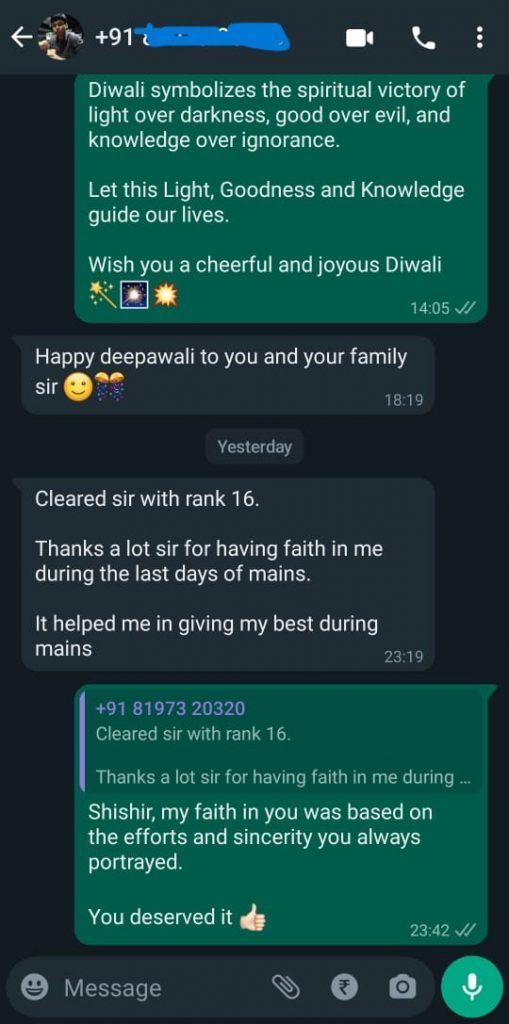
    Shishir (AIR 16) thanked Civilsdaily’s mentorship and Smash Mains Program

    GVS Pavandatta (AIR 22) – Explaining how Smash Mains Program helped him get a rank

    Aaditya Pandey (AIR 48) attributes his success story to CD’s Mentorship with Smash Mains

    Priya Rani (AIR 69) discussing Sukanya Ma’am’s contribution to her Answer Writing Skills

    Vivek Sonawane, IPS, gives credit to Smash Mains for his success

    Durga Prasad Adhikary, AIR 162 explains how Value-Addition from Smash Mains helped him get a Rank

    Not putting Penguins among the Fowls – You already know how to write an average answer (you’re missing it by a few marks actually). You want to know how to increase your score from 90 to 110-115. The approach followed by other institutes in their Test series is the same for a veteran and a complete newbie and here lies the problem. Without personalized one-to-one interaction, it will be difficult for you to rectify these minute yet very important shortcomings.

    Evaluation is a strength of this program and we put it on a high priority. Arvind sir himself is involved in the process, unlike other institutes where evaluation is outsourced to those who themselves might not have appeared for mains (It’s bizarre). It shouldn’t be based on ‘model answers’ as there are 3-4 ways of approaching an answer. Only a seasoned player will be able to go beyond these model answers and be able to appreciate your approach (If it’s innovative) even if it differs from the model answers provided.

    Test copies get checked in a time-bound manner. The questions, answers, and material provided are of the highest quality.

    Always on time and insightful discussions end with a reality check and motivation to perform better in the next test.

    Emphasis on execution and utilization of knowledge – Mains is not only about knowledge but also about optimally expressing the relevant knowledge.

    Our mentor’s interventions are highly specific and not generalized. Sitting right in front of you, he walks you through each question. He is always there, and he will not let you lose your focus.

    Get 1-on-1 Mentorship for Mains

    Program Inclusion:

    Mentorship, Tests, Classes & Notes

    1. 24 Sectional and 12 Full-Length Tests for GS Mains, including detailed evaluation, model answers, and personalized mentor feedback.
    2. 10 Essay Tests with comprehensive evaluation and feedback from a dedicated mentor.
    3. Concept Clarity Classes and Monthly Enrichment Sessions conducted by Shubham Sir to strengthen your understanding.
    4. ‘X Factor’ Sessions by AIR 2 Animesh Pradhan (recorded), providing insights to gain a 50-mark advantage.
    5. ‘X Factor’ Notes, focusing on PYQ-oriented content, quotes, judgments, data, and structured Intro-Conclusion frameworks.

    6 Pillars of Smash Mains

    1. Mentorship:
      • Focus on developing your unique style rather than copying top scorers or model answers.
      • Post-test mentor calls prioritize improvement areas for future tests, with question-level evaluation.
      • Mentors stay updated on evolving UPSC standards and guide students based on their writing style.
    2. Question Framing:
      • Each question is designed to align with emerging UPSC trends and maximize hit-ratio.
      • Focus on repeating themes (e.g., in Art and Culture) to prepare students for probable questions.
      • Questions follow a balanced distribution that mirrors UPSC’s subject-wise weightage.
      • Detailed questions ensure that the theme and demand align with UPSC standards.
    3. Answer Writing Frameworks:
      • Answer writing should stay aligned with the theme and demand of the question.
      • Use of structured frameworks like DAE (Dimension-Argument-Example) to make arguments more powerful.
      • Focus on coherence, enriched introductions, well-structured body content, and thoughtful conclusions.
    4. Answer Evaluation:
      • Civilsdaily’s evaluation ensures consistent scoring across evaluators, reflecting true progress.
      • Feedback is structured and geared towards improving question comprehension and presentation.
      • Beyond simple marks, evaluators focus on theme demand and writing improvements.
    5. Model Answers:
      • Model answers go beyond basic requirements, offering enriched study content.
      • Includes data, reports, and examples with clear structure (Introduction, Body, Conclusion).
      • Specialized questions for nuanced topics help students practice effectively for the exam.
    6. X-Factor Notes:
      • Smash Mains provides a structured approach to building notes aligned with the Mains syllabus.
      • Notes cover all keywords from the syllabus, based on PYQs, ensuring relevance for the exam.
      • Regular guidance on note-making ensures better preparation and higher scores in Mains.

    Monthly LIVE Enrichment Sessions:

    • Access live sessions for subject-specific insights and GS Mains answer feedback.
    • Monthly sessions cover macro and micro themes of the complete GS Mains syllabus.
    • Includes access to Smash Mains Worksheets for targeted preparation.

    Enroll Now and Secure Your Future

    Civilsdaily’s Smash Mains Program for UPSC CSE 2026 is your ticket to success in this prestigious exam. Limited seats are available, ensuring each student gets personalized attention and mentorship. Enroll today to kickstart your journey toward becoming a future civil servant.

    Schedule a 1-1 call with Civilsdaily’s Mentor for focused UPSC Prep

    You can reach out via WhatsApp to communicate with our mentor. https://wa.aisensy.com/dM10ln

  • [26th December 2024] The Hindu Op-ed: Nagapattinam’s journey of resilience

    PYQ Relevance:

    Q) On December 2004, tsunami brought havoc on fourteen countries including India. Discuss the factors responsible for occurrence of tsunamis and its effects on life and economy. In the light of guidelines of NDMA (2010) describe the mechanisms for preparedness to reduce the risk during such events. (UPSC CSE 2017)

    Mentor’s Comment: UPSC mains have always focused on topics like ‘ tsunami’ in (2017) and ‘NDMA’ in (2014,2016, 2017, 2020).

    The 2004 Indian Ocean tsunami was a powerful reminder of nature’s force and human vulnerability. Nagapattinam, Tamil Nadu, was one of the hardest-hit areas, but the disaster also sparked important changes in disaster response and preparedness. Over the past 20 years, India has made significant progress in disaster management. However, challenges like urbanization, climate change, and more frequent extreme weather events continue to create new risks. Revisiting Nagapattinam’s experience provides valuable lessons for improving future disaster strategies and building stronger, more resilient communities.

    Today’s Editorial focuses on the disaster due to the tsunami. This content can be used for presenting the mains answer while talking about disaster management In India.

    _

    Let’s learn!

    Why in the News?

    The 20th anniversary of the Indian Ocean tsunami is a moment to assess progress and gaps in disaster strategies. Nagapattinam’s experience highlights the critical need for building and sustaining long-term resilience.

    What factors contributed to Nagapattinam’s journey of resilience?

    • Immediate Response and Coordination: Following the tsunami, Nagapattinam benefited from well-coordinated rescue operations led by experienced officers and supported by local volunteers, military personnel, and various government departments.
      • This swift action was crucial in managing the chaos and addressing immediate needs such as medical aid and shelter.
    • Infrastructure Restoration: The restoration of essential infrastructure, including electricity, water supply, and road connectivity, was prioritized.
      • Over 13,000 temporary shelters were constructed to accommodate displaced families, which played a vital role in stabilizing the community.
    • Holistic Rehabilitation Efforts: The recovery strategy incorporated Disaster Risk Reduction (DRR) measures that emphasized building resilient communities.
      • This included constructing over 55,000 multi-hazard-resistant homes and establishing disaster-ready healthcare facilities and educational institutions.
    • Community Involvement: The active participation of over 400 NGOs in providing essential services fostered community ownership of recovery efforts.
      • Local communities were empowered to engage in their recovery processes, enhancing resilience through collective action.
    • Policy and Institutional Reforms: The disaster catalyzed significant reforms in India’s disaster management framework, including the establishment of the National Disaster Management Authority (NDMA) and the enactment of the Disaster Management Act in 2005.
      • These reforms institutionalized disaster preparedness and response mechanisms at various levels of government.

    How can the lessons learned from this experience be applied to other vulnerable regions?

    • Emphasizing Preparedness: The importance of establishing early warning systems and enhancing community preparedness can be applied to other vulnerable regions. This includes regular training exercises and community drills to ensure readiness for future disasters.
    • Integrating DRR into Development Plans: Other regions can learn from Nagapattinam’s integration of DRR measures into urban planning and infrastructure development, ensuring that resilience is built into the fabric of communities from the outset.
    • Community Engagement: Involving local populations in recovery efforts fosters a sense of ownership and empowerment, which is crucial for long-term resilience. Engaging communities in planning and implementation can lead to more effective disaster management strategies.
    • Comprehensive Insurance Mechanisms: Expanding risk insurance beyond crops to cover housing and other assets is vital for enhancing financial resilience against disasters. This approach can help mitigate economic losses in future events.

    What are the ongoing challenges faced by Nagapattinam in its journey towards sustainable development?

    • Evolving Risks: Nagapattinam continues to face challenges from evolving risks associated with climate change, urbanization, and the increasing frequency of extreme weather events. These factors necessitate ongoing innovation in disaster management strategies.
    • Sustaining Community Engagement: Maintaining active community participation in disaster preparedness initiatives remains a challenge as memories of past disasters fade. Continuous education and engagement are required to keep communities vigilant.
    • Resource Allocation: Ensuring efficient allocation of resources for ongoing recovery efforts is crucial but can be hampered by bureaucratic hurdles or misalignment with local needs. Institutional frameworks must be strengthened to facilitate better coordination between NGOs and government agencies.
    • Addressing Vulnerabilities: Disasters disproportionately affect marginalized groups, including women, children, and differently-abled individuals. Continued focus on inclusive policies that address these vulnerabilities is essential for building equitable resilience.
    What are the NDMA guidelines to prevent this type of disaster?

    • Early Warning Systems: Establishment of the Indian Tsunami Early Warning Centre (ITEWC) for real-time monitoring and alerts using satellite data, sensors, and seismic readings.
    • Community Awareness: Public awareness campaigns and regular drills to educate coastal populations on tsunami risks, evacuation routes, and safety measures.
    • Preparedness Plans: Local disaster management plans with clear evacuation routes, shelters, and training for officials, responders, and volunteers.
    • Coastal Zone Management: Risk-reducing coastal planning with tsunami-resistant structures and sustainable land use practices.
    • Infrastructure Resilience: Strengthening infrastructure, including tsunami-resistant buildings and sea walls, and enhancing communication networks.
    • Collaboration with Communities: Involving local communities in disaster preparedness, with the establishment of local disaster management committees.
    • Research and Monitoring: Ongoing research into tsunami risks and hazards to improve warning systems and preparedness strategies.

    Way forward: 

    • Strengthening Resilience through Innovation and Inclusion: Develop adaptive disaster management strategies that incorporate advanced technologies like AI-driven risk assessments and community-based DRR measures.  
    • Sustained Community Engagement and Education: Regularly conduct training, workshops, and awareness programs to keep communities prepared and involved. Leverage local knowledge and foster ownership in disaster preparedness to maintain long-term vigilance and resilience.

    https://www.thehindu.com/opinion/lead/nagapattinams-journey-of-resilience-lessons-for-the-future/article69026509.ece#:~:text=On%20December%2026%2C%202004%2C%20the,groundwork%20for%20more%20resilient%20societies

  • The lapses in the Disaster Management Bill

    Why in the News?

    The Disaster Management (Amendment) Bill, 2024, raises serious concerns. Instead of addressing the shortcomings of the Disaster Management Act (DMA), 2005, the Bill reduces opportunities for participation, accountability, and efficient governance.

    What are the lapses in the recent bill?

    • Top-Down Terminology: The Bill employs terms like “monitor” and “guidelines,” which suggest a top-down approach, rather than fostering community engagement through terms like “supervision” and “direction.”
      • This undermines trust between authorities and local communities, which are crucial in disaster response.
    • Neglect of Local Roles: While the Bill defines critical concepts such as ‘hazard’, ‘resilience’, and ‘vulnerability’, it fails to recognise the essential roles of local communities, panchayats, and NGOs in disaster management.
    • Lack of Intersectional Consideration: The Bill does not address intersectional discrimination affecting vulnerable groups like women, disabled individuals, lower castes, and LGBTQIA communities. Ignoring these factors limits the Bill’s inclusivity and effectiveness.
    • Absence of Accountability Mechanisms: The omission of performance evaluations for district authorities raises concerns about accountability. Without mechanisms to assess preparedness and response effectiveness, there is a risk of shifting blame onto individual philanthropic efforts during disasters.
    • Exclusion of Law and Order Issues: By stating that ‘man-made causes’ do not include law and order matters, the Bill complicates the role of police in disaster management while still involving them in executive committees.
    • Removal of Relief Standards: Key provisions regarding minimum standards of relief for disaster victims have been omitted from the Bill. This includes special provisions for vulnerable populations such as widows and orphans, which diminishes the support system for those affected by disasters.
    • Centralisation of Power: The Bill centralises decision-making by transferring responsibilities from local executive committees to national authorities, potentially leading to inefficiencies and delays in disaster response.
    • Neglect of Animal Welfare: The Bill does not address the impact of disasters on animals or include provisions for their welfare, which is a significant oversight given the scale of animal casualties during disasters.
    • Urban Disaster Management Authority (UDMA): The rationale behind establishing a separate UDMA is unclear, raising questions about its effectiveness given existing municipal structures that may not adequately address urban flooding issues caused by poor planning.

    What are the lessons learnt from a spectrum of areas?

    • Community Engagement: Successful disaster responses have historically relied on local knowledge and community action.
      • For example, in Cyclone Aila (2009, Sundarbans): Local villagers and fisherfolk initiated rescue operations well before official disaster response teams could arrive, saving countless lives.
    • Intersectionality Matters: Acknowledging diverse vulnerabilities ensures that disaster management strategies are comprehensive and equitable.
      • For example, Kerala Floods (2018): Specific interventions for women and children in relief camps improved health and hygiene outcomes, showcasing the value of targeted measures.
    • Accountability is Crucial: Clear accountability mechanisms are necessary to ensure that authorities fulfil their responsibilities effectively.
      • For example, in Uttarakhand Flash Floods (2013): Lack of timely action by district authorities and poor preparedness exacerbated the disaster’s impact, underscoring the need for performance evaluations.

    Can Regional collaboration work out?

    Regional collaboration could significantly enhance disaster management efforts, particularly in South Asia where cross-border challenges are prevalent:

    • Shared Resources and Knowledge: Collaborative frameworks among countries like SAARC, BIMSTEC, and BRICS could facilitate resource sharing and knowledge exchange during disasters.
    • Joint Preparedness Plans: Developing regional action plans based on shared vulnerabilities can strengthen collective responses to disasters.
    • Addressing Zoonotic Diseases: Given the increasing threat of zoonotic diseases, a coordinated regional approach could improve public health responses during disasters.

    What is the Sendai Framework for Disaster Risk Reduction?

    • The Sendai Framework for Disaster Risk Reduction (2015-2030) is a comprehensive international agreement aimed at reducing disaster risks and enhancing resilience globally.
    • It was adopted by UN member states during the Third UN World Conference on Disaster Risk Reduction held in Sendai, Japan, from March 14 to 18, 2015.
    • India is a signatory to the Sendai Framework for Disaster Risk Reduction (2015-2030).

    Way forward: 

    • Strengthen Community Participation and Inclusivity: Amend the Bill to explicitly involve local communities, panchayats, and NGOs in disaster management.
    • Promote Accountability and Regional Cooperation: Introduce performance evaluations for district authorities to ensure preparedness and effective disaster responses.

    Mains PYQ:

    Q Describe various measures taken in India for Disaster Risk Reduction (DRR) before and after signing ‘Sendai Framework for DRR (2015-2030)’. How is this framework different from ‘Hyogo Framework for Action, 2005’? (UPSC IAS/2018)

  • U.S. and China renew S&T Agreement for further 5 years

    Why in the News?

    Recently, China and the United States agreed to renew the Science and Technology Cooperation Agreement for an additional five years.

    What new measures were added to the Agreement in 2024? 

    • Limited to basic research: The amended agreement explicitly limits cooperation to basic research and excludes any collaboration in critical and emerging technologies.
      • This change aims to mitigate fears that sensitive technologies could be exploited by China for military or competitive advantages.
    • Enhanced Provisions for Researcher Safety: The agreement introduces measures to enhance the safety and security of researchers, ensuring that both parties adhere to standards that protect their respective research environments.
    • Data Reciprocity and Transparency: New provisions have been established to ensure reciprocity and transparency in data sharing between the two countries, addressing previous concerns about intellectual property rights and data misuse.
    • Dispute Resolution Mechanism: A mechanism has been included to resolve disputes should either party fail to adhere to the agreed terms, providing a structured approach to handle potential conflicts arising from collaborative projects.
    • Termination Clause: The agreement includes a clause that allows for the cancellation of proposed projects in cases of “bad faith action,” further safeguarding against potential abuses of the cooperative framework.

    What does this indicate about the evolving relationship between the U.S. and China?

    The renewal and amendment of the STA reflect a complex relationship between the U.S. and China, characterized by both cooperation and competition:

    • Affirmation of Cooperation: The extension signals a commitment from both nations to maintain dialogue and collaboration in scientific fields, despite rising tensions in other areas such as trade and technology.
    • Strategic Guardrails: By implementing new restrictions and guardrails, the U.S. aims to protect its technological edge while still engaging with China in mutually beneficial research areas. This indicates a cautious approach to bilateral relations, balancing cooperation with national security concerns.
    • Political Dynamics: The incoming administration under Donald Trump is expected to endorse this continuation but may impose additional conditions, reflecting ongoing political scrutiny regarding China’s technological advancements.

    How has the U.S. benefited from its collaboration with China under this Agreement?

    • Access to Chinese Research Ecosystem: The agreement has facilitated access for U.S. researchers to China’s burgeoning research environment, allowing for collaborative projects that leverage both countries’ strengths in various scientific fields.
    • Increased R&D Investment: The collaboration has contributed to significant increases in research and development investment from both sides, with China’s R&D spending rising dramatically since the agreement’s inception in 1979.
    • Joint Research Opportunities: The STA has enabled joint research initiatives that have led to advancements in areas such as agriculture, health, environmental science, and more, benefiting both nations through shared knowledge and innovation.
    • Educational Exchanges: The agreement has promoted mobility for students and scientists between the two countries, fostering educational exchanges that enhance understanding and cooperation at multiple levels.

    How will it impact India? 

    • Increased Competition in R&D: The strengthened U.S.-China collaboration, even with restrictions, reinforces China’s position as a global leader in science and technology which intensifies competition for India to keep pace in R&D and innovation.
    • Geopolitical Leverage: India’s strategic partnerships with both the U.S. and other global powers may be recalibrated, as the U.S. balances its rivalry and cooperation with China, potentially affecting India’s diplomatic and technological engagements.
    • Opportunity for Strategic Collaboration: India’s robust bilateral S&T agreements and growing research ecosystem could make it an alternative partner for the U.S. and other nations looking to diversify collaborations away from China, boosting India’s global scientific standing.

    Way forward: 

    • Enhance R&D Capabilities: India should increase investments in research and development, particularly in emerging and critical technologies, to remain competitive globally and bridge the innovation gap with leading nations.
    • Strengthen Strategic Partnerships: India should leverage its scientific and technological collaborations with the U.S. and other like-minded countries to position itself as a reliable partner and alternative to China in the global research ecosystem.

    Mains PYQ:

    Q The USA is facing an existential threat in the form of China, that is much more challenging than the erstwhile Soviet Union.” Explain. (UPSC IAS/2021)

  • National Human Rights Commission (NHRC)

    Why in the News?

    Justice (Retd.) V Ramasubramanian has been appointed as the new chairperson of the National Human Rights Commission (NHRC). Priyank Kanoongo (former NCPCR chief) and Dr. Justice Bidyut Ranjan Sarangi (Retd.) have been appointed as NHRC Members.

    About National Human Rights Commission (NHRC)

    Overview  A Statutory Body formed under the Protection of Human Rights Act (PHRA), 1993.
    Composition and Membership Chairperson: Must be a former Supreme Court Justice or Chief Justice; appointed by the President.

    Members:

    • Four full-time members:
      • 1 ex-SC Judge (Chairperson),
      • 1 ex-SC Judge,
      • 1 ex-Chief Justice of a High Court,
      • 1 with knowledge/experience in human rights.
      • At least one woman among the members.
    • Seven ex-officio members: Chairpersons of National Commissions (e.g., SC/ST, Women, Minorities, etc.) + Chief Commissioner for Persons with Disabilities.

    Appointment Process:

    • The President appoints based on a recommendation committee (PM, Speaker of Lok Sabha, Home Minister, Leaders of Opposition, etc.).
    • Judicial appointments: Consultation with the Chief Justice of India.
    • Removal: By an order of the President, after consultation with the Supreme Court.

    Terms of Office:

    • 3-year term or until the age of 70.
    • Eligible for reappointment, but not for other government jobs.
    • Salaries: Determined by the Central Government.
    • Reporting: Submits reports to the Centre and concerned states; these are tabled before legislatures with an action-taken report.

    Limitations:

    • No inquiry after one year from the alleged violation.
    • Functions are recommendatory; no direct power to punish or award relief.
    • Limited role in armed forces cases.
    Powers and Functions Functions:

    • Inquire into alleged human rights violations.
    • Recommend interim relief to victims or families.
    • Intervene in court proceedings on human rights matters.
    • Review constitutional/legal safeguards for human rights.
    • Study international human rights instruments.
    • Promote human rights literacy.
    • Support NGOs in human rights work.

    Powers:

    • Can regulate its own procedure.
    • Has all powers of a civil court, with judicial character.


    PYQ:

    [2020] Other than the Fundamental Rights, which of the following parts of the Constitution of India reflect/reflects the principles and provisions of the Universal Declaration of Human Rights (1948)?

    1. Preamble
    2. Directive Principles of State Policy
    3. Fundamental Duties

    Select the correct answer using the code given below:

    (a) 1 and 2 only
    (b) 2 only
    (c) 1 and 3 only
    (d) 1, 2 and 3

    [2021] Though the Human Rights Commissions have contributed immensely to the protection of human rights in India, yet they have failed to assert themselves against the mighty and powerful. Analysing their structural and practical limitations, suggest remedial measures.

  • Govt to issue over 5.8 million SVAMITVA Property Cards

    Why in the News?

    Over 58 lakh property cards will be issued to owners in approximately 50,000 villages across 12 States/UTs through a virtual event addressed by PM Modi under the SVAMITVA Scheme.

    About SVAMITVA Scheme:

    Details
    About
    • Full Form: Survey of Villages and Mapping with Improvised Technology in Village Areas.
    • Launched on 24th April 2020 (National Panchayati Raj Day) by the Ministry of Panchayati Raj.
    • Objective: Provide an integrated property validation solution for rural India, issuing Record of Rights to households in inhabited rural areas (village abadi areas).
    • Central Sector Scheme: Fully funded by the Central Government, implemented in collaboration with States/UTs and the Survey of India.

    Primary Goals:
    1. Demarcation of inhabited areas using drone technology.
    2. Creation of property cards (Record of Rights).
    3. Formalizing ownership to reduce disputes and enable financial asset use.

    Structural Mandate Implementing Agencies:

    • Ministry of Panchayati Raj at the national level.
    • State Revenue Department/Land Records Department at the state level.
    • Survey of India (as the technology partner).

    Coverage:

    • The scheme is being implemented in phases from 2020-2024.
    • Initially covered 6.62 lakh villages in Uttar Pradesh, Haryana, Maharashtra, Madhya Pradesh, Uttarakhand, and Karnataka, including a few border villages of Punjab and Rajasthan.
    • West Bengal, Bihar, Nagaland, and Meghalaya have not joined the scheme yet.
    • Nomenclature: Title Deed in Haryana, Rural Property Ownership Records (RPOR) in Karnataka, Adhikar Abhilekh in Madhya Pradesh, Sannad in Maharashtra, Svamitva Abhilekh in Uttarakhand, and Gharauni in Uttar Pradesh.
    Key Features and Significance
    • Use of Drone Survey Technology: Drones capture high-resolution images for accurate mapping of village abadi lands.
    • Issuance of Property Cards: Known by various names (e.g., ‘Gharauni’ in UP). Serves as legal proof of ownership.
    • Phased Implementation (2020–2024): Began in select states (UP, Haryana, Maharashtra, MP, Uttarakhand, Karnataka, plus border villages in Punjab/Rajasthan), expanding nationwide.
    • Continuous Operating Reference System (CORS): Network stations for precise drone-based surveys in pilot-phase states.
    • Stakeholder Collaboration: Ministry of Panchayati Raj, State Revenue/Land Records Depts, Survey of India, etc.
    Progress Made So Far
    • Drone Surveys & Mapping: 92% of targeted drone mapping completed across 3.17 lakh villages; full targets likely by 2026.
    • Issuance of Property Cards: Over 2.19 crore property cards finalized; latest distribution covered 58 lakh cards in 50,000 villages across 12 States/UTs.
    • Phased Rollout: Successful pilots led to larger-scale implementation.
    • Collaborative Efforts: Coordination among Panchayati Raj Ministry, Survey of India, and state-level agencies; financial support from the Centre.
    • Recognition of Success: Regarded as a landmark initiative for minimizing litigation, enhancing rural governance, and clarifying property rights.


    PYQ:

    [2019] With reference to land reforms in independent India, which one of the following statements is correct?

    (a) The ceiling laws were aimed at family holdings and not individual holdings.

    (b) The major aim of land reforms was providing agricultural land to all the landless.

    (c) It resulted in cultivation of cash crops as a predominant form of cultivation.

    (d) Land reforms permitted no exemptions to the ceiling limits.

  • Ken-Betwa Link Project (KBLP) launched

    Ken-Betwa Link Project (KBLP) launched

    Why in the News?

    PM Modi laid the foundation stone of the Ken-Betwa River Linking National Project, the first project under the National Perspective Plan (NPP) for interlinking rivers, conceptualized in 1980. The project would submerge over 10 per cent of the core area of the Panna Tiger Reserve.

    About the Ken-Betwa Link Project (KBLP):

    About
    • Objective: Transfer water from the Ken River to the Betwa River, both tributaries of the Yamuna.
      • Ken-Betwa Canal: Envisages a 221 km canal (including a 2-km tunnel) for water diversion.
      • Submergence area: Jhansi, Banda, Lalitpur and Mahoba districts of UP and Tikamgarh, Panna and Chhatarpur districts of MP.
    • It’s the first interlinking project under the National Perspective Plan (1980).
    • Targeted completion within 8 years, as per the Ministry of Jal Shakti.
    Key Components
    • It will irrigate 10.62 lakh ha (8.11 lakh ha in MP and 2.51 lakh ha in UP) and provide drinking water to ~62 lakh people.
    • Power Generation: Aims for 103 MW of hydropower and 27 MW of solar power.

    Phases:

    1. Phase-I: Construction of Daudhan Dam, related tunnels, canal, and powerhouses.
    2. Phase-II: Building of Lower Orr Dam, Bina Complex Project, and Kotha Barrage.

    Daudhan Dam:

      • Foundation stone laid in December 2024 by PM Narendra Modi.
      • 2,031 m in length and 77 m in height, submerging ~9,000 ha across 10 villages.
    • Construction contract awarded to NCC Ltd.
    Geographical Features of Ken and Betwa River Ken River: Rises near Ahirgawan in Madhya Pradesh, flows through Bundelkhand, joins the Yamuna near Chilla village in UP.

    Betwa River: Originates in the Vindhya Range (near Hoshangabad, MP), also flows through Bundelkhand, and meets the Yamuna at Hamirpur (UP).

    • Both rivers traverse hilly and plateau regions of Bundelkhand, often facing drought-like conditions.
    • Both are highly seasonal; flows depend largely on monsoon rainfall.
    Significance
    • Water Scarcity Mitigation: Aims to alleviate drought-like conditions in Bundelkhand by ensuring year-round irrigation.
    • Enhanced Agriculture: 10.62 lakh ha of farmland to benefit, improving crop yields and farm income.
    • Drinking Water Supply: Targets ~62 lakh people in MP and UP, improving public health.
    • Energy Generation: A total of 130 MW (103 MW hydropower + 27 MW solar), boosting renewable energy capacity in rural areas.
    • Bundelkhand Development: Expected to spur socio-economic growth, reduce rural distress and migration, and aid industrial expansion.
    • Template for Future Projects: As the first interlinking project under the National Perspective Plan, its success could pave the way for additional river-linking schemes nationwide.


    PYQ:

    [2020] The interlinking of rivers can provide viable solutions to the multi-dimensional inter-related problems of droughts, floods, and interrupted navigation. Critically examine.

More posts