UPSC preparation is an emotion, felt differently by everyone. College students and working professionals face unique challenges, such as time management and FOMO during preparation.
With UPSC 2026 one and a half years away, many final-year students and working professionals feeling job saturation are starting their preparation but lack clarity on how to proceed.
Time management is their biggest challenge, allowing only 5 hours a day for exam preparation. Reassurance is needed on whether 5 hours a day is enough to crack the exam. However, every year, many toppers secure ranks while working. This year, AIR 2 Animesh was working full-time before achieving a top rank.
Tamanna Dua Ma’am graduated from LSR before joining the prestigious Cambridge University, where she prepared for the UPSC CSE exam alongside her studies. She secured a rank in the UPSC 2023 reserve list. She understands the time crunch, the pressure on working professionals and college students, and the importance of having a Plan B while preparing.
Join her for a Zoom masterclass on 15th November, Friday at 7 PM, where she will provide a roadmap for the 2026 UPSC exam and guide college students and working professionals on how to navigate their preparation.
It will be a 45 minute webinar, post which we will open up the floor for all kinds of queries which a beginner must have. No questions are taboo and Tamanna Mam is known to be patiently solving all your doubts.
Join us for a Zoom session on 15th Nov 2024 at 7:00 p.m. This session is a must-attend for you If you are attempting UPSC for the first time or have attempted earlier and now preparing for next year, then it is going to be a valuable session for you too.
We will deal with all the aspects for a comprehensive UPSC Preparation.We’ll talk about starting with the basics, and move to advanced level.
(Don’t wait—the next webinar won’t be until Dec 24)
These masterclasses are packed with value. They are conducted in private with a closed community. We rarely open these webinars for everyone for free. This time we are keeping it for 300 seats only.
Q) China is using its economic relations and positive trade surplus as tools to develop potential military power status in Asia’, In light of this statement, discuss its impact on India as her neighbour. (UPSC CSE 2014)
Q) The China-Pakistan Economic Corridor (CPEC) is viewed as a cardinal subset of China’s larger ‘One Belt One Road’ initiative. Give a brief description of CPEC and enumerate the reasons why India has distanced itself from the same. (UPSC CSE 2019)
Mentor’s Comment:The India-China border conflict is a complex and longstanding issue primarily centred around the 3,488-kilometer (2,167-mile) Line of Actual Control (LAC) in the Himalayan region. Tensions have escalated significantly in recent years, particularly in June 2020.
Both countries have recently reached a significant bilateral agreement regarding patrolling along their disputed border, specifically the LAC, in the context of the tensions that arose from the 2020 Galwan Valley clash.
Today’s editorial explores the pressing issues related to LAC between India and China’s recent agreement.
_
Let’s learn!
Why in the News?
Two weeks after announcing military disengagement, a meeting between PM Modi and President Xi at the BRICS Summit led to positive gestures at the LAC, signalling renewed goodwill.
Key Highlights of the Agreement:
• Resumption of Patrols: The agreement allows Indian and Chinese troops to resume patrolling along the Line of Actual Control (LAC) in areas such as the Depsang Plains and Demchok, reverting to norms that existed before the 2020 tensions. This is expected to help reduce the likelihood of confrontations. • Disengagement Process: The deal signifies that the disengagement process has been finalized, indicating a mutual understanding to pull back troops from certain friction points, which aims to stabilize the situation along the border. • Monitoring Mechanism: Regular monitoring and monthly review meetings will be instituted to ensure compliance with the terms of the agreement, helping to maintain stability and prevent future clashes between both nations. • Diplomatic Engagement: The timing of this agreement aligns with high-level diplomatic interactions, including potential meetings between Indian Prime Minister Narendra Modi and Chinese President Xi Jinping at the BRICS summit, indicating a broader effort to normalize bilateral relations beyond military issues.
No Clarity on this agreement:
Unclear Agreement Details: India and China have not provided clear details on the new “patrolling arrangements” at the Line of Actual Control (LAC).
Reports suggest possible PLA access in areas like Yangtse (Arunachal Pradesh), yet no official clarity exists.
Pattern of Ambiguity: Since the start of tensions in 2020, the government has provided limited information. This was first seen when violent clashes occurred at Pangong Tso in 2020, which the government downplayed in terms of changes in troop levels.
Impact of Buffer Zones: Although disengagement has occurred at some points like Depsang and Demchok, the establishment of buffer zones may hinder a full return to pre-2020 conditions without dismantling these zones.
What are the reasons behind China’s actions on the Indian border?
Territorial Ambitions (Xi’s 2014 Policy): China’s increased aggressiveness, possibly a result of President Xi Jinping’s 2014 policy to control “every inch of territory,” has been evident across multiple regions, including Taiwan, South China Sea, Doklam, and the Tibet-India border.
Check on India-U.S. Partnership: China may be signaling that India’s maritime partnership with the U.S. will not mitigate India’s 3,500 km continental border challenges with China.
Infrastructure Security Concerns: India’s border infrastructure improvements, like Daulat Beg Oldie and new border roads, have heightened China’s security concerns around Xinjiang and Tibet. China’s own construction in the region may have increased in response.
Timing Linked to J&K Reorganization (August 2019): China reacted strongly to India’s changes in Jammu & Kashmir, particularly regarding Ladakh, leading some to believe this may have influenced China’s aggressive LAC moves in 2020.
Need for Government Transparency (Way Forward)
Call for Openness in Sensitive Border Decisions: For sustainable peace and transparency with citizens, the government should clarify its plans for the northern region, especially given the unexpected events at the LAC.
Lessons from LAC Events: The government should review the causes and responses to Chinese transgressions, which took the public and officials by surprise, and communicate lessons learned.
Engaging Citizens: As a democratic government, India is urged to move away from “shock and awe” surprise announcements and foster transparency about national security moves with profound impacts on its citizens.
On October 3, the Supreme Court in Sukanya Shantha v. Union of India (2024) struck down caste-based segregation in prisons, deeming it discriminatory and a violation of prisoners’ fundamental rights to equality.
What are the key findings regarding caste-based discrimination in Indian prisons?
Prevalence of Caste-based Roles: The recent Supreme Court decision in Sukanya Shantha v. Union of India (2024) highlighted discriminatory practices based on caste within Indian prisons.
Specifically, prisoners from marginalized castes were relegated to menial labour like cleaning, while other prisoners were assigned tasks such as cooking. This segregation was rooted in prison manuals that cited traditional caste roles.
Violation of Fundamental Rights: The Supreme Court ruled that such caste-based segregation violates Articles 14 (Right to Equality) and 15 (Prohibition of Discrimination) of the Indian Constitution. The Court noted that assigning prison labour based solely on caste perpetuates harmful caste hierarchies and obstructs prisoners’ equal rights to reform and rehabilitation.
Historical Precedents: Previous cases like Prem Shankar Shukla v. Delhi Administration (1980) and Inacio Manuel Miranda v. State (1988) also struck down irrational classifications within prison rules that discriminated based on economic or social status, reiterating that discrimination in any form within prisons is unconstitutional.
What actions has the Supreme Court mandated to combat this discrimination?
Abolition of Caste-based Job Assignments: The Supreme Court directed that prison rules segregating labour assignments based on caste be abolished. It ordered that job assignments within prisons must reflect prisoners’ individual abilities and should not perpetuate caste stereotypes.
Amendment of State Prison Rules: The Court instructed state governments to review and amend existing prison rules that institutionalize caste-based roles, ensuring that prisons become more inclusive and non-discriminatory spaces.
What challenges remain in implementing these reforms effectively?
Resistance to Cultural Change: Prison administrations may resist or be slow in adapting to changes in labour assignments and other reforms, given the deeply ingrained social norms and bureaucratic rigidity.
Lack of Resources and Training: Ensuring non-discriminatory job assignments will require retraining prison staff to implement reforms sensitively. Resource limitations and an undertrained workforce can impede effective reform.
Need for Comprehensive Prison Reforms: While the Court’s decision targets caste-based discrimination, broader systemic reforms are needed, such as improving prison conditions, expanding prisoner rights to amenities, and aligning all states with the Model Prison Manual 2016 for consistent standards across India.
Way forward:
Comprehensive Training and Monitoring: Implement mandatory training for prison staff on anti-discrimination practices, coupled with regular monitoring to ensure caste-neutral job assignments and adherence to reformed rules.
Standardized Prison Reform Across States: Uniformly adopt the Model Prison Manual 2016 nationwide, with added emphasis on equality and dignity for all prisoners, ensuring consistent and humane treatment across all states.
Mains PYQ:
Q “Caste system is assuming new identities and associational forms. Hence, caste system cannot be eradicated in India.” Comment. (UPSC IAS/2018)
With 270 million people set to move to Indian cities in the next 20 years, rapid urbanization will bring major challenges. AI can help tackle these by improving data handling and coordination, supporting India’s vision for a developed nation by 2047.
How can AI technologies be effectively integrated into India’s sustainable development strategies?
AI-Driven Decision Support: AI systems, such as decision support models, can assess impacts of policy decisions (e.g., zoning changes) by simulating various outcomes. This aids urban planning by providing insights into environmental and economic effects.
Enhancing Urban Infrastructure: AI can improve last-mile connectivity for public transport, making it more efficient and accessible by continuously analyzing data on transit needs and traffic patterns.
Multimodal Urban Transit Systems: AI can support seamless integration of multiple forms of urban transport, allowing coordinated planning for buses, trains, and other transit modes on a digital platform.
Digital Twins for Municipal Governance: AI-based digital twins of cities can assist municipal governments in monitoring and predicting urban needs, streamlining operations, and making governance more responsive and data-driven.
Energy Distribution and Environmental Monitoring: AI technologies can optimize energy distribution networks, as seen in partnerships like Airawat and Adani, and enable high-precision air and water quality monitoring for real-time governance action.
What ethical and regulatory frameworks are necessary to ensure responsible AI deployment?
Data Privacy and Security: With the vast data required for AI in urban planning, robust data privacy laws are essential to protect individual and community information.
Transparency and Accountability: AI decisions, especially those affecting urban infrastructure and environmental policies, should be transparent. Regulatory bodies should ensure AI-driven decisions can be audited, and stakeholders are accountable for outcomes.
Equity and Inclusivity: AI systems must avoid biases that could disadvantage marginalized communities. Regulations should mandate fairness, requiring AI models to consider equitable access and outcomes for all socioeconomic groups.
Environmental Sustainability Mandates: Given India’s resource constraints, frameworks should prioritize energy-efficient and environmentally conscious AI deployments. Environmental impact assessments should be integrated into the approval process for new AI systems.
What collaborative efforts are required among stakeholders to maximize AI’s impact on sustainable development?
Public-Private Partnerships (PPP): Effective collaboration between government, industry, and research institutions, as demonstrated by Airawat’s partnerships with Adani and TCS, can drive advancements in sustainable energy and urban management systems.
Government Oversight and Support: Ministries like the Ministry of Housing and Urban Affairs (MOHUA) play an essential role in offering guidance and oversight, ensuring AI initiatives align with national sustainability objectives and regulations.
Research and Academic Collaboration: Involvement of academic institutions such as IITs, as seen with Airawat, brings research rigor and technical expertise to AI solutions, fostering innovation tailored to India’s unique needs.
Community Engagement: Collaborating with local communities ensures that AI solutions are grounded in real needs, enhancing acceptance and the relevance of AI in addressing local sustainability challenges.
Standardized AI Governance Platforms: Partnerships, such as those with eGovernance Foundation’s DIGIT platform, are essential to create uniform AI governance tools that can be scaled across multiple cities, promoting a cohesive approach to sustainable development across India.
Mains PYQ:
Q Major cities of India are becoming vulnerable to flood conditions. Discuss. (UPSC IAS/2016)
Tamil Nadu, a leader in wind energy with turbines over 30 years old, introduced a new policy for upgrading old windmills in August 2024. However, wind energy producers opposed it, took the issue to the Madras High Court, and obtained a stay.
What is Tamil Nadu’s wind power capacity?
Installed Capacity: As of November 2023, Tamil Nadu has an installed wind energy capacity of approximately 10,377.97 MW, making it the second-largest wind energy producer in India after Gujarat. This represents about 23% of India’s total installed wind capacity.
Age of Turbines: Many turbines in Tamil Nadu are over 30 years old, which raises concerns about efficiency and technological advancements5.
Potential for Repowering: The state has a repowering potential of over 7,387 MW, which could significantly enhance its energy generation capabilities if older turbines are replaced or refurbished.
What about national wind energy capacity?
Total Potential: The National Institute of Wind Energy (NIWE) estimates that India has a wind power potential of 1,163.86 GW at a height of 150 meters, ranking fourth globally for installed capacity.
Current Utilization: At 120 meters (the standard height for modern turbines), India’s potential is around 695.51 GW, with only about 6.5% currently utilized nationally and nearly 15% in Tamil Nadu.
Leading States: The states contributing most to India’s wind power include Gujarat, Tamil Nadu, Karnataka, Maharashtra, Rajasthan, and Andhra Pradesh, which collectively account for approximately 93.37% of the country’s installed capacity.
What does the repowering and refurbishing of wind turbines mean?
Repowering involves replacing old turbines with new ones to enhance efficiency and output. Refurbishing includes upgrading components like gearboxes and blades to improve performance without complete replacement.
Regulatory Framework: The Tamil Nadu government introduced a new policy aimed at facilitating these processes. However, generators argue that the policy lacks provisions that effectively promote wind energy generation and financial viability.
Why are wind energy generators opposing the new policy of the TN government?
Concerns from Generators: Wind energy generators have opposed the new “Tamil Nadu Repowering, Refurbishment and Life Extension Policy for Wind Power Projects – 2024”, claiming it does not adequately support the promotion of wind energy generation. They have approached the Madras High Court and received a stay on the policy implementation.
Financial Viability Issues: The opposition stems from concerns that repowered turbines will be treated as new installations without banking facilities for generated energy, impacting financial returns on investments.
Generators emphasize that without a commercially beneficial framework, investments in repowering will decline.
Way forward:
Revise the Policy to Ensure Financial Viability: The Tamil Nadu government should amend the policy to provide incentives like banking facilities for energy generated from repowered turbines, making the projects financially viable for investors.
Promote Technological Advancements and Infrastructure Upgrades: The policy should focus on facilitating the replacement of old turbines with modern, high-capacity ones and improving wind energy transmission infrastructure to harness the full potential of Tamil Nadu’s wind resources.
Mains PYQ:
Q Do you think India will meet 50 percent of its energy needs from renewable energy by 2030? Justify your answer. How will the shift of subsidies from fossil fuels to renewables help achieve the above bjective? Explain. (UPSC IAS/2022)
National Health Accounts (NHA) data for 2021-22 shows a decline in Out-of-Pocket Expenditure (OOPE) on healthcare due to increased government health expenditure (GHE) and an enhanced public healthcare framework.
What are NHA estimates?
The NHA estimates are based on the globally accepted framework of ‘A System of Health Accounts (SHA), 2011’ which facilitates inter-country comparisons.
This report provides a systematic description of the financial flows in India’s health system by different sources, how the money is spent, how healthcare is provided, and the nature of healthcare services that are used.
Key Observations from the NHA 2021-22 Data:
Details
Decline in Out-of-Pocket Expenditure (OOPE)
OOPE has decreased due to increased government investment and improved public healthcare infrastructure, making healthcare more accessible and affordable.
Rise in Government Health Expenditure (GHE)
GHE as a percentage of GDP rose from 1.13% in 2014-15 to 1.84% in 2021-22. GHE’s share of overall government spending increased from 3.94% to 6.12%, reflecting the government’s commitment to public healthcare.
Increase in Per Capita Health Spending
Per capita health spending tripled from ₹1,108 in 2014-15 to ₹3,169 in 2021-22, allowing for more investment in infrastructure, workforce, and services.
Expansion of Social Security Expenditure (SSE)
SSE on healthcare grew from 5.7% to 8.7% of Total Health Expenditure (THE), helping protect individuals from catastrophic health expenses and reducing OOPE.
Growth of Government-Funded Insurance Schemes
Programs like Ayushman Bharat and state-level health insurance schemes increased healthcare access for economically vulnerable populations, reducing reliance on personal funds.
Foundation for Universal Health Coverage (UHC)
The decline in OOPE and increased public health spending are integral to achievingUHC, aiming for equitable healthcare access for all citizens.
PYQ:
[2021] “Besides being a moral imperative of a Welfare State, primary health structure is a necessary precondition for sustainable development.” Analyse.
[2019] In India, the term “Public Key Infrastructure” is used in the context of:
(a) Digital security infrastructure
(b) Food security infrastructure
(c) Health care and education infrastructure
(d) Telecommunication and transportation infrastructure
China reasserted its claim over Flashpoint Reef (the Scarborough Shoal) in the South China Sea following Philippines’ establishment of defined sea boundaries.
Do you know?
Fiery Cross Reef is a rock located in the Spratly Islands. China first took possession of the feature in 1988.
Mischief Reef is a Low-Tide Elevation (LTE) within the Philippines’ EEZ. It is part of the submerged continental shelf of the adjacent coastal state, which is the Philippines.
About the Flashpoint Reef
It generally refers to Scarborough Shoal, a contested reef in the South China Sea.
Known as Huangyan Dao in China, this reef has become a focal point of territorial disputes between China and the Philippines.
It lies close to the Philippines’ Exclusive Economic Zone (EEZ) but is also claimed by China, which asserts control over nearly the entire South China Sea under its nine-dash line claim.
China took control of the shoal in 2012 after a standoff with the Philippines, despite an international tribunal ruling in 2016 that invalidated China’s claims.
Its significance in the South China Sea
It is strategically located near key shipping lanes that are essential for global trade, with about one-third of global shipping passing through the South China Sea.
Its proximity to the Philippines, Vietnam, and China makes it an ideal location for military outposts, providing control over surrounding waters and a base for monitoring activities in the region.
Control over Scarborough Shoal could allow China to extend its air and naval reach, reinforcing its influence and deterrence capabilities over other Southeast Asian nations.
The South China Sea, including Scarborough Shoal, is believed to hold vast reserves of oil and natural gas—up to 11 billion barrels of oil and 190 trillion cubic feet of natural gas.
This reef is strategically important due to its proximity to rich fishing grounds and potential undersea mineral resources.
PYQ:
[2011] Southeast Asia has captivated the attention of global community over space and time as a geostrategically significant region. Which among the following is the most convincing explanation for this global perspective?
(a) It was the hot theatre during the Second World War
(b) Its location between the Asian powers of China and India
(c) It was the arena of superpower confrontation during the Cold War period
(d) Its location between the Pacific and Indian oceans and its preeminent maritime character
UPSC eligibility criteria refer to the essential requirements that candidates must fulfil to sit for the exam. They include nationality, age limit, educational qualification, medical fitness, etc. Applications that don’t meet the UPSC eligibility criteria will be rejected by the UPSC board.
On the other hand, not knowing the detailed IAS exam criteria might make one lose the chance of attempting the exam as there are limited attempts allowed. If you’re aspiring for the UPSC 2025, you should learn about the UPSC/IAS eligibility criteria and deduce whether you can apply or not.
What is the UPSC Exam
UPSC (Union Public Service Commission) is a Public exam in India, conducted to select candidates for various Grade A administrative posts, including IAS, IPS, IFS, and IRS. It is conducted in three stages: UPSC Prelims, UPSC Mains, and Interview. Those who pass successfully through these stages will be inducted into the respective cadres as per their score in the exam. However, knowing the UPSC eligibility criteria is important for aspirants to make successful applications.
UPSC Eligibility Criteria 2024-2025
Nationality
Citizen of India
Age Limit
21-32 years for the General Category21-35 years OBC Category21-37 years SC/ST Category
Educational Qualification
A graduate degree from a recognised university
Number of Attempts
6 for the General Category9 for OBC Category/PwBDUnlimited (until age limit) for SC/ST Category
Exam Fee
Rs. 100 for all except Female/SC/ST
Physical Standards
Medical Tests, Physical Fitness, Body Measurements (For IPS and Indian Railway Services, etc.)
Detailed UPSC Eligibility Criteria
Candidates must thoroughly check the detailed UPSC eligibility criteria along with special rules and restrictions.
Nationality
When it comes to the UPSC Eligibility Criteria, nationality plays a role.
For Indian Administrative Service (IAS), Indian Foreign Service (IFS), and Indian Police Service (IPS): Candidates must be citizens of India to meet IAS eligibility criteria. This is a strict UPSC eligibility criteria for these prestigious positions, as they are integral to the Indian administrative framework.
For Other Services: There are a few additional UPSC eligibility criteria:
They can be citizens of India.
Citizens of Nepal or Bhutan are also eligible.
Tibetan refugees who settled in India before January 1, 1962, may apply.
People of Indian origin who have migrated from countries like Pakistan, Burma, Sri Lanka, and certain East African nations can also be considered, provided they intend to permanently settle in India.
There is one more IAS eligibility criterion: Citizens of Nepal, Bhutan, Tibetan refugees, and individuals of Indian origin must secure a certificate of eligibility from the Government of India. While these candidates can sit for the exam, an offer of appointment will only be made once the eligibility certificate is issued.
Age Limit
General Age Limit: The upper IAS age limit for the exam is 32 years for general category candidates.
Age Relaxation:
Scheduled Caste (SC) / Scheduled Tribe (ST): Up to 5 years.
Other Backward Classes (OBC): Up to 3 years.
Defence Services Personnel: Up to 3 years for those disabled during service.
Ex-Servicemen: Up to 5 years for those with a minimum of 5 years of military service.
ECOs/SSCOs: Up to 5 years if they have completed at least 5 years of military service and have a certificate from the Ministry of Defence.
Persons with Benchmark Disabilities (PwBD): IAS eligibility allows up to 10 years, covering various disabilities as specified.
To fulfil UPSC/IAS exam criteria, the proof of age must be the same as recorded in their Matriculation or equivalent certificate. Candidates must be careful, as requests for changes to the date of birth are not permitted after submitting their UPSC application, except in cases of unintentional errors, which must be rectified by a specific deadline.
UPSC Qualification
The UPSC eligibility criteria for education include the following requirements:
Degree Requirement Candidates must hold a graduate degree from a recognised university or institution in India to fulfil UPSC qualifications.
Awaiting Results Those who have appeared for a qualifying examination but are waiting for results can apply for the Preliminary Exam. Proof of passing must be provided for the Main Exam.
Exceptional Cases Candidates without the required qualifications may be considered if they have passed an exam considered equivalent by the Commission.
Professional Qualifications: Candidates with recognised professional or technical qualifications equivalent to a degree are also eligible.
Medical Graduates Medical graduates who have completed their final MBBS exam but not their internship can apply provisionally. They must have proof of passing the exam and complete their internship before the interview.
Number of Attempts
Candidates meeting the UPSC eligibility criteria for the UPSC Civil Services Examination (CSE) are allowed six attempts. However, there are relaxations for certain categories:
Scheduled Castes (SC) and Scheduled Tribes (ST): Unlimited attempts.
Other Backward Classes (OBC): Up to 9 attempts.
Persons with Benchmark Disabilities (PwBD): Also up to 9 attempts for General, EWS, and OBC categories; unlimited for SC/ST.
If a candidate appears in the Preliminary exam without attempting the UPSC Mains, it is counted as an attempt. Even if the candidate is disqualified or cancelled, it is counted. So every aspirant must be careful in utilising the number of UPSC attempts allowed for them. They can’t apply after exhausting their limit for the UPSC attempts, even if they fulfil the IAS exam criteria.
Restrictions to UPSC Application
Candidates already appointed to the Indian Administrative Service (IAS) or Indian Foreign Service (IFS) through previous exams cannot apply for the Civil Services Examination (CSE), even if they fulfil UPSC eligibility criteria. This includes those who qualify for the Preliminary Exam.
If they join IAS or IFS after the Preliminary Exam but before the Main Exam results, they won’t be considered for appointments based on the CSE.
Similarly, candidates already in the Indian Police Service (IPS) cannot apply for IPS positions through the CSE, even if they fulfil the UPSC eligibility criteria.
Physical Standards
Candidates must pass a medical test to meet the UPSC/IAS exam criteria for Civil Service appointments.
Specific physical requirements (height, weight, chest measurements) apply mainly to:
IPS officers
Police services
Indian Railway services
UPSC eligibility criteria for non-technical positions have fewer physical requirements. But they require candidates to be fit and mentally stable.
Apart from the UPSC eligibility criteria, aspirants should focus on understanding the UPSC exam pattern and stages in detail. It’s equally important to be aware of how previous year question trends evolve, which could provide an edge in UPSC preparation. Building a solid strategy for each stage ensures better success. Additionally, staying informed about UPSC exam notifications and updates is key to avoiding missing important deadlines or changes.
FAQs
Is the UPSC age limit increased to 35?
The age relaxation in the UPSC to 35 years applies to only OBC/PwBD candidates. General candidates have up to 32 years maximum.
Are the UPSC eligibility criteria for females and males the same?
UPSC/IAS exam criteria for OBC, General, and SC/ST are the same for both men and women. However, females of all categories are exempted from paying the examination fee of Rs. 100.
What is the UPSC age limit for females?
The age limit for females in the UPSC remains as that for the males.
For General category females, the age limit is 21-32 years.
For OBC, the age limit is 21-35 years.
For SC/ST, it is 21-37 years.
Is there a UPSC age limit of 40 years?
No, the UPSC/IAS age limit of 40 years is not applicable for general, OBC, SC/ST candidates. However, if you’re a PwBD person, you have an age relaxation of up to 42 years.
The Bombay High Court recently struck down a provision related to the Fact Check Unit in the 2021 IT Rules. While it’s tempting to jump straight into learning about IT Rules alone, it’s vital to see the bigger picture where governance, digital freedom, and judiciary intersect, especially in balancing individual rights vs. state interests. This article gives special focus to the evolving idea of regulated digital freedom, key rulings, and the role of institutions in shaping this critical issue.
GS Paper 1: Indian Society: Role of Media and Social Media Note4Students: Examine case studies on social media’s impact on public opinion, focusing on its role in recent social movements and electoral processes.
Microtheme: Social empowerment
GS Paper 2: Governance, Constitution, Polity, Social Justice, and International Relations: Governance and Accountability, Regulation of Social Media, Judicial Review and Role of the Judiciary Note4Students: Analyze recent legislative changes regarding social media regulation and their implications for citizen rights and government accountability.
Microtheme: Fundamental Rights
GS Paper 3: Technology, Economic Development, Bio-diversity, Environment, Security, and Disaster Management: Cybersecurity, Digital Economy Note4Students: Discuss the dual aspects of cybersecurity measures—ensuring national security while maintaining individual freedoms and the implications for the digital economy.
Microtheme: Cyber security
GS Paper 4: Ethics, Integrity, and Aptitude: Ethics in Governance, Regulation vs. Free Speech, Transparency and Accountability Note4Students: Reflect on ethical dilemmas in digital governance, considering the balance between regulating harmful content and upholding free speech rights.
Microtheme: Public/Civil Service Values
Establishment of the Fact Check Unit
Earlier this year, the Government of India notified the Press Information Bureau’s Fact-Check Unit (PIB-FCU) under the Ministry of Information and Broadcasting (MIB) as the Central Government’s official fact-check unit. The Ministry of Electronics and Information Technology (MeitY), under the Information Technology (Intermediary Guidelines and Digital Media Ethics Code) Rules, 2023 designated the PIB’s FCU as the fact-check unit. It amended the 2021 IT Rules. The amendment broadened the definition of ‘fake news’ to cover matters related to ‘government business’.
Aim of the Fact Check Unit (FCU)
The FCU was tasked with flagging any social media posts that it deemed ‘fake,’ ‘false,’ or ‘misleading’ regarding government affairs.
It could compel social media platforms to remove such flagged content to maintain their “safe harbour” status and legal immunity.
PIB’s Fact-Check Unit (PIB-FCU)Establishment: The PIB-FCU was launched in November 2019 with the aim of acting as a deterrent against the creation and spread of fake news and misinformation related to the Government of India. It provides an avenue for the public to report questionable information about government policies.Functions and Mandate:Counter Misinformation: The PIB-FCU counters misinformation about government policies, initiatives, and schemes, either proactively (suo motu) or based on complaints.Monitor and Detect: The unit actively monitors and detects disinformation campaigns and promptly exposes false information regarding the government.Content Removal: When the unit identifies a piece of content as fake, social media platforms must remove it as part of their due diligence under IT Rules. Additionally, internet and telecom service providers are required to block web links to such fake news.
Judgement of the Bombay High Court
Observation
Details
Violation of Fundamental Rights
The amended Rule 3(1)(b)(v) violated Articles 14, 19(1)(a), and 19(1)(g) of the Constitution by allowing the state to determine what is “fake, false, or misleading.”
Right to Equality and Free Speech
The Rule violated Articles 14, 19(1)(a), and 19(1)(g), and was declared ultra vires to the IT Act. There is no “right to the truth” under Article 19(1)(a).
Discrimination Against Digital Platforms
The Rule unfairly targeted digital platforms while excluding print media, with no valid reason for this difference in treatment.
Government Cannot Be Judge in Its Own Cause
The FCU allowed the government to act as the final arbiter of “fake news,” creating a conflict of interest by allowing the government to judge itself.
Vagueness and Overbreadth
Terms like “fake, false, or misleading” were vague, making the rule excessively broad and prone to misuse, leading to potential censorship.
Chilling Effect on Digital Intermediaries
The rule had a chilling effect on digital platforms, causing self-censorship to avoid hosting undefined “fake or misleading” content.
Vagueness Leads to Censorship
The lack of clear definitions for “misleading” could lead to lawful content being censored, failing the proportionality test for restricting rights.
How is it related to the concept of regulated digital freedom ?
The issue of notifying the PIB’s Fact-Check Unit (PIB-FCU) as the Central Government’s official fact-checking body is directly related to the concept of regulated digital freedom in several ways:
1. Balance Between Freedom of Expression and Accountability
Digital Freedom: Online platforms provide individuals the freedom to express their views freely, which is a core aspect of democratic societies.
Regulation: The establishment of the PIB-FCU aims to regulate this freedom by ensuring that false and misleading content, especially related to government policies, is monitored and removed. While it seeks to prevent the spread of disinformation, it raises questions about whether this regulation could inadvertently suppress legitimate speech.
2. Accountability of Social Media Intermediaries
Digital Freedom: Social media platforms are key enablers of free expression, providing a space for people to share opinions and information.
Regulation: By making social media intermediaries accountable for the removal of flagged content, the PIB-FCU adds a layer of oversight. However, this accountability may force platforms to err on the side of caution, potentially leading to over-censorship or the removal of lawful content to avoid penalties, affecting digital freedom.
3. Preventing Misinformation and Ensuring National Security
Digital Freedom: The unregulated sharing of content, including misinformation, can lead to public harm, such as inciting violence or hate speech, which undermines national security.
Regulation: The role of the PIB-FCU in flagging fake news aims to prevent the misuse of digital platforms for illegal activities, thus supporting a safe digital environment. However, the line between misinformation and critical discourse can sometimes blur, potentially leading to overregulation.
4. Cybersecurity and Control over Digital Platforms
Digital Freedom: Users enjoy open access to share and interact with content freely on digital platforms.
Regulation: By regulating content and enforcing the removal of harmful content (e.g., deepfakes, fake news), the PIB-FCU indirectly controls what can be shared, which can enhance cybersecurity. However, this regulation must be carefully managed to ensure it does not infringe on free speech unnecessarily.
Way Forward
Final Verdict of the Supreme Court: The Supreme Court must provide a final ruling on broader concerns in the IT Rules, such as mandates for social media platforms regarding grievance redressal and compliance mechanisms, following the Bombay HC’s ruling in the Kunal Kamra v. Union of India (2023) case, which declared fact-check units unconstitutional.
Develop a Transparent and Participatory Process: The government should collaborate with civil society, media organizations, and stakeholders to create a more transparent and participatory process for identifying fake or misleading content.
Establish an Independent Fact-Checking Body: An independent, non-partisan fact-checking body should be created with clear guidelines for making decisions to avoid bias or influence.
Adhere to Judicial Guidelines: Any government takedown requests should follow judicial procedures, as outlined in Shreya Singhal v. Union of India or Section 69A of the IT Act, ensuring that takedowns are legal and necessary under specific conditions.
The introduction of the PIB-FCU reflects a broader global trend toward regulated digital freedom, where governments seek to balance the benefits of digital openness with the need for accountability, cybersecurity, and the prevention of harm. However, it also raises critical concerns about the potential for overregulation, censorship, and infringement on individual freedoms, making the need for transparency and clear boundaries essential in maintaining the right balance between freedom and regulation.
Hello,
We have a confession: we’re here to compete with your notes! Burning Issues magazine is your go-to resource as your exam approaches, designed to help you through the anxiety and overwhelm of preparing for the Civil Services Examination.
Many aspirants struggle despite reading current affairs for a year. This often happens because they interpret current affairs as merely news. As a UPSC aspirant, it’s essential to analyze these topics from the perspectives of General Studies 1, 2, 3, and 4, and that’s exactly what Elevate does.
This magazine features two sections: Burning Issues and Prelims Tidbits. Burning Issues covers current affairs that may appear in your Mains papers and teaches you how to think about these topics from different GS perspectives in just two pages.
Prelims Tidbits simplifies your Prelims preparation by distilling key facts, data, and concepts into easy-to-recall points framed around basic questions: What? Who? How? When?
So, dive in! Every page is crafted to enhance your UPSC prep. With consistency and this magazine, you’re not just preparing; you’re mastering the exam. The journey is about understanding and applying your knowledge effectively.
Cyclone Asna was a rare August storm in the Arabian Sea, but just blaming climate change and discussing it is oversimplifying the topic. This article kicks off by analyzing past trends and what caused them, before diving into the rising frequency of cyclones in the Arabian Sea, especially post-monsoon. Our take offers a fresh perspective, connecting the dots between climate change and extreme weather events, making sure you’re fully prepped with the insights you need.
GS Paper 1: Geography and Indian Society: Salient Features of World’s Physical Geography
Note4Students: Understand the relationship between cyclones, sea surface temperatures, and climate change, and their effects on global weather patterns.
Microtheme: Climatology
GS Paper 2: Governance, Constitution, Polity, Social Justice, and International Relations: Government Policies and Interventions for Development in Various Sectors
Note4Students: Learn about the necessity of climate resilience policies, especially in coastal regions vulnerable to increasing cyclone frequency.
Microtheme: Miscellaneous
GS Paper 3: Environment, Disaster Management, and Science & Technology: Disaster Management
Note4Students: Explore strategies for cyclone preparedness and the role of early warning systems in minimizing damage from natural disasters.
Microtheme: Climate change impact
GS Paper 4: Ethics, Integrity, and Aptitude: Ethics in Climate Change and Environmental Conservation
Note4Students: Analyze the ethical responsibilities of nations and individuals in addressing climate change and protecting the environment for future generations.
Microtheme: Ethical Issues in International Relations and funding
How is ‘Asna’ different ?
“Asna” is notable because it’s the first cyclone in August in the North Indian Ocean since 1981. August is typically not part of the cyclone season in this region. The cyclone began as a land-born depression that intensified as it moved over the warm waters of the Arabian Sea. It formed from a rare strong low-pressure system that grew unusually powerful over land. Asna’s formation is linked to the broader context of rapid warming over the Arabian Sea, influenced by climate change. The northward shift of the low-level jet stream due to warming over West Asia contributed to its development
Trends of Cyclones in Arabian Sea
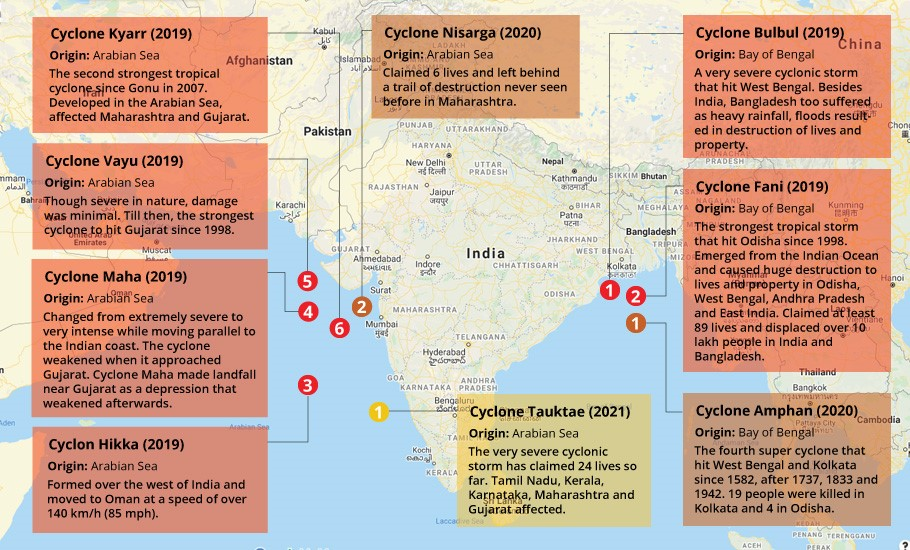
Historical Trends:The Arabian Sea historically experienced 2-3 cyclones per year, mostly weak, with a 1:4 ratio compared to the Bay of Bengal. From 1891 to 2000, 48 tropical cyclones impacted India’s west coast, 24 of which were severe, while the east coast experienced 308 cyclones, including 103 severe storms. Cyclones typically occur in May-June (pre-monsoon) and October-November (post-monsoon). Cyclone formation in the Arabian Sea is common pre-monsoon but rare in post-monsoon, when the Bay of Bengal usually sees cyclonic activity.
Current Trends: Recent trends show increasing frequency and timing shifts in cyclones over the Arabian Sea. Sea surface temperatures (SST) remain abnormally high, at around 30°C, fueling cyclone formation. Since 1980, 2021 marked the first time pre-monsoon cyclones occurred four years in a row. Cyclones are also moving closer to India’s west coast, with 2018 seeing three cyclones in the Arabian Sea and 2019 witnessing five, compared to the usual one. Between 2014-2019, there was a 32% rise in cyclones. The intensity of cyclones has also increased, with Tauktae being the fifth-strongest storm in the Arabian Sea since 1998 and the strongest pre-monsoon cyclone since 2010. Severe post-monsoon cyclones, such as Nilofar (2014), Chapal, and Megh (2015), occurred unusually during October and November.
Reasons for Increasing Frequency of Cyclones in the Arabian Sea
Reason
Explanation
Substantiation
Climate Change and Global Warming
Rising ocean temperatures increase cyclone formation as cyclones draw energy from ocean heat.
Climate scientist Hiroyuki Murakami’s study showed 64% of recent cyclones in the Arabian Sea were caused by climate change.
Temperature Rise in Indian Ocean
Over the last 4 decades, the Indian Ocean’s temperature rose by 0.7°C; the western Indian Ocean unexpectedly warmed by 1.2°C in summer.
The IMD noted the Arabian Sea’s surface temperature is 30-31°C, especially around Goa-Lakshadweep, where Cyclone Tauktae originated.
Indian Ocean Dipole (IOD)
A positive IOD warms the western Indian Ocean and Arabian Sea, creating low-pressure areas conducive to cyclone formation.
In 2019, 5 cyclones formed in the Arabian Sea, coinciding with the strongest positive IOD recorded.
Teleconnections
Distant climate phenomena, such as atmospheric or oceanic changes, can impact cyclone patterns in the Arabian Sea.
A study by the National Institute of Oceanography, Goa, suggested teleconnections influence cyclone activity.
Reasons for Increased Frequency of Severe Cyclonic Storms in the Post-Monsoon Period
Reason
Explanation
Substantiation
Shift in Cyclone Occurrence
Severe cyclones, which typically occur in spring, are now occurring in the post-monsoon period (October-November).
Severe cyclones Nilofar, Chapal, and Megh occurred in October-November. In 2019, Kyarr, Maha, and Pawan formed post-monsoon.
Rising Sea Surface Temperature (SST)
Increased SST, linked to human activity and natural variability, is intensifying cyclones, making them more severe.
SST rise in the Arabian Sea leads to more intense storms, especially during the post-monsoon period.
Delayed Winter Monsoon
The delay in the onset of the winter monsoon extends the storm season, leading to an increase in severe cyclones.
Delayed monsoons contribute to longer cyclone seasons and more severe storms in the Arabian Sea.
Anthropogenic Aerosols
Aerosols from post-harvest activities change SST distribution, leading to more active cyclonic storms during the post-monsoon season.
After the kharif harvest, increased aerosol emissions influence SST and cyclonic storm activity in the Arabian Sea.
#CLIMATE EXTREMES & CLIMATE CHANGE
According to IPCC -AR6, changing climate leads to changes in the frequency, intensity, spatial extent, duration, and timing of weather and climate extremes. • While many weather and climate extremes are the result of natural climate variability (including phenomena such as El Niño), and natural decadal or multi-decadal variabilities, it is the anthropogenic activities which are the driving force in climate change.
As a consequence, average temperatures have risen by 1.2 C compared to pre industrial era. This additional energy is unevenly distributed and bursts out in extremes events disasters like hurricanes, heat-waves, cloud bursts, droughts etc.
For example: Some of the extreme events that have been experienced around the world are:
A heat wave in Canada and adjacent parts of the USA pushed temperatures to nearly 50C in a village in British Columbia.
Death Valley, California reached 54.4C during one of multiple heat waves in the south-western USA.
A second successive year of drought in sub-tropical South America reduced the flow of river basins and hit agriculture, transport and energy production
Extreme Event
Impact
Example
Drought
Climate change is shifting the equilibrium of the water cycle, making large regions more drought-prone by 2100.
The Standardized Precipitation-Evapotranspiration Index indicates more drought-prone conditions, particularly in mid-latitude regions.
Extreme Precipitation
Warmer air holds more water vapor (7% more per degree of warming), leading to more intense and variable precipitation events, increasing both floods and droughts.
Increased risk of flooding and dam failure during heavy rains, while water storage becomes critical during droughts.
Tropical Storms
Tropical storms and hurricanes are shifting towards the poles due to expanding tropics caused by higher global temperatures.
Warmer sea temperatures could intensify hurricane wind speeds by up to 10%. Hurricanes Florence (2018) and Imelda (2019) caused devastating floods due to this shift.
Coastal Storms and Storm Surges
Rising sea levels (by 1-4 feet globally) in low to moderate emissions scenarios will amplify the impact of coastal storms and storm surges.
Hurricane Ida in 2021 hit Louisiana, US, as an extremely dangerous Category 4 storm, with increased damage due to rising sea levels and coastal storm surges.
Warmer Sea Surface Temperatures
Higher sea surface temperatures lead to more low-pressure systems, increasing the likelihood of stronger and more frequent tropical storms.
NOAA has predicted an increase in Category 4 and 5 hurricanes, with wind speeds rising by up to 10%, intensifying storms like Hurricane Florence and Hurricane Imelda.
Wildfires
Warmer, drier conditions caused by climate change increase wildfire risk by affecting temperature, soil moisture, and fuel availability (trees, shrubs).
In the U.S. West, a 1°C rise could increase the median burned area by up to 600% in some forests.
Hello,
We have a confession: we’re here to compete with your notes! Burning Issues magazine is your go-to resource as your exam approaches, designed to help you through the anxiety and overwhelm of preparing for the Civil Services Examination.
Many aspirants struggle despite reading current affairs for a year. This often happens because they interpret current affairs as merely news. As a UPSC aspirant, it’s essential to analyze these topics from the perspectives of General Studies 1, 2, 3, and 4, and that’s exactly what Elevate does.
This magazine features two sections: Burning Issues and Prelims Tidbits. Burning Issues covers current affairs that may appear in your Mains papers and teaches you how to think about these topics from different GS perspectives in just two pages.
Prelims Tidbits simplifies your Prelims preparation by distilling key facts, data, and concepts into easy-to-recall points framed around basic questions: What? Who? How? When?
So, dive in! Every page is crafted to enhance your UPSC prep. With consistency and this magazine, you’re not just preparing; you’re mastering the exam. The journey is about understanding and applying your knowledge effectively.
Ranks over 1,300 institutions across 100+ countries.
Key Indicators
– Academic Reputation (survey of academic experts)
– Employer Reputation (survey of employers)
– Citations per Faculty (research influence)
Regional Rankings
Includes regional rankings for Asia, Latin America, Europe, etc.
Annual Release
Published annually, typically in June.
Key Insights from QS Asia Rankings 2025
The 2025 rankings cover 984 institutions across 25 countries in Eastern, Southern, South-Eastern, and Central Asia, offering a detailed comparison of institutional performance in the region.
India made impressive gains, with 2 institutions in the top 50 and seven in the top 100 of the QS Asia Rankings 2025.
India has the highest number of ranked institutions, dominating the top 10 universities in Southern Asia with seven Indian institutions.
Top Rankings for India:
Top 50: IIT Delhi (44th) and IIT Bombay (48th).
Top 100: Includes IIT Madras (56), IIT Kharagpur (60), Indian Institute of Science (62), IIT Kanpur (67), and University of Delhi (81).
Top 150: Features IIT Guwahati, IIT Roorkee, JNU, Chandigarh University (120), UPES (148), and Vellore Institute of Technology (150).
IIT Delhi achieved India’s highest rank at 44th with a 99% employer reputation score, while IIT Bombay follows with 99.5% employer reputation and 96.6% academic reputation.
University of Delhi improved its ranking from 94th to 81st, with a high score of 96.4% in the International Research Network indicator.
Anna University scored a perfect 100 in Papers per Faculty, highlighting its strong research output.
15 universities scored over 99% in the Staff with PhD indicator, reflecting India’s focus on qualified faculty and teaching quality.
North Eastern Hill University and University of Agricultural Sciences, Bangalore, both scored 100 in faculty-student ratio, indicating top-tier academic credibility.
PYQ:
[2014] Should the premier institutes like IITs/IIMs be allowed to retain premier status, allowed more academic independence in designing courses and also decide mode/criteria of selection of students. Discuss in light of the growing challenges.
Political Campaigning’s gone digital big-time lately! Morever, Elections have been a recurring theme in the UPSC- be it the challenges, role of ECI etc. Adding to this layer, is when the themes are cross cutting subject such as this one- Elections X Technology. There is a dearth of sorted content good enough to replicated directly in the answers. We’ve packed this article with insights to help you evaluate the impact, ethics, and challenges of this shift. We have incorporated real-world examples into the discussions to give you a unique perspective that sets your analysis apart. Take a special note of the various regulatory reforms which can be replicated directly in the exams.
GS1:
Indian Society: Globalization and Social Change
Note4Students: Analyze the influence of digital political campaigns on societal structures and voter engagement in a globalized context.
Microtheme: Globalisation
GS2:
Governance, Constitution, Polity, Social Justice, and International Relations: Election and Representation
Note4Students: Explore how digital platforms are transforming electoral processes and enhancing political participation among diverse groups.
Microtheme: Elections
GS3:
Technology, Economic Development, Biodiversity, Environment, Security, and Disaster Management: Awareness in IT
Note4Students: Examine the role of technology, such as AI and big data, in shaping political campaigns and influencing voter behavior at a granular level.
Microtheme: Tech solutions for daily challenges
GS4:
Ethics, Integrity, and Aptitude: Ethical Concerns in Governance
Note4Students: Understand the ethical implications of digital campaigns, including misinformation and the need for transparency in political advertising.
Microtheme: Applied Ethics
· Leave.EU was a pro-Brexit political campaign group led by Arron Banks and Andy Wigmore. Active during the 2016 EU referendum, it focused on national sovereignty, immigration, and economic independence. Known for its aggressive rhetoric, social media tactics, and controversy, it played a key role in the Brexit outcome.Digital political campaigns in India:· Bharatiya Janata Party (BJP) – 2014 and 2019 Elections: The BJP’s use of digital platforms was a game-changer. They employed social media, mobile apps, and digital marketing to engage with voters, with Narendra Modi’s Twitter and Facebook presence playing a key role. The NaMo App also allowed direct interaction with voters.· #MainBhiChowkidar Campaign (2019): The BJP launched the #MainBhiChowkidar campaign, where Prime Minister Modi and his supporters used the phrase on social media to emphasize the government’s role in fighting corruption. It went viral, with thousands adding “Chowkidar” to their Twitter names.· WhatsApp Groups for Grassroots Campaigning: In various elections, political parties have extensively used WhatsApp for direct communication. Targeted messages, rally announcements, and even misinformation were circulated through community groups to influence voter behavior.· Congress Party’s Digital Push (2019): The Indian National Congress ramped up its digital presence for the 2019 elections, led by Rahul Gandhi’s increased social media visibility. The #AbHogaNyay campaign used videos, infographics, and social media outreach to convey their message.
The Economics of Digital Campaigning
A)Digital Spending Overview
Political Party
Election Year
Estimated Digital Spending
Key Digital Strategies
BJP (Bharatiya Janata Party)
2014 General Elections
₹150-400 crores
Social media ads, NaMo App, WhatsApp, Twitter, YouTube campaigns
2019 General Elections
₹500+ crores
#MainBhiChowkidar campaign, personalized outreach via NaMo App, influencer marketing
Indian National Congress
2019 General Elections
₹150-200 crores
#AbHogaNyay, social media ads, influencer partnerships, Twitter and Facebook outreach
Aam Aadmi Party (AAP)
2015 Delhi Elections
₹10-20 crores
Facebook, Twitter campaigns, YouTube ads, grassroots WhatsApp groups
2020 Delhi Elections
₹20-30 crores
YouTube, Twitter ads, WhatsApp messaging, targeted video campaigns
Samajwadi Party
2022 UP Elections
₹5-10 crores
Social media, Twitter campaigns, WhatsApp groups, targeted digital ads
Trinamool Congress (TMC)
2021 West Bengal Elections
₹10-20 crores
YouTube ads, social media, influencer campaigns, WhatsApp group targeting
Shift towards Digital Platform: Conventional publicity tools like flags, billboards, and public meetings made up only a small fraction of parties’ total propaganda spending in the 2023 Karnataka election. This indicates a strategic shift toward digital platforms in electoral strategies.
Key Factors behind this shift
Category
Details
1. Rising Internet Penetration
India’s Digital Growth: Over 700 million internet users; affordable smartphones and data have made digital platforms the primary communication mode.
Youth Engagement: A significant portion of the electorate is young and tech-savvy, ideal for targeting first-time voters.
2. Cost-effectiveness and Reach
Lower Costs: Digital campaigns are more cost-effective than traditional advertising, offering higher ROI through targeted ads.
Wide Reach: Social media platforms allow parties to reach diverse voter demographics; WhatsApp enables grassroots micro-targeting.
3. Data-driven Campaigning
Targeted Ads: Data analytics helps create highly targeted ads for specific voter groups based on demographics.
Personalization: Voter behavior data allows parties to craft personalized content and engage voters directly.
4. Social Media Dominance
Viral Campaigns: Platforms like Twitter and Facebook are crucial for political discourse, utilizing hashtags and viral videos.
Influencer Partnerships: Collaboration with social media influencers amplifies messaging and expands audience reach.
5. Real-time Feedback and Engagement
Direct Interaction: Social media enables real-time interaction between politicians and voters, facilitating immediate feedback.
Live-streaming and Virtual Rallies: Live-streamed events on platforms like YouTube and Facebook became common during elections and crises like COVID-19.
6. WhatsApp and Messaging Apps
Grassroots Campaigning: WhatsApp is used to disseminate campaign materials and organize volunteer groups at the local level.
Micro-targeting: Personalized messaging and real-time mobilization through WhatsApp groups enhance campaign efforts.
7. Regulatory and Ethical Challenges
Misinformation and Fake News: The digital shift has led to increased misinformation, raising ethical concerns about platform usage.
Regulatory Scrutiny: The Election Commission of India monitors digital campaigns, enforcing rules like pre-approval of political ads for transparency.
8. Future of Political Campaigning
Hybrid Campaigns: Combining traditional methods with digital initiatives is becoming the norm in political campaigning.
Artificial Intelligence and Big Data: Parties use AI tools and big data to predict voter behavior and optimize outreach strategies.
Micro-targeting Capabilities: Political parties are utilizing micro-targeting to reach specific audiences down to the panchayat level based on location. One party was found to micro-target over 1,700 pin codes in a single advertisement, demonstrating digital platforms’ capacity to shape electoral narratives with precision.
Rise of Third-Party Campaigners: While major political parties have significant financial power, a less visible force, known as third-party campaigners, operates behind the scenes. Although spending on Google Ads is publicly available, these third-party campaigners work quietly and often go unnoticed, influencing elections without much oversight. A study by Lokniti-CSDS found that 31 third-party campaigners on Meta spent over ₹2,260 lakh in just 90 days leading up to June 29, 2024.
What is the present Issue?
On Google, political ads generally avoid offensive content, but the spending by third-party groups is limited.
On Meta, many third-party campaigners are top spenders and often share inflammatory content.
This inconsistency highlights the need for unified rules across all platforms to manage harmful content and hold tech companies accountable.
IN NEED of REGULATORY REFORMS
Regulatory Reform
Description
Existing Example
Mandatory Disclosure of Ad Spending
Require political parties to disclose digital ad spending in real-time for transparency.
U.S. Federal Election Commission: Requires candidates to report ad spending, including digital platforms.
Pre-approval of Political Ads
Social media platforms should enforce pre-approval of political ads to prevent misinformation.
Facebook’s Ad Archive: Political ads must be approved and logged for public viewing.
Cap on Digital Campaign Spending
Introduce spending limits on digital campaigns to ensure a level playing field among political parties.
Canada’s Election Act: Limits on total campaign spending, including digital ads.
Regulating Micro-targeting
Implement data protection rules and require transparency on how personal data is used for targeting.
EU’s GDPR: Requires consent for data processing and provides rights to individuals regarding their data.
Fact-checking Mechanisms
Establish independent fact-checking bodies to verify content and prevent the spread of fake news.
WhatsApp Fact-Checking Initiative: Collaborates with fact-checkers to verify information shared on its platform.
6. Limits on Bulk Messaging
Restrict the use of bulk messaging tools to prevent the mass dissemination of false information.
WhatsApp’s Policy on Bulk Messaging: Limits forwarding messages to curb misinformation during elections.
Hello,
We have a confession: we’re here to compete with your notes! Burning Issues magazine is your go-to resource as your exam approaches, designed to help you through the anxiety and overwhelm of preparing for the Civil Services Examination.
Many aspirants struggle despite reading current affairs for a year. This often happens because they interpret current affairs as merely news. As a UPSC aspirant, it’s essential to analyze these topics from the perspectives of General Studies 1, 2, 3, and 4, and that’s exactly what Elevate does.
This magazine features two sections: Burning Issues and Prelims Tidbits. Burning Issues covers current affairs that may appear in your Mains papers and teaches you how to think about these topics from different GS perspectives in just two pages.
Prelims Tidbits simplifies your Prelims preparation by distilling key facts, data, and concepts into easy-to-recall points framed around basic questions: What? Who? How? When?
So, dive in! Every page is crafted to enhance your UPSC prep. With consistency and this magazine, you’re not just preparing; you’re mastering the exam. The journey is about understanding and applying your knowledge effectively.
The Indian government is exploring the possibility of allowing Chinese investments in high-tech electronics on a case-by-case basis. Impact of this move on India’s economy is something you will read multiple times till the exam. But not reading the specifics will lead to a place where you would be writing generic answers. It is important to understand that this topic needs to be understood in the context of Make in India initiative. By diving into the concept of the Indianisation of the economy, we’ve analyzed how these investments could influence India’s future trajectory and shape its industrial landscape.
GS Paper 1:
Economic Geography and India’s Industrialization
Note4Students: Analyze how India’s geography, infrastructure, and natural resources influence its manufacturing capabilities. Explore how reliance on global supply chains and regional disparities affects the Indianization of the economy.
Microtheme: Secondary Sector
GS Paper 2:
Governance, Policies, and Foreign Investment
Note4Students: Examine the constitutional and policy-related challenges in balancing foreign investments, particularly from China, with national security and economic sovereignty goals like Atmanirbhar Bharat and Make in India.
Microtheme: Neighbourhood
GS Paper 3:
Indian Economy, Industrial Policy, and Global Competition
Note4Students: Assess the impact of global competition and domestic constraints on India’s industrial policies. Critically analyze the role of government interventions such as the PLI scheme in strengthening India’s position in global supply chains.
Microtheme: Industrial Policy
GS Paper 4:
Ethics in Economic Policy and Foreign Investment
Note4Students: Consider the ethical challenges of allowing foreign investments from politically sensitive countries. Reflect on the balance between economic pragmatism, national interest, and the ethical responsibility of ensuring transparency and fairness in decision-making.
Microtheme: Utilization of public funds
Reasons for this move?
Pressure from Indian Industry: Indian companies, particularly in electronics, are urging the government to relax restrictions on Chinese investments to access advanced technology and boost domestic production.
Technological Expertise: China has expertise in critical areas such as AC compressors, display panels, and semiconductors—technology that is not easily available from countries like South Korea or Taiwan.
Boost to Domestic Manufacturing: The government is focusing on investments that can significantly enhance India’s domestic component manufacturing and reduce reliance on imports.
Thedilemma between ‘Make in India’ and China’s presence:
Aspect
‘Make in India’ Initiative
China’s Presence in India
Objective
To develop India as a global manufacturing hub, reduce import dependence, and boost domestic industries.
Dominates India’s smartphone market, with 4 out of 5 top-selling brands being Chinese, controlling 50%+ market share.
Policy Support
Production Linked Incentive (PLI) scheme to attract investment and boost large-scale electronics manufacturing.
Chinese companies are taking advantage of PLI schemes by setting up local production and adapting to regulations.
Government Allocations
Union Budget 2024-25 allocates ₹6,125 crore for electronics manufacturing and ₹1,148 crore for R&D.
Chinese firms have operated in India for over a decade, becoming major players in electronics production.
Self-Reliance (Atmanirbhar Bharat)
Focus on reducing dependence on foreign imports, promoting indigenous innovation and local talent.
Chinese companies continue to integrate into India’s supply chain, although India is pushing for more local ownership and manufacturing.
Employment and Localization
Aims to generate local jobs by encouraging domestic manufacturing and R&D in critical sectors.
Chinese companies have adapted by hiring Indian executives, local production staff, and collaborating with Indian partners.
Political and Economic Concerns
Anti-China sentiments post-Galwan conflict, push to boycott Chinese products, and reduce Chinese investments.
Despite anti-China rhetoric, Chinese companies remain critical to India’s smartphone market and supply chain.
Strategic Alliances
Exploring partnerships with Taiwanese firms to further reduce dependency on Chinese manufacturers.
Chinese companies continue to seek opportunities within India despite increasing government scrutiny and regulatory challenges.
Technological Advancements
Encourages domestic innovation, particularly in the smartphone and IT sectors, to build a competitive edge.
Chinese firms bring advanced manufacturing techniques and technological expertise, raising concerns about reliance on foreign innovation.
Long-term Vision
Envisions a self-reliant India with home-grown companies leading major industries.
China continues to leverage its scale, efficiency, and market dominance in India, posing a challenge to India’s self-reliance efforts.
#Indianisation of the economy
A shift in economic policies and practices aimed at promoting domestic growth, reducing dependence on foreign products, and fostering a self-reliant and culturally integrated economy.
Challenges to complete Indianisation:
Challenge
Description
Example
Lack of Advanced Technology
India lacks cutting-edge technology and innovation capabilities, especially in sectors like electronics and semiconductors.
The absence of a domestic semiconductor industry forces dependency on countries like Taiwan, South Korea, and China.
Dependence on Global Supply Chains
Many critical components are imported, making self-reliance difficult without domestic supply chains.
India’s smartphone production is heavily reliant on Chinese imports for critical components like chips, circuits, and cameras as evident during COVID-19 pandemic.
Insufficient Infrastructure
Underdeveloped infrastructure in logistics, power, and manufacturing hinders competitiveness.
Despite the PLI scheme for electronics, India lacks adequate manufacturing infrastructure. India’s power shortages and logistics inefficiencies further impede large-scale manufacturing.
Skilled Labor Shortage
Lack of adequately skilled workers in advanced manufacturing sectors.
India lacks the required skilled workforce to work in high-tech manufacturing sectors like semiconductor fabs and precision electronics manufacturing.
Investment and Capital Constraints
High investments needed for infrastructure and technology development.
The Union Budget 2024-25 allocated ₹6,125 crore to electronics manufacturing under the PLI scheme, but the total investment would require tens of billions of dollars.
Quality and Scale Issues
Difficulty in achieving consistent product quality and scaling production efficiently.
Apple relies on Foxconn, a Taiwanese company, to manufacture iPhones in India, and high-end product lines are still manufactured in China due to India’s lower scale and quality consistency.
Regulatory and Policy Hurdles
Bureaucratic delays and complex regulations slow down investment in manufacturing.
The World Bank’s Ease of Doing Business Report ranked India 63rd in 2020. Red tape and complex approval processes have deterred some foreign manufacturers from investing in Indian factories.
Competition from Foreign Firms
Established foreign firms, especially Chinese, dominate sectors like electronics due to cheaper production.
Chinese companies dominate India’s smartphone market with a combined market share exceeding 50% by 2023.
Geopolitical and Trade Relations
Disrupting trade relations with countries like China can cause supply chain bottlenecks.
Following the Galwan Valley clash in 2020, restrictions on Chinese investments led to delays in projects and affected industries heavily reliant on Chinese imports, particularly electronics and telecom.
Consumer Preferences
Consumers are accustomed to affordable, feature-rich products from foreign brands.
Chinese smartphones like Xiaomi and Realme are popular due to their affordability and advanced features.
Hello,
We have a confession: we’re here to compete with your notes! Burning Issues magazine is your go-to resource as your exam approaches, designed to help you through the anxiety and overwhelm of preparing for the Civil Services Examination.
Many aspirants struggle despite reading current affairs for a year. This often happens because they interpret current affairs as merely news. As a UPSC aspirant, it’s essential to analyze these topics from the perspectives of General Studies 1, 2, 3, and 4, and that’s exactly what Elevate does.
This magazine features two sections: Burning Issues and Prelims Tidbits. Burning Issues covers current affairs that may appear in your Mains papers and teaches you how to think about these topics from different GS perspectives in just two pages.
Prelims Tidbits simplifies your Prelims preparation by distilling key facts, data, and concepts into easy-to-recall points framed around basic questions: What? Who? How? When?
So, dive in! Every page is crafted to enhance your UPSC prep. With consistency and this magazine, you’re not just preparing; you’re mastering the exam. The journey is about understanding and applying your knowledge effectively.
The 6th Quad Summit was recently held in Delaware, USA, marking another pivotal moment in global geopolitics, especially in the Indo-Pacific. We’ve compiled the key announcements from this year’s summit and then explored why the Quad is significant, the challenges it faces, and some real-world examples that illustrate these points. Since the Quad is an example of minilateral diplomacy, we’ve also taken a closer look at the rise of minilateralism and its growing impact on the global stage.
GS 1 Geography: Indo-Pacific Region Note4Students: Understand the geopolitical significance of the Indo-Pacific in global power dynamics and India’s strategic role through the Quad partnership.
Microtheme : Natural resources potential
GS 2 International Relations: India and Quad Note4Students: Explore how India’s Quad partnerships strengthen ties with global powers, addressing regional security and infrastructure challenges. Microtheme : Geo-politics affecting India’s Interest
GS 3 Economic Development, Security: Technology and Infrastructure Note4Students: Examine Quad’s role in strengthening cybersecurity, infrastructure development, and supply chain diversification in the Indo-Pacific.
Microtheme : Cyber Security
GS 4
Ethics: International Cooperation
Note4Students: Analyze ethical considerations in India’s foreign policy decisions, focusing on transparency and strategic autonomy in Quad collaborations.
Microtheme : Applied Ethics
Announcements at QUAD 2024
Announcement
Description
Quad Cancer Moonshot
A groundbreaking partnership to save lives in the Indo-Pacific region by combating cervical cancer.
Maritime Initiative for Training in the Indo-Pacific (MAITRI)
Enabling Indo-Pacific partners to maximize tools provided through IPMDA and other Quad initiatives.
Improving interoperability and advancing maritime safety through the inaugural Quad-at-Sea mission in 2025.
Quad Ports of the Future Partnership
Harnessing the Quad’s collective expertise to support sustainable and resilient port infrastructure development across the Indo-Pacific.
Quad Principles for Development and Deployment of Digital Public Infrastructure
Establishing principles for the development and deployment of digital public infrastructure in the Indo-Pacific region and beyond.
Semiconductor Supply Chains Contingency Network Memorandum of Cooperation
Enhancing the resilience of the Quad’s semiconductor supply chains through a memorandum of cooperation.
Collective Quad Effort on Energy Efficiency
A collective Quad initiative to boost energy efficiency, including the deployment and manufacturing of high-efficiency affordable cooling systems in the Indo-Pacific.
India’s Space-based Web Portal for Mauritius
India’s establishment of a space-based web portal for Mauritius, supporting open science for monitoring extreme weather events and climate impacts.
Quad STEM Fellowship Sub-category
A new sub-category under the Quad STEM Fellowship, announced by India, for Indo-Pacific students to pursue a 4-year bachelor’s level engineering programme.
About Quad
Category
Details
About
Quad, or Quadrilateral Security Dialogue, is a diplomatic partnership among Australia, India, Japan, and the US, focused on promoting stability, prosperity, and an open, resilient Indo-Pacific environment.
Objectives of Quad
Addresses regional challenges such as health security, climate change, infrastructure, technology, cybersecurity, humanitarian assistance, maritime security, disinformation, and counter-terrorism.
Origins of Quad
Originated in response to the 2004 Indian Ocean tsunami, providing humanitarian assistance. Formally established in 2007 by Japanese PM Shinzo Abe. Dormant after Australia withdrew in 2008, revived in 2017.
Expansion Potential
“Quad-plus” meetings with South Korea, New Zealand, and Vietnam suggest potential for future expansion.
STRATEGIC SIGNIFICANCE FOR INDIA
Significance
Details
Examples
Strategic Counterbalance to China
The QUAD provides India a platform to counterbalance China’s assertiveness in the Indo-Pacific. This is vital due to border tensions, such as the 2020-2021 Galwan Valley clashes.
2023 Malabar exercises in Australia focused on anti-submarine warfare.
Economic and Technological Cooperation
QUAD gives India access to advanced technologies and economic partnerships.
The Quad Critical & Emerging Technology Forum focuses on AI, quantum computing, and biotechnology, aiding India’s National Quantum Mission.
Infrastructure and Connectivity
QUAD infrastructure initiatives offer opportunities for India to enhance regional connectivity.
The QUAD Infrastructure Coordination Group aligns members’ infrastructure efforts in the Indo-Pacific, complementing India’s International North-South Transport Corridor (INSTC).
Maritime Security and Freedom of Navigation
QUAD reinforces India’s commitment to ensuring free and open sea lanes in the Indo-Pacific, crucial for its trade and energy security. Approximately 95% of the country’s trade by volume and 68% by value is moved through Maritime Transport.
Indo-Pacific Maritime Domain Awareness (IPMDA) launched in 2022.
Climate Change and Disaster Response
QUAD provides India a platform to address climate change and disaster response, critical for a country vulnerable to climate impacts.
The QUAD Climate Change Adaptation and Mitigation Package (Q-CHAMP) focuses on green shipping corridors, clean energy cooperation, and climate services.
Cyber Security and Critical Technologies
QUAD offers a framework for cooperation in cyber security and critical technologies.
The QUAD Cybersecurity Partnership announced in 2023 focuses on improving cyber resilience and response.
PERSISTING CHALLENGES
Category
Details
Examples
Balancing Act with China
India faces the challenge of balancing QUAD participation with managing its complex relationship with China, as Beijing views QUAD as a containment strategy amid border tensions.
In 2023, China-India border talks showed progress but still highlighted persistent tensions.
Divergent Priorities within QUAD
QUAD members have differing priorities; the US and Australia focus on security, while India prefers a broader approach. Diverging views on Russia’s Ukraine invasion further highlight differences.
India’s neutral stance on Russia contrasts with the US and Australia imposing sanctions.
Resource and Capacity Constraints
Implementing QUAD initiatives strains India’s resources, given its domestic development priorities. Participation in vaccine partnerships and emerging technologies faces financial and human resource constraints.
India faced initial challenges in meeting domestic vaccine demands during the QUAD Vaccine Partnership.
Potential Economic Costs
Restructuring supply chains away from China may cause short-term economic costs for India, especially in its electronics industry, which relies on Chinese components.
Bilateral trade between India and China hit a record USD 135.98 billion in 2022.
Regional Perceptions and Diplomatic Challenges
India must manage regional perceptions of QUAD, especially from ASEAN, to avoid diplomatic isolation, while balancing its participation in groups like BRICS.
India balances participation in QUAD and BRICS, which includes China and Russia.
Operational and Interoperability Challenges
Enhancing QUAD interoperability is challenging for India due to its diverse military equipment, including Russian-origin systems, complicating defense cooperation and potential CAATSA sanctions concerns.
India’s use of Russian S-400 missile systems led to concerns about US CAATSA sanctions.
Way Forward
1. Issue-based Alignment within QUAD: India should pursue a flexible, issue-based alignment within QUAD, focusing on areas of mutual interest without compromising on its core strategic interests.
2. Enhancing Domestic Capabilities: Investing in domestic capabilities, particularly in defense and technology sectors, can reduce external dependencies and strengthen India’s position within QUAD.
3. Proactive Agenda Setting: India should take a more proactive role in setting the QUAD agenda, focusing on areas where it has strengths and which align with its strategic interests.
4. Diversified Engagement Strategy: India should continue to engage with multiple regional and global forums alongside QUAD. This includes active participation in BRICS, SCO, and ASEAN-led mechanisms.
5. Balanced Infrastructure Development: India should leverage QUAD’s infrastructure initiatives while maintaining its own sovereign projects.
6. Selective Defense Cooperation: While engaging in QUAD defense initiatives, India should maintain selectivity in its military engagements. The focus should be on enhancing interoperability and capacity building without entering into binding defense pacts.
MINILATERALISM
Minilaterals refer to informal and more targeted initiatives intended to address specific threats, contingencies, or security issues with a small number of states (usually three or four) sharing the same interest in resolving it within a finite period.
Reasons for the rise of Minilateralism
Reason
Description
Example
Challenges to Multilateralism
The evolving global order and inconsistent leadership, coupled with the rise of multipolarity, have reduced the effectiveness of multilateral organizations.
WTO struggles to reach consensus due to diverse memberships.
Geopolitical Rivalry & Flexibility
Geopolitical tensions, especially between the US and China, highlight the need for focused, flexible alliances.
The Quad (US, India, Japan, and Australia) formed to counterbalance China’s influence in Indo-Pacific.
Outdated Power Structures
Institutions like the UN Security Council reflect outdated power structures, decreasing their effectiveness in modern geopolitics.
The G7 excludes emerging powers, leading to the creation of alternative groupings like BRICS.
Technological Advancements
Technological improvements have facilitated faster, more flexible communication and collaboration among smaller groups.
The Arctic Council addresses region-specific environmental and security concerns among Arctic nations.
Adaptability to Regional Problems
Minilateral organizations can better address regional variations by providing more targeted solutions to specific local problems.
ASEAN’s regional security and economic cooperation among Southeast Asian countries.
Pandemic as a Catalyst
The Covid-19 pandemic has driven the rise of strategic minilateral cooperation to tackle specific challenges like supply chains and public health.
India’s SAARC Covid-19 platform for coordinating pandemic response in South Asia.
Hello,
We have a confession: we’re here to compete with your notes! Burning Issues magazine is your go-to resource as your exam approaches, designed to help you through the anxiety and overwhelm of preparing for the Civil Services Examination.
Many aspirants struggle despite reading current affairs for a year. This often happens because they interpret current affairs as merely news. As a UPSC aspirant, it’s essential to analyze these topics from the perspectives of General Studies 1, 2, 3, and 4, and that’s exactly what Elevate does.
This magazine features two sections: Burning Issues and Prelims Tidbits. Burning Issues covers current affairs that may appear in your Mains papers and teaches you how to think about these topics from different GS perspectives in just two pages.
Prelims Tidbits simplifies your Prelims preparation by distilling key facts, data, and concepts into easy-to-recall points framed around basic questions: What? Who? How? When?
So, dive in! Every page is crafted to enhance your UPSC prep. With consistency and this magazine, you’re not just preparing; you’re mastering the exam. The journey is about understanding and applying your knowledge effectively.
Q) What changes has the Union Government recently introduced in the domain of Centre-State relations? Suggest measures to be adopted to build the trust between the Centre and the States and to strengthen federalism. (UPSC CSE 2024) Q) The jurisdiction of the Central Bureau of Investigation (CBI) regarding lodging an FIR and conducting a probe within a particular State is being questioned by various States. However, the power of the States to withhold consent to the CBI is not absolute. Explain with special reference to the federal character of India. (UPSC CSE 2021) Q) Though the federal principle is dominant in our Constitution and that principle is one of its basic features, it is equally true that federalism under the Indian Constitution leans in favour of a strong Centre, a feature that militates against the concept of strong federalism. (UPSC CSE 2014)
Prelims:
Which one of the following in Indian polity is an essential feature that indicates that it is federal in character? (UPSC CSE 2021) a) The independence of the judiciary is safeguarded. b) The Union Legislature has elected representatives from constituent units. c) The Union Cabinet can have elected representatives from regional parties. d) The Fundamental Rights are enforceable by Courts of Law.
Mentor’s Comment:Kerala filed an original suit under Article 131 of the Constitution, which allows the Supreme Court to resolve disputes between state and central governments. The state claims that the Net Borrowing Ceiling (NBC), set at 3% of its Gross State Domestic Product (GSDP) for FY2023-24, arbitrarily restricts its ability to borrow funds, thereby threatening its financial stability.
Today’s editorial discusses the implications of the NBC imposed by the central government on state governments, particularly focusing on Kerala’s situation. The article also highlights Constitutional provisions, Fiscal decentralization, and the ongoing legal challenges regarding borrowing powers.
_
Let’s learn!
Why in the News?
The Supreme Court of India is currently reviewing a case brought by the Kerala government challenging the Net Borrowing Ceiling (NBC) imposed by the central government.
This case raises significant questions about federalism and fiscal autonomy in India, particularly regarding the borrowing powers of state governments.
What is Net Borrowing Ceiling (NBC) imposed by the Central government on the states?
It is a fiscal policy tool imposed by the Indian central government to regulate the borrowing capacity of state governments where the NBC is set at 3% for FY 2023-24 from the projected Gross State Domestic Product (GSDP) for each state (recommended by the Fifteenth Finance Commission).
This ceiling encompasses all forms of borrowing, including loans from financial institutions, open market borrowings, and liabilities from the public accounts of the states.
The NBC includes not only direct borrowings by state governments but also extends to borrowings by state-owned enterprises (SOEs) that are serviced through state budgets, which aims to prevent states from bypassing borrowing limits through SOEs.
Constitutional Provisions:
The Constitution of India outlines borrowing powers under Chapter II of Part XII: • Article 266(2): This article provides that all money received by the government should be credited to the Consolidated Fund of India or the Consolidated Fund of the State. It implies that funds not part of these consolidated accounts can be managed separately, suggesting that certain state revenues should not be included in calculations for borrowing limits. • Article 292 allows the central government to borrow against the Consolidated Fund of India. • Article 293 empowers state governments to borrow against their own Consolidated Funds but requires prior consent from the central government if previous loans are outstanding. • Entry 43 of the State List: This entry allows states to legislate on matters concerning public debt, indicating that states have a degree of autonomy over their financial affairs.
What are the arguments presented? • Kerala’s Position: The imposition of NBC violates principles of fiscal federalism and undermines its Constitutional autonomy. The ability to determine borrowing limits should reside with individual states, allowing them to address their unique financial situations effectively. • Union Government’s Defense: The borrowing limits are based on recommendations from Finance Commissions and are applied uniformly across all states. Kerala’s financial difficulties are attributed to its fiscal mismanagement over two decades. Allowing Kerala to exceed its borrowing limits could set a dangerous precedent that might encourage other states to disregard fiscal discipline. • Supreme Court’s Interim Ruling: On April 1, 2024, the SC declined to grant interim relief to Kerala, stating that any financial hardship faced by the state could not be attributed solely to the NBC. The Court emphasized that providing additional funds could have broader implications for national fiscal health. It noted that Kerala had already received substantial relief from the Centre during its financial crisis.
Restrictions imposed by the NBC and their implications on the States:
Financial Constraints: States may find it challenging to meet essential expenditures such as pensions and welfare schemes due to limited borrowing capacity.
Impact on Development: The ceiling restricts states’ ability to invest in infrastructure and developmental projects, potentially stunting economic growth and public service delivery
Legal Challenges: The ongoing legal disputes highlight tensions between state autonomy and central control over fiscal policies, raising questions about the balance of power in India’s federal structure.
How do these borrowing restrictions affect Fiscal Federalism in India?
Constraints on State Autonomy: The NBC limits states’ ability to borrow, undermining their financial independence and capacity to manage their own budgets.States struggle to finance essential services and infrastructure projects, which can hinder economic development and public welfare initiatives.
For Example, Kerala’s ability to finance initiatives through the Kerala Infrastructure Investment Fund Board (KIIFB) is hampered, leading to delays in development activities crucial for economic growth.
Erosion of Cooperative Federalism:The imposition of NBC reflects a shift towards central control, potentially eroding the principles of cooperative federalism that empower states to address local needs.
Legal challenges, like Kerala’s case against the NBC, highlight conflicts between state rights and central authority, raising questions about the balance of power in fiscal governance.
Implications for Fiscal Responsibility: While the Centre argues that NBC promotes fiscal discipline, states contend that it infringes on their constitutional rights, creating tension between maintaining national fiscal health and respecting state autonomy.
Need for the Reform:
Article 293 needs to be strengthened to enhance cooperative federalism. Proposed reforms include:
Establishing a commission similar to the Finance Commission to address loan approvals based on states’ financial conditions.
Implementing guidelines for transparency and equitable treatment in borrowing decisions made by the Centre.
Ensuring that restrictions do not excessively hinder states’ fiscal management capabilities.
Way Forward: Without reforming the current borrowing framework, states like Kerala may face severe financial constraints, hampering their ability to meet essential expenditures. The ongoing legal discourse around NBC reflects broader concerns about fiscal decentralization and the balance of power between state and central governments in India that needs to be addressed soon.
Since liberalization opened up new opportunities, there has been a lot of excitement about India’s demographic dividend, which is the advantage of having a large working-age population but there are major challenges like the middle-income trap.
Can India leverage its sustained economic growth?
Harnessing the Demographic Dividend: With a large working-age population, India has a potential advantage, but it must ensure that this workforce is employed in productive sectors, particularly by shifting labor from low-productivity agriculture to higher-productivity manufacturing and services.
Strengthening the Manufacturing Sector: The manufacturing sector, especially labor-intensive industries like textiles, has the potential to create millions of jobs. By addressing barriers such as complex regulations, high tariffs, and infrastructure constraints, India can boost manufacturing growth, empower women, and drive economic mobility.
Reforming Infrastructure and Business Environment: Improving ease of doing business, simplifying trade and labor regulations, and increasing investment in infrastructure are critical for unlocking India’s potential for sustained growth. These reforms will enable large-scale job creation and enhance India’s global competitiveness.
Challenges arising due to the middle-income trap
Declining Demographic Dividend: The proportion of working-age individuals in India’s population is set to decline in the coming decade, marking the potential end of the demographic dividend. Fertility rates have dropped across various states, which means India may face an aging population sooner than expected.
Stagnation in Key Sectors: India has struggled to reduce its agricultural workforce in the same way China did after liberalisation, making it harder to transition people to higher-productivity industries. Despite some growth in the services sector, manufacturing has stagnated and failed to generate the necessary number of jobs, especially in labor-intensive industries.
Limited Economic Mobility: High levels of youth unemployment and the lack of opportunities for individuals to move up the economic ladder have hindered India’s economic progress. The country’s labor force participation rate (LFPR) remains low, particularly among women, and urban job creation has not been sufficient to absorb the growing population.
Infrastructure and Regulatory Bottlenecks: The business environment is constrained by complex regulations, high tariffs, cumbersome licensing procedures, and a lack of access to land, all of which prevent the manufacturing sector from thriving. India’s slow regulatory reforms have stifled growth in manufacturing, which is essential for absorbing the workforce.
How the Manufacturing sector can help India grow?
Job Creation: Manufacturing, especially in labour-intensive sectors like textiles and apparel, can create large numbers of jobs. This is vital for absorbing the surplus labour from agriculture and providing employment opportunities for the youth.
For example, the textile and apparel industry employs 45 million people compared to just 5.5 million in IT-BPM, highlighting its potential for mass employment.
Women’s Empowerment: Manufacturing, particularly industries like textiles, offers significant employment to women (60-70% of factory workers), helping reduce gender disparities in the labour force.
Economic Mobility: By creating better job opportunities, manufacturing helps people transition from low-productivity agricultural jobs to higher-wage, more stable positions in the industrial and service sectors. This transition is key to achieving sustained economic growth and avoiding the middle-income trap.
Global Competitiveness: Reducing barriers to manufacturing — such as simplifying business licensing, lowering tariffs on inputs, improving access to land, and streamlining trade regulations — can help India increase its competitiveness globally. Expanding market access through free trade agreements and making the business environment more conducive to manufacturing can unlock the potential of this sector.
Steps taken by the government:
“Make in India” Initiative: Launched in 2014, this initiative aims to transform India into a global manufacturing hub by promoting domestic production, reducing regulatory hurdles, and attracting foreign direct investment (FDI) in key manufacturing sectors such as electronics, textiles, and automobiles.
Atmanirbhar Bharat (Self-reliant India): This program focuses on reducing dependence on imports by boosting local manufacturing, especially in strategic sectors like defense, electronics, and pharmaceuticals.
It includes initiatives such as the Production-Linked Incentive (PLI) scheme, which offers incentives for manufacturing and exporting specific products like electronics, textiles, and solar panels.
Way forward:
Enhance Skill Development and Workforce Transition: India must invest in targeted skill development programs to equip its labor force, particularly those transitioning from agriculture, with the necessary skills for higher-productivity manufacturing and services sectors.
Accelerate Regulatory and Infrastructure Reforms: To unlock the full potential of the manufacturing sector, India should expedite regulatory reforms, simplify land acquisition processes, and enhance infrastructure.
Mains PYQ:
Q Can the strategy of regional-resource-based manufacturing help in promoting employment in India? (UPSC IAS/2019)
The Chief Ministers of Andhra Pradesh and Tamil Nadu have recently voiced concerns over the low fertility rates in their states.
What is the current demographic situation, especially in the southern States?
Falling Fertility Rates: Southern states like Tamil Nadu, Andhra Pradesh, Telangana, and Kerala have fertility rates below the replacement level of 2.1.
For instance, Tamil Nadu and West Bengal recorded fertility rates of 1.4 (2019-21), and Andhra Pradesh, Telangana, and Kerala at 1.5.
Ageing Population: These states face an advanced demographic transition with an increasingly ageing population. The share of elderly in Kerala is expected to rise to 22.8% by 2036, in Tamil Nadu to 20.8%, and in Andhra Pradesh to 19%.
End of Demographic Dividend: With a rising old age dependency ratio — Kerala (26.1), Tamil Nadu (20.5), and Andhra Pradesh (18.5) in 2021 — the demographic window for leveraging a young workforce is closing or has already closed in these states.
What is the likely economic impact?
Rising Healthcare Costs: The elderly demographic is likely to increase healthcare costs. Southern states, comprising one-fifth of India’s population, accounted for 32% of out-of-pocket cardiovascular healthcare expenditure in 2017-18.
Reduced Economic Growth Potential: A declining working-age population means a lower potential to reap economic benefits from a young labor force. This demographic shift may impact productivity and economic growth.
Impact on Women’s Labor Force Participation: Pro-natalist policies to increase fertility may lead to a reduction in women’s participation in the labor force, hindering economic growth further.
What are the political implications?
Federal Representation Changes: With the 2026 delimitation, seats in Parliament are expected to be adjusted based on population. Southern states could lose representation due to slower population growth, with Tamil Nadu potentially losing nine seats, Kerala six, and Andhra Pradesh five, while northern states like Uttar Pradesh, Bihar, and Rajasthan may gain seats.
Resource Allocation: Slower-growing southern states contribute more tax revenue yet may receive a smaller share of resources from the central pool, as allocation formulas often consider population.
What are the solutions being considered? (Way forward)
Pro-natalist Incentives: Some southern leaders advocate incentivizing families to have more children. However, international experiences show limited success with pro-natalist incentives.
Gender Equity and Family Policies: Policies such as paid maternity/paternity leave, accessible childcare, and employment protections can support sustainable fertility rates without economically disadvantaging women.
Increasing Working Age and Migrant Inclusion: Extending working lifespans and better integrating economic migrants in social security and political representation can help mitigate the impact of an ageing population.
Balancing Migration Needs: Southern states, which attract many economic migrants, face challenges as these migrants are still counted in their home states, impacting political representation and resource distribution in the host states.
Mains PYQ:
Q Critically examine whether growing population is the cause of poverty OR poverty is the mains cause of population increase in India. (UPSC IAS/2015)
Amid the ongoing evolution of the “gig worker” concept, India recently witnessed a groundbreaking movement a nationwide digital strike organized by women gig workers this Deepavali.
What are the specific exploitative practices faced by gig workers?
Wage Theft and High Commissions: Many gig workers receive only a fraction of their earnings after substantial deductions for company commissions, which can range from 10% to 35% of their total income. This often leaves them with minimal take-home pay, insufficient to meet basic living expenses.
Forced Purchases and Costs: Workers are often required to buy product kits at full retail prices from their employers, which further erodes their earnings. This practice restricts their ability to purchase necessary supplies at more affordable wholesale rates.
Job Insecurity and Rating Systems: Gig workers are subjected to biased rating systems that can lead to job insecurity. If they refuse “auto-assigned” jobs or fail to meet performance metrics, they risk being blocked from the platform or terminated without recourse.
Lack of Social Security: Gig workers are excluded from essential benefits such as minimum wages, health protections, and social security rights, leaving them vulnerable in times of need.
How do platform dynamics contribute to labour exploitation?
Misclassification of Workers: Gig workers are often classified as independent contractors rather than employees, which denies them access to fundamental labour rights and protections. This legal loophole allows companies to evade responsibilities related to wages and benefits.
Algorithmic Control: Companies utilize complex algorithms to manage worker assignments and ratings, creating a system where workers are constantly monitored and evaluated based on performance metrics that may not accurately reflect their work quality.
Patriarchal Structures: The gig economy perpetuates existing patriarchal norms by relegating women to traditionally female roles such as beauticians and housekeepers, limiting their job options and negotiating power within the labour market.
What measures can address and combat labour exploitation in this sector? (Way forward)
Legal Recognition as Employees: Governments should legislate the recognition of gig workers as employees rather than independent contractors, thereby extending labour rights such as minimum wage laws and social security benefits.
Regulatory Frameworks: Establishing comprehensive labour laws specific to the gig economy would help protect workers’ rights. This includes mechanisms for grievance redressal, ensuring fair treatment and accountability from platform companies.
Collective Bargaining Rights: Supporting unionization efforts like those of the Gig and Platform Services Workers Union (GIPSWU) can empower workers to negotiate better wages and working conditions collectively. This grassroots organizing is crucial for achieving meaningful change in labour practices within the sector
Mains PYQ:
Q Examine the role of ‘Gig Economy’ in the process of empowerment of women in India. (UPSC IAS/2021)
The world’sfirst wood-panelled satellite, LignoSat, was recently launched to test the use of timber as a renewable material for future space missions.
AboutLignoSat Satellite:
Details
Purpose
To test the potential of wood as a renewable building material in space applications.
Developed By
Kyoto University and Sumitomo Forestry of Japan.
Launch Details
Launched on November 5 aboard a SpaceX Dragon cargo capsule.
Mission Duration
Spend a month at the International Space Station (ISS) before being deployed into Earth’s orbit for six months to test its performance.
Size and Weight
Measures 4 inches (10 cm) per side and weighs 900 grams.
Material
Built with magnolia wood panels, using a traditional Japanese technique that avoids screws and glue.
Construction
Combines wood-panel casings with aluminium structures and standard electronic components.
Durability Testing
Designed to withstand extreme temperature fluctuations in space, ranging from -100 to 100 degrees Celsius every 45 minutes.
LignoSat as a Renewable Solution for Space Construction
Reduced Environmental Impact: Unlike conventional aluminium-based satellites, LignoSat reduces pollutants like aluminium oxides that damage the ozone layer upon re-entry.
Sustainable Material: Wood is a renewable, lightweight, and corrosion-resistant material in space, as there is no water or oxygen to accelerate degradation.
Long-Term Vision: The satellite could pave the way for sustainable space construction, with future plans to use wood in building structures on the Moon and Mars.
Mitigating Orbital Congestion: As satellite constellations grow, sustainable materials like wood could help reduce space debris and pollution in Earth’s orbit.
PYQ:
[2016] With reference to ‘AstroSat’, the astronomical observatory launched by India, which of the following statements is/are correct?
1. Other than USA and Russia, India is the only country to have launched a similar observatory into space.
2. AstroSat is a 2000 kg satellite placed in an orbit at 1650 km above the surface of the Earth.
Select the correct answer using the code given below:
![[UPSC Webinar] By Tamanna Dua, UPSC Ranker 2023 | Prepare for UPSC 2026 with College & Job | Get a 1.5-Year Strategy | Join on 15th November 2024 at 7:00 PM 2024](https://d18x2uyjeekruj.cloudfront.net/wp-content/uploads/2024/11/Tamanna_Thumb-1568x882.jpg)