💥UPSC 2026, 2027, 2028 UAP Mentorship (March Batch) + Access XFactor Notes & Microthemes PDF

Search results for: “”

  • [8th October 2024] The Hindu Op-ed: Unpacking the Centre’s affidavit on marital rape

    PYQ Relevance:

    Q). The soul of new law, Bhartiya Nyay Sanhita (BNS) is Justice, Equality and Impartiality based on Indian culture and ethos. Discuss this in the light of major shift from a doctrine of punishment to justice in the present judicial system. (UPSC CSE 2024)

    Q) Discuss the desirability of greater representation to women in the higher judiciary to ensure diversity, equity and inclusiveness. (UPSC CSE 2021)

    Q) Analyse the distinguishing features of the notion of Right to Equality in the Constitutions of the USA and India. (UPSC CSE 2021)

    Mentor’s Comment:  There have been continuous debates around the Legislative vs. Judicial powers. The present case is also not different. The Supreme Court of India is currently reviewing the constitutionality of the Marital Rape Exception (MRE) under Section 63 of the Bharatiya Nyaya Sanhita, 2023, which states that sexual acts by a husband with his wife are not considered rape if the wife is over eighteen.

    The Centre contends that defining criminal offenses is a legislative matter, although the Supreme Court can assess whether the MRE violates Fundamental Rights under the Indian Constitution. This case has sparked significant debate regarding women’s rights and bodily autonomy in India.

    _

    Let’s learn!

    Why in the News?

    The Supreme Court of India is examining the constitutionality of Section 63, Marital Rape Exception (MRE) in the Bharatiya Nyaya Sanhita, 2023, which exempts husbands from rape charges involving their wives over eighteen.

    • The Centre has filed an affidavit supporting this exception, addressing legal concerns related to Articles 14 and 21, highlighting the ongoing debate over women’s rights and bodily autonomy in India.

    What are the challenges highlighted by the Central government?

    1) The issue of ‘expectation’:

    • The Centre argues that the Marital Rape Exception (MRE) does not violate Article 14 (right to equality) because married and unmarried women are not in the same position.
    • It claims that marriage creates a “continuing expectation of reasonable sexual access,” which justifies distinguishing between non-consensual sex within and outside marriage.
    • The concept of “reasonable sexual access” is criticized as vague, raising questions about who defines it and whether it is subjective or objective.

    2) The issue over Marriage institutions and the misuse of law:

    • The Centre argues that recognizing marital rape as a criminal offense could undermine the sanctity of marriage and lead to false allegations that are hard to disprove.
    • The argument about the potential misuse of marital rape allegations is seen as a distraction, as any criminal offense can be misused, and trials are designed to determine the validity of claims.
    • The Centre emphasizes that various laws like, Sections 354, 498A IPC, and the Protection of Women from Domestic Violence Act already provide remedies for violations of consent within marriage

    3) The arguments on the Court’s jurisdiction:

    • The Centre claims marital rape is a social issue, arguing it falls outside the Court’s jurisdiction, despite the law regulating many aspects of life.
    • The Centre asserts that Court’s task is to determine if the Marital Rape Exception (MRE) violates Fundamental Rights, not to decide if marital rape should be criminalized.
    • Many arguments in favor of MRE presented by the Centre are seen as lacking strong legal justification.

    What role should Parliament play in addressing marital rape?

    • Consultation with Stakeholders: Engaging in extensive consultations including women’s rights groups, legal experts, and social scientists will help.
      • It needs to Promote awareness about consent and the implications of marital rape to shift societal attitudes and foster a culture that respects women’s rights within marriage.
    • Balancing Rights and Social Norms: Weighing the need for women’s rights and bodily autonomy against traditional views of marriage as an inviolable institution, and ensure that any reforms need to respect both individual rights and societal values.
    • Updating Legal Framework: Reforming existing laws to provide adequate protection for victims of marital abuse without undermining the institution of marriage, ensuring that legal remedies are effective and accessible.
      • Parliament also needs to review current legal provisions to ensure they adequately address violations of consent within marriage.

    Way Forward:

    MRE, being a ‘law’, is subject to Part III of the Constitution of India. In other words, the Court may not be empowered to decide whether marital rape should be a criminal offense or not, but it is very much within the jurisdiction of the Court to determine whether MRE violates a fundamental right and to strike it down if it does.
    Source: https://www.thehindu.com/opinion/op-ed/unpacking-the-centres-affidavit-on-marital-rape/article68729068.ece

  • Dr. Srinivasan is a senior scientist working for a reputed biotechnology company known for its cutting-edge research in pharmaceuticals. Dr. Srinivasan is heading a research team working on a new drug aimed at treating a rapidly spreading variant of a new viral infectious disease. The disease has been rapidly spreading across the world and the cases reported in the country are increasing. There is huge pressure on Dr. Srinivasan’s team to expedite the trials for the drug as there is significant market for it, and the company wants to get the first-mover advantage in the market. During a team meeting, some senior team members suggest some shortcut for expediting the clinical trials for the drug and for getting the requisite approvals. These include manipulating data to exclude some negative outcomes and selectively reporting positive results, foregoing the process of informed consent and using compounds already patented by a rival company, rather than developing one’s own component. Dr. Srinivasan is not comfortable taking such shortcuts, at the same time he realises meeting the targets is impossible without using these means 

    1. What would you do in such a situation? 
    2. Examine your options and consequences in the light of the ethical questions involved. 
    3. How can data ethics and drug ethics save humanity at large in such a scenario?

    Dr. Srinivasan faces a significant ethical dilemma between meeting corporate expectations and maintaining the ethical standards required in pharmaceutical research. Given the stakes involved it is essential to act in the interest of data integrity and patient safety.

    What Would You Do in Such a Situation?

    1. Reject Unethical Shortcuts: This includes refusing to manipulate clinical data, ignoring informed consent, or using patented compounds illegally.
    2. Uphold Integrity: Follow all necessary regulatory protocols, such as rigorous testing and informed consent for all participants in clinical trials, and ensure the drug undergoes the full review process by regulatory authorities (e.g., FDA, EMA).
    3. Communicate with Management: about the dangers and long-term repercussions of unethical practices, including potential legal liabilities, reputational damage, and harm to patients. Eg- Eg. Ranbaxy was fined $500 million by the U.S. FDA for taking unethical shortcuts, including falsifying drug test results
    4. Seek Alternative Solutions: I would explore alternative solutions, such as increasing resources, extending timelines, or collaborating with external experts to meet the targets ethically.
    5. Involve Ethical Committees: I would bring the issue to the company’s ethical review board or external advisory committees to ensure that decisions are guided by ethical principles.
    6. Consider Whistleblowing as a Last Resort if management insists on unethical practices and refuses to address concerns. Eg- Theranos case

    Options and Consequences in Light of Ethical Questions Involved:

    OptionProsCons
    Proceed with Unethical ShortcutsFaster market entry, potential financial gains.Legal issues, reputational damage, harm to patients.
    – Short-term pressure relief.– Loss of trust in the company, future lawsuits.
    Follow Ethical Protocols– Ensures patient safety, scientific integrity.Delayed market entry, losing competitive edge.
    – Avoids legal risks and maintains reputation.– Financial impact due to slower processes.
    Communicate Concerns to Management– Promotes transparency and prevents long-term risks.– Possible pushback from management.
    – Builds trust within the organization.– Delays in the drug’s market release.
    Explore Ethical AlternativesFast-tracks the process within ethical bounds.– May not fully meet market demands.
    – Can secure regulatory fast-tracking without risk.– Requires additional resources and investment.
    Whistleblowing– Protects public safety and maintains integrity.– Possible personal risks for Dr. Srinivasan.
    – Ensures accountability and ethical practice in research.Internal conflicts and potential legal battles within the company.

    How Can Data Ethics and Drug Ethics Save Humanity at Large in Such a Scenario?

    1. Data Integrity in Clinical Trials: Ensuring transparency and accuracy in clinical trials prevents the approval of unsafe or ineffective drugs. 

    Data Ethics

    1. Data Integrity in Clinical Trials: Ensuring transparency and accuracy in clinical trials prevents the approval of unsafe or ineffective drugs. Eg- in the Vioxx scandal, manipulated data led to thousands of deaths due to concealed adverse effects.
    2. Preventing Bias and Misrepresentation: Proper data ethics ensures that data is not manipulated to support biased conclusions, preventing harm based on faulty research. Eg- AllTrials campaign
    3. Safeguarding Privacy: Data ethics involves protecting participants’ personal and medical data, ensuring privacy and fostering trust in the system. Eg- In the UK Biobank, data from over 500,000 participants is securely stored with anonymization protocols
    4. Informed Decision-Making on accurate, complete information.

    Drug Ethics

    1. Ensuring Patient Safety:  by requiring thorough testing before approval, ensuring that drugs are safe for use. Eg- The thalidomide crisis showed how neglecting drug ethics led to widespread harm.
    2. Upholding Informed Consent: Ethical drug trials ensure participants are fully informed about risks and benefits, respecting their autonomy.
    3. Respecting Intellectual Property encourage innovation and fair competition in pharmaceutical development. Eg- collaboration between Gilead Sciences and other pharmaceutical companies in sharing patents during the HIV treatment rollout
    4. Preventing Drug Abuse and Over-Promotion:  regulate the marketing and promotion of drugs to prevent abuse and ensure that medicines are not overprescribed.
    5. Balancing Profit and Public Health: Ethical drug practices ensure that public health is prioritized over corporate profits. Eg- Novartis providing drug Zolgensma for free to eligible patients with spinal muscular atrophy through a lottery system

    “Science and ethics are not separate realms; they are intertwined. Integrity in science is essential for the progress of society.”

  • With the summer heat being exceptionally severe this year, the district has been facing severe water shortage. The District Collector has been mobilizing his subordinate officials to conserve the remaining water reserves for preventing the district from plunging into an acute drinking water crisis. Along with an awareness campaign for conserving water, strict measures have been taken for stopping the over-exploitation of ground-water. Vigilance teams have been deployed to tour the villages and find the farmers who are drawing water from deep borewells or from the river reservoir for irrigation. The farmers are agitated by such action. A delegation of farmers meets the District Collector with their issues and complains that while they are not being allowed to irrigate their crops, big industries located near the river are drawing huge amounts of water through deep borewells for their industrial processes. The farmers allege that their administration is anti-farmer and corrupt, being bribed by the industry. The district needs to placate the farmers as they are threatening to go on a prolonged protest At the same time, the District Collector has to deal with the water crisis. The industry cannot be closed as this would result in a large number of workers being unemployed

    1. Discuss all options available to the District Collector as a District Magistrate. 
    2. What suitable actions can be taken in view of mutually compatible interests of the stakeholders? 
    3. What are the potential administrative and ethical dilemmas for the District Collector?

    According to the Falkenmark Water Index, almost 76% of people in India live in water scarce conditions. Balancing the immediate needs of the public, ensuring economic stability, and addressing environmental sustainability requires a thoughtful, multi-stakeholder approach that prioritizes both equity and long-term resource management.

    Guiding Principle“सर्वे जनाः सुखिनो भवन्तु” (Sarve Janāḥ Sukhino Bhavantu) – “May all beings be happy.”

    Options Available to the District Collector:

    1. Enforce Water Conservation for All Stakeholders: enforcing strict rules on groundwater extraction for both farmers and industries.
    1. Pros: Ensures equity in water usage, addressing farmers’ grievances about preferential treatment to industries.
    2. Cons: Could cause tension with industries and lead to job losses if industrial processes are halted or limited.
    3. Negotiate with Farmers: The DC can meet with the farmer delegation and explain the urgency of the water crisis and proposing temporary restrictions.
    1. Pros: Defuses tensions, promotes trust, and potentially avoids prolonged protests.
    2. Cons: May not fully address the immediate water shortage, as some farmers may remain dissatisfied with water restrictions.
    3. Set Prioritized Water Allocation: Introduce priority-based water allocation, ensuring drinking water needs are met first, followed by essential agricultural and industrial uses.
    1. Pros: Ensures fair distribution of water based on need and importance, striking a balance between agricultural and industrial use.
    2. Cons: Both industries and farmers may still feel some restrictions, which could lead to dissatisfaction.
    3. Introduce Temporary Rationing of Water: Impose water rationing on both farmers and industries, regulating usage through a quota system to prevent over-exploitation.
    1. Pros: Encourages equitable distribution of scarce water resources and minimizes conflict 
    2. Cons: May hinder productivity in both agriculture and industry.
    3. Engage in Community-Level Water Harvesting: Mobilize community-level water conservation programs such as rainwater harvesting and rejuvenation of local ponds or lakes.
    1. Pros: Strengthens water security for all stakeholders, promotes community involvement, and offers a long-term solution.
    2. Cons: Immediate water shortage concerns remain, as such projects take time to implement.

    Actions to Address Stakeholders’ Interests:

    Farmers:

    1. Balanced Water Use Regulations: Implement fair regulations limiting water usage for both farmers and industries to ensure equitable distribution of water.
    2. Promote Efficient Water Usage: Introduce water-efficient irrigation systems like drip irrigation.
    3. Immediate Relief for Farmers: Offer financial compensation or subsidies for water-saving technologies.

    Industries:

    1. Utilize Treated Wastewater for non-essential processes to reduce their dependency on freshwater. Eg- Naroda industrial estate in Gujarat
    2. Water Quota System that fairly allocates water for industrial use while ensuring minimal impact on the water crisis.
    3. Incentivize Sustainable Practices such as recycling water or reducing consumption.

    General Public:

    1. Public Awareness and Transparency: Eg- Cape Town’s Day Zero campaign reduced public water consumption by over 50%.
    2. Prioritized Water Allocation: Ensure that drinking water needs are prioritized above agricultural and industrial demands, emphasizing the importance of addressing human needs first.
    3. Community-Level Water Harvesting: Mobilize efforts for rainwater harvesting. Eg- Rajasthan’s Jal Swavlamban Abhiyan
    DEWAS MODEL- IAS officer Umakant Umrao in Dewas, Madhya Pradesh – creating over 16,000 ponds for water conservation and increasing groundwater levels. 

    Potential Administrative and Ethical Dilemmas:

    Administrative Dilemmas:

    1. Balancing Economic Stability vs. Resource Conservation: balancing the need for industries to remain operational and sustain employment against the necessity of conserving water to prevent a crisis.
    2. Conflict Between Stakeholders (Farmers vs. Industry) creating a perception of bias in the administration’s decisions. This could create tension and social unrest.
    3. Resource Allocation Under Crisis: Allocating water for critical needs such as drinking water, while limiting its use for agriculture and industry, poses a challenge in ensuring equitable resource management.
    4. Use of Authority vs. Public Perception: The administrative challenge lies in maintaining authority without alienating the farming community. The District Collector must navigate this without appearing heavy-handed, while still enforcing necessary restrictions.

    Ethical Dilemmas:

    1. Equity vs. Efficiency: Ensuring fairness in water allocation between farmers and industries while maintaining operational efficiency is a complex ethical issue. Treating one stakeholder preferentially can lead to accusations of favoritism.
    2. Transparency vs. Public Trust:  Allegations of bribery by industries can undermine the credibility of water restrictions and cause widespread discontent.
    3. Immediate Needs vs. Long-Term Sustainability: Focusing solely on immediate water needs without addressing long-term water management could exacerbate the problem in the future.
    4. Economic Livelihood vs. Environmental Responsibility: The ethical responsibility to preserve water resources clashes with the need to keep industries operational to prevent unemployment. 

    In the face of this severe water crisis, the District Collector’s leadership will be tested. Upholding ethical principles and fostering mutual understanding will not only alleviate immediate tensions but also cultivate a sustainable and equitable approach to water resource management.

  • Sneha is a Senior Manager working for a big reputed hospital chain in a mid-sized city. She has been made in-charge of the new super speciality center that the hospital is building with state-of-the art equipment and world class medical facilities. The building has been reconstructed and she is starting the process of procurement for various equipment and machines. As the head of the committee responsible for procurement, she has invited bids from all the interested reputed vendors dealing in medical equipment. She notices that her brother, who is a well known supplier in this domain, has also sent his expression of interest. Since the hospital is privately owned, it is not mandatory for her to select only the lower bidder. Also, she is aware that her brother’s company has been facing some financial difficulties and a big supply order will help him recover. At the same time, allocating the contract to her brother might bring charges of favouritism against her and tarnish her image. The hospital management trusts her  fully and would support any decision of hers

    1. What should be Sneha’s course of action? 
    2. How would she justify what she chooses to do? 
    3. In this case, how is medical ethics compromised with vested personal interest?

    As Warren Buffett once said, “It takes 20 years to build a reputation and five minutes to ruin it. In Sneha’s case, being entrusted with the responsibility of managing the procurement for a super-specialty center requires her to prioritize transparency, fairness, and ethical standards over personal considerations.

    Guiding Principle – “स्वार्थसंपन्नं कर्म न धर्माय कल्पते” (Svārthasaṃpannaṃ Karma Na Dharmāya Kalpate) – “Actions driven by self-interest do not lead to righteousness.”

    Course of Action for Sneha:

    1. Declare the Conflict of Interest to the hospital management and procurement committee. This will ensure honesty and transparency, upholding professional ethics.
    2. Recuse Herself from the Decision-Making Process: She can delegate the responsibility of vendor selection to an impartial subcommittee. This demonstrates a commitment to objectivity and fairness
    3. Follow Hospital Governance Guidelines on procurement and conflict of interest, seeking advice from the legal or compliance department if needed.
    4. Establish Transparent Procurement Criteria: These criteria should focus on aspects like quality of equipment, pricing, warranties, after-sales service, and vendor reliability.
    5. Engage a Diverse Committee consisting of members from diverse departments (medical, financial, technical), allowing for multiple perspectives in the decision-making process.
    6. Maintain Complete Documentation of the Process including all communications, evaluations, and justifications for the final decision. This creates a transparent paper trail that can be reviewed if any concerns arise later. 
    7. Consider External Auditing or third-party evaluation of the procurement process to further ensure fairness and transparency.
    8. Communication with VendorsEqual treatment and Clear communication about timelines, expectations, and selection criteria should be maintained.
    9. Handle the Outcome with Integrity: Regardless of whether her brother’s company is selected or not, Sneha should ensure that she communicates the decision in a professional and transparent manner, especially within her family and among the stakeholders.

    Justification for Sneha’s Decision:

    1. Transparency and Integrity: Declaring the conflict of interest and recusing herself shows professional integrity, demonstrating that Sneha prioritizes the hospital’s interests over personal ones.
    1. Fairness in Procurement:mDelegating the decision-making process ensures fair competition among vendors and guarantees that the hospital gets the best value for its investment.
    2. Maintaining Reputation: By stepping aside, Sneha avoids any appearance of impropriety, preserving both her own reputation and the hospital’s credibility.
    3. Protecting Long-Term Trust that the hospital management and colleagues have placed in her, avoiding any backlash or future doubts about her judgment.
    4. Setting Ethical Precedents: By handling the situation ethically, Sneha sets a strong example for others, reinforcing virtue ethics, which emphasizes character and moral integrity.

    How Medical Ethics is Compromised with Personal Interest:

    1. Compromised Patient Care: Awarding a contract to her brother without merit risks compromising equipment quality, ultimately affecting patient care.
    2. Breach of Professional Ethics: Favoring family in procurement violates impartiality, a core principle under the Indian Medical Council Regulations (2002).
    3. Conflict of Interest: It leads to decisions that benefit an individual (in this case, Sneha’s brother) over the hospital’s duty to prioritize patient welfare and cost-effectiveness.
    4. Erosion of Trust: Favoring a family member could lead to suspicion and distrust among colleagues, other vendors, and hospital stakeholders. 
    5. Ethical Duty to Patients: The principle of non-maleficence—“do no harm”—is core to medical ethics. 
    6. Negative Impact on Professional Integrity: Sneha’s involvement in awarding a contract to her brother could result in allegations of nepotism, damaging her own professional integrity and future career prospects, especially if suboptimal products are delivered.
    7. Violation of Fiduciary Duty: Sneha’s fiduciary responsibility to the hospital is compromised by personal interests. 

    “Integrity is doing the right thing, even when no one is watching.” — C.S. Lewis

    By choosing to prioritize integrity and transparency, she can ensure that her decisions serve not only her brother’s interests but, more importantly, the well-being of the patients and the reputation of the hospital.

  • With multipronged strategy of the Central and State Governments especially in the last few years, the naxalite problem has been resolved to a large extent in the affected states of the country. However, there are a few pockets in certain states where naxalite problem still persists, mainly due to involvement of foreign countries. Rohit is posted as SP (Special Operations) for the last one year, in one of the districts which is still affected by the naxalite problem. The district administration has taken a lot of developmental works in the recent past in the naxalite affected areas to win the hearts and minds of the people over a period of time, Rohit has established an excellent intelligence network to get the real time information regarding the movement of naxalite cadre. To instill confidence in the public and have moral ascendancy over the naxalite, a number of cordons and search operations are being conducted by the police. 

    Rohit, who himself was leading one of the contingents, got a message through his intelligence source that about ten hard core naxalites were hiding in a particular village with sophisticated weapons. Without wasting any time, Rohit reached the target village with his team and laid out a foolproof cordon and started carrying out a systematic search. During the search, his team managed to overpower all the naxalites along with their automatic weapons. However, in the meantime, more than five hundred tribal women surrounded the village and started marching towards the target house. They were shouting and demanding the immediate release of insurgents since they are their protectors and saviors. The situation on the ground was becoming very critical as the tribal women were extremely agitated and aggressive. Rohit tried to contact his superior officer, IG (Special Operations) of the state on the radio set and in mobile phone, but failed to do so due to poor connectivity. Rohit was in great dilemma since out of the naxalites apprehended, two were not only hard core top insurgents with prize money of ten lakhs on their heads, but were also involved in a recent ambush on the security forces. However, if he did not release the naxalites, the situation could get out of control since the tribal women were aggressively charging towards them. In that case, to control the situation Rohit might have to resort to firing which may lead to valuable loss of lives of civilians and would further complicate the situation. 

    1. What are the options available with Rohit to cope with the situation? 
    2. What are the ethical dilemmas being faced by Rohit? 
    3. Which of the options, do you think, would be more appropriate for Rohit to adopt and why?
    4. In the present situation, what are the extra precautionary measures to be taken by the police in dealing with women protesters?

    Former PM Manmohan Singh termed Naxalism as India’s biggest internal threat. Rohit’s operation successfully captured key insurgents, but the protest by tribal women creates a moral and operational challenge. He must balance immediate security needs with the long-term goal of maintaining peace, while adhering to ethical policing standards.

    Options Available to Rohit:

    1. Release the Naxalites: This may de-escalate the situation immediately, but compromises justice and rule of law, violating the ethical principle of Kantian duty.
    2. Negotiate with the Women: Rohit could demonstrate empathy, patience, and non-violence by explaining legal consequences, urging peaceful dispersion. 
    3. Use Non-lethal Force: Employing non-lethal measures like tear gas shows prudence and respect for human rights, balancing utilitarianism by minimizing harm while maintaining public order.
    4. Wait for Reinforcements: Waiting for backup demonstrates temperance and strategic thinking, ensuring that due process is followed while preventing unnecessary escalation.
    5. Strategic Retreat: A temporary retreat would show wisdom and foresight, prioritizing the value of life and avoiding immediate confrontation, in line with virtue ethics.

    Ethical Dilemmas Faced by Rohit:

    1. Public Safety vs. Law Enforcement: Balancing public safety with capturing dangerous insurgents.
    2. Use of Force vs. Human Rights: The potential need for force conflicts with the ethical duty to respect human rights, especially of vulnerable civilians.
    3. Duty to Arrest vs. Public Sentiment: While Rohit’s duty is to uphold the law, he faces the challenge of balancing this with the sentiments and loyalty of the tribal community toward the naxalites.
    4. Moral Responsibility vs. Professional Obligations: protecting the lives of the tribal women while ensuring public safety.
    5. Justice vs Immediate Peace: Upholding law by detaining insurgents or releasing them to avoid unrest.
    6. Short-term De-escalation vs. Long-term Security: The dilemma of whether to release the naxalites for immediate calm or risk long-term instability if they remain at large.
    7. Non-Violence vs. Enforcement: The dilemma between adhering to the value of non-violence (by not using force against the women) and the need for strict enforcement to prevent insurgents from escaping.
    8. Lack of Superior Guidance: Acting without immediate instructions from higher authorities

    Most Appropriate Option:

    Negotiate with the Women and De-escalate the Situation:

    Course of ActionJustification
    Call for Backup and ReinforcementsEnsures that law enforcement is reinforced without resorting to drastic measures
    Use Non-Lethal Crowd Control MethodsEnsures civilian safety and prevents escalation to violence, upholding non-violence principles.
    Allows the police to maintain control of the situation without compromising public trust.
    Initiate Dialogue with Tribal LeadersDemonstrates empathy and promotes trust-building.
    Encourages peaceful resolution.
    Secure the Insurgents and Hold PositionUpholds justice by preventing the release of dangerous criminals, ensuring long-term security of the region.
    Demonstrates operational discipline, balancing tactical needs with civilian considerations.
    Avoid Use of Lethal Force at All CostsPrevents civilian casualties, which would escalate the situation and harm the public image of the police force.
    Aligns with human rights principles and shows commitment to minimizing harm, which is essential for public trust.

    Precautionary Measures for Dealing with Women Protesters:

    1. Avoid Use of Force: Under no circumstances should lethal force be used against women protesters; non-lethal measures should only be employed as a last resort.
    2. Engage Female Officers: Deploy female police officers to interact with the protesters, as this may calm the crowd and avoid escalation.
    3. Maintain Clear Communication: Make an effort to communicate clearly with the women, ensuring they understand that the police are there for their safety and are not enemies.
    4. Respect Cultural Sensitivities: Understand the cultural dynamics of the tribal women and avoid actions that could be perceived as disrespectful or oppressive.
    5. Document the Situation: Ensure video recording of the events for transparency and accountability, to protect both the police and the community from later allegations of misconduct.
    During the 2018 Sterlite Protest in Tamil Nadu, Rajesh Das, Additional Director General of Police (Law and Order), led efforts to manage the protests, deploying female police officers and prioritizing non-violent methods like negotiation and dialogue. 

    “Peace cannot be kept by force; it can only be achieved by understanding.” — Albert Einstein

    Rohit is faced with a delicate situation that requires both strategic thinking and moral courage. The ethical principles of non-violence, duty, and long-term societal stability should guide his actions, ensuring both justice and peace in the region.

  • Raman is a senior IPS officer and has recently been posted as D.G. of a state. Among the various issues and problems/challenges which needed his immediate attention, the issue relating to recruitment of unemployed youth by an unknown terrorist group, was a matter of grave concern. 

     It was noted that unemployment was relatively high in the state. The problem of unemployment amongst graduates and those with higher education was much more grave. Thus they were vulnerable and soft targets. 

     In the review meeting taken by him with senior officers of DIG Range and above, it came to light that a new terrorist group has emerged at the global level. It has launched a massive drive to recruit young unemployed people. Special focus was to pick young people from a particular community. The said organization seemed to have the clear objective of utilizing/using them for carrying out militant activities. It was also gathered that the said (new) group is desperately trying to spread its tentacles in his state. 

     A definite/reliable intelligence tip was received by the State CID and Cyber Cell that a large number of such unemployed youth have already been contacted by the terrorist outfit/group through social media and local communal organizations and other contacts. The need of the hour was to act swiftly and to check these elements/designs before they assume serious proportions. 

     Discrete inquiries made by the police, through the Cyber Cell, revealed that good numbers of unemployed youth are very active on Facebook, Instagram and Twitter. On an average, many of them were spending 6-8 hours each day, using electronic devices/internet, etc. It also came to light that such unemployed youth were showing sympathy and endorsing the messages received from certain persons, allegedly the contact persons of that global terrorist group. Their social media accounts revealed their strong affinity to such groups in as much as many of them started forwarding anti-national tweets on their WhatsApp and Facebook, etc. It seemed that they succumbed to their ploy and started propagating secessionist ideology. Their posts were hyper-critical of the government’s initiatives, policies and subscribing to extreme beliefs and promoting extremism

    1. What are the options available to Raman to tackle the above situation? 
    2. What measures would you suggest for strengthening the existing set-up to ensure that such groups do not succeed in penetrating and vitiating the atmosphere in the state? 
    3. In the above scenario, what action plan would you advise for enhancing the intelligence gathering mechanism of the police force?

    In a recent case, a WhatsApp group named ‘Ghazwa E Hind’ was created by a Pakistani national, targeting Indian youths for radicalization​. Similarly, 22 individuals from Kerala were found to have traveled to Afghanistan in 2016 to join ISIS. 

    Guiding Principle – “सत्यमेव जयते नानृतं” (Satyameva Jayate Nanritam) Truth alone triumphs, not falsehood.

    Options for Raman to Tackle the Situation:

    1. Take Strict Action Against Radicalized Youth:
    1. Raman can initiate legal action, including arrests and detentions, against those already showing signs of radicalization. This could involve invoking anti-terror laws like the Unlawful Activities Prevention Act (UAPA) to curb further escalation.
    2. Pros: Immediate containment of potential threats, sends a strong message to deter others.
    3. Cons: Risks alienating the community and pushing some youth further into extremism due to perceived government oppression.
    4. Consider It as a Social Problem and Focus on De-Radicalization:
    1. Raman could approach the issue from a social reform perspective, viewing radicalization as a result of unemployment and disenfranchisement. Initiating counseling programs, educational campaigns, and engagement with community leaders can help bring vulnerable youth back into mainstream society.
    2. Pros: Provides a long-term solution by addressing root causes of radicalization, fosters trust between law enforcement and the community.
    3. Cons: Slow to show results, potential criticism for being too lenient on those already involved in extremist activities.
    4. Madhyam Marga – A Middle Path:
    1. Raman can adopt a balanced approach that combines strict law enforcement with community engagement and employment programs. This includes strengthening surveillance mechanisms, taking legal action against hardcore offenders while simultaneously focusing on job creation and education initiatives to prevent others from falling prey to extremist ideologies.
    2. Pros: Balanced approach reduces immediate threats while addressing root causes, minimizes alienation of the community.
    3. Cons: Requires significant coordination between multiple government agencies and can be resource-intensive.

    Measures to Strengthen the Existing Set-up:

    1. Enhancing Intelligence Networks: Raman can take inspiration from J&K Multi-Agency Intelligence Grid  that brings together the Intelligence Bureau (IB), state police, military intelligence, and other central agencies to track and prevent the spread of terrorism.
    2. Cyber Cell Expansion and Use of AI and big data analytics to monitor extremist content on social media, similar to hate speech detection algorithms used by Facebook and Twitter. Eg- Kerala Police’s Cyberdome initiative
    3. Youth Engagement and Employment Drives: Launching a skill development program like the Nai Udaan Scheme in Jammu and Kashmir that can provide job opportunities for vulnerable youth, addressing the root cause of radicalization.
    4. De-Radicalization Programs to provide counseling, psychological support, and education aimed at reintegrating the youth into society. Eg- Malaysia’s “Rukun Tetangga” (Community Development) de-radicalization program
    5. Strict Regulation of Communal Organizations: Ensure that local communal organizations are closely monitored, and if any show signs of involvement in radicalizing youth, initiate strict actions under relevant laws, such as the Unlawful Activities (Prevention) Act (UAPA). Eg- action against organizations like the Popular Front of India (PFI)
    6. Community Policing and Engagement to build trust and act as a bridge between law enforcement and citizens. Eg. Maharashtra Police’s Mohalla Committees.
    7. Preventive Legislation and Monitoring: Strengthen laws on terrorist financing and online radicalization, using tools like the National Security Act, ensuring social justice in enforcement.
    8. Public Awareness Campaigns: Initiate public awareness campaigns on the dangers of extremism, incorporating Gandhian values of Satyagraha and moral education.

    Action Plan for Enhancing Intelligence Gathering Mechanism:

    1. Enhanced HUMINT Networks: Deploy undercover officers and increase human intelligence (HUMINT) efforts by recruiting local informers within vulnerable communities
    2. AI-based Predictive Policing: Implement AI tools to analyze social media and identify extremist activities early, following the successful use of predictive policing in the US and UK.
    3. Establish Intelligence Sharing Networks: Set up a dedicated Intelligence Fusion Center in the state that can bring together law enforcement agencies (state police, cyber units, anti-terrorism squads) and central agencies (like IB and NIA) to share real-time information and intelligence.
    4. Law Enforcement Training: regular intelligence training for local police officers to improve their ability to identify potential extremist activities in their jurisdiction. 
    5. Public Participation: anonymous public reporting systems like hotlines, apps, or online platforms where people can report suspicious online activity related to terrorist recruitment

    “The greatest weapon against terrorism is not the gun, but the unity of communities and the strength of hope.”

    By fostering unity and hope among young people, and by utilizing advanced intelligence mechanisms, the state can effectively counter the allure of extremist ideologies and create a safer environment for all its citizens.

  • There is a technological company named ABC Incorporated which is the second largest worldwide, situated in the Third World. You are the Chief Executive Officer and the majority shareholder of this company. The fast technological improvements have raised worries among environmental activists, regulatory authorities, and the general public over the sustainability of 

    this scenario. You confront substantial issues about the business’s environmental footprint. In 2023, your organization had a significant increase of 48% in greenhouse gas emissions compared to the levels recorded in 2019. The significant rise in energy consumption is mainly due to the surging energy requirements of your data centers, fuelled by the exponential expansion of Artificial Intelligence (AI). Al-powered services need much more computational resources and electrical energy compared to conventional online activities, notwithstanding their notable gains. The technology’s proliferation has led to a growing concern over the environmental repercussions, resulting in an increase in warnings. Al models, especially those used in extensive machine learning and data processing, exhibit much greater energy consumption than conventional computer tasks, with an exponential increase.

    Although there is already a commitment and goal to achieve net zero emissions by 2030, the challenge of lowering emissions seems overwhelming, as the integration of Al continues to increase. To achieve this goal, substantial investments in renewable energy use would be necessary. The difficulty is exacerbated by the competitive environment of the technology sector, where rapid innovation is essential for preserving market standing and shareholders’ worth. To achieve a balance between innovation, profitability and sustainability, a strategic move is necessary that is in line with both, business objectives and ethical obligations.

     (a) What is your immediate response to the challenges posed in the above case? 

     (b) Discuss the ethical issues involved in the above case. 

     (c) Your company has been identified to be penalized by technological giants. What logical and ethical arguments will you put forth to convince about its necessity? 

     (d) Being a conscience being, what measures would you adopt to maintain balance between Al innovation and environmental footprint?

    “Technology must be harnessed not only to improve human lives but also to preserve the environment we all share.” — Satya Nadella

    As the CEO of ABC Incorporated, facing a 48% rise in emissions since 2019, I must strategically address these challenges while maintaining innovation and profitability, ensuring we meet our commitment to achieving net-zero emissions by 2030.

    Guiding Principle –  “प्रकृतिः रक्षणं धर्मः” (Prakritiḥ Rakṣaṇaṃ Dharmaḥ)

    Immediate Response to Challenges

    1. acknowledge the environmental concerns raised and emphasize the company’s commitment to sustainability.
    2. Conduct an Emissions Audit: Initiate a thorough assessment of current emissions profile to identify major sources and areas for improvement. Eg. Microsoft’s AI-driven emissions tracking tool.
    3. Invest in Renewable Energy such as solar and wind, to mitigate our carbon footprint. E.g. Infosys source over 58% of its energy needs from renewable energy.
    4. Enhance Energy Efficiency: including AI optimization to reduce computational demands. Eg. DeepMind’s use of AI to cut energy usage in Google’s data centers by 30%.
    5. Engage Stakeholders: Schedule meetings with relevant stakeholders to discuss actionable solutions. Collaborate with environmental activists, regulatory bodies, and the public to align our sustainability goals with community expectations.
    6. Set Interim Goals: Establish measurable milestones toward our 2030 net-zero target to maintain accountability and transparency. Eg. Amazon’s Climate Pledge which includes interim goals on its path to net-zero by 2040.
    7. Long-Term Strategy Reassessment: Establish a sustainability task force to evaluate how the company can balance innovation with environmental goals.

    Ethical Issues Involved

    1. Environmental Responsibility: As a leading tech company, ABC Inc. has a moral obligation to reduce its environmental footprint, particularly in light of the growing AI-driven energy consumption.
    2. Sustainability vs. Profit: Balancing rapid innovation and profit with the ethical duty of reducing environmental impacts.
    3. Public Accountability: ignoring social responsibility to mitigate its environmental impact and disregarding public and environmental welfare.
    4. Equity and Justice: Environmental harm disproportionately affects poorer communities, often those residing in the Third World
    5. Transparency and Greenwashing: Transparent reporting and action are essential to avoid misleading consumers, investors, and regulators.
    6. Utilitarianism: Bentham’s principle of the greatest happiness suggests that our actions should maximize overall well-being. Failing to address emissions can lead to severe consequences for future generations.
    7. Gandhian Ethics: Gandhi’s emphasis on “Sarvodaya” (the welfare of all) highlights the need to consider the broader implications of our technological advancements on society and the environment.
    8. Corporate Morality: The ethical principle of corporate social responsibility demands that businesses act in ways that benefit society, not just shareholders.
    9. Intergenerational Justice: We hold a moral obligation to future generations to preserve the environment, making it essential to act responsibly today.

    Arguments Against Penalties from Technological Giants

    Logical arguments:

    1. Commitment to Sustainability: Emphasize our proactive steps toward achieving net-zero            emissions by 2030, demonstrating our commitment to environmental stewardship.
    2. Investment in Green Technology: Argue that penalizing us could deter future investments in sustainable technologies, which ultimately benefits the industry and society.
    3. Highlight Contextual Challenges: The company operates in the Third World, where infrastructure challenges may delay rapid transitions to renewable energy.
    4. Economic Impact: Highlight potential economic ramifications of penalties, including job losses and reduced innovation, which would harm not just our company but the broader technological landscape.
    5. Collaborative Solutions: Advocate for collaboration rather than penalties, suggesting partnerships with larger tech firms to develop sustainable AI practices.

    Ethical arguments:

    1. Deontological argument: Punishing ABC  without considering our genuine efforts toward meeting our climate goals undermines the ethical principle of fairness.
    2. Utilitarian argument: Cutting off or penalizing a company that is contributing to AI innovation—which has far-reaching societal benefits—could slow down progress on a global scale.
    3. Good Faith Actions: Highlighting that ABC Inc. is acting in good faith by immediately addressing concerns, conducting audits, and prioritizing investments in sustainable technologies.
    4. Ethical Leadership: Position ABC Incorporated as a leader in ethical practices within the tech industry, aiming to set a precedent for balancing innovation with sustainability.

    Measures to Balance AI Innovation and Environmental Footprint

    1. AI Optimization: Eg: Google has achieved significant energy savings by optimizing its data center cooling systems using AI.
    2. Carbon Offsetting: Invest in carbon offset projects, such as reforestation or renewable energy initiatives, to compensate for emissions that cannot be eliminated. 
    3. Sustainable Product Design: Design AI products with energy efficiency in mind, ensuring that they require less computational power without sacrificing performance. 
    4. Employee Training and Awareness: Implement sustainability training programs that encourage innovative thinking around energy use.
    5. Partnerships for Sustainability
    1. Work with other tech companies and environmental NGOs to drive industry-wide solutions for reducing AI’s environmental footprint.
    2. Establish a sustainability innovation fund to support startups and researchers working on reducing emissions in tech industries.
    1. Renewable Energy Integration: Partner with governments or private enterprises to co-invest in green infrastructure in the Third World
    2. Gradual Transition to Green Computing: Eg- Explore opportunities in quantum computing as a future, energy-efficient computing option.

    As Mahatma Gandhi once said, “Earth provides enough to satisfy every man’s needs, but not every man’s greed.” By embracing renewable energy, optimizing AI models for efficiency, and fostering transparent communication with stakeholders, ABC Inc. can balance profitability with sustainability, ensuring long-term growth that benefits both the business and society.

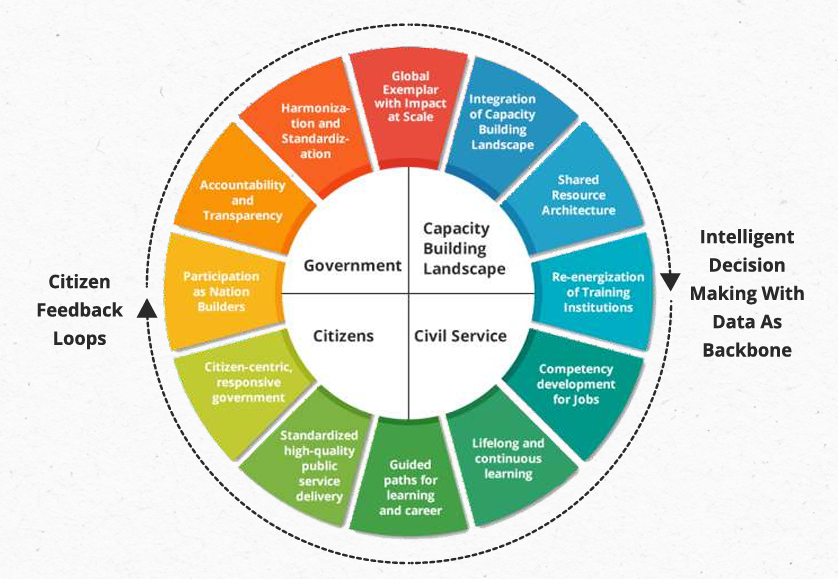
  • Mission Karmayogi is aiming for maintaining a very high standard of conduct and behaviour to ensure efficiency for serving citizens and in turn developing oneself. How will this scheme empower the civil servants in enhancing productive efficiency and delivering the services at the grassroots level?

    The National Programme for Civil Services Capacity Building (NPCSCB)- Mission Karmayogi, launched in 2020,  aims to create a competent civil service rooted in Indian ethos, with a shared understanding of India’s priorities, working in harmonization for effective and efficient public service delivery. 


    Key Aims of Mission Karmayogi

    1. Capacity Building at All Levels: building a robust capacity framework for all civil servants across ranks. 
    2. Continuous Learning and Development: lifelong learning culture through the iGOT Karmayogi platform.
    3. Behavioral and Attitudinal Transformation: promoting values such as integrity, empathy, and citizen-centric governance.
    4. Data-Driven Decision Making: improve governance efficiency and accountability.
    5. Better government-citizen interaction– make government officials more supportive of citizens and businesses.

    Empowering Civil Servants to Enhance Productive Efficiency

    1. Aligning work allocation of civil servants by matching their competencies to the requirements of the post, such that transition from ‘Rule based’ to ‘Role based’ HR Management is smoothly attained
    2. Digital Learning Platform (iGOT-Karmayogi): Platform offers five functional hubs for online learning, career management, and networking. Eg- Over 15 lakh officers completed modules on data analytics and governance.
    3. Behavioral and Functional Reforms: Promotes empathy, teamwork, and ethical conduct in civil servants. Eg- Emphasizes merit-based progression with 360-degree feedback.
    4. Emphasizing on ‘on-site’ learning to complement the ‘off-site’ learning.
    5. Collaborative Learning Ecosystem: Special Purpose Vehicle (SPV), Karmayogi Bharat, manages digital training infrastructure and program implementation.
    6. Calibrating all Civil Service positions to a Framework of Roles, Activities, and Competencies (FRAC) approach and to create and deliver learning content relevant to the identified FRAC in every Government entity.
    7. Making available to all civil servants, an opportunity to continuously build and strengthen their Behavioral, Functional, and Domain Competencies in their self-driven and mandated learning paths.

    John Maynard Keynes once noted, “The difficulty lies, not in the new ideas, but in escaping from the old ones.” Mission Karmayogi tries to address this by equipping civil servants with the skills, knowledge, and ethics needed for effective governance. 

  • “In Indian culture and value system, an equal opportunity has been provided irrespective of gender identity. The number of women in public service has been steadily increasing over the years.” Examine the gender-specific challenges faced by female public servants and suggest suitable measures to increase their efficiency in discharging their duties and maintaining high standards of probity

    Bṛhadāraṇyaka Upanishad (6.4.17), which states, “Yatra nāryastu pūjyante ramante tatra devatāḥ,” meaning “Where women are honored, there the gods dwell.”  

    From 1951, when the first woman joined the Indian Administrative Service (IAS), until 2020, women have made up only 13% of all IAS officers. According to DoPT, representation of women in public service has risen to around 30% in 2020 from 2000.

    Indian culture and value system providing an equal opportunity irrespective of gender identity

    1. Education for Women: Ancient texts like the Rigveda highlight the roles of women scholars like Gargi and Maitreyi
    2. Matrilineal Societies: in communities like the Nayars of Kerala and the Khasis of Meghalaya women inherit property
    3. Role of Women in Bhakti Movement: Saints like Mirabai and Akkamahadevi promoted equality in spiritual pursuits.
    4. Indian culture has long revered Ardhanarishvara, a deity representing the fusion of male and female principles, symbolizing balance and equality between genders.

    Gender specific challenges 

    1. PERSONAL FACTORS:
    1. Workplace Harassment: Eg. NCW reported a 14% increase in workplace harassment complaints in 2022, which often affects women’s mental health and professional growth.
    2. Work-Life Balance: Eg. A survey by LBSNAA highlighted that over 60% of female officers cited family commitments as a challenge to their career progression.
    3. Lack of Mentorship and Networking Opportunities: Many women public servants lack access to informal networks of mentorship and support, which are essential for career advancement.
    4. CULTURAL FACTORS:
    1. Gender Bias and Stereotypes: Women are often perceived as less capable of handling high-pressure positions, particularly in roles involving law enforcement and policing.
    2. Social Attitudes: Traditional societal norms lead to a lack of support for women in public roles, particularly in rural or conservative areas, limiting their effectiveness.
    3. Intersectional Challenges: Caste, class, and domicile constitute additional challenges for women. Eg. between 1970 and 2020, 41% women IAS officers listed their domicile as Chandigarh, 32% as Uttarakhand, and 29% as Telangana, against 3% from Tripura and 5% from Odisha and Mizoram. (TCPD-IAS).
    4. INSTITUTIONAL FACTORS:
    1. Glass Ceiling and “Broken Rung” Phenomenon: Despite qualifications, women face barriers to promotions and leadership roles due to gender stereotypes and bias, limiting their career progression. Eg. While women constitute about 30% of the public sector workforce, they hold only 13% of senior positions, as per the Ministry of Personnel, Public Grievances, and Pensions report.
    2. Systematic Issues: Political interference, limited recognition, frequent transfers, and stress hinder their career growth.

    Measures 

    1. Strengthening Implementation of Workplace Policies: effective implementation of the Sexual Harassment of Women at Workplace Act, 2013 and Vishakha guidelines with robust internal complaints committees and zero tolerance towards harassment. 
    2. Regular awareness programs and gender-sensitization training can create a safer work environment.
    3. Promoting Flexible Work Arrangements like flexible work hours and remote working options can help women balance their personal and professional responsibilities. 
    4. Mentorship Programs: Eg. Initiatives like “She Leads,” introduced by UN Women.
    5. Increasing Women’s Representation in Decision-Making Roles: enforce gender quotas in higher positions, similar to the 33% reservation for women in local bodies.

    As per 2021 UNDP report on Gender Equality in Public Administration, “Gender equality is at the core of an inclusive and accountable public administration.” Enhancing women representation is imperative not just for Gender Justice but also for Good Governance.

  • The soul of the new law, Bharatiya Nyaya Sanhita (BNS) is Justice, Equality and Impartiality based on Indian culture and ethos. Discuss this in the light of major shift from a doctrine of punishment to justice in the present judicial system

    As pointed out by VP Dhankhar, the Bharatiya Nyaya Sanhita (BNS) reflect the revolutionary change from colonial ‘Dhanda vidhan’ to Modern ‘Nyaya vidhan’ and from a punitive to a more restorative approach by keeping the focus on justice rather than punishment. 

    BNS’s Soul as Justice, Equality, and Impartiality Based on Indian Culture and Ethos

    1. Dharma-Centric Justice: BNS promotes justice as a moral duty, focusing on restoring balance and harmony in society rather than merely punishing offenders.
    2. Revising Terminology and Examples: BNY modify terminology such as ‘unsound mind’ to ‘mental illness,’ aligning with contemporary medical terminology in accordance with the Mental Healthcare Act, 2017.
    3. It abolishes the offense of sedition, which has been criticized for suppressing free speech and dissent. 
    4. Focus on Rehabilitation over Retribution – the BNS introduces community service (Section 4(f)) as a form of punishment for certain crimes. These include small theft, defamation, and attempt to die by suicide with an intention to keep a public official from discharging her duty.
    5. Inclusivity – the transgender community has been included in the definition of gender under BNS, which was not previously included in the IPC. 
    6. Gender JusticeClause 69 of the BNS penalises sexual intercourse through the employment of “deceitful means”. Further, age of marriage and age of consent have been made uniform, to make rape of a girl below 18 years of age a crime, irrespective of her marital status and relationship with the accused, as the Court had decreed in Independent Thought v UOI. 
    7. Social harmony and order– under Clause 103, for the first time it also recognises murder on the ground of race, caste, or community as a separate offence. 

    Issues with the Shift

    1. No break from colonial legacy- number of crimes with punishments of rigorous imprisonment and death penalty have increased, no mention of custodial torture and accountability on police forces
    2. Challenges in Implementation: such as insufficient infrastructure and trained personnel for rehabilitative justice.
    3. Risk of Leniency: The focus on rehabilitation might be seen as being too lenient in certain cases, potentially undermining deterrence and justice for the victims.

    Way Forward

    1. Police and other concerned authorities must be sensitized to sexual violence sans sexual orientations or gender bias.
    2. comprehensive guidelines and personalization of community service – assignments should be tailored to match the offender’s rehabilitation needs and skills, ensuring meaningful and beneficial contributions to the community.
    3. Collaboration with community organizations– partnerships with NGOs, community organizations, and local authorities can help effectively design, implement, and supervise community service programs. 

    As Dr. B.R. Ambedkar once said, “Justice has always evoked ideas of equality and of proportion of compensation.The BNS marks a significant shift towards a more equitable and culturally resonant judicial framework.

  • The ‘Code of Conduct’ and ‘Code of Ethics’ are the sources of guidance in public administration. There is code of conduct already in operation, whereas code of ethics is not yet put in place. Suggest a suitable model for code of ethics to maintain integrity, probity and transparency in governance

    “Codes of ethics keep an organization’s soul intact, while the code of conduct keeps its hands clean.”

    While a Code of Conduct governs actions through established rules, a Code of Ethics ensures that civil servants are morally guided to act beyond mere compliance, instilling ethical principles in decision-making.

    Code of Conduct stems from:

    Provisions of constitution : Article 309 to 311 
    Conduct rules:
    Code of Civil services conduct rules 1964, 
    Central services conduct rules 1964, 
    All India services CR 2014 
    Indian penal code, official secret act, prevention of corruption act.

    Code of Conduct and Code of Ethics as Sources of Guidance

    AspectCode of ConductCode of Ethics
    DefinitionA set of specific rules outlining acceptable behavior.A set of guiding principles based on values and morals.
    Guiding Principle“Do as per the rules.”“Do what is right.”
    FocusWhat employees must do.What employees should do.
    PurposeRegulates actions and behavior of employees.Guides decision-making based on moral and ethical principles.
    ScopeFocuses on compliance with laws and regulations.Broad focus on integrity, fairness, and moral responsibility.
    EnforcementEnforced through disciplinary actions for breaches.Promotes self-regulation and moral accountability.
    FlexibilityRigid and structured, leaves little room for interpretation.Flexible and adaptable to various situations.
    OutcomeEnsures adherence to rules and legal requirements.Ensures actions align with values like integrity and fairness.
    ResponsibilityOrganizational compliance and order.Personal moral responsibility and ethical leadership.
    ExamplesNo corruption, punctuality, conflict of interest rules.Integrity, transparency, fairness in decision-making.

    A Code of Ethics promotes proactive transparency beyond legal compliance, exemplified by the RTI Act, which could foster deeper accountability. Scandals like the Vyapam scam and 2G spectrum case, highlight the need for integrity to prevent moral lapses. Furthermore, India’s corruption rankings and cases like the Commonwealth Games scandal demonstrate the need for probity in public life.

    Model Code of Ethics

    • Hota Committee: Recommended ethics training for civil servants to foster professionalism and prevent corruption.
    • Santhanam Committee: Highlighted the need for strengthening institutional mechanisms like Lokpal and vigilance commissions to oversee adherence to ethical standards in governance.

    Integrity

    1. Honesty and Truthfulness: Public officials must provide accurate information. Eg- transparency in Aadhaar data usage.
    2. Conflict of Interest: Officials must avoid personal gains from public decisions. Eg- T.N. Seshan ensuring impartiality in elections.
    3. Commitment to Public Interest based on utilitarian principle of Greatest happiness of greatest number. 
    4. Professional Excellence: continuous learning and professional development, encouraging civil servants to enhance their skills, knowledge, and competencies to serve the public better. (Hota Committee)

    Probity

    1. Financial Integrity: Use public funds solely for intended purposes. Eg- E. Sreedharan ensuring zero corruption in Metro contracts.
    2. Respect for Rule of Law: act in accordance with legal regulations and standards. Adhering to the law ensures that decisions are consistent, just, and equitable, and it prevents abuse of power.
    3. Stewardship: exercise prudence in resource allocation and management to maximize societal benefits.

    Transparency

    1. Proactive Disclosure: suo-motu disclosure under Section 4 of the RTI Act, 2005.
    2. Openness to Scrutiny: Encourage public audits of decision-making. Eg- MGNREGA
    3. Public Engagement:  Be open, transparent and responsive, and respect and assist all persons in their dealings with public organizations.  
    United Kingdom: Nolan Principles
    Australia: Public Service Code of Ethics –  impartiality, accountability, respect, and integrity. It also includes whistleblower protection mechanism, regular training and compliance checks.

    USA – Sunshine Act, 1976 – mandates that meetings of federal agencies must be conducted openly and that their records should be accessible to the public.

    The rule of law depends on public officials acting ethically. Thus, a comprehensive, actionable and enforceable Code of Ethics can strengthen civil servants’ role as a “steward” for the public. 

  • “Mindless addiction to Form, ignoring the Substance of the matter, results in rendering of injustice. A perceptive civil servant is one who ignores such literalness and carries out true intent.” Examine the above statement with suitable illustrations

    “Laws are made for people, not people for laws.”– Albert Einestine

    In public administration, focusing solely on formality and ignoring the substance of the matter often leads to injustice. A perceptive civil servant prioritizes the spirit and intent behind laws and policies over rigid procedural compliance, ensuring fairness and justice

    Dangers of Mindless Adherence to Form

    1. Injustice to Vulnerable Groups: Blind adherence to rules can deny access to benefits for those lacking resources or documentation. Eg: Denying ration cards to homeless individuals without a permanent address.
    2. Bureaucratic Delays leading to inefficiency and slow public service delivery. Eg: Eg: In the 2014 Kashmir floods, delays in distributing relief due to incomplete paperwork 
    3. Loss of Public Trust: People may lose faith in the system if rigid rules result in unfair outcomes.
    4. Corruption Facilitation: Complex processes encourage bribes as shortcuts, exploiting the vulnerable. Eg: Vohra Committee – Politician-Bureaucrat-Corporate Nexus
    5. Stifling Innovation: Eg: Halting creative educational methods due to rigid compliance with outdated curricula.
    6. Undermining Public Welfare: Public welfare programs may be inefficient if focus remains on formalities rather than outcomes. Eg: Exclusion error under PDS
    7. Increased Litigation: Eg: Litigations in PPP Projects.
    8. Moral Disengagement: Eg: Deporting refugees due to missing paperwork, ignoring the ethical responsibility of offering asylum in life-threatening situations.

    Perceptive Civil Servant’s Approach to True Intent

    1. Outcome-Oriented Action: Focus on achieving the intended result of the law, rather than getting bogged down by rigid rules. Eg: Aruna Sundararajan (IAS) as a Telecom Secretary, rolled out BharatNet to connect rural areas
    2. Empathy and Compassion (Ethics of Care): Eg: Prasanth Nair (IAS) launched several citizen-centric initiatives like Compassionate Kozhikode for compassion-driven governance.
    3. Judicious Flexibility: adjust deadlines and processes when it benefits public welfare. Eg- Smita Sabharwal (IAS) launched the Ammalalana program in Telangana, integrating public feedback into governance
    4. Proactive Problem-Solving (Pragmatism): Pragmatism encourages practical solutions over strict theoretical application. 
    5. Holistic Decision-Making: While following the law is important, the true duty is to the public, meaning civil servants must balance legality with morality. Eg: Vinod Kumar (IAS) simplified the flood compensation process, ensuring people received immediate relief without excessive paperwork.
    6. Balancing Rules with Intent: A perceptive civil servant ensures that laws serve the common good, not just formal compliance. Eg- Eg: U. Sagayam ensured that drought relief was delivered promptly, even if recipients lacked all necessary documentation

    “The strictest law sometimes becomes the severest injustice.” – Benjamin Franklin. A perceptive civil servant looks beyond rigid formalities, ensuring that governance serves its higher purpose—equity and fairness.

  • “The concept of Just and Unjust is contextual. What was just a year back, may turn out to be unjust in today’s context. Changing context should be constantly under scrutiny to prevent miscarriage of justice.” Examine the above statement with suitable examples

    As Heraclitus said, “The only constant in life is change.” Justice, at its core, is a fluid concept, shaped by evolving social norms, legal systems, and cultural values. Therefore, justice must be continuously re-examined to ensure it remains fair and relevant to current circumstances.

    Contextual Nature of Justice and Need for scrutiny

    1. Changing Social Norms: Eg: Slavery was considered legal centuries ago, but today, it’s universally condemned. Similarly, Same-sex marriage is legalized in many regions after social advocacy.
    2. Legal Reforms: Eg- The SC’s judgment in the Navtej Singh Johar case (2018) decriminalized homosexuality or Triple Talaq judgment (2017)
    3. Technological Changes: New emerging form of justice like Right to Privacy, Right to be Forgotten etc. Eg- Eg: AI ethics and regulations
    4. Economic ShiftsEg: Feudal land ownership systems were once considered just in many societies but are now seen as perpetuating inequality, leading to land reforms.
    5. Cultural Movements: raise awareness of injustices previously accepted. Eg: The #MeToo movement redefined acceptable workplace behavior, pushing for more accountability.
    6. Changing Political StructuresEg: Colonialism was once justified by many Western powers as a means of “civilizing” other societies, but today, it is widely viewed as an injustice that led to the exploitation and oppression of people.

    Universality of Justice

    1. Moral Absolutes: Some principles of justice remain constant, regardless of context. Eg: Murder is universally considered a crime, regardless of the time period.
    2. Natural Rights: Certain human rights, like the right to life and liberty, are universal and timeless. Eg: Freedom from slavery is a universally accepted standard.
    3. Global Ethical Standards: Ethical principles such as fairness and equality transcend time and culture. Eg: Equality before the law remains a cornerstone of justice systems globally.

    Way Forward for Adapting Justice to Changing Contexts

    1. Constant Review of Laws: Eg.  Repealing old laws, new criminal codes, labor codes are right steps in this regard.
    2. Judicial Flexibility: Courts should interpret laws with a context-sensitive approach rather than rigidly applying outdated precedents. Eg: S.C. verdict on the right to privacy 
    3. Ethical Oversight: Eg: The formation of ethics boards in scientific research ensures that advancements in areas like genetics or AI do not violate principles of justice.

    By balancing evolving societal norms with universal ethical principles, we ensure a fair and equitable justice system for all. As Martin Luther King Jr. once said, “Injustice anywhere is a threat to justice everywhere.”

  • “In law, a man is guilty when he violates the rights of others. In ethics, he is guilty if he only thinks of doing so.” Immanuel Kant

    Immanuel Kant contrasts the nature of legal guilt and moral responsibility. While law is a system of rules and guidelines enforced externally through institutions like courts and law enforcement, Ethics go beyond what is required by law and address positive moral duties.

    Difference Between Law and Ethics

    AspectLawEthics
    FocusGoverns external actions and behaviorsGoverns internal intentions and moral reasoning
    AccountabilityGuilty when violating legal rightsGuilty for unethical thoughts, regardless of actions
    EnforcementEnforced by the state or legal authoritySelf-enforced, driven by personal conscience or social influence
    ConsequencesLegal penalties such as fines or imprisonmentSocial disapproval or personal guilt
    ObjectiveMaintain social order and protect individual rightsGuide individuals toward moral integrity

    Application of the Quote in Various Fields

    1. Ethical Guilt in Thought: Ethics goes beyond actions to consider intentions. Thinking about harming others, even without acting, reflects poor moral judgment. Eg: Contemplating cheating
    2. Character Over Consequences (Virtue Ethics): emphasizing pure motives over the mere absence of harmful actions. Eg: Donating to charity solely for tax benefits may be legal but is ethically questionable if done without genuine compassion.
    3. Individual Level: laws dictate behavior, while ethics guide intentions. Someone may avoid breaking the law but have unethical desires. Eg- Edward Snowden, while breaking U.S. laws on surveillance, acted out of ethical concerns about the government’s overreach on privacy.
    4. Social Level: Societies rely on laws to maintain order, but ethics shape moral expectations. Law-abiding citizens might still fail in their ethical responsibilities to the community.
    5. Political Level: Politicians are bound by laws, but their ethical obligations extend beyond mere legal compliance, requiring decisions that reflect public interest. Eg-  Lobbying is legal in many countries, but politicians who receive donations from corporations may ethically compromise their integrity
    6. Economic Level: Businesses must follow legal regulations, but ethically they should also act responsibly toward employees, customers, and the environment. Eg- Ben & Jerry’s openly supports social causes like LGBTQ+ rights to align corporate policies with ethical values.
    7. Healthcare: In healthcare, professionals follow legal standards, but their ethical duties extend to providing compassionate care. Eg- Euthanasia is illegal in many countries, but ethically, some healthcare professionals may believe it aligns with the patient’s right to die with dignity.

    As Mahatma Gandhi said, “Morality is the basis of things and truth is the substance of all morality.” Ethics and law must coexist, as law maintains order while ethics elevates individuals to a higher moral standard. Together, they ensure a just and morally responsible society.

  • “Faith is of no avail in the absence of strength. Faith and strength, both are essential to accomplish any great work.” Sardar Patel

    “Faith without action is dead.” While faith provides the vision and moral compass, strength ensures resilience and the capacity to act. Only through the combination of both can significant achievements be realized.

    Limitations of Faith

    1. Inactivity: Faith without strength can lead to passivity, where belief alone doesn’t produce results. Eg: A person believing in climate change action but not participating in solutions.
    2. Dependency: Excessive faith may lead to over-reliance on external forces without taking personal action.
    3. Frustration: Faith without progress can result in despair when no tangible outcome is seen.

    Limitations of Strength

    1. Aimlessness: Strength without a guiding belief can lead to wasted effort. Eg: An athlete training hard without a clear goal can lose motivation.
    2. Misuse of Power: Uncontrolled strength without a moral compass can harm others. Eg- Watergate Scandal
    3. Temporary Success: Strength alone may lead to short-term results but lacks the purpose for long-term achievement.

    The Need for Both Faith and Strength

    1. Balanced Action: Faith directs action, while strength ensures execution. Eg: Martin Luther King Jr. believed in civil rights but also took strong actions through protests, leading to significant social change.
    2. Endurance in Hard Times: Eg: Malala Yousafzai had faith in education’s power, but her strength to recover and continue advocating after being attacked made her a global icon.
    3. Long-term Vision: Faith provides long-term focus, while strength allows consistent effort. Eg: Wright brothers had faith in human flight and the strength to overcome multiple failures to invent the airplane.
    4. Moral Compass: Eg: Abraham Lincoln combined his faith in equality with strength in leadership to abolish slavery.
    5. Inspiring Others: Eg: Mother Teresa combined faith in serving the poor with the strength of lifelong dedication, inspiring millions to contribute to her mission.

    Faith and strength, when isolated, are limited in their ability to achieve lasting success. Together, they form a powerful combination that drives both personal and collective achievements.

  • “Learn everything that is good from others, but bring it in, and in your own way absorb it, do not become others.” – Swami Vivekananda

    Swami Vivekananda emphasizes the importance of learning from others while maintaining individuality. He encourages absorbing knowledge and wisdom from diverse sources and adapting it uniquely to one’s own life. This approach fosters personal growth while upholding ethical integrity and authenticity.

    “Learn everything that is good from others”

    1. Embrace a Growth Mindset: Recognize that others have valuable experiences and knowledge to offer. Eg: Mahatma Gandhi learned the principles of non-violence from Tolstoy and Hinduism
    2. Open-Minded Learning: Be willing to seek out lessons from different cultures, perspectives, and individuals. Eg- Steve Jobs sought design inspiration from Buddhism and Japanese aesthetics
    3. Humility in Learning: Accept that we don’t know everything and can always improve by learning from others. Eg- APJ Abdul Kalam

    “Bring it in, and in your own way absorb it”

    1. Personalize Knowledge: Eg- Bruce Lee absorbed multiple martial arts forms but synthesized them into his unique philosophy, Jeet Kune Do.
    2. Integrate Creatively: Combine new ideas with your own approach, giving them a personal touch. Eg- Pablo Picasso’s Cubist style.
    3. Make It Meaningful: Absorb lessons in a way that aligns with your values and purpose.

    “Do not become others”

    1. Maintain Authenticity: While learning from others, stay true to who you are and your core values. Eg- Gandhi’s simple attire during his visit to Britain
    2. Avoid Imitation: Learning should be transformative, not a process of copying others’ lives or methods. Eg- Sanskritization of corruption
    3. Celebrate Individuality: Use what you’ve learned to enhance your unique identity rather than replace it. Eg- Transgender community

    “Be yourself; everyone else is already taken” –  Oscar Wilde.  By staying true to who we are and not simply imitating others, we contribute to the world with our distinct creativity and individuality.

  • Global warming and climate change are the outcomes of human greed in the name of development, indicating the direction in which extinction of organisms including human beings is heading towards loss of life on Earth. How do you put an end to this to protect life and bring equilibrium between the society and the environment?

    “The earth provides enough to satisfy every man’s needs, but not every man’s greed.” – Gandhi

    Human Greed in the Name of Development Threatening Life:

    • Uncontrolled Resource Exploitation: Large-scale deforestation, mining, and extraction for industrial purposes. Eg. Amazon rainforest has lost 17% of its area.
    • Rising Carbon Emissions: IPCC reports that global temperatures have risen by 1.2°C since the pre-industrial era, causing more frequent and severe natural disasters.
    • Loss of Biodiversity: WWF estimates a 60% decline in wildlife populations since 1970, primarily due to habitat loss and pollution.
    • Social Inequality in Environmental Impact: According to UNEP, vulnerable communities face the greatest risk from rising sea levels, heatwaves, and food shortages.
    • Violation of Environmental Ethics: violation of the principles of non-maleficence and deep ecology. 
    • Unsustainable Urbanization: Rapid urban expansion consumes land, leading to overcrowded cities with poor living conditions.
    • Future Generations at Risk: Short-term economic gains undermine long-term environmental sustainability, leaving future generations to bear the consequences.
    Biodiversity Loss (IPBES Global Assessment Report on Biodiversity and Ecosystem Services)The average abundance of native species in most major land-based habitats has fallen by at least 20% since 1900. At least 680 vertebrate species and more than 9% of all domesticated breeds of mammals had become extinct by 2016more than 41,000 animals worldwide are threatened with extinction, including 41% of all amphibians, almost 33% of reef-forming corals, 27% of the world’s mammals, more than a third of all marine mammals, and 13% of all known bird species. (IUCN)

    Measures to Protect Life and Restore Equilibrium:

    1. Government – Deontology (Duty Ethics)
    1. Policy Implementation: laws like carbon taxes and incentives for renewable energy. Eg: Sweden’s carbon tax.
    2. Infrastructure Investment: Prioritize building green infrastructure, such as public transportation systems. Eg: bike-friendly infrastructure in Netherlands.
    3. Strengthening Environmental Regulations: Stronger enforcement of Environmental Impact Assessments (EIA)
    4. Ecocentrism: Prioritizing ecosystem health over individual resource use. Eg: Norway’s protection of the Lofoten islands from oil exploration preserves marine ecosystems critical to biodiversity, despite potential economic gains from drilling.
    5. People (Virtue Ethics)
    1. Adopt Sustainable Lifestyles: by using renewable energy, recycling, and limiting resource consumption to ensure Intergenerational Equity.
    2. Community-Based Conservation: Engaging local communities in conservation efforts, like the Chipko Movement in India, Great Green Wall in Africa
    3. Businesses 
    1. Sustainable Practices by investing in clean technologies and adopting circular economy practices. Eg: IKEA has committed to using only renewable and recycled materials by 2030.
    2. Corporate Social Responsibility (CSR): Eg: Patagonia donates a percentage of profits to environmental causes and focuses on sustainable production.
    3. Global Community 
    1. International Agreements: Eg: Over 190 nations committed to limiting global warming to below 2°C at the 2015 Paris Climate Summit.
    2. Technology and Resource Sharing: Eg: The Green Climate Fund assists developing countries in climate adaptation and mitigation efforts.

    Securing a nature-positive world by 2030 must be our guiding star in order to maintain equilibrium between the humanity and the environment

  • “It is not enough to talk about peace, one must believe in it; and it is not enough to believe in it, one must act upon it.” In the present context, the major weapon industries of the developed nations are adversely influencing continuation of number of wars for their own self-interest, all around the world. What are the ethical considerations of the powerful nations in today’s international arena to stop continuation of ongoing conflicts?

    Western nations often advocate for peace, democracy, and human rights while being major global arms suppliers, creating cognitive dissonance and conflicting beliefs. This contradiction reflects commerce without morality, one of Gandhi’s seven sins

    Ethical Concerns of Double Standards in Global Arms Trade

    1. Promotion of Peace vs. Arms Supply: Eg. U.S. provides arms to Ukraine and Israel while calling for peace in global forums.
    2. Support for Democracy vs. Arms Sales to Authoritarian Regimes: While promoting democracy, countries like U.K. (BAE Systems) and France (Dassault Aviation) sell arms to regimes like Saudi Arabia, contributing to the Yemen conflict
    3. Economic Interests Over Global Stability: In 2022, U.S. arms exports totaled $44.5 billion.
    4. Selective Peace Advocacy (selective moralism): The U.S. supports Israel while advocating for peace in other regions, and Russia supplies arms to Iran and Syria. 
    5. Perpetuation of Violence: Rather than fostering peace, weapon industries fuel ongoing violence and suffering.

    Ethical considerations of the powerful nations to stop continuation of ongoing conflicts

    1. Respect for International Law: Eg: The UN-approved intervention in Libya (2011) upheld global legal standards for military action.
    2. Human Rights Protection: Eg: NATO’s Kosovo intervention (1999) aimed to stop ethnic cleansing and protect civilians.
    3. Promotion of Democracy: Eg: U.S. support for South Korea’s democracy in the 1980s enabled peaceful democratic transition.
    4. Humanitarian Aid and Peacekeeping: Eg: The UN mission in Sierra Leone helped stabilize the region post-civil war.
    5. Non-Interference and Sovereignty: Eg: India respected Sri Lanka’s sovereignty during its civil war while promoting peace.
    6. Promoting Diplomacy Over Military Action: Eg: The Iran Nuclear Deal (2015) avoided military conflict through diplomacy.
    7. War Ethics: Eg: The Geneva Conventions guided ethical conduct in wars, like the Gulf War.

    The Need for Action Over Mere Advocacy

    1. Transparency in Arms Deals
    2. Investing in Peacebuilding Initiatives: Eg- Norway’s investment in peace mediation efforts, like those in Sri Lanka
    3. Accountability for Governments:  Eg- Protests in the U.K. over arms sales to Saudi Arabia 
    4. Prioritizing Human Rights: aligning foreign policy with ethical principles of harm minimization and human dignity.
    5. Strengthening Arms Control and Ethical Warfare through international treaties like the Arms Trade Treaty (ATT).

    “Talking about peace while fueling war with weapons is like extinguishing fire with gasoline.” Thus, Powerful nations must align their actions with their values as peace requires consistent action, not just rhetoric.

  • “Ethics encompasses several key dimensions that are crucial in guiding individuals and organizations towards morally responsible behaviour.” Explain the key dimensions of ethics that influence human actions. Discuss how these dimensions shape ethical decision-making in the professional context

    Mackenzie defines ethics as a set of moral principles that guide human action in a way acceptable by society. According to William Lillie, “Ethics is a normative science of the conduct of human beings living in societies which judges this conduct to be right or wrong, good and bad.”

    key dimensions of ethics that influence human actions

    1. Meta-Ethics: Questions the meaning of “right” and “wrong.” Eg: Immanuel Kant developed the categorical imperative, arguing for universal moral principles.
    2. Prescriptive (Normative) Ethics: Establishes rules for right or wrong actions. Eg: Martin Luther King Jr. advocated for non-violence based on justice and equality.
    3. Descriptive Ethics: Observes actual ethical behavior. Eg: Max Weber studied how different societies define morality and authority.
    4. Applied Ethics: Uses ethical principles in real-world situations. Eg- Bioethics which pertains to euthanasia, abortion or research on human embryos. Business ethics which includes good corporate governance, protection of whistleblowers etc.

    Dimensions Shape Ethical Decision-Making In The Professional Context

    1. Consequentialism (Outcomes): Maximizing positive outcomes for all stakeholders. Eg: The Jan Dhan Yojana improved financial inclusion by opening 53 Cr bank accounts, ensuring economic empowerment and social equity.
    2. Deontology (Duties and Rules): Following moral duties and codes regardless of consequences. Eg: Civil servants enforcing Model Code of Conduct during elections, ensuring free and fair elections, even when faced with political pressure.
    3. Rights and Justice: Ensuring fairness and protecting individual rights. Eg: The Mahatma Gandhi National Rural Employment Guarantee Act (MGNREGA) ensures the right to work.
    4. Virtue Ethics (Character): Guided by virtues like honesty and empathy. Eg: Kiran Bedi, as a senior police officer, demonstrated integrity by introducing prison reforms, focusing on rehabilitation over punishment.
    5. Common Good: Decisions are made with societal welfare in mind. Eg: The Aadhaar program facilitating better delivery of government services and reducing corruption.
    6. Transparency and Accountability:Eg: GeM (Government e-Marketplace) ensures transparent public procurement and reducing corruption.
    7. Corporate Governance – incorporating ESG Norms into corporate strategy.

    Challenges

    1. Conflicting Stakeholder Interests: Eg: Deciding between cutting costs and ensuring employee welfare.
    2. Global Cultural Variations: Differing ethical standards across regions can complicate uniform ethical practices in multinational organizations.
    3. Transparency: Maintaining transparency can conflict with confidentiality or expose organizations to public scrutiny.
    4. Cost of Compliance: Implementing ethical practices or ESG standards can be expensive, particularly for smaller businesses.

    Way Forward

    1. Develop Clear Ethical Guidelines: transparent codes of conduct and code of Ethics
    2. Integrate Ethics with Technology: Leverage AI and data analytics for decision-making while addressing ethical concerns such as bias, privacy, and fairness.

    As Albert Schweitzer said, “Ethics is nothing else than reverence for life.” This reverence guides professionals to make decisions that respect humanity, promote fairness, and ensure accountability.

  • The application of Artificial Intelligence as a dependable source of input for administrative rational decision-making is a debatable issue. Critically examine the statement from the ethical point of view

    “AI is the future of government efficiency, transparency, and citizen service, but it must be used responsibly, with accountability and safeguards.” – Sundar Pichai

    According to report by McKinsey, artificial intelligence can increase global GDP growth by 16 percent by 2030, questions remain about its fairness, potential biases, and the erosion of human responsibility in governance.

    Application of AI for administrative rational decision making

    Policy Formulation

    1. Data-Driven Decision: Eg: AI predicts disease outbreaks by analyzing health data.
    2. Policy Impact Simulation: Eg: AI models simulate the economic impacts of tax reforms.
    3. Sentiment Analysis: Eg: AI tools gauge public opinion on social media regarding policy proposals.

    Policy Implementation

    1. Resource Allocation: Eg: Urban planners use AI to optimize public transport systems based on population growth predictions.
    2. Service Delivery: AI automates routine tasks, improving responsiveness and efficiency. Eg: Ask Disha chatbot of Indian Railway.
    3. Process Automation: Eg: AI automates document verification for passport applications.

    Monitoring

    1. Fraud Detection: Eg: AI in tax systems flags suspicious filings for further investigation.
    2. Decision Support Systems (DSS): use for real-time monitoring and resource allocation. Eg: AI helps disaster management teams allocate resources efficiently during emergencies.
    3. Transparency and Accountability: by documenting the rationale for decisions and maintaining audit trails. 
    Singapore’s Smart Nation initiative using AI in public administration to enhance urban living, governance, and public services. 

    Ethical issues might arise as noted by National Strategy for AI (NSAI)-2018

    1. Algorithmic Bias: Eg: Amazon’s recruitment AI was found to favor men over women.
    2. Humanity: Virtual assistants (e.g., Alexa) may reduce human-to-human interaction, impacting social relationships.
    3. Evil Genies: AI chatbots like Microsoft’s Tay inadvertently promoted hate speech due to poor programming.
    4. Singularity: Worries about superintelligent AI surpassing human control, as seen in debates on AI safety.
    5. Accountability: It’s often unclear who is responsible for AI-driven decisions—developers, administrators, or the system itself.
    6. Transparency (Black Box Problem) – Eg: AI used in welfare programs might deny benefits without clear reasons, leading to lack of trust.
    7. Fairness:  Eg: AI in public services could favor urban areas over rural regions due to data imbalances.
    8. Privacy Issues: Eg: AI-based surveillance systems might misuse citizens’ private data for unintended purposes.
    9. Autonomy: Eg: Automated decision-making in refugee applications may overlook individual circumstances, reducing human compassion.

    Way forward

    1. International collaborationOECD AI Principles,Australia AI Ethics Guidelines, EU Artificial Intelligence Act can provide a guiding light in this regard.
    2. Promoting inclusive AI which will prioritize equity, diversity and accessibility, benefitting all segments of society is very essential. Eg- Eg. RESPONSIBLE AI #AIFORALL of NITI Aayog.

    Adherence to UNESCO’s ‘Recommendation on the Ethics of Artificial Intelligence’ and Ethical Impact Assessment (EIA) of AI projects is essential for Ethical use of AI.

More posts