💥UPSC 2026, 2027, 2028 UAP Mentorship (March Batch) + Access XFactor Notes & Microthemes PDF

Search results for: “”

  • Industrial pollution of river water is a significant environmental issue in India. Discuss the various mitigation measures to deal with this problem and also the government’s initiatives in this regard

    As per CPCB report, 46 percent of the 603 Indian rivers are polluted based on indicator of organic pollution i.e. Biochemical Oxygen Demand (BOD) (3mg/L) with the discharge of untreated industrial affluents as one of the major reasons.

    Industrial pollution of river water is a significant environmental issue:

    1. Impact river water quality:  According to the CPCB, the Ganges and Yamuna often exceed permissible limits for pollutants such as biological oxygen demand (BOD), fecal coliform, heavy metals, and other toxic substances.
    2.  Impact on Aquatic Life:  High levels of toxicity in the Ganges has severely affected the population of the endangered Ganges river dolphin.
    3.  Public Health Concerns: According to the World Bank, water pollution is responsible for around 1.5 million deaths annually in India due to preventable waterborne diseases.
    4.  Socioeconomic Impacts: Irrigation with contaminated water affects crop quality and yields, Declining fish populations, and diminishing the aesthetic and cultural value of rivers that are vital to India’s heritage.

    Mitigation Measures to deal with this problem:

    1. Stringent Enforcement of Environmental Regulations: E.g. the Water (Prevention and Control of Pollution) Act, 1974, and the Environment Protection Act, 1986, which set standards for effluent discharge from industries.
    2. Effluent Treatment Plants (ETPs) and Common Effluent Treatment Plants (CETPs): Mandating industries to set up on-site ETPs to treat wastewater before discharge into rivers. 
    3. Zero Liquid Discharge (ZLD) Policy: Encouraging industries to adopt ZLD technologies, which ensure that all wastewater is treated and recycled within the plant.
    4. Green Chemistry and Cleaner Production Techniques: This includes using environmentally friendly raw materials and energy-efficient processes to minimize the generation of pollutants at the source.
    5. Riverbank Buffer Zones and Monitoring: Establishing buffer zones around rivers where industrial activities are restricted and setting up real-time water quality monitoring systems

    Government Initiatives in this regard:

    1. Namami Gange Programme: Over 150 sewage treatment plants (STPs) have been sanctioned under this program to improve the water quality of the Ganga.
    2. National Water Mission: Under the National Action Plan on Climate Change, it focuses on water conservation, pollution reduction, and promoting efficient water use in industries.
    3. National Green Tribunal (NGT): The NGT has mandated the closure of 123 industries for non-compliance with pollution standards in various river basins.
    4. Pollution Control Boards (CPCB & SPCBs): Central and state pollution control boards regulate industrial discharges and set water quality standards. Regular inspections and pollution audits are conducted to ensure compliance.
    5. River Rejuvenation Programs: The Narmada Seva Mission launched by the Madhya Pradesh government focuses on afforestation and pollution control to restore the Narmada River’s health.

    Therefore, stronger enforcement and technological upgrades such as Denmark’s wastewater treatment model, can aid in mitigating the river pollution sustainably.
  • What is the technology being employed for electronic toll collection on highways? What are its advantages and limitations? What are the proposed changes that will make this process seamless? Would this transition carry any potential hazards?

    The National Highways Authority of India (NHAI) had introduced RFID-based FASTag as the primary technology used for electronic toll collection (ETC) in 2014. In February 2021, the government made FASTags compulsory for all vehicles, ensuring a cashless and more efficient toll collection system across the country.

    Advantages:

    1. Reduced Congestion: ETC eliminates the need for vehicles to stop at toll booths, thus reducing traffic congestion. 
    2. Reduced Waiting Time: Cuts down toll plaza congestion, saving up to 20 minutes per trip (MoRTH, 2022).
    3. Faster Processing: The system automatically charges the toll, reducing the transaction time significantly compared to manual toll collection.
    4. Lower Operational Costs: ETC requires fewer staff at toll booths, leading to cost savings for toll operators.
    5. Better Revenue Collection: Automated systems reduce human error and the risk of cash leakage or fraud, ensuring better toll revenue management.
    6. Environmental Benefits: Reduced idling time at toll booths results in lower emissions from vehicles, contributing to environmental conservation.

    Limitations:

    1. Technical Glitches: such as improper tag placement, reader malfunction, or weather conditions (e.g., heavy rain), leading to delays or disputes.
    2. Inconsistent Implementation: Not all state highways have fully integrated FASTag lanes, which can be confusing for drivers traveling on mixed routes.
    3. Network Dependency: FASTag is heavily reliant on internet connectivity for real-time transactions. Poor connectivity at certain toll plazas can lead to failed or delayed transactions.
    4. Customer Support and Disputes: Some users have reported difficulties with resolving issues like incorrect toll deductions or recharging problems, pointing to the need for improved customer support infrastructure.
    5. Double Charges for Manual Payments: Vehicles without a functional FASTag or insufficient balance are charged double the toll when paying in cash, which can be seen as punitive rather than encouraging for drivers still transitioning to the system.

    Proposed changes to make the process seamless:

    1. Transition to ANPR-Based Tolling: ANPR will allow vehicles to pass through toll plazas without any physical tag by capturing and recognizing license plates for automatic toll deduction.
    2. Distance-Based Tolling (GNSS/GPS): Instead of paying at multiple toll plazas, vehicles would be charged based on the actual distance they travel on the highways. This system could eliminate the need for physical toll plazas altogether.
    3. Integration with State Highways: Extending FASTag coverage to more state highways and city roads, ensuring that drivers can experience a fully seamless journey without switching between tolling systems.
    4. Contactless and Mobile Payments: Enabling mobile apps for real-time toll payments or integrating FASTag with digital wallets and payment platforms (e.g., UPI, Paytm) for increased convenience.

    Potential hazards of this transition:

    1. Data Security Risks: Increased digitization raises the risk of cyber-attacks, where sensitive data like vehicle movements and financial details can be compromised.
    2. Technical Glitches:  Any glitch in the RFID or GPS system could result in incorrect toll charges or unregistered toll crossings, leading to disputes.
    3. System Downtime: Power failures or system crashes can disrupt the toll collection process, leading to traffic jams and user dissatisfaction.
    4. High Cost leading to higher tax burden on citizens

    Road transport carries around 87% of India’s passenger traffic and over 60% of India’s freight traffic hence seamless traffic management is essential for goal of $5 Trillion economy.

  • What is the present world scenario of intellectual property rights with respect to life materials? Although, India is second in the world to file patents, still only a few have been commercialized. Explain the reasons behind this less commercialization

    As per WIPO, Intellectual property (IP) refers to creations of the mind, such as inventions; literary and artistic works; designs; and symbols, names and images used in commerce. Intellectual Property Rights (IPR) in the context of life materials, such as genetically modified organisms (GMOs), plant varieties, and biotechnological inventions, is a complex and ethically charged topic.

    Present world scenario of IPR with respect to life materials:

    1. International Legal Frameworks – Global agreements such as the Trade-Related Aspects of Intellectual Property Rights (TRIPS) agreement under the World Trade Organization (WTO) provide a baseline for IPR protection, including life materials. 
    2. Economic Contributions of Biotechnology:  The global biotechnology market is projected to grow at a compound annual growth rate (CAGR) of 15.83%, reaching about $2.44 trillion by 2030. 
    3. Global Patent Filings in Biotechnology:  According to the World Intellectual Property Organization (WIPO), biotechnology patent applications represented about 13% of all global patent filings.
    4. Impact of Biopiracy:  A study by the International Centre for Trade and Sustainable Development (ICTSD) highlighted that up to 90% of traditional knowledge related to biodiversity remains unprotected globally, increasing the risk of exploitation.
    5. Ethical Considerations and Public Perception:  According to a 2021 survey by the Pew Research Center, about 59% of respondents in developed countries expressed concern over the ethical implications of genetic engineering, which includes the patenting of life materials.

    As per the Indian Patent Office, India filed about 65,000 patents in 2021-22, making it the second-highest filer of patents in the world, however only 5% of these lead to commercially viable products.

    Reasons include:

    1. Funding and Investment issues:  A report by NASSCOM indicated that Indian startups raised over $38 billion in funding in 2021, yet 40% of biotechnology startups cited access to capital as a primary barrier to commercialization.
    2. Regulatory hurdles: According to Biotechnology Innovation Organization (BIO), about 55% of biotech companies reported that regulatory hurdles are significant barriers to bringing products to market.
    3. Weak Industry-Academia Linkages:  Innovations in Indian research institutes like CSIR often don’t reach the market due to poor industry partnerships. Less than 10% of patents filed by institutions like IITs and CSIR are transferred to industries for commercialization.
    4. Insufficient infrastructure – India’s technological and incubation infrastructure is inadequate to support startups and innovators.
    5. Intense competition from global players: Despite having biosimilars like insulin and monoclonal antibodies, Biocon Ltd. faces intense competition from global players, leading to challenges in commercializing its innovations effectively.
    6. Disputes over traditional knowledge: E.g. turmeric and neem tree patent controversy with U.S. companies. Though the patents were eventually revoked, it showcased the struggles in translating traditional knowledge into commercial applications.
    7. Public Opposition: Innovations like GM seeds often face resistance, as seen in the Bt brinjal controversy in India.

    Some key measures to strengthen commercialization include:

    1. National Intellectual Property Rights Policy 2016 which aims to create a robust IPR ecosystem and promote innovation and entrepreneurship.
    2. Establishment of Patent Facilitation Centers to provide guidance and support to inventors, especially small enterprises and startups.
    3. Atal Innovation Mission (AIM) for providing funding and support for innovation hubs, and incubation centers.
    4. Protection of traditional knowledge and biodiversity through the Traditional Knowledge Digital Library (TKDL).
    5. Revisiting the Drug and Clinical Trials Rules (2019) to expedite the approval process for new drugs and medical devices.

    By strengthening the IPR framework and startup ecosystem India can realize the objective of VIKASIT BHARAT and KNOWLEDGE ECONOMY by 2047.          

  • Explain the role of millets for ensuring health and nutritional security in India

    In a country like India, where malnutrition, food insecurity, and lifestyle diseases coexist, millets, often termed “Nutri-cereals,” offer a powerful solution as they are not only nutritionally superior but also climate-resilient and environmentally sustainable. 

    Role of millets in ensuring health security:

    1. Diabetes Management:  The inclusion of FoxTail millet in the diet can improve glycemic control and insulin sensitivity in individuals with type 2 diabetes.
    2. Cholesterol Management: Millets can help reduce levels of LDL (bad) cholesterol in the body, thereby lowering the risk of heart disease which is currently responsible for 28% of all the deaths in India..
    3. Promotes Gut Health:  The high fiber content in millets acts as a probiotic thereby preventing gastrointestinal disorders such as constipation and irritable bowel syndrome (IBS).
    4. Bone Health Management: Finger millet (ragi) is particularly rich in calcium whose adequate intake helps prevent osteoporosis and promotes overall skeletal health.
    5. Celiac Disease Management:  Millets are naturally gluten-free, making them an excellent choice for individuals with celiac disease or gluten sensitivity.

    Role of millets in ensuring nutritional security:

    1. Combat malnutrition through high nutrient density  – High Protein Content of about 10-15% protein, making them one of the richest sources of plant-based protein among cereals.
    2. Alleviating hidden hunger: According to the World Health Organisation, nearly 30% of Indian women (15-49 years of age) suffer from iron deficiency anemia. Sorghum (jowar) which is rich in iron can help in combating anemia.
    3. Addressing Vitamins and Minerals deficiency: Millets are a rich source of several B vitamins, including niacin (B3), riboflavin (B2), and folate (B9), which are crucial for energy metabolism and maintaining healthy skin, hair, and eyes.
    4. Enhance dietary diversity: Offering an alternative to wheat and rice thereby improving upon agricultural and environmental sustainability as well.
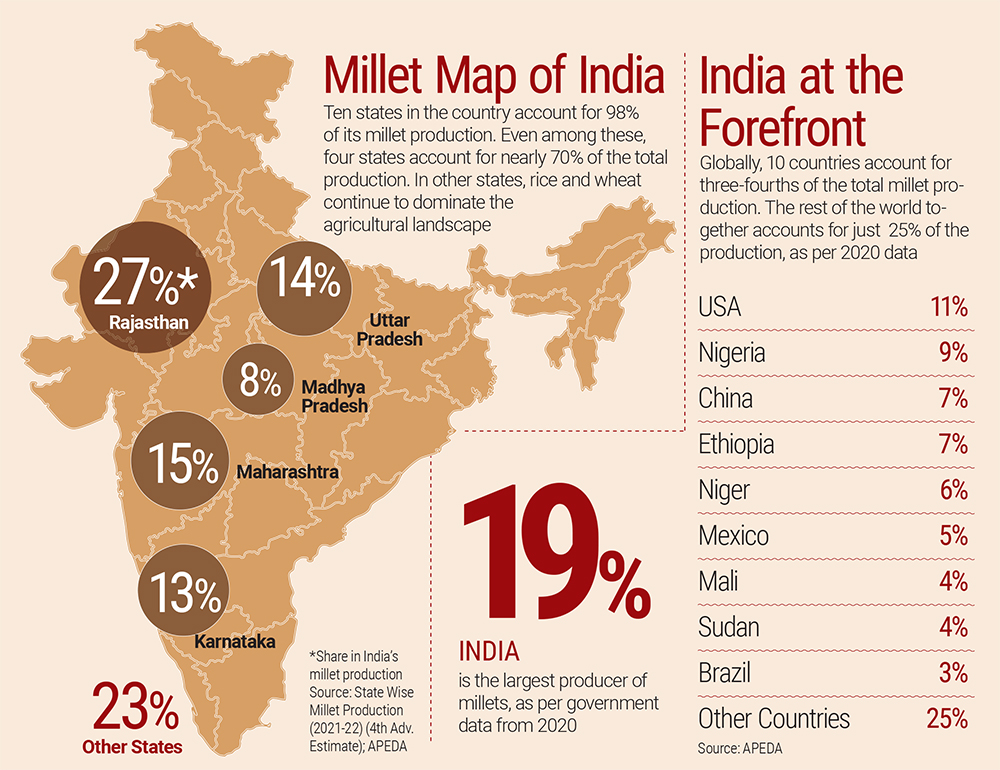
    5. Sustaining Small Farmers: Millets are a crucial crop for over 60% of small and marginal farmers in India, offering a reliable food source and livelihood in arid regions​

    Government initiatives for promoting millets:

    1. National Year of Millets 2018:  to revive traditional millet farming and raise awareness.
    2. Renaming Millets as “Nutri-Cereals” and “Shree Anna”: to emphasize their high nutritional content.
    3. State Specific Initiatives: E.g. Karnataka’s Raitha Siri Scheme aims at providing financial incentives to farmers for growing millets.
    4. Millet-Based Products in Mid-Day Meal Scheme: Odisha has introduced millet-based recipes in school meals to provide better nutrition to children.

    By focusing on both the demand and supply sides, India can significantly boost millet production, ensuring that millets become a staple in the Indian diet and a valuable export commodity.

  • What were the factors responsible for the successful implementation of land reforms in some parts of the country? Elaborate.

    Land reform refers to the systematic alteration of laws, regulations, and practices governing land ownership, distribution, and use to achieve social and economic justice. Despite being major policy initiative it has remained an ‘Unfinished Agenda’

    Factors responsible for successful implementation in some parts of the country:

    1. Political Will and Strong Leadership – In West Bengal, the Left Front government played a crucial role in redistributing land under Operation Barga, benefitting a large number of sharecroppers.
    2. Ideological Commitment: In states with leftist governments, like West Bengal, the ideological focus on equity and social justice played a vital role. The political leadership viewed land reforms as a tool for addressing socio-economic disparities.
    3. Effective Peasant Movements: The success of land reforms in states like Kerala and West Bengal was closely linked to grassroots peasant movements. Eg- Tebhaga Movement
    4. Active Participation of Local Communities: The Bhoodan movement initiated by Vinoba Bhave in states like Maharashtra and Gujarat also played a role in redistributing land voluntarily from landowners to landless peasants, contributing to successful reforms.
    5. Efficient Administrative Machinery – In Jammu and Kashmir, the administrative machinery was active in implementing the Big Landed Estates Abolition Act, which led to significant land redistribution.
    6. Clear and unambiguous laws – In states like West Bengal, clear and stringent land ceiling laws prevented large landholders from retaining excess land. 
    7. Judicial Support – Eg- In West Bengal, judicial decisions supported the protection of bargadars, ensuring the legal framework of the reforms was enforced even in cases where landlords tried to manipulate the system.
    8. Decentralized Governance – The success of land reforms in West Bengal was partly due to the role of panchayats (village councils), which were empowered to help implement and monitor the redistribution of land.

    However, some more challenges need to be addressed including:

    1. The absence of adequate land records made implementation of these acts difficult.
    2. Legal Loopholes – Eg- In Uttar Pradesh, Bihar and Madras there was no limit on the size of the lands that could be declared to be under the ‘personal cultivation’ of the zamindar
    3. A large number of exemptions to the ceiling limits were permitted by most states. Eg- in most states the ceilings were imposed on individual and not family holdings, leading to dividing holdings in the names of relatives and Benami transfers to avoid the ceiling. 
    4. CORRUPTION– The provisions to protect the small landowners were misused by the larger landlords and revenue officials as Most tenancies were oral and informal and not recorded.

    Way Forward

    1. Ashok Dalwai Committee Recommendations: reforms in land leasing, land titling, and creating a national land use policy to ensure sustainable agricultural practices and better land utilization.
    2. Promoting Cooperative Farming on the AMUL Model: By pooling resources and collectively managing farms, farmers can achieve economies of scale, reduce costs, and increase productivity.
    3. Private Sector Participation – Model Contract Farming Acts by States:
    4. Digitisation of Land Records:
    5. NITI Aayog’s Advocacy for Large-Scale Land Leasing
    6. Presumptive Land Titling: Need to shift to Conclusive land titling as this can reduce land-related disputes which account for two-thirds of all pending court cases in India.
    Case Study
    Bhoomi Project of Karnataka – The project digitized 20 million land records for 6.7 million landowners in 176 talukas of Karnataka

    technology-assisted reforms such as the SWAMITVA scheme for clear land titles and the Digital India Land Record Modernisation Programme needs effective implementation.

  • What are the causes of persistent high food inflation in India? Comment on the effectiveness of the monetary policy of the RBI to control this type of inflation.

    As per data by RBI, in the period 2016-2020, the average food inflation was 2.9 percent. This has more than doubled in the 2020s to an average of 6.3 percent. It reached as high as 8.7 percent in April 2024.    

    Causes of persistently high food inflation in India:

    1. Supply and Demand Imbalances: Factors such as extreme weather events, crop failures, or pest infestations can reduce the supply of agricultural products, driving up prices. Conversely, a surge in demand, perhaps due to population growth or changes in consumer preferences, can also lead to higher prices if supply cannot keep up.
    2. Temperature and Weather Challenges: Issues like adverse weather conditions, weak monsoons, and heatwaves led to cereal and pulse double-digit inflation in April 2024.
    3. Fuel Price rise: An increase in fuel inflation by 1% leads to a 0.13% rise in food inflation, and the effect slowly declines through the next 12 months.
    4. Post Harvest Losses: Approx 74 million tonnes of food is lost in India each year primarily due to inadequate storage and cold chain management further adding to food inflation.
    5. Increase in input cost:  A report by the Fertilizer Association of India(2023) highlighted a 25% increase in fertilizer prices due to global supply chain issues.
    6. Government Policies: E.g. Minimum Support Price leads to higher market prices for food grains and limits on stock holdings of essential commodities may lead to market speculation and artificial scarcity, spiking prices.
    7. Trade Policies: Restrictions on imports can limit the variety of available food products and potentially drive up prices.

    Effectiveness of the monetary policy of the RBI to control this type of inflation:

    1. Inflation Targeting: By focusing on headline inflation, which includes food and fuel prices, the Reserve Bank of India (RBI) can anchor inflation expectations and prevent food inflation from spiraling into general inflation
    2. Indirect Impact of Interest Rate Adjustments on Food Inflation:  By adjusting the repo rate, the RBI influences liquidity in the market, which in turn affects consumer demand.
    3. Exchange Rate Management and Imported Food Inflation: In 2021, global food prices surged, especially edible oils. The RBI’s management of the exchange rate helped soften the impact of these global price hikes on domestic food inflation, though not fully.
    4. Transmission of Monetary Policy to Agricultural Sector Credit: Monetary easing during 2020-2021, which lowered interest rates, helped to maintain credit flow to the agricultural sector during the pandemic. 

    However, Monetary policy faces certain limitations as:

    1. Food inflation in India is often driven by supply-side factors, such as poor infrastructure (irrigation, roads, cold storage), inefficient distribution systems, hoarding, and agricultural productivity issues.
    2. Seasonal fluctuations in food prices (driven by rainfall, crop output, and global food prices) often deviate from the general inflation trend.
    3. Fiscal Policy Impact – Eg- Government providing higher MSP
    4. Effectiveness also depends on external factors such as global commodity markets and oil prices, over which the RBI has limited control.
    5. High Share of Food in Consumption Basket: In emerging economies like India, where food constitutes a large portion of household expenditure (around 45% or more), food inflation directly affects overall inflation, making it harder for monetary policy alone to control it​
    6. Lagged Impact: Monetary policy actions like interest rate hikes may take several quarters to influence inflation. However, food price shocks tend to be more immediate, meaning that monetary policy adjustments may not be timely enough to prevent short-term inflation spikes​

    Government Measures Complementing RBI’s Monetary Policy:

    1. Improving agricultural infrastructure like irrigation, cold storage, and rural roads.
    2. Price stabilization measures such as buffer stock management through the Food Corporation of India (FCI).

    Therefore as noted by Reserve Bank of India “the persistence of food inflation underscores the need for effective policy measures that address both demand and supply dynamics.

  • Examine the pattern and trend of public expenditure on social services in the post-reforms period in India. To what extent this has been in consonance with achieving the objective of inclusive growth?

    Indian constitution envisions a welfare state under Article 38 of the constitution which is reflected in public expenditure on social services. In the post-reforms period the public expenditure on social services increased from 5.49% of GDP in 1990-91 to 8.3% in 2021-22.

    Patterns and trends of public expenditure on social services:

    1. From 1990s to Early 2000s: Marked slowdown in public spending – 
    1. Education – 3% of GDP. 
    2. Public healthcare –  1% of GDP.
    1. From 2000s to Early 2009: Marked by re-prioritization of social spending Eg- Sarva Shiksha Abhiyan (SSA) for education, National Health Mission (NHM), and MGNREGA.
    2. 2010 onwards: Shift towards Rights based approach E.g., Right To Education, Right To Food, etc.

    Consonance with achieving the objective of inclusive growth:

    1. Rapid growth and poverty reduction:  A total of 415 million people moved out of poverty in India within just 15 years from 2005 to 2021. (UN)
    2. Financial inclusion: Under PMJDY more than 53.13 crore bank accounts have been opened proving instrumental in Direct Benefit Transfer to the beneficiaries.
    3. Education Accessibility: E.g. Gross Enrolment Ratio for girls at the secondary level rose from 77.45% in 2014-15 to 81.32% in 2019-20.
    4. Improved Health Indicators: Health expenditure increases at cagr of 15.8%. (1.9% OF GDP IN FY24) – Life expectancy increased from 58 years in 1991 to 70 years in 2022.

    However, Challenges remain in realizing the full extent:

    1. High Levels of Poverty – NITI Aayog’s 2021 report estimated that around 25% of the population still lives in multidimensional poverty
    2. Employment Generation and Jobless Growth – According to PLFS 2019-20, India’s unemployment rate was 4.8% and youth unemployment (15-29 years) was 22.9%.
    3. Underinvestment in Social Infrastructure: According to a report by Dasra, social sector spending was ₹23 trillion ($280 billion) in FY23. It is less than NITI Aayog recommendation of 13% of GDP.
    4. Regional Disparities in Development: As per ‘Relative Economic Performance of Indian States: 1960-61 to 2023-24’ by Economic Advisory Council to the Prime Minister (EAC-PM), 5 Southern states have emerged as major contributors to India’s GDP, accounting for 30% by March 2024. On the other hand, Uttar Pradesh contributes only 9.5% of GDP and Bihar just 4.3%
    5. Social Exclusion and Inequality Based on Caste, Gender etc: According to NITI Aayog’s 2021 Multidimensional Poverty Index, SCs and STs suffer more from multidimensional poverty and Female labor force participation in India is only 23.3% (PLFS 2019-20)

    World Economic Forum has suggested 3 practical ways for countries to boost inclusive growth:

    1. Investment in their citizens’ capabilities. e.g. Bolsa Familia – Brazil, provides financial aid to brazilian families ensuring children education, vaccination etc.
    2. Labour Law Reforms – ensuring social security cover
    3. Investment in labor intensive economic sectors including sustainable water, energy, digital, and transport infrastructure, rural economy, education and training.

    Implementing Social Security Code 2020 can help achieve goal of instituting a credible social protection framework, consistent with India’s level of development.

  • [UPSC Openhouse] By Shubham Sir || On How to effectively utilize the next 4 months (Oct to Feb) for UPSC 2025? | Get a Personalized Micro Time Table for the Next 4 Months || Join on 10th Oct 2024 at 7:00 PM

    [UPSC Openhouse] By Shubham Sir || On How to effectively utilize the next 4 months (Oct to Feb) for UPSC 2025? | Get a Personalized Micro Time Table for the Next 4 Months || Join on 10th Oct 2024 at 7:00 PM

    Register for the masterclass on 10th Oct 2024, 7 PM to get access to Personalized Micro Time Table for the Next 4 Months


    Civilsdaily, IAS, Mentorship, UPSC

    Know more about the Shubham Sir’s Masterclass

    You have 85 days after Prelims for Mains 2025. This is far less time than what students had this year. If you are not gearing up your preparation in the next 4 months, your Mains attempt will be in jeopardy. Hence, having a roadmap at this point becomes crucial.

    In the next 4 months, you need to follow these steps on a ritual basis:

    (1) Consolidating your notes: Whatever notes you have made so far, consolidate them. You need to know how to do this at this stage. If you don’t master this skill now, you risk doing it incorrectly later.

    (2) Mastering the art of brainstorming through PYQs: This is the time to thoroughly analyze Mains PYQs. Understand the need and demand of the exam, brainstorm key points, and focus on value addition to your answers. With AI already raising the bar for value addition, this ritual is now more crucial than ever.

    (3) Practicing effective answer writing: Post-Prelims, most of your time will be devoted to Optional answer writing and value addition. You may not be able to write many full-length GS tests at that point. Therefore, the next 4 months are critical for solidifying your GS answer writing practice.

    Join Shubham Jatte Sir, Senior IAS Mentor, who has guided many rankers through the Smash Mains program, and learn how you can make the most of the next 4 months to secure a top IAS rank next year.

    Join us on 10th Oct 2024, 7 PM. Shubham Sir will be conducting a FREE webinar exclusively for UPSC 2025 aspirants giving you a sneak peak of what it takes to perform at the alpha level in your very first attempt.


    It will be a 45 minute webinar, post which we will open up the floor for all kinds of queries which a beginner must have. No questions are taboo and Shubham sir is known to be patiently solving all your doubts.

    Join us for a Zoom session on 10th Oct 2024, 7 PM. This session is a must-attend for you If you are attempting UPSC for the first time or have attempted earlier and now preparing for next year, then it is going to be a valuable session for you too.

    We will deal with all the aspects for a comprehensive UPSC Preparation. We’ll talk about starting with the basics, and move to advanced level.

    See you in the session”

    Register for the session for a focussed UPSC prep


    About Civilsdaily Mentorship Philosophy:

    At Civilsdaily, we treat Mentorship as a specialization. Not every Mains or interview candidate can be a mentor. Most such mentors will suggest cosmetic changes and will only help you evolve slowly. It is easy to find comfort in sentences like ‘every topper is different’ and’ they have their own path’. Finding what’s different about you and then figuring out your own path is why Mentorship is essential.

    We walk the talk by helping you craft your own way of preparation. A method that enhances your probability of qualifying UPSC-CSE in a single attempt. We give you that near-perfect certainty. Delivering this consistently to hundreds of aspirants (now rankers) in the past was challenging. We still stick to it and keep getting better at it with each passing year.

    At CD, we understand the science and the art of everything UPSC. If you have a problem, we will sit with you and find a solution. If that doesn’t work, then we try solution 2. Eventually, we will make sure you end up making progress. What’s the point of any content, program, or mentorship without progress? This is precisely why aspirants trust they have the best shot at clearing the exam with Civilsdaily.

    We invest a significant amount of time, effort, and energy into creating lectures, notes, and tests, understanding your needs as an aspirant. We take this responsibility seriously because, ultimately, your future depends on it.

    The heart of the Civilsdaily platform is the Yearlong Mentorship Program. For years, aspirants have enrolled here because they couldn’t find such depth and passion towards quality content and Mentorship anywhere. Their search inevitably ends at Civilsdaily. Enrollment in these programs and Mentorship also makes us accountable to aspirants for the value they get.

    In the past few years, we’ve worked quietly in the background with hundreds of aspirants; many now serve as IAS, IPS, IFS and more. We are very proud of what we’ve achieved.Overwhelmed by quick fixes, content overload and messy timetables which never work? Join us as we take you through a realistic and relatable roadmap for UPSC 2026 preparation. 

    In this masterclass, you will get:

    1. A 45-minute deep dive on how to plan your UPSC strategy from the start to the end.
    2. How do first-attempt IAS Rankers get the most out of their one year prep?
    3. Insider tips that only the top IAS and IPS rankers know and apply to get rank.

    By the end, you’ll have razor-sharp clarity and a clear path to crack UPSC with confidence and near-perfect certainty. 

    Join UPSC session on 10th Oct 2024, 7 PM

    (Don’t wait—the next webinar won’t be until Nov 24)


    These masterclasses are packed with value. They are conducted in private with a closed community. We rarely open these webinars for everyone for free. This time we are keeping it for 300 seats only.

    Ready to attend the UPSC Webinar?


    Not sure yet?

    We recommend you register here. It takes less than 10 seconds to register.

    • No spam! Once in a while, we’ll only send you high-quality exam-related content. 
    • We will inform you about the upcoming Masterclasses that might benefit you.
    • You can demand one free mentorship call from verified Civilsdaily mentors. 
    • You can always choose to unsubscribe. 
  • Trade is not just Globalized but also weaponized: S. Jaishankar

    Why in the News?

    External Affairs Minister S. Jaishankar highlighted that over the past 25 years, globalisation has led to job losses and dissatisfaction in many societies, as trade has become both globalised and weaponised.

    How is trade being weaponised in global politics?

    • Trade is increasingly being used as a strategic tool by countries, intertwined with national security concerns. Nations impose tariffs, subsidies, and other economic measures as defensive actions to protect domestic industries and geopolitical interests.
    • Technologies and supply chains are viewed through a national security lens, leading to greater control over economic interactions.

    Note: Economic and military power comes under hard power.

    What implications does this weaponization of trade have for India and its foreign relations?

    • Rising Protectionism: India has responded to this trend by imposing over 30 anti-dumping measures against Chinese goods in 2024 alone. These defensive actions are meant to shield Indian industries from what is perceived as China’s predatory pricing strategies.
    • Impact on Global Supply Chains: As global supply chains become more transnational, India’s ability to secure its interests, especially in high-tech sectors, becomes crucial.
      • India is balancing its integration into the global economy while protecting critical sectors from foreign influence, especially from China.
    • Foreign Relations: India’s foreign policy is increasingly being shaped by economic security concerns.
      • Trade disputes, such as those with China, have prompted a re-evaluation of economic partnerships and collaboration within frameworks like the Indo-Pacific to reduce dependency on potentially adversarial nations.

    What historical context informs India’s current approach to trade and international relations?

    • China’s Entry into WTO (2001): India, like many other countries, faced economic repercussions when Chinese goods flooded global markets after China joined the WTO. This led to job losses and industrial competition.
    • Globalization and Job Losses: The rapid globalization of the past 25 years has contributed to domestic job losses and dissatisfaction in various sectors in India.
    • Strategic Autonomy: India’s foreign relations have historically been guided by a principle of strategic autonomy.
      • This informs its cautious stance on fully integrating into global supply chains without safeguarding critical industries, and influences its desire to promote reforms in Multilateral Development Banks (MDBs) to suit developing nations’ needs.

    Way forward:

    • Strengthening Domestic Industries: India should continue enhancing self-reliance through initiatives like Make in India and Atmanirbhar Bharat, focusing on boosting high-tech sectors and reducing dependency on foreign imports, especially from adversarial nations like China.
    • Diversifying Trade Partnerships: India must deepen economic ties with friendly nations and regional alliances such as the Indo-Pacific, while advocating for reforms in global trade systems like the WTO and MDBs to ensure fair competition and support for developing economies.
  • The status of the civil war in Sudan

    Why in the News?

    On September 26, the Sudanese Armed Forces (SAF) initiated a significant offensive against the paramilitary Rapid Support Forces (RSF) in Khartoum and Bahri. As a result, the conflict, which had been relatively calm for several months, has reignited with increased intensity.

    What is the extent of the war? 

    • Duration and Scope: The civil war has lasted for over 18 months, initially erupting from a power struggle between the two military factions—the Sudanese Armed Forces (SAF) and the Rapid Support Forces (RSF). What began in Khartoum has spread to various regions, including Omdurman, Bahri, Port Sudan, El Fasher, and areas in Darfur and Kordofan.
    • Casualties and Displacement: The UN reports over 20,000 fatalities since the conflict began. Additionally, the International Organization for Migration estimates 10.89 million internally displaced persons (IDPs) as of October 1.
    • Worsening Humanitarian Crisis: Access to aid and healthcare has become severely restricted, particularly in Darfur. 
      • The UN has declared famine in specific camps like Zamzam, affecting nearly 500,000 IDPs. Currently, 25.6 million people—more than half of Sudan’s population—face critical food insecurity.

    How have ethnic tensions and rivalries played a part in the war? 

    • Ethnic Conflict: The war has evolved beyond a military rivalry, intensifying along ethnic lines. The RSF, composed of predominantly Arab militias, has been involved in targeting non-Arab communities, such as the Masalit, particularly in the Darfur region.
    • Militia Involvement: Various regional ethnic militias have taken sides in the conflict, complicating the dynamics further. The SAF has allied with the Sudanese People’s Liberation Movement, while the RSF has garnered support from Arab militias.
    • Historical reason: Ethnic tensions are rooted in historical grievances, exacerbating violence and leading to retaliatory attacks between communities, which have fueled the conflict.

    What are the implications for the region?

    • Mass Displacement: Over two million refugees have fled to neighboring countries, including Chad, South Sudan, and Ethiopia. This has strained resources in host countries and raised concerns about a potential migrant crisis in Europe.
    • Ethnic Clashes in Neighboring Regions: The instability in Sudan has triggered ethnic violence along the borders with South Sudan and Ethiopia, particularly in contested areas like Abyei and El Fashaga.
    • Economic Impact: The ongoing conflict jeopardizes essential infrastructures, such as oil pipelines from South Sudan to the Red Sea, threatening regional economic stability.
    • Cross-Border Tensions: A lack of effective governance in Sudan has led to increased ethnic tensions and clashes in border regions, which could have wider implications for regional security and stability.

    Way forward: 

    • Facilitate Peace Talks: India can leverage its diplomatic relations with the conflicting factions (SAF and RSF) to encourage dialogue and support peace initiatives through multilateral platforms like the African Union and the UN.
    • Strengthen Regional Alliances: India can collaborate with neighbouring countries (Chad, South Sudan, Ethiopia) to manage the refugee crisis and promote stability through joint security initiatives.
  • Why is salt pan land being used for homes?

    Why in the News?

    The Maharashtra government allocated 255.9 acres of salt pan land across three parcels in Mumbai’s eastern suburbs for rental housing under the Dharavi Redevelopment Project. 

    What is Salt pans?

    • Salt pans are low-lying coastal areas used for salt cultivation, acting as natural sponges that absorb rainwater and support diverse ecosystems while mitigating flooding.

    What is the Maharashtra government doing to relocate people?

    • Allocation of Land for Housing: The Maharashtra government has issued a Government Resolution (GR) allocating 255.9 acres of salt pan land for the construction of rental housing as part of the Dharavi Redevelopment Project. This land is to be used for slum rehabilitation and affordable housing for economically weaker sections.
    • Lease Agreement: The land parcels will be leased to the Maharashtra government for 99 years, with the objective of providing housing for residents displaced from Dharavi.
    • Involvement of Special Purpose Vehicle (SPV): The Dharavi Redevelopment Project Private Limited (DRPPL), in which an Adani Group entity holds 80% stake and the State government has a 20% stake, is responsible for the construction and resettlement of laborers working on the land.
    • Concessional Rate for Land: The land is being provided at a concessional rate of 25% of the prevailing market rate, making it more accessible for development.

    Why is the move controversial?

    • Environmental Concerns: Urban planners and environmentalists have raised concerns about the lack of an impact assessment study before developing large parcels of salt pan land.
    • Risk of Ghetto Formation: Critics argue that relocating residents to different parts of the city, rather than in-situ rehabilitation (keeping them in their original areas), could lead to the formation of ghettos and further social segregation.

    Are salt pan lands ecologically important?

    • Ecological Role: Salt pan lands are vital as salt marshlands that serve as holding ponds, absorbing rainwater and acting as natural sponges, thereby helping to mitigate flooding.
    • Biodiversity: These areas support diverse flora and fauna, contributing to the ecological balance of coastal regions.
    • Natural Defense: The salt pan lands provide a coastal area’s natural defense against flooding and other environmental hazards, highlighting their importance in maintaining regional ecological health.

    Way forward: 

    • Integrate Environmental Assessments with Development Planning: The Maharashtra government should implement a framework that integrates environmental impact assessments into the planning process for the Dharavi Redevelopment Project.
    • Adopt a Community-Centric Approach to Resettlement: The government should engage with affected communities to explore in-situ rehabilitation options and gather input on their housing needs.
  • How are tanks armouring Ladakh sector?

    Why in the News?

    The Ukraine war has highlighted the versatility of battle tanks, demonstrating that armor remains crucial on modern battlefields, alongside long-range firepower.

    What are the difficulties in Ladakh due to high terrain and altitude? 

    • High Altitude Challenges: At altitudes of 13,000-15,000 feet, oxygen levels are low, causing rarefied air, which affects the performance of engines and machines, including tanks. Temperatures can dip to as low as -40 degrees Celsius.
    • Logistics and Transportation: Transporting tanks and heavy machinery to these high-altitude regions is a Herculean task due to the terrain. Once deployed, they are kept operational throughout, with maintenance facilities set up in forward areas like Nyoma and Daulat Beg Oldi.

    Threat from China: 

    • Chinese Deployment: The Chinese People’s Liberation Army (PLA) has enhanced its firepower and mechanised units along the Line of Actual Control (LAC). This includes the deployment of the ZTQ 15 (Type 15) light tanks and Type 96A second-generation tanks.
    • Modernisation and Mobilisation: China has also introduced modern wheeled Armoured Personnel Carriers (APCs) and assault vehicles such as the CSK series to the region, indicating a significant military upgrade along the LAC.
    • Tactical Proximity: During the 2020 stand-off, Chinese and Indian tanks came within 100 metres of each other, demonstrating the heightened tensions and the tactical threats in Eastern Ladakh.

    What are the Indian Army’s future plans to fortify the border areas?

    • Indigenous Development: The Indian Army is developing the Zorawar light tank, specifically designed for high-altitude warfare.
    • T-90 and BMP Upgrades: India is enhancing the capabilities of existing T-90 tanks and BMP-2 armoured carriers
    • Long-term Projects: Plans are underway for Future Ready Combat Vehicles (FRCV) and Future Infantry Combat Vehicles (FICV) to replace current tanks and BMPs, with induction expected by 2030.
    • Procurement Plans: The Army is also evaluating the U.S. Stryker infantry combat vehicle and has initiated the process to procure 100 more K9 Vajra Howitzers to bolster long-range firepower.
    • Enhancing Infrastructure: Since 2012, India has significantly improved its infrastructure along the LAC, enabling long-term deployment of troops, tanks, and artillery in the region.

    Conclusion: The government should continue expanding logistical infrastructure along the Line of Actual Control (LAC), improving transportation, maintenance facilities, and supply chains to support long-term troop and equipment deployment in challenging terrain.

  • UPSC Mains 2024 GS2 Model Answers

    The UPSC General Studies Paper 2 (GS2) focuses on governance, constitution, polity, social justice, and international relations. This paper tests candidates’ understanding of the Indian political system, as well as their knowledge of contemporary issues in governance and foreign relations. This page provides detailed and well-structured model solutions for key GS2 questions to assist aspirants in their preparation.

    Below is a table with 20 questions from the GS2 paper along with direct links to their detailed model answers. A downloadable PDF is also available for the complete set of solutions.


    UPSC Mains GS2 2024 Paper Questions and Answers

    S.No.QuestionsView Answer Link
    1Examine the need for electoral reforms as suggested by various committees with reference to the “one nation, one election” principle.View Answer
    2Explain and distinguish between Lok Adalats and Arbitration Tribunals. Do they entertain civil as well as criminal cases?View Answer
    3The growth of the cabinet system has practically resulted in the marginalization of parliamentary supremacy. Elucidate.View Answer
    4The duty of the Comptroller and Auditor General is not merely to ensure the legality of expenditure but also its propriety. Comment.View Answer
    5Analyze the role of local bodies in providing good governance at the local level. Discuss the pros and cons of merging rural and urban local bodies.View Answer
    6Public charitable trusts have the potential to make India’s development more inclusive as they relate to certain vital public issues. Comment.View Answer
    7Poverty and malnutrition create a vicious cycle that adversely affects human capital formation. What steps can be taken to break the cycle?View Answer
    8The doctrine of democratic governance makes it necessary that the public perception of civil servants’ integrity and commitment be absolutely positive. Discuss.View Answer
    9The West is fostering India as an alternative to reduce dependence on China’s supply chain and as a strategic ally. Explain.View Answer
    10Critically analyze India’s evolving diplomatic, economic, and strategic relations with Central Asian Republics (CARs).View Answer
    11What are the aims and objectives of the Public Examination (Prevention of Unfair Means) Act, 2024? Are university and state education board exams covered under the Act?View Answer
    12Right to privacy is intrinsic to life and personal liberty under Article 21. Discuss the law relating to DNA testing of a child in the womb to establish its paternity.View Answer
    13What changes has the Union Government introduced in Centre-State relations recently? Suggest measures to build trust and strengthen federalism.View Answer
    14Explain the reasons for the growth of public interest litigation (PIL) in India. Has the Indian Supreme Court emerged as the world’s most powerful judiciary as a result?View Answer
    15Discuss India as a secular state and compare it with the secular principles of the US Constitution.View Answer
    16The Citizens’ Charter has been a landmark initiative for ensuring citizen-centric administration but has yet to reach its full potential. Discuss the factors hindering its effectiveness and suggest measures.View Answer
    17In the domain of public healthcare, the Indian state should play a vital role in mitigating the adverse impacts of marketization. Suggest measures to enhance the reach of public healthcare.View Answer
    18E-governance is not just about applying digital technology in service delivery but also ensuring transparency and accountability. Evaluate the role of the ‘Interactive Service Model.’View Answer
    19Evaluate the effectiveness of the United Nations Security Council’s Counter-Terrorism Committee (CTC) and its associated bodies in mitigating the threat of terrorism.View Answer
    20Discuss the geopolitical and geostrategic importance of the Maldives for India, focusing on global trade and maritime security.View Answer

    Download the Full GS2 2024 Model Answers PDF

    For a complete set of detailed model answers for the UPSC GS2 Paper, download the PDF below:
    Download Model Answers PDF


    Frequently Asked Questions (FAQs)

    1. What is the focus of UPSC GS2?
    The GS2 Paper of the UPSC Civil Services Mains Examination covers topics related to governance, constitution, polity, social justice, and international relations. It is designed to assess candidates’ understanding of these areas, along with their analytical abilities.

    2. Why is GS2 important for UPSC aspirants?
    GS2 is a core part of the UPSC Mains Examination. It tests not only theoretical knowledge but also a candidate’s awareness of contemporary issues in governance and international relations, which are key to effective public administration.

    3. How should one approach answering GS2 questions?
    To perform well in GS2, it is important to combine knowledge of constitutional and governance-related issues with current affairs. Candidates should develop the ability to provide solutions to real-world governance challenges and integrate constitutional principles into their answers.

    4. Can I directly use these model answers in the exam?
    These model answers are provided as guidelines to help you frame well-structured and comprehensive responses. It is important to personalize them by incorporating current developments and insights relevant to the question.

    5. How can I download the full set of model answers?
    You can download the complete set of model answers by using the link provided above.

    6. Are these model answers based on real UPSC questions?
    Yes, these model answers are based on real and closely related UPSC GS2 questions, making them useful for practice and understanding key themes.

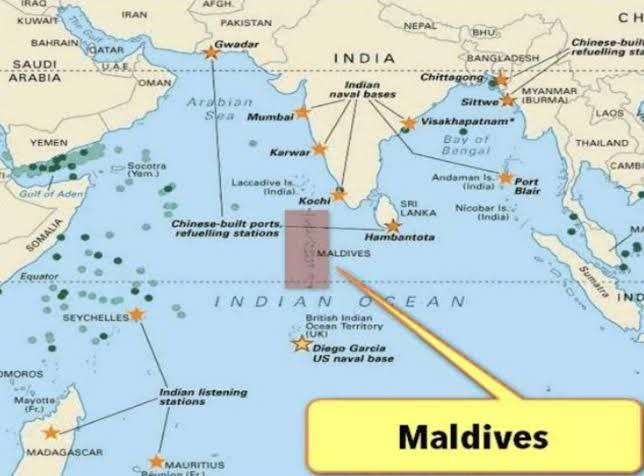
  • Discuss the geopolitical and geostrategic importance of Maldives for India with a focus on global trade and energy flows. Further also discuss how this relationship affects India’s maritime security and regional stability amidst international competition?

    As Prime Minister Narendra Modi said “India and the Maldives are not just neighbors; we are natural partners. Our destinies are intertwined, and we share the same vision of peace and prosperity.”  

    Geopolitical and Geostrategic Importance of Maldives for India: Focus on Trade and Energy Flows

    1. Strategic Location: Maldives’ position on key global maritime trade routes enhances India’s maritime domain awareness and security.
    2. Energy Security: Located along key maritime routes between the Gulf of Aden and the Strait of Malacca, the Maldives serves as a critical “toll gate” for nearly half of India’s trade and 80% of its energy imports.
    3. Regional Stability: Strong ties with the Maldives support India’s ‘Neighborhood First’ policy, ensuring political stability and minimizing external influences like China.
    4. Countering China: India seeks to prevent the Maldives from falling into China’s Belt and Road Initiative debt trap, preserving regional dominance.
    5. Trade Hub Potential: The Maldives can serve as a logistics and shipping hub, complementing India’s trade routes and boosting regional economic integration.
    6. Maritime Surveillance: Geographic proximity aids India in enhancing surveillance and accessing deep-sea resources through joint projects, strengthening maritime security.
    7. Defence Cooperation: A Defence Action Plan was signed in 2016 to strengthen this partnership. India provides nearly 70% of Maldives’ defence training, both on the islands and in India’s military academies.

    Challenges

    1. Growing Chinese Influence: Eg- China signed 20 “key” agreements, including on tourism cooperation, disaster risk reduction and the blue economy during visit of Xi Jinping.
    2. Diplomatic Turmoil – undiplomatic words used by ministers in Maldives, President Muizzu asking India to withdraw military personnel and choosing China for one of his first overseas visits
    3. Domestic politics – The ‘India Out’ campaign against the presence of the Indian military on Maldivian soil.
    4. India’s security interests hinge on the Maldives’ political stability; internal turmoil could disrupt cooperation and threaten maritime security objectives.
    5. Non-traditional threats: Piracy, terrorism, and drug trafficking require ongoing collaboration and intelligence sharing between India and the Maldives.
    6. Extremism: The Maldives’ susceptibility to extremism and radicalization demands joint efforts to counter these security challenges.

    Way forward

    1. Promote Non-Reciprocal Development Assistance to counter  ‘Big Brother Perception: Building on the principles of the Munroe Doctrine, India should focus on providing nonreciprocal, consultative, and cooperative development assistance to the Maldives.
    2. Enhance Maritime Security Collaboration including joint naval exercises, surveillance operations, and information sharing. 
    3. Engage in Cultural and People-to-People Exchanges: Programs that promote tourism, student exchanges, and cultural initiatives will help build mutual understanding and strengthen bilateral relations.
    4. Address Domestic Political Dynamics: India should be sensitive to the internal political landscape of the Maldives, engaging with all political factions and civil society groups to ensure broad-based support for its initiatives. 

    Sustained Diplomacy and strengthening People to People connect is essential to build trust and align  ‘Neighbourhood First’ policy with the Maldive’s ‘India First’ policy.

  • “Terrorism has become a significant threat to global peace and security.’ Evaluate the effectiveness of the United Nations Security Council’s Counter Terrorism Committee (CTC) and its associated bodies in addressing and mitigating this threat at the international level.

    Terrorism is the unlawful use of force or violence against persons or property to intimidate or coerce a government, the civilian population, or any segment thereof, in furtherance of political or social objectives. Counter-Terrorism Committee (CTC) was established under UNSC resolution 1373 to enhance the capacity of UN member states to prevent and combat terrorism.

    Terrorism A Significant Threat To Global Peace And Security

    1. Impact on Global and Local Economies: Eg.  2008 Mumbai attacks resulted in a decline in foreign investments and tourism, costing the Indian economy over $2 billion.
    2. Political Instability: The rise of ISIS in Syria and Iraq led to the displacement of over 10 million people and destabilized the Middle East.
    3. Social Cohesion Challenges: Eg. 2019 Christchurch attacks in New Zealand highlighted how extremism disrupts harmony by fueling religious and ethnic tensions.
    4. Radicalization: Eg. ISIS, through social media, recruited over 30,000 foreign fighters from more than 100 countries.
    5. Human Rights Violations: Eg. Boko Haram in Nigeria has killed over 37,500 people since 2009, with mass abductions and attacks targeting civilians, violating fundamental human rights.
    Mandate of UN Security Council’s Counter-Terrorism Committee (CTC)
    Criminalize the financing of terrorism.
    Freeze without delay any funds related to persons involved in acts of terrorism.
    Deny all forms of financial support for terrorist groupsSuppress the provision of safe haven, sustenance or support for terrorists.
    Share information with other governments on any groups practicing or planning terrorist acts.
    Cooperate with other governments in the investigation, detection, arrest, extradition and prosecution of those involved in such acts; and;
    Criminalize active and passive assistance for terrorism in domestic law.

    Effectiveness of the UN Security Council’s Counter-Terrorism Committee (CTC) and Associated Bodies:

    1. Helps in Development of Legal Frameworks: The CTC assists in implementing Resolution 1373, which mandates states to criminalize terrorism financing and secure borders. Countries have adapted their laws, including freezing assets linked to terrorism.
    2. Promotes International Collaboration: The CTC fosters cooperation between nations to combat terrorism, ensuring shared intelligence and joint operations, especially in high-risk regions like Southeast Asia and the Sahel.
    3. Assists Nations via Capacity Building: Training programs, such as in the Sahel region, help local forces combat terrorist threats through specialized skills and counter-terrorism techniques.
    4. Enforces Sanction Measures: CTC oversees the implementation of sanctions like travel bans and arms embargoes, ensuring compliance with UN Security Council mandates against terrorist groups like Al-Qaeda.
    5. Ensures Monitoring and Compliance: The CTC monitors national compliance through regular state reports, ensuring nations align with international anti-terrorism laws and obligations. Eg. recent follow up visit by CTC in Tanzania to check compliance on counterterrorism resolution.
    6. Targets Terrorist Financial Networks: The CTC collaborates with organizations like the Financial Action Task Force (FATF) to combat money laundering and dismantle financial networks that support terrorism.

    Challenges Faced by UNSC CTC in Counter-Terrorism:

    1. Political Interests and Sovereignty Issues: Disagreements among member states, such as vetoes by Russia and China regarding resolutions on Syria, hinder unified responses..
    2. Disparities and Resource Limitations: E Eg. Global Terrorism Index 2022 indicated that terrorism caused $8.6 trillion in economic losses globally, disproportionately affecting less developed nations.
    3. Balancing Security with Individual Rights: Surveillance measures, like those under the UAPA,AFSPA in India, USA’s PATRIOT Act, often infringe on civil liberties. A 2021 Pew Research survey found that 56% of Americans are concerned about government overreach in surveillance.
    4. Rapid Technological Changes: The use of encrypted communication, as seen in the 2015 Paris attacks, allows terrorists to coordinate while evading detection. 
    5. Implementation Gaps: A 2023 review by the committee highlighted that 80 countries reported insufficient resources to enforce effective strategies.

    To effectively combat terrorism globally, a multi-pronged approach is essential, focusing on socio-economic development, responsive governance, and a unified Trident Strategy combining strong political will, proactive measures, and strategic communication to counter terrorist influence.

  • e-governance is not just about the routine application of digital technology in service delivery process. It is as much about multifarious interactions for ensuring transparency and accountability. In this context evaluate the role of the ‘Interactive Service Model’ of e governance.

    The World Bank defines e-governance as the use by government agencies of information technologies (such as Wide Area Networks, the Internet, and mobile computing) that can transform relations with citizens, businesses, and other arms of government.”

    Application of digital technology in service delivery process

    e-Governance being multifarious interactions for ensuring transparency and accountability

    1. Enhancing Public Access: E-governance platforms facilitate easy access to information, promoting transparency in government processes such as budgeting and tendering. 
    2. Preventing Corruption: Digital records and traceable transactions significantly reduce opportunities for corruption by minimizing human interaction. 
    3. Citizen Feedback Mechanisms: Interactive features, such as CPGRAMS, empower citizens to file complaints and track resolutions.
    4. Auditable Transactions: Eg. Performance dashboards, such as the Swachh Bharat Mission dashboard, provide real-time data on initiatives like toilet construction, ensuring accountability through traceability.
    5. Standardized Processes: E-governance standardizes workflows across departments, enhancing fairness in implementing government schemes. Eg. Social audit tools, like the Social Audit Network of India (SANI).

    Interactive service model of e-governance

    The Interactive-Service Model is the pinnacle of e-governance, where two-way communication between the government and citizens is not just possible but encouraged. 

    Role of the Interactive Service Model of e-governance:

    1. Enhanced Citizen Engagement:  Platforms like MyGov and town hall forums, allowing them to provide feedback and suggestions 
    2. Improved Service Delivery:  Digital India Portal ensures streamlined and accessible services such as passport renewals and tax filings
    3. Accountability through Feedback Mechanisms: Platforms like CPGRAMS, enable citizens to lodge complaints and track their resolution.
    4. Customization of Services: As seen in the UMANG app, which tailors services based on user interactions and preferences.
    5. Digital Democracy: Through participatory platforms like online consultations, surveys, and digital town halls, the interactive service model fosters a more inclusive and transparent form of governance.

    Issues with the Interactive Service Model of E-Governance

    1. Digital Divide: Over 60% of rural Indians lack internet access, hindering their ability to benefit from e-governance services, thereby widening the gap between urban and rural populations.
    2. Data Privacy Concerns: The Aadhaar system, with over 1.3 billion enrolled, has faced criticism for potential misuse of personal data, raising significant privacy issues and public distrust.
    3. Dependency on Technology: Reliance on technology can lead to service disruptions; for instance, during the 2020 lockdown, many citizens faced difficulties accessing essential services due to tech failures.
    4. Cybersecurity Risks: In 2020, cyberattacks on government systems increased by 37%, threatening sensitive citizen data and critical operations, highlighting vulnerabilities in e-governance frameworks.
    5. Bureaucratic Resistance: A 2021 survey by NITI Aayog found that 40% of government officials reported inadequate digital literacy, obstructing the implementation of e-governance initiatives and leading to inefficiencies.
    6. Resource Intensive: Many state governments struggle with budget constraints; eg. only 20% of Indian states have allocated sufficient funds for developing robust e-governance infrastructure.
    7. Equity and Inclusion: E-governance may exacerbate inequalities; as only 25% of women in rural areas use online services, limiting their access to vital resources and information.

    E-governance is inclusive of e-Democracy, e-Government and e-Business. Government Process Re-engineering using IT is critical for realisation of Viksit Bharat and New india.

  • In a crucial domain like the public healthcare system the Indian State should play a vital role to contain the adverse impact of marketisation of the system. Suggest some measures through which the State can enhance the reach of public healthcare at the grassroots level.

    Healthcare is a fundamental right crucial for individual dignity and welfare. Article 47 of the Indian Constitution highlights the State’s responsibility to ensure public health, affirming the commitment to provide equitable access to healthcare for all citizens.

    Adverse impact of marketisation of healthcare system 

    1. Inequity in access: creates a dual healthcare system where wealthy individuals can access, afford and avail healthcare, while the poor rely on underfunded public healthcare.
    2. Rural-urban divide as only 30% healthcare infrastructure serves 70% rural population, leaving rural areas underserved.
    3. Rising cost and affordability: Eg. 47.1% of total healthcare spending in India is out-of-pocket expenditure (National Health Accounts 2019-2020).
    4. Commodification of Healthcare: Eg. doctors prescribing unnecessary tests and medicines just to increase profit.
    5. Limited Focus on Preventive Care: Market-driven systems prioritize curative care over preventive measures, leading to under-investment in public health.

    Role of state in containing marketisation of healthcare 

    1. Regulation of Healthcare Costs: The state can cap treatment prices, regulate drug prices (e.g., India’s National Pharmaceutical Pricing Authority), and ensure that essential medicines remain affordable.
    2. Strengthening Public Healthcare: The government can expand and improve public health infrastructure to provide low-cost or free services, reducing dependency on private healthcare providers.
    3. Universal Healthcare Schemes: Programs like Ayushman Bharat in India help reduce out-of-pocket expenses for poor citizens by providing free access to essential health services.
    4. Health Insurance Regulation: The state can ensure that private health insurance schemes are affordable, transparent, and provide adequate coverage without discrimination or exploitation.
    5. Public Health Campaigns: The state plays a key role in promoting preventive healthcare, vaccination drives, and awareness programs to reduce the burden of disease and reliance on expensive treatments.
    6. Subsidizing Essential Health Services
      1. The government should provide subsidies for essential drugs and healthcare services to make them more affordable for the general public. Eg. Jan Aushadhi Stores
      2. Provide free preventive healthcare services such as immunizations, maternal and child care, and routine health checkups to reduce out-of-pocket expenditure.

    Measures to Enhance Public Healthcare at the Grassroots Level

    1. Decentralization of Healthcare Governance: Empower local governing bodies like Panchayati Raj Institutions (PRIs) and urban local bodies to take charge of healthcare delivery at the local level. This would ensure more responsive and need-based healthcare.
    2. Public-Private Partnerships (PPP): NITI Aayog in its report ‘Reimagining Healthcare In India Through Blended Finance’ Encouraged  partnerships between the government and private healthcare providers for the supply of healthcare equipment, medicines, and mobile health units in rural areas.
    3. Health Education and Community Participation: Launch health literacy programs and engage local communities in healthcare planning by forming village health committees to monitor programs. Eg. ASHA and Anganwadi workers can be leveraged.
    4. Increased Budget Allocation for Public Health to improve infrastructure, recruit more healthcare workers, and ensure the continuous supply of medicines. Allocate funds specifically for underserved areas, ensuring equitable distribution of healthcare resources across the country.
    5. Focus on Preventive Healthcare:  Prioritize preventive healthcare measures, such as improving sanitation, clean drinking water access, and widespread vaccination campaigns.
    6. Implement nutrition programs targeting maternal health and child development to reduce the incidence of malnutrition and related diseases.
    7. Technological Integration: Use telemedicine, mobile health apps, and electronic health records to enhance remote care access and continuity. Eg: Practo, eSanjeevani.
    The Kerala Model of health care
    Key initiatives include empowered health workers, decentralized governance, and public health education.

    As the saying goes, “Health is wealth, not wealth in health,” emphasizing the importance of accessible health care. By focusing on public investment and community health initiatives, the state can ensure health remains a fundamental right, not a commodity.

  • The Citizens’ charter has been a landmark initiative in ensuring citizen-centric administration. But it is yet to reach its full potential. Identify the factors hindering the realization of its promise and suggest measures to overcome them.

    As per 2nd ARC, Citizen Charter is a public statement that defines the entitlements of citizens to a specific service, the standards of the service, the conditions to be met by users, and the remedies available to the latter in case of non-compliance of standards. Adopted in 1997 in India, citizen charter still to realize it’s full potential.

    Importance Of Citizens Charter In Ensuring Citizen Centric Administration 

    Factors Hindering Realization Of Full Potential Of Citizens Charter 

    1. One size fits all: Tendency to have a uniform CC for all offices under the parent organization. CC has still not been adopted by all Ministries/Departments. This overlooks local issues.
    2. Silo operations: Devoid of participative mechanisms in a majority of cases, not formulated through a consultative process with cutting edge staff who will finally implement it.
    3. Lack of Legal Enforcement: Citizen Charters aren’t legally binding, which limits accountability.
    4. Non-Dynamic: Charters are rarely updated making it a one-time exercise, frozen in time.
    5. Poor design and content: lack of meaningful and succinct CC, absence of critical information that end-users need to hold agencies accountable.
    6. Lack of public awareness: only a small percentage of end-users are aware of the commitments made in the CC since effective efforts of communicating and educating the public about the standards of delivery promise have not been undertaken.
    7. Stakeholders not consulted: End-users, Civil society organizations and NGOs are not consulted when CCs are drafted. Since a CC’s primary purpose is to make public service delivery more citizen-centric, consultation with stakeholders is a must.
    8. Measurable standards of delivery are rarely defined: making it difficult to assess whether the desired level of service has been achieved or not.
    9. Poor adherence: little interest shown by the organizations in adhering to their CC. since there is no citizen friendly mechanism to compensate the citizen if the organization defaults.

    Measures required (2nd ARC recommendations)

    1. Customized Charters: Citizens’ Charters should be tailored to specific organizations preferably in local languages rather than adopting a one-size-fits-all approach, ensuring relevance to local contexts and needs.
    2. Stakeholder Consultation: The formulation of charters must involve extensive consultations with all stakeholders, including citizens, NGOs and other civil society, to ensure that the charters reflect genuine needs and expectations.
    3. Clear Commitments should be specified regarding service delivery standards and outline remedies or compensations for failures in service provision, enhancing accountability.
    4. Regular Evaluation by independent agencies, to assess their effectiveness and ensure they remain relevant and impactful.
    5. Adoption of the Sevottam Model: The Sevottam model was suggested by the 2nd ARC in its 12th report on “Citizen Centric Administration”.  This model combines the principles of ‘service’ and ‘uttam’ (excellence) and outlines a systematic approach:
      1. Defining services and identifying clients.
      2. Setting standards and norms for each service.
      3. Developing capabilities to meet these standards.
      4. Performing services to achieve the standards.
      5. Monitoring and evaluating performance continuously.
      6. Implementing continuous improvements based on evaluations.
    Jan Sewa Kendra, Ahmedabad
    In feb. 2004, district collectorate of ahmedabad standardized the entire citizen charter of district with 75 issues in it. 

    The Citizens’ Charter is a commitment to service quality, transparency, and accountability, promoting responsive governance. Reviving this program in government departments is essential for ensuring accountability to both citizens and the organizations themselves.

  • Discuss India as a secular state and compare with the secular principles of the US constitution.

    Secularism is a principle that advocates the separation of religion from politics and governance. It seeks to
    establish a society where religious institutions and state institutions are independent of each other.


    India As A Secular State

    1. Constitutional Guarantee of Secularism:
      a. Equality before Law: All citizens, irrespective of their religion, are treated equally before the law (Article
      14).
      b. Articles 25-28 guarantee freedom of religion, allowing individuals to practice, profess, and propagate
      their faith freely.
      c. Religious and linguistic minorities have the right to preserve their culture and establish educational
      institutions (Article 30).
    2. Pluralistic Society with Equal Religious Representation: India’s inclusive secularism celebrates diverse religious festivals, exemplifying Rajeev Bhargava’s idea of “equal respect for all religions,” unlike the Western
      model of strict separation.
    3. Judicial Interventions Upholding Secularism – SC in S.R. Bommai Judgment has held Secularism as a Basic
      Feature of the Constitution
    4. Positive Model of Secularism
      a. India’s secularism permits personal laws for different religious communities, enabling autonomy in
      marriage, divorce, and inheritance. Eg- Muslim Personal Law.
      b. State Support for Religious and Cultural Practices: Eg. subsidies for the Hajj pilgrimage for Muslims,
      financial support for Hindu pilgrimages, and Sikh langars.

    Dilution Of Secularism In India

    1. Communal Violence and Polarisation: NCRB Report (2021) recorded more than 5,000 cases of communal
      riots between 2017 and 2021. Eg. The Nuh violence in Haryana in 2023.
    2. Use of hate speech and narrative of “us vs them” during election campaigns has contributed to religious
      polarization, with leaders making divisive statements to appeal to specific communities.
    3. Mob Lynching and Vigilantism: Incidents of mob lynching, especially targeting minority communities under
      the guise of cow protection or other religious sentiments, have risen. Eg. Recently a man beaten in train
      for carrying beef, sadhu lynching in palghar.
    4. Social exclusion based on religious identity – Eg. A 2021 Pew Research Center report found 64% of Indians identify as “Hindus first” rather than “Indians first,” illustrating the rise of religious nationalism. Eg- boycott on Muslim vendors in temple fairs in Karnataka (2022).
    5. Challenges in Implementing Secular Principles: A 2019 Lokniti-CSDS survey found significant opposition to the Uniform Civil Code: 55% of Muslims, 54% of Christians, and 40% of Hindus, highlighting the challenge of achieving consensus on secular reforms.

    Comparison Of Secular Provisions Between Indian And Us Constitution


    Similarities

    1. Constitutional Enshrinement: U.S. Constitution’s First Amendment prohibits Congress from establishing
      a religion, while India’s 42nd Amendment explicitly includes “secular” in Preamble, affirming the state’s
      neutrality towards all religions.
    2. Freedom of Religion: U.S. First Amendment guarantees free exercise of religion, paralleling Articles 25-28
      of the Indian Constitution, which protect individuals’ rights to profess, practice, and propagate their faith
      without state interference.
    3. Judiciary’s Role: Landmark cases like Engel v. Vitale (1962) in U.S. and S. R Bommai case in India ensured
      judicial protection of these principles.

    Secularism and Harmony is not “political fashion” but it is “perfect passion” for India and Indians. Thus, Upholding secular values, fostering interfaith dialogue, and promoting inclusive policies are crucial for maintaining a pluralistic society and strengthening the fabric of Indian democracy.

  • Explain the reasons for the growth of public interest litigation in India. As a result of it, has the Indian Supreme Court emerged as the world’s most powerful judiciary?

    The Supreme Court has defined Public Interest Litigation (PIL) as “a legal action initiated in a court of law for the enforcement of public interest or general interest in which the public or a class of the community have pecuniary interest or some interest by which their legal rights or liabilities are affected.” As per SC observer Data, on an average, the Court receives 26,379 PILs every year.

    Reasons for growth of PIL in India 

    1. Relaxation of Locus Standi in Hussainara Khatoon v. State of Bihar (1979), which focused on the inhuman conditions of under-trial prisoners, laid the foundation for broader access to justice.
    2. Judicial Activism: Judges like P.N. Bhagwati and V.R. Krishna Iyer promoted PILs as a vehicle for ensuring fundamental rights as enshrined under Article 32 and way to address grievances related to social and economic injustice. 
    3. Access to Justice: PILs made it easier for marginalized and disadvantaged sections of society to approach the courts.
    4. Societal Concerns: Issues such as environmental degradation, human rights violations, and corruption became areas where citizens could seek judicial intervention, pushing PIL cases to the forefront. Eg- MC Mehta Case
    5. Media Attention: Media coverage of PIL cases has increased public awareness, making the judiciary a platform for addressing wide-ranging societal problems.
    6. Executive and Legislative Inaction: PILs grew due to perceived inefficiencies or failures of the executive and legislative branches in addressing important social and political issues. Eg- PIL on Paper Leak

    Supreme Court as the World’s Most Powerful Judiciary 

    Arguments in Favor:

    1.  Upendra Baxi, opines PIL has transformed Indian judiciary into an “institution of governance,” taking on functions traditionally vested in the executive and legislative branches.
    2. Judicial Activism: Through Public Interest Litigations (PILs), the Indian Supreme Court has actively addressed key social and political issues, such as the right to privacy (Puttaswamy judgment) and environmental protections. 
    3. Expansive Interpretation of Rights: It has broadened the interpretation of fundamental rights under Article 21, impacting areas like health, education, and environmental rights.
    4. Judicial Review: The Court exercises powerful judicial review, overturning executive and legislative decisions. Eg- NJAC Judgment
    5. Intervention in Policy Matters: The Court has played a direct role in governance by issuing landmark judgments on policy issues like environmental regulations (Taj Mahal pollution case) and human rights (Vishakha guidelines for sexual harassment).
    6. Suo Motu Powers: The Supreme Court can take cognizance of cases on its own, further extending its reach and influence.

    Argument Against

    1. Overreach: The Court’s decision to interfere in policy issues like setting the height of the Sardar Vallabhbhai Patel statue drew criticism for stepping into areas best left to the executive.
    2. Inefficiency and Delays: As of 2023, the Indian judiciary had a backlog of over 4.7 crore cases, including in the Supreme Court, leading to delays in delivering justice.
    3. Inconsistent Decision-Making: In cases like Sabarimala Temple Entry (2018), where religious rights were pitted against gender equality, the Court’s rulings led to divided public opinion and later contradictions, illustrating inconsistency.
    4. Criticism of Policy Interference: The Supreme Court’s intervention in BCCI reforms (Lodha Committee case) raised concerns that it was overstepping into the domain of sports administration, traditionally a non-judicial area.
    5. Lack of implementation of court verdicts hinder the successful implementation of PIL.

    Way Forward

    1. Striking a balance between legitimate cases and frivolous cases: Scrutiny panel or special PIL cells can be set up for scrutiny at first stage.
    2. Provision of strict punishment for frivolous PILs.
    3. Court should be fully satisfied that substantial public interest is involved before entertaining the petition.

    Justice P.N. Bhagwati thus cautioned that PIL must not degenerate into “publicity or private interest litigation”. By striking balance between ensuring access to justice and preventing misuse, PIL can become crucial tool for upholding the rule of law and protecting the rights of marginalized and vulnerable citizens..

More posts