7th Apr 2022
Government Bodies Related To Environment
Central Pollution Control Board
Established: It was established in 1974 under the Water (Prevention and Control of Pollution) Act, 1974.
Objective: To provide technical services to the Ministry of Environment and Forests under the provisions of the Environment (Protection) Act, 1986.
Key Functions:
- Advise the Central Government on any matter concerning prevention and control of water and air pollution and improvement of the quality of air.
- Plan and cause to be executed a nation-wide programme for the prevention, control or abatement of water and air pollution
- Coordinate the activities of the State Board and resolve disputes among them
- Provide technical assistance and guidance to the State Boards, carry out and sponsor investigation and research relating to problems of water and air pollution, and for their prevention, control or abatement
- Plan and organise training of persons engaged in the programme on the prevention, control or abatement of water and air pollution
- Organise through mass media, a comprehensive mass awareness programme on the prevention, control or abatement of water and air pollution
- Collect, compile and publish technical and statistical data relating to water and air pollution and the measures devised for their effective prevention, control or abatement;
- Prepare manuals, codes and guidelines relating to treatment and disposal of sewage and trade effluents as well as for stack gas cleaning devices, stacks and ducts;
- Disseminate information in respect of matters relating to water and air pollution and their prevention and control
- Lay down, modify or annul, in consultation with the State Governments concerned, the standards for stream or well, and lay down standards for the quality of air.
- Perform such other functions as may be prescribed by the Government of India.
National Biodiversity Authority
Established When: It is a statutory autonomous body under the Ministry of Environment and Forests, Government of India established in 2003, after India signed Convention on Biological Diversity (CBD) in 1992
Headquarter: Chennai
The objective of the body: Implementation of Biological Diversity Act, 2002
Key Functions:
It acts as a facilitating, regulating and advisory body to the Government of India “on issues of conservation, sustainable use of biological resources and fair and equitable sharing of benefits arising out of the use of biological resources.”
Additionally, it advises State Governments in identifying the areas of biodiversity importance (biodiversity hotspots) as heritage sites.
National Tiger conservation authority
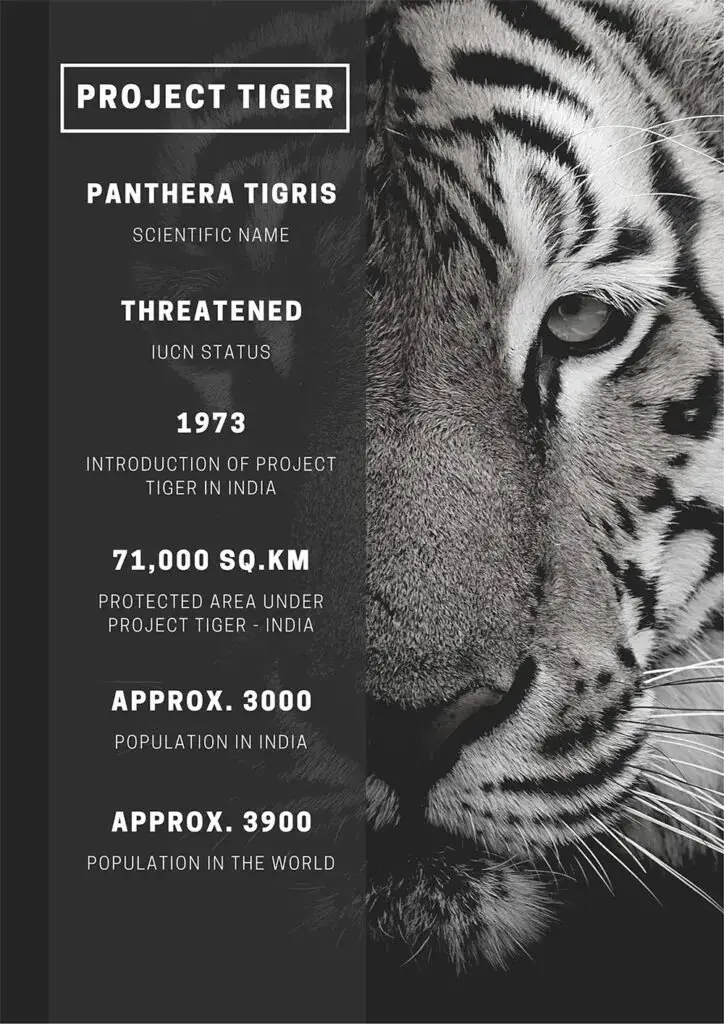
Established: It was established in December 2005 following a recommendation of the Tiger Task Force, constituted by the Prime Minister of India for reorganised management of Project Tiger and the many Tiger Reserves in India.
Headquarter: Delhi
Objective:
- Providing statutory authority to Project Tiger so that compliance of its directives become legal.
- Fostering accountability of Center-State in management of Tiger Reserves, by providing a basis for MoU with States within our federal structure.
- Providing for oversight by Parliament.
- Addressing livelihood interests of local people in areas surrounding Tiger Reserves.
Key Functions:
- to approve the tiger conservation plan prepared by the State Government under sub-section (3) of section 38V of this Act
- evaluate and assess various aspects of sustainable ecology and disallow any ecologically unsustainable land use such as mining, industry and other projects within the tiger reserves;
- provide for management focus and measures for addressing conflicts of men and wild animal and to emphasize on co-existence in forest areas outside the National Parks, sanctuaries or tiger reserve, in the working plan code
- provide information on protection measures including future conservation plan, estimation of population of tiger and its natural prey species, the status of habitats, disease surveillance, mortality survey, patrolling, reports on untoward happenings and such other management aspects as it may deem fit including future plan conservation
- ensure critical support including scientific, information technology and legal support for better implementation of the tiger conservation plan
- facilitate ongoing capacity building programme for skill development of officers and staff of tiger reserves.
Animal Welfare Board of India
Established When: It was established in 1962 under Section 4 of The Prevention of Cruelty to Animals Act,1960.
Headquarter: Ballabhgarh
Objective: To advise Government on Animal Welfare Laws and promotes animal welfare in the country.
Key Functions:
- Recognition of Animal Welfare Organisations: The Board oversees Animal Welfare Organisations (AWOs) by granting recognition to them if they meet its guidelines. The organisation must submit paperwork; agree to nominate a representative of the Animal Welfare Board of India on its Executive Committee, and to submit to regular inspections. After meeting the requirements and inspection, the organisation is considered for grant of recognition.
- The AWBI also appoints key people to the positions of (Hon) Animal Welfare Officers, who serve as the key point of contact between the people, the government and law enforcement agencies.
- Financial assistance: The Board provides financial assistance to recognised Animal Welfare Organisations (AWOs), who submit applications to the Board. Categories of grants include Regular Grant, Cattle Rescue Grant, Provision of Shelter House for looking after the Animals, Animal Birth Control (ABC) Programme, Provision of Ambulance for the animals in distress and Natural Calamity grant.
- Animal welfare laws and Rules: The Board suggests changes to laws and rules about animal welfare issues. In 2011, a new draft Animal Welfare Act was published for comment. Guidance is also offered to organisations and officials such as the police to help them interpret and apply the laws.
- Raising awareness: The Board issues publications to raise awareness of various animal welfare issues. The Board’s Education Team gives talks on animal welfare subjects, and trains members of the community to be Board Certified Animal Welfare Educators.
Forest Survey of India
Established When: It is a government organization in India under the Union Ministry of Environment, Forest and Climate Change for conducting forest surveys and studies. The organization came into being in, 1981.
Headquarter: Dehradun, Uttarakhand
Objective
The objective of the organization is monitoring periodically the changing situation of land and forest resources and present the data for national planning; conservation and management of environmental preservation and implementation of social forestry projects.
Key Functions
- The Functions of the Forest Survey of India are:
- To prepare State of Forest Report biennially, providing an assessment of the latest forest cover in the country and monitoring changes in these.
- To conduct an inventory in forest and non-forest areas and develop a database on forest tree resources.
- To prepare thematic maps on 1:50,000 scale, using aerial photographs.
- To function as a nodal agency for collection, compilation, storage and dissemination of spatial database on forest resources.
- To conduct training of forestry personnel in the application of technologies related to resources survey, remote sensing, GIS, etc.
- To strengthen research & development infrastructure in FSI and to conduct research on applied forest survey techniques.
- To support State/UT Forest Departments (SFD) in forest resources survey, mapping and inventory.
- To undertake forestry-related special studies/consultancies and custom made training courses for SFD’s and other organizations on a project basis.
Forest Survey of India assesses forest cover of the country every 2 years by digital interpretation of remote sensing satellite data and publishes the results in a biennial report called ‘State of Forest Report'(SFR).
Central Zoo Authority of India
Established: It was established in 1992 and constituted under the Wild Life (Protection) Act.
Headquarter: Delhi
Objective
The main objective of the authority is to complement the national effort in the conservation of wildlife.
Standards and norms for housing, upkeep, health care and overall management of animals in zoos have been laid down under the Recognition of Zoo Rules, 1992.
Key Functions
- Since its inception in 1992, the Authority has evaluated 513 zoos, out of which 167 have been recognized and 346 refused recognition.
- The Authority’s role is more of a facilitator than a regulator. It, therefore, provides technical and financial assistance to such zoos which have the potential to attain the desired standard in animal management. Only such captive facilities which have neither the managerial skills nor the requisite resources are asked to close down.
- Apart from the primary function of the grant of recognition and release of financial assistance, the Central Zoo Authority also regulates the exchange of animals of the endangered category listed under Schedule-I and II of the Wildlife (Protection Act) among zoos.
- Exchange of animals between Indian and foreign zoos is also approved by the Authority before the requisite clearances under EXIM Policy and the CITES permits are issued by the competent authority.
- The Authority also coordinates and implements programmes on capacity building of zoo personnel, planned conservation breeding programmes and ex-situ research including biotechnological intervention for the conservation of species for complementing in-situ conservation efforts in the country.
Major UN climate negotiations under UNFCCC- Timeline
1992—
The UN Framework Convention on Climate Change (UNFCCC) was adopted and opened for signatures in Rio de Janeiro, Brazil, at the UN Conference on Environment and Development, also known as the Earth Summit.
154 signatories to the UNFCCC agreed to stabilize “greenhouse gas concentrations in the atmosphere at a level that would prevent dangerous interference with the climate system.”
The treaty is not legally binding because it sets no mandatory limits on GHG emissions. Instead, the treaty provides for future negotiations to set emissions limits. The first principal revision is the Kyoto Protocol.
1994—
The UNFCCC Treaty entered into force after receiving 50 ratifications.
1997—
KYOTO PROTOCOL
COP 3 was held in Kyoto, Japan. On December 11, the Kyoto Protocol was adopted by consensus with more than 150 signatories.
The Protocol included legally binding emissions targets for developed country Parties for the six major GHGs, which are-
- Carbon dioxide.
- Methane.
- Nitrous oxide.
- Hydrofluorocarbons.
- Perfluorocarbons, and
- Sulfur hexafluoride.
Annex of the Kyoto Protocol
- Annex 1 – Industrialised Countries (mainly OECD) plus economies in transition (mainly former soviet block countries) – They would mandatorily reduce GHGs, base year – 1990
- Annex 2 – Subset of Annex 1, Industrialised Countries (mainly OECD), would also provide finances and technology to non annex countries
- Non annex – not included in annex, all other countries, no binding targets
- Annex A – gases covered under Kyoto <name those 7 gases>
- Annex B – Binding targets for each Annex 1 country i.e Japan will reduce emission by X%, Australia by Y%
The Protocol offered additional means of meeting targets by way of three market-based mechanisms:
- Emissions trading.
- Clean Development Mechanism (CDM).
- Joint Implementation (JI).
Under the Protocol, industrialized countries’ actual emissions have to be monitored and precise records have to be kept of the trades carried out.
India ratified the Kyoto Protocol in 2002.
2000—
COP 6 part I was held in The Hague, Netherlands. Negotiations faltered, and parties agreed to meet again.
COP 6part II was held in Bonn, Germany. The consensus was reached on what was called the Bonn Agreements.
All nations except the United States agreed on the mechanisms for implementation of the Kyoto Protocol.
The U.S. participated in observatory status only.
2001—
COP 7 was held in Marrakesh, Morocco. The detailed rules for the implementation of the Kyoto Protocol were adopted and called the Marrakesh Accords.
The Special Climate Change Fund (SCCF) was established to “finance projects relating to: adaptation; technology transfer and capacity building; energy transport, industry, agriculture, forestry and waste management; and economic diversification.”
The Least Developed Countries Fund was also “established to support a work programme to assist Least Developed Country Parties (LDCs) carry out, inter alia [among other things], the preparation and implementation of national adaptation programmes of action (NAPAs).”
2005—
COP 11/CMP 1 were held in Montreal, Canada. This conference was the first to take place after the Kyoto Protocol took force. The annual meeting between the parties (COP) was supplemented by the first annual Meeting of the Parties to the Kyoto Protocol (CMP).
The countries that had ratified the UNFCCC, but not accepted the Kyoto Protocol, had observer status at the latter conference.
The parties addressed issues such as “capacity building, development and transfer of technologies, the adverse effects of climate change on developing and least developed countries, and several financial and budget-related issues, including guidelines to the Global Environment Facility (GEF).” (UNFCCC)
2007—
COP 13/CMP 3 were held in Bali. COP parties agreed to a Bali Action Plan to negotiate GHG mitigation actions after the Kyoto Protocol expires in 2012. The Bali Action Plan did not require binding GHG targets for developing countries.
2009—
June – As part of the UN Framework Convention on Climate Change (UNFCCC) process, governments met in Bonn, Germany, to begin discussions on draft negotiations that would form the basis of an agreement at Copenhagen.
December – COP 15 was held in Copenhagen, Denmark.
It failed to reach agreement on binding commitments after the Kyoto Protocol commitment period ends in 2012.
During the summit, leaders from the United States, Brazil, China, Indonesia, India and South Africa agreed to what would be called the Copenhagen Accord which recognized the need to limit the global temperature rise to 2°C based on the science of climate change.
While no legally binding commitments were required by the deal, countries were asked to pledge voluntary GHG reduction targets. $100 billion was pledged in climate aid to developing countries.
2012—
COP 18 was held in Doha, Qatar.
Parties agreed to extend the expiring Kyoto Protocol, creating a second commitment phase that would begin on January 1, 2013 and end December 31, 2020. India ratified the second commitment period in 2017.
Parties failed to set a pathway to provide $100 billion per year by 2020 for developing countries to finance climate change adaptation, as agreed upon at COP 15 in Copenhagen.
The concept of “loss and damage” was introduced as developed countries pledged to help developing countries and small island nations pay for the losses and damages from climate change that they are already experiencing.
2013—
COP 19 was held in Warsaw, Poland.
Parties were expected to create a roadmap for the 2015 COP in Paris where a legally binding treaty to reduce greenhouse gas (GHG) emissions is expected to be finalized (in order to come into effect in 2020).
Differences of opinion on responsibility of GHG emissions between developing and developed countries led to a flexible ruling on the wording and a plan to discuss further at the COP 20 in Peru.
A non-binding agreement was reached among countries to set up a system tackling the “loss and damage” issue, although details of how to set up the mechanism were not discussed.
Concerning climate finance, the United Nations’ Reducing Emissions from Deforestation and Forest Degradation (REDD+) Program, aimed at preserving the world’s forests, was formally adopted.
Little progress was made on developed countries committing to the agreed upon plan of providing $100 billion per year by 2020 to developing countries.
2015—
PARIS AGREEMENT
COP 21 or CMP 11 was held in Paris.
Aims of the Paris Agreement-
1.Keep the global temperature rise this century well below 2 degrees Celsius above the pre-industrial level.
2.Pursue efforts to limit the temperature increase even further to 1.5 degrees Celsius.
3.Strengthen the ability of countries to deal with the impacts of climate change.
COP 23 – BONN(GERMANY)
First COP to be hosted by a small Island developing nation.
Countries continued to negotiate the finer details of how the agreement will work from 2020 onwards.
COP 24 – KATOWICE(POLLAND)
- Countries settled on most of the tricky elements of the “rulebook” for putting the 2015 Paris agreement into practice.
- This includes how governments will measure, report on and verify their emissions-cutting efforts, a key element because it ensures all countries are held to proper standards and will find it harder to wriggle out of their commitments.
Read in detail here
COP 26: Glasgow Agreement
What was achieved?
1. Mitigation:
- The Glasgow agreement has emphasised that stronger action in the current decade was most critical to achieving the 1.5-degree target.
2. Adaptation:
- The Glasgow Climate Pact has:
- Asked the developed countries to at least double the money being provided for adaptation by 2025 from the 2019 levels.
- Created a two-year work programme to define a global goal on adaptation.
3. Finance:
- In 2009, developed countries had promised to mobilise at least $100 billion every year from 2020.
- The developed nations have now said that they will arrange this amount of 100 billion annual fund by 2023.
4. Accounting earlier failures:
- The pact has expressed “deep regrets” over the failure of the developed countries to deliver on their $100 billion promise.
- It has asked them to arrange this money urgently and in every year till 2025.
5. Loss and Damage:
- There is no institutional mechanism to compensate nations for the losses, or provide them help in the form of relief and rehabilitation after suffering from climate disasters.
- The loss and damage provision in the Paris Agreement seeks to address that.
- Thanks to a push from many nations, substantive discussions on loss and damage could take place in Glasgow.
6. Carbon Markets:
- The Glasgow Pact has offered some reprieve to the developing nations.
- It has allowed these carbon credits to be used in meeting countries’ first NDC targets
Read in detail here
NATIONALLY DETERMINED CONTRIBURTIONS (NDCs)
- The national pledges by countries to cut emissions are voluntary.
- The Paris Agreement requires all Parties to put forward their best efforts through “nationally determined contributions” (NDCs) and to strengthen these efforts in the years ahead.
- This includes requirements that all Parties report regularly on their emissions and on their implementation efforts.
- In 2018, Parties will take stock of the collective efforts in relation to progress towards the goal set in the Paris Agreement.
- There will also be a global stock take every 5 years to assess the collective progress towards achieving the purpose of the Agreement and to inform further individual actions by Parties.
Some facts-
- It entered into force in November 2016 after (ratification by 55 countries that account for at least 55% of global emissions) had been met.
- The agreement calls for zero net anthropogenic greenhouse gas emissions to be reached during the second half of the 21st century.
- In the adopted version of the Paris Agreement, the parties will also “pursue efforts to limit the temperature increase to 1.5 °C.”
- The 1.5 °C goal will require zero-emissions sometime between 2030 and 2050, according to some scientists.
- The developed countries reaffirmed the commitment to mobilize $100 billion a year in climate finance by 2020 and agreed to continue mobilizing finance at the level of $100 billion a year until 2025.
- In 2017, United States announced that the U.S. would cease all participation in the 2015 Paris Agreement on climate change mitigation.
- In accordance with Article 28 of the Paris Agreement, the earliest possible effective withdrawal date by the United States cannot be before November 2020. Thus, The U.S. will remain a signatory till November 2020.
RATIFICATION TO KIGALI AGREEMENT
The Union Cabinet has given its approval for ratification of the Kigali Amendment to the Montreal Protocol on Substances that Deplete the Ozone Layer for phase down of Hydrofluorocarbons (HFCs) by India.
What is Montreal Protocol?
- The Montreal Protocol on Substances that Deplete the Ozone Layer is an international agreement made in 1987.
- It was designed to stop the production and import of ozone-depleting substances and reduce their concentration in the atmosphere to help protect the earth’s ozone layer.
- It sits under the Vienna Convention for the Protection of the Ozone Layer.
What is the Kigali Amendment?
- It is an international agreement to gradually reduce the consumption and production of hydrofluorocarbons (HFCs).
- It is a legally binding agreement designed to create rights and obligations in international law.
- While HFCs do not deplete the stratospheric ozone layer, they have high global warming potential ranging from 12 to 14,000, which has an adverse impact on climate.
Read in detail here