💥UPSC 2026, 2027, 2028 UAP Mentorship (March Batch) + Access XFactor Notes & Microthemes PDF

Search results for: “”

  • [4th September 2024] The Hindu Op-ed: A discourse on AI governance that India must shape

    PYQ Relevance:

    Q At the international level, the bilateral relations between most nations are governed by the policy of promoting one’s own national interest without any regard for the interest of other nations. This leads to conflicts and tensions between the nations. How can ethical consideration help resolve such tensions? Discuss with specific examples. (UPSC IAS/2015)

    Q “The emergence of the Fourth Industrial Revolution (Digital Revolution) has initiated e-Governance as an integral part of government”. Discuss. (UPSC IAS/2020)

    Q Describe the major outcomes of the 26th session of the Conference of the Parties (COP) to the United Nations Framework Convention on Climate Change (UNFCCC). What are the commitments made by India in this conference? (UPSC IAS/2021)

    Mentor comment: The United Nations is emerging as a central forum for establishing global AI standards, facilitating dialogue among diverse national interests, and promoting international cooperation. India has a long-standing strategic role at the UN and is involved in platforms like the G-20 and the Global Partnership on Artificial Intelligence (GPAI). India’s historical legacy of advocating the interests of the Global South, robust engagement at international fora, and lived experiences as a Global South country make it well-positioned to lead these conversations. In today’s Editorial we will have a look at India’s advocacy for a fair and inclusive AI governance framework is also crucial in the context of bipolar dynamics between the U.S. and China, where both countries are driving the AI governance discourse to advance their strategic interests.

    _

    Let’s learn!

    Why in the News?

    The Summit of the Future, taking place on September 22-23, 2024, will be a crucial event for global discussions on Artificial Intelligence (AI) governance. 

    • World leaders will gather under the United Nations during this summit to promote the Global Digital Compact (GDC).

    What are the main goals of the Global Digital Compact?

    It aims to establish a collaborative framework for addressing key digital challenges and promoting an inclusive digital future. Its main goals include:

    • Closing Digital Divides: Ensuring equitable access to digital technologies and accelerating progress towards the Sustainable Development Goals (SDGs).
    • Expanding Inclusion: Enhancing participation and benefits from the digital economy for all individuals.
    • Fostering a Safe Digital Space: Creating an open, secure environment that respects and promotes human rights.
    • Advancing Data Governance: Promoting responsible and equitable international governance of data.
    • Strengthening AI Governance: Enhancing international governance of emerging technologies, particularly artificial intelligence, to benefit humanity
    The present state of Geopolitical contestation

    The UN General Assembly has adopted two significant resolutions led by the U.S. and China regarding Artificial Intelligence (AI).

    U.S.-Led Resolution: Focuses on ‘Safe, Secure and Trustworthy AI for Sustainable Development’ which promotes a harmonized approach to AI governance, encouraging shared ethical principles and transparency standards. This aims to assert U.S. dominance in AI technology.

    China-Led Resolution: Emphasizes equitable benefits from AI, bridging the digital divide, and fostering an open business environment. This positions China as a key player in global trade and technology standards.

    What are the Challenges?

    • Wider gaps vs. Realm of AI: While developed countries have readily available resources, developing countries lack even the basic infrastructure, Internet access, and electricity which are absolute essentials for AI advancements.
      • This issue might be overlooked or simplified by developed economies.
    • Exacerbating Inequalities: Policies and Frameworks that fail to address the root issues faced by developing countries limit the effectiveness of global AI governance initiatives, and exacerbate existing inequalities.

    How can India leverage its historical legacy and advocacy for the Global South?

    • Engaging in Multilateral Platforms: Active participation in international forums, such as the United Nations and G-20, allows India to highlight the priorities of the Global South and shape the discourse around digital governance and AI to reflect these interests.
    • Building Coalitions: By forming alliances with other Global South nations, India can strengthen its voice in negotiations, ensuring that the concerns and perspectives of developing countries are represented in the GDC discussions.
    • Emphasizing Human-Centric Development: India can advocate for a GDC that prioritizes human rights and sustainable development, ensuring that digital policies promote social equity and economic justice for all.
    • Addressing Geopolitical Dynamics: With the current geopolitical contestation between major powers like the U.S. and China, India can position itself as a leader advocating for a balanced approach that considers the needs of the Global South, rather than allowing these powers to dominate the narrative.
    • Climate Justice Advocacy: India’s experience in international climate negotiations (during UNFCCC and CBDR) highlights its commitment to equity and justice, which can inform its approach to AI governance.

    Conclusion:

    India must underscore the importance of aligning AI development with democratic values and human rights, advocating for a collaborative approach that involves multiple stakeholders (South countries as well as North countries) to ensure that AI technologies benefit society as a whole while mitigating potential risks.

    https://www.thehindu.com/opinion/lead/a-discourse-on-ai-governance-that-india-must-shape/article68602063.ece

  • [pib] SCOMET List

    Why in the News?

    The Directorate General of Foreign Trade (DGFT), under the Ministry of Commerce & Industry, has released the updated SCOMET (Special Chemicals, Organisms, Materials, Equipment, and Technologies) list for the year 2024.

    What is the SCOMET List?

    Details
    Purpose To regulate the export of dual-use items that can be used for both civilian and military applications, particularly those that could contribute to the development of weapons of mass destruction (WMDs) and their delivery systems.
    Regulatory Authority Directorate General of Foreign Trade (DGFT), Ministry of Commerce and Industry, Government of India.
    Notification Notified by DGFT under Appendix 3 to Schedule 2 of the ITC (HS) Classification of Export and Import Items.
    Legal Framework Governed by Chapter IVA of the Foreign Trade (Development & Regulation) Act, 1992, as amended in 2010.

    This chapter provides the legal basis for export control of dual-use items and outlines penalties for non-compliance.

    Policy and Procedures Outlined in Chapter 10 of the Foreign Trade Policy (FTP) and the Handbook of Procedures (HBP) 2023.

    These documents provide the detailed procedure for licensing, application, and compliance for exporting SCOMET items.

    Categories The SCOMET List includes multiple categories:
    1. Category 0: Nuclear materials and nuclear-related dual-use items.
    2. Category 1: Toxic chemical agents and precursors.
    3. Category 2: Materials and materials processing equipment.
    4. Category 3: Electronics.
    5. Category 4: Computers.
    6. Category 5: Telecommunications and information security.
    7. Category 6: Sensors and lasers.
    8. Category 7: Navigation and avionics.
    9. Category 8: Marine.
    10. Category 9: Aerospace and propulsion.
    New Licensing Authority for Category 6 Department of Defence Production (DDP), Ministry of Defence is the new licensing authority for the export of items under Category 6 (Sensors and Lasers).
    Export Licensing Exporters must obtain a specific license from DGFT (or DDP for Category 6) to export SCOMET items.

    The licensing process includes a comprehensive review to ensure that exports do not contribute to the proliferation of WMDs or unauthorized military use.


  • Dealings at a China-Africa forum that India must track

    Why in the News?

    The 9th edition of the Forum on China-Africa Cooperation (FOCAC) is scheduled to be held in Beijing from 4th to 6th September, 2024.

    About the China-Africa Cooperation (FOCAC)

    The Forum on China-Africa Cooperation (FOCAC) was established in 2000 to enhance the strategic partnership between China and African nations. It serves as a platform for collective dialogue and cooperation in various sectors, including trade, investment, and development.

    Challenges of China-Africa Debt:

    • Chinese loans to African countries amounted to approximately $170 billion from 2000 to 2022. However, Chinese lenders represent only about 12% of Africa’s total public and private debt, indicating that China is not the primary creditor.
    • A significant portion of Chinese loans is not disclosed in sovereign debt records, complicating the understanding of Africa’s overall debt levels. This lack of transparency raises concerns about the sustainability of these debts.
    • Despite concerns over “debt trap diplomacy,” China is unlikely to forgive or cancel debts but may consider writing off smaller, interest-free loans.

    African Priorities at FOCAC 2024

    • Economic Goals: African nations are focusing on enhancing trade relations with China, with a modest goal of $300 billion in imports from Africa between 2022-2024. As of mid-2024, trade has reached $167 billion, primarily dominated by raw materials.
    • Agricultural Development: There is a pressing need to develop a sustainable agricultural industry in Africa. This includes improving the processing of agricultural commodities and leveraging the expertise of countries like China and India to enhance crop resilience and productivity.
    • Green Energy and Industrialization: African countries are advocating for the establishment of refining and processing hubs to increase the value added from their raw materials.

    What are the learnings that India can have?

    • Continuity in Engagement: India should emphasize consistent engagement with Africa, particularly by organizing the India-Africa Forum Summit (IAFS-IV) to capitalize on recent momentum, especially after the African Union’s inclusion in the G-20.
    • Support for Industrialization: Indian companies are encouraged to invest in higher value-added sectors in Africa, such as agriculture and pharmaceuticals, to foster local employment and market development.
    • Private Sector Participation: Greater involvement of the Indian private sector is essential, along with innovative financing solutions like public-private partnerships to support projects in Africa.
    • Digital and Financial Connectivity: Utilizing India’s digital stack and establishing rupee-based financial transactions can enhance connectivity and reduce forex risks for African nations.

    Conclusion: India should deepen its strategic partnerships with African nations by expanding bilateral and multilateral engagements, focusing on key sectors like healthcare, digital infrastructure, and renewable energy. Leveraging India’s experience in these areas can help address African development needs while enhancing India’s influence on the continent.

    Mains PYQ:

    Q Increasing interest of India in Africa has its pros and cons. Critically Examine. (UPSC IAS/2015)

  • On Germany’s electoral architecture 

    Why in the News?

    On July 30, Germany’s constitutional court approved downsizing the Bundestag, citing concerns over financial strain and efficiency due to its unprecedented 736 deputies.

    (Note: The Bundestag is the Lower house of Germany)

    Why has the German Constitutional Court upheld the move to downsize the lower house of parliament?

    • Constitutional Rationale: The court approved the plan to reduce the size of the Bundestag to improve its efficiency and reduce costs, as it had become the world’s largest elected assembly.
      • The court backed the government’s decision to limit the Bundestag to 630 members by removing “overhang” and “balance” seats, which had caused the number of legislators to grow significantly.
    • Legal Compliance: The court’s decision aligns with previous rulings that emphasized the need for electoral equality and the fair representation of political parties in the Bundestag, ensuring that the election system remains constitutionally valid.

    How does a mixed-member Proportional Representation system work?

    • Dual Voting System: In Germany, each voter casts two votes in federal elections:
      1. First Vote: Directly elects a candidate from a local constituency via the first-past-the-post method (299 seats).
      2. Second Vote: Chooses a political party, which determines the distribution of another 299 seats proportionally across Germany’s 16 regions.
    • Seat Allocation: The second vote is crucial as it determines the overall proportion of seats each party holds in the Bundestag. The final seat count for each party is based on a combination of directly elected candidates and the proportion of the second vote.
    • Overhang Seats: If a party wins more direct seats than the proportion of the second vote would allow, these extra seats are known as “overhang seats.” These were traditionally retained, leading to an increase in the total number of seats.

    How does a mixed-member Proportional Representation system work in India?

    • No MMP System in India: India does not use a mixed-member proportional representation system at the national level. The Indian electoral system primarily follows the first-past-the-post method, where the candidate with the most votes in each constituency wins a seat in the parliament.
    • Proportional Representation: In India, proportional representation (Single transferable) is used only in certain cases, such as elections to the Rajya Sabha (the upper house) and the President.

    Types of Proportional Representation:

    • Single Transferable Vote (STV): This system allows voters to rank candidates in order of preference. It is used to elect members of the Rajya Sabha (Council of States) and the President of India.
    • Party-List PR: In this system, voters cast their votes for a party rather than individual candidates. Seats are allocated to each party based on the proportion of votes they receive. A minimum threshold (usually between 3-5%) is often required for a party to gain representation, preventing excessive fragmentation in the legislature.
    • Mixed-Member Proportional Representation (MMP): This combines elements of FPTP and PR, allowing voters to cast two votes—one for a candidate and another for a party. This system aims to balance the benefits of direct representation with proportionality.

    What are balance or overhang seats and why were they deemed Unconstitutional?

    • Overhang Seats: These are additional seats that a party wins when it secures more direct constituency seats than it would be entitled to based on its second vote share. This situation arises due to the mixed-member proportional system.
    • Balance Seats: Introduced to maintain proportionality and fairness, balance seats are given to other parties to offset the overhang seats, ensuring that the overall seat distribution reflects the second vote shares accurately.
    • Unconstitutionality: In 2008, the German Constitutional Court ruled that the increasing number of overhang seats violated the principle of electoral equality. The recent judgment further upheld the move to eliminate these seats to simplify the electoral system and maintain fairness.

    Conclusion: Germany should swiftly implement the downsizing plan, ensuring that the transition to a 630-member Bundestag is smooth and transparent, with clear communication to the public and political parties.

    Mains PYQ:

    Q Critically examine the procedures through which the Presidents of India and France are elected. (UPSC IAS/2022)

  • Use of Regional Languages in High Courts remains limited

    Why in the News?

    A growing movement in India is advocating for use of regional languages in High Court proceedings to make justice more accessible to the common citizen.

    Current Scenario: Regional Languages in High Courts

    • Out of India’s 25 High Courts, only 4Rajasthan, Madhya Pradesh, Uttar Pradesh, and Bihar — are authorized to use Hindi in their proceedings and legal documents.
      • Bihar HC was the last High Court to receive authorization to use Hindi in 1972.
    • A litigant possesses the fundamental right to comprehend and engage in courtroom proceedings, under Article 19 and Article 21.
      • She/ He is entitled to present their case in a language they understand before the magistrate.
    • Additionally, the “Right to Justice” is explicitly recognized under Article 21 of the Constitution.
    • Despite these provisions, the use of regional languages in High Courts remains limited.

    Constitutional Provisions for Regional Languages in Judiciary:

    Provision Details
    Article 348(1) (a) Language of Proceedings
    • English is the official language for proceedings in the Supreme Court, High Courts, and specified tribunals.
    • All records and orders must be in English.
    Purpose Ensures uniformity and consistency in legal proceedings and documentation at the highest judicial levels.
    Scope Applies to the Supreme Court, High Courts, and all authorities mentioned in Article 323A or Article 323B.
    Article 348(2) Use of Other Languages
    • The President may authorize the use of Hindi or any other regional language in addition to English.
    • Authorization is subject to conditions specified by the President.
    Purpose Allows for regional languages to be used in judicial proceedings, making the system more accessible to non-English speakers.
    Scope Can be applied in the Supreme Court, High Courts, and other authorities as mentioned in Article 323A or Article 323B.


    PYQ:

    [2021] Which one of the following in Indian polity is an essential feature that indicates that it is federal in character?

    (a) The Independence of the judiciary is safeguarded.

    (b) The Union Legislature has elected representatives from constituent units.

    (c) The Union Cabinet can have elected representatives from regional parties.

    (d) The Fundamental Rights are enforceable by Courts of Law.

  • Vision J&K @2047

    Why in the News?

    The Ministry of Personnel, Public Grievances & Pensions has presented the Vision J&K @2047 describing it as an integral part of Vision India @2047.

    What is J&K @2047?

    • Vision J&K @2047 is a long-term strategic plan for Jammu and Kashmir (J&K).
    • It seeks to develop the region into a model of sustainable development, economic growth, and social harmony by the year 2047, coinciding with India’s 100th year of independence.

    Key features of Vision J&K @2047:

    • Vision J&K @2047 focuses on restoring democratic governance through Assembly elections and establishing Zilla Parishads.
    • It aims to enhance infrastructure, create job opportunities, and drive economic development in the region.
    • Significant improvements in education and healthcare are planned, along with empowerment initiatives for women and minorities.
    • Governance reforms aim to enhance administrative efficiency and reduce bureaucratic hurdles.
    • Promotion of local industries and entrepreneurship is a key component to achieve economic self-sufficiency.
  • Rule 170 of Drugs and Cosmetics Act, 2018

    Why in the News?

    The Supreme Court has raised concerns over the AYUSH ministry’s notification, which advised state licensing authorities not to take action under Rule 170 of the Drugs and Cosmetics Act in the context of the ongoing case against Patanjali Ayurved.

    Rule 170 of the Drugs and Cosmetics Act, 2018:

    Details
    What is it? Rule 170 was introduced in 2018 to regulate the manufacture, storage, and sale of Ayurvedic, Siddha, and Unani medicines, focusing on controlling misleading advertisements in the AYUSH sector.
    Requirements • AYUSH drug manufacturers must obtain approval and a unique identification number from state licensing authorities before advertising their products.
    • Required documentation includes textual references, rationale, indications for use, and evidence of safety, effectiveness, and quality.
    Key Provisions
    • Prohibits advertisement of AYUSH products without prior state authority approval.
    • Advertisements may be rejected if they:
      – Lack of contact details of the manufacturer.
      – Contain obscene or vulgar content.
      – Promote products for enhancing sexual organs.
      – Feature endorsements from celebrities or government officials.
      – Refer to government organizations.
      – Convey false impressions or make misleading or exaggerated claims.
    Rationale Behind   • Introduced following a parliamentary standing committee’s concerns about misleading claims in the AYUSH sector.
    • Aims to ensure proactive measures by the AYUSH ministry against such advertisements.
    Challenges   • AYUSH drug manufacturers are required to obtain licenses from drug controllers similar to allopathic medicines.
    • Unlike allopathic drugs, AYUSH drugs do not need to undergo Phase I, II, or III trials for approval.


    PYQ:

    [2019] How is the Government of India protecting traditional knowledge of medicine from patenting by pharmaceutical companies?

  • [pib] India Semiconductor Mission (ISM)

    Why in the News?

    The Union Cabinet has approved the proposal by Kaynes Semicon Pvt Ltd to establish a semiconductor unit in Sanand, Gujarat. This is the 5th semiconductor unit to be approved under the India Semiconductor Mission (ISM). 

    About India’s Semiconductor Mission (ISM):

    Details
    Launch Year 2021
    Financial Outlay ₹76,000 crore
    Backing by  Ministry of Electronics and IT (MeitY)
    Objective Develop a sustainable semiconductor and display ecosystem in India.
    Primary Goal Provide financial support to companies investing in semiconductor and display manufacturing and design ecosystem.
    Leadership Envisioned to be led by global experts in the Semiconductor and Display industry.
    Components
    • Scheme for Semiconductor Fabs: Fiscal support to set up semiconductor wafer fabrication facilities.
    • Scheme for Display Fabs: Fiscal support for setting up TFT LCD/AMOLED display fabrication facilities.
    • Scheme for Compound Semiconductors / Silicon Photonics / Sensors Fab and ATMP/OSAT: 30% fiscal support for setting up compound semiconductors, silicon photonics, sensors fabs, and ATMP/OSAT facilities.
    • Design Linked Incentive (DLI) Scheme: Financial incentives and design infrastructure support for semiconductor design for ICs, chipsets, SoCs, systems & IP cores.
    Vision To develop India into a global hub for semiconductor and display manufacturing and design.
  • [pib] DoT notifies Telecommunications (Administration of Digital Bharat Nidhi) Rules, 2024

    Why in the News?

    The Centre has published the first set of rules under the Telecommunications Act, 2023 (44 of 2023), titled ‘Telecommunications (Administration of Digital Bharat Nidhi) Rules, 2024.’

    About Telecommunications (Administration of Digital Bharat Nidhi) Rules, 2024:

    Description
    Legislation Introduced under the Telecommunications Act, 2023
    Fund Digital Bharat Nidhi (DBN): Replaces the Universal Service Obligation Fund (USOF) under the Indian Telegraph Act, 1885
    Role of Administrator Responsible for overseeing the implementation and administration of DBN
    Key Focus Areas • Enhancing telecommunication services in underserved and remote areas
    • Promoting access to mobile and broadband services
    • Improving telecom security
    • Supporting next-generation telecom technologies
    Target Beneficiaries • Marginalized groups (e.g., women, persons with disabilities, economically weaker sections)
    • Remote and underserved regions
    Project Criteria • Provision of telecom services and equipment
    • Enhancing telecom security
    • Improving access and affordability
    • Promoting innovation, R&D, and indigenous technology
    • Supporting start-ups
    • Encouraging sustainable and green technologies
    Funding Conditions Entities receiving DBN funding must provide telecom services on an open and non-discriminatory basis
    Vision Alignment Aligned with Viksit Bharat (Developed India) by 2047
    Sustainability Focus Emphasizes the promotion of green technologies in telecommunications


    PYQ:

    [2019] In India, which of the following review the Independent regulators in sectors like telecommunications, insurance, electricity, etc.?

    1. Ad Hoc Committees set up by the Parliament
    2. Parliamentary Department Related Standing Committees
    3. Finance Commission
    4. Financial Sector Legislative Reforms Commission
    5. NITI Aayog

    Select the correct answer using the code given below:

    (a) 1 and 2

    (b) 1, 3 and 4

    (c) 3, 4 and 5

    (d) 2 and 5

  • What is Digital Agriculture Mission?

    Why in the News?

    The Union Cabinet has approved the “Digital Agriculture Mission” with a budget of ₹2,817 Crore, including ₹1,940 Crore as the central share.

    About Digital Agriculture Mission

    Category Details
    Historical Context Originally planned for the financial year 2021-22 but delayed due to the Covid-19 pandemic.

    Announced in the Union Budgets of 2023-24 and 2024-25.

    Funding Breakdown Total outlay: Rs 2,817 crore

    • Rs 1,940 crore from the Centre
    • Remaining amount from states and Union Territories (UTs)

    Objective To create Digital Public Infrastructure (DPI) in the agriculture sector, similar to other e-governance initiatives like Aadhaar, DigiLocker, eSign, UPI, and electronic health records.
    Major Components of DPI 1. AgriStack:
    – A comprehensive digital platform integrating various agricultural services.
    – Facilitates access to information, services, and benefits related to farming and agricultural practices.
    – Centralizes agricultural data to improve accessibility and efficiency.
    2. Krishi Decision Support System (DSS):
    – Provides data-driven insights and recommendations for farmers.
    – Assists in decision-making related to crop management, pest control, and resource optimization based on real-time data.
    – Utilizes advanced analytics to enhance productivity and mitigate risks.
    3. Soil Profile Maps:
    – Detailed digital maps on a 1:10,000 scale covering approximately 142 million hectares.
    – Provides comprehensive information about soil characteristics and health.
    – Supports precision agriculture by offering targeted soil data for optimal crop planning.
    Additional Component Digital General Crop Estimation Survey (DGCES):
    – A tech-based system to provide accurate estimates of agricultural production.
    – Aims to offer reliable data for policy decisions, agricultural planning, and resource allocation.
    Impact on Farmers The mission will enable farmers to access a range of digital services, improve decision-making through data analysis, enhance productivity with detailed soil information, and provide accurate crop estimations to better manage agricultural practices.
    Timeline Rolled out across the country over the next two years (until 2025-26).


    PYQ:

    [2020] In India, the term “Public Key Infrastructure” is used in the context of:

    (a) Digital security infrastructure

    (b) Food security infrastructure

    (c) Health care and education infrastructure

    (d) Telecommunication and transportation infrastructure

  • [3rd September 2024] The Hindu Op-ed: The Disaster Management (Amendment) Bill is knotty

    [3rd September 2024] The Hindu Op-ed: The Disaster Management (Amendment) Bill is knotty

    PYQ Relevance:

    Q Discuss the recent measures initiated in disaster management by the Government of India departing from the earlier reactive approach. (UPSC IAS/2020)

    Q Describe various measures taken in India for Disaster Risk Reduction (DRR) before and after signing ‘Sendai Framework for DRR (2015-2030)’. How is this framework different from ‘Hyogo Framework for Action, 2005’? (UPSC IAS/2018)

    Q How important are vulnerability and risk assessment for pre-disaster management? As an administrator, what are key areas that you would focus on in a Disaster Management System? (UPSC IAS/2013)

    Q Disaster preparedness is the first step in any disaster management process. Explain how hazard zonation mapping will help disaster mitigation in the case of landslides. (UPSC IAS/2019)

    Mentor comment: On August 1, 2024, the Indian government introduced the Disaster Management (Amendment) Bill in the Lok Sabha, aiming to amend the Disaster Management Act of 2005. The Bill centralized disaster management further by granting statutory status to existing bodies like the National Crisis Management Committee and establishing an Urban Disaster Management Authority for major cities. While it seeks to empower the National and State Disaster Management Authorities to prepare disaster plans and create a national disaster database, critics argue it complicates the disaster response framework and could delay actions during emergencies, undermining the Act’s original intent.

    _

    Let’s learn!

    Why in the News?

    The Disaster Management (Amendment) Bill 2024 introduced recently complicates the disaster response framework and could delay actions during emergencies, undermining the Act’s original intent

    What are the key highlights/features of this Bill?

    • Statutory Recognition for Existing Bodies: Grants statutory status to pre-existing organizations such as the National Crisis Management Committee (NCMC) and the High-Level Committee (HLC), enhancing their roles in managing major disasters.
    • Regulatory Powers: Empowers the NDMA to make regulations under the Act with prior approval from the central government, allowing for greater flexibility in disaster management.
    • Disaster Database: Mandates the creation of a disaster database at both national and state levels, which will include information on disaster assessments, fund allocations, expenditures, preparedness and mitigation plans, and risk registers.
    • Empowerment of National and State Authorities: The Bill empowers the National Disaster Management Authority (NDMA) and State Disaster Management Authorities (SDMAs) to directly prepare disaster management plans, replacing the previous role of the National and State Executive Committees.
      • It also establishes UDMAs (Urban Disaster Management Authorities) for state capitals and large cities with municipal corporations, excluding Delhi and Chandigarh.
    • State Disaster Response Force (SDRF): Provides for the constitution of SDRFs by state governments, which will be responsible for disaster response at the state level. The Bill allows states to define the functions and terms of service for these forces.
    • Focus on Disaster Risk Reduction (DRR): Expands the definition of disaster management to include disaster risk reduction, emphasizing proactive measures to reduce vulnerability and enhance preparedness.
    • Penalties for Non-compliance: Introduces provisions allowing the central and state governments to direct individuals to take necessary actions or refrain from actions to mitigate disaster impacts, with penalties for non-compliance capped at ₹10,000.

    Critics around the Disaster Management (Amendment) Bill, 2024:

    • Centralization of Decision-Making: The Bill dilutes the NDRF’s purpose by removing specific uses for the fund, which has historically led to delays in aid distribution during severe disasters, as seen in the delayed response to Tamil Nadu’s needs compared to Karnataka’s.
      • This centralization may hinder prompt action in urgent situations.
    • Restricted Definition of ‘Disaster’: The Bill does not classify ‘heatwaves’ as a notified disaster, despite their increasing frequency and severity in India. This restrictive approach limits the scope for addressing emerging climate-induced challenges effectively.

    Conclusion:

    There is a need to re-visit the Centre’s efforts in addressing the issue of financial preparedness when it comes to the management of and response to disasters. The decision should avoid the single most event of the Wayanad Disaster and needs to have a broader view. After all, a blame game will only move away from realizing the true spirit of cooperative federalism.

    https://www.thehindu.com/opinion/op-ed/the-disaster-management-amendment-bill-is-knotty/article68597815.ece

  • [2nd September 2024] The Hindu Op-ed: ​A silent democratic backlash in South Asia 

    [2nd September 2024] The Hindu Op-ed: ​A silent democratic backlash in South Asia 

    PYQ Relevance:

    Q ‘India is an age-old friend of Sri Lanka.’ Discuss India’s role in the recent crisis in Sri Lanka in the light of the preceding statement. (UPSC IAS/2022)

    Q Critically examine the compulsions that prompted India to play a decisive roles in the emergence of Bangladesh. (UPSC IAS/2013)

    Q The protests in Shahbag Square in Dhaka in Bangladesh reveal a fundamental split in society between the nationalists and Islamic forces. What is its significance for India? (UPSC IAS/2013)

    Q Analyze internal security threats and transborder crimes along Myanmar, Bangladesh, and Pakistan borders including the Line of Control (LoC). Also, discuss the role played by various security forces in this regard. (UPSC IAS/2020)

    Mentor comment: India’s engagement with its neighbors is crucial for navigating the complex political landscape in South Asia. India’s timely financial bailout to Sri Lanka demonstrates its commitment to regional stability, yet it also reflects the challenges of managing relationships in a volatile environment. India must respect the democratic choices of its neighbours, avoiding interference that could harm relationships, as seen in past interactions with Maldivian leaders. 

    The article emphasises that India must adopt a more sustained and nuanced approach to engagement with its neighbours to support democratic processes and counter external influences effectively. India’s developmental support is a vital tool for fostering goodwill and stability in the region, as seen in its projects that have benefited local populations.

    _

    Let’s learn!

    Why in the News?

    India requires “more sustained engagement” with neighbours to navigate the complex political landscape, implying its current level of engagement is insufficient to fully shape outcomes.

    India sometimes overestimates its influence in its neighbourhood for a few key reasons:

    • Political Crises in Bangladesh and Maldives: In cases like Bangladesh and Maldives, India failed to anticipate political changes and did not engage sufficiently with new governments. This shows India misjudged the situation and its influence.
    • Financial Crises in Sri Lanka: While India has had some successes, like bailing out Sri Lanka financially, events have often spiraled out of its control in places like Myanmar and Bangladesh. This indicates limitations to India’s regional influence.
    • Afghanistan’s Taliban: India anticipated the Taliban’s return but was sidelined by the U.S. in engagement efforts, now facing fallout.
    • Myanmar’s Military Rule: The military regained control in February 2021, complicating India’s position as conflict spills into its northeastern states.

    When things go wrong in the neighborhood, India engages in “unwarranted self-flagellation“, believing it could have prevented negative outcomes if it had acted differently. This suggests India credits itself too much in its ability to shape events.

    What is India’s Response to Neighborhood Challenges?

    • India’s missteps and misjudgments have cost it in some cases, while events have spiraled out of control in others due to external factors.
    • India has provided a financial bailout to Sri Lanka, has engaged patiently with the new Maldivian government, expressed willingness to work with the Taliban in Afghanistan, and re-extended friendship with Nepal.
    • Myanmar and Bangladesh pose serious challenges given their centrality to India’s interests.
      • In Myanmar, India needs to engage with ethnic groups in addition to the military and NLD to prevent civil war.
      • With Bangladesh, India requires a new understanding with parties, including those unfavorable to India, to keep external anti-India forces at bay.
    Strategies for India to Strengthen Ties with the New Maldivian Government:

    Engage proactively: India should have engaged with President Mohamed Muizzu earlier, instead of being caught off guard by his huge election win in 2024.
    Respect democratic processes: India should respect the democratic choices of the Maldivian people, and interfering in internal affairs or pressuring leaders can backfire, as seen with President Nasheed in 2008-12.
    Expand cooperation areas: India should explore new avenues like trade, investment, tourism, and people-to-people ties can strengthen the relationship.
    Maintain bipartisan outreach: India has built bridges across the political spectrum in Sri Lanka, while a similar approach in the Maldives can help India navigate political transitions smoothly.
    Leverage developmental support: India can continue to provide aid and implement projects that benefit the Maldivian people can deepen goodwill.
    Coordinate with allies: India should coordinate its Maldives policy with allies like the United States, Japan, and European nations. This collective influence can make India’s outreach more effective.

    Conclusion:

    India’s developmental support has been underestimated as a bedrock for fostering closer ties with neighbours and their people. India needs more sustained engagement with its neighbours to navigate the complex political landscape and support democratic processes.

  • Why did the Centre alter its pension plan?

    Why in the News?

    The Union Cabinet approved a new Unified Pension Scheme for Central government employees, set to launch on April 1, 2025, benefiting 23 lakh employees.

    What are the main features of the Unified Pension Scheme? 

    • Assured Pension: Employees will receive half of their average basic pay from the last 12 months of service as a monthly pension, provided they have served at least 25 years. A minimum pension of ₹10,000 is guaranteed for those with at least 10 years of service.
    • Family Pension: Dependents will receive 60% of the government worker’s pension upon their demise (death of a person).
    • Inflation Adjustment: Pension incomes will be adjusted for inflation, similar to the dearness relief provided to current employees.
    • Lump Sum Superannuation Payout: A lump sum equivalent to 1/10th of an employee’s salary and dearness allowance for every six months of service, in addition to gratuity benefits.
    • Contributory Mechanism: Employees will contribute 10% of their salary to the pension pool, while the government will contribute 18.5%.

    How is it different from the current pension system?  

    1. Old Pension Scheme (OPS): Provided an assured pension at 50% of the last drawn salary with no contributions required from employees.
      1. It also offered an additional pension for pensioners above 80 years and adjustments based on Pay Commission recommendations.
    2. National Pension System (NPS): Introduced in 2004, it was a defined contribution scheme with 10% contributions from both employees and the government, but without guaranteed pension amounts.
    3. Unified Pension Scheme (UPS): Combines the assured pension model of OPS with the contributory mechanism of NPS, but with a higher government contribution (18.5%) and a guarantee of certain pension benefits.

    Why did the government feel the need to bring about this change? 

    1. Employee Dissatisfaction with NPS: Government employees, especially those who joined post-2004 under the NPS, were dissatisfied with the uncertainty in pension incomes compared to their predecessors under the OPS.
    2. Political and Electoral Considerations: The issue became politically sensitive, with opposition parties promising to revert to OPS in some states, prompting the central government to address these concerns.
    3. Balancing Aspirations with Fiscal Prudence: The government aimed to find a middle ground that would satisfy employees while maintaining fiscal discipline.

    How have government employees responded?  

    • Positive Reception: Government employees have largely welcomed the UPS as it addresses concerns with the NPS by reintroducing assured pension benefits and increasing the government’s contribution, offering greater financial security in retirement.
    • Reservations: Despite the positive aspects, there are concerns about the continued contributory nature of the scheme and the absence of a commutation option, with employees seeking more clarity on these issues.

    What will be the cost to the exchequer?

    1. Immediate Costs: The UPS is expected to cost an additional ₹7,050 crore this year due to the higher government contribution and arrears for some employees.
    2. Future Financial Impact: While the initial impact will be the additional 4.5% contribution from the government, the assured pensions will increase future government liabilities. However, economists believe this can be managed through higher revenue growth and can be compared to the impact of Pay Commission revisions.

    Way forward: 

    • Ensure Clear Communication and Transparency: The government should provide detailed guidelines and clarify any remaining ambiguities about the Unified Pension Scheme (UPS).
    • Plan for Long-Term Fiscal Sustainability: To manage the increased financial burden from the UPS, the government should incorporate these commitments into its fiscal planning, potentially exploring new revenue sources to maintain fiscal prudence while ensuring the long-term sustainability of the pension scheme.
  • A crisis in WANA that no one talks about 

    Why in the News?

    The fight between the Sudan Armed Forces (SAF), led by General Abdel Fattah al-Burhan, and the Rapid Support Forces (RSF), led by General Mohamed Hamdan Dagalo, also known as Hemayti (“My Protector”), has caused severe destruction in Sudan.

    Historical Background of Sudan

    • Civil Strife and Governance: Sudan has a history of civil strife, marked by 15 military coups and two civil wars since its independence in 1956, resulting in 1.5 million deaths and the secession of South Sudan in 2011. The conflict in Darfur has been particularly notable, involving the Janjaweed militia and leading to over 200,000 deaths and millions displaced.
    • Current Crisis Genesis: The ongoing conflict is rooted in the 30 years of autocratic rule by Omar Hassan al-Bashir, who was overthrown in 2019. The subsequent attempts to establish a civilian government failed, culminating in a military coup in October 2021, which led to the current armed conflict between the Sudan Armed Forces (SAF) and the Rapid Support Forces (RSF) starting on April 15, 2023.

    Global Power Competition and Regional Powers Influence

    • Foreign Involvement: Sudan’s conflict has drawn significant foreign interest due to its strategic location and natural resources. Egypt supports the SAF, while Iran backs the SAF despite its rivalry with Egypt. The UAE has emerged as the primary supporter of the RSF, providing weapons and resources. Russia’s Wagner Group has also supported the RSF, while the Kremlin seeks a naval base in Port Sudan.
    • Geopolitical Dynamics: The conflict has created complex alliances, with countries like Chad and Libya also involved. Mercenaries from various regions, including South Sudan and Ukraine, have joined the fray, complicating the conflict further.

    Sudan and Syria Issue:

    • Humanitarian Crisis: Sudan’s crisis is particularly acute due to its strategic location and resource wealth, leading to a massive displacement crisis, with over 10 million people displaced since April 2023
    • Parallel Conflicts: Both Sudan and Syria have experienced severe internal conflicts driven by authoritarian regimes, regional power plays, and foreign interventions, leading to widespread human suffering and instability.

    India’s Strategic Considerations:

    • Economic Interests: India’s trade with Sudan reached $2,034 million in 2022-23, with a significant trade surplus. India has also invested heavily in Sudan’s oil sector, with cumulative investments worth $2.3 billion.
    • Historical Ties: India has maintained strong people-to-people ties with Sudan, including educational exchanges and medical tourism. President A.P.J. Abdul Kalam’s visit in 2003 reinforced these relations.
    • Humanitarian and Diplomatic Engagement: India evacuated its nationals early in the conflict, but the ongoing crisis may require continued diplomatic and humanitarian engagement to protect its broader interests in the region.

    Way forward: 

    • Strengthen Multilateral Diplomacy: India should collaborate with international bodies like the UN and the African Union to promote peace initiatives in Sudan, leveraging its neutral position to mediate and support conflict resolution efforts that safeguard regional stability and its strategic interests.
    • Expand Humanitarian and Development Aid: India can bolster its humanitarian assistance, focusing on essential services like healthcare and education, while also exploring opportunities for post-conflict reconstruction projects, ensuring long-term economic engagement and goodwill in Sudan.
  • What is the Munich Agreement and the role it played in starting World War II?   

    Why in the News?

    On September 1, 1939, German troops invaded Poland, sparking World War II. Britain and France declared war on Germany two days later, on September 3.

    The Sudeten crisis 

    • Background: The Sudeten crisis emerged from Hitler’s demand that the German-majority regions of Czechoslovakia, known as Sudetenland, be ceded to Germany. These regions, with a population of over three million German-speaking people, were part of Czechoslovakia after the dissolution of the Austro-Hungarian Empire post-World War I. Hitler aimed to incorporate Sudetenland into his vision of a “Greater Germany.”
    • German Occupation: Following the Munich Agreement, German troops occupied Sudetenland from October 1 to October 10, 1938. This occupation was part of Hitler’s broader plan for territorial expansion.

    About the Munich Agreement and changes after that 

    • Signatories: The Munich Agreement was signed on September 29-30, 1938, by Germany, France, Italy, and Great Britain. Czechoslovakia was not a party to the agreement but was pressured into accepting it by the signing powers.
    • Terms: The agreement allowed Germany to annex Sudetenland in exchange for a promise of peace. Great Britain’s Prime Minister Neville Chamberlain, who supported the agreement, famously declared it as “peace with honour” after returning from Munich.
    • Terms and Implementation:
      • Plebiscite: Some regions within Sudetenland were subject to a plebiscite for determining their fate.
      • Military Withdrawal: The Czechoslovak government was required to withdraw its military and police forces from Sudetenland and release Sudeten German prisoners within four weeks of the agreement.
    • Aftermath: Despite the Munich Agreement, Hitler violated the terms within six months by invading the rest of Czechoslovakia.
      • The Munich Agreement, intended to appease Hitler and maintain peace, ultimately failed and was seen as a significant misjudgment of dealing with expansionist totalitarian regimes.

    Conclusion: The Munich Agreement, meant to appease Hitler by ceding Sudetenland to Germany, failed disastrously. Within six months, Hitler violated the agreement by invading the rest of Czechoslovakia, highlighting the dangers of appeasing expansionist totalitarian regimes.

    Mains PYQ: 

    Q There arose a serious challenge to the Democratic State System between the two World Wars.” Evaluate the statement. (2021)

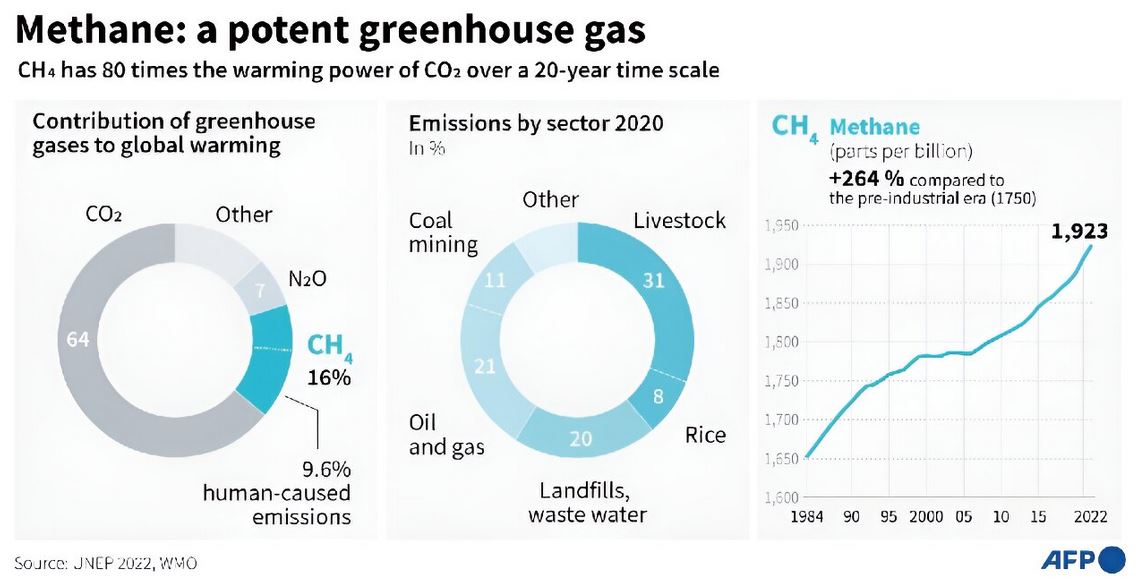
  • Methane’s Contribution in Climate Change

    Why in the News?

    The European Union introduced a new regulation in May 2024 requiring fossil fuel companies to routinely measure, report, and reduce methane emissions.

    About Methane Emissions:

    Details
    Nature Colorless, Odourless.

    Considered a short-lived climate pollutant due to its shorter atmospheric lifetime compared to CO2.

    Global Warming Potential (GWP) 80 times more potent than carbon dioxide over a short term.
    GWP100: 28 (over 100 years)Accounts for approximately 30% of global warming.
    Atmospheric Lifetime Breaks down in about 12 years; shorter-lived compared to CO2.
    Major Sources Cattle farming: 32% of human-caused methane emissions (includes manure and enteric fermentation)
    Landfills: Approximately 20%
    Wastewater treatment: Around 8%
    Rice cultivation: About 10%
    Industrial processes: Varied but significant
    Natural Non-Human Sources Includes wetlands and permafrost, which release methane through natural processes.
    Impact Compared to CO2 Traps 84 times as much heat as CO2 over a 20-year period.
    CO2 has a longer-term warming effect but is less potent.
    Key Initiatives Global Methane Pledge: Launched at UN COP26, signed by over 90 countries, led by the US and EU.

    India did not sign.


    PYQ:

    [2019] Consider the following:

    1. Carbon monoxide
    2. Methane
    3. Ozone
    4. Sulphur dioxide

    Which of the above are released into atmosphere due to the burning of crop/biomass residue?

    (a) 1 and 2 only

    (b) 2, 3 and 4 only

    (c) 1 and 4 only

    (d) 1, 2, 3 and 4

  • Gut molecule in C. Elegans Worms slows fat burning

    Why in the News?

    Researchers have discovered a mechanism in Caenorhabditis elegans (C. elegans) worms that explains why fat loss slows down during fasting.

    Fasting and Fat Metabolism

    • The brain is known to regulate fat production and breakdown in humans, other mammals, and model organisms like C. elegans.
    • In 2017, researchers identified FLP-7 hormone in the brain that triggers fat burning in the gut of C. elegans.
    • However, it was unclear how the gut communicates back to the brain, as C. elegans lacks sensory nerves in their intestines.
    • The study reveals that during fasting, the gut produces a form of insulin called INS-7, which signals the brain to halt fat burning.
    • Unlike traditional insulin, which activates insulin receptors, INS-7 blocks these receptors, leading to a cascade of events that stop the production of the fat-burning hormone FLP-7.

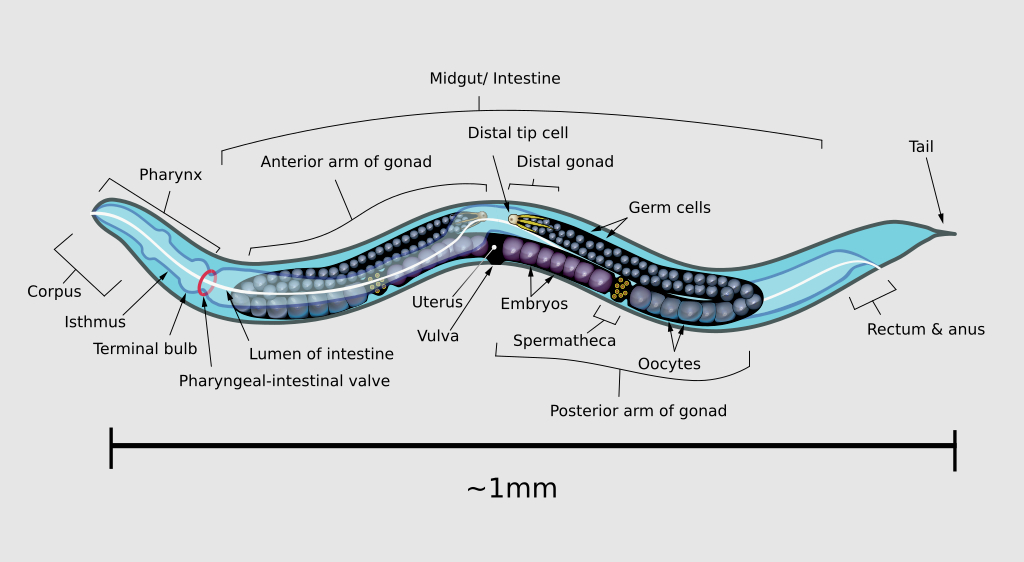
    About Caenorhabditis elegans (C. elegans):

    Details
    Overview A small, free-living nematode (roundworm) used as a model organism in biological research.
    Size Approximately 1 millimeter in length.
    Habitat Found in soil environments worldwide.
    Reproduction Primarily self-fertilizing hermaphrodites; males make up a small percentage and can mate with hermaphrodites.
    Genome First multicellular organism to have its genome fully sequenced; about 20,000 genes.
    Chromosomes Six chromosomes (five autosomes, one sex chromosome).
    Body Plan Approximately 1,000 cells in an adult hermaphrodite; transparent body allows for easy microscopic observation.
    Lifespan Around 2 to 3 weeks under laboratory conditions.
    Research Contributions Instrumental in discoveries related to apoptosis, RNA interference, gene regulation, and human diseases.


    PYQ:

    [2013] Improper handling and storage of cereal grains and oilseeds result in the production of toxins known as aflatoxins which are not generally destroyed by normal cooking process. Aflatoxins are produced by:

    (a) Bacteria

    (b) Protozoa

    (c) Moulds

    (d) Viruses

  • In news: Thanjavur Veena

    Why in the News?

    Thanjavur, Tamil Nadu, is renowned for making the Veena, the first musical instrument in India to receive a Geographical Indication (GI) tag.

    About Thanjavur Veena:

    Details
    Type Saraswati Veena (a classical stringed musical instrument)
    GI Tag Received in 2012.
    Crafting Materials Jackfruit wood, known for its resonance and tonal quality.
    Production Process – Wood is cut, carved, shaped, and assembled.
    – Takes 15-20 days to complete.
    – Involves three parts: resonator (kudam), neck (dandi), and tuning box.
    Other Types of Veena – Saraswati Veena (used in Carnatic classical music)
    – Rudra Veena and Vichitra Veena (used in Hindustani classical music)
    – Chitra Veena (used in Carnatic classical music)


    PYQ:

    [2021] With reference to India, the terms ‘Halbi, Ho and Kui’ pertain to​:

    (a) Dance forms of Northwest India​

    (b) Musical instruments​

    (c) Pre-historic cave paintings​

    (d) Tribal languages​

  • [pib] Measures taken by Govt. for LGBTQI+ Community

    Why in the News?

    The Department of Social Justice and Empowerment has invited inputs to ensure that policies and initiatives regarding the LGBTQI+ community are inclusive and effective.

    Who are the LGBTQ+?

    • It is an umbrella term used to refer to lesbian, gay, bisexual, transgender, queer and intersex.
    • LGBTQI+ people represent a subset of individuals among the broader category of sexual and gender diverse individuals.
    • Sexual orientation, gender identity and expression (SOGIE) is diverse and spans cultures across the world.

    Various policy initiatives for LGBTQI+ Community:

    Policy/Scheme Details
    Supreme Court Judgment on Section 377 (2018) Decriminalized consensual same-sex relations by ruling that Section 377 of the Indian Penal Code, which criminalized such acts, was unconstitutional.
    • Affirmed the right to privacy and equality, marking a historic victory for LGBTQI+ rights in India.
    Transgender Persons (Protection of Rights) Act (2019) • Grants legal recognition to transgender individuals, prohibits discrimination in education, employment, and healthcare, and mandates the establishment of a national and state-level transgender welfare board.
    • Ensures protection of transgender rights, and access to welfare benefits, and facilitates legal recognition and equality.
    National Portal for Transgender Persons (2020) • An online platform launched by the Ministry of Social Justice and Empowerment for applying for a transgender certificate and identity card.
    • Streamlines the legal recognition process, enabling transgender individuals to obtain official documentation more easily.
    SMILE Scheme (2021) • “Support for Marginalized Individuals for Livelihood and Enterprises” Central Sector scheme.
    • Provides financial assistance and support for the livelihood and enterprise development of marginalized individuals and beggars, including members of the LGBTQI+ community. 


    PYQ:

    [2023] Explain the constitutional perspectives of Gender Justice with the help of relevant Constitutional Provisions and case laws.

  • [31st August 2024] The Hindu Op-ed: The collapse of categories and post-individualism

    [31st August 2024] The Hindu Op-ed: The collapse of categories and post-individualism

    PYQ Relevance:
    Mains
    Q An athlete participates in Olympics for personal triumph and nation’s glory; victors are showered with cash incentives by various agencies, on their return. Discuss the merit of state sponsored talent hunt and its cultivation as against the rationale of a reward mechanism as encouragement. (UPSC IAS/2014)

    Prelims:
    Consider the following statements in respect of the 32nd Summer Olympics:​(UPSC IAS/2021)
    1. The official motto for this Olympics is ‘A New World’.​
    2. Sports climbing, Surfing, Skateboarding, Karate, and Baseball are included in this Olympics.​
    Which of the above statements is/are correct?​
    a) 1 only ​
    b) 2 only​
    c) Both 1 and 2 ​
    d) Neither 1 nor 2​

    Mentor comment: The concept of categories (like citizenship, crime, and gender) is increasingly seen as fluid, leading to conflicts and challenges in governance. Modernity promotes individualism, viewing traditional social norms and communities as outdated, which can lead to fragmentation in society.

    Historically, sex was seen as a clear binary (male and female), but emerging views suggest that gender is a personal choice, complicating traditional beliefs. Some argue that while biological sex is often viewed as fixed, the idea of gender as a choice is gaining traction, challenging long-held views. In today’s editorial the recent events, like controversies in sports regarding gender identity, illustrate the complexities and challenges of categorizing individuals based on sex and gender.

    Let’s learn!

    __

    Why in the News?

    The 2024 Paris Olympics has exposed the complexities in categorizing athletes based on sex and gender, with rigid weight classes contrasting with the fluidity and personal choice aspects of gender identity.

    •  This debate has become a source of significant social and political tension in the USA.
    What are the complexities and controversies surrounding categorization?

    Indian wrestler Vinesh Phogat was disqualified for being 100 grams overweight for her category, demonstrating the rigidity of weight categories.
    Algerian boxer Imane Khelif’s sex was questioned after winning gold. The International Boxing Association (IBA) had previously disqualified her for failing a confidential sex test, though the Paris Olympics organizers accepted her passport identifying her as a woman.

    Other fluidity of categories:

    The fluidity of categories has historically posed a governance challenge, leading to conflicts and wars over definitions of citizenship, crime, and legitimate politics.

    • Contemporary Issues: Current debates include the ethnic identity of Kamala Harris and the categorization of Scheduled Caste and Scheduled Tribes for social justice.
    • Modern Individualism: Modernity promotes individualism, viewing traditional communities as regressive, and emphasizing individuals as the primary units in politics and society.
    • Impact of Gender Perception: Historically, male and female categories were widely accepted across various fields.
      • The increasing view of sex as a matter of personal choice, influenced by gender perception, challenges traditional understandings and creates societal tensions.

    The Modern Discourse on Gender Identity:

    • Contentious Issues Debate: According to the Canadian Institutes of Health Research, sex is usually categorized as female or male, while gender exists along a continuum and can change over time. In short, sex is what one is, and gender is what one feels.
      • This debate raises questions about consent age, public school involvement, and healthcare facilitation, especially in the U.S. political landscape.
    • Transition and Liberalism’s Issue: Gender-affirming transitions challenge the old belief that feelings should adjust to biological facts. Now, the idea is that our bodies should change to match how we feel inside.
      • Transitioning doesn’t erase the idea of being male or female; instead, it aims to align the body with one of these identities.
      • The idea of letting people define their own identities creates a conflict within liberal values, which can lead to confusion and division in society.

    Conclusion:

    The collapse of rigid traditional categories, particularly in gender and identity, reflects broader societal changes and tensions between individualism and traditional norms.

More posts