On June 7, 1893, Mahatma Gandhi faced racial discrimination when he was forced off a first-class train compartment at “Pietermaritzburg railway station” in South Africa.
This event ignited the spirit of civil disobedience in him through his first non-violent protest in the “Natal Satyagraha”.
History of ‘Satyagraha’
The terms originated in a competition in the news-sheetIndian Opinionin South Africa in 1906.
Mr. Maganlal Gandhi, grandson of an uncle of Mahatma Gandhi, came up with the word “Sadagraha” and won the prize.
Subsequently, to make it clearer, Gandhi changed it to Satyagraha.
About the Pietermaritzburg Incident
Gandhi’s forced removal from a first-class train compartment in 1893 served as a catalyst for his commitment to resisting racial discrimination.
This event inspired him to pursue nonviolent resistance, planting the seeds for his philosophy of Satyagraha.
Its’ Aftermath
Formation of Natal Indian Congress and Advocacy
Establishment: Gandhi organized the Indian community and founded the Natal Indian Congress (NIC) in 1894 at Durban to advocate for their rights.
Campaigns: He initiated various campaigns, including petitions and boycotts, challenging discriminatory laws and policies in South Africa.
Natal Satyagraha
The passage of the Asiatic Registration Act in 1906 sparked the Natal Satyagraha, protesting against this discriminatory law.
Gandhi emerged as the leader of the movement, advocating for nonviolent resistance and civil disobedience.
Satyagraha emphasized confronting oppression with moral courage and integrity, without resorting to violence.
Gandhiji’s South Africa Settlements:
Phoenix Settlement in Natal: Founded in 1904, the Phoenix Settlement was established by Gandhi as a communal living space and centre for social and political activism. It served as a hub for his Satyagraha campaigns against racial discrimination and injustice in South Africa.
Tolstoy Farm outside Johannesburg: Gandhi established Tolstoy Farm in 1910 as a self-sustaining community inspired by the teachings of Russian writer Leo Tolstoy. It served as a refuge for Indian immigrants and a base for organizing resistance against discriminatory laws.
Characteristics and Impact of Natal Satyagraha
Mass Participation: The movement garnered widespread support from the Indian community, involving thousands in nonviolent protests.
He mobilized support for the welfare of Indians and established the Transvaal British Indian Association in Johannesburg in 1903.
Arrests and Imprisonment: Gandhi and many others faced arrests and imprisonment for their acts of civil disobedience. He faced imprisonment multiple times for his nonviolent protests, including the Volkrust Satyagraha in 1913.
Attracted International attention: The Satyagraha attracted international attention and led to negotiations, culminating in the Indian Relief Act in 1914.
PYQ:
[2019] With reference to the British colonial rule in India, consider the following statements:
Mahatma Gandhi was instrumental in the abolition of the system of ‘indentured labour’.
In Lord Chelmsford’s ‘War Conference’, Mahatma Gandhi did not support the resolution on recruiting Indians for World War.
Consequent upon the breaking of Salt Law by Indian people, the Indian National Congress was declared illegal by the colonial rulers.
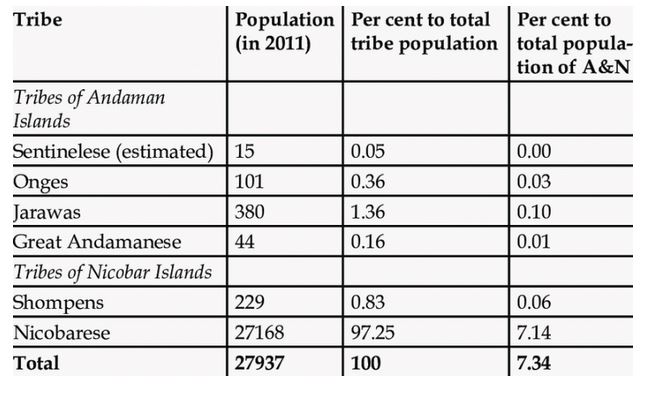
The king and queen of the “Onge tribe” welcomed a baby boy in the Andaman Islands, marking a significant moment for the tribe. With the arrival of the newborn, the tribe’s total population now stands at 136, as confirmed by an official source.
About Onge Tribe
The Onge are PVTGs (Particularly Vulnerable Tribal Groups) native to the Andaman Islands.
They have traditionally been hunter-gatherers and fishers, while also practising cultivation.
Their population significantly decreased after colonization, from 672 in 1901 to around 100.
They practice a form of animism, with ancestor worship being significant.
They traditionally make decisions through group consensus.
Today, the surviving members are confined to two reserve camps on Little Andaman: Dugong Creek in the northeast, and South Bay.
Genetically, the Onge are distantly related to East Asian populations and show affinities with Southeast Asian Negrito ethnic groups.
Other Indigenous People of Andaman and Nicobar
1. Great Andamanese Tribe
One of the largest tribes, the Great Andamanese tribe is currently settled on the Strait Island under the Andaman & Nicobar Administration. Despite their historic bravery, diseases and other challenges have reduced their population to 43 individuals as of the 2001 census.
Government initiatives: The administration provides housing, coconut plantations, and rationing to support their livelihoods and well-being.
2. Jarwas Tribe
Jarwas inhabit the Western coast of the Middle and South Andaman Islands. They are known to be hostile but have shown receptivity to friendly contact expeditions since 1974. Their present numbers are estimated at between 250–400 individuals.
Jarwas are nomadic hunters and gatherers, using traditional methods like bows and arrows for hunting and fishing.
3. Sentinelese Tribe
Sentinelese reside on the small North Sentinel Island, maintaining a wary stance towards outsiders.
Despite initial scepticism, contact expeditions have made progress since 1991, albeit with caution.
Who are the Particularly Vulnerable Tribal Groups (PVTGs)?
These groups are among the most vulnerable sections of our society as they are few in number, and have not attained any significant level of social and economic development.
They generally inhabit remote localities having poor infrastructure and administrative support.
75 such groups have been identified and categorized as Particularly Vulnerable Tribal Groups (PVTGs).
Origin of the concept
The Dhebar Commission (1960-1961) stated that within Scheduled Tribes there existed an inequality in the rate of development.
During the fourth Five Year Plan (1969-74) a sub-category was created within Scheduled Tribes to identify groups that were considered to be at a lower level of development.
This sub-category was named “Primitive tribal group”.
In 2006 the government of India proposed to renamePVTGs.
Features of PVTGs
The features of such a group include a:
Pre-agricultural system of existence
The practice of hunting and gathering
Zero or negative population growth
Extremely low level of literacy in comparison with other tribal groups
Groups that satisfied any one of the criteria were considered PTG.
PYQ:
[2019] Consider the following statements about Particularly Vulnerable Tribal Groups (PVTGs) in India:
PVTGs reside in 18 States and one Union Territory.
A stagnant or declining population is one of the criteria for determining PVTG status.
There are 95 PVTGs officially notified in the country so far.
Irular and Konda Reddi tribes are included in the list of PVTGs.
The Commerce Department is gearing up for the upcoming negotiations on the ASEAN-India FTA review. The ASEAN-India FTA, while beneficial, has led to a widening trade deficit for India.
ASEAN-India Trade in Goods Agreement (AITGA):
The AITGA, signed in 2009 and effective in 2010, aims to reduce tariffs and non-tariff barriers on goods between ASEAN and India, covering sectors like agriculture, textiles, electronics, and machinery.
AITGA is an important component of the ASEAN-India Free Trade Area (AIFTA), which aims to create a single market for goods and services among ASEAN and India.
Major Concern: Growing Trade Deficit
Since the ASEAN-India Trade in Goods Agreement (AITGA), India has been facing a growing trade deficit.
The trade deficit means India is importing more than it is exporting. In 2022-23, India imported goods worth US$87.57 billion, while it exported US$44 billion.
In 2022-23, ASEAN made up 11.3% of India’s global trade. This deficit has grown a lot this year.
Because of this, there’s a need to urgently review and change the current trade setup between ASEAN and India.
Key Areas of Negotiation
Rules of Origin (ROO): Modifications in ROO are planned to increase market access for Indian products and prevent the rerouting of goods, particularly from China, through ASEAN countries.
Trade Remedies: A new chapter on trade remedies will aim to protect domestic industries from unfair trade practices and import surges.
Exclusion of New Areas: The agreement will not expand to cover additional areas like labour, environment, MSMEs, or gender to avoid complicating the pact.
About ASEAN
Details
Establishment
Established in 1967 with the signing of the ASEAN Declaration (Bangkok Declaration).
Chairmanship
Rotates annually among member states based on alphabetical order of their names.
Objective
To promote political and economic cooperation and regional stability among member countries.
Members
Brunei, Cambodia, Indonesia, Laos, Malaysia, Myanmar, Philippines, Singapore, Thailand, Vietnam.
East Timor (Timor-Leste) applied for membership in 2011 but is not yet a member.
Objectives
Accelerate economic growth, social progress, and cultural development.
Promote regional peace and stability based on the rule of law and the UN charter.
Establish an ASEAN community comprising three pillars: ASEAN security, economic, and socio-cultural.
ASEAN Charter
Launched in 2008 to create a legal entity and establish a single free-trade area for the region.
ASEAN Intergovernmental Commission on Human Rights (AICHR) was established in 2009.
Adopted the ASEAN Human Rights Declaration in 2012.
ASEAN Plus Six
ASEAN Plus Three initiated integration efforts with East Asian countries (China, Japan, and South Korea).
Expanded to the East Asia Summit (EAS) including ASEAN Plus Three, India, Australia, and New Zealand.
India and ASEAN
A key pillar of India’s foreign policy and the foundation of Act East Policy.
India has a separate Mission to ASEAN and the East Asia Summit (EAS) in Jakarta.
ASEAN is India’s fourth-largest trading partner.
Delhi Declaration
Identifies Cooperation in the Maritime Domain as a key area of cooperation under the ASEAN-India strategic partnership.
Delhi Dialogue
Annual Track 1.5 event for discussing politico-security and economic issues between ASEAN and India.
ASEAN-India Centre (AIC)
Undertakes policy research, advocacy, and networking activities with organizations and think tanks in India and ASEAN.
Strategic Cooperation
India places ASEAN at the centre of its Indo-Pacific vision of Security and Growth for All in the Region (SAGAR).
PYQ:
[2018] Consider the following countries:
Australia
Canada
China
India
Japan
USA
Which of the above are among the ‘free-trade partners’ of ASEAN?
Narendra Modi will take the oath as the Prime Minister for a third consecutive term, following an invitation from President Droupadi Murmu to form the government.
Constitutional Provisions for PM Post
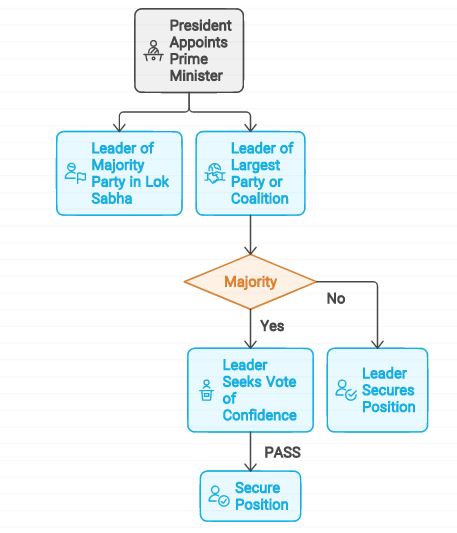
Article 75: It states that the President shall appoint the Prime Minister, who is usually the leader of the majority party in the Lok Sabha (House of the People).
Article 74: The Prime Minister is the head of the Council of Ministers and provides advice to the President on matters of governance.
Appointment of the Prime Minister
The appointment of the Prime Minister of India involves specific constitutional provisions supervised by the President. Key features related to the appointment of the Prime Minister as mentioned in the Constitution of India include:
The Prime Minister is appointed permanently by the President of India.
The President invites the leader of the majority party in the Lok Sabha to form the government.
If no political party holds a majority, the President can use discretionary powers to appoint the Prime Minister.
The President may invite the leader of the largest party or coalition to seek a vote of confidence from the Lok Sabha, with a tenure of about a month to secure this vote.
Position of Prime Minister in India’s Democratic set-up
Head of Government: The Prime Minister is the chief executive authority in the country, responsible for leading the government and overseeing the functioning of various ministries and departments.
Leader of the Council of Ministers: The Prime Minister is the leader of the Council of Ministers, which comprises cabinet ministers, ministers of state, and deputy ministers. They coordinate the activities of the government and guide policy decisions.
Advisor to the President: While the President of India is the head of state, the Prime Minister acts as the president’s chief advisor and assists in exercising executive powers.
Principal Link between President and Parliament: The Prime Minister communicates the decisions of the Council of Ministers to the President and represents the government in Parliament.
Symbol of Unity and Stability: The Prime Minister symbolizes the unity and stability of the country’s governance. They provide leadership and direction to the nation, fostering a sense of unity and purpose among the citizens.
International Representation: The Prime Minister represents India on the international stage and plays a significant role in foreign policy formulation. They engage in diplomatic relations, attend international summits, and represent India’s interests globally.
Crisis Management: During times of crisis, such as natural disasters, security threats, or economic challenges, the Prime Minister takes charge of crisis management efforts and leads the government’s response to address the situation.
Powers and Functions of the Prime Minister
The Indian Constitution outlines the powers and functions of the Prime Minister, who is appointed by the President and holds significant authority over the President, Council of Ministers, and parliamentary houses. These powers include:
Function Relative to the President: The Prime Minister serves as the main channel of communication between the President and the Council of Ministers, overseeing the administration of Union affairs and appointing key administrative officials.
Functions Relative to the Council of Ministers: The Prime Minister advises on the nomination and selection of Council Ministers, can allocate and shuffle ministerial departments, and has the authority to demand resignations from ministers. The resignation of the Prime Minister leads to the dissolution of the Council of Ministers.
Parliamentary Functions: The Prime Minister leads the lower parliamentary house (Lok Sabha), can suggest the dissolution of the Lok Sabha, and is responsible for announcing and introducing government policies in parliamentary sessions.
Miscellaneous Functions: The Prime Minister holds additional roles such as chairman of the National Water Resource Council, NITI Aayog, National Integration Council, Inter-State Council, and NDA, among others.
Appointment, Tenure, and Removal
Eligibility: According to Articles 84 and 75 of the Constitution of India, the Prime Minister must:
Be a citizen of India.
Be a member of the Lok Sabha or the Rajya Sabha, or become a member within six months of selection.
Be above 25 years of age if a Lok Sabha member, or above 30 years if a Rajya Sabha member.
Not hold any office of profit under the government of India or any state government.
Oaths of Office and Secrecy:
Before entering office, the Prime Minister must take an oath of office and secrecy in the presence of the President of India, as per the Third Schedule of the Constitution.
Tenure and Removal from Office:
The Prime Minister serves at the “pleasure of the President,” but must maintain the confidence of the Lok Sabha.
The term can end if a simple majority of Lok Sabha members no longer have confidence in the Prime Minister, known as a vote of no-confidence.
A Prime Minister can also resign from office. Morarji Desai was the first to do so while in office.
Additionally, ceasing to meet the qualifications under the Representation of the People Act, 1951, can lead to removal from office.
PYQ:
[2015] Consider the following statements:
The Executive Power of the union of India is vested in the Prime Minister.
The Prime Minister is the ex officio Chairman of the Civil Services Board.
Which of the statements given above is/are correct?
(a) 1 only
(b) 2 only
(c) Both 1 and 2
(d) Neither 1 nor 2
[2019] Consider the following statements:
The 44th Amendment to the Constitution of India introduced an Article placing the election of the Prime Minister beyond judicial review.
The Supreme Court of India struck down the 99th Amendment to the Constitution of India as being violative of the independence of judiciary.
Which of the statements given above is/are correct?
Mains: Q) From the resolution of contentious issues regarding the distribution of legislative powers by the courts, the ‘Principle of Federal Supremacy’ and ‘Harmonious Construction’ have emerged. Explain. (UPSC CSE 2019)
Q) Explain the rationale behind the Goods and Services Tax (Compensation to States) Act of 2017. How has COVID-19 impacted the GST compensation fund and created new federal tensions? (UPSC CSE 2020)
Prelims:
Q) Which one of the following in Indian polity is an essential feature that indicates that it is federal in character? (UPSC CSE 2021) (a) The independence of the judiciary is safeguarded. (b) The Union Legislature has elected representatives from constituent units. (c) The Union Cabinet can have elected representatives from regional parties. (d) The Fundamental Rights are enforceable by Courts of Law.
Note4Students:
Prelims: Co-perative federalism; NITI Aayog; GST System;
Mains: Federal Issues; Governance Issues; Regional Disparities;
Mentor comment: India is a vast and diverse country with different regions, cultures, and languages. To govern such a complex society, the Indian Constitution established a federal system of governance, dividing power between the central government and the states. This system is known as a quasi-federal system because it contains elements of both a federation and a union. Despite its importance, Indian federalism faces several challenges regional differences, centralized power, Economic insecurities for states, and communication barriers. These challenges can lead to issues like conflicts over resource allocation and decision-making.
There is a need for the even-handed treatment of all the States by the Centre and also less friction among the rich and poor States when proportionately more resources are transferred to poor States to keep rising inequality in check. The issue of governance, both at the Centre and in the States, needs to be flagged. It determines investment productivity and the pace of development. Corruption and cronyism lead to resources being wasted and a loss of social welfare.
Let’s learn.
–
Why in the News?
The results of the 2024 general election in India have led to a surprise, with regional parties performing well and set to share space in both the ruling and opposition benches in Parliament.
This development is expected to strengthen federalism, which has been fraying due to contentious Centre-State relations and the dominant Centre’s attempts to impose its will on the states.
The recent challenges faced by regional states:
Democratic Issues: The Opposition-ruled States have been complaining about stepmotherly treatment by the Centre. Protests have been held in Delhi and the State capitals.
There is a huge diversity among the States. For example, Assam is unlike Gujarat and Himachal Pradesh is very different from Tamil Nadu. A common approach is not conducive to the progress of such diverse States.
They need greater autonomy to address their issues in their unique ways.
Fiscal-Federal Issues:Kerala has complained about the inadequate transfer of resources, Karnataka about drought relief, and West Bengal about funds for the Mahatma Gandhi National Rural Employment Guarantee Scheme (MGNREGS).
The Supreme Court, expressing its helplessness, recently said that Centre-State issues need to be sorted out immediately.
About Co-operative Federalism: The Constitution of India does not explicitly contain the phrase ‘cooperative federalism,’ but the functioning of the governance and evolution of our Constitution implicitly resulted in building ‘cooperative federalism.’
Significance of Cooperative Federalism:
Need for Robust Institutions and Mechanisms:
Revenue has to be raised through taxes, non-tax sources, and borrowings. The Centre has been given a predominant role in raising resources due to its efficiency in collecting taxes centrally.
Among the major taxes, personal income tax (PIT), corporation tax, customs duty, and excise duty are collected by the Centre. So, the Centre controls most of the resources, and they have to be devolved to the States to enable them to fulfill their responsibilities.
Need for Promoting Intergovernmental Relations:
The Centre-State relations in India are plagued by inter-state tussles and resource disparities. The Finance Commission’s efforts to devolve funds proportionally to poorer States have been unsuccessful, leading to resentment from richer States.
The Centre’s allocation of resources, including expenditures and schemes, can be used to play politics and favor certain States, undermining Federalism and Autonomy.
Initiatives taken by the Government:
NITI Aayog:
NITI Aayog acts as the quintessential platform for the Government of India by bringing States together as ‘Team India’ to work towards the national development agenda.
NITI has also established models and programs for the development of infrastructure and to reignite and establish private-public partnerships, such as the Centre-state partnership model Development Support Services to States and Union Territories (DSSS) and the Sustainable Action for Transforming Human Capital (SATH) program.
Goods and Service Tax (GST) System:
The 101st Amendment to the Constitution, which introduced the GST regime, is a watershed moment in the evolution of cooperative Federalism as enshrined in the Constitution of India.
Before the implementation of GST, the Indian taxation system was a medley of Central, State, and Local area levies.
Judicial Contribution for Co-operative Federalism:
In the case of State of Rajasthan v Union of India (1977) which some state governments brought against the Janata government’s dissolution of state legislatures, the Supreme Court upheld its right to strike down a proclamation imposing the President’s rule if the action was mala fide or irrelevant considerations.
It was held that the ‘maintenance of democratic norms’ could not be regarded as an irrelevant ground for the exercise of the power of proclamation. Since then, the Indian model of federalism has been predominantly ‘cooperative’ as laid down by the Supreme Court in 1977.
Recommendations by Sarkaria Commission on Federalism (1988):
* The Indian government constituted the Sarkaria Commission in 1983 mainly created to explore the relationship between the states and the central government. * The Sarkaria Commission did not favor structural changes and regarded the existing constitutional principles and arrangements relating to the instructions as sound. However, it emphasized the need for changes in the functional or operational aspects. * It discusses the relations between the states and the center by the 8th to 12th Finance Commissions to maintain the dependence on several funds from the center.
Way Forward:
The Sixteenth Finance Commission has begun work, aiming to strengthen federalism and address the fraying of Centre-State relations.
It should ensure even-handed treatment of all states, proportionate resource transfers to poorer states, and reduce Centre domination over states.
To reduce the domination of the Centre over the States, the devolution of resources from the Centre to the States could be raised substantially from its current level of 41%.
For example, the Public Distribution System or MGNREGS are joint scheme, but the Centre asserts that it be given credit. It has penalized States that have not done so.
Q The public health system has limitations in providing universal health coverage. Do you think that the private sector can help in bridging the gap? What other viable alternatives do you suggest? (UPSC IAS/2015)
Q In order to enhance the prospects of social development, sound and adequate health care policies are needed particularly in the fields of geriatric and maternal health care. Discuss. (UPSC IAS/2020)
Mentors comment: In the last week of May, a tragic fire at a private neonatal care nursing home in New Delhi shocked everyone. Political parties started blaming each other, and the media exaggerated by incorrectly claiming that many nursing homes in Delhi operate without a license. Despite the intense media coverage, the incident has been largely forgotten, leaving the grieving parents behind. Instead of focusing on who to blame, it’s important to recognize that such tragedies are usually the result of systemic failures—in this case, the failure of health-care regulations.
Let’s learn–
Why in the news?
Health regulations are crucial, but their implementation in India needs to be thoughtful and carefully balanced.
Regulation and standards in the Indian health care system
Excessive and Complex Regulations: Some states have over 50 approvals required under multiple regulations for each healthcare facility, creating a bureaucratic burden. Despite the complexity, there is a perception among officials that the private health sector is under-regulated.
Unrealistic Standards: Many healthcare quality standards set by the government, such as those in the Clinical Establishments (Registration and Regulation) Act, 2010, and the Indian Public Health Standards (IPHS), are considered unrealistic and difficult to implement. Only a small percentage of government primary healthcare facilities meet these standards despite their aspirational goals.
Mixed health-care system in India
Diverse Healthcare Providers: India’s healthcare system includes both government and private sector providers, ranging from single-doctor clinics and small nursing homes to large corporate hospitals, each serving different population segments.
Dominance of Private Sector: The private sector delivers approximately 70% of outpatient services and 50% of inpatient services, indicating a significant reliance on private facilities for health care by the Indian population.
Regulatory and Quality Challenges: There are disparities in regulation enforcement and quality standards between the private and government sectors, with issues such as approval delays, cost of compliance, and ensuring consistent quality care across diverse facilities.
Challenges related to mixed health-care system
Regulatory Disparities: Uneven enforcement of regulations between private and government health facilities. Overzealous regulation of private facilities while government facilities face fewer consequences for similar infractions.
Approval Delays: Sluggish approval processes for private facilities, causing operational delays and financial strain. Long waiting periods for renewal applications, even when submitted well in advance.
Cost and Accessibility: High cost of services in large corporate hospitals compared to smaller clinics and nursing homes. Limited accessibility of government facilities for certain populations, despite being free or low-cost.
Differential Standards: Impractical to hold small clinics and nursing homes to the same standards as large hospitals. Need for a tiered approach to regulation, with essential and desirable standards based on facility type.
Financial Burden: High cost of compliance with regulations for smaller facilities, potentially making health services unaffordable for patients. The a need for government subsidies or funding to help smaller providers meet regulatory standards without increasing costs for patients.
Stakeholder Involvement: Insufficient involvement of health-care providers, facility owners, and community members in the formulation of regulations. Lack of representation from various types of facilities in regulatory processes.
Public Perception and Trust: Political rhetoric and sensational media coverage undermining trust in health-care providers. Potential for increased violence against health-care providers due to public mistrust.
Infrastructure and Safety: Inconsistent emphasis on essential safety measures like fire safety across facilities. Need for equitable implementation of safety standards in all healthcare buildings.
Affordable care is one need
Role of Small Providers: Single doctor clinics and small nursing homes are crucial for providing initial access and health services, particularly for middle-income and low-income populations. These smaller providers deliver a significant portion of health services at a lower cost compared to large corporate hospitals.
Supportive Regulations: There is a need for regulations that support small providers to keep healthcare costs low and affordable. Guidelines should be practical and implementable, harmonizing multiple regulations and simplifying the application process with timely approval.
Differential Approach: Regulations should recognize the different capabilities of various health facilities. Smaller clinics and nursing homes should not be held to the same standards as large hospitals to avoid escalating costs that could be transferred to patients. Essential and desirable regulatory points should be established, with regular self-assessments and inspections to ensure compliance.
Government subsidies and funding should be considered to help smaller facilities adhere to necessary regulations without increasing costs for patients.
Why do we need to Focus on the primary caregivers?
Accessibility and Affordability: Single-doctor clinics and small nursing homes provide essential health services at a lower cost, making health care more accessible and affordable for middle-income and low-income populations.
Primary Care Foundation: Promoting primary care helps manage health issues early, reducing the burden on secondary and tertiary care facilities and supporting the goals of the National Health Policy, 2017, for people-centric, accessible, and affordable health services.
Sustainable Support: Simplified, fair, and collaborative regulatory processes, along with government subsidies, can help primary-care providers operate effectively, ensuring quality and safety without escalating costs for patients.
Conclusion: Primary health care is crucial for achieving the SDG goal of universal health coverage by providing accessible, affordable, and quality health services, thus reducing the burden on higher-level care facilities and promoting overall health equity.
A parliamentary committee report in Canada has claimed India as the second-biggest foreign threat to the country’s democracy.
About the Khalistan Movement
Origins and Objectives: The Khalistan Movement is a separatist movement seeking to create an independent Sikh state called Khalistan in the Punjab region of India.
Activities in Canada: Canada has a significant Sikh population, and some members support the Khalistan Movement. This has led to tensions between Canadian Sikhs and the Indian government.
Notable Incident: The murder of Hardeep Singh Nijjar, a pro-Khalistan ideologue, in Surrey, British Columbia, on June 18, 2023, intensified these tensions.
Historical Background
Canada and India established diplomatic relations in 1947. The relationship was enhanced by personal ties between Indian Prime Minister Jawaharlal Nehru and Canadian Prime Ministers Louis St. Laurent and Lester B. Pearson in the 1940s and 1960s.
Canada provided significant aid to India under the “Colombo Plan”, including food aid, project financing, and technical assistance. India has been one of the largest recipients of Canadian bilateral aid, amounting to over $3.8 billion CAD.
Recent Developments
India and Canada have seen significant growth in bilateral trade, reaching $8.16 billion in 2023.
Canada is home to over 1.2 million people of Indian origin, who are well-integrated into the mainstream and active in politics.
The two countries have a strategic partnership underpinned by shared values of democracy and pluralism, with regular high-level interactions and long-standing people-to-people ties.
India and Canada have signed several agreements, including the Air Services Agreement, Extradition Treaty, Mutual Legal Assistance Treaty, and Nuclear Cooperation Agreement.
Challenges
Interference Allegations: Canada claims that India has expanded its interference efforts beyond countering pro-Khalistani activities to include targeting Canadian politicians, ethnic media, and Indo-Canadian communities.
Mutual Suspicion: The Canadian Security Intelligence Service has also accused India of being involved in the election process in Canada, a claim denied by India.
Ethnic and Political Dynamics: The presence of a significant pro-Khalistan population in Canada complicates bilateral relations, with domestic politics in both countries influencing diplomatic interactions.
India’s Stand
Denial of Allegations: The Indian government has consistently denied allegations of interference in Canadian affairs and the murder of Hardeep Singh Nijjar.
Counter-Terrorism: India views the Khalistan Movement as a terrorist threat and seeks to counter its activities both domestically and internationally.
Diplomatic Responses: In response to accusations from Canada, India has taken measures such as suspending visa services and issuing official statements to refute claims of interference.
Way forward:
Regular Consultations: Establish a framework for regular high-level meetings between Indian and Canadian officials to address mutual concerns and prevent misunderstandings.
Bilateral Committees: Form joint committees to handle specific issues such as security concerns, immigration, and trade disputes.
Mains question for practice:
Q Discuss the origins and objectives of the Khalistan Movement and analyse the current challenges it poses to bilateral relations between India and Canada. 15M
SEBI expands promoter definition for IPO-bound companies, including founders holding 10% or more, and their immediate relatives.
According to current SEBI regulations, a promoter is someone who controls the affairs of the company or can appoint the majority of directors or is named as such in an offer document.
What is an IPO?
An IPO is an initial public offering, in which shares of a private company are made available to the public for the first time.
An IPO allows a company to raise equity capital from public investors.
The Dutch are credited with conducting the first modern IPO by offering shares of the Dutch East India Company to the general public.
What Norms Say
Expanded Definition of Promoter: The definition of a promoter has been expanded for companies preparing for an IPO. A promoter is someone who controls the company’s affairs, can appoint the majority of directors, or is named as such in an offer document.
Previous Criteria: Founders holding 25% were previously deemed promoters due to their negative control and power to block special resolutions.
New Criteria: Founders holding 10% or more must classify themselves as promoters if they are key managerial personnel (KMP) or directors in the company. Immediate relatives on the company board or KMP will also be classified as promoters, even if they hold just 1%.
About Declassification and 31A of LODR (Listing Obligations and Disclosure Requirements) Regulations
Declassification Difficulty: The current regulations do not provide an easy path for declassifying a promoter as a public shareholder.
Rule 31A of LODR Regulations: To be declassified, a person must not hold more than 10% in the listed company along with their relatives.
Restrictive Nature: This restrictive rule makes declassification almost impossible for immediate relatives who are classified as promoters by virtue of their relationship, especially problematic for married daughters with no active role in the company.
Issue Over Subjective Definition
Subjective Nature of Promoter Definition: The definition of a promoter has been historically subjective, leading to varying interpretations and legal disputes.
Court Rulings: There have been several court rulings addressing the subjective nature of who qualifies as a promoter, highlighting inconsistencies and complexities.
Complex Criteria: Accounting standards and regulatory criteria for determining control and influence in a company are often complicated and can be interpreted in multiple ways.
Need for Objectivity: Experts argue for a more objective test to ascertain control and promoter status, which would provide clearer guidelines and reduce disputes.
Example: Vinod Kothari, Director at Vinod Kothari Consultants, points out that moving towards an objective test is a positive step, given the current complexities in determining control.
Way forward:
Standardised Guidelines: Develop clear and standardised guidelines for identifying promoters, reducing subjectivity and ensuring consistency.
Detailed Disclosures: Mandate detailed disclosures from companies about their promoters, including shareholding patterns, roles, and influence in decision-making.
Mains PYQ:
Q In the light of Satyam Scandal (2009), discuss the changes brought in corporate governance to ensure transparency and accountability. (UPSC IAS/2015)
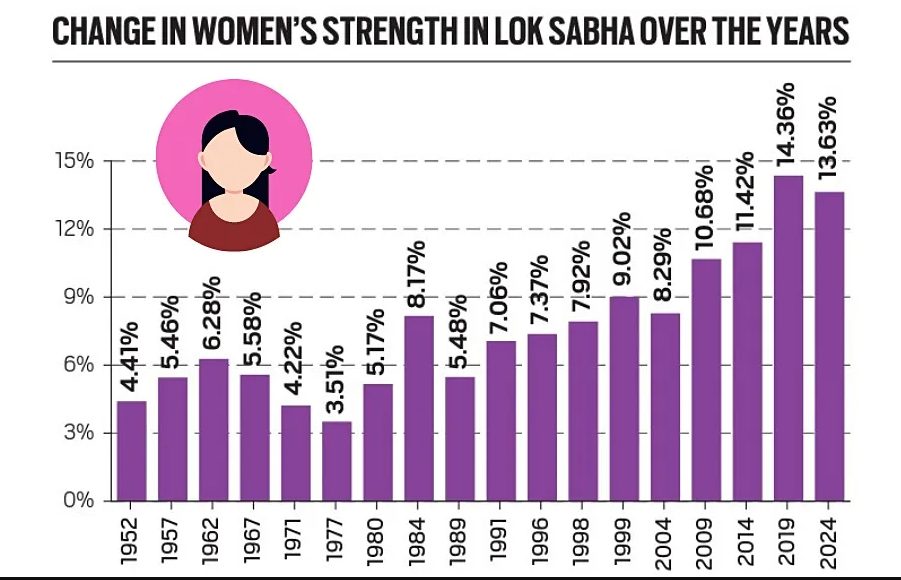
Over time, there has been a general inclination towards enhancing women’s representation in the Lok Sabha. However, the advancement has been gradual and inconsistent.
Women in Lok Sabha 2024 (PRS data):
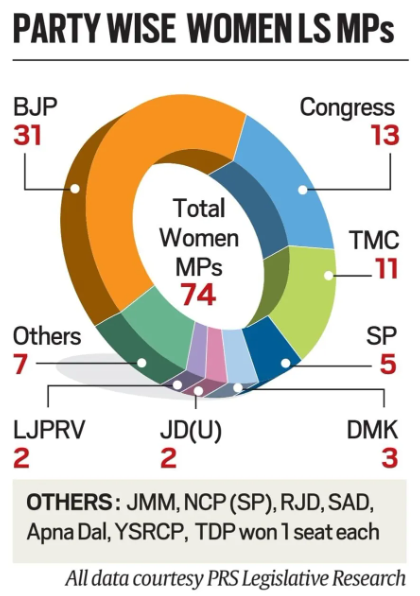
Number of Women MPs: India has elected 74 women MPs to the Lok Sabha in 2024, which is four fewer than in 2019.
Percentage of Representation: Women MPs make up just 13.63% of the elected strength of the Lower House.
Party-wise Distribution: Women MPs come from 14 different parties, with the BJP leading with 31 women MPs, followed by the Congress with 13.
Different Demographic Observations:
Trend in Representation: Over the years, there has been a slow and non-linear increase in women’s representation in the Lok Sabha.
Historical Trends: Women’s representation started at 4.41% in 1952 and peaked at 14.36% in 2019.
New Faces: Out of the 74 women MPs elected, 43 are first-time MPs, indicating a higher percentage of newcomers compared to the overall House.
Younger Representation: The average age of women MPs is 50 years, younger than the overall House age of 56 years.
Comparison with Other Countries:
International Comparison: India lags behind several countries in terms of women’s representation, with countries like South Africa, the UK, and the US having higher percentages of women MPs.
Global Rankings: Women make up 46% of MPs in South Africa, 35% in the UK, and 29% in the US.
What Needs to Be Done?
Increase in Representation: There is a need for greater efforts to increase women’s representation in the Lok Sabha to achieve gender parity.
Policy Measures: Implementation of policy measures such as reserving seats for women in the Lok Sabha could help improve representation.
Encouraging Participation: Encouraging more women to enter politics and providing support for their political careers can contribute to greater representation.
Education and Awareness: Promoting education and awareness about the importance of gender equality in politics is essential for fostering a more inclusive political environment.
Mains PYQ:
Q What are the continued challenges for Women in India against time and space? (UPSC IAS/2019)
WHO reports 33,000 new brain cancer cases yearly in India, highlighting widespread suffering.
What is brain cancer?
Brain cancer, also known as primary brain cancer, is an overgrowth of cells in the brain that form masses called brain tumours.
It is different from secondary brain cancer, which occurs when cancer that began in another part of the body spreads to the brain
The World Health Organization (WHO) Report:
Incidence of Brain Cancer: WHO reports approximately 33,000 new incidences of brain cancer annually in India.
Global Cancer Observatory 2020: Brain cancer ranks as the 19th most common type of cancer worldwide.
Use of Data Analytical Tools in Diagnosis:
Potential of Data Analytics: Utilization of data analytical tools like Next-Generation Sequencing (NGS) can simplify the diagnosis process.
Advantages: Data analysis can provide real-time results with precision, reducing the need for invasive procedures like surgeries.
Liquid Biopsy: The introduction of techniques like liquid biopsy offers a less invasive alternative to surgery, enhancing patient comfort.
Impact on Risks, Discomfort, and Pain:
Reduction of Risks: Adoption of data analytics in diagnosis can lower the risks associated with invasive procedures, ranging from short-term paralysis to death.
Enhanced Patient Experience: By offering less invasive alternatives, such as liquid biopsy, patients and their families can experience reduced discomfort and pain during the diagnostic process.
Improved Precision: Data analytics enable clinicians to detect genetic patterns indicative of cancer cells, facilitating early detection and treatment planning, ultimately leading to better outcomes for patients.
Way forward:
Emphasize the transformative potential of data analytics in oncology research, particularly in simplifying diagnosis and reducing risks and discomfort for patients.
Highlight the importance of leveraging innovative technologies like NGS to unlock new possibilities in cancer research and treatment.
Mains PYQ:
Q What are the research and developmental achievements in applied biotechnology? How will these achievements help to uplift the poorer sections of the society? (UPSC IAS/2021)
Pakistani PM is on a formal visit to China to attend the formal announcement of the second phase of the China-Pakistan Economic Corridor (CPEC-II).
About CPEC-II
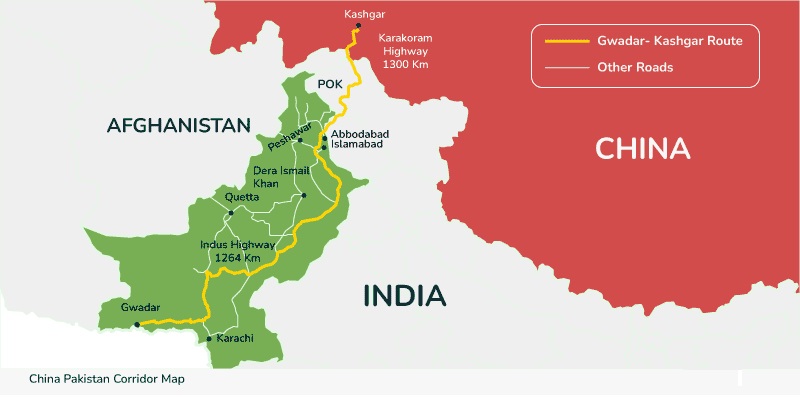
CPEC’s next phase shifts focus from infrastructure and energy to sectors like agriculture, Pakistan Railways’ Main Line-I (ML-1) upgrade, and realignment of the Karakorum Highway.
CPEC was initiated in 2015 as part of President Xi Jinping’s Belt and Road Initiative (BRI).
Why CPEC-II?
It will provide Pakistan with a strategic advantage in terms of trade and commerce
CPEC-II includes significant investments in the energy sector, which will help overcome Pakistan’s chronic power shortages and ensure a stable supply of electricity
Provides a shortcut for China’s access to the Persian Gulf to secure oil imports, and
Stimulate industrial and economic activity in Pakistan.
Belt and Road Initiative (BRI)
The Belt and Road Initiative, formerly known as One Belt One Road, is a global infrastructure development strategy adopted by the Chinese government in 2013.
It will invest in nearly 70 countries and international organizations.
Infrastructure projects include ports, railways, highways, power stations, aviation and telecommunications.
“Belt” refers to the overland routes for road and rail transportation, called “the Silk Road Economic Belt”; whereas “road” refers to the sea routes or the 21st Century Maritime Silk Road.
The project has a target completion date of 2049 which coincides with the 100th anniversary of the People’s Republic of China.
India’s Concerns
Sovereignty Concerns: India expresses reservations as CPEC traverses through Pakistan-occupied Kashmir (PoK), challenging territorial sovereignty and potentially bolstering Pakistan’s claim over the region.
Geostrategic Implications: The expansion of Gwadar port under CPEC extends China’s “String of Pearls” around India, prompting concerns over regional power dynamics.
CPEC’s Progress so Far
Mixed Outcomes: The initial phase of CPEC primarily addressed infrastructure, energy, and port development projects, with progress showing variations.
Project Status: While several power projects have been completed, significant delays and challenges persist in transport-related projects and Special Economic Zones (SEZs).
Challenges and Roadblocks
Slow pace: Gwadar, despite being the epicentre of multibillion-dollar projects, lacks basic necessities like reliable access to water and electricity, let alone other facilities.
Baloch freedom movement: This is another impediment to the stalled project where Chinese officials are targeted and killed.
Consistent security threat: China is also seeking to deploy its Army in the CPEC projects, to which Pakistan has contested.
PYQ:
[2018] The China-Pakistan Economic Corridor (CPEC) is viewed as a cardinal subset of China’s larger ‘One Belt One Road’ initiative. Give a brief description of CPEC and enumerate the reasons why India has distanced itself from the same. (150 Words, 10 Marks)
[2016] ‘Belt and Road Initiative’ is sometimes mentioned in the news in the context of the affairs of
The World Health Organization (WHO) has confirmed the death of a Mexican resident due to bird flu, marking the first confirmed case of human infection with the H5N2 variant.
This H5N2 strain is different from another bird flu variety-H5N1 which infected people in America recently.
What is Avian Influenza A (H5N2)?
Avian Influenza A (H5N2) is a subtype of the influenza A virus that primarily circulates among birds but can infect humans under certain circumstances.
Human infections typically result from direct contact with infected birds or contaminated environments, showcasing the zoonotic nature of the virus.
Symptoms of H5N2
Infection of H5N2 may cause mild to severe upper respiratory tract infections and can be fatal.
Conjunctivitis, gastrointestinal symptoms, encephalitis and encephalopathy have also been reported.
Diagnostic and Treatment Protocols
Laboratory Diagnosis: The identification of avian influenza in humans necessitates laboratory testing to confirm the presence of the virus.
WHO Guidance: The World Health Organization periodically updates technical protocols, such as RT-PCR methods, to enhance the detection of zoonotic influenza.
Treatment Strategies: Antiviral medications, notably neuraminidase inhibitors like oseltamivir and zanamivir, demonstrate efficacy in reducing viral replication duration and improving survival prospects for afflicted individuals.
Influenza A Viruses
The alphanumeric codes of H and N are used to subdivide the viruses according to what kinds of proteins are on the surface of the virus based on 2 types:
Hemagglutinin (HA)
Neuraminidase (NA)
There are 18 known HA subtypes and 11 known NA subtypes.
In birds, 16 HA and 9 NA subtypes have been identified. (Two additional subtypes, H17N10 and H18N11, have been identified in bats.)
Many different combinations of HA and NA proteins are possible.
For example, an “A(H7N2) virus” designates an influenza A virus subtype that has an HA 7 protein and an NA 2 protein.
Similarly, an “A(H5N1)” virus has an HA 5 protein and an NA 1 protein.
PYQ:
[2015] H1N1 virus is sometimes mentioned in the news concerning which one of the following diseases?
Two wetlands in Bihar, Nagi and Nakti bird sanctuaries, have been added to the global list of wetlands of international importance under the “Ramsar Convention”, bringing India’s total Ramsar sites to 82.
Do you know?
Currently, the highest number of such sites is in the UK (175) followed by Mexico (144).
The number of Indian sites on the list has increased from 26 to 82 in the last ten years, of which 40 have been added in the last three years.
About Nagi-Nakti Wetland
These wetlands, situated in Bihar’s Jamui district within the Jhajha forest range, are man-made reservoirs nestled amid dry deciduous forests and hills.
Both sanctuaries were developed as man-made reservoirs, primarily for irrigation purposes, through the construction of dams.
These wetlands host a diverse range of flora and fauna, including over 150 species of birds, mammals, fish, aquatic plants, reptiles, and amphibians.
Nakti Bird Sanctuary:
It was developed primarily for irrigation through the construction of the Nakti dam.
In 1984, the wetland was designated as a bird sanctuary, highlighting its importance as a wintering habitat for several migratory species, with over 20,000 birds congregating during winter months.
This includes one of the largest congregations of red-crested pochard in the Indo-Gangetic plain.
Nagi Bird Sanctuary:
It was, on the other hand, created by the damming of the Nagi River, which enabled the gradual formation of water bodies with clear water and aquatic vegetation.
Overall, the wetland and its fringes provide habitat for over 75 bird species, 33 fish, and 12 aquatic plants.
Notably, the site hosts one of the largest congregations of bar-headed geese in the Indo-Gangetic plain.
Ecological Significance
Migratory Bird Haven: The sanctuaries serve as critical wintering habitats for numerous migratory bird species, attracting over 20,000 birds during the winter months.
Species Diversity: Nagi and Nakti sanctuaries support a rich biodiversity, including over 75 bird species, 33 fish species, and 12 aquatic plant species.
Bar-headed Geese Congregation: Notably, the wetlands host one of the largest gatherings of bar-headed geese on the Indo-Gangetic plain, highlighting their importance as migratory bird habitats.
Back2Basics: Ramsar Convention
Explanation
Purpose
International treaty aimed at conserving and promoting the sustainable use of wetlands.
Establishment
Established on February 2, 1971, in Ramsar, Iran.
Key Components
Identifying and designating wetlands of international importance.
Ensuring their effective management.
Promoting international cooperation for wetland conservation and sustainable use.
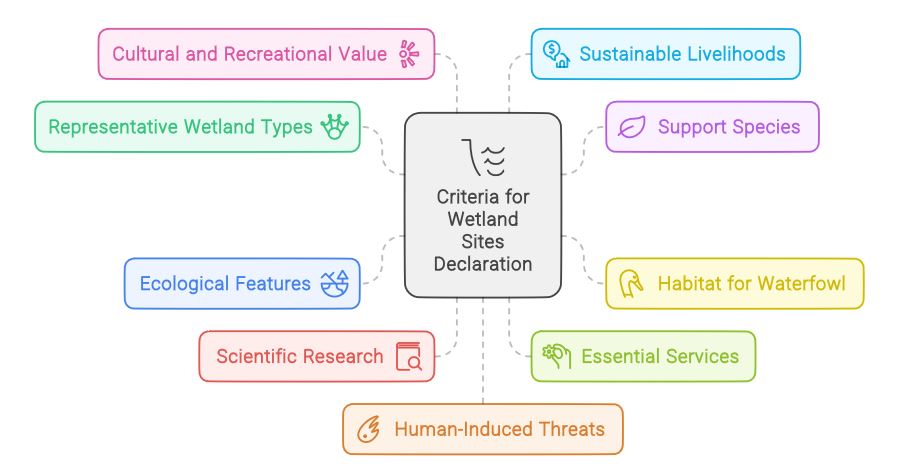
9 Criteria for Sites Declaration
A site should contain representative, rare, or unique wetland types.
It should support vulnerable, endangered, or endemic species.
It should be a habitat for waterfowl.
It should have significant ecological, botanical, zoological, limnological, or hydrological features.
It should support scientific research and biodiversity conservation.
It should provide essential services such as flood control, water purification, and groundwater recharge.
It should have cultural, recreational, or spiritual value for local communities.
It should support sustainable livelihoods for human communities.
It should be at risk or face human-induced threats that require international cooperation for conservation.
Participating Countries
171 contracting parties (countries) as of September 2021.
India and Ramsar Convention
The first Ramsar Site in India, the Chilika Lake in Odisha, was designated in 1981.
Ramsar Secretariat
The convention is administered by the Ramsar Secretariat, based in Gland, Switzerland.
World Wetlands Day
February 2nd of each year.
To raise awareness about the importance of wetlands and commemorate the adoption of the Ramsar Convention.
Montreux Record
Register of wetland sites on the List of Wetlands of International Importance under the Ramsar Convention that require special attention.
PYQ:
[2014] If a wetland of international importance is brought under the ‘Montreux Record’, what does it imply?
(a) Changes in ecological character have occurred, are occurring or are likely to occur in the wetland as a result of human interference.
(b) The country in which the wetland is located should enact a law to prohibit any human activity within five kilometres of the edge of the wetland
(c) The survival of the wetland depends on the cultural practices and traditions of certain communities living in its vicinity and therefore the cultural diversity therein should not be destroyed
(d) It is given the status of ‘World Heritage Site’
[2019] Consider the following statements:
Under Ramsar Convention, it is mandatory on the part of the Government of India to protect and conserve all the wetlands in the territory of India.
The Wetlands (Conservation and Management) Rules, 2010 were framed by the Government of India based on the recommendations of the Ramsar Convention.
The Wetlands (Conservation and Management) Rules, 2010 also encompass the drainage area or catchment regions of the wetlands as determined by the authority.
Which of the statements given above is/are correct?
Q To what extent, in your opinion, has the decentralisation of power in India changed the governance landscape at the grassroots? (UPSC IAS/2022)
Q How far do you think cooperation, competition and confrontation have shaped the nature of federation in India? Cite some recent examples to validate your answer.(UPSC IAS/2020)
Mentor’s comment: The 18th Indian general election signals a potential end to a cycle despite no change in power. The Bharatiya Janata Party’s loss of majority could catalyze a re-democratization process. Over a decade, India witnessed political and economic power concentrating, sidelining institutions and exacerbating inequalities. A shift in power dynamics and narratives may lead to significant changes, but their realization remains uncertain.
Let’s learn
Why in the news?
The election’s conclusion may signal a transition, yet the revival of India’s democracy rests on the involvement of pivotal actors, such as civil society.
10 Years of Modi Government: A Critical Analysis
Concentration of Power: For 10 years, India has experienced de-democratisation, with political and economic power concentrated in a few hands.
Bypassing Institutions: Top state officials made decisions, bypassing Parliament and federalism.
Economic Dominance: A few business cronies accessed resources and dominated the economy.
Increasing Inequalities: Inequalities increased, but the poor supported a pro-rich government due to identity politics and communal polarisation, overshadowing social issues.
Expected Changes
Power Dynamics: Significant changes are anticipated in power dynamics and narratives due to the new balance of power.
Partial Realization: However, these changes might not fully materialize.
No Shift, But a Tilt
Dominant Party: The BJP remains the dominant party, though Narendra Modi must now engage in coalition politics.
Institutional Empowerment: The weakening of Modi’s authority may empower institutions, including the Election Commission of India, the judiciary, and the media, to resist the government’s use of restrictive laws.
Revitalised Federalism: Federalism might be revitalised due to the need for support from state parties like the Telugu Desam Party (TDP) and Janata Dal (United) (JD(U)).
Narrative Shifts
Counter to National-Populism: Mr. Modi’s national-populist claim of embodying the nation might be countered by an agenda prioritising social equality.
Social Justice Focus: The Congress, Samajwadi Party, Rashtriya Janata Dal, and others are mobilising supporters on social issues, including the caste census, to promote social justice.
Opposition’s Rise to Popularity: Rahul Gandhi’s Bharat Jodo Yatra and Bharat Jodo Nyay Yatra have made him a popular leader, defending the Constitution and building a coalition of parties under the INDIA bloc.
Different Scenarios within the NDA Alliance
Bihar’s Caste Census: Nitish Kumar might push the National Democratic Alliance to emulate Bihar’s caste census initiative.
Coalition Politics: The TDP, JD(U), and others may promote their agendas, leading to different scenarios:
Modus Vivendi: A modus vivendi based on concessions from the Modi government to accommodate demands from TDP, JD(U), and others.
Worst-Case Scenario: A worst-case scenario where TDP and JD(U) make demands affecting BJP’s power-sharing or support base, possibly shifting alliances and causing the government to fall.
Potential Crisis
Scenario Development: The second scenario might unfold over months or years, especially if the Modi government weakens due to electoral setbacks.
Opposition Unity: The Opposition might solidify its unity, mobilize in the streets, and recruit more partners. Mayawati might revive the Bahujan Samaj Party in the new political context.
Future of the Ruling Alliance
Coalition Management: Modi may struggle to keep the NDA together if partners demand too much or if he fails to manage coalition tensions.
Leadership Change: The Sangh Parivar might replace Modi with someone like Nitin Gadkari, supported by the Rashtriya Swayamsevak Sangh (RSS).
Resistance to Power Loss: Modi and Amit Shah are unlikely to relinquish power easily, using various techniques to maintain their positions.
Role of Civil Society
Crucial Role: Civil society will play a crucial role in rejuvenating India’s democracy.
Beyond State-Level Change: A mere change of guard at the state level won’t suffice for re-democratisation or countering the dense network of RSS-related vigilantes.
Way Forward
Strengthening Institutions: It’s crucial to bolster democratic institutions like the judiciary, Election Commission, and media to ensure checks and balances.
Promoting Federalism: Federalism should be revitalized by empowering state governments and ensuring equitable distribution of resources.
Inclusive Politics: Political parties must prioritize inclusive policies addressing social and economic inequalities, fostering unity beyond identity politics.
Civil Society Engagement: Encourage active participation of civil society in monitoring government actions, advocating for transparency, and promoting accountability.
Legal Reforms: Implement legal reforms to safeguard democratic processes and protect civil liberties, ensuring fair and transparent elections.
Coalition Dynamics: Effective management of coalition dynamics is essential to maintain stability and address regional aspirations within a federal framework.
Conclusion
India’s democratic resilience will be tested in the coming years as it navigates the challenges of coalition politics, institutional empowerment, and societal inclusiveness.
The interplay between political centralisation and resistance will shape the future path of India’s democracy, emphasizing the need for continuous engagement, reform, and accountability.
South Korea has suspended the 2018 peace agreement and announced the possibility of resuming propaganda broadcasts in North Korea following Pyongyang’s release of thousands of balloons filled with trash and human waste into the South.
Inter-Korean Peace Agreement, 2018
The 2018 inter-Korean peace agreement refers to several agreements and declarations made between North and South Korea to reduce military tensions and improve diplomatic relations. Key elements of the agreement included:
Ceasefire Maintenance: Maintaining and reinforcing the Korean Armistice Agreement.
Demilitarization: Implementing measures to reduce military tensions, such as dismantling guard posts in the Demilitarized Zone (DMZ).
Family Reunions: Facilitating family reunions for those separated by the Korean War.
Economic Cooperation: Pursuing economic projects and infrastructure development.
Propaganda Halt: Both sides agreed to cease propaganda broadcasts and leaflet drops across the DMZ.
Why did South Korea suspend the 2018 agreement?
Recent Provocations: North Korea’s recent aggressive actions, including GPS signal jamming, missile launches, and the release of balloons carrying trash and human waste, pose a threat to South Korean security and civilian safety.
Lack of Trust: The ruling People Power Party (PPP) in South Korea cited a significant erosion of trust between the two Koreas. Senior PPP official Choo Kyung-ho emphasized that mutual trust needs to be restored for any agreements to be honoured.
Calls for Apology: South Korea demands an immediate apology from North Korea for these provocations, highlighting the need for accountability and reparations for the damages caused.
North Korea emboldened by Russian support
Military Assistance: The US has warned that Russia is aiding North Korea in developing advanced weapons technologies, such as hypersonic missiles, in exchange for artillery shells amid Russia’s ongoing war in Ukraine.
Diplomatic Shield: As a permanent member of the UN Security Council, Russia provides a diplomatic shield for North Korea, stalling efforts to pass new resolutions condemning North Korean actions. This backing allows Pyongyang to act more aggressively without significant international repercussions.
Escalated Danger of Conflict
The situation on the Korean Peninsula poses an escalated danger of conflict due to several factors:
Aggressive Posturing: North Korea’s recent actions, including missile tests and aerial provocations, signal an aggressive stance that could lead to military confrontations.
Policy Shift: Analysts believe Kim Jong Un may be deviating from the defensive policies of his predecessors, adopting a more aggressive strategy aimed at altering the status quo on the peninsula.
International Alliances: North Korea’s alignment with Russia, and possibly other authoritarian states like China and Iran, suggests a willingness to use military force to achieve geopolitical goals, challenging the US-led liberal world order.
Military Preparedness: The South Korean military and its allies need to stay vigilant as North Korea tests the South’s air defences and military response times, indicating a higher readiness for potential conflict.
Way forward:
Engage in Multilateral Talks: Revitalize dialogue with key stakeholders, including the United States, China, Japan, and Russia, to address North Korea’s actions and find diplomatic solutions.
Leverage International Organizations: Utilize platforms like the United Nations to garner international support and pressure North Korea to comply with international norms.
Mains PYQ:
Q Evaluate the economic and strategic dimensions of India’s Look East Policy in the context of the post-Cold War international scenario. (UPSC IAS/2016)
India has signed new agreements and updated existing ones with a dozen African countries to secure critical minerals. This initiative is crucial for achieving India’s energy transformation goals.
India’s Critical Mineral Acquisition Plans in Africa
India has signed new agreements and updated existing ones with a dozen African countries to secure critical minerals.
This initiative is crucial for India’s energy transformation goals, aiming to diversify sources and reduce dependence on any single supplier.
The agreements are part of a broader strategy to secure access to minerals necessary for renewable energy technologies and electric vehicles.
Demand for Energy in India and China’s Dominance
Energy Demand in India: India’s peak power demand increased to 250 GW in 2023-24, marking a 12.7% increase from the previous year. By 2030, India’s peak power demand is expected to reach 366 GW, up from the current level of 240 GW.
China’s Dominance: China leads in securing and processing critical minerals, having established long-term relationships with mineral-rich countries in Africa and Latin America. Chinese companies dominate mining rights in economically poor yet mineral-rich nations.
China has built significant capacities for processing and refining minerals, making it the primary global hub for critical mineral processing.
India’s Other Overseas Critical Mineral Acquisition Plans
Earlier this year, India signed an agreement with Argentina to explore and develop five lithium brine blocks.
The Geological Survey of India (GSI) discovered inferred lithium reserves of 5.9 million tonnes in Jammu & Kashmir.
India aims to diversify its sources of critical minerals by securing mining leases abroad, ensuring a stable and sustainable supply chain.
Government Initiatives to Secure Critical Minerals
Exploration and Geological Studies: The government is pushing for more extensive exploration and geological studies within India to identify potential reserves of critical minerals. The Geological Survey of India has been tasked with accelerating the exploration of India’s 3.2 lakh sq km land mass using new data and technologies.
Securing Mining Leases Abroad: India is focusing on securing mining leases in other countries to ensure a diversified supply of critical minerals. The agreements with African countries and Argentina are examples of this strategy.
Building Domestic Capacities: The government is providing incentives to build refining and processing capacities within India for critical minerals. There is an emphasis on attracting private miners, both domestic and global, to participate in critical mineral exploration within India.
Policy and Auction Reforms: The government is analyzing why auctions often fail to generate enough interest and is considering policy changes to attract big players. Coordinated efforts between the Centre and state governments on clearances and royalty payments are being emphasized to streamline the auction process.
White Hydrogen Exploration: There is a call for active exploration of potential White Hydrogen deposits within India’s geographical borders.
Way forward:
Accelerate exploration efforts across India’s 3.2 lakh sq km land mass.
Utilize new data sources and advanced technologies to identify potential reserves of critical minerals.
Focus on unexplored areas for potential discoveries of critical minerals, including White Hydrogen deposits.
Mains PYQ:
Q Do you think India will meet 50 percent of its energy needs from renewable energy by 2030? Justify your answer. How will the shift of subsidies from fossil fuels to renewables help achieve the above objectives? Explain. (UPSC IAS/2022)
Over 200,000 votes were cast for NOTA in the Indore Lok Sabha constituency. Let’s explore the reasons behind the introduction of this option and what occurs if, in an improbable scenario, NOTA garners more votes than all other candidates.
Back2Basics: NOTA in Indian Elections
NOTA, which stands for None of The Above, is an electoral choice where voters can express their disapproval of all the candidates in a voting system.
In the 2013 PUCL v. Union of India case, the Supreme Court mandated the use of NOTA in direct elections for the Lok Sabha and State Assemblies.
The ruling specified that in such elections, voters should have the option to select to indicate their dissatisfaction with all candidates or political parties listed on the ballot.
The NOTA option was first used in the 2013 legislative assembly elections held in four states—Chhattisgarh, Mizoram, Rajasthan, and Madhya Pradesh, and the union territory of Delhi.
Impact of NOTA Receiving the Highest Number of Votes in a Particular Constituency
1. Legal Consequence:
Current Status: NOTA has no legal consequence; the candidate with the highest votes after NOTA wins the election.
Indore Case: Shankar Lalwani won with a massive margin over NOTA, which received the highest number of votes ever recorded for NOTA in any constituency.
Possible Change: There are ongoing discussions and petitions urging that elections be declared null and void if NOTA receives the highest number of votes.
2. Future Considerations:
Petition by Shiv Khera: Calls for the ECI to frame guidelines to declare elections null and void if NOTA receives the majority vote and to debar candidates who receive fewer votes than NOTA for five years.
Judicial Stand
2013 Judgment: The Supreme Court ruled that the right to secrecy in voting includes those who choose not to vote, mandating the introduction of the NOTA option.
Rationale: The Court emphasised that secrecy is an essential feature of free and fair elections, supported by the introduction of EVMs to maintain voter anonymity.
Current Deliberations:
New Petition (2024): The Supreme Court is considering a petition to make elections null and void if NOTA gets the highest votes, with additional consequences for candidates.
State-Level Precedents: Some states and union territories (e.g., Maharashtra, Haryana, Delhi) have declared NOTA as a “Fictional Electoral Candidate” for local elections, mandating fresh elections if NOTA receives the majority vote.
Way forward:
Null and Void Clause: Introduce a clause in the Representation of the People Act to declare elections null and void if NOTA receives the highest number of votes.
Debarment of Candidates: Amend the law to debar candidates who receive fewer votes than NOTA from contesting elections for a specified period (e.g., five years).
Mains PYQ:
Q Discuss the procedures to decide the disputes arising out of the election of a Member of the Parliament or State Legislature under The Representation of the People Act, 1951. What are the grounds on which the election of any returned candidate may be declared void? What remedy is available to the aggrieved party against the decision? Refer to the case laws. (UPSC IAS/2022)
SEBI forms a committee to review clearing corporations’ ownership and economic structure, aiming to enhance resilience, independence, and neutrality as risk managers.
About the Securities and Exchange Board of India (SEBI):
SEBI is the capital markets regulator in India responsible for regulating the securities market and protecting the interests of investors.
It was established in 1988 and given statutory powers in 1992 under the SEBI Act.
SEBI’s functions include regulating stock exchanges, registering and regulating brokers and other intermediaries, and promoting fair and transparent securities markets.
What is a Clearing Corporation?
A clearing corporation is a central counterparty (CCP) that provides clearing and settlement services for trades executed on various exchanges.
It acts as an intermediary between buyers and sellers, guaranteeing the completion of transactions and managing counterparty risk.
Clearing corporations ensure the smooth functioning of financial markets by facilitating the timely settlement of trades and reducing systemic risk.
About Usha Thorat Committee on Reviewing the Ownership and Economic Structure of Clearing Corporations:
SEBI has formed a committee chaired by Usha Thorat, former Deputy Governor of the Reserve Bank of India (RBI), to review the ownership and economic structure of clearing corporations.
The committee’s mandate includes examining the ownership structure and finances of clearing corporations to ensure their resilience, independence, and neutrality as risk managers.
It will assess the feasibility of broadening the list of eligible investors allowed to hold stakes in clearing corporations and suggest categories of investors who can acquire such stakes.
The committee will also explore alternative ownership structures and shareholding patterns suited to an interoperable environment, where clearing corporations provide services across multiple exchanges.
It aims to propose alternatives that address the periodic capital needs of clearing corporations and ensure sufficient capital and liquidity during market-wide systemic stress.
The current ownership structure of clearing corporations is dominated by the parent exchange, which exposes them to the expectations of shareholders of the parent exchange.
Conclusion: The Usha Thorat Committee aims to enhance the resilience and independence of clearing corporations by exploring alternative ownership structures and suggesting measures to ensure adequate capital and liquidity.
Mains PYQ:
Q The product diversification of financial institutions and insurance companies, resulting in overlapping of products and services strengthens the case for the merger of the two regulatory agencies, namely SEBI and IRDA. Justify.(UPSC IAS/2013)
![[8 June 2024] The Hindu Op-ed: The Centre is notional, the States the real entities](https://www.civilsdaily.com/wp-content/uploads/2024/06/8-June-1568x882.jpg)
![[7th June 2024] The Hindu Op-ed: Health regulations need a base-to-top approach](https://www.civilsdaily.com/wp-content/uploads/2024/06/7-June-2nd-1568x882.jpg)
![[6th June 2024] The Hindu Op-ed: The roads to India’s re-democratisation, the challenge](https://www.civilsdaily.com/wp-content/uploads/2024/06/6-June-1568x882.jpg)