Research students have raised concerns about the disparity in scholarship amounts under the Maulana Azad National Fellowship (MANF) compared to other research fellowships.
About Maulana Azad National Fellowship
Details
Objective
To support students from minority communities in pursuing M.Phil. and Ph.D.
Launch
Launched by the Ministry of Minority Affairs, Government of India
Eligibility
Students from minority communities (Muslims, Sikhs, Christians, Buddhists, Zoroastrians, Jains) who have cleared CBSE/NTA-UGC NET or CSIR NET
Financial Assistance
Covers university fee, maintenance allowance, and other necessary allowances; granted for up to 5 years
Administration
Managed by the Ministry of Minority Affairs; University Grants Commission (UGC) as the nodal agency
Selection Process
JRF-NET (Junior Research Fellow- National Eligibility Test) examination
Purpose and Impact
Encourages higher studies and research in various fields; aims at educational and socio-economic development of minority communities
Recent Developments and Concerns
Discontinuation of MANF: Union Minority Affairs Minister announced the discontinuation of MANF, citing overlaps with similar scholarships.
Research Community’s Reaction: The research community, represented by the All India Research Scholars Association (AIRSA), has expressed disappointment, emphasizing the role of research in socio-economic development and the importance of MANF for financially constrained minority students.
Comparison with Other Fellowships
Last Revision in 2019: The last increase in MANF scholarship amounts was in 2019, while other scholarships have seen recent revisions.
Current Fellowship Amounts: UGC-approved schemes now offer ₹37,000 for junior researchers and ₹42,000 for senior researchers, a significant increase from previous amounts.
India’s eight core sectors experienced a significant slowdown, growing by 7.8% in November, down from 12% in October.
About Core Industries in India
The main or key industries constitute the core sectors of an economy.
In India, eight sectors are considered the core sectors.
These sectors are in decreasing order of their weightage: Refinery Products> Electricity> Steel> Coal> Crude Oil> Natural Gas> Cement> Fertilizers.
About Index of Eight Core Industries
The monthly Index of Eight Core Industries (ICI) is a production volume index.
ICI measures the collective and individual performance of production in selected eight core industries viz. Coal, Crude Oil, Natural Gas, Refinery Products, Fertilizers, Steel, Cement and Electricity.
Before the 2004-05 series six core industries namely Coal, Cement, Finished Steel, Electricity, Crude petroleum and Refinery products constituted the index basket.
Two more industries i.e. Fertilizer and Natural Gas were added to the index basket in the 2004-05 series. The ICI series with base 2011-12 will continue to have eight core industries.
The components covered in these eight industries for compilation of the index are as follows:
Coal – Coal Production excluding Coking coal.
Crude Oil – Total Crude Oil Production.
Natural Gas – Total Natural Gas Production.
Refinery Products – Total Refinery Production (in terms of Crude Throughput).
Steel – Production of Alloy and Non-Alloy Steel only.
Cement – Production of Large Plants and Mini Plants.
Electricity – Actual Electricity Generation of Thermal, Nuclear, Hydro, imports from Bhutan.
Recent data: Sector-Wise Growth Details
Decline in ICI: The ICI witnessed a 3.34% drop from October, marking its lowest since March 2023.
Sector-Specific Trends: Notably, only refinery products and coal showed month-on-month growth, with significant year-on-year increases.
Steel Production: Growth in steel production hit a 13-month low at 9.1%.
Crude Oil and Fertilizer: Crude oil saw a contraction, while fertilizer production growth decelerated.
Natural Gas and Electricity: Both natural gas output and electricity generation growth slowed down considerably in November.
Comparative Analysis with Previous Year
Year-on-Year Comparison: The core sectors had a 5.7% growth in November 2022.
Influence of Base Effects: Last year’s high growth in certain sectors like cement significantly influenced this year’s comparative figures.
Economic Insights and Projections
Bank of Baroda’s Perspective: The slowdown in fertilizer growth aligns with the end of the rabi sowing season, as per the bank’s chief economist.
IIP Forecast: The core sectors are expected to contribute to an IIP growth of 7%-8%.
Economists’ View: Experts predict a continued slowdown in core sector growth due to strong base effects from the previous fiscal year.
Future Expectations and Challenges
India Ratings and Research Predictions: A slowdown in core sector growth is anticipated in the coming months, influenced by the strong base effect.
Broader Economic Impact: This slowdown is indicative of larger economic challenges, potentially affecting future policy and market expectations.
Conclusion
Economic Resilience Test: The trends in India’s core sectors underscore the challenges in sustaining growth amid diverse economic conditions.
Need for Strategic Economic Planning: Addressing these slowdowns will require astute economic planning and possibly new strategies to boost growth in these key sectors.
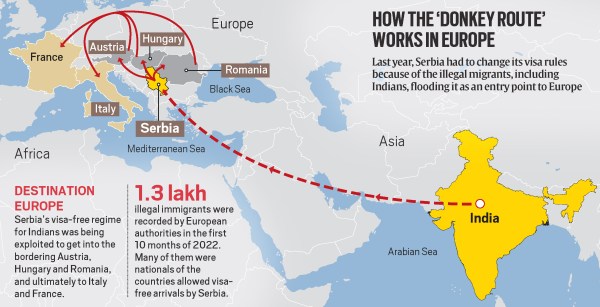
The grounding of a chartered plane in France reveals the desperate and perilous journeys of Indian migrants seeking illegal routes to the U.S. and Canada. It emphasizes the role of agents, tragic incidents, and the necessity for international collaboration to address the root causes and dismantle illegal immigration networks, highlighting the human cost of such endeavors.
Key Highlights:
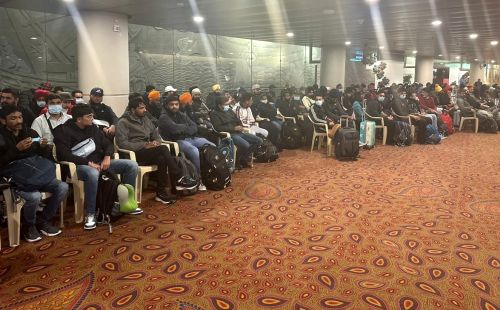
A chartered plane from the UAE to Nicaragua, carrying 303 Indians, was grounded in France for a human trafficking probe.
The flight was hired by a non-European client, and passengers were possibly trafficked, leading to a French investigation.
The passengers claimed they boarded willingly, and the flight was eventually forced to return to Mumbai.
Gujarat and Punjab have high numbers of illegal Indian migrants to the U.S. and Canada, often taking risky “donkey routes.”
Key Challenges:
Lack of opportunities in Gujarat pushes people to seek better prospects abroad, leading to illegal migration.
Human trafficking networks operate, exploiting the desperation of individuals seeking a better life.
The dangers of “donkey routes” involve traversing various countries with lenient visa policies, risking lives in harsh conditions.
Key Terms and Phrases:
Donkey routes: Illegal migration paths involving multiple countries with lenient visa policies.
Human trafficking: Exploitative practices involving illegal transportation of individuals.
Chartered flight: Private aircraft hired for specific travel purposes.
Asylum seekers: Individuals seeking protection and refuge in a foreign country.
Key Quotes:
“The French authorities had received a tip-off and took it very seriously.”
“The episode has once again called attention to the staggering number of Indians who migrate illegally to the U.S. or Canada.”
“People don’t find any opportunities here. There are no well-paying jobs and sometimes no jobs at all.”
Anecdotes:
Two passengers seeking asylum in France carried multiple passports and a substantial amount of money.
Families taking extreme risks, like freezing to death near the U.S. border or drowning in attempts to cross rivers.
Key Statements:
French authorities stopped exploring human trafficking angle after passengers claimed they boarded willingly.
Gujarat Police cracking down on agents facilitating illegal immigration through donkey routes.
Key Examples and References:
Shashi Kiran Reddy, a Hyderabad-based agent, behind the chartered flight facilitating illegal immigration.
Instances of families freezing to death near the U.S. border or drowning while attempting to cross rivers.
Critical Analysis:
Lack of opportunities and frustration in Gujarat and Punjab contribute to the high number of illegal migrants.
The existence of human trafficking networks highlights the exploitation of individuals seeking better prospects.
Way Forward:
Address root causes like lack of opportunities and corruption to discourage illegal migration.
Strengthen efforts to dismantle human trafficking networks, collaborating with international agencies.
Enhance awareness about legal migration pathways and associated risks to deter individuals from choosing illegal routes.
Dr. Ennapadam S. Krishnamoorthy advocates for prioritizing rehabilitation services globally, emphasizing their crucial role in treating neuropsychiatric disorders across the lifespan. He highlights the need for awareness, collaboration, and innovative solutions to address the significant burden of disabilities and enhance the quality of life for affected individuals.
Key Highlights:
Dr. Ennapadam S. Krishnamoorthy emphasizes the importance of transformative solutions for persons with neuropsychiatric disorders, spanning childhood to old age.
The focus is on enhancing activities of daily life and quality of life for individuals affected by various neuropsychiatric conditions.
Rehabilitation services are crucial, with 2.41 billion individuals globally requiring rehabilitation according to the WHO’s Global Burden of Disease study.
Key Challenges:
Rehabilitation is often seen as a disability-specific service, leading to under-prioritization despite its significant societal benefits.
Lack of awareness in the community that disablement can be treated and, in some cases, reversed.
The need for a shift in perception among medical professionals to recognize rehabilitation as an essential service.
Key Terms:
Neuropsychiatric disorders
Transformative solutions
Rehabilitation
Non-invasive brain stimulation (NIBS)
Repetitive Transcranial Magnetic Stimulation (rTMS)
The Interview Stage is the most important stage and a chance for you to very easily score 190+ provided you are guided with the right feedback.
Seasoned bureacrats will not ask you silly pressure test questions – proposing to a glass, writing a random prescription. They ask you thought provoking questions inline with what will be asked in the actual exam.
Meet Shankar Sir
There is no one more accomplished than Shankar Sir. Interacting with him is an experience in himself. People in the actual interview board are his juniors and respect him immensely.
Top Rankers with CD Mock Interview
Mr. Shankar Aggarwal is a retired IAS Officer of 1980 batch from U.P. Cadre. He holds a Bachelor of Engineering Degree in Electronics and Communications from the University of Roorkee (now IIT, Roorkee) and a Master’s Degree in Computer Technology from IIT, Delhi. For his contributions and achievements, he has been awarded the lifetime achievement award by IIT Roorkee.
He has had a distinguished career in Civil Services. Retired as Secretary, Ministry of Women and Child Development, Government of India where he worked on key initiatives such as reforms in Juvenile Justice Act, establishment of Nirbhaya centres, Beti Bachao Beti Padhao scheme etc.
As Secretary, Ministry of Labour and Employment, he introduced 4 Labour Codes replacing 44 Central Labour Laws. He also brought far reaching amendments in Maternity Benefits Act by enhancing the paid leave period from 12 weeks to 26 weeks.
As Secretary, Ministry of Urban Development, he was Chairman of all Metro Corporations of the country and introduced many new metro rail projects. He is also credited with launching of Swacch Bharat Abhiyan, Urban Rejuvenation Program, Smart City Program and Rapid Rail Mass Transport.
He has extremely rich and varied experience or working in sensitive and important ministries and departments for Government of India and State Governments.
Register for 3-Level Exclusive UPSC Interview Program.
Get a dedicated mentor, on-call DAF analysis, DAF-based personalized questionnaire, and Situational questionnaire (FREE)
In the last 3 years, a lot has changed about UPSC CSE
Standard resources, timetables, and attempting mocks can’t make you feel prepared anymore
Every IAS ranker who cracked UPSC in 1st attempt had a meticulously planned strategy
Their weeks, months, and days were planned with surgical precision
Civilsdaily Masterclasses allow you to access the real work from those who have done it before
All rankers built their own preparation system. What’s stopping you?
Let us help you develop your system
Never start from scratch on your UPSC preparation
Start like a Topper.
Read what Rohit sir has to say about UPSC preparation and approach
“Hey, this is Rohit Pande here, and I’m excited to talk about something that I deeply believe in: “The art of meticulous planning in UPSC preparation.”
It’s a common misconception that clearing the UPSC in your first attempt is all about studying randomly for a year. Let me tell you, it’s much more than that. Every IAS ranker who has achieved this feat did not rely on just standard resources or mock tests. They had a plan, a blueprint for success that they followed with unwavering dedication.
As we are stepping into the UPSC 2025 preparation cycle, it’s crucial to assess your strategy. How do you plan to approach this mammoth exam? This is where I come in.
I’m hosting a webinar on 1st January 2024, at 6 PM on Zoom, and you’re invited.
This isn’t just another session where I’ll be talking about what books to read or generic strategies. Instead, I’ll be sharing the exact study plans of IAS rankers who cracked the UPSC in their first attempt. We’ll dissect these plans, understand their core, and then, most importantly, adapt them to fit your unique needs and preparation stage.
This masterclass is not only a reality check on modern-day UPSC preparation but also an opportunity for you to get personalized inputs on your current strategy.
It’s an essential session, especially if you’re just starting out. Here, you’ll learn how to define your plan, minimize daily anxiety, fear, and uncertainty, and embark on a journey filled with confidence and clarity.
Join me in this transformative session and take the first step towards turning your IAS dream into reality. Remember, it’s not just about hard work; it’s about smart, strategic, and structured preparation.”
By the end, you’ll have razor-sharp clarity and a clear roadmap for approaching and qualifying your UPSC 2025 exam with confidence and near-perfect certainty.
Rohit Pande sir
Registration open! Join now to attend the webinar for FREE
(Don’t wait—the next webinar won’t be until March 25)
These masterclasses are packed with value. They are conducted in private with a closed community. We rarely open these webinars for everyone for free. This time we are keeping it for 300 seats only.
Fee:
Special Access (extra 15 min with Rohit sir) – Free (only for first 100 registrations, register before 31st Dec 2024)
Early Access – Rs. 299 (for the next 100 registrations, register before 1st Jan 2025, 1 PM)
Late Access – Rs. 499 (for last 100 registrations, register before 1st Jan 2025, Post 1 PM)
See you at 5PM on Civilsdaily YouTube Live + 1 LGF Apsara Arcade classroom.
This is Dinesh Sir on this side. I was overwhelmed with the response that the Polity NCERT Challenge has received in its very 1st edition. Close to 6k students turned up for the 1st session and overall over 30k students participated in the Challenge. This is huge!
We are back with the 15-Day Economics NCERT Challenge. We have already had the Orientation Session.
This is not your regular Economics Course. You have done so many of them and you still haven’t understood the crux of the subject.
You are repeatedly getting questions wrong from NCERT because you are not looking at the right place.
Lets kill it with Economics. For the next 15 days, there will be live lectures + you will be asked to submit Proof of Work(PoW) for EVERY chapter-Notes, assignments, research that I will announce in every live class.
The Press and Registration of Periodicals Bill, 2023, faced opposition uproar but was passed in the Rajya Sabha on August 3. Subsequently, it was approved in the Lok Sabha on December 21, marking its legislative passage.
Press and Registration of Periodicals Bill: Purpose and Objectives
Repealing the 1867 Act: The Bill aims to repeal the Press and Registration of Books Act, 1867, modernizing the regulatory framework for periodicals.
Key Provisions: It includes a notable clause preventing individuals convicted of terrorism or acting against state security from publishing periodicals.
Rationale for Introduction: The Bill focuses on easing business processes for publishers, removing procedural hurdles, and reducing the administrative burden of declarations and filings.
Comparison with the 1867 Act
Exclusion of Books: Unlike the 1867 Act, the 2023 Bill excludes books from its purview, as they fall under the HRD Ministry’s jurisdiction.
Penalty Structure: The new Bill replaces imprisonment with fines for certain violations and introduces an appellate mechanism led by the Press Council of India Chairman.
Shift in Administrative Power: Power is transferred from the District Magistrate to the newly established Press Registrar General, centralizing the registration and regulation process.
Declaration and Registration Process
Simplification of Procedures: The Bill simplifies the declaration process, eliminating the need for DM involvement and allowing online intimations for printing presses.
Simultaneous Processing: It enables concurrent processing of title allotment and registration applications, streamlining the procedure.
Time-Bound Responses: The specified authority must provide feedback within 60 days, expediting the registration process.
UAPA Provision in the Bill
Restriction on Convicted Individuals: The Bill bars individuals convicted of terrorist acts or unlawful activities, as defined under the Unlawful Activities (Prevention) Act, 1967, from publishing periodicals.
Security Concerns: This provision addresses concerns about the misuse of periodicals for activities threatening national security or sovereignty.
Conclusion
Modernizing Media Regulation: The Press and Registration of Periodicals Bill, 2023, represents a significant overhaul of India’s media regulatory framework, aligning it with contemporary needs.
Balancing Ease of Business and Security: While the Bill aims to facilitate easier operations for publishers, it also incorporates measures to safeguard against security threats.
Potential for Debate and Discussion: The Bill’s passage, amidst opposition concerns, suggests ongoing debates about media freedom, security, and regulatory oversight in India’s evolving democratic landscape.
Contradiction in Global Aspirations: Despite calls for peace, 2023 witnessed the continuation and emergence of significant conflicts, notably between Russia and Ukraine, and in the Gaza Strip.
China’s Stance: Amidst its economic challenges, China’s aggressive posture remains a concern for the West and India, adding to the global tension.
2023: Strategic Realities and Challenges
Crisis in the Middle East: The Hamas attack disrupted efforts to normalize Israel-Arab relations, leading to a devastating response from Israel and derailing the reconciliation process.
Stress in India-US Ties: Allegations of an Indian official’s involvement in an assassination plot have strained relations, with India promising to investigate if provided with information.
Russia-Ukraine War Fatigue: The prolonged conflict sees the West grappling with funding challenges, while Russia, despite sanctions, maintains resilience, partly due to its closeness with China.
India’s Maldives Challenge: The new government’s request for India to withdraw military personnel and terminate agreements reflects its proximity to China, complicating India’s strategic position.
China, the Biggest Worry: The ongoing border standoff and China’s influence in the region, including its ties with Russia and the Maldives, continue to be India’s primary strategic concerns.
G20 and Global South Positioning: India’s leadership in the G20 and its role in uniting the Global South reflect its aspiration to continue the legacy of Non-Alignment adapted to modern realities.
Engagement in Kabul: India’s cautious engagement with the Taliban and coordination for consular services indicate a nuanced approach to Afghanistan, balancing security and diplomatic needs.
2024: Anticipating Challenges and Opportunities
Impact of Lok Sabha Elections: The election outcome will significantly influence India’s foreign policy, with a stronger mandate potentially leading to more assertive stances, while a weaker mandate might reflect coalition compulsions.
US & Canada Relationships: Navigating the complexities arising from the assassination plot allegations and maintaining robust ties with both nations will be crucial for India.
New Government in Pakistan: The post-election scenario in Pakistan might offer a window for re-engagement, depending on the political dynamics and India’s strategic choices.
Outcome in Bangladesh: India’s interest in the continuation of Sheikh Hasina’s government reflects security and connectivity priorities, with the opposition viewed with caution.
Continuing Deadlock with China: The border standoff and its potential escalation will be a critical factor in India’s security and diplomatic strategy, especially in an election year.
West Asia Dynamics: India’s evolving stance in the Israel-Hamas conflict and its implications for its position in the Global South will be closely watched, with a focus on balancing relations and principles.
Future of the War in Ukraine: India’s balancing act between its economic interests and international pressures, especially in its relationship with Russia, will continue to be a delicate matter.
Trade Pacts and Tech Partnerships: Finalizing trade agreements and enhancing tech partnerships with the West will be key areas of focus, with potential major developments expected in 2024.
Conclusion
Balancing Act: India’s foreign policy in the coming years will involve navigating a complex array of global conflicts, bilateral tensions, and internal political dynamics.
Strategic Posture: The outcomes of various global and regional conflicts, along with India’s own electoral politics, will shape its strategic and foreign policy posture, reflecting a blend of continuity and change.
In the ongoing investigation of the Parliament security breach, Delhi Police sought court permission for polygraph tests on six accused to uncover their motives.
A polygraph test, commonly known as a lie detector test, measures physiological responses believed to differ when a person lies.
Mechanics of a Polygraph Test
Physiological Monitoring: The test involves attaching instruments like cardio-cuffs or sensitive electrodes to monitor blood pressure, pulse, and other variables.
Response Analysis: As questions are asked, responses are numerically evaluated to determine truthfulness, deception, or uncertainty.
Historical Origin: First conducted in the 19th century by Cesare Lombroso, an Italian criminologist, to measure blood pressure changes in suspects during interrogation.
Constitutional and Legal Provisions
Article 20(3) of the Indian Constitution: This article protects against self-incrimination, stating that no accused shall be compelled to be a witness against themselves.
Infringement Concerns: Forcing an accused to undergo polygraph or narcoanalysis tests is seen as a violation of Article 20(3), making consent essential.
Article 21 and Human Rights: Polygraph tests are criticized for mental torture, potentially violating the right to life and privacy under Article 21.
Limitations and Challenges
Scientific Reliability: Neither polygraph nor narco tests are scientifically proven to be 100% accurate, raising questions about their reliability.
Impact on Vulnerable Individuals: These tests can adversely affect those unaware of their rights or unable to access legal advice, leading to potential abuse and media exploitation.
Legal and Constitutional Rulings
Selvi vs State of Karnataka & Anr (2010): The Supreme Court ruled that lie detector tests should be voluntary, with legal implications explained to the accused.
D.K. Basu vs. State of West Bengal (1997): The Court deemed involuntary administration of these tests as potentially violating the Right to Life and Liberty and the Right to Privacy.
Indian Evidence Act, 1871: The results of these tests are not admissible as evidence in court.
National Human Rights Commission Guidelines (1999): Established consent and procedural guidelines for administering polygraph tests.
Way Forward
Role as Investigative Tools: While not reliable for conclusive evidence, polygraph tests can aid in complex investigations.
Balancing Scientific Techniques and Rights: The government should promote scientific methods in investigations while ensuring strict adherence to ethical and legal standards.
Consent and Decency: The administration of these tests must be consensual, respecting the dignity and rights of the individuals involved.
Pervasiveness of Plastic: Plastic, with its beneficial properties like durability, has become a ubiquitous part of modern life.
Environmental Impact: Approximately 50% of plastic is used only once before being discarded, contributing to significant environmental issues, including ocean pollution.
Psychological Aspects of Plastic Use
Consumer Behavior Influence: The omnipresence of plastic shapes consumer choices and behaviors, influenced by marketing strategies, packaging design, and product aesthetics.
Packaging and Brand Perception: Packaging plays a crucial role in plastic use, with visual appeal and brand image significantly impacting consumer preferences.
Color Psychology in Packaging: The use of color in packaging design evokes specific emotions and expectations, influencing purchasing decisions.
Convenience Factor and Limited Alternatives
Role of Convenience: Plastic packaging’s ability to keep products fresh and hygienic has been a key driver of its market dominance.
Lack of Economical Alternatives: The absence of affordable alternatives for food packaging often leaves consumers with no choice but to opt for plastic-wrapped items.
Pro-Environmental Behavior (PEB) and Plastic Use
Understanding PEB: Limiting plastic use and purchase is an example of pro-environmental behavior, influenced by awareness, knowledge, and values.
Factors Influencing PEB: Concern about plastic, knowledge of its effects, and the perceived commitment of others to address its impact play roles in shaping PEB.
Market Trends and Social Influences
Impulsive Buying and Social Media: The growth of social media and peer pressure have been linked to increased compulsive buying behaviors, often leading to increased plastic consumption.
Influence of Social Norms: Social norms promoting consumption have led to an increase in plastic use, despite its environmental costs.
Stages of Behavioral Readiness in Plastic Consumption
Five Stages of Readiness include-
Pre-contemplation,
Contemplation,
Preparation,
Action, and
Maintenance.
Role of Storytelling and Marketing in Plastic Awareness
Emotional Engagement: Storytelling in marketing can emotionally engage customers with the lifecycle of plastic items, enhancing environmental awareness.
Positive and Negative Impacts: Marketing power can influence consumer behavior both positively and negatively in the context of plastic use.
Objective vs. Subjective Knowledge: Understanding the specifics of an issue (objective knowledge) versus personal belief or awareness (subjective knowledge) influences behavior.
Barriers to Action: Lack of personal connection, gradual environmental impact, moral disengagement, and immediacy issues are barriers to taking action against plastic pollution.
Way forward
Role of Education and Design: Knowledge is crucial, but behavioural change also depends on product design that encourages environmentally friendly choices.
Supplier and Retailer Responsibility: Minimizing packaging, using recyclable materials, and clear recycling instructions are key steps.
Policy Initiatives: Policies raising awareness of plastic pollution’s effects can facilitate a sustainability-focused behavioural shift.
Emergence of Sustainable Brands: As consumers increasingly look to brands for sustainable options, there is a growing market for environmentally conscious products.
Conclusion
Critical Role of Habit Change: Altering consumer habits is essential for environmental protection, requiring a multifaceted approach involving education, policy, and market innovation.
Sources: Insights drawn from the Sustainability and Consumer Behaviour Report 2022 by Deloitte United Kingdom and research by Mittali Tyagi, PhD Scholar at Manav Rachna International Institute of Research and Studies.
A women recently died from septic shock after a surgery in Jamshedpur, leading her brother to allege medical negligence due to unauthorized surgeon substitution and lack of postoperative care.
The case has ignited discussions on the legal and ethical aspects of medical negligence in India, amidst proposed changes to exempt doctors from criminal prosecution.
Understanding Medical Negligence
Definition and Impact: Medical negligence involves a breach of duty by healthcare professionals, leading to patient harm or death.
Legal Framework: Currently, under Section 106(1) of the Bharatiya Nyaya (Second) Sanhita (BNSS), doctors face potential imprisonment and fines if convicted of negligence, though proposed changes might alter this.
Recent Developments and Legal Provisions
Recent Announcement: MHA proposed exempting doctors from criminal prosecution in negligence cases, sparking debate and concern among various stakeholders.
Constitutional Rights: The proposed changes have to be balanced against constitutional protections like Article 20(3) and Article 21, which safeguard against self-incrimination and ensure the right to life and liberty.
Role of the Indian Medical Association (IMA)
IMA’s Stance: The IMA has advocated for exempting doctors from criminal prosecution for negligence, citing the increasing harassment and detrimental impact on patient care.
Concerns Raised: The IMA also highlighted the high number of medical negligence cases filed against doctors and the economic losses due to violence against healthcare professionals.
Ethical and Societal Implications
Power Dynamics: Critics argue that exempting doctors from criminal prosecution might exacerbate power imbalances in the doctor-patient relationship and lead to increased medical malpractice.
Marginalized Populations at Risk: There’s concern that such exemptions could disproportionately affect vulnerable groups, including women, queer, transgender individuals, and rural residents.
Legal and Ethical Conundrums
Good Faith Clause: BNSS clauses provide some protection for acts done in good faith, but the distinction between negligence and accident remains unclear.
Bioethicists’ Perspective: Experts emphasize the need for a balanced approach that considers both healthcare professionals’ challenges and patients’ rights and safety.
Way Forward
Nationwide Dialogue: The IMA plans to engage in discussions with the government and public to advocate for their position.
Need for Comprehensive Data: Critics like Geet suggest conducting a nationwide survey to understand the scope of medical negligence and inform policy decisions.
Legal Recourse for Patients: Ensuring that patients have access to legal recourse and justice is crucial to maintaining trust in the healthcare system and preventing violence against doctors.
Conclusion
Complex Decision-Making: Exempting doctors from criminal prosecution for medical negligence is a multifaceted issue requiring careful consideration of legal, ethical, and societal factors.
Ensuring Justice and Quality Care: Any policy changes must strive to protect patients’ rights while also considering the challenges faced by medical professionals, ensuring that the healthcare system remains just, accountable, and focused on delivering high-quality care. Top of Form
On December 28, 1885, the Indian National Congress (INC) was established, marking the beginning of a significant journey in Indian politics.
The INC’s journey from influencing British policy to leading India’s nationalist movement, dominating post-independence politics, and its current decline offers a rich political narrative.
Indian National Congress: Inception in 1885
Founding by AO Hume: Allan Octavian Hume, an English bureaucrat, founded the INC to advocate for greater self-governance in India.
First Session: The inaugural session in Bombay saw 72 reformers, journalists, and lawyers unite, aiming not for independence but to influence British policies favorably for Indians.
Safety Valve Theory: The INC initially served as a platform for Indians to express grievances, seeking to unify diverse population segments and regenerate the nation across various dimensions.
Politics of Petitions
Early Challenges: The Congress faced criticism from both the British and Indians; the former for disrupting the status quo and the latter for its passive resistance approach.
Composition and Critique: Dominated by educated, upper-class individuals, the INC was often seen as too moderate and not sufficiently representative of all Indians.
Internal Divisions: By 1906, ideological differences led to a split between the moderates (Gopal Krishna Gokhale, Surendranath Banerjea) and the extremists (Bal Gangadhar Tilak), particularly over responses to the Bengal Partition.
Leadership under Mahatma Gandhi
Reunification and Transformation: The INC, under Gandhi’s influence from 1915, transformed into a mass movement, focusing on social issues like caste discrimination and poverty.
Diverse Membership: Despite its Hindu upper-caste dominance, the party included members from various ethnic and religious backgrounds.
Purna Swaraj Declaration: At the 1929 Lahore session, the INC, under Jawaharlal Nehru’s presidency, committed to complete independence, a goal achieved in 1947 but marred by Partition.
Dominance in Post-Independence India
Electoral Success: The INC’s legacy and organizational strength led to victories in the first six general elections.
Policy Direction: Under Nehru, the party promoted secularism, socialist economics, and non-aligned foreign policy.
Internal Power Struggles: Post-Nehru, internal conflicts emerged, notably between Indira Gandhi and the party’s old guard, leading to a split into Congress (R) and Congress (O).
Onset of Decline
Electoral Setbacks: The Emergency period (1975-77) led to the INC’s first national electoral defeat in 1977.
Fluctuating Fortunes: While it regained power, the 1989 loss marked the end of its dominance, with the Bharatiya Janata Party (BJP) emerging as a strong alternative.
Recent Struggles: The INC’s significant reduction in parliamentary strength in the 2014 and 2016 elections underscores its ongoing decline.
Back2Basics: Important Sessions of INC
1896, Calcutta: Presided over by Rahimtulla M. Sayani, where the national song “Vande Mataram” was sung for the first time.
1906, Calcutta: Presided over by Dadabhai Naoroji, where the goal of Swaraj (self-rule) was formally adopted.
1917, Calcutta: Annie Besant became the first woman president of the INC.
1924, Belgaum: The only session presided over by Mahatma Gandhi.
1937, Faizpur: The first session held in a rural area, reflecting the INC’s commitment to rural issues and agrarian reform.
1938, Haripura: Subhas Chandra Bose elected as President, which marked a shift towards a more radical approach in the freedom struggle.
1940, Ramgarh: Last session presided over by Mahatma Gandhi; emphasized on individual Satyagraha.
1955, Avadi (Madras): Adoption of the ‘Avadi Resolution’ which called for a socialist pattern of society.
1964, Bhubaneswar: First session after the death of Jawaharlal Nehru, marking a new era in the party’s leadership.
The article explores the contrasting trajectories of China and India in the maritime industry, emphasizing China’s dominance in shipbuilding and India’s focus on seafaring labor and ship management. It underscores the missed opportunities for India in shipbuilding, leading to a decline in its global maritime standing. The absence of a strategic focus on shipbuilding and the decline of state-owned enterprises pose challenges for India’s maritime growth.
Key Highlights:
The Yangtze River, deeply embedded in China’s history, serves as a blend of tradition, culture, and modern commerce, symbolized by the Three Gorges project.
China’s maritime success, highlighted by its dominance in shipbuilding, stands in contrast to India’s focus on seafaring labor and ship management.
India, once ahead in maritime endeavors, faces challenges as its shipbuilding capabilities lag, impacting the overall growth of the shipping industry.
Key Challenges:
India’s maritime industry confronts limitations in shipbuilding, ownership, and financing, contributing to a decline in its global standing.
The absence of a strategic focus on shipbuilding, coupled with the decline of the state-owned Shipping Corporation of India, has hindered India’s maritime progress.
Key Terms:
Three Gorges project: A monumental hydropower initiative on the Yangtze River, symbolizing China’s modern engineering achievements.
Seafarer: An individual engaged in maritime activities, such as navigation, on vessels like ships and boats.
Key Quotes:
“China, by 2020, was making half of all ships in the world,” a stark contrast to India’s negligible share in shipbuilding.
“Indian seafarers and their management companies contribute an estimated $6 billion in foreign exchange annually.“
“India’s Maritime India Vision 2030 lacks a clear plan for shipbuilding and owning,” hindering its growth in the maritime industry.
Key Statements:
The article underscores the transformative significance of the Three Gorges project, symbolizing China’s advancement in modern engineering.
India’s historical lead in maritime activities has been overshadowed by its limited involvement in shipbuilding and related sectors.
Key Examples and References:
The Three Gorges project exemplifies China’s commitment to modern infrastructure and technological prowess.
The decline of the state-owned Shipping Corporation of India serves as a reference point for India’s challenges in sustaining its maritime industry.
Key Facts and Data:
China, contributing to 50% of global ship production by 2020, reflects its dominance in the shipbuilding sector.
Indian seafarers and their management companies collectively contribute an estimated $6 billion in foreign exchange annually.
Critical Analysis:
The critical analysis emphasizes the missed opportunities for India in the shipbuilding sector and the resultant impact on its overall maritime growth.
The decline of the state-owned Shipping Corporation of India is presented as a significant factor influencing India’s maritime capabilities.
Way Forward:
The article suggests that India should strategically prioritize shipbuilding to enhance its global maritime presence, emphasizing economic and strategic benefits.
An integrated approach to shipbuilding would not only contribute to economic growth but also strengthen India’s naval capabilities, enhancing its geopolitical standing.
Amrita Pritam (1919–2005) was a renowned Indian poet and writer, hailed as one of the leading literary figures in the Punjabi language and Hindi literature. She is best known for her poignant poetry, which often explored themes of love, loss, and the socio-political issues of her time. Amrita Pritam’s notable works include “Ajj aakhaan Waris Shah nu” (Today I invoke Waris Shah), a poem expressing the anguish of the partition of India in 1947.
She received several literary awards, including the Sahitya Akademi Award, the Jnanpith Award, and the Padma Vibhushan, one of the highest civilian honors in India. Amrita Pritam’s writing, characterized by its emotional depth and social consciousness, left a lasting impact on Indian literature.
Central idea
The central idea revolves around the enduring 45-year relationship between Amrita Pritam and Imroz, marked by deep respect and devotion. Imroz’s recent passing is seen as a second loss of Amrita, emphasizing their inseparable connection and the profound impact of supportive relationships in shaping artistic legacies. The narrative explores unconventional expressions of love, challenges societal norms, and highlights the importance of understanding and preserving unique bonds between artists.
Key Highlights:
The 45-year-long relationship between Amrita Pritam and Imroz is marked by deep respect, admiration, and devotion.
Imroz’s preferred term for Amrita was “Madam,” reflecting his acknowledgment of her seniority.
Amrita’s enduring presence is attributed not only to her literary work but also to Imroz’s reflections on her after his recent passing at 97.
Key Challenges:
The loss of Imroz feels like losing Amrita again, emphasizing the inseparable connection between the two artists.
The challenge lies in preserving and understanding the unique bond that shaped Amrita Pritam’s identity and creativity.
Key Phrases:
“Too empty an expression”: Imroz’s perspective on not using the term ‘love’ with Amrita, opting for deeper connections.
“Lost Amrita all over again”: Imroz’s passing is seen as a second loss of Amrita, underlining their inseparable connection.
Key Quotes:
“We never used the term ‘love’ or that we loved each other. It was too empty an expression.” – Imroz’s perspective on the depth of their connection.
“While passing through your poem, I fear that I’m stepping onto Imroz’s wet canvas.” – Gulzar’s tribute, expressing the intertwining of poetry and art.
Key Statements:
Amrita’s courageous exploration of sexuality and self-realization was groundbreaking in Indian literature.
Imroz’s unwavering support and understanding of Amrita’s complex relationships contributed to their enduring bond.
Key Examples and References:
Amrita’s relationship with poet Sahir Ludhianvi and Imroz’s dignified response to her affections.
Imroz’s role in supporting Amrita during her last years, caring for her children and her ailing husband.
Key Facts:
Imroz, born Indarjeet Singh, was an illustrator for the Urdu magazine Shama before meeting Amrita.
Amrita Pritam passed away in 2005, but her legacy lives on through her extensive body of work.
Critical Analysis:
The relationship between Amrita and Imroz challenges societal norms, with Imroz providing unwavering support and understanding.
The loss of Imroz is seen as a profound impact, suggesting that their connection was vital in preserving Amrita’s legacy.
Way Forward:
The challenge lies in understanding and preserving the unique bond between artists like Amrita and Imroz for future generations.
Recognition of the profound impact of supportive relationships in shaping artists and their work.
The central idea is that in 2023, the AI landscape saw significant growth and investment, particularly in large language models. However, the industry’s emphasis on speculative threats, termed “doomwashing,” overshadowed concrete harms, leading to calls for greater democratic involvement in shaping AI policy for a balanced and ethical approach in the future.
Key Highlights:
AI Impact: AI, especially large language models (LLMs), had a significant impact on social and economic relations in 2023.
Investments: Microsoft invested $10 billion in OpenAI, and Google introduced its chatbot, Bard, contributing to the AI hype.
Industry Growth: NVIDIA reached a trillion-dollar market cap due to increased demand for AI-related hardware.
Platform Offerings: Amazon introduced Bedrock, while Google and Microsoft enhanced their services with generative models.
Key Challenges:
AI Dangers: Concerns about the dangers of LLMs and publicly deployed AI systems emerged, but the specific perils were contested.
AI Safety Letter: Over 2,900 experts signed a letter calling for a halt on powerful AI systems, focusing on speculative existential threats rather than concrete harms.
Doomwashing: The industry’s newfound caution led to “doomwashing,” emphasizing self-regulation and downplaying the need for external oversight.
Key Terms:
LLMs: Large Language Models.
AGI: Artificial General Intelligence.
Doomwashing: Emphasizing AI dangers without addressing concrete issues for self-regulation purposes.
Ethicswashing: Using ethical claims to deflect from underlying issues.
Key Phrases:
Political Economy of AI: The impact of AI on data privacy, labor conditions, and democratic processes.
AI Panic: Inflating the importance of industry, reinforcing the idea that AI is too complex for government regulation.
Key Quotes:
“The danger of AI was portrayed as a mystical future variant, ignoring concrete harms for an industry-centric worldview.”
“Doomwashing, akin to ethicswashing, plagued AI policy discussions, emphasizing self-regulation by industry leaders.”
Key Statements:
The AI safety letter focused on speculative threats, neglecting the immediate political-economic implications of AI deployment.
Industry leaders embraced caution, promoting self-regulation through doomwashing, sidelining government intervention.
Key Examples and References:
Microsoft’s $10 billion investment in OpenAI.
NVIDIA’s trillion-dollar market cap due to increased demand for AI-related hardware.
Amazon’s introduction of Bedrock and Google’s enhancement of its search engine with generative models.
Key Facts:
In July, the US government persuaded major AI companies to follow “voluntary rules” for product safety.
The EU passed the AI Act in December, becoming the only AI-specific law globally.
Critical Analysis:
The AI safety letter focused on speculative threats, diverting attention from concrete harms and the political-economic implications of AI.
Doomwashing reinforced the industry-centric narrative, diminishing the role of government regulation.
Way Forward:
Advocate for greater socialization of AI policy, involving democratic voices in shaping regulations.
Address concrete harms of AI deployment, ensuring a balance between innovation and ethical considerations.
Indian capital markets witnessed a significant increase in investments through participatory notes (P-notes), reaching ₹1.31 lakh crore by the end of November.
What are Participatory Notes?
Details
Nature of Instrument
Offshore derivative instruments with Indian shares as underlying assets.
Issuers
Issued by registered Foreign Institutional Investors (FIIs) to overseas investors.
Purpose
To allow foreign investors to invest in Indian stock markets without direct registration.
Anonymity
Provide anonymity for foreign investors; beneficiary details are not disclosed to Indian regulators.
Regulatory Oversight
Governed by the Securities and Exchange Board of India (SEBI).
Compliance
FIIs issuing P-Notes are required to adhere to KYC norms and other regulatory standards.
Controversies
Associated with risks of money laundering and contributing to market volatility.
Regulatory Reforms
SEBI has tightened norms over time, including enhanced KYC and disclosure requirements.
Economic Impact
Significant source of foreign portfolio investment; influences market sentiment and foreign investor behavior.
Impact of Regulatory Changes
Changes in regulations have affected the flow of investments through P-Notes.
Correlation with FPI Flows
P-Notes and FPI Trends: The investment through P-notes typically mirrors the trends in foreign portfolio investor (FPI) flows.
Global Risk Influence: In times of global risk, investment through P-notes tends to increase, and the opposite occurs when the risk subsides.
Factors Influencing the Recent Increase
U.S. Treasury Bond Yields: The decline in U.S. treasury bond yields is believed to have redirected FPIs’ attention to the Indian market for potentially higher returns.
IPO Attraction: The listing of Initial Public Offerings (IPOs) in India has also been a factor in attracting foreign investors back to the market.
The Nizam’s Institute of Medical Sciences in Hyderabad reports three to four cases of Huntington’s disease monthly, with each case impacting entire families.
Understanding Huntington’s Disease
Details
Nature of Disorder
Genetic, progressive brain disorder
Genetic Cause
Mutation in the huntingtin gene on chromosome 4
Inheritance Pattern
Autosomal dominant disorder (only one copy of the defective gene, from either parent, is enough for disease onset)
Cognitive Disorders: Difficulty in organizing and focusing, lack of flexibility, impulse control issues.
Psychiatric Disorders: Depression, mood swings, changes in personality
Age of Onset
Typically between 30 and 50 years of age, but can vary widely
Gradual onset, worsening over 10-25 years, leading to severe disabilities
Diagnosis
Genetic testing to detect the presence of the defective gene
Treatment
No cure; treatment focuses on managing symptoms, including medication for movement and psychiatric disorders, and therapy
Impact on Life Expectancy
Can shorten life expectancy, particularly if onset is at a younger age
Role of the HTT Gene and Glutamine Repeats
Genetic Mutation: Huntington’s disease is caused by a mutation in the HTT gene, leading to abnormal huntingtin (Htt) proteins that damage neurons.
Polyglutamine Tracts: The severity of the disease correlates with the length of glutamine repeats in the Htt protein; longer repeats result in earlier and more severe symptoms.
Inheritance Pattern: The disease manifests even if only one copy of the HTT gene is mutated, demonstrating its dominant nature.
Similar Proteins and Diseases: Other proteins with polyglutamine tracts, when mutated, can also cause neuronal degeneration, leading to disorders like spinocerebellar ataxia.
Fruit Fly Study: A Model for Understanding Huntington’s
Genetic Engineering in Flies: Researchers engineered fruit flies to express the human HTT gene with extended polyglutamine tracts in their neurons.
Gal4/UAS System: Utilizing the Gal4 gene from baker’s yeast, the study induced expression of mutated HTT in fly neurons.
Symptoms in Flies: Flies with longer glutamine tracts exhibited symptoms similar to Huntington’s disease, unlike those with shorter, normal tracts.
Yod1 Gene Discovery
Gene Expression Experiment: The study explored the effects of altering the expression of 32 genes on disease-like symptoms in fruit flies.
Yod1’s Protective Role: Overexpression of the Yod1 gene eliminated neurodegeneration and other disease-like effects in flies with longer glutamine tracts.
Broader Implications and Future Research
Potential in Human Treatment: If overexpression of the human version of Yod1 shows similar benefits in fruit flies, it could be a promising avenue for treating Huntington’s in humans.
Value of Model Organisms: Studies in fruit flies and yeasts are pivotal for understanding molecular mechanisms of diseases like Huntington’s.