💥UPSC 2026, 2027, 2028 UAP Mentorship (March Batch) + Access XFactor Notes & Microthemes PDF

Search results for: “”

  • 3rd Nov| Daily Answer Writing Enhancement

    Topics for Today’s questions:

    GS-1          Salient features of Indian Society, Diversity of India.

    GS-2          Bilateral, regional and global groupings and agreements involving India and/or affecting  India’s interests

    GS-3          Indian Economy

    GS-4         Aptitude and foundational values for Civil Service, integrity, impartiality and non-partisanship, objectivity, dedication to public service, empathy, tolerance and compassion towards the weaker sections.

    Question 1)


    Q.1 In India, it is said that the wealth hierarchy mimics the caste hierarchy. In the above context, establish the relationship between caste and economic inequality in India. Also, discuss the initiatives taken to address the caste inequality in India. (15 Marks)


    Question 2)

    Q.2 Highlighting the relevance of Shanghai Cooperation Organization (SCO) for India, discuss how the forum can be utilized by India. (10 Marks)

    Question 3)

    Q.3 The recent cut in India’s growth forecast for 2022-23 by the International Monetary Fund (IMF) has sent mixed signals on the country’s post-pandemic economic recovery. Critically analyze. (15 Marks)

    Question 4)  

    Q4. What are favouritism, cronyism, and nepotism? How do these issues impact the working of administration? (10 Marks)


    HOW TO ATTEMPT ANSWERS IN DAILY ANSWER WRITING ENHANCEMENT(AWE)?

    1. Daily 4 questions from General studies 1, 2, 3, and 4 will be provided to you.

    2. A Mentor’s Comment will be available for all answers. This can be used as a guidance tool but we encourage you to write original answers.

    3. You can write your answer on an A4 sheet and scan/click pictures of the same.

    4.  Upload the scanned answer in the comment section of the same question.

    5. Along with the scanned answer, please share your Razor payment ID, so that paid members are given priority.

    6. If you upload the answer on the same day like the answer of 11th  February is uploaded on 11th February then your answer will be checked within 72 hours. Also, reviews will be in the order of submission- First come first serve basis

    7. If you are writing answers late, for example, 11th February is uploaded on 13th February , then these answers will be evaluated as per the mentor’s schedule.

    8. We encourage you to write answers on the same day. However, if you are uploading an answer late then tag the mentor like @Staff so that the mentor is notified about your answer.

    *In case your answer is not reviewed, reply to your answer saying *NOT CHECKED*. 

    1. For the philosophy of AWE and payment: 
  • Q4. What are favouritism, cronyism, and nepotism? How do these issues impact the working of administration? (10 Marks)

    Mentor’s Comments-

    • Start the answer with explaining these terms- favouritism, cronyism, and nepotism.
    • Next, write down some points on how they impact working of the administration.
    • Use examples wherever possible.
    • Conclude by talking about can these conflicts be resolved by a civil servant.
  • Q.3 The recent cut in India’s growth forecast for 2022-23 by the International Monetary Fund (IMF) has sent mixed signals on the country’s post-pandemic economic recovery. Critically analyze. (15 Marks)

    Mentor’s Comments-

    • https://www.thehindu.com/opinion/lead/the-truth-about-the-india-story/article66082806.ece
    • In the introduction, mention the cut in India’s growth forecast by IMF. Compare it with the growth rate in the previous fiscal year.
    • Next, talk about India’s poor performance in some fields such as creating jobs, investment rates, policy measures etc
    • In next part, mention that issues have been aggravated due to poor global showing.
    • Write a brief way forward.
    • Conclude suitably.
  • Q.2 Highlighting the relevance of Shanghai Cooperation Organization (SCO) for India, discuss how the forum can be utilized by India. (10 Marks)

    Mentor’s Comments-

  • Q.1 In India, it is said that the wealth hierarchy mimics the caste hierarchy. In the above context, establish the relationship between caste and economic inequality in India. Also, discuss the initiatives taken to address the caste inequality in India. (15 Marks)

    Mentor’s Comments-

    • In the introduction, establish link between caste and economic inequality by quoting some statistics.
    • In the body, first bring out the relationship between caste and socio-economic inequality in India.
    • Next, mention some constitutional, legislative and economic measures taken to address caste inequality in India.
    • Conclude on an optimistic note.
  • Two finger test: Undermining the dignity of women

    finger test

    Context

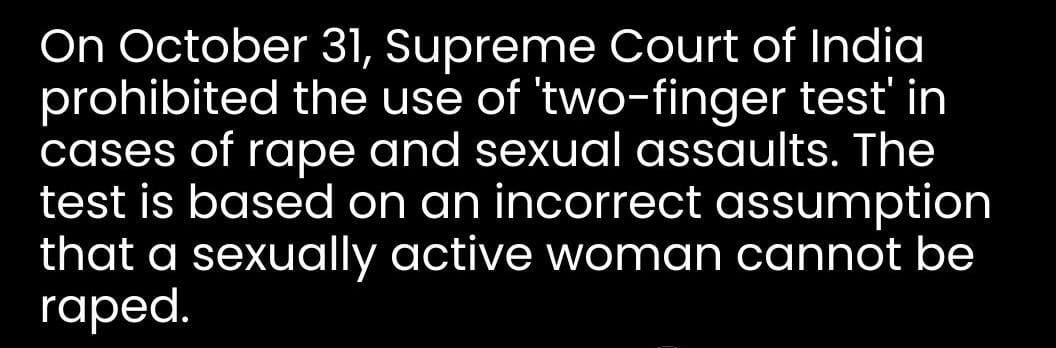
    • On October 31, a two-judge bench of the Supreme Court noted that the two-finger test is a sexist medical practice that re-victimizes and re-traumatizes rape survivors. The Court also issued directions to the Union and state governments to implement the 2014 guidelines of the Ministry of Health and Family Welfare for health providers in sexual violence cases.

    What is two finger tests?

    • The two-finger test involves the medical examiner inserting their two fingers into the vagina of a survivor to note the presence or absence of the hymen and the so-called laxity of the vagina.

    finger test

    What is the expert doctor’s opinion?

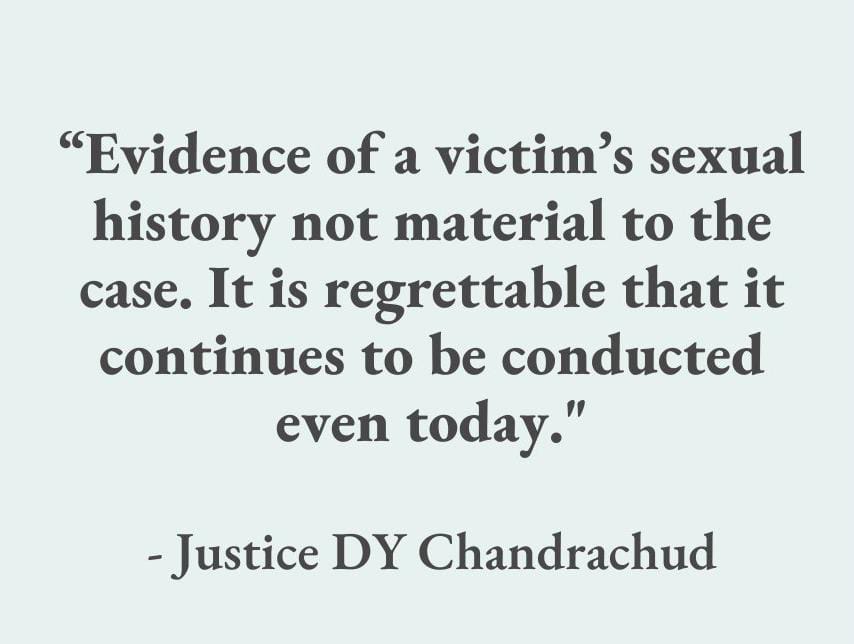
    • Misogynistic belief: While a hymen can be torn and its orifice may vary in size for many reasons unrelated to sex, the origin of the two-finger test lies in the misogynistic belief that a torn hymen is an indication that the survivor is habituated to sex and therefore, cannot be raped or is more likely to make false claims about being raped.

    What is the law against such infringement of bodily privacy?

    • SC prohibited test in Rajesh v. State of Haryana 2013 case: “Medicalization of consent” where women’s bodies are given precedence over their voices. Recognizing this as an invasion of privacy and a violation of a survivor’s dignity, the Supreme Court prohibited the test in Lillu at Rajesh v. State of Haryana (2013).
    • Guidelines for medico-legal care for survivors of sexual violence: Shortly after, in March 2014, taking forward the recommendations of the Justice J S Verma Committee Report, the Ministry of Health & Family Welfare issued guidelines for medico-legal care for survivors of sexual violence. These guidelines explicitly prohibited the two-finger test and discussed the need for training medical examiners to respond to the needs of the survivors in a sensitive and non-discriminatory manner.

    Why the practice of two finger tests still persists?

    • Lack of political will: Nearly eight years since the guidelines were issued, the two-finger test still remains a reality. Its prevalence is a reflection of the complete lack of political will to address the issue.
    • No pan-India comprehensive review: While fragmented pieces of narratives and research indicate that the two-finger test continues in rape cases to date, it is incumbent upon the executive to undertake a comprehensive pan-India review to assess the nature and extent of the problem.
    • Change in format and unclarity: The changed format (introduced after the passing of the Criminal Law Amendment Act, 2013) of the medico-legal certificate used by doctors in rape cases did not require them to make a note of the finding of the two-finger test. However, according to the lawyers, this did not mean that the test was not happening anymore. Some says they it was no longer being recorded as such but was still being conducted.
    • Poor medical infrastructure: The continued existence of the two-finger test is a result of the overall poor state of forensic medicine infrastructure in India.
    • Lack of awareness: Lack of awareness amongst the medical community about the unscientific nature of the two-finger test.

    finger test

    What is the opinion of the court?

    • Government must enforce the protocol: The Court commenting on the sorry state of affairs and issuing directions to the government on enforcement of the protocol including the emphasis on workshops and the medical school curriculum is significant.
    • Holding a person, a guilty of misconduct: The Court took a step further by holding a person conducting the two-finger test on a rape survivor guilty of misconduct. It is unclear if the Court was making a reference to professional misconduct on part of the medical examiner.

    finger test

    What should be the way forward?

    • Caregiving to victim: Medical practitioners must see themselves as caregivers when handling sexual violence cases.
    • Awareness about legal system: Medical practitioners should be made to understand as their role in the criminal legal system, specifically towards rape survivors.
    • Training of medical examiners: The training in medical school must prepare medical examiners for their role in the justice system.
    • Police should play an active role: The institution of police should be sensitized on the continued use of the two-finger test in rape cases.
    • Modules on sexuality: Training and workshops designed for doctors needs to include modules on sexuality and discrimination.

    Conclusion

    • Two finger test is further traumatizing the victim of rape. Despite the directives of courts years ago and unscientific nature, two finger test continues. Women empowerment is not only about the earnings and livelihood its also about the right to privacy and dignity of life.

    Mains Question

    Q. What is two finger tests? what is the law against the two-finger test? give the reasons for continuation of two finger test?

    Click and Get your FREE copy of Current Affairs Micro notes


  • World Network of biosphere reserves: A backbone of biodiversity conservation

    biosphere reserves

    Context

    • November 3 will be the first ‘The International Day for Biosphere Reserves’, to be celebrated beginning 2022. The World Network of Biosphere Reserves (WNBR) was formed in 1971, as a backbone for biodiversity conservation, ecosystem restoration, and living in harmony with nature.

    biosphere reserves

    What is biosphere reserve?

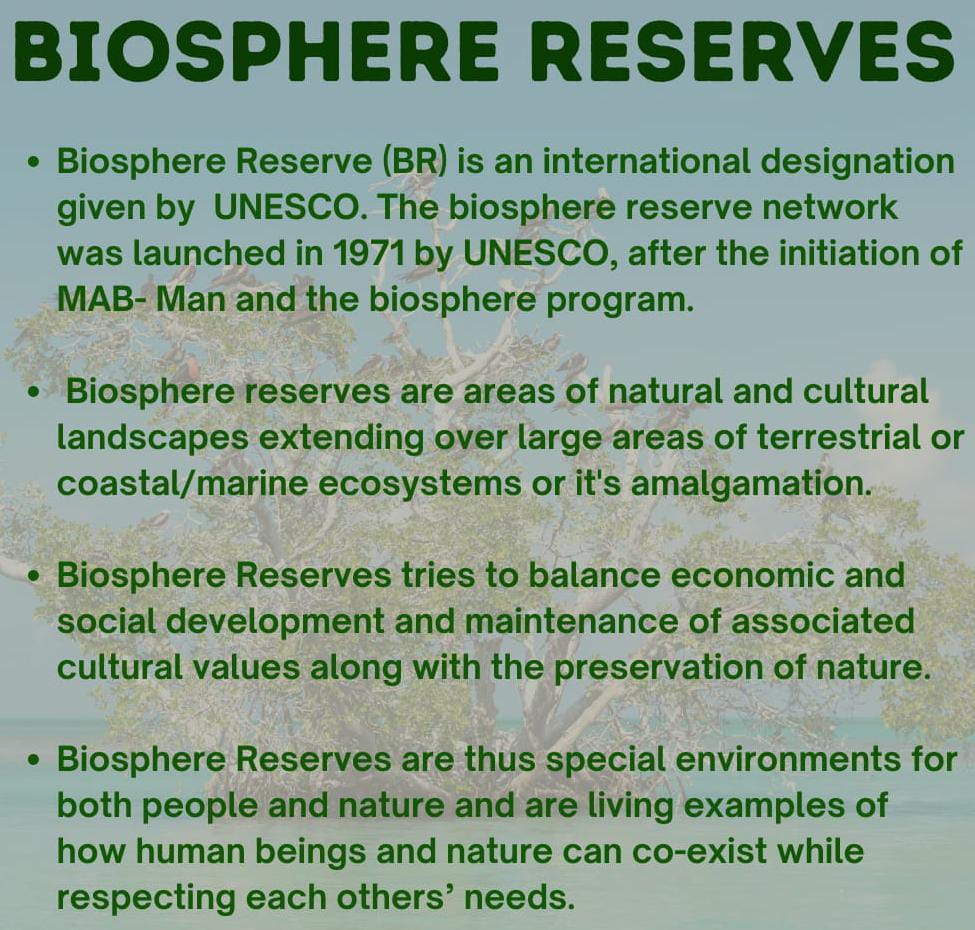
    • Protected area: A biosphere reserve is an area of land or water that is protected by law in order to support the conservation of ecosystems, as well as the sustainability of mankind’s impact on the environment.
    • Serves as a Platform to study:  They are places that provide local solutions to global challenges. Biosphere reserves include terrestrial, marine and coastal ecosystems. Each site promotes solutions reconciling the conservation of biodiversity with its sustainable use.
    • Learning places for sustainable development: Biosphere reserves are ‘learning places for sustainable development’. They are sites for testing interdisciplinary approaches to understanding and managing changes and interactions between social and ecological systems, including conflict prevention and management of biodiversity.
    • Biodiversity conservation programs are carried out: To carry out the complementary activities of biodiversity conservation and sustainable use of natural resources, biosphere reserves are traditionally organized into 3 interrelated zones, known as: the core area, the buffer zone, and a transition zone or ‘area of cooperation.
    • The core purpose: The purpose of the formation of the biosphere reserve is to conserve in situ all forms of life, along with its support system, in its totality, so that it could serve as a referral system for monitoring and evaluating changes in natural ecosystems. Each reserve aims to help scientists and the environmental community figure out how to protect the world’s plant and animal species while dealing with a growing population and its resource needs.

    What is the process of recognition as Biosphere reserve?

    • All biosphere reserves are internationally recognized sites on land, at the coast, or in the oceans.
    • Governments alone decide which areas to nominate. Before approval by UNESCO, the sites are externally examined.
    • If approved, they will be managed based on a plan, reinforced by credibility checks while remaining under the sovereignty of their national government.

    biosphere reserves

    Current status of Biosphere reserves

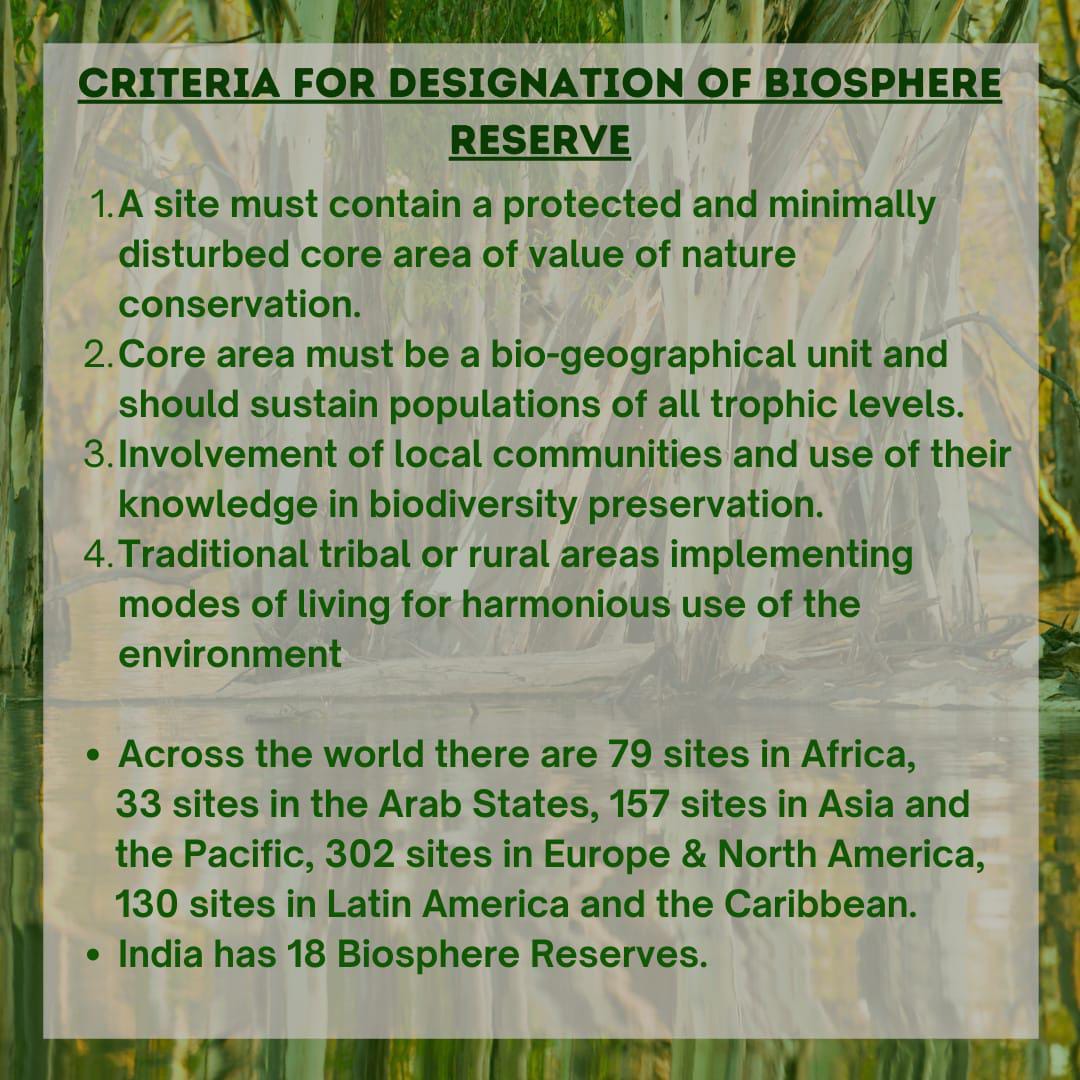
    • Worldwide: There are 738 biosphere reserves in 134 countries, including 22 transboundary sites.
    • In India:
    • Presently, there are 18 notified biosphere reserves in India. Ten out of the eighteen biosphere reserves are a part of the World Network of Biosphere Reserves, based on the UNESCO Man and the Biosphere (MAB) Programme list.
    • In India, the first biosphere reserve was designated by UNESCO in 2000, namely, the blue mountains of the Nilgiris stretching over Tamil Nadu, Karnataka and Kerala.

    You must know- UNESCO Man and the Biosphere (MAB) Programme

    • The MAB programme is an intergovernmental scientific programme.
    • It aims to establish a scientific basis for enhancing the relationship between people and their environments.
    • It combines the natural and social sciences with a view to improving human livelihoods and safeguarding natural and managed ecosystems.
    • It promotes innovative approaches to economic development that are socially and culturally appropriate and environmentally sustainable.

    What is World Network of Biosphere Reserves (WNBR)?

    • Dynamic network of cooperation: The WNBR, an amazing network of sites of excellence, is a unique tool for cooperation through sharing knowledge, exchanging experiences, building capacity and promoting best practices.
    • Fosters harmonious integration of people and nature: Its members are always ready to support each other.  It fosters the harmonious integration of people and nature for sustainable development through participatory dialogue; knowledge sharing; poverty reduction and human well-being improvements; respect for cultural values and society’s ability to cope with change – thus contributing to the 2030 Agenda and the Sustainable Development Goals (SDGs)
    • A tool to develop sustainable approach: The Network is one of the main international tools to develop and implement sustainable development approaches in a wide array of contexts
    • The principle of Living with harmony: The best concept for ‘Living in Harmony with Nature’ that exists in the United Nations system, is the WNBR, making these places more important today than ever before, where humans are thriving and relearning how to live with nature.


    Click and Get your FREE copy of Current Affairs Micro notes

  • What are Coronal Holes?

    coronal

    Recently, NASA tweeted an image of the sun seemingly ‘smiling’. NASA explained that the patches are called coronal holes, which can be seen in ultraviolet light but are typically invisible to our eyes.

    What are Coronal Holes?

    • Coronal holes are regions on the sun’s surface from where fast solar wind gushes out into space.
    • Because they contain little solar material, they have lower temperatures and thus appear much darker than their surroundings.
    • Here, the magnetic field is open to interplanetary space, sending solar material out in a high-speed stream of solar wind.
    • They can last between a few weeks to months.
    • The holes are not a unique phenomenon, appearing throughout the sun’s approximately 11-year solar cycle.
    • They can last much longer during solar minimum – a period of time when activity on the Sun is substantially diminished.

    How are they formed?

    • It is unclear what causes coronal holes.
    • They correlate to areas on the sun where magnetic fields soar up and away, without looping back down to the surface as they do elsewhere.

    What do they tell us?

    • These ‘coronal holes’ are important to understanding the space environment around the earth through which our technology and astronauts travel.
    • In 2016 coronal holes covering “six-eight per cent of the total solar surface” were spotted.
    • Scientists study these fast solar wind streams because they sometimes interact with earth’s magnetic field, creating what’s called a geomagnetic storm.
    • These storms can expose satellites to radiation and interfere with communications signals.

    Back2Basics: Geomagnetic Storms

    coronal

    • Geomagnetic storms relate to earth’s magnetosphere – the space around a planet that is influenced by its magnetic field.
    • When a high-speed solar stream arrives at the earth, in certain circumstances it can allow energetic solar wind particles to hit the atmosphere over the poles.
    • Such geomagnetic storms cause a major disturbance of the magnetosphere as there is a very efficient exchange of energy from the solar wind into the space environment surrounding earth.
    • In cases of a strong solar wind reaching the earth, the resulting geomagnetic storm can cause changes in the ionosphere, part of the earth’s upper atmosphere.
    • Radio and GPS signals travel through this layer of the atmosphere, and so communications can get disrupted.


    Click and get your FREE copy of Current Affairs micro notes

  • Pahari Ethnic Community added to STs List of J&K

    The National Commission for Scheduled Tribes (NCST) has now cleared the way for the inclusion of the ‘Pahari ethnic group’ on the Scheduled Tribes list of the Union Territory of Jammu and Kashmir.

    Who are the Scheduled Tribes?

    • The term ‘Scheduled Tribes’ first appeared in the Constitution of India.
    • Article 366 (25) defined scheduled tribes as “such tribes or tribal communities or parts of or groups within such tribes or tribal communities as are deemed under Article 342 to be Scheduled Tribes for the purposes of this constitution”.
    • Article 342 prescribes procedure to be followed in the matter of specification of scheduled tribes.
    • Among the tribal groups, several have adapted to modern life but there are tribal groups who are more vulnerable.
    • The Dhebar Commission (1973) created a separate category “Primitive Tribal Groups (PTGs)” which was renamed in 2006 as “Particularly Vulnerable Tribal Groups (PVTGs)”.

    How are STs notified?

    • The first specification of Scheduled Tribes in relation to a particular State/ Union Territory is by a notified order of the President, after consultation with the State governments concerned.
    • These orders can be modified subsequently only through an Act of Parliament.

    Status of STs in India

    • The Census 2011 has revealed that there are said to be 705 ethnic groups notified as Scheduled Tribes (STs).
    • Over 10 crore Indians are notified as STs, of which 1.04 crore live in urban areas.
    • The STs constitute 8.6% of the population and 11.3% of the rural population.

    Who are the Paharis referred to in this article?

    • The proposal called for the inclusion of the “Paddari tribe”, “Koli” and “Gadda Brahman” communities to be included on the ST list of J&K.
    • The suggestion for the inclusion had come from the commission set up for socially and educationally backward classes in the UT.
    • The J&K delimitation commission has reserved six of the nine Assembly segments in the Pir Panjal Valley for STs.


    Click and get your FREE copy of Current Affairs micro notes

  • Rhino horns are shrinking

    rhino

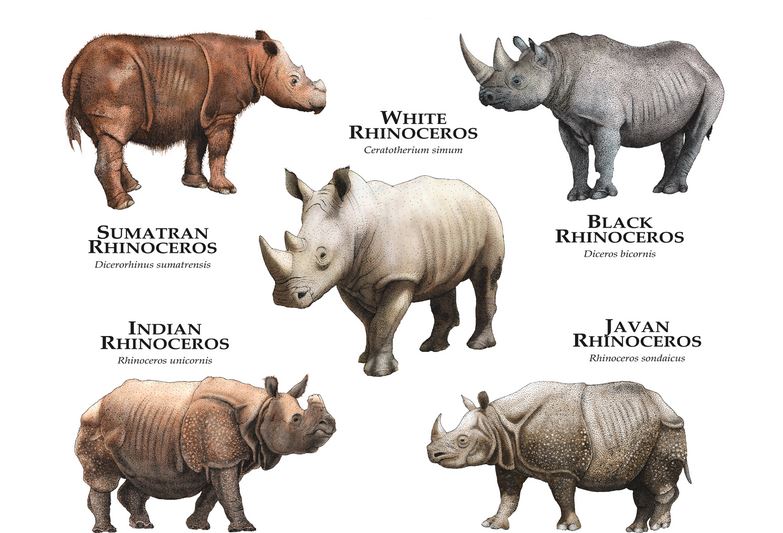
    The horns of rhinoceroses may have become smaller over time from the impact of hunting, according to a recent study spanning more than five centuries.

    About Indian Rhino

    • The Indian rhinoceros also called the greater one-horned rhinoceros and great Indian rhinoceros is a rhinoceros native to the Indian subcontinent.
    • It is listed as Vulnerable on the IUCN Red List and Schedule I animal in the Wildlife Protection Act, 1972.
    • It once ranged across the entire northern part of the Indian Subcontinent, along the Indus, Ganges and Brahmaputra River basins, from Pakistan to the Indian-Myanmar border.
    • Poaching for rhinoceros horn became the single most important reason for the decline of the Indian rhino.

    Why are Rhinos poached for horns?

    • Ground rhino horn is used in traditional Chinese medicine to cure a range of ailments, from cancer to hangovers, and also as an aphrodisiac.
    • In Vietnam, possessing a rhino horn is considered a status symbol.
    • Due to demand in these countries, poaching pressure on rhinos is ever persistent against which one cannot let the guard down.


    Click and get your FREE copy of Current Affairs micro notes

  • Ethics Webinar: 10 Most Important themes for Ethics to cover UPSC GS Paper-IV in 1.5 months? | Score 120+ in Ethics | Get recorded session + PDFs Sukanya ma’am

    Ethics Webinar: 10 Most Important themes for Ethics to cover UPSC GS Paper-IV in 1.5 months? | Score 120+ in Ethics | Get recorded session + PDFs Sukanya ma’am

    Register and get recorded session + PDF by Sukanya ma’am | Masterclass: How to cover Ethics in 1.5 months | 10 Most important themes for Ethics


    In Ethics (GS Paper-IV), is one of the most ignored aspect in the UPSC Mains syllabus. Most of the times aspirants are confused on the strategy aspect as well as the timing (when to start?).

    The master strategy doesn’t mean only ‘How to’ or ‘What to’. An infallible strategy always works when it starts at the very right time. Toppers don’t wait for ‘Later’. They start as soon as possible. 99.99% of toppers start dealing with ETHICS early and finish far before from Prelims (max by Feb). 

    Delaying Ethics preparation till the post-prelims phase is a wrong strategy.

    Acknowledging the need to ensure 120+ marks, CD’s senior IAS mentor and Ethics faculty, Sukanya Rana ma’am is going to conduct a super important Ethics Masterclass on How to cover UPSC GS Paper 4 Ethics in 1.5 months?

    Register and get recorded session + PDF by Sukanya ma’am | Masterclass: How to cover Ethics in 1.5 months | 10 Most important themes for Ethics


    Objectives of the special masterclass: 

    • How to Complete the paper on time even if all questions are not known?
    • How to start case studies with core keywords inserted Introduction?
    • How to enrich your answers to case studies with the “My Vision”/”thinkers” approach?
    • How to write ethics-oriented answers even though questions could have been asked in other GS papers?
    • Writing course of action of case studies in the most ethical ways along with a practical approach.
    • In the case of studies, you must provide practical solutions. How to frame your answers based on peripheral problems in a case study will be discussed.
    • How to use examples and can make our examples.
    • How to have a grip on recent trends in Ethics papers!

    Do and don’t of ethics paper. The most common mistakes will also be discussed.

    Register and get recorded session + PDF by Sukanya ma’am | Masterclass: How to cover Ethics in 1.5 months | 10 Most important themes for Ethics


    About Sukanya Rana

    Sukanya Rana: Our Civilsdaily Mains Program Head Mrs. Sukanya Rana has been mentoring students across multiple stages from prelims to mains to interviews. She is part of Smash Mains as an Ethics Mentor and helped Civilsdaily toppers to achieve their dream. Interview in 2016.


    What The Hindu mentioned about Civilsdaily Mentorship

    The Hindu has acknowledged the success rate of CD’s Smash mains Mentorship

    Quora Digests:

    Register for the webinar. Submit your query and get CD’s Telegram group + access to FREE resources. Sukanya Ma’am will also share a special PDF with you post-webinar.

  • 2nd Nov| Daily Answer Writing Enhancement

    Topics for Today’s questions:

    GS-1          Salient features of Indian Society, Diversity of India.

    GS-2         Issues and challenges pertaining to the federal structure

    GS-3         Conservation, environmental pollution and degradation, environmental impact assessment.

    GS-4        Attitude: content, structure, function; its influence and relation with thought and behaviour; moral and political attitudes; social influence and persuasion.

    Question 1)


    Q.1 Malnutrition affects different strata of the society differently. Elaborate with examples. (15 Marks)


    Question 2)

    Q.2 There have been multiple instances of friction between the elected government of a state and the governor in recent times. Examining the causes of such friction, suggest a way forward. (15 Marks)

    Question 3)

    Q.3 Highlighting the issues with stubble burning in India, suggest some measures to tackle this challenge. (10 Marks)

    Question 4)  

    Q.4 “Attitude is a little thing that makes a big difference”. Comment. What do you think is a good and bad attitude for civil servants? (10 Marks)


    HOW TO ATTEMPT ANSWERS IN DAILY ANSWER WRITING ENHANCEMENT(AWE)?

    1. Daily 4 questions from General studies 1, 2, 3, and 4 will be provided to you.

    2. A Mentor’s Comment will be available for all answers. This can be used as a guidance tool but we encourage you to write original answers.

    3. You can write your answer on an A4 sheet and scan/click pictures of the same.

    4.  Upload the scanned answer in the comment section of the same question.

    5. Along with the scanned answer, please share your Razor payment ID, so that paid members are given priority.

    6. If you upload the answer on the same day like the answer of 11th  February is uploaded on 11th February then your answer will be checked within 72 hours. Also, reviews will be in the order of submission- First come first serve basis

    7. If you are writing answers late, for example, 11th February is uploaded on 13th February , then these answers will be evaluated as per the mentor’s schedule.

    8. We encourage you to write answers on the same day. However, if you are uploading an answer late then tag the mentor like @Staff so that the mentor is notified about your answer.

    *In case your answer is not reviewed, reply to your answer saying *NOT CHECKED*. 

    1. For the philosophy of AWE and payment: 
  • Q.4 “Attitude is a little thing that makes a big difference”. Comment. What do you think is a good and bad attitude for civil servants? (10 Marks)

    Mentor’s Comments-

    • In the introduction, define attitude.
    • In the body, first discuss the role of attitude in making a big difference in life.
    • Next, talk about what constitutes good and bad attitude for civil servants.
    • Conclude by emphasizing the importance of developing a right attitude in life.
  • Q.3 Highlighting the issues with stubble burning in India, suggest some measures to tackle this challenge. (10 Marks)

    Mentor’s Comments-

  • Q.2 There have been multiple instances of friction between the elected government of a state and the governor in recent times. Examining the causes of such friction, suggest a way forward. (15 Marks)

    Mentor’s Comments-

  • Q.1 Malnutrition affects different strata of the society differently. Elaborate with examples. (15 Marks)

    Mentor’s Comments-

    • In introduction, define malnutrition.
    • In the body, discuss the effect of malnutrition on different sections of society such as women, children, marginalized sections etc
    • Write a brief way forward.
    • Conclude accordingly.
  • State Pollution Control Boards (SPCBs)

    pollution

    Context

    • In the fight against air pollution in the Indo Gangetic Plain, there are several important protagonists, none more so than India’s frontline environmental regulators, the State Pollution Control Boards (SPCBs), and the Pollution Control Committees (PCCs) in the Union Territories. There is no future with clean air in which the SPCB’s do not perform at the highest level possible.

    know about State Pollution Control Boards (SPCB)

    • Constituted under Water (Prevention and Control of Pollution) Act, 1974: The SPCBs were initially constituted under the Water (Prevention and Control of Pollution) Act, 1974. Under the Air (Prevention and Control of Pollution) Act, 1981, the SPCB mandate was expanded to include air quality management.
    • New responsibility without capacity: Subsequently, several new environmental regulations added to their roles and functions. Unfortunately, this enhanced mandate has not been matched with increased capacity and capability in the Boards. As environmental indicators such as air quality and water quality worsen in many parts of the country, the Boards are evidently failing to effectively discharge their statutory mandate.

    Analyzing the performance of SPCB’s

    • Poor performance of SPCBs: Over the years, several reports that have been published, including those by the parliamentary standing committee and government committees, have identified reasons for the poor performance of the SPCBs.
    • Experts are excluded from composition: The composition of SPCBs is a matter of serious concern as important stakeholders and those with crucial expertise are missing in most States. Boards are multimember bodies headed by a chairperson and a member secretary. Their decisions and policies guide the day-to-day functioning of the organisation.
    • Conflict of interest: Over 50% of the Board members across the 10 SPCBs and PCC studied represent potential polluters: local authorities, industries, and public sector corporations. They are subject to the SPCB’s regulatory measures, and their overwhelming presence raises fundamental questions around conflicts of interest.
    • SPCBs Does not meet the statutory requirement: At the same time, scientists, medical practitioners, and academics constitute only 7% of the Board members. What is even more worrying is that most Boards do not meet the statutory requirement of having at least two Board members who have knowledge of, and experience in, air quality management.
    • SPCB’s leadership and uncertain tenure: The chairperson and the member secretary do not enjoy a long, stable, and fulltime tenure. In many States, persons in these two posts hold an additional charge in other government departments. Data also show that several chairpersons and member secretaries have held their posts for less than a year. For example, the shortest tenure for a chairperson has been 18 days (Chhattisgarh) and 15 days for a member secretary (Haryana and Uttar Pradesh).
    • Short tenure with multiple roles: With the focus of the leadership of SPCB spread thin across multiple roles and their tenures being short, often they do not even have the time to understand their mandate fully before they are moved out. In such a scenario, long term policy planning, strategic interventions and effective execution aimed at reducing air pollution substantially are extremely difficult.
    • Problem of Understaffing: The SPCBs are critically understaffed. At least 40% of all sanctioned posts are vacant across nine SPCBs/PCCs for which there is data. Vacancy levels in technical positions are as high as 84% in Jharkhand, and over 75% in Bihar and Haryana. An inadequate staff strength forces the Boards to recast their priorities among their various functions.
    • Less regulatory scrutiny: Less staff strength also means weaker regulatory scrutiny and poor impact assessment. For example, given their workload, engineers in Bihar, Jharkhand, Punjab and Uttar Pradesh have less than a day to inspect, evaluate and decide on each consent application. With Board staff running on empty, this is clearly an unsustainable situation.

    pollution

    What are the recommendations for effective SPCBs?

    • Addressing Leadership and human resource needs: Strengthening manpower at the SPCBs will not only require hiring new resources, but also training existing staff by leveraging institutions such as the Indian Institutes of Technology, NEERI, and others. These in-service training programs would also serve as an incentive for staff both new and existing.
    • Better Pay structures: The Pay structure need to be revised to align with sectoral norms to ensure that SPCBs are not regularly losing trained manpower to industry and other sectors.
    • Modern infrastructure: The infrastructure of PCBs also needs to be improved along with manpower i.e., facilities such as adequate computers, improved lab facility etc. The instruments used for monitoring are not maintained properly or outdated. Sometimes labs are also not equipped enough to do the necessary analysis.
    • Expert should lead the SPCBs: It is imperative for their effective functioning that States should nominate to leadership positions, individuals of technical expertise and distinguished service such that effective decision making can be carried out.
    • Providing the fixed tenure: They should be appointed for a fixed tenure and in full-time roles, with the sword of removal or termination not hanging over their heads.
    • Reduction is composition for effective functioning: The size of the boards themselves may also be reduced to aid in effective functioning, with preference in membership given to technical experts, as is the international best practice. These moves would ensure that the Boards function effectively as independent agencies, as envisioned in their foundational legislation.

    pollution

    Read the basics-Air pollution

    • Air pollution is contamination of the indoor or outdoor environment by any chemical, physical or biological agent that modifies the natural characteristics of the atmosphere.
    • Household combustion devices, motor vehicles, industrial facilities and forest fires are common sources of air pollution. Pollutants of major public health concern include particulate matter, carbon monoxide, ozone, nitrogen dioxide and sulfur dioxide. Outdoor and indoor air pollution cause respiratory and other diseases and are important sources of morbidity and mortality.

    Conclusion

    • Given the scale and causes of air pollution in India, multidisciplinary expertise is needed to tackle it; there must also be an explicit focus on health while designing air pollution policy. The lack of expertise and skewed representation of stakeholders on the Boards can only be a hindrance to effective policy making.

More posts