According to recent global health reports, measles caused approximately 95,000 deaths in 2024, despite the presence of a highly effective vaccine.
Most deaths occurred among unvaccinated children under five, highlighting concerns about declining immunization coverage, vaccine hesitancy, and disruptions in routine immunization services in several regions.
The spike has raised alarms globally, making measles a significant public health priority in 2025.
About Measles
Type: Highly contagious airborne viral disease.
Causative Agent: Measles virus (family Paramyxoviridae, genus Morbillivirus).
Severity: Can lead to pneumonia, encephalitis, blindness, and death.
Who Is at Risk?
Any non-immune person.
Higher risk:
Unvaccinated young children
Pregnant persons
Common in parts of Africa, the Middle East, and Asia.
Treatment
No specific antiviral treatment.
Management is supportive (hydration, fever control, nutrition, monitoring complications).
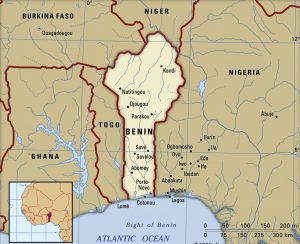
Benin President Patrice Talon said the security forces stopped a coup attempt by some soldiers in Cotonou on December 7.
Key Facts
Country in West Africa Total area about 112622 sq km Borders: Niger to the northeast and east, Togo to the west, Burkina Faso to the northwest and the Southern coastline on the Bight of Benin (Gulf of Guinea, Atlantic Ocean)
Major rivers:
Niger and its tributaries Mékrou, Alibori, Sota (northeast)
Mono, Couffo, Ouémé
Official capital: Porto Novo
Largest city and de facto capital: Cotonou
Approx population: 10.87 million (2016)
Official language: French Widely spoken local languages: Fon, Yoruba
Currency: West African CFA franc (XOF)
Former French colony; independence in 1960
Type of government: Presidential Republic
Multi-party democratic system
In the recent years Chad, Guinea, Mali and Sudan caught the international attention for which one of the following reasons common to all of them? (2023)
(a) Discovery of rich deposits of rare earth elements
An IMF report has recognized UPI as the worlds largest real time retail fast payment system by transaction volume. As per ACI Worldwide (Prime Time for Real Time 2024), UPI accounts for about 49 percent of global real time payment transactions.
Note: UPI accounts for 85% of all digital payments within India.
Key Facts
Global leadership
India: 129.3 billion transactions
49 percent share of global real time payment volume
Followed by: Brazil 14 percent, Thailand 8 percent, China 6 percent and South Korea 3 percent
Developed by National Payments Corporation of India (NPCI)
Regulatory oversight Reserve Bank of India and Ministry of Finance support policy push
Government support initiatives
Incentive scheme for low value BHIM UPI transactions
PIDF (Payments Infrastructure Development Fund) for merchant infrastructure in Tier 3 to 6 areas
Expansion of RuPay UPI acceptance across transport, ecommerce, and public services
Infrastructure Growth: 5.45 crore digital touch points deployed through PIDF in Tier 3 to 6 centers (as of Oct 2025)
56.86 crore QR codes deployed to approx 6.5 crore merchants (FY 2024-25)
Which one of the following links all the ATMs in India? (2018)
India chaired a high level meeting of Big Cat Range Countries in New Delhi, where the Union Environment Minister invited all such countries to join IBCA. India will host the Global Big Cats Summit in 2026.
What is IBCA?
A global cooperative initiative launched by India to protect big cats and their habitats worldwide. Envisioned by the Prime Minister of India.
The Indian Navy has deployed four more warships carrying 1000 tons of Humanitarian Assistance and Disaster Relief stores to cyclone hit regions of Sri Lanka under Operation Sagar Bandhu.
About the Operation
An ongoing Indian Navy initiative to provide urgent assistance to Sri Lanka in the aftermath of a severe cyclone. • Focus includes Search and Rescue and supply of essential relief material.
Indian Ocean Region Significance
Reinforces India’s role as a reliable first responder in the region. • Strengthens India Sri Lanka people level relations. • Showcases India’s naval capability in disaster response and logistics.
Associated Vision
Aligned with India’s commitment to Security and Growth for All in the Region (SAGAR) and cooperative maritime outreach in the Indian Ocean Region.
Consider the following pairs: Country – Important reason for being in the news recently (2022)
1. Chad — Setting up of permanent military base by China
2. Guinea — Suspension of Constitution and Government by military
3. Lebanon — Severe and prolonged economic depression
4. Tunisia — Suspension of Parliament by President
How many pairs given above are correctly matched?
(a) Only one pair (b) Only two pairs (c) Only three pairs (d) All four pairs
Every topper has a system, not of reading more, but of recalling better. Flash Notes are that missing link between understanding and retention, the secret to revising 10 months of current affairs and GS in just days before the exam.
In this live session, I will show you how to combine Microthemes with Flash Notes to create a seamless loop between learning, recall, and application, a system designed to make your Prelims and Mains prep airtight.
Sreejay Sir, Civilsdaily IAS
What I will cover (practical, no fluff):
1. The Microtheme Flash Notes Loop Explained
How Microthemes build conceptual depth and Flash Notes ensure instant recall.
Converting long notes into crisp, one page summaries per theme.
The Loop Technique: connecting Flash Notes with PYQs and mock tests for 360° coverage.
2. Why Most Aspirants Fail to Retain Information
Common note making traps that kill retention.
Why revising linearly doesn’t work for dynamic topics.
How to create mental linkages that mirror UPSC’s question logic.
3. How to Create High Utility Flash Notes
Step by step method to design Prelims and Mains Flash Notes.
How to summarise complex reports, bills, and judgments into ready to use notes.
Using colours, symbols, and keyword clustering for rapid memory recall.
4. Practical Demonstration
Live examples from Polity, Economy, and Environment themes.
How to link one Microtheme (say, Climate Finance) to both Prelims MCQs and Mains answer fodder.
How to update Flash Notes monthly without rewriting everything.
Why attend this session:
• To learn how to complete your Prelims and Mains preparation loop through smart systems.
• To get a ready model for Flash Notes creation used by top Prelims scorers.
• To master retention and recall techniques that actually work under exam stress.
• To access Prelims Microthemes PDF and examples shared during the session.
• To get exclusive access to the Prelims Microthemes PDF for integrated revision.
It will be a 45 minute session, post which we will open up the floor for all kinds of queries which a beginner must have. No questions are taboo and Sreejay sir is known to be patiently solving all your doubts.
Join us for a Zoom session on 09th Dec at 7 PM. This session is a must attend for you If you are attempting UPSC for the first time or have attempted earlier and now preparing for 2026/2027, then it is going to be a valuable session for you too.
See you in the session”
Register for the session for a complete in-depth UPSC Prep
(Don’t wait—the next webinar/session won’t be until Mid Dec’25)
These masterclasses are packed with value. They are conducted in private with a closed community. We rarely open these webinars for everyone for free. This time we are keeping it for 300 seats only.
[UPSC 2023] E-governance, as a critical tool of governance, has ushered in effectiveness, transparency and accountability in governments. What inadequacies hamper the enhancement of these features?
Linkage: This question links to GS-2 themes of e-governance, transparency, and accountability. The article’s examples of NMMS, Poshan Tracker, and PDS apps directly show how design flaws and exclusion hinder these very objectives.
Mentor’s Comment
Surveillance-driven governance is expanding rapidly across India’s welfare programmes. Mobile apps promising “real-time monitoring” and “perfect accountability” are being deployed at scale, often without adequate evidence, capacity, or safeguards. This article critically evaluates the growing reliance on tech fixes in welfare delivery. For UPSC aspirants, it offers an analytical understanding of digital governance, state capacity, accountability frameworks, and ethical concerns, key themes across GS-2 and GS-4.
Introduction
Digital tools entered India’s welfare architecture as instruments to modernise attendance, prevent leakages, and strengthen accountability. Over time, however, their use expanded without evaluating field conditions such as connectivity, device access, literacy, and administrative capacity. Surveillance apps have produced limited gains, created new exclusion risks, and shifted the burden of accountability onto frontline workers instead of programme designers and administrators.
Why in the news
Welfare programmes across India are increasingly mandating surveillance apps, ranging from biometric attendance to compulsory photo uploads, to improve accountability. But a series of recent failures, especially in schemes like the National Mobile Monitoring System (NMMS) and the Poshan Tracker, has exposed deep flaws. For the first time, governments are publicly acknowledging that these apps are producing unreliable data, penalising genuine beneficiaries, and overburdening frontline workers.
How did biometric attendance become a dominant tool in welfare programmes?
Biometric punctuality enforcement: Introduced to ensure staff attendance; absenteeism led governments to mandate digital attendance, even threatening punitive action. Example: Block in Uttarakhand where nurses faced punishments for late biometric attendance.
Competing administrative tasks:Conscientious officials stayed back late to complete computerised work, leading to poor next-day biometric compliance.
Impact on health workers: In Rajasthan, RCT evidence showed biometric attendance increased absenteeism, not punctuality.
MGNREGA experience:Wage expenditure tied to digital attendance meant workers paid for tasks they did not perform if supervisors manipulated records.
Why did the National Mobile Monitoring System (NMMS) generate controversy?
Mandatory photo uploads: Required two geotagged photos daily; failure resulted in wages withheld.
Unrealistic conditions:Poor connectivity in remote areas made uploads impossible.
Limited deterrence of fraud: The app could not confirm whether workers were present all day; supervisors were still able to manipulate attendance.
Excessive burden on workers: Workers anxious about upload deadlines; many were forced to return to worksites simply to capture photos.
How did the Poshan Tracker create disruptions in nutrition schemes?
Mandatory recognition technology: Ministry required Face Recognition Technology (FRT) for THR pack distribution to children and mothers.
Connectivity problems: Anganwadi worker in Haryana, crowd waiting; app warning: “those who want to eat will continue”, meaning refusal impossible.
Risk of exclusion:Adivasi worker unable to upload photos; THR packs denied to her centre’s beneficiaries.
Extra documentation: Ministry insisted FRT photos must match recorded photographs, adding further layers of control.
How did ration distribution apps worsen inclusion errors for vulnerable households?
App-based authentication: Some States required biometric or photograph-based verification for the full ration quota.
Penalties for errors: In Jharkhand, uploaded photo mismatch led to partial ration denial.
Burden on elderly/disabled beneficiaries: Those unable to stand for photographs or travel to ration shops lost access entirely.
Do tech fixes improve accountability in welfare implementation?
Accountability diversion: Apps target frontline workers (anganwadi workers, nurses, teachers) instead of programme designers who control budgets and logistics.
Narrow definition of accountability: Focus limited to procedural compliance rather than service quality.
Over-reliance on automation: Governments assume apps can “prove” honesty or dishonesty; instead, structural gaps remain untouched.
Manipulation persists: Despite apps, fraud, delays, and ghost entries continue, because the administrative ecosystem, not workers, drives corruption patterns.
Limited effect of tech surveillance
User rejection: Nurses in several states stopped using apps mandated by NHM due to technical and workload issues.
False confidence in data: Administrators felt the ANA tool provided proof of malnutrition despite underlying measurement problems.
Infrastructure mismatch: Apps needed smartphones, servers, data connectivity, conditions often absent in rural welfare ecosystems.
Shifting blame: When NMMS and Poshan Tracker failed, ministries blamed “misuse” instead of app design flaws.
Accountability Without Capacity: A Flawed Approach
Fragmented accountability: Failures frequently attributed to workers; rarely to poor programme design.
Blame-shifting: Ministries argued NMMS failures were due to workers manipulating apps.
Overproduction of technology: Industries push surveillance apps and governments adopt them without field-testing.
Cost to welfare: Data obsession overshadows quality of service delivery, including nutrition, health outreach, and ration reliability.
Conclusion
Surveillance apps in welfare promise transparency but frequently deliver exclusion, burden frontline workers, and create a false sense of accountability. The article shows that technological solutions, when applied without understanding field realities, act like “snake oil”, seductive yet ineffective. Real accountability requires strengthening administrative capacity, improving worker conditions, and focusing on welfare outcomes rather than digital compliance rituals.
The rupee’s recent fall is not driven by a widening current account deficit, as traditionally believed, but by an unprecedented decline in net foreign capital inflows, which have turned sharply negative for the first time in years. During April-September 2025, India saw a net outflow of $7.6 billion, a stark reversal from the $25.3 billion net inflow in the same period of 2024. This contrast signals a structural shift where India’s strong services surplus can no longer offset the sharp rise in the goods deficit alongside shrinking foreign investments, making this a serious macroeconomic turning point
Introduction
India’s external sector is undergoing a structural change where the merchandise trade deficit continues to expand, the invisibles surplus remains strong, but the capital account, especially foreign investment inflows, has weakened significantly. As a result, the rupee’s pressure today arises primarily from capital account weakness, not the current account alone, reshaping India’s macroeconomic stability narrative.
Why is India’s current account under persistent pressure?
Widening Merchandise Trade Deficit: India’s goods trade deficit more than doubled from $91.5 bn (2007-08) to $191 bn (2022-23) and is expected to cross $300 bn in 2024-25.
Strong but Insufficient Invisibles Surplus: Remittances, software exports and professional services push invisibles surplus to record highs, yet not enough to neutralise the merchandise gap.
Sticky Imports & Slow Exports: Energy, electronics, and gold imports remain elevated; global demand conditions weaken export earnings.
How have invisibles cushioned the external sector so far?
Record Remittances: Private transfers and remittances remain robust—India continues as a top global recipient.
Soaring Software & IT Services Surplus: Services exports support the current account and contribute to India’s “invisible strength.”
Investment Income Outflows: Rising payments on interest/dividends reduce the net benefit of the invisibles surplus.
What explains India’s capital account problem today?
Sharp Fall in Net Capital Inflows: April-September 2025 saw $7.6 bn net outflow vs $25.3 bn inflow in 2024, the biggest recent reversal.
Weakening Foreign Investment: FDI inflows into new factories, infrastructure, and physical assets have dropped sharply.
Policy Trade-offs: RBI must balance FX stability, inflation control, and capital flow management.
CONCLUSION
India’s external account stresses now stem less from trade imbalances and more from capital inflow shortages. A resilient services surplus continues to stabilise the CAD, but declining foreign investments, both FDI and portfolio, expose the currency to sharper volatility. Addressing this requires strengthening domestic manufacturing competitiveness, improving investment climate, and ensuring predictable macroeconomic policies that reclaim India’s attractiveness for global capital.
UPSC Relevance
[UPSC 2021] Do you agree that the Indian economy has recently experienced V-shaped recovery? Give reasons in support of your answer.
Linkage: Capital account inflows, forex stability, and investment revival are key determinants of macroeconomic recovery. The article’s data on shrinking capital inflows and rupee pressures directly challenge the sustainability of a V-shaped path.
India has long relied on scattered provisions of the IPC to address hate speech. However, these provisions primarily protect “public order” rather than define or penalise hate speech as an independent offence. The Karnataka Hate Speech and Hate Crimes (Prevention) Bill, 2025 attempts to fill this vacuum by clearly defining offences, expanding penalties, and bringing collective responsibility for organisations. The Supreme Court’s own proactive interventions, directing suo motu action on hate speech complaints, highlight both the urgency and the institutional recognition of the problem.
Why in the news
The Karnataka government has introduced India’s first state-level Bill focused solely on hate speech and hate crimes. It proposes imprisonment of 2-10 years and collective liability for organisations, something not attempted before. This marks a sharp contrast to India’s earlier fragmented approach relying only on IPC Sections 153A, 295A, and 505. The urgency is underscored by data: despite frequent arrests, conviction rates for analogous offences such as Section 153A IPC stood at only 20.2% in 2020, exposing serious enforcement gaps. The Bill also aligns with the Supreme Court’s growing frustration with non-action in hate speech cases, including contempt warnings to police officers.
Key Constitutional Angles
Article 19(1)(a): Guarantees free speech but is not absolute.
Article 19(2): Allows restrictions for public order, decency, morality, security of the State, the primary grounds invoked for hate speech laws.
Dehumanising speech; This forms the modern basis for regulating hate speech beyond mere public order.
How does India currently regulate hate speech?
No statutory definition: India has no dedicated central law defining “hate speech,” creating ambiguity in enforcement.
Fragmented provisions: IPC Sections 153A, 295A, 505 are used to maintain public order, not specifically to penalise hate speech.
Section 153A: “Promoting enmity between different groups” on grounds such as religion, race, language; punishment includes arrest without warrant.
Section 295A: Deliberate and malicious acts intended to outrage religious feelings.
Section 505: Statements conducing to public mischief, including incitement between groups.
Bharatiya Nyaya Sanhita (BNS) 2023 Provisions:
Section 196 BNS: Criminalizes promoting or attempting to promote disharmony, hatred, or ill-will between different groups (based on religion, race, place of birth, residence, language, caste, or community) through spoken or written words, signs, visible representations, or electronic communication.
Section 197 BNS: Addresses imputations or assertions prejudicial to national integration.
Section 299 BNS: Deals with deliberate and malicious acts intended to outrage religious feelings (previously Section 295A IPC).
Low conviction rate: NCRB shows 20.2% conviction rate under similar provisions in 2020, despite frequent arrests.
What has been the role of the Supreme Court?
Proactive interventions: Court has shifted from passive stance to active monitoring of hate speech incidents.
2022 Bench direction: Ordered Delhi, Uttarakhand, and UP police chiefs to take suo motu action without waiting for complaints; warning of contempt for inaction.
2023 expansion: Directions extended to all States/UTs.
Implementation challenges: Union government noted difficulty in effective execution.
2023 Vikram Nath-Sandeep Mehta Bench: Emphasised courts must monitor, not simply register FIRs; referred guidelines from Tehseen Poonawalla judgment on mob violence.
Challenges in regulating hate speech
Administrative Challenges
Police discretion: It leads to selective enforcement.
Low conviction: Due to weak evidence, hostile witnesses, and poor digital forensics.
Political misuse: hate speech often goes unpunished when linked to ruling coalitions.
How has hate speech been defined in earlier policy attempts?
2017 Law Commission (267th Report): Proposed inserting new IPC sections to criminalise incitement to hatred and provocation to violence.
2022 Private Member’s Bill: Sought explicit definition of hate speech including incitement, justification, promotion of hatred, hostility, discrimination, violence.
Why States Are Introducing Their Own Laws
Central vacuum: No codified hate speech law.
Rising incidents noted publicly by courts.
Growing digital footprint demanding clear takedown powers.
Administrative uniformity required for police action.
What does the Karnataka Hate Speech Bill propose?
First state-level dedicated law: Unique attempt to create a specific, standalone statute targeting hate speech and hate crimes.
Clear definition: Treats hate speech as expression that causes injury or discriminatory harm against individuals/groups based on religion, race, caste, gender, sexual orientation, residence, etc.
Collective liability: If hate speech comes from an organisation, persons in positions of responsibility can be held guilty.
Digital control provisions: Empowers State to block or remove online content containing hate speech.
Range of imprisonment: Proposes 2–10 years, signalling stricter penalties.
Why is the Karnataka Bill significant?
Addresses legislative vacuum: India has no statute explicitly defining hate speech; Karnataka becomes the first mover.
Aligns with SC directions: Reinforces suo motu action and strengthens enforcement capacity.
Targets rising incidents: Attempts to tackle the increasing climate of hate noted by the Supreme Court.
Institutional accountability: Introduces organisational responsibility, previously absent in IPC.
CONCLUSION
India’s scattered legal approach to hate speech has led to low conviction rates and inconsistent enforcement. The Karnataka Bill represents a major structural attempt to define, penalise, and prevent hate speech with clearer mechanisms, higher penalties, and organisational accountability. While implementation challenges remain, it aligns the legal landscape with Supreme Court directions and may initiate broader legislative reform across states and the Union.
PYQ Relevance
[UPSC 2017] Examine the scope of Fundamental Rights in the light of the latest judgement of the Supreme Court on Right to Privacy.
Linkage: The Karnataka Hate Speech Bill and the Supreme Court’s suo motu directives derive legitimacy from this expanded interpretation, linking free speech limits under Article 19(2) with protection of dignity and privacy under Article 21.
![🔴[UPSC Webinar for 2026] By Sreejay Sir, lead Prelims Prog, Civilsdaily IAS | Mastering Microthemes with Flash Notes | Complete the Loop | Join on 9th December at 7PM](https://d18x2uyjeekruj.cloudfront.net/wp-content/uploads/2025/12/sreejaythumb1-1568x882.jpg)