A recent study published in the Nature suggests that simple molecules called aminoacyl-thiols may have helped amino acids stick to RNA (ribonucleic acid) without enzymes, giving clues to how protein-making began on early Earth.
About the RNA–Amino Acid Link:
Discovery: Study showed that aminoacyl-thiols (simple prebiotic molecules) can attach amino acids to RNA directly (aminoacylation) without enzymes.
Modern Parallel: In cells today, this is done by aminoacyl-tRNA synthetases before ribosomes build proteins. This created the “chicken-and-egg problem”: proteins are needed to make proteins.
Chemical Mechanism:
Thioesters: Enable amino acids to attach to RNA (“charging RNA”).
Thioacids: Enable amino acids to link into peptides.
Robustness: Works at neutral pH, across many amino acids, with unexpected selectivity for RNA despite other molecules being more reactive.
Significance for Origin of Life:
RNA World Hypothesis: Supports the idea that RNA and amino acids interacted directly before enzymes evolved.
Chemical Advantage: Shows RNA had a natural edge in early Earth conditions, explaining its central role in life’s origin.
Prebiotic Plausibility: Aminoacyl-thiols could form from simple nitriles and thiols, and reactions occurred even in cold/frozen pools resembling early Earth.
Evolutionary Pathway: Suggests life began with short peptides, with RNA later evolving control, leading to coded protein synthesis and ribosomes.
[UPSC 2022] Consider the following statements : DNA Barcoding can be a tool to:
1. assess the age of a plant or animal.
2. distinguish among species that look alike.
3. identify undesirable animal or plant materials in processed foods.
Which of the statements given above is/are correct ?
Options: (a) 1 only (b) 3 only (c) 1 and 2 (d) 2 and 3*
[UPSC 2014] With respect to the South China Sea, maritime territorial disputes and rising tension affairs the need for safeguarding maritime security to ensure freedom of navigation and even flight throughout the region. In this context, discuss the bilateral issues between India and China.
Linkage: India’s stance on the South China Sea highlights strategic autonomy — upholding freedom of navigation under UNCLOS while resisting China’s expansive claims. Bilateral tensions persist, from border clashes (2020) to disputes over India’s oil exploration with Vietnam in contested waters. Yet, India balances deterrence through the Quad and cooperation via BRICS/SCO, reflecting a cautious but autonomous approach.
Mentor’s comment
Strategic autonomy is more than just a diplomatic catchphrase for India, it is the lifeline of its foreign policy in an era of multipolar flux. As India seeks to balance ties with the United States, China, and Russia, while also positioning itself as the voice of the Global South, the concept is no longer theoretical but a daily practice. For UPSC aspirants, understanding this evolving doctrine is essential to connect historical continuities with present-day challenges of geopolitics, economy, and technology.
Introduction
Strategic autonomy, once confined to the academic realm of international relations, has become a core principle of India’s foreign policy. Rooted in India’s colonial history and first institutionalized through Nehru’s Non-Alignment Movement, it has today evolved into a doctrine of multi-alignment, pragmatism, and resilience. In a world where U.S. unipolarity is waning, China is rising, and Russia is recalibrating its global role, India faces both opportunities and constraints. The essence of strategic autonomy lies in navigating this turbulent multipolarity while safeguarding sovereignty, growth, and global aspirations.
The Evolution and Relevance of Strategic Autonomy
Historical roots: Emerged from India’s colonial subjugation and Nehru’s vision of non-alignment.
Cold War practice: Balanced ties with both blocs while retaining independence.
Contemporary shift: Modi-era “multi-alignment” emphasizes flexibility with powers like the U.S., Russia, and China.
Core principle: Not isolationism but adaptability in safeguarding national interests.
How the Global Order Shapes India’s Autonomy
Fragmented multipolarity: Decline of U.S. dominance, rise of China, Russia’s revisionism, and West’s internal divisions.
Volatility in partnerships: U.S. unpredictability under Trump strained trade ties and increased pressure on India over Russia.
Fluid environment: India must recalibrate ties to secure territorial integrity, economic growth, and regional stability.
Strategic autonomy is not about standing alone, but about standing tall. It requires balancing ties with major powers, investing in national capacity, and adapting to new-age domains of competition. India’s rise as a sovereign pole in the multipolar order rests on maintaining autonomy without succumbing to bloc politics. The essence is not isolation, but resilience, the art of walking the tightrope with clarity, confidence, and conviction.
Value Addition
Definition of Strategic Autonomy
General Definition:
Strategic autonomy is a nation’s ability to pursue independent foreign and security policies, making sovereign decisions without being bound by external pressures, alliances, or blocs.
MEA perspective: It is about “maximizing national interest through diversified engagements” — not neutrality, not isolation, but flexibility and resilience.
Evolution of Strategic Autonomy in India
Colonial Context: India’s colonial past created a deep-rooted desire to preserve independence in foreign policy.
Nehruvian Non-Alignment (1950s–1970s)
Core principle: India would not align with any Cold War bloc.
1955 Bandung Conference and NAM (1961 Belgrade) institutionalized this vision.
Quote (Nehru, 1946): “We propose, so far as we can, to keep away from the power politics of groups, aligned against one another.”
Indira Gandhi Era (1970s–1980s)
Tilt towards USSR (1971 Indo-Soviet Treaty of Peace, Friendship and Cooperation).
Still claimed non-alignment, but practice became more pragmatic.
Post-Cold War Recalibration (1990s–2000s)
Unipolar U.S.-dominated world; India liberalised economy and sought closer U.S. ties while keeping Russia engaged.
“Strategic autonomy” re-emerged as India avoided being a U.S. ally despite growing partnership.
21st Century: Multi-Alignment
India now engages multiple powers simultaneously: U.S. (Quad, I2U2, IMEC), Russia (defence, energy), China (BRICS, SCO), EU (trade), Global South (voice in G20).
Current doctrine: “Autonomy through diversification”, maintaining flexibility across issues.
Multi-Alignment in India’s Foreign Policy
Overview: Instead of non-alignment (staying out of blocs), India today practices multi-alignment — engaging with all major powers, often simultaneously, without exclusive commitment.
IMEC → new economic corridor connecting India–Middle East–Europe.
Key Quotes for Value Addition
Jawaharlal Nehru (1946): “We propose, so far as we can, to keep away from the power politics of groups, aligned against one another.” (Origin of non-alignment).
Atal Bihari Vajpayee (2003, as PM): “India and the United States may disagree on some issues, but as sovereign countries, we have the right to pursue our national interests.” (Strategic autonomy in U.S. ties).
Dr. Manmohan Singh (2005, PM): “Our strategic autonomy does not mean isolation. It means engaging all major powers on equal terms.”
S. Jaishankar (External Affairs Minister):
“Multi-alignment is the call of the day. Strategic autonomy in today’s multipolar world means engaging America, Russia, China, Europe, and others — each on its own merit.”
“Partnerships must be based on interests, not sentiment, not inherited obligations.”
“We are non-West, but not anti-West.” (G20 context, 2023).
Shivshankar Menon (Former NSA & diplomat):
“Strategic autonomy is not a slogan. It is the art of being flexible in a world where alliances are rigid, and sovereignty is contested.”
“For India, autonomy lies in not choosing sides but choosing our interests.”
Punjab, often called the “food bowl of India,” is paradoxically one of the most flood-prone states in the country. Drained by three perennial rivers, the Ravi, Beas, and Sutlej, along with seasonal tributaries and hill streams, Punjab has historically thrived on its fertile floodplains. Yet, the very rivers that make its land abundant also bring recurring devastation. The 2025 floods, among the worst in recent memory, have once again underlined the dual challenge of geography and governance. With 3.8 lakh people affected, 11.7 lakh hectares of farmland destroyed, and 43 lives lost, the floods highlight not just natural vulnerability but also systemic mismanagement.
Why Punjab’s Floods Are Back in the Spotlight
Punjab is currently experiencing one of the most destructive floods in decades, with unprecedented rainfall in Himachal Pradesh, J&K, and Punjab itself swelling rivers beyond capacity. What makes this year’s floods significant is the scale: all 23 districts have been declared flood-hit, and the breach of Madhopur barrage gates has worsened devastation. While heavy rains are not new, institutional failures, especially in dam management by the Bhakra Beas Management Board (BBMB), and delayed warnings have amplified the crisis, making the situation worse than previous floods of 1955, 1988, 1993, 2019, and 2023.
Rivers as Both Boon and Bane
Three perennial rivers – Ravi, Beas, and Sutlej traverse Punjab, carrying immense alluvium and making the state highly fertile.
Seasonal rivers and choes – Rivers like Ghaggar and hill streams add to Punjab’s complex hydrology.
Agricultural abundance – Punjab produces nearly 20% of India’s wheat and 12% of its rice, despite occupying only 1.5% of landmass.
Recurring floods – Heavy monsoons, particularly in upstream catchments (Himachal and J&K), frequently overwhelm dhussi bundhs (earthen embankments), as seen in 1955, 1988, 1993, 2019, 2023, and now 2025.
Why Do Dams Intensify Flooding
Upstream dams – Bhakra (Sutlej), Pong (Beas), and Thein/Ranjit Sagar (Ravi) play a central role in regulating river flow.
Rule curve dilemma – The BBMB maintains high reservoir levels in July–August for irrigation and power, leaving little cushion for sudden heavy inflows.
Sudden releases – Emergency releases during extreme rainfall cause flash floods downstream, as seen with Pong dam’s unprecedented 20% higher inflows than 2023.
Governance issue – Punjab feels marginalized in BBMB decisions, especially after 2022 rule changes allowing all-India officers to head the Board.
Human Factors Worsening the Crisis
Barrage failures – On August 26, two gates of the Madhopur barrage collapsed after Thein dam releases, flooding Pathankot, Gurdaspur, and Amritsar.
Weak embankments – Illegal mining has eroded dhussi bundhs, reducing their ability to withstand pressure.
Poor coordination – Lack of communication between upstream and downstream departments delayed gate operations.
Neglected desilting – Experts estimate that ₹4,000–5,000 crore investment in desilting and embankment strengthening could prevent far greater losses.
Delayed warnings – Punjab officials allege sudden releases with little time for evacuation.
Political tensions – Punjab’s Water Resources Minister accused the Centre of ignoring Punjab’s plight.
Environmentalists’ view – Experts stress that flood cushions, transparent decision-making, and scientific dam operations are essential to prevent repeated tragedies.
Conclusion
Punjab’s floods are not just a story of heavy rain but of fragile governance structures. Nature may trigger floods, but poor dam management, illegal mining, weak embankments, and lack of timely communication convert them into disasters. Strengthening embankments, enforcing transparent dam operations, and giving Punjab a greater role in BBMB are urgent needs. Unless governance catches up with geography, Punjab will continue to oscillate between abundance and devastation.
UPSC Relevance
[UPSC 2024] Flooding in urban areas is an emerging climate-induced disaster. Discuss the causes of this disaster. Mention the features of two such major floods in the last two decades in India. Describe the policies and frameworks in India that aim at tackling such floods.
Linkage: The Punjab floods of 2025 mirror the challenges of urban floods like Mumbai (2005) and Chennai (2015), where extreme rainfall combined with poor drainage, unplanned construction, and dam mismanagement turned heavy rain into catastrophe. Frameworks like the Disaster Management Act, 2005, the Sendai Framework (2015–30), and National Disaster Management Plan (2019) provide guiding structures, yet governance lapses and weak local preparedness continue to make both rural and urban areas equally vulnerable to flooding.
India’s environmental regulation has long suffered from weak enforcement due to manpower and capacity deficits. The Environment Audit Rules, 2025 seek to fix this by authorising private accredited auditors to monitor compliance, ensuring industries and companies adhere to environmental norms and emerging frameworks like carbon accounting and green credits.
Why in the News
The rules are significant because, for the first time, private agencies have been formally allowed to audit environmental compliance, a task previously limited to statutory boards. This shift addresses the chronic resource crunch in pollution control authorities and ties compliance to future-ready mechanisms such as the Green Credit Rules.
The Expanding Framework of Environmental Monitoring
Current institutional structure: Supported by the Central Pollution Control Board (CPCB), the Regional Offices of the Ministry of Environment, Forest and Climate Change (MoEFCC), and the State Pollution Control Boards (SPCBs)/Pollution Control Committees (PCCs).
Persistent limitations: Severe shortage of manpower, resources, capacity, and infrastructure has hampered effective monitoring.
Press statement: The Ministry itself acknowledged that these deficits weaken enforcement across “the vast number of projects and industries operating nationwide.”
The Role of Private Environmental Auditors
Accreditation system: Private agencies can now get licensed as environmental auditors.
Comparable to Chartered Accountants: Much like financial auditors, they will assess compliance with environmental laws and best practices in pollution abatement.
Wider application: Their audits will also be relevant for emerging frameworks such as the Green Credit Rules.
Integrating Green Credit and Carbon Accounting
Green Credit Rules: Individuals and organisations can earn tradeable credits for activities such as afforestation, water conservation, and waste management.
Corporate responsibility: Companies must now account for direct and indirect carbon emissions, requiring sophisticated auditing frameworks.
Gap in state capacity: SPCBs are not equipped to handle complex emission accounting, hence the shift towards specialised auditors.
Risks of Diluting Core Responsibilities
Neglect at the grassroots: Environmental violations are often most blatant at district, block, and panchayat levels.
Lack of trained staff: Local monitoring agencies remain understaffed and undertrained, allowing many violations to go unchecked.
Need for empowerment: Any new regime must strengthen, not sideline, grassroots institutions.
Future of Environmental Regulation in India
Beyond policing: Environmental regulation is no longer about enforcement alone but about aligning with global climate goals.
Preparing for the future: Systems must adapt to integrate climate accounting, sustainability audits, and market-based mechanisms like credits.
Balancing act: New reforms must bridge manpower deficits without undermining accountability.
Conclusion
The Environment Audit Rules, 2025 represent a decisive shift in India’s environmental governance by institutionalising private auditing in compliance monitoring. While this can bridge long-standing deficits in manpower and expertise, the real test lies in ensuring grassroots empowerment and preventing dilution of State responsibility. Environmental protection cannot be outsourced entirely; instead, it must evolve into a multi-stakeholder responsibility that balances accountability, innovation, and inclusivity.
PYQ Relevance
[UPSC 2013]: Enumerate the National Water Policy of India. Taking river Ganges as an example, discuss the strategies which may be adopted for river water pollution control and management. What are the legal provisions for management and handling of hazardous wastes in India?
Linkage: The UPSC 2013 question on National Water Policy, Ganga pollution control, and hazardous waste laws links well with the Environment Audit Rules, 2025, as both highlight the gap between legal provisions and effective enforcement. The new rules strengthen monitoring by accrediting private auditors, addressing the chronic manpower deficits that plagued river pollution and waste management efforts. They represent an evolution from mere policy frameworks to robust compliance mechanisms.
The Ministry of Defence has released the Technology Perspective and Capability Roadmap 2025 (TPCR-2025), a 15-year blueprint for military preparedness and modernization.
About Technology Perspective and Capability Roadmap (TPCR-2025):
Overview: A strategic modernization blueprint released by the Ministry of Defence to guide India’s Armed Forces for the next 10–15 years.
Scope: Covers tri-services for multi-domain operations across land, sea, air, cyber, and space.
Industry Role: Provides clear requirements to defence industry, MSMEs, and start-ups to focus R&D, manufacturing, and innovation.
Policy Alignment: Linked to Atmanirbhar Bharat, reducing import dependence and strengthening indigenous production.
Objective: Ensure forces remain technologically competitive, prepared for emerging threats, and resilient in a dynamic security environment.
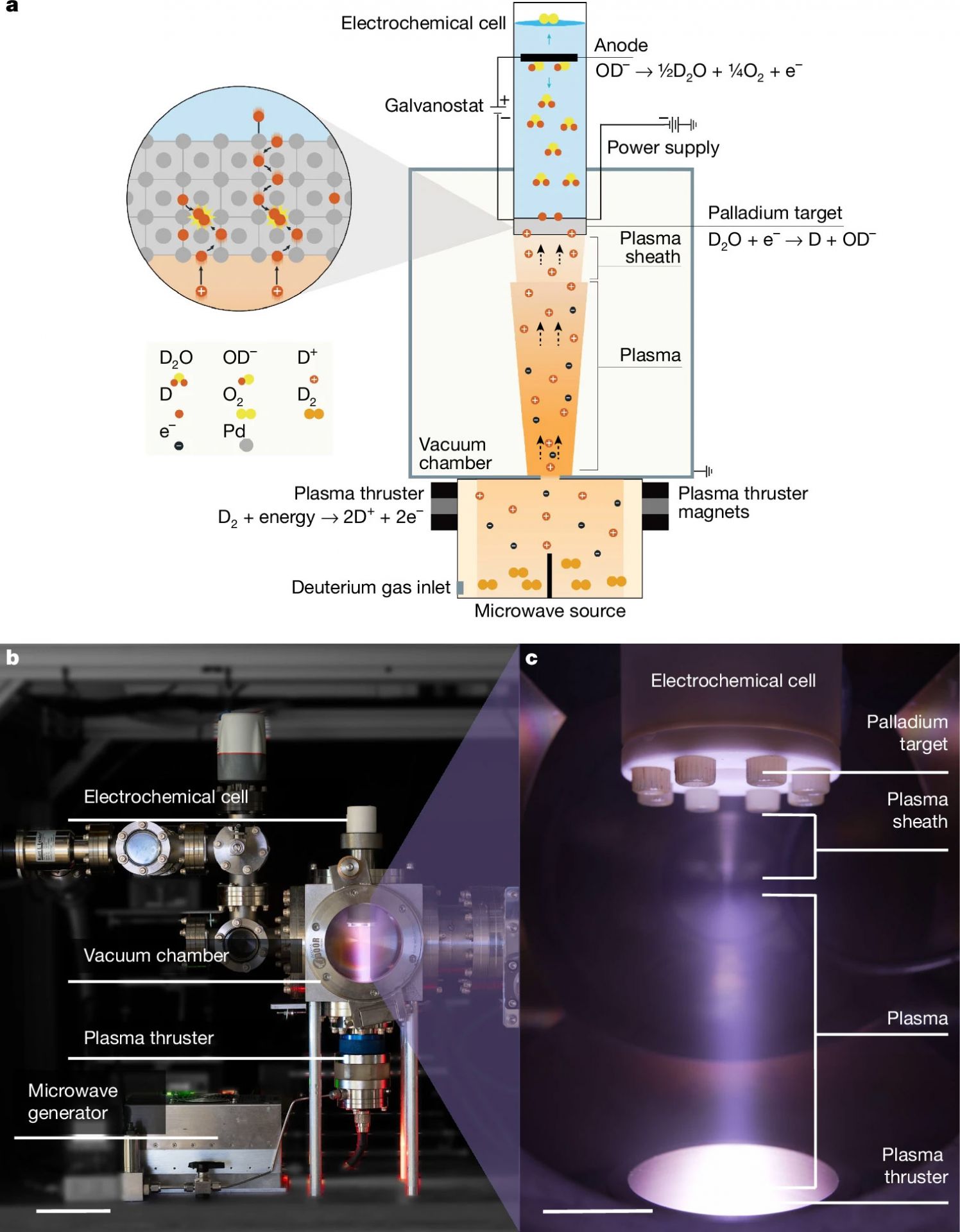
Cold fusion reaction, once dismissed after failed 1989 claims, is back in discussion as US-based researchers report neutron production from their small “Thunderbird Reactor.”
What is Cold Fusion Reaction?
Overview: A proposed way to achieve nuclear fusion at room temperature, unlike conventional fusion which needs extremely high heat (100 million °C or more).
How it started: In 1989, two chemists, Martin Fleischmann and Stanley Pons, said their palladium-heavy water experiment created more heat than normal chemistry allows.
Problem: Other scientists could not reproduce the result. No clear evidence of fusion products (like neutrons or helium) was found. The claim was dismissed, but the idea stayed alive.
Why interest remains: If proven, cold fusion could provide limitless, clean, and cheap energy. Research in this area is now called Low-Energy Nuclear Reactions (LENR).
About the Thunderbird Reactor (2025)
Inception: Scientists led by Curtis Berlinguette, University of British Columbia, published in Nature (Aug 2025).
Why built: Not to make electricity, but to test if chemistry can affect nuclear reactions.
How it works:
A plasma thruster shoots deuterium ions (a form of hydrogen) at a palladium metal target.
At the same time, an electrochemical cell pushes more deuterium into the palladium.
This builds up a very high density of deuterium inside the metal, making fusion more likely.
A neutron detector checks if fusion really happens.
Key Findings:
Neutrons detected: When deuterium ions hit palladium, about 130–140 neutrons per second were observed (much higher than background levels).
Electrolysis boost: Adding extra deuterium through electrolysis increased the neutron count further.
Energy output: The reaction only produced a tiny amount of power (one-billionth of a watt) while consuming 15 watts of electricity. No net energy gain yet.
[UPSC 2016] India is an important member of the ‘International Thermonuclear Experimental Reactor’. If this experiment succeeds, what is the immediate advantage for India?
Options: (a) It can use thorium in place of uranium for power generation
(b) It attain a global role in satellite-navigation
(c) It can drastically improve the efficiency of its fission reactors in power generation
(d) It can build fusion reactors for power generation*
The Union Cabinet approved a ₹1,500 crore Incentive Scheme to promote recycling of critical minerals from secondary sources such as e-waste and battery scrap.
About Critical Mineral Recycling Incentive Scheme:
Coverage: Support for new units, as well as expansion, modernisation, and diversification of existing plants.
Capex Subsidy: 20% subsidy on plant & machinery for timely commissioning; reduced rates for delays.
Opex Subsidy: Tied to incremental sales over FY 2025–26 base year.
40% subsidy released in FY 2026–27.
60% subsidy released in FY 2030–31.
Incentive Caps:
Large entities: ₹50 crore cap (₹10 crore max for opex).
Small entities: ₹25 crore cap (₹5 crore max for opex).
Eligibility Restriction: Only for firms engaged in actual mineral extraction, not just intermediate “black mass” processing.
[UPSC 2021] Consider the following statements:
I. India has joined the Minerals Security Partnership as a member.
II. India is a resource-rich country in all the 30 critical minerals that it has identified.
III. The Parliament in 2023 has amended the Mines and Minerals (Development and Regulation) Act, 1957 empowering the Central Government to exclusively auction mining lease and composite license for certain critical minerals.
Which of the statements given above are correct?
Options: (a) I and II only (b) II and III only (c) I and III only* (d) I, II and III
The Agricultural and Processed Food Products Export Development Authority (APEDA) has launched the BHARATI initiative — Bharat’s Hub for Agritech, Resilience, Advancement and Incubation for Export Enablement.
About BHARATI Initiative:
Launched by: APEDA (Agricultural and Processed Food Products Export Development Authority) in September 2025.
Purpose: To incubate and empower 100 agri-food and agri-tech startups, making them export-ready.
Target: Support APEDA’s vision of reaching US$ 50 billion (₹4.4 lakh crore) in agri-food exports by 2030.
Focus Areas: Export enablement, innovation, incubation, and addressing challenges like perishability, logistics, quality compliance, and sustainability.
Policy Alignment: Linked to Atmanirbhar Bharat, Start-Up India, Vocal for Local, and Digital India.
On the 20th anniversary of Mahatma Gandhi National Rural Employment Guarantee Act, 2005, concerns were raised over chronic underfunding of the scheme during the past decade.
About MGNREGS:
Overview: MGNREGS is a rights-based Centrally Sponsored Scheme launched under the MGNREGA Act of 2005 to ensure the Right to Work for rural households.
Origins:
The idea of employment guarantee in India began with Maharashtra’s pilot, Employment Guarantee Scheme (MEGS), in 1965 under the Vasantrao Naikgovernment.
At the national level, the idea was first proposed in 1991 by then PM P. V. Narasimha Rao and later enacted in 2005.
Employment Guarantee: It provides 100 days of wage employmentper year to any adult willing to do unskilled manual labour in rural India.
Legal Obligation: It is the first law in India that imposes a legal duty on the government to provide employment and compensate for non-compliance.
Development Goal: The scheme aims to promote livelihood security, inclusive growth, and rural development.
Key Features:
Statutory Right: Employment under MGNREGS is a legal entitlement, not just a welfare scheme.
Eligibility: Any rural adult aged 18 or above can apply and must be offered work within 15 days.
Proximity and Wages: Work must be provided within 5 km of the applicant’s residence with minimum wage, and delays attract compensation.
Unemployment Allowance: If work is not provided on time, the state must pay an allowance.
Demand-Driven Model: The scheme is worker-initiated, requiring the government to respond to demand.
Transparency and Audits: Regular social audits and online updates ensure accountability in job cards, muster rolls, and fund use.
Local Implementation: It is decentralised, led by Gram Panchayats, with support from block and state officials, and centrally funded.
Women’s Inclusion: At least one-third of beneficiaries must be women, enhancing gender equity.
Sustainable Assets: Projects focus on durable rural infrastructure like ponds, roads, canals, and plantations.
[UPSC 2006] Consider the following statements in respect of the National Rural Employment Guarantee Act, 2005:
1. The Act provides 100 days of employment to households as a fundamental right.
2. Women are given priority such that half of the employment seekers are women.
Which of the statements given above is/are correct?
Options: (a) 1 only (b) 2 only (c) Both 1 and 2 (d) Neither 1 nor 2 *
India’s embrace of autonomous weapons marks a strategic leap in modern warfare, but it risks outpacing accountability and global norms.
UPSC often asks internal security questions rooted in emerging threats – like the 2023 drone question-but aspirants often reduce drones to mere gadgets, missing deeper themes like AI warfare, border management, and strategic autonomy. This article fills that gap by linking India’s drone policy to shifts in warfare, tech capabilities, and ethical dilemmas-highlighted in sections like “Changing Geometries of the Battlefield” and the nuanced take on global legal norms like the Martens Clause and UN CCW.
PYQ ANCHORING
GS 3: The use of unmanned aerial vehicles(UAVs) by our adversaries across the bor ders to ferry arms/ammunitions, drugs, etc., is a serious threat to the internal security. Comment on the measures being taken to tackle this threat. [2023]
Microthemes: Border Area Management
Modern warfare is undergoing a seismic transformation. Among the most prominent drivers of this surge is the exponential growth of autonomous weapons systems (AWS), including drones, missiles, and robotics. Ukraine’s recent “Operation Spider Web,” which involved launching inexpensive quadcopters from within Russia, marks a watershed moment in the evolution of military strategy and shows that old-style air defence systems are becoming outdated.
India too is embracing this shift. The Indian drone market is projected to grow to $11 billion by 2030, constituting over 12% of the global drone industry (Drone Federation of India, 2024). Meanwhile, initiatives like Operation Sindoor demonstrate India’s commitment to integrating AWS into its strategic arsenal.
Impact of Changing Geometries of the Battlefield
AWS now allow real-time, low-cost, high-impact warfare from anywhere—breaking the geography of conventional frontlines. Historically, each phase of military innovation has reshaped the battlefield:
Period
Key Innovations
Impact on Battlefield
Ancient Warfare (Pre-500 AD)
Spears, shields, chariots, cavalry
Formation-based battles (e.g., phalanx), cavalry mobility added speed and surprise
Medieval Warfare (500–1500 AD)
Castles, crossbows, longbows, armored knights
Defensive structures dominated; archery challenged traditional close combat
Gunpowder Era (1500–1800)
Muskets, cannons, explosives
Decline of knights and castles; infantry and artillery became central to warfare
Industrial Age Warfare (1800–1914)
Rifles, railroads, telegraphs
Mass mobilization; logistics and communication shaped strategy
World Wars Era (1914–1945)
Tanks, aircraft, submarines, chemical weapons
WWI saw trench warfare; WWII introduced blitzkrieg and air supremacy
Cold War & Nuclear Age (1945–1990)
Nuclear weapons, ICBMs, early computers, satellites
Strategy based on deterrence (MAD); space and missile technology became critical
Information Age Warfare (1990–2010)
Precision-guided missiles, drones, cyber tools
“Surgical strikes” and real-time surveillance; rise of asymmetric warfare
Networked & Drone Warfare (2010–Present)
Cheap drones, AI, cyberweapons, autonomous systems
Decentralized attacks, saturation tactics; traditional air defence increasingly obsolete
Significance of AWS for India
Strategic Deterrence and Second-Strike Capability: Long-range drones and hypersonic weapons will enhance India’s nuclear posture through credible second-strike capabilities. Systems like Agni-V, BrahMos-II, and loitering munitions deter conventional and asymmetric threats. These also support non-nuclear escalation dominance through swarm drones. Example: Agni-V and BrahMos-II extend deterrence.
Border Surveillance and National Security: UAVs such as Heron, Rustom-II, and Tapas-BH provide persistent monitoring of LAC and LoC, especially after the 2020 Galwan clash. These are vital across tough terrains in Ladakh, Arunachal Pradesh, and the Northeast. Post-Galwan, India expanded drone deployments along borders. Example: Tapas-BH deployed along eastern Ladakh
Counter-Terrorism and Internal Stability: Drones enable precision strikes in Naxal-affected zones and insurgent hotbeds in J&K and the Northeast. AWS minimize collateral damage and human risk during operations. AI-powered drones provide real-time reconnaissance for surgical missions. Example: Drone kills top militant in Pulwama
Disaster Management and Dual-Use Application: Drones are deployed for flood mapping, earthquake rescue, and disaster relief delivery. Their ability to access hazardous or remote zones reducesresponse time. In 2023, drones were key in Odisha cyclone evacuation planning. Example: Drones used post-Odisha cyclone floods
Indigenous R&D and Economic Growth: India’s drone sector is projected to reach $11 billion by 2030, supporting Aatmanirbhar Bharat. DRDO’s ALFA-S, HAL’s combat UAVs, and startups like ideaForge are driving innovation. The Drone Federation of India is mobilizing industry expansion. Example: Drone Federation targets $11B market
Air Defence and Force Multiplication: Systems like IACCS and Akashteer enable real-time tracking and response against aerial threats. AWS complement manned systems in India’s multilayered air defence. Automated UAV fleets allow fewer troops to manage wider surveillance. Example: Akashteer integrates real-time threat response
Export Potential and Soft Power Projection: India aims to export $5 billion in defence hardware by 2025, including UAVs. Drones have been sold to Armenia, with export ambitions targeting Africa, ASEAN, and West Asia. This bolsters India’s global tech profile. Example: Drone exports initiated to Armenia
AI Ecosystem and Technological Leadership: AWS investments are driving India’s AI and robotics push under MeitY’s IndiaAI mission. These platforms create high-tech jobs, stimulate R&D, and support global norms on responsible AWS use via G-20. Example: DRDO AI Lab boosts AWS innovation
Challenges and Risks Associated with AWS
Ethical and Legal Dilemmas: Delegating lethal decisions to machines challenges International Humanitarian Law (IHL) and ethics. UN Special Rapporteurs have called for a ban on Lethal Autonomous Weapons (LAWS). No global consensus exists under the UN’s CCW framework. Example: UN calls LAWS “morally unacceptable”.
Civilian Casualties and AI Errors: AI misidentification may result in wrongful strikes, raising grave concerns about civilian safety. U.S. drone strikes in Iraq and Afghanistan show real-world errors. 2022 Nagorno-Karabakh saw multiple drone misfires. Example: AI error killed civilians in Kabul.
Accountability and Legal Ambiguity: No clear legal frameworks exist on liability when autonomous weapons commit war crimes. Command responsibility blurs as machines act independently. India’s AWS operations lack domestic legislative backing. Example: No law governs AWS accountability yet.
Cybersecurity and Tech Vulnerability: AWS systems are highly vulnerable to hacking, spoofing, and electronic warfare. CERT-IN flagged 30+ drone vulnerabilities in 2024. Compromised AWS may be turned against original operators. Example: CERT-IN flagged major drone flaws.
Arms Race and Regional Instability: Unregulated AWS development by major powers may trigger an arms race. China’s rapid advances in swarm drones and hypersonic systems concern India. Asia risks destabilization without arms control regimes. Example: China tests AI swarm drone fleets.
Dependence on Foreign Technology: India relies heavily on Israeli and U.S. ISR components, risking strategic vulnerabilities. This compromises autonomy in deployment and maintenance of AWS. Aatmanirbhar push is slowed by tech import needs. Example: Israeli Heron drones dominate ISR ops.
Job Loss and Skill Gaps: Widespread automation may reduce roles for traditional personnel in defence sectors. At the same time, India faces shortages in AI-skilled military technicians. AWS may deepen socio-economic disruption in armed forces. Example: AI replacing conventional infantry scouts.
Terrorism, Privacy & Environmental Risks: Terror groups like ISIS and Houthis use commercial drones for attacks. Over-surveillance risks civil liberties, while drone debris impacts ecosystems. Lithium battery pollution from drone crashes is rising. Example: 2021 Jammu drone attack on base.
Ethical Concerns associated with Autonomous Weapon Systems
Ethical Concern
Example
International Law/Norms Involved
1. Lack of Human Accountability
A misidentification by an autonomous drone leads to civilian casualties (e.g., 2021 Kabul strike).
Geneva Convention –Require accountability for unlawful killings.
2. Violation of International Humanitarian Law (IHL)
An AWS targets a group with weapons, ignoring nearby civilians.
Principles of Distinction and Proportionality under IHL.
3. Algorithmic Bias and Discrimination
Facial recognition in AWS misidentifies targets from minority groups, leading to wrongful deaths.
ICCPR (Art. 6 & 26) – Right to life and protection against discrimination.
4. Erosion of Human Dignity
An autonomous sentry gun kills a surrendering soldier without human judgment (e.g., Samsung SGR-A1).
Martens Clause – Demands respect for humanity and public conscience.
5. Risk of Autonomous Escalation
Border drones retaliate automatically in a skirmish, risking uncontrollable escalation.
UN Charter, Art. 2(4) – Prohibits use of force without state-level oversight.
6. Proliferation to Non-State Actors
Terrorist groups (e.g., ISIS) modify commercial drones for autonomous attacks.
Arms Trade Treaty – Seeks to regulate proliferation and misuse of weapons.
Principle of Distinction: Parties to a conflict must distinguish between combatants and civilians, targeting only legitimate military objectives.
Principle of Proportionality: Attacks must not cause civilian harm excessive in relation to the anticipated military advantage.
The Martens Clause asserts that even when specific laws do not exist, civilians and combatants remain protected under the principles of humanity and the dictates of public conscience. (Introduced in the 1899 Hague Convention.)
Way Forward
Legal & Ethical Framework
Enact a dedicated Autonomous Weapons Regulation Act aligned with IHL and UN GGE norms.
Mandate human-in-the-loop oversight in lethal decisions.
Set up an AI Ethics Council for Defence under NITI Aayog.
Example: UN GGE recommends human control norms.
Indigenous R&D and Innovation
Strengthen DRDO, BEL, and startup linkages via iDEX and Defence Innovation Organisation.
Allocate a dedicated AWS innovation fund in Budget 2024–25.
Partner with IITs and IISc for AI-AWS synergy.
Example: iDEX supports 80+ defence tech startups.
Cybersecurity and Resilience
Fortify CERT-IN and set up an Integrated Cyber Defence Command.
Enforce regular vulnerability audits, red teaming, and mandate AI traceability.
Introduce AWS modules in NDA, IMA, and War Colleges.
Launch AI & robotics courses via Skill India and Defence University.
Example: Army AI Centre launched in 2023.
Global Norm Setting and Diplomacy
Lead global AWS discourse at UN, G-20, QUAD, I2U2, BIMSTEC.
Promote non-proliferation and responsible innovation.
Example: India led G-20 AI ethics agenda.
Public-Private Partnerships (PPP)
Expand Defence Corridors in UP and TN for dual-use AWS tech.
Support PPPs via TDF and DRDO Young Scientist Labs.
Enable civil-military transfers for agriculture, logistics, disaster relief.
Example: Drone startups grew 34% in 2023.
#BACK2BASICS: About Autonomous Weapons Systems (AWS)
AWS refer to weapon systems that can select and engage targets with minimal or no human intervention. According to the UN Institute for Disarmament Research (UNIDIR), more than 30 countries are currently developing AWS. These systems span a broad range of technologies and capabilities. These are often classified into:
Remotely Operated Systems (e.g., Predator and Heron drones)
Semi-Autonomous Systems (e.g., Fire-and-forget missiles like India’s BrahMos)
Fully Autonomous Systems (e.g., Loitering munitions with AI decision-making capabilities)
Types:
Drones (Unmanned Aerial Vehicles – UAVs): From surveillance drones like India’s Nishant to combat drones like the U.S. MQ-9 Reaper, drones serve diverse military roles. Loitering munitions like the Israeli Harop and Indian ALFA-S, armed drones such as Bayraktar TB2, Predator are redefining precision strikes.
Swarm Drones: Employed in Ukraine’s “Operation Spider Web” — low-cost quadcopters coordinated via AI to infiltrate deep into Russian territory.
Autonomous Ground Vehicles (AGS): Robotic systems designed for reconnaissance, logistics, or combat roles on land.
Missiles: Modern ballistic and cruise missiles, such as the BrahMos and Agni-V, integrate AI-driven guidance and satellite navigation systems.
Autonomous Missile Systems: Missiles equipped with AI for target selection and engagement without human input.
Robotics: Ground robots like Russia’s Uran-9 or the U.S. MAARS (Modular Advanced Armed Robotic System) support infantry and reconnaissance.
Autonomous Naval Systems: India’s autonomous underwater vehicles (AUVs) developed by DRDO, and global counterparts like the U.S. Sea Hunter, are transforming naval reconnaissance.
AI and Digital Command & Control: Integrated AI-based battle networks like India’s IACCS, US’s Project Maven.
Levels of Autonomy Associated with These Systems:
Human-in-the-Loop: Systems that require human input for decision-making.
Human-on-the-Loop: Systems that can operate autonomously but are supervised by humans who can intervene.
Human-out-of-the-Loop: These are lethal autonomous weapons systems (LAWS) fully autonomous systems that operate without human oversight.
About Lethal Autonomous Weapons Systems (LAWS)
Definition: LAWS are military systems capable of selecting and engaging targets without human intervention — hence also called “killer robots.”
Deployment: They can operate in air, land, sea, underwater, or space.
Functionality: Pre-programmed to identify a specific “target profile” (e.g., using facial recognition or heat signatures) and eliminate it autonomously.
Concerns: Raise ethical, legal, and humanitarian issues — including accountability, civilian safety, and risk of misuse.
UN’s Stand on Autonomous Weapons
UN General Assembly Resolution:
164 countries voted in favor
5 voted against
8abstained
Key Feature: Called for a report by the UN Secretary-General, incorporating views from governments and civil society.
Purpose: To initiate global governance frameworks addressing risks from autonomous weapons.
Voting by Major Powers:
United States: Voted in favor
China: Abstained
India: Voted against
What Are Countries Doing in This Field?
United States:
Deployment: Actively uses unmanned naval ships and advanced drone systems.
Expansion: Plans to scale up uncrewed fleets across Navy, Army, and Air Force.
AI Integration: Institutions established to ensure human control remains central to AWS usage.
China:
Military Strategy: Focused on building an “intelligentized” PLA.
Applications: AI used in logistics, surveillance, maintenance, and combat.
Strength: High industrial capacity and centralized coordination allow rapid development and deployment.
India:
Approach: Pragmatic and cautious; voted against UNGA resolution but acknowledges AWS relevance.
Strategic Priority: AI seen as essential for balancing military asymmetry with China.
Current Status: India has AI strengths but lags behind the US and China in military applications.
SMASH MAINS MOCK DROP
Lethal Autonomous Weapons Systems (LAWS) are transforming the nature of modern warfare but raise serious ethical, legal, and strategic concerns. In this context, critically examine India’s approach to LAWS in comparison with global trends.