India’s maritime laws, some over a century old, were recently overhauled through the Ports Bill, Merchant Shipping Act, Coastal Shipping Act, and Carriage of Goods by Sea Bill (2025). The reforms aim to modernise governance, boost ease of doing business, and enhance India’s maritime role. Yet, concerns remain over centralisation, weakened ownership safeguards, excessive discretion, and burdens on smaller players, raising questions about federal balance.
Why Is This News Significant
The Ports Bill, 2025 centralises decision-making under a Maritime State Development Council, curbing State autonomy in port development. The Merchant Shipping Act allows partial foreign ownership of Indian-flagged vessels, ending the earlier full Indian ownership rule. Critics argue these changes favour big corporations and the Centre, while sidelining coastal States and small operators, with implications for India’s maritime sovereignty.
Progress and Pitfalls of Maritime Modernisation
Comprehensive reform: New laws collectively update fragmented, outdated frameworks, covering shipping finance, offshore operations, safety, liability, and training.
Ease of business: The Ports Act aims to create coherence in regulation, promoting sustainable development and investment.
Legislative haste: Bills passed without serious debate or standing committee review, raising concerns about lack of consensus and scrutiny.
The Ports Act and the Federal Balance
Centralisation of authority: Maritime State Development Council empowers the Centre to dictate State maritime policies.
Erosion of fiscal autonomy: Coastal States cannot adjust frameworks independently; central plans like Sagarmala and Gati Shakti override local priorities.
Federal subordination: Critics argue this undermines cooperative federalism, reducing States to implementers of central schemes.
Eroding Safeguards in Shipping Ownership
Loophole in Indian-flag ownership: Merchant Shipping Act allows partial foreign/OCI ownership; exact thresholds left to government discretion.
Risk of flag-of-convenience: Executive may dilute ownership norms, letting foreign operators control Indian ships indefinitely.
BBCD mechanism: Bareboat Charter-Cum-Demise leasing recognised, but risks foreign lessors retaining de facto control.
Small Operators and Dispute Resolution Challenges
Vague compliance norms: Discretionary powers could overwhelm smaller port operators with compliance burdens.
Clause 17 controversy: Bars civil courts from port-related disputes; relies on internal committees lacking impartiality.
Investment deterrence: Absence of independent judicial oversight could erode investor confidence.
Coastal Shipping: Protecting or Undermining Local Players?
Cabotage protection: Only Indian-flagged vessels can engage in coastal trade — in principle, safeguarding domestic players.
DG Shipping’s sweeping powers: Licences to foreign vessels on broad grounds like “national security” or “strategic alignment.”
Impact on fishing industry: Smaller players face heavy reporting burdens without clarity on data use or safeguards.
Central dominance: National Coastal and Inland Shipping Strategic Plan reduces State-level say in coastal regulation.
Conclusion
India’s maritime reforms are necessary but flawed. The package risks over-centralisation, weakened sovereignty, and burdens on smaller operators, even as it promises modernisation. True reform requires transparent ownership rules, impartial dispute resolution, and genuine cooperative federalism. Otherwise, the reforms may deliver short-term ease of business but compromise India’s federal balance and maritime security.
Value Addition
Key Provisions of the Indian Ports Bill, 2025 (replacing Indian Ports Act, 1908)
State Maritime Boards:
Statutory recognition: Boards set up by coastal States now have a legal mandate.
Functions: Planning & developing port infrastructure, granting licenses, fixing tariffs, ensuring compliance with safety, security, and environmental norms.
Maritime State Development Council (MSDC):
Composition: Chaired by Union Minister of Ports, Shipping and Waterways; includes State Ministers, Navy & Coast Guard representatives, and Union Ministry officials.
Role: Issues guidelines on port data, ensures tariff transparency, advises Centre on national maritime plans, legislative adequacy, and connectivity.
Dispute Resolution Committee (DRC):
Jurisdiction: Resolves disputes between non-major ports, concessionaires, users, and service providers.
Appeals: Lie with High Courts; civil courts barred.
Flexibility: Agreements may allow arbitration or alternative dispute resolution.
Tariffs:
Major Ports: Fixed by Board of Major Port Authority/Company Board.
Non-Major Ports: Fixed by State Maritime Boards or their concessionaires.
Port Officers:
Conservator: Chief port officer with powers over anchoring, berthing, movement, obstruction clearance, and fee recovery.
New functions: Preventing disease spread, assessing damage, adjudicating penalties.
Safety and Environmental Protection:
MARPOL & Ballast Water Management Convention compliance mandatory.
New obligations: Waste reception facilities, emergency preparedness, pollution containment, and regular central audits.
Offences and Penalties:
Continuity: Retains offences under 1908 Act (non-compliance, impeding navigation, damage to port property).
Decriminalisation: Certain offences now carry monetary fines; first-time violations can be compounded.
New offences:
Imprisonment up to 6 months for endangering vessel safety, disturbing seabed.
Monetary penalties for unnotified port operations, failure to report/manage pollution, or ignoring DRC orders.
PYQ Relevance:
[UPSC 2022] What are the maritime security challenges in India? Discuss the organisational, technical and procedural initiatives taken to improve maritime security.
Linkage: India’s maritime reforms (2025) strengthen security through MARPOL compliance, waste management, and statutory State Maritime Boards, but also create vulnerabilities. Dilution of vessel ownership, centralisation via MSDC, and weak dispute resolution raise concerns of sovereignty and resilience. Thus, reforms reflect both organisational advances and new security risks, linking directly to India’s maritime security challenges.
Reservations have always stood at the crossroads of social justice and equality of opportunity in India. While Articles 15 and 16 of the Constitution of India empower the state to address historical discrimination, the judicially imposed 50% cap has often clashed with demands for greater inclusivity. Recent developments, from Maharashtra’s acceptance of Maratha demands to calls for caste census and creamy layer reform, have amplified questions on whether the reservation system remains equitable, representative, and sustainable.
The Current Moment of Reckoning
The debate has reached a critical juncture because:
Political promises like Bihar opposition leader Tejashwi Yadav’s proposal for 85% reservations directly challenge the 50% ceiling.
Judicial scrutiny continues, with the Supreme Court questioning whether creamy layer exclusion should extend to SCs and STs.
Empirical concerns such as 40–50% of reserved seats remaining unfilled, and the Rohini Commission’s revelation that 97% of OBC benefits are cornered by 25% castes, highlight structural inequities.
This combination of political assertion, judicial intervention, and social critique makes the issue highly consequential.
Articles 15 and 16: The constitutional basis of equality and reservation
Equality mandate: Article 15 guarantees equality in state actions, including education; Article 16 guarantees equality in public employment.
Special provisions: Both allow the state to make reservations for OBCs, SCs, and STs.
Present levels: At the central level, reservations stand at 59.5% (OBC – 27%, SC – 15%, ST – 7.5%, EWS – 10%).
Judicial rulings on reservation and equality
Balaji vs State of Mysore (1962): Reservations must be “within reasonable limits” and capped at 50%; seen as upholding formal equality.
N.M. Thomas (1975): Saw reservations as a continuation of equality of opportunity (substantive equality), but gave no ruling on the cap.
Indra Sawhney (1992): Upheld 27% OBC quota, reaffirmed 50% ceiling, and introduced creamy layer exclusion for OBCs.
Janhit Abhiyan (2022): Validated 10% EWS quota; held that 50% limit applies only to backward classes.
Davinder Singh (2024): Suggested considering creamy layer exclusion for SCs and STs.
Challenges to the 50% ceiling on reservations
Population logic: Backward classes form a larger share than reflected in current quotas; caste census demanded to get exact numbers.
Unfilled vacancies: 40–50% of reserved seats for OBC/SC/ST remain unfilled at the central level.
Sub-caste concentration: Rohini Commission showed extreme skew in OBC benefits—about 1,000 communities have zero representation.
The problem of concentration of reservation benefits
OBCs: 97% benefits go to ~25% sub-castes.
SCs/STs: Similar skew; absence of creamy layer exclusion means relatively better-off sub-castes capture opportunities.
Policy vacuum: Despite judicial nudges, the Centre reaffirmed in August 2024 that creamy layer does not apply to SC/ST.
The way forward for India’s reservation system
Balancing equality: Increasing quota to 85% may violate equality of opportunity, but substantive equality demands better targeting.
Caste census 2027: Could offer empirical basis for restructured reservation.
Sub-categorisation: Rohini Commission’s recommendations need urgent implementation.
Two-tier system: Priority for the most marginalised within SC/STs could prevent elite capture.
Beyond reservation: Skill development and private sector opportunities are crucial, given shrinking public jobs.
Conclusion
India’s reservation policy is at an inflection point. Expanding quotas without reforming their structure risks perpetuating inequity within communities. A nuanced approach, backed by caste census data, sub-categorisation, and skill-building, can ensure that reservations remain a tool for empowerment rather than a political slogan. The challenge lies in balancing constitutional guarantees of equality with the imperative of social justice in a diverse democracy.
PYQ Relevance:
[UPSC 2019] Performance of welfare schemes that are implemented for vulnerable sections is not so effective due to absence of their awareness and active involvement at all stages of policy process, Discuss.
Linkage: The 2019 question highlights how welfare schemes for vulnerable sections often fail due to lack of awareness and skewed access. The same issue is reflected in India’s reservation policy: despite constitutional backing, 40–50% of reserved seats remain unfilled, and the Rohini Commission revealed that 97% of OBC benefits are cornered by just 25% sub-castes, leaving nearly 1,000 communities with no representation at all. This shows that affirmative action, much like welfare schemes, risks becoming ineffective unless equitable distribution, sub-categorisation, awareness generation, and active participation of the most marginalised are ensured.
Rare earths and critical minerals are crucial for India’s clean energy, defence, and economic future.
UPSC often frames broad questions – like on energy security or sustainable development and asks aspirants to link them with India’s raw material needs, as seen in the 2013 PYQ on atomic energy. But many stop at listing reserves or miss the global context.
This article bridges that gap with updated facts and sharp themes – Import Dependency, Geopolitical Exposure, Strategic Urgency – and goes beyond just naming minerals to explain why they matter, from EVs to national security.
PYQ ANCHORING:
GS 1 : With growing scarcity of fossil fuels, the atomic energy is gaining more and more significance in India. Discuss the availability of raw material required for the generation of atomic energy in India and in the world. [2013]
MICROTHEMES: Energy
China’s recent decision to restrict exports of rare earths has raised alarms for India’s electric vehicle (EV) sector, which depends heavily on imported critical minerals. Although India has good reserves of minerals like cobalt and rare earths, it has not invested enough in exploring or processing them. As India aims to become the world’s third-largest economy, building strong domestic capabilities in mining and processing will be crucial to secure its mineral supply chains and reduce foreign dependence.
Key Highlights
China’s New Export Caps:China has imposed export restrictions on rare-earth metals like neodymium, essential for manufacturing high-performance EV motors
India’s Heavy Import Dependence: India currently imports ₹1,200 crore worth of neodymium magnets, mainly from China. Recently, imports by major suppliers like Sona Comstar were blocked.
China’s Global Dominance: Though relatively abundant, rare-earth metals are hard to process. China leads in refining and exports – it controls nearly 98% of some elements.
Domestic Exploration Efforts: India has the fifth-largest rare-earth reserves but faces a 3-5 year lead time to begin mining.
Strategic Urgency: With export licenses stalled and companies like Hyundai warning of shortages, disruptions in EV production are imminent.
Trade-Offs of Mining: While rare-earth mining is environmentally hazardous, the article asserts India must develop its own capabilities due to its strategic necessity.
China’s Rare Earth Export Curbs: Implications for India’s Strategic Mineral Security
Aspect
Explanation
Examples
Import Dependency
India heavily depends on imports of critical minerals like neodymium, lithium, cobalt, and gallium—especially from China.
India imports 100% of neodymium magnets from China; over 70% of lithium imports come from China.
Processing Infrastructure Deficit
India has rare earth reserves but lacks domestic processing and separation capacity, relying on China’s dominance in mid- and downstream stages.
India holds the 5th largest reserves of rare earths, yet China processes 85–90% of the global rare earth supply.
Vulnerability of Key Sectors
Disruption in rare earth supply threatens EVs, electronics, and defense production.
Sona Comstar (EV motor supplier) reported shipment halts due to China’s curbs. India’s EV sales projected to reach 1 crore units by 2030.
National Security Risks
Rare earths are used in high-end defense tech—missiles, radar, aircraft—which are critical for national security.
India imports critical materials for Tejas fighter jets, BrahMos systems; 50% of titanium used in defense is imported.
Economic & Industrial Impact
Input costs for EVs, semiconductors, and solar manufacturing could rise, hurting Make in India goals.
India’s $10 billion Semiconductor Mission and IndiaAI Mission rely on imported gallium and indium.
Geopolitical Exposure
Over-reliance on China gives it strategic leverage in trade or diplomatic disputes.
In 2010, China halted rare earth exports to Japan during a territorial dispute; similar risks now loom for India amid border tensions.
Role of critical minerals in India’s growth story
Role
Explanation
Examples
1. Driving Renewable Energy Expansion
Critical minerals like silicon, tellurium, and rare earths are essential for solar panels and wind turbines, key to achieving India’s clean energy goals.
India aims for 50% non-fossil power by 2030. Solar capacity reached 64 GW (2024); wind expected to rise from 42 GW to 140 GW by 2030.
2. Powering Electric Mobility Revolution
Lithium, cobalt, and nickel are vital for EV batteries. India’s EV growth depends on stable supply of these minerals, especially lithium-ion battery components.
India imports 100% of lithium and cobalt; over 70% of lithium from China. These are critical for schemes like FAME II and EV production targets.
Gallium, germanium, and indium are required for chips and advanced electronics. These are key to self-reliance in AI, telecom, and computing technologies.
India’s Semiconductor Mission and IndiaAI Mission depend on these minerals. India recently joined the Minerals Security Partnership to secure such inputs.
4. Enhancing National Security and Defence Capability
Minerals like titanium and rare earths are used in fighter jets, missiles, and defence electronics. Ensuring their supply is crucial for strategic autonomy.
India has over 50% import reliance on titanium. Rare earths are used in radar and navigation. A centralized auction system for strategic minerals is underway.
5. Fueling Economic Growth and Employment
Developing domestic mineral value chains creates jobs and boosts regional industries, reducing the trade deficit.
Under the Critical Mineral Mission, India will train 10,000 workers and run 1,200 exploration projects by 2031. Companies like Vedanta and Ola Electric are investing.
Evaluation of India’s current policies to reduce import dependence
1. Domestic Magnet Manufacturing Incentives: India has introduced policy incentives to encourage domestic production of rare-earths. However, these facilities are still in development and full-scale production is years away. This suggests that while the policy direction is right, its impact on reducing current import dependency is limited in the short term.
2. MMDR Reforms and Critical Mineral Mission: The government has amended the Mines and Minerals (Development and Regulation) Act and launched the National Critical Mineral Mission with a dedicated budget. These efforts aim to improve exploration and streamline auctions for 30 critical minerals. While these measures help formalize a framework, actual progress on the ground is constrained by poor geological data, slow environmental clearances, and limited mining infrastructure.
3. International Partnerships: India has entered into agreements with countries like Australia, Kazakhstan, and Sri Lanka to diversify its supply sources. Through the Mineral Security Partnership, India is seeking alternatives to Chinese dominance. However, these partnerships are at an early stage and have not yet translated into significant commercial imports or long-term contracts that ensure security of supply.
4. Strengthening Processing Infrastructure: India has expanded facilities like those run by IREL and proposed Production Linked Incentives (PLI) for rare-earth recycling and processing. Although this marks a shift towards self-reliance, the country still lacks the advanced refining infrastructure and scale enjoyed by China, which processes over 80 percent of global rare earths.
5. Offshore and Deep-Sea Mining Initiatives: India has initiated auctions for deep-sea and offshore mining blocks rich in critical minerals. These ventures are meant to tap into unexplored reserves and reduce foreign dependency. However, operationalizing these projects will take time due to technical challenges, lack of expertise, and the environmental sensitivity of such activities.
6. Governance and Institutional Capacity: New frameworks like reverse bidding and fast-track environmental clearances have been introduced to attract private players. However, industry observers point to delays in auction processes, a lack of investment-ready mineral data, and bureaucratic uncertainty as major obstacles. Despite reforms, effective implementation remains inconsistent.
Way Forward
Accelerate Domestic Exploration: Fast-track 1,200 mineral projects using AI and satellite tech. Prioritise states like Odisha, Rajasthan, and Andhra Pradesh.
Develop Processing Capacity: Set up rare earth processing hubs with PLI schemes. Encourage IREL expansion and global JVs.
Attract Private Investment: Offer tax breaks, fast clearances, and mining incentives under the amended MMDR Act to boost private participation.
Secure Overseas Supplies: Use Mineral Security Partnership (MSP) to invest in lithium and cobalt mines in Australia, Chile, DRC, etc.
Promote Recycling: Launch schemes for battery and e-waste recycling. Support startups with soft loans and R&D grants.
Build Skilled Workforce: Train 10,000+ workers in mining and metallurgy via IITs, ISM Dhanbad, and global tie-ups.
#BACK2BASICS: Critical Minerals
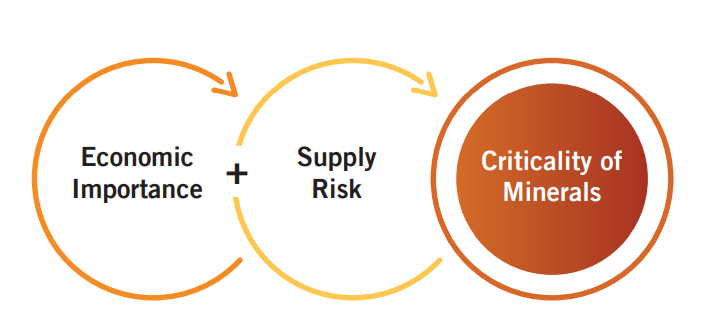
Critical minerals are a category of non-fuel minerals and elements which satisfy 2 conditions:
Economic development & National Security = Essential for economic development and national security as they are vital for development of materials for defense, aerospace, nuclear, and space applications.
Supply chain vulnerability = There are associated risk of supply chain vulnerability and disruption with these minerals, due to their lack of availability, and concentration of existence, extraction or processing of these minerals in few geographical locations.
Factors Affecting Criticality:
Source- Ministry of Mines
Critical Minerals identified in India: Government of India identified 30 minerals as Critical in July 2023.
Strontium Tantalum Tellurium Tin Titanium Tungsten Vanadium Zirconium Selenium Cadmium
Importance of Critical Minerals for India
1. Economic Growth Boost: Critical minerals power sectors like electronics, telecom, transport, and defense—driving jobs, innovation, and income. Example: India’s semiconductor push depends on mineral access.
2. Clean Energy Transition: They are essential for solar panels, wind turbines, and EV batteries—crucial for India’s net-zero target by 2070.
3. Building Value Chains: Domestic mineral discovery enables tech-linked value chains and attracts FDI under China+1 strategies. Example: UK and US interest in India’s mineral sector.
4. Strengthening National Security: Used in defense, aerospace, and nuclear sectors for durable, high-performance materials.
5. Cutting Import Dependence: India relies heavily on imports. Boosting domestic production lowers the import bill and Current Account Deficit.
Challenges with Critical Minerals
1. Geopolitical and Market Monopoly Critical minerals are concentrated in a few countries, leading to geopolitical control and oligopolies.(Example: Australia controls 55% of lithium; China holds 60% of rare earths.)
2. China’s Processing Dominance China leads globally in refining—holding 60% production and 85% processing share—giving it leverage over supply chains.(Example: China’s recent rare earth export restrictions affect global EV production.)
3. Geopolitical Instability Political unrest or conflict in mineral-rich areas disrupts supply.(Example: Civil war in DRC threatens cobalt supply—70% of global reserves lie there.)
4. Resource Nationalism Countries are tightening control over their mineral wealth, increasing trade barriers.(Example: Growing resource nationalism in Africa affects long-term contracts.)
5. Price Volatility Lack of transparent trading and poor data cause unpredictable pricing and deter investment.(Example: Sudden spikes in lithium prices due to unclear supply data.)
6. Import Dependence India’s critical mineral imports rose 34% from FY22 to FY23, risking energy and industrial security.(Example: Rs 91,000 crore spent on imports in FY23 alone.)
7. Environmental Impact Mining harms ecosystems through water use, pollution, and land degradation.(Example: Lithium mining in Chile’s Atacama desert causes water scarcity.)
8. Delay in Alternatives Setting up alternative sources or refining capacities takes years.(Example: India-Australia mineral partnership may take over 15 years to become fully functional.)
Govt. Initiatives
Amendment to Mines and Minerals (Development and Regulation) Act, 1957
Through the MMDR Amendment Act, 2023, the Central Government is empowered to auction blocks of 30 critical minerals. The amendment permits private sector entry through auctions.
FDI liberalisation
In 2019, India has allowed 100% foreign direct investment. Certain minerals which were previously classified as atomic have been reclassified, facilitating private-sector mining.
International Collaboration
India joined the Mineral Security Partnership, which is a US led initiative involving 13 countries and the EU. Khanij Bidesh India Ltd (KABIL) is assisting Argentina in lithium exploration and discussing lithium and cobalt blocks in Australia.
Institutional Initiatives
The Geological Survey of India has initiated over 250 projects to explore deep-seated critical minerals. India has launched startup challenges to develop advanced processing technologies.
Budgetary Support
Customs Duty Removal: Customs duties on 25 critical minerals, such as lithium, nickel, copper, and cobalt, have been removed to enhance domestic manufacturing of advanced technologies like electric vehicles (EVs) and energy storage systems. Concessional Customs Duty Extension: The concessional customs duty of 5% on lithium-ion cells has been extended until March 2026.
Critical Mineral Mission
In the Budget 2024, Critical Mineral Mission has been announced to give a boost to India’s critical minerals Sector. Through this mission, India aims to boost the domestic output and recycling of critical minerals like copper and lithium.
Significance of Critical Mineral Mission:
1. Promotion of domestic production and recycling of critical minerals by increasing the capacities of India in terms of refining and processing. 2. Identification of minerals which are critical, which will help the country to plan for the acquisition and preservation of such mineral assets taking into account the long term need of the country. 3. Reduction of India’s import dependency as India is 100% import dependent for certain elements. 4. Expedited exploration, overseas mineral acquisition, resource efficiency, recycling of minerals, and finding substitutes through suitable R&D.
Source- Ministry of Mines
Way Forward
1. Implementation of the recommendations of expert committee on critical minerals: Setting up of the Centre of Excellence for Critical Minerals (CECM) as a dedicated wing in the Ministry of Mines. This can be on the lines of CSIRO which is an Australian government corporate entity. The centre of excellence can collaborate with international agencies or Khanij Bidesh India Ltd (KABIL) for the strategic acquisition of foreign assets of these minerals.
2. Push for expansion of Mineral Security Partnership (MSP): Along with India, more countries in the Global South can be part of the alliance, especially critical mineral-rich African countries. The MSP can become an international platform that reports on the status and future of critical mineral markets.
3. Encourage FDI in domestic mining: Rising Foreign Direct Investment (FDI) will not just support businesses like battery and EV manufacturing. It will also bring the expertise of international mining firms to aid in exploring critical minerals for the country’s benefit.
4. Investment in beneficiation and processing facilities: India should invest in beneficiation and processing facilities in Africa to promote local economies and sustainable relationships.
5. Path to global leadership: India can emulate Indonesia’s success in nickel to become a global leader in these minerals, utilizing access to both domestic and international raw materials.
6. Alignment of mineral incentives: The Production-Linked Incentive (PLI) scheme for minerals should align with global aspirations, creating employment opportunities.
SMASH MAINS MOCK DROP
India’s ambition for clean energy, digital self-reliance, and strategic autonomy hinges on securing critical mineral supply chains. In this context, critically examine India’s policies to reduce import dependence on critical minerals.
The Ministry of Statistics and Programme Implementation (MoSPI) recently organized a national workshop on the e-SAKSHI web portal and mobile app for the Members of Parliament Local Area Development Scheme (MPLADS).
About MPLADS:
Overview: A Central Sector Scheme, launched in 1993, to empower MPs to recommend developmental works in their constituencies, focusing on durable community assets addressing local needs.
Administration: Initially under the Ministry of Rural Development; Since 1994, managed by MoSPI.
Implementation:
State-level nodal department supervises implementation.
District authorities sanction projects, release funds, and ensure execution.
Funding:
Each MP gets ₹5 crore per year (since 2011–12).
Disbursed by MoSPI in two instalments of ₹2.5 crore each to district authorities.
Funds are non-lapsable i.e. carried forward if unutilized.
Targeted Allocation: Minimum 15% for SCs and 7.5% for STs.
Special Provisions:
Up to ₹25 lakh annually can be spent outside constituency/state for national unity projects.
Up to ₹1 crore can be allocated nationwide during severe natural calamities.
Eligible Projects:
Durable community assets (e.g., libraries, community halls, ambulances, sports infrastructure, sanitation).
MPLADS funds can be converged with MGNREGS or integrated with Khelo India for asset creation.
Support allowed on lands of registered societies/trusts (3+ years old) engaged in welfare work.
Prohibitedfor societies/trusts where the MP/family are office-bearers.
Transparency Measures:
Plaque with MP’s name and project details must be installed at project sites.
Project details listed in district offices, MPLADS website, and accessible via RTI.
Monitoring & Audit:
District authorities inspect at least 10% of projects annually.
Funds audited by statutory auditors.
Regular review meetings at state and central levels.
e-SAKSHI platform: Enables MPs to digitally recommend, monitor, and track MPLADS projects, improving transparency, accountability, and efficiency in fund utilization.
[UPSC 2020] With reference to the funds under Members of Parliament Local Area Development Scheme (MPLADS), which of the following statements are correct?
1. MPLADS funds must be used to create durable assets like physical infrastructure for health, education, etc.
2. A specified portion of each MP’s ‘fund must benefit SC/ST populations.
3. MPLADS funds are sanctioned on yearly basis and the unused funds cannot be carried forward to the next year.
4. The district authority must inspect at least 10% of all works under implementation every year.
Select the correct answer using the code given below:
Options: (a) 1 and 2 only (b) 3 and 4 only (c) 1, 2 and 3 only (d) 1, 2 and 4 only*
The World Coconut Day (2nd September) was recently celebrated by the Coconut Development Board (CDB).
About Coconut Development Board (CDB):
Establishment: Created on 12 January 1981; statutory body under the Ministry of Agriculture & Farmers Welfare.
Headquarters & Offices: HQ at Kochi, Kerala; regional offices in Bengaluru, Chennai, Guwahati, and Patna.
Mandate: Integrated development of coconut production and utilization with focus on productivity, processing, and product diversification.
Functions: Provides technical advice and financial aid to farmers/processors; promotes modern technology adoption, value addition, pricing & marketing measures, and export promotion.
Welfare Schemes: Implements farmer-focused programs like Coconut Palm Insurance Mission and Kera Suraksha.
Back2Basics: Coconut Cultivation in India
Global Standing: India is the third-largest coconut producer, contributing about 31.45% of world output.
Production: In 2023–24, India produced 153.29 lakh MT from an area of 23.33 lakh ha.
Productivity: Average productivity at 9,871 nuts/ha, among the highest globally.
Leading States: Kerala, Tamil Nadu, Karnataka, and Andhra Pradesh account for ~90% of production. Kerala and TN lead, Karnataka has risen sharply, AP contributes ~8%.
Economic Value: Sector contributed ₹27,199.5 crore GVO and ₹30,795.6 crore GDP share in 2022–23.
Exports: In 2022–23, India exported coconut products worth ₹3,554.23 crore (US $452 million) including copra, oil, coir, activated carbon, and value-added foods.
The Union Home Ministry empowered Foreigners Tribunals (FTs), especially in Assam, to detain suspected illegal immigrants in designated camps, a power earlier exercised only through executive orders.
About Foreigners Tribunal (FT):
Nature: Quasi-judicial bodies constituted under the Foreigners (Tribunal) Order, 1964, framed under the Foreigners Act, 1946.
Purpose: Decide whether a person is a foreigner/illegal immigrant, especially in the context of Assam’s border migration issues.
Cases handled:
References from border police against suspected foreigners.
Cases of “D” (doubtful) voters flagged by the Election Commission.
Composition: Members drawn from retired judges, advocates, and civil servants with judicial experience; capped at 3 members per tribunal.
Functioning:
FTs exercise powers of a civil court (summons, evidence, witness examination).
Required to dispose of cases within 60 days of reference.
Burden of proof lies on the individual to establish citizenship (Section 9, Foreigners Act).
Present Status: About 100 FTs operational in Assam (expanded after NRC-2019). No FTs in other states, where suspected foreigners are tried in local courts.
New Provisions under the Immigration and Foreigners Act, 2025:
Replacement: Replaces the Foreigners (Tribunal) Order, 1964, now part of the comprehensive Immigration and Foreigners Act, 2025.
Detention Powers: For the first time, FTs are empowered to detain suspected illegal immigrants in designated transit camps, a power earlier exercised through executive orders.
Judicial Authority:
Powers of a civil court under CPC, 1908.
Powers of a judicial magistrate (first class) under Bharatiya Nagarik Suraksha Sanhita, 2023 — including issuing arrest warrants, ordering detention, and directing personal appearance.
Ex-parte Orders: Can be set aside if the appellant files a review within 30 days.
Scope: Though applicable nationwide, functional relevance remains in Assam.
Restrictions on Employment: Bars foreigners from working in strategic sectors (defence, nuclear energy, petroleum, power, water supply, space, human rights) without Central government approval.
Border Security Measures: Border forces/Coast Guard to record biometrics and demographic data of illegal entrants before pushing them back.
Grounds for Refusal of Stay: Foreigners convicted of terrorism, espionage, narcotics trafficking, organized crime, human trafficking, cybercrime, child abuse, crimes against humanity, etc., can be refused entry or deported.
Exemptions: Citizens of Nepal, Bhutan, Tibetans, and Sri Lankan Tamils exempted under a special 2025 order.
[UPSC 2009] Consider the following statements:
1. Central Administrative Tribunal (CAT) was set up during the Prime Ministership of Lal Bahadur Shastri.
2. The Members for CAT are drawn from both judicial and administrative streams.
Which of the statements given above is/are correct?
Options: (a) 1 only (b) 2 only* (c) Both 1 and 2 (d) Neither 1 nor 2
The Ministry of Earth Sciences has formed a 12-member committee led by SC lawyer Sanjay Upadhyay to draft a new national law safeguarding India’s maritime and economic interests under the 2023 High Seas Treaty (BBNJ Agreement).
Objective: Conservation and sustainable use of marine biodiversity in international waters (covering ~64% of the world’s oceans).
Scope of Provisions:
Establishment of Marine Protected Areas (MPAs) in high seas.
Regulation of seabed mining and extractive activities.
Fair and equitable sharing of benefits from marine genetic resources.
Mandatory environmental impact assessments (EIAs) before major projects.
Use of both scientific and traditional knowledge, guided by the precautionary principle.
Relation to UNCLOS: Would be the third implementing agreement, alongside:
1994 Part XI Implementation Agreement (seabed mineral resources).
1995 UN Fish Stocks Agreement (conservation of migratory fish stocks).
Adoption & Status:
Agreed in March 2023, open for signature for 2 years from September 2023.
Enters into force 120 days after the 60th ratification (currently ratified by 55 countries).
[UPSC 2022] With reference to the United Nations Convention on the Law of Sea, consider the following statements:
1. A coastal state has the right to establish the breadth of its territorial sea up to a limit not exceeding 12 nautical miles, measured from baseline determined in accordance with the convention.
2. Ships of all states, whether coastal or land-locked, enjoy the right of innocent passage through the territorial sea.
3. The Exclusive Economic Zone shall not extend beyond 200 nautical miles from the baseline from which the breadth of the territorial sea is measured.
Which of the statements given above are correct?
Options: (a) 1 and 2 only (b) 2 and 3 only (c) 1 and 3 only (d) 1, 2 and 3*
[UPSC 2021] Disucss the desirability of greater representation to women in higher judiciary to ensure equity and inclusiveness.
Linkage: The acute gender imbalance in the Supreme Court, with only 11 women judges since 1950, directly reflects the inequity in higher judiciary appointments. Greater representation of women is not only about fairness but also about inclusiveness, diversity of perspectives, and legitimacy of justice delivery. This makes the 2021 UPSC question highly relevant as it highlights why institutionalising gender as a criterion in judicial appointments is essential.
Mentor’s Comment
The issue of women’s representation in the higher judiciary has resurfaced sharply after the recent appointments to the Supreme Court overlooked senior women judges and lawyers. Despite being the guardian of constitutional morality and equality, the apex court itself reflects a glaring gender imbalance. This article explores the extent of underrepresentation, the opacity in the appointment process, and why diversity on the Bench is not merely symbolic but essential for justice delivery.
Introduction
The retirement of Justice Sudhanshu Dhulia in August 2025 created an opportunity to address the deep gender imbalance in India’s Supreme Court. However, with the appointments of Justices Vipul Pancholi and Alok Aradhe, the Court continues to have only one woman judge—Justice B.V. Nagarathna. This exposes both a structural problem in the judicial appointment system and the reluctance to institutionalise gender as a criterion for higher judiciary appointments.
The significance of gender imbalance in the Supreme Court
Striking underrepresentation: Only 11 women judges out of 287 since 1950 (3.8%).
Missed opportunity: Despite two vacancies in August 2025, no woman judge was appointed.
Historical first ignored: The 2021 Collegium decision appointing three women judges at once raised hope of change, but the momentum has not continued.
Symbolic contradiction: The Court upholds gender equality but does not reflect it internally.
The historical trajectory of women judges in the Supreme Court
First woman judge: Justice Fathima Beevi (1989).
Trail of appointments: Only 11 till date, with short tenures limiting their influence.
Tenure disparity: Women often appointed at a late stage in career, reducing chances of reaching the Collegium or CJI position.
Upcoming first woman CJI: Justice B.V. Nagarathna, but for only 36 days (Sept–Oct 2027).
Lack of caste and minority representation: Only Justice Fathima Beevi represented a minority faith; no SC/ST woman judge was ever appointed.
Gender disparity in direct elevation from the Bar
Male dominance: Nine men have been directly elevated from the Bar.
Single woman appointee: Justice Indu Malhotra (2018) was the only woman elevated directly.
Systemic discrimination: Despite women Senior Advocates being present, elevation remains blocked.
Global comparison: Worldwide, the Bar is a major route to the higher judiciary, India lags in enabling women lawyers.
The opacity of the judicial appointment process
Collegium secrecy: No clarity on criteria or names under consideration.
Inconsistent transparency: Collegium resolutions briefly made public in 2017 under CJI Dipak Misra, but not institutionalised.
Regional and caste factors considered: Yet gender is ignored as a formal category.
Violation of merit claims: Recent appointments skipped senior women High Court judges despite “seniority” being cited in the past as a hurdle.
The importance of women’s representation on the Bench
Unique perspectives: Women judges bring experiential diversity that shapes judicial outcomes.
Public trust: Greater representation builds confidence in judicial impartiality.
Truly representative court: The SC must reflect India’s social and gender diversity to strengthen legitimacy.
Judicial precedents: The Court itself has mandated 30% reservation for women in Bar Association elections, but has no such rule for its own appointments.
Conclusion
The Supreme Court’s gender imbalance undermines its constitutional commitment to equality and inclusivity. Unless women are institutionalised as a criterion for judicial appointments, alongside caste, religion, and region, the credibility of India’s top court will remain in question. Representation is not tokenism; it is a constitutional necessity to ensure justice is dispensed through the lens of diversity, fairness, and lived realities.
Value Addition
Committees & Reports
Law Commission 230th Report (2009): Recommended adequate representation of women and minorities in higher judiciary.
Justice Verma Committee (2013): Strongly stressed the need for gender diversity in judiciary to handle women-related cases with sensitivity.
International Comparisons & Norms
Beijing Platform for Action (1995): Calls for women in decision-making positions, including judiciary.
Canada & UK: Women form 40–50% of higher judiciary in recent years.
South Africa: Institutionalised diversity (race + gender) as a mandatory criterion in judicial appointments.
India’s poverty story is no longer about how little people earn but about how we measure, interpret, and respond to deprivation.
UPSC often asks sharp, layered questions on poverty-how it’s measured and how well welfare schemes work. The 2015 question on urban vs. rural poverty indicators is a case in point, demanding both data literacy and conceptual depth. Yet many aspirants miss key elements like PPP adjustments, demographic shifts, or the trade-offs behind India’s poverty story.
This article bridges that gap – linking older frameworks (Lakdawala, Tendulkar) with new benchmarks (World Bank’s $3/day line, MPI). Subheads like “India’s Outlier Status” and “Welfare Schemes May Need Updating” unpack why India’s poverty numbers look better—and why the full picture is more complex.
PYQ ANCHORING:
GS 2: Though there have been several different estimates of poverty in India, all indi cate reduction in poverty levels over time. Do you agree? Critically examine with reference to urban and rural poverty indicators. [2015]
MICROTHEMES: Poverty
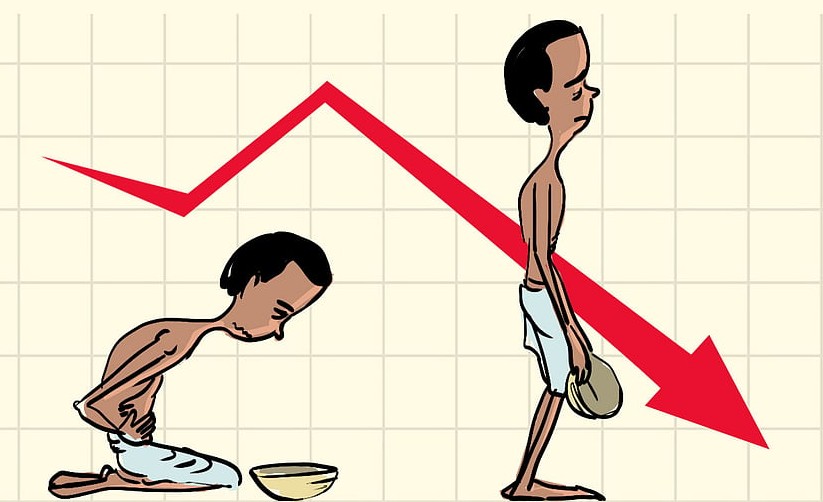
Recently, the World Bank has announced a major revision to global poverty estimates, raising the International Poverty Line (IPL).
It raised the IPL from $2.15/day (2017 PPP) to $3.00/day (2021 PPP) (which at PPP-Exchange Rate for Indian Rupee in 2025 is Rs 20.6). Thus, it comes out to be Rs 62/day for India.
While the change led to a global increase in the count of extreme poverty by 125 million, India emerged as a statistical outlier in a positive direction. Based on this update, it is now stated that only 5.75% Indians live under extreme poverty (down from 27% in 2011-12).
About Poverty Line
A poverty line is a threshold of minimum income or consumption needed to meet basic necessities like food, shelter, and clothing.
Purpose: It serves to identify who is poor and helps in targeting welfare schemes and tracking poverty reduction over time.
Standards Used:
Absolute Poverty Line: Fixed benchmark (e.g., World Bank’s $1.90/day for extreme poverty).
Relative Poverty Line: Based on a population’s median income or living standards, reflecting social inclusion.
Importance:
Classifies individuals as poor or non-poor.
Informs policy decisions, resource allocation, and efforts toward poverty alleviation.
Source – Indian Express
India’s Outlier Status in Global Poverty Reduction
Reason
Explanation
Substantiation
Sustained Economic Growth
Despite COVID-19 setbacks, India has maintained a stable growth trajectory post-2015, which helped lift incomes and create jobs, especially in services and construction.
IMF estimates India’s GDP grew at 7.2% (FY23).
Large-Scale Welfare Schemes
Government schemes like free food (PMGKAY), LPG connections (Ujjwala), and rural jobs (MGNREGA) helped protect vulnerable groups.
PMGKAY provided free ration to ~80 crore people during COVID; MGNREGA offered 3.5 billion person-days in 2020-21.
Direct Benefit Transfers (DBT)
Technology-enabled transfers ensured subsidies reached the poor directly, reducing leakages and informal exclusion.
Over ₹28 lakh crore transferred through DBT since 2014 (as per govt data).
Declining Fertility and Demographic Shifts
Smaller family sizes mean fewer dependents and higher per capita consumption within households.
India’s Total Fertility Rate fell to 2.0 (NFHS-5).
Improved Access to Basic Services
Access to electricity, toilets, cooking fuel, housing, and bank accounts expanded significantly, reducing multidimensional poverty.
NITI Aayog’s MPI 2023: Multidimensional poverty halved between 2015-16 and 2019-21.
Revised PPP Exchange Rate
New 2021 PPP revisions increased the purchasing power of the Indian rupee, lowering the number of people under the $3.00/day threshold.
World Bank (2024): Revised PPP adjustment favoured India, unlike many African economies.
Impact of Revision on Poverty Perception and Policy Targeting in India
1. A Higher Poverty Line Shows Deeper Poverty: The new $3.00/day line raises the basic standard for survival.It brings into focus people who were above the old line but still struggle to meet daily needs.
2. More People May Need Help: Many who were earlier not counted as poor may now be seen as poor under the new line.This means more people may need to be included in government welfare programs.
3. India’s Progress Looks Better, But Challenges Remain: India now has only about 5.75% extreme poor under the new line, which shows progress.But this average hides regional and rural-urban gaps. Many areas still have deep poverty.
4. Welfare Schemes May Need Updating: Programs like MGNREGA, free food schemes, and cash transfers may need to expand.Focus should also be on people who are not extremely poor but still vulnerable to slipping into poverty.
5. Need to Shift Toward Universal Services: The higher poverty line supports the idea that healthcare, education, and social security should be available for all, not just for the poorest.
6. India Must Update Its Own Poverty Measures: India still uses old poverty estimates. New methods, including multidimensional poverty (like NITI Aayog’s index), should be used.This helps track not just income, but also access to basic needs like education, sanitation, and housing.
Importance of the Poverty Line
Measuring the Scale of Poverty: The poverty line provides a clear, quantifiable way to identify how many people are poor in India. This headcount is essential to understand the size of the problem and track who needs the most help.
Monitoring Progress Over Time: It acts as a benchmark to assess whether policies and development programs are making an impact. A fall in poverty numbers over time signals improvement in living conditions.
Targeting Welfare Schemes Effectively: Poverty line identification helps direct benefits to the right people. Many welfare schemes depend on Below Poverty Line (BPL) classification, including:
PDS: Ration cards for subsidized grains.
PMAY: Affordable housing in rural and urban areas.
MGNREGA: Although universal, poverty data helps identify the most vulnerable.
NSAP: Pensions for the elderly, widows, and disabled.
Ayushman Bharat: Health insurance for the poorest families.
Assessing Inclusiveness of Growth: If GDP is rising but poverty remains high, it shows that economic growth is not reaching the poor. The poverty line helps check if development is inclusive and equitable.
Fulfilling Constitutional Goals: While the Constitution doesn’t mention a poverty line directly, the Directive Principles of State Policy require the state to create a just and equitable society. Estimating poverty supports this objective.
Enabling Global Comparisons: Global poverty lines (like the World Bank’s $3.00/day PPP) help compare India’s performance with other countries, shaping global reputation and development policy.
Challenges with the Poverty Line in India
‘Basic Needs’: Defining minimum needs is subjective and evolves with time. A small change in the poverty line’s value can drastically change poverty numbers, making it politically sensitive.
Neglect of Non-Food Essentials: Early poverty lines focused mainly on food. Later, health and education were included (e.g., Tendulkar/Rangarajan), but the assumption that the state provides these services for free often doesn’t match ground realities.
Outdated Official Estimates: India hasn’t officially updated its poverty line since the 2011–12 Tendulkar estimates. The 2017–18 consumption survey was scrapped, and while new HCES data (2022–23) is available, poverty estimates based on it are still pending.
Uncertainty Over Actual Trends: Economists disagree over whether poverty has truly declined as much as recent data claims. Events like COVID-19, demonetisation, and stagnant rural wages suggest setbacks for the poor that may not reflect in outdated estimates.
Regional Variations: One uniform poverty line fails to reflect differences in living costs and service access across states or between rural and urban areas. A national line may oversimplify complex regional realities.
Way forward
1.Mandate for a Modern Basket: The government should immediately constitute a new expert committee, similar to the Tendulkar and Rangarajan committees, but with a broader and more contemporary mandate. This committee should define a “Poverty Line Basket” (PLB) that truly reflects the minimum requirements for a dignified life in 21st-century India. The committee should recommend a mechanism for periodic revision and updating of the poverty line (e.g., every 3-5 years) to account for inflation, changes in consumption patterns, and evolving societal standards.
2. Leverage the Latest HCES Data (2022-23): The HCES data should be fully utilized to derive poverty lines and estimates at state-specific, rural-urban, and potentially even sub-state levels, reflecting the vast economic and cost-of-living disparities across India.
3. Embrace a Multi-Tiered Approach to Poverty Measurement: India should move beyond the debate of a single poverty line. A multi-tiered framework would be more appropriate:
Extreme Poverty Line: Aligned with the World Bank’s international poverty lines (e.g., the revised $3.00/day PPP) for international comparisons and to track progress on SDG 1.
National Poverty Line: A domestically derived, consumption-based line reflecting the minimum for a dignified life. This could be akin to a “basic needs” poverty line.
Vulnerability Line/Near-Poor Line: A line slightly above the national poverty line to identify households that are not officially “poor” but are highly vulnerable to falling into poverty due to economic shocks (e.g., illness, job loss, climate events). This group also needs policy attention.
4. Strengthen Multidimensional Poverty Index (MPI): The MPI should be officially recognized as a primary and complementary tool for poverty measurement, not a replacement for a consumption-based line. Use MPI to identify specific deprivations (e.g., sanitation, cooking fuel, education access) at granular levels (district, block) to design targeted, multi-sectoral interventions. Continuously improve the data sources and frequency for MPI calculation (e.g., by integrating HCES data with NFHS and other administrative data).
#BACK2BASICS: Tracking India’s Poverty
Various Approaches to Tracking Poverty
India and the world have used different methods to track poverty. Each method has strengths and limitations.
1. Consumption-based Poverty
What it is: Tracks how much people spend on food, housing, clothes, etc.
Used by: India’s official poverty estimates (like Tendulkar Committee, 2011-12).
Pros:
Better reflects long-term wellbeing, especially in informal economies like India’s.
More stable and less affected by income shocks.
Cons:
Requires detailed surveys, often delayed.
May underestimate urban poverty and non-food needs.
2. Income-based Poverty
What it is: Based on how much a person earns, usually per day or per month.
Used by: World Bank’s International Poverty Line ($2.15 or $3/day).
Pros:
Easy global comparison.
Can reflect short-term changes in wellbeing.
Cons:
Inaccurate in informal sectors where incomes are irregular or underreported.
May miss consumption from savings, credit, or in-kind transfers.
3. Multidimensional Poverty
What it is: Looks at poverty beyond income—includes access to education, health, sanitation, housing, and nutrition.
Used by: NITI Aayog’s MPI, UNDP’s Global MPI.
Pros:
Holistic. Shows how poor people are deprived in multiple areas.
Helps target specific policies (e.g. education in Bihar, sanitation in UP).
Cons:
Complex to calculate.
Needs regular, high-quality data.
Alagh Committee (1979)
Developed the poverty lines for rural and urban areas based on nutritional requirements (2400 kcal for rural, 2100 kcal for urban). These calorie norms were subsequently accepted by the Planning Commission.
Lakdawala Committee (1993)
Recommended using Consumer Price Index for Agricultural Labourers (CPI-AL) for rural areas and Consumer Price Index for Industrial Workers (CPI-IW) for urban areas to update state-specific poverty lines. It emphasized that poverty estimates should be based on consumption expenditure surveys conducted by the National Sample Survey Organization (NSSO).
Tendulkar Committee (2009)
It moved away from a solely calorie-based model and recommended a more comprehensive “Poverty Line Basket” that included private expenditure on health and education, in addition to food and other basic necessities. It also recommended a uniform poverty line basket across rural and urban areas, though with different monetary values. Based on its methodology, the Tendulkar Committee estimated the poverty line for 2011-12 at:₹816 per capita per month for rural areas (~₹27.2 per day)₹1,000 per capita per month for urban areas (~₹33.3 per day)Using this line, India’s poverty rate was estimated at 21.9% (25.7% rural, 13.7% urban), meaning approximately 26.93 crore people were below the poverty line.
Rangarajan Committee (2014)
Constituted to review the Tendulkar methodology, this committee proposed higher poverty lines, considering a slightly different consumption basket. Poverty Line:₹972 per capita per month for rural areas (~₹32.4 per day)₹1,407 per capita per month for urban areas (~₹46.9 per day)Based on these lines, the Rangarajan Committee estimated India’s poverty rate to be 29.5% for 2011-12, significantly higher than the Tendulkar Committee’s estimate. However, the Indian government did not officially adopt the Rangarajan Committee’s recommendations, meaning the Tendulkar Committee’s estimates (for 2011-12) remained the last official poverty figures for a long time.
World Bank
The World Bank’s current extreme poverty line is $2.15 per day (2017 PPP). Recently, the World Bank announced a revision to $3.00 per day (2021 PPP). At the 2025 PPP rate, this translates to roughly ₹62 per day for India. Using the World Bank’s updated line, about 5.75% of Indians live in extreme poverty as of 2025, a sharp decline from 27% in 2011–12.
NITI Aayog
National Multidimensional Poverty Index (MPI): Unlike a purely income/consumption-based poverty line, the MPI measures poverty across multiple dimensions (health, education, and living standards) using 12 indicators (e.g., nutrition, schooling, cooking fuel, sanitation, electricity, housing, assets, bank accounts). NITI Aayog’s recent reports (based on NFHS data) show a significant reduction in multidimensional poverty in India:From 29.17% in 2013-14 to 11.28% in 2022-23, with approximately 24.82 crore people escaping multidimensional poverty in 9 years.Rural poverty showed a larger decline than urban poverty in this period.This provides a more holistic picture of deprivation beyond just monetary income.
SMASH MAINS MOCK DROP
While India has shown remarkable reduction in poverty as per global estimates, the outdated nature of domestic poverty lines hampers effective policy targeting.” Critically examine in light of recent revisions in the international poverty line and India’s welfare architecture.