Two Indian aquanauts dived over 5,000 m in the Atlantic aboard French vessel Nautile, as part of India’s Samudrayaan Mission.
What is Deep Ocean Mission (DOM)?
Approved: 2021 by the Union Cabinet, with a budget of ₹4,077 crore for 5 years.
Aim: Explore, conserve, and sustainably use deep-ocean resources to support India’s Blue Economy.
Six Components:
Develop technologies for deep-sea mining, submersibles, and robotics.
Ocean climate change advisory service with observations + predictive models.
Deep-sea biodiversity exploration and conservation.
Surveys for polymetallic nodules and minerals.
Energy & freshwater extraction technologies from oceans.
Advanced Marine Station for ocean biology & engineering → to bridge research & industry.
About Samudrayaan Mission:
Nature: India’s first crewed deep-sea exploration mission.
Objective: To send 3 humans up to 6,000 m depth into the central Indian Ocean by 2027.
Vehicle: Crewed submersible Matsya-6000 (fish-shaped, 2.1 m personal sphere).
Capacity: 3 aquanauts.
Endurance: 12 hours normal + 96 hours emergency life support.
Material: Titanium alloy sphere (80 mm thickness) to withstand ~600x atmospheric pressure.
Coordinating Agency: National Institute of Ocean Technology (NIOT), Ministry of Earth Sciences.
Strategic Significance: Will place India among a select group of countries (US, Russia, China, Japan, France) with human deep-sea exploration capability.
Progress made so far:
Aquanaut Training: Discussed above.
Matsya-6000 Development:
Successfully wet tested in Feb 2025.
Titanium alloy sphere fabrication ongoing at ISRO using electron beam welding.
Initial steel test sphere used for 500 m trials.
Technology Development:
Indigenous acoustic telephone built for underwater communication (works in open ocean after initial failures).
Life-support systems designed to maintain 20% oxygen and scrub CO₂.
Next Steps:
Human test dive at 500 m depth planned before full 6,000 m mission.
Full Samudrayaan launch targeted by 2027.
[UPSC 2021] Consider the following statements:
1.The Global Ocean Commission grants licenses for seabed exploration and mining in international waters.
2.India has received licenses for seabed mineral exploration in international waters.
3. ‘Rare earth minerals’ are present on the seafloor in international waters.
Which of the statements given above are correct?
Options:(a) 1 and 2 only (b) 2 and 3 only* (c) 1 and 3 only (d) 1, 2, and 3
Digital cashback incentives up to ₹1,600 on retail & wholesale transactions.
Capacity Building:
Training in entrepreneurship, financial literacy, digital skills, and marketing.
Food safety & hygiene training for street food vendors (with FSSAI partnership).
Implementation:
Jointly by MoHUA & Department of Financial Services (DFS).
DFS facilitates loans & credit cards through banks/financial institutions.
Wider Goals:
Promote financial inclusion & digital adoption.
Enable vendors’ business expansion & sustainable growth.
Contribute to inclusive urban economic development.
[UPSC 2011] Microfinance is the provision of financial services to people of low-income groups. This includes both the consumers and the self-employed. The service/services rendered under microfinance is/are:
1. Credit facilities 2. Savings facilities 3. Insurance facilities 4. Fund Transfer facilities
Options: (a) 1 only (b) 1 and 4 only (c) 2 and 3 only (d) 1, 2, 3 and 4*
N4S: Article tells how rice‑wheat success hides risks and need crop diversity. UPSC frames such themes as big‑picture GS 3 questions that ask you to praise past gains and then dissect hidden costs, just like the 2020 question on the rice‑wheat “bane.” Many aspirants stumble because they quote only Green‑Revolution glory and ignore hard data on water stress, subsidies, and loss of pulses, so answers stay half‑baked. This piece fixes that gap: the subhead “Reasons Farmers Prefer Rice and Wheat” breaks down every push factor, while “Government Policy’s Role in Shaping Cropping Patterns” shows how MSP and power subsidies lock farmers in, and “Climate Change and Future Cropping Patterns” arms you with forward‑looking angles. Grab examples sprinkled throughout—(HD‑3385 wheat, Kamala CRISPR rice, Direct‑Seeded Rice in Haryana)—to prove depth. The standout gem is its “Back to Basics: Understanding Cropping Patterns and Agricultural Priorities” box; it turns fuzzy textbook jargon into crisp, exam‑ready lines that can open or close any answer. Read the article once, and you will have the map, the numbers, and the fresh vocabulary to move beyond stock phrases and hit the analytical sweet spot UPSC rewards.
PYQ ANCHORING
GS 3: What are the major factors responsible for making rice-wheat system a success? In spite of this success how has this system become bane in India? [2020]
MICROTHEME: Cropping pattern
“Plant rice and wheat, and your harvest is almost guaranteed.” — That’s the certainty that shapes the choices of millions of Indian farmers every season. But while these staples dominate fields and plates, the promise of food security hides a deeper crisis—of shrinking crop diversity, rising resource stress, and a fragile future for farming.
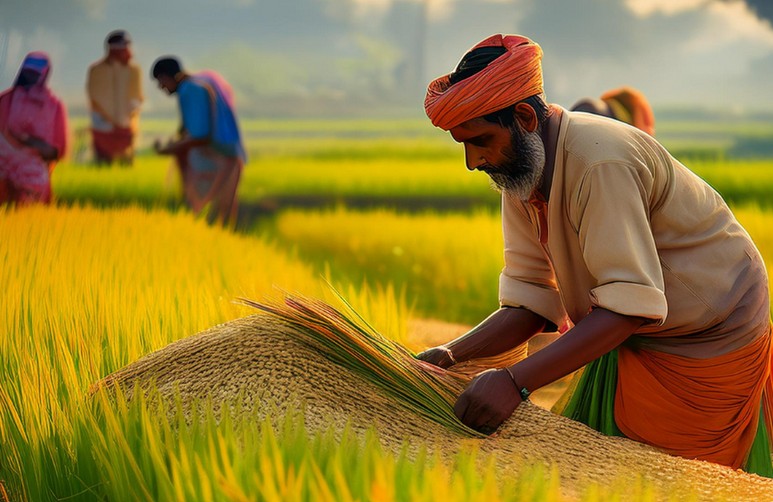
Across the heartlands of Punjab, Haryana, and Madhya Pradesh, fields overflow with rice and wheat, backed by government support and decades of research. Yet, behind this abundance lies a stubborn reliance that sidelines pulses, millets, and oilseeds—crops crucial for nutrition, climate resilience, and sustainable farming.
Why does this rice-wheat cycle persist despite growing risks? What role do policies, innovation, and climate change play in locking India into this pattern? And can the country pivot towards a more diverse and secure agricultural future before it’s too late?
The issue in point
Rice and wheat remain the top choices for Indian farmers due to assured government support and continuous scientific advancements in breeding technologies. Other crops lag behind because they lack similar incentives and innovations.
Reasons Farmers Prefer Rice and Wheat
Farmers’ loyalty to rice and wheat is not accidental—it is shaped by decades of support systems, innovations, and familiarity that reduce risks and improve returns.
Assured Procurement at MSP: The government guarantees purchases of rice and wheat at Minimum Support Prices (MSP), reducing farmers’ market risks. For example, Punjab’s rice cultivation area increased significantly from 29.8 lakh hectares in 2015-16 to 32.4 lakh hectares in 2024-25, thanks to stable MSP support.
Lower Yield Risk: Rice and wheat are mostly grown under irrigation and benefit from advanced research, leading to more reliable yields. For instance, the wheat variety HD-3385 (2023) yields about 6 tonnes/hectare and is disease-resistant.
Breeding Innovations & Higher Returns: Ongoing improvements boost productivity and stress tolerance. The genetically edited rice variety Kamala can yield up to 9 tonnes/hectare and matures faster, saving water and fertilizer costs.
Government Extension Services: Strong support from Krishi Vigyan Kendras and state agriculture departments helps farmers access quality seeds and timely guidance.
Familiar Cropping Practices: Farmers are well-acquainted with the input cycle, harvesting methods, and market systems of rice and wheat, reducing uncertainty.
Key Drivers of Yield Growth in Rice and Wheat
The productivity boom in these crops is a direct result of targeted scientific efforts and efficient farming methods.
Genetic Improvements: Continuous breeding advancements have produced high-yield, stress-resistant varieties like HD-3385 wheat.
Improved Farming Practices: Techniques like early sowing, fertiliser-responsive seeds, and Direct-Seeded Rice (DSR) enhance yields and save water and labour.
Public Research Support: Government institutions back rice and wheat research, exemplified by the CRISPR-edited Kamala rice, which matures earlier and requires fewer inputs.
Precision Agriculture Tools: Use of drones, remote sensing, and soil health monitoring is improving input efficiency and boosting yields.
Government Schemes: Programs like NFSM (National Food Security Mission) and PM-AASHA provide funding and input access to farmers.
Government Policy’s Role in Shaping Cropping Patterns
Policies have played a central role in reinforcing the rice-wheat monoculture, often at the cost of crop diversity and sustainability.
MSP and Procurement Assurance: Guaranteed MSP encourages farmers to grow rice and wheat, leading to expansion of these crops (e.g., Punjab and Madhya Pradesh), while crops like cotton have declined.
Research and Input Bias: Rice and wheat receive more scientific attention and subsidy access than pulses, oilseeds, or cotton.
Irrigation Infrastructure: Government investments in canals, tubewells, and power subsidies favor water-intensive crops like rice and wheat.
Power and Fertilizer Subsidies: These heavily benefit rice-wheat growing belts, encouraging their continuous cultivation.
PDS-Driven Cropping Choices: Government procurement for PDS focuses on rice and wheat, limiting farmers’ incentive to diversify.
Recent Innovations in Rice Varieties
Rice breeding has witnessed rapid innovation in recent decades, improving its adaptability, nutritional value, and sustainability.
Semi-Dwarf High-Yield Varieties: Such as IR-8 (1966), which increased yields and reduced crop duration compared to traditional varieties.
Gene Editing (CRISPR-Cas): Precision tools like CRISPR, used in Kamala rice (2024), increase grain number, improve maturity time, and raise yields.
Abiotic Stress Tolerance: Varieties like Pusa DST Rice 1 show tolerance to drought and salinity, helping farmers in climate-vulnerable zones.
Aerobic Rice Varieties: Developed to grow under non-flooded conditions, these reduce water consumption significantly.
Biofortified Rice: New lines enriched with iron, zinc, and other micronutrients are being deployed under public nutrition programs.
Role of Private Sector in Crop Diversification and R&D
While public institutions have traditionally focused on staples like rice and wheat, the private sector is increasingly instrumental in pushing the frontiers of crop innovation, diversification, and commercialization—particularly in under-supported crops like vegetables, oilseeds, and pulses.
Parameter
Insights
Examples
Seed Innovation and IPR
Private firms invest in R&D for high-yield, pest-resistant hybrids due to patent protection under India’s Plant Variety Protection and Farmers Rights Act.
Firms incentivize farmers to grow demand-linked crops via buyback agreements and contract farming models.
PepsiCo’s contract farming for potatoes in Punjab; Nestlé sourcing maize for baby food processing.
Extension Through AgriTech
Startups provide real-time agri-advisories using AI, IoT, and remote sensing, reducing reliance on public extension for non-rice-wheat crops.
DeHaat’s platform offers customized input-output solutions for vegetables and pulses.
Processing & Export Infrastructure
Private sector builds value chains—cold chains, warehousing, and logistics—for perishable, high-value crops that lack government MSP backing.
ITC’s e-Choupal network supports soybean, tobacco, and spices aggregation.
Investment in Niche Crops
Corporates target niche crops like herbs, millets, and exotic vegetables for urban markets and exports, catalyzing farm-level diversification.
Urban farms in Maharashtra supplying lettuce, kale; millet exports by TATA Soulfull brand.
Climate Change and Future Cropping Patterns
Climate variability is no longer a distant concern—it’s already influencing cropping zones, water availability, and input use. Adaptive cropping strategies and climate-resilient varieties are critical for long-term food security.
Aspect
Insights
Examples
Shifting Agro-Climatic Zones
Traditional zones are becoming unsuitable due to increased temperature, erratic rainfall, and soil degradation.
Punjab’s wheat faces heat stress; North Bihar is emerging as an alternative wheat region.
Stress-Tolerant Varieties
Research focus has shifted to develop varieties tolerant to drought, salinity, heat, and submergence.
Early sowing, shorter maturity varieties, and altered irrigation cycles are being adopted to reduce climate exposure.
Wheat sowing advanced by 10–15 days in NW India under ICAR-NICRA project.
Water-Efficient Systems
Technologies like drip, sprinkler, and DSR are promoted to adapt to declining groundwater and erratic monsoons.
Haryana and Punjab promote Direct Seeded Rice; Maharashtra expands micro-irrigation in cotton zones.
Agroecological Zoning for Planning
ICAR and IMD promote climate-based zoning for crops to guide long-term planning, insurance, and diversification.
National Agricultural Drought Assessment and Monitoring System (NADAMS) and Agro-Eco Sub-Regions (AESRs).
Nutritional Security vs. Caloric Security: The New Policy Pivot
India’s focus on caloric sufficiency—primarily via rice and wheat—has masked its ongoing nutritional crisis. A future-ready food policy must recalibrate towards protein-rich, micronutrient-dense, and biofortified crops.
Aspect
Insight
Examples
Micronutrient Deficiencies
Over half of Indian women and children suffer from deficiencies despite adequate calorie intake.
NFHS-5: 57% women anaemic; significant zinc, protein, iron gaps in diet.
Role of Pulses and Millets
Pulses provide protein; millets offer iron, calcium, and fiber—essential for combating hidden hunger.
Tur, moong, ragi integrated into mid-day meals and ICDS in Tamil Nadu and Odisha.
Biofortified Varieties
Public-sector breeding increasingly includes micronutrient targets in rice, wheat, and maize.
Zinc-enriched rice in Odisha’s PDS; HarvestPlus-promoted iron pearl millet in Rajasthan.
Policy Shifts in Procurement
There is a push to expand MSP and procurement to include nutri-cereals and pulses, linking them to welfare schemes.
MSP declared for 14 kharif crops including jowar, bajra, tur, urad under PM-AASHA.
Consumer Awareness Campaigns
Public health and food security campaigns now emphasize nutrient diversity, not just calories.
‘Eat Right India’ by FSSAI; International Year of Millets 2023 declared by FAO with India as key driver.
Way Forward
A resilient and diverse agriculture sector requires policy and research shifts that move beyond rice and wheat.
Diversify MSP and R&D: Expand assured procurement and research to pulses, oilseeds, and millets to reduce dependence on rice and wheat.
Disincentivize Water-Intensive Crops: Offer financial incentives for growing low water-use crops in stressed agro-climatic zones.
Subsidy Reform: Redirect input subsidies to support climate-smart, region-specific farming systems.
Market & Awareness Push for Alternatives: Boost marketing infrastructure and consumer demand for nutri-cereals and protein-rich crops.
Back to Basics: Understanding Cropping Patterns and Agricultural Priorities
Before evaluating India’s overdependence on rice and wheat, it is vital to decode the fundamental ideas that shape farmers’ choices and national food strategies. This section offers conceptual clarity on cropping patterns, their determinants, and the structural logic behind crop dominance.
Defining Cropping Patterns
Cropping pattern is not just a list of crops grown—it’s a systemic reflection of land use, climatic adaptation, and agricultural priorities over time.
Definition: A cropping pattern refers to the proportion and sequence in which different crops are cultivated on a given land area across seasons or years.
Static vs. Dynamic: While some regions follow fixed annual patterns, others shift crop choices in response to changing prices, weather, or pest risks.
Mono vs. Mixed Systems: Monoculture involves growing a single crop repeatedly, while intercropping or crop rotation includes multiple species to balance nutrients and risks.
Temporal Variation: Cropping intensity (number of crops grown in a year) varies—single, double, or triple cropping depending on water, labour, and technology.
Data Source: National agencies like the Directorate of Economics and Statistics (DES) compile cropping pattern data for policy use and regional comparisons.
Structural Factors Shaping Cropping Decisions
Farmers’ crop choices are not purely based on tradition or habit. They are shaped by intersecting structural, ecological, and institutional factors.
Agro-Ecology: Climate zones, soil pH, and topography limit what is feasible to grow and harvest profitably.
Asset Access: Ownership of irrigation facilities, credit access, and landholding size determine whether a farmer can take crop risks.
Labour Requirements: Some crops are labour-intensive (like sugarcane), which may not be feasible in areas with labour shortages or high wage rates.
Input Cycles: Crops have distinct sowing, fertilization, and harvesting schedules—mismatches can prevent efficient multiple cropping.
Tenancy and Leasing: Tenant farmers often grow short-duration or low-input crops to minimize investment under uncertain land arrangements.
Cropping Patterns vs. Cropping Systems
These two terms are often confused but refer to different agricultural frameworks.
Pattern: Cropping pattern is about what crops are grown and in what proportion.
System: A cropping system considers the entire management approach—rotation, fallow periods, inputs, residue use, and sustainability.
Agroforestry Integration: Some cropping systems combine trees and crops, improving biodiversity and microclimates.
Livestock Linkage: In many regions, crop choices are influenced by the presence of cattle—fodder needs shape the cropping system.
Sustainability Criteria: A cropping system is evaluated not just by yield, but by soil health retention, pest load reduction, and climate adaptability.
Historical Legacy of Crop Prioritization
Current patterns are deeply rooted in historical policy interventions and global market forces.
Green Revolution Bias: The 1960s-70s push for food security drove high-yield wheat and rice adoption, setting a precedent for future policy attention.
Colonial Disruption: Earlier cropping systems were more diverse—colonial emphasis on cash crops like indigo and opium disrupted food crop cycles.
Procurement Culture: The institutional apparatus for grain procurement began as a famine-avoidance measure and evolved into a long-term structural feature.
State Formation Influence: Newly formed states like Punjab and Haryana were incentivized to become national grain suppliers, institutionalizing rice-wheat dominance.
Export Orientation: The liberalization era added new incentives to grow globally tradable crops, affecting what farmers prioritized in market-linked regions.
Agricultural Zoning and Regional Prioritization
Geographic targeting is key to understanding where certain crops thrive or fail—and why national cropping strategies cannot be one-size-fits-all.
Agro-Ecological Zoning (AEZ): Classifies regions by climate, soil, and terrain to recommend crop types; ICAR uses this to guide long-term policy.
Crop Suitability Maps: These use GIS and remote sensing to match soil-climate profiles with ideal crops and their input needs.
Rainfed vs. Irrigated Zones: India has both rain-dependent regions and irrigation-fed belts—these distinctions are central to sustainable crop planning.
Zone-Specific Diseases: Crop selection must factor in pest and disease patterns that vary by region (e.g., blast in rice, rust in wheat).
Input Supply Chains: The physical availability of seeds, fertilizers, and pesticide dealers often aligns with zonal cropping patterns.
SMASH MAINS MOCK DROP
The rice-wheat cropping pattern has ensured food security but at the cost of ecological sustainability and crop diversity.” Critically examine the structural, policy, and technological factors behind this dominance. Suggest a multipronged strategy to promote climate-resilient and nutritionally balanced cropping systems in India.
[UPSC 2021] Examine the role of ‘Gig Economy’ in the process of empowerment of women in India.
Linkage: The article highlights that India’s economic vulnerabilities are aggravated by its failure to integrate women into the workforce. While traditional women-dominated export sectors face instability due to tariff shocks, the gig economy offers a new pathway for empowerment. Platforms like Urban Company demonstrate how women can earn sustainable incomes (₹18,000–25,000/month) with safety, insurance, and skill development. Thus, the gig economy is not just an employment option but a structural enabler of women’s empowerment, mobility, and autonomy. However, as the article stresses, formalisation of gig work, targeted policy support, and social protections are vital to make this empowerment sustainable.
Mentor’s Comment
India’s economic rise is undeniable, valued at $4.19 trillion, it is poised to be the world’s third-largest economy. Yet, the proposed 50% U.S. tariffs on Indian exports highlight an uncomfortable truth: India’s growth story is fragile because it has failed to empower half its population. This article unpacks how gender imbalance in labour markets is no longer a social concern but an economic vulnerability.
Introduction
India’s ascent as a global economic power is being tested by external shocks such as U.S. tariff hikes targeting $40 billion worth of Indian exports. Unlike China, which diversified and scaled its manufacturing, India’s labour-intensive sectors, textiles, gems, leather, footwear, remain exposed. These are precisely the industries that disproportionately employ women. The looming disruption reveals a deeper structural weakness: India’s persistently low female labour force participation rate (FLFPR). What was once viewed as a social development challenge is now a core economic liability threatening the sustainability of India’s demographic dividend.
The U.S. tariff shock and its economic implications
Targeted exports: U.S. tariffs at 50% could shave off nearly 1% from India’s GDP, directly hitting sectors employing 50 million workers, many of them women.
Comparative disadvantage: India could face a 30–35% cost disadvantage against competitors like Vietnam.
Dependency: The U.S. absorbs 18% of India’s exports, exposing India’s lack of diversification.
Employment vulnerability: An export decline of up to 50% could destabilise women-dominated industries.
Women’s participation as India’s strategic liability
Persistently low FLFPR: Stuck at 37–41.7%, far below China’s 60% and the global average.
Lost GDP potential: IMF estimates closing the gender gap could boost India’s GDP by 27%.
Cultural and systemic barriers: Patriarchal norms, unpaid care work, safety issues, poor public transport, and sanitation gaps keep women away from education and jobs.
Urban stagnation: Urban female labour participation shows little improvement despite rising education levels.
The ticking clock of India’s demographic dividend
Demographic window: India’s working-age population outnumbers dependents, but this will close by 2045.
Historical lessons: China, Japan, and the U.S. capitalised on their demographic peak to fuel growth; Southern Europe failed due to low female participation, resulting in stagnation.
Risk of lost opportunity: Without women’s integration, India risks a slowdown before fully realising its demographic advantage.
Lessons from global experiences in women’s empowerment
U.S. during WWII: Women’s labour mobilised with equal pay and childcare.
China’s post-1978 reforms: FLFPR at 60%, backed by state-supported childcare and education.
Japan’s reforms: FLFPR rose from 63% to 70%, boosting GDP per capita by 4%.
Netherlands model: Flexible part-time work with full benefits, relevant for India’s context.
Common thread: Institutional investments in legal protections, skills, and care infrastructure.
Emerging solutions and policy innovations within India
Karnataka’s Shakti Scheme: Free bus travel boosted female ridership by 40%, improving access to jobs, education, and autonomy.
Targeted fiscal policies: Tax incentives for female entrepreneurs, digital inclusion drives, and gender-skilling programmes.
Gig economy empowerment: Urban Company employs 15,000+ women, offering ₹18,000–25,000/month along with maternity benefits and insurance.
Public schemes: Rajasthan’s Indira Gandhi Urban Employment Guarantee Scheme generated 4 crore person-days of work, with 65% jobs for women, enabling many to work for the first time.
Conclusion
The U.S. tariff threat is a wake-up call, India’s economic fragility lies not just in external shocks but in internal neglect of women’s potential. Empowering women is no longer a matter of social justice but a strategic necessity for sustaining growth, harnessing the demographic dividend, and achieving global competitiveness. The choice is stark: invest in women and rise as a resilient power, or ignore them and remain vulnerable to shocks and stagnation.
This article explores how India is shifting towards evidence-based policymaking (EBPM). UPSC often asks such topics by linking them to broader governance issues -like the 2018 GS2 question on policy contradictions. Where aspirants usually falter is in reducing these topics to mere institutional listing without engaging with the underlying structural reforms – like regular rule reviews, digital governance platforms, or the need for a unified regulation-making law. This article helps bridge that gap. It explains key changes like Mandatory Public Consultation and Economic Impact Analysis in a simple, relatable way. A standout section is “EBPM across Schemes”, which gives practical examples – from JAM to Swachh Bharat to NEP – that can be used in GS2, GS3, Ethics, and Essay papers. It also connects Indian reforms with global practices (like US OIRA and EU’s ex-post review), helping aspirants frame comparative arguments. Most importantly, the article makes a data-heavy, abstract topic feel human and real – something aspirants often miss.
PYQ ANCHORING
GS 2 : Policy contradictions among various competing sectors and stakeholders have resulted in inadequate ‘protection and prevention of degradation’ to environment. “ Comment with relevant illustration. [2018]
MICROTHEMES: Structural Reforms & actions
For the first time, India’s top financial regulators – the Reserve Bank of India (RBI) and the Securities and Exchange Board of India (SEBI) – have laid down clear steps for how they’ll make, update, and review regulations. This is a big shift toward more transparent, data-backed, and accountable governance.
Changes made by RBI and SEBI
1. Mandatory Public Consultation
Before any new rule is finalised, there’s now a 21-day window where the public can give feedback. Example: If SEBI plans to change investment rules, investors, companies, or citizens can send suggestions.
2. Clear Objectives and Impact Analysis
RBI must explain the possible economic impact of its proposed regulations.
SEBI must clearly state the intent and purpose behind a rule. Example: Before regulating digital lending, RBI must study how it would impact consumers and lending companies.
Why Is Economic Rationale Important in Rule-Making?ReasonWhy It MattersExampleTargets real problemsPrevents over-regulation or solving non-issuesRBI acted against predatory digital lendersSaves resourcesFocuses time and money on actual needsSEBI watches high-risk products, not safe onesData-driven policyPromotes evidence-based decision-makingPost-2008, capital norms based on risk dataCost vs. benefit clarityAvoids excessive burden on stakeholdersDisclosure norms reviewed before enforcementBuilds public trustTransparency boosts confidence in regulatorsBan on front-running explained with logic
3. Regular Review of Old Rules
Both regulators will now revisit older regulations to see if they still make sense in today’s context. Example: SEBI might reassess mutual fund norms to match current market realities.
Learnings from USA and EU
Global Practice
How It Works
Example
Cost-benefit analysis
Mandatory economic impact review before any rule
US OIRA reviews federal rules
Problem & options assessment
Define the problem, evaluate all policy options
EU did this before appliance labelling reforms
Monitoring post-implementation
Evaluate success after rules are rolled out
EU uses ex-post reviews regularly
Recent trend of reforms in India
In recent times, India’s financial sector has shown a clear shift toward evidence-based policymaking, with regulators increasingly relying on data, public feedback, and impact assessments to frame and refine policies. This shift is marked by a move away from purely top-down decision-making toward a more transparent, consultative, and analytical approach. Key developments include:
Trend
Example
Public consultation in regulation-making
SEBI and RBI now publish draft rules for feedback.
Digital governance platforms
RBI’s PRAVAAH for tracking regulatory approvals.
Unified regulatory review
IFSCA mandates rule review every 5 years.
Cross-sectoral issues like fintech, ESG, climate risk
All regulators moving toward global norms and digital innovation.
Need for a common law on regulation-making
Experts demand a law like the U.S. Administrative Procedure Act in India.
Evidence-Based Policymaking (EBPM)
Evidence-Based Policymaking refers to the systematic use of data, research, and empirical analysis to inform and guide policy decisions. Rather than relying on ideology, intuition, or political expediency, EBPM insists that policies must be:
Grounded in verifiable evidence,
Evaluated through cost-benefit and impact assessments,
Designed to address real problems, not perceived ones.
Academic Roots of EBPM
Aspect
Details
Origin
Emerged from evidence-based medicine in the UK during the 1990s, where doctors used clinical data rather than anecdotal experience to treat patients.
Expansion into Public Policy
Popularized in governance through think tanks and public administration schools (e.g., LSE, Harvard Kennedy School).
Influential Thinkers
– Thomas Kuhn (scientific paradigms), – Donald Campbell (social experimentation), – Carole Weiss (policy evaluation).
Also influenced by Rational Choice Theory and Behavioral Economics.
Global Spread
Adopted in OECD countries, especially in the UK (Blair Government), USA (Obama’s Evidence-based Budgeting), and EU.
Core Philosophy Behind EBPM
Principle
What it Means
Rationality
Decisions should stem from reason and analysis, not guesswork.
Transparency
Policymakers must clearly state what evidence they used.
Accountability
Evidence allows policies to be tested, reviewed, and improved.
Adaptability
Policies must evolve with new data and evaluation.
Democratic Legitimacy
Opens the policymaking process to stakeholders, building trust.
EBPM across Schemes
1. Aspirational Districts Programme (ADP): Launched by NITI Aayog in 2018. Evidence Used: Real-time data from 112 underdeveloped districts on health, education, infrastructure, etc. Tools: Use of Champions of Change Dashboard, ranking districts on performance metrics. Impact: Led to targeted intervention and measurable improvement in outcomes like institutional deliveries and school attendance.
2. JAM Trinity in DBT (Jan Dhan, Aadhaar, Mobile): Reform of subsidy delivery through Direct Benefit Transfers (DBT). Evidence Used: Leakages in PDS, LPG, and MNREGA identified through pilot projects and CAG audits. Outcome: Over ₹2.2 lakh crore reportedly saved in leakage (as per govt reports), while increasing inclusion.
3. National Education Policy (NEP) 2020: Revamp of India’s education system. Evidence Used: Based on over 2 lakh suggestions, committee recommendations, and academic studies on learning outcomes and dropout rates. Key Shift: Emphasis on foundational literacy, flexible curriculum, and local language teaching.
4. Swachh Bharat Mission – Gramin: Nationwide sanitation campaign to end open defecation. Evidence Used: Baseline surveys in 2013 and independent impact assessments by WaterAid, UNICEF, etc. Policy Change: Shift from toilet construction targets to behavioural change campaigns.
6. Farm Laws and Repeal :Three farm laws were introduced to reform agricultural marketing. Gap in EBPM:
Limited public consultation,
Lack of pilot testing,
Absence of broad stakeholder consensus, especially with farmer unions. Outcome: Widespread protests, followed by repeal. Lesson: Highlights the consequences of ignoring evidence and consensus-building in policymaking.
7. COVID-19 Vaccination Strategy (CoWIN Platform): Nation-wide vaccine rollout. Evidence Used: Data on supply chains, real-time coverage, and vulnerable groups. Tools:CoWIN dashboard, GPS-linked vaccine monitoring, demographic analytics.
Challenges in EBPM
Challenge
Explanation
Example
Data Gaps and Poor Quality
Lack of granular, updated, and reliable data hampers effective decision-making.
Health and education data often outdated or inconsistent across states.
Limited Institutional Capacity
Policymakers may lack training or tools to analyze and apply evidence.
Many local governments lack data analysts or dedicated policy cells.
Low Use of Impact Evaluation
Policies are rarely tested through pilots or evaluated after implementation.
Schemes like MGNREGA lack rigorous impact assessment across all regions.
Political and Bureaucratic Resistance
Decisions may be driven by ideology or electoral concerns, not data.
Farm loan waivers often announced despite contrary economic evidence.
Weak Feedback Loops
Limited mechanisms to revise or withdraw ineffective policies.
Poor-performing schemes often continue due to lack of sunset clauses.
Fragmented Data Ownership
Data scattered across ministries with poor interoperability.
Employment data split between Labour Ministry, NSSO, and private platforms.
Access and Transparency Issues
Many datasets are not publicly available or easily accessible.
Delays in releasing official surveys like the NFHS or PLFS.
Over-reliance on Tech without Context
Digital tools used without understanding ground realities or local needs.
Implementation of AgriTech apps without farmer literacy or connectivity.
Way Forward
National Evidence Ecosystem: Create an independent Evidence Advisory Body under NITI Aayog to guide ministries and coordinate evaluations.
Data Infrastructure: Develop a unified national data portal with real-time, disaggregated, and publicly accessible datasets.
Impact Evaluation: Make pilot testing and independent impact evaluation mandatory for all major government schemes.
Local Government Capacity: Deploy trained data and policy officers at the district level to support evidence-based planning.
Policy-Academia Linkages: Fund and formalize partnerships between ministries and research institutions for evidence generation.
Transparency & Feedback: Mandate public release of evaluation reports and integrate citizen feedback into policy design.
#BACK2BASICS: Financial Regulatory Ecosystem
It refers to the network of institutions, laws, and mechanisms that govern financial markets and institutions – ensuring stability, protecting consumers, promoting competition, and preventing fraud or misuse.
Core Financial Regulators in India
Regulator
Area It Regulates
Key Functions
RBI (Reserve Bank of India)
Banks, NBFCs, Payments, Monetary Policy
Controls interest rates, inflation, currency supply; regulates banks and digital payments.
India’s financial regulatory ecosystem is broad, multi-layered, and evolving — aiming to balance stability, transparency, and innovation. As the financial world changes rapidly, India needs stronger coordination, more transparent rule-making, and a common legal and institutional framework to stay resilient and globally competitive.
SMASH MAINS MOCK DROP
In the context of evolving regulatory governance in India, evaluate the role of evidence-based policymaking (EBPM) in ensuring transparency, accountability, and public trust.
The National Cooperative Policy, 2025 has triggered a sharp Centre–State tussle, with Kerala at the forefront of resistance. Beyond a policy dispute, it reflects deeper tensions around cooperative federalism, involving constitutional authority, political stakes, and nearly ₹3 lakh crore in deposits, making the issue both high-stakes and nationally significant.
The Current Tussle between Centre and Kerala
Policy provokes backlash: Kerala describes the National Cooperative Policy as “unconstitutional”, asserting that it violates the State’s exclusive authority over cooperatives.
Political dimension: The Left Democratic Front (LDF) government accuses the BJP of attempting to capture Kerala’s cooperative network for political consolidation.
Financial stakes: Kerala’s cooperatives manage deposits worth ₹2.94 lakh crore, making them critical financial entities in the State’s economy.
The Contentious Nature of the National Cooperative Policy
Federalism at stake: Cooperative societies are a State List subject, yet the Centre is asserting influence, reviving concerns first raised during the Multi-State Cooperative Societies (Amendment) Act, 2023.
Kerala’s historical legacy: Cooperative institutions date back to early 20th century Travancore, Cochin, and Malabar, and evolved through the Kerala Cooperative Societies Act, 1969, making them central to socio-economic life.
Grassroots importance: Primary Agricultural Cooperative Societies (PACS) serve as the credit backbone of Kerala’s rural economy.
Kerala’s Political and Institutional Response
Political opposition: State Cooperation Minister V.N. Vasavan termed the policy “harmful to cooperatives.”
Organised resistance: The Kerala Primary Agricultural Cooperative Society association passed a resolution against the policy.
Workers’ unions’ concerns: The Kerala Cooperative Employees Union (KCEU) alleged that the Centre seeks to hand over the cooperative sector to corporates.
Existing Challenges in the Cooperative Sector
Credibility crisis: Several cooperative banks face embezzlement scandals and non-refund of depositors’ money.
Case in point: The Karuvannur Service Cooperative Bank scam in Thrissur dented public confidence and put the State government on the defensive.
State reforms: In 2023, Kerala amended its Cooperative Societies Act to plug loopholes and strengthen safeguards.
Structural Reforms in Kerala’s Cooperative System
Bank consolidation: Merging of district cooperative banks into the Kerala State Cooperative Bank (Kerala Bank) reduced the traditional three-tier credit structure into a two-tier system.
Policy rationale: Streamlining was aimed at improving efficiency and financial stability in the sector.
Future Trajectory of Kerala’s Cooperatives
New crossroads: Accelerated urbanisation, youth aspirations, and sectoral shifts in energy, shipping, technology, and health present opportunities for cooperative diversification.
Future trajectory: The ability of cooperatives to adapt and modernise will shape Kerala’s economic resilience in the coming decades.
Conclusion
Kerala’s cooperative movement, historically a pillar of rural credit and grassroots empowerment, stands at a critical juncture. The National Cooperative Policy, 2025, while framed in the language of reform, has exposed fault lines in India’s federal structure and deepened Centre–State tensions. For Kerala, the challenge lies in balancing its rich cooperative legacy with the demands of modernisation and transparency. For the Union, respecting constitutional boundaries while ensuring financial discipline will be key to sustaining trust in the cooperative model.
Value Addition
Overview of the National Cooperative Policy 2025
The National Cooperative Policy, 2025—officially unveiled on July 24, 2025 —replaces the 2002 framework with a visionary 20-year roadmap (2025–2045) centered on “Sahkar se
Policy Goals:
Tripling cooperative sector’s GDP contribution by 2034 through expanded outreach and growth-boosting measures
Establish one cooperative unit in every village, and set up 5 model cooperative villages per tehsil, with active creation of 2 lakh new multipurpose PACS by 2026
Bring 50 crore more people into the fold, increasing cooperative membership and societal participation
Core Pillars of the Policy: Outlined across six strategic pillars designed to transform cooperatives:
Strengthening Foundations
Promoting Vibrancy
Preparing Cooperatives for the Future (e.g., digitalisation)
Enhancing Inclusivity & Reach
Expanding into Emerging Sectors
Engaging the Younger Generation
Institutional and Structural Measures:
Legal & governance revamp: Updated model bye‐laws, regular review mechanisms (every 10 years), and cluster-based monitoring systems for accountability and responsiveness
Tribhuvan Cooperative University: A first-of-its-kind cooperative education hub aimed at professionalising the sector and reducing nepotism
National Cooperative Exports Limited (NCEL): To enhance global market integration for cooperatives, especially in staples like wheat and rice
Leveraging existing schemes: Integration with programs like DIDF, PMMSY, NPDD to establish infrastructure and functional PACS
Sectoral Diversification & Modernisation:
New sectors for cooperatives: Including green energy, insurance, tourism, taxi services (“Sahkar Taxi”), Jan Aushadhi Kendras, LPG outlets, CSCs, and more
Model Cooperative Villages: Combining dairy, fisheries, floriculture, agri-services, and focused inclusion of women and tribal groups as excellence center
Why It Matters:
Policy Revitalisation: First major overhaul in 23 years, indicating the renewed importance given to cooperatives by the government
Aligning with National Vision: Anchored in the larger goal of Viksit Bharat 2047, positioning cooperatives as engines of inclusive, rural-led development
Digital and Professional Transformation: Emphasises tech adoption, capacity building, and modern governance—crucial in restoring public trust and efficiency
Inclusivity at Core: Explicit focus on increasing participation of women, Dalits, Adivasis, and youth—building on the ethos of cooperative empowerment
Decentralized Growth Strategy: Village and tehsil-level expansion ensures economic decentralisation and rural integration—a critical tool for grassroots development
PYQ Relevance
[UPSC 2014] “In the villages itself no form of credit organisation will be suitable except the cooperative society.” – All India Rural Credit Survey. Discuss this statement in the background of agricultural finance in India. What constraints and challenges do financial institutions supplying agricultural finance face? How can technology be used to better reach and serve rural clients?”
Linkage: The 2014 question emphasised cooperatives as the most suitable form of rural credit, highlighting their role in agricultural finance. The Kerala–Centre tussle over the 2025 policy shows how this very grassroots credit system, with PACS and cooperative banks at its core, remains vital yet contested. Thus, the article provides a contemporary case study of both the potential and challenges of cooperatives in India’s agricultural and financial landscape.
In a democracy, the judiciary acts as the guardian of fundamental rights, ensuring that executive and legislative actions remain within constitutional limits. However, recent judicial pronouncements urging the executive to tighten controls over online speech raise a worrying question: Is the Court inadvertently enabling state encroachment into constitutionally guaranteed freedoms? This concern is sharpened by the backdrop of the IT Rules, 2021, which already tilt power heavily towards the government in regulating digital speech.
Expanding Powers of the Executive over Free Speech
Judicial Instructions: The Supreme Court recently directed the Union government to frame guidelines on regulating online speech.
Problematic Precedent: Instead of protecting rights, the Court’s instructions risk empowering the executive to expand censorship powers under vague grounds like “misuse of freedom of speech.”
Digital Speech: Between Regulation and Censorship
IT Rules, 2021: These rules already allow the government to flag and order removal of online content, with penalties for intermediaries.
2023 Amendment: Expanded scope to hold social media companies accountable for user-generated content, giving the state wide-ranging discretionary powers.
Challenge Pending in SC: These rules are already under constitutional challenge, making further expansion questionable.
The Risk of False Righteousness
Distasteful vs. Criminal: While hate speech and incitement to violence are already criminalised, regulating distasteful humour or dissenting opinions risks expanding censorship beyond constitutional boundaries.
Chilling Effect: Citizens begin to self-censor, fearing repercussions for expressing views.
Suppression of Creative Expression: Film producers, directors, and journalists face FIRs and restrictions, stifling art, reporting, and debate necessary for a vibrant democracy.
Judiciary’s Institutional Role under Question
Protector of Rights: The Court is constitutionally mandated to check executive overreach.
Risk of Overstepping: By urging executive rulemaking, the judiciary risks acting like an unquestioned lord in a feudal setup rather than a rights-protecting institution.
Misplaced Priorities: Instead of fortifying existing protections against hate speech, the Court seems to encourage executive expansion into grey zones.
Broader Democratic Implications
Weaponisation of Laws: Governments have a record of using regulations to target political opponents and inconvenient voices.
Threat to Democratic Discourse: An atmosphere of censorship undermines deliberation, dissent, and innovation—all vital for a progressive society.
Global Comparison: Mature democracies often rely on civil remedies and self-regulation, rather than empowering the state to police thought and humour.
Conclusion
The judiciary’s role is not to expand executive power but to ensure constitutional freedoms are protected. Hate speech and incitement to violence are already criminalised; expanding censorship to regulate humour, dissent, or artistic expression risks creating an atmosphere of fear and conformity. The Supreme Court must remember its constitutional role as the sentinel on the qui vive—guarding liberty, not enabling its curtailment.
PYQ Relevance
[UPSC 2014] Discuss Section 66A of the IT Act, with reference to its alleged violation of Article 19 of the Constitution.
Linkage: The present debate on the Supreme Court urging the executive to frame guidelines for regulating social media echoes the concerns raised in Section 66A of the IT Act, where vague terms led to misuse against free expression. Just like 66A, expanding executive powers risks creating a chilling effect on speech beyond Article 19(2)’s reasonable restrictions. Both highlight the judiciary’s responsibility to act as a protector of rights, not an enabler of censorship.
The Telecommunications Standards Development Society (TSDI) of India has hosted the 3GPP Radio Access Networks (RAN1–RAN5) Working Group Meetings focusing on 6G standardization for the first time, in Bengaluru.
About 3GPP (3rd Generation Partnership Project):
Overview: Global body established in 1998 for mobile telecom standards (2G → 6G).
Partners: Collaboration of ARIB (Japan), ATIS (USA), CCSA (China), ETSI (Europe), TSDSI (India), TTA (South Korea), and TTC (Japan).
Output: Publishes technical specifications, forming the global benchmark for telecom operators, equipment makers, and regulators.
Focus Areas:
RAN (Radio Access Network) – towers & radios connecting users to the network.
Core Network – switching, routing, internet connectivity.
Services & System Aspects – apps, charging, security.
What is RAN (Radio Access Network)?
Definition: The wireless part of a mobile network that links user devices (phones, IoT) to the core network using radio waves.
Components:
Base Stations (Node B in 3G, eNodeB in 4G, gNodeB in 5G).
Antennas & radios.
Controllers (e.g., RNC in 3G).
Functions:
Transmits & receives radio signals.
Allocates spectrum.
Manages coverage, speed, call/data quality, and handovers.
3GPP RAN Working Groups (RAN1–RAN5): Develop physical layer, radio protocols, performance testing, ensuring smooth migration from 4G → 5G → 6G.
Back2Basics:Evolution of Mobile Standards
3G (UMTS – Universal Mobile Telecommunications System): Introduced in early 2000s; based on WCDMA; enabled video calls, MMS, and mobile internet (up to 2 Mbps).
4G (LTE – Long-Term Evolution): All-IP, OFDMA-based; provided high-speed broadband (hundreds of Mbps), VoLTE, and seamless video streaming.
5G (NR – New Radio): Flexible OFDM-based; delivers ultra-high speeds (Gbps), ultra-low latency, supports IoT, automation, AR/VR, and network slicing.
6G (Sixth Generation – under research): Expected by ~2030; aims for terabit-class speeds, AI-native networking, holographic communication, and satellite–terrestrial integration.
[UPSC 2019] With reference to communication technologies, what is/are the difference / differences between LTE (Long-Term Evolution) and VoLTE (Voice over Long-Term Evolution)?
1. LTE ‘is commonly marketed as 3G and VoLTE is commonly marketed as advanced 3G.
2. LTE is data-only technology and VoLTE is voice-only technology.
Select the correct answer using the code given below.
Options: (a) 1 only (b) 2 only (c) Both 1 and 2 (d) Neither 1 nor 2*