Assam’s immigration detention system not only harms the freedom and well-being of the people held there, but also raises serious questions about whether it follows the basic rules and values of the Constitution.
What laws are used to detain non-citizens in India?
Foreigners Act, 1946: Allows the government to detain and deport individuals deemed as foreigners without valid documents. Eg: In Assam, many people declared as “foreigners” by Foreigners Tribunals were detained under this Act.
National Security Act (NSA), 1980: Permits preventive detention of individuals if they pose a threat to national security or public order. Eg: Non-citizens suspected of disturbing public order can be detained for up to 12 months without trial.
Passports Act, 1967: Penalizes entry or stay in India without valid passport or travel documents; used in conjunction with the above laws. Eg: A person found without a passport may be prosecuted and detained before deportation proceedings begin.
How do they impact detainees?
Indefinite and Arbitrary Detention: Many non-citizens are detained for years without trial or clear deportation prospects. Eg: In Assam, over 1.5 lakh people declared foreigners, but only a few dozen have actually been deported.
Lack of Legal Safeguards and Due Process: Detainees are often denied proper legal representation, and decisions are based on minor discrepancies in documents. Eg: Variations in spelling or lack of pre-1971 documentation have led to detention, despite lifelong residence in India.
Harsh Living Conditions and Psychological Distress: Detention camps have been criticised for overcrowding, poor facilities, and causing mental trauma. Eg: Many families are separated and live in uncertainty for years in Assam’s detention centres.
Why have many people in Assam been stripped of citizenship through the NRC process?
Stringent Documentation Requirements: Applicants had to prove ancestry from before March 24, 1971, using official documents. Eg: Many rural residents could not furnish land or birth records from that period due to illiteracy or displacement.
Loss or Inaccessibility of Records: Natural disasters, especially floods, led to the destruction or loss of vital documents. Eg: In flood-prone areas of Assam, many families lost old records multiple times over decades.
Minor Discrepancies Rejected: Minor differences in names or spelling between documents led to rejection. Eg: A person listed as “Rafiqul” in one document and “Rafiqul Islam” in another was flagged as suspicious.
Exclusion of Marginalised Communities: The verification process disproportionately affected Bengali Muslims, women, and tribal groups who lacked formal documentation. Eg: Women often lacked independent proof of lineage due to patriarchal registration systems.
Unfair and Opaque Procedures: Many claims were rejected by Foreigners Tribunals without transparent reasoning or opportunity for appeal. Eg: Individuals were declared foreigners without being adequately notified or heard by the tribunal.
How does the detention of non-citizens in Assam violate constitutional safeguards under Article 21 and 22?
Violation of Right to Life and Personal Liberty (Article 21): Detention without fair reason or legal justification breaches the fundamental right to life and liberty. Eg: People who have committed no crime are detained for years without any realistic prospect of deportation.
Absence of Procedural Safeguards (Article 22): Article 22 requires clear legal procedures and rights during preventive detention, such as being informed of grounds and access to legal counsel. Eg: Many detainees in Assam are not told why they’re detained or given timely legal aid.
Detention Without Conviction or Trial: Under Indian law, liberty can be curtailed mostly through judicial sanction, such as after conviction or during trial — not arbitrarily. Eg: People declared “foreigners” by tribunals (quasi-judicial bodies) are detained despite not being criminals or facing trial.
Detention Without Legitimate Preventive Purpose: Preventive detention must be for a specific, imminent threat — not indefinite holding due to lack of documents. Eg: Detainees are held even when deportation is not possible, making the detention purposeless.
Executive Overreach Undermines Judicial Role: Detention decisions are taken by the executive or tribunals without proper judicial oversight, undermining separation of powers. Eg: Tribunals and officials act without court direction, limiting detainees’ access to judicial remedy.
Way forward:
Ensure due process and legal aid: Establish transparent procedures with timely legal representation for those declared non-citizens, ensuring compliance with Articles 21 and 22.
Pursue humane alternatives to detention: Introduce community release programs or supervised residency for non-deportable individuals instead of indefinite detention.
Mains PYQ:
[UPSC 2017] Examine the scope of Fundamental Rights in the light of the latest judgement of the Supreme Court on Right to Privacy.
Linkage: The scope of fundamental rights, including Article 21, which is central to the discussion on the legality of detention in the article.
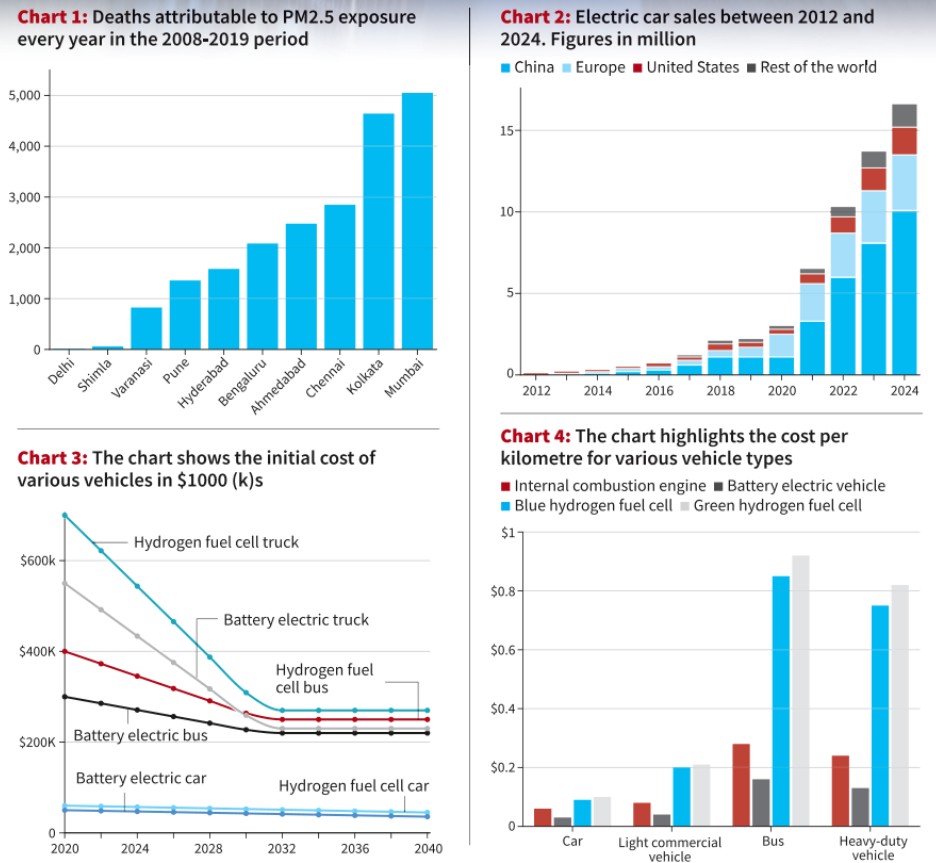
In India, a study published in The Lancet found that between 2008 and 2019, breathing in high levels of PM2.5 air pollution for short periods caused around 30,000 deaths each year in 10 major cities—making up about 7.2% of all deaths in those areas.
What are the major health impacts of urbanisation-related air pollution in Indian cities, as reported by the Lancet study?
High Mortality Due to PM2.5 Exposure: Short-term exposure to fine particulate matter (PM2.5) caused nearly 30,000 deaths annually across 10 major Indian cities from 2008 to 2019.
Significant Share of Urban Deaths: These pollution-related deaths represented about 7.2% of all deaths in these cities, indicating a severe public health burden directly linked to air quality.
City-Specific Impact – Mumbai: Mumbai recorded the highest number of annual deaths due to PM2.5, with approximately 5,100 deaths each year attributed to air pollution.
Severe Effects in Eastern and Southern Metropolises: Kolkata and Chennai also showed worrying trends, with 4,678 deaths/year in Kolkata and 2,870 deaths/year in Chennai due to polluted air.
Urbanisation Intensifies Health Risks: Rapid urban growth increases traffic congestion and emissions, compounding the effects of air pollution and increasing the risk of respiratory and cardiovascular diseases.
Why are Fuel Cell Electric Vehicles (FCEVs) considered more suitable for long-distance travel and extreme conditions despite their low adoption?
Longer Driving Range: FCEVs offer greater range than battery electric vehicles (BEVs) due to the higher energy density of hydrogen fuel. Eg: Hydrogen-powered vehicles can travel 500–700 km on a single tank, ideal for intercity transport.
Quick Refuelling Time: FCEVs can be refuelled in just 5–15 minutes, similar to petrol or diesel vehicles, unlike BEVs which may take hours to recharge. Eg: Hydrogen buses can be quickly refuelled during breaks, making them suitable for continuous long-haul operations.
Better Performance in Cold Weather: FCEVs are less affected by cold temperatures, which often reduce the efficiency and range of battery-powered vehicles. Eg: FCEVs are more reliable in regions with harsh winters like high-altitude or Himalayan areas.
Lighter Vehicle Weight: Hydrogen fuel cells are generally lighter than large lithium-ion battery packs, improving efficiency and payload capacity. Eg: Fuel cell trucks can carry more cargo weight over rugged terrain compared to heavier BEVs.
Ideal for Heavy-Duty and Rugged Use: Due to their durability and efficiency, FCEVs are well-suited for buses, trucks, and long-range vehicles on varied terrains. Eg: Countries like Japan and South Korea are deploying hydrogen buses for public transport in hilly and industrial regions.
Which countries and regions are leading in global electric car sales and how does India compare?
Country/Region
2023 EV Sales
Market Share
Key Highlights
China
9.05 million
37% of total car sales
World’s largest EV market; accounts for ~58% of global EV consumption
Europe
3.02 million
24% of total car sales
Strong adoption in countries like Norway, Germany, and the Netherlands
United States
1.39 million
9.5% of total car sales
Third-largest EV market globally
India
80,000
~5% of total car sales
Rapid growth; EV sales nearly doubled in 2023; leading in electric three-wheeler sales
When will hydrogen vehicle costs match battery-electric vehicles?
Cost Convergence Expected by 2030: Experts predict that the initial purchase cost of hydrogen Fuel Cell Electric Vehicles (FCEVs) will match that of BEVs by around 2030, due to advancements in hydrogen fuel cell technology and mass production. Eg: A hydrogen-powered bus may cost the same as a battery-electric bus by 2030, narrowing today’s 20–30% cost gap.
Technology and Manufacturing Scale-Up: As production scales up, the cost of fuel cells, hydrogen storage systems, and related components is expected to fall significantly. Eg: Mass production of hydrogen tanks and cheaper catalysts could lower vehicle costs similar to how lithium-ion battery costs declined over time.
Infrastructure Development and Government Support: Increased investment in hydrogen refuelling infrastructure and government subsidies are crucial for cost parity. Eg: Japan and South Korea are funding hydrogen highways and offering tax incentives to make hydrogen cars more affordable.
Operational Costs to Remain High: While initial costs may match BEVs by 2030, running costs are expected to remain significantly higher beyond that due to fuel prices. Eg: Operating a green hydrogen bus currently costs around $0.91/km, compared to $0.17/km for electric buses.
Limited Market Segments for Parity: Cost matching is likely only in specific segments like heavy-duty transport, not across all vehicle categories. Eg: Long-haul hydrogen trucks may achieve cost parity with electric trucks sooner than passenger cars due to their high utility.
What are the steps taken by the Indian Government?
FAME India Scheme: Launched in 2015, it offers financial incentives for EV adoption and charging infrastructure development. Phase II (2019) focuses on public transport EVs and charging stations.
PLI Scheme: A ₹26,000 crore initiative to boost domestic EV and hydrogen vehicle manufacturing, reduce imports, create jobs, and support ‘Make in India.’
Customs Duty Reduction: Import duties on EVs above $35,000 have been reduced from up to 100% to 15%, with a cap of 8,000 vehicles annually for five years, provided manufacturers commit to local production.
NEMMP: The 2013 National Electric Mobility Mission Plan aims to boost EV and hybrid vehicle adoption through technology, infrastructure, and demand generation.
State-Level Initiatives: States like Uttar Pradesh, Tamil Nadu, and Delhi have implemented various EV policies, including subsidies, tax waivers, and electric auto rickshaw programs to promote adoption.
Way forward:
Enhance R&D and Subsidies: Support innovation and provide financial incentives to reduce the cost of hydrogen vehicles and fuel.
Build Targeted Infrastructure: Develop hydrogen refuelling stations along key freight corridors and urban hubs.
Mains PYQ:
[UPSC 2024] How do electric vehicles contribute to reducing carbon emissions and what are the key benefits they offer compared to traditional combustion engine vehicles?
Linkage: Electric vehicles (which often implies BEVs) and their role in reducing carbon emissions, aligning with the “clean public transport”.
UPSC focuses on treaties like the Indus Water Treaty in two ways—historical context and contemporary disputes. Questions often require an analysis of ecological, economic, and geopolitical dimensions, as seen in the 2016 PYQ. The exam tests both conceptual understanding and current affairs relevance. Many of you may study the broad topics(map, water sharing, dispute resolution etc) but fail to link them with sub-themes like “Water Management.” You may tend to over-emphasize legal aspects but miss climate impact, infrastructure concerns, and trust deficits in Indo-Pak relations. This article provides a structured analysis of the dispute(including timeline) and a breakdown of breakdown of procedural, environmental, and strategic challenges. It goes beyond factual reporting to highlight how international water laws shape treaty interpretations – a crucial but often ignored aspect in preparation.
PYQ ANCHORING & MICROTHEMES:
GS 1: Present an account of the Indus Water Treaty and examine its ecological, economic and political implications in the context of changing bilateral relations.[2016]
Microthemes: Water Management
Michel Lino, the Neutral Expert appointed by the World Bank, stated that he has the authority to resolve disagreements over hydroelectric projects under the 1960 Indus Water Treaty. India supported this, affirming that all technical issues fall under its jurisdiction.
THE CURRENT DISPUTE
India has suspended the Indus Water Treaty in response to the Pakistan-sponsored terrorist attack in Baisaran Valley of Pahalgam.
Timeline of Dispute Development
The following table outlines the timeline of the current disputes over hydroelectric projects under the Indus Water Treaty and the way it has evolved over the years:
Year/Date
Event
2015
Pakistan raised objections to the projects and initially requested the appointment of a Neutral Expert.
2016
Pakistan unilaterally withdrew its Neutral Expert request and directly sought adjudication by the CoA, bypassing the treaty’s prescribed process. India requested that the dispute be referred back to a Neutral Expert, adhering to the treaty’s provisions.
2022
The World Bank facilitated the simultaneous functioning of both a Neutral Expert and a CoA. India rejected the CoA as “illegally constituted” and inconsistent with the treaty.
January 2023
India formally issued a notice to Pakistan for reviewing and modifying the treaty under Article XII (3).
August 30, 2024
India sent another formal notice for treaty review, but Pakistan did not respond despite receiving four reminders.
2024
The World Bank-appointed Neutral Expert, Michel Lino, upheld India’s stance, affirmed his jurisdiction under Paragraph 7 of Annexure F of the IWT, and recognized the Neutral Expert as the competent authority to resolve the seven disputed issues.
2024
India welcomed the ruling, criticized the legitimacy of the CoA, and reiterated that the treaty does not allow parallel proceedings. The Ministry of External Affairs reaffirmed that the Neutral Expert is the appropriate authority to resolve the technical disputes, including those concerning the Kishenganga and Ratle projects.
2025
The Indus Water Treaty has been officially suspended on the aftermath of a terrorist attack in Baisaran Valley of Pahalgam.
ISSUES IN THE IMPLEMENTATION OF THE TREATY
Water wars aren’t just a dystopian sci-fi concept—they’re playing out in real-time! The current dispute is just another chapter. The Indus Water Treaty, often cited as a symbol of cooperation, has faced several implementation hurdles over the years. These include:
Broad Issue
Specific Challenge
Example
Legal and Procedural Disputes
Dispute Over Project Designs
Pakistan objected to the Kishenganga and Ratle hydroelectric projects, citing treaty violations.
Parallel Legal Mechanisms
In 2022, the World Bank allowed both a Neutral Expert and a Court of Arbitration (CoA) to function simultaneously, which India opposed.
Delays in Treaty Review and Modification
India issued formal notices in January 2023 and August 2024 for treaty modification, but Pakistan did not respond.
Environmental and Hydrological Challenges
Climate Change and Glacial Melt
Glacier retreat in the Himalayas is altering the flow patterns of the Indus River system.
Water Pollution and Quality Issues
Pakistan has raised concerns about pollution from Indian industries affecting Sutlej and Ravi Rivers.
Infrastructure and Water Management Issues
Infrastructure Development Concerns
Pakistan has raised objections to multiple projects, including Pakal Dul, Lower Kalnai, and Bursar Dams.
Data Sharing and Transparency Issues
In 2021, Pakistan accused India of delayed flood data sharing, leading to concerns about unanticipated water releases.
Geopolitical and Strategic Tensions
Political and Strategic Tensions
Following the Pulwama attack (2019), India considered stopping excess water flow to Pakistan.
Third-Party Mediation and External Influence
The appointment of a Neutral Expert and a CoA in 2022 led to India rejecting the CoA’s legitimacy.
Growing Water Demand and Resource Strain
Population Growth and Rising Demand
Both India’s Punjab and Pakistan’s Punjab face acute water shortages due to rising agricultural needs.
IMPACT: Stalled Development and Rising Costs (e.g., Kishenganga and Ratle projects)
Eroding Trust in Dispute Resolution (e.g., India rejecting CoA in 2022)
Escalating Water Conflicts – Mistrust and lack of cooperation heighten the risk of diplomatic standoffs and potential treaty breakdown.
Data Gaps Fueling Misinformation (e.g., Pakistan’s 2021 flood data concerns)
Recurring Infrastructure Disputes(e.g., Pakal Dul and Bursar Dams)
Growing Resource Pressure. (e.g., water shortages in Punjab on both sides)
#BACK2BASICS: INDUS WATER TREATY
Indus Water Treaty: Overview and Key Provisions
The Indus Water Treaty (IWT), signed in 1960, governed the water-sharing arrangements between India and Pakistan over the Indus River system. The Treaty emerged as a solution to water disputes following the partition of India in 1947, which divided the river system between the two nations.
Key Provisions of the Indus Water Treaty
Water Sharing Arrangement:
The six rivers in the Indus Basin were divided as follows:
Western Rivers: Indus, Jhelum, and Chenab were allocated to Pakistan for unrestricted use, except for specified uses by India (e.g., non-consumptive, agricultural, and domestic uses).
Eastern Rivers: Ravi, Beas, and Sutlej were allocated to India for unrestricted use.
Approximately 80% of the water flow was allocated to Pakistan and 20% to India.
Specific Rights for India on Western Rivers:
Annexure C: Grants India rights for limited agricultural usage of waters from the western rivers.
Annexure D: Allows India to build ‘run-of-the-river’ hydropower projects (HEPs), which do not involve live water storage.
India must adhere to detailed design specifications.
Pakistan must be informed about project designs and can raise objections within three months.
Storage Provisions: India is permitted minimal storage on the western rivers for conservation and flood control purposes.
Permanent Indus Commission
A Permanent Indus Commission was established under the Treaty, comprising representatives from both nations.
Functions: Act as the first step in resolving water-related conflicts and Mandate at least one annual meeting.
Dispute Resolution Mechanism: The IWT outlines a three-step graded dispute resolution mechanism:
Permanent Indus Commission/Inter-government Talks: Initial disputes should be resolved through the Commission or inter-government dialogues.
Neutral Expert (NE): Unresolved disputes may be referred to the World Bank, which can appoint a Neutral Expert to resolve specific issues.
Court of Arbitration (CoA): If disputes involve treaty interpretation or dissatisfaction with the NE’s decision, they may be referred to a Court of Arbitration.
Understanding International Water Laws
When countries share rivers, lakes, or other water sources, they need clear rules to avoid conflicts, make the best use of resources, and protect nature. That’s where international water laws come in—they create guidelines for cooperation and fair use of water.
Even though these laws mainly deal with agreements between countries, they also influence national laws. To make these laws work, countries need to officially accept (ratify) them and follow them within their own borders.
Key Agreements Governing Shared Waters
There are over 400 agreements worldwide that regulate how countries cooperate over shared water. Some of the most important ones include:
Helsinki Rules, 1966
Regulates how rivers and their connected groundwaters that cross national boundaries can be used.
Includes principles for resolving issues through negotiations, arbitration, tribunals, or the International Court of Justice.
Helsinki Convention, 1992
Provides a legal framework for preventing and controlling water pollution across national borders.
Requires parties to apply the precautionary principle.
UN Convention on the Law of Non-Navigational Uses of International Watercourses, 1997
Also referred to as the UN Watercourses Convention, it is a flexible and overarching global legal framework that establishes basic standards and rules for cooperation between watercourse states on the use, management, and protection of international watercourses.
Established two key principles: “equitable and reasonable use” and “the obligation not to cause significant harm” to neighbouring states.
UNECE Water Convention (1992) – Originally meant for Europe, this treaty was later opened to all UN countries in 2016.
Core Principles of International Water Law
Fair and Reasonable Use – Every country sharing a water source has equal rights and should use it without harming others. This ensures that both upstream and downstream nations get a fair share.
No Significant Harm – Countries must avoid actions that negatively impact others, like polluting or diverting too much water.
Cooperation & Communication – Countries must notify and consult each other before making changes that could affect shared waters. This helps prevent disputes.
Protecting the Environment – Water laws emphasize keeping ecosystems healthy by preventing pollution and maintaining the balance of natural water systems.
By following these principles, countries can share water peacefully, avoid disputes, and ensure long-term sustainability.
The National Dam Safety Authority (NDSA) has reported major structural and operational defects in Telangana’s Kaleshwaram Lift Irrigation Project (KLIP), citing “irreparable damage” to three key barrages, including Medigadda.
About Kaleshwaram Lift Irrigation Project (KLIP)
KLIP, located on the Godavari River in Telangana, is the world’s largestmulti-stage lift irrigation project, inaugurated on June 21, 2019.
The project aims to irrigate 45 lakh acres, supply drinking water to Hyderabad, and support industrial use.
It plans to lift 240 TMC of water, with 195 TMC from Medigadda, 20 TMC from Sripada Yellampalli, and 25 TMC from groundwater.
The infrastructure includes 7 links, 28 packages, a 500 km span, 1,800+ km canal network, 20 reservoirs, and Asia’s largest pump house at Ramadugu.
Estimated cost: ₹80,000 crore to ₹1.2 lakh crore.
Issues with the Project
In October 2023, Pillar No. 20 of the Medigadda barrage sank, causing flood-related damages.
NDSA’s April 2024 report identified structural distressin all3 barrages (Medigadda, Annaram, Sundilla) due to poor design, lack of geotechnical studies, and inadequate safety protocols.
Overloading of barrages (10 TMC water stored instead of 2 TMC) caused foundation damage.
The state incurs ₹16,000 crore annually in loan and interest repayments, despite the project being criticized as a “man-made disaster.”
Back2Basics: Godavari River
The Godavari, also known as Dakshin Ganga, is the largest peninsular river in India.
Originates from Trimbakeshwar in Maharashtra, flowing 1465 km to the Bay of Bengal.
Its basin spans: Maharashtra, Telangana, Andhra Pradesh, Chhattisgarh, Odisha, and parts of Madhya Pradesh, Karnataka, and Puducherry.
Right bank tributaries include Pravara, Manjira, and Maner; Left bank tributaries include Purna, Pranhita, Indravati, and Sabari.
[UPSC 2024] Recently, the term “pumped-storage hydropower” is actually and appropriately discussed in the context of which one of the following?
Options: (a) Irrigation of terraced crop fields (b) Lift irrigation of cereal crops (c) Long duration energy storage* (d) Rainwater harvesting system
India’s SVAMITVA Scheme will be showcased at the World Bank Land Conference, highlighting its role in land governance reform, climate action, and rural empowerment.
About SVAMITVA (Survey of Villages and Mapping with Improvised Technology in Village Areas):
Launched on 24th April 2020 by the Ministry of Panchayati Raj, the SVAMITVA Scheme aims to provide legal ownership of residential properties in rural areas using drone and geospatial technology.
It is a Central Sector Scheme, fully funded by the Centre.
It involves the Ministry of Panchayati Raj, Revenue Departments at the state level, and the Survey of India as the technical partner.
The scheme issues property cards to rural households, reducing land disputes and enhancing financial inclusion.
These cards serve as legally valid ownership documents (e.g., Gharauni in Uttar Pradesh, Adhikar Abhilekh in Madhya Pradesh), and the scheme aims to formalize property rightsin rural India.
Key Features:
Drone-based technology ensures high-resolution mapping of village areas for transparency and accuracy.
Uses Continuous Operating Reference System (CORS) to achieve mapping precision up to 5 cm.
The Gram Manchitra platform helps in village-level development planning, disaster risk mitigation, and infrastructure management.
Aims to unlock land value estimated at USD 1.162 trillion, formalizing property ownership and enabling its use as a financial asset.
Promotes collaboration between central and state governments and aims to reduce litigation and improve rural governance.
[UPSC 2024] With reference to the Digital India Land Records Modernisation Programme, consider the following statements:
1. To implement the scheme, the Central Government provides 100% funding.
2. Under the Scheme, Cadastral Maps are digitised.
3. An initiative has been undertaken to transliterate the Records of Rights from local language to any of the languages recognized by the Constitution of India.
Which of the statements given above are correct?
Options: (a) 1 and 2 only (b) 2 and 3 only (c) 1 and 3 only (d) 1, 2 and 3*
NASA has released an image of a fractured structure in the Milky Way’s galactic centre. The feature, named G359.13, was captured using X-ray data from Chandra and radio data from South Africa’s MeerKAT array.
What is G359.13?
G359.13 is a long, linear structure near the centre of the Milky Way.
It is often referred to as a cosmic bone due to its shape and density.
It stretches about 230 light-years in length, making it one of the longest and brightest features of its kind in the galaxy.
It lies about 26,000 light-years from Earth, close to the Milky Way’s centre.
For context, over 800 stars exist within a radius of 230 light-years from Earth—the same length as this cosmic bone.
New Discovery: A Fracture in G359.13
Astronomers identified a distinct break or fracture in the structure’s continuous body.
An X-ray and radio source was also detected precisely at the location of the fracture.
Scientists believe a pulsar—a magnetised, rotating neutron star—collided with G359.13.
The pulsar was likely moving at a speed of 1–2 million miles per hour at the time of impact.
The collision disrupted the structure, creating a visible fracture.
Back2Basics: What is a Pulsar?
A pulsar is a neutron star that emits beams of electromagnetic radiation from its magnetic poles.
Though only about 20 km in diameter, it is more massive than the Sun.
Pulsars rotate extremely rapidly, some spinning hundreds of times per second.
When their radiation beam crosses Earth’s line of sight, we observe pulses of radiation, hence the name.
[UPSC 2003] The time taken by the sun to revolve around the centre of our galaxy is
Options: (a) 25 million years (b) 100 million years (c) 250 million years* (d) 500 million years
A study published in Nature reveals that microplastics have deeply infiltrated the ocean, affecting the planet’s biogeochemical and carbon cycles.
Key Findings of the Study:
Microplastics (1–100 micrometres) dominate the ocean’s water column, especially below surface layers, unlike larger plastic fragments (100–5,000 micrometres) which remain near the surface.
Subsurface microplastics were found as deep as 100 metres within ocean gyres—rotating currents that trap and accumulate debris.
Data was compiled from 1,885 ocean stations (2014–2024), focusing on 50 cm below surface (subsurface layer).
Over 56 polymer types were detected; buoyant polymers, common in global plastic production, were most prevalent.
Sources identified:
Fishing gear, including nylon and polyester nets, was a significant contributor to deep-sea microplastics.
Plastics sampled often had production dates from the 20th century, highlighting their long degradation timelines.
Atmospheric deposition contributes 0.013–25 million tonnes annually, with polyester dominant in airborne microplastics.
About Allochthonous Carbon:
Allochthonous carbon is carbon from external sources introduced into an ecosystem, not produced within it.
In oceans, plastics are a major source of allochthonous carbon, as they come from land-based human activities.
Microplastics contribute measurable carbon mass to marine systems, altering natural carbon ratios in ocean layers.
This distorts the marine carbon pump by affecting the flow and composition of particulate organic carbon (POC).
Impacts:
Plastic-derived carbon lacks radiocarbon, which may cause marine POC samples to appear around 420 years older.
It disrupts microbial activity, nutrient cycling like nitrification and denitrification, and organic matter decomposition.
Marine microbes ingest plastic-C, affecting food chains and altering biological processes at the base of ecosystems.
[UPSC 2012] What would happen if phytoplankton of an ocean is completely destroyed for some reason?
Statements:
1. The ocean as a carbon sink would be adversely affected.
2. The food chains in the ocean would be adversely affected.
3. The density of ocean water would drastically decrease.
Options: (a) 1 and 2 only* (b) 2 only (c) 3 only (d) 1, 2 and 3
Read about AIR 498 Utkarsh’s UPSC 2026 Prep Webinar
Most UPSC aspirants feel stuck after a few attempts. You study hard, follow the usual strategies, but the marks just don’t improve. Motivation dips, and it starts to feel like you’re going in circles. Utkarsh Srivastava was once in that same spot but he decided to change how he approached the exam.
In 2023, his GS score was 685. A year later, in the 2024 exam, he jumped to 795 — an incredible 114 mark boost across GS1 to GS4. This didn’t happen by chance. It was the result of small, focused changes made with full clarity.
What changed for him? He shifted from scattered notes to focused prep based on microthemes. He stopped writing answers just to practice and started writing answers that actually fetched marks. Instead of chasing quantity, he focused on improving the quality of every sentence he wrote.
In this session, Utkarsh will share how he changed his approach across all GS papers, what mistakes he fixed, and how he made value addition truly count not as decoration, but to make his answers stronger. He’ll also talk about how simple habits and daily discipline helped him stay on track.
If you feel stuck or stagnant in your UPSC prep, this is a session that can really help you reset and rethink your strategy. Join him on 6th May 2025, Tuesday at 5PM.
It will be a 45 minute webinar, post which we will open up the floor for all kinds of queries which a beginner must have. No questions are taboo and Shubham Sir is known to be patiently solving all your doubts.
Join us for a Zoom session on 6th May 2025 at 5 p.m. This session is a must-attend for you If you are attempting UPSC for the first time or have attempted earlier and now preparing for next year, then it is going to be a valuable session for you too.
See you in the session”
Register for the session for a focussed UPSC 2026 Prep
(Don’t wait—the next webinar won’t be until June 25)
These masterclasses are packed with value. They are conducted in private with a closed community. We rarely open these webinars for everyone for free. This time we are keeping it for 300 seats only.
[UPSC 2021] Investment in infrastructure is essential for more rapid and inclusive economic growth.” Discuss in the light of India’s experience.
Linkage: Vizhinjam Port is seen as a major infrastructure project that can bring big economic benefits and boost growth in the region. This “port of the future” is a clear example of how building key infrastructure can help speed up development and strengthen India’s role in global sea trade.
Mentor’s Comment: The town of Vizhinjam in Kerala has been an important part of global sea trade since ancient times. Inscriptions from the Pandya-Chola period (1129 AD) refer to it as Rajendra Chola Pattinam, a key port in Kerala. Some historians believe that Vizhinjam was earlier known as Balita, a port mentioned in the 1st-century travel book The Periplus of the Erythraean Sea. Over time, however, Vizhinjam lost its importance when colonial powers began to focus on developing other ports like Cochin and Madras.
Today’s editorial analyses the first deep-water container transhipment port at Vizhinjam. This content would help in the GS Paper II (International Relations) and GS Paper III (Port & Infrastructure).
_
Let’s learn!
Why in the News?
India’s first deep-water container transshipment port at Vizhinjam has been officially opened by the Prime Minister.
What historical records highlight Vizhinjam’s ancient maritime significance?
Inscriptions from the Pandya-Chola Era (1129 AD): Vizhinjam was referred to as Rajendra Chola Pattinam, highlighting its importance under Chola rule. Eg: Inscriptions found in Tamil Nadu indicate Vizhinjam was a maritime outpost under Rajendra Chola I.
Mention in The Periplus of the Erythraean Sea (1st century AD): Scholars correlate Vizhinjam with Balita, a port listed in this Greco-Roman navigational text. Eg: The Periplus details trade with South Indian ports exporting spices, pearls, and textiles.
Vital Node in the Ancient Spice Route: Vizhinjam facilitated trade in pepper and aromatics between India and the Greco-Roman world. Eg: Goods from Kerala were shipped to Alexandria and further into Europe via this port.
Geographic Advantage as a Natural Port: Vizhinjam’s deep-sea location and sheltering coastline made it ideal for anchorage and monsoon navigation. Eg: Sailors preferred Vizhinjam for docking during the southwest monsoon season.
Decline Due to Colonial Maritime Reorientation: Colonial interests bypassed Vizhinjam in favor of Cochin and Madras, leading to its historical obscurity. Eg: The British East India Company developed Cochin, reducing Vizhinjam’s strategic relevance.
Why is Vizhinjam Port crucial for India’s transshipment strategy?
Proximity to International Shipping Routes: Vizhinjam lies just 10 nautical miles from the busy east–west international sea route, reducing diversion time for vessels. Eg: Ships plying between the Persian Gulf and the Malacca Strait can easily access Vizhinjam without significant deviation.
Natural Deep-Draft Port: It has a natural depth of over 20 meters, allowing large container ships (like Ultra Large Container Vessels) to dock without dredging. Eg: Unlike ports such as Chennai or Kolkata, Vizhinjam can handle Mother Vessels directly.
Reduces India’s Dependence on Foreign Ports: India currently transships ~75% of its cargo through ports like Colombo, Singapore, and Jebel Ali. Vizhinjam aims to internalize this traffic. Eg: Container traffic from Kochi or Tuticorin often goes to Colombo first—Vizhinjam can bypass this.
Strategic Location for Regional Hub Development: Located on the southern tip of India, it can serve as a transshipment hub for South Asia and East Africa. Eg: Ports in Maldives, Seychelles, and even parts of the African east coast could be serviced via Vizhinjam.
Boosts Sagarmala and Atmanirbhar Bharat Goals: It aligns with India’s vision to develop port-led development and reduce logistic costs under the Sagarmala Programme. Eg: Vizhinjam complements other projects like Vadhavan and Paradip in creating an integrated maritime network.
Who are the main stakeholders in the Vizhinjam Port project?
Government of Kerala: Owns the port infrastructure and plays a key role in policy, land acquisition, and facilitating local support. Eg: Kerala State Industrial Development Corporation (KSIDC) is involved in project coordination.
Adani Ports and SEZ Ltd (APSEZ): The main private developer and operator of the port under a Public-Private Partnership (PPP) model. Eg: APSEZ is responsible for design, build, finance, operate, and transfer (DBFOT) of the port.
Central Government of India: Provides financial assistance and regulatory approvals via the Ministry of Ports, Shipping and Waterways. Eg: The project received viability gap funding (VGF) from the Centre to make it commercially feasible.
Local Community and Fisherfolk: Crucial stakeholders impacted by land use, fishing access, and environmental changes. Eg: Protests by fishing communities in 2022 highlighted concerns over displacement and livelihood loss.
Environmental and Regulatory Bodies: Ensure compliance with Coastal Regulation Zone (CRZ) norms, environmental clearances, and sustainable development. Eg: The Ministry of Environment, Forest and Climate Change (MoEFCC) granted conditional clearance after EIA studies.
How can Vizhinjam’s economic potential mirror global models like Shenzhen?
Strategic Coastal Location for Global Trade: Like Shenzhen, Vizhinjam lies close to major global shipping routes, enabling it to become a vital logistics hub. Eg: Vizhinjam is just 10 nautical miles from the international east-west shipping corridor, ideal for transshipment.
Integrated Industrial and Port Development: Shenzhen’s success came from combining port infrastructure with export-oriented industrial zones; Vizhinjam can follow suit with Special Economic Zones (SEZs). Eg: Planned industrial corridors around Vizhinjam can attract electronics, pharmaceuticals, and marine processing units.
Private Sector-Led Infrastructure Expansion: Like Shenzhen’s model of leveraging private investment for rapid development, Vizhinjam is being developed under PPP with Adani Ports. Eg: Adani Ports has experience in developing Mundra Port as an integrated commercial port ecosystem.
Tech-Driven, Green Port Initiatives: Shenzhen is a pioneer in using smart and sustainable technologies; Vizhinjam can adopt automation, renewable energy, and green logistics. Eg: Vizhinjam’s deep draft allows handling of mega ships with less dredging, reducing ecological footprint.
Employment and Urban Transformation: Shenzhen evolved from a fishing village to a global metropolis; Vizhinjam can drive local employment, urbanisation, and socioeconomic growth. Eg: Development of port-linked infrastructure is expected to boost tourism, services, and real estate in the Trivandrum region.
What are the challenges for the ports in India?
Labor Disputes and Industrial Actions: Indian ports have experienced significant disruptions due to labor strikes and protests. Eg: In August 2024, approximately 20,000 port workers initiated a strike demanding wage revisions and improved pension benefits. This industrial action threatened to halt operations across major ports, causing delays in cargo handling and impacting global trade.
Inadequate Last-Mile Connectivity: Despite improvements in port infrastructure, many Indian ports suffer from poor last-mile connectivity. Eg: The Jawaharlal Nehru Port in Navi Mumbai often faces delays due to inefficient road networks and underdeveloped transport links, affecting overall port efficiency.
Port Congestion and Operational Inefficiencies: Indian ports are grappling with congestion issues, leading to delays in cargo handling and increased turnaround times for vessels. Eg: Factors like outdated cargo tracking systems and regulatory bottlenecks have forced some shipping lines to skip Indian port calls to maintain schedules.
Way forward:
Improve Port Infrastructure and Last-Mile Connectivity: Enhance road, rail, and port connectivity to streamline cargo movement and reduce congestion. Investments in modernizing transport networks and implementing smart technologies can ensure smoother operations and quicker turnaround times.
Strengthen Labor Relations and Efficiency: Resolve labor disputes through better communication and negotiations, ensuring worker welfare while maintaining productivity. Implementing automation and improving operational processes can also reduce dependency on manual labor and improve efficiency.
Since the Goods and Services Tax (GST) system started in 2017, India’s GST collections every April have regularly reached new record highs.
What was the GST collection in April and its year-on-year growth?
Record High Collection: In April 2025, India collected ₹2.37 lakh crore in gross GST, marking the highest ever monthly collection since the GST regime began in 2017. Example: This was up from ₹2.10 lakh crore in April 2024.
Strong Year-on-Year Growth: This represented a 12.6% growth over the previous year’s April figures, showing improved compliance and economic activity. Example: After refunds, the net collection for the Centre rose by 9.1% compared to April 2024.
How has GST compliance and fintech adoption boosted tax collection?
Higher Tax Filing Discipline: Increased awareness and digital tracking have improved GST compliance among businesses. Eg: The consistent rise in GST collections every April since 2018 from ₹1.03 lakh crore to ₹2.37 lakh crore indicates better adherence to filing norms.
Faster Refunds Encourage Participation: Swift processing of refunds, especially for small businesses, has encouraged timely and accurate GST filing. Eg: Refunds to exporters rose by 86% in April 2025, indicating improved trust in the system.
Fintech Integration Supports MSMEs: With 87% fintech adoption in India, MSMEs have better access to formal banking and invoicing systems, helping them meet compliance requirements. Eg: Digital invoicing apps and GST-ready accounting tools have simplified filings for small traders and manufacturers.
Digital Audit Trails Enhance Enforcement: Fintech tools enable real-time tracking of transactions, reducing scope for tax evasion. Eg: E-invoicing and auto-generated returns allow tax authorities to detect discrepancies quickly.
COVID-19 Accelerated Formalization: The pandemic years pushed many informal businesses into the digital and formal economy, making tax compliance a necessity. Eg: Many first-time filers from the MSME sector were onboarded via digital platforms during 2020–21, increasing the taxpayer base.
What led to the 86% rise in refunds to exporters?
Improved GST Processing Systems: The government has streamlined refund procedures with faster digital approvals and reduced delays. Eg: Automation of refund claims has enabled quicker credit settlements to exporters within defined timelines.
Higher Volume of Export Orders: A surge in international demand led to increased export activity, resulting in more refund claims under GST. Eg: Orders from regions like Africa, Asia, and the Americas rose significantly in April 2025, boosting GST refund outflow.
Greater GST Compliance by Exporters: Better record-keeping and digital documentation encouraged more businesses to file refund claims accurately and on time. Eg: Exporters using fintech platforms for e-invoicing were able to submit error-free refund claims swiftly.
What is HSBC India PMI?
The HSBC India PMI refers to the Purchasing Managers’ Index compiled by HSBC in partnership with S&P Global to track the economic health of India’s manufacturing and services sectors.
What is Purchasing Managers’ Index (PMI)?
Purchasing Managers’ Index (PMI) is an economic indicator that measures the health and performance of a country’s manufacturing and services sectors. It is based on surveys of purchasing managers across various industries.
Index Scale:
Above 50: Indicates expansion in economic activity
Below 50: Indicates contraction
Exactly 50: No change
Why did the HSBC India PMI show a 10-month high in April?
Surge in New Business Orders: Domestic and international demand for Indian-manufactured goods increased, boosting factory activity. Eg: Indian companies saw the largest increase in overseas orders in over 14 years.
Export Growth from Global Demand: Strong demand from key regions like Africa, Asia, Europe, West Asia, and the Americas fueled export-oriented production. Eg: Exporters rushed to fulfill orders before the U.S. tariff pause on Chinese goods ends in July.
Positive Business Sentiment: Companies expanded production and hiring in response to growing order books and market optimism. Eg: Firms ramped up manufacturing capacity to take advantage of global supply chain shifts toward India.
How has the U.S. tariff pause on China affected India’s manufacturing sector?
Increased Export Orders to India: Global buyers are shifting orders from China to India to avoid potential U.S. tariffs. Eg: Indian manufacturers received a surge in foreign orders, especially from the U.S., ahead of the July 9 tariff deadline.
Realignment of Supply Chains: India is emerging as an alternative manufacturing base due to U.S.–China trade tensions. Eg: Apple announced plans to source ‘most of its iPhones’ for the U.S. market from India.
Short-Term Boost in Manufacturing Activity: Anticipated U.S. tariffs on Chinese goods have created temporary opportunities for Indian exporters. Eg: India’s manufacturing sector saw a sharp rise in April output, contributing to a 10-month high in the HSBC PMI.
Way forward:
Strengthen Fintech-GST Integration: Deepen digital infrastructure and incentivize e-invoicing adoption among small businesses to sustain high compliance and broaden the tax base.
Enhance Export Ecosystem: Build long-term trade resilience through export incentives, logistics upgrades, and faster refund systems to capitalize on shifting global supply chains.
Mains PYQ:
[UPSC 2019] Explain the salient features of the constitution(One Hundred and First Amendment) Act, 2016. Do you think it is efficacious enough ‘to remove cascading effect of taxes and provide for common national market for goods and services’?
Linkage: The article shares the latest information on how much money the government collected through GST and how well people are following GST rules. The question is asking about which earlier taxes were included under GST and how GST has affected government income.


![🔴[UPSC Webinar] By AIR 498, Utkarsh Srivastava (UPSC 2024)On How I Increased My GS Marks by 114 in UPSC Mains | Join on 6th May at 5PM](https://d18x2uyjeekruj.cloudfront.net/wp-content/uploads/2025/05/Utkarsh_thumb-1568x882.jpg)