Why in the News?
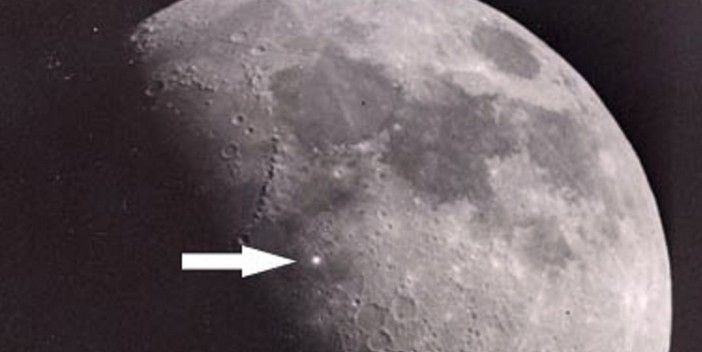
For centuries, astronomers and observers have recorded strange, short-lived visual events on the Moon’s surface, known as Transient Lunar Phenomena (TLPs).
About Transient Lunar Phenomena (TLPs):
- What is it: Short-lived flashes, glows, or hazy patches observed on the Moon’s surface, lasting seconds to several hours before fading.
- Observation History: Reported for over a thousand years, including Apollo 11 astronauts (1969) who noted a luminous lunar glow.
- Appearance Types: Include reddish glows, star-like flashes, and mist-like obscurations.
- Active Regions: Concentrated around Aristarchus and Plato craters, considered the most dynamic lunar zones.
- Scientific Implication: Suggests that the Moon remains geologically active, contradicting earlier assumptions of total dormancy.
- Theories on Origin: Scientists propose several explanations for TLPs:
-
- Lunar Outgassing: Trapped gases such as radon or argon may escape through fissures, triggered by gravitational stresses or surface heating, causing dust or gas to glow or reflect sunlight.
- Meteoroid Impacts: Frequent meteoroid collisions on the Moon’s airless surface produce brief, intense flashes, accounting for many observed TLPs.
- Electrostatic Dust Levitation: Charged lunar dust particles, activated by solar radiation, may levitate and scatter light, producing transient luminous effects.
- Atmospheric Distortion on Earth: Some TLPs may be optical artifacts, caused by turbulence or refraction in Earth’s atmosphere altering the Moon’s apparent brightness or colour.
Recent Research and Monitoring:
- Observation Technology: Use of automated telescopes and CCD (charge-coupled device) imaging systems for real-time detection.
- Space Missions: NASA’s Lunar Reconnaissance Orbiter (LRO) and ISRO’s Chandrayaan series monitor gas release and new impact craters.
- Spectroscopic Evidence: Studies of Aristarchus Plateau show episodic radon emissions, supporting the outgassing theory.
- Integrated Monitoring: Global programs combine optical, seismic, and spectrometric data to validate events.
- Scientific Aim: To understand lunar surface dynamics, internal processes, and signs of ongoing geological activity.
Why in the News?
Viewers across Asia, Australia, and parts of Africa witnessed a Blood Moon on 8th September, a spectacular form of total lunar eclipse visible.
About Lunar Eclipse:
- Overview: Happens when Earth comes between Sun and Moon, blocking sunlight from reaching the Moon.
- Earth’s Shadow:
- Umbra: Dark central shadow, causes total or partial eclipses.
- Penumbra: Outer shadow, causes faint dimming.
- Types:
- Total Eclipse: Moon passes fully through umbra.
- Partial Eclipse: Only part of Moon enters umbra.
- Penumbral Eclipse: Moon passes through penumbra with subtle darkening.
- Frequency: Occurs 2–4 times per year, visible from different regions.
Why lunar eclipse don’t occur every month?
: Lunar eclipses don’t happen every month because the Moon’s orbit around the Earth is tilted by about 5 degrees relative to the Earth’s orbit around the Sun. This tilt, known as orbital inclination, means that during a full Moon, the Moon often passes above or below Earth’s shadow, preventing a perfect alignment required for an eclipse. Eclipses only occur when the alignment is precise, allowing the Sun, Earth, and Moon to line up in a straight line. |
What is Blood Moon?
- Meaning: Refers to the reddish glow of the Moon during a total lunar eclipse.
- Cause: Rayleigh scattering in Earth’s atmosphere.
- Short wavelengths (blue, violet) scatter away.
- Longer wavelengths (red, orange) bend around Earth and light the Moon.
- Colour Intensity:
- Presence of dust, aerosols, volcanic ash deepens the red shade.
- Cleaner atmosphere produces a lighter red or orange.
- Historical Insight: Medieval records of Blood Moons helped identify volcanic eruptions between 1100–1300 CE, confirmed by a 2023 University of Geneva study.
Significance:
- Scientific: Acts as a natural indicator of atmospheric composition, dust, and pollution; helps model planetary atmospheres.
- Historical/Environmental: Provides evidence of past volcanic events and climate conditions.
- Cultural: Linked to myths and superstitions, though harmless scientifically.
- Public Engagement: Widely followed celestial event that aids astronomy outreach and awareness.
| [UPSC 2019] On 21st June, the Sun
Options: (a) does not set below the horizon at the Arctic Circle*
(b) does not set below the horizon at Antarctic Circle
(c) shines vertically overhead at noon on the Equator
(d) shines vertically overhead at the Tropic of Capricorn |