💥Join UPSC 2027,2028 Mentorship (August Batch) + XFactor Notes & Microthemes PDF

Subject: Biotech and Medical Sciences

  • Bistability in Pseudomonas aeruginosa and the glpD Gene 

    Why in the News?

    German researchers found that P. aeruginosa bacteria can switch a key gene (glpD) on or off, even though the bacteria are genetically identical — a survival trick called epigenetic bistability.
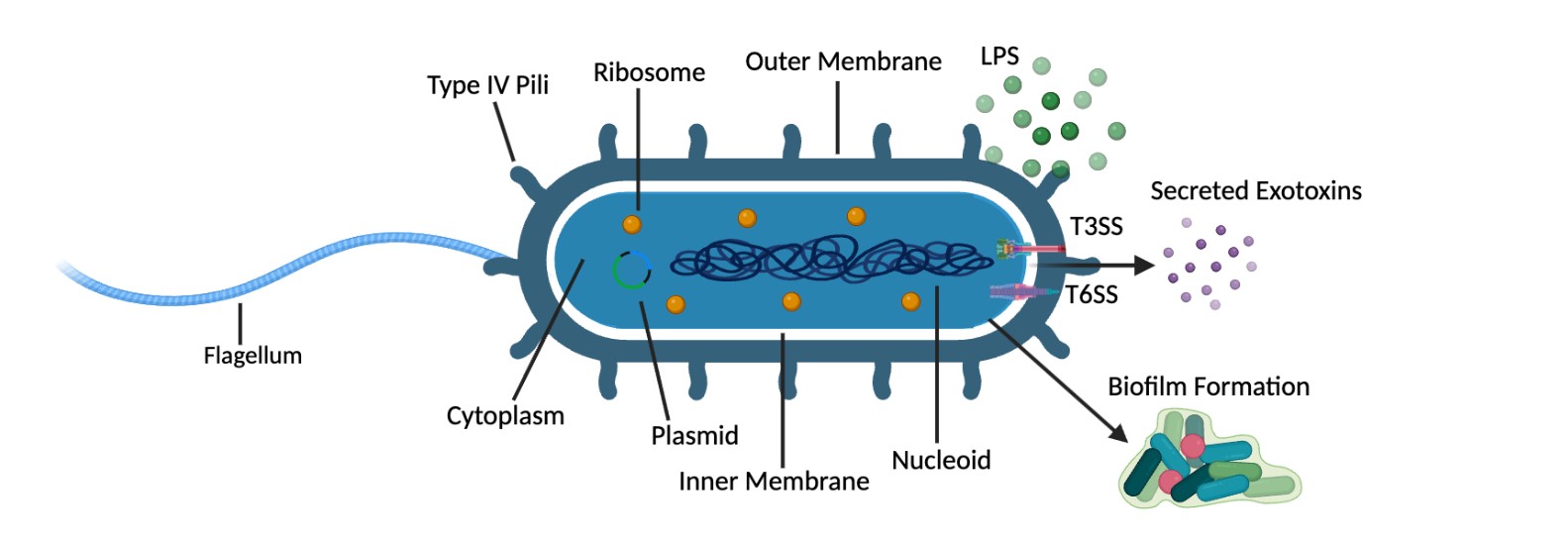
    Bistability in Pseudomonas aeruginosa and the glpD Gene 

    About Pseudomonas aeruginosa:

    • Nature: Rod-shaped bacterium found in soil, water, and hospital environments.
    • Pathogen Type: Opportunistic; infects mainly those with weakened immunity.
    • Resistance: Forms biofilms (protective layers), making it highly resistant to antibiotics.
    • Genetic Flexibility: Large genome (~6,000 genes) allows adaptation to diverse environments.

    Impact on Humans:

    • Hospital Infections: Leading cause of hospital-acquired infections.
    • Vulnerable Groups: Burn patients, catheter users, cystic fibrosis patients.
    • Diseases Caused: Keratitis (eye infection), urinary tract infections, pneumonia, bloodstream infections.
    • Mortality: Strong antibiotic resistance makes treatment difficult, leading to high hospital deaths.

    Recent Research Findings:

    • Discovery: German researchers identified bistable expression of the glpD gene (active in some cells, inactive in others).
    • Survival Advantage: This variability helps bacteria survive hostile conditions and trigger infections even from small populations.
    • Experiments:
      • Cells with glpD active were more lethal in moth larvae and mouse immune models.
      • Cells without glpD showed reduced infection ability.
    • Significance: On–off switching of glpD is a survival and infection strategy; targeting this mechanism may lead to new treatments for resistant infections.
    [UPSC 2010] Which bacterial strain, developed from natural isolated by genetic manipulations, can be used for treating oil spills?

    Options: (a) Agrodbacterium (b) Clostridium (c) Nitrosomonas (d) Pseudomonas*


  • Primary Amoebic Meningoencephalitis (PAM)

    Why in the News?

    Kerala’s health department has issued an alert in Kozhikode district after three consecutive cases of the rare and highly fatal disease Primary Amoebic Meningoencephalitis (PAM) were reported.

    About Primary Amoebic Meningoencephalitis (PAM):

    • Cause: Rare and usually fatal infection caused by Naegleria fowleri, known as the “brain-eating amoeba.”
    • Habitat: Thrives in warm freshwater up to 46°C (115°F).
    • Entry: Enters through the nose during swimming or water activities, travels via olfactory nerve to the brain.
    • Impact: Destroys brain tissue and causes severe swelling.
    • Transmission: Not communicable from person to person.
    • Symptoms: Headache, fever, nausea, vomiting, stiff neck, confusion, seizures, hallucinations, coma, and death.
    • Progression: According to the Centers for Disease Control and Prevention (CDC), most cases result in death within 1–18 days of symptom onset.

    Diagnosis and Treatment:

    • Diagnosis:
    • Treatment:
      • No single therapy effectively established.
      • Managed per CDC guidelines using drug combinations such as: Medical interventions typically involve a combination of drugs, including amphotericin B, azithromycin, fluconazole, rifampin, miltefosine, and dexamethasone.
    [UPSC 2008] Consider the following statements:

    1. Femur is the longest bone in the human body.

    2. Cholera is a disease caused by bacteria.

    3. ‘Athlete’s foot’ is a disease caused by virus. Which of the statements given above are correct?

    Options: (a) 1 and 2 * (b) 2 and 3 (c) 1 and 3 (d) 1, 2 and 3


  • Scientists turn E. Coli Bacteria into a Bio-Sensor

    Why in the News?

    Researchers from UK and China have developed a bioelectronic device where genetically engineered E. Coli bacteria act as self-powered chemical bio-sensor.

    About Escherichia coli (E. coli) Bacteria:

    • Overview: Gram-negative, rod-shaped bacterium that inhabits the lower intestine of warm-blooded animals.
    • Family: Belongs to the Enterobacteriaceae family.
    • Harmless vs Pathogenic: Most strains are harmless, but some (e.g., E. coli O157:H7) cause severe foodborne illness, diarrhoea, and kidney complications.
    • Gut Role: Contributes to vitamin K synthesis and maintains gut microbiota balance.
    • Transmission: Pathogenic strains spread via contaminated food, water, or direct contact, leading to outbreaks.
    • Diagnostic Importance: Presence in water is a key indicator of faecal contamination.

    Bio-Sensors Generated Using E. coli

    • Innovation: Genetically engineered E. coli used as self-powered chemical biosensors.
    • Mechanism: Detect compounds, process signals, and produce electrical outputs compatible with low-cost electronics.
    • Modules:
      • Sensing Module: Detects target molecules.
      • Processing Module: Amplifies or modifies signals.
      • Output Module: Produces phenazines measurable via electrochemistry.
    • Applications:
      • Detected arabinose (plant sugar) within 2 hours.
      • Detected mercury ions in water at trace levels (below WHO safety limits) within 3 hours.
      • Demonstrated an “AND” logic gate, producing signals only when two molecules were present together.
    • Significance:
      • Cheaper, programmable, and robust alternative to enzyme-based biosensors.
      • Potential in environmental monitoring, water safety, medical diagnostics, and bioelectronics.
    [UPSC 2010] Which bacterial strain, developed from natural isolated by genetic manipulations, can be used for treating oil spills?

    (a) Agrodbacterium

    (b) Clostridium

    (c) Nitrosomonas

    (d) Pseudomonas*


  • Chalkiness in Rice and the Genetic Breakthrough

    Why in the News?

    Recently, Chinese scientists identified a key gene, Chalk9, that controls chalkiness in rice, offering a breakthrough for crop improvement.

    About Chalk9 Gene in Rice:

    • Overview: Chalk9 is a gene found on chromosome 9 of rice.
    • Function: Encodes the enzyme E3 ubiquitin ligase, which regulates protein degradation.
    • Target Protein: Acts on OsEBP89, a regulator of starch-synthesis genes Wx and SSP.
    • Chalk9-L Variant: Promotes OsEBP89 degradation → prevents excess starch accumulation → results in low chalkiness and translucent grains.
    • Chalk9-H Variant: Fails to degrade OsEBP89 efficiently → leads to starch buildup → high chalkiness and brittle grains.

    Significance:

    • Grain Quality: Chalkiness lowers milling recovery and reduces rice’s commercial value.
    • Genetic Solution: Discovery of Chalk9 offers a direct genetic tool to reduce chalkiness.
    • Breeding Advantage: Rice breeding programs can introduce Chalk9-L to produce premium low-chalk rice.
    • Economic Impact: Improves farmer income and enhances food security.
    • Consumer Preference: Meets demand for better quality, translucent rice varieties.
    [UPSC 2022] Consider the following statements: DNA Barcoding can be a tool to :

    1. assess the age of a plant or animal. 2. distinguish among species that look alike. 3. identify undesirable animal or plant materials in processed foods.

    Which of the statements given above is/are correct?

    Options: (a) 1 only (b) 3 only (c) 1 and 2 (d) 2 and 3*


  • Kauzmann’s Hypothesis on Protein Core Structure

    Why in the News?

    Walter Kauzmann’s 1959 idea that protein folding relies on water-loving and water-avoiding parts has now been challenged by new research showing protein cores are more flexible than once believed.

    Protein and Protein Folding – Overview

    • Proteins: Biological macromolecules made of 20 amino acids in specific sequences.
    • Folding: Sequence dictates 3D shape, essential for function.
    • Water Interaction:
      • Hydrophilic (e.g., lysine) → outer surface.
      • Hydrophobic (e.g., tryptophan) → buried in core.
    • Kauzmann Hypothesis (1959): Proteins have a hydrophobic core and hydrophilic surface, guiding folding.
    • 1960s X-ray Evidence: Confirmed hydrophobic residues inside, hydrophilic outside.
    • Earlier Belief: Core was highly sensitive—small changes could destabilize protein.

    Recent Research:

    • Study Design: Tested 78,125 amino acid combos at 7 sites in cores of 3 proteins:
      • Human SH3 domain (FYN tyrosine kinase)
      • Barley CI-2A protein
      • E. coli CspA protein
    • Findings:
      • Many changes harmful, but thousands stable (e.g., SH3-FYN had 12,000+ stable conformations).
      • Machine learning accurately predicted stability even with <25% sequence similarity.

    Implications:

    • Protein Engineering: Core modifications may be possible without losing stability—beneficial for therapeutics.
    • Evolutionary Insight: Protein cores may have been more adaptable during evolution than once thought.
    [UPSC 2010] Which one of the following processes in the bodies of living organisms is a digestive process?

    (a) Breakdown of proteins into amino acids * (b) Breakdown of glucose into CO2 and H2O (c) Conversion of glucose into glycogen (d) Conversion of amino acids into proteins.


  • WHO classifies Hepatitis D as Carcinogenic

    Why in the News?

    The World Health Organization (WHO) has reclassified hepatitis D virus (HDV) as carcinogenic, following the International Agency for Research on Cancer (IARC) assessment based on data from The Lancet Oncology.

    About Hepatitis D:

    • What is it: Hepatitis D is a serious liver infection caused by the hepatitis D virus (HDV).
    • Cause: Hepatitis D virus (HDV), an incomplete virus needing hepatitis B virus (HBV) for replication.
    • Infection Types:
      • Co-infection – HDV + HBV at the same time.
      • Superinfection – HDV infects someone already with HBV.
    • Transmission: Parenteral exposure (injections, transfusions), mother-to-child, sexual contact.
    • Diagnosis: Blood tests for HDV antibodies and HDV-RNA.
    • Prevention: HBV vaccination, safe blood practices, safe sex, screening, avoid needle sharing.

    Why Hepatitis D is Carcinogenic?

    • Causes more severe liver damage than HBV alone.
    • HBV–HDV co-infection raises liver cancer risk 2–6 times compared to HBV-only cases.
    • Up to 75% develop cirrhosis within 15 years.
    • Can cause cancer even without cirrhosis due to HBV DNA integration + HDV-induced damage.

    Back2Basics: Hepatitis

    • Definition: Liver inflammation from viruses, alcohol, toxins, drugs, autoimmune disorders, or metabolic issues.
    • Viral Types:
      • A – Fecal-oral; acute; vaccine available.
      • B – Blood/body fluids; chronic risk; vaccine available.
      • C – Blood-to-blood; often chronic; no vaccine; treatable with antivirals.
      • D – Discussed above.
      • E – Fecal-oral; usually acute.
    • Chronic B, C, D: Major drivers of cirrhosis and liver cancer.
    • Prevention: Vaccination (A, B), safe injections, screened blood, safe sex, good hygiene.


    [UPSC 2019] Which one of the following statements is not correct?

    (a) Hepatitis B virus is transmitted much like HIV. (b) Hepatitis B, unlike Hepatitis C, does not have a vaccine. * (c) Globally, the number of people infected with Hepatitis B and C viruses are several times more than those infected with HIV. (d) Some of those infected with Hepatitis B and C viruses do not show the symptoms for many years.


  • Prophylaxis Therapy for Haemophilia

    Why in the News?

    With haemophilia care evolving globally, the shift from reactive to preventive treatment has brought Prophylaxis Therapy to the forefront of modern clinical practice.

    About Haemophilia:

    • What is it: Rare genetic bleeding disorder due to deficiency of clotting factors, mainly Factor VIII (Haemophilia A).
    • Effect: Causes prolonged bleeding, even from minor injuries; can lead to internal bleeds in joints, muscles, or brain.
    • Key Symptoms: Excessive bleeding, painful joint swelling, risk of disability or brain hemorrhage.
    • Prevalence: Estimated 1–1.5 lakh cases in India; only ~29,000 diagnosed (~20%).
    • Underdiagnosis Causes: Low awareness, poor access to diagnostics, and socio-economic challenges.
    • Impact if Untreated: Each untreated bleed may reduce lifespan by ~16 days; leads to pain, disability, missed school/work, and job loss.

    Prophylaxis (Regular Replacement Therapy) and its Benefits:

    • What It Is: Regular infusion of clotting factors or non-factor therapies to prevent bleeds.
    • Global Standard: Replaces on-demand therapy; adopted as best practice in developed countries.
    • Joint Protection: Prevents recurrent bleeds, avoids deformities and long-term disability.
    • Quality of Life: Reduces pain and fear, enables normal schooling, work, and social life.
    • Healthcare Savings: Cuts emergency visits, hospital stays, and long-term costs.
    • Global Status: ~90% of haemophilia patients in developed countries are on prophylaxis.
    • India’s Progress: On-demand remains common; some states offer prophylaxis for children under 10.
    [UPSC 2021] In the context of hereditary diseases, consider the following statements:

    1.Passing on mitochondrial diseases from parent to child can be prevented by mitochondrial replacement therapy either before or after in vitro fertilization of the egg.

    2.A child inherits mitochondrial diseases entirely from the mother and not from the father.

    Which of the statements given above is/are correct?

    Options: (a) 1 only (b) 2 only (c) Both 1 and 2* (d) Neither 1 nor 2


  • Rhisotope Project

    Why in the News?

    In a move to combat rhino poaching, the University of the Witwatersrand in South Africa, supported by the International Atomic Energy Agency (IAEA), has launched the Rhisotope Project.

    What is Rhisotope Project? 

    • Launched By: University of the Witwatersrand, South Africa, with support from the International Atomic Energy Agency (IAEA).
    • Initiation: Concept began in 2021; formally launched in July 2024.
    • Objective: Prevent rhino poaching by making horns traceable and unsuitable for illegal trade.
    • Pilot Site: Waterberg Biosphere Reserve, South Africa.
    • Pilot Implementation: 20 rhinos injected with radioisotopes (exact isotope remains undisclosed) for testing.

    How the Isotope Tagging Works?

    • Isotope Basics: Uses radioactive isotopes that emit detectable radiation as they decay.
    • Injection Method: A small hole is drilled into the horn; a low dose of isotope is inserted safely.
    • Detection Mechanism: Radiation Portal Monitors at ports can detect tagged horns—even inside 40-foot containers, as proven using 3D-printed horn simulations.


    Significance:

    • Safety Assurance: No damage to rhinos observed; cytological tests showed no cellular or physiological harm.
    • Impact on Illegal Trade: Horn becomes detectable, unusable, and toxic for illegal human consumption.
    [UPSC 2019] Consider the following statements:

    1. Asiatic lion is naturally found In India only.     2. Double-humped camel is naturally found in India only.     3. One-horned rhinoceros is naturally found in India only.

    Which of the statements given above is / are correct?”

    Options:   (a) 1 only *  (b) 2 only   (c) 1 and 3 only    (d) 1, 2 and 3


  • AI-designed Proteins to generate Immune Cells

    Why in the News?

    Harvard Scientists have recently used AI to design synthetic proteins that activate T Cells, offering a new path for cancer treatment and vaccine development.

    What are T Cells?

    • They are a type of white blood cell that play a central role in the immune system.
    • Types of T Cells:
      • Helper T cells (CD4+): Activate and direct other immune cells.
      • Killer T cells (CD8+): Destroy infected or cancerous cells.
      • Memory T cells: “Remember” past invaders for faster response in the future.

    About the Study:

    • Used artificial intelligence (AI) to design soluble proteins that activate ‘Notch Signalling’, a key immune pathway.
      • These are synthetic molecular activators designed using advanced AI-driven protein design technologies.
    • Unlike older lab-only methods, these proteins work inside the body (in vivo) and in lab settings.
    • Result: Significant boost in T cell production from human progenitor cells.

    What is Notch Signalling?

    • A cell-to-cell signalling system that guides cell development.
    • Crucial for forming T cells, which fight infections and cancers.
    • No reliable therapeutic activator existed earlier.

    Key Benefits Offered:

    • Mass T Cell Generation: Meets clinical needs for CAR T Cell Therapy.
    • Vaccine Support: Boosted Memory T cells in mice, improving long-term immunity.
    • Cancer Therapy: Helps fight immune-suppressive tumour environments.
    • Scalable & Soluble: Works in humans, not just in lab dishes.
    • AI in Medicine: Shows AI’s growing role in designing immune therapies.
    [UPSC 2022] Which one of the following statements best describes the role of B cells and T cells in the human body?

    Options: (a) They protect the body from environmental allergens.

    (b) They alleviate the body’s pain and inflammation.

    (c) They act as immunosuppressants in the body.

    (d) They protect the body from the diseases caused by pathogens


  • Biologics & Biosimilars: The next frontier in Affordable Medicines

    Why in the News?

    While most medicines are small molecule drugs with simple structures, a newer class—biologics and biosimilars—is reshaping modern medicine with their complex, targeted action.

    What are Small Molecule Drugs?

    • Definition: Chemically synthesised, low molecular weight compounds.
    • Features: Fixed structure, chemically stable, easy to replicate, patent-protected.
    • Cost Dynamics: Expensive while under patent; affordable generics post-expiry (e.g., Sovaldi dropped from $84,000 to $1,000).

    About Biologics & Biosimilars:

    • Biologics-
      • Overview: Large, complex drugs made from living cells or organisms.
      • Examples: Insulin (~5,800 daltons), Remicade (~150,000 daltons).
      • Nature: Slight structural variations possible; used for cancer, autoimmune diseases, hormone therapy.
    • Biosimilars-
      • Overview: Near-identical versions of biologics, made after patent expiry.
      • Not Generics: Due to complex cell-based production, they’re similar but not identical.
      • Use: Offer lower-cost alternatives to high-end biologics.

    Regulation and Reform:

    • Current Barriers: Biosimilars need costly trials (animal + clinical), unlike generics.
    • Global Moves: UK and USA are easing animal trial norms (organ-on-chip, human models).
    • India: Still follows older norms; waivers under review, but clinical trials still mandatory.

    Significance for India:

    • Access: Generic small molecules transformed Indian healthcare.
    • Opportunity: Affordable biosimilars can do the same for chronic and rare diseases.
    • Urgency: Regulatory reform is key to reduce costs, speed up access, and widen healthcare coverage.
    [UPSC 2020] What is the importance of using Pneumococcal Conjugate Vaccines in India?

    (1) These vaccines are effective against pneumonia as well as meningitis and sepsis. (2) Dependence on antibiotics that are not effective against drug-resistant bacteria can be reduced. (3) These vaccines have no side effects and cause no allergic reactions.

    Options: (a) 1 only (b) 1 and 2 only* (c) 1 and 3 only (d) 1, 2 and 3