💥Join UPSC 2027,2028 Mentorship (August Batch) + XFactor Notes & Microthemes PDF

Subject: Biotech and Medical Sciences

  • What is Darwin Tree of Life (DToL) Project?

    Why in the News?

    Researchers in Britain & Ireland are aiming to sequence all animals, fungi and plants under the Darwin Tree of Life (DToL) Project.

    About Darwin Tree of Life (DToL) Project:

    • Objective: To sequence the genomes of all ~70,000 known eukaryotic species (whose cells contain a nucleus and other membrane-bound organelles) found in Britain and Ireland.
    • Initiated: In 2019 as a UK–Ireland contribution to the Earth BioGenome Project.
    • Geographic Focus: Great Britain and Ireland, chosen for their well-documented and accessible biodiversity.

    Key Features:

    • Phases:
      • Pilot Phase (2019–2022): Focused on collecting 8,000 species; targeted 2,000 genome assemblies.
      • As of 2025: ~8,000 species collected; over 2,000 genomes sequenced.
    • Approach:
      • Systematic specimen collection and species verification.
      • High-quality genome sequencing using advanced tools and curated pipelines.
    • Public Access: All genome data is released openly via the DToL portal and public archives.
    • Scientific Significance:
      • Enhances understanding of evolution, adaptation, and species relationships.
      • Supports conservation efforts amid growing biodiversity threats.
    • Applications: Informs conservation biology, medicine, agriculture, and climate adaptation.
    [UPSC 2011] At present, scientists can determine the arrangement or relative positions of genes or DNA sequences on a chromosome. How does this knowledge benefit us?

    1. It is possible to know the pedigree of livestock.

    2. It is possible to understand the causes of all human diseases.

    3. It is possible to develop disease-resistant animal breeds.

    Options: (a) 1 and 2 only (b) 2 only (c) 1 and 3 only* (d) 1, 2 and 3


  • Novel Microscope observes Molecular Motion

    Why in the News?

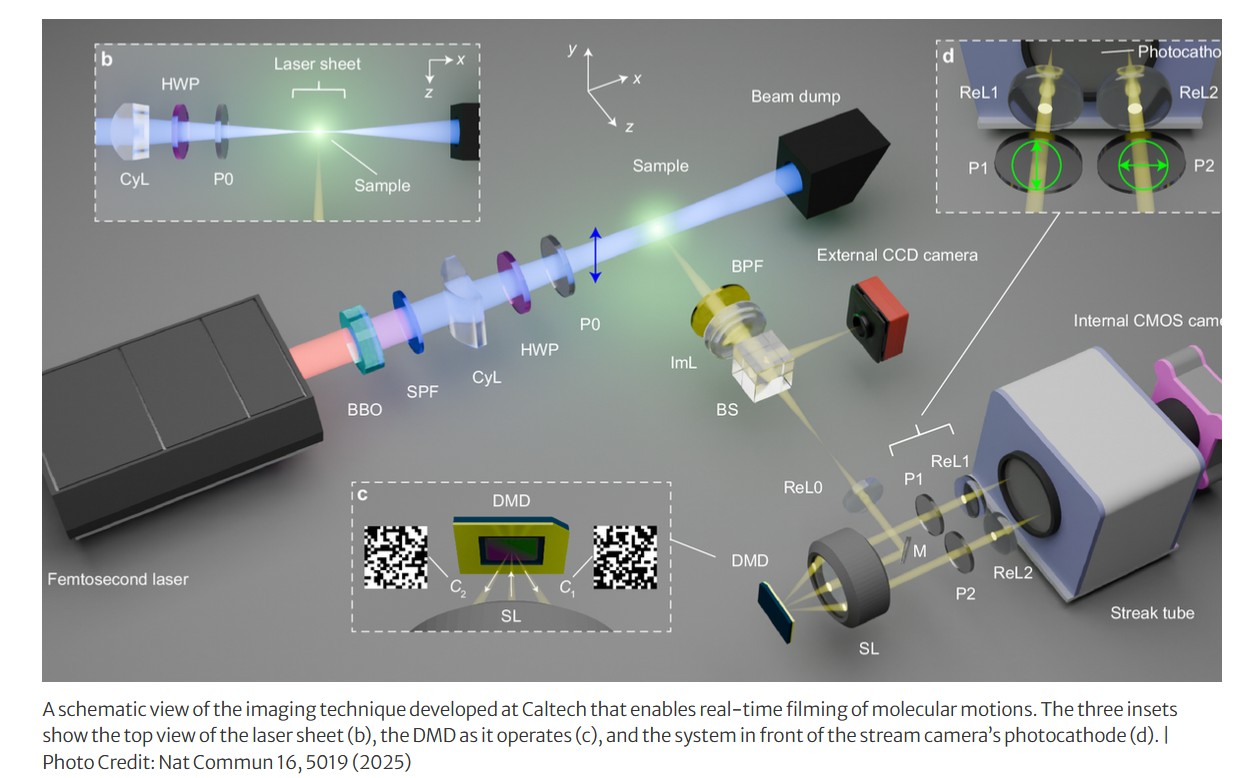
    Over a century after Einstein explained Brownian motion, California Institute of Technology (Caltech) scientists have created a powerful microscope that shows molecules moving in real time at an extremely tiny scale.

    Novel Microscope observes Molecular Motion

    What is Brownian Motion?

    • Definition: Random movement of tiny particles in a fluid due to constant collisions with surrounding molecules.
    • Significance: Validated the existence of atoms and molecules; explained by Albert Einstein in 1905.
    • Particle Behavior: Smaller particles move faster and more erratically; larger ones move slower.

    About Caltech Microscope:  

    • Resolution: Angstrom-level (1 Å = 0.0000000001 m).
    • Speed: Captures hundreds of billions of frames per second.
    • Advantage: Wide-field, single-shot imaging with no sample damage.
    • How It Works?
      • Setup: Fluorescent molecules in water illuminated by ultrafast lasers.
      • Light Capture: Scattered light directed via Digital Micromirror Device.
      • Streak Imaging: Light converted to electron patterns revealing molecular size.
      • Reading Size: Faster changes = smaller molecules; slower = larger.
    [UPSC 2000] Which one of the following can be used to confirm whether drinking water contains a gamma emitting isotope or not?

    Options: (a) Microscope (b) Lead plate (c) Scintillation counter* (d) Spectrophotometer


  • AdFalciVax Vaccine for Malaria

    Why in the News?

    The Indian Council of Medical Research (ICMR) has introduced AdFalciVax, a new malaria vaccine candidate targeting Plasmodium falciparum.

    About AdFalciVax

    • Developer: Indian Council of Medical Research (ICMR); private partners will handle trials and manufacturing.
    • Vaccine Type: Chimeric recombinant vaccine targeting Plasmodium falciparum, the deadliest malaria parasite.
    • Technology:
      • Circumsporozoite Protein (CSP): Offers direct protection to the vaccinated individual.
      • Pro6C Protein: A hybrid of Pfs230 and Pfs48/45 that blocks transmission via mosquitoes.
    • Key Advantages
      • Dual Benefit: Provides personal protection and reduces community transmission.
      • Full-length CSP: Promotes a stronger and longer immune response compared to current vaccines.
      • High Efficacy in Animals: Over 90% protection in animal models (human trials pending).
      • Stability: Contains alum as an adjuvant — safe, effective, and stable at room temperature for 9 months.

    Malaria Control in India:

    • Progress:
      • Malaria deaths reduced from 1,151 in 1995 to 83 in 2022 (National Vector Borne Disease Control Programme).
      • World Health Organization estimates are higher (5,511 deaths in 2022).
    • Current Limitation: India’s dominant malaria strain is Plasmodium vivax, which AdFalciVax does not target.


    [UPSC 2010] Widespread resistance of malarial parasite to drugs like chloroquine has prompted attempts to develop a malarial vaccine to combat malaria. Why is it difficult to develop an effective malaria vaccine ?

    (a) Malaria is caused by several species of Plasmodium*

    (b) Man does not develop, immunity to malaria during natural infection

    (c) Vaccines can be developed only against bacteria

    (d) Man is only an intermediate host not the definitive host.


  • Spare live animals, move to biological models

    Why in the News?

    There is growing ethical and scientific concern over the continued use of animal testing in laboratories, as evidence mounts that such methods are often ineffective in predicting human responses. The legal and moral shift in India specifically, an amendment to the Prevention of Cruelty to Animals Act, 1960, to promote the use of bioartificial models over live animals in experimentation.

    What about the Prevention of Cruelty to Animals Act, 1960?

    The Prevention of Cruelty to Animals Act, 1960 is an Indian law enacted to prevent the infliction of unnecessary pain or suffering on animals and to promote their well-being.

    Key features:

    • Prohibits cruelty towards animals such as beating, kicking, overloading, or mutilating them.
    • Establishes the Animal Welfare Board of India (AWBI) to advise the government on animal protection laws and promote animal welfare.
    • Allows for penalties and punishment (fines or imprisonment) for violating its provisions, though critics say these are often outdated and too lenient.

    Why is an amendment to the Prevention of Cruelty to Animals Act, 1960 legally and morally necessary in India?

    • Outdated Penalties and Definitions: The current Act imposes minimal fines (as low as ₹50), which fail to act as deterrents against cruelty. An amendment is needed to introduce stricter punishments and update definitions to match modern ethical standards.
    • Rising Incidents of Animal Abuse: With growing reports of gruesome cruelty (e.g., dog killings, abuse in labs), there is a need for laws that reflect the moral conscience of today’s society and recognize animal sentience.
    • Global Commitments and Standards: India aspires to be a leader in global bioethics and sustainability. Amending the Act would align national laws with international treaties like the Universal Declaration on Animal Welfare, enhancing India’s moral and legal credibility.

    How can regenerative medicine and tissue engineering reduce animal testing?

    • Development of Human-like Organ Models: Scientists can grow 3D human tissues (like liver, heart, or skin) in the lab, which can be used to test drug toxicity and effectiveness. Eg: The “liver-on-a-chip” developed by Emulate Inc. mimics human liver functions and replaces animal use in drug screening.
    • Personalized Disease Models: Patient-derived stem cells can be used to create tissue models that reflect individual genetic profiles, allowing more accurate predictions of drug reactions without animals. Eg: In cystic fibrosis research, mini lungs (organoids) grown from patient cells are used to test responses to various treatments.
    • Accelerated Drug Development and Safety Testing: Tissue-engineered models provide faster and more ethical platforms for early-stage drug testing, reducing the need for preliminary animal trials. Eg: Skin tissue models like EpiDerm are widely used to test cosmetics and chemicals for irritation and toxicity, replacing rabbit skin tests.

    What limitations exist in using animals for toxicity and medical research?

    • Biological Differences: Animals and humans often respond differently to substances, making results less reliable when applied to humans. Eg: A drug safe in mice might cause severe side effects in humans.
    • Inability to Replicate Human Diseases Accurately: Many complex human diseases like Alzheimer’s or cancer cannot be fully mimicked in animals, leading to incomplete or misleading data. Eg: Alzheimer’s treatments successful in animals have failed in human trials.

    Why is a change in societal values crucial for ensuring animal welfare in scientific practices?

    • Shifting Public Opinion Influences Policy: When society becomes more ethically aware about animal suffering, it puts pressure on governments and institutions to adopt humane research standards and fund alternatives to animal testing.
    • Promotes a Culture of Compassion in Science: Changing values encourage scientists to prioritise non-animal methods and view animal welfare as integral to ethical and responsible research, not just a legal requirement.

    What are the steps taken by the Indian government? 

    • Ban on Animal Testing for Cosmetics: In 2014, India became the first country in Asia to ban animal testing for cosmetic products and ingredients.
    • Promotion of Alternative Methods: The government supports institutions like the Indian Council of Medical Research (ICMR) and National Centre for Alternatives to Animal Experiments (NCAAE) to develop in-vitro and computer-based models.
    • Regulatory Reforms: Revisions in Drugs and Cosmetics Rules and CPCSEA guidelines aim to reduce, refine, and replace animal use by encouraging ethical review and stricter compliance protocols.

    Way forward: 

    • Strengthen Investment in Alternatives: Increase funding for regenerative medicine, organoids, and AI-based simulations to provide scalable, ethical, and scientifically advanced testing methods.
    • Enhance Public Awareness and Education: Launch nationwide campaigns to promote animal ethics in science, encouraging academic institutions and industries to adopt humane practices and reduce dependence on animal models.

    Mains PYQ:

    [UPSC 2017] Stem cell therapy is gaining popularity in India to treat a wide variety of medical conditions including Leukaemia, Thalassemia, damaged cornea and several burns. Describe briefly what stem cell therapy is and what advantages it has over other treatments?

    Linkage: The article explicitly advocates for a shift from animal experimentation to methods like tissue engineering or regenerative medicine. Stem cell therapy is a direct application and a significant development within the field of regenerative medicine.
  • Gujarat’s Tribal Genome Sequencing Project

    Why in the News?

    Gujarat has launched India’s first Tribal Genome Sequencing Project to map tribal genetic data, contributing to the national Genome India Project (GIP).

    About the Gujarat Tribal Genome Project:

    • Launch & Duration: Announced in Gujarat’s 2025–26 budget; spans 5 years under Gujarat Biotechnology Research Centre (GBRC).
    • Target Population: Focuses on genome sequencing of tribal communities forming ~15% of Gujarat’s population (~1 crore).
    • Objective: Addresses under-representation in Genome India Project (GIP), which had only ~100 tribal samples from Gujarat.
    • Sample Size: Involves 4,158 individuals, including 378 trio families, to create a 2,000-sample reference genome panel.
    • Data Collection: Includes blood, stool, genealogical, physiological, and lifestyle information.

    Key Features:

    • Precision Medicine Applications
      • Early Detection: Enables screening for sickle cell anaemia, G6PD deficiency, BRCA-linked cancers.
      • Gene-Trait Mapping: Explores genetic links to traits like agility and archery.
    • Genomic Sampling Protocol
      • Filtering: Uses SNP genotyping to remove closely related samples.
      • Sequencing: Conducts Whole Genome Sequencing (WGS) on 2,000 diverse samples via Illumina NovaSeq 6000.
      • Data Security: Employs double encryption for privacy and anonymity.

    About the Genome India Project (GIP):

    • Launch: Initiated in January 2020 by the Department of Biotechnology (DBT).
    • Structure: Multi-institutional consortium involving top Indian research bodies.
    • Objectives
      • Diversity Mapping: Decode genetic variation across Indian population.
      • Reference Panel: Build Single Nucleotide Polymorphism (SNP) -based haplotype database for Indian genomes.
      • Biobank Creation: Establish DNA reserves for research and therapy development.
    • Key Achievements
      • Sequencing Scale: 10,074 genomes sequenced from 99 ethnic groups.
      • Data Storage: Securely stored at Indian Biological Data Centre (IBDC), Faridabad.
      • Insights: Revealed rare traits aiding affordable diagnostics and predictive tools.
    • Significance
      • Global Impact: Offers India-specific insights to global genomics research.
      • Healthcare Value: Enables evidence-based, genetically informed policy and diagnosis.
    [UPSC 2017] With reference to agriculture in India, how can the technique of ‘genome sequencing’, often seen in the news, be used in the immediate future?

    1. Genome sequencing can be used to identify genetic markers for disease resistance and drought tolerance in various crop plants

    2. This technique helps in reducing the time required to develop new varieties of crop plants

    3. It can be used to decipher the host-pathogen relationships in crops

    Select the correct answer using the code given below:

    Options: (a) 1 only (b) 2 and 3 only (c) 1 and 3 only (d) 1, 2 and 3


  • NIPGR’s gene-edited Japonica Rice shows increased Phosphate uptake

    Why in the News?

    Scientists at the National Institute of Plant Genome Research (NIPGR), Delhi, have successfully used CRISPR-Cas9 gene editing technology to enhance phosphate uptake and utilization in japonica rice.

    Back2Basics: CRISPR-Cas9 Gene Editing

    • What It Is: A powerful gene-editing tool that allows targeted changes to DNA sequences.
    • Full Form: Clustered Regularly Interspaced Short Palindromic Repeats and CRISPR-associated protein 9.
    • Nobel Prize: Emmanuelle Charpentier and Jennifer Doudna won the 2020 Nobel Prize in Chemistry for this discovery.
    • Key Components:
      • Cas9 Enzyme: Acts as molecular scissors to cut DNA at a specific location.
      • Guide RNA (gRNA): Directs Cas9 to the exact DNA sequence to be edited.
    • How It Works?
      • A gRNA is designed to match the target DNA.
      • Cas9 and gRNA form a complex inside the cell.
      • The complex binds to the target and cuts the DNA.
      • The cell’s repair system modifies the DNA—adding, deleting, or changing genetic material.

    About Japonica Rice:

    • Overview: Japonica is one of the two major cultivated rice subspecies, the other being Indica.
    • Research Use: The Nipponbare variety of Japonica was used in recent gene-editing experiments.
    • Why Japonica is Preferred in Studies:
      • High regeneration potential in tissue culture
      • Easier genetic transformation and faster growth in lab conditions
    • Relevance to India: While not widely cultivated in India, Japonica acts as a model variety for testing before applying results to Indian Indica varieties.

    Key Features of the Japonica Rice Study:

    • Gene Editing Technique: Used CRISPR-Cas9 to edit a 30 base-pair repressor binding site on the promoter of the OsPHO1;2 gene.
    • Outcomes of the Edit:
      • Enhanced phosphate uptake from the soil
      • Improved phosphate transport from root to shoot
      • Yield increased by up to 40% using only 10% of the usual phosphate fertilizer
      • Normal seed traits retained: size, shape, starch, and phosphate levels
    • Significance: Demonstrated precise, minimal gene editing as a proof-of-concept that can be adapted to Indian rice varieties.
    [UPSC 2018] With reference to the Genetically Modified mustard (GM mustard) developed in India, consider the following statements:

    1. GM mustard has the genes of a soil bacterium that give the plant the property of pest-resistance to a wide variety of pests.

    2. GM mustard has the genes that allow the plant cross-pollination and hybridization.

    3. GM mustard has been developed jointly by the IARI and Punjab Agricultural University.

    Which of the statements given above is/are correct?

    Options: (a) 1 and 3 only (b) 2 only * (c) 2 and 3 only (d) 1, 2 and 3


  • Scientists decode Locust Pheromones for Eco-Friendly Control

    Why in the News?

    Researchers in China have discovered a method to curb locust swarming by manipulating their pheromones, paving the way for eco-friendly locust control.

    What are Locust Swarms?

    • Locusts are large grasshoppers capable of forming massive swarms, consuming up to their body weight in food daily, and travelling 150 km/day with favourable winds.
    • They are highly destructive, stripping crops and threatening food security. A single swarm can consume food equivalent to the daily needs of 35,000 people.
    • In India, Locust Control and Research (LC&R) oversees locust management.
    • The Locust Warning Organisation (LWO), established in 1939, monitors and controls locust activity in states like Rajasthan, Gujarat, Punjab, and Haryana.
    • The 2019-2022 desert locust outbreak was one of the worst in decades, devastating India, Pakistan, and East Africa, destroying over 200,000 hectares of crops.
    • Despite existing control measures, locust outbreaks remain difficult to manage due to their rapid breeding capabilities.

    About Locust Pheromones:

    • Locust Behavioural Phases: Locusts exhibit two behavioural phases—solitary (non-swarming) and gregarious (swarming). The shift to gregariousness leads to swarm formation.
    • Key Pheromone – 4-Vinylanisole (4VA):
      • Identified in 2020 by Chinese researchers.
      • Released from locusts’ hind legs after feeding, especially due to the digestion of phenylalanine (a plant compound).
      • Acts as an aggregation pheromone, attracting other locusts and triggering group behaviour.
    • Biochemical Pathway:
      • Enzymes 4VPMT1 (dominant) and 4VPMT2 convert a precursor molecule (4VP) into 4VA.
      • This process is crucial in converting solitary locusts into swarm-forming gregarious ones.

    Recent Breakthrough and Its Implication:

    • Discovery: Researchers at the Chinese Academy of Sciences genetically blocked 4VPMT1, preventing locusts from producing 4VA and stopping swarm formation.
    • Limitations: 4NP is toxic and environmentally persistent, raising concerns for large-scale deployment.
    • Strategy Proposed: RNA interference (RNAi)-based biopesticides targeting 4VPMT genes to prevent 4VA production without toxicity.
    • Wider Implications:
      • Marks the first pollution-free molecular approach to locust control.
      • Can reduce reliance on synthetic pesticides, protect crops, and support sustainable agriculture.
      • Offers a precision pest control model based on insect behavioural biochemistry.
    [UPSC 2001] American multinational company, Monsanto has produced an insect-resistant cotton variety that is undergoing field- trials in India. A toxin gene from which ONE of the following bacteria has been transferred to this transgenic cotton ?

    Options: (a) Bacillus subtilis (b) Bacillus thurigiensis* (c) Bacillus amyloliquifanciens (d) Bacillus globlii


  • Endocrine Disruptors in Plastic Waste

    Why in the News?

    Microplastics and endocrine-disrupting chemicals (EDCs) are infiltrating the human body, affecting everything from reproduction to cancer risk, metabolism, and child development.

    About Endocrine-Disrupting Chemicals:

    • What They Are: Endocrine-Disrupting Chemicals interfere with the body’s hormone system, affecting growth, reproduction, mood, and metabolism.
    • How They Work: They mimic or block natural hormones like estrogen, testosterone, thyroid hormones, and cortisol, leading to disrupted hormonal signals.
    • Why They’re Dangerous: Even low-level exposure during pregnancy or puberty can cause lasting harm.
    • How We’re Exposed: Through eating contaminated food, inhaling polluted air, or skin contact with certain plastics or cosmetics.
    • Where They’re Found: In plastic bottles (Bisphenol A), toys and cosmetics (phthalates like Di(2-ethylhexyl) phthalate), food wrappers (Per- and Polyfluoroalkyl Substances), and pesticides (dioxins, Polychlorinated Biphenyls).
    • Hidden Harm: They act silently, with long-term effects such as fertility loss, hormonal disruption, or cancer.

    Impact on Human Health:

    • Reproductive Harm: Reduced sperm quality disrupted menstrual cycles, and increased miscarriage risk. Found in semen, placenta, and breast milk.
    • Hormonal Disruption: Chemicals like Bisphenol A trigger early puberty, thyroid issues, and hormonal imbalances.
    • Cancer Risk: Linked to cancers of the breast, uterus, testicles, and prostate. Several are labeled probable carcinogens by global health agencies.
    • Metabolic Effects: Interfere with insulin, promote obesity and type 2 diabetes. PFAS chemicals are linked to liver and heart disease.
    • Brain and Behavior: Associated with ADHD, learning issues, and lower IQ in children, especially when exposure happens early in life.
    • Across Generations: May cause gene expression changes that affect health in future generations—even without direct exposure.
    [UPSC 2020] Why is there a great concern about the ‘microbeads’ that are released into environment?

    Options: (a) They are considered harmful to marine ecosystems * (b) They are considered to cause skin cancer in children (c) They are small enough to be absorbed by crop plants in irrigated fields. (d) They are often found to be used as food adulterants.


  • India’s first Genomic Atlas reveals deep Ancestry and Health Risks

    Why in the News?

    A landmark study published in the ‘Cell’ journal has sequenced the genomes of 2,762 Indians from 23 states and union territories, creating the most comprehensive genomic map of India to date.

    About the Genomic Atlas:

    • Overview: The Genomic Atlas is the most comprehensive genetic mapping of Indian populations, covering caste, tribe, language, geography, and urban-rural distinctions.
    • Collaboration: It was conducted by Indian and international institutions, aiming to understand how ancient migrations and social structures shaped Indian genomes.
    • Use of Molecular Clocks: Researchers used genetic mutations as molecular clocks to trace human ancestry and map the evolutionary history of diverse groups in India.
    • Focus on Disease and Ancestry: The study explores recessive disorders, disease-linked mutations, and interbreeding with archaic humans like Neanderthals and Denisovans.
    • Scope: Plans include expanding coverage to more isolated communities and building tools to track disease origins within genetically distinct Indian groups.
    • Impact on Precision Medicine: It aims to improve personalised healthcare by incorporating Indian genetic diversity into global medical research.

    Key Highlights of the Study:

    • Discovery of New Gene Variants: Over 2.6 crore previously undocumented genetic variants were discovered, many of which are absent from international gene databases.
    • Single-origin migration: Indians descend primarily from a single out-of-Africa migration ~50,000 years ago, not earlier human groups.
    • Three major ancestral components:
      • Ancient Ancestral South Indians (AASI) – early hunter-gatherers.
      • Iranian-related Neolithic farmers – from Sarazm (~4th millennium BCE).
      • Eurasian Steppe pastoralists – arrived around 2000 BCE, tied to Indo-European languages.
    • Additional East Asian ancestry: Found in East, Northeast, and some Central Indian populations (e.g., 5% in West Bengal), likely post-Gupta or rice cultivation-related (~520 CE).
    • Caste endogamy impacts: Long-term inbreeding within castes has led to high homozygosity, raising the risk of recessive genetic diseases.
    • Archaic DNA: Indian genomes show rich Neanderthal and Denisovan segments, especially in immune-related genes like MHC, TRIM, and BTNL2.
    • Unique health risks: A BCHE variant linked to anaesthetic reaction is enriched in Telangana; 7% of discovered protein-altering variants relate to serious genetic disorders.
    • Every individual had at least one genetic relative in the sample—revealing extreme interrelatedness and strong founder effects, particularly in South India.
    • Unmatched Neanderthal diversity: India harbours the widest variety of Neanderthal-derived genetic fragments among global populations.
    [UPSC 2021] In the context of hereditary diseases, consider the following statements:

    1. Passing on mitochondrial diseases from parent to child can be prevented by mitochondrial replacement therapy either before or after in vitro fertilization of the egg.

    2. A child inherits mitochondrial diseases entirely from the mother and not from the father.

    Options: Which of the statements given above is/are correct?

    (a) 1 only (b) 2 only (c) Both 1 and 2* (d) Neither 1 nor 2


  • [pib] Researchers validate Optical Properties of Teak Leaf Extracts

    Why in the News?

    In a breakthrough, scientists at the Raman Research Institute (RRI) have found that teak leaf extract (Tectona grandis) could offer a natural, sustainable solution for laser protection.

    About Optical Properties of Teak Leaf:

    • Natural Composition: Teak leaves (Tectona grandis) contain natural compounds that can interact with strong laser light.
    • Laser Blocking Ability: These compounds can block harmful laser rays while allowing normal light to pass, making them suitable for selective light filtering.
    • Nonlinear Optics: This unique behaviour is called a nonlinear optical property, where a material responds differently to high-intensity light.
    • Linear vs Nonlinear: In linear optics, the material’s response is directly proportional to the light’s intensity. In nonlinear optics, the response becomes non-proportional, especially under laser exposure.

    Back2Basics: Teak as Timber in India

    • Teak (Tectona grandis) is a large deciduous hardwood tree native to India and Southeast Asia, mainly found in tropical dry and moist deciduous forests.
    • It is highly valued for its durable, strong, and water- and pest-resistant wood, making it the “King of Timbers”.
    • India manages 35% of the world’s planted teak forests, with major natural habitats in Madhya Pradesh, Maharashtra, Karnataka, Tamil Nadu, and Kerala.
    • Teak is listed as Endangered on the IUCN Red List but is not under CITES; private plantations are crucial for meeting demand due to restrictions on commercial felling in government forests.
    • Green felling is prohibited in government forests under the Forest Conservation Act, 1980, and National Forest Policy, 1988, with timber supply to be met mainly from dead/diseased trees or private plantations.

    Recent Breakthrough:

    • New Discovery: Scientists discovered that teak leaf extract can function as a natural laser shield.
    • Protection Potential: The extract can block high-intensity laser beams, offering protection to human eyes and sensitive optical devices.
    • First of Its Kind: This marks the first known instance of a natural material exhibiting such laser-blocking properties.

    Significance for Humans:

    • Practical Applications: It can be used in laser safety goggles, optical sensors, and other light-sensitive technologies.
    • Safe Alternative: It offers a non-toxic, eco-friendly substitute to chemical-based laser protection materials.
    • Sustainability Impact: The use of plant-based materials supports cost reduction and promotes sustainable innovation in science and optics.
    [UPSC 2015] In India, in which one of the following types of forests is teak a dominant tree species?

    Options: (a) Tropical moist deciduous forest* (b) Tropical rain forest (c) Tropical thorn scrub forest (d) Temperate Forest with grasslands