đŸ’„Mains Ready By December. Smash Mains & Smash PYQ Admissions Open

Subject: Crop Diversification

  • What are the present challenges before crop diversification? How do emerging technologies provide an opportunity for crop diversification?

    A cropping pattern is the distribution of various crops within a specific area at a given time. Presently, rice and wheat account for 75% of overall foodgrain production and 37% of net-sown area.

    Challenges Before Crop Diversification
    94% of the total agri and allied sector output is outside MSP support.

    Input constraints – Limited HYV seeds, overdependence on chemical fertilizers. Eg- Seed replacement rate is 35-45% (over 90% in USA)

    Input Subsidy Bias – Subsidies for power, urea, canal water favour water-intensive crops, making alternatives less attractive.

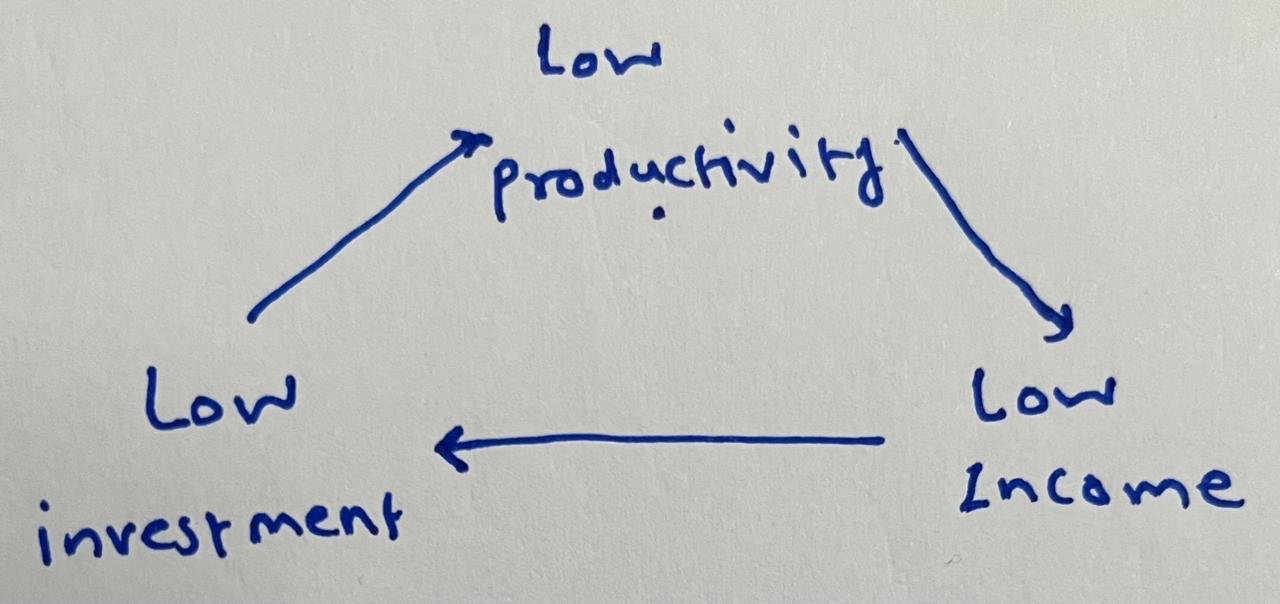
    Low income trap limits farmers ability to invest in High Value crops and Technology.

    High monsoon dependence – About 55% of cultivable land is rainfed – increasing risk and limiting diversification.

    Fragmented landholdings – 86% Small and marginal farmers – restrict mechanisation.

    Shift to commercial crops – Expansion of cotton (Deccan belt) and sugarcane (Punjab-Haryana, Krishna-Godavari basin) crowds out food crops.

    Human factors – Population pressure, subsistence farming, and low risk appetite hinder diversification.

    Institutional weaknesses – Defective land tenure, and poor processing for perishables. Eg- Only 13% mandis digital.

    Market Uncertainty – Lack of assured markets for pulses, oilseeds, millets, fruits, and vegetables limits farmers’ ability to shift.

    Infrastructural gaps – Eg- cold storage can accommodate only 11% of total produce.

    Role of Emerging Technologies in promoting Crop Diversification

    Precision Agriculture – Drones, IoT sensors, GIS enable farmers to manage diverse crops with accurate irrigation, nutrition, and pest control.

    Biotechnology – Stress-tolerant and climate-resilient varieties encourage diversification. Eg- Drought Tolerant High-Yielding Chickpea Variety “SAATVIK (NC 9)”

    Micro-Irrigation – Drip and sprinkler systems make cultivation of horticulture, vegetables, and spices viable even in dry regions.

    Protected Cultivation Technologies – Eg- Polyhouses and shade nets allow off-season vegetables, flowers, and exotics.

    Digital Platforms like e-NAM, agritech apps, FPO digital platforms provide real-time prices and reduce market risk for alternative crops.

    Cold-Chain Technologies support high-value horticulture diversification. Eg: Apple packhouses.

    Biofertilisers improve soil health and make pulses, oilseeds, and millets more viable in rainfed regions.

    Climate-Smart Advisory Systems – AI-based weather advisories, satellite-based crop monitoring help farmers shift to climate-resilient crops.

    Financial inclusion under JAM and DBT under PM KISAN increases capital investment and promotes diversification to high value crops

    When science meets scale, when innovation becomes inclusive, when technology drives transformation, the foundation for great achievements is laid – PM Modi

  • Explain the changes in cropping pattern in India in the context of changes in consumption pattern and marketing conditions.

    A cropping pattern is the distribution of various crops within a specific area at a given time. In recent times, cropping patterns have seen visible transformation due to changing dietary habits and market demands.

    Changing Cropping Pattern due to Changing Consumption Pattern

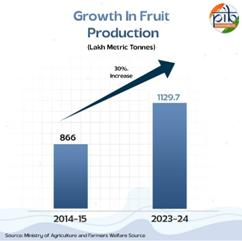
    In 2022-23, fruits and vegetables accounted for 28.3% of the Gross Value Output, surpassing cereals – due to changing diet, health awareness, Middle-class expansion and urbanisation.

    Growth of organic farming due to increasing awareness about the health impacts of chemicals. Eg- organic food market growing @ CAGR 20%

    Higher consumption of chips, juices, and packaged foods has increased cultivation of crops like potato, maize, tomato and sugarcane.

    Rising dairy and meat consumption has led to increased cultivation of fodder crops such as maize, sorghum and green fodder.

    Focus on nutri-cereals under Millet Mission and International Year of Millets (2023) is increasing area under millets. (from 12 million hectares in 2013 to 15 million hectares in 2021)

    Regional Diversification Patterns

    Punjab-Haryana: Slow movement away from rice-wheat monoculture

    Maharashtra, Karnataka, TN: Shift to horticulture & pulses

    Eastern India: Expansion of vegetables + aquaculture

    Changing Cropping Pattern due to Changing Marketing Conditions

    Expansion of e-NAM (1.77Cr farmers registered)- Better price discovery and wider market access are encouraging crop diversification.

    Better price Discovery – Eg- horticulture crops give 3-4 times higher income than cereals.

    Export-oriented agriculture – High demand for basmati rice, spices, tea, coffee, cotton and fruits. Eg- tea Plantations in Assam and WB

    Growth of contract farming -Eg- PepsiCo in potatoes, ITC in maize encourage cultivation of commercial crops through assured buy-back.

    Improved storage and logistics infrastructure like cold storage, Kisan Rail support high-value and perishable crops.

    Demand from industries has increased cultivation of sugarcane (ethanol), oilseeds (biodiesel), cotton and silk.

    Rise of e-commerce and food processing sector- Eg- Platforms like Blinkit, BigBasket, and FPIs have promoted commercial and market-led cropping patterns.

    Shift to high-value crops can be a key driver of doubling farmers’ income and nutritional security.

  • Explain the factors influencing the decision of the farmers on the selection of high value crops in India.

    In 2022-23, fruits and vegetables accounted for 28.3% of the Gross Value Output, surpassing cereals for the first time, and the horticulture sector contributed about 33% to the agriculture GVA.

    Factors Influencing the Selection of High-Value Crops by Farmers in India

    Policy & Institutional Factors

    Government Incentives – Schemes like MIDH, PMKSY, Operation Greens, Mission for Integrated Development of Horticulture.

    Export Promotion Policies- APEDA support, agri-export zones, GI tagging

    Economic Factors

    Higher Profitability- Fruits, spices, floriculture and plantation crops offer greater income per hectare than cereals.

    Availability of Credit & Insurance – Eg-

    Agro-Climatic Factors

    Agro-Climatic Suitability – Eg- grapes in Maharashtra, apples in Himachal.

    Availability of Irrigation- Eg- Sugarcane in western UP and Maharashtra

    Technological Factors

    Availability of HYV Seeds – Eg- GM Seeds, precision farming, tissue culture

    Extension services – e-NAM price signals, Krishi Vigyan Kendras guide crop selection.

    Storage, Processing, and Value Chains – Eg- Mango pulp processing in Andhra Pradesh

    Social Factors

    Agriculture Startups – Educated rural youth adopt commercial high-value crops. Eg- Agroponics near Urban Centers

    Rising urbanisation and changing diets. Eg- organic food market growing @ CAGR 20%

    Environmental & Sustainability Factors

    Climate Resilience- Shift towards drought-resistant crops like millets, medicinal plants.

    Soil Health Consideration – Crop diversification is adopted to restore nutrient balance and reduce dependency on fertilisers.

    Water Efficiency – Crops with lower water requirement and higher value (Eg-, spices, horticulture) are preferred in water-stressed areas.

    Shift to high-value crops can be a key driver of doubling farmers’ income and sustainable agriculture.