đŸ’„Join UPSC 2027,2028 Mentorship (July Batch) + XFactor Notes & Microthemes PDF

Subject: Economics

  • Amid the Lockdown, How can we efficiently manage our Agriculture and Livestock sector

    Context

    Amid lockdown, we need an action plan to manage our agriculture, livestock sectors.

    Need for an immediate action plan to manage the agriculture and livestock sector

    • The country produces around 52 crore litres of milk daily.
    • There are also 80 crore-odd live poultry, both broilers and layers, at any given time, supplying meat and eggs to consumers.
    • Link with the other producers: These birds and animals, in turn, support the livelihoods of poultry and dairy farmers, as well as those producing maize, soybean, mustard, groundnut, cotton and other coarse grains that are ingredients for livestock feed.
    • It is the government’s responsibility to ensure that farmers are able to keep their animals alive and market the crop that has been, or will be, harvested during the lockdown period.
    • We need an immediate action plan to manage our agriculture and livestock sectors in the interest of both producers and consumers.

    Issue of implementation

    • Ensuring free movements: The first thing is to ensure free movement of farm produce, livestock feed and veterinary medicines.
    • Implementing the already taken decision: It is obvious that not all issues can be addressed overnight. But the minimum the government can do is to ensure ground-level implementation of already-taken decisions.
    • The problem of implementation: Many essential services, for instance, were kept out of the purview of the lockdown. Food, feed and agricultural inputs have been specifically notified as essential services.
    • But there are several problems at the level of implementation that are coming to notice.
    • The Centre has issued various directives/notifications, many of them brief and general in nature.
    • Many of these have either not reached the local authorities and police personnel or are not clearly worded. As a result, the smooth movement of essential items has been affected.
    • There are also reports of conflict between the police and citizens, including people involved in the transportation and delivery of food as well as inputs to farms.
    • Why good food supply line matters? The government must do to ensure that people don’t go hungry and the measures it must take to make sure people don’t crowd a few outlets, increasing the chances of the virus spreading.
    • The government has announced that the beneficiaries of the public distribution system can avail three months’ ration at one go.
    • The challenge of delivery: The challenge is to ensure that fair price shops deliver the provisions in an orderly manner and their supply lines remain intact.

    Issue of poultry and maize farmers

    • Sharp fall in poultry items: In such times, prices of essential food items are known to shoot up. But in India, prices of food items like chicken meat and eggs have registered a sharp fall.
    • In Delhi’s Gazipur Mandi, for example, the price of broiler chicken has fallen from Rs 55/kg in January 2020 to Rs 24/kg in March.
    • This has also pushed the maize prices down as poultry is largely fed packaged maize.
    • The government may have to think of compensating poultry and maize farmers in due course.

    Suggestions for improving the implementation issue

    • Issue a single notification: The Centre must issue a single notification relating to food items in a standard format and uniform language so that all ambiguities are removed.
    • This needs to be finalised after consultations with the stakeholders and the state governments can release it to officials working at the grassroots.
    • The focus should be to address the problems arising from restrictions on the transport — between and within states — of agri-produce and inputs related to them.
    • Invoke the ESMA: Another suggestion is that the Essential Services Maintenance Act (ESMA) be invoked for the delivery of all essential services relating to food to prevent disruption of supplies.
    • Home delivery option: Home (street) delivery of these provisions, to avoid crowding, is a good option.
    • Roping in civil society: This is also an occasion to rope in civil society. NGOs, resident welfare associations, religious organisations and paramilitary forces can be engaged for orderly and safe distribution of food — both pre-cooked and fresh.
    • NGOs with experience in food preparation and distribution, such as Akshaya Patra, could guide local authorities.
    • People involved in this endeavour should be provided with safety gears.
    • The challenge of supplying perishables: These perishables-like fruits, vegetables and milk- must be sold in a packaged form in mobile vans. The weekly markets need to be temporarily suspended lest they spread the virus.
    • Vegetable vendors can work with civil society organisations as well as e-commerce players to do this job in a safe manner.
    • Retail distribution lines: Retail distribution lines need to be seamlessly linked to wholesale supply lines.
    • How to manage rabi season procurement? Procurement operations for rabi crops are around the corner.
    • Training and safety measures: The FCI and other procuring agencies need to be trained about safety measures and supplied safety gear.
    • Providing incentives to farmers for staggered selling: Farmers could be given Rs 50/quintal per month as an incentive to stagger bringing their produce to the market — say after May 10.
    • They will also need to be screened, given training and equipped with safety gear.

    Suggestions to prevent post-lockdown chaos

    • What will happen after the lockdown ends? Many plants are now shut or working at low capacity utilisation. Consumption by hotels and other institutions, too, is low. Nor is any export or import happening. But once the lockdown ends, there will be a rush to procure raw material, trucks and rail rakes.
    • Smooth recovery: Smooth recovery from the lockdown is as important as managing supplies during the lockdown.
    • Here are a few suggestions to ensure that the common man does not have to suffer hardships during and after the lockdown:
    • First– Place all food items, agri-inputs, packaging material and transport services under ESMA for a six-month period to prevent profiteering.
    • The MRP that was applicable in February should remain till October.
    • In the case of farm produce, it helps that we are looking at a bumper crop, which makes it all the more necessary to ensure its smooth marketing.
    • Second-Suspend APMC (agricultural produce market committee) laws for the next six months.
    • Traders with APMC licence are bound to act as cartels during rush hour, which will hurt both farmers and consumers.
    • Third-ESMA should apply to all utilities and transport services. State governments can make exemptions on a case to case basis: These exemptions should be subject to public scrutiny under the Right to Information Act.
    • The government should announce the above measures well in advance.

    Conclusion

    The government must start planning now to prevent post-lockdown chaos, especially profiteering in the event of shortages. Smooth recovery from the lockdown is as important as managing supplies during the lockdown.


  • A smarter supply line

    Context

    The government must ensure that people don’t go hungry and take measures to make sure that people don’t crowd a few outlets, increasing the chances of the virus spreading.

    Need for the package to compensate losses

    • Welfare package: The government has announced relief measures. Last week, the Finance Minister announced a welfare package of Rs 1.7 lakh crore.
    • This is too small to cope with the onslaught of the virus.
    • How much a comprehensive package would cost? A package to compensate all losses, including business losses, should amount to at least Rs 5 to 6 lakh crore, if not more.
    • How will the government find funds for this package?
    • Funds accrued as a result of oil price crash: The windfall gains that have accrued to it as a result of the crash in crude oil prices could come in handy.
    • Diver all the subsidies and development funds: The government could divert all subsidies and some development funds to fund this package and ask the country’s corporate leaders to help with funds.
    • Issue clarion call for voluntary donation: The prime minister could even issue a clarion call to those with a fixed income (say above Rs 50,000/month) to voluntarily donate at least 10 per cent of their salaries to fund the battle against the virus.

    Focus on supply lines of food and ways to achieve it

    • Why good food supply line matters? The government must do to ensure that people don’t go hungry and the measures it must take to make sure people don’t crowd a few outlets, increasing the chances of the virus spreading.
    • The government has announced that the beneficiaries of the public distribution system can avail three months’ ration at one go.
    • The challenge of delivery: The challenge is to ensure that fair price shops deliver the provisions in an orderly manner and their supply lines remain intact.
    • Home delivery option: Home (street) delivery of these provisions, to avoid crowding, is a good option.
    • Roping in civil society: This is also an occasion to rope in civil society. NGOs, resident welfare associations, religious organisations and paramilitary forces can be engaged for orderly and safe distribution of food — both pre-cooked and fresh.
    • NGOs with experience in food preparation and distribution, such as Akshaya Patra, could guide local authorities.
    • People involved in this endeavour should be provided with safety gears.
    • The challenge of supplying perishables:  These perishables-like fruits, vegetables and milk- must be sold in a packaged form in mobile vans. The weekly markets need to be temporarily suspended lest they spread the virus.
    • Vegetable vendors can work with civil society organisations as well as e-commerce players to do this job in a safe manner.
    • Retail distribution lines: Retail distribution lines need to be seamlessly linked to wholesale supply lines.
    • Buffer stocks: The government godowns are overflowing with wheat and rice — about 77 million metric tonnes (MMT) on March 1, against a buffer stock norm of 21.4 MMT on April 1.
    • How to manage rabi season procurement? Procurement operations for rabi crops are around the corner.
    • Training and safety measures: The FCI and other procuring agencies need to be trained about safety measures and supplied safety gear.
    • Providing incentives to farmers for staggered selling: Farmers could be given Rs 50/quintal per month as an incentive to stagger bringing their produce to the market — say after May 10.
    • They will also need to be screened, given training and equipped with safety gear.

    Challenge of mandi operations for fresh produce in large mandis

    • This pertains to mandi operations for fresh produce in large APMC mandis like Azadpur in Delhi and Vashi near Mumbai.
    • These mandis are usually overflowing with fruits and vegetables and the labour force at these centres usually handles the produce without safety gears.
    • The challenge of screening and providing safety kits to these workers is doubly daunting. The country is not fully prepared in this respect.
    • The safety of workers in mandis — and other workers who handle agricultural produce — should be accorded as much priority as the safety of frontline health warriors.
    • Suspend the APMC Act: We should also use this opportunity to suspend the APMC Act and encourage NGOs, civil society and corporate houses to directly procure from farmers.

    Issue of poultry and maize farmers

    • Sharp fall in poultry items: In such times, prices of essential food items are known to shoot up. But in India, prices of food items like chicken meat and eggs have registered a sharp fall.
    • In Delhi’s Gazipur Mandi, for example, the price of broiler chicken has fallen from Rs 55/kg in January 2020 to Rs 24/kg in March.
    • This has also pushed the maize prices down as poultry is largely fed packaged maize.
    • The government may have to think of compensating poultry and maize farmers in due course.

    Conclusion

    When things settle, it will be worth knowing how the virus spread from Wuhan to Iran, Italy, Washington, India and other parts of the world. Which organisation or nation failed to blow the whistle and alert the world in time? Was it China’s failure? Or that of WHO? Or was it the failure of all governments around the world to respond quickly to the outbreak? We need better global governance for pandemics to avert the next crisis.

  • Will RBI’s big-bang monetary easing work?

    Context

    On Tuesday, the Reserve Bank of India’s (RBI) Monetary Policy Committee (MPC) convened for an emergency meeting, ahead of schedule, to discuss its response to the economic challenges posed by the Covid-19 outbreak.

    Bond market reaction to the RBI announcement

    • The MPC deliberated for three full days, but its decision would most probably have been sealed right at the onset.
    • For that day, the Indian bond market saw no trades in the first twenty minutes.
    • Fear and uncertainty in the market: The gap between the asking price and bids was so wide that the first trade for the day took place at 9:33 am. Gripped by uncertainty and fear about the future following the outbreak, the market had frozen.

    Measures by the RBI

    • Injecting the liquidity of Rs. 3.74 trillion: Responding to the market signal, the RBI rolled out a slew of measures from its armoury that will release liquidity of up to â‚č3.74 trillion, or nearly 2% of gross domestic product, in the financial system.
    • This will facilitate the market’s orderly functioning.
    • Condition on LTRO-created-liquidity: In particular, the condition that the liquidity created through the Long Term Repo Operations (LTRO) tool must only be deployed in corporate debt securities was a direct response to the disruption in the markets seeing heavy sell-offs in the midst of thin trading volumes.
    • Comparison with measures by the Fed.: The US Federal Reserve, which has launched an unconventional asset sales programme for $4 trillion, has announced it will also directly buy corporate bonds to ease the tight market.
    • RBI has refrained from following suit, instead of passing the buck to banks via the conditional LTRO liquidity.
    • Banks are unlikely to step in to ease the tight corporate securities market.
    • Repo rate below the level seen in 2008: To combat the economic consequences of the Covid-19 pandemic, the MPC has dropped its policy interest rate by 75 basis points, taking it down to 4.4%, a multi-year low.
    • The rate is now lower than it was in April 2009, when the central bank had taken it down to 75%, responding to the global financial crisis.
    • In 2008, just four days ahead of a scheduled policy review, RBI had cut the policy repo rate by 1 percentage point, sending an extraordinarily strong signal.

    How the challenge this time is different from the 2008 crisis?

    • The nature of the current economic challenge is a lot different.
    • Economy at standstill: The shock back then had depressed demand, but the economy had not been brought to a standstill as it has now, with resources, including labour and capacities idling.

    Why the measures would not kickstart the economy

    • Effect of rate cut: When all economic activity has halted, and uncertainty about the future is soaring, there’s no way a rate cut—no matter how steep—can kickstart the economy.
    • Businesses cannot plan for the future and will not borrow.
    • Banks will hold on too, fearful of the risk of loans going bad.
    • As it is, even before Covid-19 struck, credit disbursement was sluggish.
    • Now, with a host of companies facing the threat of credit rating downgrades, the probability of lenders turning a little less risk-averse is even lower.
    • Who would be the beneficiary of the rate cut? The biggest beneficiary of RBI’s rate cut—which was bigger than market expectations—would be the government.
    • Reduced borrowing cost for the government: In one stroke, the MPC has altered the fiscal deficit calculation by reducing the government’s borrowing cost.
    • There will be savings on its outgo on interest payments for new and rollover borrowings.

    Three-month moratorium and issue with it

    • RBI also permitted banks and non-bank financial institutions to grant a three-month moratorium on loan repayments and reclassification of stressed loans as non-performing assets (NPAs).
    • This will provide relief by cushioning cash flow pressures for firms and individuals when incomes and revenues have dropped sharply due to the lockdown.
    • The forbearance on downgrading these loans will prevent a sharp spike in NPA levels for banks and NBFCs.
    • There could be a sharp rise in the bad loans: The risk now is that a few quarters after the end of the moratorium there could be a sharp rise in bad loans.
    • It could give rise to the NPA problem: In that sense, it amounts to kicking the problem of a potential spike in NPAs down the road.
    • The problem of evergreening: On balance, it is the right call given the extraordinary challenge of the lockdown—provided a new cycle of evergreening of loans by banks is not allowed in a repeat of what happened in the aftermath of the global financial crisis.

    Way forward

    • What more could RBI have done? Special credit windows for the worst-hit sectors like aviation, hotels and tourism may soon be required.

    Conclusion

    While prioritising financial stability is fine, the MPC’s inflation projection is puzzling. While refraining from providing estimates on growth and inflation, given that the spread, intensity and duration of Covid-19 remain uncertain, RBI said it expects food price pressures to soften going ahead on account of a blow to demand during the lockdown. The projection seems unreasonable when there are unprecedented supply-side bottlenecks.

  • Ahead: bumper crop, multiple challenges

    This is perhaps the first time ever that India is facing a national disaster or a war-like situation amidst plentiful supplies of food even as a bumper Rabi crop beckons.

    Bumper yield in crisis

    • Farmers are currently about to harvest —if they haven’t already.
    • Given the surplus and extended monsoon rains, which helped recharge ground water and fill up reservoirs, superabundant produce is round the corner.
    • This comes even as there is demand destruction from the shutting down of HORECA (hotels, restaurants and catering) and other institutional segment businesses following the nationwide lockdown.
    • It raises the possibility of a crisis similar to the one three years ago that followed demonetization. But the scale, it is feared, could be bigger.
    • The post-demonetization rabi crop, also a bumper one, was at least harvested and marketed even if it didn’t fetch a good price.

    The real challenge

    • The food and civil supplies departments in states will ultimately ensure that the terminal markets in these centres major cities receive their required daily flow of produce anyhow.
    • The problem will be in the remote towns and the rural hinterlands that are serviced through upcountry APMCs.
    • The grocers there are at the greatest risk of running out of stocks if the lockdown continues without inter-state movement restrictions in agricultural commodities being removed.

    How to transport produce

    • This time, there are doubts being raised even on that.
    • The simple reason for it is: Will farmers, labourers and machines (combines, threshers and tractor trolleys) be able to move freely to harvest the produce and take it to the mandis?
    • The UP government has issued a direction to all district administrations and law-enforcement authorities to exempt all services, including labour, that are involved in agricultural production, processing and marketing from the current lockdown provisions.
    • Other states, too, may follow. But the question remains of the directives being implemented on the ground.

    Will there be workers?

    • At the second stage comes the mandis, where marketing of the crop would happen.
    • Here again, there is a possibility of shortage of labour (the people who do unloading, cleaning, bagging and reloading of the grain that is auctioned or sold) and even gunny bags.
    • Further, it would be necessary to prevent crowding, and maintain social distancing.

    Possible alternatives

    • One way out could be to allow entry only to a limited number of farmers, who may be issued SMS alerts informing them about the date and time to bring their crop.
    • Each farmer can also be given a maximum quantity — say, one tractor-trolley load of 30-40 quintals — that may be brought in a single day.
    • The permission for the next trolley load will be only after other farmers have got their turn to sell.
    • All this will obviously delay the process of marketing, raising the prospect of panic sales.
    • This could be avoided if the government were to give a clear-cut assurance — at least in respect of crop where there is MSP-based procurement — that it will continue buying till the last grain is offered.

    Safer places than APMC

    • Besides, the marketing of produce needn’t be limited to the APMC (agricultural produce market committee) mandi yard.
    • Any flour or dal mill, and even primary school premises can be designated as an APMC marketing area.
    • The objective should be to ensure that the farmer’s produce gets marketed without resulting in overcrowding.

    Way forward

    • The risk of shortages today is really not in the metros or state capitals.
    • Once marketing is done, the crop has to move beyond the mandi.
    • This is probably the right time to dismantle all inter-state and intra-state movement restrictions in farm produce.
    • Free movement is necessary for the context of both a bumper crop and the ongoing lockdown.
  • What the RBI has done to provide relief for the ongoing Coronavirus outbreak in India

    Context

    The RBI’s Governor’s ‘bazooka’ announcement earlier today has seen the usually conservative institution and its head pull out the big guns in word and action.

    Four steps taken by the RBI

    • One, increase the liquidity in the system.
    • Two, make sure the lower policy rate is transmitted. Steps one and two are linked.
    • Three, give a three-month window for a payback on all term loans.
    • Four, take steps to reduce volatility and provide stability.
    • Big cut in repo rate: He announced a big cut in the repo rate by 75 basis points (100 basis points make a per cent, so three-quarters of a percentage point) to 4.4%.
    • What is the repo rate? Repo rate is the rate at which the banks borrow from the RBI. Banks give ‘eligible securities’ they hold for cash that RBI gives as an overnight loan.
    • Banks pay the repo rate as interest for this borrowing.

    First two steps of the RBI: Increasing liquidity and ensuring policy rate transmission

    • Why lower repo rate matters? When the repo rate is high, banks find it costly to borrow and in turn raise the price of loans to their borrowers.
    • Reducing interest for the system: A low repo rate has the overall effect of reducing interest rates for the system. Lower rates make it easier for entrepreneurs to take loans for working capital and for households for homes, vehicles and so on.
    • Issue of policy rate transmission: Previous rate cuts have not been ‘transmitted’ by the banks who have not reduced lending rates and have preferred to keep money with the RBI at the ‘reverse repo rate’.
    • What is reverse repo rate? This is the rate at which banks lend to the RBI.

    How RBI is ensuring transmission now?

    • The RBI has now reduced the reverse repo rate by 90 basis points to 4%.
    • This cut in reverse rape sharper than the one on the repo rate to encourage banks to borrow from the RBI rather than lend to it.
    • How reverse repo rate matters? Banks have preferred to deposit money with the RBI rather than lend it out with an average daily amount of â‚č3 trillion being kept with the RBI.
    • A reduction of the reverse repo to 4% makes it unattractive to banks to park it with the RBI and banks will be nudged to lend.
    • Why bank lending matters for business? Bank lending provides the needed oxygen to businesses for their working capital and longer-term loans.
    • Read this as a measure to help banks take the decision to lend rather than play it safe by keeping money with the RBI.

    How lock-down slows down the economy?

    • Rush to safety for money: If people are in a lock-down, the wheels of the economy begin to grind down and there is a rush to safety for money in the system.
    • Freezing of the markets market: Investors begin to redeem their shares, bonds and mutual funds. These redemptions cause a fire sale of assets. Finally, when there are no buyers, markets begin to freeze.

    What are the measures taken by RBI to stabilise the market?

    • To keep the wheels of the markets well-oiled with cash, the RBI has made â‚č3.74 trillion available. This it has done using four weapons.
    • The first measure: It has used targeted long-term repo operations.
    • RBI will lend money to banks (a total of â‚č1 trillion) that can be invested in bonds and other forms of lending instruments.
    • What is a hold-to-maturity way? Under the hold-to-maturity way, the portfolio is valued not on the market price but on what the price should be given the rate of interest of the bond, the holding period and the rating of the bond.
    • Basically, it allows trades to happen at a price that is not confused with the current pandemic in the market.
    • The second measure: The RBI reduced the cash reserve ratio (CRR) by a full percentage point down to 3% for a year.
    • The CRR is the percentage of demand and time deposits banks have to keep with the RBI.
    • Why CRR and not SLR was reduced? There is another 18.25% of deposits that is also not used for lending under the Statutory Liquidity Ratio (SLR), further reducing the money banks have to lend.
    • RBI has reduced the CRR to 3%, freeing up â‚č1.37 trillion for banks to lend. CRR has been chosen rather than SLR because this increases ‘primary liquidity’ with the banks a bit better.
    • Not only is there CRR rate down, banks now need to maintain 80% of the limit on a daily basis instead of 90% till June 26, 2020.
    • The third measure: â‚č1.37 trillion will be made available under the emergency lending window called the marginal standing facility (MSF).
    • Banks will now be able to borrow 3% of their deposits under this window, up from the current 2%. Basically, RBI is willing to lend more than before.
    • How much more? â‚č1.37 trillion under this window.

    The third step of the RBI: Regulatory forbearance

    • What is the regulatory forbearance?

      What this means is that as economic activity grinds to a slowdown, people will not be able to pay back the loans they have taken for no fault of theirs.

    • This could be businesses with loans, households with EMIs on home loans and others with what are called ‘term loans’.
    • RBI will allow a moratorium of three months for loan repayment.
    • This is a relief especially for small entrepreneurs who have been forced to shut shop and for employees whose incomes have stopped since their place of work is shut.
    • It is good that the RBI has looked at the retail part of the market along with the corporate sector for once.
    • Working capital loans don’t come under the ‘term loan’ category, and these borrowers can defer paying interest for three months till June 2020.

    The fourth step of the RBI: Measures to reduce volatility in the exchange rate

    • Fourth is a measure to reduce the volatility of the price of the rupee in international markets by allowing banks to deal in off-shore non-deliverable rupee derivative markets.
    • It looks like reform using the crisis to bring about this long-awaited change.

    Conclusion

    We don’t know if measures taken by the RBI and the government are enough. But what is comforting is that the government and the RBI are working in tandem to deal with this giant killer of a virus.

  • Regulation of Payment Aggregators (PAs)

    The Reserve Bank of India released guidelines for regulating payment aggregators (PAs) and payment gateways (PGs), nearly six months after it first proposed regulating these entities in a discussion paper.

    Payment Aggregators (PAs)

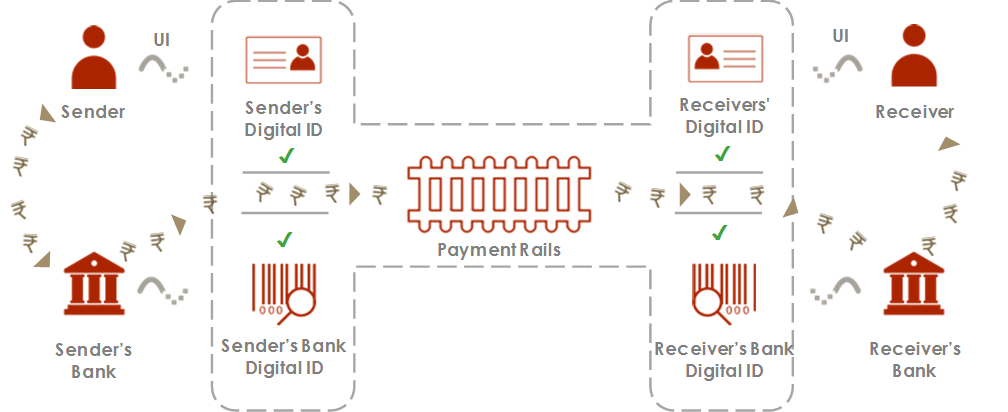
    • PAs are entities that facilitate e-commerce sites and merchants to accept various payment instruments from the customers for the completion of their payment obligations.
    • PGs are entities that provide technology infrastructure to route and facilitate the processing of an online payment transaction without any involvement in the handling of funds.
    • With the new set of guidelines PAs and PGs such as Paytm, Pay Pal, Mobikwik, Razorpay, PayU, CCAvenue etc. will be regulated by RBI to ensure the safety of all our online transactions.

    What are the new guidelines?

    The new guidelines say that-

    • A payment aggregator (entities that facilitate e-commerce sites and merchants to accept various payment instruments) should be a company incorporated in India under the Companies Act, 1956 / 2013.
    • Non-bank entities offering payment aggregator services will have to apply for authorisation on or before June 30, 2021.
    • E-commerce marketplaces providing payment aggregator services will have to be separated from the marketplace business and they will have to apply for authorisation on or before June 30, 2021.
    • Pas existing today will have to achieve a net worth of â‚č15 crore by March 31, 2021 and a net worth of â‚č25 crore by the end of third financial year, which means or before March 31, 2023.
    • The net-worth of â‚č25 crore shall be maintained at all times thereafter.
  • What is Keqiang Index’?

    China’s GDP numbers which are preferably represented by Keqiang Index has been recently seen in news amid coronavirus outbreak.

    Keqiang Index

    • Li Keqiang index or Keqiang index is an economic measurement index created by The Economist to measure China’s economy using three indicators, as reportedly preferred by Li Keqiang.
    • It uses three other indicators:
    1. the railway cargo volume,
    2. electricity consumption and
    3. loans disbursed by banks
    • Li Keqiang currently the Premier of the People’s Republic of China, suggest the index as better economic indicator than official numbers of GDP.
  • Let’s use follower’s advantage

    Context

    How this coronavirus pandemic threat will pan out no one knows but what we do know is that the intensity of the challenge and its impact on our well-being will depend greatly on how we reach out to ordinary people, and the policies we implement.

    Historical perspective and comparison

    • Compared to the fatality numbers of some earlier pandemics, such as the Asian flu, 1957-58 (1.1 million dead) and Hong Kong Flu, 1968 (2 million dead), the fatality numbers of the current coronavirus pandemic are, as yet, nowhere near.
    • One of the most comprehensive studies on the pandemic, by the Imperial College of London, shows that the “case fatality rate”, or fatality among those who get coronavirus is 0.9 per cent — this means a 99.1 per cent survival rate among the people who get it.
    • What makes this pandemic special is that it is happening in the age of digital connectivity and greater scientific knowledge than we have ever had.
    • We can inform people quickly and take big steps to contain it.
    • But this also has a danger we have never faced.
    • Policy actions can have a mega backlash on the economy.
    • We are in uncharted territory — never before have we taken the kind of collective action against a pandemic as we are doing now.

    Time to collectively confront our common humanitarian challenge

    • Using the experience of South Korea: There is some evidence from history, and from the country that has been the most successful in dealing with this pandemic —South Korea.
    • The country’s success has saved lives, protected the economy from undue damage, boosted the popularity of the Korean President Moon Jae-In across political divides and raised the global standing of South Korea.
    • France’s President Emmanuel Macron and Sweden’s Prime Minister Stefan Lofven have consulted Moon Jae-In for advice.
    • We have some evidence and estimates about the kind of damage this pandemic can do.
    • China’s industrial production in January-February 2020 declined by 5 per cent compared to a year ago.
    • Goldman Sachs has estimated that the US’s GDP growth could decline 24 per cent for the second quarter this year.
    • Data are coming in on recent US unemployment claims climbing by 30 per cent.
    • This is clearly time to put political differences aside, and collectively confront our common humanitarian challenge.

    Designing policy to deal with the pandemic

    • Economic implications: In designing policy, it is important to realise that all interventions to contain the pandemic have economic implications.
    • Some people react to this by saying that our first priority is to save lives, not the economy. This is a mistake. The two are not separate matters.
    • A poorly-executed policy can damage the economy and this can end up taking more lives than the original problem.
    • Examples of policy doing damage to lives: We have examples of the damage policies can do from history. In 1958, Mao Zedong initiated the Great Leap Forward to boost China’s production. This unleashed the biggest famine in modern times, which resulted in 20 to 40 million deaths.
    • The Bengal Famine of 1943 occurred with no decline in food production but there were disruptions in supply chains from the farms to those who needed food.
    • The death toll was two to three million. Such evidence from the past warns us that policies not designed well can cause more deaths than the pandemic itself.

    Three lessons from South Korea

    • We already have three lessons from Korea, which are being widely discussed in newspapers and the media around the world.
    • First, you need strong leadership.
    • Second, it is critically important to have trust between society and government. There is only that much you can do if people do not cooperate.
    • Third, the need is for nuanced policies, with the government having the courage to make course correction as it goes along.

    Way forward

    • First, trust can be a casualty with the lockdown. There are reports of the police wielding the baton too quickly on ordinary vendors, small grocers and sellers. They need to explain to people so that they begin to actually cooperate, instead of complying only when under observation. That is the key difference between a trusting society and a trustless one.
    • The government cannot be a substitute for the private firms: To believe that small traders and private firms can be substituted by the government is the mistake Communist China made in the 1960s and 1970s, before the arrival of Deng Xiaoping.
    • An example of the importance of specialised knowledge — this applies to the US as well — pertains to the role of cash grants to the poor. Such grants work well in normal times but may need to be supplemented with the direct support of food and medical services.

    Conclusion

    Some say that the Korea analogy is of no use to us because it is a relatively small country. It is true that everything will not apply here. But on the other hand, Korea and Hubei province of China are very comparable. Korea’s population is 52 million, Hubei’s is 58 million. The number of people who died of the virus in Korea is 126. The figure for Hubei is 3,160. Korea, of course, had the follower’s advantage since the virus struck there later. But we too have that advantage.

  • Impacts of the Oil Price War

    Context

    A “pass-through effect” of low crude prices is improbable given the constrained fiscal space.

    The backdrop to the oil price war

    • Against the backdrop of the covid-19 pandemic and the economic slowdown, Saudi Arabia-led oil cartel OPEC (Organization of the Petroleum Exporting Countries) wanted to curtail oil production by 1.5 million barrels per day.
    • However, as Russia has not agreed to this proposal, Saudi Arabia has declared a price war by reducing the Brent crude oil price from $65 per barrel in end-December 2019 to $33 now.
    • The race to the bottom to this extent by Brent is the first time ever since the 1991 Gulf crisis.

    Would it impact India by providing a fiscal dividend?

    • A $20 reduction in Brent oil prices can reduce India’s current account deficit.
    • However, the instability in oil prices is a short-run phenomenon, and India cannot anticipate a prolonged fiscal dividend.
    • Quite contrary to the expectations about a “pass-through effect” of low crude oil prices on consumers, the Government of India (GoI) raised the excise duty on petrol and diesel by `3 per litre.
    • The special excise duty on petrol was hiked by 2 to 8 per litre in the case of petrol and to 4 in the case of diesel.

    Fuel price determination in India

    • There has been no “pass-through effect” primarily because the price determination of petrol and diesel in India is not linked to crude oil prices in the international market.
    • Price determination is done through dynamic pricing, termed as “trade parity pricing,” based on the international prices of petrol and diesel (finished products) prevailing in the international markets, and not on crude oil per se.
    • An obvious question here is whether the crude oil prices and the petrol-diesel prices move in tandem in the international market. Not always.
    • Globally, the market mechanism of ad hoc configurations of demand and supply of crude oil is different from the demand-supply dynamics of petrol and diesel, and, in turn, their pricing behaviour will also be distinctly different.
    • The goi fixes the price of petrol and diesel based on dynamic pricing and trade parity pricing by converting the price from dollars to Indian rupees.

    Factors affecting fuel prices in India

    • The rupee-dollar exchange rate mechanism also affects the pricing of petrol and diesel.
    • This can offset the benefits India can reap from comparatively lower prices of crude oil in the international market, quoted in dollars.
    • The other components of this pricing formula are: 1.The cost of inland freight marketing costs. 2. Taxes levied by the centre and the state governments. 3. The margins (charged by the oil companies) and (the dealer) commissions.
    • It is, therefore, obvious that low international prices per se do not translate into lower prices for petrol and diesel in India as long as the centre and states levy exorbitant taxes on these products.
    • The interstate variation in the prices of petrol and diesel is also significantly explained by the differentials in taxes imposed.
    • Yet another factor to be borne in our minds is that the effect of international prices on the in-house pricing of petrol and diesel in India is not instantaneous or spontaneous.
    • There is a time lag involved in the pricing process.
    • Even though the goi uses the daily pricing mechanism in the dynamic pricing formula of petrol and diesel, the international prices component enters into the pricing equation as an international “benchmark price” of petrol and diesel.
    • Today’s price in India reflects the average international prices of petrol and diesel of the previous fortnight.
    • However, the fuel prices will not come down in a fortnight’s time.
    • This is because, in the price equation, the international price component is just one among many components, whereas the tax component constitutes a dominant part in the equation.

    The Covid-19 factor

    • The covid-19 outbreak has started striking the financial markets and the real sector, and especially investment in the energy sector.
    • So, the lowering of the oil price by Brent cannot help the global economy from recession.
    • Overall, the oil price war can negatively affect the investment decisions in the energy sector and can be a drag on global growth.
    • Due to the covid-19 outbreak, there could be reduced oil-drilling activities in the energy sector, and there will be some cutbacks in demand and, in turn, in the capex energy infrastructure.
    • Analysts have revealed that every $10 fall in oil prices transfers around 0.3% of the global gross domestic product from oil-producing nations to oil-consuming nations.
    • The interest rate strategists are also concerned as the Russian 10-year bond yields reached a record low of 2.56%, and Saudi Arabian government bonds maturing in April 2030 are currently at 2.38%.

    Microeconomic policy to tackle oil price war?

    • The US Federal Reserve has lowered the federal funds’ interest rate by 50 basis points (one-half of a percentage point) to 1.25%.
    • The Bank of Canada also reduced the bank rate by 50 basis points to the US level. The stock market indexes fell to the levels of  2008.
    • The 1.25% federal funds rate now is below the 2.5% US inflation rate. However, monetary policy has failed to trigger the economy.
    • As mentioned by the European Central Bank, “targeting” rather than generalised public policy needs to be done.

    Conclusion

    • The Reserve Bank of India policy tools may be ineffective now to tackle the slowdown, especially against the backdrop of the worsening of the economy from the effects of covid-19. The re-dominance of fiscal policy by the North Block is what is keenly awaited, for an economic turnaround.
  • Mind your own economic health

    Context

    The fragility of the global economy has been exposed twice within the last two decades. In 2008, the collapse of a financial services firm in the US triggered a global financial meltdown. In 2020, the emergence of a novel virus in a food market in Wuhan has done it again.

    The global economy and system theory

    • Systems theory: It that systems take various forms. Broadly speaking, there are three types of systems-1. Chaotic systems. 2. Engineered Systems, and 3. Complex self-adaptive systems.
    • As the weather in a storm, chaotic systems are unpredictable and uncontrollable.
    • The global economy is behaving like a chaotic system.
    • Engineered systems, on the other hand, can be controlled quite tightly, like machines.
    • However, they are dull. A nuclear power plant is a well-engineered system. We would want it to do just what it is supposed to and not produce any surprises.
    • In contrast to these systems is the design of nature. It is a complex self-adaptive system. It produces myriad innovations. It evolves. Yet, its fundamental stability is very reassuring.
    • The realisation that mankind’s technologies and engineering marvels are disrupting nature’s stability, has raised alarms about the architecture of global economic governance.
    • More about self-adaptive systems: The architecture of complex self-adaptive systems is formed by essential design principles. One is “permeable boundaries”.
    • The many parts of a complex self-adaptive system have permeable boundaries between themselves. Each part has its integrity. The parts exchange information and energy across their boundaries as required.
    • When there are no boundaries within, or they are too weak, an accident at one end will soon sink the whole ship.

    Consequences of boundarylessness within the global financial system

    • The drive for boundarylessness within the global financial system since the 1990s caused the sloshing around of contagion during the global financial crisis in 2008.
    • Whereas global economic growth has undoubtedly been enabled by global supply chains, the vulnerability of economies everywhere to their disruption has become painfully evident with the COVID-19 pandemic.
    • Complex adaptive systems exhibit “fractal-like” shapes. Their parts are complex, combining the same diverse energies that permeate across the whole.
    • Social forces, economic forces, and environmental forces combine within all countries, and in parts within countries too, albeit in different ways.
    • Though the parts are similar to each other, they are not the same. Therefore, the same solutions will not fit all.
    • An insight from systems theory is that global systemic problems such as climate change, persistent economic inequality, among others, will require local systems solutions.

    Six reforms for reshaping Indian economy

    • Stress test: Crises create stress tests for the health of systems. The financial crisis of 2008 exposed the fragility of an inter-connected and under-regulated financial system.
    • The COVID-19 pandemic has exposed the architectural weaknesses in the global economy.
    • Instead of worrying too much about the reversal of globalisation, national leaders should now focus on the well-being of their citizens and the health of their own economies.
    • Six reforms are essential for reshaping the Indian economy.
    • First, focus on the provision of universal social security, rather than on the misdirected demand for even more “flexibility” in labour laws
    • Second, respect the “informal” sector which provides the majority of Indians with opportunities to earn incomes, and give it more strength. It is also a great source for practical innovations and widespread entrepreneurship.
    • Third, change the economic paradigm from “trickle-down” to “build up”. Build the internal engine of growth of India’s economy by increasing incomes of India’s citizens.
    • Fourth, strengthen public health services. Medical tourism may put India’s private hospitals on the global map. However, they are not the solution to India’s huge health problems.
    • Fifth, reform and strengthen the public education system. It will contribute greatly to creating a level playing field for all children.
    • Sixth, strengthen local governance in India’s towns and districts to develop and implement local systems solutions. The well-being of Indian citizens will be improved, and India’s economy will be more resilient too.

    Conclusion

    • All governments are asking their citizens to increase “social distancing” between themselves to prevent the spread of a health contagion. It would be wise for countries to maintain sufficient “economic distancing” amongst themselves too. They should mind the health of their own economies. Thereby, they will improve the health of the global economy too.