đŸ’„Join UPSC 2027,2028 Mentorship (July Batch) + XFactor Notes & Microthemes PDF

Subject: Environment

  • Centre releases Draft Climate Finance Taxonomy Framework

    Why in the News?

    To channel investments into clean-energy projects and climate-resilient infrastructure, the Finance Ministry has released a draft document titled ‘Framework of India’s Climate Finance Taxonomy’.

    What is a Climate Finance Taxonomy?

    • A CFT is a classification system that defines which economic activities qualify as climate-friendly or sustainable investments.
    • It helps investors, financial institutions, and policymakers channel funds into low-emission and climate-resilient projects.
    • It acts as a safeguard against green-washing, where non-sustainable initiatives are falsely labelled as green.
    • It supports the mobilization of finance necessary to achieve global climate goals, including Net Zero targets.
    • It offers a structured decision-making framework to ensure that investments deliver measurable environmental benefits.

    About India’s Draft ‘Climate Taxonomy’ (May 2025)

    • The Finance Ministry released the draft ‘Framework of India’s Climate Finance Taxonomy’ to help meet India’s Net Zero by 2070 goal while maintaining energy access.
    • It categorizes activities as:
      • Climate Supportive Activities: Those that reduce GHG emissions, enable adaptation, or promote clean tech R&D.
      • Climate Transition Activities: Those that encourage gradual progress, especially in hard-to-abate sectors like steel, iron, and cement.
    • It aligns with the national vision of ‘Viksit Bharat 2047’.
    • It includes key sectors such as power, mobility, buildings, agriculture, food, and water security.
    • The framework was first announced in the Union Budget 2025.

    Global Context and Negotiation Relevance:

    • A standard taxonomy is critical in global forums like the Conference of Parties (COP) to resolve disputes over climate finance commitments.
    • Developing nations, including India, advocate for grants and technology transfers, while developed countries often include private investments in their finance counts.
    • At the Baku Climate Conference, developed countries pledged $300 billion annually by 2035, far below the $1.35 trillion required.
    • India’s taxonomy aims to provide a clear benchmark for climate-related financial flows, promoting transparency, credibility, and trust in international climate funding.
    [UPSC 2015] With reference to ‘Green Climate Fund’ is/are correct?

    1. It is intended to assist the developing countries in adaptation and mitigation practices to counter climate change.

    2. It is founded under the aegis of UNEP, OECD, Asian Development Bank and World Bank.

    Select the correct answer using the code given below.

    Options: (a) 1 only* (b) 2 only (c) Both 1 and 2  (d) Neither 1 nor 2


  • Palaeofires from Permian and Late Silurian in the Godavari Basin

    Why in the News?

    Recent research has uncovered evidence of ancient wildfires (palaeofires) in the Godavari Basin, shedding light on Earth’s geological and climatic history from over 250 million years ago.

    What are Palaeofires?

    • Palaeofires refer to ancient wildfires that occurred in the Earth’s past, influencing the vegetation, climate, and even the formation of coal.
    • These fires, spanning from the Late Silurian (419.2 to 443.8 million years ago) to the Quaternary (2.58 million years ago), left their mark across various landscapes.

    Ancient Palaeofires in the Godavari Basin:

    • Palaeofires, traced back to the Permian period, provide evidence of how fires influenced prehistoric landscapes.
    • Advanced techniques like Raman Spectroscopy and FTIR Spectroscopy were used to differentiate between in situ (on-site) and ex situ (transported) charcoal.
    • The research also highlighted how sea level changes impacted charcoal deposition, with well-preserved fire signatures during regressive phases and more oxidized charcoal during transgressive phases.
    • These findings contribute to understanding carbon storage in the Earth’s crust and provide insights into past climate dynamics and fire behavior.

    Role of Palaeofires in Earth’s Past:

    • Palaeofires were crucial in shaping Earth’s climate, vegetation, and contributing to coal formation across various geological periods.
    • During the Permian period, palaeofires were widespread in Gondwana, affecting plant life and coal deposits.
    • Fossil charcoal found in coal-bearing formations like the Raniganj Coalfield suggested a connection between seasonal droughts and wildfires.
    • These wildfires influenced vegetation patterns and led to the accumulation of carbon-rich deposits.
    • High atmospheric oxygen levels likely intensified these wildfires, significantly affecting both climate and ecosystem changes.
    • Understanding palaeofires helps in grasping long-term carbon sequestration processes.
    [UPSC 2001] The approximate age of the Aravalli range is:

    Options: (a) 370 million years (b) 470 million years (c) 570 million years* (d) 670 million years


  • Total Allowable Catch (TAC) in Fishing

    Why in the News?

    A recent legal dispute between the US and Russia has brought the issue of Total Allowable Catch (TAC) into the spotlight.

    About Total Allowable Catch (TAC):

    • TAC refers to the maximum quantity of a specific fish species that can be legally harvested in a defined period.
    • It is established to prevent overfishing and ensure sustainable fish populations.
    • These limits are essential for maintaining ecological balance and supporting long-term fishing industries.

    Various Laws Governing TAC:

    • TACs are set by international fisheries management organizations like:
      • FAO (Food and Agriculture Organization).
      • RFMOs (Regional Fisheries Management Organizations) for shared or migratory fish stocks.
    • European Union (EU): TACs are managed under the Common Fisheries Policy (CFP), which sets quotas for member states based on scientific advice. Landing obligations ensure that all catches are counted against quotas, preventing waste.
    • India: India enforces a seasonal fishing ban in its Exclusive Economic Zone (EEZ) for 61 days to protect breeding fish. This ban serves as a TAC equivalent of zero for specific periods, supporting fish stock regeneration.
    • New Zealand: The Fisheries Act sets TACs for various stocks and specifies catch limits in terms of weight or numbers, updated by official notices.
    [UPSC 2013] The most important fishing grounds of the world are found in the regions where:

    Options: (a) Warm and cold atmospheric currents meet (b) Rivers drain out large amounts of freshwater into the sea (c) Warm and cold oceanic currents meet* (d) continental shelf is undulating.


  • Microplastics disrupting the Ocean’s Carbon Cycle

    Why in the News?

    A study published in Nature reveals that microplastics have deeply infiltrated the ocean, affecting the planet’s biogeochemical and carbon cycles.

    Microplastics

    Key Findings of the Study:

    • Microplastics (1–100 micrometres) dominate the ocean’s water column, especially below surface layers, unlike larger plastic fragments (100–5,000 micrometres) which remain near the surface.
    • Subsurface microplastics were found as deep as 100 metres within ocean gyres—rotating currents that trap and accumulate debris.
    • Data was compiled from 1,885 ocean stations (2014–2024), focusing on 50 cm below surface (subsurface layer).
    • Over 56 polymer types were detected; buoyant polymers, common in global plastic production, were most prevalent.
    • Sources identified:
      • Fishing gear, including nylon and polyester nets, was a significant contributor to deep-sea microplastics.
      • Plastics sampled often had production dates from the 20th century, highlighting their long degradation timelines.
      • Atmospheric deposition contributes 0.013–25 million tonnes annually, with polyester dominant in airborne microplastics.

    About Allochthonous Carbon:

    • Allochthonous carbon is carbon from external sources introduced into an ecosystem, not produced within it.
    • In oceans, plastics are a major source of allochthonous carbon, as they come from land-based human activities.
    • Microplastics contribute measurable carbon mass to marine systems, altering natural carbon ratios in ocean layers.
    • This distorts the marine carbon pump by affecting the flow and composition of particulate organic carbon (POC).
    • Impacts:
      • Plastic-derived carbon lacks radiocarbon, which may cause marine POC samples to appear around 420 years older.
      • It disrupts microbial activity, nutrient cycling like nitrification and denitrification, and organic matter decomposition.
      • Marine microbes ingest plastic-C, affecting food chains and altering biological processes at the base of ecosystems.
    [UPSC 2012] What would happen if phytoplankton of an ocean is completely destroyed for some reason?

    Statements:

    1. The ocean as a carbon sink would be adversely affected.

    2. The food chains in the ocean would be adversely affected.

    3. The density of ocean water would drastically decrease.

    Options: (a) 1 and 2 only* (b) 2 only (c) 3 only (d) 1, 2 and 3


  • Biological Diversity (Access and Benefit Sharing) Regulation, 2025

    Why in the News?

    The National Biodiversity Authority (NBA) has released new rules to regulate access to biological resources and ensure fair and equitable benefit sharing, as approved by the Central Government.

    About New Biodiversity Regulation, 2025:

    • It governs how benefits from the use of biological resources and associated traditional knowledge or digital sequence information (DSI) are to be shared.
    • It introduces a tiered benefit-sharing structure based on annual turnover of the user:
      • No sharing for turnover up to â‚č5 crore.
      • 0.2% for turnover between â‚č5–50 crore.
      • 0.4% for â‚č50–250 crore, and 0.6% above â‚č250 crore.
    • Users must submit resource usage statements annually if turnover exceeds â‚č1 crore.
    • Cultivated medicinal plants are exempt, aligning with the Biodiversity (Amendment) Act, 2023.
    • For high-value or threatened species like red sanders, agarwood, and sandalwood, sharing must be at least 5%, rising to 20% or more for commercial use.
    • The Regulation covers researchers, IP right seekers, and includes digital data as part of benefit sharing for the first time.

    Back2Basics: Convention on Biological Diversity (CBD):

    • CBD was adopted at the 1992 Rio Earth Summit; it came into force since 29 December 1993 with secretariat in Montreal, Canada.
    • It is ratified by 196 countries, excluding the US.
    • Key objectives:
      • Conservation of biological diversity.
      • Sustainable use of biodiversity components.
      • Fair sharing of benefits from genetic resources.
    • It is governed by the Conference of the Parties (COP), meeting biennially.
    • COP16 (2024) in Colombia established a multilateral benefit-sharing mechanism for Digital Sequence Information (DSI).
    • It ensures fair reward for communities protecting biodiversity when their knowledge or genetic data is used commercially.

    Nagoya Protocol on ABS:

    • It was adopted in 2010, enforced in 2014, it supplements the CBD.
    • It provides a legal framework for fair benefit-sharing from the use of genetic resources with the country of origin or local communities.
    • It strengthens the global framework for responsible biodiversity use.


    [UPSC 2023] Consider the following statements:

    1. In India, the Biodiversity Management Committees are key to the realization of the objectives of the Nagoya Protocol.

    2. The Biodiversity Management Committees have important functions in determining acces and benefit sharing, including the power to levy collection fees on the access of biological resources within its jurisdiction.

    Which of the statements given above is/are correct?

    Options: (a) 1 only (b) 2 only (c) Both 1 and 2* (d) Neither 1 nor 2


  • Repairability Index (RI) for Mobile and Electronics Sector

    Why in the News?

    The Committee formed to design India’s Repairability Index (RI) framework has submitted its report to Department of Consumer Affairs.

    About Repairability Index (RI):

    • The RI is a standardized label that indicates how easily a product can be repaired by assessing multiple parameters.
    • It is designed to empower consumers to make informed decisions and promote sustainable consumption.
    • The RI is applicable initially to smartphones and tablets and uses a 5-point numeric scale for scoring.
    • The six key parameters used to calculate RI are:
      1. Disassembly Depth
      2. Repair Information
      3. Spare Parts Availability
      4. Software Updates
      5. Tools Required
      6. Fasteners Used
    • The scoring covers priority components such as battery, display, cameras, charging port, microphone, speaker, and hinge mechanism.
    • RI labels must be displayed at the point of sale, on e-commerce platforms, and via QR code on packaging.

    Recommendations of the RI Framework:

    • The RI framework must align with global best practices while maintaining ease of doing business for manufacturers.
    • Original Equipment Manufacturers (OEMs) will self-declare RI scores based on standard criteria, with no extra compliance burden.
    • A clear scoring methodology has been developed, with weightages assigned to each parameter for key parts.
    • The committee identified smartphones and tablets as the initial focus under the RI framework.
    • Stakeholder consultations included manufacturers, consumer groups, academic bodies, and government departments.
    • The framework complements the existing Right to Repair Portal (launched in 2022), which provides repair-related information across four sectors.
    • The committee emphasized the need for a robust post-sale ecosystem for both urban and rural consumers.
    [UPSC 2021] R2 Code of Practices’ constitutes a tool available for promoting the adoption of:

    Options: (a) environmentally responsible practices in electronics recycling industry*

    (b) ecological management of Wetlands of International Importance under the Ramsar Convention

    (c) sustainable practices in the cultivation of agricultural crops in degraded land

    (d) ‘Environmental Impact Assessment’ in the exploitation of natural resources


  • Green Hydrogen Certification Scheme (GHCS)

    Why in the News?

    The Ministry of New and Renewable Energy (MNRE) has launched Green Hydrogen Certification Scheme (GHCS) under the National Green Hydrogen Mission.

    About Green Hydrogen Certification Scheme (GHCS):

    • GHCS aims to certify that hydrogen produced in India meets the criteria to be labelled as “green hydrogen”, based on verified emissions data.
    • The scheme enhances transparency, credibility, and traceability in hydrogen production and supports India’s goal of becoming a global hub for green hydrogen exports.
    • The Bureau of Energy Efficiency (BEE) is the nodal agency responsible for the implementation of this scheme.
    • Certification under GHCS also helps producers access carbon credits under the Carbon Credit Trading Scheme (CCTS), subject to additional requirements.
    • The scheme covers hydrogen produced using electrolysis with renewable energy or biomass conversion.

    Key Features of GHCS:

    • Hydrogen will be certified as “green” if its non-biogenic greenhouse gas emissions are ≀ 2 kg CO₂ equivalent per kg of hydrogen, averaged over 12 months.
    • The certification process includes four stages:
      • Concept Certificate (project design stage)
      • Facility-Level Certificate (infrastructure readiness)
      • Provisional Certificate (early production data)
      • Final Certificate (verified emissions based on actual production)
    • Only the Final Certificate is mandatory for producers seeking government incentives or selling hydrogen in the domestic market.
    • Producers must appoint Accredited Carbon Verification (ACV) agencies for independent verification, recognized by the BEE.
    • The scheme is aligned with international standards like ISO 19870:2023, ensuring global credibility.
    • Certificates are issued in multiples of 100 kg of hydrogen, containing details on emission intensity and production sources.
    [UPSC 2023] With reference to green hydrogen, consider the following statements:

    1. It can be used directly as a fuel for internal combustion. 2. It can be blended with natural gas and used as fuel for heat or power generation . 3. It can be used in the hydrogen fuel cell to run vehicles. How may of the above statements are correct?

    Options: (a) Only one (b) Only two (c) All three * (d) None


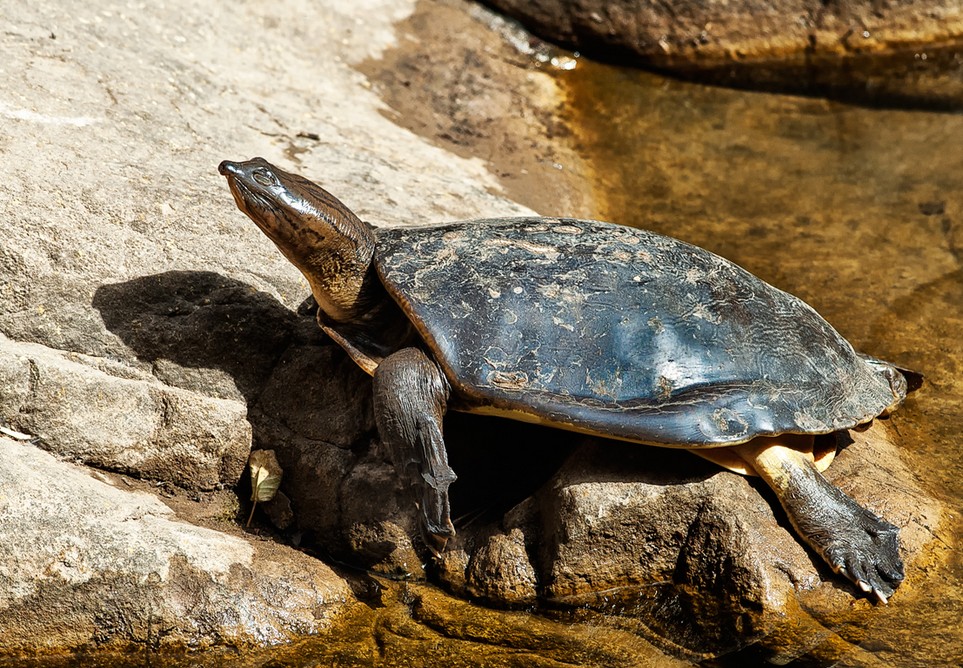
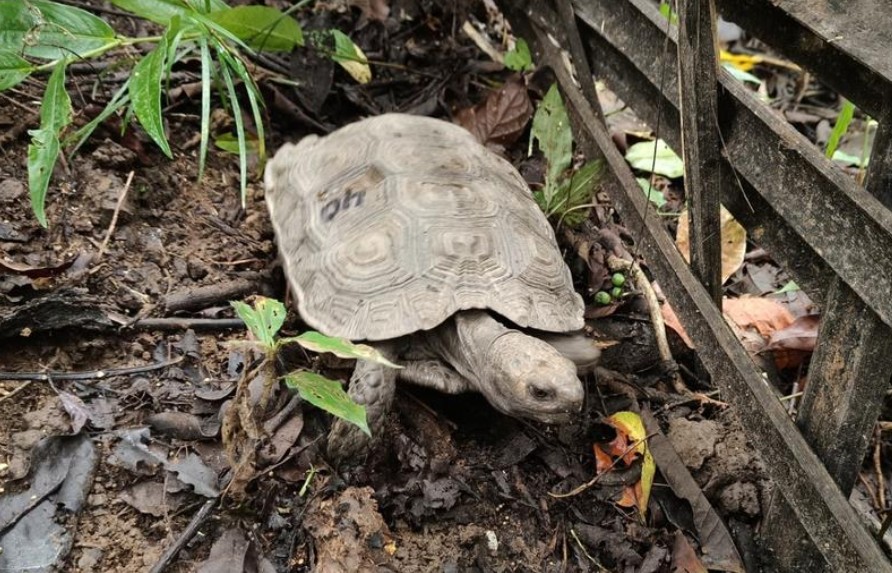
  • Red-Crowned Roofed Turtle returns to Ganga after 3 Decades

    Why in the News?

    The red-crowned roofed turtle has returned to the Ganga River after nearly 30 years of absence.

    Red-Crowned Roofed Turtle returns to Ganga after 3 Decades

    About Red-Crowned Roofed Turtle

    • The Red-Crowned Roofed Turtle (Batagur kachuga) is one of the most endangered freshwater turtle species in the world.
    • It is native to South Asia, particularly India, Bangladesh, and Nepal.
    • Historically found in deep, flowing rivers with sandbar nesting sites, it now survives only in the Chambal River, with fewer than 300 individuals remaining.
    • This species plays a crucial role in maintaining river ecosystem balance by controlling aquatic vegetation and contributing to nutrient cycling.
    • Under the Namami Gange Mission and Turtle Survival Alliance India (TSAFI) project, 20 turtles (10 males, 10 females) were released into the Ganga River at Haiderpur Wetland and Hastinapur Wildlife Sanctuary.
    • The IUCN Red List categorizes it as Critically Endangered, while India’s Wildlife Protection Act, 1972 lists it in Schedule I, offering the highest legal protection.
    • It is also listed under Appendix I of CITES, regulating international trade of the species.
    [UPSC 2017] In India, if a species of tortoise is declared protected under Schedule I of the Wildlife (Protection) Act, 1972, what does it imply?

    Options: (a) It enjoys the same level of protection as the tiger*. (b) It no longer exists in the wild, a few individuals are under captive protection; and how it is impossible to prevent its extinction.  (c) It is endemic to a particular region of India. (d) Both (b) and (c) stated above are correct in this context.


  • What is AIM4NatuRe Initiative?

    Why in the News?

    On Earth Day, April 22, the Food and Agriculture Organization (FAO) launched the Accelerating Innovative Monitoring for Nature Restoration (AIM4NatuRe) Initiative aimed at accelerating nature restoration.

    About the AIM4NatuRe Initiative:

    • AIM4NatuRe is a global initiative launched by the FAO aimed at enhancing countries’ ability to monitor and report ecosystem restoration efforts.
    • With ÂŁ7 million (approximately USD 9.38 million) from the United Kingdom, the initiative will run from 2025 to 2028, focusing on restoring 30% of degraded ecosystems globally by 2030, in alignment with the Global Biodiversity Framework (GBF).
    • Key aspects:
      • Utilizes advanced technology and data frameworks for ecosystem restoration monitoring.
      • Targets restoration across forests, wetlands, grasslands, marine ecosystems, and agricultural landscapes.
      • Integrates Indigenous knowledge in restoration efforts.
      • Develops tools like the Framework for Ecosystem Restoration Monitoring (FERM) and builds a unified global dataset for transparency.

    Key Stakeholders:

    • FAO: Leads the initiative, providing tools, data, and frameworks to support restoration.
    • UK: Provides financial backing and focuses on helping countries achieve the 30×30 target.
    • Indigenous Communities: Contribute traditional knowledge and participate in restoration efforts.
    • World Resources Institute (WRI): Supports global restoration initiatives, including the Kham River Restoration Mission in India.
    • Convention on Biological Diversity (CBD): Shapes the biodiversity framework for monitoring progress on 30% ecosystem restoration by 2030.
    • World Bank: Provides funding and technical expertise for financing and implementing ecosystem restoration.
    [UPSC 2014] Consider the following international agreements:

    1. The International Treaty on Plant Genetic Resources for Food and Agriculture. 2. The United Nations Convention to Combat Desertification. 3. The World Heritage Convention.

    Which of the above has/have a bearing on the biodiversity?

    Options: (a) 1 and 2 only (b) 3 only (c) 1 and 3 only (d) 1, 2 and 3 *


  • [30th April 2025] The Hindu Op-ed: A powerful judicial remedy for waste management

    PYQ Relevance:

    [UPSC 2023] The most significant achievement of modern law in India in the constitutionalization of environmental problems by the Supreme Court. Discuss this statement with the help of relevant case laws.

    Linkage: The Supreme Court’s proactive role in integrating environmental concerns into constitutional law, aligns with the source’s assertion that environmental protection is a constitutional imperative aimed at safeguarding fundamental rights.


    Mentor’s Comment:  A new study published in Nature says that India is the world’s biggest plastic polluter, releasing 9.3 million tonnes of plastic each year—about 20% of the global total. The study defines plastic emissions as plastic waste (like litter and burned plastic) that escapes from areas where it’s at least somewhat controlled and ends up in the open environment, where there’s no control at all.

    Today’s editorial looks at plastic pollution in India and the actions taken by the Supreme Court to reduce it. This topic is useful for GS Paper 2 (Policy and governance) and GS Paper 3 (Environmental pollution).

    _

    Let’s learn!

    Why in the News?

    A new study published in Nature says that India produces more plastic pollution than any other country in the world.

    What does the Nature study reveal about India’s plastic pollution?

    • India is the World’s Largest Plastic Polluter: According to the study, India releases 9.3 million tonnes (Mt) of plastic waste annually, accounting for about 20% of global plastic emissions. Eg: This includes both plastic debris and open burning, contributing heavily to land, air, and water pollution.
    • Plastic Waste Emissions Include Mismanaged and Openly Burnt Waste: Plastic emissions are defined as plastic that moves from controlled (managed or mismanaged) systems to unmanaged, uncontained environments. Eg: Waste escaping from open dumpsites or burnt in open fields, common in peri-urban and rural India.
    • Official Data Grossly Underestimates Real Waste Figures: India’s reported per capita plastic waste generation is 0.12 kg/day, but the study estimates it at 0.54 kg/day, suggesting severe underreporting. Eg: Rural waste and informal recycling activities are often excluded from government reports.
    • Uncontrolled Dumpsites Far Outnumber Sanitary Landfills: The study found that unregulated dumpsites outnumber sanitary landfills by 10:1, highlighting a major infrastructure gap. Eg: Cities like Patna and Guwahati rely on open dumping due to lack of engineered landfills.
    • Data Deficiency Hampers Effective Waste Management: Lack of reliable data, especially from rural areas and informal sectors, weakens national waste management planning. Eg: In the Indian Himalayan Region, poor data on plastic waste flow leads to accumulation in fragile ecosystems.

    Why is India’s plastic waste data seen as inaccurate?

    • Exclusion of Rural Areas from Official Data: Government statistics largely reflect urban waste generation, ignoring plastic waste from vast rural regions. Eg: Villages disposing plastic in fields or burning it are not included in national data systems.
    • Unaccounted Informal Recycling Sector: The informal sector plays a big role in plastic recycling but is not officially documented in waste audits. Eg: Ragpickers collecting and selling recyclables in Delhi or Mumbai don’t show up in municipal records.
    • No Data on Open Burning of Waste: Open burning, a major source of plastic emissions, is not systematically tracked or included in national waste reports. Eg: In slums and small towns, plastic is often burnt in the open due to lack of collection facilities.
    • Overreporting of Waste Collection Coverage: India claims a 95% collection rate, but this is likely overstated due to poor documentation and ground reality. Eg: Areas with irregular garbage pickup services are still marked as “covered” in official data.
    • Lack of Transparent Data Methodology: There is no clarity on how data is collected, audited, or verified by municipal or state agencies. Eg: The Central Pollution Control Board (CPCB) reports don’t mention the sampling or survey methods used.

    How can India improve its waste management system?

    • Ensure Reliable and Inclusive Data Collection: Create a robust, transparent mechanism to collect data from both urban and rural areas, including informal sectors. Eg: Use mobile apps or digital platforms to track daily waste from panchayats and slums in states like Bihar or Odisha.
    • Mandate Waste Audits and Public Methodologies: All data-gathering agencies must publish their methodologies and undergo third-party audits to ensure accuracy. Eg: Municipal bodies in Maharashtra could be required to disclose how they measure household waste generation.
    • Link Local Bodies to Full Waste Processing Ecosystem: Every urban and rural local body should be mandatorily connected to Material Recovery Facilities (MRFs), recyclers, EPR kiosks, and landfills. Eg: Villages in Himachal Pradesh could be linked to nearby MRFs for segregating plastic and compostable waste.
    • Implement and Monitor Extended Producer Responsibility (EPR): Producers, importers, and brand owners (PIBOs) must collect and manage plastic waste they generate, through designated kiosks. Eg: FMCG companies could set up EPR kiosks in towns across Tamil Nadu to collect multi-layered packaging.
    • Leverage Technology and Geo-tag Infrastructure: Use India’s tech capability to geo-tag waste infrastructure, monitor waste flows, and plan better logistics. Eg: Using GIS-based dashboards to track landfill use and recycling rates in cities like Bengaluru and Jaipur.

    What is the Vellore Tanneries Case?

    • The Vellore Tanneries Case refers to a significant legal battle concerning the environmental pollution caused by the tannery industry in Vellore, Tamil Nadu, India. It is a landmark case due to its focus on the polluter pays principle and environmental justice.

    Why did the Supreme Court act on the Vellore tanneries case? 

    • To Enforce Environmental Justice and Fundamental Rights: The Court recognized that pollution from tanneries violated citizens’ fundamental rights to clean air, water, and health, guaranteed under Article 21 of the Constitution. Eg: Villagers in Vellore affected by contaminated groundwater and health issues were denied their basic rights.
    • To Ensure Accountability and Compliance: Government policies and earlier Court orders had been routinely ignored, so the Court issued a continuing mandamus to ensure time-bound compliance. Eg: The Court directed a committee to monitor clean-up and remediation in Vellore and submit reports within 4 months.
    • To Uphold the “Polluter Pays Principle”: The Court ruled that polluters must bear the cost of damage to the environment and compensate affected communities. Eg: Tanneries discharging untreated effluents were made liable for both environmental restoration and community compensation.
    • To Promote Sustainable Development through Remediation: The Court emphasized that restoring the damaged environment is a part of sustainable development, not an optional activity. Eg: Soil and water remediation programs in the affected leather clusters were ordered to be implemented.

    Way forward: 

    • Strengthen Data Collection and Transparency: Establish comprehensive waste data systems that include rural areas, informal sectors, and open burning, with clear methodologies and third-party audits to ensure accurate reporting.
    • Implement Robust Waste Management Infrastructure: Connect local bodies to the full waste processing ecosystem, enforce Extended Producer Responsibility (EPR) for plastic waste, and leverage technology to track and manage waste flows effectively.