💥Join UPSC 2027,2028 Mentorship (July Batch) + XFactor Notes & Microthemes PDF

Subject: Environment

  • How Locusts form massive Swarms?

    Why in the News?

    A recent study by the Max Planck Institute of Animal Behavior suggests that locusts do not behave like gas particles but instead make cognitive decisions based on their perception of nearby motion.

    Locust

    About Locust Swarms  

    • Locusts are large grasshoppers capable of forming massive swarms, consuming up to their body weight in food daily, and traveling 150 km/day with favourable winds.
    • They are highly destructive, stripping crops and threatening food security. A single swarm can consume food equivalent to the daily needs of 35,000 people.
    • In India, Locust Control and Research (LC&R) oversees locust management.
    • The Locust Warning Organisation (LWO), established in 1939, monitors and controls locust activity in states like Rajasthan, Gujarat, Punjab, and Haryana.
    • The 2019-2022 desert locust outbreak was one of the worst in decades, devastating India, Pakistan, and East Africa, destroying over 200,000 hectares of crops.
    • Despite existing control measures, locust outbreaks remain difficult to manage due to their rapid breeding capabilities.

    Key Highlights of New Research:

    • Traditional models assumed locusts moved collectively by aligning with neighbours.
    • However Max Planck Institute reveals that locusts make cognitive decisions based on visual cues.
    • The study introduced a new mathematical model using neural ring attractor networks, showing that locusts decide on movement based on multiple visual cues, leading to coordinated swarms through decentralised decision-making.
    • This understanding provides a more accurate model for predicting locust swarm behaviour, crucial for early intervention.
    [UPSC 2023] Which of the following organisms perform waggle dance for others of their kin to indicate the direction and the distance to a source of their food?

    Options: (a) Butterflies (b) Dragonflies (c) Honeybees* (d) Wasps


  • Greenhouse Gases Emissions Intensity (GEI) Targets

    Why in the News?

    The Environment Ministry has released the Draft Greenhouse Gas Emissions Intensity (GEI) Target Rules, 2025, as part of the government’s efforts to reduce greenhouse gas emissions (GHGs) from energy-intensive sectors.

    About Greenhouse Gases Emissions Intensity (GEI):

    • GHGs trap heat in the Earth’s atmosphere, contributing to global warming.
    • Major GHGs include carbon dioxide (CO2), methane (CH4), nitrous oxide (N2O), and synthetic fluorinated gases (CFCs, HCFCs).
    • GEI measures the amount of GHGs emitted per unit of output (e.g., per tonne of product like cement or aluminium).
    • It uses tCO2e (tonnes of CO2 equivalent) to account for the impact of all GHGs.
    • Reducing GEI is vital to mitigate climate change, promoting the use of cleaner technologies in industries to lower environmental footprints.

    Key Provisions of Draft GEI Target Rules, 2025:

    • Target Setting for Industries: Specific emission intensity reduction targets are set for energy-intensive sectors like aluminium, cement, and pulp and paper, for the periods 2025-26 and 2026-27.
    • Baseline Emissions & Gradual Reduction: Baseline GHG emissions for 2023-24 are established, with targets for gradual reduction over time.
    • Carbon Credit Trading Scheme (CCTS): Industries meeting GEI targets will earn carbon credits that can be traded on India’s carbon market. Those failing to meet targets will need to buy credits or face penalties.
    • Sector-Specific Applicability: Targets apply to 13 aluminium plants, 186 cement plants, 53 pulp and paper plants, and 30 chlor-alkali plants.
    • Penalties & Incentives: Non-compliant industries must buy carbon credits or face penalties. The rules encourage clean technologies, like using biomass instead of coal in production.
    • Alignment with Paris Agreement: The rules support India’s climate commitments, aiming for a 45% reduction in emissions intensity of GDP by 2030 compared to 2005 levels.
    • Monitoring & Compliance: The Bureau of Energy Efficiency (BEE) will oversee the carbon credit market, ensuring compliance through regular progress reports from industries.
    [UPSC 2022] Climate Action Tracker’ which monitors the emission reduction pledges of different countries is a:

    Options: (a) Database is created by coalition of research organisations* (b) Wing of “International Panel of Climate Change” (c) Committee under “United Nations Framework Convention on Climate Change” (d) Agency promoted and financed by United Nations Environment Programme and World Bank


  • [pib] River Cities Alliance (RCA)

    Why in the News?

    The National Mission for Clean Ganga (NMCG) has approved an annual master plan for the River Cities Alliance (RCA), aimed at scaling up sustainable urban river rejuvenation.

    What is the River Cities Alliance (RCA)?

    • The RCA launched in 2021, promotes sustainable urban river management across India.
    • It is a joint initiative by the Ministry of Jal Shakti and the Ministry of Housing and Urban Affairs to integrate river-sensitive urban planning within cities.
    • It aims to strengthen institutional capacities, foster collaboration, and support the creation of Urban River Management Plans (URMPs).
    • As of 2025, 145 cities are part of the alliance, sharing best practices for river conservation.
    • Key activities include promoting river-sensitive planning, peer-to-peer learning, and training for urban local bodies (ULBs).

    About National Mission for Clean Ganga (NMCG):

    • The NMCG is a flagship initiative to rejuvenate the Ganga River through pollution abatement, ecological restoration, and community involvement.
    • Established in 2011, it implements the Namami Gange Program.
    • It was launched with a ₹20,000 crore budget, covering over 288 projects.
    • It focuses on pollution abatement and maintaining the ecological flow of the Ganga.
    • It operates under a five-tier framework, including the National Ganga Council and state/district committees.
    • Key Initiatives: Includes sewage treatment, riverfront development, real-time monitoring, and public awareness campaigns.
    • It also addresses floods, droughts, and waterlogging in the Ganga basin.
    [UPSC 2021] Which of the following are the key features of ‘National Ganga River Basin Authority (NGRBA)?

    1. River basin is the unit of planning and management.

    2. It spearheads the river conservation efforts at the national level.

    3. One of the Chief Ministers of the States through which the Ganga flows becomes the Chairman of NGRBA on rotation basis.

    Select the correct answer using the code given below.

    Options: (a) 1 and 2 only  (b) 2 and 3 only* (c) 1 and 3 only (d) 1, 2 and 3


  • Sariska TR’s Critical Tiger Habitat to grow by 4.5k Hectares

    Why in the News?

    The Critical Tiger Habitat (CTH) of Sariska Tiger Reserve (STR) in Rajasthan is set to expand by approximately 4,500 hectares.

    What is Critical Tiger Habitat (CTH)?

    • CTHs are designated under the Wildlife Protection Act (WLPA), 1972, to conserve tiger populations, keeping areas inviolate for tiger conservation.
    • The core areas of tiger reserves, where human activities are prohibited, serve as Critical Tiger Habitats.
    • Surrounding buffer zones allow sustainable human activities like eco-tourism and regulated resource use, supporting conservation efforts.
    • These areas are scientifically identified based on studies of tiger movement, breeding patterns, and environmental needs, ensuring long-term survival and ecological balance.
    • Scheduled Tribes and other forest dwellers’ rights are respected within the legal framework, making conservation inclusive.
    • The largest critical tiger habitat in India is the Nagarjunasagar-Srisailam Tiger Reserve (NSTR) spanning 5937 square kilometers.

    About Sariska Tiger Reserve (STR):

    • STR is located in Alwar district, Rajasthan, about 107 km from Jaipur, and is one of India’s most important tiger reserves.
    • Initially a royal hunting preserve, it became a sanctuary in 1955 and upgraded to a national park in 1979.
    • STR was one of the first tiger reserves under the Project Tiger initiative.
    • In 2008, after the tiger population was wiped out due to poaching and human encroachment, tigers were successfully relocated to the reserve, marking a world-first for tiger reintroduction.
    • Flora: STR has semi-deciduous forests, grasslands, rocky landscapes, and cliffs. The park is primarily dominated by dhok trees, covering around 90% of the area, alongside other species like salar, kadaya, and gol trees.
    • Fauna: The reserve is home to species like tigers, leopards, sambhar deer, nilgai, wild boars, rhesus macaques, and hyenas.
    • Ruparel River flows through STR, contributing to its ecological richness by supporting wildlife and plant species.
    [UPSC 2020] Among the following Tiger Reserves, which one has the largest area under “Critical Tiger Habitat”?

    Options: (a) Corbett (b) Ranthambore (c) Nagarjunsagar-Srisailam* (d) Sunderbans


  • Similipal to be 107th National Park of India

    Why in the News?

    The Odisha government has notified Similipal Tiger Reserve (STR) as a national park, covering 845.70 sq/km. It is the 107th national park and the second in eastern Odisha, following Bhitarkanika.

    Similipal to be 107th National Park of India

    About Similipal National Park:

    • Situated in the Mayurbhanj district of northern Odisha, Similipal is surrounded by high plateaus and hills.
    • It includes the Khairiburu and Meghashini peaks, rising to 1,515 meters above sea level.
    • The park has a diverse terrain with hills, open grasslands, and wooded areas, supporting various species.
    • Flora: The park is home to 1,078 plant species, including 94 species of orchids, with Sal trees dominating the forests.
    • Fauna: It boasts diverse wildlife, including leopards, gaurs, elephants, sloth bears, and pangolins. Similipal also supports migratory birds like Bar-headed geese and Brahmini ducks.
    • Several indigenous tribes inhabit the region, such as Kolha, Santhala, Bhumija, and Khadia.
    • Similipal was declared a Tiger Reserve in 1956, included under Project Tiger in 1973, and became a Biosphere Reserve in 2009.

    Melanistic Tigers of Similipal:

    • Similipal is home to the world’s only wild population of pseudo-melanistic tigers, with 13 known to inhabit the area.
    • These tigers have a distinct appearance due to higher melanin levels, causing a unique, black-striped coat.
    • The mutation in the Taqpep gene makes these tigers pseudo-melanistic.
    [UPSC 2012] Consider the following protected areas; 1. Bandipur 2. Bhitarkanika 3. Manas 4. Sundarbans

    Which of the above are declared Tiger Reserves?

    Options: (a) 1 and 2 Only (b) 1, 3 and 4 Only* (c) 2, 3 and 4 only (d) 1,2, 3 and 4


  • “Revive Our Ocean” Initiative

    Why in the News?

    A new global initiative called ‘Revive Our Ocean’ was launched with the goal of scaling up effective, community-led marine protected areas (MPAs) to boost marine conservation efforts.

    About the Revive Our Ocean Initiative:

    • It is a global effort to enhance marine ecosystem protection through community-led Marine Protected Areas (MPAs).
    • It was launched by David Attenborough, Dynamic Planet, and National Geographic’s Pristine Seas to scale up MPAs, empowering coastal communities to lead conservation efforts.
    • The goal is to protect 30% of the world’s oceans by 2030, aligning with the Kunming-Montreal Global Biodiversity Framework (KMGBF).
    • Initially focused on 7 countries: UK, Portugal, Greece, Turkey, Philippines, Indonesia, and Mexico, using successful MPA models.
    • It emphasizes economic benefits of MPAs, such as generating €16 million annually from diving tourism in Medes Island, Spain.

    Back2Basics: Kunming-Montreal Global Biodiversity Framework (KMGBF)

    • KMGBF was adopted in December 2022, the KMGBF aims to halt biodiversity loss by 2030 and ensure human-nature harmony by 2050.
    • It replaces the Aichi Biodiversity Targets and is often referred to as the “Paris Agreement for Nature“, with 196 countries adopting it.
    • The framework sets a 30×30 target, aiming to protect 30% of global land and marine areas by 2030 and restore ecosystems.
    • It focuses on halting species extinction, reducing pollution, and promoting sustainable agriculture, forestry, and fisheries.
    • Other targets include reducing pesticide and nutrient pollution, minimising harmful waste, and promoting urban green spaces.


    [UPSC 2012] The acidification of oceans is increasing. Why is this phenomenon a cause of concern?

    1. The growth and survival of calcareous phytoplankton will be adversely affected.

    2. The growth and survival of coral reefs will be adversely affected.

    3. The survival of some animals that have phytoplanktonic larvae will be adversely affected.

    4. The cloud seeding and formation of clouds will be adversely affected.

    Which among the statements given above is/are correct?

    Options: (a) 1, 2 and 3 only* (b) 2 only (c) 1 and 3 only (d) 1, 2, 3 and 4


  • India to ban Chlorpyrifos  

    Why in the News?

    Policymakers and scientists are set to gather in Geneva for the Conferences of the Parties to the Basel, Rotterdam, and Stockholm (BRS) Conventions.

    India’s Pesticide Action Network will advocate for a global ban on Chlorpyrifos, a toxic pesticide still in use despite being banned in over 40 countries.

    About Chlorpyrifos:

    • Chlorpyrifos is an organophosphate pesticide used to control pests, including insects, fungi, and weeds on crops like corn, soybeans, and fruits, as well as non-crop areas like turf and buildings.
    • It disrupts the nervous system of pests by inhibiting acetylcholinesterase, an enzyme critical for nerve function, causing paralysis and death in pests.
    • Despite being banned in over 40 countries due to its environmental and health risks, it continues to be used in many countries, including India.

    Chlorpyrifos in India:

    • Not entirely banned in India; It is registered under the Insecticides Act of 1968, with restrictions such as a ban on its use on ber, citrus, and tobacco (as per a 2023 notification).
    • But it is also used on other crops, including rice, cotton, groundnut, and onion.
    • India is one of the largest producers and exporters of Chlorpyrifos globally.

    Threats Posed by Chlorpyrifos:

    • Human Health Risks: Linked to nervous system issues, developmental disorders in children, cancer, and liver/kidney damage.
    • Environmental Impact: Highly toxic to aquatic life and pollinators like bees.
    • Soil & Crop Contamination: Persistent in the environment, leading to pesticide residue in the food chain.
    • Biodiversity Loss: Affects non-target species, disrupting ecosystems.
    • Resistance: Overuse leads to pesticide resistance, requiring more harmful chemicals for pest control.
    [UPSC 2019] In India, the use of carbofuran, methyl parathion, phorate and triazophos is viewed with apprehension. These chemicals are used as-

    Options: (a) pesticides in agriculture * (b) preservatives in processed foods (c) fruit-ripening agents (d) moisturising agents in cosmetics


  • Air pollution in India — where does it come from?

    Why in the News?

    Millions of people die early because of dirty air. But where does this air pollution come from?

    Where do the majority of sulphur dioxide (SO2) emissions in India come from?

    • Energy Production: The largest source of sulphur dioxide (SO2) emissions in India is energy production, primarily from coal-fired power plants. Eg, coal contains sulphur impurities that are released when it is burned, contributing significantly to SO2 pollution.
    • Industrial Activities: Industries like cement production, steel manufacturing, and chemical plants also release SO2. Eg, the cement industry, which uses fossil fuels, is a major emitter of this pollutant.

    What are the main sources of nitrogen oxides (NOx) emissions?

    • Transportation: The largest source of nitrogen oxides (NOx) emissions is transportation, particularly from the exhaust of cars and trucks. Eg, diesel-powered vehicles, which burn fuel less efficiently, produce higher NOx emissions.
    • Energy Production: The burning of coal and gas for electricity generation also significantly contributes to NOx emissions. Eg, power plants that burn coal release large amounts of NOx during the combustion process.
    • Industrial Activities: Industrial processes such as manufacturing and chemical production also emit NOx. Eg, refineries and other heavy industries use high-temperature processes that release NOx as a byproduct.

    What sectors are the biggest contributors to methane (CH4) emissions?

    • Agriculture: The largest source of methane emissions, particularly from livestock digestion (enteric fermentation) and rice paddies. Eg, cows and other ruminants produce methane during digestion, and flooded rice fields emit methane as organic matter decomposes anaerobically.
    • Waste Management: Methane is released from organic waste decomposing in landfills under anaerobic conditions. Eg, food waste rotting in landfills produces significant methane emissions.
    • Fossil Fuel Extraction: Methane is emitted during the extraction, transport, and use of fossil fuels, especially natural gas. Eg, methane leaks from oil and gas pipelines, as well as from coal mines, contributing to atmospheric emissions.

    How does agriculture contribute to ammonia (NH3) emissions and their health impacts?

    • Agriculture: The application of nitrogen-based fertilizers is a major source of ammonia emissions. Eg, the use of urea fertilizers in crop fields results in ammonia volatilization when applied to the soil, contributing to air pollution.
    • Livestock Waste: Ammonia is released from animal manure, especially from large-scale livestock farming. Eg, in intensive dairy and poultry farms, ammonia is emitted from urine and feces, leading to air and water pollution.
    • Health Impacts: Ammonia contributes to the formation of fine particulate matter (PM2.5), which can cause respiratory issues, asthma, and premature deaths. Eg, exposure to ammonia-laden air in farming areas has been linked to increased health risks such as lung diseases and cardiovascular problems.

    What are the steps taken by the Indian Government?

    • National Clean Air Programme (NCAP): Launched in 2019, NCAP aims to reduce particulate matter (PM2.5 and PM10) pollution in 102 cities by 20-30% by 2024, with strategies focusing on controlling emissions from key sectors like transport, industries, and construction.
    • Pradhan Mantri Ujjwala Yojana: This initiative aims to replace traditional biomass cooking methods with clean cooking technologies, such as LPG, to reduce black carbon emissions in rural areas.
    • BS-VI Norms for Vehicles: The Indian government has enforced the Bharat Stage VI (BS-VI) emission standards from April 2020, which are aimed at significantly reducing nitrogen oxides (NOx) and particulate emissions from vehicles.
    • Pollution Control Measures in Power Plants: The government has set deadlines for coal-fired power plants to comply with stricter emission norms for sulphur dioxide (SO2), nitrogen oxides (NOx), and particulate matter.
    • Air Quality Monitoring and Data Collection: The government has set up a network of air quality monitoring stations across cities under the Central Pollution Control Board (CPCB) and is working to improve real-time data collection on air quality.

    Way forward: 

    • Shift to Clean Energy: Expand renewable energy use and enforce cleaner technologies in the power and industrial sectors to cut SO₂ and NOₓ emissions.
    • Strengthen Enforcement & Awareness: Ensure strict implementation of air quality norms and raise public awareness on pollution-reducing practices.

    Mains PYQ:

    [UPSC 2022] Discuss in detail the photochemical smog, emphasising its formation, effects and mitigation.

    Linkage: Formation of a significant type of air pollution, photochemical smog, which is formed from primary pollutants like Nitrogen oxides (from transport and industry) reacting in the presence of sunlight [209, external knowledge]. Understanding the formation requires knowing the precursor pollutants and their sources.

  • Akshvi Platform for Disaster Damage Reporting

    Why in the News?

    India has introduced Akshvi, a unique e-digital wallet aimed at assisting in disaster relief and improving the accuracy of loss reporting.

    About Akshvi: The E-Digital Wallet for Disasters

    • Akshvi (Aapda Kshati Vivaran) is a unique e-digital wallet developed by SEEDS India to assist disaster-stricken communities in India.
    • The platform allows people to self-report economic and non-economic losses during climate-induced events.
    • It bridges the data gap in disaster reporting and enhancing relief distribution and climate resilience.

    Key Features of Akshvi:

    • Self-Reporting Mechanism: It enables affected communities to log their losses during disasters such as floods, droughts, heatwaves, and landslides, ensuring accurate and timely assessments.
    • Localized Data Collection: The platform collects hyperlocal data, which is vital for tailoring disaster management strategies and relief efforts to the specific needs of affected communities.
    • User-Friendly Interface:
      • IVRS: Allows voice recording of losses.
      • WhatsApp Chatbot: For tech-savvy users to log data.
      • Assisted Data Entry: Available for those needing help with information entry.
    • Traceability: The platform tracks the progress of relief, ensuring that aid reaches the affected households transparently.
    • Integration with Government Schemes: Akshvi’s data links to social welfare schemes and index-based insurance programs, improving disaster response efforts.
    [UPSC 2004] In which one of the following countries did hundreds of people die in 2004 due to Tropical Storm Jeanne?

    Options: (a) Colombia  (b) Haiti (c) Sudan (d) Ghana


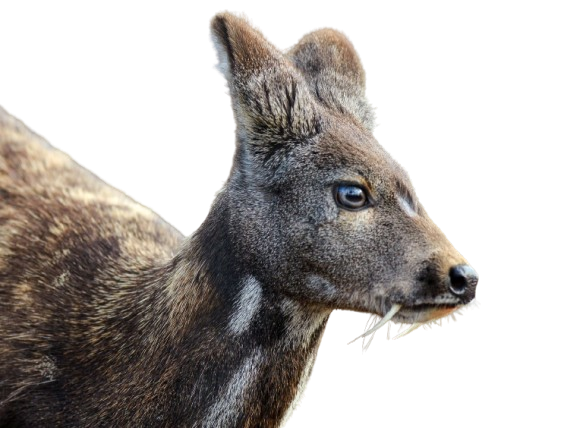
  • Species in news: Musk Deer

    Why in the News?

    A recent report by the Central Zoo Authority (CZA), highlights the absence of any breeding programme for musk deer.

    Species in news: Musk Deer

    About Musk Deer:

    • The Himalayan Musk Deer (Moschus leucogaster) is an endangered species native to the Himalayas, found in India, Nepal, Bhutan, Pakistan, and China.
    • It inhabits altitudes of 2,200 to 4,300 meters, primarily in alpine forests and scrublands.
    • Behaviour: Solitary, nocturnal, and territorial. Males have long, curved canine teeth and a musk gland, which is highly valued and targeted by poachers.
    • It plays a key role in seed dispersal, helping maintain the balance of the alpine ecosystem.
    • Threats: Poaching for their musk glands, habitat loss from deforestation, and genetic issues due to fragmented populations.

    Conservation Initiatives:

    • Protection Status:
      • It is listed as Endangered on the IUCN Red List.
      • It is listed under Schedule I of the Wildlife (Protection) Act, 1972, offering the highest protection under Indian law.
    • Protected Areas:
      • Kedarnath Wildlife Sanctuary: Established in 1972, covering 975 km² in the western Himalayas, crucial for musk deer conservation.
      • Askot Musk Deer Sanctuary: Located in Uttarakhand, dedicated specifically to musk deer conservation.
    • Himalayan Musk Project (1982): Aimed at captive breeding within Kedarnath Sanctuary but faced setbacks due to disease, snake bites, and poor survival rates. The project was shut down in 2006.
    [UPSC 2020] Which of the following are the most likely places to find the musk deer in its natural habitat?

    1. Askot Wildlife Sanctuary

    2. Gangotri National Park

    3. Kishanpur Wildlife Sanctuary

    4. Manas National Park

    Select the correct answer using the code given below:

    Options: (a) 1 and 2 only (b) 2 and 3 only (c) 3 and 4 only (d) 1 and 4 only