💥Join UPSC 2027,2028 Mentorship (July Batch) + XFactor Notes & Microthemes PDF

Subject: Ethics

  • The soul of the new law, Bharatiya Nyaya Sanhita (BNS) is Justice, Equality and Impartiality based on Indian culture and ethos. Discuss this in the light of major shift from a doctrine of punishment to justice in the present judicial system.

    While the colonial IPC was designed by the British to “rule and punish”, the BNS is based on Indian ethos of Dharma and Nyaya to “serve and provide justice” to citizens.

    Soul of BNS

    Justice (Nyaya)

    Victim Centrality- For the first time, the victim has a say in the withdrawal of cases.

    Justice for vulnerable groups. Eg- Stringent punishment for rape and child abuse

    Mandatory timelines for filing charge sheets and delivering judgments to prevent “justice delayed is justice denied.”

    Equality (Samata)

    Providing equal protection of law. Eg- Section 103(2) penalizes Mob Lynching

    Gender Inclusivity- expands the definition of “gender” to include transgender individuals

    Gender equality. Eg- Uniform Age of Consent

    Impartiality (Nishpakshta)

    Digitization of Evidence- Eg-Mandating videography of search and seizure operations

    Zero FIR- Allows a citizen to file a complaint at any police station regardless of jurisdiction

    Scientific Investigation- Shifts the focus from “police testimony” to “forensic truth.”

    Accountability of Public Servants- Eg- “deemed sanction” if the government fails to respond to a request within 120 days.

    Shift from Doctrine of Punishment to Justice

    From Ruler’s Law to Citizen’s Law- IPC was for the British to rule India, BNS is for Indians to govern themselves.

    Restorative Punishment- Section 4(f) introduces Community Service for the first time.

    In the BNS structure, “Offenses against the Human Body” are moved to the beginning of the code, signaling that human life is more valuable than property rights.

    Focus on liberty and privacy – Eg- Deletion of Adultery (Section 497 IPC) and Section 377

    Proportionality – Punishment calibrated to gravity of offence. Eg- Reduced punishment scales for minor offences

    Victim-centric justice – Eg- Expanded victim compensation framework under section 396

    Removing colonial laws. Eg- Repeal of Sedition

    Procedural fairness – Emphasis on due process and natural justice.

    Simplification- Reducing 511 sections to 358.

    Protection of dignity – Eg- Redefinition of sexual offences in gender-neutral and victim-protective language.

    Moral Healing (Prayaschit)- upholds Indian ethos of atonement rather than eternal stigmatization of the offender.

    Balance between deterrence and justice – Eg- Death penalty retained only for rarest of rare offences

    This reorientation strengthens the ethical legitimacy and effectiveness of India’s criminal justice system.

  • Mission Karmayogi is aiming for maintaining a very high standard of conduct and behaviour to ensure efficiency for serving citizens and in developing oneself. How will this scheme empower the civil servants in enhancing productive efficiency and delivering the services at the grassroots level?

    Mission Karmayogi (National Programme for Civil Services Capacity Building) aims to transform the civil services from rule-based to role-based, competency-driven and citizen-centric administrative systems.

    Enhancing Productive Efficiency and Grassroots Service Delivery

    Shift to Role-based Governance by mapping specific competencies to specific roles (FRAC) – ensures that the “right man is in the right job” .

    iGOT-Karmayogi Platform- provides “anytime-anywhere” learning – allows a field officer in a remote district to access global best practices.

    Democratization of Training- Karmayogi extends high-quality training to Group B and C officials who are the actual frontline of grassroots delivery.

    It moves away from “one-time” training at the start of a career to a continuous learning life-cycle, keeping officials updated on evolving technologies and laws.

    Dedicated modules on “Soft Skills” empower officials to move from being “authorities” to “facilitators” – improves quality of citizen interaction at local offices.

    Common training modules foster a “Whole-of-Government” approach – breaks departmental silos

    Evidence-based Training- Using data analytics from the iGOT platform, the government can identify “competency gaps” in specific districts and deploy targeted training.

    It creates a uniform “Global Standard” of Indian civil service conduct, ensuring a citizen receives the same quality of service whether in Delhi or a tribal block.

    Public-Private Partnership in Content- By curating content from global experts and private institutions, it brings “Corporate Efficiency” into the public sector mindset.

    Institutionalized Feedback- Eg- 360-degree feedback mechanism

    Focus on Emotional Intelligence (EI) which is crucial for handling sensitive grassroots issues like land acquisition or communal harmony.

    Potential Challenges

    Digital Divide

    Resistance to Change (deep-rooted “Babu Culture”)

    Language Barriers for frontline staff.

    Weak incentives – Learning not strongly linked to promotions.

    Infrastructure gaps – Lack of devices for frontline workers.

    Over-standardisation ignores local realities.

    Effectively implemented, it can help build citizen centric and future ready civil service with right Attitude, Skills and Knowledge.

    Probity in governance

  • “Faith is of no avail in the absence of strength. Faith and strength, both are essential to accomplish any great work.” — Sardar Patel

    This quote reflects his belief that while Faith (vision, conviction, or idealism) provides the direction, Strength (willpower, resources, and courage) provides the momentum. Faith without strength becomes helpless idealism and strength without faith becomes blind force.

    Values Involved

    Pragmatic Idealism

    Fortitude

    Conviction

    Resilience

    Faith is of no avail in the absence of strength

    Idealism without action is ineffective – Belief alone cannot change reality.

    Without strength of mind, faith can become weak. Eg- rising suicide among students

    Vision without resources remains symbolic. Eg- Climate pledges without funding

    Laws without enforcement are hollow. Eg- persistence of child labour

    Policy without capacity fails delivery. Eg- food wastage in FCI godowns

    Diplomacy without deterrence invites aggression. Eg- failure of hindi-Chini bhai bhai

    Hope without discipline fades. Eg- success in UPSC requires consistency in hard work.

    Need for faith and strength for great work

    Faith gives vision, strength gives execution. Eg- Green Revolution– Vision of food security + scientific and administrative strength.

    Faith gives strength to bounce back after failures. Eg- ISRO successfully launching Chandrayan 3 after failure of Chandrayan 2

    Faith inspires people while strength organises them. Eg- Freedom movement– Gandhian ideals + organisational networks of INC.

    Faith gives moral authority while strength build institutions. Eg- India’s faith in strategic autonomy led to creation of NAM.

    Faith guides ends, strength manages means. Eg- Climate action– Sustainability ideals + renewable technology.

    Faith resolves why, strength resolves how. Eg- Women empowerment– Equality principle + legal reservations.

    In a crisis, Faith provides the mental resilience, while Strength provides the resourcefulness to solve the problems

    Social reform requires the faith that humans can change, backed by the Strength to enforce that change. Eg- Raja Rammohan Roy’s advocacy for Sati Abolition Act.

    Patel unified 562 states by combining his faith in a single India with the strength of his decisive, iron will.

  • “Learn everything that is good from others, but bring it in, and in your own way absorb it, do not become others.” — Swami Vivekananda

    This quote outlines the timeless philosophy of organic assimilation versus blind imitation. It serves as an ethical blueprint to absorb external wisdom, and best practices while preserving distinct moral identity, and cultural roots.

    Key Values Involved

    Humility

    Adaptability

    Self-Respect

    Discreteness (Wisdom)

    Authenticity

    The Principle of Wise Assimilation

    Openness to External Excellence: Eg: Mahatma Gandhi integrating Thoreau’s Western philosophy of civil disobedience to shape India’s indigenous Satyagraha movement.

    Internalizing and Customizing Knowledge to suit local realities, socio-economic challenges, and cultural values. Eg- India’s Asymmetric federalism model

    Preservation of Core Identity: Eg: Japan aggressively modernizing its industrial economy during the Meiji Restoration while strictly preserving its traditional Samurai ethics and Shinto roots.

    Cultivating Self-Reliance and Pride: True development occurs when external inputs are used to build internal strength, preventing dependency. Eg- India’s space program

    Preventing Cultural Erasure: Eg: The uncritical embrace of Western fast-fashion and ultra-individualism rapidly eroding the traditional joint-family support structures.

    The Danger of Blind Imitation

    Losing Original Identity: Eg: Children speaking only English and struggling to speak their own mother tongue.

    Mismatched Policy Planning: Directly copying foreign laws without checking local village problems causes failure.

    Fostering Inferiority Complexes: Believing everything from outside is superior makes individuals lose self-confidence.

    Forgetting Native Wisdom: Eg- Ignoring ancient rainwater harvesting techniques to build expensive, harmful concrete dams.

    Blindly copying others without critical thinking diminishes creative and innovative faculties

    Swami Vivekananda teaches us that true growth means being a sponge that absorbs world excellence, but remaining an anchor that holds fast to our own identity.

  • “It is not enough to talk about peace, one must believe in it; and it is not enough to believe in it, one must act upon it.” In the present context, the major weapon industries of the developed nations are adversely influencing continuation of number of wars for their own self-interest, all around the world. What are the ethical considerations of the powerful nations in today’s international arena to stop continuation of ongoing conflicts?

    “Wars begin where ethics ends.”

    In today’s world, conflicts persist not only because of political disputes but also due to powerful economic interests, especially the global arms industry.

    Role of major weapon industries in continuation of wars

    Profit motive – Eg- Surge in global arms sales after Ukraine war.

    Wars act as “testing grounds”

    Lobbying in foreign policy. Eg- Military-industrial complex in the US.

    Arms exports to conflict zones – Eg- Saudi Arabia as larget defence importer

    Proxy wars – Eg- supply of arms to terrorist organisations

    Economic dependence – Jobs and revenue from defence industry.

    Capitalising on security dilemma.

    Ethical considerations for powerful nations to stop ongoing conflicts

    Deontology over Utilitarianism by prioritizing duty to protect human life over GDP growth. Eg- Restrict arms to regimes violating human rights.

    Ethical assessment of short and long term damage of war. Eg- over 1.4 million Russian deaths in Ukraine war

    Responsibility to prevent harm – Eg- Arms embargoes in active war zones.

    Non-complicity principle to avoid moral responsibility for atrocities. Eg- Stopping arms to Saudi Arabia during Yemen war.

    Adherence to ethical standards of the Arms Trade treaty

    Addressing Strategic Hypocrisy- Eg- advocating for a “Rules-Based Order” while signing multi-billion dollar arms deals.

    Support for peace processes – Eg- UN-led peace talks.

    Transparency and accountability – Eg- Parliamentary approval for arms sales.

    Disarmament leadership. Eg- Nuclear disarmament treaties.

    Ethical foreign policy – Values-based diplomacy over realpolitik.

    Corporate responsibility – Eg- Arms export compliance laws.

    Transitioning to “Peace Economies”. Eg- Investing in Green Technology as alternatives to defense manufacturing

    Real peace requires a “Moral Disinvestment” from war. This can be achieved by taming “Will to Power” of the defense industry by “rationality” and “moral duty” of the state.

  • “The ‘Code of Conduct’ and ‘Code of Ethics’ are the sources of guidance in public administration. There is code of conduct already in operation, whereas code of ethics is not yet put in place. Suggest a suitable model for code of ethics to maintain integrity, probity and transparency in governance.

    The CoC and CoE are complementary approaches to ensuring institutional integrity. While Conduct Rules are primarily “negative” in nature (what not to do), Code of Ethics is a “positive” statement of values that inspires a civil servant to do the “right thing”.

    Code of conduct and code of ethics as source of guidance

    A Suitable Model for Code of Ethics

    Core Philosophical Values

    Constitutional Morality- Prioritizing the spirit of the Constitution over individual interests.

    Decisions must be tested against the “Gandhian Talisman”– how does it help the weakest?

    Selflessness- Acting solely in public interest, without seeking any benefits for oneself.

    Probity and Integrity- Eg- Singapore Civil Service zero-tolerance ethics policy.

    Objectivity- Making choices on merit alone.

    Confidentiality with Responsibility. Eg- EU data ethics norms.

    Operational and Institutional Safeguards

    Adherence to Gandhian Talisman and principle of Utilitarianism in decision making

    Citizen Feedback on Ethics. Eg- Estonia e-governance feedback tools.

    Ethical Infrastructure- Ethics Commissioner to provide guidance on dilemmas.

    Reflective Practice- Mandatory “Ethics Audits”. Eg- ISO 37001 anti-bribery certification.

    Protection of Dissent- “whistleblowing” should be seen as a duty, not an act of disloyalty.

    Conflict of Interest Registers to prevent actual, perceived or potential CoI.

    Enact a Civil Services Bill- Legally formalize the Code of Ethics ( 2nd ARC).

    Mission Karmayogi- Use AI and case-study-based modules to train officials in “Moral Reasoning.”

    Display the Code of Ethics in all public offices to ensure public accountability

    Annual Ethics Declaration. Eg- US Office of Government Ethics disclosures.

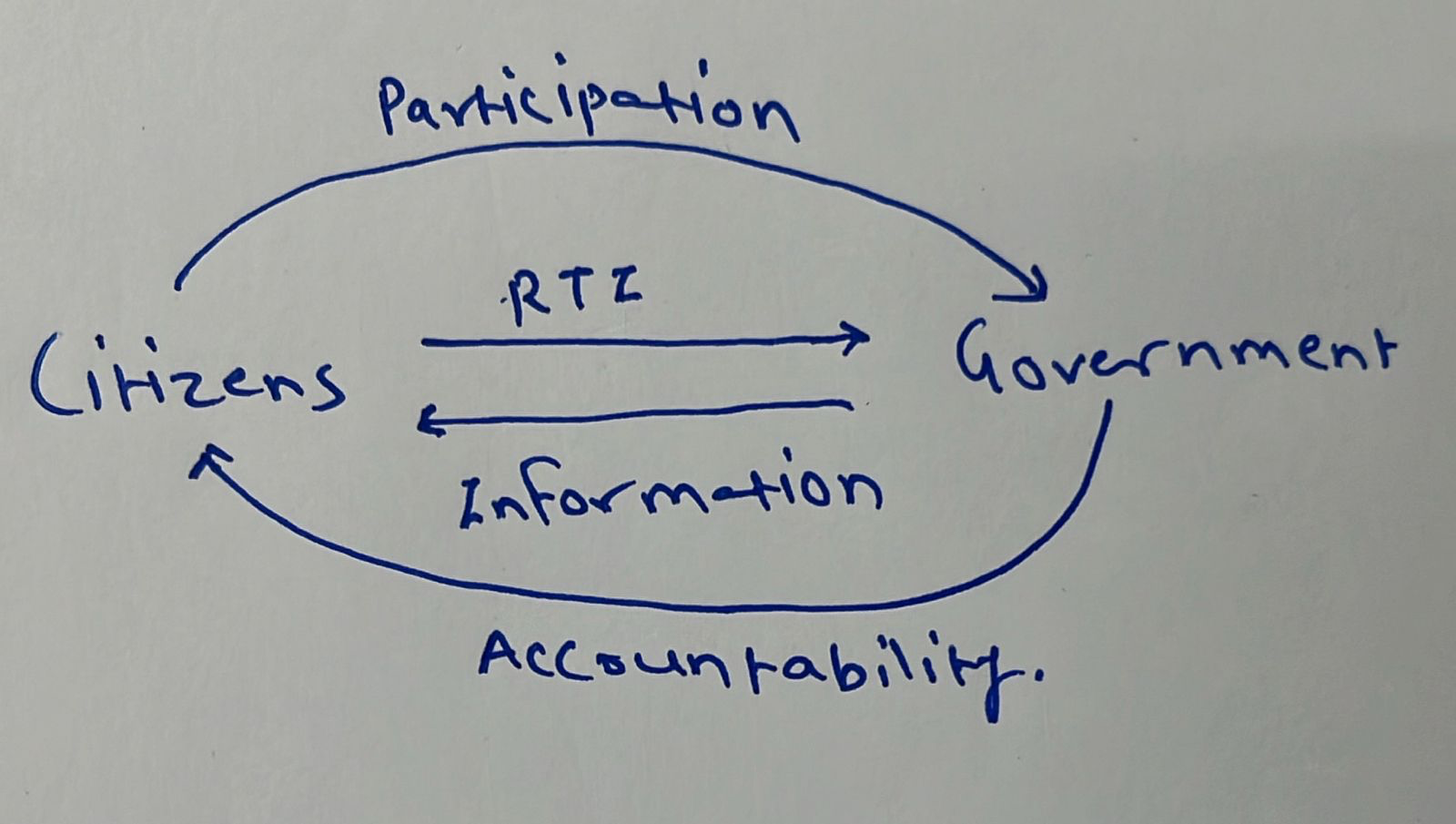
    Ensuring transparency through proactive disclosure under Section 4 of RTI

    Asopting “A-S-P” Model for integrity management)

    Aspiration (Values)- Eg- Johnson & Johnson’s “Credo”– customer as first responsibility

    Strictness (Compliance)- Eg- U.S. Office of Government Ethics provides clear interpretations of complex ethical dilemmas.

    Participation- Employees help draft the values. Eg- Adobe’s participative culture.

    By synthesizing Nolan Principles with Indian Constitutional values, we can transform the “Steel Frame” into a compassionate instrument of public service.

  • “In law, a man is guilty when he violates the rights of others. In ethics, he is guilty if he only thinks of doing so.” — Immanuel Kant

    Kant distinguishes between legal guilt and moral guilt. While law judges external actions and behaviour, ethics judges internal intentions and character.

    Values Involved

    Purity of Intent (Good Will)

    Human Dignity- Treating others as “Ends in themselves”

    Integrity- Consistency in thoughts and actions.

    Duty

    Self-Regulation

    Application of Kantian wisdom

    Individual Level- A student who refrains from cheating due to fear of getting caught is legally “innocent” but ethically guilty.

    Professional Level- In the workplace, a professional might follow all protocols but internally harbor deep prejudice against certain clients or colleagues.

    Administrative Level- if a bureaucrat is willing to take bribe but is stopped by the lack of opportunity, he is ethically corrupt

    Corporate Level- Profit vs. Principle – Companies follow the “letter of the law” while actively searching for loopholes to bypass the “spirit of the law.” Eg- Tax Avoidance

    Social Level- Discrimination and Bias – Law prohibits the practice of untouchability or segregation, but it cannot force a person to stop thinking of others as inferior.

    Political Level- The Hunger for Power – A politician may follow all election rules, but if their intent is to gain power for corruption rather than public service, they are ethically bankrupt.

    Environmental Level- A citizen might not litter because there is a fine, but if they have no internal regard for nature, they will pollute whenever “no one is looking.”

    Digital Level- The law struggles to keep up with the internet, making it easy to “legally” engage in harmful behavior like spreading rumors or cyber-bullying.

    International Level- Diplomacy – The “Cold War” was a period where nations were legally at peace but ethically at “war” in their strategic intentions and espionage.

    Judicial Level- A judge may give a technically correct verdict, but if they were internally biased toward one party, the ethical requirement of “Impartiality of Mind” is compromised.

    Kant’s observation is a call for Internal Integrity. Being “ethically clean” is the requirement for being a person of character.

  • Mindless addiction to Form, ignoring the Substance of the matter, results in rendering of injustice. A perceptive civil servant is one who ignores such literalness and carries out true intent. Examine the above statement with suitable illustrations.

    In public administration, there is tension between procedural formalism and substantive justice. When it becomes a slave to “Form,” it becomes an end in itself, at the cost of the citizen it was meant to serve.

    Mindless Addiction to Form- Rendering Injustice

    Institutionalization of Red Tapism- Eg- Munger-Ganga Bridge in Bihar was delayed by nearly 14 years due to inter-departmental disputes

    Literalness breeds a “mechanical” mindset where officials lose empathy. Eg- denial of emergency care to critically ill patient without documentation

    Inefficiency in crisis management- Eg- migrant labour sufferings during COVID.

    Undermining Rights of the Vulnerable- Eg- PDS exclusion of poor due to biometric authentication failures (Jharkhand case)

    Encourages moral abdication – Officials transfer moral responsibility to the rulebook (banality of evil). Eg- encroachment demolitions without rehabilitation plan.

    Facilitates coercive corruption. Eg- ‘speed money’ for faster file clearance

    Complexity of the “Form” leads to Process becoming Punishment. Eg- complexity in environmental clearances

    “By-the-book” culture stifles innovation and creativity.

    Resource Wastage- Eg- cost and time overruns in PPP projects due to delays in land procurement

    Policy Paralysis- Fear of audit or the “3C” (CBI, CVC, CAG) leads to “Defensive Bureaucracy.”

    The Perceptive Civil Servant- Carrying Out True Intent

    Proactive Problem-Solving in emergencies- Eg- Dr. Rajendra Bharud (IAS) setting up an oxygen plant in tribal Nandurbar before the second COVID wave

    Empowering through Informal Networks- Eg- Armstrong Pame (IAS) built a 100km road via crowdfunding.

    Administrative Empathy for the Marginalized- Eg- In the “Project Sulaimani” model (Kozhikode), the “Substance” of dignity was prioritized.

    Reforming through Discretion- Eg- Kiran Bedi (IPS) turned Tihar Jail into a reformatory.

    Streamlining Processes for the Citizen- Perceptive officers redesign the “Form” itself. DM of Ganjam (Vijay Kulange) institutionalized “Doorstep Delivery” of pensions for the disabled

    Innovative problem solving- Eg- Rahul Kumar (IAS) converted abandoned buildings into libraries using maintenance funds.

    Defending the Rights of the Voiceless- Eg- S. Sankaran (IAS) provided instant subsistence relief to rescued bonded laborers.

    Rules are meant to serve justice and when they fail to do so, conscience must guide discretion.

  • “The concept of Just and Unjust is contextual. What was just a year back, may turn out to be unjust in today’s context. Changing context should be constantly under scrutiny to prevent miscarriage of justice.” Examine the above statement with suitable examples.

    In the words of John Rawls, “Justice is the first virtue of social institutions, as truth is of systems of thought.”

    However, Justice is not a static or absolute concept but a dynamic one, shaped by the evolving moral, social, and technological landscape of a society.

    The Contextual Nature of Justice

    Changing political contexts. Eg- Colonial land laws once “legal”, now seen as exploitative.

    Changing economic contexts. Eg- shift of policy focus from economic growth to inclusive growth

    Changing socio-cultural contexts. Eg- Sati was socially accepted earlier but now a criminal offence.

    Changing technological contexts. Eg- A decade ago, mass data harvesting was acceptable but now criticised for “Surveillance Capitalism” and violation Privacy

    Changing legal contexts. Eg- basic structure doctrine or Due Process (Menka Gandhi) expanding FRs

    Changing environmental contexts. Eg- shift from unlimited resource extraction to intergenerational justice

    Changing corporate governance contexts. Eg- shift from profit motive to TBL (people profit planet)

    Need for Scrutiny to Prevent Miscarriage of Justice

    Avoiding “Legal Anachronism” or “Zombie Laws.” Eg- the decriminalization of Section 497

    Prevent legal injustice – Laws may become oppressive if context changes. Eg- Sedition law

    Non scrutiny leads to moral stagnation. Eg- persistence of manual scavenging.

    Adapting to changing social realities. Eg- live in relationships or single parent families

    Maintain legitimacy of state. Eg- RTI Act for transparency in governance

    Protection of vulnerable sections. Eg- legal recognition of Mental Health.

    Preventing Technological Tyranny – Eg- Right to be Forgotten under data protection Acts

    As a society becomes more civilized, the “just” methods of punishment are needed. Eg- over 100 countries abolished Death penalty

    Addressing “New” Harms in the Digital Age. Eg- AI generated Deepfakes

    To uphold constitutional morality. Eg- Triple talaq invalidated despite social practice.

    “The Only Constant in Life Is Change.”- Heraclitus

    Thus, Justice must be a “living” concept for human progress and “Good Life” (Eudaimonia)

  • The application of Artificial Intelligence as a dependable source of input for administrative rational decision-making is a debatable issue. Critically examine the statement from the ethical point of view.

    The integration of AI into administration marks a shift from “Human Discretion” to “Algorithmic Governance.” However, its role as a “dependable source” is ethically complex as “rational” decision in administration is not just about logical consistency, but about justice and equity.

    Ethical Case for AI as a Dependable Source

    It reduces cognitive bias and offers Neutrality and Objectivity in decision making. Eg- use of AI in SSC exam evaluation

    Data-driven policymaking promotes evidence-based governance. Eg- Aarogya Setu App

    Ensures consistency and predictability – Eg- AI based custom approval process by DGFT

    Efficiency in service delivery. Eg- Samagra Vedika platform of telangana create a “360-degree profile” of every citizen to verify eligibility for welfare schemes

    By removing the “human interface”, AI reduces the opportunity for bribery and rent-seeking. Eg- AI-driven MCA21 V3 portal flags suspicious shell companies and fraudulent filings.

    Enhances accuracy. Eg- IMD using AI for weather forcasting

    Disaster Management Efficiency- Eg- Google’s AI Flood Forecasting model, used by CWC, provides real-time flood alerts

    Targeted welfare delivery – AI improves beneficiary identification in DBT.

    Utilitarian Optimization- Eg- NITI Aayog partnered with IBM to develop AI models for Crop Yield Prediction for farmers

    Enhancing public participation through language inclusivity. Eg- BHASHINI platform

    Ethical Concerns

    The “Black Box” Problem- AI logic is often opaque.

    Institutionalizing Historical Bias- If data is biased , the AI will “learn” and automate that bias. Eg- US COMPAS tool biased against African-Americans.

    Difficulty in ensuring accountability for mistakes.

    Loss of “Compassion” and “Conscience”- Eg- It cannot “bend the rules” for a starving widow whose paperwork is missing.

    Digital Dehumanization- AI reduces complex human lives into “risk scores” or “eligibility percentages”.

    Threat to Right to Privacy- Constant AI monitoring can turn a “Welfare State” into a “Surveillance State”.

    Skill Atrophy- Administrators may stop using their own judgment, leading to a loss of critical thinking – “Steel Frame” to “Silicon Frame”

    Widening North-South divide – Poor countries lack access to tech-mediated services.

    Way Forward- “Human-Centric AI.”

    Explainable AI- Implementing systems where the AI must provide a “human-readable” reason for every decision.

    Human-in-the-Loop (HITL)- The final “sign-off,” especially in cases affecting human rights, must be by a human officer.

    Mandating regular 3rd-party audits of government algorithms to detect and “unlearn” biases.

    The EU AI Act Approach- “Risk-Based Framework” where high-risk AI (policing or judiciary) face the highest level of ethical regulation.

    Digital Ethics Commissions including ethicists, jurists, and technologists to oversee AI deployment in public service.

    Right to Appeal against AI- Statutory rights for citizens to have an AI-driven decision reviewed by a human committee.

    Ethical Coding Standards- Teaching “Ethics by Design” to programmers working on public infrastructure.

    Training civil servants in AI Literacy under Mission Karmayogi.

    Strengthening privacy safeguards under DPDP Act.

    The goal must be not AI-driven governance, but ethically guided AI-assisted governance.

    Code of Ethics