Lord Mahavira (24th Tirthankara of Jainism) propounded an ethical and spiritual path based on right faith, right knowledge, and right conduct (Triratna) for the liberation of the soul.
Major teachings of Mahavira and their relevance in the contemporary world
Ahimsa – Non-injury in thought, word, and deed towards all living beings.
Promotes peace in a world affected by war, terrorism, and social unrest. Eg- Russia-Ukraine War
Most powerful alternative to the “Might is Right” doctrine – inspire non-violent civil rights movements and peace-building initiatives globally. Eg- LGBTQ movement
Satya (Truthfulness) – Speaking the truth in a way that does not harm others.
Ensures integrity in public and private life.
Helps in combating misinformation and corruption
Promoting the verifiable truth in digital and political discourse – antidote to the “Deepfake” and “Fake News”
Asteya (Non-stealing) – Not taking anything that is not willingly given.
Promotes Ethical economy, responsible production and consumption. Eg- avoiding greenwashing
Reduces crimes and theft
Aparigraha (Non-possession) – Renunciation of excessive accumulation and greed.
Remedy for consumerism and climate crisis. Encourages sustainable lifestyles and minimalism.
Brahmacharya (Self-control) – Discipline of mind and body for spiritual progress.
Self discipline and simple living enhances mental well-being.
Can help reduce suicide and anxiety issues among youth
Anekantavada – Acceptance of multiple perspectives of truth.
Helps in managing ideological conflicts in multicultural societies. Eg- Manipur violence
Promotes tolerance, ideals of sarv dharma samabhav and vaisudhaiva kutumbkam
Equality of all life forms – Every living being possesses a soul and deserves respect.
Compassion for all life supports ecological balance. Eg- Vegetarianism and vegan movements.
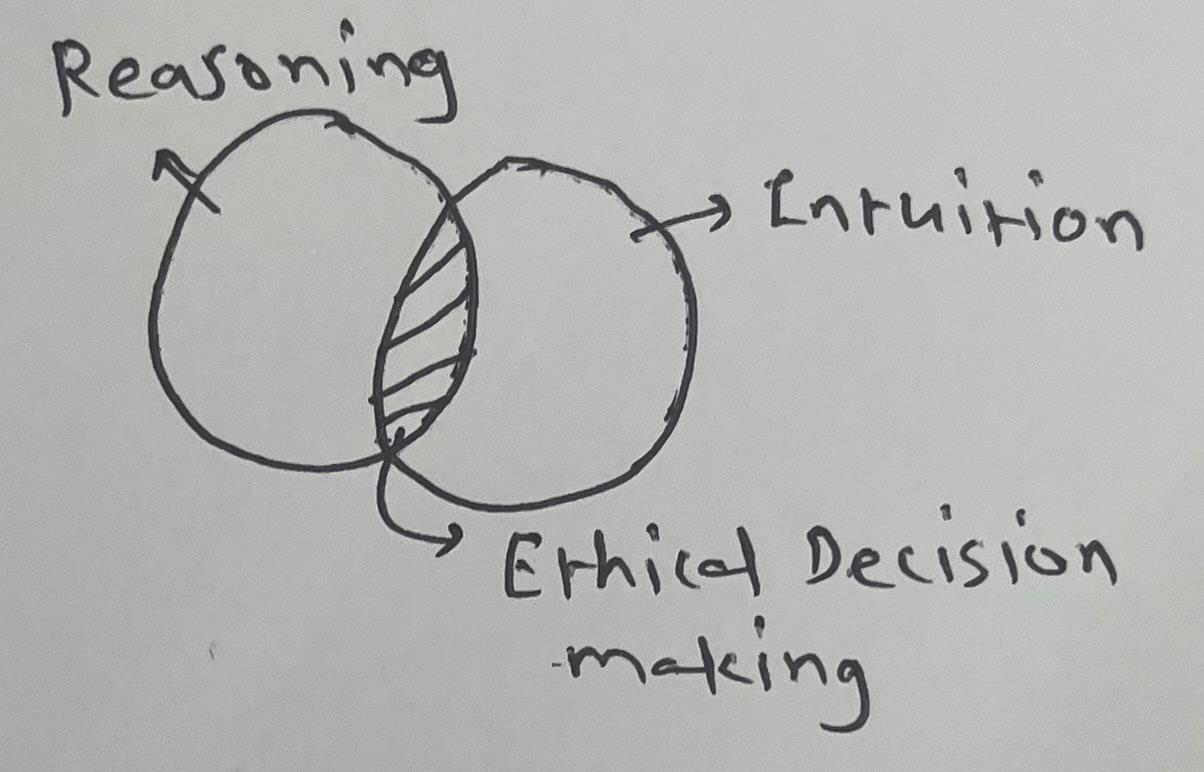
Promotes active citizenship – Encourages ethical decision-making in democracy and governance.
In an age of rapid technological and economic change, his message of ethical self-transformation and harmony with all life forms offers a timeless path for building a peaceful and sustainable world.
Case Studies
2025
[Case Study 1] Vijay is the Deputy Commissioner of a remote district of Himachal Pradesh. For the last two years, he has been in this region. In the month of August, heavy rains lashed the complete state followed by cloudbursts in the upper reaches of the said district. The damage was very heavy in the complete state, especially in the affected district. The complete road network and telecommunication were disrupted and the buildings were damaged extensively. People’s houses have been destroyed and they were forced to stay in the open. More than 200 people have been killed and about 5000 were badly injured. The Civil Administration under Vijay got activated and started conducting rescue and relief operations. Temporary shelter camps and hospitals were established to provide shelter and medical facilities to the homeless and injured people. Helicopter services were pressed in for evacuating sick and old people from remote areas. Vijay got a message from his hometown in Kerala that his mother was seriously sick. After two days, Vijay received the unfortunate message that his mother had expired. Vijay has no close relative except one elder sister who is a US citizen and has been staying there for the last several years. In the meantime, the situation in the affected district deteriorated further due to resumption of heavy rains after a gap of five days. At the same time, continuous messages were coming on his mobile from his hometown to reach at the earliest for performing the last rites of his mother.
What are the options available with Vijay?
What are the ethical dilemmas being faced by Vijay?
Critically evaluate and examine each of these options identified by Vijay.
Which of the options, do you think, would be most appropriate for Vijay to adopt and why?
This case presents a conflict between personal duty (performing last rites of his mother) and public duty (leading disaster relief operations).
Guiding Principle – Maxim of Utilitarianism – Greatest happiness of greatest number
Options Available to Vijay
Immediately leave for Kerala to perform last rites
Stay in the disaster zone and postpone personal rituals
Seek short emergency leave for 24-48 hours
Participate in the funeral ceremonies via video conferencing while continuing to lead the rescue operations.
Ethical Dilemmas Faced by Vijay
Personal vs Public Duty – Family obligation vs responsibility to 5000+ victims.
Compassion vs Professionalism – Emotional grief vs administrative duty.
Individual rights vs Collective welfare – Right to mourn vs duty to save lives.
Administrative Responsibility vs. Religious Obligation- Performing last rites is considered a sacred duty, especially for an only son.
Deontology vs Consequentialism – Moral duty to mother vs consequences for disaster victims.
Leadership vs Personal responsibility – Staying strong as a leader while personally grieving.
Duty of care vs Emotional burnout – Risk of poor decision-making due to distress.
Public trust vs Personal need – Leaving may erode confidence in administration.
Equity vs Privilege – Other families have also lost loved ones but cannot leave.
Legal duty vs Moral duty – Civil service rules vs ethical obligation to family.
Critical Evaluation of Each Option
Leave immediately
Stay and postpone rites
Short emergency leave (24-48 Hrs)
Participate in the funeral ceremonies via video conferencing while continuing to lead the rescue operations.
Most appropriate course of Action
Option 4 – participate in the funeral ceremonies via video conferencing while continuing to lead the rescue operations.
Justification
Continuity of command in crisis reduces confusion, delays, and operational risks.
Fulfil emotional and ritual obligations without abandoning duty
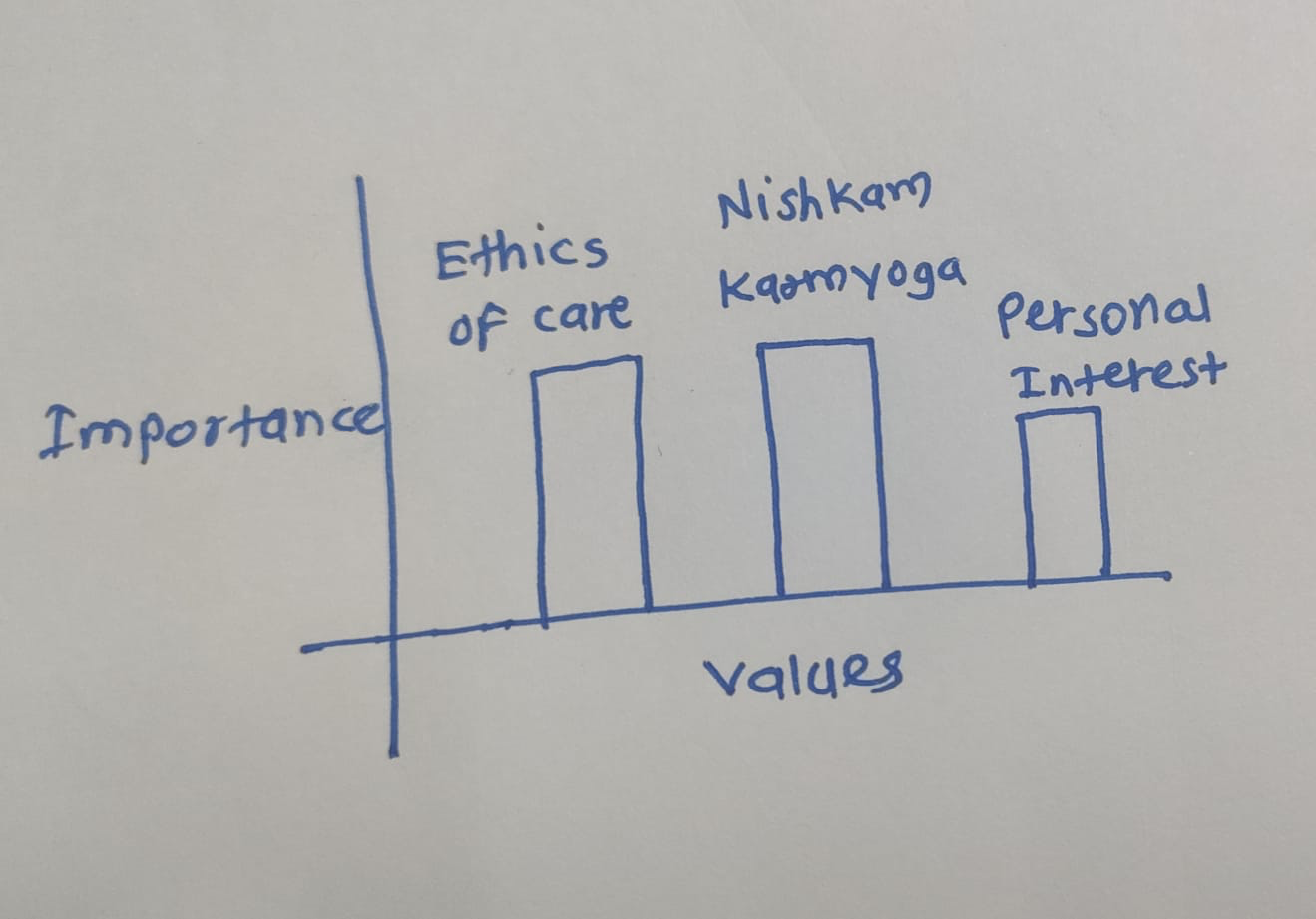
Ethics of care in both directions – compassion to victims and love for mother.
Utilitarian balance – well-being of the greatest number while preserving personal dignity.
Prevention of administrative breakdown – Avoids last-minute delegation to an unfamiliar officer during a deteriorating disaster.
Nishkam Karmayoga – performing one’s Dharma (duty) in a selfless manner is the highest form of spiritual practice.
Team Morale – The ground staff will be inspired to work with unprecedented dedication, seeing their leader’s sacrifice.
Role model leadership – Sets ethical precedent for administrators.
Vijay’s choice reflects the ancient wisdom that “Service to Humanity is the highest form of worship.”
[Case Study 2] In line with the Directive Principles of State Policy enshrined in the Indian Constitution, the government has a constitutional obligation to ensure basic needs – Roti, Kapda aur Makan (Food, Clothes and Shelter) – for the under-privileged. Pursuing this mandate, the district administration proposed clearing a portion of forest land to develop housing for the homeless and economically weaker sections of the society. The proposed land, however, is an ecologically sensitive zone densely populated with age-old trees, medicinal plants and vital biodiversity. Besides, these forests help to regulate micro-climate and rainfalls, provide habitat for wildlife, support soil fertility and prevent land/soil erosion and sustain livelihoods of tribal and nomadic communities. In spite of the ecological and social costs, the administration argues in favour of the said proposal by highlighting that this very initiative addresses fundamental human rights as a critical welfare priority. Besides, it fulfils the government’s duty to uplift & empower the poor through inclusive housing development. Further, these forest areas have become unsafe due to wild-animal threats and recurring human-wildlife conflicts. Lastly, clearing forest-zones may help to curb anti-social elements allegedly using these areas as hideouts, thereby enhancing law and order.
Can deforestation be ethically justified in the pursuit of social welfare objectives like housing for the homeless?
What are the socio-economic, administrative and ethical challenges in balancing environmental conservation with human development?
What substantial alternatives or policy interventions can be proposed to ensure that both environmental integrity and human dignity are protected?
The case presents a conflict between Articles 38, 39, 41 and 47 under DPSP and the constitutional duty of environmental protection under Articles 48A and 51A(g).
Guiding Principle – “Sustainable Justice with Least Ecological Harm.”
Ethical Justification for deforestation
Justification
Last-resort necessity – Eg- Rehabilitation housing after Uttarakhand floods (2013) used limited forest fringes.
Right to shelter priority – Eg- PM Awas Yojana (PMAY) sites in semi-forested areas for landless poor.
Human Safety- Eliminating “unsafe” zones reduces human-wildlife conflict and crime.
Minimal clearance principle – Eg- Eco-hamlets in Sikkim with limited tree felling.
Compensatory afforestation – Equal or greater reforestation elsewhere.
Prior informed consent of tribals – Respect for forest rights under FRA, 2006.
Net social benefit test – If homelessness harm outweighs ecological loss.
Eco-sensitive construction – Green housing rather than concrete sprawl.
Argument against
Inter-generational injustice – Future generations lose ecological assets.
Intrinsic Value of Nature- Biodiversity has a “Right to Exist” independent of human utility
Loss of Ecosystem Services like rain, clean air that is more valuable than a house.
Displacement without consent violates tribal rights
Non-Sustainability – Eg- Amazon Rainforest clearing has led to decline in rainfall
Availability of alternatives – If other land exists, forest clearance is unethical.
Disaster risk – Eg- Landslides in Himachal and Uttarakhand after forest clearing
Challenges in balancing environmental conservation with human development
Socio-economic challenges
Displacement of tribal communities – Loss of livelihoods and culture.
Human-wildlife conflict escalation – Habitat fragmentation increases clashes.
Livelihood Displacement- Losing minor forest produce. Eg- Kendu leaf collectors in Odisha).
Cultural Loss- Destruction of “Sacred Groves” and medicinal knowledge.
Administrative challenges
Weak land-use planning – Poor zoning leading to forest encroachment.
Siloed Governance – Lack of synergy between forest, housing and revenue departments.
Law Enforcement- Eg- Naxal-affected Red Corridor areas.
Corruption/land mafia – Eg- Encroachments in Aravalli range (Haryana-Rajasthan).
Land Scarcity- Lack of non-forest government land in hilly or tribal districts. Eg- Land constraints in Sikkim or Nagaland.
Implementation Gaps- Under utilization of CAMPA funds. (CAG report).
Ethical challenges
Development vs Conservation – Welfare of today vs rights of tomorrow.
Anthropocentrism vs Ecocentrism – Human priority vs nature’s intrinsic value.
Rights-based dilemma – Right to housing vs right to clean environment.
Utilitarian vs Deontological ethics – Maximum good vs moral duty to nature.
Justice as Fairness- Is it fair to house the homeless by displacing the tribals?
Rights of animals – further fragmentation of habitats
Policy interventions for balancing environmental integrity and human dignity
Use degraded non-forest land first – Brownfield sites over pristine forests.
Vertical affordable housing – Eg- Mumbai SRA model for EWS housing.
In-situ slum redevelopment – Eg- Delhi JJ cluster redevelopment.
Agro-Forestry Housing and “Eco-Villages.” Eg- Auroville, Pondicherry.
Use idle government land – Railways/Defence/Revenue land.
Satellite town planning – Planned peri-urban expansion. Eg- Navi Mumbai model.
Use of sustainable materials (bamboo, recycled waste) to reduce construction impact. Eg- Kerala’s Laurie Baker style.
Strict FRA, 2006 compliance – Prior informed consent of tribals mandatory.
Robust EIA + public hearings for transparent decision-making.
Human-wildlife conflict mitigation – Solar fencing, corridors, early warning.
Implement “Zoning” where “Ecologically Sensitive Area 1” is strictly off-limits. (Gadgil Committee)
As the Supreme Court noted in the T.N. Godavarman case, the “Precautionary Principle” must prevail. True social welfare lies in Sustainable Habitat, not just concrete blocks.
[Case Study 3] Subhash is Secretary, PWD in the State Government. He is a senior officer, known for his competence, integrity and dedication to work. He enjoys the trust and confidence of Minister incharge of PWD and Programme Implementation. As a part of his job profile, he is responsible for policy formulations, execution of projects relating to infrastructure initiatives in the State. Besides, he oversees the technical and administrative aspects relating to planning, designing and construction etc. Subhash’s Minister is an important Minister in the state and significant growth in urban infrastructure development and road network has been registered during his tenure. He is very keen for launching of ambitious road construction project in the near future. Subhash is in regular touch with the Minister and is working various modalities of road construction project. Regular meetings, interactions and presentations are made by him to the Minister based on a formal public announcement of the project is made by the Minister. Subhash’s only son Vikas is in real estate business. His son from his own sources is aware that a mega road project is on the anvil and announcement in this regard is expected anytime. He is very keen to know from his father the exact location of the upcoming project. He knows that there would be quantum jump in the prices of land in the vicinity. Buying land at this stage at cheaper prices would pay him rich dividends. He is pleading with him (his father) day in and day out to share him location of the proposed project. He assured him that he would handle the matter discreetly as it would not attract any adverse notice as he in the normal course, keeps on buying land as a part of his business. He feels pressurised because of constant pleadings by his son. Another significant aspect of the matter pertained to the extra/undue interest in the above project by the Minister PWD. His nephew was also having big infrastructure project company. In fact, the Minister has also introduced his nephew to him and indicated to him to take care of his nephew’s business interest in the forthcoming project. The Minister encouraged him to act fast in the matter as early announcement and execution of mega road project would enhance his status in the party and public life. In the above backdrop, Subhash is in a fix as to the future course of action.
Discuss the ethical issues involved in the case.
Critically examine the options available to Subhash in the above situation?
Which of the above would be most appropriate and why?
“Public office is a public trust. When private interest prevails over public duty, governance fails.”
The above case highlights the tension between public duty, political pressure, and familial loyalty, placing Subhash at the crossroads of ethics, legality, and administrative propriety.
Guiding Principles
Public interest supremacy.
Integrity and neutrality.
Transparency and fairness.
Rule of law and due process
Ethical Issues Involved
Conflict of Interest- duty to maintain official secrecy conflicts with his son’s commercial interests
Using “insider information” for private gain violates CCS (Conduct) Rules and Public Trust Doctrine
Crisis of Conscience for subhash – managing expectations of son, minister and duty
Nepotism and Cronyism- Minister pushing his nephew’s company threatens fairness.
The Minister’s pressure to “act fast” threatens objective planning and due process.
Personal vs. Professional Ethics- test of Subhash’s Fortitude and professional detachment.
Procedural injustice – Favouring one firm undermines competitive bidding.
Any wrongdoing can damage citizens’ faith in infrastructure governance.
Favouring Minister’s nephew may lead to corruption and increase project cost – violation of resource stewardship
Critical Examination of Options
Option 1- Yield to both the Son and the Minister.
Option 2- Refuse information to son, ensure transparent process and seek written directions if pressured
Option 3 – Seek Transfer citing potential conflict of interest
Most appropriate course of action – Option 2
A transparent, rule-based process combined with principled resistance to undue pressure represents the highest standard of ethical public administration.
[Case Study 4] “Rajesh is a Group A officer with nine years of service. He is posted as Administrative Officer in an Oil Public Sector undertaking. As an Administrative Officer he is responsible for managing and coordinating various administrative tasks to ensure smooth functioning of office. He also manages office supplies, equipment etc. Rajesh is now sufficient senior and is expecting his next promotion in JAG (Junior Administrative Grade) in the next one or two years. He knows that promotion is based on examination of ACRs/Performance Appraisal of last few years (5 years or so) of an officer by a DPC (Departmental Promotion Committee) and an officer lacking requisite grading of ACRs may not be found fit for promotion. Consequences of losing promotion may entail financial and reputational loss and set-back for career progression. Though he also puts his best efforts in official discharge of his duties, yet he is unsure of assessment by his superior officer. He is now putting extra efforts so that he gets a thumping report at the end of the financial year. As Administrative Officer, Rajesh is regularly interacting with his immediate boss, who is his reporting officer for writing his ACR. One day he calls Rajesh and wants him to buy computer-related stationery on priority from a particular vendor. Rajesh instructs his office to initiate action for procuring these items. During the day, the dealing Assistant brings an estimate of Rupees Thirty Five Lakhs covering all stationery items from the same vendor. It is noticed that as per delegated financial powers, as provided in the GFR (General Financial Rules) as applicable in that Organisation, expenditure for office items exceeding Rupees Thirty Lakhs requires sanction of the next higher authority (boss in the present case). Rajesh knows that immediate superior would expect all these purchases should be done at his level, and may not appreciate such lack of initiative on his part. During discussions with office, he learns that common practice of splitting of expenditure (where large order is divided into a series of smaller ones) is followed to avoid obtaining sanction from higher authority. This practice is against the rules and may come to the adverse notice of Audit. Rajesh is perturbed. He is unsure of taking decision in the matter.”
What are the options available with Rajesh in the above situation?
What are the ethical issues involved in this case?
Which would be the most appropriate option for Rajesh and why?
This case study illustrates the classic “Seniority-Integrity Trap.” Rajesh faces a dilemma between career security and rule compliance.
Guiding principle – “Integrity is doing the right thing, even when no one is watching.”
Options available to Rajesh
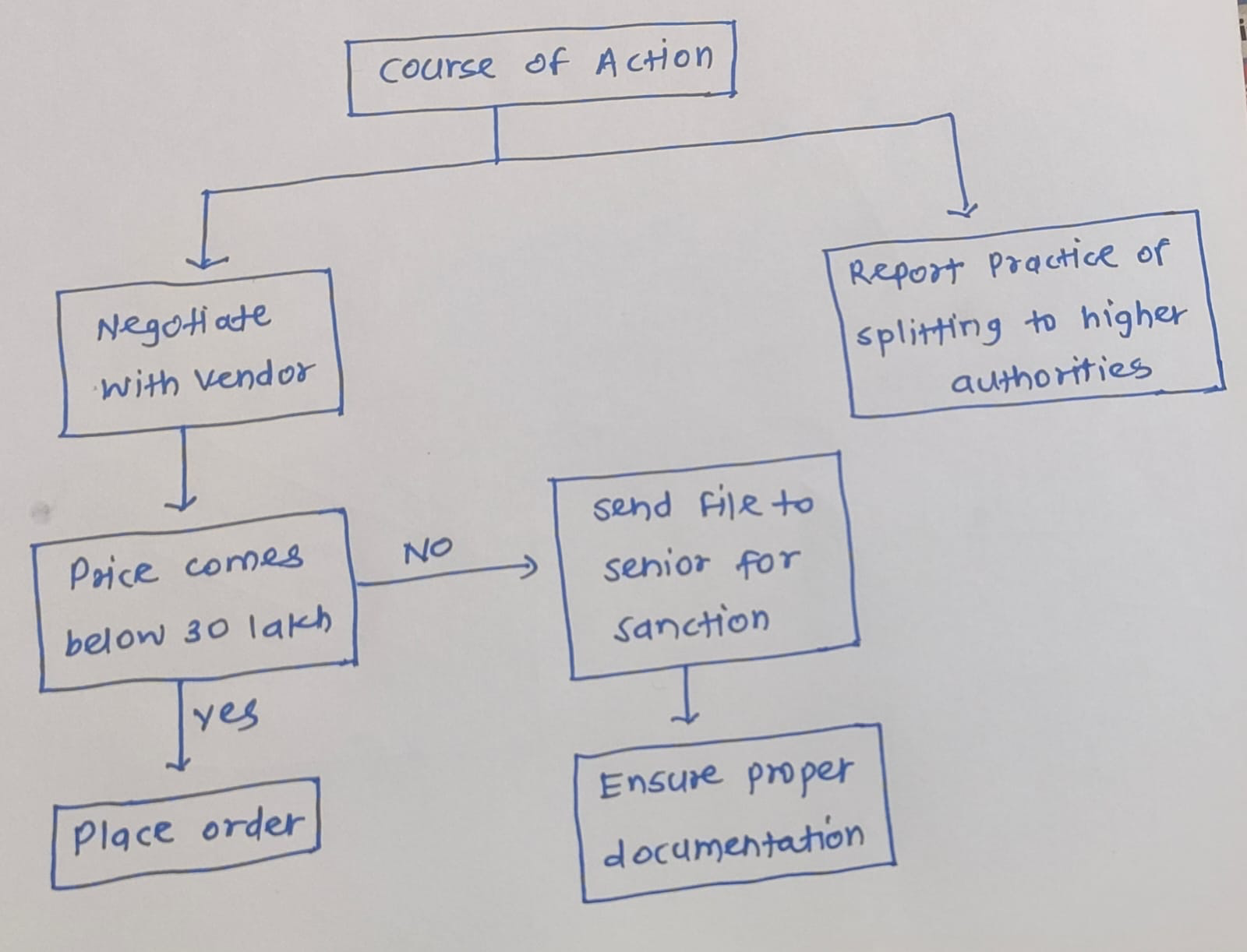
Proceed with splitting the purchase into smaller orders to keep each below Rs 30 lakh.
Consolidate the purchase and place the file before the competent authority for prior sanction as per GFR.
Explain the GFR limits to his boss and request permission to follow the prescribed procedure.
Seek written instructions from his boss if he insists on immediate purchase without higher approval.
Negotiate with the Vendor
Keep the file pending under the guise of “technical evaluation” to avoid adverse notice of Audit
Ethical Issues Involved
Conflict of Interest- A clash between personal career aspiration and professional duty to follow financial rules.
The superior officer’s “suggestion” to use a specific vendor hints at cronyism or potential kickbacks.
Integrity vs. Expediency- temptation to take the “easy path” to please the boss versus the harder path of rule compliance.
Allowing “common practices” of rule-breaking erodes the ethical work culture.
Violation of GFR – Splitting expenditure deliberately circumvents financial propriety.
Integrity vs obedience – Tension between obeying the boss and upholding institutional integrity.
Transparency deficit – Single-vendor purchase threatens fair and open procurement.
Potential audit objection raises concerns of administrative probity.
Public trust – Rule violation can erode citizens’ faith in a public sector undertaking.
Fiduciary Duty- obligation to protect public funds from potentially overpriced or biased procurement
Professional courage – Test of Rajesh’s moral courage to stand by rules despite career risk.
Most appropriate course of action
By standing firm on the GFR, he demonstrates the Fortitude. True competence lies in managing administrative tasks within the boundaries of the law, not in bypassing them.
[Case Study 5] “Mahatma Gandhi National Rural Employment Guarantee Program, MGNREGA was earlier known as National Rural Employment Scheme, NREGA. It is an Indian Social Welfare Program that aimed at fulfilling the ‘Right to Work’ provisions made in the Constitution. MGNREGA was launched in 2006 under Rural Employment Sector by the Ministry of Rural Development. Main objective of the program is to give legal guarantee of wage employment to the adult members of rural households who are willing to do unskilled manual labour work subject to a maximum of 100 days per year for every household. Every rural household has the right to register under the scheme, job card is issued to the registered, Job Card holder can seek employment. State government shall pay 25% of minimum wage for the first 30 days as compensatory daily unemployment allowance to the families and of wage for remaining period of the year. MGNREGA work was undertaken by various Gram Panchayats. You have been appointed as an Administrator Incharge of the District. You have been given the responsibility of monitoring MGNREGA work undertaken by various Gram Panchayats. You are also given the authority to give technical sanctions to all MGNREGA works. In one of the Panchayats in your jurisdiction, you notice that your predecessor has mismanaged the Program in terms of- (i) Money not disbursed to actual job-seekers. (ii) Muster Rolls of the Labourers not properly maintained. (iii) Mismatch between the work done and payments made. (iv) Payments made to fictitious persons. (v) Job Cards were given without looking into the need of person. (vi) Mismanagement of funds & to the extent of siphoning of funds. (vii) Approved works that never existed.
What is your reaction to the above situation and how do you restore the proper functioning of MGNREGA Program in this regard?
What actions would you initiate to solve the various issues listed above?
How would you deal with the above situation?
This case involves a systemic failure of administrative oversight and a blatant violation of the “Public Trust Doctrine.”
Guiding Principles – Gandhian Talisman and Probity in governance
Reaction to the above situation
I would treat this as a case of systemic corruption and institutional failure, not mere procedural lapse.
I would express my dissatisfaction over the functioning of the scheme in the Gram Sabha meeting. It is a clear violation of Right to Work and Right to Wages.
I will pledge restorative justice for beneficiaries and accountability of officials.
Restoring proper functionality
I would shift the administrative culture from “Opacity and Discretion” to “Transparency and Accountability.”
Zero Tolerance Policy- Clearly communicate that any further leakages will result in immediate suspension and criminal prosecution.
Technological Intervention- Rapidly deploy the NMMS (National Mobile Monitoring System) for real-time attendance to prevent fake muster rolls.
Social Empowerment- Re-activate the Social Audit units to involve the community in monitoring.
Actions to solve the various issues listed above
Dealing with above situation
Immediate Measures
I will suspend further MGNREGA payments in the concerned Panchayat pending inquiry.
Seize and secure muster rolls, job cards, measurement books, and bank records for investigation
Show-Cause Notices to the concerned Gram Rozgar Sahayak or Panchayat Secretary.
FIR Filing for cheating and forgery.
Recovery- Initiate proceedings to seize assets of those found guilty of embezzlement.
I will submit a detailed “Special Report” to the State Government and the Lokayukta regarding the predecessor’s negligence or complicity.
Long term measures
Conduct training for Gram Panchayats on the Social Audit and mandatory audit every six months
Asset Quality- Focus on creating “Productive Assets” (like ponds or wells) – harder to fake their existence.
Ensure 100% of payments go directly into the bank accounts of workers through DBT
Grievance Redressal- Set up a dedicated 24/7 District Helpline for workers who have not received payments.
I will create a district-level third-party technical review panel for high-value works.
By integrating technological transparency with social accountability, I will move the district from a state of “Administrative Paralysis” to one of “Pro-active Transparency.”
[Case Study 6] ”Ashok is Divisional Commissioner of one of the border districts of the North East State. A few years back, Military has taken over the neighbouring country after overthrowing the elected civil government. Civil law situation is prevailing in the country especially in last two years. However, internal situation further deteriorated due to rebel groups taking over control of certain populated areas near own border. Due to intense fight between military and rebel groups, civilian casualties has increased manifold in recent past. In the meantime, in one night Ashok, got 200-250 people, mainly women and children trying cross over to our side of the border. There are also about 10 children with their weapons in military uniform part of this group who wants to cross over. Women and children are also crying and begging for help. A few of them are injured and bleeding profusely need immediate medical care. Ashok tried to contact Home Secretary of the State but failed to do so due to poor connectivity mainly due to inclement weather.”
What are the options available with Ashok to cope with the situation?
What are the ethical and legal dilemmas being faced by Ashok?
Which of the options, do you think would be more appropriate for Ashok to adopt and why?
In the present situation, what are the extra precautionary measures to be taken by the Border Guarding Police in dealing with soldiers in uniform?
The situation mirrors the humanitarian spillover of the Myanmar crisis following the military coup, which has generated internal conflict, displacement, and cross-border refugee flows (ethnic Chin and Rohingya communities) into India’s North-East.
Options Available to Ashok
Deny entry entirely and push the group back across the border to uphold territorial sovereignty.
Open the gates for all 250 individuals, including the armed child soldiers, without delay.
Allow civilians inside while disarming and isolating armed minors.
Triage-Based Entry- Admit only the “bleeding profusely” and critically injured for medical care
Provide food, blankets, and medical aid at the border line without allowing a formal crossing.
Reach out to the UNHCR or Red Cross (if accessible) to take over the humanitarian aspect.
Wait for Orders- Keep the group in a “no-man’s land” until communication with the Home Secretary is restored.
Involve local village heads or NGOs to help manage the crowd and provide temporary subsistence.
Ethical and Legal Dilemmas
Ethical Dilemmas
Humanity vs. Security- “Right to Life” (Article 21) vs risk of infiltration by militants.
Child Protection vs. Combatant- Treating the 10 armed children as victims of war or as security threats.
Compassion vs Sovereignty – Moral duty to help refugees versus territorial integrity.
Empathy vs. Rule-Following- The emotional toll of seeing “bleeding children” vs border protocols
Moral Hazard- The fear that helping this group will encourage thousands more to cross
Conscience vs Procedure – Acting morally without formal approval.
Speed vs Due process – Urgency of medical aid versus legal formalities.
Legal Dilemmas
Foreigner Act vs Right to Life (Article 21) – Detain/turn back illegal entrants vs allow entry to save lives.
Arms Act, 1959 vs Juvenile Justice (JJ) Act, 2015
Seizure and prosecution under the Arms Act, 1959 versus protection and rehabilitation under Juvenile Justice Act, 2015
Non-refoulement Principle vs India’s sovereign right to regulate entry.
Right of Border Police to use force versus duty to avoid harm to unarmed civilians and minors.
Course of action
Ashok must strike a balance between humanitarian compassion and national security.
“Borders must guard the nation, but humanity must guard the vulnerable.”
2024
[Case Study 1] “There is a technological company named ABC Incorporated which is the second largest worldwide, situated in the Third World. You are the Executive Officer and the majority shareholder of this company. The fast technological improvements have raised worries among environmental activists, regulatory authorities, and the general public over the sustainability of this scenario. You confront substantial issues about the business’s environmental footprint. In 2023, your organization had a significant increase of 48% in greenhouse gas emissions compared to the levels recorded in 2019. The significant rise in energy consumption is mainly due to the surging energy requirements of your data centers, fuelled by the exponential expansion of Artificial Intelligence (AI). Al-powered services need much more computational resources and electrical energy compared to conventional online activities, notwithstanding their notable gains. The technology’s proliferation has led to a growing concern over the environmental repercussions, resulting in an increase in warnings. AI models, especially those used in extensive machine learning and data processing, exhibit much greater energy consumption than conventional computer tasks, with an exponential increase.
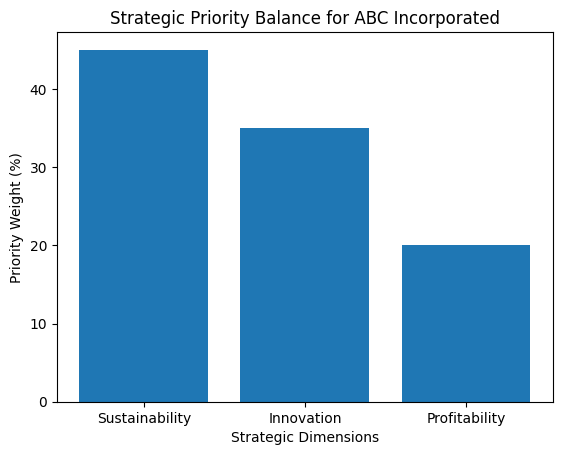
Although there is already a commitment and goal to achieve net zero emissions by 2030, the challenge of lowering emissions seems overwhelming as the integration of Al continues to increase. To achieve this goal, substantial investments in renewable energy use would be necessary. The difficulty is exacerbated by the competitive environment of the technology sector, where rapid innovation is essential for preserving market standing and shareholders worth. To achieve a balance between innovation, profitability and sustainability, a strategic move is necessary that is in line with both, business objectives and ethical obligations
What is your immediate response to the challenges posed in the above case?
Discuss the ethical issues involved in the above case.
Your company has been identified to be penalized by technological giants. What logical and ethical arguments will you put forth to convince about its necessity?
Being a conscience being, what measures would you adopt to maintain balance between Al innovation and environmental footprint?”
“We do not inherit the earth from our ancestors; we borrow it from our children.”
As the Executive Officer and majority shareholder, I find myself at the intersection of the most significant technological revolution in history (AI) and the most pressing ecological crisis (Climate Change).
My vision – Responsible innovation as commerce without morality is a sin
Immediate Response to the Challenges
Transparency and Disclosure- Publish a full “Carbon Gap Report.”
Immediate Expansion- Sign long-term PPA (Power Purchase Agreements) to fund new solar/wind farms in the local “Third World” region.
Transition to liquid cooling or natural cooling methods. Eg- Facebook (Meta) located data centers in Sweden, to use sub-arctic air for natural cooling.
Announce a binding 2030 decarbonisation plan with interim milestones (2025, 2027). Eg- Google’s “24/7 Carbon-Free Energy” roadmap.
Invite third-party experts to assess data-centre emissions.
Freeze new fossil-powered facilities until clean power is secured.
Invest in energy-efficient AI architecture – Shift to lighter, modular AI models.
Engage stakeholders proactively – Consult regulators and shareholders before scaling AI.
Ethical issues involved
Profit vs planet – Pursuit of market dominance increases emissions.
Intergenerational injustice – Current benefits impose climate costs on future generations.
Environmental injustice – Third-world communities bear pollution while users are global.
Greenwashing Risk- Claiming a 2030 Net-Zero goal while actual emissions are skyrocketing.
Shareholder vs. Stakeholder Conflict- Prioritizing quarterly stock value over the survival of the biosphere.
Competition among tech giants for AI development
Precautionary principle violation – Scaling AI despite known ecological risks.
Corporate accountability deficit – Externalising environmental costs to society.
Violation of duty of care to ecosystems – Biodiversity loss from land, water, and energy extraction.
Energy Poverty- AI data centers competing with local hospitals or schools for limited electricity in a developing nation.
Arguments Against Penalties by Technological Giants
Logical Arguments
Penalizing a “Third World” giant hurts the global supply chain.
Need for “grace period” to transition, similar to the CBDR in the Paris Agreement.
Net-Positive Potential- Our AI can provide climate solutions (crop yield, grid optimization) which offsets the training cost.
Penalties can create a Western monopoly on AI, stifling innovations in developing economies.
Investment over Penalty- Capital can be better used for renewable infrastructure than for paying fines to competitors.
Data Sovereignty- need for local data storage and processing
Ethical Arguments
Fairness principle – Punishing one firm while others expand is inequitable.
Eco-Colonialism- First World giants polluted for 100 years to get ahead.
The Right to Development- Access to AI is a modern human right for developing nations to escape poverty.
Good-faith effort – ABC has a net-zero pledge and credible investments.
Restorative over punitive – Support transition rather than impose crippling fines.
Global equity – Developing-world firms need flexibility compared to rich-world giants.
Distributive Justice- AI can democratize education/medicine in the Third World
Vulnerability- Penalizing a major Third World employer causes local economic and job losses.
Measures for Balance
Circular Economy for E-Waste- 100% recycling of hardware. Eg- Apple’s Daisy robot.
Water Stewardship- Use closed-loop cooling and grey water for cooling. Eg- Microsoft’s goal to be “Water Positive” by 2030.
Renewable Energy Co-location- Build solar farms on-site. Eg- Tesla’s Gigafactories.
Locate facilities near clean-energy hubs. Eg- near wind rich sites
Adherence to principle of environmental stewardship by investing in carbon sequestration. Eg- compensatory afforestation
AI for climate optimisation – Use AI to stabilise grids and cut cooling energy. Eg- DeepMind cut Google data-centre cooling energy by ~30%.
Annual verified sustainability reporting – Independent audits with public dashboards.
Ethical AI Filtering- Refuse AI projects that facilitate fossil fuel extraction. Eg- Google’s pledge to stop building custom AI for oil/gas.
Innovation without sustainability is not progress. It is an “accelerated debt.” ABC Incorporated must shift from growth at any cost to responsible growth with conscience.
[Case Study 2] “Raman is a senior IPS officer and has recently been posted as D.G. of a state. Among the various issues and problems/challenges which needed his immediate attention, the issue relating to recruitment of unemployed south by an unknown terrorist group, was a matter at grave concern. It was noted that unemployment was relatively high in the state. The problem of unemployment amongst graduates and those with higher education was much more grave Thus they were vulnerable and soft targets. In the review meeting taken by him with senior officers of DIG Range and above, it came to light that a new terrorist group has emerged at the global level. It has launched a massive drive to recruit young unemployed people. Special focus was to pick young people from & particular community. The said organisation seemed to have the clear objective of utilizing/using them for carrying out militant activities. It was also gathered that the said (new) group is desperately trying to spread its tentacles in his state. A definite/reliable intelligence tip was received by the State CID and Cyber Cell that a large number of such unemployed youth have already been contacted by the terrorist outfit/group through social media and local communal organisations and other contacts. The need of the hour was to act swiftly and to check these elements/designs before they assume serious proportions. Discrete inquiries made by the police, through the Cyber Cell revealed that good numbers of unemployed youth are very active on Facebook, Instagram and Twitter. On an average, many of them were spending 8 hours each day, using electronic devices/internet, etc. It also came to light that such unemployed youth were showing sympathy and endorsing the messages received from certain persons, allegedly the contact persons of that global terrorist group. Their social media accounts revealed their strong affinity for such groups as many of them started forwarding anti-national tweets on their WhatsApp and Facebook, etc. It seemed that they succumbed to their ploy and started propagating secessionist ideology. Their posts were hyper-critical of the government’s initiatives, policies and subscribing to extreme beliefs and promoting extremism.
What are the options available to Raman to tackle the above situation?
What measures would you suggest for strengthening the existing set-up to ensure that such groups do not succeed in penetrating and vitiating the atmosphere in the state?
In the above scenario, what action plan would you advise for enhancing the intelligence gathering mechanism of the police force?”
This scenario highlights a “New Age” security threat where socioeconomic grievances are weaponized through digital radicalization. As the DGP, Raman faces the challenge of protecting the state’s security while preventing the criminalization of its youth.
Guiding Principles
Rashtra-raksha dharma sarvopari
Corrective Policing
“Hearts and Minds” approach
Options Available to Raman
Legal Action- Arresting key influencers under the UAPA or NSA.
Account Takedowns- Coordination with tech platforms to suspend handles propagating extremism. (Section 69A of the IT Act)
Counter-Narrative Campaigns- Eg- Kerala Police’s Cyberdome counter-extremism initiative.
Employment-Security Linkage- Collaborating with the government to launch skill development for “at-risk” youth. Eg- Project ‘Himayat’ in Jammu & Kashmir.
Strengthening the Existing Set-Up
Short-Term Measures
Targeted intelligence-led action against recruiters, handlers, and financiers based on verified evidence. Eg- NIA precision strikes against PFI modules
Special Deradicalization Cells- Establish district-level units comprising psychologists and moderate clerics. Eg- Kerala’s ‘Operation Pigeon’
Social Media Monitoring Labs to identify hotspots. Eg- UP Police’s ‘Social Media Command & Control Centre’
Quick Response Teams (QRTs)- For neutralizing physical recruitment meetings identified via cyber-surveillance.
Helplines for Parents- Anonymous portals where parents can report signs of radicalization in their children.
Fact-Checking Units- Immediate debunking of fake news used to incite communal passions.
Targeted Skill Workshops- Short-term certification courses for the youths
Public Awareness Ads- “Stay Safe Online” campaigns targeted at the specific vulnerable demographic.
Surveillance of Communal Organizations- Discrete monitoring of NGOs/local groups acting as recruitment fronts.
Long-Term Measures
Institutionalized Community Policing- Eg- ‘Friends of Police’ in Tamil Nadu
Vulnerability Mapping- Creating a database of districts with high unemployment and high internet penetration.
Capacity building of police officers as suggested in Prakash Singh Case
Employment generation for graduates – Targeted internships, apprenticeships, start-ups.
Youth Mentorship Programs- Pairing successful professionals from the same community with at-risk youth.
Community-Led Deradicalization- Engaging parents and religious elders. Eg- The “Maharashtra Model” – ATS officers successfully deradicalized over 100 youth without filing FIRs.
Education reform – Teach constitutional values, media literacy, and civic ethics.
Inclusive development – Focus on backward districts and minority communities. Eg- Aspirational Districts Programme.
Promoting Religious harmony platforms – Eg- Inter-faith dialogues and youth peace clubs.
Action Plan for Enhancing Intelligence Gathering
Strengthening State Intelligence Bureau (SIB)- Increasing the human intelligence (HUMINT) footprint in sensitive areas. Eg- J&K police village defence committees.
Open Source Intelligence (OSINT)- Leveraging AI to scan public platforms for “Red Flag” keywords.
Digital Human Intelligence (D-HUMINT)- Planting discrete “undercover” digital personas in private groups/servers to identify recruiters. Eg- operation chakravyuh by IB
Financial Intelligence (FININT)- Tracking small, suspicious UPI/crypto transactions linked to local organizations.
Big Data Analytics- Mapping the “Social Network” of contact persons to find the “Hubs” of the network.
Integrating data from the NATGRID and CCTNS for a 360-degree view of suspects.
Incentivized Informant Networks- Providing rewards for “Intelligence on Radicalizers” within communal organizations.
Inter-State Intelligence Sharing to track the movement of “travelling recruiters.”
Community Feedback Loops- Using local “Peace Committees” as “Human Sensors” for subtle shifts in the communal atmosphere.
In the war of ideologies, the most powerful weapon is not a gun, but a Better Alternative. This can be ensured by addressing the root cause (unemployment) of alienation.
[Case Study 3] “With a multipronged strategy of the Central and State Governments specially in the last few years, the naxalite problem has been resolved to a large extent in the affected states of the country. However, there are a few pockets in certain states where the naxalite problem still persists, mainly due to involvement of foreign countries. Rohit is posted as SP (Special Operations) for the last one year, in one of the districts which is still affected by the naxalite problem. The district administration has taken a lot of developmental works in the recent past in the naxalite affected areas to win the hearts and minds of the people. Over a period of time, Rohit has established an excellent intelligence network to get the real time information regarding the movement of naxalite cadres. To instill confidence in the public and have moral ascendancy over the naxalites, a number of cordons and search operations are being conducted by the police. Rohit, who himself was leading one of the contingents got a message though his intelligence source that about ten hard core naxalites were hiding in a particular village with sophisticated weapons. Without wasting any time, Rohit reached the target village with his team and laid out a foolproof cordon and started carrying out a systematic search. During the search, his team managed to overpower all the naxalites along with their automatic weapons. However, in the meantime, more than 5 hundred tribal women surrounded the village and started marching towards the target house. They were shouting and demanding the immediate release of insurgents since they are their protectors and saviours. The situation on the ground was becoming very critical as the tribal women were extremely agitated and aggressive. Rohit tried to contact his superior officer, IG (Special Operations) of the state on the radio set and on mobile phone, but failed to do so due to poor connectivity. Rohit was in great dilemma since out of the naxalites apprehended, two were not only hard core top insurgents with prize money of 7 ten lakhs on their heads, but were also involved in a recent ambush on the security forces. However, if he did not release the naxalites, the situation could get out of control since the tribal women were aggressively charging towards them. In that case, to control the situation Rohit might have to resort to firing which may lead to valuable loss of lives of civilians and would further complicate the situation.
What are the options available with Rohit to cope with the situation ?
What are the ethical dilemmas being faced by Rohit ?
Which of the options, do you think, would be more appropriate for Rohit to adopt and why?
In the present situation, what are the extra precautionary measures to be taken by the police in dealing with women protesters?”
Due to efforts by centre and state governments, Naxal-affected districts have come down from 126 (2014) to only 11 (2025), with most-affected districts down from 36 to just 3
The above case study is a classic example of “Asymmetric Warfare,” where insurgents use the local population, specifically women, as a human shield and a psychological weapon against the state. Rohit must ensure success of a high-value operation without causing a public relations disaster.
Options available with Rohit
Release all apprehended naxalites to defuse tension immediately.
Refuse release and use force if required
Partial release – Release lower-level cadres but retain the two high-value insurgents.
Temporary standoff – Hold position, avoid confrontation, and wait for reinforcements or superior orders.
Negotiation with women leaders to calm the crowd while keeping custody.
Ethical dilemmas faced by Rohit
Duty vs. Consequence – His duty is to arrest criminals who killed security forces, but the consequence of doing so might be the death of innocent tribal women.
Use of force vs right to life – Firing could save police lives but risk civilian deaths.
Rule of law vs community pressure – Law demands arrest but community demands release.
Short-term peace vs long-term security – Immediate release may calm crowd but embolden naxalites.
Professional courage vs compassion – Holding firm may provoke violence but yielding may weaken rule of law.
Operational success vs moral legitimacy – A tactical win could turn into a public-relations and ethical disaster.
Course of action
Immediate de-escalation – Use loudspeakers to reassure women that no harm will come to them
Negotiate with trusted tribal leaders- Request 5-7 respected women elders to mediate.
Maintain custody of high-value insurgents- Do not release the two top cadres.
Create a human buffer zone- Deploy female police personnel and barriers to avoid confrontation
Call reinforcements and medical teams- Prepare for safe, controlled extraction.
Gradual withdrawal under protection- Move out in a disciplined formation without firing.
Post-operation dialogue- Hold a peace meeting with the village to explain legal necessity.
Justification
Extra precautionary measures for police while dealing with women protesters
The police should treat them as “Misguided Civilians” rather than “Combatants.”
Deploy female police personnel (Mahila Battalion) – Reduces tension and avoids allegations of harassment.
No firearms use as first resort – Follow minimum force doctrine strictly.
Use non-lethal crowd control – Water cannons, barriers, and tear gas only if unavoidable.
Maintain safe distance buffer zone to prevent physical contact or stampede.
Continuous public communication – Use loudspeakers to explain actions calmly.
Identify and speak to community leaders. Eg- local teacher, health worker (ASHA), or neutral village elder
Provide medical support on-site – Keep ambulances ready in case of injuries.
Video documentation of operations to protect police from false allegations.
Post-incident grievance redressal – Set up dialogue forum to rebuild trust.
In counter-insurgency, the “Moral High Ground” is the most important territory to hold. “A successful operation is not only one that arrests criminals, but one that preserves public trust.”
[Case Study 4] “Sneha is a Senior Manager working for a big reputed hospital chain in a mid-sized city. She has been made in charge of the new super specialty center that the hospital is building with state-of-the art equipment and world-class medical facilities. The building has been reconstructed and she is starting the process of procurement for various equipment and machine. As the head of the committee responsible for procurement, she has invited bids from all the interested reputed vendors dealing in medical equipment. She notices that her brother, who is a well-known supplier of this domain, has sent his expression interest. Since the hospital privately not mandatory for her to select only the lower bidder. Also, she is aware that her brother’s company has been facing some financial difficulties and a big supply order will help him recover. At the same time, allocating the contract to her brother might bring charges of favouritism against her and tarnish her image. The hospital management trusts her fully and would support any decision of hers.
What should be Sneha’s course of action?
How would she justify what she chooses to do ?
In this case, how is medical ethics compromised with vested personal interest ?”
This case highlights the “Conflict of Interest” in private sector procurement. While Sneha has the administrative freedom to choose any vendor, she is bound by Fiduciary Duty to the hospital and the Principle of Public Trust.
Guiding principle – The “Caesar’s Wife” Principle- A person in high office must not only be honest but must also be seen to be honest.
Sneha’s Course of Action
Formal Disclosure- She must immediately write to the Hospital Board or her superior, formally disclosing that one of the bidders is her brother.
Recusal from Decision-Making- She should voluntarily step down as the head of the procurement committee for this specific contract.
Setting Benchmarks- Before stepping down, she should ensure that the technical specifications and quality benchmarks are clearly defined.
She should request the management to appoint an independent third party or another senior manager to oversee the selection process. This ensures meritocracy in selection while preserving integrity of Sneha
She should respect the committee’s verdict even if her brother loses.
Audit Trail- Ensure every step of the vendor evaluation is documented, ensuring that if her brother wins, it is purely on Merit and Price.
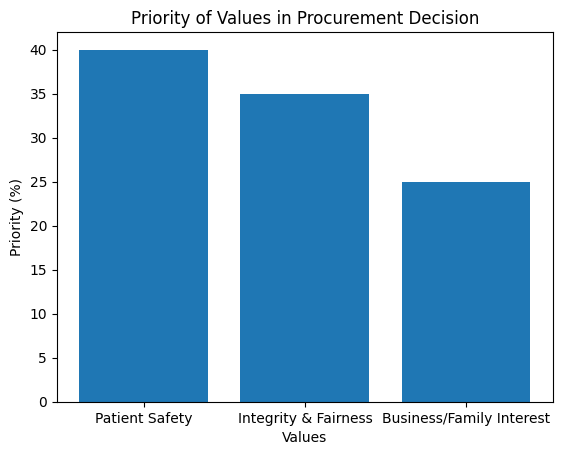
Fiduciary Duty- Her primary loyalty is to the hospital’s stakeholders and patients, not her family’s business.
Integrity of process – By recusing herself, she protects the credibility of procurement and her own reputation.
Fairness to all vendors – Every bidder gets an equal opportunity, avoiding allegations of nepotism.
Patient-first principle – Hospital equipment procurement must prioritise quality and safety, not personal relationships.
Institutional trust and reputation – Her transparency strengthens management and public confidence in the hospital.
Legal protection – Clear disclosure shields her from future complaints, audits, or litigation.
Professional ethics – She upholds conflict-of-interest norms expected from senior leadership.
Compassion without corruption – She helps her brother only through fairness, not by bending rules.
Vested interest compromising medical ethics
If Sneha favours her brother’s company, it may lead to
Violation of non-maleficence – A financially struggling vendor might cut corners on the quality of sensors, parts, or installation to save costs, leading to poor quality of care and harm to patients.
Erosion of trust – Patients may lose faith in the hospital if procurement appears biased.
Undermining justice – Other vendors are unfairly excluded, violating equitable treatment and fairness
Slippery slope – Favouritism could set a precedent for kickbacks or quid-pro-quo dealings.
Conflict of interest – Personal gain overriding professional duty.
Dilution of professional integrity – The hospital’s ethical standards get weakened for future decisions.
Funds wasted on overpriced favored vendors could have been used to subsidize life-saving surgeries for the poor.
“The strength of a nation derives from the integrity of the home.” – Confucius
This should guide Sneha that true family loyalty lies in maintaining the family’s honor through honest conduct.
[Case Study 5] “With the summer heat being exceptionally severe this year, the district has been facing severe water shortage. The District Collector has been mobilizing his subordinate officials to conserve the remaining water reserves for preventing the district from plunging into acute drinking water crisis. Along with an awareness campaign for conserving water, strict measures have been taken for stopping the over-exploitation of ground-water. Vigilance teams have been deployed to tour the villages and find the farmers who are drawing water from deep borewells or from the river reservoir for irrigation. The farmers are agitated by such action. A delegation of farmers meets the District Collector with their issues and complains that while they are not being allowed to irrigate their crops, big industries located near the river are drawing huge amounts of water through deep borewells for their industrial processes. The farmers allege that their administration is anti-farmer and corrupt, being bribed by the industry. The district needs to placate the farmers as they are threatening to go on a prolonged protest. At the same time, the District Collector has to deal with the water crisis. The industry cannot be closed as this would result in a large number of workers being unemployed.
Discuss all options available to the District Collector as a District Magistrate.
What suitable actions can be taken in view of mutually compatible interests of the stakeholders?
What are the potential administrative and ethical dilemmas for the District Collector?”
According to the Central Ground Water Board (CGWB), nearly 17% of India’s groundwater units are “over-exploited,” and approximately 60% of districts face issues related to the availability or quality of groundwater.
The above case study highlights the conflict between resource scarcity, livelihood security, and administrative distributive justice.
Options available to the District Collector
Strict enforcement against farmers while allowing industries to operate as earlier.
Pros- Immediate conservation, protects jobs
Cons- perception of bias, social unrest.
Blanket restriction on all users (farmers + industries)
Pros- Appears fair and legally defensible.
Cons- Could disrupt industrial production and employment.
Tight cap on industrial extraction and crop-based allowance to farmers.
Pros- Addresses equity concerns; protects livelihoods.
Cons- Administrative complexity.
Call tripartite talks with farmers, industry, and water experts to arrive at a consensus based decision.
Pros- Builds trust and reduces protest.
Cons- Delays action during crisis.
Technological Intervention- Mandate that industries switch to treated sewage water or recycled water for their processes, freeing up groundwater/river water for rural needs.
Suitable actions for mutually compatible interests
Immediate crisis management
Declare water as priority public resource – Legally prioritise drinking water > agriculture > industry during drought.
Tripartite committee – Collector + farmer leaders + industry + hydrogeologists to review weekly.
“Warabandi” (Rotational) System- Allow irrigation only during specific night hours to reduce evaporation
Industrial water cap – Impose strict extraction limits and require at least 50-70% water recycling by industries.
Tanker supply for drinking water – Ensure zero household water shortage during peak summer.
Long-term cooperative measures
Transparent water audit – Publish data on water use of villages and industries to counter corruption allegations.
Crop diversification – Encourage less water-intensive crops like millets, pulses, and oilseeds.
Community water budgeting – Gram Panchayat-level water allocation plans with farmer participation.
Use MGNREGA labor to immediately desilt village ponds and create “Recharge Pits” near borewells to capture any unseasonal rain or runoff
Industrial responsibility – Industries to fund local recharge projects under CSR.
Technology support – Promote drip irrigation, sprinkler systems, and soil moisture sensors.
Grievance redressal cell – Dedicated helpline for farmers to report unfair enforcement.
Potential administrative and ethical dilemmas
Administrative dilemmas
Law vs livelihoods – Enforcing bans may protect water but devastate farm incomes.
Revenue vs. Livelihood- Closing industries hurts state revenue and causes unemployment, but allowing them to run starves the farmers
Immediate crisis vs long-term sustainability – Tanker supply relieves today but worsens dependency tomorrow.
Enforcement capacity – Monitoring thousands of borewells is difficult. It risks selective action.
Employment vs environment – Closing industries saves water but creates unemployment.
Ethical dilemmas
Justice vs utility – Should water go to food production (farmers) or factories (economic growth)?
Intergenerational justice – Over-extraction today harms future generations.
Trust vs authority – Heavy-handed action may secure water but destroy public trust.
Equity vs efficiency – Industries use water more “productively” per unit of output, but farmers need it to survive.
Right vs Right – Both the farmer and the industrial worker have a right to earn a living.
“The earth, the air, the land, and the water are not an inheritance from our forefathers but on loan from our children. So we have to hand over to them at least as it was handed over to us.” – Mahatma Gandhi
[Case Study 6] “Dr. Srinivasan is a senior scientist working for a reputed biotechnology company known for its cutting-edge research in pharmaceuticals. Dr. Srinivasan is heading a research team, working on a new drug aimed at treating a rapidly spreading variant of a new viral infectious disease. The disease has been rapidly spreading across the world and the cases reported in the country are increasing. There is huge pressure on Dr. Srinivasan’s team to expedite the trials for the drug as there is a significant market for it, and the company wants to get the first-mover advantage in the market. During a team meeting, some senior team members suggest some shortcut for expediting the clinical trials for the drug and for getting the requisite approvals. These include manipulating data to exclude some negative outcomes and selectively reporting positive results, foregoing the process of informed consent and using compounds already patented by a rival company, rather than developing one’s own component. Dr. Srinivasan is not comfortable taking such shortcuts, at the same time he realises meeting the targets is impossible without using these means.
What would you do in such a situation?
Examine your options and consequences in the light of the ethical questions involved.
How can data ethics and drug ethics save humanity at large in such a scenario?”
“Relativity applies to physics, not ethics.” – Albert Einstein
Dr. Srinivasan is at the center of the “Efficiency-Ethics Paradox.” The rush for a “first-mover advantage” creates a high-pressure environment where scientific rigor is viewed as a hurdle rather than a safeguard.
Guiding Principles
“Primum non nocere” (First, do no harm).
Nuremberg Code and Declaration of Helsinki
Intellectual Honesty
Course of action
Reject unethical shortcuts – Clearly refuse data manipulation, skipping consent, or patent violation.
Document objections in writing – Record concerns in official minutes to create an audit trail.
Seek independent ethics review – Refer the matter to the Institutional Ethics Committee (IEC) and Data Safety Monitoring Board (DSMB).
Instead of stealing a rival’s compound, I would initiate a “Cross-licensing” or “Emergency Compulsory Licensing” request
Propose lawful fast-track alternatives
Adaptive clinical trials
Emergency Use Authorisation (EUA) if evidence is strong
Parallel Phase II-III designs
Engage senior management transparently – Explain legal, reputational, and patient risks of shortcuts.
Use whistleblower channel if pressure persists.
Key Ethical Questions
The Conflict of Duty (Teleology vs. Deontology)
The Principle of Informed Consent and Autonomy
Intellectual Property (IP) vs. The Common Good – When does the “Right to Health” override the “Right to Property”?
Transparency and the “Publicity Test” – Would I be comfortable if my decision was published on the front page of a national newspaper?
Fiduciary Duty- Does a manager’s loyalty to shareholders override their duty to patient safety?
Speed vs Safety – Can a life-saving drug be rushed at risk to patients?
Truth vs Profit – Is data manipulation ever justified for market advantage?
Examination of options and consequences
Accept shortcuts
Merit
Speedy approval
Profit for company
Consequences
Slow but fully compliant trials
Merits
Protects patients
Legally safe
Maintains scientific integrity
Demerits
Delayed drug availability
Loss of first-mover advantage
Compliant fast-track pathway
Consequences
data ethics & drug ethics can save humanity in following ways
Role of Data Ethics
Prevents harmful drugs from reaching the market by exposing negative results.
Ensures reproducibility of scientific findings.
Enables evidence-based regulation by authorities.
Builds public trust in science and medicine.
Avoids false hope and misinformation.
Role of Drug Ethics
Protects patient lives through rigorous safety standards.
Respects human dignity via informed consent.
Prevents exploitation of vulnerable populations.
Ensures equitable access to life-saving drugs.
Balances innovation with responsibility, preventing reckless experimentation.
“Science without conscience is but the ruin of the soul.” By standing firm on ethics, Dr. Srinivasan protects not only the patients but also the very soul of scientific inquiry.
2023
[Case Study 1] “At 9 pm on Saturday evening, Rashika, a Joint Secretary, was still engrossed in her work in her office. Her husband, Vikram, is an executive in an MNC and frequently out of town in connection with his work. Their two children aged 5 and 3 are looked after by their domestic helper. At 9-30 pm her superior, Mr. Suresh calls her and asks her to prepare a detailed note on an important matter to be discussed in a meeting in the Ministry. She realises that she will have to work on Sunday to finish the additional task given by her superior. She reflects on how she had looked forward to this posting and had worked long hours for months to achieve it. She had kept the welfare of people uppermost in discharging her duties. She feels that she has not done enough justice to her family and she has not fulfilled her duties in discharging essential social obligations. Even as recently as last month she had to leave her sick child in the nanny’s care as she had to work in the office. Now, she feels that she must draw a line, beyond which her personal life should take precedence over her professional responsibilities. She thinks that there should be reasonable limits to the work ethics such as punctuality, hard work, dedication to duty and selfless service.
Discuss the ethical issues involved in this case.
Briefly describe at least four laws that have been enacted by the Government with respect to providing a healthy, safe and equitable working environment for women.
Imagine you are in a similar situation. What suggestions would you make to mitigate such working conditions?”
The above case highlights the challenge of Work-Life Balance in high-pressure administrative roles, where the “Ethical Ideal” of selfless service is clashing with the fundamental “Moral Duty” towards family.
Guiding Principles
Ethics of Care
Respect for personal time
Gender-sensitive workplaces
Shared caregiving responsibility
Ethical Issues Involved
Conflict of Duties- The tension between Fiduciary Duty (motherhood/care) and Professional Duty.
Crisis of Conscience- guilt of leaving a sick child.
Lack of organizational empathy- superior’s 9-30 PM call reflects a culture that devalues the personal time of subordinates.
Gendered Expectations- Society judges working mothers harsher than fathers.
Right to Rest and Leisure to prevent burnout.
Ethical question of how much personal sacrifice is reasonable in public service.
Overwork risks burnout, reducing the quality of public decision-making.
The “Ideal Worker” Norm- assumption that a “dedicated” officer must be available 24/7.
The failure of the Ministry to create a predictable workflow
Laws for a Healthy and Equitable Working Environment
Maternity Benefit (Amendment) Act, 2017
Increases paid maternity leave to 26 weeks.
Mandates Crèche facilities in establishments with 50+ employees.
Provides for “Work from Home” after the leave period, if nature of work permits.
Sexual Harassment of Women at Workplace (POSH) Act, 2013
Mandatory Internal Complaints Committee (ICC) in workplaces.
Time-bound inquiry and confidentiality of complaints.
Protection against retaliation and victimisation.
Factories Act, 1948
Regulation of working hours and night shifts with safeguards.
Mandatory health and safety standards.
Provision of welfare amenities like restrooms and sanitation.
Equal Remuneration Act, 1976
Equal pay for equal work irrespective of gender.
Prohibition of discrimination in recruitment.
Obligation to employers to maintain wage records.
Suggestions to mitigate such working conditions
Personal strategies
Set clear professional boundaries – Politely communicate limits on late-night/weekend work except for emergencies.
Reserve protected family hours as non-negotiable.
Shared caregiving – Negotiate greater involvement of spouse and extended family.
Organisational reforms
Flexible work arrangements – Introduce hybrid work and staggered hours. Eg- using e-Office
Norm against non-emergency late calls. Eg- passing recently introduced Right to Disconnect Bill.
Crèche and childcare support for senior officers.
Mental health support – Regular counselling and stress-management programmes.
Gender-sensitive leadership training – Sensitise seniors to caregiving responsibilities.
Shift from hours to outcomes – Measure performance by quality, not time spent in office. Eg- Best Buy’s ROWE initiative
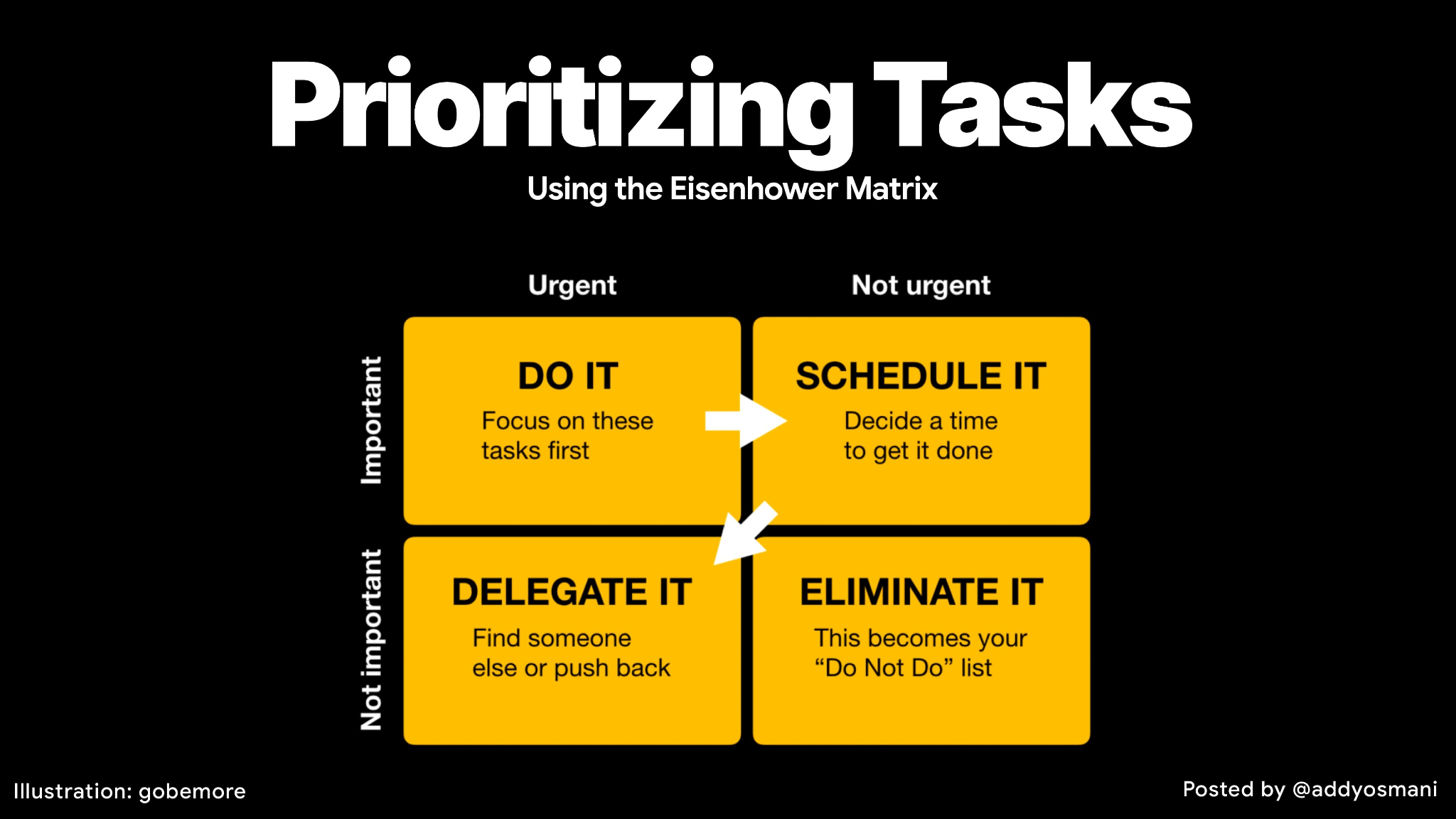
Eisenhower Matrix to distinguish between “Urgent” tasks and “Important” tasks.
Adopting “Swedish Model” of Shared Parental Leave
“You cannot pour from an empty cup.”
Thus, ethical institutions must value care, equity, and well-being alongside efficiency.
[Case Study 2] “You have just been appointed as Additional Director General of the Central Public Works Department. The Chief Architect of your division, who is to retire in six months, is passionately working on a very important project, the successful completion of which would earn him a lasting reputation for the rest of his life. A new lady architect. Seema, trained at Manchester School of Architecture, UK joined as Senior Architect in your division. During the briefing about the project, Seema made some suggestions which would not only add value to the project, but would also reduce completion time. This has made the Chief Architect insecure and he is constantly worried that all the credit will go to her. Subsequently, he adopted a passive and aggressive behaviour towards her and has become disrespectful to her. Seema felt it embarrassing as the Chief Architect left no chance of humiliating her. He would very often correct her in front of other colleagues and raise his voice while speaking to her. This continuous harassment has resulted in her losing confidence and self-esteem. She felt perpetually tense, anxious and stressed. She appeared to be in awe of him since he has had a long tenure in the office and has vast experience in the area of her work. You are aware of her outstanding academic credentials and career record in her previous organisations. However, you fear that this harassment may result in compromising her much needed contribution in this important project and may adversely impact her emotional well-being. You have also come to know from her peers that she is contemplating tendering her resignation.
What are the ethical issues involved in the above case?
What are the options available to you in order to complete the project as well as to retain Seema in the organization?
What would be your response to Seema’s predicament? What measures would you institute to prevent such occurrences from happening in your organization ?
“Leadership is not about being in charge. It is about taking care of those in our charge.” – Simon Sinek
In this scenario at the CPWD, a clash between Institutional Seniority and Modern Innovation has escalated into a case of workplace harassment.
Guiding principles
Dignity at Work
Zero tolerance for harassment
Merit over seniority
Psychological safety at work
Accountability of leadership
Public interest above personal ego
Ethical issues involved in the case
Workplace harassment – Chief Architect’s behaviour violates respect for human dignity and creates a hostile work environment.
Abuse of authority to intimidate a junior colleague.
Gender bias and discrimination against Seema
Professional jealousy vs public interest – Personal insecurity is jeopardising a public project of national importance.
Merit vs seniority conflict – Resistance to Seema’s ideas undermines merit-based decision-making.
Psychological harm – Sustained humiliation is causing emotional stress, anxiety, and loss of confidence.
Organisational justice – Failure to address harassment reflects poor fairness and accountability in management.
Integrity of public service – Sabotaging collaboration for personal credit damages institutional integrity.
As ADG, ignoring the issue would violate your ethical responsibility to protect staff well-being.
Allowing harassment risks losing talent and normalising unethical conduct.
Options available
To complete the project
Direct mediation with Chief Architect – Firm but respectful conversation on conduct.
Formal inquiry under POSH through Internal Complaints Committee.
Restructure project roles – Make Seema co-lead with independent responsibilities.
Create technical review panel – to review all suggestions objectively – removes the personal friction
To retain Seema
Assure protection and support – Publicly value her contribution.
Provide safe reporting channel – Confidential grievance mechanism to build trust
Reduce direct reporting to Chief Architect
Workplace counselling support for stress management and psychological assistance.
Response to Seema’s Predicament
Private meeting with Seema
Assure her that harassment will not be tolerated in the organisation.
Reaffirm that her contributions to the project are valuable and needed.
Promise protection against retaliation from the Chief Architect.
Joint meeting with both officers
Emphasise that the project is a team effort in public interest, not an individual legacy.
Set clear expectations of respectful communication and zero tolerance for humiliation.
If both agree to work constructively-
I would call a team meeting.
Publicly appreciate the experience and leadership of the Chief Architect.
Simultaneously acknowledge Seema’s technical talent and innovative inputs.
If the issue is NOT resolved
Reassign and clearly define roles
Reduce direct reporting between Seema and the Chief Architect.
Make Seema co-lead or independent lead for a key component of the project.
Ask Seema to document and file POSH complaint
Encourage Seema to document incidents factually with dates, witnesses, and details.
Assist her in filing a formal complaint with the Internal Complaints Committee (ICC) under POSH Act, 2013.
Ensure implementation of ICC decision
If the Chief Architect is found guilty, impose appropriate disciplinary action.
If counselling or training is recommended, ensure compliance.
Monitor the workplace climate to prevent recurrence.
Measures to prevent such occurrences
Zero-tolerance harassment policy – Strict enforcement of POSH Act. Eg- mandatory POSH training.
Mandatory gender-sensitivity training for all levels.
Transparent credit-sharing system – Document contributions in project reports.
Independent grievance redressal – Strengthen Internal Complaints Committee.
Mentorship programme – Pair juniors with supportive seniors.
Psychological safety culture – Encourage respectful disagreement.
360-Degree Feedback-
subordinates rating the “Behavioral Conduct” of their seniors.
Inclusion of Behavioural Metrics in performance reviews
Innovation Boxes- Anonymized digital submission of ideas
Psychological Support Systems- Providing access to professional counselors for stressed employees.
“The greatest leader is not necessarily the one who does the greatest things. He is the one that gets the people to do the greatest things.” – Ronald Reagan
Protecting Seema while ensuring timely project completion will promote healthy, ethical and innovative work culture.
[Case Study 3] “You hold a responsible position in a ministry in the government. One day in the morning you received a call from the school of your 11-year-old son that you are required to come and meet the Principal. You proceed to the school and find your son in the Principal’s office. The Principal informs you that your son had been found wandering aimlessly in the grounds during the time classes were in progress. The class teacher further informs you that your son has lately become a loner and did not respond to questions in the class, he had also been unable to perform well in the football trials held recently. You bring your son back from the school and in the evening, you along with your wife try to find out the reasons for your son’s changed behaviour. After repeated cajoling, your son shares that some children had been making fun of him in the class as well as in the WhatsApp group of the students by calling him stunted, duh and a frog. He tells you the names of a few children who are the main culprits but pleads with you to let the matter rest. After a few days, during a sporting event, where you and your wife have gone to watch your son play, one of your colleague’s son shows you a video in which students have caricatured your son. Further, he also points out to the perpetrators who were sitting in the stands. You purposefully walk past them with your son and go home. Next day, you find on social media, a video denigrating you, your son and even your wife, stating that you engaged in physical bullying of children on the sports field. The video became viral on social media. Your friends and colleagues began calling you to find out the details. One of your juniors advised you to make a counter video giving the background and explaining that nothing had happened on the field. You, in turn posted a video which you have captured during the sporting event, identifying the likely perpetrators who were responsible for your son’s predicament. You have also narrated what has actually happened in the field and made attempts to bring out the adverse effects of the misuse of social media.
Based on the above case study, discuss the ethical issues involved in the use of social media.
Discuss the pros and cons of using social media by you to put across the facts to counter the fake propaganda against your family.”
India has close to 500 million social media users. While it has democratised the freedom of expression, it has simultaneously created an eco chambers and a platform for bullying and defamation.
The above case study highlights the ethical challenges in using social media responsibly, especially when children and reputations are involved.
Guiding principle – Digital Responsibility and Ethical Self-Restraint
Ethical issues in the use of social media
Cyberbullying and harassment – Mocking your son through memes and videos violates his dignity and mental well-being.
Violation of privacy – Recording and circulating videos of a minor without consent is unethical and harmful.
Defamation and misinformation – Viral video falsely accusing you of physical bullying damages reputation.
Lack of accountability – Anonymity on social media encourages irresponsible behaviour.
Harm to children – Psychological trauma to your son due to public ridicule.
Weaponisation of technology – Social media used as a tool for social exclusion rather than communication.
Viral amplification of falsehood – False narratives spread faster than factual clarification.
Mob mentality – Online crowd reinforces bullying instead of questioning facts.
Digital vigilantism – Your counter-video identifying perpetrators risks turning into public shaming.
Erosion of trust – Public institutions suffer reputational damage due to online misrepresentation.
Accountability of Platforms- failure of social media algorithms to filter out denigrating content involving minors before it goes viral.
Pros and cons of using social media to counter fake propaganda
Pros of your counter-video
Restores truth – Corrects false narrative with evidence. Eg- ALT news fact checking
Protects family reputation – Prevents long-term character damage.
Deterrence – Discourages future cyberbullying by exposing misuse.
Awareness creation – Highlights dangers of online harassment and fake news. Eg- #StopCyberBullying campaign
Helps your son feel supported rather than silenced.
Transparency – Shows you have nothing to hide.
Cons of your counter-video
Escalation of conflict – May provoke further online attacks.
Risk of public shaming minors – Identifying children publicly can be unethical.
Loss of privacy – Brings family matters into public domain.
Legal risks – Possibility of defamation claims.
Emotional toll – Increases stress for your son and family.
Instead of institutional resolution via school administration, the issue becomes a public drama.
Precedent of vigilante justice – Encourages others to bypass formal mechanisms.
As a government official, public digital outbursts may violate Civil Services (Conduct) Rules
Balanced ethical approach you should adopt
File a formal complaint with the school against bullying.
Request disciplinary action and counselling for perpetrators.
Report the viral video to social media platforms for takedown.
Provide emotional support and counselling to your son.
Social media is a double-edged sword. For a person in a responsible government position, Institutional Redressal should take precedence over Digital Retaliation.
“Character is like a tree and reputation like its shadow. The shadow is what we think of it; the tree is the real thing.” – Abraham Lincoln
[Case Study 4] “A landslide occurred in the middle of the night on 20th July, 2023 in a remote mountain hamlet, approximately 60 kilometers from Uttarkashi. The landslide was caused by torrential rains and has resulted in large-scale destruction of property and life. You, as district magistrate of the area, have rushed to the spot with a team of doctors, NGOs, media and police along with numerous support staff to oversee the rescue operations. A man came running to you with a request for urgent medical help for his pregnant wife who is in labor and is losing blood. You directed your medical team to examine his wife. They return and convey to you that this woman needs blood transfusion immediately. Upon enquiry, you come to know that a few blood collection bags and blood group test kits are available in the ambulance accompanying your team. A few people on your team have already volunteered to donate blood. Being a physician who has graduated from AIIMS, you know that blood for transfusion needs to be procured only through a recognized blood bank. Your team members are divided on this issue; some favor transfusion while some others oppose it. The doctors in the team are ready to facilitate the delivery provided they are not penalized for transfusion. Now you are in a dilemma. Your professional training emphasizes prioritizing service to humanity and saving lives of individuals.
What are the ethical issues involved in this case?
Evaluate the options available to you, being District Magistrate of the area.”
The above case study highlights the Ethical Dilemma for DM where the Deontological approach (following strict medical/legal rules) clashes with the Teleological approach (saving a life in an extraordinary emergency).
Ethical issues involved in the case
Right to Life vs. Standard Protocol – Tension between saving an immediate life and following standard medical protocol.
Beneficence vs non-maleficence – challenge of balancing doing good (saving the mother and child) with avoiding potential harm (risk of infection, mismatched blood, transfusion reactions).
Emergency ethics vs routine ethics – Whether exceptional circumstances justify deviation from normal medical standards.
Individual rights vs institutional rules – The pregnant woman’s right to life and health versus institutional regulations on safe blood supply.
Professional integrity – conflict between duty as a doctor and as a DM
Accountability vs humanitarian action – doctors may face legal or disciplinary action discourages.
Risk management challenge – Delay to arrange proper blood may cost a life, but hurried transfusion may also be dangerous.
Allowing an unofficial transfusion might set a precedent that compromises blood safety standards in future scenarios.
Evaluation of options available to you as District Magistrate
Strict adherence to rules- No transfusion until recognized blood bank supply arrives
Merits
Fully legally compliant.
Minimizes risk of transfusion-related complications.
Protects doctors from legal liability.
Maintains standard medical protocol.
Demerits
High risk of maternal death due to hemorrhage.
Seen as bureaucratic insensitivity.
Violation of hippocratic oath
Immediate field transfusion using volunteer blood
Merits
Immediate life-saving action.
Aligns with humanitarian ethics and professional medical duty.
Demerits
Risk of infection, mismatched blood, or adverse reaction.
Technically violates standard blood transfusion rules.
Doctors may face legal consequences.
Could set a risky precedent if misused elsewhere.
Transport to nearby hospital
Merits
Ensures safe medical care
Prevents doctors from legal risks
Can focus on rescue of villagers
Cons
Difficult terrain
My lead to loss of life
Course of action
As the DM and a physician, I would choose this path, based on the “Doctrine of Necessity.”
Provide emergency care to control bleeding.
Use blood testing kits to confirm compatibility.
Coordinate with the Air Force or SDRF for an immediate heli-evacuation to a tertiary care center.
Proceed with transfusion only if absolutely necessary.
Informed Consent- Explicitly explain the risks (lack of advanced screening) to the husband and obtain written consent
As DM, I will issue a formal “Emergency Executive Order” under the Disaster Management Act, 2005 to protect doctors from legal action
Document the entire process to justify the “Necessity” in any future inquiry.
“The safety of the people shall be the highest law.” – Cicero
The DM should follow the “Good Samaritan” principle to save the live of women and her child.
[Case Study 5] “You are working as an executive in a nationalized bank for several years. One day one of your close colleagues tells you that her father is suffering from heart disease and needs surgery immediately to survive. She also tells you that she has no insurance and the operation will cost about Rs. 10 lakh. You are also aware of the fact that her husband is no more and that she is from a lower middle class family. You are empathetic about her situation. However, apart from expressing your sympathy, you do not have the resources to fund her. A few weeks later, you ask her about the well-being of her father and she informs you about his successful surgery and that he is recovering. She then confides in you that the bank manager was kind enough to facilitate the release of Rs. 10 lakh from a dormant recount of someone to pay for the operation with a promise that it should be confidential and be repaid at the earliest. She has already started paying it back and will continue to do no until it is all returned.
What are the ethical issues involved?
Evaluate the behavior or the bank manager from an ethical point of view.
How would you react to the situation?
“Relativity applies to physics, not ethics.” – Albert Einstein
The case study reflects the conflict between Humanitarian Compassion and Institutional Integrity. While the motive behind the action is noble, the method used is illegal and unethical.
Guiding principle – Compassion with due process
Ethical Issues Involved
For You (The Executive)
Conflict of Loyalty- Choosing between loyalty to a grieving colleague and loyalty to the bank’s code of conduct.
Complicity through Silence- staying quiet makes you an accessory to a financial crime
Moral Dilemma- The struggle between the “Ethics of Care” and the code of conduct.
For the Bank Manager
Breach of Trust- Violating the legal contract between the bank and the depositor.
Abuse of Authority- Using administrative power to bypass formal credit channels.
Professional Integrity- Undermining the “Standard Operating Procedures” (SOPs).
For the Customers and the Bank
Systemic Risk- If such behavior is normalized, depositors may lose faith in fund safety.
Legal Liability- The bank could face severe penalties from the RBI.
The owner of the account has been deprived of his property without consent.
For the Colleague
Criminal Liability if the fraud is exposed
Psychological Burden- Living under the constant fear of discovery
Moral Hazard – she may resort to same means in future
Evaluation of the Bank Manager’s Behavior
Justifications
Altruism- He acted out of pure concern for a widow and her dying father.
Urgency- The “immediacy” of the surgery
Utilitarianism- He used “idle” money to create a “tangible good” (saving a life).
Empathy towards colleagues
Restorative Intent- He ensured the money would be repaid – no permanent loss to the bank
Ethical & Professional Issues
Violates deontology- Embezzlement is a crime, regardless of the motive.
Lack of Transparency- secret withdrawals.
Violation of Fiduciary Duty- He spent money that did not belong to him.
Risk of creating an unfair “favoritism” culture.
Slippery Slope and moral hazard – risk of embezzlement getting normalised
Institutional Decay- He has compromised the Internal Control Systems of the nationalized bank.
My reaction to the situation
Meet both colleagues and manager to seek explanation and ask them to come forward and report it.
If they don’t, then report the incident to higher authorities with a detailed note on
The circumstances of the medical emergency,
The method through which funds were released,
The manager’s intention to help,
The fact that the amount is being repaid in instalments, and
Express empathy but explain the ethical problem to colleague
Explore lawful alternatives and regularize the transaction
Converting it into a formal personal/medical loan.
Arranging support from-
Bank’s employee welfare fund,
Government schemes like Ayushman Bharat, or
Recommend long-term systemic measures
Creation of a formal emergency medical loan window for employees.
Clear SOP for handling humanitarian crises within legal limits.
Training for managers on ethical decision-making in emergencies.
Faster processing of medical loans during crises.
Establishment of an employee hardship relief fund.
“The end cannot justify the means.” – Mahatma Gandhi
True ethical governance requires that compassion be institutionalized through transparent, legal mechanisms, so that lives are saved without eroding public trust.
[Case Study 6] “Vinod is an honest and sincere IAS officer. Recently, he has taken over as Managing Director of the State Road Transport Corporation, his sixth transfer in the past three years. His peers acknowledge his vast knowledge, affability and uprightness. The Chairman of the State Road Transport Corporation is a powerful politician and is very close to the Chief Minister. Vinod comes to know about many alleged irregularities of the Corporation and the high-handedness of the Chairman in financial matters. A Board Member of the Corporation belonging to the Opposition Party meets Vinod and hands over a few documents along with a video recording in which the Chairman appears to be demanding bribes for placing a huge order for the supply of QMR tyres. Vinod recollects the Chairman expediting clearing of pending bills of QMR tyres. Vinod confronts the Board Member as to why he is shying away from exposing the Chairman with the so-called solid proof he has with him. The member informs him that the Chairman refuses to yield to his threats. He adds that Vinod may earn recognition and public support if he himself exposes the Chairman. Further, he tells Vinod that once his party comes to power, Vinod’s professional growth would be assured. Vinod is aware that he may be penalized if he exposes the Chairman and may further be transferred to a distant place. He knows that the Opposition Party stands a better chance of coming to power in the forthcoming elections. However, he also realizes that the Board Member is trying to use him for his own political gains.
As a conscientious civil servant, evaluate the options available to Vinod.
In the light of the above case, comment upon the ethical issues that may arise due to the politicization of bureaucracy.
“Power without accountability breeds corruption and integrity without courage becomes silence.”
Vinod’s dilemma reflects the clash between probity in public office and political pressure, and tests the moral courage of a civil servant.
Guiding Principle – “Integrity is doing the right thing, even when no one is watching.”
Evaluation of options
Publicly expose the Chairman through media
Merits
Signals zero tolerance for corruption.
Ensure public accountability.
Aligns with public interest and transparency.
Demerits
Violates due process and natural justice.
Risk of retaliatory transfer or victimisation.
Appears politically motivated, harming bureaucratic neutrality.
Anonymous Leak to the Media
Merits-
Exposes the corruption without immediate personal risk
Satisfies the Ethics of Disclosure.
Demerits-
Violates the Central Civil Services (Conduct) Rules
Evidence may be dismissed as a “political hit piece” without official backing.
Ignore the matter and stay silent
Merits
Protects Vinod from political backlash.
Ensures personal safety and stability.
Avoids confrontation with powerful elites.
Demerits
Complicity in corruption by silence.
Betrays public trust and constitutional duty.
Damages his self-esteem as an honest officer.
Use formal institutional mechanisms
Merits
Respects rule of law and due process.
Maintains bureaucratic neutrality.
Protects institutional credibility.
Ensures probity and fairness
Demerits
Inquiry may be delayed or diluted.
Possible indirect retaliation.
Requires patience and persistence.
Vinod should adopt Option 4, because it protects public interest, integrity, due process, and neutrality while ensuring accountability. He should,
Verify authenticity of documents/video.
Place matter before the Board formally.
Inform higher authorities in writing with facts only.
Recommend independent vigilance inquiry.
Refer evidence to State Vigilance/ACB.
Ethical Issues Arising from Politicization of Bureaucracy
Insecurity of Tenure- Lack of fixed tenure leads to short-termism instead of long-term planning.
Erosion of Neutrality- Bureaucrats become “committed” to parties rather than the Constitution. Eg- spoils system in the US
Punitive Transfers- Eg- Ashok Khemka was transferred over 50 times due to his integrity
Clientelism- The formation of “Politician-Bureaucrat-Contractor” Nexuses. (Vohra Committee Report).
Civil servants face conflict of interest – conflict between securing career and upholding neutrality and anonymity
Using bureaucrats for political ends weakens of rule of law
Moral Dissonance- Constant conflict between an officer’s personal ethics and political orders.
Administrative Paralysis- Officers stop taking decisions for fear of future probes by a new government.
Subversion of Meritocracy- Loyalty is rewarded over competence, leading to institutional decay.
Loss of Public Faith- The common man views the bureaucracy as an extension of a political party rather than an impartial arbiter.
Policy distortion – Decisions favour political gain over development. Eg- loan waivers
Corruption normalisation (slippery slope)- Bribery becomes routine in contracts.
Vinod must resist political manipulation and act through institutional channels. A civil servant’s strength lies not in publicity, but in principled, lawful action.
2022
[Case Study 1] “Prabhat was working as Vice President (Marketing) at Sterling Electric Ltd., a reputed multinational company. But presently the company was passing through the difficult times as the sales were continuously showing a downward trend in the last two quarters. His division, which hitherto had been a major revenue contributor to the company’s financial health, was now desperately trying to procure some big government order for them. But their best efforts did not yield any positive success or breakthrough. His was a professional company and his local bosses were under pressure from their London-based HO to show some positive results. In the last performance review meeting taken by the Executive Director (India Head), he was reprimanded for his poor performance. He assured them that his division is working on a special contract from the Ministry of Defence for a secret installation near Gwalior and tender is being submitted shortly. He was under extreme pressure and he was deeply perturbed. What aggravated the situation further was a warning from the top that if the deal is not clinched in favour of the company, his division might have to be closed and he may have to quit his lucrative job. There was another dimension which was causing him deep mental torture and agony. This pertained to his personal precarious financial health. He was a single earner in the family with two school-college going children and his old ailing mother. The heavy expenditure on education and medical was causing a big strain to his monthly pay pocket. Regular EMI for housing loans taken from banks is unavoidable and any default would render him liable for severe legal action. In the above backdrop, he was hoping for some miracle to happen. There was a sudden turn of events. His Secretary informed that a gentleman Subhas Verma wanted to see him as he was interested in the position of Manager which was to be filled by him in the company. He further brought to his notice that his CV has been received through the office of the Minister of Defence. During the interview of the candidate-Subhash Verma, he found him technically sound, resourceful and an experienced marketeer. He seemed to be well-conversant with tendering procedures and having a knack of follow-up and liaising in this regard. Prabhat felt that he was a better choice than the rest of the candidates who were recently interviewed by him in the last few days. Subhash Verma also indicated that he was in possession of the copies of the bid documents that the Unique Electronics Ltd. would be submitting the next day to the Defence Ministry for their tender. He offered to hand over those documents subject to his employment in the company on suitable terms and conditions. He made it clear that in the process, the Sterling Electric Ltd. could outbid their rival company and get the bid and hefty Defence Ministry order. He indicated that it will be a win-win situation for both-him and the company. Prabhat was absolutely stunned. It was a mixed feeling of shock and thrill. He was uncomfortable. If accepted, all his problems would vanish instantly and he may be rewarded for securing the much awaited tender and thereby boosting the company’s sales and financial health. He was in a fix as to the future course of action. He was wonder-struck at the guts of Subhash Verma in having surreptitiously removed his own company papers and offering to the rival company for a job. Being an experienced person, he was examining the pros and cons of the proposal/situation and he asked him to come the next day.
Discuss the ethical issues involved in the case.
Critically examine the options available to Prabhat in the above situation.
Which of the above would be the most appropriate for Prabhat and why?
The above case study highlights a conflict between professional integrity and personal survival. The situation is intensified by the “Pressure-Cooker” environment of corporate targets.
Guiding Principle
Integrity in the face of adversity based on the Categorical Imperative of Immanuel Kant
Ethical Issues Involved
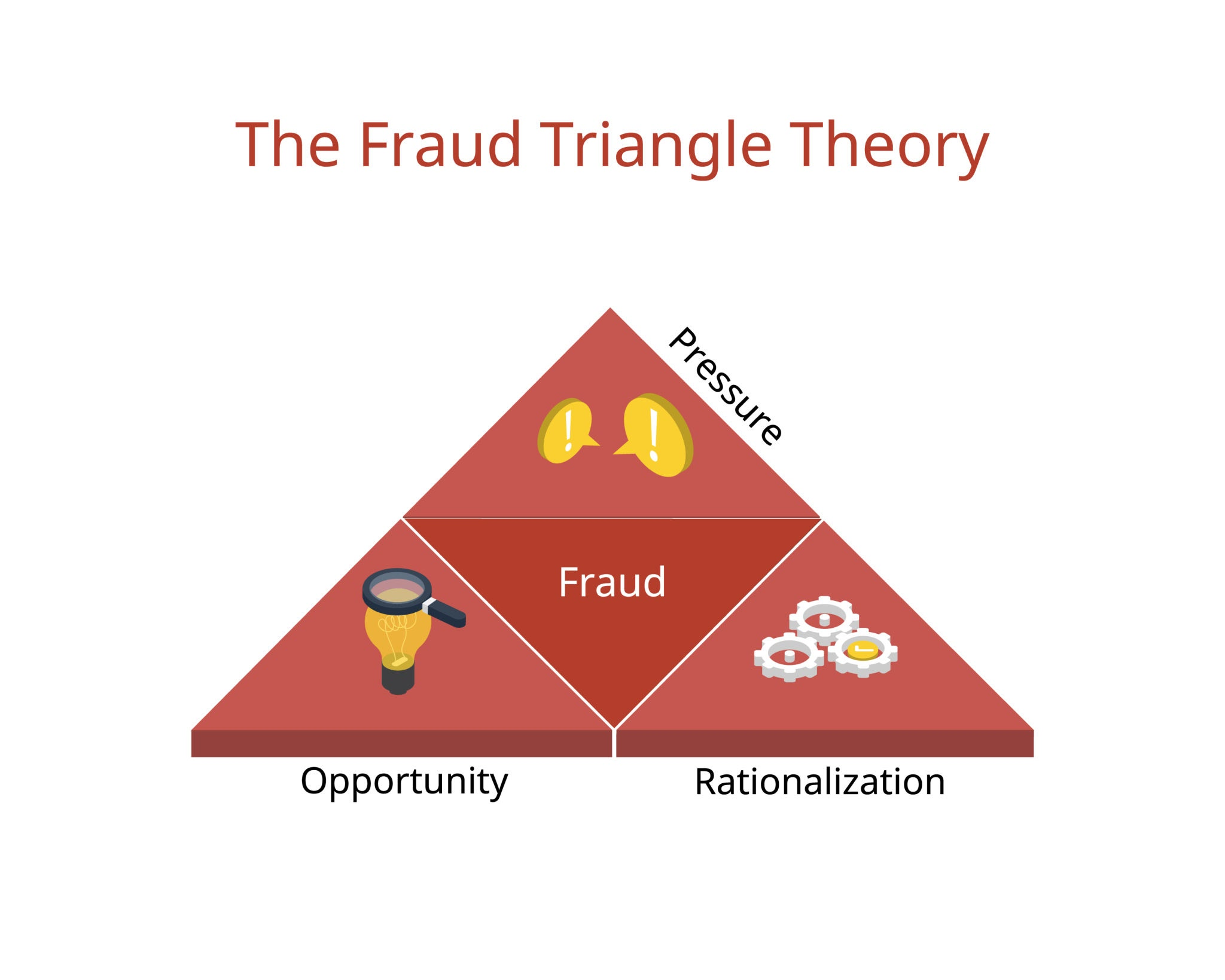
Breach of confidentiality – Subhash’s act violates trade secrecy and fiduciary duty.
Conflict of Interest: Prabhat’s personal financial crisis (EMIs, medical bills) is interfering with his duty to the company’s long-term reputation.
Integrity vs. Expediency (means vs ends): The temptation to choose a “quick fix” over a principled path.
Professional Ethics: Accepting a candidate solely because of “stolen data” undermines the merit-based recruitment process.
Character of the Candidate: Hiring a person who betrays their current employer.
Using a rival’s bid documents destroys the “Level Playing Field” essential for fair government tendering.
Political Pressure: The candidate’s CV coming from the Minister’s office suggests a potential “Quid Pro Quo” or political interference in corporate hiring.
Public interest vs private profit: any fraudulent activity could be seen as compromising national security.
Corporate governance failure – If Prabhat accepts, it sets a toxic precedent that the company rewards “Guts” and “Theft” over honesty and hard work.
If exposed, both Prabhat and the company could face legal and reputational risk.
Critical examination of options
Accept Subhash Verma’s offer and use rival’s bid documents
Merits
High chance of winning the tender quickly.
Saves Prabhat’s job and division in the short term.
Immediate financial relief for Prabhat.
Political Favor: Pleases the Minister’s office.
Demerits
Illegal and unethical under procurement law.
Risk of criminal prosecution and blacklisting of company.
Severe reputational damage and loss of public trust.
Violates the principle of Incorruptibility.
Hire Subhash but refuse to use stolen documents
Merits
Maintains formal legality if documents are not used.
Respects merit-based recruitment.
Political Balance: Honors the Minister’s recommendation.
Demerits
Risk of future leaks or misconduct by Subhash.
Indirectly rewards unethical behaviour.
Hiring someone known to be a thief is a breach of virtue ethics
Reject the offer and report misconduct
Merits
Upholds integrity and rule of law. (Deontological duty)
Protects company from legal and reputational risk.
Serves public interest and national security.
Sets a strong ethical example for his subordinates.
Demerits
Risk to Prabhat’s job in the short term.
Company may still lose the tender.
May annoy the Minister’s office who recommended the CV.
Delay decision and seek internal guidance
Merits
Avoids impulsive wrongdoing.
Allows consultation with legal/compliance team.
Shares responsibility institutionally.
Demerits
Evidence may be destroyed or misused.
Appears indecisive.
Does not resolve dilemma unless followed by refusal.
Most appropriate option and why
Chosen option: Option 3 – Reject and report misconduct
Course of action
Clearly refuse Subhash’s proposal.
Document the meeting in writing.
Inform Executive Director and Compliance/Vigilance team.
Alert Defence Ministry about possible bid leakage.
Justification
Commerce without morality is a sin (Gandhiji)
Upholds Rule of law: Defence procurement must be clean and transparent.
Probity: Integrity cannot be compromised for profit.
Corporate governance: Protects company from blacklisting.
Public interest: Safeguards national security.
Professional ethics: Rejects industrial espionage.
Long-term reputation: Ethical credibility outweighs one contract.
Personal conscience: Prabhat remains morally upright despite pressure.
“The ultimate measure of a man is not where he stands in moments of comfort and convenience, but where he stands at times of challenge and controversy.” – Martin Luther King Jr.
By choosing the ethical path, he protects the long-term existence of his company and his own dignity.
[Case Study 2] “You are appointed as an officer heading the section in the Environment Pollution Control Board to ensure compliance and its follow-up. In that region, there were a large number of small and medium industries which had been granted clearance. You learnt that these industries provide employment to many migrant workers. Most of the industrial units have got environmental clearance certificates in their possession. The environmental clearance seeks to curb industries and projects that supposedly hamper the environment and living species in the region. But in practice, Most of these units remain to be polluting units in several ways like air, water and soil pollution. As such, local people encountered persistent health problems. It was confirmed that the majority of the industries were violating environmental compliance. You issued notice to all the industrial units to apply for a fresh environmental clearance certificate from the competent authority. However, your action met with hostile response from a section of the industrial units, other vested interest persons and a section of the local politicians. The workers also became hostile to you as they felt that your action would lead to the closure of these industrial units, and the resultant unemployment will lead to insecurity and uncertainty in their livelihood. Many owners of the industries approached you with the plea that you should not initiate harsh action as it would compel them to sell their units, and cause huge financial loss, shortage of their products in the market. These would obviously add to the sufferings of the labourers and the consumers alike. The labour union also sent you a representation requesting against the closure of the units. You simultaneously started receiving threats from unknown corners. You however received support from some of your colleagues, who advised you to act freely to ensure environmental compliance. Local NGOs also came to your support and they demanded the closure of the polluting units immediately.
What are the options available to you under the given situation?
Critically examine the options listed by you.
What type of mechanism would you suggest to ensure environmental compliance?
What are the ethical dilemmas you faced in exercising your option?”
The above case reflects the tension between public health, ecological protection and livelihood security.
Guiding Principle –
Triple bottom line – people, profit, planet
Just transition – protect workers while enforcing environmental law.
Options available
Shutting down all violating units until they obtain fresh clearances and install pollution control equipment.
Implementing a time-bound, phased-compliance model that provides technical support for upgrading
Selective Enforcement: Targeting only the “heavy polluters” while ignoring smaller units to minimize social unrest.
Maintain the status quo under political pressure
Critical examination of options
Immediate closure
Merits
Strong signal of zero tolerance to pollution.
Immediate protection of public health.
Upholds rule of law and precautionary principle
Demerits
Massive unemployment for migrant workers.
Economic shock to local supply chains.
Likely political backlash and administrative pressure.
Phased compliance
Merits
Balances public health, justice and economic stability.
Gives industries realistic time to install pollution controls.
Reduces confrontation with workers and politicians.
Demerits
Risk of continued pollution if monitoring is weak.
Industries may delay compliance due to high cost
NGOs may perceive it as leniency.
Selective closure
Merits
Targets worst polluters first – principle of proportionality
Minimises overall job losses.
Demerits
Accusations of discrimination.
Potential political interference in classification.
Status quo
Merits
Avoids immediate conflict.
Protects jobs in the short term.
Demerits
Continues health damage.
Violates constitutional duty to protect environment.
Encourages impunity and corruption.
Mechanism to Ensure Environmental Compliance
Short-Term
Time-bound compliance notices with clear penalties.
Color-Coded Categorization: Publicly labeling units (Red/Orange/Green) based on compliance status.
Third-Party Audits to verify the “Actual vs. Reported” pollution levels.
Real-time pollution monitoring sensors in air and water outlets.
Community Health Camps: Using industrial CSR funds to treat locals’ persistent health problems immediately.
Direct Communication with Labor Unions to convince them about need for pollution control for worker and community safety
Joint inspections with PCB, local administration and health dept.
Public disclosure portal of polluters with colour-coded ratings.
Temporary production caps for high-polluting units.
Long-Term
Common Effluent Treatment Plants (CETP) for small units that cannot afford individual plants.
Industrial Relocation Policy: gradual shift of high-pollution units to dedicated zones away from residential clusters.
Facilitating low-interest bank loans for installing zero-liquid discharge (ZLD) technologies. Eg- Green technology transition fund for MSMEs.
Incentivising Circular Economy and waste to energy projects.
Polluter pays principle – Eg- environmental cess for remediation.
Stronger environmental courts/tribunals for fast-track cases.
Skill transition programmes for workers into green jobs. Eg- “Suryamitra” Skill Development Program
Community monitoring committees with NGOs and residents.
Ethical dilemmas faced
Environment vs livelihoods – choosing between ecological preservation and industrial growth.
Right to Health of community vs. Right to Work of migrants
Public health vs economic growth – whose interest prevails?
Administrative Autonomy vs. Political Interference: Maintaining professional neutrality against political pressure.
Justice vs pragmatism – strict action or negotiated compromise?
Intergenerational equity vs present employment – future rights vs today’s needs.
Precaution vs practicality – how fast to act?
Integrity vs personal safety – fear of threats and transfers.
Short term needs vs long term impact – lenient action to protect jobs may lead long term environmental and health hazards
The “Polluter Pays” Dilemma: Ensuring the owners pay for the damage without causing the unit to go bankrupt and hurt the consumers.
“The Earth provides enough to satisfy every man’s needs, but not every man’s greed.” – Mahatma Gandhi
Strong enforcement, fair timelines and technological support can transform this crisis into a model of sustainable and humane industrial governance.
[Case Study 3] “Rakesh was working as a Joint Commissioner in the Transport department of a city. As a part of his job profile, among others, he was entrusted with the task of overseeing the control and functioning of the City Transport Department. A case strike by drivers’ union of the City Transport Department over the issue of compensation to a driver who died on duty while driving the bus came up before him for decision in the matter. He gathered that the driver (deceased) was driving Bus No. 528 which passed through busy and congested roads of the city. It so happened that near an intersection on the way, there was an accident involving a middle-aged man. It was found that there was an altercation between the driver and the car driver. Heated arguments between them led to a fight and the driver gave him a blow. A lot of passersby had gathered and tried to intervene but without success. Eventually, both of them were badly injured and profusely bleeding and were taken to the nearby hospital. The driver succumbed to the injuries and could not be saved. The middle-aged driver’s condition was also critical but after a day, he recovered and was discharged. Police had immediately come to the spot and an FIR was registered. Police investigation revealed that the quarrel was started by the bus driver and he had resorted to physical violence. There was an exchange of blows between them. The City Transport Department management is considering not giving any extra compensation to the driver’s (deceased) family. The family is very aggrieved, depressed and agitated against the discriminatory and non-sympathetic approach of the City Transport Department management. The bus driver (deceased) was 52 years of age, was survived by his wife and two school-college going daughters. He was the sole earner of the family. The City Transport Department workers’ union took up this case and when found no favourable response from the management, decided to go on strike. The union’s demand was two fold. First was full extra compensation as given to other drivers who died on duty and secondly employment to one family member. The strike has continued for 10 days and the deadlock remains.
What are the options available to Rakesh to meet the above situation?
Critically examine each of the options identified by Rakesh
What are the ethical dilemmas being faced by Rakesh?
What course of action would Rakesh adopt to diffuse the above situation?
According to the MoRTH 2024 report, India witnesses over 4.6 lakh accidents annually, resulting in approximately 1.68 lakh fatalities. The above case reflects a conflict between administrative justice and humanitarian compassion. The prolonged strike has converted an individual grievance into a public order and governance crisis.
Guiding Principle – Justice as fairness (Rawls)
Stakeholders
Deceased driver’s family
Drivers’ union
Transport Department
Commuters/public
Rakesh (JC Transport)
Police
State government
Options available and critical examination
Reject union demands completely – No extra compensation, no compassionate job.
Merits
Upholds Rule of Law and Zero-Tolerance for violence
Prevents moral hazard of rewarding violence.
Maintains administrative discipline.
Demerits
Violates Compassion and Humanitarian ethics.
Likely to prolong strike, harming public interest.
Erodes trust in government empathy.
ignores the factor of “occupational stress.”
Accept union demands fully – Grant full extra compensation + job to one family member.
Merits
Ends strike quickly.
Demonstrates solidarity and empathy.
prevents the family from falling into poverty
Demerits
Rewards misconduct, violating accountability.
Sets bad precedent for future cases.
Cab be seen as a “surrender” of management
Middle path – Reject compensation but announce employment to family member after training.
Merits
Balances justice with compassion.
Recognises family’s hardship without glorifying violence.
Likely to reduce industrial unrest.
Demerits
Union may still resist.
Family will not get compensation
Children may have to dropout from college
Order inquiry, give immediate interim aid, and negotiate with union to end strike.
Merits
Ensures due process and fairness.
Provides immediate humanitarian relief.
Builds legitimacy of final decision.
Demerits
Takes time and strike may continue.
Possible political pressure.
Ethical dilemmas faced by Rakesh
Rule of law vs compassion – punish wrongdoing or protect family?
Neutrality vs Empathy: Remaining objective despite the emotional plea of a grieving family.
Individual fault vs family innocence – driver made mistake, but family is blameless.
Public interest vs workers’ rights – prolonged strike for compensation impacting public transport
Discipline vs empathy – maintaining order while being humane.
Precedent vs exception – challenge to avoid bad precedent and to take care of family.
Justice vs pragmatism – strict rule adherence may worsen strike.
Short-term measures vs long-term impact – compensation may end strike but can lead to similar behaviour by drivers in future
Parens Patriae: The duty of the state to act as a guardian for those who cannot help themselves (the minor daughters).
Course of action Rakesh should adopt
Immediate Release of Statutory Dues. Eg- PF, Gratuity, and Insurance
Order independent fact-finding inquiry
Include legal, transport, labour and police representatives.
Examine CCTV, witnesses, duty conditions, and driver’s record.
Structured dialogue with union
Clarify that violence cannot be rewarded.
Assure that family hardship will be addressed.
Based on inquiry
Grant or reject compensation and communicate the same to family and union with detailed facts
Make the report public
Offer conditional compassionate employment after training in a suitable role.
Recommend systemic reforms
Anger Management and Stress Relief Workshops for drivers
Panic buttons and CCTV in buses.
Grievance helpline for drivers.
Justice must be firm, but governance must be humane.
By harmonising law and compassion, Rakesh can ensure protect the vulnerable family, and restore essential services without undermining discipline.
[Case Study 4] “Ramesh is a State Civil Services Officer who got the opportunity of getting posted to the capital of a border State after rendering 20 years of service. Ramesh’s mother has recently been diagnosed with cancer and has been admitted in the leading cancer hospital of the city. His two adolescent children have also got admission in one of the best public schools of the town. After settling down in his appointment as Director in the Home Department of the State, Ramesh got a confidential report through intelligence sources that illegal migrants are infiltrating in the State from the neighbouring country. He decided to personally carry out surprise checks of the border posts along with his Home Department team. To his surprise, he caught red-handed two families of 12 members infiltrated with the connivance of the security personnel at the border posts. On further inquiry and investigation, it was found that after the migrants from neighbouring countries infiltrate, their documentation like Aadhaar Card, Ration Card and Voter Card are also forged and they are made to settle down in a particular area of the State. Ramesh prepared the detailed and comprehensive report and submitted it to the Additional Secretary of the State. However, he was summoned by the Additional Home Secretary after a week and was instructed to withdraw the report. The Additional Home Secretary informed Ramesh that the report submitted by him has not been appreciated by the higher authorities. He further cautioned him that if he fails to withdraw the confidential report, he will not only be posted out from the prestigious appointment from the State capital but his further promotion which is due in near future will also get in jeopardy.
What are the options available to Ramesh as the Director of the Home Department of the bordering State?
What option should Ramesh adopt and why?
Critically evaluate each of the options.
What are the ethical dilemmas being faced by Ramesh?
What policy measures would you suggest to combat the menace of infiltration of illegal migrants from the neighbouring country?”
As per MHA, illegal immigrants are those who enter the country without valid travel documents in a clandestine and surreptitious manner.
The above case study presents a dilemma between National Security and Personal Welfare for Ramesh.
Options available to Ramesh and critical evaluation
Withdraw the report quietly
Merits
Saves his current posting in the capital.
Protects his upcoming promotion.
Avoids immediate conflict with seniors.
Demerits
Becomes complicit in illegality and corruption.
Undermines national security and border integrity.
Betrays public trust and constitutional duty.
Legally and morally unacceptable
Refuse to withdraw and stand by the report
Merits
Upholds rule of law and integrity.
Protects national security and public interest.
Sends a strong signal against corruption.
Demerits
High risk of transfer.
Possible career retaliation.
May face administrative isolation.
Modify or dilute the report
Merits
Partially appeases higher authorities.
Reduces personal risk somewhat.
Keeps some facts on record.
Demerits
Distorts truth and weakens accountability.
Enables continued infiltration.
Violates professional integrity.
Leak the report to media
Merits
Creates public pressure for action.
Exposes wrongdoing quickly.
May force government to act.
Demerits
Violates confidentiality and service rules.
potential legal action against him
May politicize the issue and harm state security.
Option to choose – Option 2
Refuse to withdraw the report in writing.
Submit a formal dissent note explaining his reasons.
Escalate the matter to:
Home Secretary / Chief Secretary
Chief Minister
State Vigilance / Anti-Corruption Bureau
Keep records of all communications for protection.
Justification
Deontological ethics – duty over self
Upholds rule of law.
Leadership by example
Protects national security over personal career.
Maintains professional integrity and probity.
Uses institutional channels, not media or politics.
Creates an official record that cannot be erased.
Balances courage with procedural correctness.
Ethical Dilemmas Faced by Ramesh
Personal vs. Professional Duty: conflict between being a “Good Son/Father” and “Good Officer”
Integrity vs. Survival: Choosing between a “Clean Conscience” and a “Clean Career Record.”
Short-term Family Stability vs. Long-term National Security.
Obedience to Superiors vs. Obedience to Law
Whistleblower’s Dilemma: Whether to stay within the system and fight or go public.
Social responsibility vs Career ambitions
Suggested Policy Measures to Combat Infiltration
Integrated Border Surveillance System with drones, sensors, CCTV and AI analytics.
A dedicated Infiltration Combat Cell comprising BSF, RAW, IB, and State Police.
Zero-Tolerance Corruption Policy: Immediate dismissal and criminal prosecution for any security personnel found facilitating illegal crossings.
Regular Audits of “New Settler” Clusters where sudden demographic shifts are noted.
Diplomatic repatriation treaties with neighboring countries for the time-bound return of apprehended illegal migrants.
Strengthening the Whistleblowers Protection Act to ensure that officers like Ramesh are not transferred or harassed.
“The ultimate measure of a man is not where he stands in moments of comfort and convenience, but where he stands at times of challenge and controversy.” – Martin Luther King Jr.
Thus, Ramesh must stand firm on truth and legality, even at personal cost.
[Case Study 5] “The Supreme Court has banned mining in the Aravalli Hills to stop degradation of the forest cover and to maintain ecological balance. However, the stone mining is still prevalent in the border district of the affected State with connivance of certain corrupt forest officials and politicians. A young and dynamic SP who was recently posted in the affected district promised to himself to stop this menace. In one of his surprise checks with his team, he found a truck loaded with stone trying to escape the mining area. He tried to stop the truck but the truck driver overran the police officer, killing him on the spot and thereafter managed to flee. Police filed FIR but no breakthrough was achieved in the case for almost three months. Ashok who was the Investigative Journalist working with leading TV channel, suo moto started investigating the case. Within one month, Ashok got breakthrough by interacting with local people, stone mining mafia and government officials. He prepared his investigative story and presented it to the CMD of the TV channel. He exposed in his investigative report the complete nexus of the stone mafia working with the blessing of corrupt police and civil officials and politicians. The politician who was involved in the mafia was no one else but a local MLA who was considered to be very close to the Chief Minister. After going through the investigative report, the CMD advised Ashok to drop the idea of making the story public through electronic media. He informed that the local MLA was not only the relative of the owner of the TV channel but also had unofficially 20 percent share in the channel. The CMD further informed Ashok that his further promotion and hike in pay will be taken care of in addition the soft loan of 10 lakhs which he has taken from the TV channel for his son’s chronic disease will be suitably adjusted if he hands over the investigative report to him.
What are the options available with Ashok to cope up with the situation?
Critically evaluate/examine each of the options identified by Ashok.
What are the ethical dilemmas being faced by Ashok?
Which of the options, do you think, would be the most appropriate for Ashok to adopt and why?
In the above scenario, what type of training would you suggest for police officers posted to such districts where stone mining illegal activities are rampant?
This case highlights the risks faced by honest officers due to criminals-politicians nexus and the pressure on the “Fourth Estate” to choose profit over pursuit of truth.
Guiding Principle for Ashok – “Satyameva Jayate” – Truth alone triumphs
Options available to Ashok and critical evaluation
Drop the report and accept CMD’s offer
Merits
Protects his job and career advancement.
Secures financial relief for his son’s medical treatment.
Avoids confrontation with powerful politicians and media owners.
Demerits
Betrays journalistic ethics and public trust.
Allows continued environmental destruction.
Encourages corruption and impunity.
Makes Ashok complicit in wrongdoing.
Resign from the channel and publish the story through another media house
Merits
Preserves journalistic integrity.
Maintains his conscience and his professional legacy.
Exposes environmental crime and political nexus.
Demerits
Risk of legal harassment, threats, or physical danger.
Financial insecurity due to resignation.
Possible blacklisting by other media houses.
Submit the report to CBI or police for formal investigation
Merits
Strengthens rule of law and due process.
Protects Ashok from direct political retaliation.
Triggers institutional accountability.
Demerits
Investigation may be delayed or sabotaged.
Risk of leak and intimidation.
Media exposure may still be suppressed
Ethical Dilemmas Faced by Ashok
Truth vs. Loyalty: Duty to tell the truth vs. loyalty to the CMD who provided him a “soft loan.”
Personal Interest vs. Public Interest: Taking a stand against a powerful nexus vs. playing it “safe” for his family.
Confidentiality vs. Disclosure: Holding onto a secret report vs. the moral obligation to expose the truth.
Journalistic independence vs corporate control of media
Whistleblowing vs personal safety
Duty to society vs loyalty to employer – Right to clean environment of citizens clashing with right to life of his son.
Conscience vs career advancement – promotion by compromising on integrity
Most appropriate option and justification
Option 2 and 3 – Resigning and taking it to other media house while simultaneously submitting report to investigation agencies
Justification
Protects truth and public interest – ensures that truth is not buried by corporate-political nexus.
Balances ethics with legality
Media exposure protects the right of the public to know.
Legal submission respects rule of law and due process.
Strengthens environmental enforcement.
Ensures personal safety. (whistleblower protection)
Prevents institutional cover-up – Public exposure through another media house creates pressure for transparent and timely action.
Safeguards journalistic integrity and professional credibility of Ashok.
Training suggested for police officers in illegal mining areas
Environmental law training – Familiarity with SC rulings, Forest Act, Mining laws.
Anti-corruption vigilance. Eg- Periodic integrity checks at checkpoints.
Digital surveillance skills – Use drones, GPS tracking, and CCTV analytics.
Conflict de-escalation training for handling violent smugglers without excessive force.
Inter-agency coordination – Collaboration with Forest Dept, Pollution Board, Revenue officials.
Forensic training for proper documentation of seized trucks, stones, and equipment.
Personal safety training and provision of protective gear. Eg- High-visibility jackets, body cams.
Ethics and probity training – Emphasis on integrity and public duty.
Training on whistleblower protection protocols to ensure anonymity of whistleblowers
Strengthening community policing – Build trust with villagers to get intelligence
“The only thing necessary for the triumph of evil is for good men to do nothing.” – Edmund Burke
By choosing integrity Ashok can honor the sacrifice of the young SP and protect the ecological heritage of the nation.
[Case Study 6] “You have done MBA from a reputed institution three years back but could not get campus placement due to COVID-19 generated recession. However, after a lot of persuasion and a series of competitive tests including written and interview, you managed to get a job in a leading shoe company. You have aged parents who are dependent and staying with you. You also recently got married after getting this decent job. You were allotted the Inspection Section which is responsible for clearing the final product. In the first one year, you learnt your job well and was appreciated for your performance by the management. The company has been doing good business for the last five years in the domestic market and this year it is even decided to export to Europe and Gulf countries. However, one large consignment to Europe was rejected by their Inspecting Team due to certain poor quality and was sent back. The top management ordered that ibid consignment to be cleared for the domestic market. As a part of the Inspecting Team, you observed the glaring poor quality and brought to the knowledge of the Team Commander. However, the top management advised all the members of the team to overlook these defects as the management cannot bear such a huge loss. The rest of the team members except you promptly signed and cleared the consignment for the domestic market, overlooking glaring defects. You again brought to the knowledge of the Team Commander that such consignment, if cleared even for the domestic market, will tarnish the image and reputation of the company and will be counter-productive in the long run. However, you were further advised by the top management that if you do not clear the consignment, the company will not hesitate to terminate your services citing certain innocuous reasons.
Under the given conditions, what are the options available to you as a member of the Inspecting Team?
Critically evaluate each of the options listed by you.
What option would you adopt and why?
What are the ethical dilemmas being faced by you?
What can be the consequences of overlooking the observations raised by the Inspecting Team?
The case highlights a conflict between corporate profit, professional integrity, and consumer safety. Here, a young professional is torn between his job security, personal responsibilities and his honesty.
Guiding Principle – “Satya, Seva and Uttardayitva” – Truth, Service and Accountability
Options available and critical evaluation
Sign and clear the defective consignment
Merits
Saves my job in the short run.
Avoids conflict with top management.
Prevents immediate financial loss to the company.
Demerits
Violates consumer rights and product safety.
Damages company reputation in the long term.
Ethical Egoism: Prioritizing personal survival over the collective good.
Sets wrong precedent for future.
Refuse to sign and blow the whistle externally
Merits
Protects public interest and consumer safety.
Exposes unethical corporate practice.
Forces accountability through regulators.
Demerits
“Innocuous” termination may tarnish future career prospects.
Possible legal harassment and defamation case.
Personal and family financial insecurity.
Persuade management internally; resign if it fails
Merits
Virtue Ethics: Seeking the “Golden Mean” between silence and rashness.
Uses institutional channels first (professional maturity)
Gives management a chance to act ethically.
Protects my conscience and professional credibility.
Resignation is a more “graceful” exit than termination.
Demerits
Management may still ignore concerns.
Finding a new job in a post-recession market is difficult
Financial strain on family
Option to choose and justification
I would choose option 3
Document Technical Dissent – Present technical evidence of defects
Formal Persuasion
Explain potential impact on brand image
Highlight potential financial loss in long term
Propose Alternative Solutions – selling the batch as “Factory Seconds” or through a “Discount Outlet”
Principled Resignation – If management reject the alternative then resign.
Justification
Upholds corporate governance – commerce with morality
Aligns with professional integrity and Deontological Ethics
Moral peace and conscience- I do not carry lifelong guilt of knowingly allowing substandard goods.
Professional credibility – Even if I resign, my ethical stand strengthens my reputation in the industry.
Protection from being complicit- I avoid becoming part of corporate wrongdoing.
Protection of brand reputation and company’s credibility in domestic and international markets.
Protection of consumer rights- ensures fair value for money
Ethical Dilemmas Faced
Integrity vs. Survival: The struggle between professional honesty and the need to pay for a mother’s medicine or a spouse’s needs.
Ethics of Care vs. Ethics of Justice: Duty toward one’s own family vs. the duty to be fair to the domestic consumers.
Domestic vs. Global Standards: The moral question of whether domestic (Indian) consumers deserve lower quality than European ones.
Conscience vs. Collective pressure: Being a “team player” vs. listening to the inner voice.
Loyalty to employer vs duty to society
Long-term Brand vs. Short-term Profit: Saving the company’s “Face” (Reputation) vs. saving its “Balance Sheet” (Loss).
The “Recession Trauma”: The psychological fear of returning to the days of “unemployment”.
Whistleblower’s Fear: The anxiety of being labeled a “troublemaker” in the industry.
Moral Hazard: Fear of management using this “leverage” to force me into bigger frauds later.
Consequences of overlooking defects
For consumers
Risk of injuries or health problems.
Loss of trust in the brand.
Financial loss due to poor quality.
exploitation- domestic consumers treated as dumping ground for rejected exports.
For company
Severe reputation damage in domestic market.
Legal action under Consumer Protection Act.
Loss of future export opportunities.
Product recall costs and penalties.
Decline in market share.
For me (Inspector)
Moral guilt and professional compromise.
Possible legal liability if harm occurs.
“It takes 20 years to build a reputation and five minutes to ruin it.” – Warren Buffett
By upholding quality, integrity, and consumer safety over short term profit, I can uphold my professional duty.
2021
[Case Study 1] Pawan has been working as an officer in the State Government for the last ten years. As a part of the routine transfer, he was posted to another department. He joined a new office along with five other colleagues. The head of the office was a senior officer conversant with the functioning of the office. As a part of general inquiry, Pawan gathered that his senior officer carries the reputation of being a difficult and insensitive person having his own disturbed family life. Initially, all seemed to go well. However, after some time Pawan felt that the senior officer was belittling him and at times unreasonable. Whatever suggestions given or views expressed by Pawan in the meetings were summarily rejected and the senior officer would express displeasure in the presence of others. It became a pattern of the boss’s style of functioning to show him in a bad light highlighting his shortcomings and humiliating him publicly. It became apparent that though there are no serious work-related problems/shortcomings, the senior officer was always on one pretext or the other and would scold and shout at him. The continuous harassment and public criticism of Pawan resulted in the loss of confidence, self-esteem and equanimity. Pawan realized that his relations with his senior officer are becoming more toxic and due to this, he perpetually tensed, anxious and stressed. His mind was occupied with negativity and caused him mental torture, anguish and agony. Eventually, it badly affected his personal and family life. He was no longer joyous, happy and content even at home. Rather without any reason, he would lose his temper with his wife and other family members. The family environment was no longer pleasant and congenial. His wife who was always supportive of him also became a victim of his negativity and hostile behaviour. Due to harassment and humiliation suffered by him in the office, comfort and happiness virtually vanished from his life. Thus, it damaged his physical and mental health.
What are the options available with Pawan to cope up with the situation?
What approach Pawan should adopt for bringing peace, tranquillity and a congenial environment in the office and home?
As an outsider, what are your suggestions for both boss and subordinate to overcome this situation and for improving the work performance, mental and emotional hygiene?
In the above scenario, what type of training would you suggest for officers at various levels in the government offices?”
“Leadership is not about being in charge. It is about taking care of those in our charge.” – Simon Sinek
However, the above case of Pawan highlights the issue of Workplace Bullying and the Spillover Effect, where toxicity at the office seeps into personal life.
Options Available to Pawan
Formal Grievance Redressal: Report the behavior to the higher-ups or the HR/Administrative department citing harassment.
Seek a Transfer to another department or branch on personal/medical grounds. If not granted, consider resignation as a last resort to save his health.
Professional Confrontation: Request a one-on-one meeting with the boss to calmly discuss the impact of his communication style on work productivity.
Counselling and Meditation: Seek professional therapy to manage stress and start daily mindfulness practices to decouple his self-esteem from the boss’s outbursts.
Collective Confrontation: Communicate with other colleagues who are facing similar issues and confront the boss in a meeting or submit a joint representation to higher management.
Approach for Peace and Tranquillity
At the Office
Cognitive Reframing: Realize that the boss’s anger is a projection of his own disturbed family life, not a reflection of Pawan’s competence.
Meet with the boss to communicate the concerns and understand his expectations.
Emotional regulation – Respond calmly, avoid reactive behaviour.
Evidence Documentation: Maintain records of all task submissions and irrational rejections to counter future performance allegations.
Use the “Grey Rock” Method: communication pattern to deliberately act unresponsive and uninterested to encourage disengagement with difficult people.
Seek Mentorship: Connect with other seniors in the department to gain perspective and validation.
Setting Boundaries: Strictly avoid work-related discussions during lunch or after-hours.
Emotional Anchoring: Use small triggers (like a photo on the desk) to remain calm.
At home
Separation of roles – Do not carry office stress home.
Open communication with spouse, apologize for the recent hostility, and explain the root cause.
Self-reflection – Acknowledge stress triggers.
Family engagement – Quality time with loved ones.
Counselling support – Seek help without stigma.
Avoid work-related communication during family hours to restore a safe psychological space – Exercise Right to Disconnect
Regular physical activity to deplete the cortisol levels generated by chronic workplace anxiety.
Suggestions as an outsider for boss and subordinate
For the Senior Officer (Boss)
Develop Self-Awareness through the Johari Window model to realize how his “disturbed family life” is blinding his leadership.
Seek Professional Counseling for his personal issues rather than using subordinates as psychological punching bags.
Implement a “Zero-Shouting Policy” in meetings to maintain a professional decorum.
Participative management – Encourage ideas, even when rejecting them.
Emotional intelligence training – Recognise impact of behaviour on staff.
Organise Conflict Resolution Workshops mediated by a neutral third party.
The boss should learn the “Sandwich Method” of feedback (Positive-Constructive-Positive).
Mentorship approach – Guide rather than intimidate.
Feedback Loop: Establish a safe, anonymous channel for “Reverse Feedback” where subordinates can evaluate the leadership style of seniors.
Ensuring Psychological Safety for subordinates: Eg- Microsoft’s “Growth Mindset” culture encourages learning from failures rather than hiding them.
For Pawan (Subordinate)
Assertive communication – Firm yet respectful dialogue.
Avoid victim mindset – Focus on growth and learning.
Preserve self-respect and dignity – stand up against humiliation and abuse
Develop Emotional Resilience to ensure that his self-worth is internally validated, not externally dictated.
Suggested Training for Government Officers
EI Workshops: Training on self-regulation and empathy. Eg- Search Inside Yourself program by Google).
Soft Skills: Training on non-violent communication (NVC) for higher bureaucracy.
Transformational Leadership Training: Moving from “Boss” to “Coach” .
Training officers to identify signs of burnout and stress in themselves and their teams.
360-Degree Feedback Mechanisms and inclusion of behavioural metrics in performance reviews
Conflict Management & Mediation training for handling departmental friction without escalation
Stress Management by institutionalizing “Yoga Breaks”. Use AYUSH Ministry’s ‘Y-Break’ app.
Diversity and Inclusion (D&I) Training: Sensitizing seniors to the diverse backgrounds and psychological needs of their teams.
Role playing training to help understand perspectives, expectations and concerns of team members
“A healthy workplace is not built by power, but by respect.”
Pawan’s situation highlights that administrative competence is useless without emotional competence. Thus, a “psychologically safe” environment is non negotiable for success of any organisation.
[Case Study 2] You are Vice Principal of a degree college in one of the middle-class towns. The principal has recently retired and management is looking for his replacement. There are also feelers that the management may promote you as Principal. In the meantime, during the annual examination, the flying squad which came from the university caught two students red-handed involving unfair means. A senior lecturer of the college was personally helping these students in this act. This senior lecturer also happens to be close to the management. One of the students was the son of a local politician who was responsible for getting the college affiliated to the present reputed university. The second student was the son of a local businessman who has donated maximum funds for running the college. You immediately informed the management regarding this unfortunate incident. The management told you to resolve the issue with the flying squad at any cost. They further said that such an incident will not only tarnish the image of the college but also the politician and the businessman are very important personalities for the functioning of the college. You were also given a hint that your further promotion to Principal depends on your capability in resolving this issue with the flying squad. In the meantime, you were intimidated by your administrative officer that certain members of the student union are protesting outside the college gate against the senior lecturer and the students involved in this incident are demanding strict action against defaulters.
Discuss the ethical issue involved in the case.
Critically examine the options available with you as Vice Principal.
What option will you adopt and why?
Academic integrity is the cornerstone of the educational system. Recent incidents, like the NEET-UG paper leaks, have triggered a national debate on the erosion of merit and the deep-seated nexus between administrators, politicians, and the coaching mafia.
Stakeholders Involved
The Vice Principal
The Two Students
The Senior Lecturer
The Management
The University Flying Squad
The Student Union & Honest Students
The Politician & Businessman
Guiding Principle – Satyam Vada Dharmam Chara – Speak the truth and follow righteousness.
Ethical issues involved in the case
Cheating in the exam – Unethical and illegal means used for success (violates deontology)
Violation of “ethical responsibility” by teacher – helping in cheating rather than imparting honesty
Institutional image – Taking strict action can lead to reputational damage for college
Conflict of interest – Management’s closeness to the accused lecturer and influential parents.
Meritocracy vs nepotism – Unfair advantage to students due to lineage and donations.
Personal ambition vs professional ethics – Vice Principal’s promotion linked to unethical compromise.
Student trust – Credibility of examination system at stake.
Injustice for other students – inaction or cancellation of examination can cause waste of academic year
Risk of slippery slope – saving students and teacher can embolden criminals to continue malpractices
Options available and critical examination
Comply with management and “settle” the issue with the flying squad (through bribe)
Merits
Protects short-term image by suppressing the issue
Secures management goodwill and promotion
Continued funding and political support for college
Demerits
Complicity in wrongdoing
Violates academic ethics and university rules
High risk of exposure and legal consequences
Destroys institutional credibility
violates integrity, justice, accountability
Escalate the matter formally to university authorities – recommend strict against students and suspend teacher
Merits
Upholds rule of law and fairness
Aligns with integrity, impartiality, courage
Addresses student union’s demand for justice
Protects long-term reputation of college
Shields administrator through due process
Demerits
Loss of management favour
Political pressure and career risk
Loss of funding for college
Selective Action – Suspend Lecturer but take spare students by giving “strict warning”
Merits
Punishes the facilitator.
Easier to convince management considering student union protest
Can deter other teachers from participating in such malpractices
Saves the career of students
Demerits
Management may not be satisfied as teacher is “close”
Student union’s demand not met
Option adopted and justification – Option 2
Course of Action
Fully cooperate with the flying squad
Ensure strict action against students and lecturer as per university norms
Document facts objectively
Formally inform university authorities
Manage student unrest through transparent communication
Justification
Preserves sanctity of examinations
Ensures equality before law – no immunity for power or money
Protects long-term institutional credibility
Aligns with public interest and meritocracy
Justice for other student – Ensures a level playing field
Prevents recurrence of malpractice
Provides legal and moral protection through due process
Demonstrates ethical leadership expected of an academic head
“Short-term embarrassment is preferable to long-term institutional decay.”
By choosing transparency and rule-based action, the Vice Principal upholds the “true” values of education.
[Case Study 3] The coronavirus disease (COVID-19) pandemic has quickly spread to various countries. As of May 8th, 2020, in India 56342 positive cases of corona had been reported. India with a population of more than 1.35 billion had difficulty in controlling the transmission of coronavirus among its population. Multiple strategies became necessary to handle this outbreak. The Ministry of Health and Family Welfare of India raised awareness about this outbreak and to take all necessary actions to control the spread of COVID -19. Indian Government implemented a 55-day lockdown throughout the country to reduce the transmission of the virus. Schools and colleges had shifted to alternative modes of teaching-learning-evaluation and certification. Online mode has become popular these days. India was not prepared for a sudden onslaught of such a crisis due to limited infrastructure in terms of human resources, money and other facilities needed for taking care of this situation. This disease did not spare anybody irrespective of caste, creed, religion on one hand and ‘have and have not’ on the other. Deficiencies in hospital beds, oxygen cylinders, ambulances, hospital staff and crematorium were the most crucial aspects. You are a hospital administrator in a public hospital at the time when coronavirus had attacked a large number of people and patients were pouring into the hospital day in and day out.
What are your criteria and justification for putting your clinical and non-clinical staff to attend to the patients knowing fully well that it is a highly infectious disease and resources and infrastructure are limited?
If yours is a private hospital, whether your jurisdiction and decision would remain the same as that of a public hospital?”
The COVID-19 pandemic was an unprecedented public health emergency that exposed systemic vulnerabilities in healthcare infrastructure across the world. As a hospital administrator in a public facility, my primary challenge is to balance the Duty to Treat with the Duty to Protect healthcare workers (HCWs) while managing acute shortages in oxygen, beds, and PPE.
Stakeholders Involved
COVID-19 Patients
Clinical Staff and Non-clinical Staff
Hospital Administration
Government
Families of Staff and Patients
Society at large
Guiding principle – Karma Pradhanam Jagat – The world is driven by action
Criteria and justification for deploying clinical and non-clinical staff
Criteria for Deployment
Medical urgency and patient load- Priority deployment in emergency, ICU, oxygen wards, and triage areas.
Skill-based allocation
Trained clinicians for critical care
Non-clinical staff for logistics, sanitation, crowd management
Risk stratification of staff
Younger staff without comorbidities in high-risk zones
Pregnant, elderly, or comorbid staff reassigned to low-risk roles
Availability of minimum safety gear- Deployment only where basic PPE and infection-control protocols are ensured.
Duty-hour regulation – Short shifts, rotational postings to reduce exposure and burnout.
Voluntarism and informed consent (as far as possible)- Clear communication of risks and preference to volunteers for COVID wards.
Availability of psychological and physical support- Counselling, rest areas, accommodation, food, and transport.
Legal and policy backing- Actions aligned with MoHFW guidelines, ICMR protocols, and Disaster Management Act.
Ethical Justification
Balancing utilitarianism and deontology – ensuing “maximum welfare” as well as adherence to duty of care
Principle of Beneficence: Maximizes patient recovery rates by matching clinical skills with patient severity.
Justice – Equitable distribution of risk, not coercion
Professional duty – Core obligation of healthcare workers
Reciprocity – Hospital and state owe protection, insurance, and compensation
Proportionality – Risks imposed are necessary and minimized
Solidarity – Collective response to a common threat
Transparency – Builds trust and morale among staff
In a pandemic, private hospitals function as public utilities. Profit considerations cannot override the right to life. Thus, my approach will be ethically similar but operationally different.
Similarities
Ethical duty to treat during a pandemic
Compliance with government directions under Disaster Management Act
Non-discrimination of patients
Obligation to ensure staff safety
Adherence to clinical and safety protocols
Differences
As a hospital administrator, decisions must balance saving lives and safeguarding caregivers, guided by justice, reciprocity, and transparency. Whether public or private, healthcare institutions carry a shared moral responsibility to humanity.
[Case Study 4] An elevated corridor is being constructed to reduce traffic congestion in the capital of a particular state. You have been selected as project manager of this prestigious project on your professional competence and experience. The deadline is to complete the project in the next two years by 30 June 2021, since the project is to be inaugurated by the Chief Minister before the elections are announced in the second week of July 2021. While carrying out the surprise inspection by the inspecting team, a minor crack was noticed in one of the piers of the elevated corridor possibly due to poor material used. You immediately informed the chief engineer and stopped further work. It was assessed by you that a minimum of three piers of the elevated corridor have to be demolished and reconstructed. But this process will delay the project minimum by four to six months. But the chief engineer overruled the observation of the inspecting team on the ground that it was a minor crack that will not in any way impact the strength and durability of the bridge. He ordered you to overlook the observation of the inspecting team and continue working with the same speed and tempo. He informed you that the minister does not want any delay as he wants the Chief Minister to inaugurate the elevated corridor before the elections are declared. Also informed you that the contractor is a distant relative of the minister and he wants him to finish the project. He also gave you a hint that your further promotion as an additional chief engineer is under consideration by the ministry. However, you strongly felt that the minor crack in the pier in the elevated corridor will adversely affect the health and life of the bridge and therefore it will be very dangerous not to repair the elevated corridor.
Under the given conditions, what are the options available to you as a project manager?
What are the ethical dilemmas being faced by the project manager and his response to overcome such challenges?
What are the professional challenges likely to be faced by the project manager and his response to overcome such challenges?
What can be the consequences of overlooking the observation raised by the inspecting team?
The collapse of Majerhat Bridge in Kolkata or Morbi suspension bridge failure highlight how engineering negligence, political pressure, and compromised quality control can result in loss of innocent lives. This case places the project manager at the intersection of public safety, professional integrity, and political interference.
Guiding Principle – “Karmanyeva Adhikaraste Ma Phaleshu Kadachana” (Perform your duty without attachment to the results)
Stakeholders Involved
General Public / Commuters
Project Manager (You)
Chief Engineer
Contractor
Minister / Political Executive
State Government / CMO
Inspecting Team
Options Available to the Project Manager
Continue construction to meet the June 2021 deadline. This secures personal promotion but risks a catastrophic structural failure.
Exercise executive power to halt work and reconstruct the piers. This upholds safety but invites professional retaliation and career jeopardy.
Submit a detailed technical report to the Chief Minister’s Office and the State Vigilance Commission.
Requests removal from the project. This preserves personal “purity” but allows the defective bridge to be completed by a more compliant successor.
Whistleblowing: Leaks the inspection report to the media to generate public pressure for repairs. This ensures transparency but violates civil service conduct rules.
Ethical Dilemmas and Response
Public Safety vs. Career Advancement
Loyalty to Superiors vs. Professional Duty
Rule of law vs abuse of authority
Costs of reconstruction vs. moral cost of a potential collapse
Truth vs. Silence
Obedience to superior vs moral courage
Conflict of interest (contractor-minister nexus)
Short-term political gains vs long-term public harm
Fear of retaliation vs ethical duty
Professional challenges and responses
Consequences of overlooking inspection observations
Structural failure leading to loss of lives
Criminal liability under IPC (negligence, culpable homicide) based on audit reports
Permanent damage to public trust
Career-ending consequences for officials involved in case of exposure of corruption or structural faults
Massive financial losses due to reconstruction after collapse
Violation of engineering ethics and codes
Moral culpability for preventable tragedy
“Integrity is doing the right thing, even when no one is watching.” Thus, by upholding truth, integrity, I can ensure quality public infrastructure.
[Case Study 5] Sunil is a young civil servant and has a reputation for his competence, integrity, dedication and relentlessness in pursuit of difficult and onerous jobs. Considering his profile, he was picked up by his bosses to handle a very challenging and sensitive assignment. He was posted in a tribal-dominated district notorious for illegal sand mining. Excavating sand from river belts and transporting it through trucks and selling them in the black market was rampant. This illegal sand mining mafia was operating with the support of local functionaries and tribal musclemen who in turn were bribing selected poor tribals and had kept the tribals under fear and intimidation. Sunil being a sharp and energetic officer immediately grasped the ground realities and the modus operandi followed by the mafia through their devious and dubious mechanism. On making inquiries, he gathered that some of their own office employees are hand in glove with them and have developed a close unholy nexus. Sunil initiated stringent action against them and started conducting raids on their illegal operations of the movement of trucks filled with sand. The mafia got rattled as not many officers in the past had taken such strong steps against the mafia. Some of the office employees who were allegedly close to the mafia informed them that the officer is determined to clean up the mafia’s illegal sand mining operations in that district and may cause them irreparable damage. The mafia turned hostile and launched a counter-offensive. The tribal musclemen and mafia started threatening him with dire consequences. His family (wife and old mother) were stalked and were under virtual surveillance and thus causing mental torture, agony and stress to all of them. The matter assumed serious proportions when a muscleman came to his office and threatened him to stop raids etc., otherwise, his fate will not be different than some of his predecessors (ten years back one officer was killed by the mafia)
Identify the different options available to Sunil in attending this situation
Critically evaluate each of the options listed by you.
Which of the above, do you think, would be most appropriate for Sunil to adopt and why?
Illegal sand mining has emerged as one of the most violent forms of environmental crime in India. Incidents such as the murder of IAS officer Narendra Kumar (Madhya Pradesh, 2012) and Sunil’s case reflects this harsh reality, where enforcing the rule of law becomes a life-threatening challenge.
Guiding Principle – (Dharma protects those who protect it)
Options available to Sunil and their critical evaluation
Suspend raids to protect personal and family safety
Merits
Immediate reduction in personal and family risk
Mental peace and security
Ensures a “peaceful” tenure
Demerits
Strengthens mafia confidence
Betrayal of public trust
Environmental degradation continues
Sets a precedent of fear-driven governance
Violates integrity, courage, and duty to public service
Seek transfer citing threat perception
Merits
Protects life of officer and family
Reduces immediate stress
Demerits
Avoids responsibility
Demoralises honest officers
Allows mafia to regroup and flourish
Fails leadership responsibility
Escalate the matter institutionally and strengthen enforcement
Actions
Inform District Magistrate, SP, and State Government
Seek armed security for self and family
Conduct joint operations with police and forest authorities
Take disciplinary action against colluding staff
Use technology (GPS tracking, drones, CCTV, check posts)
Merits
Ensures safety through institutional backing
Sustains crackdown legally and systematically
Reduces personal targeting
Protects environment and tribal livelihoods
Strongly upholds rule of law, justice, courage, and accountability
Demerits
Initial escalation of conflict
Requires political will and coordination
Tribals may face increasing violence and intimidation
Public exposure through media or whistleblowing
Merits
Creates public and political pressure
Brings visibility to issue
Can expose nexus
Demerits
May compromise operations
Heightens personal risk
Can be seen as breach of service discipline
Most appropriate option and justification
Adopt Option 3 – Institutional escalation with reinforced enforcement
Justification
Deontological duty to maintain law and order
Balances courage with prudence – Does not act alone, but through the system
Protects right to life (Article 21) – Of citizens and officer alike
Ensures sustainability of action – Mafia dismantled, not temporarily disrupted
Safeguards family security – Through official protection
Protects tribal communities – Frees them from coercion and exploitation.
Sets ethical precedent – That threats cannot dictate governance
“The ultimate measure of a man is not where he stands in moments of comfort and convenience, but where he stands at times of challenge and controversy.” – Martin Luther King Jr.
By showing courage, integrity and commitment to public service, Sunil can uphold the rule of law and tackle the forces of intimidation and corruption.
[Case Study 6] A reputed food product company based in India developed a food product for the international market and started exporting the same after getting necessary approvals. The company announced this achievement and also indicated that soon the product will be made available for domestic consumers with almost the same quality and health benefits. Accordingly, the company got its product approved by the domestic competent authority and launched the product in the Indian market. The company could increase its market share over a period of time and earned substantial profit both domestically and internationally. However, the random sample test conducted by the inspecting team found the product being sold domestically in variance with the approval obtained from the competent authority. On further investigation, it was also discovered that the food company was not only selling products that were not meeting the health standard of the country but also selling the rejected export products in the domestic market. This episode adversely affected the reputation and profitability of the food company.
a) What action do you visualize should be taken by the competent authority against the food company for violating the laid down domestic food standard and selling rejected export products in the domestic market?
b) What course of action is available with the food company to resolve the crisis and bring back its lost reputation?
c) Examine the ethical dilemma involved in the case.”
This case reflects “Double Standards” in food quality, where products sold in developing markets are inferior to those exported to developed nations. The Nestlé “added sugar” allegations in low-income countries and the Maggi lead controversy (2015) in India are similar to the above case.
Guiding Principle –
Commerce without morality is a sin (Gandhiji)
“Caveat Venditor” (Let the seller beware)
a) Actions by the Competent Authority
Immediate Recall and Seizure under Section 34 of the FSS Act, 2006.
Public Disclosure to inform consumers of the specific health risks associated with the non-compliant batches.
Suspension of the company’s FSSAI license pending a comprehensive safety audit of all manufacturing units.
Monetary Penalties under Section 51 (Sub-standard food) and Section 52 (Misbranded food) of the FSS Act to serve as a financial deterrent.
Filing criminal charges against the Board of Directors for “Adulteration” and “Deceptive Practices” under the Bharatiya Nyaya Sanhita (BNS).
Third-Party Surveillance: Appointing an independent, accredited laboratory to conduct “Blind Audits” for the next 24 months at the company’s expense.
Compensation to affected consumers as per Consumer Protection Act, 2019 (product liability).
Strengthening surveillance and random sampling
b) Course of Action for the Food Company
Issue an unconditional public apology accepting full responsibility for the quality variance without shifting blame to technicalities.
Total Transparency: Publish the lab reports and the specific points of failure on a dedicated public portal.
Commit to a “One Global Standard” policy, ensuring that the domestic product is identical in formulation to the international export version.
Leadership Overhaul: Replace the heads of the Quality Assurance (QA) and Compliance departments to signal a fundamental shift in corporate culture.
Launch a “Refund or Replace” scheme for consumers holding the affected batches, demonstrating a commitment to the Ethics of Care.
Independent safety audits and certification- Engage NABL-accredited or international auditors.
Compensation and redressal to consumers – Voluntary refunds and health support.
Transparent communication strategy – Publish audit findings and corrective measures.
Corporate ethics and compliance training – Build ethical culture, not just regulatory compliance.
Long-term CSR initiatives in nutrition and food safety to rebuild trust.
Ethical dilemmas involved in the case
Profit maximisation vs public health – Company prioritised revenue over consumer safety.
Export-quality standards vs domestic consumer dignity – inferior products to domestic consumers violates equality.
Short-term gains vs long-term trust – Immediate profits resulted in lasting reputational damage.
Corporate secrecy vs transparency – Concealment of quality deviation undermined consumer trust
Market dominance vs moral fairness – Abuse of brand power to push substandard products.
Withholding true quality information deprived consumers of autonomy and informed choice
Deceptive Marketing: Promoting “same quality and health benefits” while knowingly delivering a sub-standard product.
Corporate Greed vs. Social Responsibility: violation of “trusteeship” principle for profits
“It takes 20 years to build a reputation and five minutes to ruin it.” – Warren Buffett
Thus, authorities must act decisively to deter misconduct, while companies must realize that sustainable success lies in ethical consistency, not selective compliance.