šŸ’„Join UPSC 2027,2028 Mentorship (July Batch) + XFactor Notes & Microthemes PDF

Subject: Federalism

  • Examine the evolving pattern of Centre-State financial relations in the context of planned development in India. How far have the recent reforms impacted the fiscal federalism in India?

    Fiscal federalism refers to the financial relations between centre and states, covering the division of taxation powers, expenditure responsibilities, and transfer mechanisms. Article 268 – 293 deal with Fiscal Federalism in India.

    Evolving Pattern of Centre-State Financial Relations in Planned Development

    1950-1990- Centralised Planning Era

    The Planning Commission controlled transfers through discretionary plan grants.

    The Finance Commission played a limited role in fiscal transfers.

    The Centre shaped State priorities through proliferation of CSS.

    1991-2014- Reform & Decentralisation Phase

    Economic liberalisation gave States more fiscal autonomy in revenue and expenditure.

    Introduction of VAT (2005) boosted State revenues through a buoyant tax base.

    CSS were rationalised but tied funds still constrained State flexibility.

    2015 onwards- New Federalism Phase

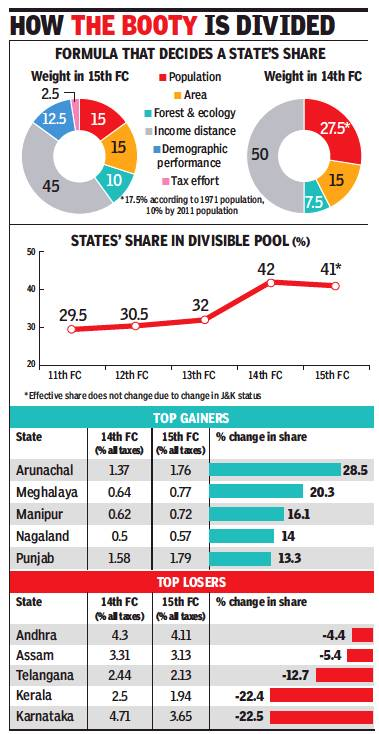
    The 14th Finance Commission raised devolution to 42%, enhancing fiscal space for States.

    NITI Aayog replaced the Planning Commission and adopted a consultative approach.

    GST (2017) introduced pooled sovereignty and created a shared tax regime.

    The 15th Finance Commission continued 41% devolution but increased performance-linked grants.

    Impact of Recent Reforms on Fiscal Federalism

    Positive Impacts

    Institutionalised Cooperative Federalism – GST Council as joint decision-making forum.

    Economic Efficiency – GST reduced cascading taxes, transport time cut by 33%, tax base expanded from 66 lakh (2017) to 1.5 crore+ (2024), collections near .

    Strengthened Development Role – States’ developmental expenditure rose from 8.8% of GDP (2004-05) to 12.5% (2021-22).

    Negative Impacts

    The Centre retains major taxation powers (income tax, CGST, natural resources), while States restricted to SGST.

    Cesses & surcharges grew, shrinking States’ effective share from 35% (2015-20) to ~31% (2020-24).

    Delayed GST compensation, especially during COVID, undermined States’ trust.

    Borrowing capped at 3% of GSDP, with enhanced limits tied to reform conditions (e.g., power sector).

    The 15th FC’s 45% income distance weight penalised better-performing States (TN, Kerala, Karnataka).

    Grants-in-aid declined from to , reducing States’ fiscal flexibility.

    CSS burden increased as States finance a larger share but have little role in design.

    Way Forward

    Equity in devolution – Use HDI as a parameter in horizontal tax distribution.

    Off-budget borrowings – Scrutinise and report to ensure transparency and accountability.

    Horizontal imbalance – Guarantee minimum share for rich States and set a ceiling for poorer States.

    Increase Devolution to 50% under 16th FC.

    Include Cess/Surcharge in divisible pool

    Restructure CSS – Consolidate into fewer umbrella schemes

    For India’s fiscal federalism to be effective, it must rest on the principles of autonomy, adequacy, and elasticity.

  • [12th June 2026] The Hindu OpED: FCRA Bill-expanding state control over civil societyĀ 

    PYQ Relevance[UPSC 2024] Public charitable trusts have the potential to make India’s development more inclusive as they relate to certain vital public issues. Comment.
    Linkage: The PYQ examines the role of charitable institutions and NGOs in welfare delivery and inclusive development. The FCRA Amendment Bill directly affects charitable trusts, NGOs, educational and welfare institutions that rely on foreign contributions, raising questions about their autonomy, functioning and developmental role.

    Mentor’s Comment

    The proposed Foreign Contribution (Regulation) Amendment Bill, 2026 marks one of the most consequential changes to India’s regulatory framework governing civil society organisations since the FCRA amendments of 2020. The Bill shifts the FCRA regime from regulatory oversight towards direct state control over the assets, administration and functioning of NGOs, charitable institutions, educational bodies and religious organisations receiving foreign contributions.

    What is the Foreign Contribution Regulation Act (FCRA), 2010?

    1. It regulates the acceptance and utilisation of foreign contributions by individuals, associations and organisations in India.Ā 
    2. The Act seeks to ensure that foreign funding does not adversely affect national interests, public order, sovereignty or democratic processes.
    3. The proposed FCRA Amendment Bill, 2026 introduces new provisions relating to cancellation of registration, asset management, investigations and government control over institutions receiving foreign contributions.

    How Does the FCRA Amendment Bill, 2026 Expand Executive Powers?

    1. Removal of Existing Safeguards
      1. Deletion of Section 15: Removes the existing mechanism governing management of assets after cancellation of FCRA registration.
      2. Expanded Executive Authority: Enables greater government discretion over organisational assets and administration.
    2. Introduction of New Chapter IIIA
      1. Asset Vesting Framework: Creates a mechanism through which organisational assets may come under government-appointed authorities.
      2. State-Controlled Administration: Facilitates direct intervention in institutional management.
    3. Broader Regulatory Reach
      1. Affected Institutions: Covers NGOs, charitable trusts, educational institutions, hospitals, orphanages and religious bodies receiving foreign contributions.

    Why Is Proposed Section 14B Considered Controversial?

    It outlines the automatic “deemed cessation” of an organization’s FCRA registration.

    1. Automatic Cessation of Registration: Under this provision, an organization’s FCRA registration automatically ceases and becomes invalid under the following three circumstances:
      1. Failure to apply: No renewal application has been submitted before the expiration of the certificate’s validity.
      2. Rejection: The organization applied for renewal, but the Central Government formally refused or rejected it.
      3. Pending or lapsed status: The certificate is not renewed prior to the end of its designated validity period, regardless of whether a renewal application is pending.
    2. Administrative Paralysis
      1. Operational Disruption: Delays in processing renewals can affect institutional functioning.
      2. Reduced Due Process Protection: Procedural issues may trigger severe penalties.
    3. Increased Executive Discretion
      1. Broader State Powers: Expands government authority without requiring substantive findings of wrongdoing.

    How Does Section 16A Alter Control over NGO Assets?

    Proposed Section 16A of the Foreign Contribution (Regulation) Amendment Bill, 2026, creates a statutory framework that allows a government-appointed Designated Authority to seize and manage all foreign funds and physical assets of an organization whose registration is lost. It functions as the direct enforcement mechanism for the automatic “deemed cessation” mentioned in Section 14B.

    1. Automatic Asset Transfer
      1. Asset Vesting: Assets may automatically transfer to a government-designated authority when registration is cancelled, surrendered, lapses or is deemed cancelled.
      2. No Prior Judicial Review: Transfer can occur before independent adjudication.
    2. Provisional Vesting
      1. Temporary State Control: Designated authority may assume management before final resolution of disputes.
      2. Expanded Government Reach: Enables intervention in institutional properties and finances.
    3. Scope of Assets Covered
      1. Physical Assets: Includes land, buildings, vehicles and equipment.
      2. Financial Assets: Includes unspent foreign contribution funds.
    4. Consolidated Fund Transfer
      1. Sale Proceeds: Disposal proceeds may be credited to the Consolidated Fund of India.
    5. The “Mixed Funding” Trap: Under Section 16A(2), if a physical asset (like a school or hospital building) was built using pooled funds, partly from foreign donations and partly from local Indian donations, the government takes over the entire asset. The burden of proof shifts completely to the NGO to legally isolate and claim back the exact “distinct or ascertainable portion” funded locally.

    What Could Be the Impact on Welfare and Community Institutions?

    1. Service Delivery Risks
      1. Healthcare Services: Hospitals dependent on foreign contributions may face operational uncertainty.
      2. Educational Services: Schools and colleges may face disruption.
    2. Impact on Social Welfare
      1. Child Welfare: Affects orphanages and child protection initiatives.
      2. Community Development: Influences tribal welfare, nutrition and youth development programmes.
    3. Religious and Charitable Institutions
      1. Places of Worship: Churches, mosques and temples built through foreign donations may be affected.
      2. Charitable Trusts: Institutions serving vulnerable groups may face uncertainty regarding property and funds.

    How Does the Bill Affect Minority Institutions?

    1. Disproportionate Exposure
      1. Christian Institutions: Many schools, colleges, hospitals and welfare bodies rely on foreign contributions from churches, diaspora groups and humanitarian agencies.
      2. Regional Concentration: Kerala, Tamil Nadu, Nagaland, Mizoram and Meghalaya contain large numbers of such institutions.
    2. Property Control Concerns
      1. Institutional Assets: Educational and welfare institutions may face government control if registrations lapse or are cancelled.
      2. Continuity of Services: Long-established institutions may experience administrative disruptions.
    3. Community Impact
      1. Minority Welfare: Concerns arise regarding implications for community-run social service infrastructure.

    How Does the Bill Strengthen Government Control During Investigations?

    1. Asset Management Limits: Amended Section 13 restricts organisations from managing assets without prior approval during suspension.
    2. Centralisation of Enforcement/Union Government Approval: State agencies require approval before initiating action on FCRA violations.
    3. Expanded Liability of office Bearers: Broader definitions increase accountability and legal exposure of functionaries.
    4. Deterrent Effect due to fear of Enforcement: Increased regulatory scrutiny may discourage voluntary participation.

    Does the Bill Reduce Transparency and Accountability?

    1. Abolition of Section 22 and Removal of Disposal Mechanism: Eliminates the existing framework governing assets of defunct organisations.
    2. Absence of Timelines leading to administrative Delays: No clear deadlines for approval or rejection of licences, permissions, registrations or renewals.
    3. Limited Disclosure of cancellation Reasons: Grounds for cancellation may not be publicly disclosed due to national security considerations.
    4. Restricted Legal Remedies: Organisations may find it difficult to contest cancellations or suspensions.

    What Are the Economic and Social Implications?

    1. Employment Impact
      1. Civil Society Employment: Sector generates approximately 27 lakh jobs.
      2. Volunteer Participation: Around 34 lakh full-time volunteers contribute to service delivery.
    2. Contribution to Economy: Civil society organisations contribute nearly 2% of GDP.
    3. Local Dependence/Primary Employer Role: Survey of 515 NGOs found that 47% are the principal source of employment in more than half of their operational localities.
    4. Service Disruption Risks: Revocation of licences may affect nutrition, education, immunisation, healthcare and skill-development initiatives.

    What Constitutional Concerns Does the Bill Raise?

    1. Freedom of Association(Article 19(1)(c)): Raises concerns regarding autonomy of associations and voluntary organisations.
    2. Religious Freedom (Articles 25-28): May affect religious institutions dependent on foreign contributions.
    3. Minority Rights (Article 30): Concerns regarding administration of minority educational institutions.
    4. Property Rights (Article 300A): Questions arise regarding deprivation of property without adequate safeguards.
    5. Public Interest Standard: Vague definition may permit extensive administrative discretion.

    Conclusion

    The FCRA Amendment Bill, 2026 marks a shift from regulating foreign funding to expanding state oversight over civil society institutions. While strengthening accountability and national security objectives, the Bill raises concerns regarding due process, institutional autonomy and constitutional freedoms. A balanced framework must ensure transparency without undermining the democratic role of civil society organisations.

  • [11th June 2026] The Hindu OpED: Negotiating federalism in higher education

    PYQ Relevance[UPSC 2020] National Education Policy 2020 is in conformity with the Sustainable Development Goal-4 (2030). It intends to restructure and reorient education system in India. Critically examine the statement.
    Linkage:Ā  While the PYQ focuses on evaluating NEP 2020’s educational reforms, the article examines how the implementation of those reforms has generated new Centre-State tensions and debates over federalism, autonomy, and governance in higher education.

    Mentor’s Comment

    The implementation of the National Education Policy 2020, growing central control through regulatory and funding mechanisms, and disputes over language policy and Vice-Chancellor appointments have intensified Centre-State tensions in higher education. The debate highlights concerns that, despite education being in the Concurrent List, governance is becoming increasingly centralised. This raises questions about State autonomy and Indian federalism.

    How Has Higher Education Become a Site of Federal Contestation?

    1. Federal Interface: Higher education has evolved beyond a sectoral policy issue and now reflects broader Centre-State power relations.
    2. Governance Disputes: Regulatory authority, curriculum design, language policy, public funding, and digital governance have become contested domains.
    3. Political Divergence: Different States have responded differently to central reforms, reflecting diverse political and developmental priorities.
    4. Constitutional Significance: Debates increasingly concern the distribution of authority within the Indian Union rather than merely educational administration.

    How Is the Centre Expanding Its Influence in Higher Education Governance?

    1. Concurrent List Position: Education falls under the Concurrent List, enabling both Union and State governments to legislate.
    2. Institutional Leverage: The Union exercises influence through the Ministry of Education, UGC, accreditation agencies, and national regulatory frameworks.
    3. Regulatory Expansion: National standards increasingly shape university functioning across States.
    4. Policy Coordination: Central institutions possess significant capacity to standardise governance structures nationwide.

    Constitutional Basis

    ProvisionSignificance
    Entry 66, Union ListCoordination and determination of standards in higher education
    Entry 25, Concurrent ListEducation under shared legislative jurisdiction
    Article 246Distribution of legislative powers
    Article 254Union law prevails in case of inconsistency

    Why Has NEP 2020 Intensified Federal Debates?

    1. Structural Reforms: Introduces four-year undergraduate programmes.
    2. Academic Bank of Credits (ABC): Facilitates credit accumulation and transfer across institutions.
    3. Institutional Restructuring: Encourages multidisciplinary universities and institutional consolidation.
    4. Internationalisation: Supports collaboration with global universities and foreign campuses.
    5. Expanded Central Role: Extends central influence into areas traditionally administered by States.

    Key NEP Measures Relevant to Federalism

    1. Multiple Entry-Exit Framework: Restructures degree pathways.
    2. Academic Mobility: Enables nationwide credit transfer through ABC.
    3. Institutional Transformation: Encourages multidisciplinary educational ecosystems.
    4. Global Integration: Facilitates international academic partnerships.

    How Are Funding Mechanisms Strengthening Central Influence?

    1. Conditional Funding: Access to central financial support increasingly depends on compliance with nationally designed reforms.
    2. Institutions of Eminence (IoE): Links excellence funding with centrally determined criteria.
    3. Research Incentives: Competitive funding structures influence institutional priorities.
    4. Anusandhan National Research Foundation (ANRF): Expands central role in research governance and resource allocation.
    5. Policy Alignment: Financial incentives encourage States and institutions to adopt national reform agendas.

    Fiscal Federalism and Higher Education

    1. Vertical Fiscal Imbalance: States bear substantial implementation responsibilities while major funding flows remain centrally influenced.
    2. Conditional Grants: Strengthen policy convergence across States.
    3. Performance-Based Funding: Links resources with nationally determined outcomes.

    Why Are National Regulatory Reforms Creating Concerns Among States?

    1. Regulatory Restructuring: Proposed reforms seek to replace existing higher education regulatory bodies with new frameworks.
    2. Authority Concerns: States fear gradual erosion of their influence over university governance.
    3. Centralised Oversight: National regulators may exercise greater supervisory powers.
    4. Governance Uniformity: Increased standardisation may reduce flexibility for regional requirements.

    Example Mentioned 

    1. Viksit Bharat Shiksha Adhishthan Bill, 2025: Proposed restructuring of higher education regulatory architecture has generated apprehensions regarding State autonomy.

    How Is Digital Governance Contributing to Centralisation?

    1. Academic Bank of Credits (ABC): Creates nationally integrated academic records.
    2. Standardisation: Enables uniform academic tracking and credit recognition.
    3. Monitoring Capacity: Enhances the Centre’s ability to oversee institutional performance.
    4. Data Governance: Strengthens central regulatory visibility across States.

    What Are the Major Centre-State Conflicts in Higher Education?

    • Tamil Nadu: Opposes the NEP 2020’s three-language formula and has resisted UGC directives related to third-language implementation.
    • Kerala: Has raised concerns over university governance, particularly the appointment of Vice-Chancellors and the powers exercised by the Governor.
    • Karnataka: Has witnessed disputes over institutional autonomy, especially regarding university administration and appointments. West
    • Bengal: Has experienced recurring conflicts between the Governor and the State Government over control and administration of higher education institutions.

    Broader Pattern

    1. Vice-Chancellor Appointments: Emerging as a recurring federal conflict.
    2. Governor’s Role: Increasingly linked to debates over educational autonomy.
    3. Regional Identity: Language and curriculum issues reinforce federal tensions.

    Are States Merely Resisting or Strategically Adapting?

    1. Selective Adoption: States increasingly adopt reforms aligned with local priorities while resisting others.
    2. Negotiated Federalism: Centre-State relations are becoming more adaptive rather than purely confrontational.
    3. Policy Customisation: States modify implementation pathways according to regional political contexts.
    4. Pragmatic Governance: Reflects a balance between compliance and autonomy.
    5. Negotiated Federalism: A form of federalism in which States neither fully accept nor fully reject central policies but strategically adapt them to local circumstances.

    How Is Internationalisation Reshaping Centre-State Dynamics?

    1. Regional Education Hubs: States seek to attract international institutions and students.
    2. Global Partnerships: State governments facilitate collaborations with overseas universities.
    3. Economic Development Tool: Higher education is increasingly viewed as a driver of investment and knowledge-led growth.
    4. Implementation Dependence: Despite central regulations, operational success depends heavily on State-level clearances, infrastructure, and facilitation.

    What Does This Debate Reveal About the Future of Indian Federalism?

    1. Beyond Constitutional Text: Federal outcomes increasingly depend on political negotiation.
    2. Shared Governance: Higher education reflects evolving intergovernmental relations.
    3. Regional Assertion: States continue to defend administrative and cultural autonomy.
    4. Collaborative Adaptation: Policy implementation increasingly requires Centre–State cooperation.
    5. Dynamic Federalism: Governance outcomes emerge through continuous negotiation rather than fixed constitutional arrangements.

    Conclusion

    Higher education has emerged as a key arena for negotiating Indian federalism, where issues of regulation, funding, language, and institutional governance increasingly shape Centre–State relations. The future of the sector will depend on balancing national standards with State autonomy through cooperative and negotiated federalism, ensuring both educational excellence and constitutional federal balance.

  • Which was the Capital of Andhra state when it was made a separate State in the year 1953

    Which was the Capital of Andhra state when it was made a separate State in the year 1953?

  • The Parliament of India acquires the power to legislate on any item in the State List in the national interest if a resolution to that effect is passed by the

    The Parliament of India acquires the power to legislate on any item in the State List in the national interest if a resolution to that effect is passed by the

  • Which one of the following is not a feature of Indian federalism

    Which one of the following is not a feature of Indian federalism ?

  • Which one of the following in Indian polity is an essential feature that indicates that it is federal in character

    Which one of the following in Indian polity is an essential feature that indicates that it is federal in character?