💥Join UPSC 2027,2028 Mentorship (July Batch) + XFactor Notes & Microthemes PDF

Subject: History

  • SC backs TN position on Jallikattu

    jallikattu

    Central Idea

    • The Supreme Court Constitution Bench has upheld the amendments made by Tamil Nadu, Maharashtra, and Karnataka to the Prevention of Cruelty to Animals Act, 1960.
    • The decision overturns a previous verdict that banned practices such as Jallikattu, a traditional bull-taming sport.

    Overturning the previous verdict

    • The court rejected the 2014 verdict of the Welfare Board of India v. A. Nagaraja case that deemed Jallikattu incompatible with animal rights.
    • The Constitution Bench emphasized that Jallikattu has been a part of Tamil Nadu’s cultural heritage for at least a century.

    Significance of Pongal and Jallikattu

    • Pongal is a harvest festival in Tamil Nadu, celebrated with thanksgiving for a bountiful harvest and rituals honoring cattle.
    • Jallikattu, a bull-taming event, is an integral part of the festival and showcases the strength and skill of farm hands in southern Tamil Nadu.

    Supreme Court’s 2014 verdict and animal rights perspective

    • The previous two-judge Bench ruling emphasized the importance of animal rights and suggested elevating them to the level of constitutional rights.
    • Animal welfare organizations presented evidence of physical and mental torture inflicted on the animals during Jallikattu.

    Issue with the sport

    An investigation by the Animal Welfare Board of India concluded that “Jallikattu is inherently cruel to animals”.

    • Human deaths: The event has caused several human deaths and injuries and there are several instances of fatalities to the bulls.
    • Manhandling of animals: Animal welfare concerns are related to the handling of the bulls before they are released and also during the competitor’s attempts to subdue the bull.
    • Cruelty to animal: Practices, before the bull is released, include prodding the bull with sharp sticks or scythes, extreme bending of the tail which can fracture the vertebrae, and biting of the bull’s tail.
    • Animal intoxication:  There are also reports of the bulls being forced to drink alcohol to disorient them, or chilli peppers being rubbed in their eyes to aggravate the bull.

    Arguments in favour

    • Native breed conservation: According to its protagonists, it is not a leisure sport available but a way to promote and preserve the native livestock.
    • Cultural significance: Jallikattu has been known to be practiced during the Tamil classical period (400-100 BCE) and finds mention in Sangam texts.
    • Man-animal relationship: Some believe that the sport also symbolizes a cordial man-animal relationship.
    • Agrarian pride: It represents a cultural infirmity to urban modernity that marginalizes rural and agrarian values.

    Conclusion

    • Tradition and culture should be considered in the rights discourse, recognizing the cultural context of practices like Jallikattu.
    • Engagement and negotiation between animal rights advocates and local culture and tradition are necessary for a balanced approach.


    Get an IAS/IPS ranker as your personal mentor for UPSC 2024 | Schedule your FREE session and get the Prelims prep Toolkit!

  • What is ‘Adopt a Heritage’ Scheme?

    heritage

    Central Idea

    • Private firms, companies, and public sector units can adopt and maintain State-owned archaeological sites or monuments through agreements with the Union Ministry of Culture.
    • These businesses are referred to as “Monument Mitras” under the ‘Adopt a Heritage’ Scheme.

    Adopt a Heritage scheme

    • The ‘Adopt a Heritage: Apni Dharohar, Apni Pehchaan’ scheme is a collaboration between the Ministry of Tourism, Ministry of Culture, and the Archaeological Survey of India (ASI).
    • Launched in September 2017, it aims to develop selected monuments and heritage sites across India with the participation of public and private entities.
    • The scheme focuses on providing and maintaining basic amenities, improving accessibility, cleanliness, illumination, and advanced facilities like surveillance systems and night-viewing facilities.

    Selection and Adoption Process

    • Sites/monuments are selected based on tourist footfall and visibility, and they can be adopted by private and public sector companies and individuals known as “Monument Mitras.”
    • The Oversight and Vision Committee, co-chaired by the Tourism Secretary and the Culture Secretary, selects the Monument Mitras based on their vision for developing the site.
    • No financial bid is involved in the selection process, and corporate entities are expected to use their Corporate Social Responsibility (CSR) funds for the upkeep of the site.
    • The adopted sites provide limited visibility to the Monument Mitras on the premises and on the Incredible India website.
    • The oversight committee has the authority to terminate the memorandum of understanding in case of non-compliance or non-performance.

    Previous Initiatives and Controversy

    • The government previously formed the National Culture Fund and initiated the ‘Campaign Clean India’ scheme to involve the corporate sector in maintaining tourist sites.
    • The ‘Adopt a Heritage’ scheme faced controversy when it was reported that Dalmia Bharat, under a MoU, would build infrastructure and maintain the Red Fort.
    • Critics argued that the involvement of private parties in iconic monuments raised concerns about the preservation of India’s heritage.
    • The government defended the scheme, stating that it aimed to increase tourist footfall and improve the maintenance of sites.

    Perils and Challenges of the Scheme

    • Diminishing role of ASI: The scheme sidelines the role of the Archaeological Survey of India (ASI) and disregards established guidelines for presenting excavated objects.
    • Undue commercialization: Allowing businesses to occupy prime public land and build their brands can further diminish the grounds around iconic monuments.
    • Demographic impacts: The involvement of big businesses in guided tours and illumination of monuments may impact local communities and their livelihoods.
    • Disregarding historical preservation: Concerns arise about businesses altering the historical character of monuments not protected by the ASI or located in states without Archaeology Directorates.

    Govt intention behind the scheme

    • Businesses can help citizens understand why monuments matter: This can be done by earmarking CSR funds for grants for researching, writing, and publishing high-quality textbooks, and developing imaginative and effective ways of teaching history.
    • Skillful conservation: Industrial houses can support the meaningful conservation of heritage buildings by looking within through their CSR.
    • Collaborative efforts: The private sector’s resources and expertise may also help the ASI and State Archaeology Directorates to secure monuments from dams, mining projects, defacement, and looting.
    • Cultural contribution: By embracing principles of historical preservation, businesses and organizations can showcase India’s progress in safeguarding its pluralistic heritage and inspire citizen participation in this endeavour.

    Way ahead

    • Transparent selection process: Implement a fair and transparent process for selecting entities or Monument Mitras to adopt heritage sites, ensuring accountability and avoiding favoritism.
    • Robust monitoring mechanism: Develop a strong monitoring system to ensure that the adopted sites are maintained and developed according to the agreed-upon standards and guidelines.
    • Preservation protocols: Strictly adhere to preservation guidelines set by the Archaeological Survey of India (ASI) and other relevant authorities to protect the historical and cultural integrity of heritage sites.
    • Engagement with local communities: Involve local communities and stakeholders in decision-making processes, encouraging their participation, ownership, and contribution to the conservation efforts.
    • Sustainable tourism practices: Promote sustainable tourism practices that minimize the environmental impact, respect the local culture and heritage, and provide socio-economic benefits to the communities living around the heritage sites.


    Get an IAS/IPS ranker as your personal mentor for UPSC 2024 | Schedule your FREE session and get the Prelims prep Toolkit!

  • Santiniketan in tentative list for UNESCO World Heritage list

    santiniketan

    Central Idea

    • The article announces that Santiniketan, the home of Nobel laureate Rabindranath Tagore in West Bengal, has been recommended for inclusion in UNESCO’s World Heritage List.

    About Santiniketan

    Santiniketan is a renowned cultural and heritage place located in Birbhum District, West Bengal, India. It holds historical significance and is known for its association with Nobel laureate Rabindranath Tagore. Here are key points about Santiniketan:

    • It was the home of Rabindranath Tagore, where he lived and composed many of his literary works, including songs, poems, and novels.
    • The Santiniketan campus is adorned with splendid sculptures, frescoes, murals, and paintings created by renowned artists such as Rabindranath Tagore, Nandalal Bose, Ramkinkar, Binodbehari Mukhopadhyay, and others.
    • The region of Birbhum District, where Santiniketan is located, is also famous for its fairs and festivals. Some notable ones are Poush Mela (December), Joydev Mela (January), Basanta Utsav (Holi) in March, and the famous mystic Baul Singers.
    • Special cultural events are held during Bengali New Year and Rabindra Janmotsav (birth anniversary of Rabindranath Tagore) in the Bengali month of Boisakh with great enthusiasm.
    • Santiniketan celebrates unique festivals like Briksharopan (festival of Planting Saplings) and Halakarshan (festival of Plowing the Fields) on the 22nd and 23rd days of Sravana (August), respectively.
    • Varshamangal, the festival of rains, is celebrated during August/September.
    • Poush Mela is an annual fair and festival held in Santiniketan, starting on the 7th day of the month of Poush. The fair officially lasts for three days, but vendors may stay until the end of the month. It is known for live performances of Bengali folk music, particularly by bauls (traditional wandering minstrels), and also features tribal dances like Santali.

    Recommendation by ICOMOS

    • The recommendation for Santiniketan’s inclusion was made by the International Council on Monuments and Sites (ICOMOS), which is the advisory body to the UNESCO World Heritage Centre.
    • ICOMOS is a France-based international cultural body dedicated to the conservation and enhancement of global architectural and landscape heritage.

    West Bengal’s Representation in World Heritage List

    • If selected, Santiniketan would be the second cultural symbol from West Bengal to be included in the UNESCO list.
    • In 2021, UNESCO included ‘Durga Puja in Kolkata’ in its list of Intangible Cultural Heritage of Humanity.

    Back2Basics: UNESCO World Heritage Sites

    Description
    UNESCO World Heritage Sites Landmarks or areas selected by UNESCO for their cultural, historical, scientific, or other significant value, legally protected by international treaties.
    Importance World Heritage Sites represent collective and preservative interests of humanity, signifying remarkable accomplishments and intellectual history.
    Selection Criteria Sites must be already-classified landmarks, unique and significant culturally or physically, such as ancient ruins, historical structures, cities, monuments, etc.
    Conservation World Heritage Sites require practical conservation to protect them from risks like trespassing, uncontrolled access, or administrative negligence.
    World Heritage Committee Selects and monitors World Heritage Sites, manages the World Heritage Fund, and provides financial assistance. Composed of 21 states parties elected for a four-year term.
    Membership India is not a member of the World Heritage Committee.

    Note: “States parties” refer to the countries that have ratified the World Heritage Convention and participate in the decision-making process.


    Get an IAS/IPS ranker as your personal mentor for UPSC 2024 | Schedule your FREE session and get the Prelims prep Toolkit!

  • Significance of Meerut: Birthplace of India’s First War of Independence

    meerut

    Central Idea

    • The article highlights the historical significance of Meerut, a city in western Uttar Pradesh.
    • Alamgirpur, the easternmost settlement of the Harappa civilization, is located in Meerut and has archaeological importance.
    • However, Meerut gained fame for its role in India’s First War of Independence on May 10, 1857, also known as the Indian Mutiny or Revolt.

    Meerut: Historical origins and name

    • Meerut has historical origins, possibly deriving its name from Mayarashtra, the capital of Mayasura, who was Ravana’s father-in-law.
    • The archaeological site of Vidura-ka-tila, located northeast of Meerut, is believed to be the remains of Hastinapur, the ancient capital of the Kauravas and Pandavas from the Mahabharata.
    • Meerut was ruled by the Scindias before being ceded to the British in 1803, which eventually paved the way for the British exit from India.

    The 1857 Rebellion

    • The rebellion in Meerut was sparked by the introduction of the Enfield rifle and the use of cartridges rumored to be greased with a mixture of cow and pig fat.
    • Sepoys (Indian soldiers) who refused to use the cartridges were punished and stripped of their uniforms.
    • This incident led to a rebellion among the sepoys and a call for the uprising against British rule.

    Outbreak of the Mutiny

    • On May 10, 1857, while the European residents of Meerut were attending church, the sound of musketry and columns of smoke signalled the revolt of the native troops.
    • The sepoys, having revolted, marched towards Delhi, considering it the power center and the capital of Mughal India.

    Meerut’s Significance

    • Meerut played a crucial role in the Indian Mutiny, serving as the starting point for the rebellion that spread across the country.
    • The mutiny in Meerut inspired and influenced the subsequent events of the uprising.
    • D. Savarkar later referred to the Mutiny as the First War of Independence.


    Get an IAS/IPS ranker as your personal mentor for UPSC 2024 | Schedule your FREE session and get the Prelims prep Toolkit!

  • Copper plates decoded reveal new info on Shilabhattarika

    Central idea: The article talks about the discovery of new information on the celebrated ancient Sanskrit poetess Shilabhattarika through the decoding of copper plates by the Pune-based Bhandarkar Institute.

    Who was Shilabhattarika?

    • Shilabhattarika was a 9th-century Sanskrit poet from India.
    • She lived near the Narmada River and the Vindhya mountains.
    • Her poetic skills were praised by medieval Sanskrit literary critics.
    • It is speculated that she may be the same as Shilamahadevi, the queen of 8th-century Rashtrakuta ruler Dhruv.
    • According to recent research, she was the daughter of Chalukya ruler Pulakeshin II.

    Her literary works

    • Shilabhattarika is known to have written at least 46 poems on various topics, such as love, morality, politics, nature, beauty, the seasons, insects, anger, indignation, codes of conduct, and the characteristic features of various kinds of heroines.
    • Shilabhattarika is considered a leading figure of the Panchali literary style, which maintains “a balance between words and meaning”.
    • According to Rajashekhara, the Panchali style can be traced to the works of Shilabhattarika, and possibly in some of the works of the 7th-century poet Bana.
    • Sharangadhara-paddhati, a 14th-century anthology, praises her and three other female poets for their great poetic genius and erudition.
    • One of the most iconic songs of the noted Marathi poetess Shanta Shelke, “toch chandrama nabhat” (it is the same moon in the sky), draws inspiration from the verses of Shilabhattarika.

    Key findings of the recent research

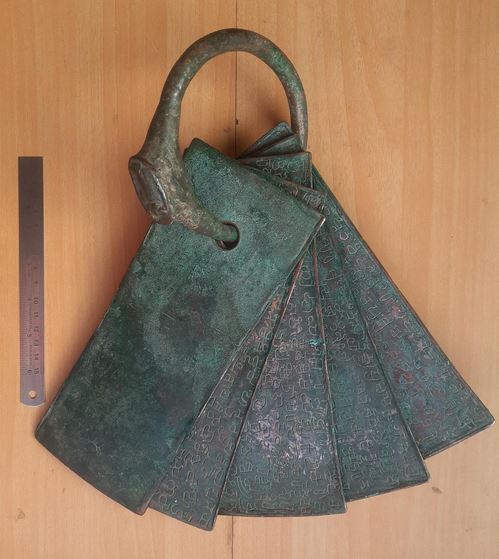
    • The research analyzed a copperplate charter consisting of 5 copper plates dating back to the reign of Badami Chalukyan ruler Vijayaditya (696-733 CE).
    • The plates were held together by a copper ring that bore the varaha (boar) seal, which is the trademark of the Badami Chalukyas.
    • The Sanskrit text inscribed in late-Brahmi script contained a total of 65 lines.
    • The charter revealed that King Vijayaditya Chalukya had donated the village of Chigateri to a scholar named Vishnu Sharma, based on the recommendation of Mahendravarma, Shilabhattarika’s son.
    • Shilabhattarika’s husband, Dadiga, was deputed as the governor of Kogali, while his elder brother Polavira succeeded their father Mokkara as the ruler of the Western Ganga dynasty, which acted as subordinates to the Chalukyas of Badami and fought against the Pallavas of Kanchi.
    • The plates also mentioned the names of Shilabhattarika’s father-in-law, Mokkara (or Mushkara), and his father, Durvinita, who was a proficient composer and had patronized Bharavi, the author of the classical epic Kiratarjuniya.


    Get an IAS/IPS ranker as your personal mentor for UPSC 2024 | Schedule your FREE session and get the Prelims prep Toolkit!

  • Bihan Mela of Kondh Tribals

    bihan mela

    Central idea: Since 2019, the Kondh tribe in Nayagarh district, Odisha has been celebrating the Bihan Mela, or the seed festival, to promote the revival of indigenous farming.

    Bihan Mela

    • This event involves the collection and preservation of indigenous seeds, and farmers from 40 villages in Dasapalla block participate in the festival.
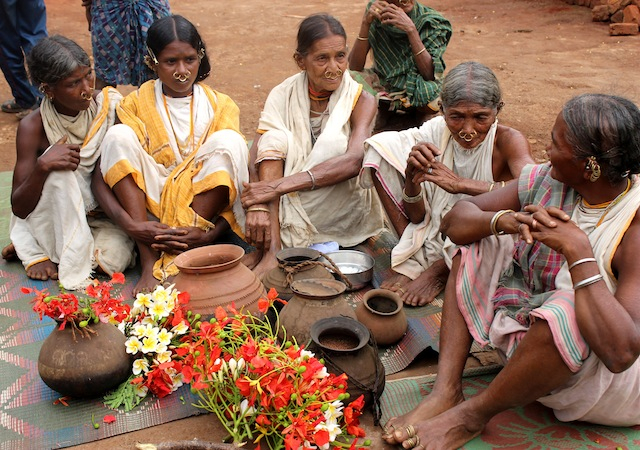
    • After harvesting kharif crops, women collect the seeds of indigenous varieties and store them in earthen pots.
    • On a designated day in December, they decorate the pots with red and white motifs, place them in a bamboo basket and carry them on their heads to the village where the fair is being organized.
    • Men accompany them, beating drums and other traditional instruments.

    Objectives

    • The seed festival was introduced to help farmers return to their traditional ways of farming, like mixed-cropping, which is more resilient to erratic rainfall and pest attacks.
    • In recent years, farmers have abandoned native crops and varieties that are naturally resistant to pests and better suited to the region’s climate.

    Commercialization through this festival: Seed Bank

    • To facilitate access to indigenous seeds, Nirman, a non-profit that works with the tribe on forest rights and agro-ecological farming, set up a seed bank in Raisar village in 2019.
    • The bank collects and preserves indigenous seeds from across Kondh villages and lends those out to farmers.
    • The bank now boasts of 62 varieties of paddy, four varieties of millets, five varieties of pulses, and eight vegetables.
    • The bank is open to all Kondh farmers and has benefitted 750 families so far.
  • Conservation work at Delhi’s Zafar Mahal to begin

    zafar mahal

    The Archaeological Survey of India (ASI) is set to initiate conservation works at Zafar Mahal in south Delhi’s Mehrauli.

    Zafar Mahal

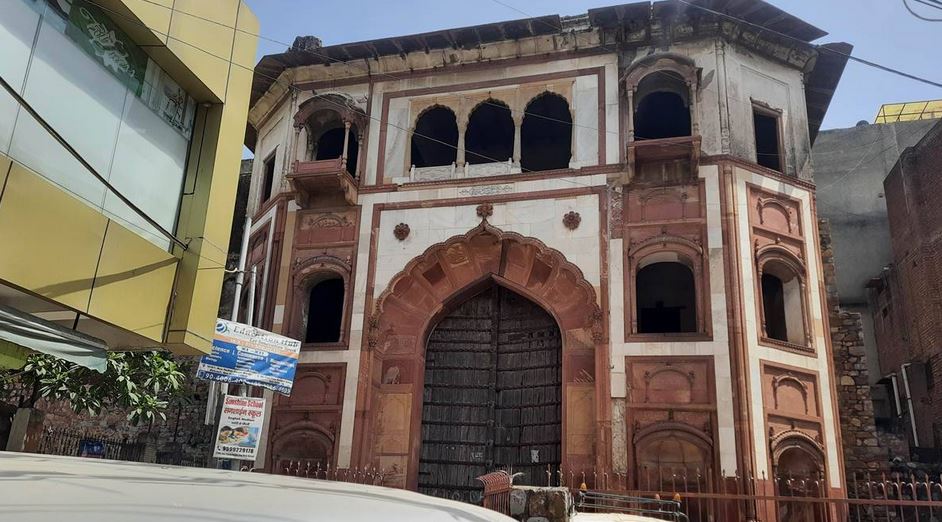
    • Zafar Mahal, located in Mehrauli village, South Delhi, India, is considered the last monumental structure built during the fading years of the Mughal era.
    • The palace was built in the 18th and 19th centuries, with a forlorn history due to the deportation of the last Mughal Emperor, Bahadur Shah Zafar II, by the British.
    • The monument is now in a neglected and ruined state and locals often play cricket and gamble inside the protected monument.

    History

    • The Mughal dynasty ended after 332 years when the last Emperor Bahadur Shah Zafar II (1837–1857) was deported to Rangoon, Burma, now Myanmar from the imperial city of Delhi.
    • The palace had graves in the precincts of Zafar Mahal built within a marble screen enclosure by Jahandar Shah for his father Bahadur Shah I and others who followed, and is a minor reflection of the history of the place.
    • Bahadur Shah Zafar II, who wished to be buried in the precincts of the palace, was buried in Rangoon.
    • The palace used to be visited by Bahadur Shah Zafar II for hunting during the monsoon season, and he was honoured here during the Phool Walon Ki Sair festival held in February/March.

    Key Structures

    • Zafar Mahal consists of the Mahal or the palace, built in the 18th century, and the entrance gate, reconstructed in the 19th century.
    • The palace is a three-storied structure in red sandstone embellished with marble, and the gate is imposing with an 11.75 feet opening at the entrance.
    • A masjid called the Moti Masjid, built by Bahadur Shah I, was also located within the palace precincts.
    • The palace now sits in a dilapidated condition and its restoration is limited by the inadequate documents to deduce the original construction details.

    Demolished or Illegally Occupied Structures

    • Zafar Mahal used to be a huge palace consisting of many other structures that are no longer present or occupied by local residents.
    • These structures include the Diwan-e-Khaas of Bahadur Shah Zafar, the house of Mirza Babur, the Baoli of Aurangzeb, the house of Mirza Nili, the Thana of Bahadur Shah Zafar, the house of Mirza Salim, and the Khwas Pura.


    Get an IAS/IPS ranker as your personal mentor for UPSC 2024 | Schedule your FREE session and get the Prelims prep Toolkit!

  • Places in news: Thirunelly Temple

    thirunelly

    The Indian National Trust for Art and Cultural Heritage (INTACH) has urged the government to conserve the historically significant structures, including the 600-year-old ‘Vilakkumadom’, an exquisite granite structure, at the Sree Mahavishnu Temple at Thirunelly in Wayanad district.

    About Thirunelly Temple

    • The temple is dedicated to Lord Vishnu and is also known as Sahyamala Kshetram.
    • It is also referred to as the ‘Kashi of the South’ and is considered as an important pilgrimage center for Hindus.
    • It is located at the confluence of three rivers – Papanasini, the holy river, which is believed to have the power to wash away sins, Kudamurutti, and Koothappuzha.
    • The temple has a unique circular structure made of granite stones, which is believed to have been constructed by Lord Brahma himself.
    • It has beautiful architecture and features intricate carvings, mural paintings, and sculptures.
    • The temple celebrates several festivals throughout the year, including Vishu, Navaratri, and Thirunelli festival.

    Renovation plan

    • The renovation works include the reconstruction of the chuttambalam or the structure around the sanctum sanctorum, except for the balikkalpura structure on the front side.
    • The renovation work also includes the completion of the vilakkumadam, an exquisite granite structure that has a history dating back to the 15th century AD.
    • The renovation works also include the renovation of the panchatheertham pond and the pathway to the papanasini bath ghat where devotees perform the bali ritual.

    Why in news?

    • The temple structure has a history dating back to the 15th century AD, and stories related to the architecture and style of the temple are associated with it.
    • In guise of renovation, there is a concern over the loss of valuable precincts and the destruction of heritage.
    • The incomplete structure that stood as testimony to a rich cultural heritage has been remodelled in an insensitive way.


    Get an IAS/IPS ranker as your personal mentor for UPSC 2024 | Schedule your FREE session and get Prelims prep Toolkit!

  • Pushkaralu Festival returns to the Ganga after 12 years

    pushkar

    Central Idea: The 12-day Pushkaralu festival of Telugu-speaking people began on April 22 in Varanasi.

    Pushkaralu Festival

    • Pushkaram is an Indian festival dedicated to worshiping of 12 sacred rivers.
    • The celebration happens annually, once in 12 years along each river.
    • Each river is associated with a zodiac sign, and the river for each year’s festival is based on which sign Bruhaspathi (Jupiter) was in at the time.
    • It is believed that bathing in the sacred river during Pushkaram cleanses the devotees of their sins.
    • This year festival involves worshipping ancestors and the river Ganga and is being organised in Kashi after a gap of 12 years.

    Why is it celebrated once in 12 years?

    • In India, we have 12 major rivers such as Ganga, Yamuna, Narmada, Saraswathi, Godavari, Krishna, Kaveri, Bhima, Tapati, Tungabhadra, Sindhu, Pranhita for which the Pushkaram festival is celebrated for each river according to the zodiac sign of that river.
    • The 12 days after the Jupiter enters that particular zodiac sign will be the Pushkaram/Pushkaralu which is a 12-day festival for that river.
    • Hence Pushkaralu comes for every 12 years.

    Legend of the Festival

    • According to legend, after severe penance, the devotee Pushkara was blessed by Lord Shiva with the ability to live in water and purify holy rivers
    • On a request from Bruhaspati (Jupiter), Pushkara decided to enter one of the 12 sacred rivers, including Ganga, Yamuna, Godavari, and Krishna, among others
    • The river for each year’s festival is decided in accordance with Brihaspati travel from one zodiac sign to another


    Get an IAS/IPS ranker as your personal mentor for UPSC 2024 | Schedule your FREE session and get Prelims prep Toolkit!