💥Join UPSC 2027,2028 Mentorship (July Batch) + XFactor Notes & Microthemes PDF

Subject: Important Events

  • Vaishali Rameshbabu: India’s New Chess Grandmaster

    Grandmaster

    Central Idea

    • Grandmaster Title: Indian chess player Vaishali Rameshbabu ( Pragnananda’s sister) has achieved the Grandmaster title by crossing 2,500 FIDE ranking points at the IV El Llobregat Open in Spain.
    • Significance: She becomes only the third Indian woman player to earn this title, joining the ranks of Koneru Humpy and Harika Dronavalli.

    Understanding the Grandmaster Title

    • Highest Chess Honor: The Grandmaster title is the pinnacle of achievement in chess, awarded by the International Chess Federation (FIDE).
    • Prestige: It signifies recognition as one of the world’s most talented chess players, proven in highly competitive environments.

    Other Recognized Chess Titles

    • FIDE Titles: Besides Grandmaster, FIDE awards seven other titles, including International Master (IM), FIDE Master (FM), Candidate Master (CM), Woman Grandmaster (WGM), Woman International Master (WIM), Woman FIDE Master (WFM), and Woman Candidate Master (WCM).
    • Lifetime Validity: All FIDE titles, including the Grandmaster title, are valid for life, barring revocation due to offenses like cheating.

    History and Criteria of Grandmaster Title

    • Origins: The term ‘grandmaster’ dates back about a century and was formalized by FIDE in 1950.
    • Initial Awardees: The first batch of Grandmaster titles in 1950 included 27 players, such as then-world champion Mikhail Botvinnik.
    • Current Criteria: To achieve the Grandmaster title, a player must reach a FIDE Classical or Standard rating of 2,500 and earn three Grandmaster norms.
    • Grandmaster Norms: These norms are based on stringent rules regarding tournament performance, including a performance rating of 2,600 or higher in a FIDE tournament with specific conditions.

    Vaishali Rameshbabu’s Path to Grandmaster

    • Performance: Vaishali’s achievement of the Grandmaster title is a testament to her exceptional performance in international chess tournaments.
    • Representation: Her success adds to India’s growing reputation as a powerhouse in the global chess community.


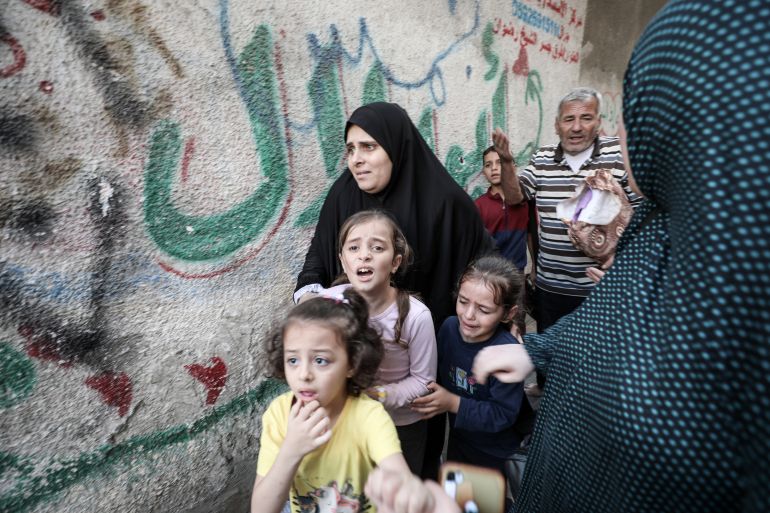
  • The impact of violence on a child’s mind

    Gaza's terrified children all too aware Israel's bombs steal their joy |  Gaza News | Al Jazeera

    Central idea

    The article emphasizes the profound psychological impact of the Israeli-Palestinian conflict on children, drawing insights from educational thinkers like Maria Montessori and Elias Canetti. It highlights challenges such as potential long-term repercussions, the failure of current education systems, and the need for inclusive educational initiatives.

    Key Highlights:

    • Montessori’s Perspective: Maria Montessori’s insights on the impact of childhood experiences, particularly exposure to violence, on the cycle of revenge and its contribution to the root causes of war.
    • Canetti’s Argument: Elias Canetti’s exploration of the child’s mind, emphasizing the development of revengeful thoughts from violent experiences and its potential evolution into adult rebellion.
    • Israeli-Palestinian Conflict: The psychological aftermath of Israel’s assault on Gaza, with a focus on the predicted impact on Palestinian children, especially adolescents, facing forced displacement and an uncertain future.
    • Educational Philosophies: Montessori’s pedagogic philosophy linking childhood experiences to major societal issues and the inter-war movement’s attempt to use education to combat the culture of war.

    Key Challenges:

    • Psychological Impact: Predicted long-term psychological repercussions on Palestinian children due to the trauma of conflict, displacement, and loss of childhood.
    • Failure of Education Systems: Critique of current education systems worldwide for lacking the energy and focus needed to mitigate the political impact of dangerous ideologies and nurture peace.
    • Historical Hostilities: The perpetuation of divisive ideas through education, contributing to the reinforcement of historical hostilities in contiguously located hostile nations.
    • Political Ignorance: Leaders’ disregard for educational messages promoting peace, as exemplified by Israel’s leaders ignoring Montessori’s insights amid conflict.

    Key Examples discussed in article for your value addition in answers:

    • Reference to Maria Montessori’s classics, including “The Secret of Childhood” and “The Absorbent Mind.”
    • Collection of Montessori’s war and peace lectures during the 1930s in the book titled “Education and Peace.”
    • Elias Canetti’s insights in “Crowds and Power,” highlighting the impact of violence on the child’s mind and the development of revengeful thoughts.
    • Montessori and Rabindranath Tagore’s involvement in an inter-war movement using education to combat the culture of war.

    Key Terms and Phrases:

    • Cycle of Revenge: Montessori’s concept that a child’s encounter with violence sets off a cycle of revenge, identified as a root cause of war.
    • Resistance to Social Norms: Canetti’s notion that violence experienced in childhood can lead to adult resistance, transforming into rebellion.
    • Culture of War: The inter-war movement’s initiative, involving educators like Montessori and Tagore, aimed at using education to combat the culture of war.
    • Impact of Dangerous Ideologies: Critique of education’s perceived inability to reverse the political impact of ideologies contributing to conflict.

    Critical Analysis:

    • Educational Potential: Acknowledgment of education’s potential to mitigate the impact of violent imagery, coupled with frustration over the perceived lack of energy in current education systems.
    • Global Disappointment with Education: Growing disappointment with education’s ability to nurture basic good sense, exemplified by the failure to prevent conflicts in Russia, Israel, and the U.S.
    • Focus on Politics: Critique of current discussions about the future of Gaza, primarily focused on politics, with a call to include considerations for the future of education in the region.
    • Reinforcement of Divisive Ideas: Observation that education often reinforces and perpetuates divisive ideas, preparing the adult mind to accept such ideas as the only way forward.

    Way Forward:

    • Inclusive Educational Initiatives: Emphasis on inclusive educational initiatives to combat the culture of war and break the cycle of historical influences on children’s minds.
    • Integration of Philosophical Perspectives: Advocacy for integrating educational and philosophical perspectives to pave the way for a more peaceful future, particularly in conflict-ridden regions.
    • Global Reassessment of Education: Urgent need for a global reassessment of education’s power to inculcate basic good sense and contribute to peace-building.
    • Educational Focus in Political Discussions: Call to include discussions about the future of education alongside political considerations in conflict-ridden regions like Gaza and Israel.
  • MS Swaminathan: Father of the Green Revolution

    Swaminathan

    What’s the news?

    • Monkomb Sambasivan Swaminathan, the legendary agricultural scientist widely regarded as the Father of the Green Revolution, passed away at the age of 98 on September 28. His contributions to agriculture in the 1960s and ’70s transformed India’s farming landscape, ushering in an era of food security.

    Central idea

    • The passing of MS Swaminathan marks the end of an era in Indian agriculture. His unwavering commitment to the welfare of farmers and his pioneering efforts in the Green Revolution have left an indomitable legacy. This op-ed is dedicated to the father of the Green Revolution.

    Early life and education

    • Born on August 7, 1925, in Kumbakonam, Tamil Nadu
    • Initially, I aimed for a career in the civil services and even cleared the civil services examination.
    • He switched to agriculture due to his passion, inspired by the Quit India Movement and the Bengal famine of 1942–43.
    • He enrolled in the Agriculture College in Coimbatore to pursue his interest in agriculture.

    Diverse Roles in Agriculture

    • Swaminathan held various significant positions related to agriculture, both in India and abroad.
    • His roles included Independent Chairman of the Food and Agricultural Organization Council (1981–85), President of the International Union for the Conservation of Nature and Natural Resources (1984–90), and President of the World Wide Fund for Nature (India) from 1989–96.
    • He also served as the Director General of the Indian Council of Agricultural Research (ICAR), among other positions.

    Swaminathan

    The Green Revolution: A Turning Point

    • Swaminathan’s mission was to transform Indian agriculture.
    • Introduced high-yielding crop varieties, improved irrigation facilities, and promoted fertilizer use.
    • Wheat production in India surged from 6 million tonnes in 1947 to 17 million tonnes between 1964 and 1968.
    • The Green Revolution bolstered India’s food security and reduced dependence on imports.

    Swaminathan’s Contributions to the Green Revolution

    • Swaminathan worked on enhancing crop varieties, particularly rice and wheat.
    • He pioneered the development of semi-dwarf wheat varieties to reduce lodging and boost yields.
    • Collaboration with Norman Borlaug resulted in the introduction of dwarfing genes into wheat varieties, leading to the “Wheat Revolution.”
    • Swaminathan recognized the challenges of the Green Revolution, including the displacement of local crop varieties, soil fertility conservation issues, and indiscriminate pesticide use.
    • He also noted the risks of overexploiting groundwater.

    Advocacy for Farmers

    • As the head of the National Commission on Farmers from 2004 to 2006, Swaminathan advocated for the welfare of farmers.
    • He recommended that the Minimum Support Price (MSP) for agricultural produce should be at least 50% more than the cost of production, ensuring fair compensation to farmers.

    Awards and recognition

    • Swaminathan was awarded the first World Food Prize Laureate in 1987 for his contributions to India’s wheat and rice production.
    • He received the Padma Bhushan and Padma Vibhushan, two of India’s highest civilian honors.

    Conclusion

    • As we remember the Father of the Green Revolution, we must also reflect on the challenges that persist in Indian agriculture and work towards a sustainable and equitable future. Swaminathan’s vision and dedication will continue to inspire generations of agricultural scientists and policymakers in their pursuit of a food-secure India.
  • [pib] Nuakhai Festival

    Nuakhai

    Central Idea

    • The Prime Minister has greeted the people on the auspicious occasion of Nuakhai.

    About Nuakhai

    • Nuakhai, also known as Nuakhai Parab or Nuakhai Bhetghat, is alternatively referred to as Navakhai Parv in Chhattisgarh.
    • Nuakhai is predominantly an agricultural festival celebrated by tribal communities and Hindus residing in Western Odisha.
    • It is also observed in the adjacent regions of Simdega in Jharkhand, where the cultural influence of Western Odisha is prominent.
    • Nuakhai is observed to mark the arrival of the new rice harvest.
    • The term “nua” signifies new, and “khai” represents food, symbolizing the farmers’ possession of the freshly harvested rice.
    • This festival falls on the panchami tithi (the fifth day) of the lunar fortnight in the month of Bhadrapada (usually August- September).
    • It occurs the day following the Ganesh Chaturthi festival.

    Historical Roots

    • Nuakhai traces its origins back to ancient times, with its roots in the Pralambana Yajna, which involves harvesting the first crop and making a reverential offering to the mother goddess.
    • In its present form, the festival is linked to the time of the first Chauhan King Ramai Deva of Patnagarh in western Odisha.

    Course of Celebrations

    • Nuakhai festivities encompass a series of nine rituals commencing with Behrana and culminating in Juhar Bhet.
    1. Beheren: This marks the announcement of the scheduled meeting date.
    2. Nuakhai: The highlight of the celebration involves partaking in the freshly harvested crop after offering it to the deity, accompanied by lively dancing and singing.
    3. Juhar bhet: It involves seeking blessings from elders and exchanging gifts with them as a gesture of respect and affection.
  • Heliopolis Memorial for Indian Soldiers

    heliopolis

    Central Idea

    • PM Modi will pay his respects at the Heliopolis (Port Tewfik) Memorial in the Heliopolis War Cemetery in Cairo, Egypt.
    • Here the names of nearly 4,000 Indian soldiers who fought in World War 1 in Egypt and Palestine are commemorated.

    Heliopolis Memorial

    • Unveiling and Destruction: The original Port Tewfik memorial unveiled in 1926 and later destroyed during the Israeli-Egyptian War of 1967.
    • New Memorial: A new memorial was erected in Heliopolis Commonwealth War Grave Cemetery in 1980, commemorating Indian soldiers who died in the First World War campaigns in Egypt and Palestine.
    • Inclusion of Names: The new memorial includes the names of Indian soldiers, unlike its predecessor.

    Role of the Indian Army in West Asia during World War 1

    • Significance of Indian Troops: Indian troops played a major role in securing the Suez Canal in Egypt and participating in campaigns in Palestine and Mesopotamia.
    • Battle of Haifa: Indian cavalry’s participation in the Battle of Haifa, commemorated by a war memorial in New Delhi.
    • Diverse Representation: The memorial commemorates numerous Indian regiments from the Indian Army and State Forces of princely states.
    • Princely States’ Contribution: Troops from princely states actively participated in various theatres of the war effort during World War 1.

    Prominent Indian Soldier Commemorated  

    • Risaldar Badlu Singh: Risaldar Badlu Singh, a brave soldier and Victoria Cross recipient, is commemorated at the memorial.
    • Selfless Sacrifice: Risaldar Badlu Singh displayed exceptional bravery and self-sacrifice during a charge against enemy positions.


  • In news: Guinness World Record

    Guinness yoga day

    Central Idea

    • Prime Minister Modi’s leadership of a yoga session at the UN headquarters on the 9th International Yoga Day resulted in the creation of a Guinness World Record for the largest participation of people from different nationalities in a yoga event.
    • This article explores the history, significance, and criticisms associated with Guinness World Records.

    Origin and Evolution of Guinness World Records

    • The idea for Guinness World Records originated from a pub argument in the 1950s, where Sir Hugh Beaver, the Managing Director of Guinness Brewery, sought a definitive answer to settle a debate.
    • In response to the need for settling contentious facts, Sir Hugh conceived the idea of a book providing comprehensive and authoritative records.
    • Two researchers, Norris and Ross McWhirter, were hired to compile the first edition of the Guinness Book of Records, which became an unexpected success.
    • Over time, the book expanded into an annual publication that updated existing records and set new ones.

    Scope and Coverage of Guinness World Records

    • Guinness World Records documents and lists a wide range of human achievements and extreme natural phenomena.
    • The organization currently maintains 62,252 active records, including the world’s tallest building (Burj Khalifa, Dubai) and the longest fingernails ever (Lee Redmond).
    • It has expanded its presence through television shows and a robust online platform, garnering a significant social media following.

    Making and Validating the Records

    • Guinness World Records has a global network of over 75 adjudicators responsible for determining record-breaking attempts.
    • An application process allows individuals to invite an adjudicator to witness and verify the record.
    • Specific criteria must be met, such as objective measurability, breakability, standardizability, verifiability, and being the best in the world.
    • In 2022, Guinness World Records received over 56,000 record enquiries from 171 countries, with more than 7,300 records approved.

    Criticisms and Policy Changes

    • Guinness World Records faced criticism for its business model, which involved creating records as publicity stunts for companies and individuals, attracting accusations of supporting risky activities.
    • Comedian John Oliver criticized the organization in 2019 for accepting money from authoritarian governments for vanity projects.
    • In response to the criticisms, Guinness World Records revised its policies and disqualified records causing harm to animals, endangering participants or spectators, or resulting in food waste.

    Back2Basics: Yoga

    • Origin: Yoga originated in ancient India and has its roots in Indian philosophy, spirituality, and culture.
    • Etymology: The word “yoga” is derived from the Sanskrit word “yuj,” which means “to join” or “to unite.” It signifies the union of mind, body, and spirit.
    • Historical References: Yoga-like practices were mentioned in the Rig-Veda, an ancient Hindu text dating back to approximately 1500 BCE. References to yoga can also be found in the Upanishads, which are philosophical texts from around 800 to 400 BCE.
    • Sage Patanjali: The sage Patanjali is considered the father of classical yoga. He compiled the Yoga Sutras, a foundational text that provides a systematic and philosophical framework for the practice of yoga. The Yoga Sutras were written around the 2nd century BCE.
    • Eight Limbs of Yoga: Patanjali’s Yoga Sutras outline the eight limbs or stages of yoga, known as Ashtanga Yoga. These limbs include ethical principles (yamas and niyamas), physical postures (asanas), breath control (pranayama), sense withdrawal (pratyahara), concentration (dharana), meditation (dhyana), and self-realization (samadhi).
    • Schools and Styles: There are various schools and styles of yoga, each with its own approach and emphasis. Some popular styles include Hatha, Vinyasa, Ashtanga, Iyengar, Bikram, Kundalini, and Yin yoga.
  • Gita Press to receive Gandhi Peace Prize

    gandhi gita

    Central Idea

    • Gita Press, located in Gorakhpur is awarded the prestigious Gandhi Peace Prize for 2021.
    • The jury, led by Prime Minister Narendra Modi, unanimously selects Gita Press for this honor.

    The  International Gandhi Peace Prize

    Establishment 1995
    Award Details Cash prize of ₹1 crore (US$130,000), which can be converted into any currency worldwide

    Includes a plaque and a citation

    Jury composition PM (Chair), Leader of the Opposition, Chief Justice, Speaker, and Eminent person
    Evaluation Evaluation based on contributions to non-violence and Gandhian methods

    Nominees are considered from competent individuals

    Award can be withheld if no deserving candidate is found

    Recent laureates Sheikh Mujibur Rahman (Bangladesh Founder) was posthumously awarded in 2020

    Significance of the Prize

    • The International Gandhi Peace Prize pays tribute to Mahatma Gandhi and his philosophy.
    • The award recognizes outstanding contributions to social, economic, and political transformation through non-violence and Gandhian methods.

    About Gita Press

    • Founding and Establishment: Gita Press was officially founded in 1923 by Jaydayal Goyandka, a businessman from Bankura, West Bengal.
    • Authenticity of texts: Goyandka’s extensive travels as a businessman led him to form satsangs with like-minded individuals in various towns.
    • Translation work: The group desired an authentic translation and commentary of the Bhagavad Gita, which led to the establishment of Gita Press.
    • Publication: Gita Press emerged as a prominent publisher with the launch of its monthly magazine, Kalyan, in 1926.
    • Versatility: It offers over 1,850 religious books in 15 languages, with approximately 93 crore copies sold.

    Pioneering work by the Press

    • Promotion of Hindi: It played a pivotal role in the consolidation of Hindi as a language of masses.
    • Bridging Divisions: Gita Press strategically focused on emotional cultivation and avoided highlighting differences between various Hindu sects, fostering unity among the Hindu community.
  • Golden Globe Race: Voyage of mad men

    golden globe

    Central Idea

    • Abhilash Tomy, a former Commander in the Indian Navy, has achieved the remarkable feat of completing a solo circumnavigation worldwide by finishing second at the Golden Globe Race (GGR), 2022.
    • He achieved this record under even more challenging circumstances than his previous record-breaking feat of going worldwide on a sailboat solo and unassisted back in 2013.

    golden globe

    What is Golden Globe Race?

    • The Golden Globe Race is a non-stop, solo, unassisted yacht race around the world which was held for the first time in 1968-69.
    • The race requires contestants to use boats designed to prescribed premodern specifications and rely entirely on sextants and paper charts.
    • Satellite phones are available for extremely restricted use, and the use of modern navigational gear is not allowed.
    • The sailing would be along a stipulated route, rounding the three great capes (Cape of Good Hope in South Africa, Cape Leeuwin in Western Australia, and Cape Horn in Chile).

    His return to GGR

    • After several injuries, in 2021, Tomy began to look for sponsors and boats to participate in GGR-2022.
    • He announced his participation in the race on the Bayanat in March 2022, sponsored by a UAE-based company in the field of geospatial artificial intelligence.
    • However, just three weeks before the race, the boat collided with a ship and required massive repairs.

    Significance of his achievement

    • Only three of the 11 contestants of GGR-2022 lasted the course of the race, with Kirsten Neuschafer becoming the first woman to win a solo around-the-world yacht race.
    • Tomy’s boat was the most ‘repaired’ boat in the race and it was all carried out by the sailor fighting unimaginable sea conditions and lack of sleep.
    • In the end, Tomy became the first Asian to complete the 30,000-mile GGR by finishing second after Neuschafer.


    Get an IAS/IPS ranker as your personal mentor for UPSC 2024 | Schedule your FREE session and get the Prelims prep Toolkit!

  • Zero Shadow Day: What is it, why does it happen?

    shadow

    Central idea: Many cities across India are experiencing Zero Shadow Day since the sun was directly overhead at that time.

    What is Zero Shadow Day?

    • Zero Shadow Day is a phenomenon that occurs twice a year at every point on Earth located between the Tropic of Cancer and the Tropic of Capricorn.
    • During Zero Shadow Day, vertical objects appear to cast no shadow at local noon, when the sun is at its zenith directly above the object.
    • It occurs when the sun’s location moves from 23.5°N to 23.5°S of Earth’s equator and back, causing the shadow to disappear beneath objects at local noon.

    Why does it happen?

    • It occurs due to the movement of the sun from south to north during the Uttarayan and back from north to south during Dakshinayan.
    • This movement is caused by Earth’s rotation axis being tilted at an angle of roughly 23.5° to the axis of revolution around the sun.
    • All places whose latitude equals the angle between the sun’s location and the equator on that day experience Zero Shadow Day, with the shadow disappearing at local noon.

    Try this PYQ:

    On 21st June, the Sun-

    (a) Does not set below the horizon at the Arctic Circle

    (b) Does not set below the horizon at Antarctic Circle

    (c) Shines vertically overhead at noon on the Equator

    (d) Shines vertically overhead at the Tropic of Capricorn


    [wpdiscuz-feedback id=”bqrtq7d9ey” question=”Please leave a feedback on this” opened=”1″]Post your answers here.[/wpdiscuz-feedback]


    Get an IAS/IPS ranker as your personal mentor for UPSC 2024 | Schedule your FREE session and get the Prelims prep Toolkit!

  • The Statistical Genius: C. R. Rao

    rao

    Central idea: Indian-American statistician Calyampudi Radhakrishna Rao has been awarded the 2023 International Prize in Statistics, which is considered the Nobel Prize for statistics.  He is 102 YO.

    Who is C. R. Rao?

    • R. Rao, is an Indian-American mathematician and statistician.
    • He is currently professor emeritus at Pennsylvania State University and Research Professor at the University at Buffalo.
    • Rao has been honoured by numerous colloquia, honorary degrees, and festschrifts and was awarded the US National Medal of Science in 2002.
    • The American Statistical Association has described him as “a living legend whose work has influenced not just statistics, but has had far reaching implications for fields as varied as economics, genetics, anthropology, geology, national planning, demography, biometry, and medicine.”
    • The Times of India listed Rao as one of the top 10 Indian scientists of all time.

    Rao’s Groundbreaking Paper

    • The research paper, “Information and accuracy attainable in the estimation of statistical parameters,” was published in 1945 in the Bulletin of the Calcutta Mathematical Society.
    • The paper provided a lower limit on the variance of an unbiased estimate for a finite sample, which has since become a cornerstone of mathematical statistics.

    Key outcomes of his research

    Rao’s 1945 paper has three outcomes-

    1. Cramer-Rao inequality: It provides a lower limit on the variance of an unbiased estimate for a finite sample.
    2. Rao-Blackwell Theorem: It provides a method to improve an estimate to an optimal estimate.
    3. Information geometry: It is a new interdisciplinary area called “information geometry,” which integrated principles from differential geometry into statistics, including the concepts of metric, distance, and measure.