💥UPSC 2027,2028 Mentorship (May Batch) + Access XFactor Notes & Microthemes PDF

Type: Species

  • Climate Change Impact on India and World – International Reports, Key Observations, etc.

    Self-pollination in Field Pansy Flower  

    Note4Students

    From UPSC perspective, the following things are important:

    Prelims level: Field Pansy Flower

    Mains level: NA

    Field Pansy Flower

    Central Idea

    • Researchers have found that a flower species in Paris, the field pansy (Viola arvensis), is evolving rapidly, exhibiting reduced nectar production and smaller flower sizes.
    • This study aims to understand the impact of these evolutionary changes on plant-pollinator interactions.

    Changing Nature of Field Pansy

    • Decreased Nectar and Size: The wild pansy variety in Paris showed a 20% reduction in nectar production and a 10% decrease in flower size.
    • Comparative Analysis: Scientists compared current flower growth with seeds from 20-30 years ago, observing notable changes.
    • Adaptation to Pollinator Decline: The evolution towards self-pollination in field pansies is attributed to the decreasing availability of insect pollinators.
    • Experimental Design: The study employed the “resurrection ecology” method, planting seeds from the 1990s and 2000s alongside their 2021 descendants.

    Implications of Self-Pollination and Evolutionary Shifts

    • Contrast with Angiosperm Convention: The move towards self-pollination deviates from the typical reliance of angiosperms on insects for pollination.
    • Long-Term Coevolution: The traditional plant-insect relationship, involving nectar production for pollination, has evolved over 100 million years.
    • Genetic Analysis: Population genetics analysis revealed a 27% increase in selfing rates, with consistent trait shifts across studied populations.

    Concerns and Potential Consequences

    • Short-Term Benefits, Long-Term Risks: While self-pollination may offer short-term advantages, it poses long-term survival threats to plants amid environmental changes.
    • Feedback Loop Risks: Reduced nectar production could lead to further declines in pollinator populations, creating a detrimental eco-evolutionary feedback loop.
    • Network Degradation: The study highlights the degradation of plant-pollinator networks, as observed in previous research.
  • Wildlife Conservation Efforts

    Rediscovery of Namdapha Flying Squirrel in Arunachal Pradesh

    Note4Students

    From UPSC perspective, the following things are important:

    Prelims level: Namdapha Flying Squirrel

    Mains level: Not Much


    Namdapha Flying Squirrel

    Central Idea

    • The Namdapha flying squirrel, missing for 42 years, has been sighted again in Arunachal Pradesh.
    • This rare species was last documented in 1981 in the Namdapha Tiger Reserve.

    Namdapha Flying Squirrel

    Details
    Species Name Namdapha Flying Squirrel (Biswamoyopterus biswasi)
    Type Arboreal, nocturnal flying squirrel
    Endemic Region Arunachal Pradesh, Northeast India
    Habitat Tall Mesua ferrea jungles, often on hill slopes in the catchment area of the Dihing River, northeastern India
    First Discovery Known from a single specimen collected in Namdapha National Park in 1981
    Physical Description – Reddish, grizzled fur with white above

    – Pale grey crown, orangish patagium, white underparts

    Genus Significance Was the sole member of its genus until the discovery of other species like Biswamoyopterus laoensis (2013) and Biswamoyopterus gaoligongensis (2018)
    Conservation Status IUCN Status: Critically Endangered

    Wildlife Protection Act Status: Schedule I

    Threats Threatened by poaching and possibly habitat destruction
  • Wildlife Conservation Efforts

    [pib] Indian Tent Turtles rescued in Lucknow

    Note4Students

    From UPSC perspective, the following things are important:

    Prelims level: Indian Tent Turtles

    Mains level: NA

    Indian Tent Turtles

    Central Idea

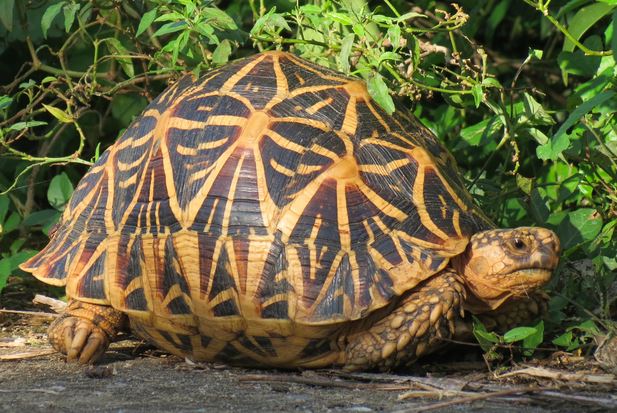
    • The Directorate of Revenue Intelligence (DRI), Zonal Unit, Lucknow, acted on specific intelligence to intercept an illegal wildlife trade of 436 baby Indian Tent turtles.

    About Indian Tent Turtles

    Details
    Scientific Classification Pangshura tentoria, Family: Geoemydidae
    Diet Mainly herbivorous, active swimmer.
    Habitat Prefers still water pools on river sides and slow running water near river banks.
    Distribution Native to India, Nepal, and Bangladesh.
    Conservation Status – Wild Life (Protection) Act, 1972: Schedule I

    – IUCN Status: Least Concern

    – CITES: Appendix II.

    Major Threats Illegal trade in the pet market due to its attractive appearance.
  • Wildlife Conservation Efforts

    Specie in news: Saiga Antelope

    Note4Students

    From UPSC perspective, the following things are important:

    Prelims level: Saiga Antelope

    Mains level: NA

    Saiga Antelope

    Central Idea

    • The Saiga Antelope has been reclassified from ‘Critically Endangered’ to ‘Near Threatened’ by the International Union for Conservation of Nature (IUCN).

    About Saiga Antelope

    Details
    Scientific Name Saiga tatarica
    Physical Characteristics Notable for its distinctive bulbous nose; relatively small, with a thin build and long, thin legs
    Habitat Primarily found in the steppe region of Central Asia and Eastern Europe
    Population Distribution Predominantly in Kazakhstan and Russia, with smaller populations in Uzbekistan, Turkmenistan, and Mongolia
    Conservation Status IUCN Red List: Near Threatened

    CITES: Appendix II

    Major Threats Poaching for horns (used in traditional medicine), habitat loss, and disease outbreaks like pasteurellosis
    Diet Herbivorous, feeding on a variety of grasses and plants
    Breeding Known for its rapid population growth under favorable conditions; breeds in large herds
    Migration Notable for long-distance seasonal migrations
    Cultural Significance Featured in the folklore and culture of the local steppe communities
  • New Species of Plants and Animals Discovered

    Specie in news: Mauritian Dodo

    Note4Students

    From UPSC perspective, the following things are important:

    Prelims level: Mauritian Dodo

    Mains level: NA

    Mauritian Dodo

    Central Idea

    • Mauritian authorities are now working to resurrect the human-caused extinct bird ‘Dodo’.

    About Mauritian Dodo

    Details
    Scientific Name Raphus cucullatus
    Physical Characteristics Large, flightless bird; about 1 meter tall, weighing 10-18 kg; large beak, stubby wings.
    Habitat Endemic to Mauritius, an island in the Indian Ocean; lived in forests and possibly coastal areas.
    Discovery and Extinction Discovered by Dutch Colonist in late 16th century; extinct by the late 17th century, last sighting around 1662.
    Causes of Extinction Human hunting and introduced species like rats, pigs, and monkeys.
    Diet Likely fruits, nuts, seeds, bulbs, and possibly small animals.
    Behavior Exhibited no fear of humans due to lack of natural predators.
    Cultural Impact Symbol of extinct and endangered species; featured in the phrase “as dead as a dodo.”
    Representation Depicted in literature and art, notably in Lewis Carroll’s “Alice’s Adventures in Wonderland.”

    Science of De-Extinction

    • Genetic Blueprint: The first step in de-extinction is obtaining a complete and accurate genome of the species.
    • Genome Sequencing: Paleo-geneticists have successfully sequenced the dodo’s genome using DNA from a museum specimen.
    • Comparative Genomics: The dodo’s genome is being compared with that of its closest extinct and extant relatives to identify unique dodo traits.

    Process of Resurrecting

    • Editing Genetic Material: The project involves editing the primordial germ cells (PGCs) of the Nicobar pigeon, the dodo’s closest living relative, to express dodo traits.
    • Interspecies Surrogacy: These edited PGCs will be inserted into chicken embryos, with chickens acting as interspecies surrogates to potentially birth a dodo offspring.
    • Physical Resemblance: The aim is to create a bird physically indistinguishable from historical accounts of the dodo.

    Challenges and Concerns

    • Scientific Hurdles: Experts emphasize the complexity of recreating a species and the time required for selective breeding to achieve dodo-like characteristics.
    • Habitat Restoration: Mauritius’ transformed landscape poses challenges for reintroducing the dodo, necessitating the control or removal of invasive species.
    • Alternative Habitats: The project considers reintroducing dodos to more pristine, uninhabited islands like Round Island and Aigrettes.

    Motivations behind the Project

    • Ecosystem Restoration: Reintroducing the dodo could help restore mutualistic relationships in Mauritius’ ecosystem, particularly in seed dispersal.
    • Conservation Technology: The techniques developed could aid in conserving and restoring other endangered avian species.
    • Symbolic Value: The project is driven by a desire to create ‘conservation optimism’, using the dodo as a symbol of hope in the face of human-caused extinctions.
  • New Species of Plants and Animals Discovered

    Specie in news: Megamouth Shark

    Note4Students

    From UPSC perspective, the following things are important:

    Prelims level: Megamouth Shark

    Mains level: Not Much

    Megamouth Shark

    Central Idea

    • In a historic moment for marine biology, a pregnant megamouth shark, a rare and elusive deepwater species, was discovered washed up on a beach in the Philippines.
    • This is only the 60th ever seen and the first ever observed to be pregnant.

    About Megamouth Shark

    Details

    Scientific Name Megachasma pelagios
    Discovery First discovered in 1976 off the coast of Hawaii.
    Appearance Large mouth, bulbous head, rubbery lip, dark grey/black body with a white underbelly.
    Size Up to 5.5 meters (18 feet) in length.
    Diet Filter feeder, consuming plankton, jellyfish, and small fish.
    Habitat Deepwater species, found at depths of 150 to 1,000 meters (490 to 3,280 feet).
    Behavior Rarely seen, swims with mouth open to filter food.
    Reproduction Presumed to be ovoviviparous, but details are largely unknown.
    Distribution Wide but rare distribution in the Atlantic, Pacific, and Indian Oceans.
    Conservation Status Least Concerned (IUCN)
    Scientific Interest Valued for its unique anatomy and role in the deep-sea ecosystem.


  • Wildlife Conservation Efforts

    Species in news: Doubled-humped Camels

    Note4Students

    From UPSC perspective, the following things are important:

    Prelims level: Double-Humped Camels

    Mains level: NA

    camel

    Central Idea

    • Indian Army has inducted double-humped camels for patrolling and logistical support along the Line of Actual Control (LAC) in Eastern Ladakh.

    About Double-Humped Camels

    • The Bactrian camel (Camelus bactrianus), is also known as the Mongolian camel, domestic Bactrian camel or two-humped camel.
    • Their name comes from the ancient historical region of Bactria.
    • It is a large even-toed ungulate native to the steppes of Central Asia.
    • It has two humps on its back, in contrast to the single-humped dromedary.
    • The humps are plump and pliable. They store fat, which can be converted into water and energy when food and water resources are scarce during harsh winters.
    • A small population of Bactrian camel exists in the Nubra valley of Ladakh.

    Significance of deployment

    • These camels serve to patrol the LAC and provide logistical aid to troops in the difficult, barren landscape of Eastern Ladakh.
    • They can carry 170 kg and patrol up to 15 km without rest, surpassing the load capacity of mules previously used by the army.
    • The Army’s 14 corps is deploying these camels in strategic areas like Depsang and Daulat Beg Oldie (DBO) along the LAC.

    Try this PYQ from the 2019 CS Prelims:

    Q. Consider the following statements:

    1. Asiatic lion is naturally found in India only.
    2. Double-humped camel is naturally found in India only.
    3. One-horned rhinoceros is naturally found in India only.

    Which of the statements given above is/are correct?

    (a) 1 only

    (b) 2 only

    (c) 1 and 3 only

    (d) 1, 2 and 3

    Post your answers here.

  • New Species of Plants and Animals Discovered

    New species: Abelmoschus Odishae

    Note4Students

    From UPSC perspective, the following things are important:

    Prelims level: Wild Okra (Abelmoschus Odishae)

    Mains level: NA

    odisha

    Central Idea

    • A scientist from the Indian Council of Agricultural Research (ICAR) recently discovered a new plant species of ‘wild okra’ named ‘Abelmoschus Odishae’.

    Wild Okra (Abelmoschus Odishae)

    • Its discovery occurred in a humid deciduous forest within the Banspal block of Keonjhar district, in Odisha.
    • This plant holds potential for use in hybridization to develop improved varieties with enhanced disease resistance.
    • It could significantly contribute to broadening the genetic diversity of okra.
    • Characteristics:
      1. This perennial shrub reaches up to 5 meters in height and features a densely hispid, spiny stem with backward-facing hairs.
      2. The plant is adorned with large, vibrant yellow flowers.
      3. Its seeds are nearly kidney-shaped, with short, robust, non-spiral trichomes.
      4. The seeds exhibit a high viability rate of 95 percent.

    About Okra

    • Commonly referred to as gumbo or ladies’ fingers, okra is a vegetable favored in warm climates.
    • Originating from the Eastern Hemisphere’s tropics, it is now extensively grown or found naturally in the tropical and subtropical regions of the Western Hemisphere.
    • Rich in minerals, vitamins, antioxidants, and fiber, okra is a nutritious choice.
    • The vegetable is known for its mild flavor and distinctive texture, featuring a peach-like fuzz on its exterior and small, consumable seeds inside.
  • Forest Conservation Efforts – NFP, Western Ghats, etc.

    Specie in news: Lantana Camara

    Note4Students

    From UPSC perspective, the following things are important:

    Prelims level: Lantana Camara

    Mains level: NA

    Lantana Camara

    Central Idea

    • In an exhibition in Bengaluru, sculptures of elephants made from Lantana camara gained popular attraction.

    About Lantana Camara

    • Lantana camara, commonly known as lantana, belongs to the verbena family (Verbenaceae) and originates from the American tropics.
    • Lantana was introduced to India in the early 19th century as an ornamental plant during the British colonial period. Its colorful flowers made it popular in gardens.
    • This shrub has the ability to spread across forest floors, climb like a creeper over trees, and easily intertwine with native vegetation.
    • Lantana is highly adaptable, thriving in diverse ecosystems.

    Impacts on Local ecosystem

    • Lantana’s invasive nature poses a serious threat to native flora and fauna. It competes with native plants for resources, often leading to a reduction in native biodiversity.
    • It forms dense thickets that alter the structure of habitats that impede the movement of animals and change the microhabitat conditions, such as light availability and soil composition.
    • It can invade agricultural land, reducing crop yields, and can also infest pastures, impacting grazing for livestock.
    • It is toxic to livestock and can cause health issues if ingested. This adds to the economic burden for farmers who need to ensure their animals do not graze on lantana-infested land.
    • The plant increases the risk of fire in the ecosystems it invades because it forms dense thickets that can easily catch and spread fire.
  • New Species of Plants and Animals Discovered

    ‘Music Frog’ Species discovered in Arunachal Pradesh

    Note4Students

    From UPSC perspective, the following things are important:

    Prelims level: Music Frog

    Mains level: NA

    Music Frog

    Central Idea

    • Scientists have identified a new species of ‘music frog’, named Nidirana noadihing, in Arunachal Pradesh, India.

    Nidirana noadihing: The Music Frog

    • Location: It came from the place, Noa-Dihing River, from where the specimens were collected.
    • Size: The frogs grow up to 6 cm, with males measuring between 1.8 to 2.3 inches and females between 2.4 to 2.6 inches.
    • Appearance: They have a robust body, a rounded snout, smooth skin with bony protrusions on their backs, and a pale cream line bordered with dark brown running down their bodies.
    • Eye Features: The frogs have irregularly shaped spots on their eyelids, moderately large eyes with gold-rimmed pupils, and dark brown irises with a golden spackle.
    • Colouration: Their throat, forelimbs, thighs, and lower legs are light brown and pinkish, while their groin and the outside of their thighs are pale yellow with irregular dark olive patches.

    Habitat and Behavior

    • Habitat: Nidirana noadihing inhabits swamps, ponds, and paddy fields, often constructing nests for egg-laying.
    • Vocalization: The species is distinguished by its unique call, which led to its discovery near the Noa-Dihing river.