(प्रस्तावित समझौते के तहत भारत के जहाज को अगर तेल लेना है या फर्निशिंग करानी है तो वो अमरीका में करवा सकता है और अमरीका भी भारत में यह कर सकता है. अमरीका के साथ यह सहमति कितनी अहम है और इसके फ़ायदों के साथ ही इससे क्या मुश्किलें हो सकती हैं, इस बारे में आप उपरोक्त लिंक पर पढ़ हैं)
(दक्षिण एशिया वन जीवन प्रवर्तन नेटवर्क आठ देशों: अफगानिस्तान, बांग्लादेश, भूटान, भारत, मालदीव, नेपाल, पाकिस्तान एवं श्रीलंका से निर्मित एक क्षेत्रीय नेटवर्क है. क्या हैं इसके उद्देश्य और यह काम करेगा इसे आप उपरोक्त लिंक पर पढ़ सकते हैं)
(मिस्र की सरकार सऊदी अरब के साथ मैरीटाइम डिमार्केशन एकॉर्ड पर हस्ताक्षर किए, जिसके तहत मिस्र के दो द्वीप तिरान और सनाफिर सऊदी अरब की जलसीमा में पड़ते हैं. भौगोलिक दृष्टिकोण से और आईआर के लिहाज़ से इस आलेख को देखा जाना चाहिए.)
You guys were just awesome in posting contents. Do you guys are running any coaching institutes in chennai. if so please let me i would be glad to join it.
What do we mean by LSA, CISMOA & BECA – Back2basics terms
Why the US wants India to sign them? Mains & Interview
Why was India averse to signing these pacts? Mains
What is Defense Technology and Trade Initiative (DTTI)? Prelims & Mains
Are we gonna sign all eventually?
What are LSA, CISMOA and BECA agreements?
Welcome to the world of 3 foundational agreements that the US has been insisting on India to sign to further enhance the bilateral defence and strategic relationship.
#1. The Logistics Support Agreement (LSA)
LSA would set a framework for the two countries to share military logistics
To assist each other’s armed forces with simple military logistics. For the U.S. Navy, for example, logistics support from India would be a valuable asset, helping it better project power in the Indian Ocean.
LSA would allow each other to access their military bases without any conflict for e.g in 1991 Gulf war India denied the US from refueling its aircraft from Indian territory.
#2. The Communication and Information Security Memorandum of Agreement (CISMOA)
CISMOA would allow the United States to supply India with its propriety encrypted communications equipment and systems
Thus allowing secure peacetime and wartime communication between high-level military leaders on both sides
CISMOA would extend this capability to Indian and U.S. military assets, including aircraft and ships
#3. The Basic Exchange and Cooperation Agreement (BECA)
BECA would set a framework through which the United States could share sensitive data to aid targeting and navigation with India
Why the US wants India to sign them?
The agreements clearly puts emphasis on building interoperability and capacity of the emerging partners through joint military exercises, training, and defence equipment sales
US increasingly expects India to play the larger role of a “net security provider”
It believes that these foundational agreements will facilitate a strong defence and strategic partnership between the two countries
During the United Progressive Alliance (UPA) Government, India was less inclined towards signing these agreements BUT the India-US defence and strategic relationship has dramatically improved since the Narendra Modi Government came to power in May 2014.
Really? How so?
India & USA agreed to transform from mere buyer-seller defence relationship to joint research, co-development and production of high end defence equipments
Signed a “Joint Strategic Vision for the Asia-Pacific and Indian Ocean Region”. Again, this would be a good time to revisit our updated maritime strategy where we increased our ambit of surveillance because we want to be a“net security provider” in Indo-pacific. Click to read here.
If that is the case, why was India averse to signing these agreements before?
India was concerned that it might erode its military independence
Botch up its historically close security relationship with Russia, jeopardizing ongoing projects
May antagonize China, leaving India in a disadvantageous position vis-a-vis its border disputes with Beijing. China’s visualization of US activity with any South Asian nation as its ‘Asia Pivot’ Strategy!
In the case of CISMOA, it might allow the United States undue insight into Indian operational practices
Question
These look like valid reasons for not signing the agreements. And anyway, we were going on with our weapons procurement business with US with/ without these. What changed then? Why has India given an in-principle nod to signing the LSA?
Hint:
The India-US statement came on a day when China expressed anger at the Group of Seven (G7) advanced economies opposing “any intimidating coercive or provocative unilateral actions that could alter the status quo and increase tensions” in the East and South China Seas.
Know more about Defence Technology and Trade Initiative (DTTI)
Indo-Us defence pact, unveiled in 2012 – 4 major area of focus – Cooperation in (research, co-production , S&T and Military sales).
It is mere framework not a treaty or law & disagreements have led to no progress since 2012!
US prioritization of trade issues & India’s focus on technology transfers = Deadlock!
Challenges and concerns = Terrorism from AF-PAK region, China’s assertiveness over South China sea.
The aim of this compilation is to help you serve as a last minute revision tool for the upcoming IAS Prelims 2016. UPSC is known to pitch in with factual questions in the Prelims Exam. A sincere student ends up missing out on them as a part of his/ her daily studies and here’s where such compilations come to rescue!
#1. Defence Capability Enhancements
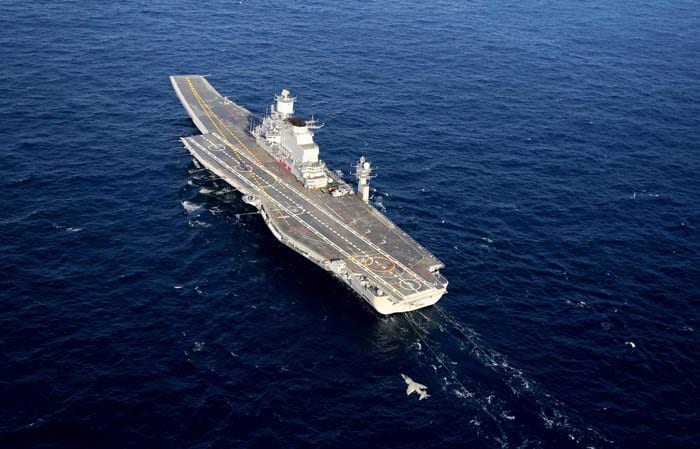
India’s biggest ship, aircraft carrier INS Vikramaditya, finally arrives
source: NDTV.com
INS Vikramaditya is a Kiev class aircraft carrier which was commissioned by Russian Navy in 1987 under the name Baku. It was later renamed as Admiral Gorshkov and last sailed in 1995 in Russia, before being offered to India. India agreed to buy it in 2004 for $974 million. The cost kept shooting up as Russia delayed the delivery by over five years.
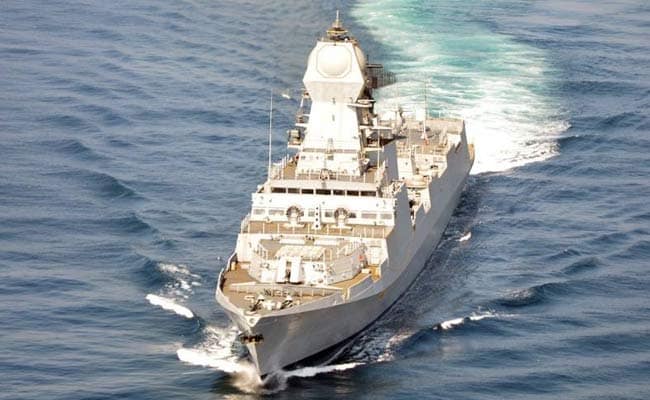
INS Kolkata – Biggest warship ever to be built in India till date
source: NDTV.com
INS Kolkata is the lead ship of the Kolkata-class stealth guided-missile destroyers of the Indian Navy. She was constructed at Mazagon Dock Limited (MDL), and was handed over to the navy on 10 July 2014. A bit of an old news but mightier still!
INS Kolkata, under the Project 15 Alpha, belongs to the destroyer class and is the first of three ships currently under construction
Being wholly constructed in the country, the ship provides credence to India’s defense capabilities in an geo-politically unstable world.
#2. Technological Advancements
Agni 5, India’s Longest Range Ballistic Missile (2015)
Agni-V is a solid fueled intercontinental ballistic missile (ICBM)
Range – 5,000 km
Nuclear capable – YES
Three Stage Missile – Solid Fuel
Strategic Missile – YES
What’s the difference between a strategic and a tactical missile system?
Strategic weapons are used for strategic purposes – threatening an opponent’s industrial infrastructure, targeting their command structure, and are generally designed to hit targets which disrupt the enemy’s ability to conduct warfare at a high level.
Tactical weapons are for local battlefield use, and are designed to be deployed against targets strictly of immediate military value.
NOTE: India has started the production of AGNI 6.
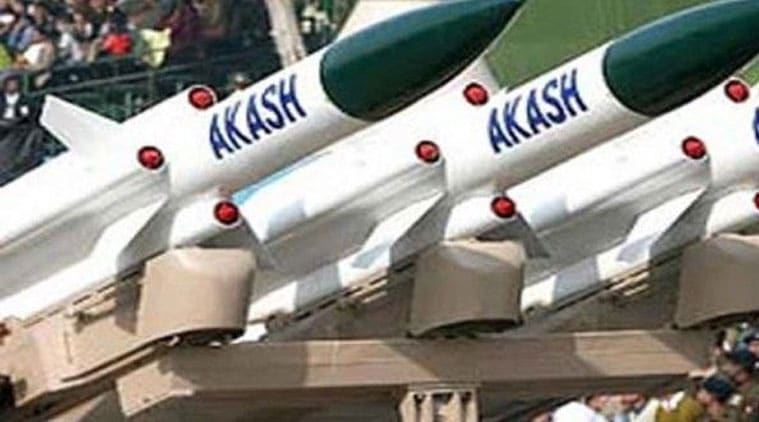
Surface-to-air missile ‘Akash’ inducted in IAF (2015)
source: Indianexpress.com
‘Akash’ has been developed by DRDO as part of the Integrated Guided Missile Development
The missile can track a target 100 km away and hit the enemy’s helicopter, plane or drone from a 25-km distance
Astra is an active radar homing beyond-visual-range air-to-air missile (BVRAAM) developed by the DRDO
The missile is technologically more sophisticated than the nuclear capable Agni missile series of strategic ballistic missiles
The maximum range of Astra is 110 km in head-on chase and 20 km in tail chase
The Mark 2 version of Astra will have a maximum range of 150 km and tail chase range of up to 35 km
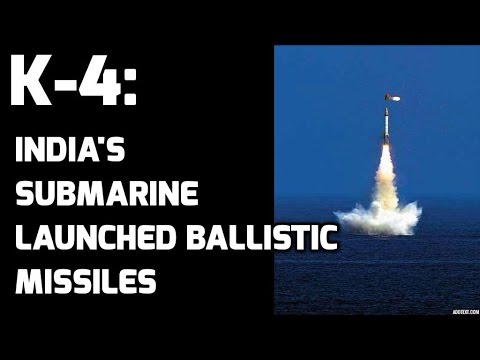
The secretive submarine-launched K-4 – nuclear missile (2016)
A long range submarine-launched ballistic missile, codenamed K-4, capable of can strike targets upto 3,500 kilometres away
The K-4, a derivative of the more well known Agni ballistic nuclear missiles already in service, will be the most potent part of India’s nuclear deterrent
Incidentally, K-4 is named after APJ Abdul Kalam
Indian Navy successfully test fires Barak-8
The firing was undertaken on the Western Seaboard by INS Kolkata, wherein the missile successfully intercepted an aerial target at extended ranges
Long Range Surface to Air Missile (LR SAM) – a significant milestone in enhancing its anti-air warfare capability
Developed jointly by India and Israel
Anti-tank HeliNa missile hits targets in crucial test (2015)
source: Linkedin.com
HeliNa is a helicopter-launched version of Nag and has been developed by the DRDO under the Integrated Guided Missile Development Programme (IGMDP)
HeliNa missile will be integrated with the weaponised version of the Advanced Light Helicopter Dhruv, the light combat helicopter produced by Hindustan Aeronautics Limited
#3. Bonus for our readers
Most of the time you are likely to be flummoxed by questions on tactical/ strategic – surface to surface missiles. Let’s list down all of them in order for you to remember and revise!
Surface to surface missile
Did we miss out on anything? Add to the growing list for prelims worthy questions.
We have started a new initiative & tried to revive CD Discuss for the benefit of the community. The idea is to consolidate our learnings from the NEWS and mix them with static & dynamic portion of the syllabus to ask a few pertinent questions.
Scope of discussion
What is RCEP and how did it come into being? – Prelims & Mains
Why is RCEP Vital for India? – Mains & Interview
With TPP Advancing, India Pins Hopes On RCEP Trade Bloc
Scope of discussion
Maritime challenges & Our new Maritime Security Strategy
Geopolitical aspects of maritime challenges – Fodder for Mains & Essay
Indian maritime agencies – Fodder for Prelims
Diplomatic dimensions – Fodder for Prelims & Interview
Challenges ahead? Mains & Interview
———
You will find some very carefully chosen questions at the bottom of most of these writeups. If you have been writing answers all year long, it should be easy for you to recall and give crisp point wise comments. If you have not been practicing this answer writing – now is a good time to start and contribute.
PS: This initiative is on best effort basis and will be clamped down if we recieve less than viable participation. Just like what happened with daily Q&A a few months back. So please go ahead and spend some time in thinking through these questions
What is RCEP and how did it come into being? – Prelims & Mains
Why is RCEP Vital for India? – Mains & Interview
With TPP Advancing, India Pins Hopes On RCEP Trade Bloc
What is RCEP?
If you have been following our series on International Organisations, we talked about East Asia Summit (EAS) where we briefly touched upon RCEP.
Regional Comprehensive Economic Partnership (RCEP) is a proposed free trade agreement (FTA) between –
The 10 members of ASEAN
Additional members of ASEAN +3 = China, Japan, South Korea
Members with which ASEAN countries have FTA = India, Australia, New Zealand
RCEP includes more than 3 billion people, has a combined GDP of about $17 trillion, and accounts for about 40 percent of world trade. By any means, this is a huge community in making.
What is the significance of RCEP for India?
From India’s point of view, the RCEP presents a decisive platform which could influence its strategic and economic status in the Asia-Pacific region and bring to fruition its “Act East Policy.” It is expected to be an ambitious agreement bringing the 5 biggest economies of the region – Australia, China, India, Japan and South Korea – into a regional trading arrangement.
There are three immediate benefits that its trade policymakers should note-
#1. The RCEP agreement would complement India’s existing free trade agreements with the ASEAN and some of its member countries.
This consolidation can address challenges emanating from implementation concerns vis-à-vis overlapping agreements, which is creating a “noodle bowl” situation obstructing effective utilization of these FTAs.
It will also help achieve its goal of greater economic integration with countries East and South East of India through better access to a vast regional market ranging from Japan to Australia.
source: asiafoundation.org
NOTE: India is not a party to two important regional economic blocs: the Asia-Pacific Economic Cooperation and the Trans-Pacific Partnership. The RCEP would enable India to strengthen its trade ties with Australia, China, Japan and South Korea, and should reduce the potential negative impacts of TPP and TTIP on the Indian economy.
#2. Gets India closer to ASEAN
Clubbing with the ASEAN has been a principal policy priority for both China and India.
At present, while China has clubbed with the ASEAN+1, ASEAN+3 and ASEAN+6,
India is clubbed only under the ASEAN+6 framework
#3. India can leverage its capabilities in IT, Healthcare, Education and services
The RCEP will create opportunities for Indian companies to access new markets
India is well placed to contribute to other countries in RCEP through its expertise in services
Countering TPP with RCEP
New Delhi fears the TPP, although years away from reality, could mean losing some textile and drugs exports to countries like Vietnam, which has embraced both the TPP and the RCEP.
TPP is set to change the landscape of global trade. For India, it is most likely to affect sectors like leather goods, plastics, chemicals, textiles and clothing.
We will discuss more about TPP in a later discussion but suffice to say that RCEP’s realisation is important for India.
Questions for you
What’s the history behind ASEAN+1, ASEAN+3, ASEAN+6 and how is ASEAN+6 related to RCEP?
Apart from RCEP, TPP – there is another arrangement called as Trans-Atlantic Trade and Investment Partnership (TTIP). What do you know about it?
With China not clamping down on its excess steel production, how do you think these FTA arrangement will pan out? Or will they not? What is USA’s stance on this?
It would be worthwhile to investigate the loyalties of the ASEAN nations wrt. China OR India. What are the major countries in ASEAN and who are they friends with. Why would you say so?
(वर्तमान में गेहूं का समर्थन मूल्य लगभग 1,500 रुपये प्रति क्विंटल है. पानी का मात्रात्मक मूल्य वसूल करने से किसान पर 200 रुपये प्रति क्विंटल का अतिरिक्त बोझ पड़ेगा. सरकार को चाहिए कि गेहूं के समर्थन मूल्य में 200 रुपये की वृद्धि कर दे. इस विषय पर एक अच्छा आलेख उपरोक्त लिंक पर पढ़ सकते हैं)
2. भारत-अमेरिकी रक्षा साझेदारी को आगे बढ़ाने की तैयारी
(भारत ने अमेरिका के साथ अपने रिश्तों को अफपाक से अलग देखा है और वह अमेरिकी केंद्रीय कमान के साथ सैन्य समझौते को बढ़ावा दे रहा है. भारत-अमेरिका रक्षा ढांचा समझौता 2025 तक के लिए बढ़ा दिया गया है. और किन क्षेत्रों में क्या विचार किया जा रहा है, आप ऊपर लिंक पर पढ़ सकते हैं)
3. जानिए, क्या है बैंकरप्सी कानून, इकोनॉमी के लिए कैसे है फायदेमंद
(इस बिल के कानून बनने पर इन्सालवेंसी (दिवालिया) से जुड़े मामलों को छह महीनें (180 दिनों) के भीतर निपटाना संभव हो जाएगा. सके अलावा फास्ट ट्रैक अप्लीकेशन को भी 90 दिनों में निपटाना होगा. इस बारे में और अधिक उपरोक्त लिंक पर क्लिक कर जाना जा सकता है)
We received a lot of queries over the forums and over mails on NCERT books & where to download them. Check out this link and download the OLD & NEW NCERTs.