💥Join UPSC 2027,2028 Mentorship (July Batch) + XFactor Notes & Microthemes PDF

Year: 2016

  • Global Warming and Greenhouse Gases

    Read primer on environmental issues first if you have not read that 


    Global Warming

    Sun is the source of all energy and all life on earth. Sun emits energy in the form of short wave radiations (high energy i.e shortwave)-

    • A part of which is reflected back by clouds, aerosols, atmosphere
    • A part passes through the atmosphere to reach the earth’s surface which emits it back in the form of longwave radiation – Infra red (low energy, long wave) which warms the atmosphere <atmosphere is warmed by Longwave radiation not shortwave, hence temperature decreases with elevation so called lapse rate> <How does temperature inversion happen then?> and thus there is no net addition to earth’s temperature <oversimplified model but for now it would do>

    Note here that, at night when earth would be the net emitter, temperature would reach dangerously low levels. Then how is avg temperature of earth is maintained at levels conducive to life on earth?

    Role of Green Houses Gases

    • Such gases present in the atmosphere serve as a blanket which trap/absorb some of that Infrared radiation emitted by earth and send some of that back to earth <this effect is k/as Greenhouse effect, you would have observed this in car parked in Sun> and thus help maintain average temperature of earth to 14 <w/o such gases avg temperature would be -16 and life would be impossible on earth>
    • But any increase in such gases would result in more heat trapping resulting in increase in the temperature of earth being reflected in Global warming <Why is Venus hotter than Mercury when Mercury is closest to the Sun>

    Global warming changes the climate of earth hence Global Warming and climate change are often used anonymously.

    Greenhouse Gases

    Most abundant GHGs in earth’s atmosphere are

    Water Vapour> CO2> CH4> N2O> Tropospheric Ozone>CFCs  <plz note that tropospheric ozone is both a GHG and a pollutant, also included under Air Quality Index. Which other gases are included in AQI?>

    • Water vapour has the max overall effect on greenhouse effect but as water vapour is not directly increased or decreased by Human activities, we are not concerned about amount of water vapour in the atmosphere <we are concerned about anthropogenic i.e human induced global warming>
    • But as atmosphere warms, there would be more water vapour <more water getting converted into vapour> which would trap even more heat, resulting in even warmer atmosphere <positive reinforcement, so called vicious cycle so common in climate systems>

    Global warming Effect of a GHG and GLobal Warming Potential (GWP)

    Each gas’ effect on climate change depends on three main factors:

    1. How Much <higher the concentration, higher the warming>
    2. How long <more the life span, greater the warming>
    3. How Powerful <efficiency of heat trapping>

    Last 2 factors together determine global warming potential

    GWP over 100 years time scale <reference GWP of co2 (lifetime 30-95 years) being taken as 1>

    • CH4 -25 <lifetime is only 12 years>
    • N2O- 300 <lifetime of >100 years>
    • CFC, HFCs, NF3, SF6 etc have over 1000 times GWP than that of CO2 as their lifetime is much longer <not easily degraded> and efficiency of trapping heat much higher.

    Let’s Now look at Global Emission by Economic Source

    Electricity and Heat Production (25%)>Agriculture, Forestry and land use changes  (contribution of agriculture alone is 14%)>Industry (21%)

    Kyoto Protocol of UNFCCC initially vowed to reduce concentration of 6 major GHGs and in 2nd Commitment period another gas was added. Let’s look at those 7 in detail


    1. CO2 – Burning down of Fossil fuels, cutting down and burning of Trees

    Concentration of CO2 has increased from 280 in 1750 (pre industrial revolution) to 400 in 2015 i.e increased by 40%

    1. CH4- Primary source is Agriculture and Animal Husbandry <cows and sheep produce methane when they digest food>, manure when it decays, released from wetlands <waterlogged areas>, leakages during natural gas extraction, transportation < Natural gas is nothing but methane>
    2. N20– Excess use of nitrogenous fertilizers and bacteria breaking down nitrogen <what is nitrogen fixation and bacteria which helps in that?>, Fossil fuel Burning, Industrial process (nitric acid, synthetic fibres) <what is laughing gas and tear gas?>
    3. Hydrofluorocarbons (HFC)refrigerants, aerosol propellants, solvents, and fire retardants. They were used as replacement to CFC and HCFC which was phased out under Montreal Protocol (deplete ozone layer) but they are even more powerful GHG. Now USA is trying to include HFC in montreal protocol even though they do not deplete ozone  <what would then be used in refrigeration?>
    4. Perfluorocarbons (PFC)aluminum production and semiconductors
    5. Sulfur Hexafluoride (SF6)magnesium processing and semiconductor manufacturing, tracer gas for leak detection, electrical transmission equipment, induding circuit breakers.  
    6. Nitrogen Trifluoride (NF3) – latest addition, uses similar to PFCs in electronics industry, semiconductors
    • Note 1 – CFCs and HCFCs which are potent GHGs are not included in Kyoto Protocol as they were already being phased out under Montreal Protocol
    • Note 2 – Only molecule containing both Chlorine and Fluorine deplete ozone layer, Fluorinated compounds do not, so HFC, NF3, SF6, PFC etc do not deplete ozone layer

    Short Lived and Long Lived Climate Forcers

    • Factors external to the climate system which force or push the climate towards a new long-term state – either warmer  or cooler depending on the cause of change.
    • For instance, GHGs would be positive climate forcers (both natural and anthropogenic) as they push climate warming.
    • Long-life gases such as CO2, N2O,Fluorinated compounds once emitted exert their effect for long and are k/as Long Lived climate forcers.
    • On the other hand gases such as Methane, tropospheric ozone have a very short life and reducing their emission will quickly lead to reduction in their concentration. Black Carbon or soot is one such very short lived climate forcer.

    Black carbon component of fine particulate matter and is formed through the incomplete combustion of fossil fuels and biomass. It’s a positive climate forcing agent and warms the atmosphere by –

    1. Directly absorbing sunlight
    2. Reducing albedo when deposited on snow and ice <what is albedo?>
    3. Indirectly by effects on cloud formation


    It has major adverse health effects also <you know about PM 2.5> and contains many carcinogens <cancer causing agent>

    Note-  BC is the most effective form of PM, by mass, at absorbing solar energy: per unit of mass in the atmosphere, BC can absorb a million times more energy than CO2

    1. Effect of clouds on global warming?
    2. What is brown carbon and blue carbon?

    Some short lived climate Forcers have cooling effects. For instance – Sulfur aerosols . Fossil fuel combustion emits sulfur dioxide also which then combines with water vapour to form tiny droplets (aerosols) which reflect sunlight <but aerosol lasts 3 days, CO2 warms for 100 years>. But same Sulfur/sulfate is responsible for acid rain

    These aerosols are responsible for cooling observed after volcanic eruption and are being investigated for geoengineering <what is geoengineering?>

    Now a few charts you need to look at carefully as they would form the basis of climate negotiations we would discuss in the next article

    1. Top 10 Absolute emitters of the world

    China is the world’s largest emitter and emits about 1/4th of total world emission. India is at 4th spot.


    2. Top 10 Absolute emitter in per capita terms

    Note that the chart below describes emissions of top 10 absolute emitters only. Among all countries, Qatar top the list. See how low India’s per capita emissions are


    3. Emission intensity

    It matters as India has pledged to reduce its emission intensity <by how much? what did China promise?> even though our intensity is already at the level of EU. One of the reason of our low intensity is domination of services sector which is comparatively less energy and GHG intense but as India tries to push it’s manufacturing sector achieving the target of emission intensity might become a tall order


    4. Cumulative GHG emission

    They describe a country’s total historic emissions and thus historical responsibility. Just look at the share of US and EU. India’s is not even 5% with 17% of global population


    In the next part we will discuss climate negotiations.

  • 7 Common Myths About Working With the Indian Government

    We recently published a blog inspired by working with the Government and many officals at various levels. The article has been received well by many. Thought it would be interesting for the members of this forum.

  • Primer To Environmental Issues


    Since the advent of Industrial revolution humankind has been exploiting the nature like never before. Forests and trees are cut to make way for agriculture land, large factories, transport vehicles etc emit lots of CO2 and other gases and pollutants. But it was all forgotten as it came with immense prosperity.

    But since the 2nd half of 20th century, citizens world over started getting conscious of this unbridled exploitation of nature. There were also signs suggesting this exploitation was unsustainable and harming us. That even the climate was changing.

    Climate is the weather conditions prevailing in an area in general or over a long period. Climate of any region is generally stable. Climate change is changes in that stable climate due to anthropocentric or natural factors.

    In 1966, the World Meteorological Organization  (WMO) proposed the term climatic change to encompass all forms of climatic variability on time-scales longer than 10 years, whether the cause was natural or anthropogenic. But soon it was realized that major factor was human intervention and since then we are concerned about anthropogenic climate change.

    International Conferences on Environment 


    UN conference on Human Environment (UNCHE):-

    • An international conference under the UN aegis in 1972- UN conference at Stockholm to discuss issues realted to environment and development
    • came out with a declaration containing 26 principles concerning environment and development
    • led to creation of UN Environment Programme (UNEP)- an agency of United Nations with HQ in Nairobi, Kenya, which coordinates its environmental activities and assist developing countries in implementing environmentally sound policies

    World Commission on Environment and Development (WCED)-

    • As things did not change much after UNCHE and its Declaration remained on paper, UN set up a commission in 1984 to give a report on environment and development, World Commission on Environment and Development (WCED) – Brundtland Commission <after its chairperson Norwegian PM’s name>
    • Came out with the report Our Common Future in 1987 and enunciated the concept of sustainable development
    • Gave the most iconic definition of that concept to this date

    Sustainable development is development that meets the needs of the present without compromising the ability of future generations to meet their own needs

    Note that the definition contains two key concepts-

    • the concept of needs, in particular the essential needs of the world’s poor, to which overriding priority should be given; and
    • the idea of limitations imposed by the state of technology and social organization on the environment’s ability to meet present and future needs <so called carrying capacity>

    In 1988, UNEP <set up after UNCHE) and WMO set up an organization called IPCC – Intergovernmental Panel on Climate change which analyses and synthesizes scientific literature available on climate change and produces assessment reports (1st in 1990, 2nd 1995, 3rd- 2001, 4th- 2207, 5th -2014)

    UN Conference on Environment and Development (UNCED)-

    Brundtland commission report resulted in landmark 1992 summit, UN Conference on Environment and Development (UNCED) at Rio De janeiro <What is Brazil’s capital?>, also k/a Earth Summit

    It resulted in 3 legally binding documents –

    1. UN framework convention on Climate Change (UNFCC) <entered into force in June 1994> <1st assessment report of IPCC had already come out in 1990>
    2. UN Convention on Biological Diversity (UNCBD) <entered into force in DEC 1993>
    3. UN convention to Combat Desertification (UNCCD) <entered into force in Dec 1996>

    The summit also resulted in 3 non-binding documents

    1. Rio Declaration on Environment and Development
    2. Agenda 21 <21 is agenda for 21st century, UNCCD was the result of direct recommendation of Agenda 21>
    3. Forest Principles

    World Summit on Sustainable Development (WSSD)-

    • 10 years after 1st earth summit, another Summit took place, this time in Johannesburg , known as World Summit on Sustainable Development (WSSD).
    • US boycotted the summit and I don’t need to tell you the fallout of that

    UN conference on Sustainable Development (UNCSD)

    • Another earth summit was convened 10 years later, this time again in Rio, UN conference on Sustainable Development (UNCSD). <Are you following that they are changing the name of summits and if you don’t pay close attention, you can mark an MCQ incorrect.>
    • Primary Outcome of the summit was the non binding document <documents of every summit were non binding> The Future We Want
    • Summit also Proposed Sustainable Development Goals (SDGs) to replace Millennium Development Goals (MDGs) in 2015. <MDG were agreed upon at the UN’s millennium summit in 2000>

    Meeting of parties to UNFCC

    Meanwhile after coming into force of UNFCC in 1994, various parties (nations) to the conference started meeting every year to come to a legally binding document to reduce GHG to  a level that would prevent dangerous anthropogenic interference with the climate system.

    Kyoto Protocol –

    • In 3rd such meeting in 1997, called CoP 3 (3rd Conference of Parties) at Kyoto, Japan, Parties came to a conclusion and Kyoto Protocol was signed <entered into force in 2002> <there are frameworks/conventions and under them there are protocols which contain detailed legally binding provisions>
    • Basic objective was to reduce emission of anthropogenic GHG to limit global warming. It followed the principles of UNFCC such as Common But Differential Responsibility and Respective Capabilities (CBDR-RC)
    • USA never ratified the KP, Canada walked out in 2011. But anyway 1st commitment period followed from 2008-2012.
    • 2nd Commitment period is from 2012 to 2020 in which only 37 countries have binding targets. <Japan, NZ and Russia participated in 1st commitment period but not in 2nd>

    As KP clearly seemed to be failing, negotiation started for separate treaty under UNFCC for measures to be taken after 2020 resulting in Paris Agreement of Dec. 2015.

    Meeting of Parties to CBD

    Similarly Parties to CBD started meeting since 1994 <they meet every 2 years while UNFCC parties meet every year>. Convention has 3 main goals <UNFCCC only 1 – Climate change>

    1. conservation of biological diversity
    2. sustainable use of its components; and
    3. fair and equitable sharing of benefits arising from genetic resources

    Cartagena Protocol – At COP 5 in 2000, they adopted Cartagena protocol on Biosafety –  to protect biological diversity from the potential risks posed by living modified organisms resulting from modern biotechnology..

    Nagoya Protocol– In 2010 they adopted -Nagoya Protocol on Access to Genetic Resources and the Fair and Equitable Sharing of Benefits Arising from their Utilization

    UN declared the decade 2010-2020 as decade of biodiversity

    UN convention to Combat Desertification

    • UNCCD is  the only internationally legally binding framework set up to address the problem of desertification
    • The Convention is based on the principles of participation, partnership and decentralization
    • in 1994 treaty signed to prevent and reverse land degradation
    • in 2009, agreed on 11 indicators to measure progress towards the goal of reducing land degradation
    • In 2013 Canada withdrew from this convention as well

    Montreal Protocol – A similar environmental  issue which came into prominence in 1980s was ozone hole or ozone depletion. To recover lost ozone, in 1987 Montreal Protocol(to Vienna convention) on substances that deplete ozone was signed and it was a remarkable success.

    Many other international organization sprang up in 80s and 90s to protect environment and biodiversity. Many other conventions were also signed. Some of them are –

    1. Stockholm Convention on Persistent Organic Pollutants (POPs)
    2. Minamata Convention on Mercury
    3. Basel Convention on the Control of Transboundary Movements of Hazardous Wastes and Their Disposal
    4. Rotterdam Convention on the Prior Informed Consent Procedure for Certain Hazardous Chemicals and Pesticides in International Trade
    5. Vienna Convention on Civil Liability for Nuclear Damage
    6. Ramsar Convention on Wetlands <where is Ramsar?>
    7. Bonn convention on  Convention on the Conservation of Migratory Species of Wild Animals<Capital of East and West Germany?>
    8. Convention on International Trade in Endangered Species of Wild Fauna and Flora, Washington Convention

    Before we end this chapter, a brief summary

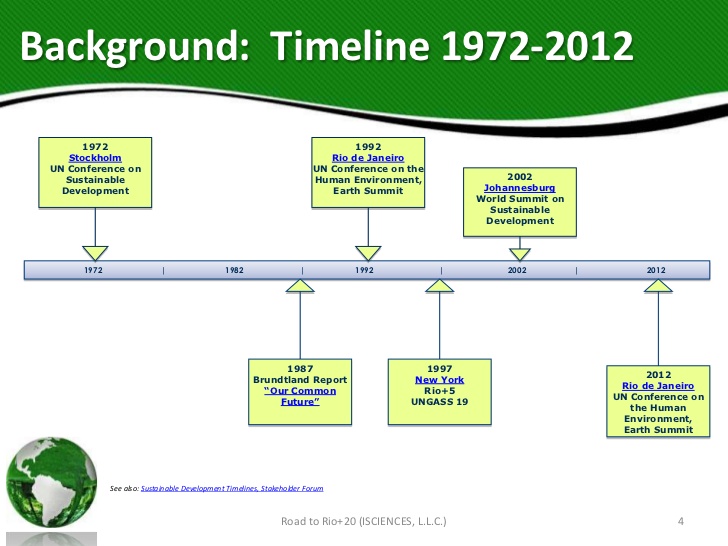
    • 1972 – UN conference on Human Environment at Stockholm, Formation of UNEP
    • 1987- World Commission on Environment and Development (WCED)-Brundtland commission, report- Our Common Future, Defined Sustainable Development
    • 1987 – Montreal Protocol to Vienna Convention
    • 1988 – WMO and UNEP together formed IPCC
    • 1992 – UN conference on Environment and Development / earth summit at Rio, led to UNFCC, UNNCCD, CBD
    • 1997 – Kyoto Protocol
    • 2002 – World Summit on Sustainable Development /Rio + 10 at Johannesburg
    • 2012 – UN conference on sustainable development/ Rio + 20, report – future we want, SDGs

    Plz note that in the pic above, conference of 1972 and 1992 are interchanged. Learn what is written in text.

    In the subsequent articles we would now discuss these issues (climate change, ozone depletion, acid rain, air pollution. biodiversity etc) in detail.

  • IAS Prelims tit-bits- Economy part 1 and 5 Questions

    1. GDP and GNP

    1. Gross Domestic product (GDP) is money value of final goods and services inside the Domestic economy whether produced by nationals or foreigners
    2. Gross National product (GNP) is money value of Final goods and services produced by Nationals whether they produce it within the nation or abroad
    3. GDP = GNP – Net Factor Income from abroad
    4. Nominal GDP (GDP at market price) is at current market prices while Real GDP (GDP at constant price) is adjusted for inflation w.r.t base year
    5. Measure of that inflation is not CPI or WPI but GDP Deflator
    6. GDP Deflator = Nominal GDP/Real GDP
    7. Net Domestic Product = GDP – Depreciation
    8. GDP at market price = GDP at factor cost + Indirect taxes – subsidies
    • Discuss – Recent changes to the method of calculating GDP
    • Discuss – what are these factors in factor cots

    2. Fiscal Deficit, Revenue Deficit, Primary Deficit

    1. Fiscal Deficit = Total expenditure – Total non debt creating  receipts ( total revenue receipt plus non debt creating capital receipt)
    2. In the above formula only debt creating capital receipt is excluded which is borrowing and that is exactly the fiscal deficit
    3. Revenue deficit = revenue receipt -revenue expenditure
    4. Effective revenue deficit = revenue deficit-grants for creation of capital assets
    5. Primary deficit = fiscal deficit -deficit due to interest paid

    Note – As grants are donation, creates no liability, are not to be repaid, they come under revenue budget not capital part similarly under international transaction grants come under current account not capital account

    • Discuss – FRBM act targets
    • Discuss – Deficit financing and monetizing deficits

    3. Current account and Capital account

    1. Current account deals with current, ongoing, short term transactions like trade in goods, services (invisible)
    2. It includes 1.trade in goods (BoT), 2.trade in services (invisible trade), 3.investment income,4.Unilateral transfers – GIFTS, GRANTS ,REMITTANCES
    3. Capital account deals with investments (FDI, FII, FPI), loans (ECB, External Commercial Borrowings), reserves (dollar, Special Drawing Right , gold etc). <bulk transactions which create liabilities>
    4. Balance of Payment is systematic record of all the transaction of a country with the world

    Note – Grants, remittances etc. are in current account not capital account

    Note 2- Investment income is under current account while Investments under capital account

    • Discuss – Balance of Trade v/s Balance of Payment
    • Discuss – Current account deficit

    4. Plan v/s non plan expenditure

    1. Plan expenditure simply means expenditure according to erstwhile 5 year plans (mostly for creation of capital assets)
    2. all other things included in non plan -interest payment , subsidies, pensions, military expenditure etc

    Discuss – Why is plan- non plan division being done away with

    5. Monetary Policy and Fiscal Policy

    1. Monetary Policy – what RBI does i.e interest rates (Repo, reverse repo, MSF, bank rate), Open Market Operations, CRR, SLR
    2. It affects money supply in the economy
    3. Fiscal Policy – what govt., finance ministry does, mainly taxes and expenditure (subsidies, wages etc)
    4. It mainly affects aggregated demand in the economy

    Discuss – Countercyclical monetary and Fiscal Policies


    5 Questions 


    #1. Net National product at factor cost is equal to
    (a) Gross Domestic product + Net factor income from abroad – depreciation
    (b) Gross National product at market prices -indirect taxes + subsidies – Depreciation
    (c) Gross domestic product – depreciation + Indirect taxes -subsidies
    (d) National product at market prices + Indirect taxes + subsidies + Depreciation

    2. The balance of payments of a country is a systematic record of (2012)

    • (a) all import and export transactions of a country during a given period normally a year
    • (b) goods exported from a country during a year
    • (c) economic transaction between the government of one country to another
    • (d) capital movements from one country to another

    £3. Which of the following constitute Capital Account? (2013)

    • 1. Foreign Loans
    • 2. Foreign Direct Investment
    • 3. Private Remittances
    • 4. Portfolio Investment

    Select the correct answer using the codes given below.

    • (a) 1, 2 and 3
    • (b) 1, 2 and 4
    • (c) 2, 3 and 4
    • (d) 1, 3 and 4

    £4. The national income of a country for a given period is equal to the: (2013)

    • (a) total value of goods and services produced by the nationals
    • (b) sum of total consumption and investment expenditure
    • (c) sum of personal income of all individuals
    • (d) money value of final goods and services produced

    5. With reference to Union Budget, which of the following is/are covered under Non-Plan Expenditure?

    • 1. Defense -expenditure
    • 2. Interest payments
    • 3. Salaries and pensions
    • 4. Subsidies

    Select the correct answer using the code given below.

    • a. 1 only
    • b. 2 and 3 only
    • c. 1, 2, 3 and 4
    • d. None


  • IAS Prelims tit-bits- Polity part 8

    1. President and Vice President

    1. President is a part of parliament, VP is not
    2. VP is chairperson Of RS but not a member of it
    3. Qualification – President should be qualified for election as a member of LS, VP as a member of RS
    4. Min. age for both is 35 while for LS election it’s 25 and RS election, it’s 30
    5. President takes oath to preserve, protect and defend the constitution, VP does not take oath to protect the constitution
    • Discuss – Which other constitutional functionaries take oath to protect, preserve and defend the constitution
    • Discuss – who administers oath to President and VP, speaker and deputy speaker?
    • Discuss – who is chairperson of upper house in states?

    2. Schedules of Constitution

    1. 1st schedule-names of states and UT, 2nd- emoluments, allowances, privileges, 3rd Oaths
    2. 4th Allocation of seats in RS
    3. 5th and 6th – schedule areas and tribal areas
    4. 7th – 3 lists
    5. 8th schedule – languages
    6. 9th schedule – added by 1st amendment to protect laws from judicial review
    7. 10th schedule – anti defection law
    8. 11th and 12th, Rural and Urban Local Bodies
    • Discuss – Which schedules can be amended by simple majority, which require special majority and which would require ratification from states
    • Discuss – when was the 10th schedule 1st added to the constitution
    • Discuss – present status of 9th schedule
    • Discuss – Difference b/w schedule 5 and schedule 6

    3. Parts of the constitution

    1. Part 1 – union and its territory
    2. Part 2 – citizenship
    3. Part 3- Fundamental Rights
    4. Part 4- DPSP
    5. PArt 4A- Fundamental duties
    • Note – Other parts not important, parts are sequential article wise
    • Discuss – Status of OCI & PIO cards

    4. Union Territories

    1. Administered by an administrator appointed by President
    2. Governor of a state can also be appointed administrator of a UT as well
    3. Delhi and Puducherry have a legislative assembly and elected council of minister
    4. Still, Parliament can make laws on all 3 lists even in case of Delhi and Puducherry
    5. Parliament can also establish a high court for UT <how many UTs have a high court of their own?>
    6. If LG does not agree with the advice of CoM, he refers the matter to president and in the meantime acts on his own discretion <what happens if governor does not agree with the advice of CoM?>
    7. In case of failure of constitutional machinery, President can impose his rule on Delhi and Puducherry <what happens in case of failure of constitutional machinery in states?>
    8. Delhi and Puducherry have representation in RS as well

    Discuss – Ordinance promulgating power of LG

    5. National Green Tribunal

    1. enacted under Art 21, which includes  right to a healthy environment
    2. mandated to make and endeavour for disposal of applications or appeals finally within 6 months of filing of the same
    3. Principal bench – New Delhi, 4 circuit Benches – Bhopal, Pune, Kolkata and Chennai
    4. Original Jurisdiction on matters of “substantial question relating to environment
    5. Very Imp.-  not bound by the procedure laid down under the Code of Civil Procedure, 1908, but guided by principles of natural justice
    • Discuss – Qualifications of chairperson and members
    • Discuss– Articles related to RTE act and RTI act
  • IAS/ UPSC Prelims 2017 will be held on 18th June 2017

    UPSC has updated its examination calendar for 2017 (click here)

    Notification of UPSC Prelims (Civil Services + Forest Services) – 22 February 2017

    Last Date to Submit Application – 17 March 2017

    Date of Preliminary Exam – 18 June 2017

    UPSC Civil Services Mains Exam – 28 October 2017 (5 Days)


    For students preparing for IAS Prelims 2017, we have launched our Flagship Course for IAS Prelims 2017

  • [Spiritual Tourism #3] PRASAD Cities- Kanchipuram, Mathura, Puri

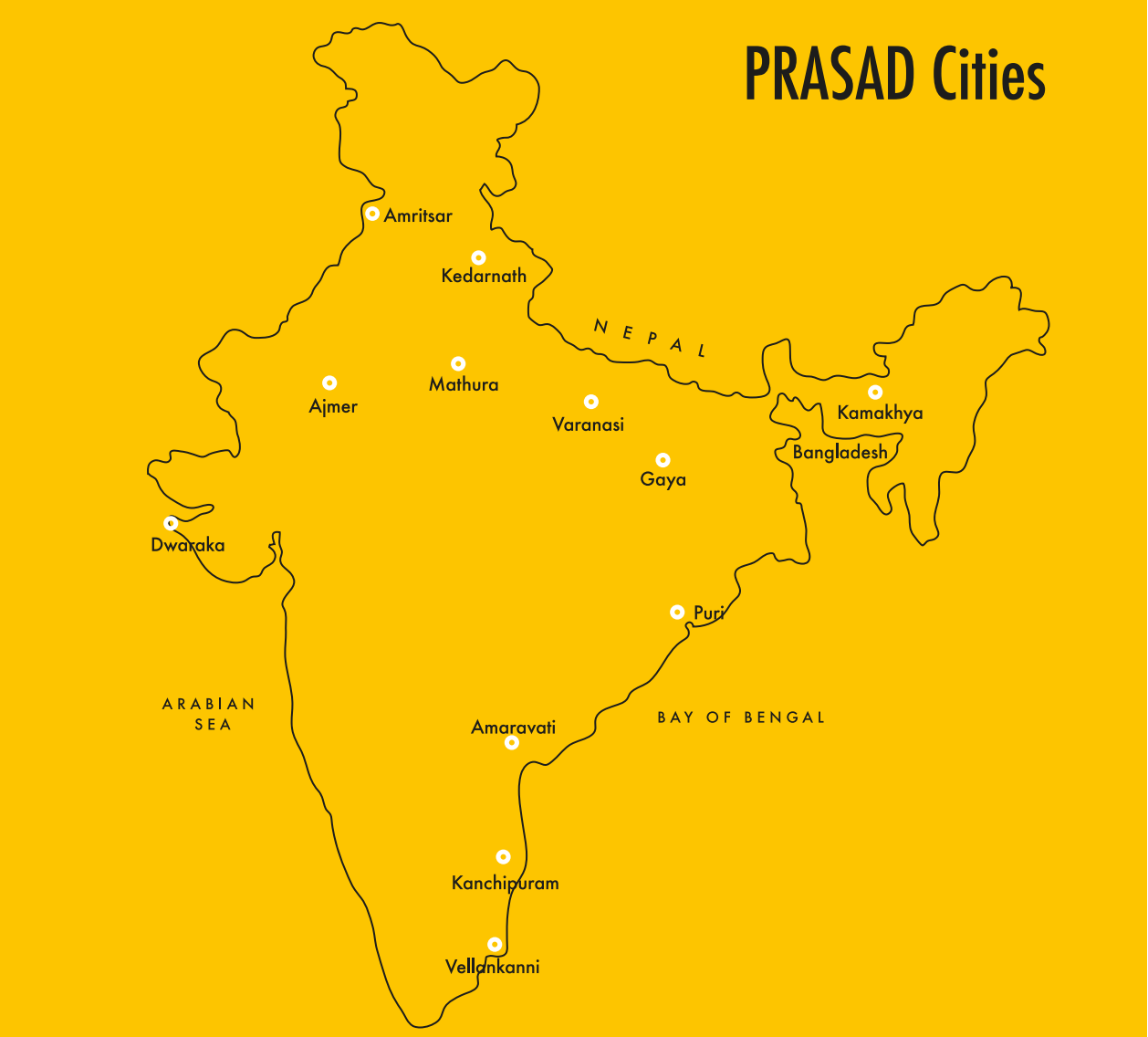
    In the last blog of this new series on Spiritual Tourism we left off at Kamakhya. Lets continue the tour alphabetically and traverse way down South to Kanchipuram. Keep the following map handy

    source

    #7: Kanchipuram

    • Kanchipuram is situated on the banks of Vegavathy river
    • One of 4 dhams of Hinduism (other three being Puri, Dwarka and Badrinath) + Seven most ancient religious cities (like Dwarka too)
    • Ruled by the Pallavas, the Medieval Cholas, the Later Cholas, the Later Pandyas, the Vijayanagar Empire, the Carnatic kingdom, and the British.
      • The legendary Pallavas ruled from Kanchi
      • Dravidian style evolved when rulers such as Mahendravarman and Narsimhavarman-1 commissioned Rock-cut temples (UNESCO herigtage status) known as “Rathas” on banks of Mamallapuram (close to Kanchipuram) Eg- Dharmaraja Ratha
      • Finally culminated in structural temples (also UNESCO heritage status) at Kanchipuram / Mahabalipuram such as Kailasanatha and Vaikuntha Perumal temple
    • Being THE temple city, it is known as ‘city of thousand temples’
      • Home to Ekambareswarar temple (having one of the tallest temple towers aka Vimana in India),
    • Centre for advanced education for Jainism and Buddhism between the 1st and 5th centuries
    • Headquarters of the Kanchi Matha, founded by the Hindu saint Adi Shankaracharya <recently a debate shot up regarding having this Astik Philosopher represent India as its National Philosopher; which exact sub-school does he belong to?>
    • Also called Silk City (Mulberry Silk)
      • Thriving handloom industry
      • Main profession of the people is weaving silk sarees
    • From North to south order of Important TN cities: Chennai -> Kanchipuram -> Puducherry (UT) -> Thanjavur -> Madurai -> Dindigul (Jalikattu Belt)

    #8: Kedarnath

    source
    • One of the twelve ‘Jyotirlingas‘ of Kedar or Lord Shiva.
    • Situated 3500 metres above sea level in Kumaon-Garhwal Himalaya
    • River Mandakini <Tributary of which river?> originates from a Chorabari glacier near Kedarnath
    • Fellow member of famed Panch Kedar 
      1. Rudranath
      2. Madmaheshwar
      3. Kalpeshwar.
      4. Tunganath
      5. Kedarnath
    • Built in 8th century AD by (same) Adi Shankaracharya (enlisted the Char Dhams)
    • Kedarnath was the holy temple ravaged by floods in 2013


    #9: Mathura 

    • Situated on banks of Yamuna river and birth place of Lord Krishna
    • Ruled by Mauryas, Sungas, Kushanas, Lodhis, Mughals, Jats, Marathas, Britishers
    • Centre of three cultures: Indian, Indo-scythian and Hellenstic
    • Centre of Religions: Buddhists, Jains and Brahmanical faith alike (Around 36 annual fairs are held); Round the year festivities
    • Visited by the famous Chinese traveller Hiuen Tsang (during reign of Harshavardhana) and also received a mention from Ptolemy, the great Egyptian writer
      • Tsang came through Tashkent and Swat valley <Alexander did too!>
      • His book “Si-yu-ki” or the records of western world


    Mathura School of Art: 

    source

    Materials– Clay figurines (Terracotta), Red sandstone

    • Landmark Experimentation in style of sculpting- as it replaced symbols by Anthropomorphic forms
    • Secular in character
    • Foreign elements blended with indigenous motifs

    Traditional folk arts:

    • Rasiya (the tradition of folk-songs that describe the love of the divine couple Radha and Krishna),
    • Charkula (a traditional folk dance of the Braj, where a woman balances a column of deepikas on her head)
    • Sanjhee (the colourful art of decorating the ground with flowers),


    #10: Puri

    source

    • Abode of Hindu diety “Lord Jagannath(a coastal city, not along banks of any river)
    • Enshrined in a grand Kalingan Temple of the 12th century
    • One of the Five sacred “khetras” of odisha
    • One of the 4 Dhams of Hinduism
    • Following saints sanctified the place through their preachings and left their imprints in the monasteries and ashramas
      • Ramanuja (12th century AD), Madhavatirtha (13th century AD), Naraharitirtha, Sankaradeva, Nanak, Kabir, Chaitanya
    • Famed Car festival (Rath Yatra) takes place annually here:
      • Three chariots carry Lord Jagannath and his sister, Subhadra, and brother Balabhadra
    • Community Institutions of Puri – the Jaga Gharas and Akhadas are present in each Sahi (nuclear settlements), where martial art, physical exercises and gymnastics are practised
    Published with inputs from Amar 
  • [Solved] IAS Prelims 2016 Mocks #2

    Update:

    The solutions for this mock are now available in a downloadable pdf. We have tried to make them as detailed as possible and included references and user comments wherever possible. Download link. 


    Note: For readers armed with their Android phones, you shall not be able to comment on this quiz from the App ecosystem, so please return to your desktops and fill in the comments and discuss!


    Directions : The following two (02) items consist of two statements, one labelled as the ‘Assertion (A)’ and the other as ‘Reason (R)’. You are to examine these two statements carefully and select the answers to these items using the codes given below:

    (a) Both A and R are true and R is the correct explanation of A

    (b) Both A and R are true and R is NOT the correct explanation of A

    (c) A is true but R is false

    (d) A is false but R is true

    1. Assertion (A) : The Rig Veda does not mention any officer for administering justice.

    Reason (R) : The Rig Vedic society was free of any unsocial activity.

    2. Assertion (A) : The debates in the Ibadat Khana built by Akbar were discontinued after a period.

    Reason (R) : The debates were leading to increasing bitterness among the proponents of different religions.

    3. Under the Mauryan administration, the offices of ‘Samaharta‘ and ‘Sannidhata‘ were related to

    (a) mining activities

    (b) relation with the neighbouring rulers

    (c) tax administration

    (d) activities related to wars

    4. Which of the following was/were mainly produced/constructed while the Gupta dynasty ruled the northern India?

    (a) Ajanta Paintings

    (b) Rock cut temples of Mamallapuram

    (c) Rock cut caves of Barabar

    (d) Sangam Literature

    5. Consider the following statements:

    1. That sun is stationary and the earth rotates was known to Indians by first century B.C.

    2. ‘Zero’ was known to Indians by the second century B.C.

    3. The decimal system was known to Indians by fifth century B.C.

    4. That the moon rotates around the earth was known to Indians by sixth century B.C.

    Which of the above statements is/are correct?

    (a) 1 and 3 only

    (b) 2 and 4 only

    (c) 2, 3 and 4 only

    (d) 1, 2, 3 and 4

     6. By the virtue of which of the following the governance of India was transferred directly to the British Government thus ending the rule of East India Company?

    (a) The Indian Council Act of 1861

    (b) The Regulating Act of 1773

    (c) The Pitt’s India Act of 1784

    (d) The Government of India Act of 1858

    7. Consider the following statements about the land revenue policy of ‘Permanent Settlement’:

    1. It was introduced in Bengal and Bihar by Lord Cornwallis.

    2. The right of ownership of zamindars was made hereditary and transferable.

    3. The zamindars were to give 3/4th of the rental they derived from the peasantry to the state.

    Which of the above statements is/are correct?

    (a) 1 only

    (b) 1 and 2 only

    (c) 2 and 3 only

    (d) 1, 2 and 3

    8. Consider the following statements about Raja Rammohun Roy:

    1. He was the founder of ‘Brahma Sabha’ (Bhahmo Samaj).

    2. He opposed idol worship and championed the cause of women emancipation.

    3. He rejected the authority of oldest sacred books of  Hindu religion faulting them for perpetuating social evils like sati.

    Which of the above statements is/are correct?

    (a) 1 and 2 only

    (b) 2 only

    (c) 1 and 3 only

    (d) 1, 2 and 3

    9. In the context of Indian freedom struggle, what were ‘Anushilan Samiti‘ and ‘Abhinav Bharat‘?

    (a) regional committees enrolling the masses for carrying out the constructive work as propounded by the Indian National Congress

    (b) rural societies that reached out to the peasantry of the country espousing the cause of freedom struggle

    (c) secret societies propagating the idea of revolutionary terrorism to uproot the British from Indian soil

    (d) committees carrying out the task of keeping the spirits of the masses alive during the period of inactivity in the mass movements

    10. Which of the following movement followed the failure of the Cripps Mission?

    (a) Quit India Movement

    (b) Non Cooperation Movement

    (c) Civil Disobedience Movement

    (d) Swadeshi Movement

    11. Vaikom Satyagraha was organised to oppose

    (a) the repressive tax regime in Kerala

    (b) the hereditary rights of land ownership

    (c) the seclusion of lower castes from entering the temples

    (d) the system of begar which burdened the peasantry

    12. During the heyday of Quit India movement, Gandhiji commenced a twenty-one day fast while in jail in February 1943. Why?

    (a) to condemn the violence of the people who digressed from the path of non-violence

    (b) to pressurise the state into accepting the demands of the Congress

    (c) to garner international support for the cause of Indian independence

    (d) to register his protests against the unprecedented violence of the state

    13. Who of the following Bhakti saints was/were contemporary(ies) of Sufi saint Khwaja Muinuddin Chisti ?

    1. Namadeva

    2. Ramananda

    3. Kabir

    4. Ravidas

    Choose the correct alternative using the codes given below.

    (a) 1 and 2 only

    (b) 3 and 4 only

    (c) 1 only

    (d) None

    14. Which one of the following temple was built in a different architectural design compared to the other three?

    (a) Kandarya Mahadeo Temple, Khajuraho

    (b) Kailasanatha Temple, Kanchipuram

    (c) Sun Temple, Konark

    (d) Jagannatha Temple, Puri

    15. Consider the following statements:

    1. Arches and domes, which were Turkish inventions, were used by them on a wide scale in their buildings in India.

    2. The arches were decorated with human or animal figures and scrolls of flowers.

    Which of the above statements is/are correct?

    (a) 1 only

    (b) 2 only

    (c)  Both 1 and 2

    (d) Neither 1 nor 2

    16. Who of the following was the first one to offer Individual Satyagraha?

    (a) Jyotiba Phule

    (b) Jawahal Lal Nehru

    (c) Vinoba Bhave

    (d) Rajendra Prasad

    17. Consider the following statements:

    1. Sarojini Naidu was the first Indian woman to address a session of the Indian National Congress.

    2. W C Bonnerji was the first President of the Indian National Congress.

    Which of the above statements is/are correct?

    (a) 1 only

    (b) 2 only

    (c)  Both 1 and 2

    (d) Neither 1 nor 2

    18. With respect to the Indian National Freedom movement, what was ‘Cunningham Circular‘?

    (a) A circular in Assam which forced students to furnish assurances of good behaviour

    (b) A circular in Bardoli allowing the confiscation of the assets of anyone refusing to pay taxes

    (c) A circular in Nagpur restraining participation by the mill workers in Nagpur Flag Satyagraha

    (d) A circular in North West Frontier Province allowing firing even on the peaceful demonstrators

    19. With reference to the medieval history of India, Rashtra, Visaya and Bhukti were units of administration of

    (a) Palas

    (b) Chalukyas

    (c) Rashtrakutas

    (d) Pratiharas

    20. Anekantavada is a core theory and philosophy of which one of the following?

    (a) Buddhism

    (b) Sikhism

    (c) Jainism

    (d) Vaishnavism

    21. Which of the following is/are correctly matched?

    Theatre Form            :          Region

    1.   Ankia Naat          :     Western India

    2.   Dashavatar          :     Konkan Region

    3.   Bhand Pather      :     Central India

    Choose the correct alternative using the codes given below.

    (a) 2 and 3 only

    (b) 2 only

    (c) 1 and 3 only

    (d) 1, 2 and 3

    22. Consider the following statements:

    1. ‘Thangka Paintings‘ are hand made paintings popular in the tribal areas of Jharkhand.

    2. They depict images of local deities and episodes from popular texts like Mahabharata and Ramayana.

    Which of the above statements is/are correct?

    (a) 1 only

    (b) 2 only

    (c)  Both 1 and 2

    (d) Neither 1 nor 2

    23. What was Komagata Maru?

    (a) A political party based in Thailand

    (b) A prominent communist leader of China

    (c) A naval ship  on voyage to Canada

    (d) A revolutionary leader of Japan

    24. Which of the following statements about the Charter Act of 1833 is/are correct?

    1. The trading activities of East India Company were to be abolished.

    2. A law member was to be appointed to the Governor-General’s Council.

    3. All law-making power was vested in the law member appointed to the Council.

    Which of the above statements is/are correct

    (a) 1 and 2 only

    (b) 2 only

    (c) 1 and 3 only

    (d) 1, 2 and 3

    25. ‘Indian Liberation Front’ was formed by the moderates who left Indian National Congress following the

    (a) Indian Statutory Commission report

    (b) Montague-Chelmsford report

    (c) Cripps Mission Report

    (d) Wavell Plan


  • [Spiritual Tourism #2] PRASAD Cities- Amritsar, Gaya, Dwarka and Kamakhya

    In the last blog of this new series on Spiritual Tourism we left off at Amaravati. Lets continue the tour alphabetically and head straight to Amritsar. Keep the following map handy

    source

    #3: Amritsar

    source
    • Literally a “Pool of Nectar”
    • Centre of Sikhism and the site of the Sikhs’ principal place of worship.
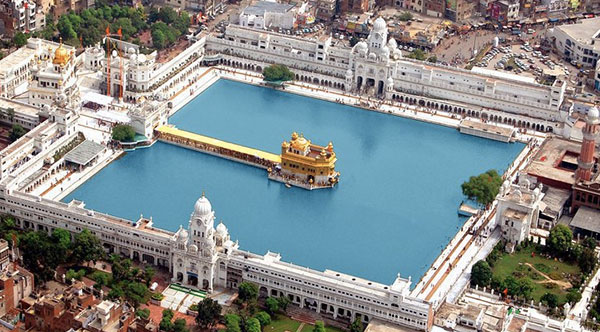
    • Name from Amrit Sarovar, the holy tank that surrounds the fabulous Harimandir Sahib aka Golden Temple
    • City was founded by Guru Ram Das Ji, the 4th Sikh Guru, in the year 1577
      • Early name of the city was Chak Guru
    • Places of Interest: Wagah Border, Jallianwala Bagh
    • Historic Importance:
      • A city of historic walls and impressive gateways
      • Importance under the reign of Maharaja Ranjit Singh
      • City lies on the Grand Trunk Road, Asia’s one of the oldest built by King Sher Shah Suri in the year 1539.
    • Arts and Craft
      • Woollens, carpets and blankets
      • Cut-glass work, bangles and embroidered stuff <like Phulkari embroidery which has GI tag>
      • Also home to various Takias (A sufi convent) & Khankahs (A retreat designed specifically for gatherings of a Sufi brotherhood to meet, reside, study, and assemble and pray together as a group in the presence of a Sufi master)

    #4: Dwarka

    source
    • One of 4 sacred Hindu pilgrimage sites (Chaar-dham) as per Shankaracharya
    • One of 7 most ancient religious cities in the country
    • Known for being the centre of Dwarka Kingdom, the ancient kingdom of Lord Krishna
      • Underwater Study on the coastal water of Dwarka conducted by the ASI revealed the existence of a city dated to the 2nd millennium BC
    • Famous for Dwarkadheesh Temple (dedicated to Lord Krishna), which was built around 200 BC
    • Mention in Indian epic literature in Mahabharata and Skanda Purana

    #5: Gaya- a religious confluence

    source

    Gaya is situated on the Banks of Phalgu river <Phalgu river is a tributary of which famous river?>

    • Center of Buddhism:
      • Close proximity to famous Buddhist pilgrimage centre of Bodhgaya
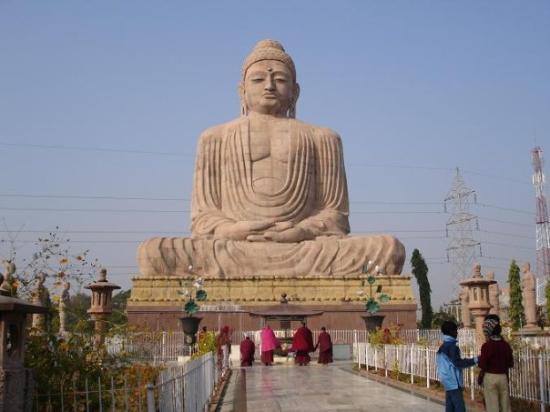
      • Lord Buddha attained enlightenment in Bodhgaya
        • The UNESCO famed Mahabodhi temple is also at Bodhgaya <Ashoka laid the foundation stone>
      • Projected to the world by Bimbisara the Fifth of the Shishunaga dynasty
      • Note: Gaya also finds a mention in the great epics of Ramayana and Mahabharata; like Dwarka
    • Center of Hinduism:
      • Famous as a site of Hindu tourism for ‘pind-daan
      • Large influx of visitors for the month long ‘Pitra Pakshmela annually
    • Center for Islam
      • Largest mosque in Bihar, the Jama Masjid. is also located in Gaya
        • There are numerous Jama masjids in India- the most famous being in Delhi made by Shah Jahan in Red Sandstone


    #6: Kamakhya Temple

    source
    • Center of Tantric and shakti cults of Hinduism
    • Sitting atop Nilachal Hills, overlooking river Brahmaputra in Assam
    • Inscription of Allahabad pillar of Samudragupta mentions Kamakya Temple
    • Amongst the 51 Shakti Peethas related to the cult of Sati (name comes from the myth that there are 51 pieces of Sati’s body scattered across the Indian subcontinent, and Kamakhya is one of them), and Shakta temple
    • Kamakya devi is also known as The menstruating goddess.
    • Famous Ambabuchi Mela is celebrated as the annual mela of Kamakhya Temple
    Published with inputs from Amar 
  • 15 Questions from Prelims titbits

    We have been doing Prelims Titbits for >15 days now. This is a mini test to evaluate whether you are doing it correctly or not. Many of the Questions have been taken from past 5 years prelims papers.

    1. With reference to the period of colonial rule in India, “Home Charges” formed an important part of drain of wealth from India. Which of the following funds constituted “Home Charges”?(2011)

    • 1. Funds used to support the India Office in London.
    • 2. Funds used to pay salaries and pensions of British personnel engaged in India.
    • 3. Funds used for waging wars outside India by the British.

    Select the correct answer using the codes given below:

    • (a.) 1 only
    • (b.) 1 and 2 only
    • (c.) 2 and 3 only
    • (d.) 1, 2 and 3

    2. The salaries of which of the following are charged on the Consolidated Fund of India?

    • 1. Speaker of the Lok Sabha
    • 2. Deputy Speaker of the Lok Sabha
    • 3. Chairman of the Rajya Sabha
    • 4. Deputy Chairman of the Rajya Sabha
    • 5. Judges of the Supreme Court
    • 6. Judges of the High Courts
    • 7. Chief Election Commissioner
    • 8. Chairman of the UPSC
    • 9. CAG
    • a. 1, 2, 3, 4, 5 and 9
    • b. 1, 2, 5, 6, 7 ,8 and 9
    • c. 1, 2, 4, 5, 6,7 and 9
    • d. 1, 2, 3, 4, 5, 6, 8 and 9

    3. Consider the following statements: (UPSC 2007 Prelims)

    • 1. The mode of removal of a Judge of a High Court in India is same as that removal of a Judge of the Supreme Court.
    • 2. After retirement from the office, a permanent Judge of a High Court cannot plead or act in any court or before any authority in India.

    Which of the statements given above is/are correct?

    • (a) 1 only
    • (b) 2 only
    • (c) Both 1 and 2
    • (d) Neither 1 nor 2

    4. Which one of the following is not a site for in-situ method of conservation of flora? (2011)

    • (a.) Biosphere Reserve
    • (b.) Botanical Garden
    • (c.) National Park
    • (d.) Wildlife Sanctuary

    5. Three of the following criteria have contributed to the recognition of Western Ghats-Sri Lanka and Indo-Burma regions as hotspots of biodiversity: (2011)

    • 1. Species richness
    • 2. Vegetation density
    • 3. Endemism
    • 4. Ethno-botanical importance
    • 5. Threat perception
    • 6. Adaptation of flora and fauna to warm and humid conditions

    Which three of the above are correct criteria in this context?

    • (a.) 1, 2 and 6
    • (b.) 2, 4 and 6
    • (c.) 1, 3 and 5
    • (d.) 3, 4 and 6

    6. A presides over the joint sitting of both the Houses. If however A is absent, B  presides. If B  is also absent, C presides. A,B and C respectively are?

    • a.President, Vice President and Deputy Speaker
    • b. Speaker, Vice President and Deputy Chairman
    • c. Chairman, Deputy Chairman and Deputy Speaker
    • d. Speaker, Deputy Speaker and Deputy Chairman

    7. Lichens, which are capable of initiating ecological succession even on a bare rock, are actually a symbiotic association of (Pre 2013)

    • a. algae and bacteria
    • b. algae and fungi
    • c. bacteria and fungi
    • d. fungi and mosses

    8. Nai Manzil is a government of India scheme related to development of which of the following

    • a) Skill development
    • b) Eucation
    • c) Health
    • d) Traditional heritage of minorities

    9. The demand for the Tebhaga Peasant Movement in Bengal was for:  (2013)

    • (a) the reduction of the share of the landlords from one-half of the crop to one-third
    • (b) the grant of ownership of land to peasants as they were the actual cultivators of the land
    • (c) the uprooting of Zamindari system and the end of serfdom
    • (d) writing off all peasant debts

    10. With reference to the period of Indian freedom struggle, which of the following was/were recommended by the Nehru report?(2011)

    1. Complete Independence for India.
    2. Joint electorates for reservation of seats for minorities.
    3. Provision of fundamental rights for the people of India in the Constitution.

    Select the correct answer using the codes given below:

    • (a.) 1 only
    • (b.) 2 and 3 only
    • (c.) 1 and 3 only
    • (d.) 1, 2 and 3

    11. Consider the following definitions:

    • 1. Bioaccumulation is the increasing concentration of a substance, such as a toxic chemical, in the tissues of organisms at successively higher levels in a food chain
    • 2. Biomagnification occurs within a trophic level, and is the increase in concentration of a substance in certain tissues of organisms’ bodies due to absorption from food and the environment
    • 3. Bioconcentration is defined as occurring when uptake from the water is greater than excretion

    Which of the above definitions is/are INCORRECT?

    • a) 1 and 2 Only
    • b) 2 and 3 Only
    • c) 1 and 3 Only
    • d) All

    12. The Lahore Session of the Indian National Congress (1929) is very important in history, because(2012)

    • 1. the Congress passed a resolution demanding complete independence
    • 2. the rift between the extremists and moderates was resolved in that Session
    • 3. a resolution was passed rejecting the two-nation theory in that Session

    Which of the statements given above is/are correct?

    • (a) I only
    • (b) 2 and 3
    • (c) 1 and 3
    • (d) None of the above

    13. In which of the following movements did Mahatma Gandhi undertook fast unto death for the first time to get his demands fulfilled?

    • a) Champaran Satyagraha
    • b) Kheda Satyagraha
    • c) Ahmadabad mill strike
    • d) Non-cooperation movement

    14. What is the difference between “vote-on-account” and “interim budget”?(2011)

    • 1. The provision of a “vote-on-account” is used by a regular Government, while an “interim budget” is a provision used by a caretaker Government.
    • 2. A “vote-on-account” only deals with the expenditure in Government’s budget, while an “interim budget” includes both expenditure and receipts.

    Which of the statements; given above is/are correct?

    • (a.) 1 only
    • (b.) 2 only
    • (c.) Both 1 and 2
    • (d.) Neither 1 nor 2

    15. A deadlock between the LokSabha and the RajyaSabha calls for a joint sitting of the Parliament during the passage of(2012)

    • 1. Ordinary Legislation
    • 2. Money Bill
    • 3. Constitution Amendment Bill

    Select the correct answer using the codes given below :

    • (a) 1 only
    • (b) 2 and 3 only
    • (c) 1 and 3 only
    • (d) 1, 2 and 3

    SOLUTIONS


    1. b

    Home charges means money spent by Britain in Britain on behalf of India. They included

    1. dividends on East India Stock
    2. interest in Home debt
    3. the salaries of the officer
    4. establishments of the and building connected with the Home Department of Indian Government
    5. furlough and retired pay to members of the Indian Military and Civil Services when at Home
    6. Charges of all descriptions paid in this country connected with the British troops serving in India and
    7. portion of the cost of transporting the British troops to and from India

    I am not so sure about statement 3. Funds used for waging war outside India as when British fought in wars nor do I find direct mention of it in home charges. EIC donated money to them. IMO statemnt 3 is wrong

    2. No option is correct. Answer is 1,2,3,4,5,8 and 9. If any option has to be marked, it would be option a

    6- salary of high court judge charged on consolidated fund of states not centre, pension is charged on CFI

    7- EC expenditure and salary not charged

    3. a

    Can practice in supreme court or other high courts

    4. b

    Botanical garden – ex situ

    5. c , 1,3 and 5

    Threat perception has to be one of the criteria, only in one option

    6, d, speaker, deputy speaker, deputy chairperson

    7. b, algae and fundgi

    8. a, skill development of minorities

    9. a

    10. b, 2 and 3

    It demanded dominion status, that’s why J.L.Nehru and Subhash Bose opposed and criticized the report

    11. a, 1 and 2 incorrect

    Definition of bioaccumulation and biomagnification has been interchanged.Bioaccumulation occurs within same trophic level.

    12. a, 1 only

    13. c, ahmedabad mill strike

    14. b

    15. a, 1only

    RS can only hold back money bill for 14 days. CAB has to be passed separately by both the houses


    P.S.- Almost every question can be solved by reading tit-bit. 10 questions were from previous years UPSC papers. If you got <24/ 30 after negative, you are not doing titbits and your study properly.