💥Join UPSC 2027,2028 Mentorship (July Batch) + XFactor Notes & Microthemes PDF

Author: CD Staff

  • Talk to the Topper || Few Seats Left || Interact Live with UPSC Topper Shahansha IPS (AIR 142) || 7 Attempts, Work & Family – His Inspirational Story|| How to make a comeback despite back to back setbacks?|| Register for Free, Limited Slots Available

    Talk to the Topper || Few Seats Left || Interact Live with UPSC Topper Shahansha IPS (AIR 142) || 7 Attempts, Work & Family – His Inspirational Story|| How to make a comeback despite back to back setbacks?|| Register for Free, Limited Slots Available

    “When the results were out and I knew I finally made it, I sat down and cherished all the 8 years of preparation. For me, they are the best years of my life, regardless I cleared the exam or not. The civil services exam is worth your time, efforts and sacrifices even if there is a 1% chance of clearing it!”

    So many aspirants in Shahansha’s position would have given up by now. They will not wait until all the attempts got exhausted. They would have already decided UPSC is not for them. But Shahansha is among the 1% who wanted to show up sincerely for every attempt given to him. And that’s why he cleared an exam where the probability of failure is 99%.

    UPSC or Job? Better still, UPSC and Job!

    Shahansha had a demanding job as an Indian Railway Protection Force Officer, he was a son and a husband as well. Yet, he wouldn’t have had it any other way. “If I was preparing for this exam with no job, with no family and friends to support me, then I don’t think I would have been successful.”, he says. According to him, stability in life is essential to deal with the psychological and emotional stress of the exam.

    Don’t miss the chance to interact with him, get answers to all your questions and discover solutions to the issues bothering you! This webinar is free for all aspirants to attend.

    Why Attend this Webinar?

    “You are your own best friend and enemy”, says Shahansha as he believes negativity feeds on more negativity.

    More than IQ, one requires EQ (Emotional Intelligence) to clear this exam. UPSC is looking for just above-average marks in all the subjects. But, it requires officers who don’t have excuses or run away from solving people’s issues. The more mentally adept you are, the more happy UPSC will be to select you. So, work on controlling your emotional impulses early on.

    Shahansha will teach how to inculcate patience, perseverance and study through the stress. For anyone struggling in this area, this webinar is going to be useful.

    What will you Learn from this Webinar?

    1. Despite qualifying for IAS why did Shahansha choose IPS?

    2. Why is it important to unwind when you’re feeling low? Importance of hobbies and friends.

    3. The brighter side of his failures. How did Shahansha improve with every attempt?

    4. Shahansha’s Prelims and Mains Strategy. How did he divide his time into before-work and after-work slots?

    5. Six years of wrong optional versus one year of right optional How did it make the difference for him in Mains?

    6. General Do’s and Don’ts while preparing. What are the mistakes of his previous attempts he avoided?

    All aspirants are encouraged to participate in the Q&A Session by Shahansha. Learn from your doubts, learn from others’ doubts and learn from Shahansha’s answers.

    Webinar Details

    This Ask me Anything session is free for all aspirants to attend but is perfect for anyone looking for a refreshing break from their grueling studies. Only limited slots are available, so register ASAP.

    Date: 31 October, 2021

    Time: 3 P.M.

    About Shahansha

    Son of a shopkeeper father and school teacher mother, Shahansha was a professional athlete, trained by the Sports Authority of India (SAI). He cleared prelims in all his seven attempts and even reached the interview round thrice. He gave multiple government exams and worked as the Assistant Commander in the Central Industrial Security Force (CISF) and Indian Railway Protection Officer.

  • Register Now  || Webinar Video Available || IAS for Working Professionals || How to crack UPSC without leaving your full-time job? ||

    Register Now || Webinar Video Available || IAS for Working Professionals || How to crack UPSC without leaving your full-time job? ||

    How to Crack UPSC without leaving your fulltime job? || Free Webinar
    Start Login: Oct 28, 2021 @5:55 PM India

    Zoom Meeting Link:-
    https://zoom.us/j/98479766018?pwd=WForM3VjUlNMZVoyLzVGZ1J2Qk1Pdz09

    Meeting ID: 984 7976 6018
    Passcode: 784726

    Lack of Time or Lack of Time-Management?

    UPSC-CSE is not only one of the toughest exams of the world, but one of the longest as well. An exam that is a year long, needs a preparation of 2 years to clear it.

    Some of us have family responsibilities that cannot and should not be neglected. Maybe you are the only earning member of your family. But, is it impossible to juggle UPSC CSE and work? Not at all. It might be challenging, but it’s an achievable ambition. One needs the discipline to study everyday, whether they had a good or a bad day at work.

    All aspirants get only 24 hours in a day, how they spend every hour determines their final result.

    Does this mean there will be no scope for rest as a Working Junta? Don’t be surprised if we tell you toppers like Srishti Jayant Deshmukh (AIR 5, 2018) and Roman Saini (AIR 18, 2013) found time to take breaks in between their college studies (engineering and medical respectively) and UPSC preparation! While Srishti took a 5 minute break after every 30 minutes, Roman took a 10 minute break after every 1 hour.

    Why should you attend this webinar?

    When we asked Vaibhav Rawat and Ravi Kumar their secret of topping the exam despite working 8-9 hours everyday, their answer was time management and syllabus completion.

    Instead of complaining about the limited time they had, they completed modules assigned by us within that time. Sometimes, they got 6 hours in a day and sometimes 5 hours. But after office, they never let the stress of work distract them. Nor did they compare their preparation to other full-time aspirants and get demotivated.

    Every topper has their own time-management technique. As a working junta, its about time you learnt them. This is what Sudhanshu Sir will address in this upcoming webinar. You will not only get to know how to balance work and study in a day, but also when to take breaks in between the two!

    What will you learn in this Webinar?

    1. The 4 different phases of UPSC preparation. What to study in each phase?

    2. Our 5-hour Step-by-Step learning plan. Also time-management techniques of other toppers.

    3. Avoiding mistakes that cost you an attempt. How to kickstart your preparation in the right direction?

    4. Advantages of being a UPSC aspirant as a working professional. What do you have that others don’t?

    5. Studying smartly. How can you use the Civilsdaily App to get consolidated material that can save your time?

    See the source image

    At the end of the session, Sudhanshu sir will hold an interactive Q&A session where all beginners and veterans are welcome to get solutions for their issues.

    Webinar Details

    Everyone is welcome to attend our free webinar for working professionals by Sudhanshu Sir. All you have to do is register your details.

    Date: 28 October, 2021

    Time: 6 PM

    About Sudhanshu Sir

    Sudhanshu Sir has served in the Defense Ministry for 10 years. He has a keen interest in regional and global geopolitics and has ample experience of various other competitive exams as well. Experienced with UPSC CS and Several State PSCs.

  • [Sansad TV] Global Solar Grid

    UPSC 2022 countdown has begun! Get your personal guidance plan now! (Click here)

    The Fourth Assembly of the International Solar Alliance – ISA was virtually held.  In this article we will discuss all issues related to ISA and the proposed global solar grid.

    PM Modi deliberated on the key initiatives around the operationalization of:

    1. One Sun One World One Grid (OSOWOG) Initiative
    2. 1 trillion-dollar Solar Investment Roadmap for 2030, and
    3. Approval of a Blended Financial Risk Mitigation Facility

    About International Solar Alliance (ISA)

    Hq: Gurugram, India

    • The ISA is an alliance of more than 121 countries, most of them being sunshine countries, which lie either completely or partly between the Tropic of Cancer and the Tropic of Capricorn.
    • The primary objective of the alliance is to work for efficient exploitation of solar energy to reduce dependence on fossil fuels.
    • The alliance is a treaty-based inter-governmental organization.
    • The initiative was launched by PM Modi at the India Africa Summit and a meeting of member countries ahead of the 2015 United Nations Climate Change Conference in Paris in November 2015.

    Fossil fuels have a 60% share in India’s total energy mix; non-fossil fuels contribute 37.9% and nuclear 1.7% (as on September 30). Among non-fossil fuels, hydro makes for 12% of the load while wind, solar and other renewable energy sources make up for 25.9% of the mix. India’s domestic solar power capacity has increased by more than 11 times in five years from 2.6 GW in March 2014 to 30 GW in July 2019.

    Objectives of the ISA

    • To mobilize investments of more than USD 1000 billion by 2030
    • To take coordinated action for better harmonization, aggregation of demand, risk and resources, for promoting solar finance, solar technologies, innovation, R&D, capacity building etc.
    • Reduce the cost of finance to increase investments in solar energy in member countries
    • Scale up applications of solar technologies in member countries
    • Facilitate collaborative research and development (R&D) activities in solar energy technologies among member countries
    • Promote a common cyber platform for networking, cooperation and exchange of ideas among member countries

    What does ISA formation signify?

    • Climate action commitment: It symbolizes about the sincerity of the developing nations towards their concern about climate change and to switch to a low-carbon growth path.
    • Clean energy: India’s pledge to the Paris summit offered to bring 40% of its electricity generation capacity from non-fossil sources (renewable, large hydro, and nuclear) by 2030.
    • Global electrification: India has pledged to let solar energy reach to the most unconnected villages and communities and also towards creating a clean planet.
    • Global cooperation: It is based on world cooperation irrespective of global boundaries.
    • India’s Soft power: For India, possible additional benefits from the alliance can be a strengthening of ties with the major African countries and increasing goodwill for India among them.

    Key initiatives

    [A] Global Solar Atlas

    • ISA alliance has partnered with World Bank to launch Global Solar Atlas at an ISA event at the World Future Energy Summit in Abu Dhabi.
    • Global Solar Atlas is a free online tool that displays annual average solar power potential at any location in the world and thus identify potential sites for solar power generation.

    [B] OSOWOG Initiative

    • Under the ISA project, India envisaged having an interconnected power transmission grid across nations for the supply of clean energy.
    • The vision behind the OSOWOG mantra is ‘The Sun Never Sets’ and is a constant at some geographical location, globally, at any given point of time.
    • With India at the fulcrum, the solar spectrum can easily be divided into two broad zones viz. far East which would include countries like Myanmar, Vietnam, Thailand, Lao, Cambodia etc. and far West which would cover the Middle East and the Africa Region.

    Implementation

    • The OSOWOG would have three phases.
    1. Phase I: Middle East, South Asia and South-East Asia would be interconnected
    2. Phase II: Solar and other renewable energy resources rich regions would be interconnected
    3. Phase III: Global interconnection of the power transmission grid to achieve the One Sun One World One Grid vision

    Benefits of the project

    • Attracting investment: An interconnected grid would help all the participating entities in attracting investments in renewable energy sources as well as utilizing skills, technology and finances.
    • Poverty alleviation: Resulting economic benefits would positively impact poverty alleviation and support in mitigating water, sanitation, food and other socio-economic challenges.
    • Reduced project cost: The proposed integration would lead to reduced project costs, higher efficiencies and increased asset utilization for all the participating entities.

    Various challenges

    • Lack of Funding: Providing the money for promoting solar electricity among the members is a challenge. The Alliance has very little money of its own.
    • Expensive implementation: The cost of power has two components. The variable cost is the payment made for the numbers of units of electricity purchased. In addition, the buyer is required to pay a certain amount towards the fixed cost of solar supply.
    • Battery-based Storage: Solar electricity is available only during the day when the sun shines. Thus, the storage of electricity is a difficult task.
    • Cross-border transmission: Solar electricity has to overcome the roadblocks of transmission.  Cross-border transmission of electricity requires the establishment of transmission lines from the producer to the consumer country.
    • Peak hour load:  The demand for electricity, however, is more during the morning and evening which are called “peak hours”. But it can be produced when the sun is shining.
    • Climate change: Sudden overcast and rainfall in many parts of the tropics has been a major issues these days. Such weather hampers solar energy production
    • Desired global consensus: It is hindered with the issues of intricate geopolitics, unfavourable economics, unwarranted globalisation and undue centralization that act against the concept.
    • Highly ambitious: In a nation like India, it took us this long to connect all the regions of the country through a national grid and we are talking about ‘one world, one grid’.

    Way forward

    • OSOWOG can be positioned as an extension of India’s foreign policy rather than its domestic energy policy.
    • ISA should focus on its core goals such as- aggregating demand, tariff, technical collaborations, and financial assistance for achieving its target.
    • It further needs to ensure that solar benefits are clear and tangible to users beyond its cost ambitions.
    • ISA should demonstrate business models that are viable for users, suppliers and financiers.
    • Further, the alliance should support member countries in implementing policies to expedite these business models.
    • Geo-politically, this is being touted as a clever strategy however financially and technology-wise, this has to make sense.

    Conclusion

    • India has always been eloquent in its promises and miserly in deliverables. Hopefully ISA won’t fall the same way.
    • To sum up, it can be stated that ISA is certainly going to add a new dynamism to energy diplomacy in the 21st century. 
    • In the foreseeable future, one can witness a just and equitable energy order if solar energy, along with other forms of renewable energy, can be harnessed more positively.
  • Closing Registrations Soon || IAS for Working Professionals || How to crack UPSC without leaving your full-time job? || Free Live Webinar at 6 PM

    Closing Registrations Soon || IAS for Working Professionals || How to crack UPSC without leaving your full-time job? || Free Live Webinar at 6 PM

    Our Hall of Fame boasts of nearly 150 aspirants who have cleared the exam as working professionals. This year, our Civilsdaily students — Vaibhav Rawat (AIR 25) and Ravi Kumar (AIR 84) worked really hard in their respective jobs and studies before they tasted success. This busts the myth that only full-time aspirants can clear the exam.

    Lack of Time or Lack of Time-Management?

    UPSC-CSE is not only one of the toughest exams of the world, but one of the longest as well. An exam that is a year long, needs a preparation of 2 years to clear it.

    Some of us have family responsibilities that cannot and should not be neglected. Maybe you are the only earning member of your family. But, is it impossible to juggle UPSC CSE and work? Not at all. It might be challenging, but it’s an achievable ambition. One needs the discipline to study everyday, whether they had a good or a bad day at work.

    All aspirants get only 24 hours in a day, how they spend every hour determines their final result.

    Does this mean there will be no scope for rest as a Working Junta? Don’t be surprised if we tell you toppers like Srishti Jayant Deshmukh (AIR 5, 2018) and Roman Saini (AIR 18, 2013) found time to take breaks in between their college studies (engineering and medical respectively) and UPSC preparation! While Srishti took a 5 minute break after every 30 minutes, Roman took a 10 minute break after every 1 hour.

    Why should you attend this webinar?

    When we asked Vaibhav Rawat and Ravi Kumar their secret of topping the exam despite working 8-9 hours everyday, their answer was time management and syllabus completion.

    Instead of complaining about the limited time they had, they completed modules assigned by us within that time. Sometimes, they got 6 hours in a day and sometimes 5 hours. But after office, they never let the stress of work distract them. Nor did they compare their preparation to other full-time aspirants and get demotivated.

    Every topper has their own time-management technique. As a working junta, its about time you learnt them. This is what Sudhanshu Sir will address in this upcoming webinar. You will not only get to know how to balance work and study in a day, but also when to take breaks in between the two!

    What will you learn in this Webinar?

    1. The 4 different phases of UPSC preparation. What to study in each phase?

    2. Our 5-hour Step-by-Step learning plan. Also time-management techniques of other toppers.

    3. Avoiding mistakes that cost you an attempt. How to kickstart your preparation in the right direction?

    4. Advantages of being a UPSC aspirant as a working professional. What do you have that others don’t?

    5. Studying smartly. How can you use the Civilsdaily App to get consolidated material that can save your time?

    See the source image

    At the end of the session, Sudhanshu sir will hold an interactive Q&A session where all beginners and veterans are welcome to get solutions for their issues.

    Webinar Details

    Everyone is welcome to attend our free webinar for working professionals by Sudhanshu Sir. All you have to do is register your details.

    Date: 28 October, 2021

    Time: 6 PM

    About Sudhanshu Sir

    Sudhanshu Sir has served in the Defense Ministry for 10 years. He has a keen interest in regional and global geopolitics and has ample experience of various other competitive exams as well. Experienced with UPSC CS and Several State PSCs.

  • [Yojana Archive] Girl Child Protection

    UPSC 2022 countdown has begun! Get your personal guidance plan now! (Click here)

    September 2021: “Nari Shakti”
    • Child protection is a human rights issue, and it comes under the purview of the legislative framework.
    • In 1989, an international agreement, ‘The United Nations Convention on the Rights of the Child’ (UNCRC) was adopted.
    • It legally binds the governments to set out the civil, political, economic, social, and cultural rights of every child.

    On 11 December 1992, India ratified UNCRC, making it a landmark encouragement for the Indian Government to develop progressive legislation to safeguard child rights.

    Covid-19 and Girls

    Socio-economic impacts of Covid-19 are gendered, evident in the form of educational inequality, sexual violence, and increased household burden.

    • Increased domestic violence: In India, the National Commission for Women reported 2.5 times increase in domestic violence during the initial months of nationwide lockdown.
    • Abuse & Trafficking: Closure of schools and pandemic induced poverty has increased the vulnerability of children especially the girl child to abuse and trafficking
    • School dropout: UNESCO’s Global Education Monitoring Report (2021) throws light on increased educational inequalities for adolescent girls during the Covid-19 crisis. UNESCO estimates that around 11 million girls may not return to school.
    • School Closures pushed Children into Labour: In 2021, says UNESCO, 24 million children may not find their way back to schools after the pandemic. Any child who is not in school is a potential child labourer.
    • Child Marriages: India witnessed an increase in the number of child marriages since 2020. Girls are further at risk – married off early, these child brides are also often child labourers.
    • Reduced Education Budget: Despite knowing the impact of Pandemic on education system & thus on Children’s future, the Union budget has Rs 5,000 crore less to spend on education for children this year.
    • Digital gender gap: The digital gender gap deters girls’ remote education and access to information.

    Various policy initiaitives

    • Improving sex ratio: Beti Padhao, Beti Bachao Scheme, Pre-Conception and Pre-Natal Diagnostic Techniques (PCPNDT) Act are meant to prevent sex selective abortions and improve sex ratio in the country.
    • Literacy: Sukanya Samridhi Yojana creates a fund for the future education of the girl child and Udan for higher education of girl child.
    • Child Marriage: Prohibition of Child marriage Act 2006 has been enacted to prevent marriage of girls below 18 years of age.
    • Health and nutrition: Supplying iron and folic acid tablets, Kishori Shakti Yojana, POSHAN abhiyan, Mid-day meal scheme have been undertaken to provide sufficient nutrition to girl child.
    • Hygiene: Ujjwala sanitary napkin at minimal cost under Suvidha scheme will support menstrual hygienic among girls.
    • Child labour protection: The Child Labour (Prohibition and Regulation) Amendment Act, 2016 has been enacted to make sure girls are not indulged in child labour and instead get education.
    • Sexual abuse: Protection of Children from Sexual Offences (POCSO) Act, 2012 provides strict punitive action in case of sexual abuse against the child.
    • Protection against offences: Juvenile Justice (Care and Protection of Children) Act, 2000 seeks to safeguard the rights of children in conflict with the law, and those in need of care and protection. Integrated Child Protection Scheme (ICPS) was launched in 2009 to build a protective environment for children in difficult circumstances.
    • In 2020, the National Commission for the Protection of Child Rights launched Standard Operating Procedure for Care and Protection of Children in Street Situations.

    Way Forward

    Ensuring a gender-responsive child protection system amid crisis is paramount.

    • Educate families about the detrimental impacts of the household burden on young girls. Enable families to empower their daughters through education and household decision-making.
    • Overcome gender bias in education – gender-neutral school curriculum, pedagogy, and environment. Challenge the gender discriminatory attitudes of students and present role models.  Ensure safe and gender-responsive reopening of schools.
    • Engage children to voice and act against child marriage in the community. Ensure that girl safety is a collective responsibility.
    • Lead advocacy, campaigns, and activism to echo girl child protection with zero tolerance for heinous crimes against minor girl child. Prevention is to be prioritized in legal frameworks and not merely relief and compensation.
    • Strong protection net for most vulnerable- safety of orphaned. abandoned girl child, girls living in street situations, those in institutions with girl child of prisoners, and commercial sex workers to be prioritized.
    • Gender-responsive training of police and other duty bearers. Focus on prohibition. prevention, regulation, rehabilitation, and restoration services.
    • Educate girls about cyber safety particularly adolescent girls. Spread awareness on measures to stay safe on social media platforms and prompt reporting of potential threats.
    • A gendered approach to disaster risk mitigation. Identify gendered vulnerabilities and gender-responsive mitigation strategies in events of disasters, emergencies, and humanitarian crises. Empower young girls to act on climate change.
    • Encourage young girls to take environmental issues to Bal Panchayats and other platforms. Prioritise climate change in school curriculum and pedagogy to encourage girls to be the leaders of tomorrow.
  • [Sansad TV] Enhancing Cooperation in West Asia

    UPSC 2022 countdown has begun! Get your personal guidance plan now! (Click here)

    India, Israel, the United Arab Emirates, and the United States began a new quadrilateral economic forum this week focused on trade, climate change, energy, and maritime security.

    In September last year Israel, UAE and Bahrain had signed Abraham Accords brokered by the US which has subsequently led to normalising of relations between Israel and a number of Arab Gulf countries.

    Abraham Accord: A backgrounder

    • The Israel–UAE normalization agreement is officially called the Abraham Accords Peace Agreement.
    • It was initially agreed to in a joint statement by the United States, Israel and the United Arab Emirates (UAE) on August 13, 2020.
    • The UAE thus became the third Arab country, after Egypt in 1979 and Jordan in 1994, to agree to formally normalize its relationship with Israel as well as the first Persian Gulf country to do so.
    • Concurrently, Israel agreed to suspend plans for annexing parts of the West Bank.
    • The agreement normalized what had long been informal but robust foreign relations between the two countries.

    The idea of the Indo-Abrahamic Accord

    • The idea of an accord between India, the UAE and Israel was first suggested by Mohammed Soliman, an Egyptian scholar based in Washington.
    • The focus, then, was on India taking full advantage of the normalisation of relations between Israel and the Arabs.

    Prospects of India joining the accord

    • Adding “Indo” to the Abrahamic Accords — from think tank level to the policy domain underlines the extraordinary churn in the geopolitics of the Middle East.
    • It also points to new openings for India in the region and ever-widening possibilities for Delhi’s strategic cooperation with Washington.

    Significance for India

    The new minilateral consultation with the US, Israel and the UAE have started breaking that political taboo by:

    (1) Creating a minilateral in the Middle-East:

    • Such events mark an important turning point in Delhi’s engagement with the Middle East.
    • It suggests India is now ready to move from bilateral relations conducted in separate silos towards an integrated regional policy.
    • As in the Indo-Pacific, so in the Middle East, regional coalitions are bound to widen Delhi’s reach and deepen its impact.

    (2) India bridging the Arab-Israeli rift:

    • Often the Arab nations and Israel are divided over Palestine.
    • The simultaneous expansion of Delhi’s cooperation with Israel and the Arab world was considered impossible.
    • However, India’s new foreign policy broke from that assessment and demonstrated the feasibility of a non-ideological engagement with the Middle East.
    • This diplomatic pragmatism allows Delhi to reimagine its policies towards the Middle East.

    (3) Extension of cooperation with the US:

    • Thinking of the US as a partner in the Middle East is part of the reimagination.
    • For long, India defined the US, and more broadly the West, as part of the problem in the Middle East.
    • With this QUAD, U.S.-India relations have continued to deepen.

    (4) Miscellaneous:

    • India’s scale with Israeli innovation and Emirati capital could produce immense benefits to all three countries.
    • Add American strategic support and you would see a powerful dynamic unfolding in the region.

    India’s interest in the new QUAD

    New Delhi sees the Middle East as strategically significant.  India has ramped up diplomacy with many regional players, including Saudi Arabia, but Israel and the UAE have long been key targets.

    • Energy basket: It depends heavily on its energy imports, and nearly 9 million Indian workers live in the Persian Gulf.
    • Armoury for India: Israel is a major arms supplier to India.
    • Agri-tech: Israel also has cutting-edge agricultural technologies that could help enhance water management.
    • Infrastructure financing: The UAE can provide India with much-needed infrastructure financing. This has very much implicated in the recent proposal by Dubai to invest in Jammu and Kashmir.

    What is the kind of agenda that this group can develop?

    Economic Cooperation: Like the eastern Quad, it would make sense for the new Middle Eastern minilateral to focus on non-military issues like trade, energy, and environment and focus on promoting public goods.

    Technology cooperation: Beyond trade, there is potential for India, UAE and Israel to collaborate on many areas — from semiconductor design and fabrication to space technology.

    A new geopolitical entity: The new “Quad” in the Middle East is likely to be India’s only new coalition in the region. It provides a thrust to new regionalism to the west involving India.

    ‘Extended’ neighbourhood: This engagement will open the door for extending the collaboration with other common regional partners like Egypt (better call it Suez Canal), who will lend great strategic depth to the Indo-Abrahamic accords.

    How are the two QUADs different?

    The two groups are distinct entities with different geographical remits, although their areas of cooperation may overlap. The two Quads are quite different in other ways.

    • No China factor: The so-called new Quad is not as focused on countering China’s rise as the original one.
    • Formal consensus in lacking: It lacks a strong, shared purpose, its future trajectory is more uncertain.
    • Not an Alliance: As with the other Quad, this arrangement is a loose grouping, not an alliance. It is framed as an economic forum and not as an strategic alliance.
    • Iran at the focus: The new quad does not appear to be aimed at any particular country, ideology or group. There is no one to gang up against, but Iran.

    Way forward

    • This Quad will push India to transform itself.
    • While the US might be more lenient towards Indian stretchable time, Israel and the UAE are impatient countries.
    • This engagement has thus opened up a new opportunity for India to go for deeper engagement with Israel without risking its relations with the other Arab states of the Persian Gulf.

    Caution for India

    • India must not get drawn into the region’s conflicts.
    • Importantly, India must ensure that the new Quad’s decisions do not adversely impact its relationship with Iran.  It should not restrict India’s outreach to Iran
    • India should help the new Quad build bridges with Iran, just as Israel should use its good offices with Beijing to rein in China.
    • India is increasingly shedding its inhibitions over joining groupings and this is good, so long as it is not bound into exclusive relationships.
    • China manages strong parallel ties with both Iran and Israel. India should be able to do so, too.

    Conclusion

    • The new and mini-Quad is innovative, non-confrontationist and hence will be enduring.
    • In the evolving scenario, there seems much scope for a profitable trilateral synergy.
    • Though its trajectory is uncertain, it has considerable potential because of the warm relations among the parties.
  • [Burning Issue] 5G Technology

    UPSC 2022 countdown has begun! Get your personal guidance plan now! (Click here)

    5G is the next-generation wireless cellular technology that will provide faster and more reliable communication with ultra-low latency. A government panel report points out that with 5G, the peak network data speeds are expected to be in the range of 2-20 Gigabit per second (Gbps). This can help in good governance and can lead to higher economic growth in India.

    Being a game-changer technology in many aspects, be it an economy or a science and technology or development, knowing about it is very important from an exam point of view. So let us look at the topic in detail.

    What is 5G technology?

    • 5G or fifth generation is the latest upgrade in the long-term evolution (LTE) mobile broadband networks.
    • 5G enables a new kind of network that is designed to connect virtually everyone and everything together including machines, objects, and devices. 
    • It’s a unified platform which is much more capable than previous mobile services with more capacity, lower latency, faster data delivery rate and better utilisation of spectrum.

    The low, mid, and high-frequency spectrum

    • 5G mainly works in 3 bands, namely low, mid and high frequency spectrum — all of which have their own uses as well as limitations.
    • The low band spectrum has a great promise in terms of coverage and speed of internet and data exchange but the maximum speed is limited to 100 Mbps (Megabits per second).
    • So Telcos can use and install it for commercial cell phone users who may not have specific demands for very high speed internet, the low band spectrum may not be optimal for specialized needs of the industry.
    • The mid-band spectrum offers higher speeds compared to the low band, but has limitations in terms of coverage area and penetration of signals.
    • This band may be used by industries and specialized factory units for building captive networks that can be moulded into the needs of that particular industry.
    • The high-band spectrum offers the highest speed of all the three bands, but has extremely limited coverage and signal penetration strength.
    • Internet speeds in the high-band spectrum of 5G has been tested to be as high as 20 Gbps (giga bits per second), while, in most cases, the maximum internet data speed in 4G has been recorded at 1 Gbps.

    Timeline: Evolution from 1G to 5G

    • 1G: Launched in the 1980s. Analog radio signals and supported only voice calls.
    • 2G: Launched in the 1990s. Uses digital radio signals and supported both voice and data transmission with a Bandwidth (BW) of 64 Kbps.
    • 3G: Launched in the 2000s. With a speed of 1 Mbps to 2 Mbps it has the ability to transmit telephone signal including digitized voice, video calls and conferencing.
    • 4G: With a peak speed of 100 Mbps-1 Gbps it also enables 3D virtual reality.
    • 5G: with a speed of more than 1Gbps, it is capable of connecting entire world without limits.

    How is 5G different from 4G?

    5G4G
    5G uses utilize much higher radio frequencies of 28 GHz.4G uses lower reading frequencies of 700 MHz to 2500 MHz.
    5G transfers more data over the air at faster speeds.4G speed is lesser with less data transfer.
    5G has lower latency i.e the delay before a transfer of data begins following an instruction. Latency for 5G is predicted to be below 10 milliseconds and in best cases around 1 millisecond.4G has higher latency as compared to 5G. The latency for 4G is around 20-30 milliseconds.
    5G uses a millimeter-wave spectrum which enables more devices to be used within the same geographic area supporting around one million per square kilometer.4G supports a lesser number of devices of about 4,000 devices per square kilometer.
    5G uses a new digital technology that improves coverage, speed, and capacity.4G has led to more congestion and lesser coverage as compared to 5G.

    Salient features

    • Capability: 5G will provide much faster mobile broadband service as compared to the previous versions and will provide support to previous services like mission critical communication and the massive Internet Of Things (IoT).
    • Upgraded LTE: 5G is the latest upgrade in the long-term evolution (LTE) mobile broadband networks.
    • Speed: With peak delivering rate of up to 20 Gbps and an average of 100Mbps, it will be much faster as compared to its predecessors. The speed increment is partly achieved partly by using higher-frequency radio waves than previous networks.
    • Capacity: There will be up to 100 x increase in traffic capacity and network efficiency.
    • Spectrum usage: Will provide better usage for every bit of spectrum, from low bands below 1 GHz to high bands.
    • Latency: It’s expected to have lower latency with better instantaneous, real-time access of the data. The 5G, like 4G LTE, also uses Orthogonal Frequency Division Multiplexing (OFDM) but the new 5G NR (New Radio) air interface will enhance OFDM and provide better flexibility in data delivery.
    • Millimeter wave spectrum: The 5G networks will operate in the millimeter wave spectrum (30-300 GHz) which has the advantage of sending large amounts of data at very high speeds because the frequency is so high, it experiences little interference from surrounding signals.

    Applications of 5G technology

    1. High-Speed mobile network: 5G will revolutionize the mobile experience with supercharged wireless network. Compared to conventional mobile transmission technologies, voice and high-speed data can be simultaneously transferred efficiently in 5G.
    2. Entertainment and multimedia: 5G can provide 120 frames per second, high resolution and higher dynamic range video streaming without interruption. Audiovisual experience will be rewritten after the implementation of the latest technologies powered by 5G wireless. Augmented Reality and virtual Reality services will be better experienced over 5G.
    3. Internet of Things:  IoT applications collects huge amount of data from millions of devices and sensors and thus requires an efficient network for data collection, processing, transmission, control and real-time analytics which 5G network is a better candidate.
    4. Smart cities: Smart city application like traffic management, Instant weather update, local area broadcasting, energy management, smart power grid, smart lighting of street, water resource management, crowd management, emergency response etc can use a reliable 5G wireless network for its functioning.
    5. Smart farming: 5G technology will be used for agriculture and smart farming in the future. Using smart RFID sensors and GPS technology, farmers can track the location of livestock and manage them easily. Smart sensors can be used for irrigation control, access control and energy management.
    6. Mission critical applications: Like telemedicine services, remote control of critical infrastructure and vehicles. It has the potential to transform industries with highly reliable, low latency link.
    7. Better Governance: Better speed and connectivity would reduce red tapism. It will enhance speedy completion of projects and better implementation of policies. It will enable accountability in the system through a better monitoring system and will reduce corruption.
    8. Employment generation: 5G wireless technology will open greater opportunity for new device manufactures and application developers. New VoIP devices and smart devices will be introduced in the market and thus more job opportunities as well. This will help in inclusive growth reaping demographic dividend.
    9. Enhanced Security: 5G wireless technology is one the best solution for security surveillance due to higher bandwidth and unlicensed spectrum. It will enhance better coordination among various agencies. Smart appliances which can be configured and accessed from remote locations, closed circuit cameras will provide high quality real-time video for security purposes.
    10. Logistics and shipping: Logistic and shipping industry can make use of smart 5G technology for goods tracking, fleet management, centralized database management, staff scheduling and real-time delivery tracking and reporting.
    11. Industrial Growth: Future industries will depend on smart wireless technologies like 5G and LTE advanced for efficient automation of equipment, maintenance, safety, tracking, smart packing, shipping, logistics and energy management.
    12. Agricultural applications: 5g technology can be used for agriculture and smart farming in future. Using smart RFID sensors and GPS technology, farmers can track location of livestock and manage them easily. Smart sensors can be used for irrigation control, access control and energy management.
    13. Healthcare and mission critical applications: 5G technology will support medical practitioners to perform advanced medical procedures with reliable wireless network connected to another side of the globe. Doctors can connect with patients from anywhere anytime and advice them when necessary. Scientists are working on smart medical devices which can perform remote surgery. Smart medical devices like wearable will continuously monitor patient’s condition and activate alert during emergency.

    What are India’s Plans for 5G technology?

    • India is working on technologies that would enable to launch its Indigenous 5G.
    • This will help running its IOT platforms on indigenous technology for civilian as well as military applications.
    • PM is pushing for Aatamnirbharta (self-reliance), with the success of Digital India being a priority.
    • India banned Chinese apps & blocked its hardware supply chains to protect India’s business and security interests.
    • Scientists and Industries should work together to bring 5G technology quicker rather than getting entangled in policy processes & bureaucratic rift.
    • The implementation of 5G technology can make India a good alternative to China.
    • All the private telecom players in India have been urging the DoT to lay out a clear road map of spectrum allocation and 5G frequency bands, so that they would be able to plan the roll out of their services accordingly.

    What are the hurdles?

    • Enabling critical infrastructures: 5G will require a fundamental change to the core architecture of the communication system. The major flaw of data transfer using 5G is that it can’t carry data over longer distances. Hence, even 5G technology needs to be augmented to enable infrastructure.
    • Financial liability on consumers: For transition from 4G to 5G technology, one has to upgrade to the latest cellular technology, thereby creating financial liability on consumers.
    • Capital Inadequacy: Lack of flow of cash and adequate capital with the suitable telecom companies (like Bharti Airtel and Vodafone Idea) is delaying the 5G spectrum allocation.

    National Digital Communications Policy 2018

    • The new National Digital Communications Policy – 2018 has been formulated, in place of the existing National Telecom Policy-2012, to cater to the modern needs of the digital communications sector of India.
    • It will enable India to enter the era of modern technological advancements in the Telecom Sector such as 5G, loT, M2M etc.
    • It will introduce a ‘customer focused’ and ‘application driven’ policy for the Indian Telecom Sector, which can form the main pillar of Digital India by addressing emerging opportunities for expanding not only the availability of telecom services but also telecom based services.

    Objectives

    1. Broadband for all;
    2. Creating four million additional jobs in the Digital Communications sector;
    3. Enhancing the contribution of the Digital Communications sector to 8% of India’s GDP from ~ 6% in 2017;
    4. Propelling India to the Top 50 Nations in the ICT Development Index of ITU from 134 in 2017;
    5. Enhancing India’s contribution to Global Value Chains; and
    6. Ensuring Digital Sovereignty.

    In pursuit of accomplishing these objectives by year 2022, it envisages three Missions:

    1. Connect India: Creating Robust Digital Communications Infrastructure To promote Broadband for All as a tool for socio-economic development, while ensuring service quality and environmental sustainability.
    2. Propel India: Enabling Next Generation Technologies and Services through Investments, Innovation and IPR generation To harness the power of emerging digital technologies, including 5G, AI, IoT, Cloud and Big Data to enable provision of future ready products and services; and to catalyse the fourth industrial revolution (Industry 4.0) by promoting Investments, Innovation and IPR.
    3. Secure India: Ensuring Sovereignty, Safety and Security of Digital Communications To secure the interests of citizens and safeguard the digital sovereignty of India with a focus on ensuring individual autonomy and choice, data ownership, privacy and security; while recognizing data as a crucial economic resource.

    High-Level 5G India 2020 forum

    The government has constituted the High-Level 5G India 2020 Forum with three Secretaries of key Ministries/Departments Telecom, Meity, and DST, and also comprising renowned experts. The primary aims of the forum are:

    • early deployment of 5G in India.
    • A globally competitive product development and manufacturing ecosystem targeting 50% of India market and 10% of global market over next 5 to 7 years.

    The 5G Club ‘D10’

    • The Britain is proposing a ‘D10’ club of democratic partners that groups the G7 nations with Australia and the Asian technology leaders South Korea and India.
    • It would include G7 countries – UK, US, Italy, Germany, France, Japan and Canada – plus Australia, South Korea and India.
    • It is aimed for channeling investments into existing telecommunication companies within the 10 member states.
    • The group aim to create alternative suppliers of 5G equipment and other technologies to avoid relying on China.

    The China Factor

    China is taking its 5G technological advancement into other countries to digitally encircle the world.

    What are China’s plans for 5G technology in Nepal & outcomes of it?

    • China and Nepal recently agreed to increase the height of Mount Everest by three metres.
    • Infrastructure development by China in mountaineering sites will make Nepal’s borders vulnerable & keeps it under China’s control.
    • Nepal’s tourism industry might get attracted to Chinese cheap loans leading to a strategic debt trap.
    • Chinese 5G technological inroads in Nepal could affect Nepal’s business interests.
    • Nepal has to depend on Chinese 5G for Real-time information on weather, routes, map/terrain details, logistics and rescue programmes, etc.

    What are the other Chinese Investments across the world?

    • Chinese companies have made huge investments across the world to spread a 5G network.
    • They aim to encircle the planet digitally through technology.
    • Belt and Road Initiative (BRI) will aid this aim & China-Pakistan Economic Corridor is a clear example of how easily a country can be encircled.
    • Pakistan is today a virtual vassal state of China.
    • During pandemic, many countries who do not have indigenous 5G military capabilities had to depend on China.
    • These countries later became hostage to Chinese technology.

    Conclusion

    • India should not miss the opportunity and should proactively work to deploy 5G technology. We should focus on strengthening our cyber infrastructure.
    • Funds should be allocated and local technology and telecom firms should be incentivized to develop their internal capacities which would in turn help 5G technology succeed in the country.
    • 5G start-ups that enable this design and manufacturing capabilities should be promoted. This will spur leaps in the coverage, capacity and density of wireless networks.
    • It will power a surge in IoT technology and usher in a new era of technological capabilities.
    • This 5G Technology would bring low latency communication systems which can be used in agriculture, manufacturing sector and retail verticals too.
    • 5G however is still at a nascent stage in India and no commercial development has taken place so far.  Experts say that the move to adopt 5G technology and AI would usher into totally different use cases.

    What is 5G technology? Discuss the challenges and advantages of 5G technology for India. (250 words)

    Post your answers in comments below.

    UPSC 2022 countdown has begun! Get your personal guidance plan now! (Click here)

  • [Burning Issue] Hunger and Poverty in India

    UPSC 2022 countdown has begun! Get your personal guidance plan now! (Click here)

    India, with a population of over 1.3 billion, has seen tremendous growth in the past two decades. Gross Domestic Product has increased 4.5 times and per capita consumption has increased 3 times. Similarly, food grain production has increased almost 2 times. However, despite phenomenal industrial and economic growth and while India produces sufficient food to feed its population, it is unable to provide access to food to a large number of people, especially women and children.

    In recently published the Global Hunger Index (GHI), India has slid down, falling behind its South Asian neighbors to rank 101 out of 116 countries. The government has dismissed the report’s ‘unscientific’ methodology.

    Poverty and hunger have been a universal and increasing menace to humankind. Let us learn about these issues in detail.

    Hunger

    • Hunger is the condition where both adults and children cannot access food constantly and have to decrease food intake, eat poor diets, and often go without any food. (Dillon and Marquand, 2011).
    • According to Amartya Sen, the real cause for hunger is the lack of ability to pay for food.

    Root causes of hunger

    • World hunger has many annoying factors and major causes, such as insufficient economic systems, misinformation, and climate changes.
    • But the main unbearable factor is poverty as poverty always has led to people going without regular meals because they cannot afford to eat.
    • There are majority of people in developing countries such as Kenya, Uganda, and Ethiopia that are in desperate need of food. With the growth of population, the number of hungry people also increases at an uneven rate.
    • Climate change is also a major issue for world hunger.
      • With the amount of rain that a country gets increases, it can possibly lead to serious flooding. Flooding adversely affects how much food is produced and available to the impoverished and raises the costs.
    • Among numerous issues, Hunger and malnutrition are closely associated in Indian scenario.
      • The Global Study revealed that 42% children in India are underweight and 58% of children are stunted by two years of age.
      • Malnutrition occurs when a person’s body receives little or no nutrients. People who are malnourished get sick more often and as a result in many cases die.
      • Malnutrition is consequently the most important risk factor for the problem of disease in developing countries.
      • It is the direct cause of about 300,000 deaths per year and is indirectly responsible for about half of all deaths in young children.
    • It can be said that world hunger must be taken seriously and should be approached with all deliberate and instant policies.
    • There are different issues of world hunger but the three main ones are poverty, climate changes, and also feeble economies.

    Poverty

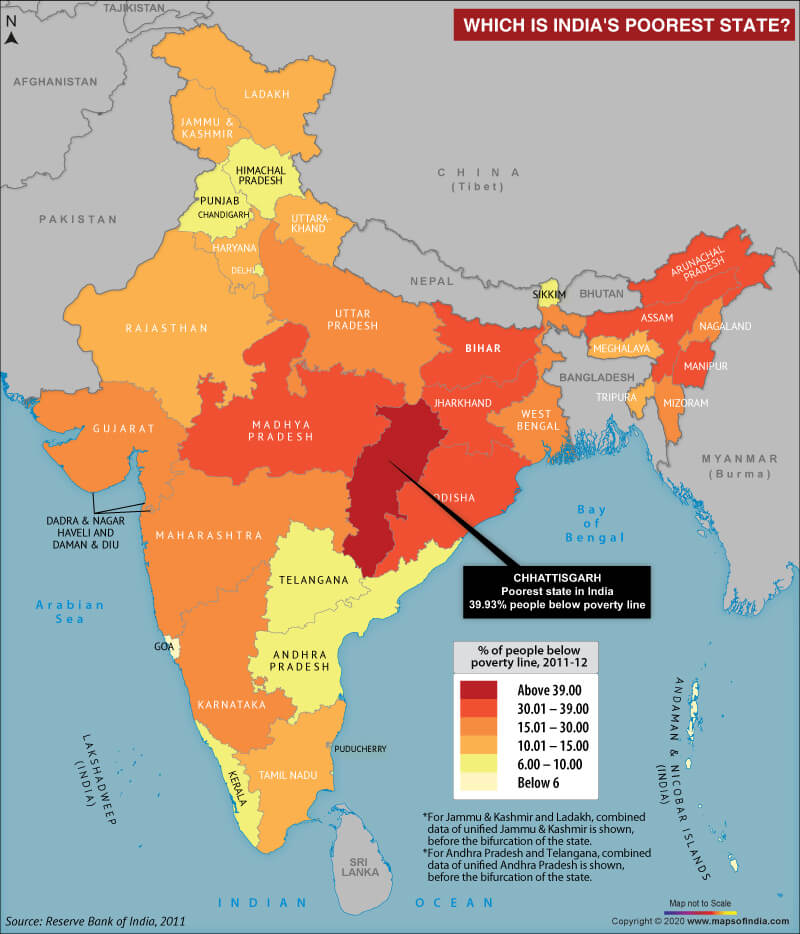
    • In India, 21.9% of the population lives below the national poverty line in 2011.
    • In India, the proportion of the employed population below $1.90 purchasing power parity a day in 2011 is 21.2%.
    • For every 1,000 babies born in India in 2017, 39 die before their 5th birthday.
    • Poverty is a condition characterized by lack of basic needs such as water, health care, foods, sufficient access to social and economic services, and few opportunities for formal income generation.
    • Poverty is often described in terms of the income level below which people are unable to access sufficient food for a healthy working life.
    • Hunger and food insecurity are the most serious forms of extreme poverty.
    • Progress in poverty reduction has been concentrated in Asia and especially East Asia. In other areas, the number of people in extreme poverty has increased especially in sub-Saharan Africa.
    • Poverty in India is primarily due to improper government policies and the misuse of the financially weaker section by the wealthier community.
    • The main outcome of poverty is hunger. Hunger’s seriousness can be understood easily from the fact that every year, 5.8 million children die from hunger related-causes around the world (FAO Hunger Report 2008).
    • Poverty involves more than the lack of income and productive resources to ensure sustainable livelihoods. Its manifestations include hunger and malnutrition, limited access to education and other basic services, social discrimination and elimination as well as the lack of participation in decision-making.

    Poverty in India and other developing countries

    Reports of the World Bank revealed that India is one of the poorest countries in the world.  Some of the main issues associated with prevalent poverty in India are poor health services, and insufficient education and training. Almost half of India’s population drops out of school by the age of thirteen and only one in ten people receive some form of job training.

    • Poor health services: It has been observed that People of India have less access to good health services as compared to industrialized nations. The relationship between poverty and access to health care can be seen as part of a larger cycle, where poverty leads to ill health and ill health maintains poverty.
    • Child malnutrition: The occurrence of under-nutrition in India is amongst the highest levels found in any country in the world and in spite of the development in food production, disease control and economic and social development; India is facing an acute problem of child malnutrition.
    • Insufficient education and training: In developing countries, children do not have access to basic education because of inequalities that originate in sex, health and cultural identity. It has been revealed in reports that illiteracy and lack of education are common factor that lead to poverty.
      • Governments of developing countries often cannot have enough money to provide for good public schools, especially in rural areas.
      • Poor people also often sacrifice schooling in order to concentrate on making a minimal living.
      • Additionally, developing countries tend to have few employment opportunities, especially for women. As a result, people do not want to attend school.
    • Corruption and warfare: Political power is unreasonably centralized. This often causes development problems. In these situations politicians make decisions about places that they are unaware with, lacking sufficient knowledge about the context to design effective and appropriate policies and programs.
      • Another issue related with poverty is corruption often accompanies centralization of power, when leaders are not accountable to those they serve. Corruption hinders development.
      • Warfare also lead to entrenched poverty by diverting scarce resources allocated for reducing poverty to maintaining a military.
    • Environmental degradation: It is also a major issue in increasing poverty.
      • In the developing world, the poor communities depend on natural resources to fulfill their basic needs.
      • Therefore, the depletion and impurity of water sources directly impend the livelihoods of those who depend on them.
    • Inequality: One of the more deep-rooted sources of poverty around the globe is social inequality that stems from cultural ideas about the relative worth of different genders, races, ethnic groups, and social classes.
    • Other causes include:
      1. Population Rise
      2. Low Productivity in Agriculture
      3. Under-Utilized Resources
      4. Low Rate of Economic Development
      5. Price Rise
      6. Unemployment
      7. Shortage of Capital and Able Entrepreneurship
      8. Social Factors

    Global Hunger Index (GHI)

    The Global Hunger Index is a peer-reviewed annual report, jointly published by Concern Worldwide and Welthungerhilfe.

    • It determines hunger on a 100-point scale, where 0 is the best possible score (no hunger) and 100 is the worst.
    • It is designed to comprehensively measure and track hunger at the global, regional, and country levels.
    • The aim of the GHI is to trigger action to reduce hunger around the world.

    For each country in the list, the GHI looks at four indicators:

    1. Undernourishment (which reflects inadequate food availability): calculated by the share of the population that is undernourished (that is, whose caloric intake is insufficient)
    2. Child Wasting (which reflects acute undernutrition): calculated by the share of children under the age of five who are wasted (that is, those who have low weight for their height)
    3. Child Stunting (which reflects chronic undernutrition): calculated by the share of children under the age of five who are stunted (that is, those who have low height for their age)
    4. Child Mortality (which reflects both inadequate nutrition and unhealthy environment): calculated by the mortality rate of children under the age of five

    India’s (poor) performance

    • India is among the 31 countries where hunger has been identified as serious.
    • Only 15 countries fare worse than India.
    • Some of these include Afghanistan (103), Nigeria (103), Congo (105), Mozambique (106), Sierra Leone (106), Timor-Leste (108), Haiti (109), Liberia (110), Madagascar (111) and Somalia (116).
    • India was also behind most of the neighbouring countries.
    • Pakistan was placed at 92 rank, Nepal at 76 and Bangladesh also at 76.

    Reasons for such poor performance

    • Poor maternal health: Mothers are too young, too short, too thin and too undernourished themselves, before they get pregnant, during pregnancy, and then after giving birth, during breast-feeding.
    • Poor sanitation: Poor sanitation, leading to diarrhoea, is another major cause of child wasting and stunting.
    • Food insecurity: Low dietary diversity in India is also a key factor in child malnutrition.
    • Poverty: Almost 50 million households in India are dependent on these small and marginal holdings.
    • Livelihood loss: The rural livelihoods loss after COVID and lack of income opportunities other than the farm sector have contributed heavily to the growing joblessness in rural areas.

    Issues with GHI

    • The GHI is largely children-oriented with a higher emphasis on undernutrition than on hunger and its hidden forms, including micronutrient deficiencies.
    • The first component — calorie insufficiency — is problematic for many reasons.
    • The lower calorie intake, which does not necessarily mean deficiency, may also stem from reduced physical activity, better social infrastructure (road, transport and healthcare) and access to energy-saving appliances at home, among others.
    • For a vast and diverse country like India, using a uniform calorie norm to arrive at deficiency prevalence means failing to recognise the huge regional imbalances in factors that may lead to differentiated calorie requirements at the State level.

    Understanding the connection between stunting and wasting and ways to tackle them

    • India’s wasting prevalence (17.3%) is one among the highest in the world.
    • Its performance in stunting, when compared to wasting, is not that dismal, though.
    • Child stunting in India declined from 54.2% in 1998–2002 to 34.7% in 2016-2020, whereas child wasting remains around 17% throughout the two decades of the 21st century.
    • Stunting is a chronic, long-term measure of undernutrition, while wasting is an acute, short-term measure.
    • Quite possibly, several episodes of wasting without much time to recoup can translate into stunting.
    • Effectively countering episodes of wasting resulting from such sporadic adversities is key to making sustained and quick progress in child nutrition.
    • Way forward: If India can tackle wasting by effectively monitoring regions that are more vulnerable to socioeconomic and environmental crises, it can possibly improve wasting and stunting simultaneously.

    Low child mortality

    • India’s relatively better performance in the other component of GHI — child mortality — merits a mention.
    • Studies suggest that child under nutrition and mortality are usually closely related, as child under nutrition plays an important facilitating role in child mortality.
    • However, India appears to be an exception in this regard.
    • This implies that though India was not able to ensure better nutritional security for all children under five years, it was able to save many lives due to the availability of and access to better health facilities.

    Initiatives by Government to Curb Poverty in India

    Ending poverty in all its forms is the first of the 17 Sustainable Development Goals (SDGs) of the 2030 Agenda for Sustainable Development.

    The government of India took several initiatives to eradicate poverty from the country.

    1. Saansad Aadarsh Gram Yojana (SAGY)Ministry of Rural development initiated the scheme in 2014. The scheme aims to develop five ‘Adarsh Villages’ or ‘Model Villages’ by 2024.
    2. National Rural Livelihood Mission (NRLM)Ministry of Rural Development started NRLM 2011 to evolve out the need to diversify the needs of the rural poor and provide them jobs with regular income on a monthly basis.
    3. Mahatma Gandhi National Rural Employment Guarantee Act (MGNREGA) – In 2005 Ministry of Rural Development initiated MGNEREGA to provide 100 days of assured employment every year to every rural household. One-third of the proposed jobs would be reserved for women.
    4. National Urban Livelihood Mission (NULM) – In 2013, NULM was commenced by the Ministry of Housing and Urban Affairs focusing on organizing urban poor in Self Help Groups, creating opportunities for skill development leading to market-based employment, and helping them to set up self-employment ventures by ensuring easy access to credit.
    5. Pradhan Mantri Jan Dhan Yojana (PMJDY) – the Ministry of Finance in 2014 initiated PMJDY that aimed at direct benefit transfer of subsidy, pension, insurance, etc., and attained the target of opening 1.5 crore bank accounts. The scheme particularly targets the unbanked poor.

    Hunger and Poverty are the biggest challenges for good governance in India still today. Evaluate how far successive governments have progressed in dealing with these humongous problems. Suggest measures for improvement. (250 words)

    Post your answers in comments below.

    Initiatives by Government to fight against Hunger in India

    The Government of India took several initiatives to fight against hunger across the nation.

    1. National Nutrition Mission (NNM), Poshan Abhiyan – NNM was started in 2018 by the Ministry of Women and Child Development to reduce the level of under-nutrition and also enhance the nutritional status of children in the country.
    2. National Food Security MissionMinistry of Agriculture initiated NFSM in 2007 to increase the production of rice, wheat, pulses, and coarse cereals through area expansion and productivity enhancement in a sustainable manner.
    3. Zero Hunger Programme – launched on October 16, 2017 with the aim to make farm inventions, organizing the farming system for nutrition, setting up genetic gardens for biofortified plants and initiating zero hunger training.
    1. Eat Right India Movement: An outreach activity organized by the Food Safety and Standards Authority of India (FSSAI) for citizens to nudge them towards eating right.
    2. Pradhan Mantri Matru Vandana Yojana: A centrally sponsored scheme executed by the Ministry of Women and Child Development, is a maternity benefit programme being implemented in all districts of the country with effect from 1st January, 2017.
    3. Food Fortification: Food Fortification is the addition of key vitamins and minerals such as iron, iodine, zinc, Vitamin A & D to staple foods such as rice, milk and salt to improve their nutritional content.
    4. National Food Security Act, 2013: It legally entitled up to 75% of the rural population and 50% of the urban population to receive subsidized food grains under the Targeted Public Distribution System.
    5. Mission Indradhanush: It targets children under 2 years of age and pregnant women for immunization against 12 Vaccine-Preventable Diseases (VPD).

    Global Initiative against Poverty and Hunger

    Food is at the core of the Sustainable Development Goals (SDGs). Goal 2 of SDG deals with Zero Hunger. Given below are some global level initiatives to fight poverty and hunger-

    1. The End to Poverty Initiative – This Centenary Initiative is designed specifically as the vehicle to take forward the ILO’s work in implementing the 2030 Agenda for Sustainable Development to alleviate poverty.
    2. Zero Hunger By World Food Programme – with humanitarian food assistance, provide nutritious food to those in urgent need. Meanwhile, the complementary programs address the root causes of hunger and build the resilience of communities.
    3. Fight Hunger First – With a vision to have a world without hunger and poverty, Welthungerhilfe- WHH has been implementing several initiatives in rural areas of India and Bangladesh. It was set up by a UN agency FAO.
    4. Zero Hunger Challenge (Save Food) by FAO – The 2012 United Nations Conference on Sustainable Development, also known as Rio+20, launched the Zero Hunger Challenge which includes addressing the sustainability of all food systems and the vision of zero food loss and waste (FLW).

    Conclusion

    Food insecurity remains an alarming issue due to such entitlement failures in India. While the government has rejected the findings of the Global Hunger Index as “unscientific”, we cannot ignore the dismal ground realities. India faces a malnutrition challenge that is not only large but worsening. It is time for the government to face up to these inconvenient truths and pursue the means and mechanisms needed to improve the situation. A safe and bright future for our children will translate into a safe and bright future for the country. And that’s the message we want every fellow citizen to internalize — Sahi Poshan, Desh Roshan.

    There is a growing divergence in the relationship between poverty and hunger in India. The shrinking of social expenditure by the government is forcing the poor to spend more on non-food essential items squeezing their food budget. Elucidate. (250 words)

    Post your answers in comments below.

    UPSC 2022 countdown has begun! Get your personal guidance plan now! (Click here)

  • Webinar starting in 45 minutes – seats filling out || Why Essays are Game – Changer in UPSC Mains? || Free Webinar by Arpit Sir || Limited slots available

    Webinar starting in 45 minutes – seats filling out || Why Essays are Game – Changer in UPSC Mains? || Free Webinar by Arpit Sir || Limited slots available

    The Essay Paper in Mains makes or breaks your dream of becoming an IAS officer. Do you know a well-structured essay uplifts your rank by more than a 100 notches?

    While the performance of students is more or less the same in GS papers (especially 1,2,3), but in the case of essay the variation of marks is rather huge (in 60s to 160). Yes, a single Essay paper can create a gulf of 100 marks. 

    If you have not yet started writing essays or if you’re confused on how to write quality answers within a short duration, then this webinar is for you!

    Open to All, Attend the Webinar Essay FLT.

    The orientation session is about learning the basics of essay writing. We welcome all the sincere and serious aspirants who understand the value of scoring 120+ in the essay paper. This is the only paper where mere management of time and thoughts will fetch you marks more than any other paper. 

    Who must join the webinar?

    • One who is attempting Mains in 2021.
    • One who is going to attempt Prelims 2022.
    • Anyone who has a basic understanding of the UPSC syllabus.

    What can you learn from this webinar?

    1. Right sources to prepare Essay Paper for Mains. Is just reading GS Subjects and Current Affairs enough for Essay Paper?

    2. Understanding the type of questions asked. What are the 8 broad themes of essay?

    3. Brainstorming the topic before writing. What are the 10 parameters by which your essay will be evaluated?

    4. Organising your thoughts into paragraphs. How to write 1200 words and maintain the flow with well linked paragraphs?

    5. Framing the correct thesis statement. How to sound persuasive yet logical?

    6. Different types of introduction you can write for your essay. What kind of anecdotes work and how to remember them?

    7. Developing balanced main body arguments. How to be less biased with an interdisciplinary approach?

    8. Concluding the essay perfectly. How can you score additional marks over here?

    Arpit Sir will also hold a Q&A Session where beginners and veterans can clarify their doubts.

    So attend this webinar and start the very first step of essay writing in the right direction!

    Webinar Details

    Date – 22nd October 2021(Friday)

    Time – 4:00PM-5:00PM

    About Arpit Sir

    Arpit Sir has the experience of attending all the stages of UPSC CSE – prelims, mains and interview. He has been mentoring aspirants for the last 8 years. According to him, enjoying the process of preparation will prevent the fear of the end result.

  • Why Essays are Game – Changer in UPSC Mains? || Free Webinar by Arpit Sir || Limited slots available

    Why Essays are Game – Changer in UPSC Mains? || Free Webinar by Arpit Sir || Limited slots available

    The Essay Paper in Mains makes or breaks your dream of becoming an IAS officer. Do you know a well-structured essay uplifts your rank by more than a 100 notches?

    While the performance of students is more or less the same in GS papers (especially 1,2,3), but in the case of essay the variation of marks is rather huge (in 60s to 160). Yes, a single Essay paper can create a gulf of 100 marks. 

    If you have not yet started writing essays or if you’re confused on how to write quality answers within a short duration, then this webinar is for you!

    Open to All, Attend the Webinar Essay FLT.

    The orientation session is about learning the basics of essay writing. We welcome all the sincere and serious aspirants who understand the value of scoring 120+ in the essay paper. This is the only paper where mere management of time and thoughts will fetch you marks more than any other paper. 

    Who must join the webinar?

    • One who is attempting Mains in 2021.
    • One who is going to attempt Prelims 2022.
    • Anyone who has a basic understanding of the UPSC syllabus.

    What can you learn from this webinar?

    1. Right sources to prepare Essay Paper for Mains. Is just reading GS Subjects and Current Affairs enough for Essay Paper?

    2. Understanding the type of questions asked. What are the 8 broad themes of essay?

    3. Brainstorming the topic before writing. What are the 10 parameters by which your essay will be evaluated?

    4. Organising your thoughts into paragraphs. How to write 1200 words and maintain the flow with well linked paragraphs?

    5. Framing the correct thesis statement. How to sound persuasive yet logical?

    6. Different types of introduction you can write for your essay. What kind of anecdotes work and how to remember them?

    7. Developing balanced main body arguments. How to be less biased with an interdisciplinary approach?

    8. Concluding the essay perfectly. How can you score additional marks over here?

    Arpit Sir will also hold a Q&A Session where beginners and veterans can clarify their doubts.

    So attend this webinar and start the very first step of essay writing in the right direction!

    Webinar Details

    Date – 22nd October 2021(Friday)

    Time – 4:00PM-5:00PM

    About Arpit Sir

    Arpit Sir has the experience of attending all the stages of UPSC CSE – prelims, mains and interview. He has been mentoring aspirants for the last 8 years. According to him, enjoying the process of preparation will prevent the fear of the end result.