For most UPSC 2026 aspirants, current affairs can feel like the most confusing and unpredictable part of the preparation. You read the newspaper, follow monthly compilations, yet somehow the actual questions in Prelims and Mains still catch you off guard. The issue isn’t your effort, it’s the lack of a clear strategy.
UPSC no longer asks basic, factual questions. In 2024, for example, it asked how shifting subsidies from fossil fuels to renewables would help. To answer that, you needed to think about economics, sustainability, policy, and geopolitics — all at once. Over the last decade, there have been 18 energy-related questions spread across GS1 to GS3, showing how deeply interlinked current affairs themes can be.
Sometimes the same topic pops up in unexpected papers. A question on Arctic oil appeared in GS1, it is a proof that you can’t box topics into single silos anymore. UPSC now tests your ability to see the news through the lens of multiple GS papers.
In this session, Nishith Sir will simplify the chaos. He’ll help you figure out what to read, how to filter relevant issues, and whether to follow a daily, weekly, or monthly current affairs rhythm. Most importantly, he’ll show you how to convert news into mains level content — with examples, case studies, and interlinkages that add real value to your GS2 and GS3 answers.
It will be a 45 minute webinar, post which we will open up the floor for all kinds of queries which a beginner must have. No questions are taboo and Nishith Sir is known to be patiently solving all your doubts.
Join us for a Zoom session on 9th May 2025 at 7 p.m. This session is a must-attend for you If you are attempting UPSC for the first time or have attempted earlier and now preparing for next year, then it is going to be a valuable session for you too.
See you in the session”
Register for the session for a focussed UPSC 2026 Prep
(Don’t wait—the next webinar won’t be until June 25)
These masterclasses are packed with value. They are conducted in private with a closed community. We rarely open these webinars for everyone for free. This time we are keeping it for 300 seats only.
Read about AIR 498 Utkarsh’s UPSC 2026 Prep Webinar
Most UPSC aspirants feel stuck after a few attempts. You study hard, follow the usual strategies, but the marks just don’t improve. Motivation dips, and it starts to feel like you’re going in circles. Utkarsh Srivastava was once in that same spot but he decided to change how he approached the exam.
In 2023, his GS score was 685. A year later, in the 2024 exam, he jumped to 795 — an incredible 114 mark boost across GS1 to GS4. This didn’t happen by chance. It was the result of small, focused changes made with full clarity.
What changed for him? He shifted from scattered notes to focused prep based on microthemes. He stopped writing answers just to practice and started writing answers that actually fetched marks. Instead of chasing quantity, he focused on improving the quality of every sentence he wrote.
In this session, Utkarsh will share how he changed his approach across all GS papers, what mistakes he fixed, and how he made value addition truly count not as decoration, but to make his answers stronger. He’ll also talk about how simple habits and daily discipline helped him stay on track.
If you feel stuck or stagnant in your UPSC prep, this is a session that can really help you reset and rethink your strategy. Join him on 6th May 2025, Tuesday at 5PM.
It will be a 45 minute webinar, post which we will open up the floor for all kinds of queries which a beginner must have. No questions are taboo and Shubham Sir is known to be patiently solving all your doubts.
Join us for a Zoom session on 6th May 2025 at 5 p.m. This session is a must-attend for you If you are attempting UPSC for the first time or have attempted earlier and now preparing for next year, then it is going to be a valuable session for you too.
See you in the session”
Register for the session for a focussed UPSC 2026 Prep
(Don’t wait—the next webinar won’t be until June 25)
These masterclasses are packed with value. They are conducted in private with a closed community. We rarely open these webinars for everyone for free. This time we are keeping it for 300 seats only.
Read about AIR 291 Shubham’s UPSC 2026 Prep Webinar
GS Paper 3 often turns out to be the most unpredictable paper in the Mains. It covers a wide range of topics like economy, agriculture, internal security, disaster management, and more. Most aspirants walk into it unsure of how to prepare or what to expect. But Shubham Kaurav, who secured AIR 291 in UPSC 2024, did something different. He scored 108 marks in GS 3 — a score many struggle to reach even after multiple attempts.
What worked in his favour wasn’t trying to study everything. It was clarity. He understood what the examiner was looking for and focused on how to present it well within the word limit. In this session, Shubham will walk you through his GS 3 preparation — what he focused on, how he made notes, and the way he structured his answers to stand out.
He will also break down his approach to economy questions using simple concepts and relevant data, how he used practical examples in agriculture, and how he balanced static and dynamic content in internal security — a tricky area for most.
More importantly, he will talk about answer writing. How to manage time across 20 questions, how to build flow in your answers, and the small adjustments that helped him gain those extra marks. This session won’t be just another topper talk. It’s a practical, focused look at a paper that can change your final score.
Join Shubham Kaurav live on 5th May at 7 PM(Online + Offline) and take away real strategies to handle GS Paper 3 with confidence
It will be a 45 minute webinar, post which we will open up the floor for all kinds of queries which a beginner must have. No questions are taboo and Shubham Sir is known to be patiently solving all your doubts.
Join us for a Zoom session on 5th May 2025 at 7:00 p.m. This session is a must-attend for you If you are attempting UPSC for the first time or have attempted earlier and now preparing for next year, then it is going to be a valuable session for you too.
See you in the session”
Register for the session for a focussed UPSC 2026 Prep
(Don’t wait—the next webinar won’t be until June 25)
These masterclasses are packed with value. They are conducted in private with a closed community. We rarely open these webinars for everyone for free. This time we are keeping it for 300 seats only.
Everyone dreams of cracking UPSC and seeing their name in the Top 100. It’s the image we all carry — that one moment of validation after years of effort.
But the reality is different. Somewhere between optional preparation, endless current affairs, and the quiet doubts no one talks about, most aspirants lose their way. Not because they didn’t work hard, but because they didn’t work right.
Pranay Mittal, AIR 85 (UPSC 2024), knows this better than anyone. An engineer by training, a NET JRF holder, and someone with a patent to his name, he had every reason to settle into a safe, successful career. But he didn’t. He chose the tougher dream. He chose UPSC. And more importantly, he chose to approach it with structure, clarity, and the courage to course correct whenever needed.
If you are serious about your UPSC 2026 attempt, the best thing you can do is stop guessing and start preparing with purpose. The earlier you start right, the fewer mistakes you will have to undo later.
Join Pranay Mittal live on 30th April at 7 PM and learn not just how to work harder, but how to work smarter — the way toppers do.
It will be a 45 minute webinar, post which we will open up the floor for all kinds of queries which a beginner must have. No questions are taboo and Pranay Sir is known to be patiently solving all your doubts.
Join us for a Zoom session on 30th April 2025 at 7:00 p.m. This session is a must-attend for you If you are attempting UPSC for the first time or have attempted earlier and now preparing for next year, then it is going to be a valuable session for you too.
See you in the session”
Register for the session for a focussed UPSC 2026 Prep
(Don’t wait—the next webinar won’t be until May 25)
These masterclasses are packed with value. They are conducted in private with a closed community. We rarely open these webinars for everyone for free. This time we are keeping it for 300 seats only.
Every aspirant dreams of cracking UPSC in their very first attempt. But between planning and execution, most end up overwhelmed, distracted, or burnt out. What if you could hear directly from someone who not only cleared the exam but secured AIR 13, all while pursuing a PhD and managing responsibilities on the ground?
Meet Hemant Mishra, a geography postgraduate from JNU, currently pursuing his PhD from Jamia Millia Islamia. He’s also a NET JRF qualifier, and before making it to the top ranks in UPSC 2024, he served as a DYSP in UP. Today, at just 27 years old, he is posted as SDM in Mirzapur, bringing together academic excellence and real-world administrative experience.
In this session, Hemant Sir will talk about the things most webinars don’t—
how to build a focused, fail proof strategy even when you’re juggling multiple responsibilities.
He’ll share how he chose his optional, balanced current affairs with static subjects
Staying consistent through self-doubt and setbacks.
Most importantly, he’ll share what made the real difference: mindset, planning, and micro adjustments.
Whether you’re just beginning your UPSC journey or already on your way, this session will help you reframe how you look at the exam not as a burden, but as a process you can take control of.
It will be a 45 minute webinar, post which we will open up the floor for all kinds of queries which a beginner must have. No questions are taboo and Hemant Sir is known to be patiently solving all your doubts.
Join us for a Zoom session on 24th April 2025 at 7:00 p.m. This session is a must-attend for you If you are attempting UPSC for the first time or have attempted earlier and now preparing for next year, then it is going to be a valuable session for you too.
See you in the session”
Register for the session for a focussed UPSC 2026 Prep
(Don’t wait—the next webinar won’t be until May 25)
These masterclasses are packed with value. They are conducted in private with a closed community. We rarely open these webinars for everyone for free. This time we are keeping it for 300 seats only.
Every UPSC journey begins with hope, confusion, and way too many PDFs. You follow toppers, watch strategy videos, and try to copy their timetables. But somewhere along the way, most aspirants hit a wall.
Why? Because watching mentors isn’t the same as having mentorship.
Real mentorship isn’t about motivation. It’s about someone telling you where you’re going wrong and how to fix it before it’s too late. It’s course correction, not just course completion.
Now it’s April 2025. UPSC 2026 may feel far, but the clock is already ticking.
This isn’t just another attempt, it’s your clean slate. You have the time to build strong basics, finish optional, experiment with answer writing, and go deep into current affairs. But without structure, that time slips away fast.
The difference between those who attempt UPSC 2026 and those who crack it? Mentorship. Guidance. Accountability.
And it starts now, not 90 days before Prelims.
This is the phase to quietly build your base, no pressure, no panic. It’s the right time to sharpen your eye for mistakes, set up a simple note making system around microthemes, and work on showing up daily, even when you don’t feel like it.
Most importantly, it’s about clarity, knowing what matters and what doesn’t. Because in UPSC, knowing what to ignore is just as important as knowing what to study.
Join Nishith Sir, faculty at Samachar Manthan, for a 45 minute live Zoom session where he will walk you through what real mentorship looks like and how it can help you build a solid, focused preparation strategy from now itself on 21st April, Monday at 7 PM.
It will be a 45 minute webinar, post which we will open up the floor for all kinds of queries which a beginner must have. No questions are taboo and Nishith Sir is known to be patiently solving all your doubts.
Join us for a Zoom session on 21st April 2025 at 7:00 p.m. This session is a must-attend for you If you are attempting UPSC for the first time or have attempted earlier and now preparing for next year, then it is going to be a valuable session for you too.
See you in the session”
Register for the session for a focussed UPSC 2026 Prep
(Don’t wait—the next webinar won’t be until May 25)
These masterclasses are packed with value. They are conducted in private with a closed community. We rarely open these webinars for everyone for free. This time we are keeping it for 300 seats only.
Struggling to master the art of note-making for UPSC Mains? The secret is not just reading the syllabus—it’s decoding the PYQ patterns and aligning them with your syllabus! Arvind Sir will guide you in creating powerful, exam-oriented notes.
Are You Still Not Getting Your PYQs Right? If you’re still: ❌ Creating random notes without understanding the core themes ❌ Missing out on linking answers to crucial syllabus keywords ❌ Focusing too much on irrelevant information ❌ Getting overwhelmed by the vast syllabus without a clear strategy
Then you’re wasting time! Let Arvind Sir show you how to streamline your preparation and create 2–3 page, exam-ready Mains notes.
What You’ll Master in This Exclusive Webinar ✅ Create 2–3 Page Mains Notes – Learn the skill of writing concise and focused notes ✅ Decode PYQ Themes and Patterns – Understand the recurring trends in previous years’ questions ✅ Link Answers to Syllabus Keywords – Make your answers align perfectly with the syllabus, boosting relevance and scoring potential
UPSC 2026 is fast approaching. Don’t wait until the last minute! Will you be prepared with the right approach, or will you let others overtake you?
Webinar Details: Date: 16th April, Wednesday Time: 7:00 PM
Every topper cracked the exam with the right strategy. Are you ready to take that step? Register NOW before it’s too late!
A Rare Opportunity— Register Now! This isn’t just another generic UPSC strategy session. This power-packed masterclass is designed to give you a clear advantage over other aspirants.
By the end of this session, you will have a list of must-study PYQs, a breakdown of microthemes, and a step-by-step strategy to approach UPSC preparation like a topper. If you’re serious about UPSC 2026 – Register now!
Arvind Sir, has identified key blind spots in UPSC preparation. He will conduct a free Zoom masterclass on, 16th April at 7 PM. In this session, he will share a proven strategy, used by rankers, to structure Mains preparation with microthemes for scoring 800+ marks.
It will be a 45 minute webinar, post which we will open up the floor for all kinds of queries which a beginner must have. No questions are taboo and Arvind Sir is known to be patiently solving all your doubts.
Join us for a Zoom session on 16th April 2025 at 7:00 p.m. This session is a must-attend for you If you are attempting UPSC for the first time or have attempted earlier and now preparing for next year, then it is going to be a valuable session for you too.
See you in the session”
Register for the session for a focussed UPSC 2026 Prep
(Don’t wait—the next webinar won’t be until May 25)
These masterclasses are packed with value. They are conducted in private with a closed community. We rarely open these webinars for everyone for free. This time we are keeping it for 300 seats only.
Preparing for UPSC 2026 can feel overwhelming, especially when you’re just starting out. Many aspirants begin with a lot of motivation after reading NCERTs, but soon realise how vast and complex the exam actually is. That’s when doubts start creeping in and consistency takes a hit. To help you through this phase, Shubham Sir is bringing a simple and effective framework—the MAC Formula: Mindset, Approach, and Consistency.
Mindset is about staying calm, believing in yourself, and staying focused over the long run. Approach means planning smartly—knowing the syllabus, using PYQs the right way, and not getting lost in too many resources. And consistency? That’s about building habits, sticking to weekly goals, and showing up every single day. When all three come together, you’re on solid ground.
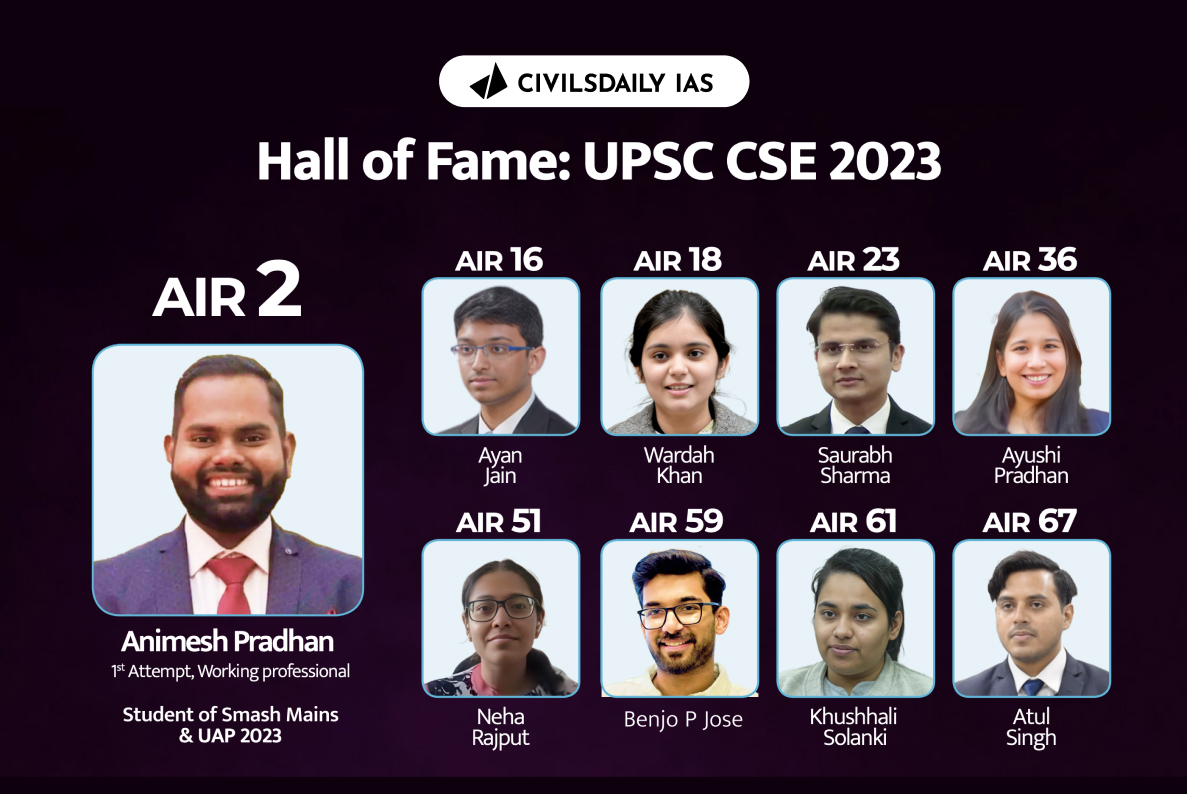
Shubham Sir will also talk about AIR 2 Animesh’s journey—how he went from a complete beginner to a top-ranker by consistently writing weekly answers for 1.5 years. He’ll also help you map out a 14-month plan starting this April, covering answer writing, revision, and avoiding common traps.
So if you’re aiming for UPSC 2026 and want to start strong, join the live session on Sunday, 13th April at 7 PM. It’s your chance to bring clarity to your prep and build the right momentum early on.
This session will help you cut through the noise and start with a crystal-clear roadmap. You’ll learn to prioritize your study, recognize question trends, and, most importantly, focus on what UPSC truly values.
A Rare Opportunity— Register Now! This isn’t just another generic UPSC strategy session. This power-packed masterclass is designed to give you a clear advantage over other aspirants.
By the end of this session, you will have a list of must-study PYQs, a breakdown of microthemes, and a step-by-step strategy to approach UPSC preparation like a topper. If you’re serious about UPSC 2026 – Register now!
It will be a 45 minute webinar, post which we will open up the floor for all kinds of queries which a beginner must have. No questions are taboo and Arvind Sir is known to be patiently solving all your doubts.
Join us for a Zoom session on 13th April 2025 at 7:00 p.m. This session is a must-attend for you If you are attempting UPSC for the first time or have attempted earlier and now preparing for next year, then it is going to be a valuable session for you too.
See you in the session”
Register for the session for a focussed UPSC 2026 Prep
(Don’t wait—the next webinar won’t be until May 25)
These masterclasses are packed with value. They are conducted in private with a closed community. We rarely open these webinars for everyone for free. This time we are keeping it for 300 seats only.
PM Modi has unveiled ‘MAHASAGAR’ (Mutual and Holistic Advancement for Security and Growth Across Regions) during his March 2025 visit to Mauritius, outlining India’s expanded vision for security and development across the region.
About MAHASAGAR
Mahasagar is India’s expanded strategic vision aimed at enhancing security, trade, and development cooperation across the Global South.It builds on India’s SAGAR (Security and Growth for All in the Region) policy, which focused on the Indian Ocean Region (IOR).
Three Core Pillars:
Trade for Development: Enhancing economic ties through technology-sharing and trade facilitation.
Capacity Building for Sustainable Growth: Supporting nations with infrastructure, education, and economic partnerships.
Mutual Security for a Shared Future: Strengthening regional security, maritime cooperation, and defense ties.
It seeks to address China’s expanding presence in the Indo-Pacific and Indian Ocean by promoting India-led cooperation models.It aims to position India as a champion of the Global South, amplifying their voice in global policymaking (e.g., G20, IORA, BRICS).
Mahasagar vs SAGAR (2015)
India’s SAGAR policy (2015) was a regional framework focused on maritime security and economic cooperation in the Indian Ocean Region (IOR). Mahasagar broadens this vision to global engagement with the Global South.
Parameter
SAGAR (2015)
Mahasagar (2025)
Geographic Scope
Indian Ocean Region (IOR)
Global South, Indo-Pacific, Africa, Latin America
Focus Areas
Maritime security, economic ties, blue economy, regional stability
Trade-driven development, technology-sharing, capacity building, global security
Strategic Partnerships
Mauritius, Seychelles, Maldives, Sri Lanka, IOR countries
Expands to Africa, ASEAN, Latin America, Pacific Island Nations
Blue economy, infrastructure, trade corridors in IOR
Technology transfer, concessional loans, trade in local currencies
Diplomatic Strategy
Regional cooperation through IORA, BIMSTEC
Voice of the Global South in G20, BRICS, UN initiatives
Challenges in the Maritime Domain
Maritime security is increasingly complex, with a mix of traditional and emerging threats. These challenges can be broadly categorized into three areas: hard security threats, unconventional security risks, and governance issues.
1. Hard Security Challenges
Unconventional Tactics in Warfare – Countries are using unconventional methods, such as Ukraine’s drone attacks on Russia and China’s maritime militias in the South China Sea, making it difficult to respond effectively.
Grey-Zone Warfare – Tactics that blur the line between peace and conflict, like violating exclusive economic zones (EEZs), create legal and policy challenges. Example: The USA’s contested presence in disputed waters.
Combat Drones & Land Attack Missiles – The increasing use of drones for surveillance and potential strikes, along with missiles launched from sea-based platforms, has transformed modern naval threats.
2. Unconventional Security Risks
Illegal Fishing & Resource Exploitation – Foreign fishing fleets encroach on territorial waters, affecting marine ecosystems and local livelihoods. Example: Sri Lankan fishermen in Indian waters.
Marine Pollution – Oil spills, plastic waste, and industrial discharge threaten ocean health and biodiversity.
Trafficking & Smuggling – Maritime routes are used for human and drug trafficking, increasing regional instability.
Geopolitical Rivalries in the Indo-Pacific – The US-China rivalry often overshadows the concerns of smaller nations in Asia, Africa, and the Pacific, diverting resources from pressing security needs.
3. Challenges in Maritime Governance
Lack of Coordination Among Littoral States – Countries in Asia and Africa struggle to unite against maritime threats due to differing security priorities and enforcement capabilities. Example: ASEAN nations hesitating to confront China’s actions in the South China Sea.
Reluctance to Cooperate with Foreign Partners – Some nations prefer to avoid reliance on external assistance, weakening collaborative security measures.
Limited Information Sharing – Despite agreements, countries often share only minimal intelligence due to concerns over national security and sovereignty. Example: India and the USA have multiple agreements, but information exchange remains cautious.
Addressing these challenges requires stronger cooperation, better governance, and technological advancements to ensure a secure and stable maritime domain.
Way Forward for a Robust Maritime Neighbourhood Policy
To ensure a stable, secure, and cooperative maritime environment, India must adopt a multi-pronged approach that balances security, economic growth, environmental sustainability, and diplomatic engagement. The following steps can help shape an effective maritime neighbourhood policy:
1. Strengthening Regional Security Cooperation: Expand bilateral, trilateral, and multilateral collaborations through platforms like Quad, IORA, BIMSTEC, and IONS to enhance maritime security.
2. Enhancing Maritime Infrastructure & Connectivity: Invest in modernising port infrastructure and smart shipping corridors to boost trade and regional economic integration. Promote sustainable Blue Economy partnerships in fisheries, marine biotechnology, and deep-sea mining.
3. Promoting Sustainable & Inclusive Development: Implement stricter fisheries management agreements to prevent overfishing and protect coastal livelihoods.Encourage regional cooperation for tackling marine pollution and plastic waste in the Indian Ocean.
4. Strengthening Maritime Governance & Law Enforcement: Improve the capabilities of coast guards and maritime law enforcement agencies to combat non-traditional threats like trafficking and environmental crimes.Promote the adoption of a regional Code of Conduct based on UNCLOS, ensuring peaceful dispute resolution and responsible ocean governance.
5. Fostering Diplomatic Engagement & Strategic Partnerships: Balance power dynamics in the Indo-Pacific by deepening ties with smaller Indian Ocean nations (Sri Lanka, Maldives, Seychelles, Mauritius).
#BACK2BASICS: Maritime Neighbourhood of India
India’s maritime neighbourhood includes the countries and regions that share maritime boundaries or have strategic maritime linkages with India. These areas are significant for trade, security, and regional stability.
Key Regions in India’s Maritime Neighbourhood
1. Immediate Maritime Neighbours (Countries with direct maritime borders with India)
Sri Lanka (South of Tamil Nadu, separated by the Palk Strait)
Maldives (Southwest of India, near Lakshadweep)
Myanmar (Eastern maritime neighbour, Bay of Bengal)
Bangladesh (Northeastern maritime neighbour, Bay of Bengal)
Pakistan (Western maritime neighbour, Arabian Sea)
2. Extended Maritime Neighbours (Strategically important island nations & territories in the Indian Ocean)
Seychelles (Near India’s southwestern waters)
Mauritius (Deep in the Indian Ocean but a close partner of India)
Madagascar (Western Indian Ocean, near Africa)
Comoros & Réunion (French territory) (Further southwest in the Indian Ocean)
3. Strategic Waters & Regions (Vital for India’s maritime security and trade)
Bay of Bengal(Northeast of India, key for regional trade & security)
Arabian Sea(West of India, crucial for energy imports from the Middle East)
Indian Ocean Region (IOR)(Extends from Africa to Australia, vital for naval security & trade routes)
Strait of Malacca(A critical choke point for India’s trade & naval strategy, linking the Indian Ocean to the Pacific Ocean via Southeast Asia)
Why is India’s Maritime Neighbourhood Important?
Trade & Connectivity: Over 90% of India’s trade by volume passes through these waters.
Security & Defense: Presence of Chinese naval activity, piracy, and smuggling threats in the Indian Ocean.
Diplomatic & Economic Ties: India engages with these nations through SAGAR (Security and Growth for All in the Region), Indian Ocean Rim Association (IORA), and Quad & Indo-Pacific strategies.
India’s Evolution of Maritime Neighbourhood Policy
– Deepening ties with ASEAN & island nations – Maritime security expansion
– 2008: Anti-piracy missions in the Gulf of Aden – 2011: Indian Ocean Naval Symposium (IONS) launched
4. SAGAR & Indo-Pacific Strategy (2014–Present)
– SAGAR (Security and Growth for All in the Region) – Countering China’s influence in the Indian Ocean – Strengthening QUAD cooperation
– 2015: SAGAR doctrine announced – 2018: Logistics agreements with US, France, Australia – 2020: Stronger presence in Malacca Strait & Andaman-Nicobar – 2022: Indo-Pacific Oceans Initiative (IPOI) launched
5. MAHASAGAR: 2025 & Beyond
– Advanced Blue Economy – AI-driven Maritime Security – Sustainable Development Goals (SDGs) in the Indian Ocean – Greater Indo-Pacific Naval Collaboration
– MAHASAGAR Initiative (2025): India’s maritime vision for economic and security dominance – AI-based maritime surveillance system – Expansion of deep-sea exploration & green shipping corridors – Strengthened cooperation with IORA, BIMSTEC, & QUAD
For a Maritime Neighbourhood Policy to be successful, six key elements must guide foreign policy:
Security & Defense – Strengthening naval cooperation, joint patrols, and tackling maritime threats like piracy and smuggling.
Economic & Trade Connectivity – Enhancing port infrastructure, promoting Blue Economy initiatives, and boosting regional trade.
Disaster Management & Climate Resilience – Developing joint disaster response frameworks, early warning systems, and humanitarian aid efforts.
Strategic Diplomacy – Engaging in regional forums, countering geopolitical threats, and strengthening ties with island nations.
Technology & Infrastructure Development – Expanding smart ports, undersea communication networks, and AI-driven maritime security.
India’s performance assessment
Policy Element
Performance
Challenges
Security Cooperation
– Naval Engagements: India has actively participated in joint naval exercises with countries like the U.S., Japan, and Australia, enhancing interoperability and regional security. – Counter-Piracy Operations: The Indian Navy has been instrumental in reducing piracy incidents in the Gulf of Aden since 2008.
– Chinese Naval Presence: China’s expanding naval activities in the Indian Ocean pose strategic challenges for India.
– Resource Constraints: Budgetary limitations have slowed India’s naval modernization efforts, impacting its ability to maintain a robust maritime presence.
Economic & Trade Connectivity
– Infrastructure Development: India has invested in port development projects, such as Chabahar in Iran, to enhance regional trade connectivity. – Blue Economy Initiatives: Collaborations with neighboring countries have been initiated to sustainably harness marine resources.
– Competing Chinese Investments: China’s Belt and Road Initiative has led to significant investments in neighboring countries, challenging India’s influence.
– Political Instability: Changes in neighboring countries’ leaderships, such as in Bangladesh and the Maldives, have affected bilateral economic projects.
Disaster Management & Climate Resilience
– HADR Operations: The Indian Navy has provided timely humanitarian assistance during natural disasters in the region, showcasing India’s commitment to regional stability. – Climate Initiatives: India has engaged in regional dialogues to address climate change impacts on maritime nations.
– Coordination Challenges: Aligning disaster response strategies with diverse neighboring countries requires continuous diplomatic efforts. – Resource Allocation: Balancing resources between defense and disaster management remains a challenge.
Strategic Partnerships & Diplomacy
– Regional Forums: India’s active participation in IORA and BIMSTEC has strengthened regional cooperation. – SAGAR Vision: The ‘Security and Growth for All in the Region’ doctrine has been well-received, promoting collective security.
– Shifting Alliances: Neighboring countries, like Nepal and the Maldives, have shown inclinations towards China, challenging India’s diplomatic influence. – Domestic Political Changes: Political transitions in neighboring countries can disrupt established diplomatic relations.
Sustainable Maritime Governance
– Fisheries Agreements: India has entered into agreements to promote sustainable fishing practices. – Marine Conservation: Initiatives have been launched to protect marine biodiversity in collaboration with neighbors.
– Illegal Fishing: Preventing unauthorized fishing activities remains a persistent issue. – Policy Implementation: Ensuring compliance with environmental regulations across borders is challenging.
Technology & Infrastructure Development
– Digital Initiatives: Steps have been taken to modernize port operations and enhance maritime surveillance through technology. – Defense Acquisitions: Procurement of advanced surveillance drones has bolstered maritime domain awareness.
– Technological Gaps: Rapid technological advancements require continuous upgrades, posing financial and logistical challenges. – Infrastructure Bottlenecks: Developing world-class maritime infrastructure is hindered by bureaucratic delays and funding constraints.
India’s maritime policy demonstrates proactive engagement in enhancing regional security, economic connectivity, and disaster response. However, challenges such as external geopolitical influences, internal resource constraints, and dynamic political landscapes necessitate adaptive strategies to uphold its maritime interests.