💥Join UPSC 2027,2028 Mentorship (July Batch) + XFactor Notes & Microthemes PDF

Distribution: weekly

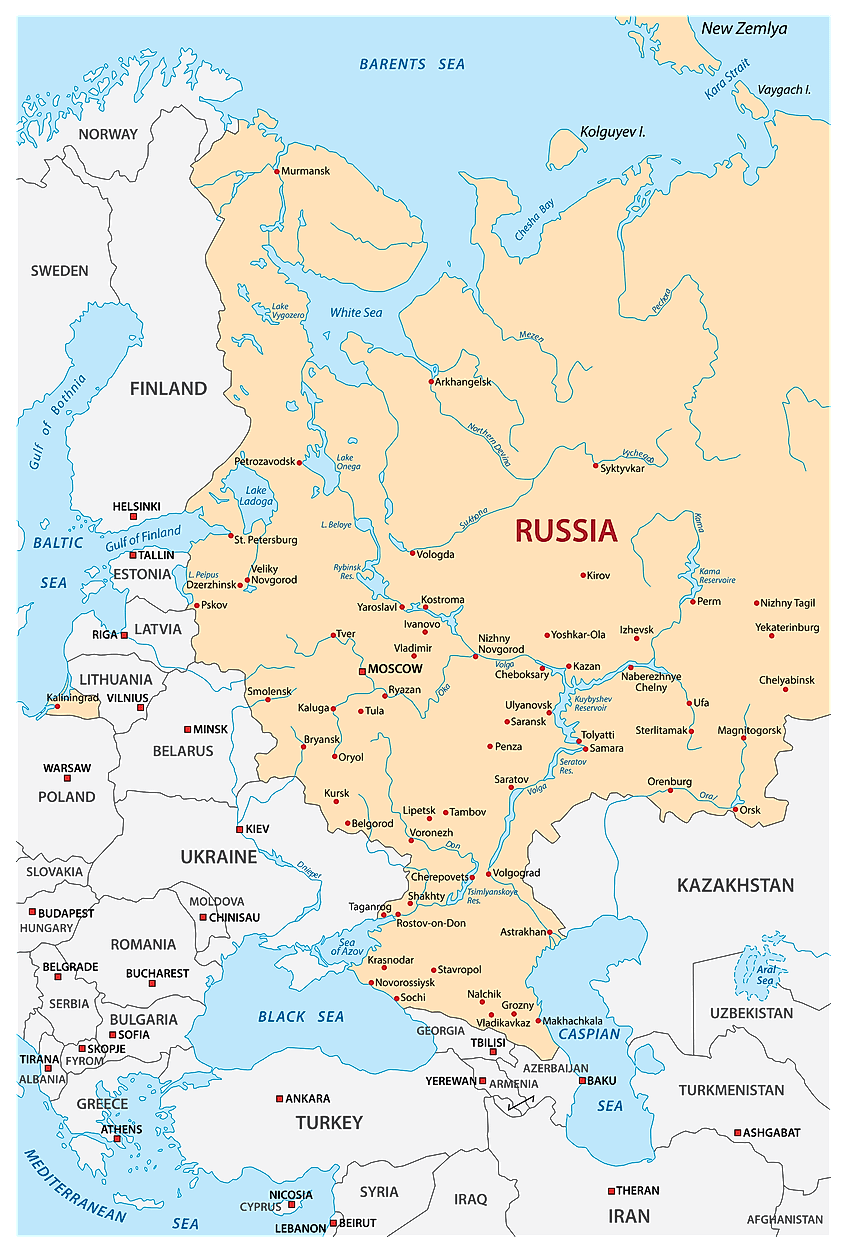
  • Rivers, Dams, and Headworks of Punjab

    Why in the news?

    Floods hit Punjab villages due to heavy rain in Himachal, high dam discharges (Bhakra, Pong, Ranjit Sagar), and regulated headworks flow.

    Rivers, Dams, and Headworks of Punjab

    About the Rivers, Dams, and Headworks of Punjab:

    River Origin & Entry into Punjab Major Dam (Location & Key Facts) Headworks & Functions
    Sutlej Origin: Rakshastal Lake (Tibet); enters India at Shipki La (HP); enters Punjab at Rupnagar; joins Beas at Harike, then Chenab in Pakistan. Bhakra Dam (near Nangal, HP–Punjab border).

    One of India’s highest gravity dams; reservoir = Gobind Sagar Lake; irrigation + hydropower.

    Ropar: Feeds Sirhind & BML canals (Punjab + Haryana).

    Harike: Diverts Sutlej–Beas water to Rajasthan & Punjab canals.

    Hussainiwala: Feeds Bikaner & Eastern Canals (Punjab + Rajasthan).

    Beas Origin: Beas Kund (Rohtang Pass, HP); enters Punjab near Mukerian (Hoshiarpur); flows via Hoshiarpur, Gurdaspur, Tarn Taran, Amritsar. Pong Dam (Maharana Pratap Sagar), HP (Kangra).

    Major irrigation + power dam; supplies Harike.

    Harike: Regulates Beas + Sutlej water; feeds Rajasthan & Punjab canals.
    Ravi Origin: Bara Banghal (Rohtang Pass, HP); enters Punjab near Pathankot; flows via Pathankot, Gurdaspur;

    Enters Pakistan and joins Chenab.

    Ranjit Sagar Dam (Thein Dam), Pathankot (Punjab–J&K border). Irrigation + hydropower. Madhopur: Feeds UBDC canal (Punjab).

    Madhopur–Beas Link: Transfers surplus Ravi to Beas before Pakistan.


    [UPSC 2021] With reference to the Indus river system, among the following four rivers, one of them joins the Indus directly:

    Options: (a) Chenab (b) Jhelum (c) Ravi (d) Sutlej*


  • PM SVANidhi Scheme extended until 2030

    Why in the News?

    The Union Cabinet has approved the restructuring and extension of the Prime Minister Street Vendor’s Atmanirbhar Nidhi (PM SVANidhi) scheme.

    About PM SVANidhi Scheme:

    • Launch: June 1, 2020, as Central Sector Scheme fully funded by the Ministry of Housing and Urban Affairs (MoHUA).
    • Purpose: To provide affordable credit to street vendors hit hard by the Covid-19 pandemic and help them restart/expand their businesses.
    • Target Group: Urban street vendors in statutory towns and peri-urban/rural areas.
    • Extension: Restructured and extended up to March 31, 2030.
    • Beneficiaries: 1.15 crore vendors, including 50 lakh new ones.

    Key Features:

    • Collateral-free Loans (incremental):
      • 1st tranche: ₹15,000 (earlier ₹10,000).
      • 2nd tranche: ₹25,000 (earlier ₹20,000).
      • 3rd tranche: ₹50,000.
    • Digital Empowerment:
      • Timely 2nd loan repayment → eligibility for UPI-linked RuPay Credit Card (for emergent business/personal needs).
      • Digital cashback incentives up to ₹1,600 on retail & wholesale transactions.
    • Capacity Building:
      • Training in entrepreneurship, financial literacy, digital skills, and marketing.
      • Food safety & hygiene training for street food vendors (with FSSAI partnership).
    • Implementation:
      • Jointly by MoHUA & Department of Financial Services (DFS).
      • DFS facilitates loans & credit cards through banks/financial institutions.
    • Wider Goals:
      • Promote financial inclusion & digital adoption.
      • Enable vendors’ business expansion & sustainable growth.
      • Contribute to inclusive urban economic development.
    [UPSC 2011] Microfinance is the provision of financial services to people of low-income groups. This includes both the consumers and the self-employed. The service/services rendered under microfinance is/are:

    1. Credit facilities 2. Savings facilities 3. Insurance facilities 4. Fund Transfer facilities

    Options: (a) 1 only (b) 1 and 4 only (c) 2 and 3 only (d) 1, 2, 3 and 4*


  • [27th August 2025] The gender angle to India’s economic vulnerabilities

    PYQ Relevance

    [UPSC 2021] Examine the role of ‘Gig Economy’ in the process of empowerment of women in India.

    Linkage: The article highlights that India’s economic vulnerabilities are aggravated by its failure to integrate women into the workforce. While traditional women-dominated export sectors face instability due to tariff shocks, the gig economy offers a new pathway for empowerment. Platforms like Urban Company demonstrate how women can earn sustainable incomes (₹18,000–25,000/month) with safety, insurance, and skill development. Thus, the gig economy is not just an employment option but a structural enabler of women’s empowerment, mobility, and autonomy. However, as the article stresses, formalisation of gig work, targeted policy support, and social protections are vital to make this empowerment sustainable.

    Mentor’s Comment

    India’s economic rise is undeniable, valued at $4.19 trillion, it is poised to be the world’s third-largest economy. Yet, the proposed 50% U.S. tariffs on Indian exports highlight an uncomfortable truth: India’s growth story is fragile because it has failed to empower half its population. This article unpacks how gender imbalance in labour markets is no longer a social concern but an economic vulnerability.

    Introduction

    India’s ascent as a global economic power is being tested by external shocks such as U.S. tariff hikes targeting $40 billion worth of Indian exports. Unlike China, which diversified and scaled its manufacturing, India’s labour-intensive sectors, textiles, gems, leather, footwear, remain exposed. These are precisely the industries that disproportionately employ women. The looming disruption reveals a deeper structural weakness: India’s persistently low female labour force participation rate (FLFPR). What was once viewed as a social development challenge is now a core economic liability threatening the sustainability of India’s demographic dividend.

    The U.S. tariff shock and its economic implications

    1. Targeted exports: U.S. tariffs at 50% could shave off nearly 1% from India’s GDP, directly hitting sectors employing 50 million workers, many of them women.
    2. Comparative disadvantage: India could face a 30–35% cost disadvantage against competitors like Vietnam.
    3. Dependency: The U.S. absorbs 18% of India’s exports, exposing India’s lack of diversification.
    4. Employment vulnerability: An export decline of up to 50% could destabilise women-dominated industries.

    Women’s participation as India’s strategic liability

    1. Persistently low FLFPR: Stuck at 37–41.7%, far below China’s 60% and the global average.
    2. Lost GDP potential: IMF estimates closing the gender gap could boost India’s GDP by 27%.
    3. Cultural and systemic barriers: Patriarchal norms, unpaid care work, safety issues, poor public transport, and sanitation gaps keep women away from education and jobs.
    4. Urban stagnation: Urban female labour participation shows little improvement despite rising education levels.

    The ticking clock of India’s demographic dividend

    1. Demographic window: India’s working-age population outnumbers dependents, but this will close by 2045.
    2. Historical lessons: China, Japan, and the U.S. capitalised on their demographic peak to fuel growth; Southern Europe failed due to low female participation, resulting in stagnation.
    3. Risk of lost opportunity: Without women’s integration, India risks a slowdown before fully realising its demographic advantage.

    Lessons from global experiences in women’s empowerment

    1. U.S. during WWII: Women’s labour mobilised with equal pay and childcare.
    2. China’s post-1978 reforms: FLFPR at 60%, backed by state-supported childcare and education.
    3. Japan’s reforms: FLFPR rose from 63% to 70%, boosting GDP per capita by 4%.
    4. Netherlands model: Flexible part-time work with full benefits, relevant for India’s context.
    5. Common thread: Institutional investments in legal protections, skills, and care infrastructure.

    Emerging solutions and policy innovations within India

    1. Karnataka’s Shakti Scheme: Free bus travel boosted female ridership by 40%, improving access to jobs, education, and autonomy.
    2. Targeted fiscal policies: Tax incentives for female entrepreneurs, digital inclusion drives, and gender-skilling programmes.
    3. Gig economy empowerment: Urban Company employs 15,000+ women, offering ₹18,000–25,000/month along with maternity benefits and insurance.
    4. Public schemes: Rajasthan’s Indira Gandhi Urban Employment Guarantee Scheme generated 4 crore person-days of work, with 65% jobs for women, enabling many to work for the first time.

    Conclusion

    The U.S. tariff threat is a wake-up call, India’s economic fragility lies not just in external shocks but in internal neglect of women’s potential. Empowering women is no longer a matter of social justice but a strategic necessity for sustaining growth, harnessing the demographic dividend, and achieving global competitiveness. The choice is stark: invest in women and rise as a resilient power, or ignore them and remain vulnerable to shocks and stagnation.

  • Mawsynram and Cherrapunji no longer Wettest Places in India

    Why in the News?

    Cherrapunji and Mawsynram have recorded about 50% below normal rainfall this year.

    About the Wettest Places in India:

    • Cherrapunji (Sohra, East Khasi Hills, Meghalaya) and Mawsynram (same district) are globally known as the wettest places on Earth.
    • Average annual rainfall: ~11,000–12,000 mm.
    • World record events:
      • Highest annual rainfall: Mawsynram holds the record for highest annual rainfall.
      • Heaviest rainfall: Cherrapunji recorded 2,493 mm in 48 hours (June 1995), one of the heaviest rainfalls ever documented.

    Comparative Rainfall Data (for 2025 Monsoon Season):

    • Cherrapunji (Sohra): ~3,500 mm (≈50% deficit from normal).
    • Surlabbi (Kodagu, Karnataka): ~7,300 mm (highest in India this year).
    • Tamhini (Maharashtra): 5,788 mm (June–July).
    • Trend: At least 32 stations across India received more rainfall than Cherrapunji in June–July 2025.
    • Historical Low for Sohra: 5,401 mm in 1962 → 2025 may break this record if deficit continues.

    Why Mawsynram /Cherrapunji receive such high rainfall?

    • Geographical Location: Lies on the southern slopes of the Khasi Hills, directly facing the Bay of Bengal branch of the southwest monsoon.
    • Orographic Effect: Moist monsoon winds hit the steep hills, rise rapidly, and cause heavy orographic rainfall.
    • Monsoon Duration: Receives rainfall almost continuously from June to September, with frequent cloudbursts.
    • Topography: Steep hills + valleys act as a trap for moisture-laden winds, leading to intense rainfall concentration.
    • Climatic Setting: Part of the Humid Subtropical/Monsoonal climate zone of Northeast India, with high moisture inflow.
    [UPSC 2015] Consider the following States:

    1. Arunachal Pradesh 2. Himachal Pradesh 3. Mizoram

    In which of the above States do ‘Tropical Wet Evergreen Forests’ occur?

    Options: (a) 1 only (b) 2 and 3 only (c) 1 and 3 only* (d) 1, 2 and 3


  • [pib] India hosts 3GPP RAN Working Group Meetings on 6G Standardization

    Why in the News?

    The Telecommunications Standards Development Society (TSDI) of India has hosted the 3GPP Radio Access Networks (RAN1–RAN5) Working Group Meetings focusing on 6G standardization for the first time, in Bengaluru.

    About 3GPP (3rd Generation Partnership Project):

    • Overview: Global body established in 1998 for mobile telecom standards (2G → 6G).
    • Partners: Collaboration of ARIB (Japan), ATIS (USA), CCSA (China), ETSI (Europe), TSDSI (India), TTA (South Korea), and TTC (Japan).
    • Output: Publishes technical specifications, forming the global benchmark for telecom operators, equipment makers, and regulators.
    • Focus Areas:
      1. RAN (Radio Access Network) – towers & radios connecting users to the network.
      2. Core Network – switching, routing, internet connectivity.
      3. Services & System Aspects – apps, charging, security.

    What is RAN (Radio Access Network)?

    • Definition: The wireless part of a mobile network that links user devices (phones, IoT) to the core network using radio waves.
    • Components:
      • Base Stations (Node B in 3G, eNodeB in 4G, gNodeB in 5G).
      • Antennas & radios.
      • Controllers (e.g., RNC in 3G).
    • Functions:
      • Transmits & receives radio signals.
      • Allocates spectrum.
      • Manages coverage, speed, call/data quality, and handovers.
    • Importance: Defines network performance (speed, latency, capacity).
    • 3GPP RAN Working Groups (RAN1–RAN5): Develop physical layer, radio protocols, performance testing, ensuring smooth migration from 4G → 5G → 6G.

    Back2Basics:  Evolution of Mobile Standards

    • 3G (UMTS – Universal Mobile Telecommunications System): Introduced in early 2000s; based on WCDMA; enabled video calls, MMS, and mobile internet (up to 2 Mbps).
    • 4G (LTE – Long-Term Evolution): All-IP, OFDMA-based; provided high-speed broadband (hundreds of Mbps), VoLTE, and seamless video streaming.
    • 5G (NR – New Radio): Flexible OFDM-based; delivers ultra-high speeds (Gbps), ultra-low latency, supports IoT, automation, AR/VR, and network slicing.
    • 6G (Sixth Generation – under research): Expected by ~2030; aims for terabit-class speeds, AI-native networking, holographic communication, and satellite–terrestrial integration.


    [UPSC 2019] With reference to communication technologies, what is/are the difference / differences between LTE (Long-Term Evolution) and VoLTE (Voice over Long-Term Evolution)?

    1. LTE ‘is commonly marketed as 3G and VoLTE is commonly marketed as advanced 3G.

    2. LTE is data-only technology and VoLTE is voice-only technology.

    Select the correct answer using the code given below.

    Options: (a) 1 only (b) 2 only (c) Both 1 and 2 (d) Neither 1 nor 2*


  • Discovery of Rare Quadruple Star System with Brown Dwarfs

    Why in the News?

    Scientists have identified UPM J1040−3551 AabBab, a rare quadruple star system with two brown dwarfs orbiting two red dwarfs.

    Discovery of Rare Quadruple Star System with Brown Dwarfs

    About UPM J1040−3551 AabBab:

    • Overview: Newly discovered quadruple star system in the Milky Way.
    • Composition: Two cold T-type brown dwarfs orbiting a pair of young red dwarf stars.
    • Uniqueness: First known system of its kind; extremely rare as brown dwarfs usually exist alone, with less than 5% chance of companions.
    • Significance: Offers new insights into the formation and evolution of low-mass stars and sub-stellar objects.

    What are Brown Dwarfs?

    • Overview: Celestial objects between stars and planets in characteristics.
    • Formation: Form like stars from collapsing gas and dust but lack sufficient mass for sustained hydrogen fusion.
    • Nickname: Often called “failed stars” due to absence of sustained nuclear fusion.
    • Mass Range: Can reach up to about 70 times the mass of Jupiter.
    • Atmosphere: Similar to gas giants like Jupiter and Saturn, with molecules and water vapor clouds.
    • Detection: Very faint and cold; usually identified in multiple-star systems where brighter stars help estimate their properties.
    • Astronomical Importance: Help define the boundary between stars and planets; provide clues to conditions necessary for stellar and planetary formation.
    • Cosmological Role: Studying their abundance and distribution aids in understanding mass distribution in the universe and connections to dark matter.
    [UPSC 2024] Consider the following statements:

    Statement-I: Giant stars live much longer than dwarf stars.

    Statement-II: Compared to dwarf stars, giant stars have a greater rate of nuclear reactions.

    Which one of the following is correct in respect of the above statements?

    Options: (a) Both Statement-I and Statement-II are correct and Statement-II explains Statement-I

    (b) Both Statement-I and Statement-II are correct, but Statement-II does not explain Statement-I

    (c) Statement-I is correct, but Statement-II is incorrect

    (d) Statement-I is incorrect, but Statement-II is correct*


  • First Human Case of New World Screwworm in US

    Why in the News?

    The US authorities have reported the first human case of the flesh-eating parasite, the New World screwworm.

    About New World Screwworm (Cochliomyia hominivorax):

    • Overview: Called “man-eaterlarvae in Latin; South America and the Caribbean.
    • Larval Stage: Eggs hatch into maggots that burrow into wounds of warm-blooded animals (including humans) and feed on living flesh in a screw-like motion.
    • Life Cycle: After feeding, larvae fall to soil, pupate, and emerge as adult Blue-grey blowfly.
    • Human Infestation (Myiasis): Causes painful non-healing wounds, bleeding, foul odour, sensation of movement; may lead to sepsis or death if untreated.
    • Eradication in USA: Eliminated in 1966 using Sterile Insect Technique (SIT) by mass release of sterile males.

    Current Spread and Concerns:

    • Recent Outbreaks: Detected in Panama, Costa Rica, Nicaragua, and Honduras.
    • Cause of Spread: Likely linked to movement of infested cattle across regions.
    • Possible Weakness in SIT: Current strain of sterilized flies may be less effective than earlier strains.
    • New Human Case: First travel-associated screwworm myiasis reported in the United States in 2025.
    • Livestock Threat: Serious danger to cattle industry; risk of animal suffering and economic loss.
    • Biosecurity Risk: Reemergence could undo decades of eradication efforts if uncontrolled.
    [UPSC 2017] Consider the following statements:

    1. In tropical regions, Zika virus disease is transmitted by the same mosquito that transmits dengue.

    2. Sexual transmission of Zika virus disease is possible.

    Which of the statements given above is/are correct?

    Options: (a) 1 only (b) 2 only (c) Both 1 and 2* (d) Neither 1 nor 2


  • What is the Air Drop Test (ADT-1) conducted by ISRO?

    Why in the News?

    ISRO has successfully conducted IADT-1, a key milestone for India’s maiden human spaceflight mission, Gaganyaan.

    What is the Air Drop Test (ADT-1) conducted by ISRO?

    About Air Drop Test (ADT-1):

    • Test Setup: A dummy crew module weighing nearly 5 tonnes was dropped from an Indian Air Force Chinook helicopter at an altitude of about 3 km.
    • Purpose: To test the parachute-based deceleration system that will slow the crew module during re-entry and ensure a safe splashdown.
    • Parachute Sequence: Parachutes deployed in order — first drogue chutes, followed by three main parachutes — slowing the capsule to about 8 metres per second before landing.
    • Outcome: The touchdown matched expectations, successfully validating the design for human re-entry and landing.

    Roadmap for Gaganyaan:

    • Objective: The ultimate goal is to send Indian astronauts to low-earth orbit on a human-rated LVM3 rocket.
    • Validation Tests: A series of safety validation tests are planned before the crewed mission.
    • Crew Escape System (CES): Already tested with TV-D1 in October 2023; TV-D2 will demonstrate a more complex abort scenario.
    • First Uncrewed Mission (G1): Will carry the humanoid robot Vyommitra to simulate astronaut operations.
    • Parallel Trials: Multiple air drop tests and subsystem validations, including parachute trials and life-support system checks, will continue.
    • Key Technologies: Critical systems under development include the Environmental Control and Life Support System (ECLSS), the Integrated Vehicle Health Management System (IVHMS), and a strengthened human-rated LVM3 rocket.
    • Timeline: The first human spaceflight (H1) is currently targeted for 2027, though delays are possible due to complexity in human-rating systems.

    Long-term Goals:

    • Foundation: Gaganyaan marks the beginning of India’s long-term human spaceflight programme.
    • Space Station: The GoI has announced the Bharatiya Antariksh Station (BAS) to be established by 2035.
    • Lunar Mission: India aims to achieve a crewed lunar landing by 2040.
    • Critical Technologies: Capabilities such as in-orbit docking, demonstrated by the SpaDeX mission in 2025, will be essential for future missions.
    [UPSC 2025] Consider the following space missions:

    I. Axiom-4 II. SpaDeX III. Gaganyaan

    How many of the space missions given above encourage and support microgravity research?

    Options:

    (a) Only one (b) Only two (c) All the three* (d) None


  • [26th August 2025] The Hindu Op-ed: India-Japan Ties, Old Partners, New Priorities

    PYQ Relevance

    [UPSC GS II] The time has come for India and Japan to build a strong contemporary relationship, one involving global and strategic partnership that will have a great significance for Asia and the world as a whole. Comment.

    Linkage: The question calls for examining India–Japan relations as a global and strategic partnership. The current visit, with Japan’s ¥10 trillion investment, defence cooperation, and Indo-Pacific focus, shows this vision materialising. It highlights how the partnership now goes beyond economics to shape Asian stability and world geopolitics.

    Mentor’s Comment

    PM Modi’s Japan visit signals India’s strategic clarity amid global flux. Japan’s unprecedented investment pledge, technology transfer, and defence cooperation position it as India’s most reliable Indo-Pacific partner when U.S. unpredictability and China’s mistrust loom large.

    Introduction

    India–Japan ties are deepening at a crucial juncture. With a ¥10 trillion ($68 billion) Japanese investment plan and renewed security cooperation, the partnership goes beyond economics. It reflects India’s balancing act between Tokyo, Beijing, and Washington, showcasing strategic autonomy in an uncertain world.

    Why is this visit significant?

    • Historic Japanese pledge: A ¥10 trillion ($68 billion) investment plan, among Tokyo’s most ambitious commitments to New Delhi.
    • Technology transfer: Includes next-generation E10 series Shinkansen for the Mumbai–Ahmedabad high-speed rail, reflecting economic plus technological collaboration.
    • Timing amid flux: Visit comes just before Modi’s participation in the SCO Summit in China, showcasing strategic balancing.
    • U.S. uncertainty: With Trump’s erratic second term, the visit highlights India’s recalibration of partnerships, reinforcing Japan as a dependable anchor.

    Japan’s Investment and Economic Partnership

    • Massive infrastructure push: ¥10 trillion investment spread across infrastructure, manufacturing, clean energy, and technology.
    • High-speed rail corridor: Japan’s E10 Shinkansen trains for Mumbai–Ahmedabad project symbolise trust and long-term collaboration.
    • Supply chain resilience: Economic Security Initiative expands cooperation on semiconductors, critical minerals, pharmaceuticals, and clean energy.
    • Digital partnership: Upgradation to cover artificial intelligence and startup ecosystems, placing India-Japan ties at the cutting edge of innovation.

    Strategic and Defence Cooperation

    • Security framework revision: 2008 Joint Declaration on Security Cooperation to be updated in line with today’s realities.
    • Indo-Pacific commitment: Reinforces shared vision of a free, open, and rules-based Indo-Pacific.
    • Maritime security and resilience: Japan remains central to India’s Indo-Pacific strategy amid an uncertain Quad trajectory.

    The China Factor and Strategic Balancing

    • Dual engagement: Modi’s Tokyo visit followed by Beijing trip reflects India’s ability to compartmentalise relations.
    • Confidence-building with China: Resumption of flights, visa relaxations, and trade measures post-Galwan.
    • Message of balance: India signals that deepening ties with Japan need not preclude dialogue with China.

    The U.S. Factor and Quad Challenges

    • Unpredictability under Trump 2.0: Threatens to erode years of steady New Delhi–Washington cooperation.
    • Quad dilution: U.S. disengagement risks weakening the grouping’s strategic coherence.
    • India-Japan partnership: Emerges as ballast to sustain Indo-Pacific momentum even when U.S. commitment wavers.

    Broader Political and Diplomatic Significance

    • Beyond economics: Japan’s engagement shows that consistent, long-term cooperation delivers real outcomes.
    • Diplomatic flexibility: India demonstrates ability to pursue multiple alignments without losing clarity.
    • Anchor role of Japan: Unlike Washington’s inconsistency or Beijing’s mistrust, Tokyo provides stability, resources, and shared values.

    Conclusion

    The Prime Minister’s Japan visit reflects one of the enduring features of Indian diplomacy, flexibility with clarity. By securing massive investment, strengthening defence ties, and reinforcing Indo-Pacific strategies, India positions Japan as its anchor partner in uncertain times. The visit sends a broader signal: India is capable of balancing great power politics while advancing its economic and strategic priorities. For UPSC, it is a live example of strategic autonomy in action.

  • About 30% of MPs and MLAs face serious criminal cases

    Introduction

    The intertwining of crime and politics is not new in India, but the recent figures are deeply concerning. An analysis of elected representatives reveals that 31% of MPs and 29% of MLAs across India have declared serious criminal charges against them. More strikingly, in the Lok Sabha, this share has more than doubled from 14% in 2009 to 31% in 2024. Such data points underscore a disturbing trend where democratic institutions are increasingly being captured by individuals with questionable integrity.

    About 30% of MPs and MLAs face serious criminal cases

    The Scale of Criminalisation in Indian Politics

    • MPs with serious charges: 31% in 2024, compared to 14% in 2009.
    • MLAs with serious charges: 29% nationwide, amounting to more than 1,200 legislators.
    • Definition of serious crimes: Offences with punishments of 5+ years, or non-bailable in nature.

    State-wise Picture of the Crisis

    • Telangana: Highest share of MPs with serious cases (71%).
    • Bihar: Second-highest share of MPs (48%).
    • Uttar Pradesh: Highest absolute number of MPs (34) and MLAs (154 or 38%).
    • Andhra Pradesh: Highest share of MLAs with serious cases (56%), followed by Telangana (50%).

    Political Party-Wise Trends

    • BJP: Largest absolute number—63 MPs (26%) and 436 MLAs (26%).
    • Congress: 32 MPs (32%) and 194 MLAs (30%).
    • RJD: 100% of its 4 MPs, and 62% of MLAs face serious cases.
    • TDP: 61% of MLAs facing serious charges.

    Criminalisation of politics as a Democratic Crisis

    1. Undermines Rule of Law: Representatives sworn to make laws are themselves accused of violating them.
    2. Erodes Public Trust: Citizens lose faith in democratic institutions.
    3. Policy Capture Risk: Legislators with criminal backgrounds may promote laws benefiting vested interests.
    4. Vicious Cycle: Money, muscle power, and electoral compulsions perpetuate the entry of tainted candidates.

    Constitutional and Legal Context

    • Representation of People’s Act, 1951: Currently disqualifies convicted representatives but not those with pending cases.

    Judicial Interventions:

    1. Lily Thomas vs Union of India (2013): Immediate disqualification upon conviction.
    2. Public Interest Foundation vs Union of India (2018): Urged political parties to disclose candidate criminal records widely.

    Conclusion

    The latest data underscores that criminalisation in politics is not just persisting but worsening, with more than one in four lawmakers facing serious charges. Unless systemic reforms, ranging from fast-track courts to stricter disqualification laws, are implemented, India risks democratic backsliding. For a healthy democracy, the moral legitimacy of legislatures must be restored.

    Value Addition

    Issues with Criminalisation in Politics

    • Erosion of Democratic Legitimacy: Lawmakers accused of breaking the law undermine the moral authority of Parliament/Assemblies.
    • Weakening of Rule of Law: Offenders often manipulate investigations, delay trials, and escape accountability.
    • Policy Capture & Corruption: Legislators may pass laws or influence contracts to protect vested interests.
    • Distortion of Electoral Choices: Voters are forced to choose between tainted candidates, limiting free and fair choice.
    • Loss of Public Trust: Citizens lose faith in governance when crime and politics merge.
    • Security Threats: Nexus of politics and crime leads to rise in muscle power, intimidation, and weakens internal security.

    Why do Parties Field Candidates With Criminal Background?

    • Money Power: Candidates with criminal networks bring enormous funds to finance expensive elections.
    • Muscle Power: They help in mobilising voters, intimidating opponents, and managing booths in certain constituencies.
    • Winnability Factor: Studies show voters often overlook criminal charges if the candidate is influential, caste-backed, or delivers local patronage.
    • Weak Legal Framework: Only convicted representatives are barred; those with pending cases can contest. With trials dragging on for years, many continue to fight elections.
    • Vote-Bank Politics: Parties use “strongmen” with community backing to secure caste/religion-based votes.

    Way Forward with Committee Reports, Judgments & Reforms

    Committee Recommendations

    • Vohra Committee (1993): Flagged deep nexus between crime, politics, and bureaucracy.
    • Law Commission 170th Report (1999): Recommended disqualification of candidates once charges are framed in heinous offences.
    • Law Commission 244th Report (2014): Suggested immediate disqualification in cases with charges punishable by 5 years or more, and where charges are framed by a court.
    • Election Commission of India (ECI) Recommendations: Ban on candidates facing heinous charges; fast-track courts to decide political cases within a year.

    Judicial Interventions

    • Lily Thomas vs Union of India (2013): MPs/MLAs disqualified immediately upon conviction (earlier they could continue for 3 months pending appeal).
    • Public Interest Foundation vs Union of India (2018): Directed political parties to publicise candidate criminal records widely (website, media, papers).

    Suggested Reforms

    • Fast-track Courts: To ensure cases against politicians are resolved within strict timelines.
    • Stricter Disqualification Norms: Disqualify candidates at the stage of framing of charges (with safeguards against false cases).
    • Political Party Accountability: Legal provisions to penalise parties giving tickets to tainted candidates.
    • State Funding of Elections: Reduce dependence on money/muscle power.
    • Voter Awareness: Encourage citizens to reject candidates with serious charges through awareness campaigns.

    PYQ Relevance

    [UPSC GS II] There is a need for simplification of procedure for disqualification of persons found guilty of corrupt practices under the Representation of Peoples Act.” Comment

    Linkage: The issue of disqualification under the Representation of People’s Act (RPA), 1951 is central to tackling criminalisation of politics. Recent data showing over 30% MPs/MLAs facing serious criminal charges highlights the inadequacy of current provisions that act only after conviction. Simplifying and strengthening disqualification procedures, as urged by committees and the Supreme Court, is vital to restore public trust in democracy.