💥Join UPSC 2027,2028 Mentorship (August Batch) + XFactor Notes & Microthemes PDF

Distribution: weekly

  • Prophylaxis Therapy for Haemophilia

    Why in the News?

    With haemophilia care evolving globally, the shift from reactive to preventive treatment has brought Prophylaxis Therapy to the forefront of modern clinical practice.

    About Haemophilia:

    • What is it: Rare genetic bleeding disorder due to deficiency of clotting factors, mainly Factor VIII (Haemophilia A).
    • Effect: Causes prolonged bleeding, even from minor injuries; can lead to internal bleeds in joints, muscles, or brain.
    • Key Symptoms: Excessive bleeding, painful joint swelling, risk of disability or brain hemorrhage.
    • Prevalence: Estimated 1–1.5 lakh cases in India; only ~29,000 diagnosed (~20%).
    • Underdiagnosis Causes: Low awareness, poor access to diagnostics, and socio-economic challenges.
    • Impact if Untreated: Each untreated bleed may reduce lifespan by ~16 days; leads to pain, disability, missed school/work, and job loss.

    Prophylaxis (Regular Replacement Therapy) and its Benefits:

    • What It Is: Regular infusion of clotting factors or non-factor therapies to prevent bleeds.
    • Global Standard: Replaces on-demand therapy; adopted as best practice in developed countries.
    • Joint Protection: Prevents recurrent bleeds, avoids deformities and long-term disability.
    • Quality of Life: Reduces pain and fear, enables normal schooling, work, and social life.
    • Healthcare Savings: Cuts emergency visits, hospital stays, and long-term costs.
    • Global Status: ~90% of haemophilia patients in developed countries are on prophylaxis.
    • India’s Progress: On-demand remains common; some states offer prophylaxis for children under 10.
    [UPSC 2021] In the context of hereditary diseases, consider the following statements:

    1.Passing on mitochondrial diseases from parent to child can be prevented by mitochondrial replacement therapy either before or after in vitro fertilization of the egg.

    2.A child inherits mitochondrial diseases entirely from the mother and not from the father.

    Which of the statements given above is/are correct?

    Options: (a) 1 only (b) 2 only (c) Both 1 and 2* (d) Neither 1 nor 2


  • Specie in news: Indian flapshell turtle (Lissemys punctata)

    Why in the News?

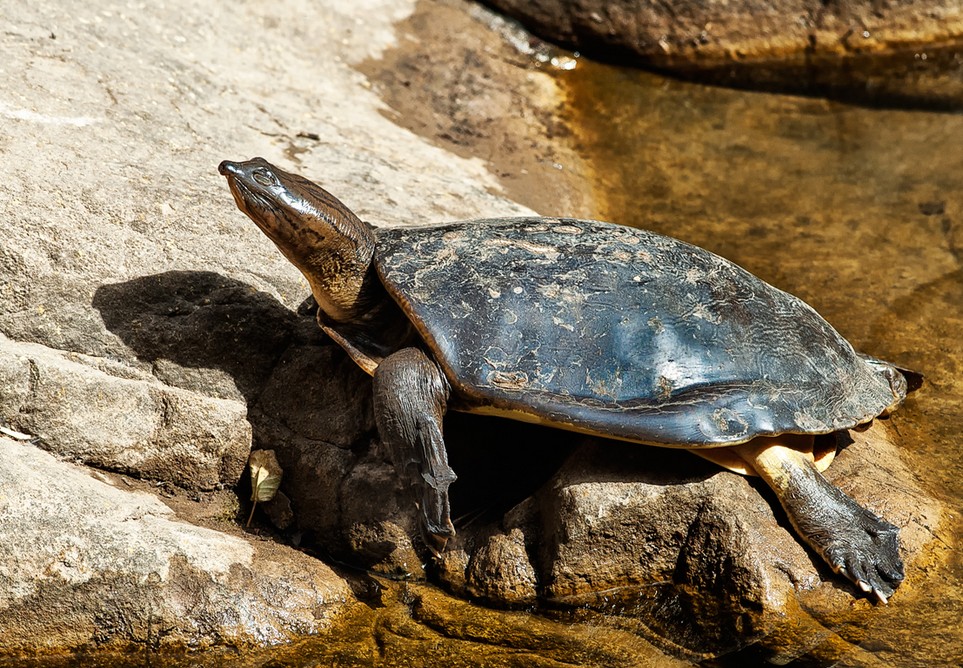
    The Social Forestry Department of Vadodara rescued an Albino Indian flapshell turtle (Lissemys punctata) from a freshwater lake in Chikhodra, Gujarat.

    Specie in news: Indian flapshell turtle (Lissemys punctata)

    About Indian Flapshell Turtle (Lissemys punctata):

    • Type: Small, freshwater softshell turtle native to South Asia
    • Unique Feature: Named for femoral flaps on the plastron that cover the limbs when retracted
    • Geographic Range: Found in India, Pakistan, Nepal, Bangladesh, Sri Lanka, and Myanmar
    • River Systems: Occurs in the Indus, Ganges, Irrawaddy, and Salween basins
    • Habitat: Prefers shallow, quiet freshwater bodies like rivers, ponds, lakes, marshes, tanks, and canals with muddy or sandy bottoms for burrowing
    • Conservation Status:
      • IUCN Red List: Vulnerable
      • CITES Listing: Appendix II
      • Wildlife (Protection) Act, 1972: Schedule I (maximum protection)
    • Major Threats:
      • Poaching for meat, blood-based potions, aphrodisiacs, and traditional medicine
      • Illegal trade for fishing bait, livestock feed, leather, and exotic pets
      • Habitat loss due to pollution, encroachment, and waterbody destruction
      • Albino individuals especially targeted in the illegal pet market
    [UPSC 2013] Consider the following fauna of India:

    1. Gharial 2. Leatherback turtle 3. Swamp deer

    Which of the above is/are endangered?

    Options: (a) 1 and 2 only (b) 3 only (c) 1, 2 and 3* (d) None


  • Yashoda AI Literacy Program

    Why in the News?

    The National Commission for Women (NCW) has launched “Yashoda AI”, an AI literacy program to empower women with skills in cybersecurity, digital privacy, and safe online practices, promoting digital inclusion across India.

    About Yashoda AI:

    • Launch: Introduced in May 2025 as an Artificial Intelligence Literacy Program for women.
    • Organisers: Joint initiative by the NCW and Future Shift Labs.
    • Objective: To train women in cybersecurity, digital privacy, and safe online practices.
    • Focus Areas: Covers AI-driven crimes, digital safety, and practical risk mitigation strategies.
    • Reach: Over 2,500 women trained to date.
    • Beneficiaries: Includes Self-Help Group members, local representatives (Sarpanchs, Pradhans, Mayors, Members of Legislative Assemblies), and frontline workers like Accredited Social Health Activists (ASHA workers).

    Back2Basics: National Commission for Women

    • Status: Statutory body established in 1992 under the NCW Act, 1990.
    • Composition: Consists of a Chairperson, 5 Members, and a Member-Secretary—appointed by the Central Government.
    • Term: All members serve for a term of 3 years.
    • Powers: Holds civil court powers during inquiries:
      • Can summon individuals and enforce attendance
      • Examine witnesses under oath
      • Demand records and receive affidavits
      • Issue commissions for examination of witnesses or documents


    [UPSC 2017] What is the purpose of Vidyanjali Yojana’?

    1. To enable the famous foreign campuses in India.

    2. To increase the quality of education provided in government schools by taking help from the private sector and the community.

    3. To encourage voluntary monetary contributions from private individuals and organizations so as to improve the infrastructure facilities for primary and secondary schools.

    Select the correct answer using the code given below:

    Options: (a) 2 only * (b) 3 only (c) 1 and 2 only (d) 2 and 3 only


  • [7th August 2025] The Hindu Op-ed: Decoding China, the lessons for a vulnerable India

    Recent actions by China, such as the withdrawal of engineers from India, are not isolated events but a deliberate geo-economic manoeuvre. This strategy is driven by China’s apprehension of a rising India and its ambition to maintain a ‘unipolar Asia’. 

    Recent Actions Undertaken by China against India’s interest:

    1. Recalling over 300 Chinese engineers from iPhone manufacturing facilities in India.
    2. Restricting exports of rare earths and critical minerals to India.
    3. Informal trade restrictions on the export of capital equipment including high-end manufacturing equipment for electronics assembly heavy-duty boring machines and solar equipment to India.

    China’s Geo-economic Manoeuvre against India:

    “It is a meticulously calibrated stratagem, designed to arrest India’s burgeoning manufacturing ambitions.”

    • Impending Technology Transfer: The withdrawal of the Chinese engineers reflects China’s calculated move to Disrupt technology transfer and Stall India’s capacity-building in advanced electronics manufacturing. By pulling out talent, it ensures that ‘India’s learning curve in high-precision, high-efficiency manufacturing remains steep.’
    • Subtle yet potent strategy: As India positions itself in global supply chains through initiatives like Production Linked Incentive (PLI) schemes, any delay in technology adoption weakens India’s global competitiveness.
    • Weaponization of Supply Chains: By restricting exports of rare earths, critical minerals, and high-end manufacturing equipment, China leverages its control over global supply chains to disrupt India’s industrial ambitions. These informal trade restrictions are non-transparent and hence are hard to contest, create uncertainty and increase costs.
    • Weaponising Overcapacity: Price War as Strategy: China’s industrial overproduction is used deliberately to crash prices and drive out competition. BYD in electric vehicles is flooding global markets with ultra-cheap products. This makes it hard for nations like India to compete fairly, stalling local industries.

    Difference in Manufacturing Ecosystems of India and China:

    China

    India

    Systemic Industrial Dominance:

    1. Not accidental, but strategic: China’s industrial pre-eminence is not trivial, it has been built through decades of strong policies, investments, and planning.

    2. Covers critical and emerging sectors:

    Like, Artificial Intelligence (AI), Quantum computing, 6G telecommunications, Electric Vehicles (EVs)

    3. Controls global supply chains:

    China does not merely export goods, it orchestrates and controls global supply chains, from raw materials to finished products.

    4. Weaponising overcapacity: Overproduction (a sign of weakness elsewhere) is strategically used by China to lower global prices, making it hard for other countries to compete.

    5. Aggressive pricing = market capture:

    This stifles new competitors and helps China maintain dominance.

    6. Economic statecraft by China: China uses its manufacturing power as a geo-economic tool to stay ahead globally and protect its export-driven economy.

    Challenges Faced:

    1. Nascent Manufacturing Ecosystem:

    Compared to China, India is still in the early stages of becoming a global manufacturing power.

    2. Facing many hurdles: Poor infrastructure infrastructure lacunae)

    3. Complex government procedures (bureaucratic red tape)

    4. High import dependence: India still imports many critical components like Semiconductors, Sophisticated chips, Sensors, Engines

    5. Limited local capability:

    Even basic assembly-level manufacturing (referred to as “screwdriver technology“) depends on external help.

    6. “Make in India” needs outside support:

    While the goal is self-reliance, India is still not fully capable of producing independently, especially in high-tech sectors.

    India’s Strategic Dilemma: Even as India tries to de-risk from China by aligning with the West, it faces challenges like US tariff hikes on Indian goods and Exemptions given to China despite its pro-Russia stance. This underscores the need for true strategic autonomy building resilient internal capacities rather than over-dependence on foreign goodwill.

    Way Forward:

    Based on China’s strategy of weaponizing its supply chains, India should adopt a multi-pronged response to enhance its own strategic and economic resilience.

    1. Bolster Domestic Manufacturing: India must double down on initiatives like the Production Linked Incentive (PLI) scheme to reduce its import dependence on high-value electronics and components.
    2. Diversify Supply Chains and Sourcing: Actively seek alternative suppliers and build resilient supply chains with like-minded countries to reduce over-reliance on a single nation for critical goods. For example, India is a part of the Supply Chain Resilience Initiative (SCRI), a trilateral framework with Japan and Australia.
    3. Invest in Strategic Alliances: India should utilize multilateral platforms such as the Quad and forge bilateral partnerships to secure access to critical minerals and technologies.
    4. Boost Domestic Critical Mineral Exploration: It is essential to intensify domestic exploration and processing of critical minerals through missions like the National Critical Minerals Mission (NCMM) to achieve self-reliance.
    5. Leverage Economic Diplomacy: India should use trade agreements and international forums like the WTO to challenge informal trade restrictions and protect its emerging industries from coercive practices.

    China’s aggressive external policies are a direct result of its domestic problems, such as an aging population and economic overcapacity. This forces it to rely on exports, making any competitor like India a perceived threat. As Henry Kissinger said, “Empires have no interest in operating within an international system; they aspire to be the international system.” This highlights the need for India to build its own strategic autonomy and avoid relying on fragile alliances.


    Value Addition:

    Quotes by Famous Scholars that can be used in the India-China Relation Topic:

    1. India lives in a tough neighbourhood. It needs to be wise, not merely strong.” — Shivshankar Menon

    2. “In geopolitics, economics is not just policy — it’s a weapon.” — Henry Kissinger


    Mains Practice Questions:

    GS2 (IR): “China’s geo-economic manoeuvres are a reflection of its internal compulsions and not just strategic rivalry.” Elucidate with reference to recent developments in India-China trade relations.

    GS3 (Economy): “India’s ambition to become a global manufacturing hub faces challenges both internal and external.” Discuss the role of strategic autonomy in achieving self-reliance in electronics and high-tech sectors.
  • What is the potential of Biochar?

    As India gears up to launch its carbon market in 2026, biochar, a carbon-rich material made from agricultural and organic waste, is gaining attention as a sustainable solution for carbon capture and waste management. Despite its immense potential, biochar remains underutilised due to lack of policy support, market structures and awareness.

    What is the potential of biochar?

    What is Biochar and Why is it Important?

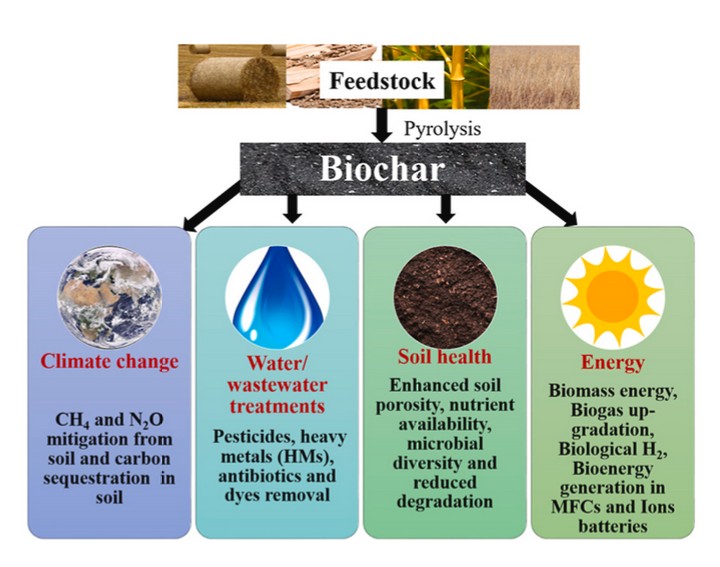
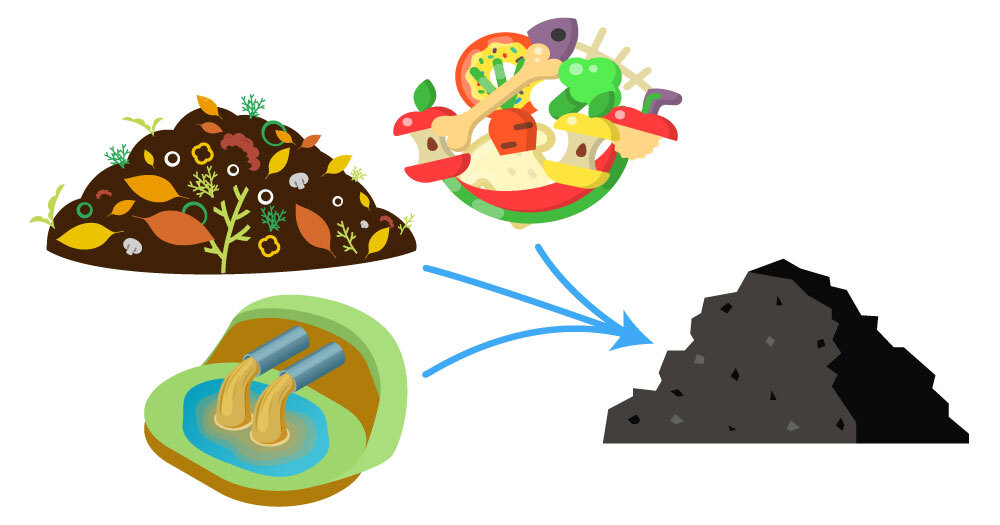
    • Biochar is a type of charcoal/black carbon produced by heating organic waste (like crop residue or solid municipal waste) in a low-oxygen environment.
    • It locks carbon into the soil for hundreds of years, reducing greenhouse gases and improving soil quality.
    • It is an effective long-term carbon sink.

    Biochar Potential in India:

    • India generates over 600 million tonnes of agricultural waste and 60 million tonnes of municipal waste each year, much of which is burned or dumped, contributing to pollution.
    • By converting just 30–50% of this waste into biochar, India could:
      • Produce 15–26 million tonnes of biochar
      • Remove 0.1 gigatonnes of Carbon Dioxide (CO₂) equivalent emissions annually
    • Biochar production also provides with the following:
      • Syngas (20–30 million tonnes) which can generate 8–13 TWh of electricity, replacing about 0.5–0.7 million tonnes of coal
      • Bio-oil (24–40 million tonnes) which can offset 12–19 million tonnes of diesel/kerosene, reducing oil imports and fossil fuel emissions by more than 2%

    Applications of Biochar in Key Sectors:

    1. Agriculture: It improves soil health and water retention, especially in semi-arid and nutrient-poor regions. It can reduce nitrous oxide emissions by 30–50%, which is vital as this gas has 273x more warming potential than CO₂. Its application leads to higher crop yields (10–25%) and reduced fertilizer needs (by 10–20%). Biochar can also enhance soil organic carbon, helping restore degraded soils.
    2. Construction: Adding just 2–5% biochar in concrete improves strength and heat resistance. It helps capture 115 kg of CO₂ per cubic metre of concrete, turning buildings into carbon sinks.
    3. Wastewater Treatment: One kg of biochar can help treat 200–500 litres of wastewater. India’s untreated wastewater (~72%) could use 2.5–6.3 million tonnes of biochar annually.
    4. Carbon Capture: Biochar can be modified to absorb CO₂ from industrial exhausts, though current efficiency is lower than traditional methods.
    5. Circular Economy: Biochar aligns with the circular economy model, waste to wealth.

    Why is Biochar Still Not Widely Adopted?

    1. It remains underrepresented in carbon credit systems due to the absence of standardised feedstock markets and consistent carbon accounting methods, which undermine investor confidence.
    2. Limited policy support, low public awareness, and no coordinated action across sectors.
    3. No strong carbon credit mechanism to reward users and producers.

    Steps that can be undertaken for Large-Scale Adoption of Biochar:

    1. R&D Support: Develop region-specific feedstock guidelines and technologies.
    2. Policy Integration: Link biochar with Crop residue management schemes, Bioenergy programs and State Action Plans on Climate Change
    3. Carbon Market Recognition: Allow biochar to earn carbon credits, giving financial incentives to farmers and investors.
    4. Village-Level Deployment: Establish small-scale biochar units that can create over 5 lakh rural jobs.
    5. Linkage with National Missions: Can be linked with Mission LiFE and the Swachh Bharat Abhiyan.

    Biochar offers a powerful tool for India’s climate smart and sustainable agriculture by enhancing soil health, improving water and nutrient retention, and bolstering climate resilience. Its integration can reduce dependency on synthetic inputs, aligning with organic farming principles. Crucially, biochar provides a significant mechanism for carbon sequestration and mitigating greenhouse gas emissions from agriculture, contributing to India’s climate goals. Leveraging this “black gold” through targeted policy support and research is essential for a greener, more resilient future.

    Practice UPSC Mains Question

    1. Biochar is emerging as a multipurpose tool for sustainable development in India. Discuss its potential across sectors and the challenges in its adoption.
    2. What are the salient features of ‘Waste-to-Energy’ policy of India? Describe the role of waste to energy technologies in achieving energy security in India.
  • Sleeping disasters: Cloudbursts

    Cloud Burst:

    A cloudburst is an extremely intense, localized shower, defined by the India Meteorological Department (IMD) as at least 100 mm of rain within one hour over 10 sq km. These events occur due to deep, rapid atmospheric uplift over steep terrain, typical of high-altitude Himalayan regions. They can trigger sudden flash floods and landslides, devastating communities in mountainous regions. The term does not refer to a literal bursting cloud but to rapid precipitation from cumulonimbus clouds, sometimes accompanied by thunder or hail.

    Why was the recent Uttarkashi Disaster not a Cloudburst?

    1. Despite initial reports, Uttarkashi district did not record any cloudburst-level rainfall. Actual rainfall was only light to moderate, ranging from 8 mm to 43 mm on Aug 5, far below the 100 mm/hour threshold
    2. The region lacked weather radar coverage at that altitude, so precise measurements were unavailable and the “cloudburst” classification was premature.
    3. Uttarkashi’s steep, rugged topography, with narrow valleys and loose debris, turned the soil into unstable slopes.
    4. A debris-laden flood, possibly triggered by a glacial lake burst, glacier collapse, or landslide, raced downstream as mud and silt-laden water to hit Dharali village violently.

    Reasons for occurrence of cloudbursts:

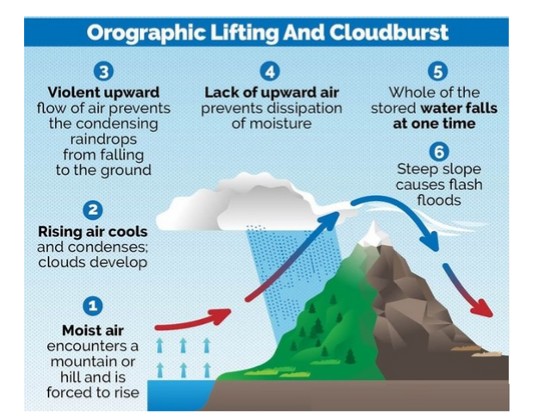
    1. Cloudbursts happen when warm, moist air quickly rises over mountains, cools down, and turns into heavy rain. This process, called orographic lift, causes the air to release a large amount of rain in a short time.
    2. Sudden mixing of warm and cold air
    3. Strong upward air movement (convection) and high moisture in the air at high altitudes

    Why Do Cloudbursts Happen In The Hills?

    1. Topography: Mountains force moist air to rise rapidly, causing sudden cooling and condensation.
    2. Weather Conditions: Warm air with high moisture content meets cooler air at high altitudes. This results in intense convection and localised torrential rain.

    Can cloudbursts be forecast?

    1. The India Meteorological Department (IMD) forecasts rainfall events well in advance, but it does not predict the quantum of rainfall,  in fact, no meteorological agency does.
    2. IMD gives general rainfall forecasts (light, heavy, very heavy), but not exact amounts.
    3. These forecasts are for large areas like districts or states, not specific locations.
    4. Cloudbursts can’t be predicted exactly due to tech limitations and lack of dense instruments.
    5. However, warnings for very heavy rain (which may lead to cloudburst-like events) are given 6–12 hours in advance.

    Impacts of cloud burst:

    1. Flash Floods: The most immediate and destructive impact is the rapid overflowing of rivers and streams, leading to widespread flooding of low-lying areas.
    2. Landslides and Mudslides: The excessive water saturates the soil on slopes, leading to the rapid downward movement of earth, rocks, and debris, causing significant destruction and posing a threat to human lives and infrastructure.
    3. Soil Erosion: The intense rainfall can wash away topsoil, degrading the land and negatively affecting agriculture.
    4. Land Subsidence: The weakening of the ground due to excessive water absorption can cause the sudden sinking or settling of the Earth’s surface
    5. Loss of Life: The suddenness and intensity of cloudbursts often leave little time for evacuation.
    6. Damage to Infrastructure: Roads, bridges, homes, and public utilities can be severely damaged or completely destroyed.

    While the term “cloudburst” often evokes images of catastrophic floods and landslides, it’s crucial to adopt a nuanced approach, avoiding knee-jerk reactions and recognizing that not all instances of heavy rainfall are cloudbursts. While the unpredictable ferocity of cloudbursts remains a formidable challenge, a proactive blend of scientific innovation, infrastructure resilience, and community-centric preparedness offers the compass to navigate their escalating threat, particularly in fragile ecosystems like the Himalayas.

  • In News: Great Barrier Reef

    Why in the News?

    The Great Barrier Reef is facing its sharpest coral decline in 40 years, with the 2024 mass bleaching—driven by climate change, cyclones, and coral predators—severely damaging large reef areas.

    In News: Great Barrier Reef

    About Great Barrier Reef:

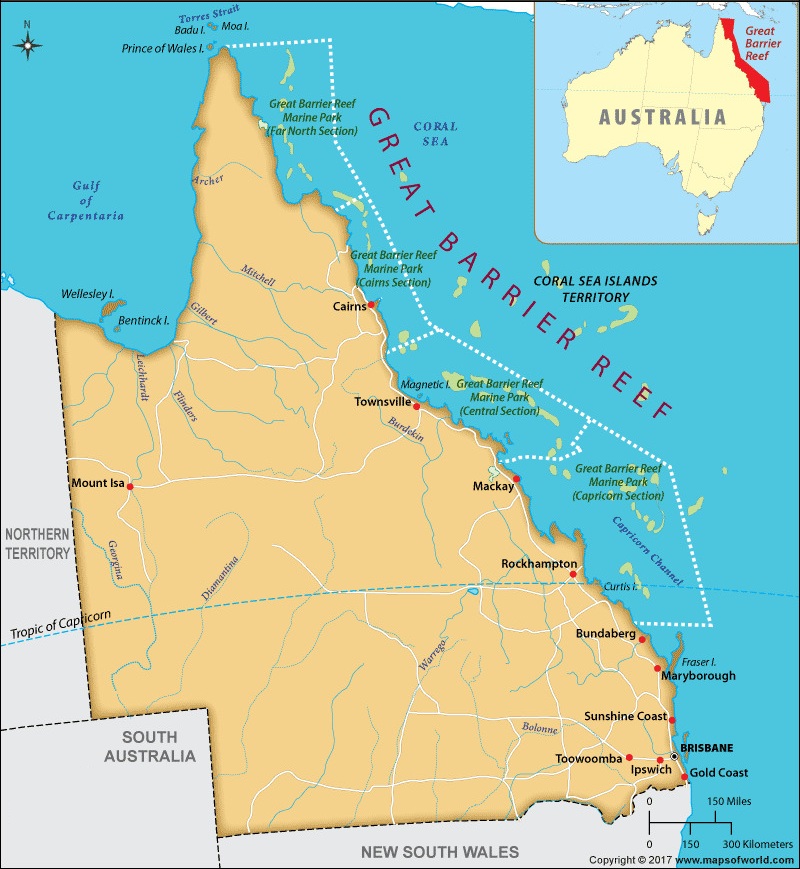
    • Location: Coral Sea, off the northeast coast of Queensland, Australia.
    • Length & Area: Extends ~2,300 km; comprises ~3,000 reefs and 900 islands, covering ~350,000 square kilometers (about 10% of global coral reef ecosystems).
    • Biodiversity:
      • Hosts 400 coral species, 1,500 fish species, and 4,000 mollusk species.
      • Habitat for endangered species like the dugong and green turtle.
    • Reef Types: Includes platform reefs, wall reefs, and fringing reefs.
    • Protection Status:
      • Managed by the Great Barrier Reef Marine Park Authority.
      • Declared a United Nations Educational, Scientific and Cultural Organization (UNESCO) World Heritage Site in 1981.
    • Mass Bleaching Years: Notable events occurred in 1998, 2002, 2016, 2017, 2020, 2022, 2024, and 2025.

    Coral Decline and Bleaching Events:

    • Main Cause: Heat stress due to climate change, particularly during marine heatwaves.
    • 2024 Event: Fifth major bleaching since 2016; had the widest spatial impact recorded in the Australian Institute of Marine Science’s 39-year monitoring program.
    • Additional Damage: Cyclones (e.g., Cyclone Jasper) and flood plumes caused physical damage and freshwater stress.
    • Biological Threats: Crown-of-thorns starfish (COTS) outbreaks intensified coral predation, especially in the Swains sector.
    • 2025 Survey Findings:
      • 48% of 124 surveyed reefs showed coral decline.
      • Only 10% recorded an increase in coral cover.
    • Regional Impact: Southern Great Barrier Reef saw a 30.6% drop in hard coral cover—the sharpest annual decline ever recorded in that zone.
    [UPSC 2014] The scientific view is that the increase in global temperature should not exceed 2 0 C above pre-industrial level. If the global temperature increases beyond 30 C above the pre-industrial level, what can be its possible impact/impacts on the world?

    1. Terrestrial biosphere tends toward a net carbon source. 2. Widespread coral mortality will occur. 3. All the global wetlands will permanently disappear.  4. Cultivation of cereals will not be possible anywhere in the world. Select the correct answer using the code given below:

    Options: (a) 1 only (b) 1 and 2 only* (c) 2, 3 and 4 only (d) 1, 2, 3 and 4 only


  • Bacterial cause behind Mass Starfish Deaths

    Why in the News?

    Since 2013, over 5 billion starfish have died along North America’s Pacific coast due to a wasting disease now linked to Vibrio pectenicida, a cholera-related bacterium.

    Bacterial cause behind Mass Starfish Deaths

    About Starfish (Sea Stars):

    • Taxonomy: Belong to phylum Echinodermata; exclusively marine organisms.
    • Species: Brisingida, Forcipulatida, Velatida, Valvatida, Spinuloside
    • Body Structure:
      • Radial symmetry (adults), bilateral symmetry (larvae)
      • Calcareous exoskeleton for protection
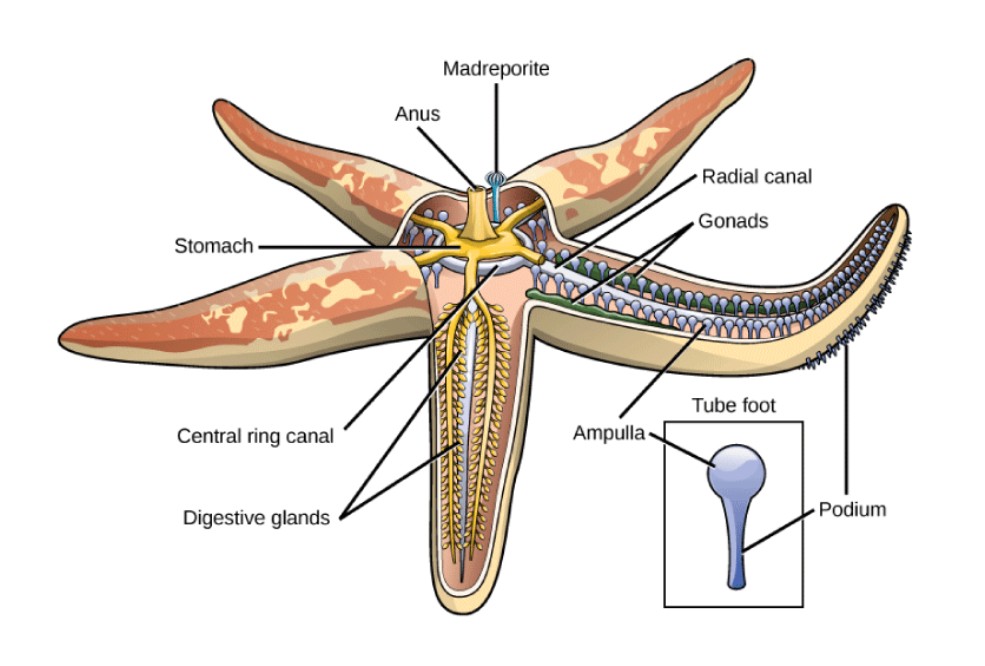
      • Water vascular system for respiration and circulation
    • Unique Features:
      • Regeneration: Can regrow lost limbs
      • No blood or brain: Seawater circulates nutrients
      • Eyespots: At arm tips, help sense light
      • Tough skin: Made of calcium carbonate
    • Feeding: Carnivorous, detritivorous, and scavengers

    Reasons for Mass Deaths (2013–2025):

    • Causal Agent: Identified in 2025 as Vibrio pectenicida, a bacterium related to cholera-causing strains.
    • Symptoms: Limb detachment; Tissue disintegration; Melting into a pile of gunk.
    • Most Affected Species: Sunflower sea stars, which saw a 90% population decline.
    • Geographical Spread: Along the Pacific coast from Alaska to Mexico.
    • Ecological Consequences:
      • Starfish are keystone predators, especially of sea urchins.
      • Their decline led to urchin population explosions, which overgrazed kelp forests.
      • Resulted in biodiversity loss and reduced carbon sequestration.
    [UPSC 2012] Vultures which used to be very common in Indian countryside some years ago are rarely seen nowadays. This is attributed to:

    (a) the destruction of their nesting sites by new invasive species disease among them (b) a drug used by cattle owners for treating their diseased cattle persistent and fatal (c) scarcity of food available to them (d) a widespread, persistent and fatal disease among them


  • In news: Lalit Kala Akademi 

    Why in the News?

    The 64th National Exhibition of Art (NEA), organized by the Lalit Kala Akademi, India’s National Academy of Art, was inaugurated in New Delhi.

    About Lalit Kala Akademi:

    • Establishment: Located in New Delhi, as an autonomous organisation.
    • Inauguration: Launched on 5 August 1954 by Maulana Abul Kalam Azad, the then Minister for Education.
    • Legal Status: Granted statutory status in 1957 under the Societies Registration Act, 1860.
    • Funding: Supported by the Ministry of Culture, Government of India.
    • Structure: Operates through the General Council, Executive Board, and various Committees.
    • Regional Centres: Present in Chennai, Kolkata, Lucknow, Bhubaneswar, and Garhi (New Delhi).
    • Functions:
      • Scope of Work: Promotes modern, contemporary, folk, and tribal visual arts of India.
      • Art Collection: Maintains a permanent collection of Indian visual art.
      • International Role: Facilitates global cultural exchange through international cultural agreements.

    Key Events and Initiatives:

    • National Exhibition of Art: Annual flagship event since 1955, showcasing artists from across India.
    • 64th Edition (2025): Held from 5 August to 15 September at Kamani Auditorium and Lalit Kala Art Galleries, New Delhi.
    • Triennale India: Major international art exhibition featuring global artists.
    • Print Biennale India: Dedicated to printmaking; 3rd edition scheduled for 2025–26.
    • Artist Promotion: Provides platforms for both emerging and established artists; strengthens India’s soft power through cultural diplomacy.
    [UPSC 2009] Consider the following statements:

    1. The National School of Drama was set up by Sangeet Natak Akademi in 1959.

    2. The highest honour conferred by the Sahitya Akademi on a writer is by electing him its Fellow.

    Which of the statements given above is/are correct?

    (a) 1 only (b) 2 only  (c) Both 1 and 2*  (d) Neither 1 nor 2


  • Intermediate-Range Nuclear Forces (INF) Treaty

    Why in the News?

    Russia officially announced its exit from the 1987 Intermediate-Range Nuclear Forces (INF) Treaty, marking a pivotal moment in the dismantling of Cold War-era nuclear arms control architecture.

    What is the INF Treaty?

    • Signed In: 1987 by United States President Ronald Reagan and Soviet leader Mikhail Gorbachev.
    • Purpose: Banned ground-launched ballistic and cruise missiles with ranges between 500 and 5,500 kilometers.
    • Impact: Led to the elimination of 2,692 missiles by June 1, 1991.
    • Verification: Allowed on-site inspections, setting a benchmark for arms control agreements.
    • Scope: Covered both nuclear and conventional missile systems.
    • Significance: Became a key pillar of post-Cold War strategic stability.

    Why did Russia exit the Treaty?

    Implications:

    • Collapse of Arms Control: Removes a pillar of nuclear restraint.
    • Resurgence of Arms Race: Possible missile deployments in Europe & Asia-Pacific.
    • Regional Threats: NATO countries & East Asia more vulnerable.
    • Proliferation Risk: May embolden China, India, and others.
    [UPSC 2011] The “New START” treaty was in the news. What is this treaty?

    (a) It is a bilateral strategic nuclear arms reduction treaty between the USA and the Russian Federation.*

    (b) It is a multilateral energy security cooperation treaty among the members of the East Asia Summit.

    (c) It is a treaty between the Russian Federation and the European Union for energy security cooperation.

    (d) It is a multilateral cooperation treaty among the BRICS countries for the promotion of trade.