💥Join UPSC 2027,2028 Mentorship (August Batch) + XFactor Notes & Microthemes PDF

Distribution: weekly

  • Pollution Control can levy Environmental Damages: SC

    Why in the News?

    In a landmark ruling, the Supreme Court has empowered Pollution Control Boards (PCBs) across India with the authority to impose and collect restitutionary and compensatory damages under the Water and Air Acts.

    Key Highlights of Supreme Court Ruling:

    • Key Powers Granted:
      • Impose and collect restitutionary and compensatory damages.
      • Demand bank guarantees in anticipation of environmental harm.
    • Legal Basis:
      • Section 33A, Water Act, 1974: Power to issue directions for closure/regulation of industries and stoppage of utilities to enforce water pollution norms.
      • Section 31A, Air Act, 1981: Similar binding powers to control air pollution; non-compliance is a legal violation.

    About Central Pollution Control Board (CPCB):

    • Established: September 1974 under the Water (Prevention and Control of Pollution) Act, 1974; Also empowered under Air (Prevention and Control of Pollution) Act, 1981.
    • Role: Statutory technical body to promote clean air and water; provides services under the Environment (Protection) Act, 1986.
    • Key Functions:
      • Control and abate water and air pollution; promote stream and well cleanliness.
      • Advise the Central Government on pollution-related issues.
      • Coordinate with and assist State Pollution Control Boards (SPCBs); resolve disputes.
      • Monitor pollution in Union Territories via delegated powers under Water, Air, and Water Cess Acts.
    • Develops and revises:
      • National Ambient Air Quality Standards.
      • Water Quality Criteria from various sources.
      • Emission/Discharge Standards under Environment Protection Rules, 1986.
      • Bio-Medical Waste Incineration Norms.
      • Noise/Emission Limits for diesel, LPG, and CNG generators.
    • Minimal National Standards (MINAS) Issuance:
      • Covers effluent, emission, noise, and solid waste across industries.
      • Mandatory for State adoption as baseline standards.
      • Publishes COINDS (Comprehensive Industry Documents), manuals, and codes for pollution treatment and control systems.

    About State Pollution Control Boards (SPCBs):

    • Constitution: Formed by State Governments under the Water and Air Acts.
    • Functions:
      • Monitor and control local pollution.
      • Inspect industries and enforce compliance.
      • Advise state governments.
      • Conduct awareness campaigns.
      • Implement control programmes and collaborate with CPCB and local bodies.
    [UPSC 2018] How is the National Green Tribunal (NGT) different from the Central Pollution Control Board (CPCB)?

    1. The NGT has been established by an Act whereas the CPCB has been created by an executive order of the Government.

    2. The NGT provides environmental justice and helps reduce the burden of litigation in the higher courts whereas the CPCB promotes cleanliness of streams and wells and aims to improve the quality of air in the country.

    Which of the statements given above is/are correct?

    Options: (a) 1 only (b) 2 only * (c) Both 1 and 2 (d) Neither 1 nor 2


  • Asian Giant Tortoise reintroduced in Nagaland

    Why in the News?

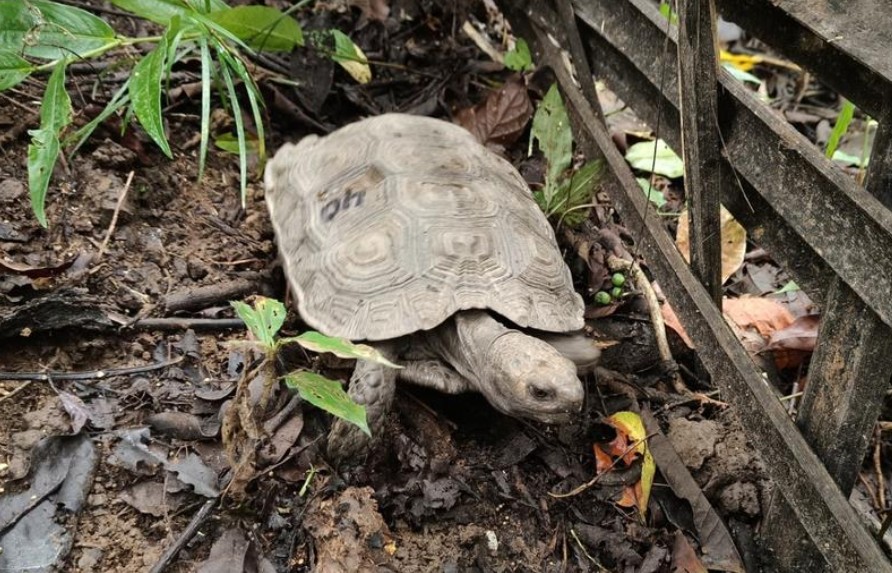
    The Asian giant tortoise (Manouria emys), the largest tortoise in mainland Asia, has been reintroduced into the Zeliang Community Reserve in Nagaland’s Peren district.

    Asian Giant Tortoise reintroduced in Nagaland

    About Asian Giant Tortoise (Manouria emys):

    • It is the largest tortoise in mainland Asia.
    • Two subspecies: Manouria emys emys and Manouria emys phayrei.
    • Uniquely, it lays eggs above ground in leaf-litter nests.
    • Behaviour: It is solitary and active mostly during dawn and dusk.
    • Found in evergreen and bamboo forests across India, Bangladesh, Myanmar, Thailand, Malaysia, and Indonesia.
    • Habitat in India: Nengpui WLS, Nongkhyllem WLS, and North Cachar Hills.
    • Conservation status: IUCN – Critically Endangered; CITES – Appendix II; Wildlife Protection Act – Schedule IV.
    • Major threats: Illegal hunting for meat, habitat degradation, forest fires, and bamboo removal.
    [UPSC 2017] In India, if a species of tortoise is declared protected under Schedule I of the Wildlife (Protection) Act, 1972, what does it imply?

    Options: (a) It enjoys the same level of protection as the tiger*

    (b) It no longer exists in the wild, a few individuals are under captive protection; and how it is impossible to prevent its extinction

    (c) It is endemic to a particular region of India

    (d) Both (b) and (c) stated above are correct in this context.


  • Blockchain-verified Quantum Randomness for Secure Communication

    Why in the News?

    A recent breakthrough demonstrated use of quantum science, blockchain, and cryptography to create truly random and secure numbers used in encryption for secure communication.

    About the Technology:

    • Encryption: Converts readable data into unreadable code using a “key”; only someone with the correct key can decrypt the message.
    • Importance of Randomness: Secure encryption depends on unpredictable keys—predictable keys can be guessed or hacked.
    • Issue with Computers: Most keys are generated using pseudo-random algorithms, which appear random but are predictable if the method is known.

    About the Breakthrough Lava Lamp Method:

    • Setup: 100 lava lamps placed on a wall at Cloudflare’s San Francisco office; a camera takes periodic photos of the moving blobs.
    • Process: Each photo is converted into numerical data, creating a random seed to generate encryption keys.
    • Why Lava Lamps? The heat-driven movement of wax blobs is unpredictable and creates unique images.
    • Limitations: Movements follow physics, so not truly random. Also, the algorithm that converts images is deterministic—reproducible if known.

    Quantum Random Number Generation Protocol:

    • Why Quantum Physics: Subatomic particles like photons behave randomly; for example, a photon’s polarization is unknown until measured.
    • How It Works: Scientists used lasers to generate entangled photons and measured them millions of times to produce random results.
    • Data Conversion: The raw data (in binary) was biased, so a randomness extractor was used to generate a clean 512-bit unbiased number using a second random seed.
    • Blockchain Role: Each step was recorded on blockchain for transparency, with digital fingerprints (hashes) to ensure data integrity.
    • Team Involvement: National Institute of Standards and Technology (NIST), University of Colorado, and DRAND each handled separate parts to ensure decentralization and trust.
    • Public Use: The final random numbers are shared via CURBy, a public distribution service.
    • Significance: Though still emerging, this method shows strong potential for future ultra-secure encryption systems.
    [UPSC 2025] Consider the following statements:

    I. It is expected that Majorana 1 chip will enable quantum computing. II. Majorana 1 chip has been introduced by Amazon Web Services (AWS). III. Deep learning is a subset of machine learning.

    Which of the statements given above are correct?

    Options: (a) I and only I (b) II and III only (c) I and III only* (d) I, II and III


  • [4th August 2025] The Hindu Op-ed: The ‘right to repair’ must include ‘right to remember’

    PYQ Relevance:

    [UPSC 2015] India’s Traditional Knowledge Digital Library (TKDL) which has a database containing formatted information on more than 2 million medicinal formulations is proving a powerful weapon in the country’s fight against erroneous patents. Discuss the pros and cons making this database publicly available under open-source licensing.

    Linkage: This question directly discusses the “Traditional Knowledge Digital Library (TKDL)” and its role in protecting “traditional knowledge” from erroneous patents. This is highly relevant as the source champions the idea of treating repair as a “cultural and intellectual resource” and recognizing “tacit knowledge”.


    Mentor’s Comment:  In May 2025, the Indian government accepted a report proposing a Repairability Index for mobile phones and appliances, marking a significant policy shift toward sustainable electronics and the Right to Repair. This move comes amid growing global and domestic recognition of repair as a cultural, environmental, and intellectual resource. It ties into India’s digital and AI policy evolution, yet highlights a blind spot — the continued exclusion of informal repair ecosystems from mainstream policy frameworks, even as they remain central to material resilience and circular economy goals.

    Today’s editorial analyses the Repairability Index for mobile phones and appliances. This topic is important for GS Paper II (Governance) and GS Paper III (Science and Technology) in the UPSC mains exam.

    _

    Let’s learn!

    Why in the News?

    Recently, the Indian government made an important move to support eco-friendly electronics by approving a report that suggests a Repairability Index.

    What is India’s Repairability Index?

    • India’s Repairability Index was introduced by the Department of Consumer Affairs under the Ministry of Consumer Affairs, Food and Public Distribution.
    • It is part of the broader Right to Repair framework announced in 2022, aimed at empowering consumers, reducing electronic waste, and promoting sustainable consumption practices in line with India’s LiFE (Lifestyle for Environment)movement.
    • This index will rank products based on:
      • Ease of repair
      • Availability of spare parts
      • Duration of software support

    What is the significance of it?

    • Sustainable consumption – Promotes products that last longer and are repairable. Eg: Smartphones with modular parts like Fairphone (Dutch electronics company known for producing sustainable and repairable smartphones).
    • Informed consumer choices – Enables buyers to compare repairability before purchase. Eg: Choosing a laptop with a higher repair score.
    • Reduction in e-waste – Minimizes discarding of electronics due to minor faults. Eg: Repairing washing machines instead of replacing them.
    • Accountability of manufacturers – Pushes brands to provide spare parts and repair guides. Eg: Brands like Apple offering self-service repair kits.
    • Support for circular economy – Aligns with India’s LiFE initiative and green goals. Eg: Encouraging reuse and repair to lower carbon footprint.

    Why is informal repair knowledge important?

    India’s Repairability Index promotes affordable, sustainable repairs by valuing informal repair knowledge

    • Affordable & Accessible Repairs: Informal repair shops offer low-cost services, especially in rural and low-income areas. Eg: Mobile repair kiosks in small towns reduce reliance on costly authorized centers.
    • Skill Preservation & Livelihoods: Supports local employment and traditional skills, often passed down informally. Eg: TV/radio technicians in informal markets maintain electronics affordably.
    • E-waste Reduction & Sustainability: Extends product lifespan, minimizing electronic waste and promoting circular economy. Eg: Refurbishing laptops in Delhi’s Nehru Place instead of discarding them.

    What are the challenges related to the informal repair sector?

    • No Legal Recognition: Informal repairers lack licensing, social security, and financial support. E.g.: Mobile repairers in small towns operate without official status or access to schemes.
    • Bias Toward Authorized Centres: Policies favour OEM (Original Equipment Manufacturer) -authorized repairs, sidelining local technicians. Eg: Warranties void if not repaired at authorized service centers.
    • Exclusion from Policy Frameworks: Right to Repair and e-waste policies neglect grassroots repair ecosystems. Eg: Informal markets like Nehru Place not integrated into national repair planning.

    Which steps can link repair to AI and sustainability goals?  

    • AI-Powered Predictive Maintenance: AI algorithms detect faults early and recommend timely repairs, reducing waste. Eg: Smart appliances (e.g., washing machines) alert users before breakdowns, helping extend product life.
    • AI-Driven Repair Diagnostics: AI tools assist technicians by analyzing errors and suggesting solutions, even in informal sectors. Eg: Mobile apps using AI (like Bhashini-based tools) guide rural repairers to fix smartphones or electronics.
    • Support for Circular Economy: Integrate AI with repairability data (e.g., India’s Repairability Index) to promote reuse and reduce e-waste.

    Way forward: 

    • Recognize Informal Repair Sector: Include informal technicians in policy frameworks and skilling programs under schemes like Skill India.
    • Strengthen India’s Repairability Index: Ensure it includes access to spare parts, repair manuals, and supports local repair ecosystems.
    • Promote Open Access to Repair Tools: Mandate OEMs to share diagnostic tools and data with certified independent and informal repairers.
    • Leverage AI for Inclusive Repair Solutions: Use AI-powered platforms to assist grassroots repairers and map repair needs, boosting sustainability goals.
  • Does Rain make Ocean Water more Buoyant?

    Why in the News?

    New research shows that rain can reduce ocean buoyancy and stabilize tropical waters, challenging the belief that rain always enhances mixing.

    Does Rain make Ocean Water more Buoyant?

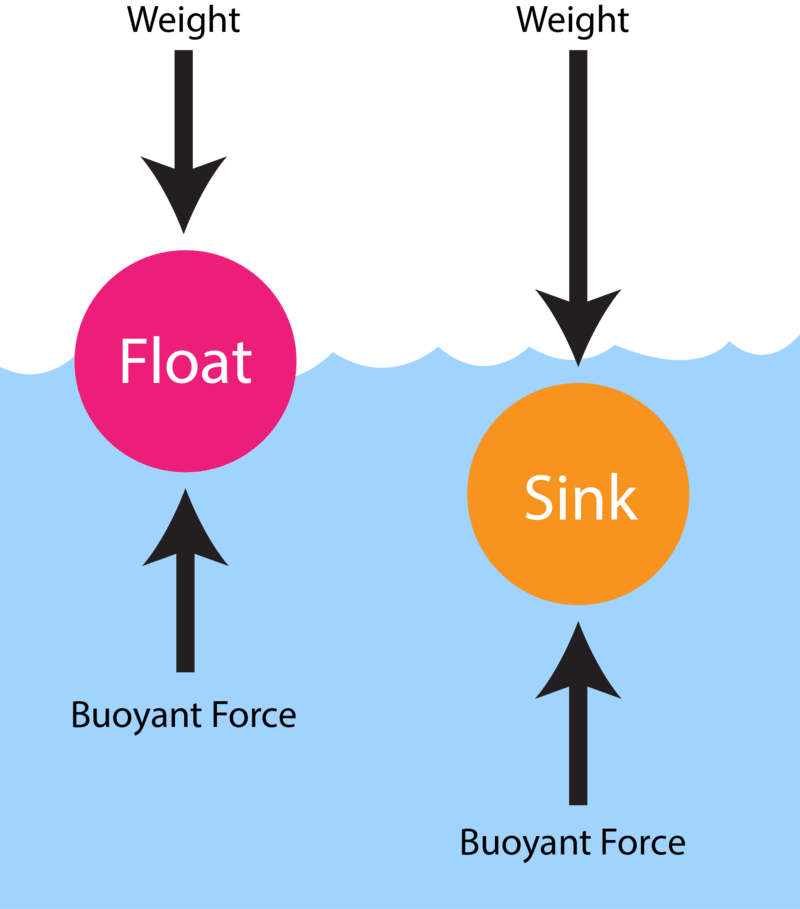
    About Buoyancy:

    • What is it: It is the upward force exerted by a fluid (e.g., water) on an object submerged in it.
      • It determines whether an object floats, sinks, or stays suspended.
    • Buoyancy in Oceans: It depends on density differences in water.
      • Lighter water above → unstable → mixing happens.
      • Heavier water above → stable → mixing stops.
    • Buoyancy Flux: Measures changes in buoyancy at the ocean surface over time.
      • Freshwater from rain → makes surface lighter → positive flux → promotes mixing.
      • Heat loss → cools surface → makes water denser → negative flux → resists mixing.

    Key Findings of the Study:

    • Light Rain (0.2–4 mm/hr): Often leads to positive buoyancy flux → supports ocean mixing.
    • Heavy Rain:
      • Usually results in negative buoyancy flux → surface becomes stable.
      • Caused by cold pools that enhance heat loss.
    • Day vs. Night Effect:
      • Night: Rain destabilizes surface → mixing increases.
      • Day: Rain promotes stability → due to added heat loss from sunlight blockage.
    • Geographical Insights:
      • Cold Rain Zones (Western Pacific, Indian Ocean): More stabilization.
      • Hot Rain Zones (Central Pacific): More prone to mixing.

    Significance of the Study

    • Scientific Implications:
      • Refutes the general belief that rain always increases buoyancy.
      • Shows rain can both stabilize or destabilize the ocean surface depending on conditions.
    • Climate Relevance:
      • Ocean mixing is key to heat, carbon, and nutrient cycling.
      • Misreading rainfall’s role can skew climate and weather models.
    • Practical Impact:
      • Improves forecasting accuracy in oceanography and climate science.
      • Aids in understanding the climate-ocean feedback loop more precisely.
    [UPSC 2020] With reference to Ocean Mean Temperature (OMT), which of the following statements is/are correct?

    1. OMT is measured up to a depth of 26°C isotherm which is 129 meters in the southwestern Indian Ocean during January — March.

    2. OMT collected during January — March can be used in assessing whether the amount of rainfall in monsoon will be less or more than a certain long-term mean.

    Select the correct answer using the code given below:

    Options: (a) 1 only (b) 2 only* (c) Both 1 and 2 (d) Neither 1 nor 2


  • Bird Deaths in Thar Desert

    Why in the News?

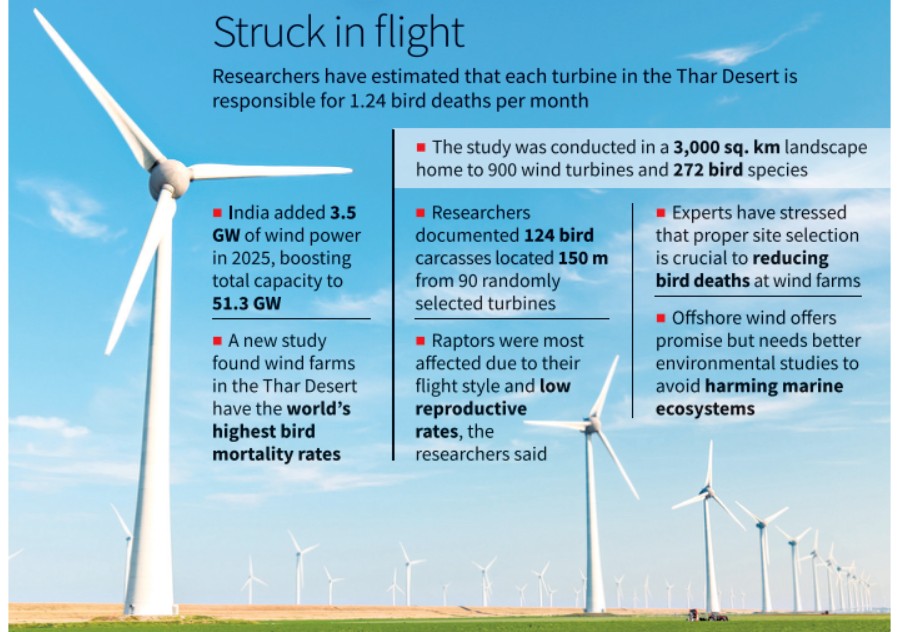
    A new study by the Wildlife Institute of India (WII) reveals that wind farms in the Thar Desert, Rajasthan, have the highest recorded bird mortality rates globally.

    Bird Deaths in Thar Desert

    Bird Mortality at Wind Farms: Key Findings

    • Study Details: Conducted across 3,000 sq. km in Jaisalmer, Rajasthan, covering 90 wind turbines and 272 bird species, including the critically endangered Great Indian Bustard.
    • Carcass Count: 124 bird carcasses found within 150m radius of turbines.
    • Annual Mortality Estimate: 4,464 birds per 1,000 sq. km, after corrections for detection gaps and scavenger interference.
    • Control Sites: 28 sites (500–2,000m from turbines) found zero carcasses — indicating turbines as the direct cause.
    • Reasons:
      • Policy Gap: Onshore wind projects in India do not require Environmental Impact Assessments (EIAs), which weakens ecological safeguards.

    India’s Wind Energy Growth:

    • Current Status: India added 3.5 GW of wind power in the first half of 2025 — an 82% YoY increase.
    • Total Installed Capacity: Now stands at 51.3 GW.
    • Untapped Potential: Estimated at 1163.9 GW at 150 meters above ground level (National Institute of Wind Energy).

    Comparison with Past Studies:

    • 2019 Studies: Recorded just 0.47 bird deaths per turbine/year in Kutch and Davangere.
    • Thar Desert Rate: 1.24 bird deaths per turbine/month — significantly higher.
    • Contributing Factors:
      • High bird density in Thar.
      • Location along Central Asian Flyway.
      • Collisions with turbine-linked power lines included in this study.

    Proposed Mitigation Measures:

    • Technological:
      • Paint one turbine blade for visibility.
      • Shut down turbines during peak migration or high-risk periods.
    • Planning-Based:
      • Careful Site Selection seen as most critical step.
      • Use of tools like AVISTEP (Avian Sensitivity Tool for Energy Planning), which maps avian sensitivity across India.
      • AVISTEP ranks zones as low to very high sensitivity — intended as a guide for site avoidance.
    [UPSC 2012] Vultures which used to be very common in Indian countryside some years ago are rarely seen nowadays. This is attributed to:

    Options: (a) the destruction of their nesting sites by new invasive species disease among them

    (b) a drug used by cattle owners for treating their diseased cattle persistent and fatal *

    (c) scarcity of food available to them

    (d) a widespread, persistent and fatal disease among them


  • Species in news: Alpine Musk Deer

    Why in the News?

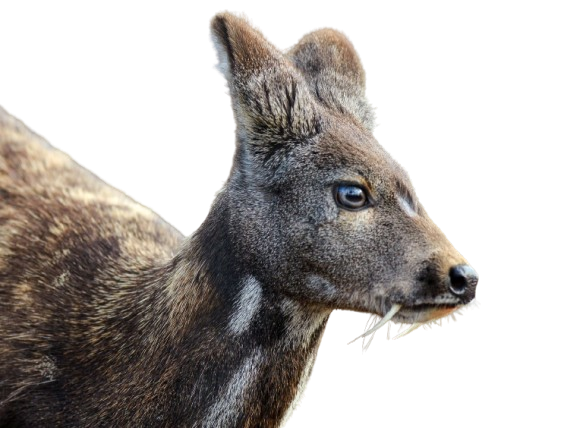
    A Central Zoo Authority (CZA) report reveals a major conservation error — the critically endangered Alpine musk deer was wrongly replaced by the Himalayan musk deer in India’s breeding programmes.

    Species in news: Alpine Musk Deer

    Back2Basics: Central Zoo Authority (CZA):

    • Establishment: Formed in 1992 under Wildlife (Protection) Act, 1972.
    • Mandate: Captive breeding, zoo oversight, and assigning species to zoos.
    • Expanded Scope (2022): Includes rescue centres, off-display facilities, and conservation breeding centres.

    About Alpine Musk Deer (Moschus chrysogaster):

    • Not a true Deer: closer to goats and antelopes (Bovidae).
    • Musk Sac: Males have a visible musk sac between the testes.
    • Canines: Grows fang-like canines during the mating season.
    • Habitat: Found at 3,000–5,000 m in forests of the Himalayas.
    • Range: India (J&K, HP, Uttarakhand, Sikkim, Arunachal), Nepal, Bhutan, China.
    • Diet: Eats grasses, leaves, lichens, mosses, and twigs.
    • Behaviour: Solitary and crepuscular (active at dawn/dusk).
    • Legal Protection:  IUCN Status Critically Endangered (2014), CITES Appendix I; Indian Wildlife Act- Schedule I.
    • Threats: Poaching for musk and habitat loss.
    • Key Habitats: Askot, Gangotri & Kedarnath Wildlife Sanctuaries (Uttarakhand).
    [UPSC 2020] Which of the following are the most likely places to find the musk deer in its natural habitat?

    1. Askot Wildlife Sanctuary 2. Gangotri National Park

    3. Kishanpur Wildlife Sanctuary 4. Manas National Park

    Options: (a) 1 and 2 only * (b) 2 and 3 only (c) 3 and 4 only (d) 1 and 4 only


  • Who are Denotified, Semi-Nomadic and Nomadic Tribes (DNTs)?

    Why in the News?

    At an event in New Delhi, Denotified, Semi-Nomadic and Nomadic Tribes (DNTs) strongly demanded a permanent National Commission to address their long-standing marginalisation.

    Who are Denotified, Nomadic, and Semi-Nomadic Tribes (DNTs)?

    • Denotified Tribes (DNTs):
      • Colonial Tag: Branded “criminal by birth” under the Criminal Tribes Act, 1871.
      • Legal Reversal: Act repealed in 1949; tribes de-notified in 1952.
      • Persistent Stigma: Continue to face police profiling and social exclusion.
    • Nomadic Tribes (NTs):
      • Lifestyle: No fixed habitation; move cyclically for livelihood.
      • Occupations: Animal herding, salt trading, performing arts, traditional healing.
    • Semi-Nomadic Tribes (SNTs):
      • Hybrid Living: Alternate between mobile and semi-settled life.
      • Movement: Shift seasonally but often retain a base settlement.

    Current Status in India:

    • Population Share: Around 10% of India’s population.
    • Communities: ~150+ Denotified, 500+ Nomadic tribes.
    • Major States: Maharashtra, Rajasthan, Gujarat, Karnataka, Andhra Pradesh, Uttar Pradesh, Uttarakhand, Bihar, Madhya Pradesh.
    • Examples of Communities (not exhaustive):
      • Denotified: Bedia, Pardhi, Sansi, Kanjar, Lodha, Nat, Chhara, Bhantu
      • Nomadic: Banjara, Gadia Lohar, Rabari, Madari, Kalbelia, Nat
      • Semi-Nomadic: Abor, Adi, Aka, Apatani, Dafla, Galo, Nishi, Tagin

    Major Committees & Commissions:

    Year Contribution
    Criminal Tribes Inquiry Committee 1947 Criticized criminal branding
    Ayyangar Committee 1949 Led to repeal of Criminal Tribes Act
    Kaka Kalelkar Commission 1953 Recognized DNTs, no full classification
    B.P. Mandal Commission 1980 Suggested NTs for OBC list
    Constitution Review Commission 2002 Urged protective measures for DNTs
    Renke Commission 2008 Listed 500+ communities, lacked implementation resources
    Idate Commission 2017–2018 Listed 1,200+, proposed permanent commission


    [UPSC 2019] Consider the following statements about Particularly Vulnerable Tribal Groups (PVTGs) in India:

    1. PVTGs reside in 18 States and one Union Territory. 2. A stagnant or declining population is one of the criteria for determining PVTG status.

    3. There are 95 PVTGs officially notified in the country so far. 4. Irular and Konda Reddi tribes are included in the list of PVTGs.

    Which of the statements given above are correct?

    Options: (a) 1, 2 and 3 (b) 2, 3 and 4 (c) 1, 2 and 4* (d) 1, 3 and 4


  • Human Outer Planet Exploration (HOPE)

    Why in the News?

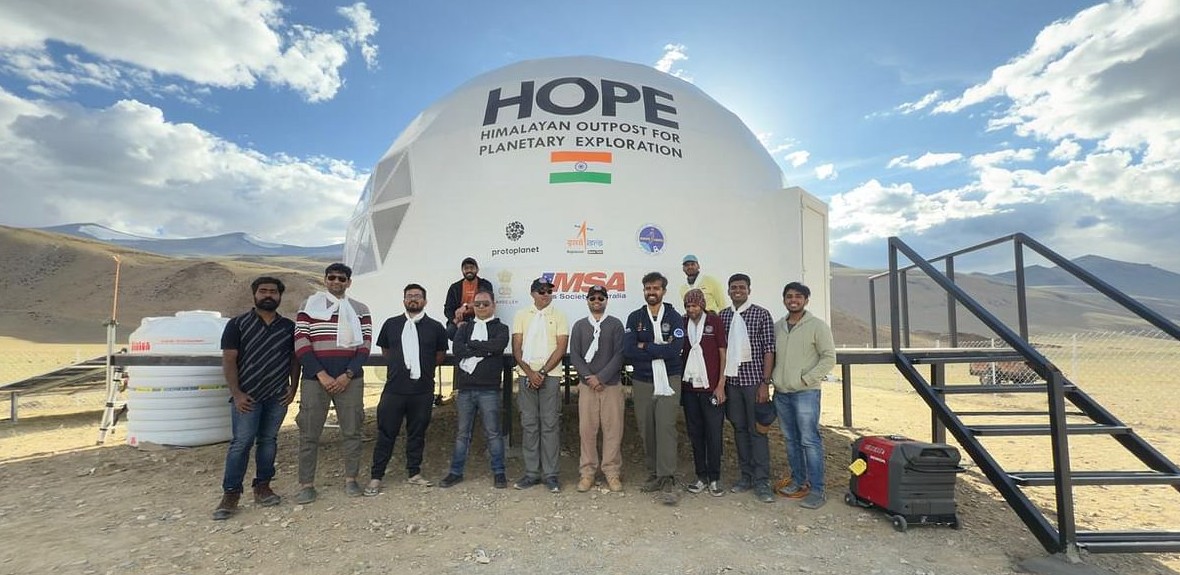
    India has taken a significant step towards interplanetary human missions with the launch of the Human Outer Planet Exploration (HOPE) analogue station at Tso Kar, Ladakh.

    hope

    About HOPE (Human Outer Planet Exploration):

    • Purpose: Simulates Moon and Mars conditions to prepare for future human missions.
    • Developer: Built by Protoplanet (Bengaluru); partially funded by ISRO.
    • Location: Tso Kar, Ladakh (14,500 ft) — chosen for its lunar/Martian-like terrain.
    • Features: Enables isolation research, tech trials, and crew training; 1 of 33 such stations globally.
    • First Mission (2025): Two scientists (Rahul Mogalapalli, Yaman Akot) conducted a 10-day simulation focusing on resilience and mental health.
    • Significance:
      • Boosts India’s human spaceflight readiness.
      • Supports goals like Bharatiya Antariksh Station (2035) and Moon mission (2040).

    India’s Astronomical Assets in Ladakh:

    • Location: Indian Astronomical Observatory (IAO), at Mt. Saraswati (4,500 m), Hanle; run by Indian Institute of Astrophysics.
    • Key Instruments:
      • Himalayan Chandra Telescope (optical/infrared)
      • HAGAR (gamma rays, with Tata Institute of Fundamental Research)
      • MACE (Cherenkov telescope, with Bhabha Atomic Research Centre)
    • Stargazing hubs: Hanle, Nubra Valley, Pangong, Tso Moriri.
    • Advantages & Recognition:
      • 270+ clear nights; low humidity; dark skies.
      • Declared India’s 1st Dark-Sky Reserve (2022) to curb light pollution.
    [UPSC 2012] The world’s highest ground based telescopic observatory is located in

    Options: (a) Colombia (b) India* (c) Nepal (d) Switzerland


  • Biologics & Biosimilars: The next frontier in Affordable Medicines

    Why in the News?

    While most medicines are small molecule drugs with simple structures, a newer class—biologics and biosimilars—is reshaping modern medicine with their complex, targeted action.

    What are Small Molecule Drugs?

    • Definition: Chemically synthesised, low molecular weight compounds.
    • Features: Fixed structure, chemically stable, easy to replicate, patent-protected.
    • Cost Dynamics: Expensive while under patent; affordable generics post-expiry (e.g., Sovaldi dropped from $84,000 to $1,000).

    About Biologics & Biosimilars:

    • Biologics-
      • Overview: Large, complex drugs made from living cells or organisms.
      • Examples: Insulin (~5,800 daltons), Remicade (~150,000 daltons).
      • Nature: Slight structural variations possible; used for cancer, autoimmune diseases, hormone therapy.
    • Biosimilars-
      • Overview: Near-identical versions of biologics, made after patent expiry.
      • Not Generics: Due to complex cell-based production, they’re similar but not identical.
      • Use: Offer lower-cost alternatives to high-end biologics.

    Regulation and Reform:

    • Current Barriers: Biosimilars need costly trials (animal + clinical), unlike generics.
    • Global Moves: UK and USA are easing animal trial norms (organ-on-chip, human models).
    • India: Still follows older norms; waivers under review, but clinical trials still mandatory.

    Significance for India:

    • Access: Generic small molecules transformed Indian healthcare.
    • Opportunity: Affordable biosimilars can do the same for chronic and rare diseases.
    • Urgency: Regulatory reform is key to reduce costs, speed up access, and widen healthcare coverage.
    [UPSC 2020] What is the importance of using Pneumococcal Conjugate Vaccines in India?

    (1) These vaccines are effective against pneumonia as well as meningitis and sepsis. (2) Dependence on antibiotics that are not effective against drug-resistant bacteria can be reduced. (3) These vaccines have no side effects and cause no allergic reactions.

    Options: (a) 1 only (b) 1 and 2 only* (c) 1 and 3 only (d) 1, 2 and 3