💥Join UPSC 2027,2028 Mentorship (August Batch) + XFactor Notes & Microthemes PDF

Distribution: weekly

  • Piezo- Photocatalytic Water Filter

    Why in the News?

    Indian scientists from INST Mohali, IIT-Dharwad, and IIT-Kharagpur have developed a low-cost, reusable water filter that removes toxic industrial dyes using a process called piezo-photocatalysis.

    About the Light-Induced Water Filter:

    • Material Used: Built using 3D-printed polylactic acid (PLA) sheets (a biodegradable plastic); Sheets coated with bismuth ferrite (BFO) nanoparticles.
    • Working: It works in two ways. Together, this is called piezo-photocatalysis.
      • Photocatalysis: Uses sunlight to break dye molecules.
      • Piezoelectric effect: Uses vibrations (ultrasound) to work even in the dark.
    • Reusable: Can be used 5 times with only 3% loss in performance.
    • Lab tests showed:
      • 99% Congo Red removal
      • 74% Methylene Blue removal (in 90 minutes)

    Significance:

    • Eco-Friendly Solution: Removes harmful dyes without harmful chemicals or electricity.
    • Cost-Effective: Cheaper and safer than ozone or chemical-intensive treatments.
    • Green Energy Use: Operates using sunlight and mechanical vibrations—no external power needed.
    • Policy Alignment: Supports Namami Gange, Jal Nigam, and Aatmanirbhar Bharat missions.
    • Scalability: Ideal for deployment near textile treatment plants as a sustainable technology.
    [UPSC 2023] With reference to the role of biofilters in the Recirculating Aquaculture System, consider the following statements:

    1. Biofilters provide waste treatment by removing uneaten fish feed

    2.Biofilters convert ammonia present in fish waste to nitrate

    3.Biofilters increase phosphorus as nutrient for fish in water

    How many of the statements given above are correct?

    Options: (a) Only one (b) Only two* (c) All three (d) None


  • All in one Agriculture needs more public spending, not just one umbrella scheme

    Why in the News?

    The Prime Minister Dhan-Dhaanya Krishi Yojana (PMDDKY) was recently approved by the Union Cabinet as a major reform initiative in the agriculture sector. It aims to converge 36 existing schemes across 11 departments to address regional disparities in agricultural productivity.

    What are the aims of PMDDKY (Prime Minister Dhan-Dhaanya Krishi Yojana)?

    • Address productivity disparities: The scheme aims to reduce inter-State and intra-State disparities in agricultural productivity.
    • Improve productivity & self-reliance: Focus on higher agricultural productivity, value addition, local livelihood creation, and increased domestic production to ensure self-sufficiency.
    • Holistic development: Enhance outcomes in agriculture and allied sectors through targeted intervention and convergence of schemes.
    • Private participation: Encourage local public-private partnerships for enhanced implementation and innovation.

    Why is scheme convergence under PMDDKY needed?

    • Eliminates Fragmentation of Efforts: Earlier, agricultural schemes like PM-KISAN, PMFBY, and Soil Health Card Scheme operated in silos. Eg: A farmer receiving income support under PM-KISAN might not be covered under insurance if PMFBY was poorly implemented in that region. Convergence ensures coordinated benefits.
    • Targets Low Productivity Districts: PMDDKY identifies 100 low-productivity districts using criteria like cropping intensity, credit flow, and yield gaps. Eg: A district with only 70% of national average yield can be provided tailored interventions by combining schemes like RKVY and Micro-Irrigation Fund.
    • Improves Resource Efficiency: Unified schemes allow for better fund utilisation, avoiding duplication of services or spending. Eg: Instead of running separate capacity-building programs under different departments, single training programs can be run using pooled funds from both Extension Services and Digital Agriculture Initiatives.
    • Ensures Uniform Implementation Standards: PMDDKY seeks national uniformity while allowing local customization. Eg: While standards for soil health management may be set centrally, implementation can be adapted to local conditions using district-specific plans.
    • Compensates for Declining Budget Share: Public investment in agriculture is falling (from 3.53% in 2021-22 to 2.51% in 2025-26 of the Central Plan outlay). Eg: Convergence helps make the most of limited resources by integrating multiple schemes under a single implementation umbrella.

    How do ‘District Plans’ aid agricultural reform?

    •  Localized Problem Solving: District Plans allow for the identification of region-specific challenges such as water scarcity, pest outbreaks, or poor seed quality. Eg: In Latur district (Maharashtra), which faces frequent droughts, the district plan prioritized micro-irrigation and watershed development, leading to improved water-use efficiency.
    • Customised Crop Diversification: District-level planning helps align cropping patterns with agro-climatic conditions and market demand, reducing monoculture dependency. Eg: In Koraput district (Odisha), known for tribal farming, the plan introduced millet promotion and value chain linkages, increasing income and nutritional security.
    • Efficient Use of Resources and Schemes: Integration of multiple schemes under district plans ensures better fund allocation, resource convergence, and monitoring. Eg: In Barabanki district (Uttar Pradesh), convergence of Soil Health Card, PM-KUSUM, and FPO promotion led to more sustainable and solar-powered farming practices.

    What challenges may hinder PMDDKY?

    • Administrative Coordination Across Departments: With 36 schemes under 11 departments converging, bureaucratic silos and lack of inter-departmental coordination can delay execution. Eg: In Jharkhand, similar convergence under NRLM and agriculture failed initially due to poor communication between the Rural Development and Agriculture departments.
    • Data Gaps and Poor Baseline Assessment: District-level planning requires granular, updated data on land use, cropping patterns, and farmer needs — often missing or outdated. Eg: In Dantewada (Chhattisgarh), poor digital records led to misallocation of subsidies under earlier agri-reform efforts.
    • Weak Local Institutions: PACS (Primary Agriculture Cooperative Societies) and local self-governments may lack the capacity to implement and monitor complex plans. Eg: In Banda district (U.P.), PACS struggled to handle seed distribution due to lack of trained staff and digital infrastructure.
    • Limited Private Sector Engagement in Remote Areas: Private partners may hesitate to invest in low-productivity districts due to poor infrastructure or lack of assured returns. Eg: In Kiphire (Nagaland), agri-businesses withdrew from a millet-processing initiative due to transport and power issues.
    • Farmer Awareness and Participation: Without sustained IEC (Information, Education, Communication) campaigns, farmers may not understand how to benefit from the converged schemes. Eg: In Barmer (Rajasthan), uptake of soil health and credit-linked schemes remained low due to lack of farmer outreach in vernacular languages.

    Way forward: 

    • Ensure Adequate and Sustained Funding: Increase the budgetary allocation for agriculture to reverse the current decline (only 2.51% of Central Plan outlay in 2023-24). Sufficient and stable funding will support better implementation of integrated District Plans.
    • Leverage Technology and Real-Time Monitoring: Implement digital dashboards for tracking the 117 indicators under PMDDKY and promote data-driven decision-making. This will help improve accountability, efficiency, and timely course corrections.

    Mains PYQ:

    [UPSC 2016] Considering the vulnerability of Indian agriculture to vagaries of nature, discuss the need for crop insurance and bring out the salient features of the Pradhan Mantri Fasal Bima Yojana (PMFBY).

    Linkage: The article explicitly states that the PMDDKY will subsume existing Central schemes like the Pradhan Mantri Fasal Bima Yojana (PMFBY). Therefore, a question about PMFBY is directly relevant to understanding a key component of this new “one umbrella scheme” approach.
  • Disputes over Grand Ethiopian Renaissance Dam (GERD)

    Why in the News?

    The completion of Ethiopia’s Grand Ethiopian Renaissance Dam (GERD) has reignited tensions over Nile water rights, with Egypt and Sudan fearing reduced water flows.

    Disputes over Grand Ethiopian Renaissance Dam (GERD)

    About Grand Ethiopian Renaissance Dam (GERD):

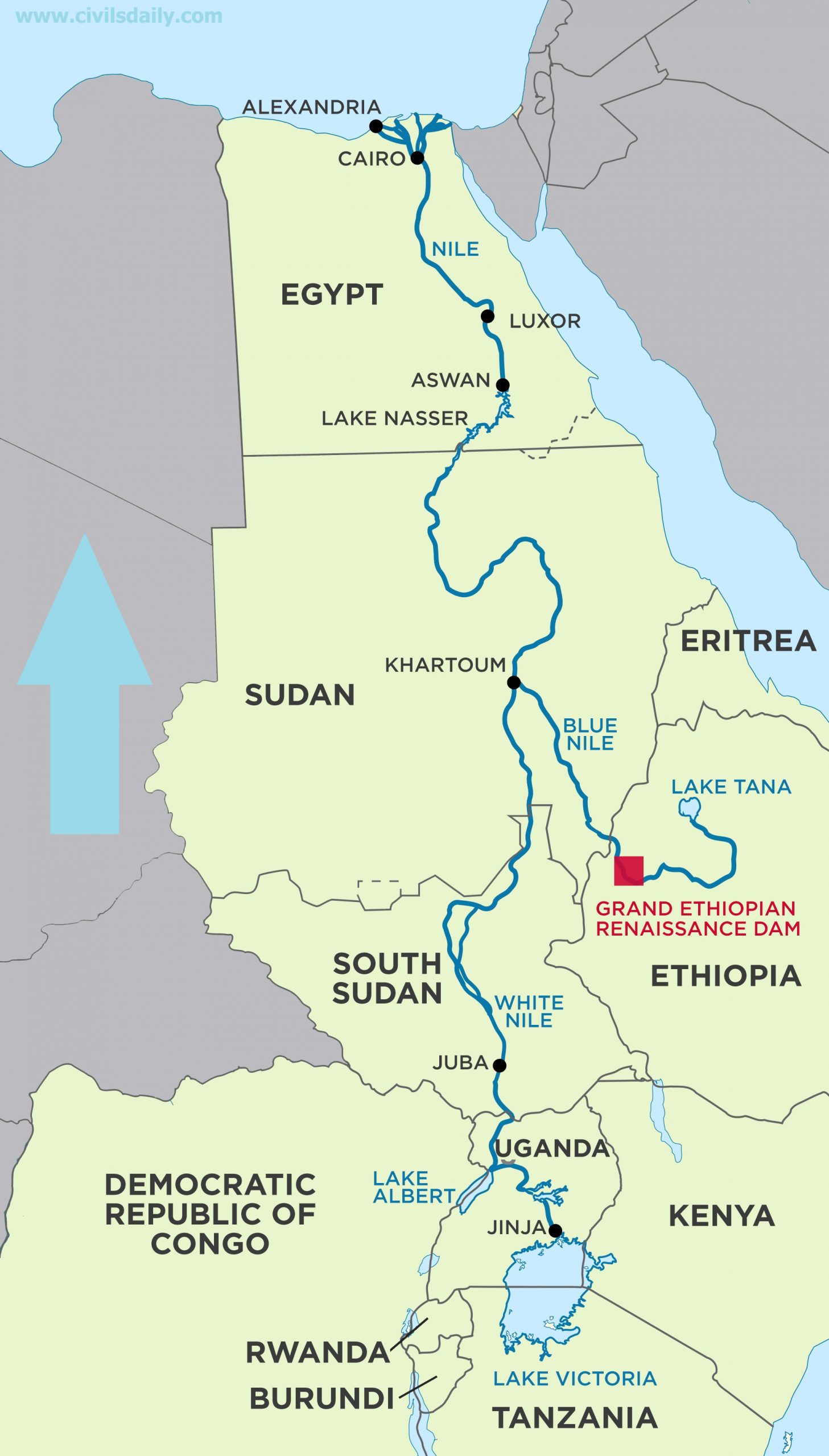
    • Overview: Gravity dam on the Blue Nile near Ethiopia–Sudan border.
    • Construction Timeline: Under construction since 2011, led by Ethiopian Electric Power Corporation.
    • Capacity: Set to become Africa’s largest hydropower plant with 6.45 GW output.
    • Reservoir Size: Holds 74 billion cubic metres; filling may take 5–15 years.
    • Key Features: 145 m tall dam, 16 turbines, and a supporting saddle dam.
    • Purpose: Aims to power Ethiopia (65% population lacks electricity) and export surplus to neighbouring countries.
    • Disputes Around GERD:
      • Egypt’s Concern: Fears reduced water flow; Relies 90% on Nile; demands a binding filling agreement.
      • Sudan’s Worry: Concerns over flood risks and water regulation.
      • Ethiopia’s Stand: Asserts sovereign rights; began filling without consensus.
      • Stalled Talks: Tripartite negotiations have failed; Egypt warns of possible conflict.

    Back2Basics: Nile River

    • Overview: North-flowing, longest river in Africa at ~6,650 km.
    • Drainage Basin: Covers 11 countries—Tanzania, Uganda, Rwanda, Burundi, DRC, Kenya, Ethiopia, Eritrea, South Sudan, Sudan, and Egypt.
    • Main Tributaries:
      • White Nile: Recognized as the headstream, its most remote source is the Kagera River in Burundi, flowing through Rwanda into Lake Victoria. It officially begins at Jinja, Uganda, where it exits Lake Victoria.
      • Blue Nile: Originates from Lake Tana in Ethiopia and merges with the White Nile at Khartoum, Sudan.  Supplies over 80% of total Nile flow by the time it reaches Egypt.
    • Lifeline Status: Vital for Egypt and Sudan’s drinking water, irrigation, and energy needs.


    [UPSC 2008] Ogaden region has been a source of conflict between which countries?

    Options: (a) Morocco and Algeria (b) Nigeria and Cameroon (c) Angola and Zambia (d) Ethiopia and Somalia*


  • [pib] INS Nistar Diving Support Vessel

    Why in the News?

    Indian Navy commissioned INS Nistar, the country’s first indigenously designed and constructed Diving Support Vessel (DSV).

    [pib] INS Nistar Diving Support Vessel

    About INS Nistar:

    • Project Origin: First of two Diving Support Vessels (DSVs) ordered by the Navy in 2018.
    • Developer: Built by Hindustan Shipyard Ltd with input from 120 Indian MSMEs.
    • Commissioning: Inducted at Naval Dockyard, Visakhapatnam.
    • Legacy Name: Named after the Soviet-origin INS Nistar (1971–1989).
    • Indigenization: Over 80% indigenous content, in line with Aatmanirbhar Bharat.
    • Sister Ship: INS Nipun, launched in 2022, will join soon.

    Key Features:

    • Rescue Depth: Supports diving and submarine rescue operations up to 300 metres.
    • Rescue Equipment: Equipped with ROVs, Hyperbaric Lifeboats, and Diving Chambers.
    • DSRV Role: Functions as mothership for Deep Submergence Rescue Vehicles.
    • Size: 120 metres long with a displacement of ~10,500 tonnes.
    • Endurance: Can stay at sea for over 60 days.
    • Utility Gear: Fitted with a 15-tonne subsea crane and helipad facilities.
    • Medical Support: Includes OT, ICU, hospital beds, and hyperbaric treatment units.

    Significance for India:

    • Submarine Rescue: Provides independent submarine rescue capability.
    • Operational Autonomy: Ends reliance on leased rescue platforms.
    • Strategic Status: Places India among 12 countries with full submarine rescue capability.
    • Regional Role: Strengthens India’s position as Net Security Provider in the Indian Ocean.
    [UPSC 2016] Which one of the following is the best description of ‘INS Astradharini’, that was in the news recently?

    Options: (a) Amphibious warfare ship (b) Nuclear-powered submarine (c) Torpedo launch and recovery vessel* (d) Nuclear-powered aircraft carrier


  • In news: Reykjanes Peninsula

    Why in the News?

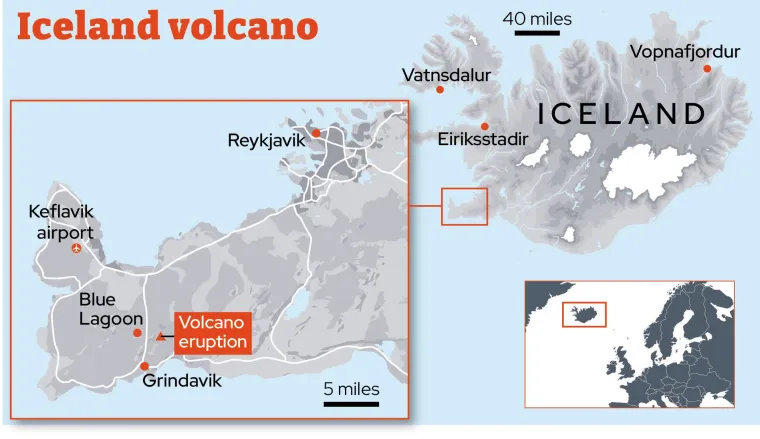
    Recently a volcano erupted in south-west Iceland, continuing a pattern of recurring geological activity on the Reykjanes Peninsula.

    In news: Reykjanes Peninsula

    About the Reykjanes Peninsula:

    • Location: Situated in southwest Iceland along the Mid-Atlantic Ridge where tectonic plates diverge.
    • Volcanic Reawakening: Dormant for centuries until 2021; now sees recurring eruptions.
    • Eruption Type: Known for fissure eruptions—lava flows from cracks, not a central crater.
    • Key Sites: Includes Grindavik (evacuated), Blue Lagoon spa, and Svartsengi power plant.
    • Volcanic Importance: Part of Iceland’s 30+ active volcanic zones.

    Key Features:

    • Eruption Style: Produces steady lava flows with minimal ash output.
    • Flight Safety: Air traffic remains unaffected due to lack of stratospheric ash.
    • Evacuation Impact: Grindavik largely abandoned after 2023 lava threat.
    • Long-Term Activity: Eruptions may persist for decades or longer.
    • Iceland Snapshot: Population ~400,000; similar in size to Kentucky.
    • Tourism Appeal: Attracts visitors like other volcanic hotspots—Mexico, Indonesia, Sicily, and New Zealand.
    [UPSC 2014] Consider the following geological phenomena:

    1. Development of a fault 2. Movement along a fault

    3. Impact produced by a volcanic eruption 4. Folding of rocks

    Which of the above cause earthquakes?

    Options: (a) 1, 2 and 3 (b) 2 and 4 (c) 1, 3 and 4 (d) 1, 2, 3 and 4*


  • MoSPI to integrate 8th Economic Census with 16th Population Census

    Why in the News?

    The Ministry of Statistics and Programme Implementation (MoSPI) is preparing for India’s 8th Economic Census by integrating it with the upcoming 16th Population Census.

    About the Economic Census:

    • Conducting Body: Ministry of Statistics and Programme Implementation (MoSPI).
    • Purpose: Creates a detailed database of non-agricultural economic establishments in India.
    • Key Data Captured: Covers location, clustering, ownership, employment size, and type of economic activity.
    • Unorganised Sector Inclusion: Includes informal units, vital for understanding employment dynamics.
    • Historical Background:
      • Economic Enquiry Committee: Proposed by Visvesvaraya Committee (1925); Setup by Bowley-Robertson Committee (1934).
      • Outcome: Led to the creation of the Central Statistical Office (CSO) in 1951 and national statistical systems.
      • First Census: Conducted in 1977 (excluding Lakshadweep), targeting non-agricultural units with at least one hired worker.
    • Timeline of Economic Censuses:
      • Years Conducted: 1980, 1990, 1998, 2005, 2013, and 2019–21 (7th Census).
      • Integration with Population Census: 2nd and 3rd rounds were aligned with the 1981 and 1991 Population Censuses.
      • 7th Census Status: Completed in 2021, but results pending due to COVID-related data quality issues.
      • Execution Support: MoSPI partnered with the CSC (Common Service Centre) network for grassroots-level implementation.

    Integration with the 16th Population Census:

    • Objective: Improve efficiency and reduce costs by leveraging shared field operations.
    • Data Collection: Enumerators will note household-based economic activity for MoSPI processing.
    • Census Schedule:
      • Oct 1, 2026: Snow-bound and remote regions (e.g., Ladakh, J&K, HP, Uttarakhand).
      • Mar 1, 2027: Rest of the country.
    • Preparatory Work: State and district committees have been formed to plan the 8th Census.
    [UPSC 2018] As per the NSSO 70th Round “Situation Assessment Survey of Agriculture Households”, consider the following statements:

    1.Rajasthan has the highest percentage share of agriculture households among its rural households.

    2.Out of the total households in the country, a little over 60 percent being to OBCs.

    3.In Kerala, a little over 60 percent of agriculture households reported to have received maximum income from sources other than agriculture activities.

    Which of the statements given above is/are correct?

    Options: (a) 2 and 3 only (b) 2 only (c) 1 and 3 only* (d) 1, 2 and 3


  • [pib] New Lichen Species reveals ancient Symbiosis

    Why in the News?

    A team of Indian scientists has discovered a new species of lichen, Allographa effusosoredica, in the Western Ghats, a global biodiversity hotspot.

    What are Lichens?

    lichen

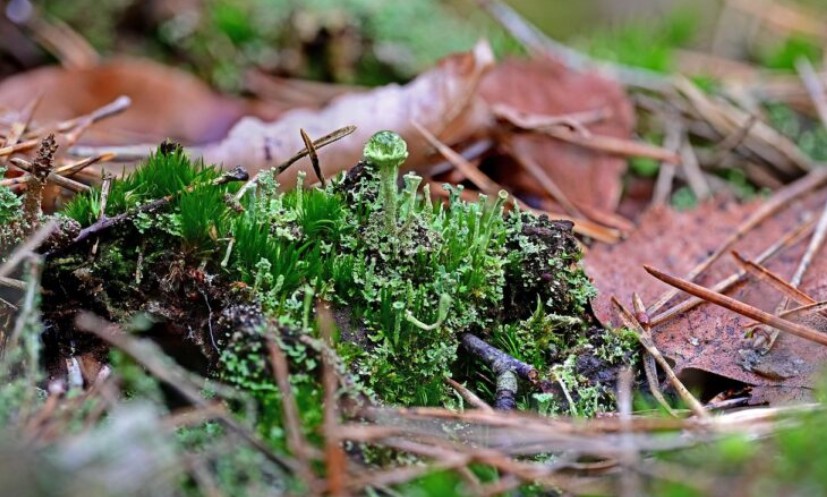
    • Lichens are symbiotic organisms, composed of a fungus (mycobiont) and a photosynthetic partner (photobiont)—either a green alga or a cyanobacterium.
    • The fungus provides structure and protection, while the photobiont produces food through photosynthesis.
    • Lichens are key ecological contributors:
      • They build soil by breaking down rocks.
      • Serve as bioindicators of environmental and air quality.
      • Provide food for insects and small animals.
    • Despite being often overlooked, lichens are vital to ecosystem stability and resilience.

    About the Newly Discovered Lichen Species:

    • Discovery: Allographa effusosoredica was discovered in the Western Ghats by MACS-Agarkar Research Institute, Pune.
    • First of Its Kind: First Indian Allographa species confirmed using molecular data.
    • Biodiversity Addition: 53rd Allographa species in India; 22nd from the Western Ghats.
    • Funding Support: Research funded by Anusandhan National Research Foundation (ANRF) under a lichen symbiosis project.

    Key Features Revealed:

    • Morphology: Crustose body with effuse soredia; Contains norstictic acid—rare among related species.
    • Algal Partner: Photobiont identified as Trentepohlia, expanding understanding of tropical lichen symbiosis.
    • Molecular Markers: Analysis used fungal markers (mtSSU, LSU, RPB2) and algal marker (ITS).
    • Phylogenetic Placement: Closely related to Allographa xanthospora; visually similar to Graphis glaucescens.
    [UPSC 2014] Lichens, which are capable of initiating ecological succession even on a bare rock, are actually a symbiotic association of:

    Options: (a) algae and bacteria (b) algae and fungi* (c) bacteria and fungi (d) fungi and mosses


  • Successful trial of Akash Prime Air Defence System

    Why in the News?

    India successfully tested the Akash Prime Missile System in Ladakh, neutralizing two high-speed aerial targets at high altitude.

    About Akash Prime:

    • What It Is: Akash Prime is an upgraded version of the Akash Surface-to-Air Missile (SAM) system.
    • High-Altitude Capability: Designed to operate effectively above 4,500 metres.
    • Development: Developed by DRDO with BDL, BEL, and Army Air Defence.
    • Operational Use: Proven in Operation Sindoor against aerial threats.
    • Production Trials: Validated through First of Production Model (FoPM) firing trials.
    • Deployment: Already in use at IAF bases and forward posts along the LAC in Ladakh.

    Key Features:

    • Seeker Upgrade: Equipped with an indigenous active Radio Frequency (RF) seeker for better accuracy.
    • Altitude Adaptability: Engineered for high-altitude, cold-climate operations.
    • Multi-Target Engagement: Capable of engaging multiple aerial threats at once.
    • Speed & Accuracy: Travels at Mach 2.5 with up to 90% kill probability.
    • Electronic Warfare: Equipped with ECCM features to resist electronic jamming.
    • Radar Integration: Uses Rajendra radar for detection, targeting, and tracking.
    • Operational Range: Effective engagement range of 25–30 km.

    Other Variants of Akash:

    • Akash Mark-I (1990–2005): First version under IGMDP; achieved successful dual-target intercepts by 2005.
    • Akash-1S (2019): Enhanced version with 30 km range and 60 kg warhead; effective against aircraft and drones; tested successfully in May 2019.
    • Akash Prime (2021 onwards): Added active RF seeker and altitude/weather resistance; tested on September 27, 2021.
    • Akash-NG (Next Generation): Approved in 2016 with ₹470 crore funding; offers faster response and improved aerial threat protection.


    [UPSC 2009] In the context of Indian defence, consider the following statements:

    1. The Shourya missile flies with a speed of more than 8 Mach. 2. The range of Shourya missile is more than 1600 km. Which of the statements given above is/are correct ?

    Options: (a) 1 only (b) 2 only (c) Both 1 and 2 (d) Neither 1 nor 2*


  • IIST Scientists detected Circular Polarisation near massive Protostar

    Why in the News?

    Researchers at the Indian Institute of Space Science and Technology (IIST) has detected radio emissions with circular polarisation near a massive young protostar, IRAS 18162-2048.

    About Protostars:

    • Definition: Early-stage stars formed by the gravitational collapse of dense regions in molecular clouds.
    • Accretion Phase: They actively gather gas and dust but have not yet begun sustained nuclear fusion.
    • Jet Ejection: Bipolar jets—high-speed streams of particles—are commonly emitted from their poles.
    • Massive Protostars: Expected to evolve into stars with masses over 8–10 times that of the Sun.
    • Role of Magnetism: Magnetic fields likely influence both jet formation and ejection mechanisms.

    About the Protostar IRAS 18162-2048:

    • Overview: Situated about 4,500 light years away in the Milky Way.
    • Jet Feature: Powers the HH80-81 jet—one of the galaxy’s largest and brightest protostellar jets.
    • Magnetic Detection: First direct evidence of magnetic fields from the protostar itself, not just its jet.
    • Observation Challenges: Heavily shrouded in dense gas and dust, making traditional observation difficult.
    • Jet Dynamics: Suggests that magnetic fields and rotational energy drive its development.

    Recent Observations:

    • Detection Method: Observed circular polarisation in radio waves—where electromagnetic fields rotate along their path.
    • Rarity: Circular polarisation is extremely faint and seldom detected, even in intense sources like active galactic nuclei.
    • Scientific Milestone: First-ever estimation of magnetic field strength near a massive protostar using circular polarisation.
    • Magnetic Field Strength: Estimated to be 100 times stronger than Earth’s magnetic field.
    • Theoretical Support: Findings reinforce the theory that magnetic fields power jets from both stars and black holes.
    [UPSC 2023] Consider the following pairs:

    Objects in space :: Description

    1. Cepheids : Giant clouds of dust and gas in space

    2. Nebulae : Stars which brighten and dim periodically

    3. Pulsars : Neutron stars that are formed when massive stars run out of fuel and collapse How many of the above pairs are correctly matched?

    Options: (a) Only one* (b) Only two (c) All three (d) None


  • Machilipatnam as Ancient Port is set for big Revival

    Why in the News?

    Machilipatnam, once a flourishing ancient port city on India’s east coast, is witnessing a major transformation with the construction of a modern Greenfield port.

    Machilipatnam as Ancient Port is set for big Revival

    About Machilipatnam:

    • Alternate Names: Also known as Masulipatnam, Maisolia, or Manjarika.
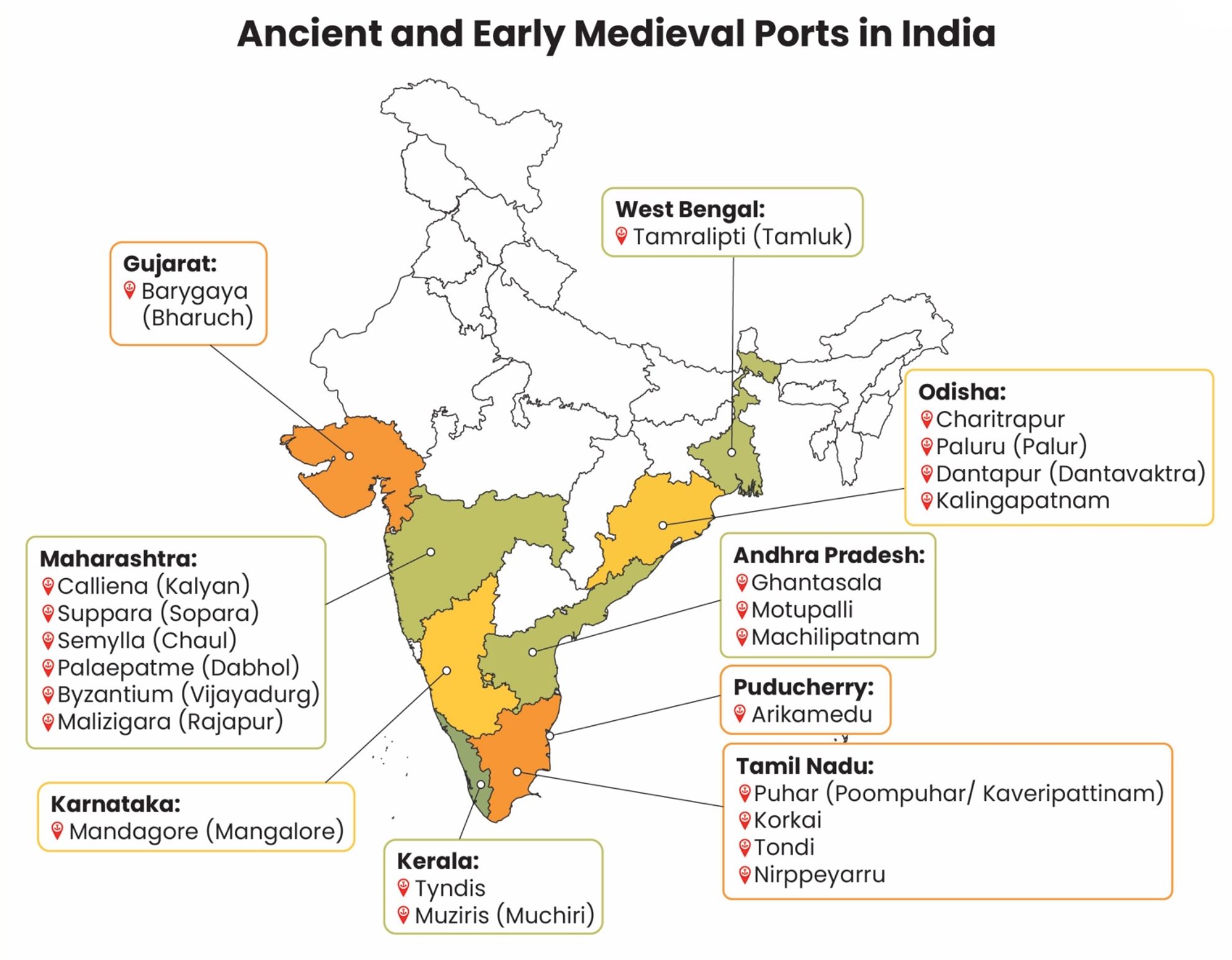
    • Geographic Location: Located in Krishna district, Andhra Pradesh, on the southeastern Coromandel Coast, at the mouth of River Krishna, ~70 km east of Amaravati.
    • Historical Importance:
      • One of the most significant east coast port cities for ~1,700 years.
      • Played a key role in maritime trade across ancient, medieval, and early modern periods.
    • Global Trade Connections:
      • Attracted traders from Rome, Arabia, Persia, Southeast Asia, and Europe.
      • Known for exporting high-quality Muslin textiles prized in Roman markets.
      • The term “muslin” likely derives from “Maisolia,” an ancient name of the city.
    • Cultural Contributions:
      • Known for Kalamkari art, a traditional textile art featuring hand-painted or block-printed designs.
    • Dynastic Port Usage:
      • Satavahanas (1st BCE – 2nd CE): Used as a major trade gateway.
      • Vishnukundins (4th–6th CE): Trade wealth supported Buddhist monument construction (e.g., Nagarjunakonda).
      • Qutb Shahis (16th–17th CE): Transformed it into a global hub for diamonds, muslin, and Kalamkari.
      • Nizams of Hyderabad (18th century): Controlled the port until partial cession to the British.
    • Mentions in Ancient Texts:
      • Appears as Maisolia in Periplus of the Erythraean Sea.
      • Listed as Maisolos in Ptolemy’s Geographia.
    • Colonial Involvement:
      • Dutch built a fort in the 17th century.
      • British East India Company established its first Bay of Bengal factory here in 1611.
      • Between 1686–1759, it changed hands among French, Dutch, and British; seized by British from the French in 1759.
    • Decline of the Port:
      • Anchorage Issue: Unsuitable for large ships, with anchorage 5 miles offshore.
      • Cyclone Damage: A severe cyclone in 1779 killed ~20,000 and destroyed Dutch structures.
      • Trade Shift: Decline due to growing prominence of Madras (Chennai) and Visakhapatnam under British rule.
    • Post-Independence Claim:
      • In 1947, 7th Nizam of Hyderabad attempted to reclaim it for sea access to an independent Hyderabad state.
    • Modern Revival:
      • A Greenfield port at Manginapudi is under construction, expected to be operational by 2026.
      • Aims to restore Machilipatnam’s historical maritime legacy.
    [UPSC 2023] With reference to ancient South India, Korkai, Poompuhar and Muchiri were well known as:

    (a) capital cities (b) ports* (c) centres of iron and steel making (d) shrines of Jain Tirthankaras