A stocktake visit for the India-AustraliaComprehensive Economic Cooperation Agreement (CECA) recently concluded in New Delhi.
Key Takeaways from the Meet
The discussions covered a wide range of critical aspects of the CECA, including:
Trade in goods and services
Mobility and agri-tech cooperation
Market access modalities that align with India’s food security objectives.
Both sides emphasized their shared commitment to ensuring that the CECA produces meaningful benefits and delivers a balanced outcome for both nations.
The discussions have opened up pathways for enhanced collaboration in areas such as agricultural innovation, market access, and supply chain resilience.
About India-Australia CCEA Negotiations:
CECA is a comprehensive trade agreement between India and Australia.
More comprehensive than the earlier India-Australia Economic Cooperation and Trade Agreement (ECTA) , which is a limited trade agreement in force since December 2022.
Negotiations for CECA began in May 2011, suspended in 2016, and re-launched in 2021 after concluding the ECTA.
So far 10 rounds of negotiations have taken place.
Key Features of CECA:
Covers goods, services, digital trade, government procurement, and Rules of Origin/Product-Specific Rules Schedule.
New areas: competition policy, MSMEs, innovation, agri-tech, critical minerals, sports.
India-AU Trade Statistics:
2023-24:
India’s imports from Australia fell by 15% to USD 16.15 billion.
India’s exports to Australia rose by 14.23% to USD 7.94 billion.
Australia is India’s 13th largest export destination and 14th largest import source.
PYQ:
[2017] ‘Broad-based Trade and Investment Agreement (BTIA)’ is sometimes seen in the news in the context of negotiations held between India and:
(a) European Union
(b) Gulf Cooperation Council
(c) Organization for Economic Cooperation and Development
(d) Shanghai Cooperation Organization
PYQ Relevance: Q) The West is fostering India as an alternative to reduce dependence on China’s supply chain and as a strategically to counter China’s political and economic dominance.” Explain this statement with examples. (UPSC CSE 2024)
Mentor’s Comment: UPSC Mains is recently focusing on growing Chinese dominance in West and Central Asia (2024) and the power play struggle between the USA and China (2022).
China has been using its ‘slicing strategy’ of debt trap to evolve as a global power by countering the USA and its ‘String of Pearls’ theory to circle out Indian activities.
Today’s editorial explores the implications of the China-Nepal-India trio, the ongoing negotiations, and the need for a sustained dialogue. This content can be used to represent Chinese dominance in regional geopolitics and the challenges arising due to it.
_
Let’s learn!
Why in the News?
The recent agreements between Nepal and China mark a significant step in the regional geopolitics of South Asia, particularly under the framework of China’s Belt and Road Initiative (BRI).
While the signing of these agreements is a positive development, India must continue negotiations to ensure effective implementation and address potential challenges due to Chinese dominance in the region.
Recent Developments in Nepal-China Relations: In December 2024, Nepal’s Prime Minister KP Sharma Oli concluded a four-day official visit to China, during which several key agreements were signed, including a framework cooperation agreement related to the BRI.
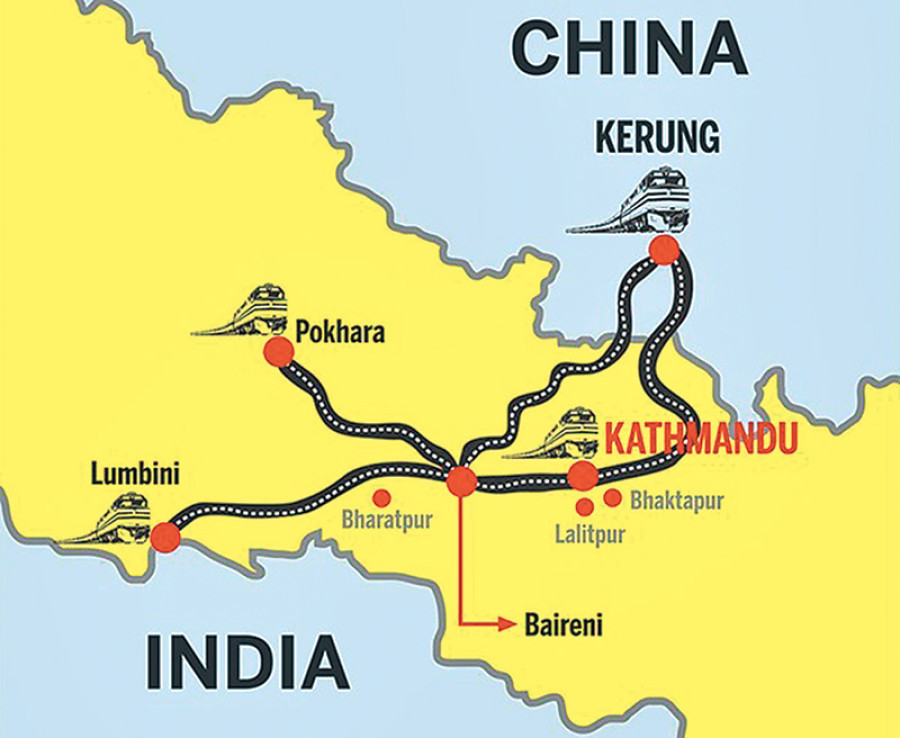
Key Points of the Nepal-China Agreements: • Framework Cooperation Agreement: This agreement lays the groundwork for various infrastructure projects, including: – Tokha-Chhahare Tunnel; – Hilsa Simkot Road Project; – Kathmandu-Khandbari Road; – Kimathanka Bridge; – Cross-border railway project from Rasuwagadhi to Kathmandu; – Amargadhi City Hall.
• Focus on Implementation: The Nepali government emphasized the importance of not just signing agreements but also effectively implementing them. Past experiences have shown that while many agreements were signed, tangible progress on the ground has been limited. • Investment Modalities: The negotiations included discussions on financing modalities, with a shift from strictly “grants” to more flexible terms such as “aid.”This change aims to facilitate broader investment opportunities from various sources, including private sectors and international financial institutions.
Challenges Ahead for Nepal-China Relationship:
• Implementation Gaps: Historical precedents indicate that many signed agreements have not translated into actionable projects. There is a pressing need for both governments to focus on practical steps that will lead to real-world outcomes. • Project-Specific Negotiations: Future negotiations are expected to be project-specific, which may complicate the overarching framework if not managed effectively. Clear communication and defined objectives will be essential in these discussions. • Geopolitical Considerations: As Nepal navigates its relationships with neighboring countries like India and global powers such as the United States, balancing these interests while engaging with China will require careful diplomacy.
What were the substantive statements in Parliament on India-China relations?
Troop Disengagement and Temporary Measures: The External Affairs Minister highlighted the successful disengagement of troops following China’s military buildup and India’s counter-deployment, mentioning that temporary and limited measures were implemented at certain friction points to prevent further clashes.
However, he noted that these measures could be revisited as needed, indicating that while disengagement is a priority, the situation remains fluid.
Ongoing De-escalation Efforts: The Minister reiterated India’s stance that maintaining peace in border areas is essential for developing bilateral relations, suggesting that current troop deployments indicate that normalcy has not yet been restored.
Cautious Optimism in Bilateral Relations: The Minister indicated that while there has been some improvement in India-China relations following recent developments between Nepal-China, significantly remains a challenge.
He cautioned against expecting a major reset in relations until the border situation stabilizes and structural issues are addressed, particularly regarding economic security concerns with China.
What are the several key questions that remain unanswered?
Unclear Disengagement Terms: While disengagement is declared complete, India lacks clarity on its specifics.
Questions remain about access to traditional patrolling points in Depsang and Demchok, the concept of “coordinated patrolling,” and the implications of “temporary steps” that limit patrols and grazing rights for Indian troops.
Status Quo Concerns: The Minister stated that India will not accept unilateral changes to the status quo, yet China has altered it since April 2020.
Discussions with military officials suggest restricted access to traditional patrol points, highlighting a shift in how both countries view the Line of Actual Control (LAC).
India should prioritize restoring the previous status quo in patrolling and grazing activities.
Chinese Patrols in Arunachal Pradesh: Reports indicate that Chinese troops are attempting to patrol areas like the Yangtse, despite previous assertions that such demands were unreasonable. If no quid pro quo exists in this sector, it should be firmly denied.
Call for Restoration of Status Quo: The Army Chief emphasized returning to the status quo of April 2020, while the Ministry of External Affairs has shifted its language away from this goal. Accepting changed ground realities would play into China’s strategy of gradual territorial gains without provoking outright conflict.
What strategies can both countries employ to bridge this political divide?
Diplomatic Engagement: Regular high-level meetings and dialogues, such as those initiated between Prime Minister Modi and President Xi Jinping, can help rebuild trust.
Both nations should prioritize discussions on strategic issues beyond border conflicts, including economic cooperation, climate change, and technology.
Cultural and Economic Exchanges: Resuming direct flights, easing visa restrictions for citizens and diplomats, and promoting cultural exchanges (like film screenings) can enhance people-to-people connections.
This approach can foster goodwill and mutual understanding, essential for improving bilateral relations.
Institutional Frameworks: Establishing mechanisms for coordinated patrolling and joint military exercises can help manage tensions along the Line of Actual Control (LAC).
Additionally, creating platforms for multilateral discussions involving other regional players can facilitate broader cooperation and address shared security concerns.
According to the recently released ‘Emission Gap Report 2024’ presented by UNEP, Global Greenhouse Gas (GHG) emissions have reached a new high of 57.1 billion tonnes of CO2 equivalent in 2023, a 1.3% rise compared to 2022.
What are the key points of Emissions Gap Report 2024?
Urgent Emission Reduction Targets: To align with the 1.5°C goal of the Paris Agreement, global greenhouse gas emissions must decrease by 42% by 2030 and 57% by 2035 compared to 2019 levels.
For a 2°C target, reductions of 28% by 2030 and 37% by 2035 are necessary. Current commitments and policies are insufficient, putting the world on track for a temperature rise of 2.6-3.1°C, which would lead to severe climate impacts.
Potential for Significant Reductions: The report highlights that it is still technically feasible to achieve the 1.5°C pathway through aggressive action, including increased deployment of renewable energy sources like solar and wind, which could contribute 27% of the necessary reductions by 2030 and 38% by 2035.
Additionally, actions related to forests could provide around 20% of the potential reductions in both years. A comprehensive approach involving government action, investment in mitigation strategies, and international cooperation is essential to realize these opportunities.
What are the Global Emission trends?
Global greenhouse gas (GHG) emissions have continued to rise, reaching a record high of 57.1 gigatons of carbon dioxide equivalent in 2023. This marks an increase from previous years, with fossil fuel CO₂ emissions projected at 37.4 billion tonnes, up 0.8% from 2023, and total CO₂ emissions—including land-use changes—projected to be 41.6 billion tonnes in 2024.
The increase is attributed primarily to rising emissions from major economies such as China and India, with India experiencing the largest relative increase at 6.1% and China contributing the most in absolute terms.
The overall trend indicates that despite some positive developments in renewable energy adoption, there is no sign that global fossil fuel emissions have peaked, necessitating immediate and substantial reductions to meet climate targets.
What is the progress of G20 countries towards NDCs?
Mixed Progress on NDCs: Among G20 countries, six members (China, India, Indonesia, Japan, Russia, and Turkey) are projected to meet their unconditional Nationally Determined Contribution (NDC) targets with current policies.
However, eight members (Argentina, Australia, Canada, the EU, South Korea, South Africa, and the United States) require further action to achieve their targets.
This indicates a significant disparity in progress across different G20 nations, with many needing to be on track to meet their commitments under the Paris Agreement.
Need for Enhanced Ambition: The G20 must significantly ramp up its climate ambitions in the next round of NDCs to align with the goals of limiting global warming to 1.5°C. This includes committing to substantial emissions reductions—42% by 2030 and 57% by 2035.
What is the NCD target?
Collective Emission Reduction Goals: G20 countries have pledged to reduce greenhouse gas emissions through Nationally Determined Contributions (NDCs), targeting a 42% reduction by 2030 and 57% by 2035, aligned with the Paris Agreement to limit warming below 2°C.
Diverse Member Targets and Progress: G20 members have varied NDC targets, such as China aiming to peak CO2 emissions by 2030 with a 60-65% reduction in carbon intensity, while Argentina caps net emissions at 483 million tons of CO2 equivalent.
What is needed to bridge the gap between 2030 and 2035 goals? (Way forward)
Significant Annual Emission Reductions: A reduction of 7.5% per year until 2035 is necessary to align with the 1.5°C pathway, while a 4% annual reduction is needed for the 2°C target.
Investment in Renewable Energy: The increased deployment of solar and wind technologies could deliver approximately 27% of the total emission reduction potential by 2030 and 38% by 2035.
Action on Forests: Protecting and restoring forests could provide around 20% of the required reductions in both years.
Comprehensive Policy Measures: A whole-of-government approach is essential, maximizing socioeconomic and environmental co-benefits while minimizing trade-offs.
Increased Mitigation Investment: A minimum six-fold increase in investments for climate mitigation is critical, necessitating reforms in global financial systems and strong private sector involvement.
Mains PYQ:
Q Discuss global warming and mention its effects on the global climate. Explain the control measures to bring down the level of greenhouse gases that cause global warming, in the light of the Kyoto Protocol, 1997. (UPSC IAS/2022)
“Prashasan Gaon Ki Ore” a nationwide campaign is launched by the Government of India, from December 19–24, 2024, as part of the 4th Good Governance Week.
About the Nationwide Campaign ‘Prashasan Gaon Ki Ore’
It is a nationwide campaign to address public grievances and improve service delivery across rural and urban areas.
It aims to strengthen governance at the grassroots level and bring effective solutions to the common people.
It will be conducted in all districts, states, and union territories of India, with a focus on delivering timely solutions and improving the quality of services provided to citizens.
Key objectives of the campaign include:
Redressing Public Grievances: Ensuring that citizens’ complaints related to government services are resolved swiftly.
Improving Service Delivery: Enhancing the efficiency of government services at the local level.
Creating Awareness: Spreading knowledge about good governance practices and encouraging citizens to be proactive in using available services.
Key Observations from the Good Governance Index (GGI) 2022
The GGI, 2022 evaluates 58 indicators across 10 governance sectors, such as agriculture and allied sectors, human resource development, public health, and law and order, among others. The key observations are as follows:
Top Performers: Kerala, Tamil Nadu, and Maharashtra ranked highest for good governance, excelling in public health, human resources, and economic governance.
Service Delivery: States like Tamil Nadu and Kerala were praised for transparency, accountability, and citizen-focused policies, leading in service delivery.
Agriculture & Rural Development: Uttar Pradesh and Bihar showed improvements in agriculture and rural development, aligning with the goals of Prashasan Gaon Ki Ore.
Health & Education: Kerala and Tamil Nadu excelled in healthcare and education, with significant investments in infrastructure and public schemes.
Sustainable Development: States like Sikkim emphasized environmental governance and sustainable development practices.
PYQ:
[2016] What do you understand by the terms ‘governance’, ‘good governance’ and ‘ethical governance’? (150 words)
India has played a leading role in co-sponsoring and guiding the unanimous adoption of a UN General Assembly draft resolution to declare December 21 as World Meditation Day.
The theme for 2024 is- “Inner Peace, Global Harmony”.
About the World Meditation Day
It is a global observance that was officially recognized following the adoption of a UN General Assembly resolution on December 6, 2024. However, the 21st of December has been designated as the date for this annual observance.
It is also symbolic, of falling on the Winter Solstice (December 21), which is associated with new beginnings, reflection, and spiritual growth in Indian tradition.
The date is also exactly six months after the International Day of Yoga on June 21, which marks the Summer Solstice.
The objective behind this Decision
Promote Well-Being: To globally encourage meditation for enhancing mental health and overall wellness.
Encourage Inner Reflection: Recognizing December 21 as a time for self-reflection and meditation, especially during Uttarayana in Indian tradition.
India’s Global Leadership: Reinforces India’s commitment to global wellness, following its leadership in declaring International Day of Yoga.
PYQ:
[2012] With reference to the religious history of medieval India, the Sufi mystics were known to pursue which of the following practices?
1. Meditation and control of breath
2. Severe ascetic exercises in a lonely place
3. Recitation of holy songs to arouse a state of ecstasy in their audience
Which of the statements given above is/are correct?
The Biju Janata Dal (BJD) has restarted its protest against the Polavaram multipurpose project in Andhra Pradesh, claiming it will flood large areas in Malkangiri, Odisha, displacing many tribal communities.
What were the recommendations by the Godavari Water Disputes Tribunal (GWDT) 1969?
The Godavari Water Disputes Tribunal (GWDT), was established to resolve water-sharing disputes concerning Godavari River water among the states of Andhra Pradesh, Maharashtra, and Madhya Pradesh (now Chhattisgarh). It made several key recommendations regarding the utilization of Godavari River water. Notable points include:
Water Allocation: The Tribunal allowed Andhra Pradesh to divert 80 TMC (thousand million cubic feet) of Godavari water at 75% dependability for irrigation and other uses, which could also substitute releases from the Nagarjunasagar project for the Krishna delta.
Inter-State Agreements: The Tribunal recognized various inter-state agreements that specified how water from the Godavari and its tributaries could be utilised, ensuring equitable distribution among the states involved.
Project Approvals: The GWDT endorsed the construction of projects like Polavaram, provided they adhered to specified Full Reservoir Levels (FRL) and operational guidelines.
What are the social and environmental impacts of the Polavaram Project?
Social Impact: The project is expected to displace over 150,000 people across approximately 276 villages, with many of these being tribal communities. For every five acres irrigated, one tribal family is projected to lose their land.
Infrastructure Strain: The project has faced funding challenges for rehabilitation efforts, leading to halted work on necessary infrastructure like canals, which could exacerbate social tensions among displaced populations.
Environmental Impact: The dam’s backwaters will submerge an estimated 3,731 hectares of forest land. The environmental impact assessments have raised concerns about ecosystem disruption, including increased vulnerability to erosion and regional landslides.
How is the project being managed politically and administratively?
National Project Status: Declared a national project under the Andhra Pradesh Reorganisation Act of 2014, the Central Government is responsible for executing the project while ensuring compliance with environmental and rehabilitation norms.
Polavaram Project Authority: A governing body has been established to oversee project execution, comprising representatives from both state and central governments. This authority is tasked with ensuring timely execution and adherence to regulatory requirements.
Political Dynamics: The project has become a focal point for regional politics, particularly as parties like the BJD leverage opposition against it to bolster their regional identity amidst changing political landscapes in states like Odisha.
What are the legal and regulatory challenges faced by the Polavaram Project?
Ongoing Litigation: Multiple states have challenged the project in court on grounds of inadequate environmental assessments and potential adverse impacts on their territories. Legal disputes have persisted since at least 2011, complicating project timelines.
Regulatory Compliance Issues: Environmental clearances for the project have been contentious, particularly following changes in flood situation estimates that were not incorporated into updated designs. This has raised questions about compliance with earlier environmental impact assessments conducted in 2005.
Funding Challenges: Financial constraints have hindered progress on rehabilitation efforts for displaced populations, leading to further legal scrutiny regarding compliance with social justice norms and commitments made during project approval processes.
Way forward:
Comprehensive Impact Assessment and Mitigation: Conduct updated environmental and social impact assessments, including backwater studies, and implement robust mitigation measures for displaced populations, ensuring compliance with legal and regulatory frameworks.
Strengthen Inter-State Collaboration: Establish a transparent and inclusive mechanism involving all affected states to address concerns, promote equitable resource sharing, and expedite the resolution of legal and administrative challenges.
Mains PYQ:
Q Constitutional mechanisms to resolve the inter-state water disputes have failed to address and solve the problems. Is the failure due to structural or process inadequacy or both? Discuss. (UPSC IAS/2013)
Q) Public health system has limitation in providing universal health coverage. Do you think that private sector can help in bridging the gap? What other viable alternatives do you suggest? (UPSC CSE 2015)
Mentor’s Comment: UPSC Mains have asked questions around the Public Health Policies (2017) and Newer Health Challenges (2020 and 2022).
India is aiming for real-time public health monitoring platforms National Health Mission Health Management Information System (NHM-HMIS), and the Integrated Disease Surveillance Programme (IDSP)to enhance surveillance, monitoring, and resource allocation at primary healthcare levels.
Today’s editorial reflects on the historical context of the Bombay Plague of 1896 and its implications for contemporary public health practices. This content can be used as a case study while exchanging ideas on ‘Public Health Policies and challenges in India’.
_
Let’s learn!
Why in the News?
There are ongoing discussions in Parliament around public health strategies in the wake of recent health crises, including the past COVID-19 pandemic.
By reflecting on historical lessons from the Bombay 1896 plague outbreak, we can analyze the significance of community engagement, comprehensive disease management strategies, and ethical considerations in health interventions.
What were the Public Health Measures implemented by Britishers and how effective were they?
• Quarantine and Isolation: Infected individuals were forcibly removed from their homes and taken to plague hospitals or camps, where they were often separated from their families. This included door-to-door searches conducted by soldiers to identify the sick. • Destruction of Property: Personal belongings and houses of the infected were often burned and demolished which led to substantial loss of property for many residents. • Sanitation Campaigns: A large-scale sanitation initiative was launched, which included flushing sewers with seawater, washing streets with lime, and disinfecting homes. o Special camps were established for the treatment of the infected but often faced criticism for poor conditions and high mortality rates. • Legislative Measures: The Epidemic Diseases Act of 1897 was enacted, granting authorities extensive powers to enforce health measures, including movement restrictions and compulsory examinations.
Were they effective? • Limited Success: The death toll exceeded 33,000 within a short period, indicating that these strategies did not sufficiently curb the outbreak. • Social Backlash: Reports of disrespect during inspections and inadequate hospital conditions fueled anger, resulting in protests and even violent incidents against medical personnel. • Migration and Spread: Many residents fled Bombay in response to the plague and government actions, which inadvertently contributed to the spread of the disease beyond urban areas. • Long-term Impact: While some improvements in urban infrastructure and public health policies emerged post-plague, many immediate measures were criticized for their insensitivity to local customs and needs.
What was positive in this policy implementation despite the criticism?
Emphasis on control over cases: The Indian Plague Commission’s approach during the 1896 Bombay Plague focused significantly on controlling the movement of people and the spread of the disease rather than directly addressing the health needs of affected individuals. Focus Areas were:
Railway Plague Inspection Stations Map (to monitor the movement of people) focused on railway networks and inspection points.
Chausa Observation Camp Plan detailed layouts of observation camps that reflected a militarized approach to quarantine with prominent police presence.
Khanpur Station Map illustrated disinfection zones and highlighted the role of police in maintaining control over these areas.
Cartographic Approach and Its Consequences: The maps were unusually colorful for administrative reports, possibly to convey a sense of effective control while downplaying the epidemic’s severity.The emphasis moved from identifying who was affected by the plague to understanding where the disease could potentially spread.
Prioritization of State Control: The Commission’s focus on control points indicated a prioritization of state mechanisms for surveillance rather than an understanding of epidemiological factors or community health requirements.
This approach raised concerns about the adequacy of public health responses that prioritized state security over effective disease management and community welfare.
What lessons can contemporary public health systems learn from the Bombay Plague?
Community Engagement: Effective public health responses must include community cooperation. The mistrust generated by colonial policies highlights the need for transparent communication and involvement of local leaders in health initiatives.
Comprehensive Disease Management: The outbreak underscored the importance of not only immediate medical responses but also long-term strategies addressing underlying social determinants of health such as poverty and sanitation.
Ethical Considerations: The harsh measures taken during the plague raise ethical questions regarding public health interventions. Balancing individual rights with community safety remains a critical challenge for public health officials today.
Historical Reflection: Understanding past epidemics can inform current practices. The Bombay Plague illustrates how historical narratives shape contemporary health policies and societal attitudes toward disease management.
The Ministry of Agriculture & Farmers Welfare has provided state-wise details of farmers registered under the Pradhan Mantri Kisan Maan Dhan Yojana (PMKMY).
Top Three States: Haryana (5,74,467), Bihar (3,45,038), Chhattisgarh (2,02,734).
Bottom Three States/UT: Lakshadweep (72), Ladakh (114), Goa (150).
Recently, the PMKMY (launched on 12th September 2019) has completed 5 successful years.
About Pradhan Mantri Kisan Maan Dhan Yojana (PMKMY)
Details
Type: Central Sector Scheme Objective: To provide a voluntary, contributory pension scheme for farmers aged 18–40 years, ensuring ₹3,000/month pension after they turn 60 years of age.
Implementation & Structural Mandate
Implemented by: Ministry of Agriculture and Farmers Welfare Pension Fund Manager: Life Insurance Corporation (LIC) of India State-wise Registration: Registered farmers are managed by the respective state governments in collaboration with LIC. The scheme encourages a structured approach involving the collection of contributions and government matching funds. Contribution: Farmers contribute between ₹55 and ₹200 per month, depending on their entry age.
Beneficiaries & Benefits
Beneficiaries: Farmers aged 18–40 years. Benefits: Assured pension of ₹3,000 per month post-60 years, matching contribution by the Government of India, administered by LIC. Exclusions: Income taxpayers, members of government pension schemes, and those already enrolled in other pension schemes.
PYQ:
[2020] In India, which of the following can be considered as public investment in agriculture? (2020)
Fixing Minimum Support Price for agricultural produce of all crops
Computerization of Primary Agricultural Credit Societies
Social Capital development
Free electricity supply to farmers
Waiver of agricultural loans by the banking system
Setting up of cold storage facilities by the governments
Select the correct answer using the code given below: