💥Join UPSC 2027,2028 Mentorship (August Batch) + XFactor Notes & Microthemes PDF

Distribution: weekly

  • Delhi Preservation of Trees Act (DPTA), 1994

    Why in the News?

    The Supreme Court and the Delhi government are at loggerheads due to alleged felling of trees in the Asola-Bhati Wildlife Sanctuary under the Delhi Preservation of Trees Act (DPTA), 1994.

    Forest Cover in Delhi: ISFR Report Findings

    • Largest Cover: According to the ‘India State of Forest Report 2021’ (ISFR) published by the Forest Survey of India (FSI), Delhi has the largest forest cover among seven major megacities, with 195 sq. km, followed by Mumbai (110.77 sq. km) and Bengaluru (89.02 sq. km).
      • Delhi’s forest cover constitutes 13.15% of its geographical area, while its tree cover spans 147 sq. km (9.91%).
    • Growth over Time: Despite extensive urban development, the city’s overall green cover (forest and tree cover) has increased from 151 sq. km (10.2%) in 2001 to 342 sq. km (23.6%) in 2021.

    What is the case against the DDA?

    • The Supreme Court is hearing a contempt petition against DDA’s Vice Chairman for the felling of about 1,100 trees, in violation of the SC’s orders, for road expansion in the ridge area, which falls under the eco-sensitive zone around Asola-Bhati Wildlife Sanctuary.
    • On March 4, the DDA submitted an application to the SC seeking permission to cut trees for the construction of the Gaushala Road. The court directed the DDA to re-examine the proposal with the help of field experts.
    • An affidavit from the DDA’s Vice Chairman revealed that tree felling had already begun in February and continued for ten days. By February 26, all intended trees were cut down even before the application reached the SC. This material fact was not disclosed when the court heard the application on March 4.
    • The Bench reprimanded DDA for not providing records of the Delhi LG’s (Chairman of the DDA) February 3 visit to the site, which allegedly led to the tree felling order. The Delhi government was also reprimanded for usurping the Tree Officer’s authority in granting permission.
    • The apex court has halted the DDA’s work and directed a team from the FSI to assess the number of trees cut and the environmental damage.

    Law governing Tree Protection in Delhi:

    Delhi Preservation of Trees Act (DPTA), 1994 provides legal protection to trees in the national capital against actions that could harm their growth or regeneration.

    • The Act defines a tree as “a woody plant that has branches supported by a trunk or a body of at least 5cm diameter and is at least 1 metre high from the ground”.
    • Section 2 (h) of the Act defines “to fell a tree” to include severing the trunk from the roots, uprooting, bulldozing, cutting, girdling, lopping, pollarding, applying arboricides, burning, or any other damaging method.
    • Under Section 8, no tree or forest produce can be removed on any land without prior permission from the ‘Tree Officer’, even on privately owned property. The ‘Tree Officer’ must respond within 60 days after inspection.
      • Violations of this Act may result in imprisonment for up to one year, a fine up to ₹1,000, or both.
    • The Act outlines a ‘Tree Authority’ responsible for conducting tree censuses, managing nurseries, and reviewing government and private construction proposals.
    • Delhi’s Tree Transplantation Policy, 2020 mandates that 80% of identified trees slated for felling must be transplanted. However, an affidavit submitted by the government to the Delhi High Court in 2022 disclosed that only 33.33% of transplanted trees had survived.

    About Asola Bhatti WLS

    Situated in the southern part of Delhi and extends into Faridabad and Gurugram districts of Haryana.

    • Occupies 32.71 sq. km on the Aravalli hill range’s Southern Delhi Ridge, bordering Delhi and Haryana.
    • Forms a part of Rajasthan’s Sariska Tiger Reserve to the Delhi Ridge.
    • Classified under Northern Tropical Thorn Forests.
    • Plant Features plants with xerophytic characteristics like thorns, wax-coated and succulent leaves.
    • Characterized by the presence of the exotic Prosopis juliflora and the native Diospyros montana.
    • Home to species such as Golden Jackals, Striped-Hyenas, Indian Crested-Porcupines, Civets, Jungle Cats, various snakes, Monitor Lizards, and Mongoose.


    Conclusion: The Supreme Court’s directive to enhance Delhi’s green cover is a crucial step towards mitigating the impacts of extreme heat waves and improving the city’s air quality.

    PYQ:

    [2022] “The most significant achievement of modern law in India is the constitutionalization of environmental problems by the Supreme Court.” Discuss this statement with the help of relevant case laws. 


  • Food Colorants and Chemical Additives Under Crackdown in Karnataka

    Why in the News?

    Karnataka’s Food Safety Department ordered action after 40 kebab samples showed unsafe artificial colours, extending the crackdown to Panipuri, Cotton candy, and Gobi Manchurian.

    Artificial Colours in the Controversy 

    • Some artificial colours under scrutiny include:
    1. Sunset Yellow (Yellow 6, E110): Approved in the US but requires a warning label in the EU.
    2. Carmoisine (Red No. 10, E122): A deep red dye often used in food.
    3. Rhodamine B: A banned textile dye sometimes illegally used in food.
    • Different countries have varying regulations for these dyes. For example, tartrazine (E102 in the EU, Yellow 5 in the US) is permitted but only in limited quantities. 


    Legal Action against FBOs

    • To take legal action, the department collects a survey sample from an FBO and, if found unsafe, collects four more legal samples for further testing at the Central Food Technological Research Institute (CFTRI).
    • If CFTRI deems the samples unfit for consumption, the FBO is booked under the Food Safety Act and tried at a court of Judicial Magistrate of First Class (JMFC). Penalties can include a fine of up to Rs 10 lakh and imprisonment for 7 years.

    Role of FSSAI in Food Safety and Colorants Regulation

    • The Food Safety and Standards Authority of India (FSSAI) plays a crucial role in regulating and ensuring food safety across the country under the Food Safety & Standards Act, 2006

    Ingredients legally banned in India by the FSSAI and various states initiatives:

    Parameters Details
    Ingredients Banned in India
    • Rhodamine B: A textile dye sometimes illegally used as a food colorant.
    • Potassium Bromate: A flour treatment agent linked to cancer.
    • Oxytocin: A hormone used unethically in the dairy industry to increase milk production.
    • Calcium Carbide: Used for ripening fruits, which is hazardous to health.
    • Formalin: Used in fish preservation, which is carcinogenic.
    • Brominated Vegetable Oil (BVO): Used in soft drinks, which is linked to various health issues.
    State Initiatives for Food Safety
    • Karnataka: Crackdown on use of unsafe food colorants in kebabs, pani puri, cotton candy, and gobi manchurian.
    • Maharashtra: Rigorous checks on milk adulteration and stringent actions against offenders.
    • Kerala: Implementation of ‘Safe Food’ campaign focusing on reducing pesticide use in vegetables.
    • Tamil Nadu: Regular inspections of street food vendors and training programs on food safety.
    • Delhi: Special drives to monitor and control the use of banned substances in sweets during festive seasons.

    State Food Safety Index (SFSI) by FSSAI sheds light on the performance of Indian states in ensuring food safety.


    PYQ:

    [2021] Elaborate the policy taken by the Government of India to meet the challenges of the food processing sector.

    [2018] Consider the following statements: 

    1. The Food Safety and Standards Act, 2006 replaced the Prevention of Food Adulteration Act, 1954.
    2. The Food Safety and Standards Authority of India (FSSAI) is under the charge of Director General of Health Services in the Union Ministry of Health and Family Welfare.

    Which of the statements given above is/are correct?

    (a) 1 only
    (b) 2 only
    (c) Both 1 and 2
    (d) Neither 1 nor 2


  • Hepatitis A vaccination will be cost-effective in Kerala: study

    Why in the News? 

    • Hepatitis A infection in Kerala is shifting from early childhood to adolescents and young adults due to better sanitation and hygiene practices.
      • The inclusion of hepatitis A vaccination into the mainstream immunization program for both one-year-old children and 15-year-old individuals in Kerala shows cost-effectiveness and success.

    Present State in Kerala and Overall India:

    • At the Regional level (Kerala): Kerala has been experiencing regular hepatitis A outbreaks, with the 2024 outbreak being particularly severe.
      • As of May 30, over 2,400 cases and 18 deaths have been reported, mainly in districts like Kozhikode, Malappuram, Thrissur, and Ernakulam.
    • At the National Level: Severity in Different Age Groups: Almost 50% of children aged 1-5 years in India were found to be susceptible to the hepatitis A virus.
      • However, the hepatitis A vaccine is currently only available for those who can afford it, and is not part of the national immunization program.

    About Hepatitis A infection:

    • The infection is usually mild or asymptomatic in children under six years but can be symptomatic and severe in older children, adolescents, and adults, occasionally leading to liver injury and fatalities.
    • India has recently launched its first indigenously developed hepatitis A vaccine, called Havisure:
      • Havisure was launched in January 2024 by Indian Immunologicals Limited (IIL), a subsidiary of the National Dairy Development Board.
      • IIL plans to manufacture up to 1 million doses of Havisure per year initially, focusing on the domestic market first.
    Types of Hepatitis Cause Vaccine
    Hepatitis A (HAV) Spread through ingestion of contaminated food or water. Hepatitis A vaccine (e.g., Havrix, Vaqta)
    Hepatitis B (HBV) Spread through contact with infectious body fluids (blood, semen, etc.) Hepatitis B vaccine (e.g., Engerix-B, Recombivax HB)
    Hepatitis C (HCV)  Spread primarily through blood-to-blood contact, often via injection drug use or unsafe medical procedures. No vaccine is available currently. Treatment focuses on antiviral medications
    Hepatitis D (HDV) Requires HBV as a co-infection to cause illness. No specific vaccine for HDV. Prevention relies on hepatitis B vaccination.
    Hepatitis E (HEV) Spread through ingestion of contaminated water, similar to HAV A vaccine is available in some regions (e.g., Hecolin in China), but not widely used. Prevention mainly involves improving sanitation and safe drinking water

    Benefits of Hepatitis A Vaccination in Kerala:

    • Lifelong Immunity: Vaccination provides lifelong immunity against the hepatitis A virus, protecting individuals from severe infections and health complications later in life.
    • Less Out-of-Pocket Expenditure: Studies have shown that vaccinating children aged one year and adolescents aged 15 years in Kerala using either live attenuated or inactivated vaccines is cost-effective.
      • Vaccination prevents future healthcare expenditures associated with treating hepatitis A infections.
    • Increase in Household savings: Implementing vaccination for adolescents could save Kerala ₹5,872 million to ₹10,553 million over five years, depending on the type of vaccine used.
    • Equal and Universal Accessibility: Due to the inclusion in the universal immunization program, these vaccines are accessible throughout all sections of society, whether rich or poor.

    Government Initiatives:

    • National Viral Hepatitis Control Program (NVHCP): The Ministry of Health and Family Welfare launched the NVHCP in July 2018 to prevent and control viral hepatitis in India.
      • The program aims to combat hepatitis and achieve country-wide elimination of hepatitis C by 2030, reduce morbidity and mortality associated with hepatitis B and C, and reduce the risk, morbidity, and mortality due to hepatitis A and E.
    • State-Level Initiatives: Some states like Punjab, Assam, Manipur, Tripura, and Haryana have started free or subsidized hepatitis C treatment programs.
      • Haryana launched its own Hepatitis Control Program in 2013 at PGIMS Rohtak, which was later expanded to all district civil hospitals in the state in 2017.

    What is the Prime challenge?

    • Achieving high vaccination coverage among adolescents, who are not covered under the universal immunization program, remains a challenge. Strategies such as school-based vaccination campaigns are proposed to enhance this kind of coverage.

    Conclusion:  Implement targeted vaccination campaigns in schools and communities to ensure high coverage among adolescents aged 15 years, who are not currently included in Kerala’s universal immunization program. This can be achieved through collaboration with schools, healthcare providers, and community organizations to raise awareness and facilitate easy access to vaccinations.

    Mains PYQ: 

    Q What is the basic principle behind vaccine development? How do vaccines work? What approaches were adopted by the Indian vaccine manufacturers to produce COVID-19 vaccines? (UPSC IAS/2022)

  • On expunction powers in Parliament   

    Why in the News? 

    The 18th Lok Sabha’s special session featured intense debates on the ‘Motion of Thanks’ to the President’s address, culminating in disputes over expunged remarks by Opposition leaders.

    What are expunged remarks?

    Expunged remarks in Parliament refer to the words deemed defamatory, indecent, or unparliamentary by the presiding officer and are deleted from the official record.

    What is a ‘Motion of Thanks’?

    • A Motion of Thanks is moved in the Lok Sabha and the Rajya Sabha after the President’s address (Article 87) by an MP of the ruling party, following which it is debated in both the Houses.
    • It is a customary practice, adopted from the British Parliament. The Indian Constitution does not provide for any such motion, except direction that each House shall discuss the matters contained in the address.
    • In most cases, three days are set aside for a discussion of the Motion of Thanks and the members are at liberty to speak on any matter of national or international importance and other issues.

    Why did the Opposition engage in a war of words with the government over expunging certain remarks?

    • The expunging of critical remarks escalated tensions between the Opposition and the government, leading to a verbal clash during the parliamentary session.
    • There were concerns about transparency in the expunction process, with accusations of biased decisions by the presiding officers.
      • The opposition alleged that there were different standards for expunging remarks made by their leaders compared to those made by ruling party members.
      • Opposition members argued that their remarks critical of the Prime Minister and the ruling party were unfairly expunged, infringing on their Parliamentary Privilege of Free speech.

    What is the process for ‘expunging remarks’ in Parliament?

    • Presiding Officer’s Discretion: Under Rule 261 in Rajya Sabha and Rules 380 and 381 in Lok Sabha, the Chairman or Speaker can order expunction if words are deemed defamatory, indecent, unparliamentary, or undignified.
      • If objectionable words are used, the Chair may request their withdrawal; if not complied with, the words are expunged immediately.
    • Recording Changes: Expunged portions are marked with asterisks and a footnote explaining that they were expunged as ordered by the Chair.
    • Publication Restrictions: Media are provided with a list of expunged words/phrases and are prohibited from publishing them to avoid a breach of parliamentary privilege.

    Can a member of the Lok Sabha direct a remark against a Minister?

    • Parliamentary Privilege: Members of Parliament (MPs) have the privilege of ‘Freedom of Speech and Expression’ within the House.
      • This includes the right to question the conduct, policies, or actions of Ministers during parliamentary debates without fear of legal repercussions.
    • Procedural Requirements: According to parliamentary rules (Rule 353 in Lok Sabha), if an MP wishes to make an allegation against a Minister, they are required to provide advance notice.
      • This notice allows the Minister in question to prepare a response or provide facts to address the allegation during the debate.
    • Government Accountability: MPs play a crucial role in holding the government accountable to Parliament and the public. Allegations made against Ministers are part of this oversight function, ensuring transparency and accountability in governance.
      • However, these allegations must be made in adherence to parliamentary decorum and procedural rules to maintain fairness and order in debates.

    What do the various rules state?

    • Rajya Sabha (Rule 261): Allows the Chairman to expunge defamatory, indecent, unparliamentary, or undignified words from proceedings.
    • Lok Sabha (Rules 380 and 381): Similar provisions for the Speaker to expunge objectionable remarks from parliamentary records.
    • Scope of Expunction: Rules also cover situations where remarks are detrimental to the national interest, offensive to dignitaries, or likely to affect religious or communal sensitivities.
    • Digital Age Challenges: Despite expunction, digital recordings and social media can perpetuate expunged remarks, challenging the effectiveness of traditional expunction practices.

    Way forward: 

    • Enhanced Monitoring and Control: Implement advanced monitoring tools that can detect and automatically blur or mute expunged remarks in live broadcasts and recordings of parliamentary proceedings. This can help prevent the inadvertent spread of expunged content on digital platforms.
    • Public Awareness and Education: Encourage responsible reporting and sharing practices to uphold the integrity of expunctions in parliamentary records.

    Mains PYQ: 

    Q ‘Once a Speaker, Always a Speaker’! Do you think this practice should be adopted to impart objectivity to the office of the Speaker of Lok Sabha? What could be its implications for the robust functioning of parliamentary business in India? (UPSC IAS/2020)


  • What does the Karnataka Bill promise gig workers?    

    Why in the News?

    The Karnataka government released the draft of the Karnataka Platform-based Gig Workers (Social Security and Welfare) Bill, becoming the second Indian state to take such an initiative, following Rajasthan.

    Who are the Gig workers?

    Gig workers are independent contractors, freelancers, or temporary workers who are hired for specific projects or tasks, often through online platforms, rather than being employed in traditional long-term employer-employee relationships.

    Key highlight of the Bill proposed for the welfare of gig workers:

    • Social Security and Welfare Fund: Establishment of a welfare boards, social security and welfare fund for gig workers, funded by a welfare fee on transactions or company turnover, and contributions from the Union and State governments.
    • Grievance Redressal Mechanism: Introduction of a two-level grievance redressal mechanism to address workers’ complaints and ensure transparency in the automated monitoring and decision-making systems used by platforms.
    • Fair Termination Procedures: Requirement for contracts to list exhaustive grounds for termination, with a 14-day prior notice and valid reasons in writing needed before terminating a worker.
    • Payment and Deductions: Mandate weekly payments to workers, with clear communication regarding any payment deductions, and the right for workers to refuse a specified number of gigs per week without adverse consequences.
    • Safe Working Conditions and Contract Transparency: Obligation for aggregators to provide reasonable and safe working conditions, registration of all gig workers, and contracts to be written in simple language with a 14-day notice for any changes, allowing workers to terminate the contract without losing existing entitlements.

    What are the impacts of the labour market in a larger domain, and why are safeguards necessary? 

    • Lack of Basic Rights and Social Security: Gig workers are often classified as “partners” rather than employees, leaving them security outside the purview of labour protection laws and without access to basic rights and social benefits.
    • Arbitrary Terminations and Lack of Grievance Redressal: Instances of arbitrary terminations, blacklisting, and dismissals without hearing the worker’s side are common in the absence of regulatory laws. Automated monitoring and decision-making systems often make these decisions, leaving no room for grievance redressal.
    • Reduced Payments and Exploitation: Over the years, gig workers have faced reduced payments, arbitrary deductions, and exploitation due to the lack of regulatory laws governing the gig economy.
      • The wide gap between the purchasing power of these workers and the affluent consumers they serve raises questions about the long-term sustainability of this model.
    • Need for Transparency and Fair Contracts: The absence of transparency in automated monitoring systems and decision-making by platforms, as well as the lack of fair contracts, has led to the exploitation of gig workers.
      • There is a need for the state to review contract templates and ensure fair contracts with gig workers.
    • Lack of Access to Credit and Skill Development: Gig workers often lack access to credit and skill development opportunities, hindering their growth and formalization.
      • There is a need for enabling platforms to provide these benefits to gig workers.

    State-level and National level Initiatives taken previously: 

    • Code on Social Security, 2020: At the national level, the Code on Social Security, 2020 recognized those who freelance or work under short-term contracts. It mandated employers to provide benefits similar to those of regular employees to gig workers.
    • Rajasthan Platform-Based Gig Workers (Registration and Welfare) Act: Rajasthan became the first state to introduce a bill for the welfare of gig workers in 2023.
      • The bill, which became an Act in September 2023, sought to establish a welfare board and fund for gig workers.
      • However, the Act has gone into cold storage after the changed government in November 2023.
    • Haryana Gig Workers Welfare Board Bill: The bill aims to establish a state-level board dedicated to the social and economic security of gig workers involved in delivering goods, services, and food at doorsteps.

    Case study: 

    • In California (USA), the Proposition 22 ballot measure allows app-based transportation and delivery companies to classify drivers as independent contractors while providing them with some benefits like a health insurance subsidy and minimum earnings guarantee.
    • New York City (USA)  has passed legislation requiring food delivery apps to provide workers with benefits like paid sick leave and minimum pay.

    Way forward: 

    • Unified Legislation: Introduce a comprehensive national-level legal framework specifically addressing the rights and welfare of gig workers. This legislation should encompass social security, fair wages, occupational safety, and grievance redressal mechanisms.
    • Strict Enforcement: Ensure robust enforcement of these laws through dedicated government bodies and regular audits of gig economy platforms. Penalties for non-compliance should be substantial enough to deter exploitative practices.

    Mains PYQ: 

    Q Examine the role of ‘Gig Economy’ in the process of empowerment of women in India. (UPSC IAS/2021)

  • Primary Amoebic Meningoencephalitis (PAM) Cases in Kerala

    Why in the News?

    There have been four cases, including three deaths, of the rare, but fatal brain-eating primary amoebic Meningoencephalitis (PAM) in Kerala in the last two months.

    What is Primary Amoebic Meningoencephalitis (PAM)?

    • PAM is a rare brain infection caused by Naegleria fowleri, a free-living amoeba found in warm freshwater and soil worldwide.
      • An amoeba is a type of cell or unicellular organism with the ability to alter its shape, primarily by extending and retracting pseudopods.
      • Higher temperatures of up to 115°F (46°C) are conducive to its growth and it can survive for short periods in warm environments.
    • The amoeba enters the body through the nose, typically during activities like swimming, and travels to the brain, causing severe damage.
    • PAM is also non-communicable.
    • Symptoms: Headache, fever, nausea, vomiting, stiff neck, confusion, seizures, hallucinations, and coma.
      • According to the US Centers for Disease Control and Prevention (CDC), most people with PAM die within 1 to 18 days after symptoms begin. It usually leads to coma and death after 5 days.

    Diagnosis and Treatment:

    • Currently, there are no established effective treatments for PAM.
    • Diagnosis involves PCR tests of cerebrospinal fluid, though detection can be challenging due to the rarity of PAM.
    • Treatment follows CDC guidelines, including miltefosine, Azithromycin, and Amphotericin B, with miltefosine recently procured by the State Health Department from Germany.
      • Medical interventions typically involve a combination of drugs, including amphotericin B, azithromycin, fluconazole, rifampin, miltefosine, and dexamethasone.
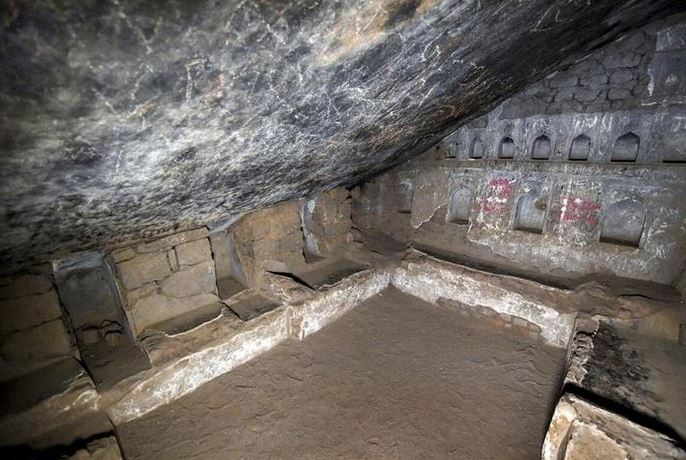
  • News in Frames: Chandravalli Caves

    Why in the News?

    Observations made by previous historians who had found painted pottery and coins from the Shatavahana empire and the pre-historic period were once again in the news.

    About Chandravalli Caves (also known as Ankali Math)

      • Chandravalli, a cave temple near Chitradurga, is also a pre-historic site.
      • Observations at the Site:
        • Previous excavations were carried out by Mortimer Wheeler under the guidance of the Archaeological Survey of India in 1947.
        • The cave features multiple chambers including a puja place with a shivlinga, a drawing room, a bedroom, and a water outlet connected to an internal tank.
        • The caves are accessible only through a narrow entrance, with interiors visible only with the help of a powerful torch hence they are also called as “Dark Caves”.
          • Presently, Excavations have revealed artifacts such as coins, painted bowls, and earthen pots from various dynasties such as the Hoysala, the Satavahana, and the Vijayanagara.
          • Excavation reports show that human habitation existed here even during the Iron Age.
    • Historical Aspect: 
      • They were named after a saint from Ankalagi in Belagavi district who is believed to have settled here.
      • The cave also contains a rock inscription of Mayurasharma, the founder of the Kadamba dynasty, dating back to AD 450.

    About Kadamba dynasty

    • The Kadambas of Goa were vassals of the Chalukya dynasty of Kalyana. In recognition of his assistance in defeating the Rashtrakutas, Chalukyan emperor Tailapa II appointed Kadamba Shasthadeva as the provincial governor (Mahamandaleshwara) of Goa.
    • In 960 AD, Shasthadeva captured the city of Chandavara from the Shilaharas and later seized control of the port of Gopakapattana, which is present-day Goa.
    • Talara Nevayya’s son Gundayya may have fought alongside Shasthadeva in the conquest of the port but died in the battle after successfully capturing it.
    • Coins from Indian kings like Krishnaraja Wodeyar III, Krishnadevaraya, various Satavahana kings, and Viraraya of the Hoysala kingdom have been discovered.
    • Among the foreign coins found are denarii of Roman ruler Augustus Caesar and a coin of Chinese Han dynasty Emperor Wu Ti.
    • Geographical Aspects:
      • The area is semi-arid with scrub vegetation and a stream running through it.
      • These caves are surrounded by three hills: Chitradurga, Kirabanakallu, and Jolagudda.

    PYQ:

    [2021] Which one of the following statements is correct?

    (a) Ajanta Caves lie in the gorge of Waghora river.

    (b) Sanchi Stupa lies in the gorge of Chambal river.

    (c) Pandu-lena Cave Shrines lie in the gorge of Narmada river.

    (d) Amaravati Stupa lies in the gorge of Godavari river.

  • DRDO unveils Indigenous Light Tank Zorawar

    Why in the News? 

    The Defence Research and Development Organisation (DRDO) and private company Larsen & Toubro (L&T) unveiled the prototype of the Zorawar light tank.

    Note: 

    • India primarily has T-90S Bhishma and T-72 Ajeya produced under license from Russia.
    • The Future Ready Combat Vehicle (FRCV) program aims to develop and induct next-generation Indigenous main battle tanks to replace the ageing T-72 fleet starting from 2030 onwards

    What is Zorawar Tank?

    • The Zorawar Tank was developed jointly by the DRDO and Larsen & Toubro (L&T).
    • It is an indigenous light tank designed specifically for operations in high-altitude regions like Ladakh and Sikkim.
    • It has been developed under ‘Project Zorawar’, named after General Zorawar Singh of Jammu.
    • Its prototype was unveiled in July 2023, with internal testing completed at L&T’s facility in Gujarat.
    • It has been scheduled for extensive trials in various conditions, including summer, winter, and high-altitude environments, with plans for induction by August 2025.

    Who was General Zorawar Singh (1784–1841)?

    • Zorawar Singh Chandel was a military general of the Dogra Rajput ruler, Gulab Singh of Jammu.
    • He served as the governor (wazir-e-wazarat) of Kishtwar and extended the territories of the kingdom by conquering Ladakh and Baltistan.
    • He also boldly attempted the conquest of Western Tibet (Ngari Khorsum) but was killed in battle of To-yo during the Dogra-Tibetan war.
    • About his legacy of conquests in the Himalayas including Ladakh, Tibet, Baltistan and Skardu as General and Wazir, Zorowar Singh has been referred to as the “Napoleon of India“, and “Conqueror of Ladakh“.

    Operational Capabilities:

    • Designed to operate effectively in extreme weather conditions and at high altitudes (above 15,000 feet) with minimal logistic support.
    • Intended for use in challenging terrains where heavier tanks like T-72 and T-90 face limitations.
    • Includes thermal sights, night-fighting capabilities, and features to reduce visual, sound, heat, and electromagnetic signatures.

    Technical Specifications:

    • Weight: Approximately 25 tons, allowing for air transportation.
    • Armament: Equipped with a 105mm turret from John Cockerill.
    • Firepower: Capable of firing advanced smart munitions and anti-tank guided missiles.
    • Mobility: Agile and manoeuvrable on steep slopes and riverine regions, designed to be amphibious.

    Engine and Power:

    • Initially planned with a German engine, but due to delays, currently powered by a Cummins engine assembled in India.
    • DRDO is concurrently working on developing a new power pack and a 1400 HP engine to enhance performance.

    Various Indigenous Tanks in the Indian Army

    Features
    Vijayanta (1965)
    • First indigenous main battle tank of the Indian Army
    • Based on a licensed design of the Vickers Mk.1 tank
    • Equipped with a 105mm rifled gun
    • Top speed of 52 km/h and range of 201 km
    • Crew of 4 (commander, gunner, loader, driver)
    • Upgrades included an improved fire control system, armour, and engine
    Arjun (2004)
    • India’s first fully Indigenous main battle tank developed by the Combat Vehicles Research and Development Establishment
    • Equipped with a 120mm rifled gun and has top speed of 67 km/h and range of 483 km
    • Crew of 4 (commander, gunner, loader, driver)
    • Features advanced fire control system, composite armor, and NBC protection
    • Arjun Mk-1A variant with improved capabilities entered service in 2022


  • Four-year UG Program formally launched in Kerala

    Why in the News?

    Kerala CM Pinarayi Vijayan inaugurated the curriculum of Four-Year Undergraduate Programmes (FYUP) in the state, stressing that it is in line with changes in the Global Education System where the focus is equally on imparting knowledge as well as the transfer of skills and vocational training.

    About Four-Year Undergraduate Program (FYUP):

    Parameters Details
    Key features 
    • Students can choose their major and minor subjects freely, for example science students can pursue humanities courses.
    • Provision for students to complete the degree in 2.5 years if they secure the required credits.
    • Offers 16 FYUP honors programs with research across science, arts, commerce and business streams at the University of Kerala.
    FYUP curriculum
    • It is designed to provide students with knowledge, intellectual abilities, multidisciplinary perspectives, flexible skills, social commitment and research aptitude to make them responsible citizens and offer multiple opportunities in research and employment
    • Includes online courses, skill development, internships and research projects.
    Eligibility criteria
    • Students need a CGPA of 7.5 or above to advance to the 4th year and get an honors degree with research.
    •  Admission based on 12th marks for now, entrance exam planned from next year.

    Administrative and Technological Upgrades required:

    • Regulatory Revisions: Plans for a comprehensive revision of University Acts and Regulations to streamline academic processes and enhance efficiency.
    • K-REAP Initiative: Introduction of Kerala Resources for Education Administration and Planning (K-REAP), a governance software to centralize institutional activities.

    Issues with FYUP Program

    • Implementation Challenges: The introduction of the FYUP faced logistical and administrative hurdles, impacting its rollout across Kerala’s higher educational institutions.
    • Curriculum Adaptation: Critics argue that the FYUP’s curriculum overhaul lacks sufficient alignment with industry needs and fails to adequately prepare students for real-world challenges.
    • Student Adaptation: Some students and educators have expressed concerns about the abrupt shift in academic structure and its impact on learning outcomes and student performance.
    • Evaluation Methods: There is ongoing debate over the effectiveness of the FYUP’s assessment methods, with some stakeholders questioning its ability to accurately gauge student knowledge and skills.
    • Policy Revisions: Continuous revisions and adjustments to the FYUP’s policies and regulations are needed to address evolving educational needs and feedback from various stakeholders.

    New Education Policy (NEP), 2020:

    • The New Education Policy (NEP) 2020 introduced by the Government of India aims to transform the educational landscape of the country.
    • One of the key changes in the NEP is the restructuring of the duration and framework of undergraduate programs.
    • The NEP 2020 introduces a four-year undergraduate program as a standard duration for bachelor’s degrees, replacing the traditional three-year format.
    • Students can exit the program at different stages with a qualification. For example:
      • After 1 Year: Certificate
      • After 2 Years: Diploma
      • After 3 Years: Bachelor’s Degree
      • After 4 Years: Bachelor’s Degree with Research


    PYQ:

    [2015] The quality of higher education in India requires major improvement to make it internationally competitive. Do you think that the entry of foreign educational institutions would help improve the quality of technical and higher education in the country. Discuss.

  • India’s Fintech funding plummets amid global slowdown, shows report    

    Why in the news? 

    Despite achieving a significant milestone in H1 2024, the fintech sector has encountered notable funding difficulties.

    What is the Fintech Sector?

    • The fintech sector encompasses technologies and innovations that aim to compete with traditional financial methods in the delivery of financial services. This includes a wide range of applications like mobile banking, online payments, digital lending, and blockchain technology.

    Present Report Insights

    • Funding Decline: The Indian fintech sector recorded $795 million in funding in H1 2024, a decrease of 11% from H2 2023 and 59% from H1 2023.
    • Global Ranking: Despite the decline, the Indian fintech ecosystem ranked among the top three globally funded sectors alongside the US and UK in H1 2024.
    • Major Transactions: Only two funding rounds exceeded $100 million in 2024, with Perfios becoming the only unicorn. Bengaluru led the funding, followed by Mumbai and Pune.
    • Segment Performance: Alternative Lending, RegTech, and BankingTech were the top-performing segments, with Alternative Lending securing $646 million, making up 81% of the total funding.
    • Acquisitions and IPOs: There were six acquisitions and five IPOs in H1 2024, marking significant activity despite the overall funding challenges.

    Significance of Fintech Sector

    • Financial Inclusion: Fintech innovations enhance financial inclusion by providing access to financial services to unbanked and underbanked populations.
    • Economic Growth: The sector contributes significantly to economic growth by fostering innovation, creating jobs, and boosting consumer spending.
    • Efficiency and Transparency: Fintech solutions improve efficiency and transparency in financial transactions, reducing costs and fraud.
    • Support for Startups: The sector offers numerous opportunities for startups, driving entrepreneurship and competition.

    Challenges 

    • Data Security: Fintech companies must implement strong security measures to protect sensitive customer data from cyber-attacks and data breaches. For example, Acko, a leading Indian fintech startup, has faced issues with data breaches in the past, highlighting the importance of robust data security protocols in the industry.
    • Regulatory Compliance: The fintech industry is highly regulated, requiring companies to stay updated on the latest government policies and ensure compliance to avoid penalties. For example, the Reserve Bank of India (RBI) has issued guidelines to protect consumers from predatory lending practices by digital lenders, underscoring the need for fintech firms to navigate the evolving regulatory landscape.
    • Customer Acquisition and Retention: Attracting and retaining customers is critical for fintech firms. For example, BharatPe, a prominent Indian fintech company, has faced challenges in customer retention due to its focus on merchant acquisition.
    • Funding and Investment: Securing adequate funding and investments remains a challenge for many fintech startups.  For example, Paytm, one of India’s largest fintech companies, has faced scrutiny from investors due to its inability to achieve profitability

    How India Can Improve Its Fintech Sector

    • Supportive Regulatory Environment: Create a regulatory framework that encourages innovation while ensuring consumer protection and systemic stability, facilitating a balanced growth of the fintech ecosystem.
    • Infrastructure Development: Invest in digital infrastructure, such as high-speed internet and mobile connectivity, to support the widespread adoption and efficient functioning of fintech applications across the country.
    • Focus on Cybersecurity: Ensure robust cybersecurity measures to protect against fraud and cyber-attacks, building trust among users and maintaining the integrity of fintech services.
    Steps taken by the government: 

    • Regulatory Sandbox: The Securities and Exchange Board of India (SEBI) introduced a framework for regulatory sandbox in 2020 to allow fintech companies to experiment with new products and services in a controlled environment.
    • Digital Personal Data Protection Bill: Introduced in 2022, this bill aims to create a framework for the protection of personal data collected by fintech companies.
    • Guidelines on Digital Lending: In 2022, the Reserve Bank of India (RBI) issued guidelines to protect consumers from predatory lending practices by digital lenders.
    • Promoting Financial Inclusion: The Pradhan Mantri Jan Dhan Yojana (PMJDY) has helped in enrolling over 523.9 million beneficiaries for new bank accounts, enabling fintech startups to reach a large consumer base.
    • Aadhar and UPI: The unique biometric identification system Aadhar and the Unified Payments Interface (UPI) have improved transparency and delivery of financial service

    Conclusion: Fintech companies in India face challenges including data security, regulatory compliance, customer acquisition, and securing investments. Addressing these ensures sustainable growth and trust in a competitive market environment.


    Mains PYQ: 

    Q Has digital illiteracy, particularly in rural areas, coupled with a lack of Information and Communication Technology (ICT) accessibility hindered socio-economic development? Examine with justification. (UPSC IAS/2021)