💥Join UPSC 2027,2028 Mentorship (July Batch) + XFactor Notes & Microthemes PDF

Distribution: yearly

  • [pib] Measuring Helium Abundance in the Sun

    Why in the News?

    Researchers at the Indian Institute of Astrophysics (IIA) have successfully estimated the abundance of Helium in the Sun’s photosphere with precision for the first time.

    [pib] Measuring Helium Abundance in the Sun

    About Helium in the Sun’s Photosphere:

    • Helium is the second most abundant element in the Sun after Hydrogen and plays a key role in understanding solar composition, opacity, and energy transport.
    • However, measuring its precise abundance in the Sun’s photosphere has been challenging due to the absence of observable Helium spectral lines in visible light.
    • Traditionally, Helium abundance was estimated using indirect methods like extrapolating data from hotter stars, solar wind observations, and seismological studies of the Sun’s interior.
    • These methods lacked direct photospheric observations, making the estimates less accurate.
    • Accurate measurements of Helium are essential for modelling the Sun’s opacity and energy transport. This also has broader implications for understanding the composition of other stars.

    Novel Method Recently Discovered:

    • Researchers from the IIA introduced a novel method to directly estimate Helium abundance in the Sun’s photosphere.
    • This technique uses spectral features from Magnesium (Mg) and Carbon (C), overcoming the challenge of no direct Helium spectral lines.
    • Spectral lines from Mg, C, and hydrogenated molecules (MgH, CH, C2) were used to infer Helium abundance.
    • Equivalent Width analyses and spectrum synthesis techniques helped model the behavior of these elements in varying Helium-to-Hydrogen ratios.
    • The Helium-to-Hydrogen ratio in the Sun’s photosphere was found to be 0.1, consistent with previous studies. This confirms the validity of the new method.
    [UPSC 2023] Diffusion of light in the atmosphere takes place due to:

    Options: (a) Carbon dioxide (b) Dust particles* (c) Helium (d) Water vapors


  • [24th April 2025] The Hindu Op-ed: Responding to the terror attack in Pahalgam

    PYQ Relevance:

    [UPSC 2024] Winning of ‘Hearts and Minds’ in terrorism-affected areas is an essential step in restoring the trust of the population. Discuss the measures adopted by the Government in this respect as part of the conflict resolution in Jammu and Kashmir.

    Linkage: The Pahalgam attack occurred in Jammu and Kashmir. This question directly addresses strategies for building trust and resolving conflict in terrorism-affected regions, which is a crucial aspect of responding to such attacks in the long term.


    Mentor’s Comment:  The terrorist attack in Pahalgam, Jammu and Kashmir, is not just an act of violence; it’s a calculated political move, carefully timed to cause both human casualties and strategic disruption. The attack took place shortly after the Kashmir Valley started welcoming tourists for the season and while U.S. Vice-President J.D. Vance was visiting India. This is not a random attack, but part of a long-standing pattern of cross-border terrorism supported by Pakistan’s military and intelligence agencies. At a time when Pakistan had faded from India’s diplomatic focus, it has now returned, aiming to disrupt what India holds dear.

    Today’s editorial analyzes the recent terrorist attack in the Baisaran meadows of Pahalgam, Jammu and Kashmir. This discussion will be useful for GS Paper 2 on International Relations and GS Paper 3 on Border Management.

    _

    Let’s learn!

    Why in the News?

    On April 22, 2025, terrorists attacked a group of tourists in the Baisaran meadows of Pahalgam, Jammu and Kashmir, killing dozens and injuring many others. This was the first major attack on civilians in Kashmir since the government removed the region’s special status in 2019.

    Why is the Pahalgam attack seen as a political signal beyond terrorism?

    • Strategic Timing: The attack was carefully timed to coincide with major diplomatic events, aiming to internationalize the Kashmir issue and undermine India’s global image. Eg: It occurred during U.S. Vice-President J.D. Vance’s visit to India, drawing global attention and signaling instability in Kashmir.
    • Undermining Normalcy: Targeting a tourist destination was meant to damage the perception of peace, hurt local livelihoods, and instill fear among potential visitors. Eg: The attack happened in Baisaran near Pahalgam, a scenic spot often described as ‘mini Switzerland’, during peak tourism season.
    • Proxy Warfare: It reflects Pakistan’s continued reliance on non-state actors to wage asymmetric warfare against India while maintaining deniability. Eg: The Resistance Front (TRF), linked to Lashkar-e-Taiba and ISI, claimed responsibility—mirroring past attacks like the 2019 Pulwama bombing.

    What intelligence and security lapses does the attack reveal?

    • Failure of Local Intelligence Gathering: Security forces lacked timely and actionable intelligence about militant movement in a high-tourist zone. Eg: Despite a large number of tourists in Pahalgam, there were no alerts about possible threats in the area prior to the attack.
    • Inadequate Perimeter Surveillance: The attackers exploited gaps in area surveillance and patrol routines around tourist spots. Eg: The militants attacked near Baisaran meadow—an open and vulnerable area with limited surveillance despite being a tourist hotspot.
    • Weak Coordination Among Agencies: Lack of seamless coordination between intelligence, police, and paramilitary forces led to poor threat anticipation and response. Eg: Local police reportedly had not received central alerts, reflecting weak inter-agency information sharing.
    • Overreliance on Static Security Checks: Security was concentrated at checkpoints, but attackers used off-road routes to bypass these. Eg: Militants avoided heavily guarded roads and struck a moving vehicle, indicating knowledge of patrol patterns.
    • Neglect of Civilian Vulnerability Mapping: No dynamic assessment of soft targets such as unescorted tourist groups in sensitive areas. Eg: The victims were on a pony ride, unprotected, with no security escort in a forested zone open to ambush.

    How does Pakistan’s instability under Gen. Munir fuel cross-border terrorism?

    • Military-Civil Power Struggle: The weakening of civilian institutions and dominance of the military creates an environment where the Army uses external conflicts to maintain control. Eg: Gen. Munir’s growing influence post-Imran Khan’s ousting has coincided with increased militant activity in Kashmir to divert attention from domestic unrest.
    • Use of Terrorism as Strategic Depth: The Pakistani military views proxy groups as tools to counterbalance India without engaging in direct war. Eg: Groups like Lashkar-e-Taiba and Jaish-e-Mohammed have resurged in training and logistics activities near the LoC.
    • Diverting Attention from Internal Crises: Facing economic collapse and political chaos, Pakistan’s deep state stokes tensions with India to unify the populace and distract from internal failures. Eg: After IMF bailout troubles and mass protests, there was a spike in infiltration attempts into J&K.
    • Weak Civilian Oversight on Terror Networks: Political instability weakens civilian checks on terror outfits, allowing the military and ISI to operate with impunity. Eg: Banned terror outfits continue to function under new names and operate training camps openly in PoK and Punjab regions.
    • ISI’s Tactical Shift Toward Lone Wolf or Hybrid Militants: The ISI, under Munir’s tenure as ex-ISI chief, has adapted to deploy hard-to-trace, localised operatives, making it harder for India to track networks. Eg: Attacks like Pahalgam have shown signs of hybrid militancy—locals radicalised online but supported logistically from across the border.

    How can India align its external stance with internal outreach in Kashmir?

    • Promote Development as a Security Strategy: Emphasize infrastructure, education, and employment to win hearts locally and showcase progress internationally. Eg: The Srinagar Smart City project and new medical colleges can be highlighted in diplomatic forums to counter negative narratives.
    • Empower Local Governance: Strengthen democratic institutions like Panchayats and urban bodies to demonstrate political normalization. Eg: Conducting timely local body elections and empowering DDCs reflects ground-level participation, reinforcing India’s democratic image globally.
    • Consistent Narrative Management: Maintain a unified communication strategy to counter misinformation from hostile actors. Eg: India’s MEA and J&K administration issuing joint statements during crises can reduce confusion and reinforce India’s position internationally.
    • Engage Diaspora and Global Media: Leverage Indian diaspora and media outreach to project a balanced narrative on Kashmir reforms and security. Eg: Indian embassies organizing Kashmir-focused briefings in the US/EU to highlight post-Article 370 investments and peace-building.
    • Cultural and Religious Diplomacy: Promote Kashmir’s syncretic traditions like Sufism to counter radical narratives. Eg: Organizing international Sufi festivals or Buddhist circuit promotion in Ladakh can portray Kashmir as culturally inclusive and peaceful.

    What steps has taken by the Indian Government?

    • Diplomatic Measures: India has downgraded its diplomatic and logistical ties with Pakistan.Eg: The Indus Waters Treaty has been suspended, the Attari-Wagah border crossing has been closed, and Pakistani defense advisors have been expelled. Additionally, Pakistani nationals in India under regional visas have been given 48 hours to leave, and India’s embassy staff in Islamabad has been reduced.
    • Security Enhancements: The Indian government has increased security measures in Jammu and Kashmir. Eg: Security forces are conducting a major manhunt in the region to apprehend the perpetrators of the attack. The government is also reviewing and strengthening security protocols to prevent future incidents.

    Way forward: 

    • Enhanced Security Infrastructure: Strengthen intelligence networks and surveillance systems in vulnerable regions like Jammu and Kashmir to preempt cross-border terrorism and ensure rapid response capabilities.
    • Diplomatic Pressure on Pakistan: Intensify international diplomatic efforts to isolate Pakistan by leveraging global platforms, pressing for accountability, and fostering stronger alliances to counter terrorism.
  • Air pollution in India — where does it come from?

    Why in the News?

    Millions of people die early because of dirty air. But where does this air pollution come from?

    Where do the majority of sulphur dioxide (SO2) emissions in India come from?

    • Energy Production: The largest source of sulphur dioxide (SO2) emissions in India is energy production, primarily from coal-fired power plants. Eg, coal contains sulphur impurities that are released when it is burned, contributing significantly to SO2 pollution.
    • Industrial Activities: Industries like cement production, steel manufacturing, and chemical plants also release SO2. Eg, the cement industry, which uses fossil fuels, is a major emitter of this pollutant.

    What are the main sources of nitrogen oxides (NOx) emissions?

    • Transportation: The largest source of nitrogen oxides (NOx) emissions is transportation, particularly from the exhaust of cars and trucks. Eg, diesel-powered vehicles, which burn fuel less efficiently, produce higher NOx emissions.
    • Energy Production: The burning of coal and gas for electricity generation also significantly contributes to NOx emissions. Eg, power plants that burn coal release large amounts of NOx during the combustion process.
    • Industrial Activities: Industrial processes such as manufacturing and chemical production also emit NOx. Eg, refineries and other heavy industries use high-temperature processes that release NOx as a byproduct.

    What sectors are the biggest contributors to methane (CH4) emissions?

    • Agriculture: The largest source of methane emissions, particularly from livestock digestion (enteric fermentation) and rice paddies. Eg, cows and other ruminants produce methane during digestion, and flooded rice fields emit methane as organic matter decomposes anaerobically.
    • Waste Management: Methane is released from organic waste decomposing in landfills under anaerobic conditions. Eg, food waste rotting in landfills produces significant methane emissions.
    • Fossil Fuel Extraction: Methane is emitted during the extraction, transport, and use of fossil fuels, especially natural gas. Eg, methane leaks from oil and gas pipelines, as well as from coal mines, contributing to atmospheric emissions.

    How does agriculture contribute to ammonia (NH3) emissions and their health impacts?

    • Agriculture: The application of nitrogen-based fertilizers is a major source of ammonia emissions. Eg, the use of urea fertilizers in crop fields results in ammonia volatilization when applied to the soil, contributing to air pollution.
    • Livestock Waste: Ammonia is released from animal manure, especially from large-scale livestock farming. Eg, in intensive dairy and poultry farms, ammonia is emitted from urine and feces, leading to air and water pollution.
    • Health Impacts: Ammonia contributes to the formation of fine particulate matter (PM2.5), which can cause respiratory issues, asthma, and premature deaths. Eg, exposure to ammonia-laden air in farming areas has been linked to increased health risks such as lung diseases and cardiovascular problems.

    What are the steps taken by the Indian Government?

    • National Clean Air Programme (NCAP): Launched in 2019, NCAP aims to reduce particulate matter (PM2.5 and PM10) pollution in 102 cities by 20-30% by 2024, with strategies focusing on controlling emissions from key sectors like transport, industries, and construction.
    • Pradhan Mantri Ujjwala Yojana: This initiative aims to replace traditional biomass cooking methods with clean cooking technologies, such as LPG, to reduce black carbon emissions in rural areas.
    • BS-VI Norms for Vehicles: The Indian government has enforced the Bharat Stage VI (BS-VI) emission standards from April 2020, which are aimed at significantly reducing nitrogen oxides (NOx) and particulate emissions from vehicles.
    • Pollution Control Measures in Power Plants: The government has set deadlines for coal-fired power plants to comply with stricter emission norms for sulphur dioxide (SO2), nitrogen oxides (NOx), and particulate matter.
    • Air Quality Monitoring and Data Collection: The government has set up a network of air quality monitoring stations across cities under the Central Pollution Control Board (CPCB) and is working to improve real-time data collection on air quality.

    Way forward: 

    • Shift to Clean Energy: Expand renewable energy use and enforce cleaner technologies in the power and industrial sectors to cut SO₂ and NOₓ emissions.
    • Strengthen Enforcement & Awareness: Ensure strict implementation of air quality norms and raise public awareness on pollution-reducing practices.

    Mains PYQ:

    [UPSC 2022] Discuss in detail the photochemical smog, emphasising its formation, effects and mitigation.

    Linkage: Formation of a significant type of air pollution, photochemical smog, which is formed from primary pollutants like Nitrogen oxides (from transport and industry) reacting in the presence of sunlight [209, external knowledge]. Understanding the formation requires knowing the precursor pollutants and their sources.

  • India suspends Indus Water Treaty

    Why in the News?

    In response to the Pahalgam Terror Attack, India has officially announced the suspension of the Indus Waters Treaty (IWT) with Pakistan.

    About the Indus Water Treaty (IWT)

    • IWT was signed between India and Pakistan on September 19, 1960, with mediation from the World Bank.
    • The treaty allocates the Western rivers (Indus, Chenab, and Jhelum) to Pakistan, and the Eastern rivers (Ravi, Beas, and Sutlej) to India.
    • Approximately 80% of the water is allocated to Pakistan, with 20% to India.
    • The Permanent Indus Commission was established to facilitate communication and dispute resolution.
    • The treaty includes a three-step process for resolving disputes, which involves the Permanent Indus Commission, Neutral Experts (appointed by World Bank), and a Court of Arbitration if needed.

    Implications of Suspension:

    • India’s Opportunities:
      • Though not immediately, but India can now control the water flow from the Indus River system, allowing it to divert, stop, or alter the flow of water.
      • India can expand hydroelectric projects on the Western rivers, such as the Kishanganga and Ratle Hydroelectric Projects, with more projects under scrutiny.
    • Impact on Pakistan:
      • Agriculture: Pakistan’s agricultural sector heavily depends on the Indus River, and any disruption could cause food insecurity and economic distress for millions of farmers.
      • Power Supply: Pakistan’s hydroelectric power generation depends on the water flow, with Tarbela Dam (on the Indus River) and Mangla Dam (on the Jhelum River) facing reduced water supplies, leading to electricity shortages.

    Alternatives for Pakistan:

    • No Legal Exit: No legal exit clause in the treaty; also, India cannot unilaterally suspend it.
    • Dispute Resolution: Pakistan can approach the Permanent Indus Commission, request Neutral Experts, or escalate to the World Bank’s Court of Arbitration.
    • International Diplomacy: Pakistan may seek diplomatic solutions through international forums, including leveraging support from other nations.
    [UPSC 2009] Consider the following statements:

    1. The Baglihar Power Project had been constructed within the parameters of the Indus Water Treaty.

    2. The project was completely built by the Union Government with loans from Japan and the World Bank.

    Options: (a) 1 only * (b) 2 only (c) Both 1 and 2 (d) Neither 1 nor 2

    [UPSC 2021] With reference to the Indus River system, among the following four rivers, one of them joins the Indus directly:

    Options: (a) Chenab (b) Jhelum (c) Ravi (d) Sutlej


  • Taliban to revive Bamiyan Buddha

    Why in the News?

    Two decades since the demolition of Bamiyan Buddha, the Afghan Taliban are now convinced to restore it.

    Taliban to revive Bamiyan Buddha

    About Bamiyan Buddha:

    • The Bamiyan Buddhas were located in the Bamiyan Valley, Afghanistan, about 130 km northwest of Kabul.
    • The Western Buddha (Salsal) stood 55 meters tall, and the Eastern Buddha (Shah Mama) stood 38 meters tall, making them two of the largest standing Buddha statues in the world before their destruction.
    • Construction:
      • Built around 600 CE during the rule of the Hephthalites.
      • Carved directly into sandstone cliffs with features made from mud and straw, and painted with bright colors, including carmine red for the larger Buddha.
      • The style blends Greco-Buddhist art, Sasanian Persia, and Byzantine Empire influences.
    • Historical Significance:
      • Represented Vairocana and Sakyamuni (Gautama Buddha).
      • Served as a major Buddhist religious centre along the Silk Road, hosting monasteries and playing a crucial role in religion, philosophy, and art.
      • Survived invasions, including by Genghis Khan (1221 AD) and Aurangzeb (17th Century).
    • In 2001, the Taliban destroyed the statues. The Buddhas had previously survived multiple attacks.
    • The site is listed as a UNESCO World Heritage Site due to its immense historical, religious, and cultural significance.
    [UPSC 2014] Which of the following Kingdoms were associated with the life of the Buddha?

    1. Avanti 2. Gandhara 3. Kosala 4. Magadha

    Select the correct answer using the code given below:

    Options: (a) 1, 2 and 3 only (b) 2 and 4 only (c) 3 and 4 only * (d) 1, 3 and 4 only


  • Akshvi Platform for Disaster Damage Reporting

    Why in the News?

    India has introduced Akshvi, a unique e-digital wallet aimed at assisting in disaster relief and improving the accuracy of loss reporting.

    About Akshvi: The E-Digital Wallet for Disasters

    • Akshvi (Aapda Kshati Vivaran) is a unique e-digital wallet developed by SEEDS India to assist disaster-stricken communities in India.
    • The platform allows people to self-report economic and non-economic losses during climate-induced events.
    • It bridges the data gap in disaster reporting and enhancing relief distribution and climate resilience.

    Key Features of Akshvi:

    • Self-Reporting Mechanism: It enables affected communities to log their losses during disasters such as floods, droughts, heatwaves, and landslides, ensuring accurate and timely assessments.
    • Localized Data Collection: The platform collects hyperlocal data, which is vital for tailoring disaster management strategies and relief efforts to the specific needs of affected communities.
    • User-Friendly Interface:
      • IVRS: Allows voice recording of losses.
      • WhatsApp Chatbot: For tech-savvy users to log data.
      • Assisted Data Entry: Available for those needing help with information entry.
    • Traceability: The platform tracks the progress of relief, ensuring that aid reaches the affected households transparently.
    • Integration with Government Schemes: Akshvi’s data links to social welfare schemes and index-based insurance programs, improving disaster response efforts.
    [UPSC 2004] In which one of the following countries did hundreds of people die in 2004 due to Tropical Storm Jeanne?

    Options: (a) Colombia  (b) Haiti (c) Sudan (d) Ghana


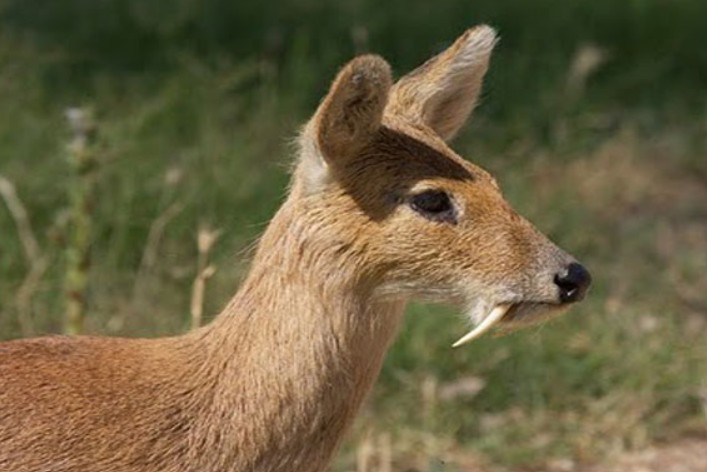
  • Species in news: Musk Deer

    Why in the News?

    A recent report by the Central Zoo Authority (CZA), highlights the absence of any breeding programme for musk deer.

    Species in news: Musk Deer

    About Musk Deer:

    • The Himalayan Musk Deer (Moschus leucogaster) is an endangered species native to the Himalayas, found in India, Nepal, Bhutan, Pakistan, and China.
    • It inhabits altitudes of 2,200 to 4,300 meters, primarily in alpine forests and scrublands.
    • Behaviour: Solitary, nocturnal, and territorial. Males have long, curved canine teeth and a musk gland, which is highly valued and targeted by poachers.
    • It plays a key role in seed dispersal, helping maintain the balance of the alpine ecosystem.
    • Threats: Poaching for their musk glands, habitat loss from deforestation, and genetic issues due to fragmented populations.

    Conservation Initiatives:

    • Protection Status:
      • It is listed as Endangered on the IUCN Red List.
      • It is listed under Schedule I of the Wildlife (Protection) Act, 1972, offering the highest protection under Indian law.
    • Protected Areas:
      • Kedarnath Wildlife Sanctuary: Established in 1972, covering 975 km² in the western Himalayas, crucial for musk deer conservation.
      • Askot Musk Deer Sanctuary: Located in Uttarakhand, dedicated specifically to musk deer conservation.
    • Himalayan Musk Project (1982): Aimed at captive breeding within Kedarnath Sanctuary but faced setbacks due to disease, snake bites, and poor survival rates. The project was shut down in 2006.
    [UPSC 2020] Which of the following are the most likely places to find the musk deer in its natural habitat?

    1. Askot Wildlife Sanctuary

    2. Gangotri National Park

    3. Kishanpur Wildlife Sanctuary

    4. Manas National Park

    Select the correct answer using the code given below:

    Options: (a) 1 and 2 only (b) 2 and 3 only (c) 3 and 4 only (d) 1 and 4 only


  • Role of Lipids in Protein Function and Co-Evolution

    Why in the News?

    New research by CSIR-Centre for Cellular and Molecular Biology, Hyderabad suggest that lipids (along with DNA), particularly in mitochondrial membranes, are not just structural elements but play an integral role in the function and evolution of proteins.

    About Lipids and RC1 in Cells:

    Lipids:

    • Lipids, including fats, phospholipids, and sterols, make up to 30% of the dry weight of cells.
    • They are crucial for membrane integrity and various biological processes.
    • They vary in fatty acid composition and length, influenced by genetics, diet, and environmental factors.
    • They form a bilayer in membranes, with hydrophilic heads facing outward and hydrophobic tails inward, providing stability and enabling protein function.
    • Role of Lipids in Cells:
      • Lipids form the bilayer, providing flexibility and stability for membrane proteins that perform functions like receptor binding and ion channelling.
      • They like cardiolipin stabilize RC1 and other respiratory complexes, aiding energy production.

    RC1 (Respiratory Complex 1):

    • RC1 is a protein complex in the mitochondrial membrane, crucial for cellular respiration and energy production.
    • It is composed of 44 proteins, some synthesized in the cytoplasm and others in mitochondria.
    • Mutations in RC1 lead to diseases due to its vital role in respiration.

    Lipid-Protein Co-evolution as per new Research:

    • New research highlights the co-evolution of proteins and lipids, especially in mitochondrial membranes, where proteins interact with specific lipids from their own kingdom (plant or animal).
    • Plant lipids, richer in polyunsaturated fatty acids, are more flexible, aiding stress resistance, while animal lipids evolve differently to meet their needs.
    • Lipid-protein co-evolution adds complexity to cellular evolution, with implications for human health and disease treatment.
    [UPSC 2001] Which of the following cell organelles play the most significant role in protein synthesis?

    Options: (a) Lysosome and Centrosome (b) Endoplasmic reticulum and Ribosome* (c) Golgi apparatus and Mitochondria (d) Lysosome and Mitochondria


  • [23rd April 2025] The Hindu Op-ed: Exploring India’s potential in the Arctic region

    PYQ Relevance:

    [UPSC 2018] Why is India taking keen interest in resources of Arctic Region?

    Linakge: India’s interest in the Arctic’s resources, which is a central theme in the Article. This article highlights the Arctic as a “critical energy source for the Global South” and mentions India’s potential stake in the “massive resources” of the region.


    Mentor’s Comment:  Global trade is shifting due to U.S. pressures and climate change, prompting countries to explore new supply chains and routes. The Arctic, while warning of a climate crisis, offers major geopolitical and economic potential. As new trade paths open, India must ensure it has a role in future Arctic opportunities without harming the fragile environment.

    Today’s editorial highlights why the Arctic region matters for the world and India. This topic is useful for GS Paper 2 (international relations) and GS Paper 3 (environment and economy) in the mains exam.

    _

    Let’s learn!

    Why in the News?

    India should have a voice in the future economic opportunities of the Arctic, without rushing to exploit its resources recklessly.

     [ 23rd April 2025] The Hindu Op-ed: Exploring India’s potential in the Arctic region

    What is the Northern Sea Route (NSR)? 

    • The Northern Sea Route (NSR) is a new Arctic sea route connecting the Atlantic Ocean to the Pacific Ocean, running along the northern coast of Russia.
    • It provides the shortest maritime route between Europe and Asia, significantly reducing shipping distances. Eg: Shipping from Rotterdam to Shanghai via the NSR cuts the journey by around 30%, reducing travel time by approximately 10 days.

    How could it transform global trade?

    • Reduced Freight Costs: By providing a more direct and shorter route, the NSR can substantially lower shipping costs, as vessels spend less time on the water and consume less fuel. Eg: The cost savings from the reduced travel time and fuel consumption can incentivize global shipping companies to shift their operations to the NSR, especially for bulk goods and high-value cargo.
    • Expedited Global Trade: The NSR could drastically speed up the flow of goods, particularly for time-sensitive cargo like electronics, automotive parts, and perishable goods, thus improving global trade efficiency. Eg: In 2018, a Chinese cargo ship made a successful voyage through the NSR, delivering goods from China to Europe in a record time of 18 days, compared to the traditional 40+ days via the Suez Canal.
    • Opening New Markets: The NSR could lead to the development of new ports and shipping routes in the Arctic, creating economic opportunities for the countries surrounding the region. It can also open up access to new markets that were previously difficult to reach. Eg: As traffic on the NSR increases, ports like Murmansk in Russia and Pevek in the Arctic will see growth, transforming them into significant maritime hubs.

    Why is the Arctic region becoming geopolitically and economically important for India?

    • New Trade Routes: The Northern Sea Route (NSR) opens shorter, more efficient shipping lanes between Europe and Asia, benefiting India’s trade by reducing shipping times and costs. Eg: The NSR offers India quicker access to European markets, enhancing trade competitiveness.
    • Energy Resources: The Arctic region holds vast untapped oil and natural gas reserves, offering India potential access to energy resources vital for its growing needs. Eg: Arctic exploration could help diversify India’s energy sources, ensuring a more secure supply.
    • Climate Research: The Arctic’s rapid changes influence global climate patterns, impacting India’s monsoon and agricultural productivity. Eg: Research on the Arctic’s climate helps India prepare for shifts in its monsoon patterns and protect food security.
    • Geopolitical Influence: India’s involvement in Arctic governance could strengthen its global position and foster partnerships with key nations like Russia and the U.S. Eg: By engaging in Arctic policy, India enhances its diplomatic and strategic ties with major global players.
    • Maritime Security: India’s access to the Arctic region can improve its maritime security and help protect vital trade routes. Eg: Strengthening Arctic partnerships can ensure India’s strategic interests in the region are safeguarded.

    When did India formalise its Arctic policy, and what are its key goals?

    Focus Area Key Objectives
    Scientific Research and Climate Understanding Enhance scientific knowledge about the Arctic’s effect on global climate, especially the Indian monsoon and agriculture. Strengthen research stations like Himadri and use space technology for Arctic studies.
    Environmental Protection and Sustainable Development Promote protection of the Arctic environment and support sustainable development. Encourage responsible use of resources and partner with Arctic nations on green energy.
    Enhanced International Cooperation and Capacity Building Actively participate in Arctic governance (e.g., Arctic Council), improve India’s expertise in Arctic studies, and collaborate on digital connectivity and indigenous knowledge exchange.

    Who are India’s potential strategic partners in the Arctic region?

    • Russia: India sees Russia as a key partner in the Arctic due to its extensive Arctic coastline and expertise in Arctic navigation. The two countries have established a working group under the bilateral intergovernmental commission to explore opportunities in Arctic trade routes like the Northern Sea Route (NSR) and potential joint ventures. Eg, the Chennai-Vladivostok Maritime Corridor is seen as a bridge to the NSR.
    • Japan and South Korea: Japan and South Korea are also critical partners due to shared concerns over China’s increasing influence in the Arctic. These nations and India aim to promote a more inclusive Arctic Council and ensure equitable access to Arctic resources, countering Chinese dominance in the region.

    What are the challenges involved? 

    • Harsh Environmental Conditions: The Arctic’s extreme weather and icy waters present significant challenges for navigation and shipping. India will need to invest heavily in specialised ice-breaking fleets and infrastructure to ensure safe and efficient passage along the Northern Sea Route (NSR). Eg, the need for shipbuilding suited to Arctic conditions was highlighted in India’s 2025-26 Budget.
    • Geopolitical Tensions: The Arctic region is becoming a battleground for global powers, with competing interests between the U.S., Russia, and China. India faces the dilemma of balancing relations with both Russia and the Western bloc while ensuring its interests in Arctic trade routes and resources. Eg, supporting Russia’s Arctic ambitions could align India with China’s Polar Silk Road, creating a potential conflict with U.S. interests.
    • Environmental Impact and Climate Change: Exploiting Arctic resources poses risks to the fragile ecosystem, and climate change further exacerbates these concerns. India must balance its commercial interests with environmental responsibility, ensuring that Arctic exploration does not contribute to further ecological degradation. Eg, global temperatures breaching 1.5°C in 2024 highlight the urgency of sustainable development in the Arctic.

    How should India balance environmental concerns with commercial interests in the Arctic? (Way forward) 

    • Sustainable Resource Management: India should advocate for responsible exploration and use of Arctic resources, ensuring that commercial activities do not harm the fragile environment. This includes supporting international regulations on sustainable practices and climate-resilient policies. Eg, India’s engagement in the Arctic Council can help influence global guidelines for Arctic resource extraction, focusing on minimal environmental disruption.
    • Collaborative Efforts with Like-minded Nations: India should collaborate with countries that share its concerns about environmental protection, such as Japan and South Korea, to promote sustainable Arctic governance. By forging partnerships focused on environmental preservation and responsible trade, India can secure both economic opportunities and environmental integrity. Eg, India, Japan, and South Korea have common interests in mitigating Chinese influence in Arctic policies, emphasising eco-friendly development.
  • A move that endangers the right to vote

    Why in the News?

    The Election Commission of India (ECI) is again trying to link Aadhaar with voter ID, claiming it will help remove fake voters, clean up the voter list, and make elections more fair. However, this move could put people’s right to vote at risk.

    Why is Aadhaar-Voter ID linkage seen as a threat to voting rights?

    • Risk of Mass Disenfranchisement: Linking Aadhaar with voter ID can lead to the wrongful deletion of genuine voters from electoral rolls due to data mismatches or errors in the Aadhaar database. Eg: In 2015, during the National Electoral Roll Purification and Authentication Programme, over 55 lakh voters were arbitrarily removed in Telangana and Andhra Pradesh, causing many to discover their names missing only on election day.
    • Violation of the Right to Privacy and Autonomy: The linkage forces citizens to part with their Aadhaar information, effectively making a voluntary scheme coercive. It exposes citizens to data misuse and profiling by political actors. Eg: Form 6B requires Aadhaar submission or a declaration of non-possession, with no real opt-out, pressuring citizens to comply.
    • Disproportionate Impact on Vulnerable Groups: Groups like the elderly, disabled, migrant workers, and rural residents face practical challenges in appearing before Electoral Officers to justify not having Aadhaar, putting their right to vote at risk. Eg: The proposed requirement for in-person appearance imposes an unreasonable burden, especially for people in remote or underserved areas.

    How does the linkage affect vulnerable groups?

    • Imposes Unreasonable Physical Burden: The requirement for in-person appearances before Electoral Registration Officers disproportionately affects individuals who may not be able to travel easily. Eg: Elderly citizens or persons with disabilities may find it extremely difficult to justify their non-submission of Aadhaar physically, leading to potential exclusion from the voter list.
    • Excludes Migrants and Remote Populations: Migrant workers and people living in remote or underdeveloped regions may not have updated documents or easy access to Aadhaar centers, making compliance difficult. Eg: Migrant laborers, often on the move, may not have consistent records, leading to their disenfranchisement due to Aadhaar mismatches or absence.
    • Leads to Arbitrary Deletions from Electoral Rolls: Errors in Aadhaar data or failure to link properly can result in the deletion of legitimate voters, especially those lacking digital literacy or assistance. Eg: During the 2015 Aadhaar-linking exercise, many daily wage workers and marginalized citizens in Andhra Pradesh and Telangana found their names deleted without prior notice.

    Which past events highlight the risks of this linkage?

    • 2015 Deletions under National Electoral Roll Purification and Authentication Programme (NERPAP): The Election Commission attempted Aadhaar-voter ID linkage in 2015, leading to large-scale deletion of genuine voters due to data mismatches. Eg: In Telangana and Andhra Pradesh, over 55 lakh voters were removed from rolls. Many citizens discovered this only on polling day, causing mass disenfranchisement.
    • Supreme Court Stay in August 2015: Following the backlash from the 2015 deletions, the Supreme Court stayed the Aadhaar-voter ID linkage to prevent further voter exclusion. Eg: The Court’s order halted the programme, citing privacy concerns and lack of legal backing, highlighting the constitutional risks involved.
    • CAG Report on Aadhaar Database Flaws (2021): The Comptroller and Auditor General found serious flaws in the Aadhaar system, including duplications and unverifiable residency, raising concerns about its suitability for electoral verification. Eg: The CAG audit revealed that 4.75 lakh Aadhaar numbers were cancelled due to errors and duplication, showing how flawed data could wrongly affect voter rolls.

    Way forward: 

    • Traditional Voter Verification Methods: Instead of relying on Aadhaar, the ECI should strengthen manual verification systems. Eg: Door-to-door verification by Booth Level Officers (BLOs) and in-person checks help maintain accuracy and uphold voter rights without risking exclusions.
    • Independent Audits and Social Oversight: Introducing social audits and independent reviews of electoral rolls can enhance transparency and trust in the system. Eg: Public grievance redressal mechanisms and independent monitoring can prevent politically motivated manipulation and ensure fairness.

    Mains PYQ:

    [UPSC 2024] Examine the need for electoral reforms as suggested by various committees with particular reference to “one nation-one election” principle.

    Linakege: “one nation-one election,” it falls under the broader theme of electoral reforms. The article  discusses a specific electoral reform, the Aadhaar-voter ID linkage, and argues that it has negative consequences for the right to vote. Therefore, this PYQ, concerning the need for and nature of electoral reforms, is relevant as the Aadhaar linking initiative can be seen as a debated electoral reform with potential risks to the franchise.