💥Join UPSC 2027,2028 Mentorship (July Batch) + XFactor Notes & Microthemes PDF

Distribution: yearly

  • [31st March 2025] The Hindu Op-ed: The ‘3Cs’ that haunt Indian education today

    PYQ Relevance:

    Question: National Education Policy 2020 is in conformity with the Sustainable Development Goal-4 (2030). It intends to restructure and reorient education system in India. Critically examine the statement. [UPSC 2020]

    Linkage: Critical analysis of a major education policy, where aspects of centralisation, commercialisation, and the underlying ideological orientation (potentially related to communalisation, although not directly stated) could be part of the critique.


    Mentor’s Comment:  The National Education Policy (NEP) 2020 may seem important, but it hides the government’s lack of real effort to improve education for children and youth in India. Over the past ten years, the government has mainly focused on three things—taking more control over education, encouraging private schools and colleges while reducing public funding, and changing textbooks and courses to fit its own ideas.

    Today’s editorial discusses education policy and its impact, providing useful insights for GS Paper 2 in the UPSC Mains exam.

    _

    Let’s learn!

    Why in the News?

    The government’s three-point agenda is causing serious harm to the education system, affecting accessibility, quality, and fairness in learning opportunities.

    What is the three-point agenda of the government?

    • Centralisation of Power: The Union Government has taken control over education policy and decision-making, sidelining State governments.
    • Commercialisation & Outsourcing to the Private Sector: Government policies have led to the closure of public schools and increased dependence on expensive private education.
    • Communalisation of Curriculum & Institutions:  The Opposition has accused the government of modifying textbooks and appointing ideologically aligned individuals in academic institutions to promote a biased narrative.

    What are the key concerns regarding the centralization of education under NEP 2020?

    • Lack of State Consultation & Decision-Making: Despite education being in the Concurrent List, the Union Government has not consulted State governments on policy implementation. Example: The Central Advisory Board of Education (CABE), which includes State Education Ministers, has not been convened since 2019.
    • Financial Coercion to Implement Central Schemes: The Union Government uses financial control to push State governments into adopting centrally designed schemes. Example: Funds under Samagra Shiksha Abhiyan (SSA), meant for RTE implementation, were withheld to pressure States into adopting PM-SHRI model schools.
    • Undermining State Control Over Higher Education: The Union Government is reducing the role of State governments in governing their own universities. Example: The 2025 UGC guidelines remove State governments from the process of appointing Vice-Chancellors, giving power to Governors (as Chancellors) instead.
    • Shift from Neighborhood Schools to Centralized School Complexes: NEP 2020 promotes school complexes, which leads to the closure of small public schools, reducing accessibility for marginalized students. Example: Since 2014, 89,441 government schools have been shut down, while 42,944 private schools have been opened.
    • Increased Control Over Curriculum & Textbooks: The Union Government has made unilateral changes to the NCERT curriculum, promoting a selective historical and ideological narrative. Example: Mahatma Gandhi’s assassination details, Mughal history, and the Preamble to the Indian Constitution were removed from textbooks, later reinstated due to public backlash.

    How has the commercialisation of education impacted public schools and higher education institutions in India?

    • Closure of Public Schools & Growth of Private Schools: The shift towards school complexes under NEP 2020 has led to the closure of public schools, forcing students into expensive private education. Example: Since 2014, 89,441 public schools have been closed, while 42,944 private schools have opened, increasing educational inequality.
    • Higher Education Funding Shift to Loans Instead of Grants: The introduction of the Higher Education Financing Agency (HEFA) forces universities to take loans at market interest rates, instead of receiving government grants. Example: Universities now recover loan repayments from student fees, leading to fee hikes, making higher education less affordable.
    • Rise in Corruption & Lack of Accountability: Increased privatisation and outsourcing have led to corruption in regulatory bodies and lower academic standards. Example: The NAAC bribery scandal and failures of the National Testing Agency (NTA) have exposed financial misconduct and inefficiency in public education governance.

    What is the criticism of the Higher Education Financing Agency (HEFA)?

    • Shift from Grants to Loans Increases Financial Burden: HEFA replaces UGC’s block grants with market-rate loans, forcing universities to generate their own funds. Example: Universities struggle to repay loans, leading to higher student fees, making education less accessible to the economically weaker sections.
    • Universities Rely on Student Fees for Loan Repayments: Most universities lack revenue sources, so they increase student fees to repay loans. Example: The Parliamentary Standing Committee on Education found that between 78% to 100% of HEFA loans were repaid using student fees, worsening affordability.
    • Neglect of Public Education & Research: HEFA discourages public investment in higher education, prioritizing financial viability over quality education and research. Example: Many state universities, lacking resources, avoid infrastructure development or research expansion due to loan repayment concerns.

    Which specific changes in NCERT textbooks have been linked to the alleged communalisation of education?

    • Removal of Mughal History & Selective Erasure of Historical Facts: Chapters on Mughal India and references to their contributions in architecture, administration, and culture have been removed or reduced.Example: Class 12 history textbooks no longer include sections on Mughal rule, diminishing a key period of Indian history.
    • Omission of Mahatma Gandhi’s Assassination and Hindutva Ideology’s Role: References to Nathuram Godse and the RSS’s role in Gandhi’s assassination were removed, altering historical narratives. Example: Class 12 Political Science textbooks no longer mention how Hindu nationalist ideologies influenced Godse’s actions.
    • Exclusion of Constitutional Principles & Secularism: The Preamble of the Indian Constitution was initially removed, and sections on secularism and democracy have been diluted. Example: Class 10 political science textbooks saw removal of content discussing secularism as a foundational principle, sparking public backlash.

    Way forward: 

    • Strengthen Federalism in Education Governance: Restore State consultation mechanisms like the Central Advisory Board of Education (CABE) to ensure inclusive decision-making.
    • Ensure Transparency & Academic Integrity in Curriculum Revisions: Establish an independent curriculum review committee with experts from diverse backgrounds to prevent ideological biases in textbooks.
  • An IJS is an idea whose time has come

    Why in the News?

    Social media has been flooded with memes, and one of the most popular ones says, “For the first time, a fire brigade has started more fires than it put out.” The truth is, the fire is still burning. This perfectly reflects the ongoing controversy surrounding the Delhi High Court judge and the half-burnt currency notes case.

    What key issues arise from the Delhi High Court Judge controversy over half-burnt currency notes?

    • Allegations of Corruption in the Judiciary: The discovery of half-burnt currency notes at a judge’s residence raises suspicions of financial misconduct and corruption within the judiciary. Example: The Justice P.D. Dinakaran case, where allegations of land grabbing and corruption led to his resignation before impeachment proceedings.
    • Lack of Immediate Legal Action and Accountability: Unlike other public officials who face direct investigations, the judge in question was merely repatriated to his parent High Court, reflecting a selective approach to judicial accountability. Example: Justice Soumitra Sen of Calcutta High Court was impeached for financial misconduct, but only after prolonged proceedings, highlighting delays in judicial accountability.
    • Opacity in Internal Inquiry Mechanisms: The judiciary relies on internal probes rather than independent investigations, raising concerns about transparency and impartiality in handling misconduct. Example: The former CJI Ranjan Gogoi sexual harassment case, where an internal Supreme Court panel cleared him without an external review, leading to public outcry.

    Why has the Collegium system of judicial appointments in India faced criticism over the years?

    • Lack of Transparency and Accountability: The Collegium functions through closed-door deliberations without publicly disclosing selection criteria or reasons for appointments and rejections. Example: In 2019, Justice Akil Kureshi’s elevation was delayed without a clear explanation, raising concerns over executive influence and opaque decision-making.
    • Nepotism and Judicial Dynasties: The system has been criticized for favoring judges’ relatives and individuals with strong connections rather than selecting candidates purely on merit. Example: The presence of multiple second-generation judges in the Supreme Court, such as Justice D.Y. Chandrachud (son of former CJI Y.V. Chandrachud), has fueled debates over judicial nepotism.
    • Lack of Diversity and Inclusivity: The Collegium system has led to an underrepresentation of marginalized communities, women, and candidates from diverse backgrounds in the higher judiciary. Example: As of 2024, the percentage of women judges in the Supreme Court remains significantly low, with only three out of 34 judges being women.

    How can the establishment of an Indian Judicial Service help address concerns regarding judicial accountability and transparency?

    • Merit-Based and Transparent Selection Process: The IJS would ensure that judges are selected through a competitive examination, reducing nepotism and favoritism in judicial appointments. Example: Similar to the Indian Administrative Service (IAS), where UPSC conducts open and merit-based recruitment, an IJS would create a level playing field for candidates from diverse backgrounds.
    • Greater Diversity and Inclusivity in the Judiciary: A national-level selection system would bring in candidates from different social, economic, and regional backgrounds, making the judiciary more representative. Example: Currently, women and marginalized communities are underrepresented in the higher judiciary, but an IJS could help bridge this gap by ensuring equal opportunities.
    • Stronger Oversight and Accountability Mechanisms: Judges recruited through IJS could be subjected to periodic performance reviews and disciplinary oversight, ensuring accountability and ethical conduct. Example: In Germany, judges are part of a structured civil service system with evaluation and accountability mechanisms, ensuring higher judicial standards.

    Who would be responsible for conducting the recruitment process for the Indian Judicial Service?

    • Union Public Service Commission (UPSC) as the Conducting Authority: The UPSC, which already handles merit-based recruitment for civil services like IAS and IPS, could be entrusted with conducting exams for IJS to ensure transparency and fairness. Example: The Judicial Services Examination at the state level is conducted by State Public Service Commissions; a national-level IJS could follow the same model under UPSC.
    • Supreme Court and High Courts for Selection Criteria and Oversight: The Supreme Court, in consultation with High Courts and legal experts, could frame eligibility criteria, syllabus, and selection methods to maintain judicial independence. Example: The All India Judicial Service (AIJS) proposal, discussed since the 1960s, suggested a recruitment system similar to UPSC but with judicial oversight to ensure fairness.
    • Independent Judicial Commission for Monitoring and Appointments: An autonomous body, comprising retired judges, legal scholars, and judicial officers, could be set up to oversee appointments and address grievances. Example: Judicial Appointments Commissions exist in the UK, where an independent body handles judicial recruitment, preventing executive or political interference.

    Way forward: 

    • Balanced Judicial Appointments with Greater Transparency: Establish a Judicial Appointments Commission (JAC) that includes representatives from the judiciary, executive, and civil society to ensure a more transparent and accountable selection process.
    • Strengthening Judicial Accountability Mechanisms: Implement periodic performance reviews and ethical oversight for judges, with an independent body monitoring judicial conduct and financial integrity.

    Mains PYQ:

    Question: Critically examine the Supreme Court’s judgement on ‘National Judicial Appointments Commission Act, 2014’ with reference to appointment of judges of higher judiciary in India. [UPSC 2017]

    Linkage: Existing mechanism for judicial appointments and the debates surrounding it. The discussion on an IJS often arises as an alternative or complementary approach to the current system, aiming for greater transparency and potentially reducing the scope for concerns raised in the NJAC debate.


  • Gender gap in household chores persists in urban India

    Why in the News?

    More urban women have paid jobs but still handle most household work. Though more men now help, the gender gap remains wide. Northeastern states see higher male participation in domestic works.

    What are the trends in urban women’s participation in paid jobs and household work?

    • Increase in Paid Employment but Still Low: The share of urban women engaged in paid work rose from 15.5% in 2019 to 18% in 2024. Example: In Tamil Nadu and Telangana, about 25% of urban women participate in paid work, significantly higher than Bihar (9%) and Uttar Pradesh (10%).
    • Unpaid Household Work Burden Remains High: Despite employment growth, the share of women doing unpaid household work increased from 79.3% to 81%. Example: In Karnataka and Himachal Pradesh, over 80% of employed women also do unpaid domestic chores, highlighting the dual burden.
    • More Men Helping, but Gender Gap Persists: The share of urban men doing unpaid domestic work rose from 23% to 28.5%, but women’s share remains disproportionately high. Example: In Kerala and Northeastern states (Sikkim, Nagaland, Arunachal Pradesh), over 50% of urban men participate in household chores, while in most states, it remains between 20-40%.

    Why does the gender gap in household chores persist despite more men helping?

    • Deeply Rooted Social Norms and Gender Roles: Household work is still perceived as a woman’s responsibility, while men’s participation is seen as “helping” rather than sharing duties equally.
      Example: Even in urban households where women work full-time, they are expected to manage cooking, cleaning, and childcare, while men engage in minimal domestic tasks.
    • Unequal Time Distribution Between Paid and Unpaid Work: Women balance both employment and domestic responsibilities, whereas men often focus primarily on paid jobs. Example: In Karnataka and Himachal Pradesh, over 80% of employed women still do household chores, while men’s share remains significantly lower.
    • Limited Structural Support for Household Work: Lack of affordable childcare, elderly care services, and domestic help forces women to take on more unpaid work. Example: Countries like Sweden offer state-funded childcare and paternity leave, reducing the burden on women, whereas India lacks similar support systems.
    • Workplace Expectations and Rigid Work Hours: Men often work longer hours outside the home and face social stigma if they take time off for household chores. Example: In corporate India, men who seek flexible work hours for family responsibilities may face negative career perceptions, unlike in Nordic countries, where parental leave is encouraged for both genders.
    • State-Wise Cultural Differences in Gender Roles: Some states, particularly in Northeast India (Sikkim, Nagaland, Arunachal Pradesh), have higher male participation in household chores due to more egalitarian traditions. Example: In Kerala, 44% of men contribute to domestic work, but in states like Uttar Pradesh and Bihar, men’s participation remains under 30% due to traditional patriarchal norms.

    Which Indian states have the most urban men doing unpaid household work?

    • Northeastern States Lead in Male Participation: Sikkim, Arunachal Pradesh, and Nagaland have the highest share of urban men engaged in household chores, with over 50% participation. Example: In these states, matrilineal or more egalitarian traditions encourage men to take on domestic responsibilities, unlike in many other parts of India.
    • Kerala Tops Among Major States: Kerala has 44% of urban men involved in household work, the highest among major Indian states. Example: Kerala’s higher literacy rates, progressive gender norms, and a strong service sector contribute to greater male involvement in domestic chores compared to states like Uttar Pradesh and Bihar, where men’s participation remains below 30%.

    Why is female workforce participation higher in Tamil Nadu, Telangana, and Karnataka?

    • Strong Industrial and Service Sectors: These states have thriving industries like textiles, IT, and manufacturing, which offer more employment opportunities for women. Example: Tamil Nadu’s garment industry, Telangana’s pharmaceutical sector, and Karnataka’s IT and startup ecosystem employ a significant number of women.
    • Progressive Socio-Cultural Norms and Policies: Higher literacy rates, better education access, and state-driven welfare policies encourage female employment. Example: Tamil Nadu’s Cradle Baby Scheme and Telangana’s WE-Hub for women entrepreneurs promote women’s workforce participation.
    • Higher Urbanization and Better Infrastructure: Cities like Chennai, Hyderabad, and Bengaluru provide better public transport, safety measures, and childcare facilities, making it easier for women to work. Example: Karnataka’s free bus travel for women initiative improves women’s mobility, indirectly supporting their workforce participation.

    Way forward: 

    • Strengthening Gender-Inclusive Policies: Implement affordable childcare, flexible work hours, and workplace safety measures to support women’s workforce participation.
    • Encouraging Equal Domestic Responsibility: Promote shared household duties through awareness campaigns, parental leave policies, and incentives for men to engage in unpaid domestic work.

    Mains PYQ:

    Question: Distinguish between gender equality, gender equity and women’s empowerment. Why is it important to take gender concerns into account in programme design and implementation? [UPSC 2024]

    Linkage: The gap between men and women in household work shows that equality at home is still missing, making it harder for women to be truly empowered.

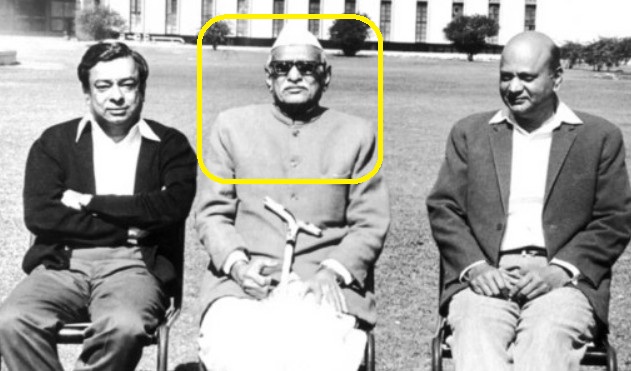
  • Tribhuvandas Patel: the Father of Cooperative Movement

    Why in the News?

    The Lok Sabha recently passed a Bill to establish Tribhuvan Sahkari University in Anand, Gujarat, in honour of Tribhuvandas Kishibhai Patel, a visionary leader known as the “father of the cooperative movement” in India, particularly in dairy farming.

    Tribhuvandas Patel the Father of Cooperative Movement

    Who was Tribhuvandas Patel?

    • Patel was born in 1903 to Kishibhai Patel and Lakhiba in Anand, Gujarat. He was an alumnus of Gujarat Vidyapith and was deeply influenced by Mahatma Gandhi.
    • A dedicated freedom fighter, Patel participated in the civil disobedience movement, campaigns against untouchability, and the salt satyagraha.
    • He was jailed in 1930 for his participation in the Salt Movement.
    • He is widely recognized as the “father of the cooperative movement” in India, particularly for his transformative work in the dairy industry.

    Patel’s Contribution to the Cooperative Movement

    • In 1946, Patel founded the Kaira District Cooperative Milk Producers’ Union Limited (KDCMPUL), known later as Amul, to empower farmers and challenge the monopoly of the Polson Dairy in Anand, Gujarat.
    • Patel collaborated with Verghese Kurien, a mechanical engineer, to modernize the dairy plant and increase milk production. This collaboration eventually led to the White Revolution in India.
    • Patel was also instrumental in setting up the Gujarat Cooperative Milk Marketing Federation (GCMMF), the National Dairy Development Board (NDDB), and the Institute of Rural Management Anand (IRMA), which played a pivotal role in cooperative dairy farming and rural development.
    • After his retirement, Patel used funds from the cooperative community to establish the Tribhuvandas Foundation, focused on community health and welfare.

    Cooperative Movement in India:

    • Pre-Independence Era:
      • The cooperative movement originated from informal local initiatives like Chit Funds and Mutual-Loan Associations in places like Madras Presidency and Punjab.
      • The 1904 Cooperative Credit Societies Act formally recognized cooperatives.
      • The Government of India Act, 1919 empowered provinces to legislate on cooperatives, leading to the Bombay Cooperative Society Act of 1925.
    • Post-Independence Developments:
      • Cooperatives became central to India’s economic strategies, particularly for rural development and social justice.
      • The National Cooperative Development Corporation (NCDC) (1963) and NABARD (1982) supported rural cooperatives and provided credit to farmers.
      • The 97th Constitutional Amendment (2011) granted the right to form cooperatives under Article 19.
      • The Ministry of Cooperation was formed in 2021 to strengthen the cooperative framework.
      • The MSCS Amendment Act 2023 aims to improve governance and operational efficiency of cooperatives.

    Key Types of Cooperatives in India:

    1. Consumers’ Cooperatives: Provide affordable goods by removing intermediaries (e.g., Kendriya Bhandar).
    2. Producers’ Cooperatives: Support small producers by supplying essential materials.
    3. Cooperative Marketing Societies: Help producers market products collectively (e.g., Amul).


    [UPSC 2011] In India, which of the following have the highest share in the disbursement of credit to agriculture and allied activities?

    (a) Commercial Banks (b) Cooperative Banks (c) Regional Rural Banks (d) Microfinance Institutions


  • [pib] Exercise INIOCHOS 25

    Why in the News?

    The Indian Air Force will participate in Exercise INIOCHOS-25 hosted by the Hellenic Air Force at Andravida Air Base, Greece.

    About Exercise INIOCHOS

    • INIOCHOS is a biennial multinational air exercise that provides air forces with a platform to enhance their operational readiness.
    • It is hosted by the Hellenic (Greek) Air Force and brings together military aviation units from various countries, promoting international cooperation.
    • It was first conducted in the late 1980s, as a small-scale tactical level exercise.
    • Objective: To allow air forces to practice Combined Air Operations and share tactical knowledge through realistic combat scenarios.

    Key Features of Exercise INIOCHOS:

    • It integrates air and surface assets from fifteen countries, promoting multinational cooperation in air warfare.
    • It will simulate modern-day air warfare challenges, providing a real-world training environment for participating air forces.
    • It will be placed on planning and executing Combined Air operations, refining tactics in complex air warfare scenarios.

    Strategic Importance for India:

    • India’s participation in INIOCHOS-25 underlines its commitment to global defence cooperation and showcases its ability to work seamlessly in joint operations.
    • The exercise will reinforce India’s strategic partnerships with other nations and further enhance its readiness for joint operations in complex and dynamic air warfare environments.
  • Supreme Court relief to Pratapgarhi: Can’t be so shaky on our basics over a poem or stand-up comedy

    Why in the News?

    The Supreme Court quashed the FIR against Congress MP Imran Pratapgarhi, stating that even if many people dislike someone’s views, their right to express them must be respected and protected.

    What was the Supreme Court’s rationale for quashing Imran Pratapgarhi’s FIR?

    • Poem Did Not Incite Violence or Enmity: The court ruled that the poem “Ae khoon ke pyase baat suno” did not promote violence or hatred but instead advocated facing injustice with love. Example: The court compared this to other forms of artistic expression, such as satire and stand-up comedy, which may provoke strong reactions but should still be protected under freedom of speech.
    • Freedom of Expression is Fundamental to Democracy: The judgment emphasized that even if many people dislike or oppose certain views, an individual’s right to express them must be protected. Example: The ruling cited how literature, poetry, and films enrich public discourse, and restricting them would lead to a stifled society.
    • Failure of Police to Conduct Preliminary Inquiry: The court noted that under Section 173(3) of the BNSS, the police must conduct a preliminary inquiry before registering an FIR for offenses punishable with 3 to 7 years of imprisonment. Example: If the police had followed this procedure, they would have found no prima facie case against Pratapgarhi, preventing an unjust criminal prosecution.

    Why did Justices Oka and Bhuyan stress the importance of protecting free speech in their ruling?

    • Essential for a Healthy Democracy: The court emphasized that freedom of expression is crucial for a vibrant democracy, where diverse opinions must be debated rather than suppressed. Example: The judges stated that even if many people dislike a view, it must still be protected, reinforcing that countering speech with speech, not suppression, is the right approach.
    • Integral to Human Dignity and Fundamental Rights: The ruling linked free speech to Article 21 (Right to Life with Dignity), arguing that without the ability to express ideas, individuals cannot live a dignified life. Example: The court cited the Preamble of the Constitution, which guarantees liberty of thought and expression as a core constitutional ideal.
    • Judiciary’s Duty to Protect Fundamental Rights: The judges stressed that if the police or executive fail to uphold free speech, the courts must step in to protect citizens’ rights under Article 19(1)(a). Example: The court stated that even judges may not always like certain spoken or written words, but they are bound by their duty to uphold the Constitution and free speech rights.

    Which Bharatiya Nyaya Sanhita (BNS) sections did Gujarat Police invoke against Pratapgarhi, and what do they address?

    • Section 196 – Promoting Enmity Between Groups: It Covers acts that promote enmity between different groups based on religion, race, place of birth, residence, or language and disturb harmony. Example: If a speech or post incites hostility between communities, it could fall under this section. However, the court found no such intent in Pratapgarhi’s poem.
    • Section 299 – Outraging Religious Feelings: It Covers deliberate and malicious acts intended to outrage religious feelings by insulting a religion or religious beliefs. Example: If someone defames a religious text or practice with intent to offend, they may be booked under this section. The court ruled that Pratapgarhi’s poem had no such intent.
    • Section 173(3) of BNSS – Preliminary Inquiry Requirement: Mandates a preliminary inquiry before registering an FIR for offenses punishable by 3 to 7 years of imprisonment. Example: The court noted that the police should have conducted an inquiry first to see if a prima facie case existed, preventing unnecessary criminal charges.

    What role did the Supreme Court assign to police and judiciary in upholding Article 19(1)(a)?

    • Police Must Conduct a Preliminary Inquiry Before Filing an FIR: The court held that police must verify if a case genuinely falls under restrictions on free speech before registering an FIR. Unwarranted criminal proceedings can have a chilling effect on expression.
      • Shreya Singhal v. Union of India (2015): The Supreme Court struck down Section 66A of the IT Act, ruling that arbitrary arrests for online speech violate free expression.
    • Judiciary Must Act as the Guardian of Fundamental Rights: Courts must intervene when executive actions violate fundamental rights, ensuring that speech is not suppressed under vague or excessive laws.
      • S. Rangarajan v. P. Jagjivan Ram (1989): The Supreme Court ruled that mere disagreement or offense cannot be grounds for restricting free speech.
    • Both Institutions Must Uphold Constitutional Ideals: Police and courts must ensure that freedom of expression is safeguarded in a democracy, as it is crucial for a vibrant public discourse.
      • Kedar Nath Singh v. State of Bihar (1962): The Supreme Court clarified that only speech inciting violence or public disorder can be restricted.

    Way forward: 

    • Strengthen Safeguards Against Misuse of Laws: Implement clear guidelines for law enforcement to distinguish between genuine hate speech and protected expression to prevent arbitrary FIRs. Example: Mandatory legal training for police on free speech rights and BNSS provisions.
    • Judicial Oversight and Quick Disposal of Cases: Establish fast-track mechanisms for courts to quash frivolous cases that violate Article 19(1)(a). Example: Special benches to review cases involving free speech violations to ensure timely justice.

    Mains PYQ:

    Q  Question: What do you understand by the concept “freedom of speech and expression”? Does it cover hate speech also? Why do the films in India stand on a slightly different plane from other forms of expression? Discuss. [UPSC 2014]

    Linkage: The scope of freedom of speech and expression, a central issue in the Pratapgarhi case. 

  • Massive Earthquake hits Myanmar and Thailand

    Why in the News?

    A powerful 7.7 magnitude earthquake struck Myanmar, with its epicentre near Mandalay, the country’s second-largest city.

    Massive Earthquake hits Myanmar and Thailand

    What caused the Earthquake in Myanmar?

    • Myanmar is situated between the Indian Plate and the Eurasian Plate, which makes the region seismically active.
      • The Sagaing Fault, running from north to south through Myanmar, marks the boundary of these plates.
      • It is an active fault line that has caused significant earthquakes in the past, including a 7.9 magnitude earthquake in 1912 and a 6.9 magnitude earthquake in 2016.
    • The Indian Plate was moving northward along the Sagaing Fault relative to the Eurasian Plate. The friction and stress built up along this fault led to a sudden release of energy, resulting in the earthquake.
    • The earthquake’s epicentres was located 17.2 km from Mandalay, Myanmar’s second-largest city, at a depth of just 10 km.

    Why are Shallow Earthquakes more destructive?

    • Proximity to the Surface: Shallow earthquakes (less than 70 km deep) cause intense shaking. For example, the Myanmar earthquake occurred at 10 km, leading to rapid, forceful seismic waves and extensive damage.
    • Energy Release: Shallow earthquakes retain more energy in seismic waves, causing stronger surface shaking and greater destruction.
    • Higher Intensity: Shallow quakes produce higher intensity shaking, resulting in more structural damage compared to deeper quakes, where seismic waves lose energy.
    • Aftershocks: Shallow earthquakes often lead to more intense aftershocks, further damaging already weakened structures. The Myanmar earthquake had aftershocks, including one with magnitude 6.4.

    Back2Basics: Earthquake and Related Terminologies

    • Earthquake is a sudden shaking of the ground caused by energy release from tectonic plate movements or volcanic activity, generating seismic waves.
    • Key Terminologies:
      • Focus (Hypocenter): The point inside the Earth where the earthquake originates, deep beneath the surface.
      • Epicenter: The point on the Earth’s surface directly above the focus, usually the most affected area.
      • Seismic Waves: Waves that carry the energy released during an earthquake and cause ground shaking.
      • Fault: A crack or fracture in the Earth’s crust where movement occurs, often causing earthquakes.
      • Magnitude: A measure of the earthquake’s size or energy, commonly measured on the Richter scale.
      • Intensity: The strength of shaking at specific locations, measured by the Modified Mercalli Intensity (MMI) scale.

    Types of Earthquake Waves:

    • Body Waves: Travel through the Earth’s interior, detected first by seismographs.
      • Primary Waves (P-Waves): Fastest, compression waves that move through solids and liquids.
      • Secondary Waves (S-Waves): Shear waves, slower than P-waves, that move through solids only.
    • Surface Waves: Travel along the Earth’s surface, slower but cause more damage.
      • Love Waves: Move side-to-side horizontally, causing significant damage.
      • Rayleigh Waves: Cause elliptical ground motion, similar to ocean waves, very destructive.


    [UPSC 2021] Consider the following statements:

    1. In a seismograph, P waves are recorded earlier than S waves.

    2. In P waves, the individual particles vibrate to and fro in the direction of waves propagation whereas in S waves, the particles vibrate up and down at right angles to the direction of wave propagation.

    Which of the statements given above is/are correct?

    (a) 1 only (b) 2 only (c) Both 1 and 2 (d) Neither 1 nor 2


  • Tri-services Exercise Prachand Prahaar

    Why in the News?

    The Indian Army conducted a Tri-Service integrated multi-domain warfare exercise, called ‘Prachand Prahaar’, in the high-altitude terrain of Arunachal Pradesh.

    About Exercise Prachand Prahaar

    • It is a tri-service integrated multi-domain warfare exercise involving the Army, Indian Air Force (IAF), and Indian Navy.
    • It is conducted in the high-altitude terrain of Arunachal Pradesh, near the Line of Actual Control (LAC), which spans 3,488 km.
    • The exercise was carried out under the aegis of the Eastern Army Command.
    • The primary objective was to validate a fully integrated approach to surveillance, command and control, and precision firepower across all three services.
    • The exercise aimed at simulating future warfare scenarios with a synergised combat drill.

    Key Components and Execution:

    • The exercise began with the deployment of advanced surveillance resources from all three services, which included:
      • Long-range surveillance aircraft from the IAF.
      • Maritime domain awareness aircraft from the Indian Navy.
      • Helicopters and Unmanned Aerial Vehicles (UAVs).
      • Space-based resources and the Indian Army’s elite special forces.
    • These resources created seamless domain awareness, which allowed for the identification of simulated targets.

    Related Previous Exercises:

    • The Prachand Prahaar exercise builds upon the momentum of Exercise Poorvi Prahar, which was held in November 2024.
    • The focus of Poorvi Prahar was on the integrated application of aviation assets.
  • [28th March 2025] The Hindu Op-ed: U.S. defence ties — India needs to keep its eyes open

    PYQ Relevance:

    Question: What is the significance of Indo-US defence deals over Indo-Russian defence deals? Discuss with reference to stability in the Indo-Pacific region. (UPSC 2020)

    Linkage: This question linked with the growing technological reliance on the U.S. in a critical area of India’s defense. India’s future military capabilities might depend on how the U.S. values India in its strategic plans.


    Mentor’s Comment: India’s defence public sector undertakings primarily serve the armed forces, making them heavily dependent on state-run manufacturers. The Aatmanirbhar Bharat initiative has further increased this reliance, adding pressure on the Indian Air Force (IAF), which is struggling with a declining squadron strength due to Hindustan Aeronautics Limited’s (HAL) slow production. After the IAF chief raised concerns at Aero India-2025, efforts were promised to speed up Tejas Mk1A fighter jet deliveries. A private company recently built the first rear fuselage for Tejas, marking progress. Meanwhile, the Defence Ministry is reviewing a report on the IAF’s requirements, including potential imports.

    Today’s editorial examines India’s defense sector and its reliance on other countries. This analysis is useful for GS Paper 2 and 3 in the UPSC Mains.

    _

    Let’s learn!

    Why in the News?

    Recently, the IAF chief raised concerns at Aero India-2025, efforts were promised to speed up Tejas Mk1A fighter jet deliveries.

    What are the key concerns of the Indian Air Force (IAF) regarding the dependence on Hindustan Aeronautics Limited (HAL) for fighter aircraft production?

    • Production Delays – HAL’s slow manufacturing rate has led to a depletion of IAF’s squadron strength, impacting operational readiness. Example: Delay in the production of Tejas MK1A jets has strained the IAF’s fighter jet availability.
    • Over-Reliance on a Single PSU – The IAF lacks alternative domestic suppliers, making it dependent on HAL despite inefficiencies. Example: Limited private sector involvement has only recently started with private firms producing Tejas components.
    • Quality and Upgradation Issues – HAL’s track record in upgrading older aircraft and ensuring high-quality production has been inconsistent. Example: Issues with Sukhoi Su-30MKI maintenance and Tejas Mk1A’s delayed improvements.

    What are the concern related to  reliability of India’s strategic partnership with the United States in the defense sector?

    • Policy Volatility and Shifting Alliances – The U.S. has a history of changing its foreign policy based on geopolitical interests, making long-term defense commitments uncertain.Example: The U.S.-Pakistan alliance weakened when Washington’s strategic focus shifted, leading to reduced military support for Islamabad.
    • Dependency on Critical Components – India’s indigenous fighter programs, like Tejas Mk2 and AMCA, rely on American engines, creating a risk of supply disruptions due to geopolitical tensions.Example: The U.S. previously blocked the supply of F414 jet engines to Turkey, highlighting the risks of dependency.
    • Short-Lived Defense Initiatives – Several past U.S.-India defense agreements have not led to meaningful technology transfers or long-term collaboration. Example: The 2012 ‘Defense Technology and Trade Initiative’ (DTTI) promised cutting-edge tech transfer but failed to deliver substantial results.

    How does the SIPRI report reflect India’s position in global arms imports? 

    • Second-Largest Arms Importer – India remains the world’s second-largest arms importer, reflecting its continued reliance on foreign defense equipment despite domestic production efforts. Example: The Stockholm International Peace Research Institute (SIPRI) report (2020-24) highlights that India’s arms imports still dominate globally, second only to Saudi Arabia.
    • Decline in Imports but Persistent Dependence – India’s arms imports decreased by 9.3% compared to 2015-19, but high-value systems like fighter jets, tanks, and missile defense systems continue to be sourced from abroad. Example: India imports S-400 missile systems from Russia and MQ-9B drones from the U.S., showing that critical defense needs are still met through foreign procurement.
    • Shift in Supplier Dynamics – While Russia remains India’s largest arms supplier, its share in Indian imports has decreased, with the U.S., France, and Israel gaining ground. Example: The Rafale jets from France and MH-60R Seahawk helicopters from the U.S. demonstrate India’s diversification in defense partnerships.

    Who benefits from India’s indigenous fighter production, and what risks remain in foreign dependency?

    Beneficiaries of India’s Indigenous Fighter Production Description Example
    Indian Armed Forces Ensures timely supply, reduces reliance on imports, and enhances operational preparedness. Tejas Mk1A, developed by HAL, offers a modern, cost-effective alternative to imported jets.
    Indian Defense Industry & Economy Boosts domestic manufacturing, generates employment, and fosters R&D in advanced technologies. Private firms like Tata Advanced Systems and L&T contribute to fighter jet production, strengthening India’s defense sector.
    Strategic Autonomy & Geopolitical Leverage Reduces dependence on foreign suppliers, allowing independent defense decisions. BrahMos missile production (India-Russia collaboration) enables exports, enhancing global influence.
    Risks of Foreign Dependency Description Example
    Supply Chain Vulnerabilities Dependence on foreign components (e.g., engines, avionics) can lead to disruptions during geopolitical tensions. Tejas Mk1A and AMCA jets rely on U.S. GE-F404 and GE-F414 engines, making supply uncertain due to policy shifts.
    Technology Denial & Cost Escalation Foreign suppliers may withhold critical technologies or impose high costs for upgrades and maintenance. U.S. sanctions after India’s 1998 nuclear tests restricted access to crucial defense tech, impacting the LCA Tejas program.
    Strategic Dependence & Policy Uncertainty Over-reliance on a single country can compromise strategic autonomy. The U.S. restricted F-16 spare parts supply to Pakistan during strained relations, a risk India could face with any single defense partner.

    Where does India stand in balancing defense partnerships while maintaining strategic autonomy? (Way forward)

    • Diversification of Defense Suppliers – India sources military equipment from multiple countries to avoid over-reliance on any single nation.Example: India procured S-400 missile systems from Russia, Rafale jets from France, and MH-60R Seahawk helicopters from the U.S., ensuring flexibility in its defense strategy.
    • Indigenous Defense Development – India is focusing on self-reliance through initiatives like Aatmanirbhar Bharat, reducing long-term dependency on foreign suppliers. Example: The development of Tejas Mk1A fighter jets, Advanced Medium Combat Aircraft (AMCA), and BrahMos missile systems (jointly developed with Russia) aims to strengthen indigenous capabilities.
    • Strategic Alliances Without Military Alignment – India engages in defense collaborations without entering formal military alliances, ensuring diplomatic flexibility. Example: While India has signed defense agreements with the U.S. (BECA, LEMOA, COMCASA) and conducts military exercises like Malabar with the Quad nations, it remains non-aligned, maintaining its independent foreign policy.
  • Should the free movement regime between India and Myanmar remain?

    Why in the News?

    In February 2024, Union Home Minister Amit Shah announced plans to end the Free Movement Regime (FMR) along the Myanmar border. However, so far, there has been no official notification from the Ministry of External Affairs or any formal agreement with Myanmar on this matter.

    What are the historical and socio-cultural reasons behind the implementation of the Free Movement Regime (FMR) along the India-Myanmar border?

    • Ethnic and Familial Ties Across the Border: The India-Myanmar border cuts across communities with shared ancestry, language, and traditions. Ethnic groups such as the Chin, Mizo, Kuki, and Naga tribes live on both sides and consider themselves part of the same cultural identity.
      • Example: The Mizo people in Mizoram and the Chin people in Myanmar share deep kinship ties and often intermarry, making border restrictions impractical for their social and economic interactions.
    • Pre-Colonial Trade and Historical Linkages: Before colonial rule, there were no rigid boundaries, and people freely moved for trade, festivals, and religious practices. The FMR formalized this long-standing tradition.
      • Example: The Naga tribes have historically maintained trade and social connections between Nagaland and the Sagaing Region of Myanmar, exchanging goods such as textiles, salt, and agricultural produce.
    • Post-Independence Border Division Without Local Consent: The Indo-Myanmar border was drawn by the British without consulting local communities, splitting ethnic groups across two nations. The FMR was introduced in 1968 to ease movement and mitigate the negative impact of artificial boundaries.
      • Example: The Kuki and Zomi tribes in Manipur and Myanmar continue to see themselves as a single community despite the international border, and FMR allows them to maintain their cultural and familial ties.

    Why do Mizoram and Nagaland oppose scrapping the FMR, while Manipur supports it?

    • Reasons for Opposition (Mizoram & Nagaland)
      • Ethnic & Cultural Ties: The Mizo and Naga communities share deep historical and familial ties with tribes across the Myanmar border. Example: Many Mizos have Chin relatives in Myanmar, and restricting movement disrupts social and economic relations.
      • Humanitarian Concerns: Mizoram and Nagaland emphasize providing refuge to Myanmar nationals fleeing conflict and persecution. Example: Mizoram has sheltered thousands of Chin refugees since the military coup in Myanmar (2021).
      • Economic & Livelihood Impact: Many border communities depend on cross-border trade and traditional exchanges. Example: Mizoram’s barter trade with Myanmar sustains rural economies.
    • Reasons for Support (Manipur)
      • Security Concerns: Manipur sees unrestricted movement as a risk to security, citing arms smuggling and insurgency threats. Example: The state government has linked rising violence to unchecked cross-border infiltration.
      • Demographic & Political Factors: Manipur fears an influx of migrants could alter its demographic balance and strain resources. Example: Tensions have risen between local communities and Kuki-Zo refugees from Myanmar.

    What challenges does the Indian government face in implementing border fencing along the 1,653-km-long India-Myanmar border?

    • Ethnic and Tribal Opposition: Several ethnic groups, such as the Nagas, Kukis, Mizos, and Chins, have strong familial and cultural ties across the border. Fencing would disrupt their traditional movement and economic activities.  
    • Difficult Terrain and Dense Forests: The India-Myanmar border passes through hilly terrain, dense forests, and riverine areas, making it logistically challenging to construct and maintain a continuous fence. Example: The rugged terrain of Manipur’s Moreh-Tamu sector complicates infrastructure development and patrolling efforts.
    • Security and Insurgency Issues: The region is home to various insurgent groups, including NSCN-K (Naga), PLA (Manipur), and Chin National Army (Myanmar), who use the porous border for movement and arms smuggling. Fencing alone may not curb insurgency without enhanced intelligence and cooperation with Myanmar.
      • Example: The Manipur-based People’s Liberation Army (PLA) has reportedly used Myanmar as a base for launching attacks in India.
    • Impact on Free Movement Regime (FMR): The Free Movement Regime (FMR) allows people from border villages to travel up to 16 km inside each other’s territory without a visa. Fencing would disrupt this agreement, leading to resistance from local communities and potential diplomatic strain with Myanmar.
      • Example: The border trade hub of Moreh (Manipur) and Tamu (Myanmar) benefits from FMR, and restrictions could harm livelihoods.
    • High Financial and Maintenance Costs: Constructing a fence across 1,653 km of difficult terrain requires massive financial investment and continuous maintenance due to landslides, heavy rainfall, and natural degradation.
      • Example: The fencing project in Manipur was delayed multiple times due to cost escalations and environmental challenges, making large-scale fencing impractical.

    What alternatives balance national security and border community interests instead of scrapping the FMR? (Way forward)

    • Strengthening Smart Surveillance and Border Management: Deploying technology-driven surveillance (such as drones, infrared sensors, and biometric tracking) can help secure the border without disrupting traditional movement.
      • Example: India has successfully used the Comprehensive Integrated Border Management System (CIBMS) along the India-Bangladesh border, which could be adapted for the India-Myanmar border.
    • Regulated Border Trade and Movement Checkpoints: Instead of a blanket ban, regulated border entry points with biometric verification can ensure security while allowing legal movement under the FMR. More trade facilitation centers can also boost local economies.
      • Example: The Moreh-Tamu border trade point in Manipur enables legitimate economic exchanges while maintaining oversight over cross-border movement.
    • Enhanced Cooperation with Myanmar for Joint Patrolling: Strengthening bilateral cooperation for joint border patrolling and intelligence sharing can help curb insurgency and illegal activities while maintaining local mobility.

    Mains PYQ:

    Question: Analyze internal security threats and transborder crimes along Myanmar, Bangladesh and Pakistan borders including Line of Control (LoC). Also discuss the role played by various security forces in this regard. (UPSC 2020)

    Linkage: This question linked India Myanmar border issues. It requires an analysis of these issues specifically concerning the Indo-Myanmar border and the role of security forces in managing them.